

Submitted:
30 April 2025
Posted:
02 May 2025
You are already at the latest version
Abstract
Strengthening producer groups, the rural community, and agri-food chains are important actions to help solve the problem of food poverty, improve the living conditions of producers and promote sustainable development in rural México. It is necessary to seek new ways to improve decision-making by producer groups and establish some principles to strengthen the different links in agri-food chains. The objective of this study was to analyze the integration of the Principles for Responsible Investment in Agriculture (PRIA) in the corn agri-food chain in order to assess its strengthening. A study was carried out in three cases based on the application of the “Working With People” (WWP) model, as well as interviews with key actors. It was found that cooperating groups with a higher degree of application of the WWP model and PRIAs have a higher degree of stability and sustainable development and strengthen the integration and cooperation of local action groups. The groups that are associated and have the technical component, better organize the agri-food processes and better incorporate the PRIAs and improve their economic, social and environmental development, compared to other groups that do it in a traditional way.
Keywords:
small producers
; rainfed agriculture
; local action groups
; maize cultivation
; responsible agricultural investment
; CFS-RAI principles
; food systems
1. Introduction
Based on data from the INEGI Agricultural Census (2022) [1,2], shown in Table 1, it is possible to demonstrate that agricultural activity both nationally and in the state of Puebla are important activities, especially for producers living in agricultural and very agricultural regions in these two areas. The most predominant crops in these regions are corn and beans, planted under rainfed conditions, whose production is destined for self-consumption and a surplus that is sold in the local market. The production levels obtained in these crops are low, although there is evidence, as has been documented among corn producers in Tlaltenango, Puebla [3], that shows high levels of grain and forage yields in corn, when the available technology is applied with greater precision. However, it is important to highlight the poor relationship between the area planted and the low use of agricultural machinery, insurance and agricultural credit, strategic components for regional agricultural development.
In addition to the low use of machinery and factors related to financing, Mexican agriculture faces a set of specific problems that further affect the income levels of the population engaged in agricultural activities. Based on Figure 1, a group of problems detected by the production units can be observed, however, there are some that, according to the opinion of the production units, have a greater impact on food production, among these are: (1) climatic and biological factors, (2) the high costs of inputs and services, (3) difficulties in marketing products after the pandemic and (4) insecurity problems. The perception of the production units with respect to this problem indicated that more than 88.8% considered that the high costs of inputs and services and climatic and biological problems were the factors that most affected Mexican agriculture.
The limitation that most affects the production units cannot be addressed from an individual perspective; it requires a group effort. In this sense, the experience generated in the processes of strengthening producers and rural communities indicates that the “Working White People” (WWP) model and the proposal developed in the territory under study, considering associativity and organization, the latter considered as a company, are the most appropriate tools to reduce the intensity of this limitation on production and towards the strengthening of the rural community. De los Ríos [4] y Cazorla [5], point out that the WWP model is presented as a conceptual proposal to address the integrated approach to rural prosperity, based on the consideration of three dimensions: political-contextual, technical-entrepreneurial and ethical-social. These three dimensions of the model can be synthesized into two central concepts: partnership and enterprise. The origin and integration of these concepts go back to the work developed by Smith [6] in 1962, in his discussion on the importance of separating associations and institutions, he points out that, in 1949 MacIver [7], mentioned that when “man creates associations he must also create rules and procedures for the handling of common affairs and for the regulation of the activity of the members among themselves, such forms are: indistinctly institutions”. In the work developed by Hodgson [8], it is mentioned that organizations are a special type of institution that stand out for establishing chains of orders that define the responsibilities within the organization, an important feature of a company.
On the other hand, Niño [9] points out that in order to understand the role of both concepts and their application in the process of social development, it is necessary to define them, in this sense and through an intellectual process he established that an association is an “instrument to establish purposes, to constitute and develop as a collective subject and to join forces or individual powers to form a greater power, sufficient to relate positively and successfully with other subjects on the way to the realization of the purposes established by the partners themselves”. Instead, “an organization is just a company, that is, a space that can have different dimensions but that does not vary in terms of its generic objective: the maximization of economic profit”. The integration of both concepts to build social development processes at the territorial level makes it possible to consolidate the strengthening of rural communities in the territory through the application of Principles of Responsible Investment in Agriculture and Food Systems (CFS-RIA) [10]. With this integration, it is possible to improve the production, transformation and consumption stages of the maize agri-food chain in rainfed conditions [11]. In this process of improvement, the principles of: (1) food security and nutrition, (2) economic development and 9) governance and accountability [10]. Albisu [12] mentions that agri-food chains have performed their functions, from the moment a product starts from its raw materials until it is consumed, along what are known as the links.
From the point of view of the socioeconomic reality, the agri-food chain is understood as a system that groups interrelated economic and social actors, who participate in activities that add value to a good, from its production until it reaches consumers [11]. According to the Catalan Food Safety Agency [13] it considers that, in the food chain, the production stage is a very important initial phase; however, once the product is obtained, the transformation and distribution phase begins. In the latter, the food industry plays a relevant role, emphasizing a retail structure, such as bars, restaurants, flea markets, markets on wheels, which come into direct contact with the consumer phase (transport, handling, preservation). These processes constitute agri-food chain models which, in México, SADER [14] has identified three models developed within the framework of neoliberal policy: (1) the Mexican Food System (SAM), (2) the neoliberal agri-food regime and (3) the agri-food chain based on production, transformation and commercialization in family agriculture, which provides income and food for consumption and the market, contributing to food security and sovereignty; the study in question is located in the latter model.
Regardless of the food chain model, different actors participate in each of its phases. In the specific case of the corn food chain, which is practiced in rainfed conditions by small producers, a group of actors has been identified, which, according to Moctezuma-López [15], is made up of: agricultural input suppliers, production systems, storage, processing, distributors and final consumers.
1.1. Intervention Territory
The main problems affecting active agricultural use units in the state of Puebla are: climatic factors, high costs of inputs and services, and low prices of agricultural products [1]. Thus, the intervention territory is located in the east of the state of Puebla (Figure 2), and is composed of 11 municipalities that comprise part of the natural regions of the Puebla Valleys and the Sierra Nevada, this space has an area of more than 800 km2. This territory has a flat topography in the area of the Puebla Valley, but a rugged topography in the foothills of the volcanoes.
The altitude of this region ranges from 2100 meters in Juan C Bonilla to 5465 meters in San Nicolás. Due to this altitudinal gradient, the most important climates are temperate and semi-cold sub-humid with summer rains, and in the higher parts of the volcanoes there are cold and very cold climates. The average temperature is around 15 °C, but in some municipalities such as San Salvador, Chiautzingo and Calpan there are average temperatures between 2 and 8 °C. The most representative soils are arenosols, andosols, phaeozems and cambisols, which have favorable characteristics for agricultural development [17,18,19,20,21,22,23].
These physical conditions of the territory allow for the production of different annual crops and fruit trees in temperate climates; most rainfed agriculture takes place in the flat part of the territory and on the lower slopes of the volcanoes (Figure 3). Annual crops are grown in the flat area, mainly corn and beans; and on the slopes of the volcanoes, fruit trees and annual crops are grown interspersed with fruit trees.
Corn is the most important crop in terms of area planted and volume and value of production, and beans are also important in terms of area planted; however, both crops have low yields, meaning there is significant potential to increase production of these crops. These crops are the basis of the local population's diet, and producers are applying strategies to add value to these crops. The inclusion of RIA principles in these strategies will strengthen agri-food chains.
Regarding fruit trees, peach and pear are the most important in terms of area planted and volume and value of production; walnut and apple are less important in terms of area, but have an important production value (Table 2). These fruit trees are of great culinary relevance, since they are the raw material for making “chiles en nogada” (chiles in walnut sauce), which is a stew that is highly appreciated by the population and visitors at “chile en nogada” fairs. Currently, the establishment of plantations of these fruit trees is being promoted to cover the great demand for these fruits.
Regarding socio-demographic conditions, the total population of the territory is more than 400 thousand inhabitants, the municipalities with the largest populations are San Martin Texmelucan and Huejotzingo with more than 100 thousand inhabitants, and the least populated municipalities are Domingo Arenas and Tlaltenango with around 7 thousand people [25]. The average population density is 500 inhabitants/km2, although the municipalities of San Martin and Juan C. Bonilla exceed 1000 inhabitants/km2.
On the other hand, the population 15 years of age and older without basic education is 41% and illiteracy is 50%. The marginalization index varies from 54.4 to 58.2 %, i.e., most of the municipalities have a low and very low degree of marginalization [26]. Likewise, 68.4% of the population lives in poverty (Figure 4), but the most outstanding aspect is that 18.5% of this percentage lives in extreme poverty and 81.5% in moderate poverty [27].
These are the socio-demographic, marginalization and poverty conditions in which the population of this territory lives, and which, for its development, depends on the different agri-food chains based on small-scale rainfed family farming. It is necessary to seek strategies or elements that contribute to strengthening the agri-food chains, such as the RIA principles, so that the chains can better contribute to improving the poverty and marginalization conditions of the territory, and in turn promote more sustainable human development in all aspects.
In the intervention territory, called “izta-popo”, the environmental and socio-cultural conditions and food patterns have influenced the planting of corn and beans in monoculture or associated systems, in addition to intercropping systems with fruit trees, where the agri-food model of family farming prevails. This model takes into account the resources available for the exploitation of the production units, which has allowed the construction of specific models of agri-food chains whose agglutinating axis is the cultivation of corn. These models are: Model (1) agri-food chain of corn production associated with beans at the family level that, transforms corn into different by-products which are marketed in tianguis in México State [28], Model (2) agri-food chain of corn in monoculture produced at the family level; In this model, corn is transformed and marketed in the form of tortillas and tostadas; the product is made using a tortilla machine obtained by a group of producers [29] and Model (3) a chain of corn and chiles produced at the family level, corn and chiles are marketed through a cooperative with a technical commerce component [30]. Knowledge about the integration of PRIA-FAO in these models is the objective of this article. In Table 3, we visualize the local agri-food conditions and characteristics similar to and corresponding to each model mentioned, and the selected municipalities of the intervention territory.
2. Materials and Methods
From the empirical component, this research was based on the case study, which was used to learn in greater depth the characteristics and differences presented by each of the agri-food models identified in the territory. Due to the nature of the study and the approach to the process of constructing the different agri-food models in the territory in question, a multiple case study was applied [31,32]. The first case consists of an agri-food model based on production, transformation and marketing by the members of the family unit; the second case analyzes production at the family unit level and in a process of transformation from grain to tortilla and its marketing as a “Sociedad de Producción Rural de R. L.”; and the third case is a cooperative in which the members are in charge of the production and transformation process; however, in the commercialization phase they have a technical component that is an expert in the market that is in charge of carrying out all the management related to this phase. To gather information, a questionnaire was applied to members of family units working in the different models of the maize agri-food chain; in addition, in-depth interviews were conducted with key informants in order to delve more deeply into some specific issues of the chain, complemented by the experiences generated with the application of the WWP model. Participatory workshops were also held with corn producers, technicians, public officials and other key stakeholders to identify needs, priorities and development opportunities [33]. The workshops promoted reflection on the Principles for Responsible Investment in Agriculture and Food Systems (PRIA) and their applicability in the local context, as well as the monitoring of plots established on the land of the partners that make up the groups, which constitute the tools used to carry out demonstrations and to directly observe the application of the principles in each of the cases [4], these PRIA were developed by the FAO Committee on World Food Security (CFS).
2.1. Methodology
2.1.1. The WWP Model, PRIAs and Food Systems
The research from the conceptual part was based on the WWP model that focuses on social learning, community participation and the integration of ethical-social, technical-entrepreneurial and political-contextual dimensions, seeking a balance between technical, behavioral and contextual competencies In the process of social learning, the concept of Local Action Groups (LAGs) has proven to be an effective tool to promote rural development from a territorial perspective [34]. LAGs facilitate interaction between local actors and promote participatory development management [35]. The use of the components of the WWP model has contributed to linking the principles and their application with the different groups involved in the different components of the maize agri-food chain.
As a component of the materials and methods, RIA principles and food systems were included, which constitute a range of activities related to production, transformation and market [10]; while food systems comprise another wide range of individual, collective and institutional actors that carry out the components of the agri-food chain, in a socio-political, economic, technological and natural framework in which the chain activities are carried out. Five RIA principles are most closely related to the agri-food chain models managed by family units in the intervention territory: (1) contribute to food security and nutrition, (2) contribute to inclusive and sustainable economic development and poverty eradication, (3) respect cultural heritage and traditional knowledge, (4) support diversity and innovation, and (5) incorporate inclusive and transparent governance structures, processes and grievance mechanisms.
2.1.2. Agri-Food Chain Models
According to INEGI [36], México has an area of 2.2 million hectares, of which 1.9 million correspond to rural areas and 0.3 million to population centers, roads and bodies of water, among other geographic features. In the rural area during the 2021-2022 period, an area with agricultural use or vocation of 1 million hectares was registered, representing 53% of the total area. Of this area, 329,761 ha were cultivated with white corn. It should not be forgotten that in addition to white grain, especially in the central, southern and southeastern regions, production units have less than 5 ha and most of them are managed under rainfed conditions and where more than 60 native corn breeds are cultivated [37]. When the project started, Puebla, in the current area of influence of the Puebla Campus of the Postgraduate College, had 116,000 ha of agricultural land, of which corn represented 69%, beans 15.9% and the rest in other crops. The most important production systems prevalent at the beginning of the project are: maize alone, association with guide beans (Phaseolus vulgaris), bush beans (Phaseolus vulgaris), intercropped maize in fruit orchards and “ayocote” (Phaseolus coccineas) [38]. In the study area, maize alone continues to prevail as an important crop in terms of area planted, as well as the production systems of association with guide bean and intercropped maize in fruit orchards. Agri-food chain models were generated around these production systems [30].
3. Results
3.1. Case 1: Agri-food chain maize-bean guide bean association
3.1.1. Relationship of the family unit to the CFS-RAI principle
Before addressing the details of the chain, it is important to point out that within the framework of the first international meeting on CFS-RAI principles at the “Colegio de Posgraduados”, Campus Puebla, México, held from July 7 to 11, 2024; on June 7, a field trip was conducted in the community of San Miguel Tianguizolco, which belongs to Huejotzingo, one of the municipalities that make up the Izta-Popo territory. This territory is the area of intervention for the application of the economic development and food security project within the framework of the principles of Responsible Investment in Agriculture and Food Systems, all this based on the production, transformation and commercialization of native fruit trees, as well as the planting of native seeds of corn, beans, squash and huitlacoche [39]. The project is using the model of Intercropped Milpa with Fruit Trees under dry conditions as a unifying axis [40,41]. The owner of the plot and project participant, as well as academics from the Technological Institutes of Atlixco and San Martin Texmelucan, were present during the field tour of the meeting (Figure 5). These institutes are part of the Network of Higher Education Institutions formed within the framework of the implementation of the RIAs in Latin America. During the tour, the owner of the plot indicated that his family unit has six hectares of dry land in his production unit, and with the support of his members, they transform corn and beans into products that are marketed in México City, such as tlacoyos, gorditas and tortillas; and they also sell fruits [28].
3.1.2. Characteristics of the Family Production Unit (FPU)
The climatic and soil conditions, as well as social and economic factors, allowed the family unit to generate, conserve and improve the agri-food chain. This unit produces, transforms and markets products and different by-products derived from the different crops grown in the FPU. The FPU is located in San Miguel Tianguizolco, the unit is made up of three men and three women. The average age of the members is 49 years old and the level of schooling is up to 6 years. They have 6 hectares of farmland, in rainfed conditions, and the family has its own machinery, including a tractor with implements and farming tools that allow them to carry out soil preparation and cultural activities in a timely manner. Even though decision-making and labor come from the members of the FPU, at certain times of the year, local labor is hired to carry out cultural work (weed and pest control) and harvesting. Approximately 86-day laborers are hired each agricultural cycle at a total cost of $25,800.0 (MXN, Mexican Peso).
3.1.3. Production, a Component of the Corn-Beans and Ayocote Agri-Food Chain
The FPU is organized and uses its own resources to produce the necessary raw materials. It produces corn and beans for self-consumption and as inputs to transform them into various by-products. The productive activity begins with the preparation of the land during the months of February and March, and then, depending on the available humidity in the soil, planting can be done in April and May; however, due to the adverse effects of climate change, planting has been delayed until June, as happened during the 2024 agricultural cycle. According to the representative of this FPU, production involves an average investment of $12,000.0 MXN per hectare and yields of 3.0 tons of corn and 500 kg of guide beans per hectare. With the sale of these products a gross income of $42,000.0 MXN is obtained; with this cost and income a benefit-cost ratio of 3.5 is obtained, that is, for every peso invested a profit of 2.5 pesos is obtained, this means that in the production phase this agri-food system is profitable.
3.1.4. Processing, Transformation
The FPU transforms its production into various by-products made from maize and beans; tlacoyos are the main by-product that is produced in the transformation process in the maize-bean agri-food chain. Pérez-Hernández et. al. [42], documented that the transformation process of corn and bean basic ingredients of tlacoyo, in the community of San Miguel Tianguizolco, includes several stages: (1) reception of raw material, (2) cleaning of corn and beans, (3) nixtamalization for corn and cooking for beans, (4) grinding, (5) conditioning on a table, (6) manual or semi-manual molding, and (7) cooking on an iron comal. Considering these stages of the transformation process and the available labor, FPU produces the following products: tlacoyos, tortillas with nopal and wheat additives, memelas, etc. Tlacoyos are made with nixtamalized corn and beans and are packaged by the dozen
3.1.5. Commercialization, Marketing
Transformed products are marketed in the CDMX in the so-called markets on wheels on Fridays of each week. The products sold in these public spaces are tlacoyos, wheat and nopal tortillas, memelas, and other products, which are transported in their own vehicle to the place of sale, travel on Fridays, stay on Saturdays and return to their place of origin on Sundays. This is the route commonly used by this family unit and other producers for more than 40 years. The people in charge of the FPU are responsible for marketing these products; marketing is not delegated to the children or other people; it is the exclusive responsibility of the heads of the family. The construction of this market scheme was carried out by people living in México City who visited the town of San Miguel Tianguizolco and interacted and agreed with the family members of the FPU to market local corn and bean products. A transportation network has been developed around the commercialization process that is responsible for transporting the tlacoyo producers from their place of origin to the points of sale and vice versa. Prices are set based on supply and demand; the FPU under study receives $40.0 MXN for each dozen tlacoyos it sells and $25.0 MXN for each dozen tortillas; likewise, the production cost for making a dozen tlacoyos is $15.0 MXN With these costs and income, a benefit-cost ratio of $2.60 MXN for each dozen tlacoyos is estimated, which indicates that it is a profitable activity [43]. Tlacoyo can contribute to improve the income of FPUs engaged in its production.
3.2. Case 2: Corn Agri-Food Chain and its Transformation Into Tortillas Through a Rural Production Society
This case is located in the municipality of Tlaltenango, Puebla [44]. The agri-food model most commonly practiced in this locality is monoculture corn combined with dairy cattle farming. Regarding milk production, in verbal communication with key informants in the community, an estimated production volume of 20,000 liters of milk per day is marketed to intermediaries in neighboring towns of the municipality.
3.2.1. Personal Characteristics of the Members of the Association
The “Sociedad de Producción Rural” (SPR) Campo Lima began its integration process in 2010; however, it was in 2015 when it was legally constituted as a legal entity within the framework of the agrarian law of Title Four, which deals with the operation and formation of rural societies [45]. The SPR is made up of seven partners whose average age is 46 years old, and have an average of eight years of schooling. Among the members of the society, they have a total area of 45 hectares of arable land, in irrigated and rainfed conditions; all the partners have their own machinery (tractor and implements) and implements to carry out agricultural activities.
3.2.2. Production, Transformation and Commercialization; Components of the Maize Agri-Food Chain. The Group's Relationship with the CFS-RIA Principles
In the background to the application of the CFS-RIA principles, it is important to note that the president of the Campo Lima Rural Production Society participated in the second version of the business course organized by the GESPLAN research group of the “Universidad Politécnica de Madrid” (UPM).
The SPR Campo Lima is developing a model, within the framework of the production, transforming and commercialization process, which consists of having greater participation in these components of the chain, especially in processing and marketing. The main elements of the model are: (1) production of certified seed of the HS-2 hybrid from the “Colegio de Postgraduados”, (2) marketing of the seed for commercial planting, (3) grain storage, (4) processing of the grain into tortillas and (5) tortilla marketing strategy (Figure 6). The figure shows two important components for the structuring of the associative processes: the integration of partners for decision making and the conformation of the technical-entrepreneurial component for the execution of decisions; from this component the actions related to production, transformation and commercialization will be carried out.
3.2.3. Seed Production and Commercial Plantings
The SPR Campo Lima and the “Colegio de Postgraduados” signed a licensing agreement to produce HS-2 corn seed, a patent generated by researchers at this Public Research Center to produce certified seed. SPR plans to produce a volume of 5 tons of HS-2 corn seed in 2025, with the supervision of the National Seed Inspection and Certification System (Spanish SNICS), the federal government institution in charge of seed certification in México. With this volume of certified seed production, the SPR will design a strategy for its distribution among local producers and in some cases outside the municipality; a record will be kept of the producers benefiting from the seed with the purpose of stockpiling the volume of harvested grain for its transformation into tortillas.
3.2.4. Transformation and Commercialization
The SPR acquired a tortilla machine at the end of 2024 to begin the process of transforming corn grain into tortillas and to be able to face two problems that affect them: (1) an unfavorable market, since the owners of the tortilla small factories set the prices of the grain, prices that are generally low, and (2) the deferred payment for the sale of the grain that is generally made very late and without paying an interest rate due to the ease of credit. This problem was the reason for the group of small producers that make up the SPR to venture into the processing of their corn harvest. This experience is unprecedented in the locality and in the region; in other words, it is the first time that a group of small producers has ventured into a process of transforming their raw material through an entrepreneurial approach [29].
According to Apolo Company [46], the tortilla machine purchased by the group has the following characteristics: (1) it produces 30 tortillas per minute or 1,800 tortillas per hour, processing 45 to 55 kg of dough per hour with tortillas of 25 g each. The total cost of the equipment was $392,899.34 MXN. The current demand for corn grain from the tortilla machine is 250 kg per day; with this milling volume, the SPR requires 84 tons of corn annually to supply this demand. With the corn yield levels obtained by the group and considering the available surface area, they are able to produce 60 tons, with a shortfall of 20 tons to complete the grain demand; the shortfall can be solved by stockpiling grain from other local producers who plant H-S2 corn.
The tortilla transformation company (Figure 7) is operated by two full-time employees, one with experience in handling the equipment and in the processing method; and the other is an assistant in activities related to this activity and sales on the premises (delivery person). The delivery person is in charge of distributing tortillas to the group of clients who buy tortillas from the company.
3.3. Case 3. Agri-Food Chain of Maize Produced at the Family Level, Transformed and Marketed Through a Cooperative
3.3.1. Relationship of the Cooperative's Activities with the CFS-RIA
Before describing this third case, it is interesting to highlight the participation of the cooperative's representatives in the second version of the training course aimed at entrepreneurs, which was given online by the GESPLAN Research Group of the “Universidad Politécnica de Madrid” (UPM) in 2024. They are currently linked with the “Colegio de Postgraduados” to build living laboratories applying the WWP model and emphasizing on the planning model as Social Learning.
In this agri-food chain, the main actor is a cooperative society called “Guardianes de Calpan”, which is similar to the other two models in that the members produce and transform corn at the family level; however, it has a feature that makes it different from the other two cases: its integration into the market is through technical personnel specialized in the subject. The group develops the three stages of the corn agri-food system: production, transformation and commercialization, as well as other complementary productive activities such as rural gastronomic experiences and the promotion of handicrafts made with materials from the region. The society was integrated in 2003 and was legally constituted in 2017 developing the three components of the agri-food chain; the group is composed of 17 partners, 6 men and 13 are women (Figure 8). The members of the cooperative have an average age of 55 years, although the age of some members is 20 years; the level of schooling is 9 years, this data coincides with the years of studies that the general population has.
3.3.2. Production
The cooperative is located in the municipality of Calpan. Agriculture in this municipality is based on a traditional production system that combines staple crops (corn and beans) with various species of fruit trees, including peach (Prunus pérsica), capulín (Prunus salicifolia), plum (Prunus domestica), pear (Pyrus communis), walnut (Juglans regial), and apricot (Prunus armeniaca). Corn and fruit production is carried out using a combination of traditional soil preparation, planting, fertilization, and harvesting practices. Maize is planted with colored creole corn, with the blue seed being the most important because it is used to make pinole, a very traditional drink among the inhabitants of the territory [30,47,48].
3.3.3. Transformation
The productive base of the members of the cooperative allows them to obtain a diversity of products between the months of May and December, which are the raw materials for making mole poblano, chiles en nogada (Figure 9), tamales, tlapaxtamales, atoles, tlatlapas, cacamas, chileatoles, stews with quelites, huazontles or nopales, tlacoyos, tortillas, pipianes, huaxmoles, breads, liquors and sweets (ates, jams, syrups, pinoles, muéganos, jamoncillos). However, of all the diversity of derivatives obtained from agricultural and fruit production, the cooperative places greater emphasis on the processing of blue corn into flour and the preparation of chiles en nogada; this dish was named Intangible Cultural Heritage of Humanity by UNESCO in 2010; it is made with local fruit products: panochera apple, pear, peach, walnut, pomegranate and sour pomegranate. The work developed in this transformation process allows the cooperative to link up with a network of companies and restaurants located in different parts of México. In this way, the cooperative is certified and recognized as a member of the network by providing information and promoting the consumption of its products made with local ingredients and at fair prices.
3.3.4. Commercialization
Commercialization
The incorporation of the cooperative to the network of companies and restaurants was made possible by the presence of a technical member in the work team who is in charge of marketing the different products that the members produce, mainly pinole and chile en nogada, derived from corn and fruit trees. This marketing component is a process that consists of: (1) depending on the demand towards the inside of the cooperative, the available volume of each product is quantified, (2) with this data, the technical member interview the entrepreneurs and provides more information about the origin of the product, (3) for the case of corn flour, it is highlighted that it comes from a native blue corn, (4) that the production is obtained with limited use of mineralized fertilizers and (5) they are produced by small producers who practice family farming [49].
The production of fruits, especially native species, are the most important elements in the production of chile en nogada; in this activity, again the technical member of the cooperative team plays an important role in the marketing process. Holding a fair between the months of August and September (approximately nine weeks) promotes the arrival of tourists from México City and Puebla; these visitors generate an important economic benefit for the cooperative and for the family units that participate in this regional event. The technical member is in charge of organizing field trips with tourists to the members' plots to show them firsthand how they manage their fruit trees. The Cooperative produced and sold 450 chiles en nogada in 2024, each one was priced at $ 300.0 MXN, this amount generates a production value of $ 135,000.0 MXN, also, the company marketed fresh chiles poblanos, they delivered 3,556 kilograms, on average 8 chiles weigh one kilogram. A comparison of the three agri-food cases is shown on table 3.
3.4. Comparison of the 3 Agri-Food Chain Cases of the Izta-Popo Valley in Puebla

Table 3.
Comparison of the 3 agri-food chain cases.
| A. Maíz-Frijol Guía | SPR Campo Lima | C. Guardianes Calpan | |
|---|---|---|---|
| Location | Huejotzingo | Tlaltenango | Calpan |
| Irrigation | rainfed and well | well and rainfed | rainfed and well |
| Surface area | 6 ha | 45 ha | 8 ha |
| Members | 5 | 7 | 17 |
| Average age | 49 years | 46 years | 55 years |
| Schooling | 6 years | 8 years | 9 years |
| Production | MIAF* | seed, grain and corn | fruits, chile poblano |
| Transformation | tlacoyos y gorditas | tortilla de nixtamal | chiles en nogada, others |
| Marketing | local markets | tortillería shop, stores | restaurants, fairs |
| Production cycles | 2 de 6 months | 2 de 6 months | 3 de 4 months |
| Contract labor | 86 | 90 | 40 |
| Cost / Benefit | 3.5 | 3.4 | 4 |
| Associative figure | Family Unit | Rural Production Society | Cooperative |
*Milpa interspersed of corn, beans, squash and fruit trees. Source: Prepared by the authors based on data collected in interviews, field visits and surveys of the groups in the 3 cases.
3.5. Relationship Between the Application of the CFS-RIA Principles and Agri-Food Models
Based on the empirical evidence documented with the people who manage these agri-food systems, the level of progress in the application of the CFS-RIA principles in each model was categorized as high, medium and developing (Table 4). The analysis indicated that the three agri-food models present an average level of high progress in the application of PRIA 1, 2 and 9.
In the three agri-food cases, a medium or moderate level of implementation progress was generally observed in PRIAs 3, 7 and 8; while in PRIAs 4, 5, 6 and 10 a basic or developing level was observed.
3.6. Relationship of the Application of the Working With People Model in Each Agri-Food Model
Working With People is a strategy to carry out linkage projects considering the processes of associativity and organization. This process is supported by the following components of the WWP model: (1) Technical-Entrepreneurial, (2) Ethical-Social, (3) Political-Contextual; and the process-approaches: (4) Social Learning [55], (5) Project Management [56], and (6) Asset Building [57]. Based on the results derived from the field work, it was detected that the technical-entrepreneurial, ethical-social and social learning components present a high level of application (Table 5). However, the rest of the components are in the moderate and developing category.
4. Discussion
One of the most important findings is the identification of different models of agri-food systems based on the level of associativity of the actors that manage these models. It is important to mention that one of the agri-food models (Case 3), in addition to being immersed in a process of association, includes in its structure the technical component of market competencies to carry out the commercialization process. In this model, more and better results are observed in terms of economic prosperity and in the application of RIA principles. These results are consistent with other studies in which the integration of the social and economic components constitute the elements favoring the economic income and social cohesion of the members, as in the case of the Camposeven cooperative [4,61]. They also correspond to other studies that highlight the importance of participation, innovation and territorial management for sustainable rural development [4,57]. The application of the WWP model, with its emphasis on social learning, active participation and respect for local knowledge, proved to be an appropriate framework for the integration of CFS-RIA principles in the maize chain [62].
The findings made it possible to know the use made by these three cases of the tools provided by the Working White People (WWW) model and the degree to which the Principles of Responsible Investment in Agriculture and Food Systems are applied, that is, to put the motto of working with people first, to create joint actions that integrate the knowledge of experience and expert knowledge that allows solving problems by integrating both knowledge [60]. The integration of the agri-food models with the components of the WWW made it possible to observe the degree of application of the PRIAs in the production, transformation and marketing processes, in this sense, in principles 1 and 9 their application was high for the three cases studied. These results agree with the findings of Acosta et al. (2023) [58] and Jiménez et al. (2023) [52], who when weighing the perception of the population regarding the importance and prioritization of objectives to select the PRIAs found that more than 91% of the population interviewed fixed their attention on principle 1 “Contribute to food security and nutrition”, and in its prioritization it was considered among the first places. In the case of principle 9, although its application was high, it is more relevant in two cases where the agri-food model is developed through associative processes. For principle 2 “Contribute to sustainable economic development and poverty eradication”, congruence was found between the high degree of application in the Mexican cases and the findings of Requelme and Afonso (2023) [63], where this PRIA is incorporated in Ecuador's agricultural policies with the highest percentage of appearance in the policy guidelines, and aligned with the SDGs.
According to Fontana et al. (2025) [64], they found that the application of the RAI Principles and the WWP Model in Paucar del Sara Peru allowed them to carry out an integrative and multidimensional analysis considering the territory as the object of study. In the case of the Izta-Popo territory in Puebla, three cases of agrif-ood models were considered that, while using corn as the binding axis, develop processes based on the components of the WWP model: political-contextual, technical-business and ethical-social, to improve the processes that integrate the entire corn agri-food chain, applying some principles of responsible investment. Cachipuendo et al. (2025) [65], found that the development of agroecological technologies and the recovery of ancestral knowledge have been fundamental to improve the sustainability of the local agri-food system among other factors, which allow food availability and improve profitability, in line with the SDGs and the CFS-RIA principles. The three case studies in México provide elements that indicate the importance of generating processes to improve ancestral agri-food models, such is the case of the classic milpa that integrates a diversity of crops among which the following stand out: corn, beans and squash. When technical and social innovations are used in the production process of this agri-food system, especially in the transformation and commercialization processes, there is greater availability of food and improved income, as was found in the results.
On the other hand, this study integrated the concept of living laboratories through the establishment of demonstration plots, which function as spaces for experimentation and learning; in these plots, producers validated innovative technologies and practices [3,30]. In this sense, knowledge transfer was not limited to a linear model, but was based on a process of dialogue and interaction between the different actors [59].
Although significant progress has been made in strengthening rural communities, it is important to recognize that major challenges remain. Lack of access to financing, market uncertainty and the effects of climate change are some of the obstacles that must be addressed to ensure the sustainability of development processes [57]. It is necessary to continue strengthening the capacities of producers, consolidating local organizational structures and promoting public policies that support family farming and rural development with a territorial approach [66].
The cultivation of corn in the territory of action continues to be a priority for the production units that through innovation processes have developed agri-food systems that seek not only to produce their own food, but also to generate new ways of participating in the stages of the food chain of transformation and commercialization, a scheme that was not observed before. The identification of the three agri-food systems is an important finding of this research, because it makes visible the efforts made by farming families, either at the family level or through associative processes, to make better use of available resources and to improve their relationship with other actors within and outside the territory.
5. Conclusions
The incorporation of PRIAs in the maize agri-food chain using the WWP model, is an effective strategy for strengthening rural communities in Puebla, México. Its application in the three Puebla agri-food cases demonstrates that it is possible to achieve fairer, more equitable and sustainable rural development, as long as active participation, respect for local knowledge, innovation and territorial management are prioritized. The integration of stakeholders in the agri-food models is achieved through the application of the WWP model, which favors the generation of sustainable development projects that are more effective and relevant in meeting local needs, based on the convergence of knowledge, resources, action and experience. It is necessary to continue with teaching, research and linkage with study groups, through the continuous improvement of projects based on the PRIAs and WWP, leading to the addition and optimization of more responsible investment principles in their practices and the creation of more initiatives that promote balanced sustainable development in its three dimensions: economic, social and environmental. Thus, ensuring that projects remain relevant, effective, long-lasting and that they promote and strengthen safe, healthy and sustainable Agri-food Systems.
This study provides valuable information for the formulation of public policies and the implementation of rural development projects with a territorial approach in Mexico and other countries with similar challenges. It is essential to continue researching, adapting and improving the strategies and models used in this study in order to achieve an even greater impact on strengthening rural communities and building a more prosperous and sustainable future.
Author Contributions
Conceptualization: J.R.-L., J.A.M.-C., and N.P.-R.; Methodology: J.R.-L., J.A.M.-C., and N.P.-R.; Validation: J.R.-L., J.A.M.-C.; Formal analysis: J.R.-L., J.A.M.-C., and N.P.-R.; Investigation: J.R.-L., J.A.M.-C., and N.P.-R.; Resources: J.R.-L.; Data curation: J.A.M.-C., and N.P.-R.; Writing—original draft preparation: J.R.-L., J.A.M.-C., and N.P.-R.; Writing—review and editing: J.A.M.-C., and N.P.-R.; Visualization: J.A.M.-C., and N.P.-R.; Supervision: J.R.-L.; Project administration: J.R.-L., J.A.M.-C.; Internal Funding acquisition: J.R.-L. All authors have read and agreed to the published version of the manuscript.
Funding
The research was conducted without external funding.
Institutional Review Board Statement
Not applicable.
Informed Consent Statement
All study participants provided informed consent.
Data Availability Statement
All data relevant to the results are available; further data can be obtained upon request.
Conflicts of Interest
The authors report no conflicts of interest.
References
- Instituto Nacional de Geografía, Estadística e Informática, INEGI Resultados Oportunos del Censo Agropecuario 2022 Puebla, Boletín de Comunicado de Prensa; INEGI: México, 2023; p. 8;
- Instituto Nacional de Geografía, Estadística e Informática, INEGI Resultados Oportunos del Censo Agropecuario 2022 Puebla, Presentación; INEGI: México, 2023; p. 8;
- Regalado, J.; Pérez-Ramírez, N.; Ramírez Juárez, J.; Méndez Espinoza, J.A. Los Grupos de Acción y La Aplicación de Tecnología de Alta Productividad Para Maíz de Secano En Localidades Del Plan Puebla, México. lgr 2021, 34, 91–104. [Google Scholar] [CrossRef]
- Ríos-Carmenado, I.D.L.; Becerril-Hernández, H.; Rivera, M. La agricultura ecológica y su influencia en la prosperidad rural: visión desde una sociedad agraria (Murcia, España). Agrociencia 2016, 50, 375–389. [Google Scholar]
- Cazorla, A.; de los Ríos, I.; Salvo, M. Working With People (WWP) in Rural Development Projects: A Proposal from Social Learning. Cuadernos de Desarrollo Rural 2013, 10, 131–157. [Google Scholar]
- Smith, H.E. El concepto de “institución”: usos y tendencias. Revista de estudios políticos 1962, 1. [Google Scholar]
- MacIver, R.M.; Page, C.H. Society. An Introductory Analysis; 1957th ed.; Macmillan & Co LTD.: London, 1949. [Google Scholar]
- Hodgson, G.M. ¿Qué son las instituciones? Rev.CS 2011, 17–53. [Google Scholar] [CrossRef]
- Niño Velásquez, E.; Regalado López, J.; Hernández González, T. La Asociación Campesina Independiente y Sus Relaciones Con El Estado e Instituciones. Regiones Revista Interdisciplinaria en Estudios Regionales 1998, 62–72. [Google Scholar]
- Comité de Seguridad Alimentaria Mundial (CSA) Principios para la Inversión Responsable en la Agricultura y los Sistemas Alimentarios 2014.
- García Winder, M.; Riveros, H.; Pavez, I.; Rodríguez, D.; Lam, F.; Arias Segura, J.; Herrera, D.; Agricultura (IICA), I.I. de C. para la Cadenas Agroalimentarias : Un Instrumento Para Fortalecer La Institucionalidad Del Sector Agrícola y Rural; COMUNIICA, 5.; Instituto Interamericano de Cooperación para la Agricultura (IICA), 2009; ISBN 978-92-9248-146-9.
- Albisu, L.M. Las cadenas agroalimentarias como elementos fundamentales para la competitividad de los productos en los mercados. Revista Mexicana de Agronegocios 2011, 28, 451–452. [Google Scholar]
- Agencia Catalana de Seguridad Alimentaria La Cadena Alimentaria. Principios y los requisitos generales de la legislación alimentaria. Reglamento (CE) No 178/2002 Available online:. Available online: http://acsa.gencat.cat/es/seguretat_alimentaria/ (accessed on 24 March 2025).
- Ramírez-Juárez, J. Régimen Alimentario y Agricultura Familiar. Elementos Para La Soberanía Alimentaria. Remexca 2023, 14, 2–10. [Google Scholar] [CrossRef]
- Moctezuma-López, G.; Espinosa-García, J.A.; Cuevas-Reyes, V.; Jolalpa-Barrera, J.L.; Romero-Santillán, F.; Vélez-Izquierdo, A.; Bustos Contreras, D.E. Innovación tecnológica de la cadena agroalimentaria de maíz para mejorar su competitividad: estudio de caso en el estado de Hidalgo. Revista mexicana de ciencias agrícolas 2010, 1, 101–110. [Google Scholar]
- Instituto Nacional de Geografía, Estadística e Informática, INEGI Mapa digital de México para escritorio versión 6.3. Proyectos. Proyecto Básico de Información 2020 Available online:. Available online: https://www.inegi.org.mx/temas/mapadigital/#Descargas (accessed on 24 March 2025).
- Instituto Nacional de Geografía, Estadística e Informática, INEGI Compendio de información geográfica municipal 2010, Huejotzingo, Puebla 2010.
- Instituto Nacional de Geografía, Estadística e Informática, INEGI Compendio de información geográfica municipal 2010, Chiautzingo, Puebla 2010.
- Instituto Nacional de Geografía, Estadística e Informática, INEGI Compendio de información geográfica municipal 2010, Tlaltenango, Puebla. 2010.
- Instituto Nacional de Geografía, Estadística e Informática, INEGI Compendio de información geográfica municipal 2010, San Salvador el Verde, Puebla. 2010.
- Instituto Nacional de Geografía, Estadística e Informática, INEGI Compendio de información geográfica municipal 2010, Juan C. Bonilla, Puebla. 2010.
- Instituto Nacional de Geografía, Estadística e Informática, INEGI Compendio de información geográfica municipal 2010, Calpan, Puebla. 2010.
- ADICAP S.A de C.V. Atlas de Riesgos Del Municipio de San Martín Texmelucan; ADICAP & Gobierno Municipal de San Martín Texmelucan: San Martín Texmelucan, Puebla, México, 2018.
- Secretaría de Agricultura y Desarrollo Rural del Gobierno de México Sistema de Información Agroalimentaria de Consulta, SIACON. Available online: http://www.gob.mx/siap/documentos/siacon-ng-161430 (accessed on 27 March 2025).
- Instituto Nacional de Geografía, Estadística e Informática, INEGI Censo de Población y Vivienda 2020. Available online: https://www.inegi.org.mx/programas/ccpv/2020/#datos_abiertos (accessed on 27 March 2025).
- Consejo Nacional de Población del Gobierno de México, CONAPO Índice de marginación (carencias poblacionales) por localidad, municipio y entidad. Available online: https://datos.gob.mx/busca/dataset/indice-de-marginacion-carencias-poblacionales-por-localidad-municipio-y-entidad (accessed on 27 March 2025).
- Consejo Nacional de Evaluación de la Política de Desarrollo Social, CONEVAL Medición de La Pobreza Por Grupos Poblacionales a Escala Municipal 2010, 2015 y 2020 Available online:. Available online: https://www.coneval.org.mx/Medicion/Paginas/Pobreza_grupos_poblacionales_municipal_2010_2020.aspx (accessed on 27 March 2025).
- Méndez Espinoza, J.A.; Valencia Bastida, I.; Ramírez Juárez, J.; Pérez Ramírez, N.; Regalado López, J.; Hernández Flores, J.A. Caracterización y Tipificación de Las Unidades Domésticas Que Participan En La Cadena Agroalimentaria Maíz-Tlacoyo. ASYD 2024, 21. [Google Scholar] [CrossRef]
- Maimone-Celorio, J.A.; Regalado-López, J.; Gallego-Moreno, F.J.; Pérez-Ramírez, N.; Méndez-Espinoza, J.A. Comparative Analysis of Four Corn (Zea Mays L.) Varieties, Transformed from Grain Corn into Tortilla. AP 2024, 17, 3–13. [Google Scholar] [CrossRef]
- Regalado-López, J.; Castellanos-Alanis, A.; Pérez-Ramírez, N.; Méndez-Espinoza, J.A.; Hernández-Romero, E. Modelo Asociativo y de Organización Para Transferir La Tecnología Milpa Intercalada En Árboles Frutales (MIAF). Estudios Sociales 2020, 30. [Google Scholar] [CrossRef]
- Coller, X. Estudio de Casos, Madrid, Cuadernos Metodológicos; Centro de Investigaciones sociológicas.; Madrid, España, 2005; Vol. 30; ISBN 978-84-7476-387-4.
- Ponce Andrade, A.L. El Estudio de Caso Múltiple. Una estrategia de Investigación en el ámbito de la Administración. Revista Publicando 2018, 5, 21–34. [Google Scholar]
- Bulman, A.; Cordes, K.Y.; Mehranvar, L.; Merrill, E.; Fiedler, Y. Guía sobre incentivos para la inversión responsable en la agricultura y los sistemas alimentarios. Roma, FAO y Centro Columbia sobre Inversión Sostenible. Roma.; 1st ed.; FAO: Roma, Italia, 2021; ISBN 978-92-5-134575-7. [Google Scholar]
- Regalado López, J.; Mendoza, R.; Ríos Carmenado, I. de los; Díaz Puente, J.M. Adaptación del modelo leader en el territorio huejotzingo, puebla: una nueva propuesta de desarrollo rural local. In Proceedings of the Actas del XV Congreso Internacional de Ingeniería de Proyectos | XV Congreso Internacional de Ingeniería de Proyectos | 06/07/2011 - 08/07/2011 | Huesca, España; E.T.S.I. Agrónomos (UPM): España, 2011; pp. 1533–1545. [Google Scholar]
- Cazorla Montero, A.; De los Ríos Carmenado, I.; Yagüe, B. Trabajando con la gente en los proyectos de desarrollo rural: una conceptualización desde el Aprendizaje Social. In Modelos para el desarrollo rural con enfoque territorial en México; Altres Costa-Amic Editores, S.A. de C.V.: México, 2011 ISBN 978-968-839-585-1.
- Instituto Nacional de Geografía, Estadística e Informática, INEGI Panorama Sociodemográfico de Puebla. Censo de Población y Vivienda 2020. 2021; 1st ed.; Instituto Nacional de Estadística y Geografía de México: México, 2021; Vol. 1, ISBN 304.601072 (en trámite). [Google Scholar]
- Turrent Fernández, A.; Cortés Flores, J.I.; Espinosa Calderón, A.; Hernández Romero, E.; Camas Gómez, R.; Torres Zambrano, J.P.; Zambada Martínez, A. MasAgro o MIAF ¿Cuál Es La Opción Para Modernizar Sustentablemente La Agricultura Tradicional de México. Remexca 2017, 8, 1169–1185. [Google Scholar] [CrossRef]
- Centro Internacional de maíz y Trigo. CIMMYT; Ministry of Agriculture, Government of Mexico; Government of the State of Puebla The Puebla Project: Seven Years of Experience, 1967-1973; 1st ed.; CIMMYT: Puebla, México, 1974; Vol. 1. [Google Scholar]
- Madrigal-Rodríguez, J.; Villanueva-Verduzco, C.; Sahagún-Castellanos, J.; Acosta Ramos, M.; Martínez Martínez, L.; Espinosa Solares, T. Ensayos de producción de huitlacoche (Ustilago maydis Cda.) hidropónico en invernadero. Revista Chapingo. Serie horticultura 2010, 16, 177–182. [Google Scholar] [CrossRef]
- Cortés Flores, J.I.; Turrent Fernández, A. La Milpa Intercalada en Árboles Frutales (MIAF) Tecnología multiobjetivo para el desarrollo de la agricultura en laderas; Colegio de Postgraduados: México, 2021; p. 2. [Google Scholar]
- Ordoñez-Ovalle, J.; Gómez-Martínez, E.; Soto-Pinto, L.; González-Santiago, M.V. El sistema milpa intercalado con árboles frutales (MIAF): evaluación agroecológica a diez años de su implementación en Chamula, Chiapas, México. Revista Campo-Território 2022, 17, 109–136. [Google Scholar] [CrossRef]
- Pérez-Hernández, L.M.; Almeraya-Quintero, S.X.; Guajardo-Hernández, L. La producción de tlacoyos como alternativa de desarrollo en San Miguel Tianguizolco, Puebla, México. Agro Productividad 2017, 10. [Google Scholar]
- Vargas-Cárdenas, T.; Thomé-Ortiz, H.; Ávalos De La Cruz, D.A.; Escalona-Maurice, M.; Gómez-Merino, F.C. El Tlacoyo Como Recurso Alimentario, y Su Relación Con La Oferta Turística Local: Casos Texcoco y Chiconcuac, Estado de México En México. AP 2020, 13. [Google Scholar] [CrossRef]
- Secretaría de Economía del Gobierno de México Tlaltenango: Economía, empleo, equidad, calidad de vida, educación, salud y seguridad pública Available online:. Available online: https://www.economia.gob.mx/datamexico/es/profile/geo/tlaltenango (accessed on 28 March 2025).
- Cabral Martell, A. Las figuras asociativas como alternativa en los Agronegocios. Revista Mexicana de Agronegocios 2004, VIII, 378–389. [Google Scholar]
- Apolo Tortilladoras Ficha técnica de Máquina Tortilladora Apolo 30 básica 2024.
- Secretaría de Economía del Gobierno de México Calpan: Economía, Empleo, Equidad, Calidad de Vida, Educación, Salud y Seguridad Pública Available online:. Available online: https://www.economia.gob.mx/datamexico/es/profile/geo/calpan (accessed on 28 March 2025).
- Littaye, A. The Role of the Ark of Taste in Promoting Pinole, a Mexican Heritage Food. Journal of Rural Studies 2015, 42, 144–153. [Google Scholar] [CrossRef]
- Jaleta, M.; Gebremedhin, B.; Hoekstra, D. Smallholder Commercialization: Processes, Determinants and Impact. Discussion Paper No. 18. Improving Productivity and Market Success (IPMS) of Ethiopian Farmers Project 2009, 55.
- Cazorla Adolfo, A.; De Los Ríos Carmenado, I. Jornadas de diálogo para la inclusión de los Principios para la Inversión Responsable en la Agricultura (IAR) y las Directrices Voluntarias de Gobernanza de la Tierra (DVGT) en el ecosistema universitario de Latinoamérica. Conclusiones; Grupo GESPLAN. Universidad Politécnica de Madrid: España, 2018; p. 31. [Google Scholar]
- GESPLAN, Universidad Politécnica de Madrid Programa Internacional sobre los Principios de Inversión Responsable en la Agricultura y los Sistemas Alimentarios FAO. Valoración de Objetivos de los Principios CSA-IRA en la Tercera Edición del Programa. 2024.
- Jiménez Aliaga, R.; De Los Rios Carmenado, I.; Cazorla Montero, A.; Huamán, C.; Amparo, E. Definición de objetivos prioritarios para la implementación de los Principios CSA-IRA en la sierra central de Perú.; 2023.
- Jiménez Aliaga, R.; De Los Ríos-Carmenado, I.; San Martín Howard, F.; Calle Espinoza, S.; Huamán Cristóbal, A. Integration of the Principles of Responsible Investment in Agriculture and Food Systems CFS-RAI from the Local Action Groups: Towards a Model of Sustainable Rural Development in Jauja, Peru. Sustainability 2022, 14, 9663. [Google Scholar] [CrossRef]
- Jiménez Aliaga, R.; De Los Ríos-Carmenado, I.; Huamán Cristóbal, A.E.; Aliaga Balbín, H.; Marroquín Heros, A.M. Competencies and Capabilities for the Management of Sustainable Rural Development Projects in the Value Chain: Perception from Small and Medium-Sized Business Agents in Jauja, Peru. Sustainability 2023, 15, 15580. [Google Scholar] [CrossRef]
- Friedmann, J. Planning as Social Learning. Working Paper 1981, 1–7. [Google Scholar]
- Winch, G. Rethinking Project Management: Project Organizations as Information Processing Systems? In Proceedings of the Proceedings of the PMI Research Conference; Newtown Square, PA: Project Management Institute: London, England, 2004.
- Midgley, J. Social Development: Theory and Practice; SAGE Publications Ltd: 1 Oliver’s Yard, 55 City Road London EC1Y 1SP, 2014; ISBN 978-1-4129-4778-7. [Google Scholar]
- Acosta Mereles, M.L.; De los Ríos Carmenado, I.; Ávila Cerón, C.A.; Castañeda Sepulveda, R. Inversión responsable en procesos de sustitución de cultivos ilícitos desde el modelo “Trabajando con Personas”: estudio de caso Guaviare (Colombia). In Proceedings of the Comunicaciones presentadas al XXVII Congreso Internacional de Dirección e Ingeniería de Proyectos, celebrado en Donostia-San Sebastián del 10 al 13 de julio de 2023; AEIPRO, Asociación Española de Dirección e Ingeniería de Proyectos: Donostia-San Sebastián, Spain, 2023; Vol. 197. [Google Scholar]
- Cazorla Montero, A.; De Los Ríos Carmenado, I. Rural Development as “Working With People”: A Proposal for Policy Management in Public Domain; 1st ed.; E.T.S.I. Agrónomos (UPM): Madrid, España, 2012; ISBN 978-84-615-7154-3. [Google Scholar]
- Cazorla-Montero, A.; De Los Ríos-Carmenado, I. From “Putting the Last First” to “Working with People” in Rural Development Planning: A Bibliometric Analysis of 50 Years of Research. Sustainability 2023, 15, 10117. [Google Scholar] [CrossRef]
- De Los Ríos Carmenado, I.; Rivera, M.; García, C. Redefining Rural Prosperity through Social Learning in the Cooperative Sector: 25 Years of Experience from Organic Agriculture in Spain. Land Use Policy 2016, 54, 85–94. [Google Scholar] [CrossRef]
- Mur Nuño, C.; De los Ríos Carmenado, I. Hacia una “Gobernanza basada proyectos” desde los ODS y los criterios ASG: el caso de los Bancos de Alimentos.; Jaén, España, 2024; pp. 1775–1793.
- Requelme, N.; Afonso, A. The Principles for Responsible Investment in Agriculture (CFS-RAI) and SDG 2 and SDG 12 in Agricultural Policies: Case Study of Ecuador. Sustainability 2023, 15, 15985. [Google Scholar] [CrossRef]
- Fontana, A.; Velasquez-Fernandez, A.; Rodriguez-Vasquez, M.I.; Cuervo-Guerrero, G. Territorial Analysis Through the Integration of CFS-RAI Principles and the Working with People Model: An Application in the Andean Highlands of Peru. Sustainability 2025, 17, 1380. [Google Scholar] [CrossRef]
- Cachipuendo, C.; Requelme, N.; Sandoval, C.; Afonso, A. Sustainable Rural Development Based on CFS-RAI Principles in the Production of Healthy Food: The Case of the Kayambi People (Ecuador). Sustainability 2025, 17, 2958. [Google Scholar] [CrossRef]
- Dixon, J.; Gibbon, D.P.; Gulliver, A.; Hall, M. Sistemas de Producción Agropecuaria y Pobreza: Como Mejorar Los Medios de Subsistencia de Los Pequeños Agricultores En Un Mundo Cambiante; FAO ; World Bank: Rome : Washington, D.C, 2001; ISBN 978-92-5-104627-2. [Google Scholar]
Figure 1.
Main problems affecting agricultural and livestock production units. Source: INEGI, 2022 [1,2].
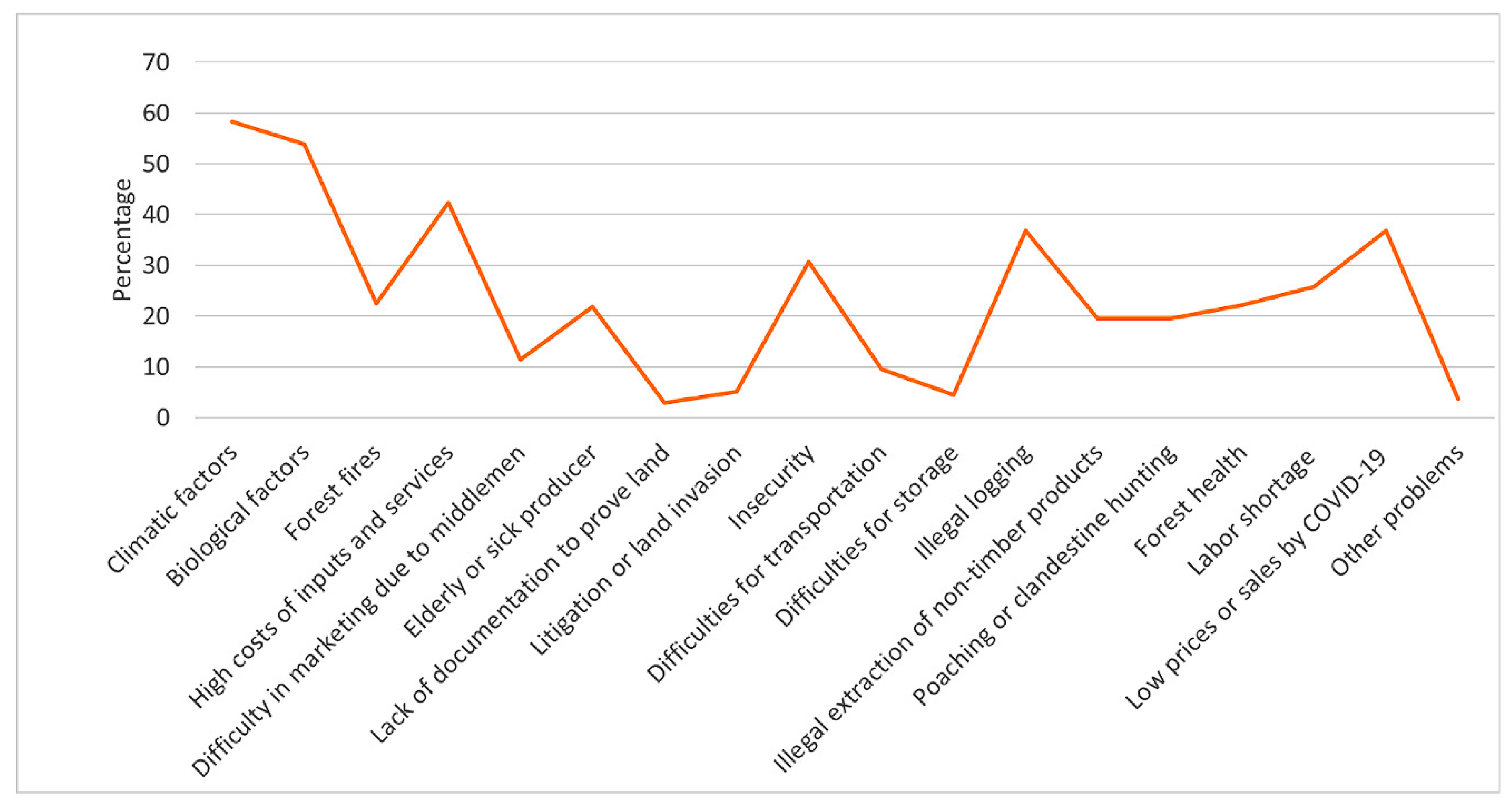
Figure 2.
Location of the intervention territory composed of 11 municipalities. Source: own elaboration with spatial information from the Digital Map of México [16].
Figure 2.
Location of the intervention territory composed of 11 municipalities. Source: own elaboration with spatial information from the Digital Map of México [16].
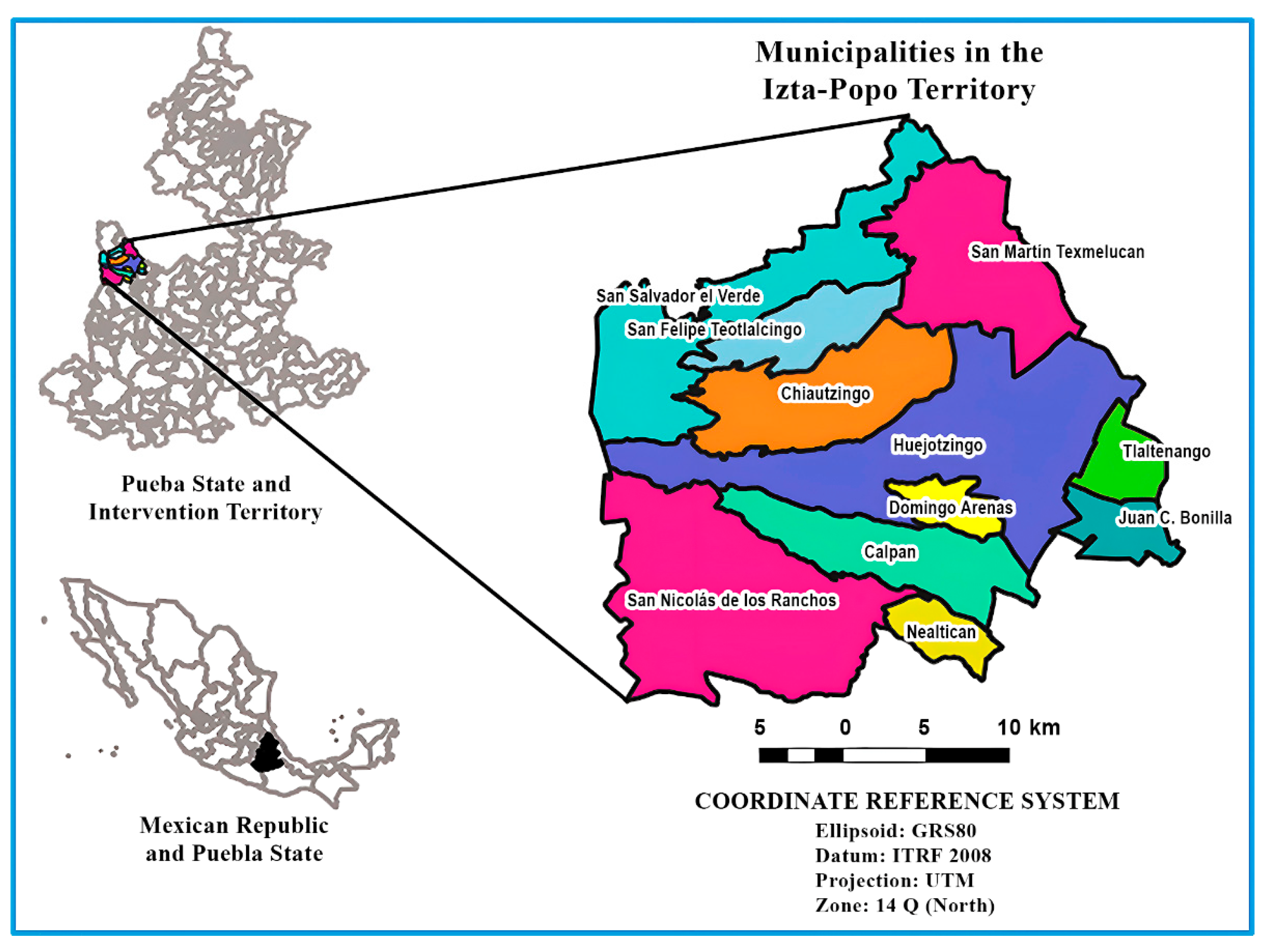
Figure 3.
Distribution of rainfed agriculture in the territory. Source: own elaboration with spatial information from the Digital Map of México [16].
Figure 3.
Distribution of rainfed agriculture in the territory. Source: own elaboration with spatial information from the Digital Map of México [16].
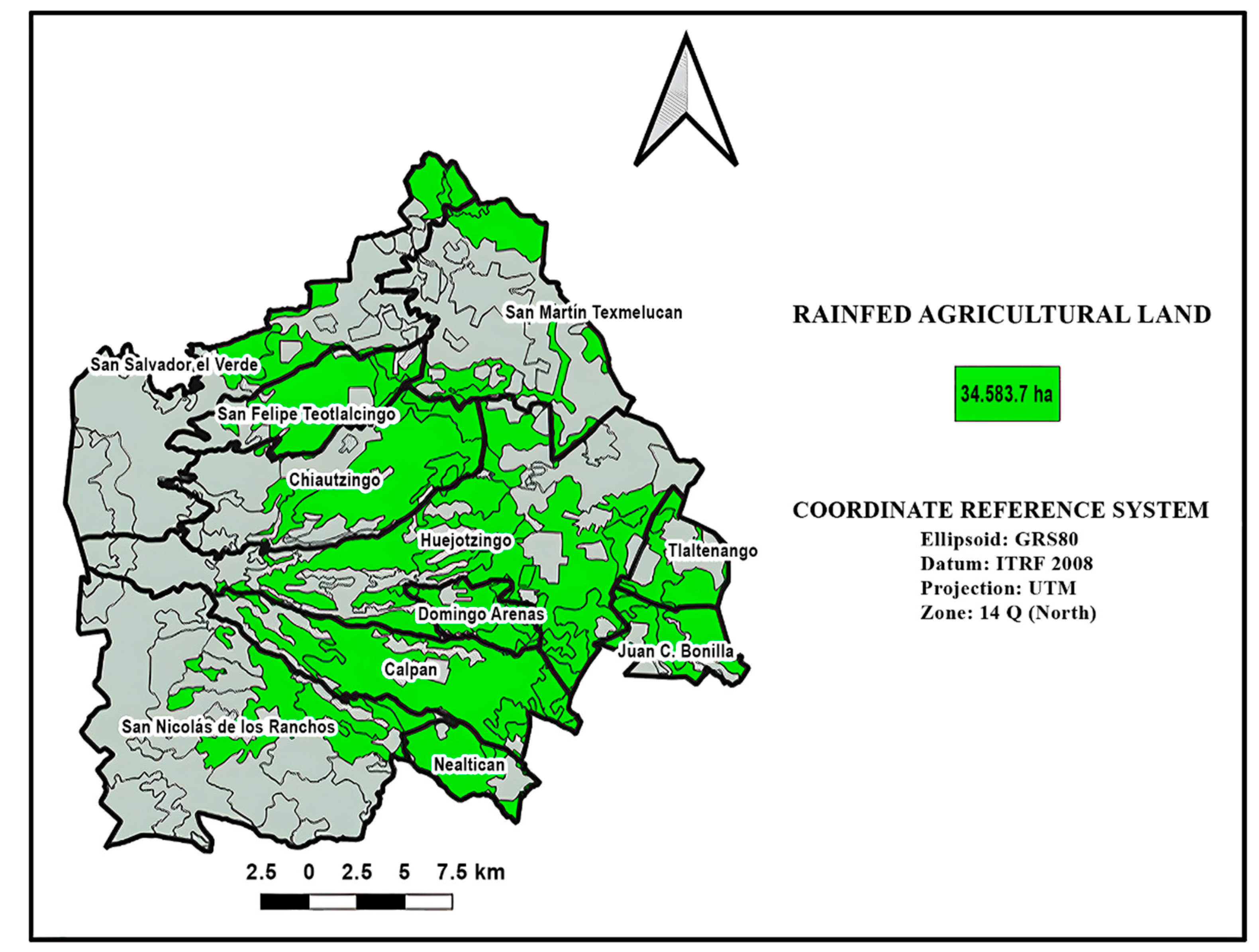
Figure 4.
Distribution of poverty in the intervention territory. Source: Own elaboration with spatial information from the Digital Map of México [16] and poverty information from CONEVAL [27].
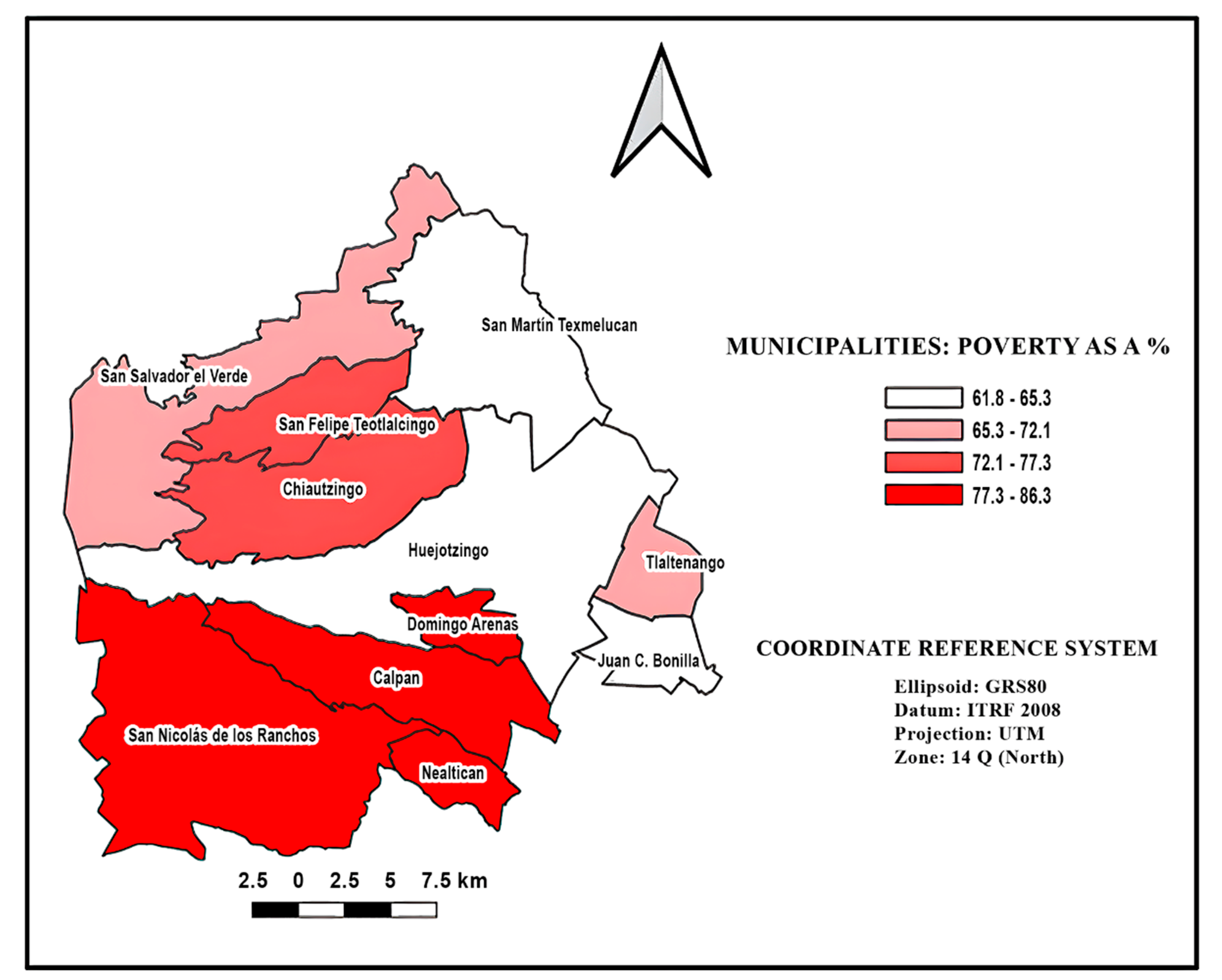
Figure 5.
Field and sowing tour of the Izta-Popo territory of intervention and application of the PRIAs.
Figure 5.
Field and sowing tour of the Izta-Popo territory of intervention and application of the PRIAs.
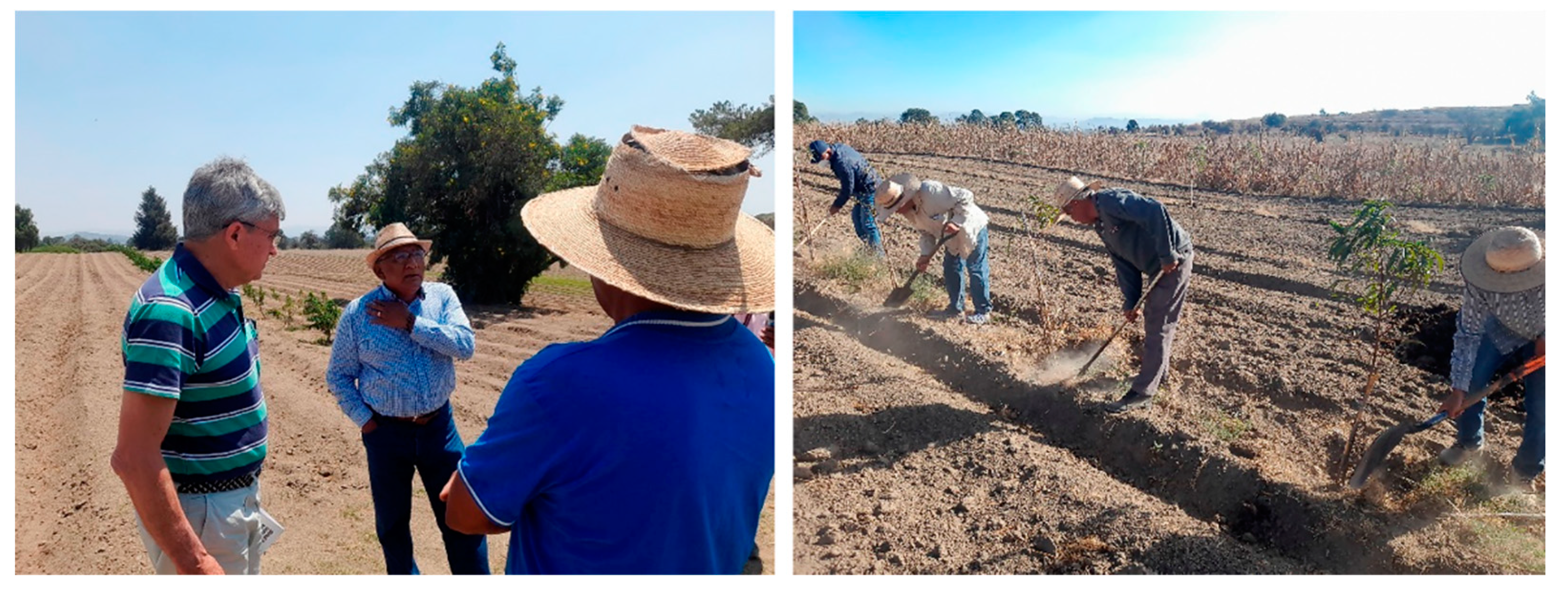
Figure 6.
Governance structure for improving the maize agri-food system.
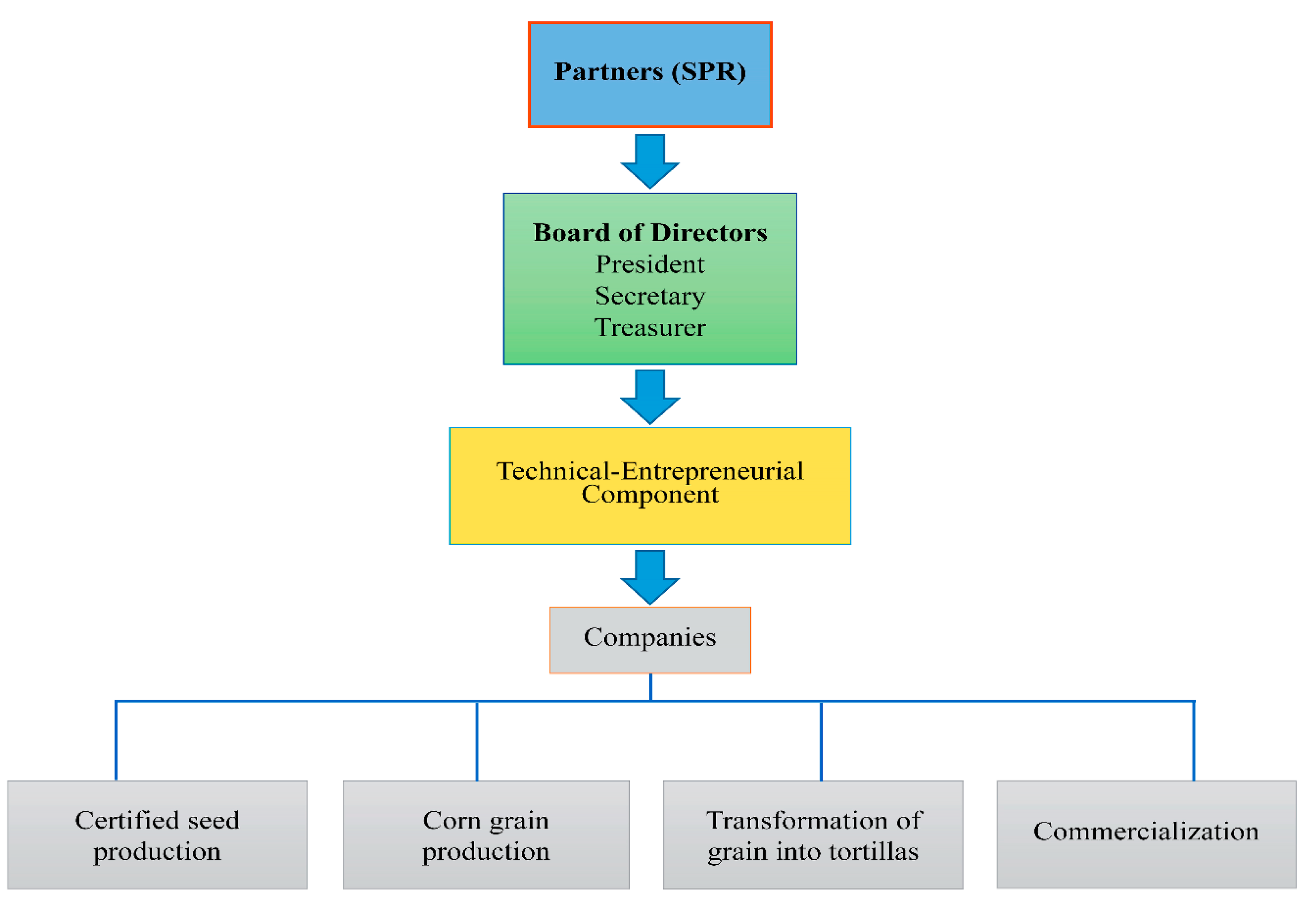
Figure 7.
Opening of the small-scale tortilla factory of SPR Campo Lima.
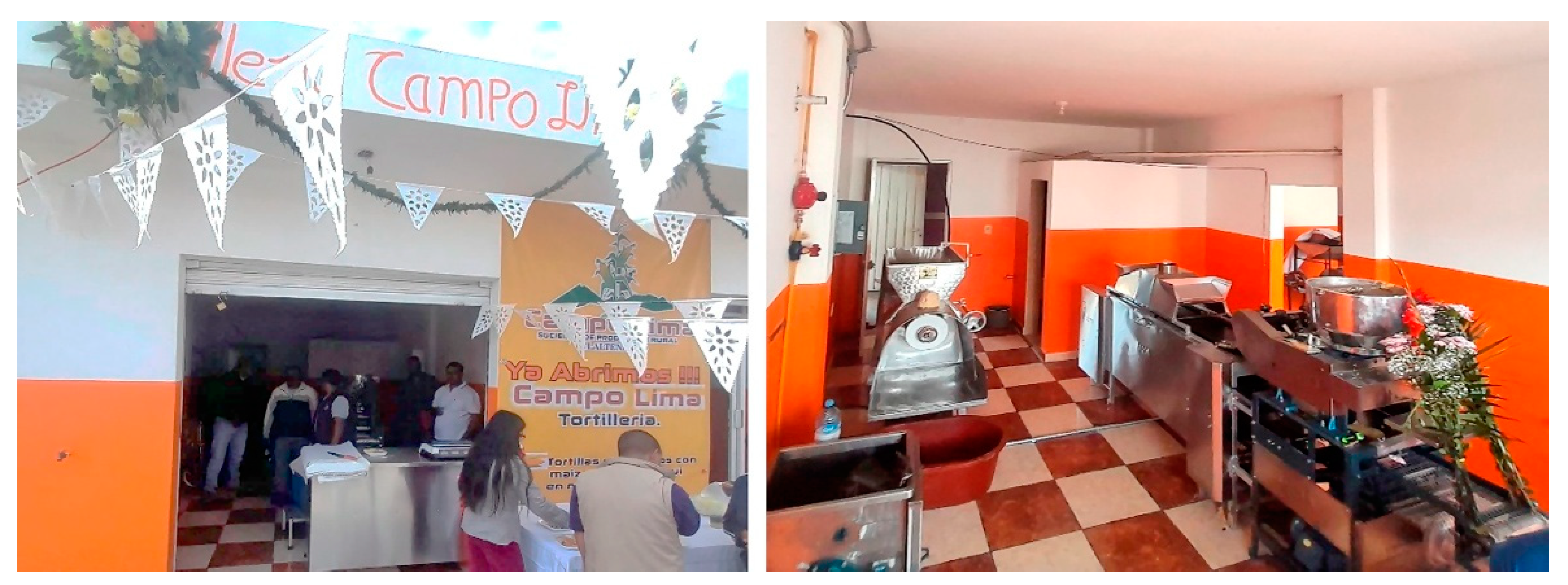
Figure 8.
Meeting with “Guardianes de Calpan” Cooperative to promote PRIAs.
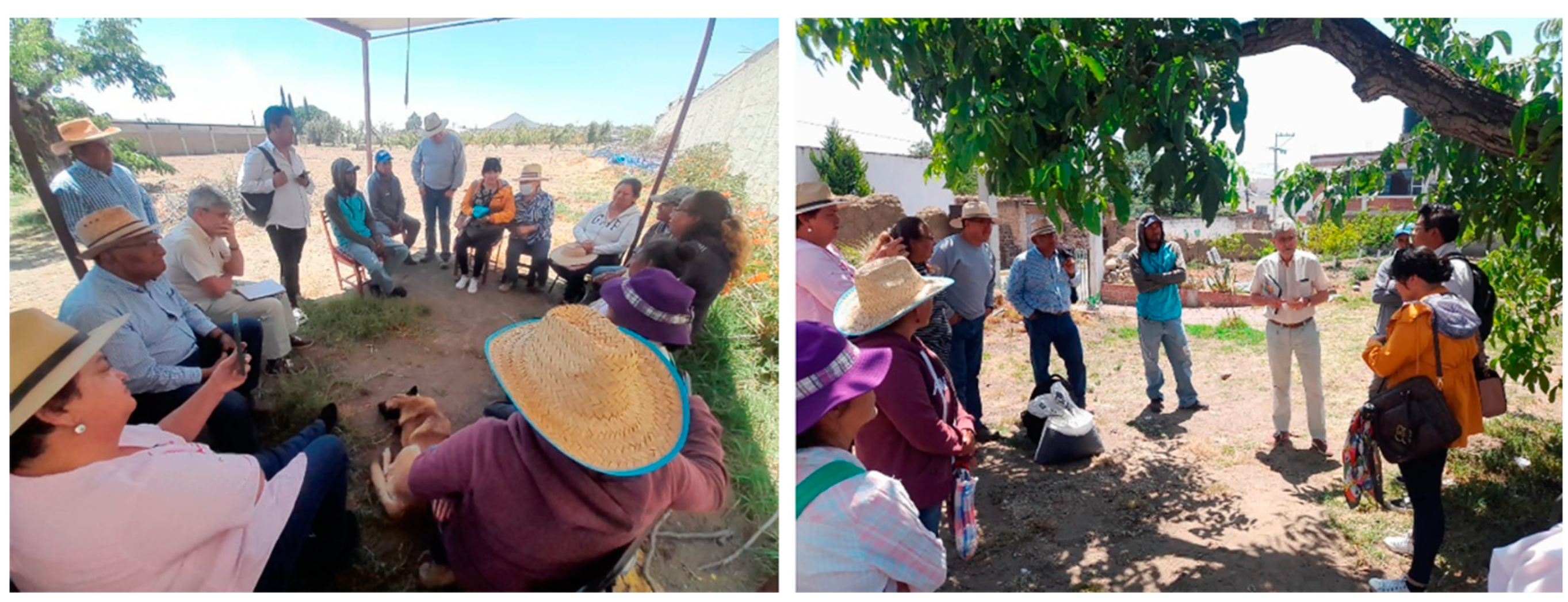
Figure 9.
Chile en nogada made by the “Guardianes de Calpan” Cooperative at the restaurant & terrace “Panchita y Genaro”.
Figure 9.
Chile en nogada made by the “Guardianes de Calpan” Cooperative at the restaurant & terrace “Panchita y Genaro”.
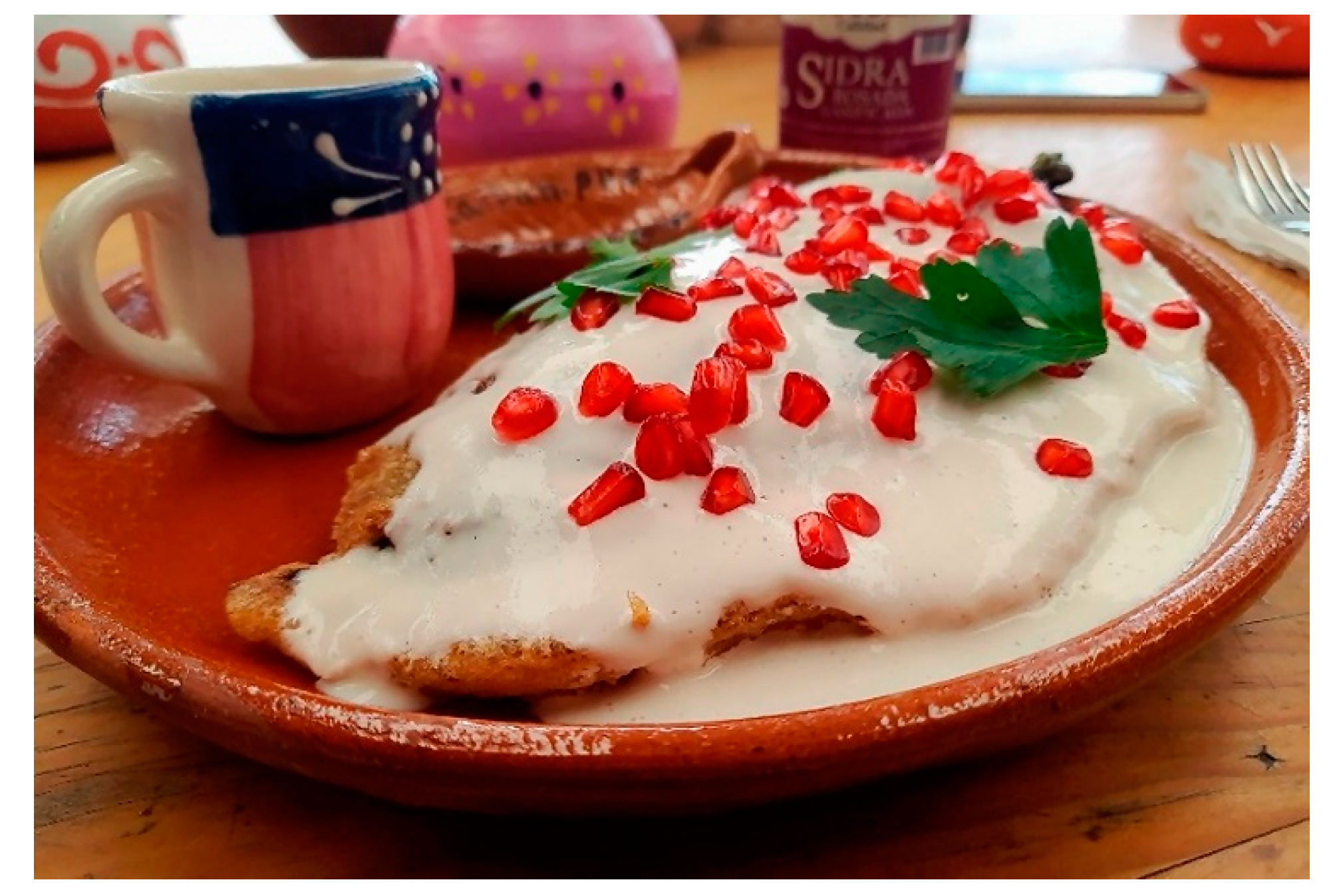
Table 1.
Characteristics of the Production Units at the national level and in Puebla State.
| Elements | National, México | State, Puebla |
|---|---|---|
| Total production units | 4,440,265 | 440,752 |
| Surface area for agricultural use | 26,104,422.68 | 1,015,173.77 |
| Sown area | 20,547,097.17 | 926,890.58 |
| Receiving “senior adults” support | 895,837 | 85,728 |
| Tractor use | 1,793,338 | 187,816 |
| Credit use | 265,508 | 14,437 |
| Insurance use | 78,140 | 621 |
Table 2.
Main crops and fruit trees that support the agri-food chains in the territory.
| Agricultural Species | Planted Surface (ha) | Production | |
|---|---|---|---|
| Volume (tons) |
Value (thousands of pesos) |
||
| Corn | 21,178.7 | 38,579.1 | 269,672.8 |
| Beans | 1,791.2 | 1,767.9 | 26,323.3 |
| Peach | 543.1 | 3,775.1 | 31,607.4 |
| Apple tree | 191.8 | 1,203.5 | 9,525.9 |
| Pear tree | 796.4 | 6,646.2 | 22,895.3 |
| Hickory | 127.0 | 534.7 | 15,673.1 |
Source: [24].
Table 3.
Local characteristics similar to each agri-food system.
| Model 1 | Model 2 | Model 3 | ||
|---|---|---|---|---|
| Territory | Municipality | Huejotzingo | Tlaltenango | Calpan |
| Locality | Miguel Tianguizolco | No location | San Andrés | |
| Production | Product | Corn, beans, ayocote and pumpkin. | Corn | Fruits, poblano peppers and corn |
| Farmers | 50 | 500 | 250 | |
| Surface | 100 ha | 1200 ha | 208 ha | |
| Transformation | Product | Tlacoyo and tortilla | Tortilla and tostada | Chile en Nogada |
| Families | 600 | 100 | 80 | |
| Commercialization | Points of sale | 50 markets in CDMX y Edo. de México | 280 places, e.g. Miscellaneous, schools, others. | 150 restaurants and 5 events. |
Source: prepared by the authors with approximate data from key informants.
Table 4.
Level of advancement of CFS-RIA principles in agri-food models.
| CFS-RIA Principle | Progress Indicators* | AM α |
SL β |
GC θ |
Identified Strengths | Identified Challenges |
|---|---|---|---|---|---|---|
| 1. Contribute to food security and nutrition | ◾ Increase in corn yields per hectare. | 84 | 90 | 80 | There has been an increase in the production of corn and other staple foods, as well as an increase in crop diversification, local consumption and self-consumption of nutritious foods. | Dependence on external inputs (fertilizers and seeds) for corn. Limited access to fair markets. |
| ◾ Crop diversification through polyculture strategies. | 80 | 74 | 88 | |||
| ◾ Increased availability of food for family consumption. | 88 | 88 | 94 | |||
| ◾ Promote local consumption. | 86 | 96 | 94 | |||
| ◾ Include simple and nutritionally balanced foods in the market. | 94 | 94 | 94 | |||
| GLP** | 86 | 88 | 90 | |||
| 2. Contribute to sustainable and inclusive economic development and the eradication of poverty | ◾ Diversification of products derived from or transformed from crops (innovation). | 90 | 90 | 96 | Family income is strengthened through crop diversification and the sale of surpluses and by-products. The action groups optimize the use of resources and improve profitability in corn and polycrop production. Increased adaptation of technologies and practices to local needs. |
Prioritization of economic profitability over sustainability. Lack of access to credit or savings banks. Difficulty competing with large producers and companies, or switching to a high value-added market through product transformation. |
| ◾ Promotion of action groups. | 84 | 86 | 96 | |||
| ◾ Encourage local business relationships and improve business and production practices. | 80 | 88 | 94 | |||
| ◾ Adoption and awareness of basic sustainable practices. | 82 | 80 | 90 | |||
| GLP** | 84 | 86 | 94 | |||
| 9. Incorporate inclusive and transparent governance structures, processes, and grievance mechanisms | ◾ Creation of Territorial Action Groups (TAGs) for participatory development management. | 80 | 84 | 90 | The association of small producers is the main objective of the interventions, encouraging their participation in decision-making and their association in cooperatives or societies. The relationship with academic institutions is strengthened through research projects and field training. |
Limitations of governmental structures. Lack of formalization due to the absence of specific laws. |
| ◾ Strengthening producer organizations and strategic collaboration networks. | 78 | 92 | 94 | |||
| ◾ Sharing useful and relevant information. | 82 | 88 | 96 | |||
| ◾ Promoting mediation mechanisms to provide solutions | 84 | 86 | 94 | |||
| GLP** | 82 | 88 | 94 |
* The PRIA Progress Indicator was calculated as a percentage according to a weighting of quantitative data and the average valuation obtained from interviews, PRIA courses and perception surveys. AM α = Case 1, SL β = Case 2, GC θ = Case 3. **General Level of Progress (GLP) is the rounded average of PRIAs progress indicators, where less than 50% is Basic or Developing, 50% to 70% is Medium, 71% to 90% is High; 91% to 100% is Very High. Source: own elaboration based on information collected & [3,4,10,30,35,50,51,52,53,54].
Table 5.
Level of application of the WWP model in agri-food cases.
| WWP Model | Application indicator |
AM α |
SL β |
GC θ |
Identified Strengths | Identified Challenges |
| 1. Technical-Entrepreneurial Component | ◾ The participation of the technical market component in the stages of the production chain. | 74 | 82 | 98 | The application of this component is high, especially in the “Campo Lima” and “Guardianes de Saberes Sabores de Calpan” groups, because they have a high level of associativity within their groups. | Consolidate the entrepreneurial component of the Campo Lima group. Replicate the experience of the “Guardianes de Saberes y Sabores de Calpan” Cooperative in the other two agri-food cases. Generate commercial synergies among the three groups. |
| ◾ Structuring and business organization for transformation | 80 | 88 | 92 | |||
| ◾ Acceptance of strategic support from universities and their academic integration with rural groups. | 90 | 90 | 90 | |||
| ◾ Coordination of meetings as an incentive for joint actions. | 80 | 92 | 94 | |||
| ◾ Quality and standardization of the groups' products. | 88 | 96 | 94 | |||
| GLP** | 82 | 90 | 94 | |||
| 2. Ethical-Social Component | ◾ Creation of Local Action Groups (LAGs) and rural development councils. | 80 | 84 | 90 | The participation of rural groups in decision-making is promoted and gender equity is fostered, although inequalities persist. | Inequality in access to resources and opportunities. Persistence of traditional gender roles. Difficulty in achieving a balance in the participation of all stakeholders. Lack of trust in institutions and agents for dialogue. Abuse of intermediaries that affect fair trade. |
| ◾ Implementation of participatory planning processes. | 82 | 90 | 92 | |||
| ◾ Inclusion of women and young people in workshops and productive activities. | 80 | 80 | 96 | |||
| ◾ Promotion of dialogue and negotiation between stakeholders. | 82 | 84 | 86 | |||
| ◾ Approach and mediation with rural groups to promote and strengthen organizational work behavior and attitudes. | 88 | 90 | 94 | |||
| GLP** | 82 | 86 | 92 | |||
| 4. Social Learning process-approach | ◾ Use of participatory methodologies such as workshops and focus groups for group and stakeholder development. | 78 | 82 | 88 | Collective learning and the adaptation of strategies based on experience are encouraged, as well as interdisciplinary reflection and analysis of the actions undertaken. | Difficulty in systematizing information and learning. Need to strengthen monitoring and evaluation capacities. Resistance to evaluation and feedback. |
| ◾ Exchange of knowledge and experiences to promote social dynamics between producers and universities. | 92 | 90 | 90 | |||
| ◾ Participatory monitoring and evaluation of projects. | 88 | 88 | 90 | |||
| ◾ Adaptation of development models to local conditions through innovation. | 84 | 92 | 90 | |||
| GLP** | 86 | 88 | 90 |
* The WWP Application Indicator was calculated as a percentage based on a weighting of quantitative data and the average value obtained from interviews, WWP workshops and perception surveys. AM α = Case 1, SL β = Case 2, GC θ = Case 3. **General Level of Progress (GLP) is the rounded average of the PRIAs progress indicators, where less than 50% is Basic, 50% to 70% is Medium, 71% to 90% is High; 91% to 100% is Very High. Source: Prepared by the authors based on the information collected & [4,5,10,30,34,35,50,57,58,59,60].
Disclaimer/Publisher’s Note: The statements, opinions and data contained in all publications are solely those of the individual author(s) and contributor(s) and not of MDPI and/or the editor(s). MDPI and/or the editor(s) disclaim responsibility for any injury to people or property resulting from any ideas, methods, instructions or products referred to in the content. |
© 2025 by the authors. Licensee MDPI, Basel, Switzerland. This article is an open access article distributed under the terms and conditions of the Creative Commons Attribution (CC BY) license (http://creativecommons.org/licenses/by/4.0/).
Copyright: This open access article is published under a Creative Commons CC BY 4.0 license, which permit the free download, distribution, and reuse, provided that the author and preprint are cited in any reuse.


