

Submitted:
02 March 2025
Posted:
03 March 2025
You are already at the latest version
Abstract
Educational psychology plays a crucial role in enhancing students' learning experiences, academic performance, and personal development by ensuring their mental health. Traditionally reliant on qualitative methods such as interviews and educator assessments, this field has often struggled with the limitations of subjective and less comprehensive evaluations. Recent advancements in technology offer new possibilities for improving student psychological support. This study proposes a novel approach by utilizing bibliographic methods to investigate the integration of big data and machine learning in educational psychology. Big data encompasses extensive student-related information, including academic performance, behavioral patterns, and socio-economic backgrounds. Machine learning applies advanced algorithms to this data, enabling the identification of patterns and predictive insights into psychological conditions. By developing comprehensive databases and machine learning models, this approach facilitates the early detection of potential mental health issues such as depression, anxiety, and extreme behaviors. This proactive methodology offers timely interventions and enhances traditional practices. The use of big data and machine learning promises a more precise and data-driven strategy for managing student mental health, thereby advancing the effectiveness of educational support systems and promoting overall academic success. This study underscores the transformative potential of these technologies in revolutionizing educational psychology.
Keywords:
Bibliographic Analysis
; VOSviewer
; Educational Psychology
; Machine Learning
; Big Data
1. Introduction
Educational psychology is an indispensable field of study, essential for optimizing students' learning experiences, enhancing educational quality, and fostering their personal development [1,2]. Ensuring that students maintain good mental health is pivotal [3], as it directly influences their ability to excel academically, grow personally, and achieve their full potential [4]. Traditionally, educational psychology has primarily relied on qualitative methods [5], such as interviews and assessments based on educators' personal experiences [6], to identify and address psychological issues among students [7,8]. While these methods have been valuable, they often lack the comprehensive scope and precision needed to effectively address the diverse and complex psychological needs of today's students [9].
In recent years, advancements in technology have opened new avenues for improving our understanding of student psychology. Our study proposes a groundbreaking approach by leveraging bibliographic methods [10] to explore the potential of big data and machine learning in the realm of educational psychology [11]. Big data refers to the vast amounts of information that can be collected about students, including various factors such as academic performance, behavioral patterns, socio-economic backgrounds, and more [12]. Machine learning, on the other hand, involves using sophisticated algorithms to analyze this data, uncover patterns, and make predictions [13].
By constructing extensive databases that capture a wide range of student-related information, we can develop machine learning models designed to predict psychological conditions and potential issues [14,15]. This predictive capability allows for early identification and intervention of mental health problems, offering a proactive approach to student well-being [16,17]. For example, these models can forecast risks such as depression, anxiety, or extreme behaviors [18], enabling timely support and intervention to address these issues before they escalate [19].
The integration of big data and machine learning into educational psychology holds significant promise for transforming how we understand and manage student mental health [20]. It allows for a more data-driven, precise, and proactive approach, moving beyond traditional methods that often depend on subjective assessments [21]. This new methodology not only enhances our ability to predict and address psychological issues but also contributes to the development of more effective strategies for supporting students' mental health and overall academic success [22].
In summary, this introduction sets the stage for exploring how advanced technological tools can revolutionize the field of educational psychology [23,24]. By combining the rich insights provided by big data with the analytical power of machine learning [25], we aim to establish innovative solutions that ensure students' psychological well-being and support their academic and personal growth [26].
2. Materials and Methods
To investigate the research landscape of machine learning in educational psychology, we conducted a comprehensive search in the Web of Science database on August 29, 2024 following previous method [27]. The search query used was “machine learning educational psychology,” which yielded a total of 314 articles. The subsequent step involved downloading the metadata of these articles, including titles, abstracts, keywords, and authorship details. This dataset was then analyzed using VOSviewer [28], a specialized software tool designed for visualizing and analyzing bibliometric networks [29,30]. Comparing to other R-based bibliometric and bibliographic methods [31,32], VOSviewer in this study showed higher visualization quality.
2.1. Keyword Analysis
For the keyword analysis, we focused on identifying patterns and trends in the research topics covered. We selected the "Co-occurrence" option under “Type of Analysis” to explore the relationships between different keywords used in the articles. In the “Unit of Analysis” section, we chose “All keywords” to ensure that every keyword was considered in the analysis. To refine the results and focus on significant keywords, we set the “Minimum Number of Occurrences of a Keyword” to 5. This threshold helped in filtering out less frequently used keywords and highlighted the most relevant and recurring terms in the literature.
2.2. Organization Analysis
In analyzing the organizations involved in the research, we chose “Co-authorship” as the “Type of Analysis” to understand collaborative patterns between institutions. The “Unit of Analysis” was set to “Organizations,” which allowed us to examine the involvement and contribution of different research institutions. To identify organizations with substantial research output, we set the “Minimum Number of Documents of an Organization” to 2. This criterion ensured that only organizations with a significant number of publications were considered, providing insights into the major contributors in the field.
2.3. Country/Region Analysis
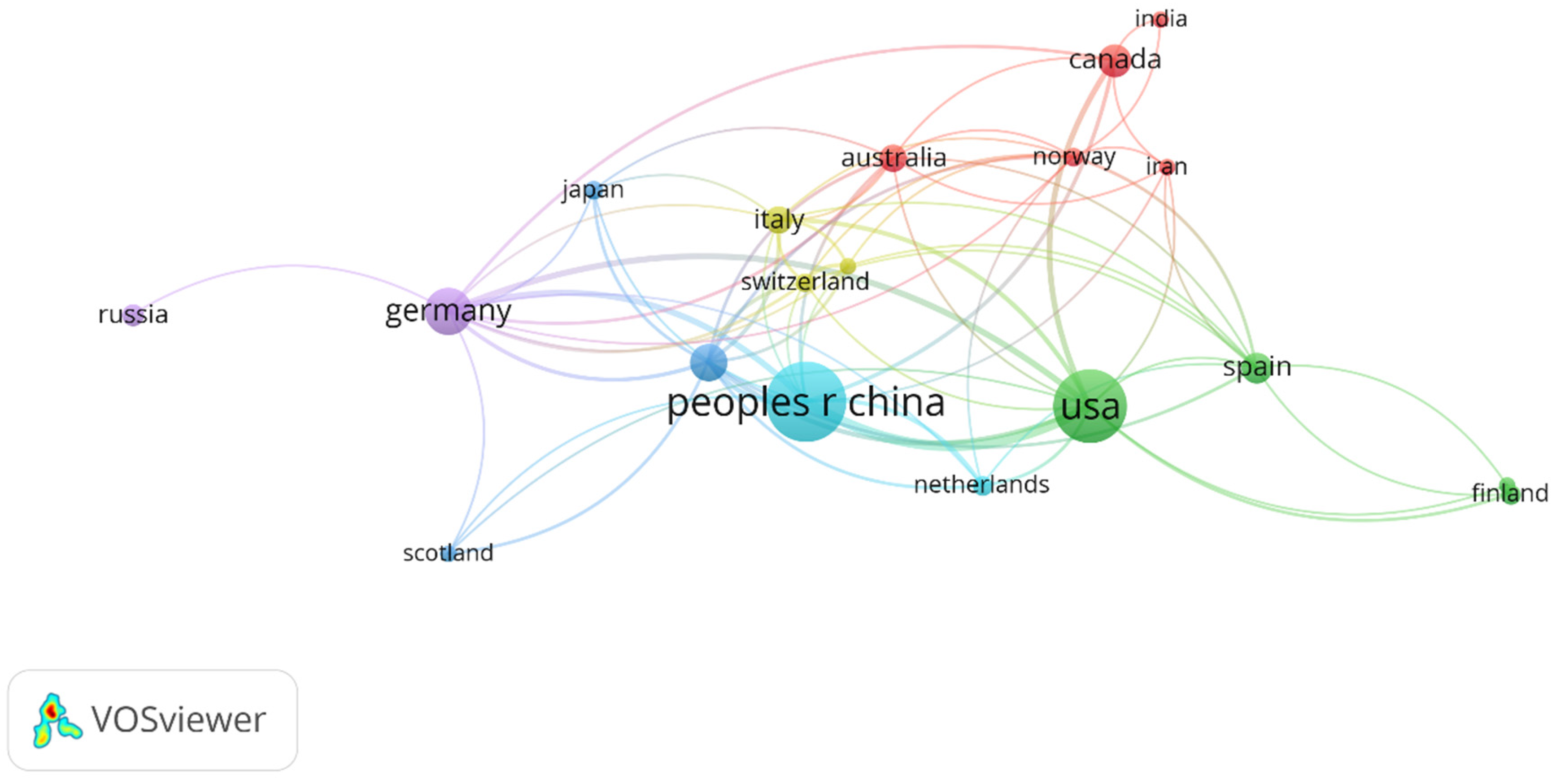
For the analysis of geographic distribution, we used VOSviewer to assess the research output by country and region. We set a threshold of 5 for the “Minimum Number of Documents of a Country/Region” to identify countries and regions with substantial research activity in the field. This approach enabled us to map the global research landscape and identify key geographical areas contributing to the study of machine learning in educational psychology.
3. Results
Figure 1 offers a detailed examination of the most critical keywords in the field of machine learning applied to educational psychology. This visualization reveals a rich and intricate research landscape, showcasing how various terms and concepts interconnect to form a comprehensive understanding of the field.
Methodological Keywords: At the core of this domain are several key methodological terms that describe the tools and techniques used to analyze and interpret data. Machine learning stands out as the central technique, enabling researchers to build predictive models and algorithms that can process large datasets to uncover patterns and make informed predictions. Complementing this are terms like big data, which highlights the importance of handling and analyzing extensive datasets that machine learning methods rely on. Validation is another crucial concept, referring to the process of ensuring the accuracy and reliability of these models. Data mining involves extracting meaningful patterns and insights from large volumes of data, while data science encompasses the broader practices and principles of analyzing and interpreting complex data. Selection pertains to choosing the most relevant features or variables for inclusion in machine learning models, which can significantly impact the model’s performance and insights.
Psychological Keywords: This field also integrates several psychological terms that reflect the core areas of interest within educational psychology. Psychology itself is a fundamental term, focusing on the scientific study of behavior and mental processes. Key areas such as mental health are particularly relevant, as they pertain to the psychological well-being of individuals and can be analyzed through machine learning to identify trends and potential interventions. Motivation is another essential aspect, exploring what drives individuals to engage in learning and how different factors influence their performance and outcomes. These psychological keywords emphasize the intersection of mental and emotional factors with educational outcomes, which are analyzed through advanced computational methods.
Educational and Demographic Keywords: The field also encompasses terms related to the subjects of study and the educational contexts in which machine learning is applied. Children and adolescents represent two key demographic groups whose learning processes and developmental stages are often examined. Age is a demographic variable that can influence learning and psychological development, and its impact is analyzed in relation to educational outcomes. The term brain is crucial as well, reflecting the focus on cognitive functions and neurodevelopmental aspects studied through neuroimaging and other techniques. Finally, culture examines how cultural factors and backgrounds influence learning processes and psychological development, adding another layer of complexity to the research.
Overall, these keywords collectively form a comprehensive and intricate network that defines the field of machine learning in educational psychology. They illustrate the diverse approaches and considerations involved in leveraging machine learning to enhance our understanding of educational and psychological phenomena. By integrating these methodological, psychological, and educational aspects, researchers can gain a holistic view of how machine learning can be applied to improve educational practices and support mental health initiatives.
Figure 2 provides a detailed depiction of the key universities involved in the field of machine learning and educational psychology. The visualization highlights the most influential institutions at the core of this research domain. Prominent among these are Peking University, Beijing Normal University, and Zhejiang University. These universities are central to the advancement of research and development in this area, playing a pivotal role in shaping the landscape of machine learning applications in educational psychology.
In addition to these leading Chinese institutions, several other universities around the world significantly contribute to this field. For instance, the University of Illinois, Osaka University, and the University of Montreal are noted for their substantial research output and innovative contributions. Similarly, the University of Groningen, Jilin University, McGill University, and the University of Tübingen are recognized for their impactful studies and collaborative efforts. Other notable institutions include Ulm University, Technion – Israel Institute of Technology, the University of Oslo, King's College London, and the Chinese University of Hong Kong.
The extensive collaboration among these universities illustrates the global and interdisciplinary nature of research in machine learning and educational psychology. Their collective efforts have fostered a rich and intricate research network that spans continents and integrates diverse perspectives. This collaborative environment has not only accelerated advancements in the field but also facilitated the sharing of knowledge and resources, driving forward the development of innovative solutions and methodologies in educational psychology through machine learning techniques.
Figure 3 provides an in-depth overview of the leading countries and regions involved in research within the field of machine learning and educational psychology. This visualization highlights the global distribution of research contributions and identifies the key players that significantly shape this domain.
At the forefront of this field are China and the United States, which occupy central positions in the research landscape. Both countries are prominent contributors, with extensive research initiatives and a significant volume of publications that drive advancements in machine learning applications for educational psychology. Their leadership in this area reflects their robust research infrastructure, significant funding resources, and a high level of academic and industry engagement.
Beyond China and the United States, several other countries also play crucial roles in advancing the field. Russia and Germany are notable for their strong research output and technological contributions. The United Kingdom and Japan add to the diversity of research perspectives and methodologies, enriching the field with their unique approaches. Italy and Switzerland contribute with their specialized research centers and academic excellence.
Additionally, Australia, the Netherlands, and Norway are recognized for their innovative research and collaborative efforts. Canada and India bring substantial contributions through their growing research communities and increasing focus on machine learning and educational psychology. Iran and Spain also add to the global research network, while Finland stands out for its notable advancements in related technological and psychological studies.
The interconnectedness of these countries underscores the collaborative nature of research in machine learning and educational psychology. International partnerships and cooperative research projects are pivotal in advancing the field, as they facilitate the exchange of ideas, methodologies, and resources. This global network of researchers and institutions collectively shapes the development of cutting-edge technologies and theoretical advancements in applying machine learning to educational psychology, illustrating the importance of cross-border collaboration in driving innovation and progress in this dynamic field.
4. Discussion
Our bibliographic study on machine learning in educational psychology reveals a profound potential for integrating big data and machine learning technologies to advance this field [33]. This discussion aims to elaborate on the significant implications of these technologies and their prospective applications, based on current research trends and established practices in related domains [34].
4.1. Potential of Big Data and Machine Learning
The impact of big data and machine learning has been transformative across various fields, including autonomous driving [35], facial recognition [36], species distribution prediction [37], and educational outcome forecasting [38]. These technologies have demonstrated their capacity to handle vast datasets, uncover patterns, and make predictions with remarkable accuracy. Given this track record, it is evident that big data and machine learning hold immense potential for revolutionizing educational psychology.
4.2. Building Comprehensive Databases
One of the primary applications of big data and machine learning in educational psychology involves the creation of comprehensive databases [39]. Such databases could encompass a wide range of student-related information, including demographic details (e.g., gender, age, height, weight), family background, teacher assessments, academic performance, dietary habits, and more. Additionally, psychological surveys and assessments would be integrated to capture nuanced aspects of students' mental states.
By aggregating this extensive data, researchers and educators could construct detailed profiles of individual students. These profiles would enable the development of machine learning models tailored to analyze and predict various psychological and educational outcomes.
4.3. Predictive Modeling and Early Intervention
Machine learning models could be employed to predict potential risks and challenges that students might face in their developmental trajectory [40]. For example, by analyzing patterns within the collected data, these models could identify indicators of mental health issues such as depression, anxiety, or even extreme behaviors like self-harm [41]. Predictive algorithms would allow for early detection of these risks, enabling timely intervention and support [42].
Early intervention is crucial in mitigating the adverse effects of psychological issues on students' academic and personal lives [43]. Machine learning models could facilitate proactive measures by alerting educators, counselors, and parents to emerging concerns before they escalate [44]. This could include personalized recommendations for counseling, behavioral interventions, or changes in the educational environment to better support the student's needs [45].
4.4. Enhanced Understanding of Student Needs
The integration of machine learning in educational psychology offers a more granular understanding of individual student needs and behaviors [46]. By leveraging data-driven insights, educators can tailor their teaching strategies and interventions to address the specific challenges faced by each student. This personalized approach has the potential to improve educational outcomes and overall student well-being [47,48].
4.5. Challenges and Considerations
While the potential benefits are substantial, several challenges must be addressed. Data privacy and security are critical concerns when handling sensitive student information [49]. Ensuring that data collection, storage, and analysis comply with ethical standards and legal regulations is paramount. Additionally, the accuracy and reliability of machine learning models depend on the quality of the data and the appropriateness of the algorithms used [50]. Continuous validation and refinement of these models will be necessary to maintain their effectiveness and relevance.
4.6. Future Directions
Looking ahead, research in this area should focus on refining machine learning techniques to enhance their applicability in educational psychology [51]. Exploring advanced algorithms, improving data integration methods, and expanding the scope of data collected are essential steps [52]. Collaborative efforts between researchers, educators, and technology developers will be crucial in realizing the full potential of big data and machine learning in this field.
The integration of big data and machine learning into educational psychology represents a promising frontier [53]. By leveraging these technologies, we can gain deeper insights into student behavior, predict potential psychological issues, and implement effective interventions [54]. This transformative approach holds the potential to significantly enhance educational outcomes and support student well-being in the evolving landscape of modern education [55].
5. Conclusion
In conclusion, this study utilized a bibliographic method to identify the most significant keywords, research institutions, and countries in the field of machine learning and educational psychology. Our analysis underscores the substantial potential of big data and machine learning in advancing this area of research. By developing comprehensive student databases and employing machine learning models, we can predict and address potential psychological issues that may arise during the educational process. This proactive approach not only enhances our understanding of student needs but also plays a critical role in safeguarding and promoting students' mental health. The findings highlight the transformative opportunities these technologies offer in creating more effective and responsive educational environments.
References
- Martin, A.J. Integrating motivation and instruction: Towards a unified approach in educational psychology. Educational Psychology Review 2023, 35, 54. [Google Scholar]
- Su, R. The three faces of interests: An integrative review of interest research in vocational, organizational, and educational psychology. Journal of Vocational Behavior 2020, 116, 103240. [Google Scholar]
- Fusar-Poli, P.; de Pablo, G.S.; De Micheli, A.; Nieman, D.H.; Correll, C.U.; Kessing, L.V.; Pfennig, A.; Bechdolf, A.; Borgwardt, S.; Arango, C. What is good mental health? A scoping review. European neuropsychopharmacology 2020, 31, 33–46. [Google Scholar] [PubMed]
- Cai, Z.; Mao, P.; Wang, Z.; Wang, D.; He, J.; Fan, X. Associations between problematic internet use and mental health outcomes of students: a meta-analytic review. Adolescent research review 2023, 8, 45–62. [Google Scholar]
- Chen, S.; Ding, Y. Assessing the Psychometric Properties of STEAM Competence in Primary School Students: A Construct Measurement Study. Journal of Psychoeducational Assessment 2023, 41, 796–810. [Google Scholar]
- Hong, J.; Cross Francis, D. Unpacking complex phenomena through qualitative inquiry: The case of teacher identity research. Educational psychologist 2020, 55, 208–219. [Google Scholar]
- Chen, S.; Ding, Y. Advancing STEAM education: a comprehensive assessment of competence. Journal of Computers in Education 2024, 1–20. [Google Scholar]
- Chen, S.; Ding, Y.; Liu, X. Development of the growth mindset scale: evidence of structural validity, measurement model, direct and indirect effects in Chinese samples. Current Psychology 2023, 42, 1712–1726. [Google Scholar]
- Emery, A.; Anderman, L.H. Using interpretive phenomenological analysis to advance theory and research in educational psychology. Educational Psychologist 2020, 55, 220–231. [Google Scholar]
- Gusenbauer, M. Search where you will find most: Comparing the disciplinary coverage of 56 bibliographic databases. Scientometrics 2022, 127, 2683–2745. [Google Scholar]
- Fischer, C.; Pardos, Z.A.; Baker, R.S.; Williams, J.J.; Smyth, P.; Yu, R.; Slater, S.; Baker, R.; Warschauer, M. Mining big data in education: Affordances and challenges. Review of Research in Education 2020, 44, 130–160. [Google Scholar] [CrossRef]
- Baig, M.I.; Shuib, L.; Yadegaridehkordi, E. Big data in education: a state of the art, limitations, and future research directions. International Journal of Educational Technology in Higher Education 2020, 17, 1–23. [Google Scholar]
- Sarker, I.H. Machine learning: Algorithms, real-world applications and research directions. SN computer science 2021, 2, 160. [Google Scholar]
- Chekroud, A.M.; Bondar, J.; Delgadillo, J.; Doherty, G.; Wasil, A.; Fokkema, M.; Cohen, Z.; Belgrave, D.; DeRubeis, R.; Iniesta, R. The promise of machine learning in predicting treatment outcomes in psychiatry. World Psychiatry 2021, 20, 154–170. [Google Scholar]
- Chung, J.; Teo, J. Mental health prediction using machine learning: taxonomy, applications, and challenges. Applied Computational Intelligence and Soft Computing 2022, 2022, 9970363. [Google Scholar]
- Shah, V. AI in Mental Health: Predictive Analytics and Intervention Strategies. Journal Environmental Sciences And Technology 2022, 1, 55–74. [Google Scholar]
- Oyebode, O.; Fowles, J.; Steeves, D.; Orji, R. Machine learning techniques in adaptive and personalized systems for health and wellness. International Journal of Human–Computer Interaction 2023, 39, 1938–1962. [Google Scholar]
- Richter, T.; Fishbain, B.; Markus, A.; Richter-Levin, G.; Okon-Singer, H. Using machine learning-based analysis for behavioral differentiation between anxiety and depression. Scientific reports 2020, 10, 16381. [Google Scholar]
- Higgins, O.; Short, B.L.; Chalup, S.K.; Wilson, R.L. Artificial intelligence (AI) and machine learning (ML) based decision support systems in mental health: An integrative review. International Journal of Mental Health Nursing 2023, 32, 966–978. [Google Scholar]
- Luan, H.; Geczy, P.; Lai, H.; Gobert, J.; Yang, S.J.H.; Ogata, H.; Baltes, J.; Guerra, R.; Li, P.; Tsai, C.-C. Challenges and future directions of big data and artificial intelligence in education. Frontiers in psychology 2020, 11, 580820. [Google Scholar]
- Sarker, I.H. Data science and analytics: an overview from data-driven smart computing, decision-making and applications perspective. SN Computer Science 2021, 2, 377. [Google Scholar] [CrossRef] [PubMed]
- Dekker, I.; De Jong, E.M.; Schippers, M.C.; De Bruijn-Smolders, M.; Alexiou, A.; Giesbers, B. Optimizing students’ mental health and academic performance: AI-enhanced life crafting. Frontiers in Psychology 2020, 11, 1063. [Google Scholar] [CrossRef] [PubMed]
- El Bouchefry, K.; de Souza, R.S. Learning in big data: Introduction to machine learning. In Knowledge discovery in big data from astronomy and earth observation; Elsevier: 2020; pp. 225-249.
- Jacobucci, R.; Grimm, K.J. Machine learning and psychological research: The unexplored effect of measurement. Perspectives on Psychological Science 2020, 15, 809–816. [Google Scholar]
- Oswald, F.L.; Behrend, T.S.; Putka, D.J.; Sinar, E. Big data in industrial-organizational psychology and human resource management: Forward progress for organizational research and practice. Annual Review of Organizational Psychology and Organizational Behavior 2020, 7, 505–533. [Google Scholar]
- Dai, Y.; Chai, C.-S.; Lin, P.-Y.; Jong, M.S.-Y.; Guo, Y.; Qin, J. Promoting students’ well-being by developing their readiness for the artificial intelligence age. Sustainability 2020, 12, 6597. [Google Scholar] [CrossRef]
- Chen, S.; Ding, Y. Bibliographic Insights into Biofilm Engineering. Acta Microbiologica Hellenica 2024, 69, 3–13. [Google Scholar]
- Al-Ashmori, Y.Y.; Othman, I.; Rahmawati, Y. Bibliographic analysis of BIM success factors and other BIM literatures using Vosviewer: A theoretical mapping and discussion. 2020; p. 042105.
- Chen, S.; Ding, Y. Tackling heavy metal pollution: evaluating governance models and frameworks. Sustainability 2023, 15, 15863. [Google Scholar] [CrossRef]
- Chen, S.; Ding, Y. A bibliography study of Shewanella oneidensis biofilm. FEMS Microbiology Ecology 2023, 99, fiad124. [Google Scholar]
- Ding, Y.; Chen, S. A comprehensive bibliographic study on mental illness. Acta Neuropsychiatrica 2025, 37, e7. [Google Scholar]
- Chen, S.; Ding, Y. A Bibliometric Analysis on the Risk Factors of Cancer. Genes, Chromosomes and Cancer 2025, 64, e70019. [Google Scholar]
- Ang, K.L.-M.; Ge, F.L.; Seng, K.P. Big educational data & analytics: Survey, architecture and challenges. IEEE access 2020, 8, 116392–116414. [Google Scholar]
- Orrù, G.; Monaro, M.; Conversano, C.; Gemignani, A.; Sartori, G. Machine learning in psychometrics and psychological research. Frontiers in psychology 2020, 10, 2970. [Google Scholar]
- Bachute, M.R.; Subhedar, J.M. Autonomous driving architectures: insights of machine learning and deep learning algorithms. Machine Learning with Applications 2021, 6, 100164. [Google Scholar]
- Sharma, S.; Bhatt, M.; Sharma, P. Face recognition system using machine learning algorithm. 2020; pp. 1162-1168.
- Chen, S.; Ding, Y. Machine learning and its applications in studying the geographical distribution of ants. Diversity 2022, 14, 706. [Google Scholar] [CrossRef]
- Chen, S.; Ding, Y. A machine learning approach to predicting academic performance in Pennsylvania’s schools. Social Sciences 2023, 12, 118. [Google Scholar]
- Al-Azani, S.; Sait, S.M.; Al-Utaibi, K.A. A comprehensive literature review on children’s databases for machine learning applications. IEEE Access 2022, 10, 12262–12285. [Google Scholar]
- Adnan, M.; Habib, A.; Ashraf, J.; Mussadiq, S.; Raza, A.A.; Abid, M.; Bashir, M.; Khan, S.U. Predicting at-risk students at different percentages of course length for early intervention using machine learning models. Ieee Access 2021, 9, 7519–7539. [Google Scholar]
- Huang, Y.; Zhang, S.; Zhong, S.; Gou, N.; Sun, Q.; Guo, H.; Lin, R.; Guo, W.; Chen, H.; Wang, J. The association of childhood adversities and mental health problems with dual-harm in individuals with serious aggressive behaviors. BMC psychiatry 2022, 22, 385. [Google Scholar]
- Bañeres, D.; Rodríguez, M.E.; Guerrero-Roldán, A.E.; Karadeniz, A. An early warning system to detect at-risk students in online higher education. Applied Sciences 2020, 10, 4427. [Google Scholar] [CrossRef]
- McNally, R.J.; Bryant, R.A.; Ehlers, A. Does early psychological intervention promote recovery from posttraumatic stress? Psychological science in the public interest 2003, 4, 45–79. [Google Scholar] [CrossRef]
- Murphy, A.L.; Van Brunt, B. Preventing violence through coordinated responses to classroom disruption. In School Violence and Primary Prevention; Springer: 2023; pp. 409-429.
- Zhang, J.-H.; Zou, L.-c.; Miao, J.-j.; Zhang, Y.-X.; Hwang, G.-J.; Zhu, Y. An individualized intervention approach to improving university students’ learning performance and interactive behaviors in a blended learning environment. Interactive Learning Environments 2020, 28, 231–245. [Google Scholar] [CrossRef]
- Hilbert, S.; Coors, S.; Kraus, E.; Bischl, B.; Lindl, A.; Frei, M.; Wild, J.; Krauss, S.; Goretzko, D.; Stachl, C. Machine learning for the educational sciences. Review of Education 2021, 9, e3310. [Google Scholar] [CrossRef]
- Vartiainen, H.; Toivonen, T.; Jormanainen, I.; Kahila, J.; Tedre, M.; Valtonen, T. Machine learning for middle schoolers: Learning through data-driven design. International Journal of Child-Computer Interaction 2021, 29, 100281. [Google Scholar] [CrossRef]
- Dodman, S.L.; Swalwell, K.; DeMulder, E.K.; Stribling, S.M. Critical data-driven decision making: A conceptual model of data use for equity. Teaching and Teacher Education 2021, 99, 103272. [Google Scholar] [CrossRef]
- Liu, B.; Ding, M.; Shaham, S.; Rahayu, W.; Farokhi, F.; Lin, Z. When machine learning meets privacy: A survey and outlook. ACM Computing Surveys (CSUR) 2021, 54, 1–36. [Google Scholar] [CrossRef]
- Xu, Z.; Saleh, J.H. Machine learning for reliability engineering and safety applications: Review of current status and future opportunities. Reliability Engineering & System Safety 2021, 211, 107530. [Google Scholar]
- Munir, H.; Vogel, B.; Jacobsson, A. Artificial intelligence and machine learning approaches in digital education: A systematic revision. Information 2022, 13, 203. [Google Scholar] [CrossRef]
- Roh, Y.; Heo, G.; Whang, S.E. A survey on data collection for machine learning: a big data-ai integration perspective. IEEE Transactions on Knowledge and Data Engineering 2019, 33, 1328–1347. [Google Scholar] [CrossRef]
- Wei, X.; Sun, S.; Wu, D.; Zhou, L. Personalized online learning resource recommendation based on artificial intelligence and educational psychology. Frontiers in psychology 2021, 12, 767837. [Google Scholar] [CrossRef]
- Harlow, L.L.; Oswald, F.L. Big data in psychology: Introduction to the special issue. Psychological Methods 2016, 21, 447. [Google Scholar] [CrossRef]
- O’Brien, C.; Howard, P. The living school: The emergence of a transformative sustainability education paradigm. Journal of Education for Sustainable Development 2016, 10, 115–130. [Google Scholar] [CrossRef]
Figure 1.
Key terms in biofilm matrix research illustrated with VOSviewer. Color coding indicates distinct clusters.
Figure 1.
Key terms in biofilm matrix research illustrated with VOSviewer. Color coding indicates distinct clusters.
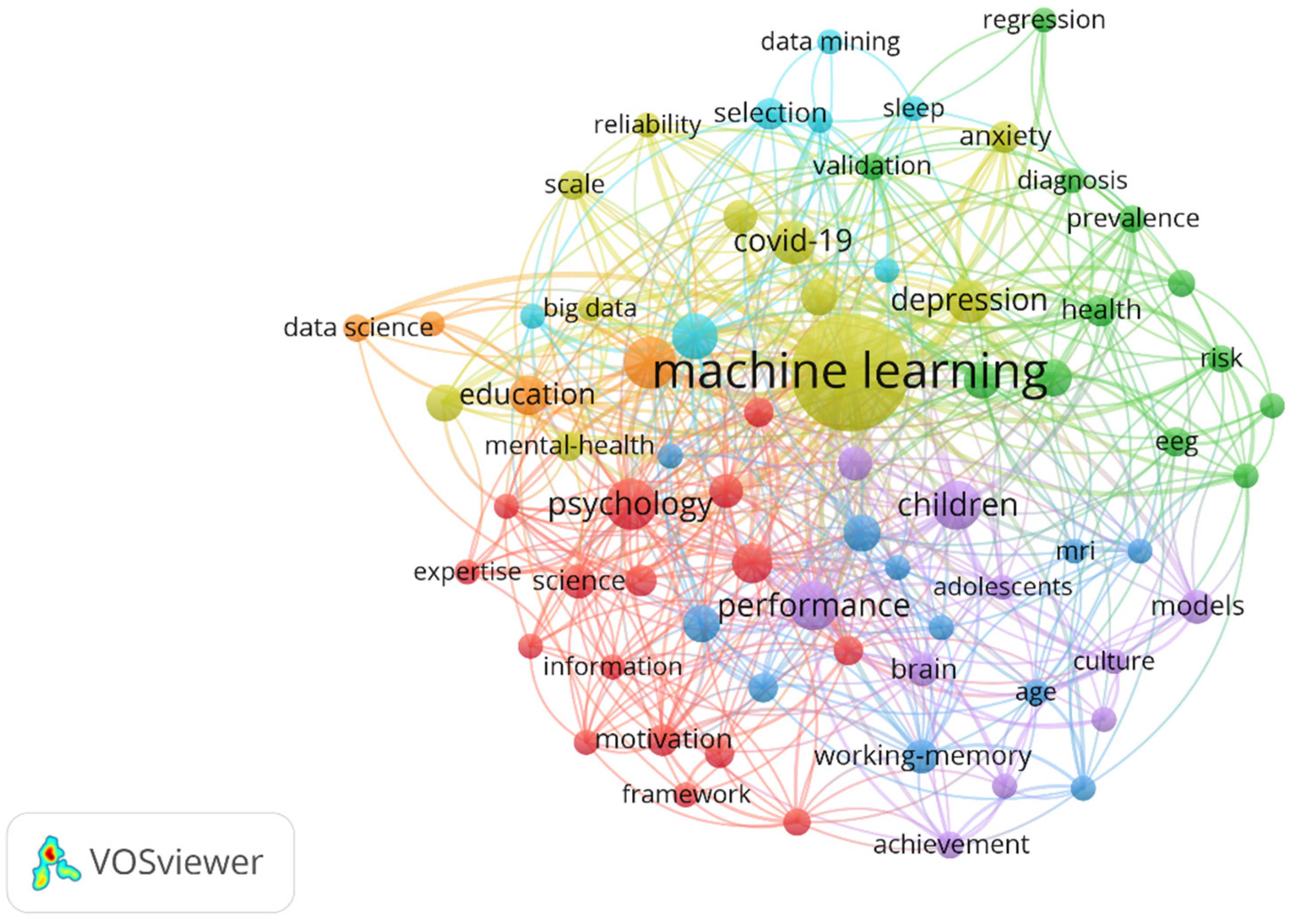
Figure 2.
VOSviewer illustration of prominent organizations, with lines showing research collaborations and colors representing various clusters.
Figure 2.
VOSviewer illustration of prominent organizations, with lines showing research collaborations and colors representing various clusters.
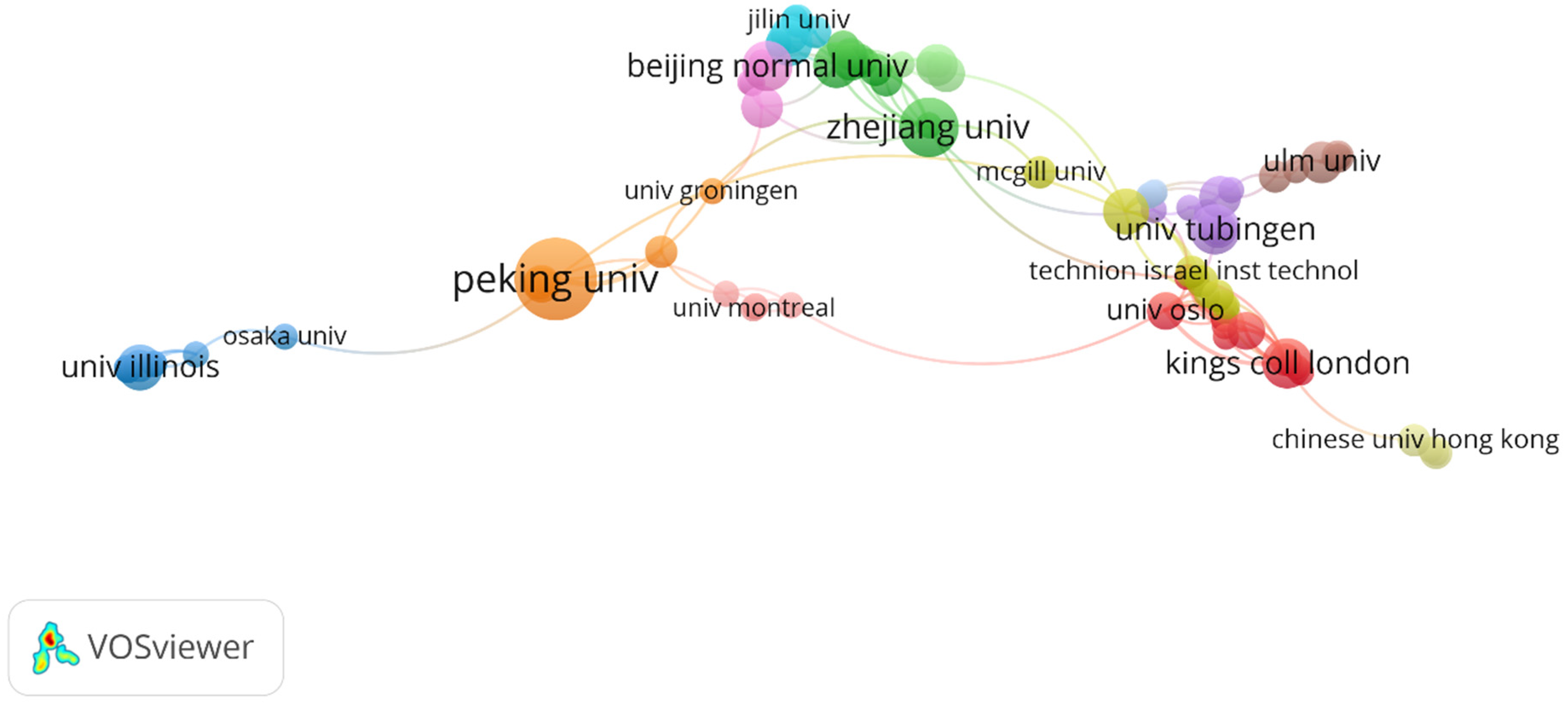
Figure 3.
VOSviewer map highlighting major countries and regions involved in research, with lines representing collaboration and colors indicating distinct clusters.
Figure 3.
VOSviewer map highlighting major countries and regions involved in research, with lines representing collaboration and colors indicating distinct clusters.
Disclaimer/Publisher’s Note: The statements, opinions and data contained in all publications are solely those of the individual author(s) and contributor(s) and not of MDPI and/or the editor(s). MDPI and/or the editor(s) disclaim responsibility for any injury to people or property resulting from any ideas, methods, instructions or products referred to in the content. |
© 2025 by the authors. Licensee MDPI, Basel, Switzerland. This article is an open access article distributed under the terms and conditions of the Creative Commons Attribution (CC BY) license (http://creativecommons.org/licenses/by/4.0/).
Copyright: This open access article is published under a Creative Commons CC BY 4.0 license, which permit the free download, distribution, and reuse, provided that the author and preprint are cited in any reuse.


