

Submitted:
22 December 2025
Posted:
23 December 2025
You are already at the latest version
Abstract
This study analyzes the educational and social impact of a series of innovative teaching projects developed at the Museum of the History of Pharmacy of the University of Seville. The initiatives —including historical video documentaries, the “student guides” program, and the digital outreach project Voices that Empower— explore the pedagogical potential of scientific heritage as a learning tool and as a medium for public communication. Through experiential and service-learning methodologies, these projects have enhanced students’ communication skills, critical thinking, and awareness of cultural and gender dimensions within pharmaceutical studies. The results demonstrate that the integration of audiovisual production, museum-based learning, and digital storytelling fosters meaningful engagement between the university and society, while also revitalizing the historical and humanistic dimensions of pharmacy. Furthermore, the inclusion of a gender perspective in the Voices that Empower initiative contributes to the visibility of women in STEM and highlights the museum as a space for empowerment and social transformation. This work concludes that university museums can act as strategic platforms for innovation in higher education, combining heritage preservation, teaching excellence, and civic outreach to promote a more inclusive and sustainable scientific culture.
Keywords:
heritage education
; university museums
; pharmacy history
; gender in STEM
; digital storytelling
; experiential learning
; innovation in higher education
1. Introduction
Higher education is undergoing a profound transformation driven by the convergence of cultural heritage, digital technologies, and innovative pedagogical approaches. University museums have evolved from static repositories of historical knowledge into dynamic laboratories for cultural, social, and educational innovation.
Within this context, the Museum of the History of Pharmacy at the University of Seville exemplifies how heritage spaces can integrate Information and Communication Technologies (ICT) and participatory methodologies to foster new modes of knowledge creation, dissemination, and civic engagement.
This article presents three interconnected educational innovation projects that illustrate the synergy between heritage management, digital storytelling, and social impact:
- Historical Documentary Production
Video documentaries filmed in the Museum and disseminated through platforms such as YouTube and TvUS complement classroom instruction in History of Pharmacy and Pharmaceutical Legislation. These productions enhance historical awareness and encourage reflective engagement with professional identity.
- 2.
- Alumnas Guía: Experiential Learning through Museum Mediation
This initiative trains undergraduate students as museum guides, officially recognized with ECTS credits. By acting as mediators of scientific heritage, students develop communicative and interpretative skills while strengthening the link between university and society.
- 3.
- #VocesQueEmpoderan: Gender, Digital Culture, and Scientific Heritage
Leveraging social media platforms such as TikTok and Instagram, this project enables female students to create digital narratives highlighting historical and contemporary women in science. Combining video, music, and storytelling, these productions promote gender equality, digital literacy, and public engagement with scientific heritage.
Collectively, these initiatives demonstrate how ICT can bridge cultural heritage and education, transforming traditional academic environments into participatory, inclusive, and socially meaningful learning spaces. The Museum of the History of Pharmacy thus emerges as a living laboratory where knowledge, heritage, and digital culture converge—an exemplary model of how the humanities can enhance the cultural and social value of heritage in contemporary society.
2. Materials and Methods
The methodology implemented across the three educational innovation projects is based on the integration of cultural heritage, digital technologies, and active learning strategies within the framework of the Museum of the History of Pharmacy at the University of Seville. Conceived as both a pedagogical and research resource, the Museum operates as a living laboratory that facilitates the convergence of historical knowledge, digital literacy, and public engagement through interdisciplinary and participatory approaches.
The methodological design combines heritage-based learning, ICT-mediated dissemination, and socially engaged education, structured into five key phases:
- Heritage Context and Educational Framework
The Museum’s permanent exhibition—focused on the evolution of the pharmaceutical profession from the 19th to the early 20th century—serves as the central setting for all activities. Its collection, comprising historical instruments, raw materials, and manuscripts, provides a tangible foundation for experiential learning. Each project integrates the Museum’s heritage assets into the curriculum of History of Pharmacy and related subjects, aligning pedagogical objectives with heritage valorization and public outreach.
- 2.
- Student Selection and Training
Participants include undergraduate students from the Faculty of Pharmacy, either enrolled in the course Chemoinformatics, Research and History of Pharmacy or involved as student guides and internal collaborators. Training sessions combine theoretical instruction in the history of science, museology, and scientific communication with practical workshops on audiovisual production, narrative techniques, and gender-sensitive storytelling. This phase ensures that students acquire both disciplinary knowledge and transversal competences in heritage communication and digital media.
- 3.
- Collaborative Content Development and Audiovisual Production
Interdisciplinary teams of students and faculty co-create scripts and materials addressing diverse aspects of pharmaceutical heritage. Outputs include documentary videos, guided tour narratives, and short storytelling pieces for social media. The creative process involves research using primary and secondary sources, critical analysis of gender representation in science, and the adaptation of scientific content into accessible digital formats. Filming is conducted primarily within the Museum, enhancing both the aesthetic value and historical authenticity of the educational experience.
- 4.
- Digital Tools and Dissemination via ICT Platforms
The methodological framework incorporates digital environments for both learning and dissemination. Documentary videos are published on the University’s audiovisual platforms (Official video streaming platform of the University of Seville -TvUS-) and YouTube, while storytelling content is distributed via social media channels such as TikTok and Instagram under the handle @farma.mus. The use of hashtags (e.g., #VocesQueEmpoderan, #MujeresEnLaCiencia, #MuseoHistoriaFarmacia) enhances visibility, interaction, and cross-platform engagement, extending the Museum’s reach beyond academic boundaries into the digital public sphere.
- 5.
- Evaluation, Recognition, and Social Impact
Evaluation is continuous and multidimensional, encompassing faculty supervision of historical accuracy, peer feedback, and audience interaction metrics. Student participation -particularly in the case of female student guides- is formally recognized through ECTS credits, acknowledging their commitment and contribution to the dissemination of scientific heritage. Project impact is assessed using both quantitative indicators (views, engagement rates) and qualitative analysis (narrative quality, audience feedback, and gender representation).
Overall, this methodology promotes a participatory model of heritage education that merges academic rigor with creative digital expression. By situating learning within an authentic heritage context and leveraging ICT tools for communication and reflection, the Museum of the History of Pharmacy of Seville exemplifies how university heritage can act as a catalyst for social innovation, gender equity, and public knowledge creation.
3. Results
3.1. Historical Video Documentaries
Faculty members from the History of Pharmacy and Pharmaceutical Legislation area have promoted the production of historical and legislative video documentaries as didactic resources to complement classroom teaching. All documentaries share a common setting: the Museum of the History of Pharmacy in Seville. This pedagogical and outreach tool has proven highly effective for university teaching and scientific dissemination. The videos are available on platforms such as TvUS (University of Seville Television) and YouTube.
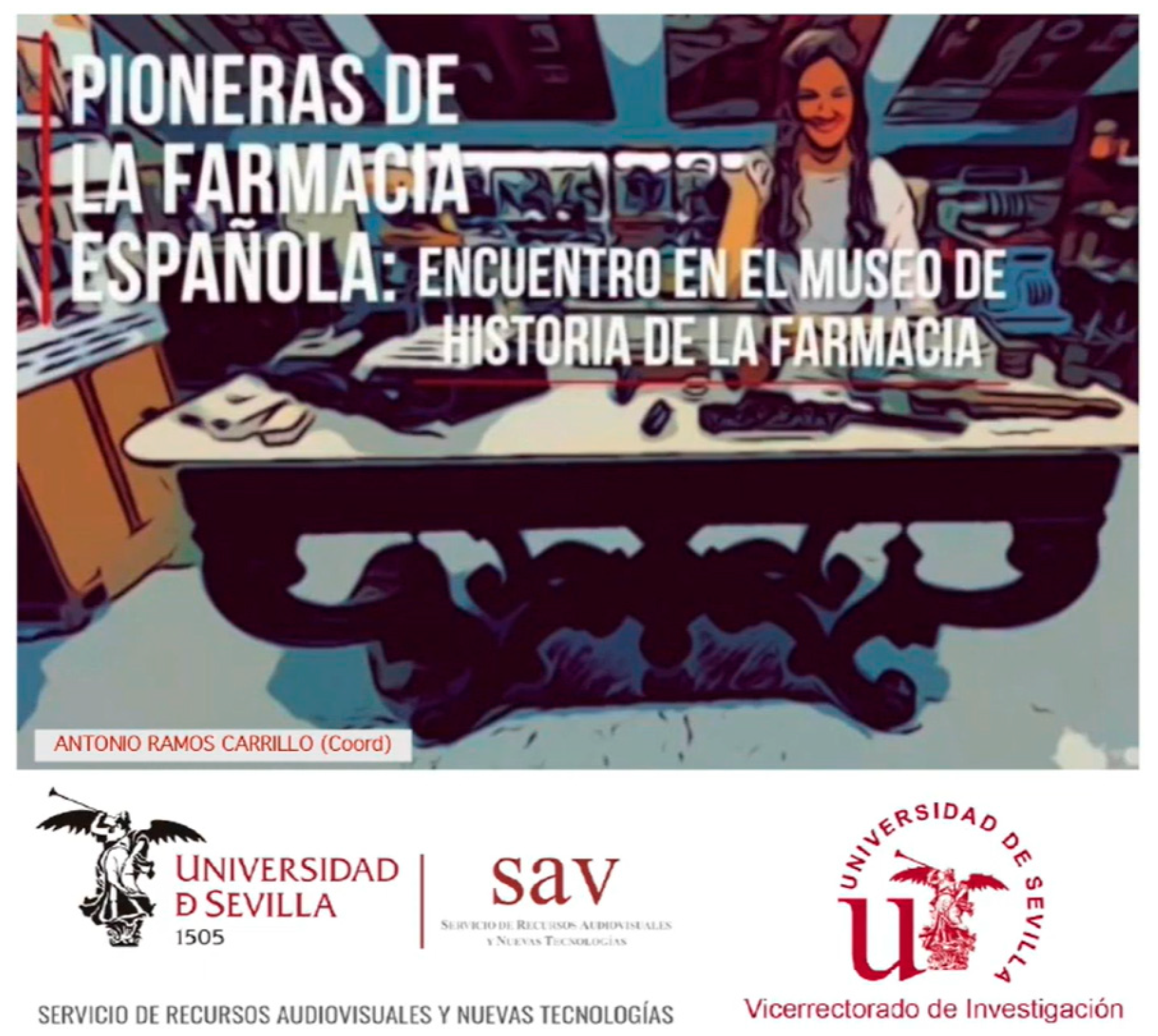
Among these, the documentary Pioneras de la Farmacia Española: Encuentro en el Museo de Historia de la Farmacia [1] stands out. Lasting 17 minutes, it highlights the trajectory of four pioneering women in Spanish pharmacy. Filmed entirely in the Museum, the video consists of three parts:
- A theatrical introduction featuring Hygea, goddess of Pharmacy.
- A closing sketch reclaiming the link between pharmacy and witchcraft, reframing “witches” as early custodians of medicinal knowledge.
Figure 1.
Cover image of the “Pioneras de la Farmacia Española”. YouTube, Link: Pioneras de la Farmacia Española: Encuentro en el Museo de Historia de la Farmacia [4].
Figure 1.
Cover image of the “Pioneras de la Farmacia Española”. YouTube, Link: Pioneras de la Farmacia Española: Encuentro en el Museo de Historia de la Farmacia [4].
3.1.1. Farmacia, arte y bienestar, showcasing the Museum’s historical-artistic collection and pharmaceutical instruments.
3.1.2. Plantas y medicamentos: Una apasionante visión histórica, produced during the International Year of Plant Health, highlighting phytotherapy in pharmacy history.
3.1.3. Farmacéuticos y América entre la Ciencia y el Comercio Between Science and Trade inspired by research on medicines exchanged during Spanish expeditions to the New World, combining interviews and theatrical scenes filmed in the Museum and historical locations in Seville [7,8,9,10].
3.2. Student Guides Program
Continuing with our presentation of projects focused on pharmaceutical heritage and led by women, we describe the training process for students involved in oral presentations within the Museum setting.
As university educators, we recognize the importance of engaging students—particularly in scientific disciplines—in activities that promote awareness of heritage, its value, and its preservation. For this purpose, we selected a small group of volunteers to participate in the “Student Guides” project. Their tasks included studying the Museum’s collection, preparing a script, and rehearsing with faculty members. This approach fosters active learning and was rewarded with ECTS credits. The project began in the 2024/25 academic year and continues with the same enthusiasm and number of participants in 2025/26. All volunteers to date have been women.
Student Recruitment
Following several announcements on the Virtual Teaching platform (EV) in the course Chemo-Informatics, Research and History of Pharmacy and during the 2024/25 Research Initiation Days held at the Faculty of Pharmacy, five internal students joined the Department of Pharmacy and Pharmaceutical Technology (History and Legislation area) to participate actively in the initiative proposed by Professors Ramos and Ruiz. Three students had previously taken the course, learning about the project through their professors and EV announcements. The other two discovered the opportunity during the aforementioned Research Initiation Days. This year, one additional student has joined the program.
Competency Development
The Museum team views the university not only as a space for knowledge transmission but also as a context for acquiring professional skills. This perspective aligns with González and Triviño [11], who analyze didactic strategies in higher education. Professors Antonio Ramos and Rocío Ruiz prioritized student-driven learning, encouraging participants to identify key historical elements, prepare handwritten summaries, and deliver informative presentations during guided tours. These activities required reasoning and effective communication, improving oral presentation skills essential for academic and professional life. They also reinforced humanistic knowledge and introduced alternative learning strategies. Such efforts are particularly relevant in the digital era, where artificial intelligence can generate content instantly but cannot replicate the intellectual work of summarizing a museum collection of over 1,700 objects or developing public speaking skills—tasks that demand genuine student engagement.
Innovative Assessment
The activity was assessed without traditional exams. Instead, students earned 2 ECTS credits for their participation, recognizing the acquisition of new competencies beyond laboratory and classroom learning in the Pharmacy degree.
Active Learning
During the first semester, students trained at the Museum, preparing personal dossiers based primarily on information from the Museum’s official website [12]. These materials supported their public presentations.
Last year, fifteen visits were organized through the Faculty of Pharmacy as part of the Open Days for Pre-University Students within the Faculty’s Orientation and Tutorial Action Plan (POAT). Initially, student guides attended as observers and later as presenters once they demonstrated sufficient knowledge. Since 2013, Professors Ruiz and Ramos have overseen these visits and supervised the student guides.
Guided Tours
Visitor groups typically spend 30 minutes in the Museum, occasionally extending to 45–50 minutes. During this time, the collection, its objects, books, raw materials, and other resources essential for drug preparation are explained. Students supplemented their summaries with notes from faculty-led tours. After acquiring the necessary knowledge, they practiced delivering content to general audiences through multiple rehearsals. This training aimed to transform students into effective science and history communicators, leveraging their fresh perspective to connect with school groups visiting the Museum.
It is worth emphasizing that Pharmacy, while a health science, carries an intrinsic humanistic dimension. Innovative teaching activities such as this reveal the synergy between science and the humanities.
In the second semester, students began leading parts or entire guided tours for external groups. Faculty members were always present during these sessions. Last year, fifteen visits included student participation as observers or presenters. For the current year, eight visits are scheduled through January, with most activities concentrated in spring.
Through this extracurricular initiative, students significantly improved their communication and teaching skills. They also demonstrated a strong interest in the History of Pharmacy—their future profession. Their involvement fostered positive interactions between students and faculty, leaving visitors with a sense of satisfaction and reinforcing the cultural outreach role of the Faculty.
3.3. Voices that Empower
The most recent project, Voces que Empoderan, integrates heritage, teaching, and social media through TikTok (Figure 5 and Figure 6) and Instagram (@farma.mus). Students create and publish short videos combining historical content with gender perspectives, highlighting women in science and pharmacy.
3.3.1. Examples of Production and Published Content
“Data on Women in Science and STEM”
The first video, published on September 15, lasts 43.5 seconds and presents a synthesis of key indicators on female presence in research and STEM [13] fields, highlighting structural inequality in participation and leadership positions. To ensure inclusivity, the format combines text, images, and voice-over in an informative and accessible tone. The video includes numerical data illustrating the challenges women have faced in pursuing scientific careers—for example, throughout Nobel Prize history, only 22 women have received the award [14].
Building on studies of gender gaps in scientific careers [15], the project references notable research such as Moss-Racusin et al. [16], which demonstrated that science faculty tend to evaluate male students more favorably than female students, even with equivalent merits. More recent studies, such as Çevik and Kurnaz [17], analyzed how integrated STEM education enhances problem-solving, scientific creativity, and critical thinking.
For Voices that Empower, the second video focused on Nuria Oliver, an engineer and Ph.D. in artificial intelligence internationally recognized for her research and advocacy for ethics and equality in technology. Her career exemplifies leadership in AI research [18]. The storytelling combines a brief biographical narrative with visual resources to strengthen identification with current female role models.
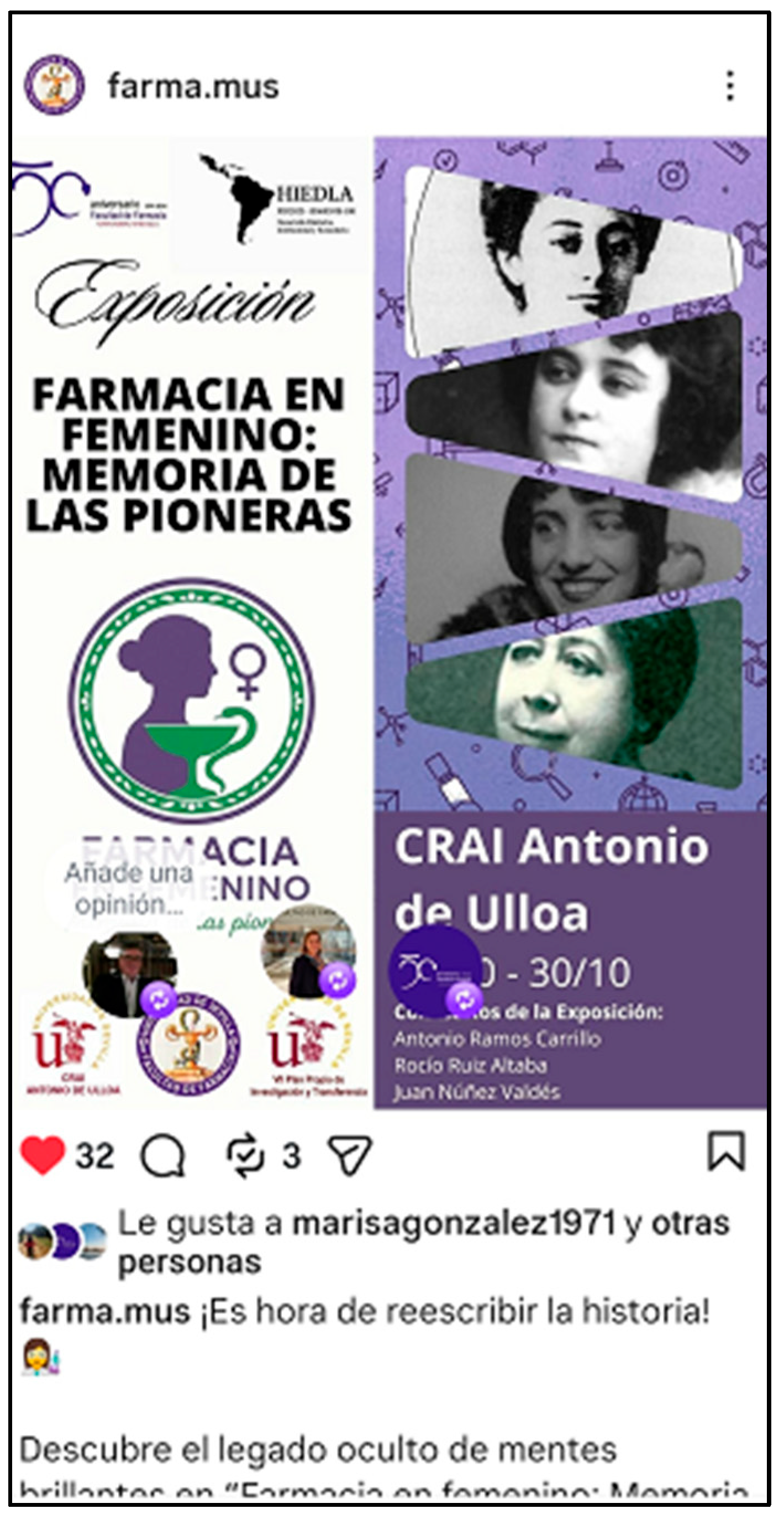
“Work at the Museum: Temporary Exhibitions, New Donations, and Guided Tours”Beyond connecting heritage with university teaching, the museum team actively promotes dissemination. Each academic year, we collaborate with the University of Seville Library (CRAI Antonio de Ulloa) to organize temporary exhibitions on pharmacy history (Figure 6). This year’s theme focused on women in pharmacy. Internal students and student guides contributed posters featuring pioneering Spanish women pharmacists. All content was shared via TikTok and Instagram.
3.3.2. Dissemination and Reach
During the initial months of Voices that Empower, digital visibility of pharmaceutical heritage and student participation as communicators increased significantly. All videos were filmed in the permanent collection of the Museum of the History of Pharmacy at the University of Seville, transforming the exhibition space into a dynamic educational and outreach setting.
In the analyzed period (last 30 days), Instagram metrics show:
2,662 total views
1,442 accounts reached (+1,150%)
Reels accounted for 75.7% of engagement, confirming the effectiveness of short-form audiovisual content for scientific heritage communication.
Top-performing posts focused on specific museum objects (albarelos, historical instruments, apothecary jars, and lab scenes), each attracting 1,500–3,000 views, demonstrating that material heritage acts as a narrative driver when presented in first person by students.
Demographic analysis indicates strong engagement from urban audiences near the institution:
Seville (49%) as the main origin of views, followed by Dos Hermanas, Madrid, and Córdoba.
3.3.3. Audience Profile and Behavior
The audience is predominantly young:
25–34 years (31.7%)
18–24 years (12.1%)
3.3.4. Student Participation and Empowerment
Students managing the profiles assumed tasks such as:
Scriptwriting
Filming in the permanent exhibition
Editing and publishing content
Analyzing metrics and making communication decisions
This approach fosters a learning model based on content creation, increasing their visibility as young women in STEM while ensuring sustainable museum communication.
Individual video metrics show:
An average of 825 views per post
Audience retention near 1% until the end (standard for short educational reels)
Related searches for “farmamus,” “Universidad de Sevilla,” and “Sevilla universidad,” indicating growing interest in the institution and its heritage.
TikTok metrics reveal similar trends:
Engagement concentrated in short videos filmed in the museum
High search volume for heritage-related terms
A predominantly young, female audience profile
These results confirm the project’s potential to position university pharmaceutical heritage on platforms where museums are rarely present.
This is significant, as the project aims to attract younger audiences, typically underrepresented in university museums. Gender data show a majority of women (71.9%), aligning with the project’s focus on female empowerment in science and its goal of creating audiovisual role models led by pharmacy students.
Summary of Impact
The results reveal a strong correlation between heritage-based strategies and educational innovation. Video documentaries have consolidated the Museum as a space for experiential learning and cultural mediation. The Student Guides program demonstrates how active participation fosters communication skills and civic engagement. Finally, Voices that Empower confirms the effectiveness of digital storytelling in promoting gender equality and expanding the reach of scientific heritage to younger audiences.
Collectively, these initiatives position the Museum of the History of Pharmacy as a living laboratory where heritage, education, and digital culture converge, offering a replicable
4. Discussion
The results of this study underscore the potential of scientific-university heritage—specifically the Museum of the History of Pharmacy in Seville—as a laboratory for teaching innovation, public engagement, and the construction of scientific citizenship. Initiatives such as video documentaries, the student guide program, and the digital project Voices that Empower illustrate how the intersection of teaching, research, and outreach creates meaningful learning environments where historical pharmacy knowledge is reinterpreted through contemporary perspectives: heritage education, competency-based training, and gender equality in science.
Using heritage as a pedagogical tool is a consolidated trend in higher education, particularly in fields related to the history of science and health. Heritage education should go beyond transmitting historical content; it must foster cognitive and emotional experiences that actively connect students with the past [19]. In this sense, the Museum of the History of Pharmacy provides an ideal setting for student-centered methodologies, where observation, analysis, and historical narrative creation become experiential learning mechanisms. Falk and Dierking [20] have shown that museum-based learning promotes personal and social meaning-making by linking heritage objects to life experiences and contemporary values. The video documentaries produced by faculty and students—integrating historical research, scenic reenactment, and audiovisual resources—embody this mediating role between academic knowledge and society.
The educational potential of these documentaries lies not only in their outreach dimension but also in their value as active learning strategies. Scriptwriting, staging, and interpreting historical sources involve research and synthesis processes aligned with Kolb’s experiential learning model [21], where knowledge emerges from transforming experience. Such initiatives have been recognized as cultural mediation tools that redefine the relationship between museums, universities, and communities [22]. The documentary Pioneers of Spanish Pharmacy exemplifies this approach by combining historical reconstruction with gender perspectives, theatricalization with documentary research, and by making visible a largely overlooked female heritage. The allegorical figure of Hygea and the recovery of Spain’s first female pharmacists reinforce the symbolic dimension of heritage as a vehicle for memory and empowerment [23].
Student participation in these projects reflects service-learning principles [24], merging community engagement with academic and personal development. The “student guides” experience illustrates how direct interaction with heritage fosters transversal skills—communication, critical thinking, scientific outreach—essential for future health professionals. This model aligns with “applied heritage education”[25], where university museums act as platforms for holistic training beyond disciplinary boundaries. Active involvement in researching, interpreting, and disseminating pharmaceutical heritage promotes transformative learning that integrates cognitive, ethical, and emotional dimensions.
Direct observation, script development, and public presentations strengthen communicative competence and synthesis skills. Contact with heritage enhances historical knowledge internalization and cultural empathy, fostering deeper understanding of identity, memory, and citizenship values [26]. In this case, students approached museum objects academically while recognizing their symbolic and social value, acting as mediators between university and community. This supports the idea that university teaching—especially in health sciences—benefits from humanistic approaches balancing technical training with heritage and ethical sensitivity [27].
The service-learning model developed around the Museum of the History of Pharmacy has enabled an alternative assessment approach to traditional exams. Awarding ECTS credits to students actively participating in guided visits represents institutional recognition of effort and autonomous learning. This formative evaluation responds to the need to assess processes rather than outcomes, aligning with authentic assessment strategies [28]. Active learning in the museum thus yields a dual benefit: strengthening students’ communicative and heritage competencies while projecting university knowledge toward society through accessible scientific outreach.
The synergy between science and humanities, evident in the student guide program, embodies educational transversality. Heritage education in university contexts should foster dialogue across disciplines, acknowledging scientific and technical heritage as cultural products [19]. Pharmacy, as a health science, carries historical-artistic components that the museum makes visible and reinterprets. Using historical objects, instruments, and documents as teaching resources enables a holistic understanding of pharmaceutical practice and reinforces professional identity.
The Voices that Empower project extends the museum’s educational dimension into the digital realm, bridging heritage culture and contemporary communication. Social media platforms such as TikTok and Instagram exemplify “participatory digital museology” [29], bringing heritage content to diverse audiences through accessible formats and audiovisual languages. Students become content creators rather than mere recipients, fostering critical appropriation of heritage and meaningful digital literacy. Digital storytelling reconfigures the relationship between heritage, identity, and communication, turning young people into active narrators of collective memory [30].
The gender perspective in Voices that Empower adds a particularly relevant interpretative layer. Digital narratives in education promote critical and reflective views from a gender perspective, contributing to communicative competence and female empowerment in university contexts [31]. Highlighting women in pharmacy history and STEM careers aligns with UNESCO’s global agenda for gender equality in science [32]. Persistent gender biases in academia [33] underscore the need for outreach and awareness initiatives to transform social perceptions. By presenting contemporary female role models alongside historical pioneers, the project establishes symbolic continuity that strengthens belonging and empowerment. This representation, combined with inclusive communication strategies, resonates with educational cyberfeminism principles [34]. From a heritage perspective, using the museum as a backdrop for audiovisual and digital productions reinforces its symbolic value as a site of memory and meaning-making. Heritage is not static but a social process of constructing meanings [35]. Here, the museum becomes a performative space where past dialogues with present, expanding museography toward hybrid, digital formats that prioritize authenticity, participation, and emotional engagement [25,36].
Qualitative results also show that student involvement in heritage communication projects fosters critical thinking and understanding of science’s social role. Active interpretation of scientific objects helps students grasp how knowledge is constructed and its ethical and cultural implications [37]. Thus, the Museum of the History of Pharmacy project not only contributes to technical training but also strengthens civic dimensions, promoting a vision of pharmacy linked to public service and social responsibility.
Institutionally, these experiences underscore university museums’ role as strategic agents for educational innovation and cultural transfer. University science museums can act as partners in teaching, research, and social engagement, fully integrating into universities’ missions of internationalization and educational innovation [38]. The Museum of the History of Pharmacy in Seville emerges as a hub articulating the university’s three missions: teaching, research, and outreach. Its ability to attract external audiences—schools, visitors, local communities—reinforces the social function of university heritage as a common good and a resource for cultural sustainability [39].
Nevertheless, some limitations arise from the emerging nature of these projects. For Voices that Empower, available social media metrics do not yet allow exhaustive quantitative impact assessment, hindering objective reach measurement. Long-term sustainability depends on institutional support, continued funding, and renewal of faculty and student teams. Future phases should incorporate systematic evaluation tools—perception surveys, competency analyses, longitudinal studies—to assess the impact on training and public perception of scientific heritage more accurately.
Overall, these findings demonstrate that combining heritage, teaching, and social communication can constitute a replicable model of university innovation. The Museum of the History of Pharmacy experience shows that heritage is not merely an object of study but a dynamic pedagogical resource capable of articulating memory, identity, and social engagement. The humanistic dimension of pharmacy, often overshadowed by its technical side, emerges here as a core axis of integral education and as a bridge between science and culture. Likewise, the gender perspective and digital expansion illustrate how heritage education can adapt to contemporary languages without losing academic rigor or critical depth. Integrating audiovisual, museological, and digital strategies strengthens the university-society connection, consolidating the museum as a living space for learning, research, and empowerment.
5. Conclusions
Educational Impact
The analysis of the results confirms that pharmaceutical historical heritage—particularly the Museum of the History of Pharmacy in Seville—constitutes an educational resource of extraordinary potential for university teaching innovation. The initiatives developed demonstrate that university museums, when activated as pedagogical and communication spaces, transcend their traditional role as custodians and become agents of education, research, and social knowledge transfer.
The projects analyzed—historical video documentaries, the Student Guides program, and the digital initiative Voices that Empower—highlight the effectiveness of heritage as a tool for experiential learning. The creation of audiovisual and narrative content enabled students to actively engage in inquiry, interpretation, and dissemination of historical knowledge, reinforcing the link between theory and practice. This approach, consistent with active learning and service-learning models, generated a meaningful environment that combines technical competencies with communicative, reflective, and ethical skills.
Professional Identity and Humanistic Dimension
Student involvement in heritage mediation strengthened their professional identity and awareness of pharmacy’s historical legacy. The Student Guides program illustrates how direct interaction with heritage fosters a sense of belonging, social responsibility, and appreciation of scientific knowledge as cultural capital. These experiences reaffirm the need to integrate a humanistic dimension into health science degrees, consolidating the comprehensive training of future pharmacists.
Institutional Role
The results confirm that university museums can play a strategic role in the contemporary university mission. Their function extends beyond preservation to include scientific outreach, heritage literacy, and citizenship building. The Museum of the History of Pharmacy demonstrates that academic heritage can become a means of social projection and an effective tool for connecting universities with their communities. In this way, the university assumes a cultural and civic dimension aligned with sustainability and well-being objectives promoted by ICOM [38] and the 2030 Agenda.
Gender Perspective and Digital Innovation
From a gender perspective, Voices that Empower offers an innovative and necessary contribution. By using social media as dissemination channels, the reach of scientific and historical heritage expands to younger and more diverse audiences. The inclusion of female role models—both historical and contemporary—fosters identification and promotes an inclusive narrative of science. This initiative aligns with international strategies for gender equality in STEM education and science communication policies. Its cyberfeminist approach and use of digital storytelling reinforce the university’s role as an agent of social transformation.
Limitations and Future Directions
The limitations identified—mainly related to the initial development phase of some projects and the scarcity of quantitative social media metrics—do not diminish the relevance of the results but open new research avenues. Future phases should deepen the evaluation of educational and social impact through mixed methodologies combining qualitative and quantitative analysis. Expanding interfaculty collaboration and exploring the replicability of this model in other university contexts, particularly in experimental and health sciences with their own scientific heritage, are recommended.
Final Remarks
Overall, these experiences offer a transferable and sustainable model of teaching innovation. The convergence of teaching, research, and heritage dissemination not only enriches university education but revitalizes scientific heritage as a living, dynamic, and socially useful common good. The synergy between science, art, and humanities emerging from these projects reaffirms the relevance of a university committed to its environment, capable of generating knowledge, culture, and social awareness. Ultimately, the case of the Museum of the History of Pharmacy in Seville demonstrates that educating in and through heritage is a powerful way to build scientific citizenship and contribute to cultural and democratic development—an approach that can inspire similar initiatives globally.
Funding
This research received no external funding.
Data Availability Statement
The original contributions presented in this study are included in the article.: Further inquiries can be directed to the corresponding author.
Conflicts of Interest
The authors declare no conflicts of interest.
References
- Ramos-Carrillo, A.; Ruiz-Altaba, R.; Núñez, J.; González, A.I.; Cueli, R.C.; Gutiérrez, M.D.; Ramos, M.M. Pioneras de la Farmacia Española: Encuentro en el Museo de Historia de la Farmacia. Available online: https://www.youtube.com/watch?v=ByTrV7RZpRY (accessed on 1 December 2025).
- González, A.I.; Núñez-Valdés, J.; Ramos-Carrillo, A. Rompiendo moldes: La formación universitaria y el ejercicio profesional de la mujer en Farmacia con anterioridad a la guerra civil española (1893–1936). Universidad de Sevilla, 2024.
- Ramos-Carrillo, A.; Núñez-Valdés, J.; Moreno Toral, E.; Ruiz-Altaba, R. En clave de re. Tertulias de rebotica: “rei”vindicando el papel de la mujer en la ciencia farmacéutica española: “re”escribiendo la historia en femenino. In Género y educación ante la manipulación de la comunicación; Dykinson: Madrid, Spain, 2023; pp. 84–101.
- Ramos-Carrillo, A.; Ballesteros, J.; Martínez, C.; Moreno, E. Farmacia, arte y bienestar: Museo de Historia de la Farmacia de Sevilla. Available online: http://tv.us.es/media/1_31w53vt4 (accessed on 1 December 2025).
- Ramos-Carrillo, A.; Beatriz, B.; Porcel, A.; González, M.; Marín, M.M. Plantas y medicamentos: Una apasionante visión histórica. Available online: https://www.youtube.com/watch?v=Ch65wiro_Bg (accessed on 1 December 2025).
- Ramos-Carrillo, A.; Ruiz-Altaba, R.; Cecilio, J.; Venegas, C.J.; Fábregas, S.; Cueli, R.C.; González, A.I. Farmacéuticos y América entre la ciencia y el comercio. Available online: https://tv.us.es/media/FARMACÉUTICOS%20Y%20AMÉRICA%20ENTRE%20LA%20CIENCIA%20Y%20EL%20COMERCIO (accessed on 1 December 2025).
- Venegas, C.J.; Ramos-Carrillo, A. La botica en la Expedición de Magallanes y Elcano. Taberna Libraria, 2021.
- Ramos-Carrillo, A.; Venegas, C.J.; Moreno, E. El mortero emigrante: Crónica de los primeros boticarios españoles que pasaron a Indias. Temas Americanistas 2022, 48(48), 340–366.
- González, A.; Cueli, R.C.; Ramos-Carrillo, A. «Çierta merced en el bálsamo…»: Sobre la introducción en el mercado europeo del Bálsamo de Villasante (1526–1532). Anuario de Estudios Americanos 2022, 79(1), 13–38.
- González, S.; Triviño, M.A. Las estrategias didácticas en la práctica docente universitaria. Profesorado 2018, 22(2), 371–388. [CrossRef]
- Museo de Historia de la Farmacia de Sevilla. Available online: https://institucional.us.es/museohistfarm/ (accessed on 1 December 2025).
- Gómez, A. ▷ Carreras STEM: ¿Qué son y por qué tienen tantas salidas? Educación Live. Available online: https://www.educalive.com/blog/que-son-carreras-stem (accessed on 1 December 2025).
- Mujeres con ciencia. La ruleta de los Premios Nobel. Available online: https://mujeresconciencia.com/2021/01/01/la-ruleta-de-las-premios-nobel/ (accessed on 1 December 2025).
- UNESCO. To be smart, the digital revolution will need to be inclusive: Gender equality in science, technology, engineering and mathematics (STEM). UNESCO Publishing, 2021. Available online: https://unesdoc.unesco.org/ark:/48223/pf0000375644 (accessed on 1 December 2025).
- Moss-Racusin, C.A.; Dovidio, J.F.; Brescoll, V.L.; Graham, M.J.; Handelsman, J. Science faculty’s subtle gender biases favor male students. Proceedings of the National Academy of Sciences 2012, 109(41), 16474–16479. [CrossRef]
- Çevik, M.; Kurnaz, M.A. The effects of integrated STEM education practices on problem solving skills, scientific creativity, and critical thinking dispositions. Participatory Educational Research 2022, 9(6), 358–379. [CrossRef]
- RTVE. A golpe de bit: Nuria Oliver, la investigadora española pionera en IA. Available online: https://www.rtve.es/play/audios/a-golpe-de-bit/golpe-bit-nuria-oliver-investigadora-espanola-pionera-ia/16723541/ (accessed on 1 December 2025).
- Fontal, O. (Coord.). Cómo educar en el patrimonio. Comunidad de Madrid, Dirección General de Patrimonio Cultural, 2020.
- Falk, J.H.; Dierking, L.D. Learning from museums: Visitor experiences and the making of meaning, 2nd ed.; Rowman & Littlefield: Lanham, MD, USA, 2018.
- Kolb, D.A. Experiential learning: Experience as the source of learning and development, 2nd ed.; Pearson Education: Upper Saddle River, NJ, USA, 2015.
- Hooper-Greenhill, E. Museums and education: Purpose, pedagogy, performance. Routledge: London, UK, 2007. [CrossRef]
- Gómez Hurtado, I. Buenas prácticas para una educación patrimonial inclusiva. In Investigación y buenas prácticas en educación patrimonial entre la escuela y el museo: Territorio, emociones y ciudadanía; Cuenca López, J.M.; Estepa Giménez, J.; Martín Cáceres, M.J., Eds.; Trea: Gijón, Spain, 2021; pp. 175–194.
- Eyler, J.; Giles, D.E. Where’s the learning in service-learning? Jossey-Bass: San Francisco, CA, USA, 1999.
- Navarro Mondéjar, M.L.; Alpañez Serrano, M. Museos universitarios: investigación, educación y transferencia del conocimiento. La aportación del MUA. Revista PH 2024, 113, 140–143.
- Estepa Giménez, J. (Coord.). Investigación y buenas prácticas en educación patrimonial entre la escuela y el museo: territorio, emociones y ciudadanía. Instituto Andaluz del Patrimonio Histórico: Sevilla, Spain, 2021.
- Fontal, O.; Ibáñez-Etxeberria, A. Estrategias e instrumentos para la educación patrimonial en España. Educatio Siglo XXI 2015, 33(1), 15–32.
- Biggs, J.; Tang, C. Teaching for quality learning at university, 4th ed.; McGraw-Hill Education: Maidenhead, UK, 2011.
- Parry, R. (Ed.). Museums in a digital age. Routledge: London, UK, 2010. [CrossRef]
- Mendoza Hidrovo, M.E.; Hermann Acosta, A. Storytelling una herramienta digital en el ámbito educativo: revisión sistemática en el contexto suramericano. Polo del Conocimiento 2023, 8(3), 523–539.
- Bort Caballero, M.L.; Gil-Mediavilla, M. Intervención educativa con narrativas digitales en lengua y literatura española del grado universitario en educación primaria: Una perspectiva en femenino. Formación Universitaria 2023, 16(4), 43–52. [CrossRef]
- UNESCO. Cracking the code: Girls’ and women’s education in STEM. UNESCO Publishing, 2019. Available online: https://unesdoc.unesco.org/ark:/48223/pf0000253479 (accessed on 1 December 2025).
- García González, L.Á. La investigación del activismo digital feminista. In Reflexiones sobre viejas y nuevas violencias desde los estudios de género; Universidad Autónoma de Nayarit: Nayarit, Mexico, 2023.
- Smith, L. Uses of heritage. Routledge: London, UK, 2007.
- Simon, N. The participatory museum. Museum 2.0: Santa Cruz, CA, USA, 2010.
- Scheersoi, A.; Tunnicliffe, S.D. (Eds.). Natural history dioramas – Traditional exhibits for current educational themes: Socio-cultural aspects. Springer: Cham, Switzerland, 2019. [CrossRef]
- Schifino Ferraro, J.L.; Goldwater, A.; McDonald, C.; Pires, M.G.S.; Stott, J.; Suess, J.A.; Smith, M.P. Connecting Museums: A case study in leadership, innovation and education in university science museums leading internationalisation projects. Educação 2019, 42(1), 77–84. [CrossRef]
- ICOM. Museos, sostenibilidad y bienestar. Available online: https://icom.museum/es/noticias/museos-sostenibilidad-y-bienestar/ (accessed on 1 December 2025).
- Moss-Racusin, C.A.; Dovidio, J.F.; Brescoll, V.L.; Graham, M.J.; Handelsman, J. Science faculty’s subtle gender biases favor male students. Proceedings of the National Academy of Sciences 2012, 109(41), 16474–16479. [CrossRef]
- RTVE. A golpe de bit: Nuria Oliver, la investigadora española pionera en IA. Available online: https://www.rtve.es/play/audios/a-golpe-de-bit/golpe-bit-nuria-oliver-investigadora-espanola-pionera-ia/16723541/ (accessed on 1 December 2025).
Figure 2.
Cover image ofthe video, “Farmacia, arte y bienestar. Museo de Historia de la Farmacia de Sevilla”. TvUS, Link: FARMACIA, ARTE Y BIENESTAR. MUSEO DE HISTORIA DE LA FARMACIA DE SEVILLA - TV US. Plataforma de Vídeo Streaming Institucional de la Universidad de Sevilla. [5].
Figure 2.
Cover image ofthe video, “Farmacia, arte y bienestar. Museo de Historia de la Farmacia de Sevilla”. TvUS, Link: FARMACIA, ARTE Y BIENESTAR. MUSEO DE HISTORIA DE LA FARMACIA DE SEVILLA - TV US. Plataforma de Vídeo Streaming Institucional de la Universidad de Sevilla. [5].
Figure 3.
Cover image of the video, “Plantas y medicamentos. Una apasionante visión histórica”. YouTube, Link: Plantas y medicamentos. Una apasionante visión histórica [6].
Figure 3.
Cover image of the video, “Plantas y medicamentos. Una apasionante visión histórica”. YouTube, Link: Plantas y medicamentos. Una apasionante visión histórica [6].
Figure 4.
Cover image of the video “Farmacéuticos y América entra la Ciencia y el Comercio”. YouTube, Link: https://youtube.com/watch?v=XaEvwMeTN3w [7].
Figure 4.
Cover image of the video “Farmacéuticos y América entra la Ciencia y el Comercio”. YouTube, Link: https://youtube.com/watch?v=XaEvwMeTN3w [7].
Figure 5.
Screenshot from TikTok. Data provided by the application on the gender and age distribution of the audience viewing the videos. Source: Author’s own capture.
Figure 5.
Screenshot from TikTok. Data provided by the application on the gender and age distribution of the audience viewing the videos. Source: Author’s own capture.
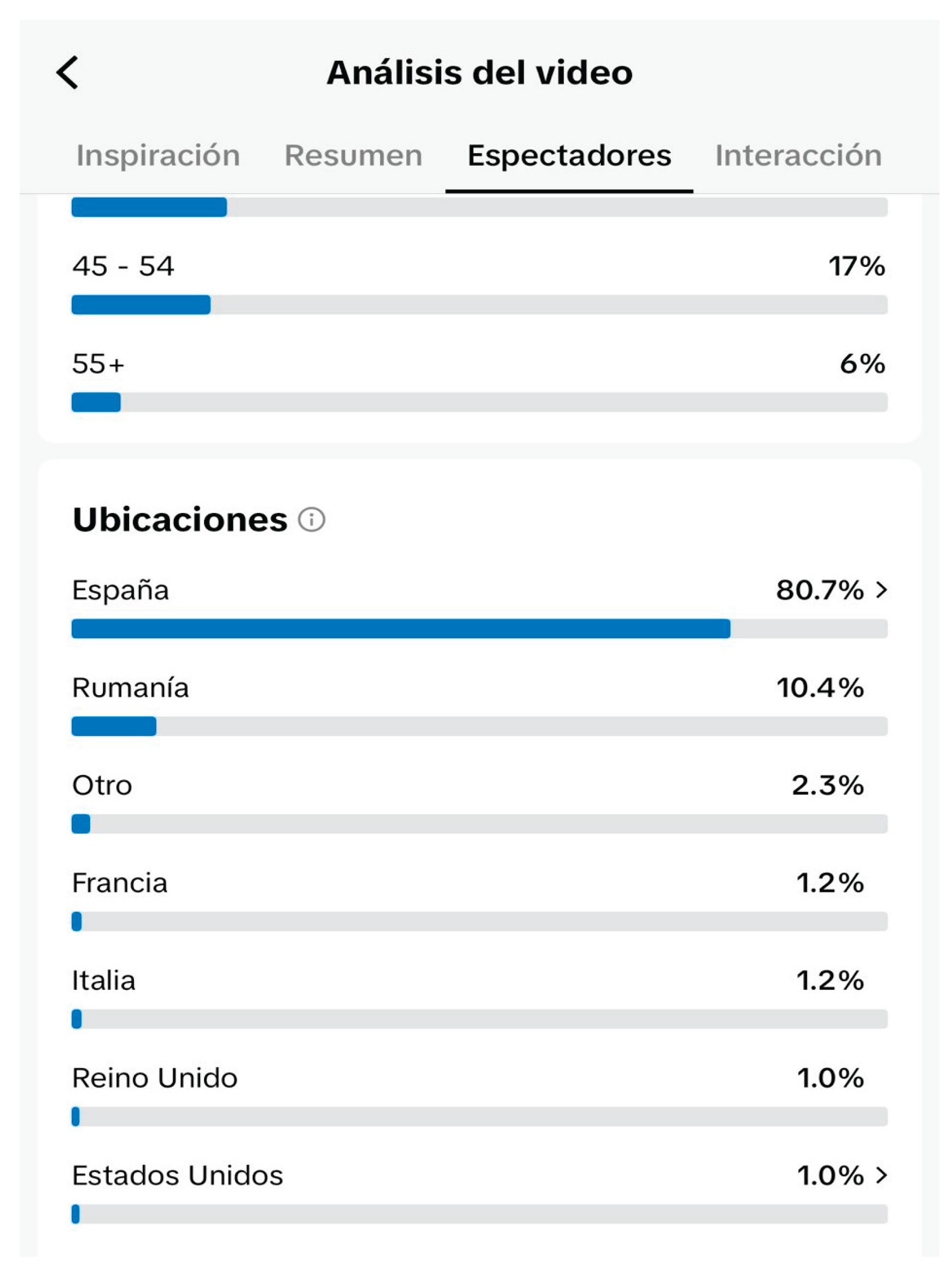
Figure 6.
Advertisement for the temporary exhibition Pharmacy in Feminine. “Farmacia en femenino”. More information available at: Farmacia en femenino: Memoria de las pioneras, voces que empoderan | Biblioteca Universidad de Sevilla [18]. Source: Author’s own capture Instagram farma.mus.
Figure 6.
Advertisement for the temporary exhibition Pharmacy in Feminine. “Farmacia en femenino”. More information available at: Farmacia en femenino: Memoria de las pioneras, voces que empoderan | Biblioteca Universidad de Sevilla [18]. Source: Author’s own capture Instagram farma.mus.
Disclaimer/Publisher’s Note: The statements, opinions and data contained in all publications are solely those of the individual author(s) and contributor(s) and not of MDPI and/or the editor(s). MDPI and/or the editor(s) disclaim responsibility for any injury to people or property resulting from any ideas, methods, instructions or products referred to in the content. |
© 2025 by the authors. Licensee MDPI, Basel, Switzerland. This article is an open access article distributed under the terms and conditions of the Creative Commons Attribution (CC BY) license (http://creativecommons.org/licenses/by/4.0/).
Copyright: This open access article is published under a Creative Commons CC BY 4.0 license, which permit the free download, distribution, and reuse, provided that the author and preprint are cited in any reuse.


