Preprint
Article

This version is not peer-reviewed.

Longitudinal Survey of ‘Candidatus Phytoplasma pyri’: A Case Study

Submitted:

11 December 2025

Posted:

12 December 2025

You are already at the latest version

Abstract

Pear decline (PD), associated with ‘Candidatus Phytoplasma pyri, is a major disease of pear in Europe and the United States. Several psyllid species are involved in the tritrophic system of PD as vectors of phytoplasmas belonging to the 16SrX group. Four years after the first detection of PD in Sicily, an integrated approach was applied to investigate the epidemic in a major pear-growing area. Visual surveys and molecular analyses were conducted over two years in eight orchards. A total of 115 plant samples and 101 Cacopsylla spp. specimens selected from a total of 1,435 collected individuals were analysed, confirming ‘Ca. P. pyri in 69% of symptomatic plants and in 4.6% of C. pyri individuals. Multilocus sequence typing (MLST) revealed high genetic similarity among 16SrX isolates. Remote sensing analyses since 2018, combined with vector monitoring, confirmed the epidemic nature of PD and the persistence of a risk of further pathogen spread within the region, proving, inter alia, to be a valid method for identifying the syndrome even on a large scale.

Keywords: 
;  ;  ;  

1. Introduction

Phytoplasmas are wall-less pleomorphic prokaryotes that colonize the phloem sieve tubes of host plants, inducing disease syndromes characterized by yellowing (yellows diseases) and malformations of vegetative and reproductive organs. These symptoms are associated with the plant’s defense response, which includes the deposition of callose at sieve plate pores, leading to phloem blockage, accumulation of photoassimilates, and disruptions of hormonal homeostasis. Since their discovery in the late 1960s [1], phytoplasmas have been associated with a wide range of plant diseases in tritrophic pathosystems involving phloem-feeding insect vectors (leafhoppers, planthoppers, psyllids). Phytoplasmas are obligate parasites that rely entirely on host metabolism due to the absence of many genes essential for key metabolic pathways required for independent existence. Despite numerous attempts, they remain unculturable in axenic media [2].
Fruit tree species within the family Rosaceae can be infected by phytoplasmas belonging to the Apple Proliferation group (16SrX), particularly ‘Candidatus Phytoplasma mali’, ‘Ca. P. prunorum’, and ‘Ca. P. pyri’. The latter is associated to Pear Decline (PD), a severe disease characterized by early leaf senescence in late summer, often accompanied by typical reddening or yellowing, delayed bud break in spring, upwardly rolled (cup-shaped) leaves, and progressive decline of the tree.
Ca. P. pyri’ has been reported in almost all species of the genus Pyrus and in Cydonia oblonga (quince), a species frequently used as a rootstock for pear plants. Furthermore, Prunus persica, P. avium and P. dulcis have also been reported as natural hosts of the phytoplasma [3]. Detection of the phytoplasma in peach trees, in association with Peach Yellow Leaf Roll (PYRL) syndrome, has led to confusion between ‘Ca. P. pyri’ and the PYRL phytoplasma. This latter should be considered a related strain of the former [4]. Easterling and co-workers (2024) [5], distinguish two strains of ‘Ca. P. pyri’ can be based on immunodominant membrane (imp) protein gene.
Recently, two draft genomes of the phytoplasma have been deposited in GenBank. Notably, there is a substantial difference in genome size between the two sequenced isolates—one from Chile and the other from Argentina—measuring approximately 456,000 bp (GCA_049440465.1) and 575,000 bp (GCA_049440465.1 o GCF_046600495.1), respectively [6,7]. Alessio et al. (2025) [7] highlighted differences in genome size between the Argentine and Chilean isolates, which were associated with differences in gene content and assembly quality between the two characterized strains.
Phytoplasmas of the 16SrX group are transmitted by psyllids in a persistent–propagative manner. This mode requires midgut crossing, systemic multiplication, and subsequent colonization of the salivary glands before successful inoculation. Once acquired, the phytoplasma is retained for the insect’s lifetime, enabling repeated inoculation events.
The principal confirmed vectors are Cacopsylla pyricola, C. pyri, and C. pyrisuga, while C. bidens has been proposed as a potential vector [8], and the recent detection of the phytoplasma in adults of this species in Jordan further supports this hypothesis [9].
All pear psyllids are specialized on Pyrus species for development, although they may feed on non-host plants to obtain water and nutrients during diapause or dispersal.
Cacopsylla pyri, C. pyricola, and C. bidens, are distributed across the Western and Eastern Palaearctic regions and are multivoltine, producing multiple generations per year depending on latitude, and overwinter as adults in reproductive diapause, characterized by delayed ovary maturation and suspended mating. Seasonal dimorphism is pronounced, with a large, dark winterform and a smaller, lighter summerform. Overwintering adults may disperse from orchards to alternative host plants, including other fruit trees and evergreens, to secure water and nutrients. Return to pear orchards occurs in late winter, when post-diapause females begin oviposition under unopened buds, shifting later to leaves and flowers.
In contrast, Cacopsylla pyrisuga exhibits a univoltine life cycle. Adults overwinter on shelter plants, primarily on conifers, and migrate to pear trees in early spring (March–April) to lay eggs immediately on emerging leaves and flowers. The single summer generation disperses to shelter plants, often aided by winds, leaving pear trees largely free of the psyllid for most of the year [8,10]. Data on the presence of pear psyllids in Sicily dates back to 1992 [11].
The seasonal biology, dispersal, and host interactions of psyllid vectors are key factors in the epidemiology of ‘Ca. P. pyri, as overwintered adults represent the primary source of inoculum in spring. Although phytoplasmas of the 16SrX group are known to interact closely with their psyllid vectors, the effects of ‘Ca. P. pyri’ infection on the biology and behavior of Cacopsylla spp. remain poorly understood, in contrast to other phytoplasma–vector systems where pathogen-induced changes are well documented [12]. Nevertheless, available evidence suggests that ‘Ca. P. pyri’ may affect vector dispersal and host association, as infected C. pyricola adults have been reported to exhibit reduced movement and prolonged residence on pear plants [13]. Recent transcriptomic analyses further support a complex interaction between ‘Ca. P. pyri and its vectors, involving genes related to immunity, metabolism, and sensory functions [5].
Recent advances highlight the growing relevance of sensor-based monitoring systems for early disease detection in phytoplasma pathosystems. These technologies, ranging from proximal sensing to multispectral and hyperspectral imaging, have demonstrated strong potential for detecting subtle physiological disturbances before visible symptoms emerge [14].
Within this framework, satellite remote sensing has become an essential tool for monitoring plant health and detecting stress conditions over large areas, thanks to its ability to capture changes in canopy structure, pigment concentration, and photosynthetic activity without direct contact with vegetation [15,16]. Multispectral satellite missions such as Sentinel-2 provide high spatial and temporal resolution data that enable the assessment of vegetation vigor through indices including the Normalized Difference Vegetation Index (NDVI) [17] and the Normalized Difference Red-Edge Index (NDRE) [18], which exploits the strong sensitivity of red-edge wavelengths to chlorophyll concentration [19]. These indices have proven effective in detecting both abiotic and biotic stress by quantifying variations in photosynthetic capacity, leaf internal structure, and canopy density [20,21].
Remote sensing approaches have been increasingly used in plant pathology to identify early stress signals associated with pathogen infection. While spectral signatures cannot directly identify the causal agent, they can capture the physiological consequences of infection, making remote sensing a powerful complementary tool for disease surveillance [22]. Applications in perennial crops and forest ecosystems demonstrate the capacity of multispectral and hyperspectral data to detect early decline symptoms. For example, multispectral satellite time series were recently used in Sicily to monitor climate-driven dieback in Fagus sylvatica forests, revealing NDVI reductions consistent with field-observed vitality loss [23].
Similarly, hyperspectral remote sensing has proven effective for detecting early symptoms of phytoplasma-associated diseases, as shown for Flavescence dorée in grapevine, where spectral changes in the red-edge region allowed discrimination between healthy and infected plants well before severe canopy degradation occurred [24].
Given that phytoplasma infections cause phloem blockage, chlorosis, altered carbohydrate allocation, and premature senescence, resulting in characteristic changes in chlorophyll content and canopy vigour, optical remote sensing represents a suitable tool for monitoring PD. The integration of satellite imagery with field observations and molecular diagnostics can therefore improve early detection, support epidemiological reconstruction, and enhance the understanding of disease progression in affected pear orchards.
In this study, we report the results of a two-years survey of a PD outbreak in Sicily. Field surveys aimed at identifying characteristic disease symptoms and the associated insect vectors were integrated with the molecular characterization of ‘Ca. P. pyri’ isolates from plants and vectors by multilocus sequence typing to define the current epidemiological status of the outbreak. Furthermore, a remote sensing approach was employed to assess the temporal evolution of the disease starting from the first year of observation in 2019.

2. Materials and Methods

2.1. Survey and Plant Sampling

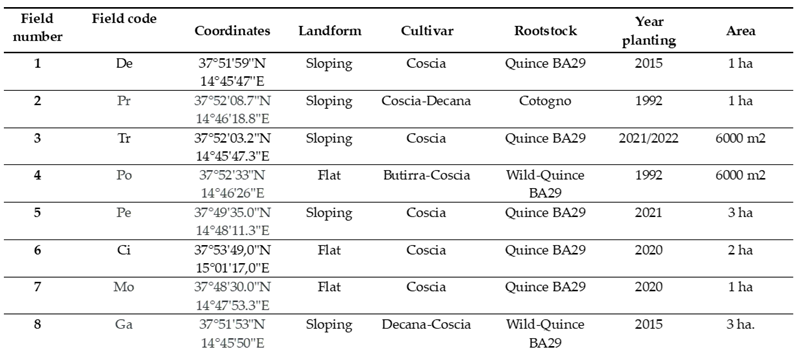
After the first description of symptoms and association of ‘Candidatus phytoplasma pyri’ in Sicily [25], an outbreak of the disease was observed in orchards of Coscia pear cultivar in the Catania province. The area is well suited for the cultivation of this cultivar, which is economically relevant due to its early ripening. A two-year field survey was conducted starting in autumn 2022. A total of eight fields (corresponding to a different farm) were visually inspected twice per year: in early spring to assess delay in vegetative sprouting, and in autumn to detect early reddening. Field samples of P. communis showing clear symptoms of premature autumn reddening coupled with leaf cupping were collected in autumn 2022 and 2023 (Table 1). In Field 1, ‘Ca. P.pyri’ was originally detected in 2019.

2.2. Insect Sampling

Psyllid specimens were collected by yellow sticky trap from November 2022 to January 2024 at two orchards (field 1 and field 2). These fields were selected because the first was managed under conventional farming practices and the other under integrated pest management. Sticky traps were placed on symptomatic plants, replaced every two weeks, and examined for psyllid at each replacement. All collected specimens were identified under a stereomicroscope by using the taxonomic keys of Hodkinson and White [26] and Ossiannilsson [27]. Specimens were stored in absolute ethanol at 4 °C until processing for DNA extraction.

2.3. Isolation DNA

2.3.1. Plants

Total nucleic acids were extracted from leaf petioles and midribs of both symptomatic and symptomless plant samples following the cetyltrimethylammonium bromide (CTAB) method as previously described [28]. Ethanol-precipitated nucleic acids were vacuum dried, resuspended in 30 μl TE buffer (50 mM Tris.HCl, pH 8.0, 10 mM EDTA) and stored at −20 °C. Aliquots of DNA preparations were used as templates for PCR assays.

2.3.2. Insect

Total nucleic acids were extracted from pools of five whole adult psyllids, previously sexed under a stereomicroscope, following the protocol described by Marzachì et al. [29]. For psyllid species other than the predominant one, individuals were processed separately. Ethanol-precipitated nucleic acids were vacuum-dried, resuspended in 30 μl of TE buffer (50 mM Tris-HCl, pH 8.0; 10 mM EDTA), and stored at −20 °C. Aliquots of the resulting DNA preparations were used as templates for PCR assays. The proportion of infected insects was estimated by its maximum-likelihood estimator, p̂, calculated according with Swallow: p̂ = 1 − H^(1/k), where H is the observed fraction of healthy groups and k is the number of insects per group, 5 in this case [30].

2.4. Phytoplasma Detection and Identification

Phytoplasma detection and identification in plant and insect samples were carried out by nested PCR amplification of the 16S rRNA gene using two universal primer pairs: P1/P7 [31] for the first round and R16F2n/R2 [32,33] for the second round, yielding an amplicon of approximately 1,200 bp. One microliter of a 1:30 dilution of the first-round PCR products was used as template for nested PCR. Symptomless plant samples and sterile distilled water served as negative controls. Amplified products were electrophoresed on 0.8% agarose gels, stained with SYBR™ Safe DNA Gel Stain (Thermo Fisher Scientific), and visualized under UV light.
Nested PCR products obtained with the R16F2n/R2 primer pair from both plant and insect samples were purified using the Illustra™ GFX™ PCR and Gel Band Purification Kit (GE Healthcare, UK), ligated into the pGEM-T Easy plasmid (Promega, WI, USA), and used to transform Escherichia coli JM109 competent cells (Promega, WI, USA). One recombinant clone per amplicon was sequenced bidirectionally (BMR Genomics, Italy).Raw sequences were assembled and quality-checked using DNABaser (SciVance Technologies), and sequence identity was verified by BLAST searches against the NCBI database [34]. The taxonomic 16Sr group and subgroup were assigned by virtual RFLP analysis of F2n/R2 amplicons using the iPhyClassifier online tool [35].

2.5. MLST Analysis

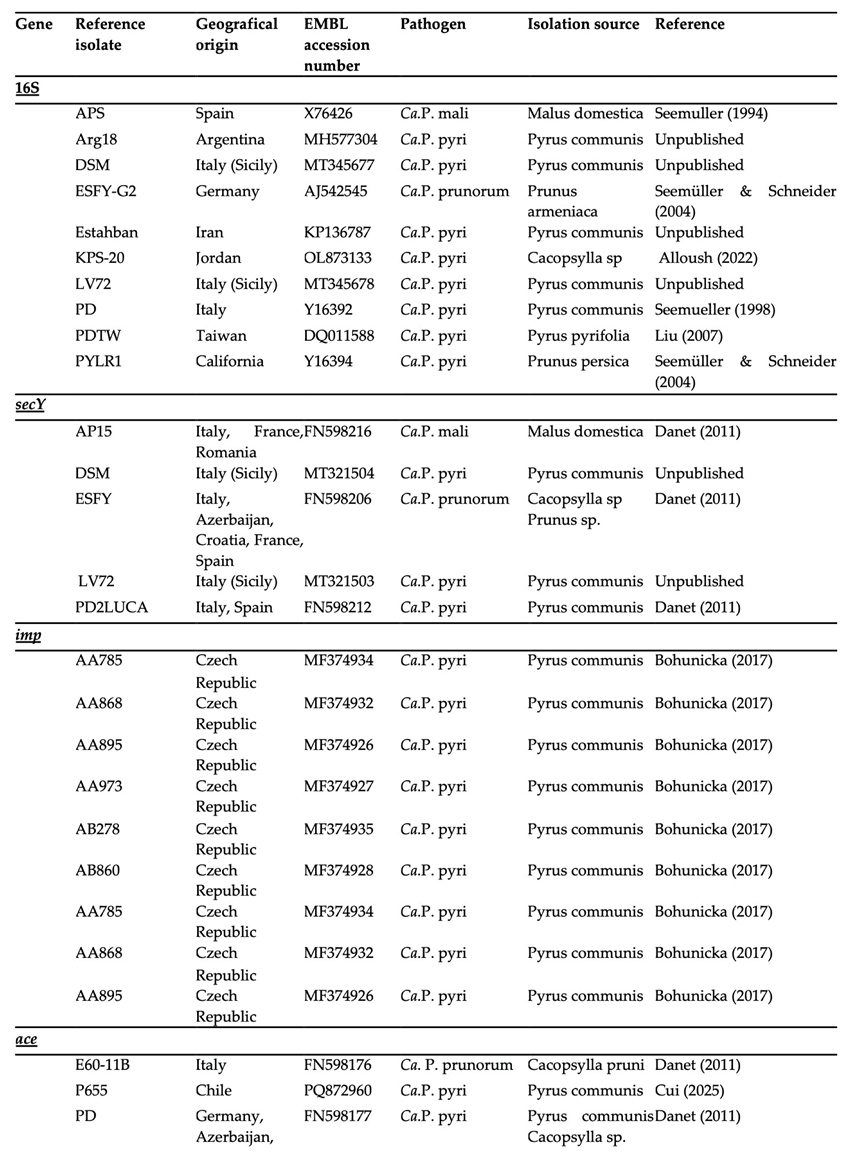
Genotyping of ‘Ca. P. pyri’ from pear trees and psyllids was performed through MLST targeting the 16S rRNA gene and three non-ribosomal loci (secY, aceF, and imp) on 24 representative samples (20 from P. communis and 4 from C. pyri). The secY gene was amplified using the SecYMalF1/R1 and SecYMalF2/R2 primer pairs [36]; aceF was amplified with the modified ‘Ca. P. pyri’-specific primers AceFpyri_f1/r1 and AceFpyri_f2/r2 for improved amplification [37]; and imp was amplified using the IMPF2bis/R1bis and IMPF3pyr/4pyrA primer pairs [36]. PCR reactions of 50 µl were carried out using 0.5 µl of the yourSIAL® HiFi Polymerase (SIAL), 10 µl of yourSIAL® HiFi Buffer 5x, 1 µl of each primer (10 µM) and 2 µl of DNA using the cycling conditions described in the original protocols. For nested amplifications, 2 µl of 1:30-diluted PCR products were used as templates. Amplicons were separated on 1% agarose gels, stained with SYBR™ Safe, and visualized under UV light. Products of the expected size were purified using the Illustra™ GFX™ PCR DNA and Gel Band Purification Kit and sequenced bidirectionally (BMR Genomics, Padua, Italy). Sequence assembly and quality control were performed in DNABaser, and identity was verified through BLAST analysis against the NCBI nucleotide database [34]. Sequences of each locus were aligned using the ClustalW algorithm [38] implemented in MEGA 12 [39]. Phylogenetic analyses were conducted using the Maximum Parsimony method, applying partial deletion to remove positions with <95% site coverage. Tree reconstruction was performed in MEGA 12 using the subtree-pruning-regrafting (SPR) algorithm. The list of isolates used for the construction of the trees is provided in Table 2.

2.6. Satellite Remote Sensing

Remote sensing analysis was conducted in three pear orchards previously confirmed as infected by Ca. P. pyri (Fields 1, 3, and 8; Table 1), and in one healthy reference orchard (Field H, 37.8653°N, 14.7619°E) located adjacent to the infected sites. Sentinel-2 multispectral satellite images from the European Space Agency (ESA) were downloaded from the Copernicus Data Space Browser (https://browser.dataspace.copernicus.eu). The Sentinel-2 constellation consists of two identical satellites (Sentinel-2A and Sentinel-2B) operating in a sun-synchronous orbit and providing a revisit frequency of approximately 5 days at mid-latitudes. Each satellite carries the Multispectral Instrument (MSI), which acquires data in 13 spectral bands (443–2190 nm) with spatial resolutions of 10, 20, and 60 m. A total of 69 cloud-free Level-2A images were selected, covering the period January 2018 to December 2023. One image per month was chosen whenever available, while months with excessive cloud cover were discarded. The year 2018 was included as a pre-epidemic reference period, preceding the first detection of ‘Ca. P. pyri’ in Sicily. For vegetation monitoring, the following spectral bands were used: Red (B4, 665 nm, 10 m), Near-Infrared (NIR, B8, 842 nm, 10 m) and Red-Edge bands (B5–B7, 705–783 nm, 20 m). These bands were employed to compute two vegetation indices widely used in plant physiology and disease monitoring, namely NDVI and NDRE.
NDVI, one of the most commonly used indices for evaluating photosynthetic activity, canopy vigor, and biomass accumulation, was calculated as:
NDVI = (NIR-Red)/(NIR+Red)
NDVI is highly sensitive to canopy greenness and is commonly used to detect reductions in vegetation vigour associated with biotic and abiotic stress.
To capture changes in chlorophyll content, which often precede structural canopy decline, the NDRE index was computed as:
NDRE= (NIR-RedEdge)/(NIR+RedEdge)
NDRE is particularly sensitive to chlorophyll concentration and is therefore suitable for detecting early stress symptoms, including those associated with phytoplasma infections that alter leaf physiology before significant canopy thinning becomes visible. The combined use of these indices enables the detection of both early and advanced symptoms of PD, providing complementary information on disease progression.
For each monthly image, NDVI and NDRE values were extracted from the four orchards using QGIS. For every date, the mean index value of each orchard was calculated, resulting in monthly time series from January 2018 to December 2023 (2022–2023 for Field 3, due to orchard age). These time series were used to compare the temporal evolution of canopy vigor between symptomatic orchards and the healthy control, and to investigate vegetation trends consistent with the progression of PD.

3. Results

3.1. Survey and Plant Sampling

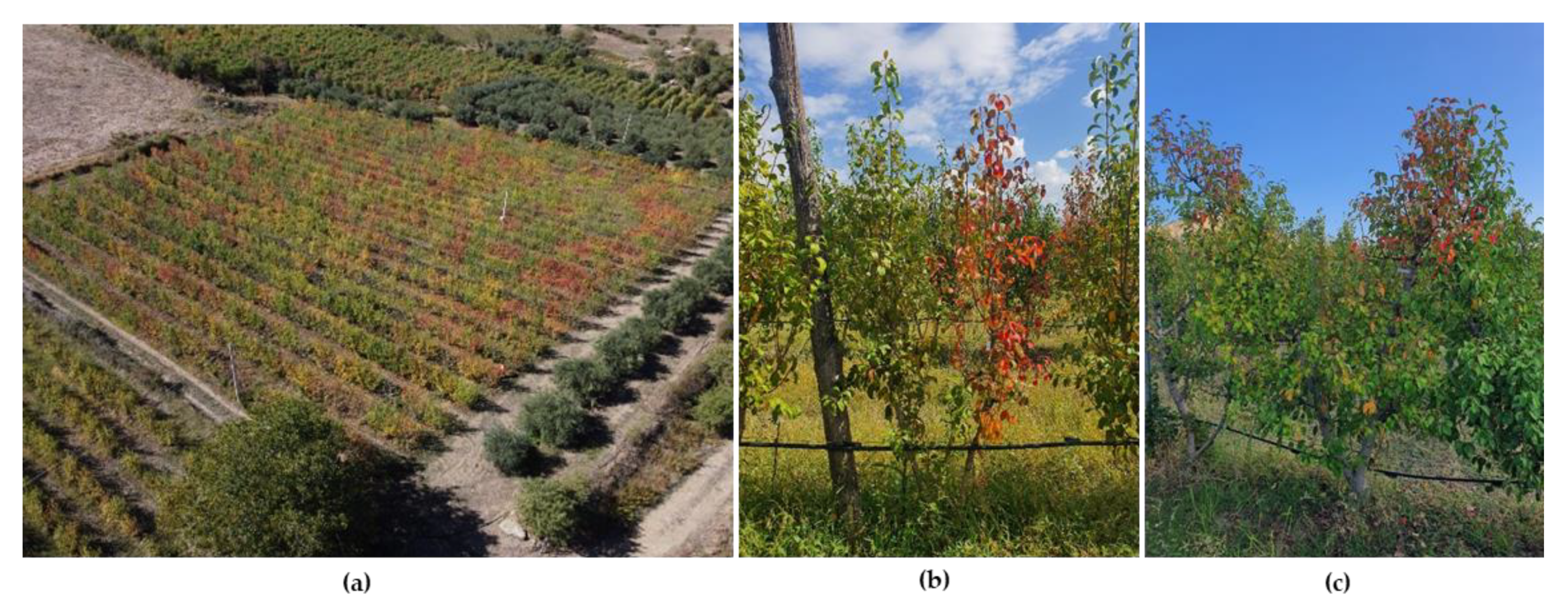
Inspections carried out in the eight selected orchards to identify pear decline (PD) symptoms over two growing seasons resulted in the detection of typical PD manifestations (Table 1). Sectorial symptoms such as premature leaf reddening and leaf cupping were consistently observed in autumn 2022 and 2023 (Figure 1). Over the two-year monitoring period, a rapid increase in symptomatic plants was recorded, particularly in Field 3, characterized by the young age of the trees (two years after planting) (Figure 1). The phenomenon was less pronounced in older orchards, such as Field 1 (eight years after planting). Additional differences emerged regarding symptom distribution within the canopy. Younger plants, and especially double-leader trees, frequently exhibited a clear sectorial pattern of symptom expression, whereas in older trees symptoms were often distributed throughout the entire canopy (Figure 1). Notably, the spring symptom of delayed vegetative growth was recorded less frequently than early leaf reddening during both years of observation.
A total of 103 symptomatic pear leaf samples were collected during the survey. Coscia was the most represented cultivar (92/103 samples), whereas Decana (8/103), Abate Fetèl (1/103), Facci Bedda (1/103), and Butirra (1/103) were sampled less frequently. In addition, 12 leaf samples were collected from asymptomatic plants (11/12 Coscia, 1/12 Decana). All plants were grafted onto BA29 quince rootstock, except for three that were grafted onto wild quince rootstock (one Coscia, one Decana, and one Butirra).

3.2. Insect Sampling.

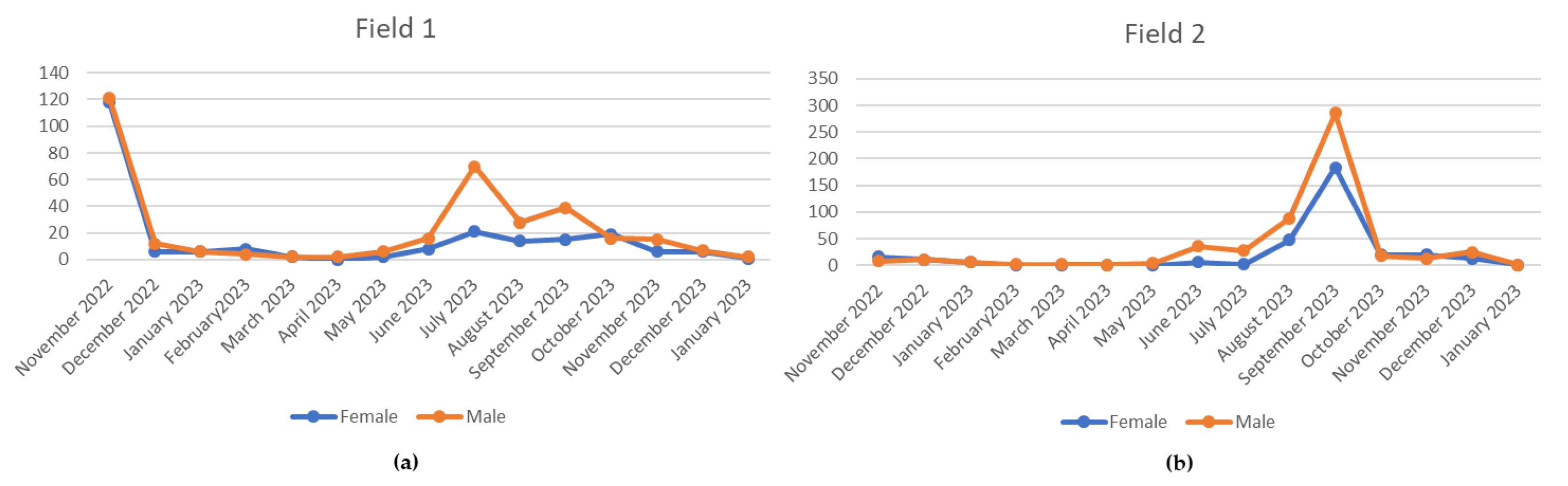
Morphological identification revealed that the majority of the 1,435 psyllid specimens collected on sticky traps in the two pear orchards (Field 1 and Field 2) between November 2022 and February 2024 belonged to C. pyri. Among the total number of insects collected, five specimens exhibited morphological characteristics consistent with C. pyricola (Field 1 and Field 2), one with C. pyrisuga (Field 2), and one with Homotoma ficus. Sex determination showed that 61% of the specimens were males (875/1,435) and 39% were females (560/1,435). Regarding seasonal distribution, 55% of specimens were collected in summer, 31% in autumn, 7% in winter, and 7% in spring. Differences in psyllid abundance between the two study sites were evident, with 578 out of 1,435 specimens collected in Field 1 (conventional management) and 857 out of 1,435 in Field 2 (integrated pest management). Moreover, the most abundant capture of Field 1 was in November 2022, due to suspension of insecticide treatments in the post-harvest phase. Monthly trends further highlighted differences between the two fields, with a pronounced population peak occurring at the end of the summer in Field 2 (Figure 2). For total nucleic acid extraction, the seven non-C. pyri psyllid specimens were processed individually (excluding H. ficus), whereas 95 C. pyri specimens were processed as pooled samples, with five individuals per pool. The overall estimated proportion of infected insects was 4.6% [30].

3.3. Phytoplasma Detection and Identification

Total DNA extracted from 115 pear midrib samples and 25 psyllid samples (19 pools and 6 individual specimens) was subjected to nested PCR amplification using primer pairs P1/P7 followed by R16F2n/R2. Phytoplasmas were detected in 70 symptomatic plant samples (70/103) and in five insect samples (four pooled samples and one C. bidens individual), producing an amplicon of approximately 1,200 bp, consistent with the positive controls. As expected, none of the 12 asymptomatic plant samples or the negative controls yielded amplification. With respect to cultivars that tested positive by nested PCR, among the 70 positive samples, 63 belonged to Coscia, one to Coscia grafted onto wild rootstock, five to Decana, and one to Abate Fetèl.
Virtual RFLP analysis of 24 cloned 16S rRNA gene sequences (20 from plant samples and four from insect pools) revealed 99.53–100% similarity to the ‘Ca. P. pyri’ reference strain AJ542543. The virtual RFLP patterns of 22 samples (18 plant-derived and four insect-derived) were identical (similarity coefficient 1.00) to the reference pattern of 16Sr group X, subgroup C (GenBank accession AJ542543). In contrast, two plant-derived samples exhibited distinct virtual RFLP patterns, showing a similarity coefficient of 0.88 (sample Pe1) and 0,93 (sample Pr5) relative to the reference strain AJ542543 (both values below 0.97).

3.4. MLST Analysis

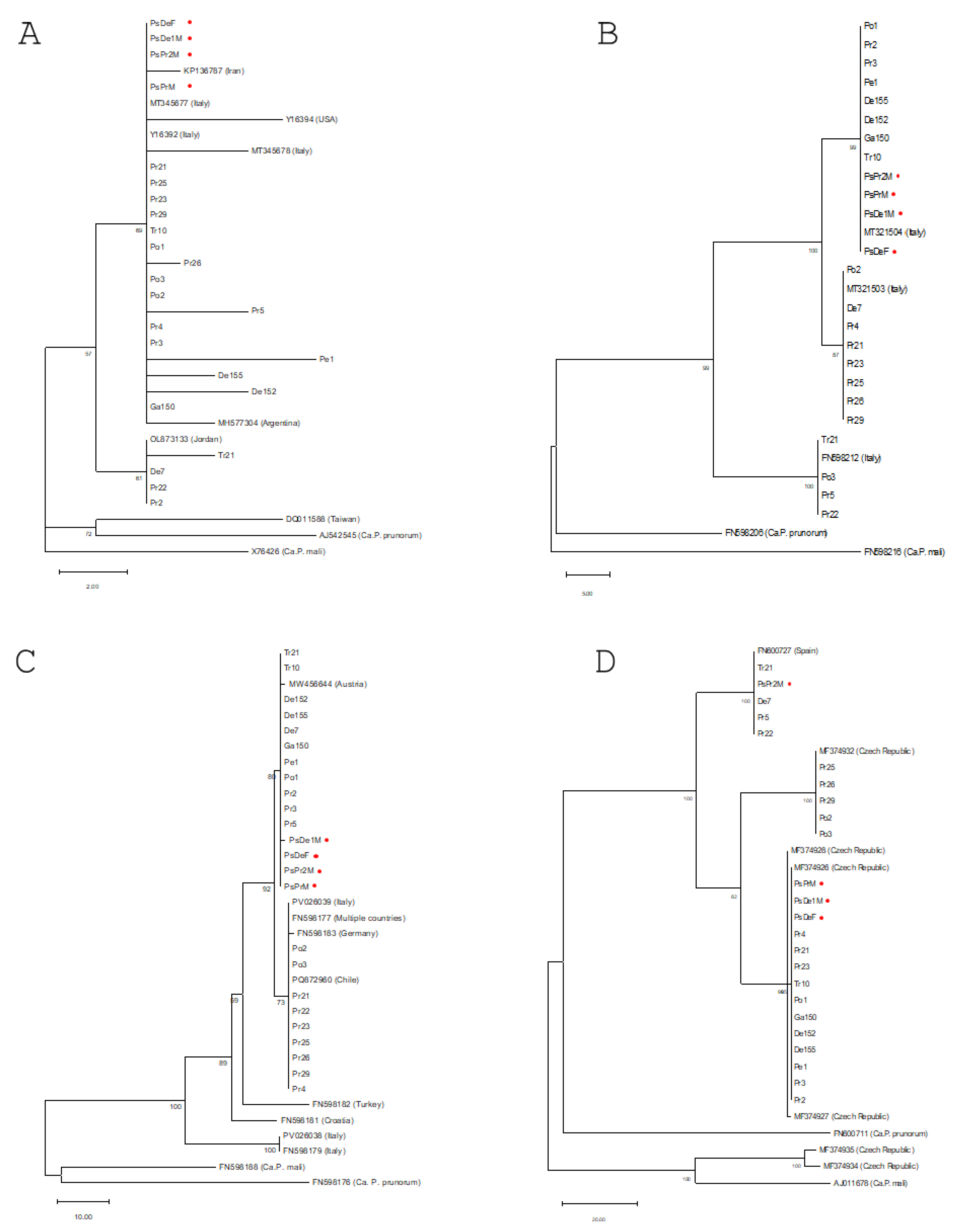
Phytoplasmas infecting P. communis and the associated psyllid vector C. pyri were characterized through sequence analysis of partial amplicons from the 16Sr locus. The16Sr sequences obtained from 24 samples collected in Sicily grouped into two distinct phylogenetic clusters. The majority of these sequences, including those derived from psyllids, clustered with two phytoplasma isolates previously collected in Sicily in 2019 (Loreto et al., unpublished; GenBank accessions MT345677 and MT345678), which were associated with symptomatic pear plants in the first two foci of the disease in 2019 on Coscia (in the province of Catania) and on Abate Fetèl (in the province of Palermo). A smaller subset of four samples grouped with a phytoplasma strain linked to pear decline disease in Jordan (Abu Alloush et al., unpublished; OL873133). The plant and insect samples were subjected to PCR using gene-specific primers targeting the secY, imp, and ace loci. Amplicons of the expected sizes were obtained from the all tested 24 samples. Phylogenetic analyses were conducted based on the predicted protein sequences of the secY, imp, and ace genes (Figure 3). The secY sequences grouped the 16SrX phytoplasma isolates into three distinct clusters. Two of these clusters corresponded to phytoplasma strains previously associated with pear decline in Sicily (MT321503 and MT321504), while the third clustered with an Italian isolate of ‘Ca. P. pyri’ from 2011 (FN598212) [36]. All secY sequences derived from psyllids clustered with the Italian MT321504 isolate.
The phylogenetic analysis of the IMP protein sequences also revealed three clusters, aligning with reference isolates MF374932, MF374926, and FN600727. Among the four psyllid samples analyzed, three clustered with MF374926, while the fourth grouped with FN600727. Lastly, analysis of the ACE protein sequences separated the phytoplasma isolates into two main clusters, associated with FN598177 [36] and MW456644 [37], respectively. All four psyllid-derived sequences clustered with the MW456644-associated group. The representative sequences from 16Sr, imp, aceF and secY generated in this paper were deposited in the NCBI repository under the accession numbers PX578243, PX578244, PX578245, PX578246, PX578247, PX578248 (16Sr), PX626283, PX626284 (aceF), PX626285, PX626286, PX626287 (imp), and PX626288, PX626289, PX626290 (secY).

3.5. Satellite Remote Sensing

3.5.1. NDVI Temporal Dynamics

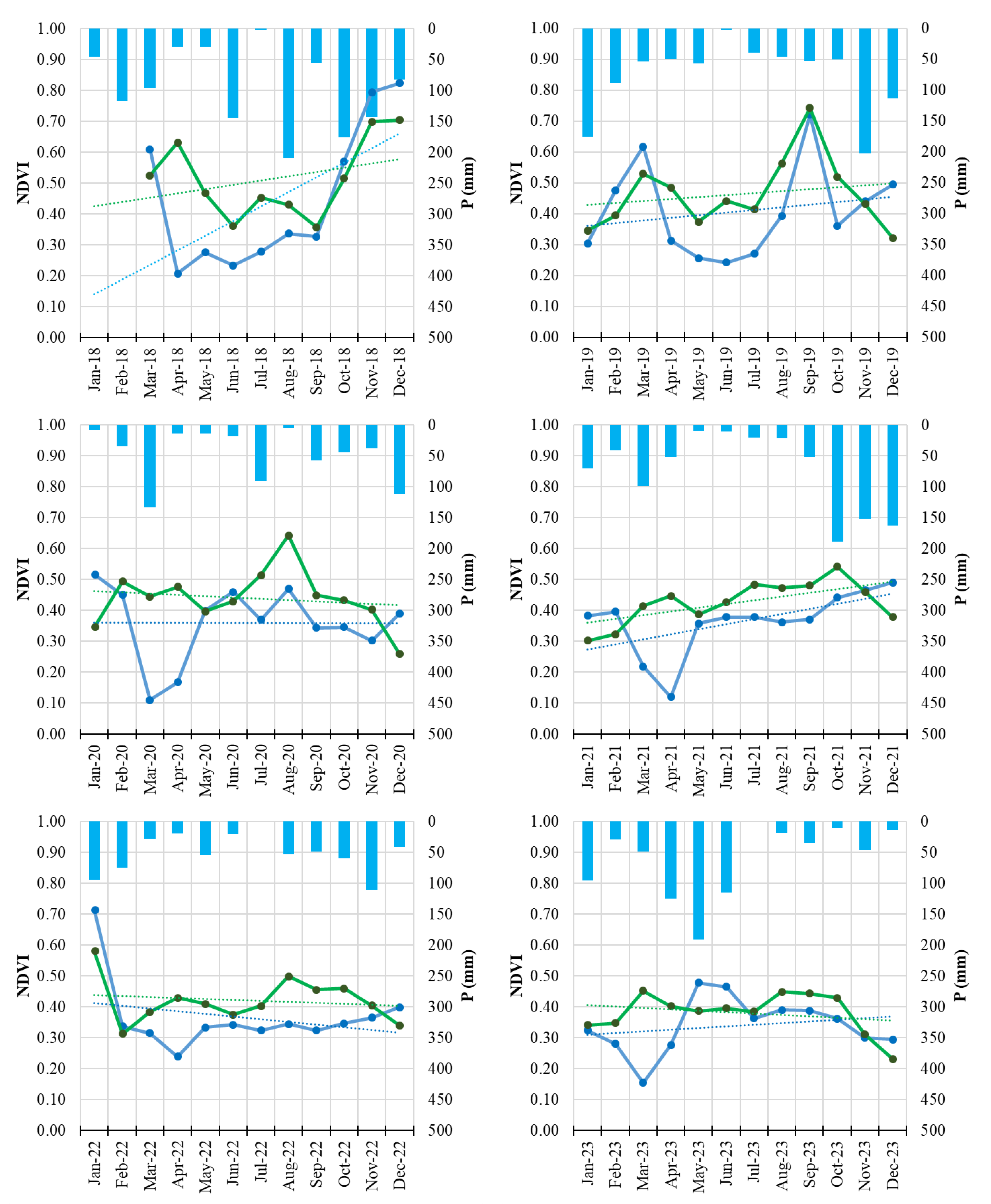
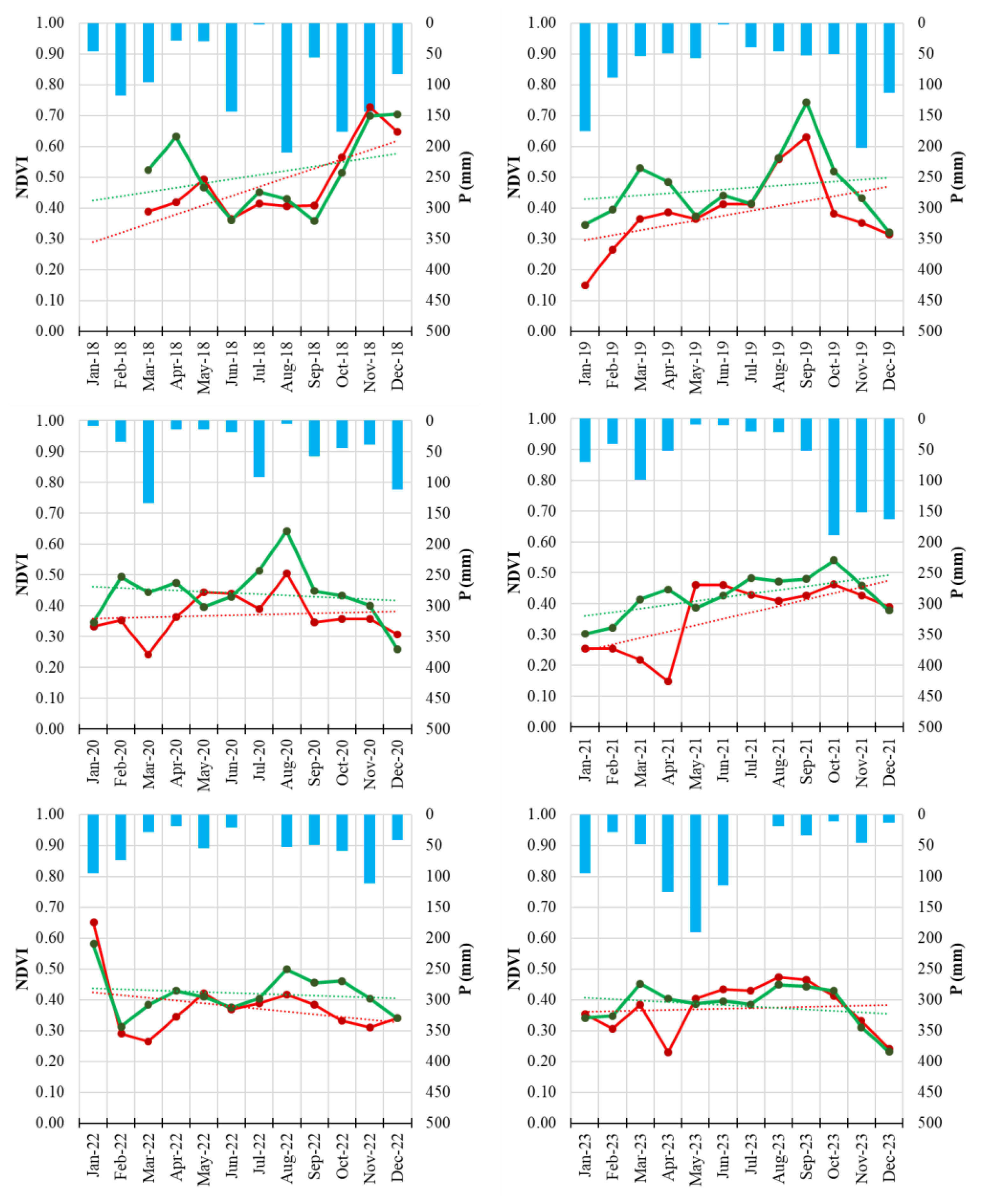
NDVI time-series analysis revealed clear differences in canopy vigour between symptomatic orchards (Fields 1, 3, and 8) and the healthy reference orchard (Field H) (Table 3; Figure 4, Figure 5 and Figure 6). It should be recalled that Field 1 was the first plot where the phytoplasma associated with PD was identified in 2019. In 2018, NDVI values of Field 1 (Figure 4) were comparable to those of the healthy orchard (0.45 versus 0.51 on average), indicating the absence of detectable vegetative decline prior to the first reports of ‘Ca. P. pyri’ in the area. From 2019 onward, Field 1 showed a gradual but consistent reduction in NDVI, with mean values decreasing from 0.41 in 2019 to 0.34 in 2023. The orchard also displayed an earlier NDVI decline during late summer and autumn, as well as reduced vegetation vigour during the early vegetative season, particularly in 2020–2021. Although an intense hail event in May 2023 temporarily reduced NDVI in both orchards, Field 1 maintained systematically lower values throughout the year.
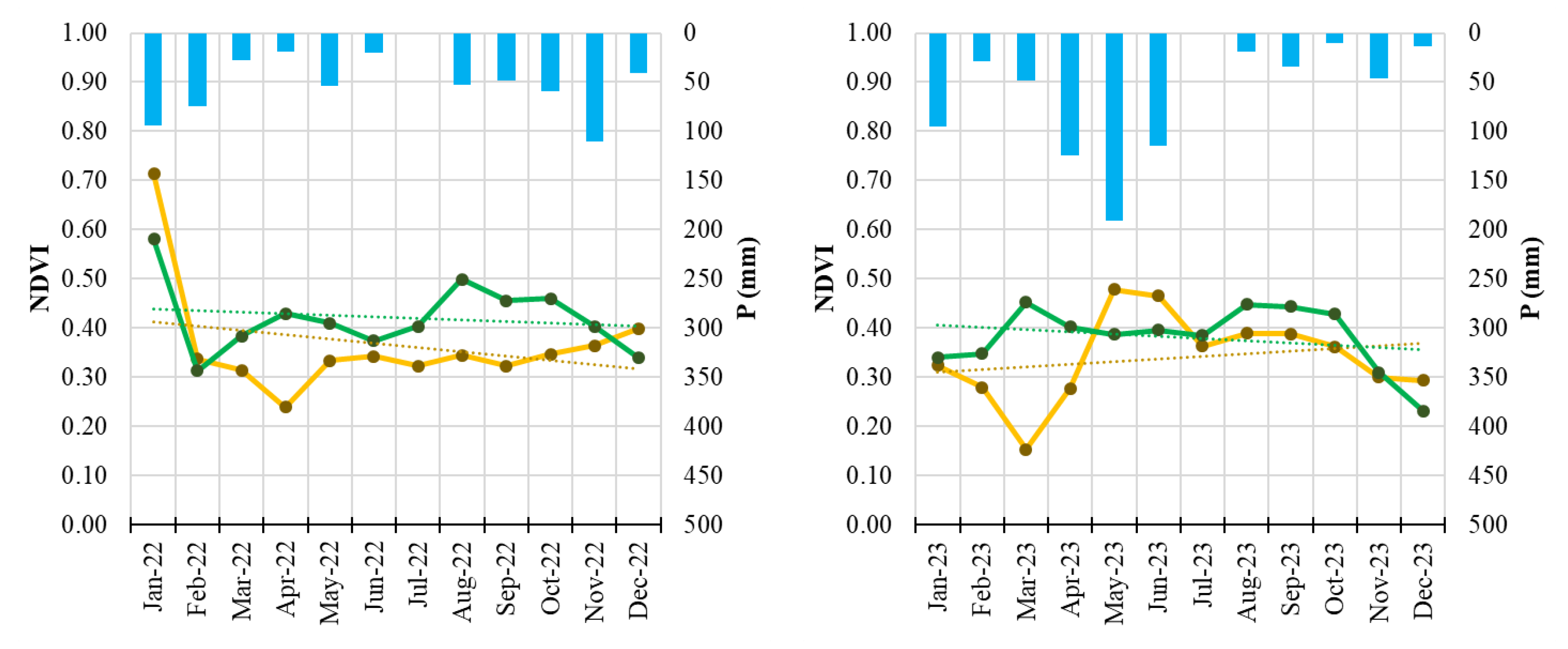
Despite being newly planted in 2022, Field 3 consistently showed lower NDVI values than the healthy orchard during both monitored years (Figure 5). In 2022, differences were especially marked during March–April, while during peak vegetative growth the canopy partially recovered. In 2023, early-season NDVI reduction remained evident, and Field 3 maintained lower values than Field H for most of the vegetative period, indicating limited canopy development despite the young age of the orchard. Field 8 exhibited a similar pattern, with NDVI values consistently lower than those of the healthy orchard across all years (Figure 6). Differences were already evident in the early years of the series, with reduced NDVI during spring in 2018–2019 and a pronounced divergence in 2020, when mean NDVI in Field 8 (0.37) was markedly lower than in Field H (0.44). Anticipatory senescence was also observed in most years, as shown by earlier NDVI reductions in late summer and early autumn, although partial convergence occurred during peak vegetative growth. In each case, the reduction in vegetative vigor observed at the onset of vegetative regrowth in symptomatic fields was recovered within about 1 month. This data may represent the symptom of delayed vegetative regrowth related to PD.

3.5.2. NDRE Temporal Dynamics

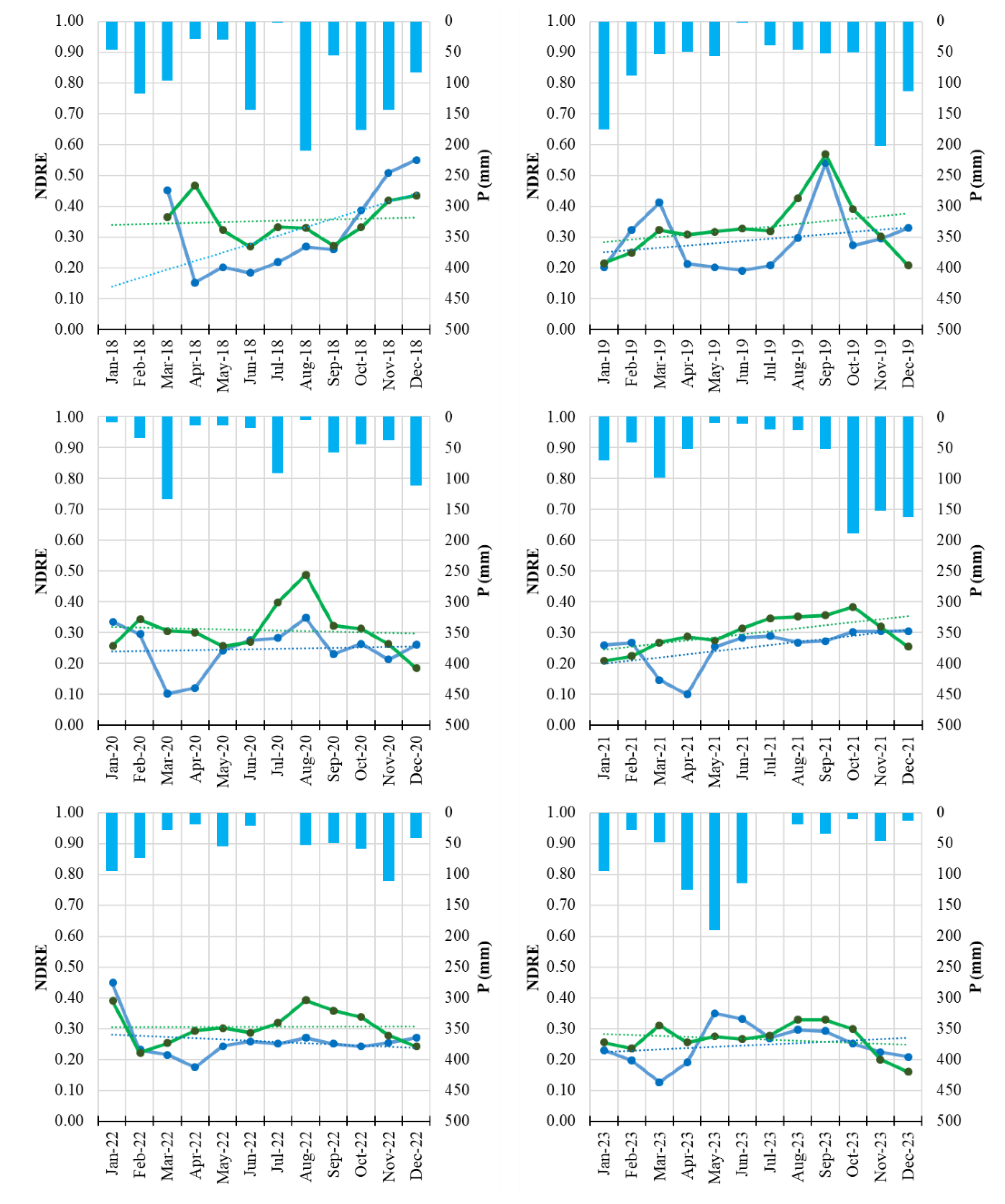
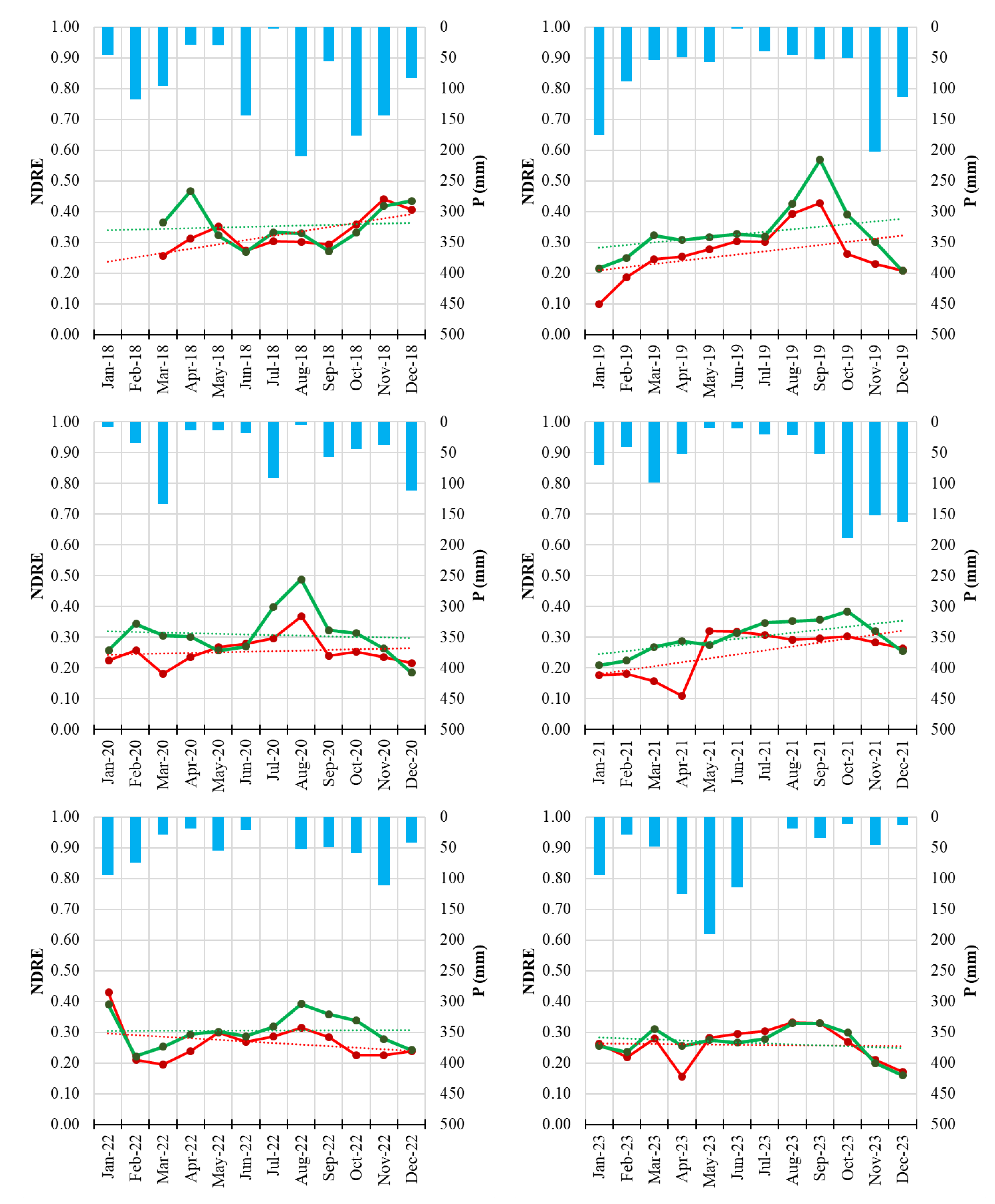
NDRE time-series analysis provided additional insights into the physiological response of symptomatic orchards (Fields 1, 3, and 8) compared with the healthy orchard (Field H), revealing consistent reductions in chlorophyll-related reflectance across the entire monitoring period (Table 4; Figure 7, Figure 8 and Figure 9). In 2018, NDRE values of Field 1 (Figure 7) and Field 8 (Figure 9) were only slightly lower than those of the healthy orchard (0.32–0.33 vs 0.35), indicating the absence of strong physiological alterations before the first field reports of Pear Decline. From 2019 onward, both symptomatic orchards exhibited a progressive decrease in NDRE, with mean annual values declining to 0.25–0.27, while Field H remained consistently higher (0.30–0.33). These differences were particularly marked during early vegetative growth (March–April), when symptomatic orchards repeatedly showed lower NDRE values than the healthy reference. Seasonal patterns also differed between orchards, with symptomatic fields displaying earlier declines in NDRE during late summer and autumn, consistent with premature senescence associated with Pear Decline.
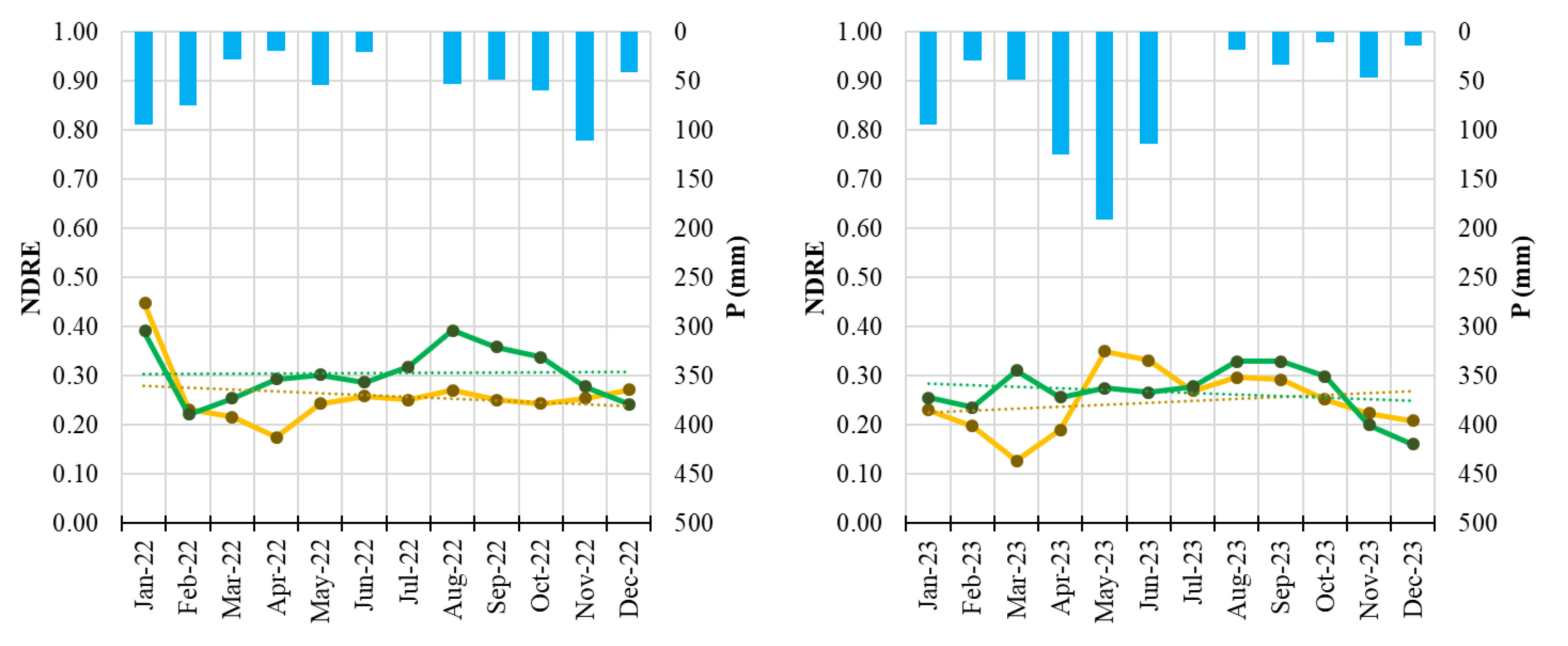
Field 3, monitored from 2022 due to its recent planting, also showed systematically lower NDRE values (Figure 8) than the healthy orchard (0.17 in 2022 and 0.24 in 2023, compared with 0.31 and 0.27 in Field H for the same years). Despite its young age, Field 3 did not exhibit NDRE values comparable to the healthy orchard during peak vegetative growth, indicating limited canopy development and reduced chlorophyll content. This pattern aligns with field observations reporting reduced vegetative expansion and early symptoms in young symptomatic trees.

4. Discussion

In this study, we applied a multi-approach strategy to investigate the pear decline epidemic in the province of Catania. The first detection, in autumn 2019, of two disease foci in the provinces of Catania (Bronte) and Palermo (Castronuovo di Sicilia), affecting the cultivars Coscia and Abate Fetèl respectively, initially suggested the introduction of infected propagation material from other regions where ‘Ca. P. pyri’ has been present for decades [25]. From that moment onward, reports of symptoms attributable to PD increased rapidly, marking the onset of the PD epidemic in Sicily, a disease that had never before been observed in this region. Among the factors potentially associated with the emergence of the epidemic, both the presence of elevated psyllid population densities and the contemporaneous deregulation of ‘Ca. P. pyri’ as an RNQP (Regulated Non-Quarantine Pest) must be considered. The latter occurred at the end of November 2019 under the Commission Implementing Regulation (EU) 2019/2072, thereby precluding the implementation of eradication measures in the initial foci. The monitoring activities conducted in the eight surveyed orchards revealed highly characteristic symptoms of pear decline, mostly correlated to a slow decline syndrome. It should be emphasized that identifying the symptom of delay through visual inspection was not as effective as the application of remote sensing, which unequivocally identified the phenomenon.
Leaf samples were collected in autumn from all eight orchards, and 69% of them tested positive for ‘Ca. P. pyri’, thus confirming the strong association between the pathogen and the disease.
Among the psyllid species collected, C. pyri was by far the predominant species, whereas individuals belonging to other phytoplasma vector species were detected only sporadically over the two-year survey. Only a few specimens of C. pyricola and C. pyrisuga were recorded, the latter represented by a single individual. Capture data of potential phytoplasma vectors in the two selected orchards, characterized by different insecticide management strategies, demonstrated the marked prevalence of C. pyri in both fields throughout the 13-month monitoring period. Considering the overall psyllid population, males predominated in both fields. The highest proportion of captured adults across the four seasons was recorded in summer and autumn, likely influenced by the elevated temperatures observed during the latter season. The persistence of pear canopy foliage until late November in the study area, driven by these unusually high autumn temperatures and coupled with the high psyllid population levels recorded during the same period, may indicate a potential increase in the risk of pathogen dissemination. The estimated proportion of psyllid individuals testing positive for the phytoplasma, exclusively C. pyri, was 4.6%, a value consistent with previous reports from other European growing areas [37]. Differences in population dynamics between the two study orchards further indicated that, although a higher total number of insects and pronounced summer peaks were observed in Field 2 under integrated pest management, the interruption of insecticide treatments after harvest in 2022 resulted in a sharp increase in adult psyllid abundance. These findings further support the notion that reliance on chemical control alone against the insect vector is insufficient to limit phytoplasma spread and may ultimately constitute an additional economic burden associated with the disease.
The Multi-Locus Sequence Typing (MLST) analysis revealed limited genetic diversity among the isolates collected on the island. Specifically, the phylogenetic analysis performed on the secY locus resolved the isolates into three distinct clusters. Each of these groups showed strong clustering with ‘Ca. Phytoplasma pyri’ reference sequences previously isolated across the Italian territory, two of which had already been identified in Sicily in 2019 (MT321503 and MT321504). Consistently, phylogenetic analysis of the loci encoding the Ace and Imp proteins further confirms the overall low genetic variability of the Sicilian isolates.
The apparent uniformity of sequence of the Sicilian isolates found in this study seems to be in contrast with the genomic diversity recently found in ten isolates collected in mainland Italy [6]. However, it should be noted that while the disease has been present in northern Italy since at least 1965 [40] or even 1908 [41], the recent introduction of ‘Ca. P. pyri’ to the island (around 2019) could, on the contrary, justify the limited evolutionary divergence of the Sicilian isolates. Such a hypothesis may be proven by monitoring the future evolution of both the disease and the associated phytoplasma on the island
It is worth noting that, based on the results obtained with virtual RFLP, 22 of the 24 samples analyzed appear to be members of 16SrX-C. Only two of the 24 showed similarity coefficients lower than 0.97% compared to the reference. These two strains could represent a new subgroup within 16SrX.
The integration of Sentinel-2 remote sensing provided a complementary and highly informative perspective on disease progression. Vegetation indices such as NDVI and NDRE are widely used for detecting stress-related changes in plant canopies [42,43] and are sensitive to both structural (NDVI) and biochemical (NDRE) alterations. NDRE, in particular, is strongly correlated with chlorophyll content and has been shown to detect subtle physiological stress before the manifestation of visible symptoms [44,45]. The multi-annual reduction of NDVI and NDRE observed in symptomatic orchards, especially the early-season decline and advanced senescence, aligns with patterns commonly associated with decline syndromes in perennial crops and forest ecosystems [46].
The consistency of these spectral signals across multiple years demonstrates the value of satellite-based monitoring for chronic diseases such as PD, particularly in fragmented or remote orchard systems. The results also support the growing body of evidence recognizing the potential of sensor-based monitoring systems for phytoplasma-related disorders [14]. The ability to integrate long-term time series from Sentinel-2, with its high revisit frequency and dedicated red-edge bands, offers a robust tool for surveillance and early detection in commercial orchards [19,47].
In conclusion, the evidence derived from field observations, molecular detection, vector monitoring and remote-sensing analysis strongly supports the hypothesis of a recent introduction of ‘Ca. P. pyri’ into Sicily, followed by rapid dissemination facilitated by abundant local vector populations. The integration of multi-source data enhances our understanding of PD epidemiology in newly affected areas and provides a framework for future disease management. Continued monitoring of pathogen diversity, vector dynamics, and orchard canopy status will be essential for tracking the evolution of the epidemic and mitigating its long-term impact on pear production in Sicily.

Author Contributions

Conceptualization, M.Tessitori and C.Marzachì; methodology, M.Tessitori and C.Marzachì; formal analysis, M.Tessitori, A.Trusso Sfrazzetto, M.Rossi and R.Tedeschi; writing—original draft preparation, M.Tessitori, C.Marzachì and R.Tedeschi; writing—review and editing, M.Tessitori, C.Marzachì R.Tedeschi and C. Marcone; supervision, M.Tessitori and C.Marzachì; project administration, M. Tessitori. All authors have read and agreed to the published version of the manuscript. Authorship must be limited to those who have contributed substantially to the work reported.

Funding

This work was supported by the European Union–Next Generation EU, Mission 4 Component 1, CUP: D53D23015910001 (Bando Prin 2022 PNRR), Project code: P2022NHE7A and by European Union (NextGeneration EU), through the MURPNRR project SAMOTHRACE (E63C22000900006).

Institutional Review Board Statement

Not applicable.

Data Availability Statement

The original contributions presented in this study are included in the article. Nucleotide and Aminoacidic sequence from 16Sr, imp, aceF and secY generated in this paper were deposited in the NCBI repository. Further inquiries can be directed at the corresponding author.

Acknowledgments

We would like to thank Naomi Bonini for preliminary molecular analyses, and Emanuele Di Stefano and Concita Blancato for the field inspections.

Conflicts of Interest

The authors declare no conflicts of interest.

References

  1. Doi, Y.; Teranaka, M.; Yora, K.; Asuyama, H. Mycoplasma-like organisms in plants. Ann. Phytopathol. Soc. Jpn. 1967, 33, 259–266. [Google Scholar] [CrossRef]
  2. Wei, W.; Zhao, Y. Advances in phytoplasma research: biology and detection. Plant Pathol. J. 2022, 38, 1–16. [Google Scholar] [CrossRef]
  3. EPPO. Pear Decline Phytoplasma (Candidatus Phytoplasma pyri). EPPO Global Database 2024. [Google Scholar]
  4. EFSA Panel on Plant Health (PLH). Pest categorisation of ‘Candidatus Phytoplasma pyri’. EFSA J. 2020, 18, e06159. [Google Scholar] [CrossRef]
  5. Easterling, M.; et al. Transcriptomic analysis of Cacopsylla pyricola infected with ‘Ca. P. pyri’. Front. Microbiol. 2024, 15, 123456. [Google Scholar] [CrossRef]
  6. Cui, W.; Alburquenque, C.; Pacini, F.; Gonzalez, C.; Bianco, P.; Cabrera, S.; et al. Draft genome of Candidatus Phytoplasma pyri and phylogenetic diversity among Chilean and Italian strains. Phytopathology 2025, 9, 1080–1085. [Google Scholar] [CrossRef]
  7. Alessio, F.I.; Bongiorno, V.A.; von Backzo, O.H.; Marcone, C.; Conci, L.R.; Fernández, F.D. Draft genome sequence of Candidatus Phytoplasma pyri strain P1, the causal agent of pear decline disease. PhytoFrontiers™ 2025, 5, 522–525. [Google Scholar] [CrossRef]
  8. Jarausch, B.; Jarausch, W.; Krczal, G. Psyllid vectors of pear decline phytoplasma. In Phytoplasmas: Plant Pathogenic Bacteria–III; Bertaccini, A., Weintraub, P.G., Rao, G.P., Mori, N., Eds.; Springer: Singapore, 2019; pp. 221–246. [Google Scholar] [CrossRef]
  9. Alloush, A.H.A.; Bianco, P.A.; Alma, A.; Tedeschi, R.; Quaglino, F. Phytoplasma identification in pome fruit trees and Cacopsylla bidens (Hemiptera: Psyllidae) in Jordan. Eur. J. Plant Pathol. 2024, 169, 65–71. [Google Scholar] [CrossRef]
  10. Civolani, S.; Pasqualini, E.; Chicca, M.; et al. Ecology and management of Cacopsylla pyri, the vector of pear decline phytoplasma. Insects 2023, 14, 512. [Google Scholar] [CrossRef]
  11. Conci, C.; Tamanini, L.; Rossi, R. Psylid populations in Sicilian pear orchards. Boll. Zool. Agrar. Bachic. 1992, 24, 45–52. [Google Scholar]
  12. Sugio, A.; Hogenhout, S.A. The genome biology of phytoplasma–insect interactions. Annu. Rev. Phytopathol. 2012, 50, 91–116. [Google Scholar] [CrossRef]
  13. Cruz, L.F.; Krugner, R.; Johnson, M.W. Behavioral responses of Cacopsylla pyricola infected with pear decline phytoplasma. Entomol. Exp. Appl. 2018, 166, 807–816. [Google Scholar] [CrossRef]
  14. Jarausch, W.; Jarausch, B. Sensor-based monitoring systems for phytoplasma disease detection. In Phytoplasmas: Genomes, Plant Hosts and Vectors; CABI: GB, 2025; pp. 1–15. [Google Scholar]
  15. Jones, H.G.; Vaughan, R.A. Remote Sensing of Vegetation: Principles, Techniques and Applications; Oxford University Press: Oxford, UK, 2010. [Google Scholar]
  16. Lillesand, T.M.; Kiefer, R.W.; Chipman, J.W. Remote Sensing and Image Interpretation, 7th ed.; John Wiley & Sons: Hoboken, NJ, USA, 2015. [Google Scholar]
  17. Rouse, J.W.; Haas, R.H.; Schell, J.A.; Deering, D.W. Monitoring vegetation systems in the Great Plains with ERTS. NASA Spec. Publ. 1974, 351, 309–317. [Google Scholar]
  18. Barnes, E.M.; Clarke, T.R.; Richards, S.E.; Colaizzi, P.D.; Haberland, J.; Kostrzewski, M.; et al. Coincident detection of crop water stress, nitrogen status and canopy density using ground-based multispectral data. Proc. Fifth Int. Conf. Precision Agriculture, 2000; 1619. [Google Scholar]
  19. Delegido, J.; Verrelst, J.; Alonso, L.; Moreno, J. Evaluation of Sentinel-2 red-edge bands for empirical estimation of green LAI and chlorophyll content. Sensors 2011, 11, 7063–7081. [Google Scholar] [CrossRef]
  20. Pettorelli, N.; Vik, J.O.; Mysterud, A.; Gaillard, J.M.; Tucker, C.J.; Stenseth, N.C. Using the satellite-derived NDVI to assess ecological responses to environmental change. Trends Ecol. Evol. 2005, 20, 503–510. [Google Scholar] [CrossRef]
  21. Oerke, E.C. Remote sensing of diseases. Annu. Rev. Phytopathol. 2020, 58, 225–252. [Google Scholar] [CrossRef]
  22. Karaiev, O.; Bondarenko, L.; Halko, S.; Miroshnyk, O.; Vershkov, O.; Karaieva, T.; et al. Mathematical modelling of the fruit-stone culture seeds calibration process using flat sieves. Acta Technol. Agric. 2021, 24, 119–123. [Google Scholar] [CrossRef]
  23. Longo-Minnolo, G.; et al. Using remote sensing time series to evaluate climate-driven dieback in Fagus sylvatica forests of Sicily. Remote Sens. 2025, 17, 873. [Google Scholar] [CrossRef]
  24. Albetis, J.; Duthoit, S.; Guttler, F.; Jacquin, A.; Goulard, M.; Poilvé, H.; et al. Detection of Flavescence dorée grapevine disease using UAV multispectral imagery. Remote Sens. 2018, 9, 308. [Google Scholar] [CrossRef]
  25. Distefano, E.; Rizza, S.; Marzachì, C.; Tessitori, M. First report of ‘Candidatus Phytoplasma pyri’ associated to pear decline (PD) in Sicily. VIII Incontro Nazionale sui Fitoplasmi e le Malattie da Fitoplasmi, 2025; pp. 114–11. [Google Scholar]
  26. Hodkinson, I.D.; White, I.M. Homoptera Psylloidea; Royal Entomological Society: London, UK, 1979. [Google Scholar]
  27. Ossiannilsson, F. The Psylloidea (Homoptera) of Fennoscandia and Denmark; Brill: Leiden, The Netherlands, 1992; Volume 26. [Google Scholar]
  28. Marzachì, C.; Alma, A.; D’Aquilio, M.; Minuto, G.; Boccardo, G. Detection and identification of phytoplasmas infecting cultivated and wild plants in Liguria (Italian Riviera). J. Plant Pathol. 1999, 81, 127–136. [Google Scholar]
  29. Marzachì, C.; Veratti, F.; Bosco, D. Direct PCR detection of phytoplasmas in experimentally infected insects. Ann. Appl. Biol. 1998, 133, 45–54. [Google Scholar] [CrossRef]
  30. Swallow, W.H. Group testing for estimating infection rates and probabilities of disease transmission. Phytopath. 1985, 75, 882–889. [Google Scholar] [CrossRef]
  31. Schneider, B.; Seemueller, E.; Smart, C.D.; Kirkpatrick, B.C. Phylogenetic classification of plant pathogenic mycoplasma-like organisms or phytoplasmas. Molecular and Diagnostic Procedures in Mycoplasmology 1995, 1, 369–380. [Google Scholar]
  32. Lee, I.M.; Hammond, R.W.; Davis, R.E.; Gundersen, D.E. Universal amplification and analysis of pathogen 16S rDNA for classification and identification of mycoplasma-like organisms. Phytopathology 1993, 83, 834–842. [Google Scholar] [CrossRef]
  33. Gundersen, D.E.; Lee, I.M. Ultrasensitive detection of phytoplasmas by nested-PCR assays using two universal primer pairs. Phytopathol. Mediterr. 1996, 144–151. [Google Scholar]
  34. Altschul, S.F.; Gish, W.; Miller, W.; Myers, E.W.; Lipman, D.J. Basic local alignment search tool. J. Mol. Biol. 1990, 215, 403–410. [Google Scholar] [CrossRef]
  35. Zhao, Y.; Wei, W.; Lee, I.M.; Shao, J.; Suo, X.; Davis, R.E. The iPhyClassifier, an interactive online tool for phytoplasma classification and taxonomic assignment. In Phytoplasma: Methods in Molecular Biology; Dickinson, M., Hodgetts, J., Eds.; Humana Press: Totowa, NJ, USA, 2013; Volume 938, pp. 371–386. [Google Scholar] [CrossRef]
  36. Danet, J.-L.; Balakishiyeva, G.; Cimerman, A.; et al. Multilocus sequence analysis reveals the genetic diversity of European fruit tree phytoplasmas. Microbiology 2011, 157, 438–450. [Google Scholar] [CrossRef]
  37. Riedle-Bauer, M.; Paleskić, C.; Schönhuber, C.; Staples, M.; Brader, G. Vector transmission and epidemiology of ‘Candidatus Phytoplasma pyri’ in Austria and identification of Cacopsylla pyrisuga as new pathogen vector. J. Plant Dis. Prot. 2022, 129, 375–386. [Google Scholar] [CrossRef]
  38. Thompson, J.D.; Higgins, D.G.; Gibson, T.J. CLUSTAL W: improving the sensitivity of progressive multiple sequence alignment through sequence weighting, position-specific gap penalties and weight matrix choice. Nucleic Acids Res. 1994, 22, 4673–4680. [Google Scholar] [CrossRef]
  39. Kumar, S.; Stecher, G.; Suleski, M.; Sanderford, M.; Sharma, S.; Tamura, K. MEGA12: Molecular Evolutionary Genetic Analysis version 12 for adaptive and green computing. Mol. Biol. Evol. 2024, 41, msae263. [Google Scholar] [CrossRef]
  40. Refatti, E. Pear moria in Italy. FAO Plant Protect. Bull. 1964, 12, 1–7. [Google Scholar]
  41. Mader, C. La mortalità dei peri nella plaga di Bolzano-Gries. Almanacco Agrario Sez. Trento Consiglio Provinciale d’Agricoltura per il Tirolo 1908, 26, 347–350. [Google Scholar]
  42. Mahlein, A.-K. Plant disease detection by imaging sensors: parallels and specific demands for precision agriculture. Plant Dis. 2016, 100, 241–251. [Google Scholar] [CrossRef]
  43. Mutka, A.M.; Bart, R.S. Image-based phenotyping of plant disease symptoms. Front. Plant Sci. 2015, 5, 734. [Google Scholar] [CrossRef]
  44. Gitelson, A.A.; Keydan, G.P.; Merzlyak, M.N. Three-band model for non-destructive chlorophyll estimation in leaves. Remote Sens. Environ. 2003, 87, 57–69. [Google Scholar] [CrossRef]
  45. Haboudane, D.; Miller, J.R.; Tremblay, N.; Zarco-Tejada, P.J.; Dextraze, L. Integrated narrow-band vegetation indices for chlorophyll estimation. Remote Sens. Environ. 2002, 81, 416–426. [Google Scholar] [CrossRef]
  46. Eitel, J. U.; Vierling, L. A.; Litvak, M. E.; Long, D. S.; Schulthess, U.; Ager, A. A.; Stoscheck, L. Broadband, red-edge information from satellites improves early stress detection in a New Mexico conifer woodland. Remote Sen. Environ. 2011, 115(12), 3640–3646. [Google Scholar] [CrossRef]
  47. Rembold, F.; Meroni, M.; Urbano, F.; et al. Remote sensing time series analysis for crop monitoring. Remote Sens. 2019, 11, 442. [Google Scholar] [CrossRef]
Figure 1. Symptoms observed during the two-year survey. (a) aerial view of Field 1 in 2023, four years since the original report; (b) Sectorial symptoms on double-leader young plants in Field 3; (c) sectorial symptoms of early reddening in Field 2.
Preprints 189246 g001
Figure 2. Monthly trend of the C. pyri population during the 13 months of monitoring.( a) Field 1 under conventional farming; (b) Field 2 under integrated pest management.
Preprints 189246 g002
Figure 3. Comparative Phylogenetic Analysis of Phytoplasmas Based on 16S rRNA and Protein-Coding Genes. Comparative phylogenetic analysis was performed using the ribosomal 16S rRNA gene (A) and three nuclear protein-coding genes: secY (B), ace (C), and imp (D). Consensus nucleotide (for 16S rRNA) or amino acid sequences (for the protein-coding genes) for the respective markers were aligned using the ClustalW algorithm. The evolutionary history was inferred for all four markers using the Maximum Parsimony (MP) method, employing the partial deletion option. The optimal tree was obtained by applying the Subtree-Pruning-Regrafting (SPR) algorithm. Trees were drawn to scale, with branch lengths proportional to the number of inferred character state transformations and calculated using the average pathway method within the MEGA12 software. Bootstrap values resulting from 500 replicates are indicated at the branch nodes when support is equal to or greater than 50% (≥50). The list of isolates used for the construction of the trees is provided in Table 2. Isolates obtained from psyllid vectors are specifically marked with red dots next to their name.
Preprints 189246 g003
Figure 4. Monthly NDVI time series of Field 1 (symptomatic orchard, blue line) and the healthy reference orchard (Field H, green line) from January 2018 to December 2023. Solid lines represent monthly NDVI values; dotted lines indicate linear trends. Blue bars represent monthly precipitation totals.
Preprints 189246 g004
Figure 5. Monthly NDVI time series of Field 3 (symptomatic orchard, yellow line) and the healthy reference orchard (Field H, green line) from January 2022 to December 2023. Solid lines represent monthly NDVI values; dotted lines indicate linear trends. Blue bars represent monthly precipitation totals.
Preprints 189246 g005
Figure 6. Monthly NDVI time series of Field 8 (symptomatic orchard, red line) and the healthy reference orchard (Field H, green line) from January 2018 to December 2023. Solid lines represent monthly NDVI values; dotted lines indicate linear trends. Blue bars represent monthly precipitation totals.
Preprints 189246 g006
Figure 7. Monthly NDRE time series of Field 1 (symptomatic orchard, blue line) and the healthy reference orchard (Field H, green line) from January 2018 to December 2023. Solid lines represent monthly NDRE values; dotted lines indicate linear trends. Blue bars represent monthly precipitation totals.
Preprints 189246 g007
Figure 8. Monthly NDRE time series of Field 3 (symptomatic orchard, yellow line) and the healthy reference orchard (Field H, green line) from January 2022 to December 2023. Solid lines represent monthly NDRE values; dotted lines indicate linear trends. Blue bars represent monthly precipitation totals.
Preprints 189246 g008
Figure 9. Monthly NDRE time series of Field 8 (symptomatic orchard, red line) and the healthy reference orchard (Field H, green line) from January 2018 to December 2023. Solid lines represent monthly NDRE values; dotted lines indicate linear trends. Blue bars represent monthly precipitation totals.
Preprints 189246 g009
Table 1. characteristics of fields chosen after visual survey and plant sampling. Field code was used for sampling collection.
Preprints 189246 i001
Table 2. List of isolates used for the construction of the phylogenetic trees.
Preprints 189246 i002
Table 3. Annual mean NDVI values (± standard deviation) for the three symptomatic orchards (Fields 1, 3, and 8) and the healthy reference orchard (Field H) during the 2018–2023 monitoring period. Missing values for Field 3 reflect the establishment year of the orchard (planted in 2022).
2018 2019 2020 2021 2022 2023
mean st_dev mean st_dev mean st_dev mean st_dev mean st_dev mean st_dev
Field 1 0.45 0.23 0.41 0.15 0.36 0.12 0.36 0.10 0.37 0.12 0.34 0.09
Field 3 0.22 0.09 0.33 0.09
Field 8 0.48 0.12 0.38 0.12 0.37 0.07 0.36 0.11 0.38 0.10 0.37 0.08
Field H 0.51 0.13 0.46 0.12 0.44 0.09 0.43 0.07 0.42 0.07 0.38 0.07
Table 4. Annual mean NDRE values (± standard deviation) for the three symptomatic orchards (Fields 1, 3, and 8) and the healthy reference orchard (Field H) during the 2018–2023 monitoring period. Missing values for Field 3 reflect the establishment year of the orchard (planted in 2022).
2018 2019 2020 2021 2022 2023
mean st_dev mean st_dev mean st_dev mean st_dev mean st_dev mean st_dev
Field 1 0.32 0.14 0.29 0.10 0.25 0.07 0.25 0.06 0.26 0.07 0.25 0.06
Field 3 0.17 0.06 0.24 0.06
Field 8 0.33 0.06 0.27 0.09 0.25 0.05 0.25 0.07 0.27 0.06 0.26 0.06
Field H 0.35 0.07 0.33 0.10 0.31 0.08 0.30 0.06 0.31 0.06 0.27 0.05
Disclaimer/Publisher’s Note: The statements, opinions and data contained in all publications are solely those of the individual author(s) and contributor(s) and not of MDPI and/or the editor(s). MDPI and/or the editor(s) disclaim responsibility for any injury to people or property resulting from any ideas, methods, instructions or products referred to in the content.
Copyright: This open access article is published under a Creative Commons CC BY 4.0 license, which permit the free download, distribution, and reuse, provided that the author and preprint are cited in any reuse.
Prerpints.org logo

Preprints.org is a free preprint server supported by MDPI in Basel, Switzerland.

Subscribe

Disclaimer

Terms of Use

Privacy Policy

Privacy Settings

© 2025 MDPI (Basel, Switzerland) unless otherwise stated