

Submitted:
08 September 2025
Posted:
09 September 2025
You are already at the latest version
Abstract
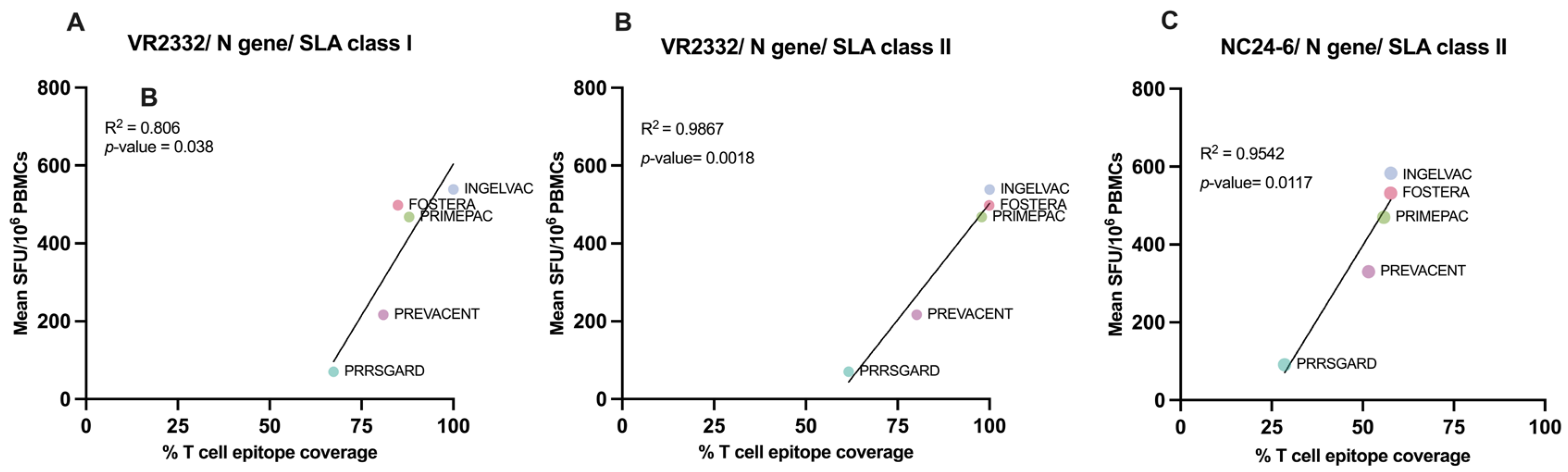
Background/Objectives: Porcine reproductive and respiratory syndrome virus (PRRSV) remains one of the most economically significant pathogens in the global swine industry. Despite the availability of commercial vaccines for over three decades, they fail to induce sterile immunity and often provide inconsistent protection against heterologous PRRSV strains. This study aimed to predict vaccine immunogenicity by detecting strain-specific immune responses that related to an immune correlates of protection (COPs) against different PRRSV-2 strains. Methods: Post-weaning pigs were vaccinated with five commercially available PRRSV-2 vaccines or received sterile PBS injection as a control. At 28 days post-vaccination (dpv), all pigs were humanely euthanized for large-volume blood collection to isolate peripheral blood mononuclear cells (PBMCs) and plasma, establishing the immune bank. PBMCs and plasma from each group were then tested against six PRRSV-2 strains to evaluate immune responses. In addition, T cell epitope coverage between vaccine and field PRRSV-2 strains was assessed using the EpiCC (in silico) tool to enhance predictive capacity. Results: While neutralizing antibodies were undetectable in all vaccinated pigs at 28 dpv, PRRSV-specific IFNg–producing cells were detected at various levels in each vaccinated group following restimulation with different PRRSV-2 strains. Additionally, a positive correlation was observed for the EpiCC coverage of the N gene and mean IFNg responses to VR2332 (SLA class I and II) and NC24-6 (SLA class II). Conclusions: The PRRSV immune bank demonstrated potential as a tool for predicting vaccine immunogenicity against different PRRSV-2 strains and EpiCC provide additional information on T cell epitope cross conservation. The combined approach may provide a valuable framework for selecting PRRSV vaccines for more effective prevention and control in endemic areas.
Keywords:
1. Introduction
2. Materials and Methods
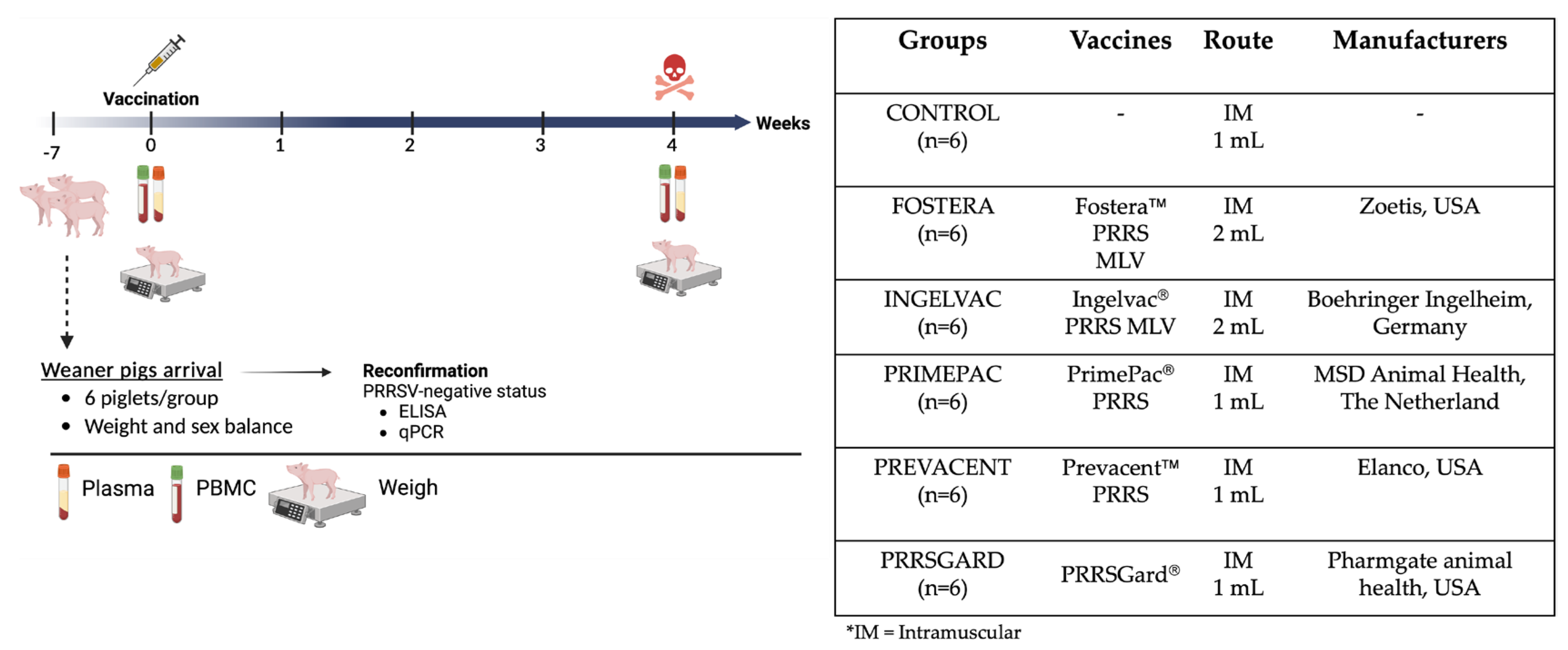
2.1. Experimental Designs
2.2. Viruses and Cells
2.5. Immunoperoxidase Monolayer Assay (IPMA)
2.4. Quantification of PRRSV RNA
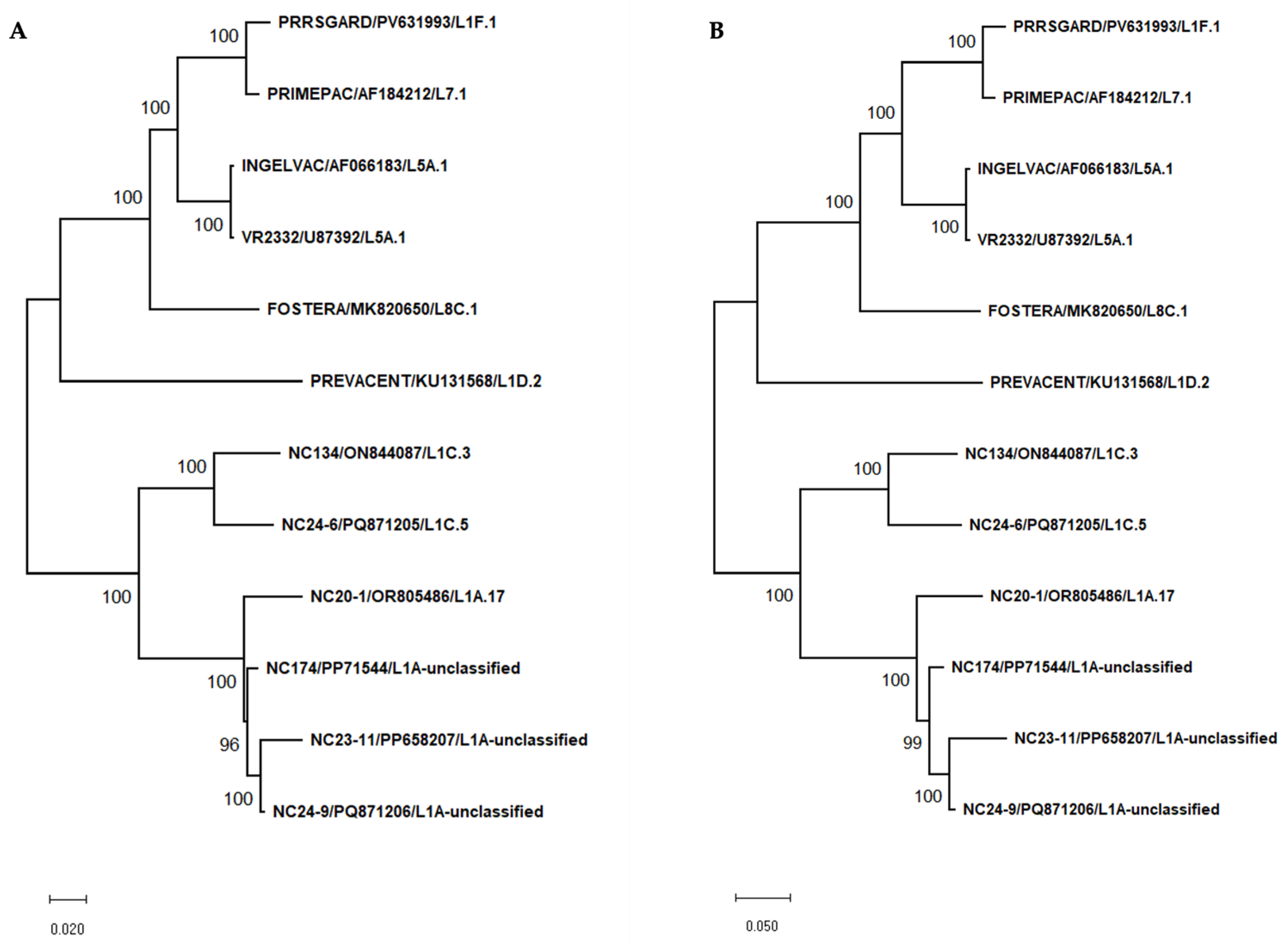
2.3. Phylogenetic Analyses
2.6. Serological Assays
2.7. Isolation of PBMCs
2.8. Enzyme-Linked Immunospot (ELISPOT) Assay
2.9. Prediction of T Cell Epitopes Using EpiCC Algorithm
2.10. Statistical Analyses
3. Results
3.1. Nucleotide and Amino Acid Similarity Based on Complete Genome Sequences Between Vaccine Strains and NC PRRSV-2 Strains
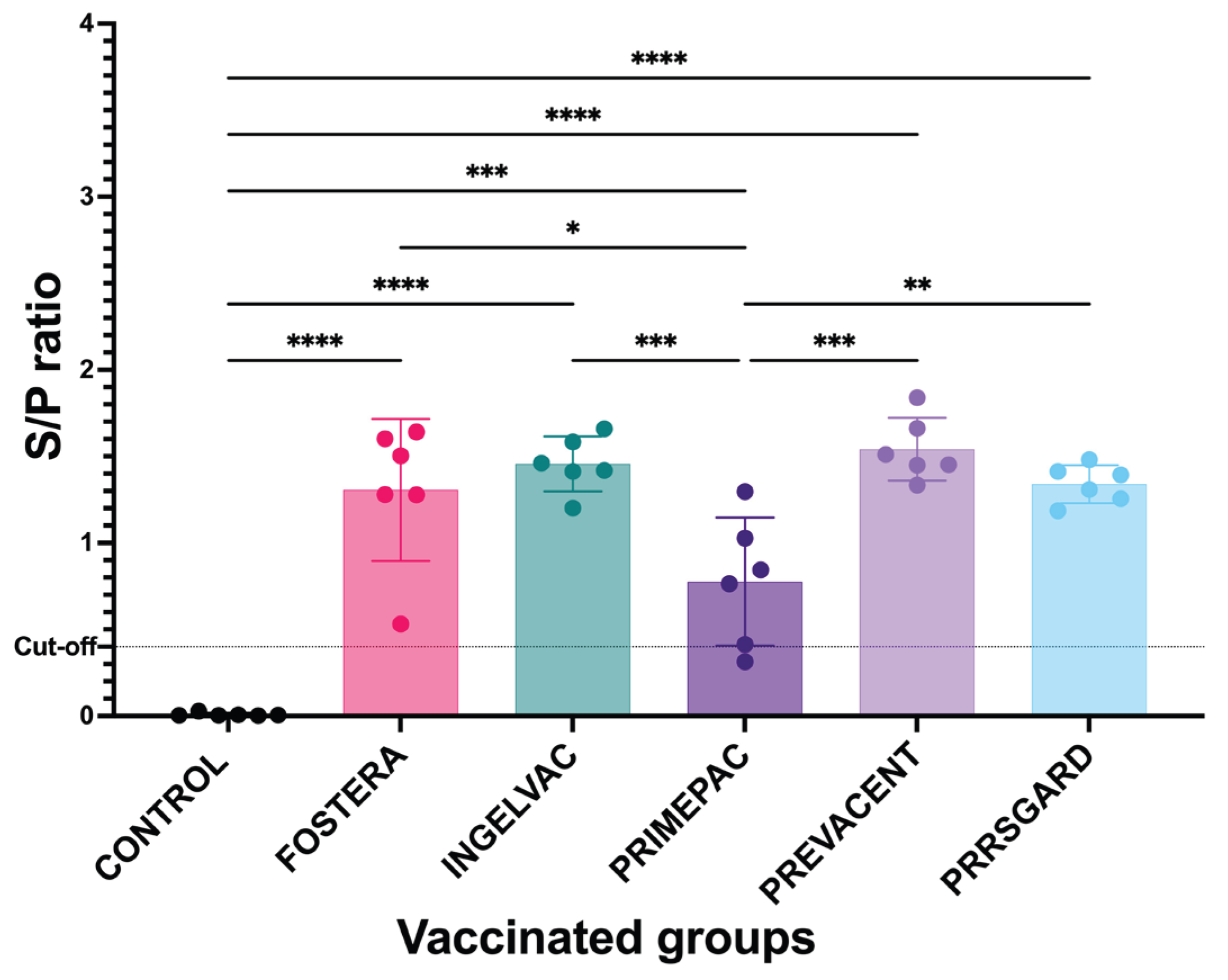
3.2. Humoral Immune Responses Following Vaccination
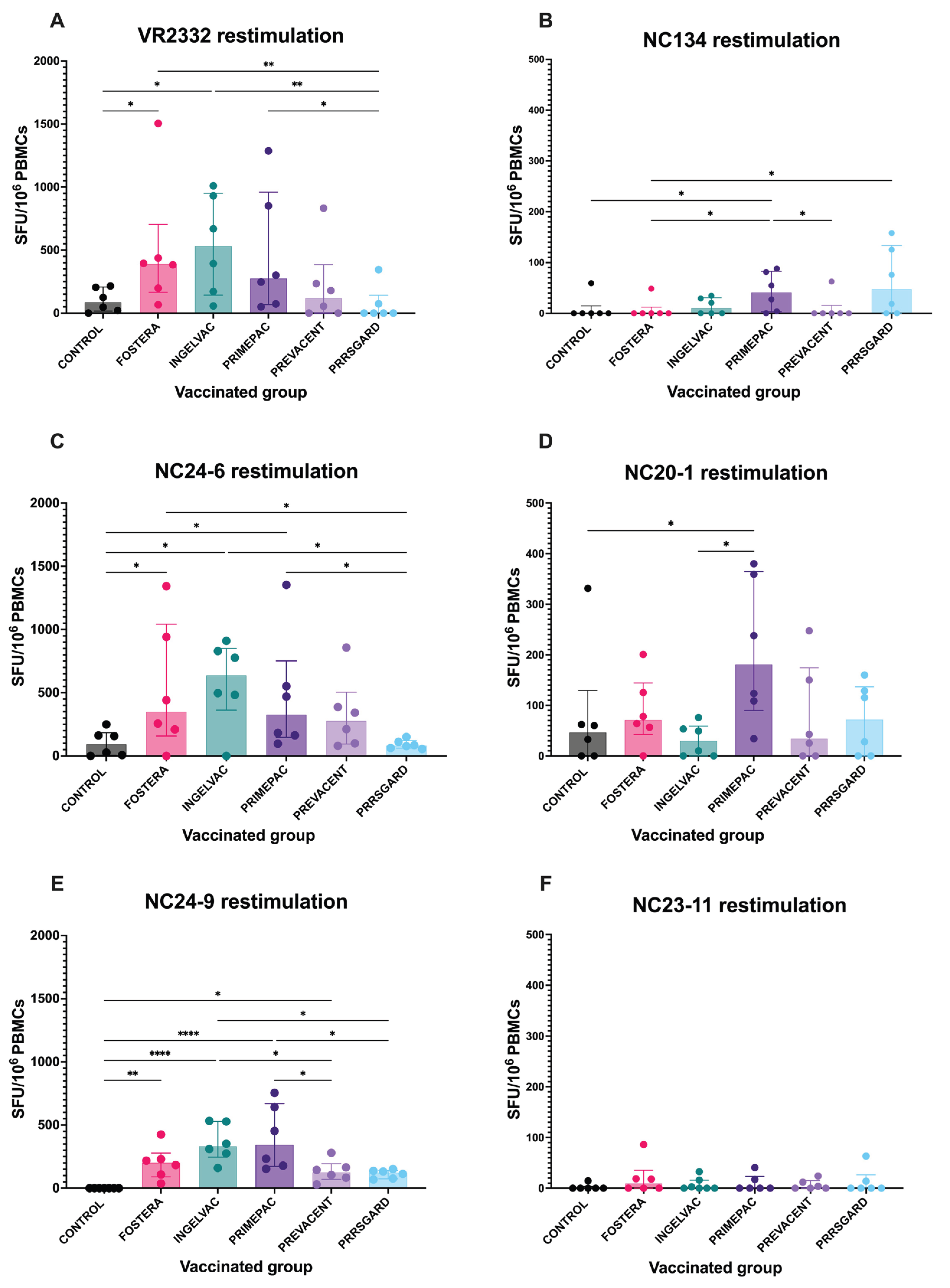
3.2. Cell-Mediated Immune Responses Following Restimulation with NC PRRSV-2 Strains
3.2. T Cell Epitope Coverage Between Vaccine Strains and NC PRRSV-2 Field Strains
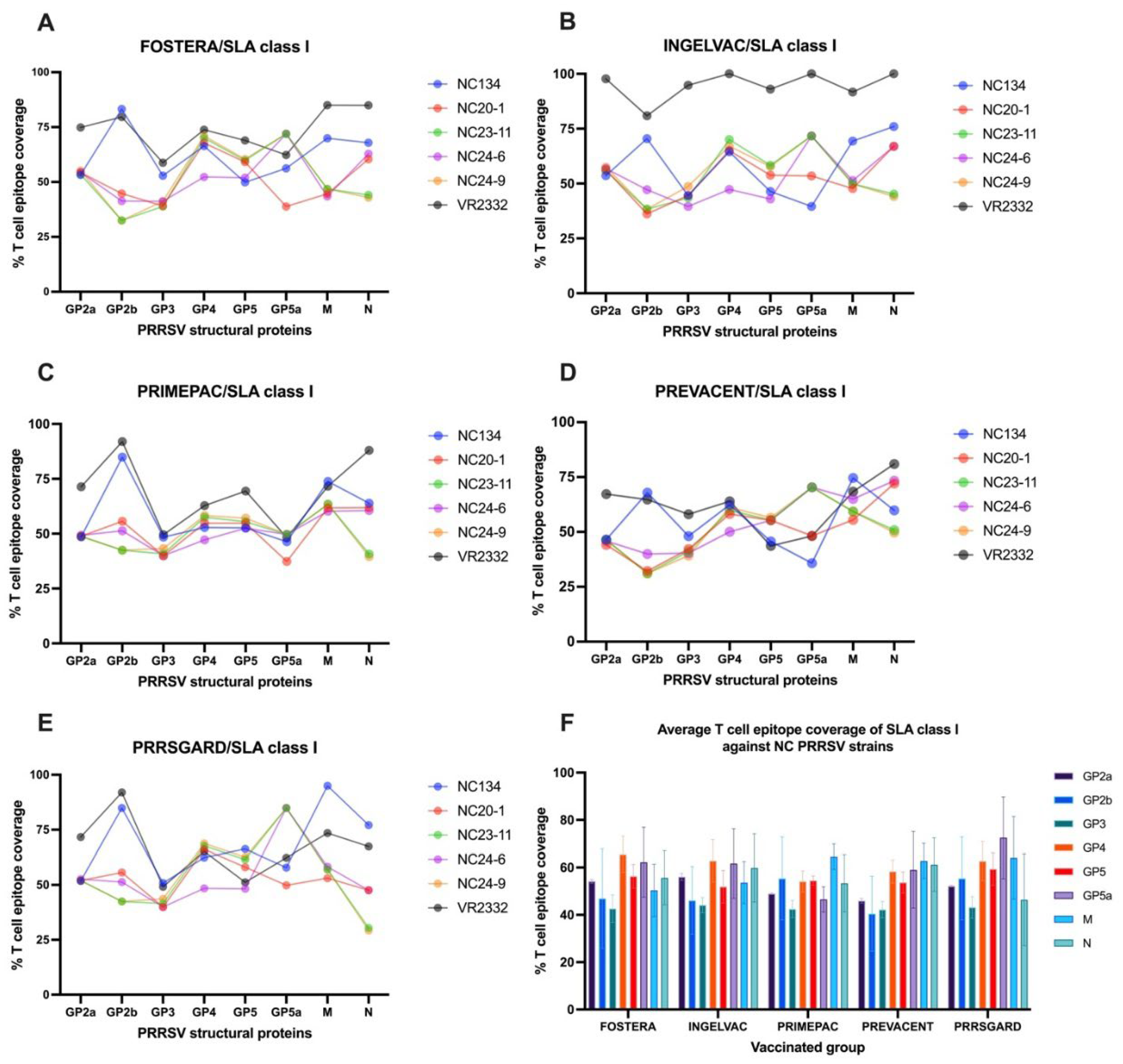
3.2.1. T Cell Epitope Coverage of SLA Class I and Relationship Between T Cell Epitope Coverage and the Mean Frequency of PRRSV-2 Specific IFNγ–Producing Cells in Each Vaccinated Group
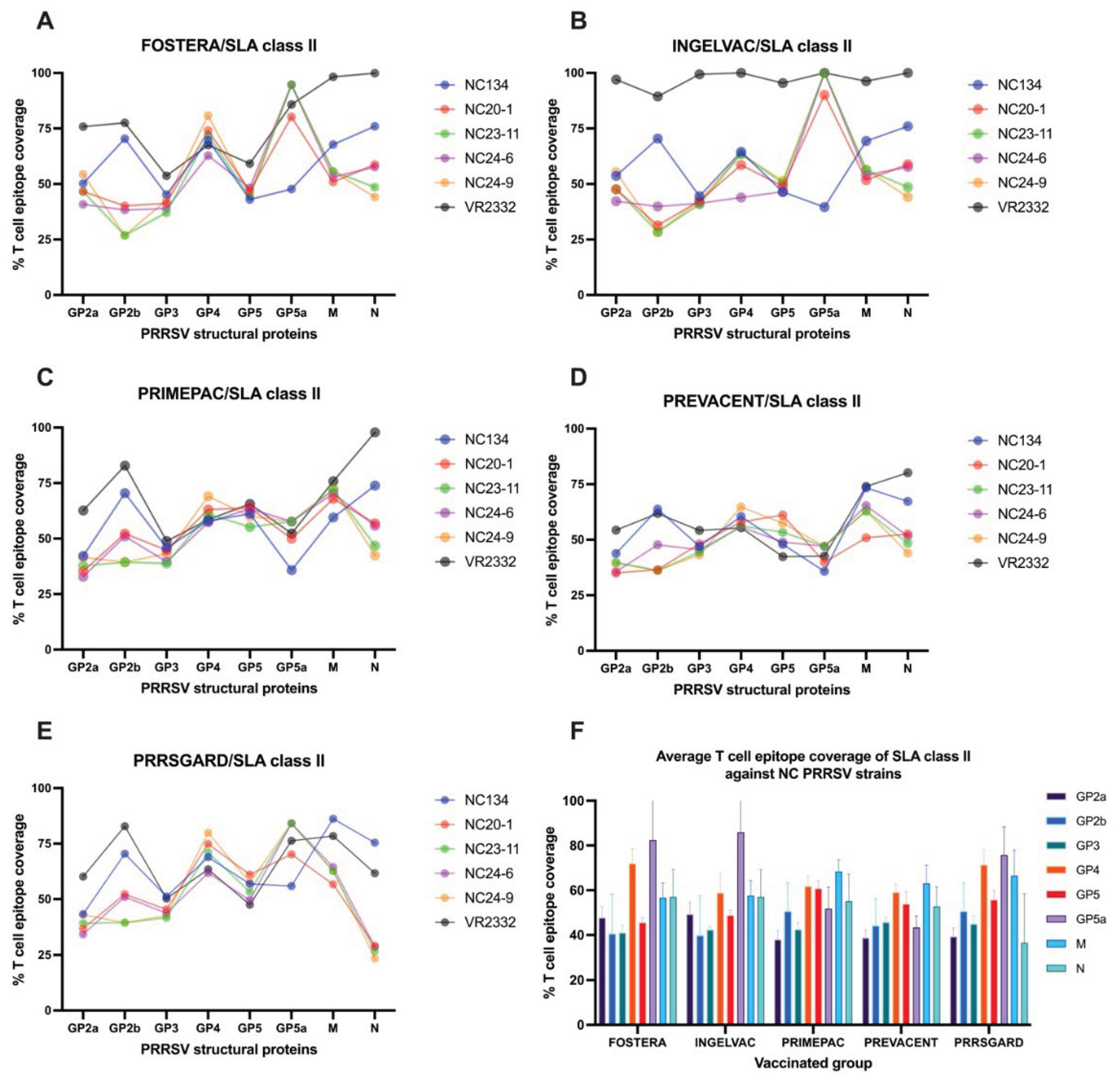
3.2.2. T Cell Epitope Coverage of SLA Class II and Relationship Between T Cell Epitope Coverage and the Mean Frequency of PRRSV-2 Specific IFNγ–Producing Cells in Each Vaccinated Group
4. Discussion
5. Conclusions
Supplementary Materials
Author Contributions
Funding
Institutional Review Board Statement
Informed Consent Statement
Data Availability Statement
Acknowledgments
Conflicts of Interest
Abbreviations
| PRRSV | Porcine reproductive and respiratory syndrome virus |
| PRDC dpv ADG |
Porcine respiratory disease complex Days post vaccination Average daily gain |
| nAbs | Neutralizing antibodies |
| PreProPRRSV | Predict and Protect against PRRSV |
| EpiCC | Epitope Content Comparison |
| PAMs | Pulmonary alveolar macrophages |
| IPMA | Immunoperoxidase monolayer assay |
| TCID50 | Tissue Culture Infectious Dose |
| MLV | Modified live vaccine |
| PBMCs | Peripheral blood mononuclear cells |
| VN | Virus neutralization |
| DMSO | Dimethyl sulfoxide |
| ELISPOT | Enzyme-linked immunospot assay |
| RT | Room temperature |
| AEC | 3-amino-9-ethylcarbazole |
| IFNγ | Interferon gamma |
| Th | T-helper cells |
| CTLs | Cytotoxic T lymphocytes |
References
- Osemeke, O.; Silva, G.S.; Corzo, C.A.; Kikuti, M.; Vadnais, S.; Yue, X.; Linhares, D.; Holtkamp, D. Economic Impact of Productivity Losses Attributable to Porcine Reproductive And Respiratory Syndrome Virus in United States Pork Production, 2016 to 2020. Preventive Veterinary Medicine 2025, 106627. [Google Scholar] [CrossRef] [PubMed]
- Assavacheep, P.; Thanawongnuwech, R. Porcine respiratory disease complex: Dynamics of polymicrobial infections and management strategies after the introduction of the African swine fever. Front Vet Sci 2022, 9, 1048861. [Google Scholar] [CrossRef] [PubMed]
- Opriessnig, T.; Gimenez-Lirola, L.G.; Halbur, P.G. Polymicrobial respiratory disease in pigs. Anim Health Res Rev 2011, 12, 133–148. [Google Scholar] [CrossRef]
- Crisci, E.; Kick, A.R.; Cortes, L.M.; Byrne, J.J.; Amaral, A.F.; Love, K.; Tong, H.; Zhang, J.; Gauger, P.C.; Pittman, J.S.; et al. Challenges and Lessons Learned from a Field Trial on the Understanding of the Porcine Respiratory Disease Complex. Vaccines 2025, 13. [Google Scholar] [CrossRef]
- Goldberg, T.L.; Lowe, J.F.; Milburn, S.M.; Firkins, L.D. Quasispecies variation of porcine reproductive and respiratory syndrome virus during natural infection. Virology 2003, 317, 197–207. [Google Scholar] [CrossRef] [PubMed]
- Murtaugh, M.P.; Stadejek, T.; Abrahante, J.E.; Lam, T.T.; Leung, F.C. The ever-expanding diversity of porcine reproductive and respiratory syndrome virus. Virus Res 2010, 154, 18–30. [Google Scholar] [CrossRef]
- He, Z.; Li, F.; Liu, M.; Liao, J.; Guo, C. Porcine Reproductive and Respiratory Syndrome Virus: Challenges and Advances in Vaccine Development. Vaccines (Basel) 2025, 13. [Google Scholar] [CrossRef]
- Torrents, D.; Miranda, J.; Gauger, P.C.; Ramirez, A.; Linhares, D. Effect of PRRSV stability on productive parameters in breeding herds of a swine large integrated group in Spain. Porcine Health Manag 2021, 7, 21. [Google Scholar] [CrossRef]
- Chae, C. Commercial PRRS Modified-Live Virus Vaccines. Vaccines (Basel) 2021, 9. [Google Scholar] [CrossRef]
- Rowland, R.R.R.; Lunney, J.K. Alternative strategies for the control and elimination of PRRS. Vet Microbiol 2017, 209, 1–4. [Google Scholar] [CrossRef]
- Kvisgaard, L.K.; Larsen, L.E.; Kristensen, C.S.; Paboeuf, F.; Renson, P.; Bourry, O. Challenge of Naive and Vaccinated Pigs with a Vaccine-Derived Recombinant Porcine Reproductive and Respiratory Syndrome Virus 1 Strain (Horsens Strain). Vaccines (Basel) 2021, 9. [Google Scholar] [CrossRef]
- Shi, M.; Lam, T.T.; Hon, C.C.; Hui, R.K.; Faaberg, K.S.; Wennblom, T.; Murtaugh, M.P.; Stadejek, T.; Leung, F.C. Molecular epidemiology of PRRSV: a phylogenetic perspective. Virus Res 2010, 154, 7–17. [Google Scholar] [CrossRef]
- Stepanova, K.; Toman, M.; Sinkorova, J.; Sinkora, S.; Pfeiferova, S.; Kupcova Skalnikova, H.; Abuhajiar, S.; Moutelikova, R.; Salat, J.; Stepanova, H.; et al. Modified live vaccine strains of porcine reproductive and respiratory syndrome virus cause immune system dysregulation similar to wild strains. Front Immunol 2023, 14, 1292381. [Google Scholar] [CrossRef] [PubMed]
- Lopez, O.J.; Osorio, F.A. Role of neutralizing antibodies in PRRSV protective immunity. Vet Immunol Immunopathol 2004, 102, 155–163. [Google Scholar] [CrossRef]
- Kick, A.R.; Grete, A.F.; Crisci, E.; Almond, G.W.; Kaser, T. Testable Candidate Immune Correlates of Protection for Porcine Reproductive and Respiratory Syndrome Virus Vaccination. Vaccines (Basel) 2023, 11. [Google Scholar] [CrossRef] [PubMed]
- Fiers, J.; Cay, A.B.; Maes, D.; Tignon, M. A Comprehensive Review on Porcine Reproductive and Respiratory Syndrome Virus with Emphasis on Immunity. Vaccines (Basel) 2024, 12. [Google Scholar] [CrossRef]
- Horter, D.C.; Pogranichniy, R.M.; Chang, C.C.; Evans, R.B.; Yoon, K.J.; Zimmerman, J.J. Characterization of the carrier state in porcine reproductive and respiratory syndrome virus infection. Vet Microbiol 2002, 86, 213–228. [Google Scholar] [CrossRef]
- Mulupuri, P.; Zimmerman, J.J.; Hermann, J.; Johnson, C.R.; Cano, J.P.; Yu, W.; Dee, S.A.; Murtaugh, M.P. Antigen-specific B-cell responses to porcine reproductive and respiratory syndrome virus infection. J Virol 2008, 82, 358–370. [Google Scholar] [CrossRef] [PubMed]
- Murtaugh, M.P.; Xiao, Z.; Zuckermann, F. Immunological responses of swine to porcine reproductive and respiratory syndrome virus infection. Viral Immunol 2002, 15, 533–547. [Google Scholar] [CrossRef]
- Proctor, J.; Wolf, I.; Brodsky, D.; Cortes, L.M.; Frias-De-Diego, A.; Almond, G.W.; Crisci, E.; Negrao Watanabe, T.T.; Hammer, J.M.; Kaser, T. Heterologous vaccine immunogenicity, efficacy, and immune correlates of protection of a modified-live virus porcine reproductive and respiratory syndrome virus vaccine. Front Microbiol 2022, 13, 977796. [Google Scholar] [CrossRef]
- Hammer, J.M.; Gutierrez, A.H.; Huntimer, L.; Gabriel, B.; Martin, W.D.; Hammer, S.E.; Käser, T.; De Groot, A.S. T cell epitope content comparison using EpiCC correlates with vaccine efficacy against heterologous porcine reproductive and respiratory syndrome virus type 2 strains. Frontiers in Microbiology 2025, Volume 16 - 2025.
- VanderWaal, K.; Pamornchainavakul, N.; Kikuti, M.; Linhares, D.C.L.; Trevisan, G.; Zhang, J.; Anderson, T.K.; Zeller, M.; Rossow, S.; Holtkamp, D.J.; et al. Phylogenetic-based methods for fine-scale classification of PRRSV-2 ORF5 sequences: a comparison of their robustness and reproducibility. Frontiers in Virology 2024, 4. [Google Scholar] [CrossRef]
- Yim-Im, W.; Anderson, T.K.; Paploski, I.A.D.; VanderWaal, K.; Gauger, P.; Krueger, K.; Shi, M.; Main, R.; Zhang, J. Refining PRRSV-2 genetic classification based on global ORF5 sequences and investigation of their geographic distributions and temporal changes. Microbiol Spectr 2023, 11, e0291623. [Google Scholar] [CrossRef]
- Lei, C.; Yang, J.; Hu, J.; Sun, X. On the Calculation of TCID(50) for Quantitation of Virus Infectivity. Virol Sin 2021, 36, 141–144. [Google Scholar] [CrossRef]
- Spear, A.; Faaberg, K.S. Development of a genome copy specific RT-qPCR assay for divergent strains of type 2 porcine reproductive and respiratory syndrome virus. J Virol Methods 2015, 218, 1–6. [Google Scholar] [CrossRef] [PubMed]
- Tamura, K.; Stecher, G.; Kumar, S. MEGA11: Molecular Evolutionary Genetics Analysis Version 11. Mol Biol Evol 2021, 38, 3022–3027. [Google Scholar] [CrossRef] [PubMed]
- Sirisereewan, C.; Nedumpun, T.; Kesdangsakonwut, S.; Woonwong, Y.; Kedkovid, R.; Arunorat, J.; Thanawongnuwech, R.; Suradhat, S. Positive immunomodulatory effects of heterologous DNA vaccine- modified live vaccine, prime-boost immunization, against the highly-pathogenic PRRSV infection. Vet Immunol Immunopathol 2017, 183, 7–15. [Google Scholar] [CrossRef]
- Moise, L.; Gutierrez, A.H.; Khan, S.; Tan, S.; Ardito, M.; Martin, W.D.; De Groot, A.S. New Immunoinformatics Tools for Swine: Designing Epitope-Driven Vaccines, Predicting Vaccine Efficacy, and Making Vaccines on Demand. Front Immunol 2020, 11, 563362. [Google Scholar] [CrossRef]
- Gray, D.K.; Dvorak, C.M.T.; Robinson, S.R.; Murtaugh, M.P. Characterization of age-related susceptibility of macrophages to porcine reproductive and respiratory syndrome virus. Virus Res 2019, 263, 139–144. [Google Scholar] [CrossRef]
- Angulo, J.; Yang, M.; Rovira, A.; Davies, P.R.; Torremorell, M. Infection dynamics and incidence of wild-type porcine reproductive and respiratory syndrome virus in growing pig herds in the U.S. Midwest. Prev Vet Med 2023, 217, 105976. [Google Scholar] [CrossRef]
- Li, C.; Liu, Z.; Chen, K.; Qian, J.; Hu, Y.; Fang, S.; Sun, Z.; Zhang, C.; Huang, L.; Zhang, J.; et al. Efficacy of the Synergy Between Live-Attenuated and Inactivated PRRSV Vaccines Against a NADC30-Like Strain of Porcine Reproductive and Respiratory Syndrome Virus in 4-Week Piglets. Front Vet Sci 2022, 9, 812040. [Google Scholar] [CrossRef] [PubMed]
- Sirisereewan, C.; Woonwong, Y.; Arunorat, J.; Kedkovid, R.; Nedumpun, T.; Kesdangsakonwut, S.; Suradhat, S.; Thanawongnuwech, R.; Teankum, K. Efficacy of a type 2 PRRSV modified live vaccine (PrimePac PRRS) against a Thai HP-PRRSV challenge. Trop Anim Health Prod 2018, 50, 1509–1518. [Google Scholar] [CrossRef]
- Wei, C.; Dai, A.; Fan, J.; Li, Y.; Chen, A.; Zhou, X.; Luo, M.; Yang, X.; Liu, J. Efficacy of Type 2 PRRSV vaccine against challenge with the Chinese lineage 1 (NADC30-like) PRRSVs in pigs. Sci Rep 2019, 9, 10781. [Google Scholar] [CrossRef]
- Kick, A.R.; Amaral, A.F.; Frias-De-Diego, A.; Cortes, L.M.; Fogle, J.E.; Crisci, E.; Almond, G.W.; Kaser, T. The Local and Systemic Humoral Immune Response Against Homologous and Heterologous Strains of the Type 2 Porcine Reproductive and Respiratory Syndrome Virus. Front Immunol 2021, 12, 637613. [Google Scholar] [CrossRef] [PubMed]
- Huang, J.; Krishna, V.D.; Paploski, I.A.D.; VanderWaal, K.; Schroeder, D.C.; Cheeran, M.C. Characterization of Glycoprotein 5-Specific Response in Pigs Vaccinated with Modified Live Porcine Reproductive and Respiratory Syndrome Virus Vaccine Derived from Two Different Lineages. Vaccines (Basel) 2025, 13. [Google Scholar] [CrossRef]
- Zuckermann, F.A.; Garcia, E.A.; Luque, I.D.; Christopher-Hennings, J.; Doster, A.; Brito, M.; Osorio, F. Assessment of the efficacy of commercial porcine reproductive and respiratory syndrome virus (PRRSV) vaccines based on measurement of serologic response, frequency of gamma-IFN-producing cells and virological parameters of protection upon challenge. Vet Microbiol 2007, 123, 69–85. [Google Scholar] [CrossRef] [PubMed]
- Guo, R.; Katz, B.B.; Tomich, J.M.; Gallagher, T.; Fang, Y. Porcine Reproductive and Respiratory Syndrome Virus Utilizes Nanotubes for Intercellular Spread. J Virol 2016, 90, 5163–5175. [Google Scholar] [CrossRef] [PubMed]
- Castillo-Perez, J.; Martinez-Lobo, F.J.; Frometa, R.; Castro, J.M.; Simarro, I.; Prieto, C. Linear epitopes of PRRSV-1 envelope proteins ectodomains are not correlated with broad neutralization. Porcine Health Manag 2024, 10, 44. [Google Scholar] [CrossRef]
- Jeong, J.; Kim, S.; Park, C.; Park, K.H.; Kang, I.; Park, S.J.; Chae, C. Commercial porcine reproductive and respiratory syndrome virus (PRRSV)-2 modified live virus vaccine against heterologous single and dual Korean PRRSV-1 and PRRSV-2 challenge. Vet Rec 2018, 182, 485. [Google Scholar] [CrossRef]
- Wesley, R.D.; Lager, K.M.; Kehrli, M.E., Jr. Infection with Porcine reproductive and respiratory syndrome virus stimulates an early gamma interferon response in the serum of pigs. Can J Vet Res 2006, 70, 176–182. [Google Scholar]
- Sun, Y.; Gao, Y.; Su, T.; Zhang, L.; Zhou, H.; Zhang, J.; Sun, H.; Bai, J.; Jiang, P. Nanoparticle Vaccine Triggers Interferon-Gamma Production and Confers Protective Immunity against Porcine Reproductive and Respiratory Syndrome Virus. ACS Nano 2025, 19, 852–870. [Google Scholar] [CrossRef]
- Madapong, A.; Saeng-Chuto, K.; Boonsoongnern, A.; Tantituvanont, A.; Nilubol, D. Cell-mediated immune response and protective efficacy of porcine reproductive and respiratory syndrome virus modified-live vaccines against co-challenge with PRRSV-1 and PRRSV-2. Sci Rep 2020, 10, 1649. [Google Scholar] [CrossRef] [PubMed]
- Kick, A.R.; Amaral, A.F.; Cortes, L.M.; Fogle, J.E.; Crisci, E.; Almond, G.W.; Kaser, T. The T-Cell Response to Type 2 Porcine Reproductive and Respiratory Syndrome Virus (PRRSV). Viruses 2019, 11. [Google Scholar] [CrossRef] [PubMed]
- Li, X.; Pei, Z.; Bai, Y.; Wang, L.; Shi, J.; Tian, K. Phenotypic Characterization of Porcine IFNgamma-Producing Lymphocytes in Porcine Reproductive and Respiratory Syndrome Virus Vaccinated and Challenged Pigs. Virol Sin 2018, 33, 524–530. [Google Scholar] [CrossRef]
- Meier, W.A.; Galeota, J.; Osorio, F.A.; Husmann, R.J.; Schnitzlein, W.M.; Zuckermann, F.A. Gradual development of the interferon-gamma response of swine to porcine reproductive and respiratory syndrome virus infection or vaccination. Virology 2003, 309, 18–31. [Google Scholar] [CrossRef]
- Park, C.; Seo, H.W.; Han, K.; Kang, I.; Chae, C. Evaluation of the efficacy of a new modified live porcine reproductive and respiratory syndrome virus (PRRSV) vaccine (Fostera PRRS) against heterologous PRRSV challenge. Vet Microbiol 2014, 172, 432–442. [Google Scholar] [CrossRef] [PubMed]
- Opriessnig, T.; Halbur, P.G.; Yoon, K.J.; Pogranichniy, R.M.; Harmon, K.M.; Evans, R.; Key, K.F.; Pallares, F.J.; Thomas, P.; Meng, X.J. Comparison of molecular and biological characteristics of a modified live porcine reproductive and respiratory syndrome virus (PRRSV) vaccine (ingelvac PRRS MLV), the parent strain of the vaccine (ATCC VR2332), ATCC VR2385, and two recent field isolates of PRRSV. J Virol 2002, 76, 11837–11844. [Google Scholar] [CrossRef]
- Baker, J.; Gutierrez, A.; Pamornchainavakul, N.; De Groot, A.; VanderWaal, K. Computationally predicted T-cell epitope trends for 30 years of wild-type PRRSV-2 strains from the USA; 2025.
- Zheng, Y.; Li, G.; Luo, Q.; Sha, H.; Zhang, H.; Wang, R.; Kong, W.; Liao, J.; Zhao, M. Research progress on the N protein of porcine reproductive and respiratory syndrome virus. Front Microbiol 2024, 15, 1391697. [Google Scholar] [CrossRef]
- Luo, T.; Xin, C.; Liu, H.; Li, C.; Chen, H.; Xia, C.; Gao, C. Potential SLA Hp-4.0 haplotype-restricted CTL epitopes identified from the membrane protein of PRRSV induce cell immune responses. Front Microbiol 2024, 15, 1404558. [Google Scholar] [CrossRef]
Disclaimer/Publisher’s Note: The statements, opinions and data contained in all publications are solely those of the individual author(s) and contributor(s) and not of MDPI and/or the editor(s). MDPI and/or the editor(s) disclaim responsibility for any injury to people or property resulting from any ideas, methods, instructions or products referred to in the content. |
© 2025 by the authors. Licensee MDPI, Basel, Switzerland. This article is an open access article distributed under the terms and conditions of the Creative Commons Attribution (CC BY) license (http://creativecommons.org/licenses/by/4.0/).


