

Submitted:
23 August 2025
Posted:
26 August 2025
You are already at the latest version
Abstract
Anticoagulation therapy with unfractionated heparin (UHF) is a mandatory treatment for a large group of critically ill patients. Although the gold standard for its monitoring is still the laboratory aPTT (aPTT-lab), the need for inmediate results has led to an increase in the number of point of care (POC) measurement systems. The objective of this study was to assess the correlation and agreement between activated Clotting Time- Low Range (ACT-LR) and aPTT-POC measurements with aPTT-lab in a cohort of critically ill patients requiring anticoagulation. This prospective cohort study included patients admitted to the intensive care unit (ICU) treated with UFH between January 2022 and January 2024. Simultaneous measurements of aPTT-lab, aPTT-POC, and ACT-LR were performed. To determine the range of normality and mean aPTT-POC, we analyzed 14 samples fromMhealthy volunteers who represented the control group. The aPTT-lab value was considered the gold standard. We found a poor correlation in the global sample between ACT-LR and aPTT-lab (r= 0,51), improving slightly after excluding patients with invasive devices (r= 0,61). aPTT-POC showed moderate agreement (bias of 10.4%), underestimating the aPTT ratio (bias= -0.23), which was similar in patients with and without devices. In the control group of healthy volunteers, agreement was very high (bias=-0.003). The accuracy of a POC anticoagulation monitoring system in critically ill patients is limited. The aPTT-POC measurements showed better agreement than the ACT-LR measure-ments. A clinical validation study is needed to adjust for systematic bias in patients with aPTT-POC.
Keywords:
anticoagulation monitoring
; unfractionated heparin
; point-of-care devices
; agreement
; critical care
1. Introduction
Anticoagulation therapy is a widely used treatment in intensive care units (ICUs) and is closely related to the use of ventricular assist devices (IMPELLA), haemodynamic support with extracorporeal circulation (ECMO), and continuous renal replacement therapy (CRRT). The most commonly used drug for this purpose is unfractionated heparin (UFH), which re-quires repeated measurements and rapid availability of results for dose adjustment.
Anticoagulation levels are generally monitored using activated partial thromboplastin time performed in the clinical laboratory (aPTT-lab) [1]. However, it has some limitations: its accuracy may vary depending on the technique used, sample transport causes delays in ob-taining the results, and it may compromise the precision of measurements. The current re-commendation is to standardize aPTT values by normalizing the values measured in he-
parinized patients to the mean of the normal range of patients without heparin to calculate the aPTT ratio for monitoring. The therapeutic range for aPTT was set to 1.5–2.5 times [2]. This standardization also allows for interhospital adjustment by correcting for differences be-tween instruments and reagents.
The availability of a bedside measurement of anticoagulation (point of care POC) has important benefits in decision-making [1], mainly in patients at high risk of bleeding, such as the type of patients admitted to the ICU. The trend is toward the increasing use of POC testing that provides early results and the need for a low sample volume. This is particularly im-portant in patients who require regular assessment of their anticoagulation status, sometimes several times a day, resulting in a considerable volume of blood being drawn during therapy. Werfen Hemochron® has the measurement of two ACT-POCs, one for low anticoagulation range (ACT-LR) and another when higher anticoagulation intensity is required (ACT+), such as in cardiac surgery and interventional procedures. ACT has been used to monitor antico- agulation in patients with IMPELLA and ECMO ventricular assist devices [3], but with a high degree of uncertainty, as highlighted in the ELSO guidelines on anticoagulation in ECMO [2], given the lack of correlation with the aPTT-lab [4] and that the cumulative experience is in cardiac surgery and the catheterization laboratory [5]. In the context of low-dose heparin anticoagulation, ACT-LR or aPTT-POC may be indicated for monitoring and adjustment; however, there is scarce published experience. The published studies in- cluded only patients undergoing cardiac surgery and other hospitalized patients and did not include those critically ill [6]. These studies may have limitations in ICUs because the doses of UFH used in this setting are lower and for longer periods of time. A systematic review con-ducted by Brown E et al in 2016 highlighted the lack of evidence of good quality in this patient group [7]. In 2019, Lohith Karigowda et al. conducted the first prospective study on this spe- cific population and observed moderate agreement between whole blood aPTT-POC and aPTT-lab (r: 0.65; 95% range 23.4%-28% with a percentage bias of 5%, increasing with test delay above 90 seconds). However, in an analysis of the overall concordance, the authors found it to be poor and considered the results inaccurate [8].
The aim of this study was to assess the correlation and agreement between ACT-LR, aPTT-POC measurements and aPTT-lab in a cohort of critically ill patients re quiring an- ticoagulation.
2. Materials and Methods
We included consecutive patients admitted to a 22-bed ICU undergoing anticoagula-tion with UFH for any cause, including the use of ventricular assist devices and extracorpo- real circuits (ECMO and CRRT), from January 2022 to January 2024. The exclusion criteria were: age < 18 years and use of other anticoagulants (low molecular weight heparin, direct thrombin inhibitors among others). The study was approved by the institutional ethics committee of the Hospital Universitario Clínico San Cecilio de Granada (No. 1970-N-21). The requirement for written informed consent was waived.
This is a concordance and correlation study of laboratory tests to compare results obtained using POC tests with those obtained in the clinical laboratory. The variables of interest were aPTT-lab, aPTT-POC, and ACT-LR. Demographic variables, severity at admi- ssion, and indication for anticoagulation were also recorded.
The r-commander software was combined with the rcommader.EZR plugin was used to calculate the sample size. To compare two proportions with 10% disagreement (90% probability of agreement vs. 80%) between the two, 106 measurements are re- quired.
The Werfen Hemochron® device was used for bedside coagulation monitoring. The disposables used for the determination of ACT-POC and ACT-LR were used. According to the usual anticoagulation protocol, blood samples were drawn in a 5 ml syringe at the same time as the aPTT-lab. Thus, three simultaneous measurements were performed for each test: aPTT-lab, aPTT-POC, and ACT-LR. Non-citrated whole blood was used for the POC samples. The samples assayed in the laboratory were centrifuged for 10 minutes to produce platelet poor plasma before aPTT-lab was performed on the Werfen ACL TOP 750 system with the reference values being 24-37 seconds. The reference ranges for normal POC values with He- mochron Werfen are 20.6 to 38.6 seconds for aPTT-POC and 113 to 149 seconds for ACT-LR. The aPTT-lab is considered the gold standard.
As a control, 14 samples from healthy volunteers were used to determine the normal range and mean POC measurements in patients who did not receive heparin. The aPTT-POC ratio was calculated by dividing the result of the patient’s measurement by the mean result f the control group.
Statistical Analysis
Data were imported from an Excel spreadsheet and analyzed using the statistical package r commander 2.7-2 (R v 4.2.0). Categorical variables were reported as frequencies and percentages, and continuous variables as means (standard deviation) or medians (inter-quartile ranges).
omparisons between aPTT-lab and ACT were performed using scatter plots and Spearman’s correlation coefficient (r). Correlations were interpreted as low (r<0.6), moderate (r between 0.6 and 0.8) or strong (r>0.8) [9]. The concordance analysis of the aPTT-Lab and aPTT-POC measurements was performed using the Bland-Altman method and the construc-tion of disagreement-survival plots [9]. The comparison of aPTT values was performed using the normalized ratio. The Bland-Altman method uses a scatter plot to study the degree of agreement of 2 quantitative measures by constructing a graph where the ordinate axis repre-sents the difference of the measurements and the abscissa axis represents the mean of both measurements. A perfect agreement produces a line parallel to the abscissa axis at point 0. The resulting scatterplot allows the agreement to be estimated visually and numerically by the mean difference between the measurements and the upper and lower cut-off points (±2dt).
If there is good agreement, the mean difference in the measurements will be close to zero and the point cloud will be between ±2dt cut-off points. Following the recommendations of the National External Quality Assessment Scheme (NEQAS) in the UK and the Clinical Laboratory Improvement Amendments in the USA (CLIA), we calculated the plot difference as a percentage, considering the POC determination to be accurate if it is within 10-15% [8].
The disagreement-survival curves allow the assessment of the percentage of dis- agreement between two estimates for different cutoff points. The percentage of agreement at the absolute value of the measurement difference was calculated from the cut-off point of the curve to the upper value of the ordinate axis. To assess the direction of bias and evaluate the influence of different factors, we performed a stratified analysis according to the method of Llorca and Delgado-Rodríguez [10].
3. Results
We included 30 patients with 242 anticoagulated measurements and 14 healthy subjects as the control group. Patient characteristics are summarized in Table 1. An intermediate analysis was performed on the first 150 measurements. As a low correlation between ACT-LR and aPTT-lab was detected, the study was followed until 30 patients were recruited, excluding ACT-LR measurements in subsequent samples
3.1. Description of the Group
The mean of the different measurements in the group of subjects without UFH is: ACT-LR 143 sec (dt 10.5, min 130-max 162), aPTT-lab 25.1 sec (dt 2.8, min 18.5-max 30), ratio 0.96 (dt 0.11, min 0.71-max 1.15), and aPTT-POC 39.4 sec (dt5.3; min 26.1-max 45.1). The mean difference in the aPTT-POC/aPTT-lab ratio is -0.003 (dt 0.08). The Bland-Altman plot for PTT-POC are shown in Figure 1. A good agreement between aPTT-POC/aPTT-lab was noted visually, and the mean of the difference was very close to 0. The cutoff point for 90% agreement is 0.1 for the aPTT-POC ratio. The correlation between ACT-LR and aPPT-lab was significant but moderate (r=0.7, p=0.01).
3.2. Description of Patients Treated with Heparin
3.2.1. ACT-LR and aPTT-lab Correlation
The mean ACT-LR was 185 sec (dt 37, min114, max 343). Figure 2 shows the scatter plots for ACT-LR and aPTT-lab, overall and stratified by therapy. Visually, a better relationship was observed in the group of patients without ventricular assist devices. The correlation for the total number of measurements is low with a correlation coefficient of 0.51. Excluding patients with ventricular assist devices, the correlation improves (r=0.61), although it remained low.
3.2.2. Correlation Between aPTT-lab and aPTT-POC
The mean for aPTT-lab is 44.3 sec (dt 19.3 ; min 18.5, max 160), with a ratio of 1.67 (dt 0.72) and for aPTT-POC 59.2 sec (dt 20.2, min 19.8, max 146), with a ratio of 1.37 (dt 0.59). The mean ratio difference was 0.23 (UL 0.77, LL -1.23.). The Bland-Altman and disagreement survival plots are shown in Figure 3 and Figure 4.
The Bland-Altman plot shows a good degree of agreement of the measurements for 2dt (continuous line, Figure 3), and the bias value is negative, which means an underestimation of the aPTT-lab by the POC determination. The mean plot difference as percentage is 10.8% (limits of agreement 61.76; -40.96) To accurately identify the points of agreement at 80% and 90%, disagreement-survival plots were constructed (Figure 4). The cutoff points for 80% and 90% agreement are 0.48 and 0.71 for the absolute difference in ratios. In the stratified disagreement-survival analysis, agreement is similar in the ventricular assist device, renal replacement therapy, and anticoagulation without devices groups. To assess the influence of potential confounders on bedside whole blood samples, we performed a stratified analysis using albumin (≥2.5), platelet count (≥106), hematocrit (≥27%), and serum creatinine (≥2.4 mg/dl). The only variable related to concordance was the platelet count (Figure 5).
3.3. Analysis of Outliers
The Bland-Altman plot (Figure 3) visually shows worse concordance between mea-surements at high ratio values. Three extreme measurements of the difference between aPTT-ab and aPTT-POC were detected. The values correspond to measurements in patients with excessive anticoagulation (aPTT-lab ratio greater than 3). In all cases, the underestimation of aPTT-lab was underestimated. Excessive anticoagulation was detected by bedside measure ment in two patients.
4. Discussion
In this study, we observed that aPTT-POC and ACT-LR measurements had moderate accuracy for monitoring POC anticoagulation in critically ill patients treated with intravenous heparin. This result is in contrast with the near-perfect accuracy in the healthy volunteer group and is due to the presence of several factors in critically ill patients that dis-tort their results.
Anticoagulation monitoring in critically ill patients receiving intravenous heparinisa-tion is essential to avoid complications due to under- or overdosing, especially in patients with devices. There remains a lack of standardization in monitoring, as reflected in the results of the latest ELSO 2024 survey of European centers involved in the care of adults on mecha-nical cardiocirculatory support. Of the respondents, 72.4% adhered to locally established pro-tocols, with laboratory-measured aPTT monitoring predominating (43.1% with the use of IM- PELLA and 32.9% in ECMO patients). In the remaining cases, considerable heterogeneity was observed between centers [10,11].
Despite the known benefits of intravenous heparinisation, it can have an unpredictable dose-response effect in critically ill patients, making its use challenging. This group is cha-
racterized by a high risk of both bleeding (the most frequent and feared complication in pa- tients with devices) and thrombotic events. The use of POC systems, if determined to be a-
ccurate, will help to adjust UFH doses quickly and improve patient care by reducing the delay in obtaining results inherent in sample transport and processing. This allows decisions to be made quickly and accurately. However, to date, although POC testing is available, the accu- racy and validation studies of ECMO [2] are very limited, as recognized in the afore men- tioned ELSO 2021 anticoagulation guidelines.
The accuracy of POC devices in critically ill patients receiving intravenous heparinisa- tion is limited, and the results are conflicting. These studies used different POC devices (He-mochron 801, Hemochron Junior, Hemochron Response, Hemochron Signature Elite, etc.) and had different case mixes (ICU or non-ICU patients) with or without therapeutic antico-agulation using intravenous heparinisation. In our study, we used the Hemochron Werfen® device; thus, it is difficult to compare our results with those of studies using other tools.
Among the coagulation parameters measured at bedside, ACT is the most widely used strategy. The correlation between ACT and aPTT-lab was poor [6,7], with aPTT-lab[8] being considered superior. The limitations of ACT in this group of patients are widely described, with its results being insensitive to various factors (platelet alteration, fibrinogen levels, etc [12]). This has led to a progressive shift from the use of ACT to aPTT-lab, which has been clearly reflected in the different ELSO surveys (2013 and 2021 [13,14]). The addition of the ACT-LR test to low-dose heparin monitoring was intended to overcome the problems asso- ciated with ACT. However, its accuracy has also been questioned in many studies, with up to 22% of the results being classified as incorrect during vascular surgery with low-dose in-travenous heparinisation [15]. Another study by Atallah et al [15,16] (ECMO patients) found a low correlation between paired samples of ACT-LR and aPTT (r=0.41), as well as with the dose of heparin administered (r=0.11-0.14). These data were also reproduced in patients who underwent ECMO-PCR with even lower correlations [17].
The ACT-LR correlation in our study was better in the control group (r=0.7) than in those treated with intravenous heparin. This may be explained by the influence of alterations in critical patients in relation to certain factors, such as hematocrit and platelets, as the ana-lysis on whole blood samples are standardized to normal values. This potential bias is even more evident in patients treated with ventricular support devices who are routinely subjected to thrombopenia, transfusions, and haemodilution. The correlation in medically anticoagu-lated patients has been shown to be higher (r=0.7) and similar to that of our cohort if we include the control group and medically anticoagulated patients (r=0.8), supporting the po-tential influence of these external factors on the validity of the ACT-LR.
Published studies on the validity of aPTT-POC as a substitute for laboratory tests have not found satisfactory results. Several studies in the context of acute haemorhage. Gauss et al [18] used Hemochron Signature Elite for this purpose. Their definition of acceptable agree-ment was that no more than 5 % of the aPTT-POC results differed by more than 20 % from aPTT-lab. They observed a total of 89% of the aPTT-POC measurements were out of range. It is assumed that bleeding is associated with rapid changes in hematocrit and platelet counts and other factors, including fluid therapy and transfusion [19]. In our case, after considering these confounding factors, we observed that the presence of thrombopenia < 100,000/µL modified the concordance significantly (Figure 5).
Gauss et al. showed poor concordance in patients with acute bleeding requiring trans- fusion. In this study, we did not find any reference to the normality value used for calculating the ratio between the POC and the laboratory samples [18]. In our case, the aPTT-POC measurements underestimated the laboratory values, as shown in figure 3. However, it should be noted that the agreement is better in the range of the aPTT ratio between 1.5 and 2, which is the usual target aPTT range for anticoagulation with UFH. The worst agreement was ob-served at high anticoagulation values. This was also the first study to assess the accuracy of aPTT-POC in ICU patients [8]. This prospective study included patients requiring all-cause anticoagulation in the ICU (APACHE II medium 18). The main indications for UFH infusion were pulmonary embolism and atrial fibrillation. Comparisons were made between labora-tory and POC values in both whole blood and citrated blood according to whether the aPTT was less or more than 90 seconds.
The limits of agreement were wider and the bias was greater with aPTT POC obtained using citrated blood than with that obtained using whole blood. Agreement was better at aPTT POC values below 90 seconds and bias increased with increasing aPTT POC values. The results showed that adjusting the UFH dose based on the aPTT-POC measurement re-sulted in more patients receiving inadequate than excessive doses. The findings highlight the need for future studies to establish an adequate aPTT range.
Adequate accuracy has not been demonstrated in studies on patients with devices, with the most frequent being in the context of ECMO use. Yuan-Teng et al [20] found low concor-dance between both tests, both in seconds and in ratio. The aPTT values between 23.2 and 38.7 seconds were considered normal, which were obtained from Werfen. In our cohort, the values of normality in healthy volunteers were higher; therefore, the ratios more adjusted, which would explain why our concordance is better. In another study conducted in patients with V-V ECMO support for ARDS secondary to SARS-Cov-2, low concordance was observed between aPTT-POC and aPTT-lab, with increased concordance when the results were normalized to platelet and creatinine counts. The authors believe that platelets and renal function may influence the outcome of whole blood POC testing [21].
We identified only one study with satisfactory agreement between laboratory values and those of the bedside test (with HEMOCHRON Jr, International Technidyne Corporation (ITC), Edison, NJ). This study was conducted in the context of heparinization for cardiovas-cular surgery and during the operating room stay5, which differs markedly from our popu-lation of critically ill patients. The correlation found was r = 0.867, p < 0.001.
Methodological differences may partly explain the poor agreement between the POC measurements and the aPTT-lab. The reagents used in POC are phospholipids and kaolin, whereas aPTT-lab uses silicon dioxide, ellagic acid, calcium, and phospholipids. There are also differences in the principles involved in the time-to-clot detection (photoelectric versus viscoelasticity) [8].
In addition, the POC method uses whole blood, whereas in the laboratory, plasma de- void of white blood cells, red blood cells, and platelets is used. This processing of the blood prior to aPTT measurement may eliminate some of the variation and individual influences, particularly those related to platelet count, and therefore may account for some of the differ-rence in results. POC assays are derived from whole blood by calculating aPTT-POC using an algorithm. The results were theoretically calibrated to normal hematocrit and platelet counts. Some manufacturers’ specifications for POC measurements recommend that blood samples with a hematocrit < 20% should not be used for the measurement of aPTTT-POC, as the optical density of the sample exceeds the detection range. different coagulation activators produce different results [22,23].
Our study provides important data with respect to previous publications. First, comarisons between determinations were made using the normalized aPTT ratio, obtained by dividing the patient's determination with respect to the mean of determinations of the control group (for the aPPT-POC) and that obtained in the hematology laboratory. These data seem relevant to us, since in our cohort the normality values in seconds are 22 to 31 s for the aPTT-lab, while the normality values for the aPTT-POC (control group) are 39.7 (dt 5.3; min 26- max 45.1), slightly different from those supplied by the manufacturer. Second, this is a prospective study (most studies published to date are retrospective and from databases), and it includes a heterogeneour cohort with the different types of patients that can be found in the ICU and he different support therapies that are currently the main indications for anticoagulation with UFH. Previous studies have tested the measurements in groups of patients subject to greater bias due to the presence of thrombopenia, hemodilution, and multiple transfusions, such as acute hemorrhage and ECMO treatment. Finally, we analyzed several samples that were more than the recommended minimum sample size of 40.
The current study has several limitations. This was a single-center study with a limited number of patients. Some important variables, such as anti-Xa levels and anticoagulation fac-tors, were not available. It was also not possible to monitor the concentration of heparin and its relationship with POC measurements because it was not available at our center.
6. Conclusions
Among the two POC tests evaluated, aPTT-POC showed the best agreement with the laboratory results. Although its concordance is only moderate and requires adjustments in its application, it could be considered for anticoagulation monitoring in critically ill patients with and without devices. Although point-of-care anticoagulation monitoring systems have significant advantages in critical patients, their current accuracy precludes their clinical use without further validation studies.
Author Contributions
Conceptualization, M.T.C and M.C.; methodology, R.G.d. y M.C.; software, R.G.d.; validation, M.T.C., R.G.d. and M.C.; formal analysis, R.G.d.; investigation, M.T.C. and R.G.d.M.; resources, M.C.; data curation, R.G.d.; writing—original draft preparation, M.T.C.; writing—review and editing, M.C..; visualization, M.T.C.; supervision, M.C. All authors have read and agreed to the published version of the manuscript.
Funding
The author(s) received no financial support for the research, authorship, or publication of this article.
Institutional Review Board Statement
The study was conducted in accordance with the Declaration of Helsinki. The study was approved by the institutional ethics committee of the Hospital Universitario Clínico San Cecilio de Granada (Registration 1970-N-21; approved 5 October 2021).
Informed Consent Statement
The requirement for written informed consent was waived. The justify- cation is that sampling is part of routine clinical practice without posing additional risk to the patient and also ensuring data confidentiality being approved by the ethics committee.
Data Availability Statement
The data supporting the findings of this study are available from the corresponding author upon reasonable request. This article is part of the doctoral thesis of the first author, María Teresa Cruces Moreno, from the PhD programme in Clinical Medicine and Public Health at the University of Granada.
Conflicts of Interest
The authors declare no conflict of interest.
Abbreviations
The following abbreviations are used in this manuscript:
| UHF | Unfractionated heparin |
| aPTT-Lab | Laboratory aPTT |
| POC | Point of care |
| ACT-LR | Activated Clotting Time-Low Range |
| ICU | Intensive care unit |
| CRRT | Continuous renal replacement therapy |
| ECMO | Extracorporeal circulation |
| NEQAS | National External Quality Assessment Scheme |
| CLIA | Improvement Amendments in the USA |
References
- Wool, GD. Benefits and Pitfalls of Point-of-Care Coagulation Testing for Anticoagulation Management An ACLPS Critical Review. Am J Clin Pathol. 2019;151:1-17. [CrossRef]
- McMichael ABV, Ryerson LM, Ratano D, Fan E, Faraoni D, Annich GM. 2021 ELSO Adult and Pediatric Antico agulation Guidelines. ASAIO Journal. 2022;68(3):303-310. [CrossRef]
- ELSO Anticoagulation Guideline. Published online 2014.
- Kozek-Langenecker, SA. Perioperative coagulation monitoring. Best Pract Res Clin Anaesthesiol. 2010;24(1):27-40. [CrossRef]
- FitzGerald DJ, Patel A, Body SC, Garvin S. The relationship between heparin level and activated clotting time in the adult cardiac surgery population. Perfusion. 2009;24(2):93-96. [CrossRef]
- Smythe MA, Koerber JM, Nowak SN, et al. Correlation between Activated Clotting Time and Activated Partial Thromboplastin Times. Annals of Pharmacotherapy. 2002;36(1):7-11. [CrossRef]
- Brown E, Clarke J, Edward KL, Giandinoto JA. Point-of-care testing of activated clotting time in the ICU: is it relevant? 2016;25(11):608-612. [CrossRef]
- Karigowda L, Deshpande K, Jones S, Miller J. The accuracy of a point of care measurement of activated partial thromboplastin time in intensive care patients. Pathology. [CrossRef]
- Bioestadistica Amigable 3a Edicion.pdf. Accessed March 28, 2025. https://es.slideshare.net/slideshow/bioestadis tica-ami gable-3a-edicionpdf/251830211.
- Van Edom CJ, Swol J, Castelein T, et al. European practices on antithrombotic management during percutaneous mechanical circulatory support in adults: a survey of the Association for Acute CardioVascular Care of the ESC and the European branch of the Extracorporeal Life Support Organization. Published online 2024. [CrossRef]
- Llorca J, Delgado-Rodríguez M. Survival analytical techniques were used to assess agreement of a quantitative variable. J Clin Epidemiol. [CrossRef]
- Kanji R, Vandenbriele C, Arachchillage DRJ, et al. Optimal Tests to Minimise Bleeding and Ischaemic Complica tions in Patients on Extracorporeal Membrane Oxygenation. Thromb Haemost. [CrossRef]
- Bembea MM, Annich G, Rycus P, Oldenburg G, Berkowitz I, Pronovost P. Variability in anticoagulation manage ment of patients on extracorporeal membrane oxygenation: an international survey. Pediatr Crit Care Med. [CrossRef]
- Ozment CP, Scott BL, Bembea MM, Spinella PC. Anticoagulation and Transfusion Management During Neonatal and Pedi atric Extracorporeal Membrane Oxygenation: A Survey of Medical Directors in the United States. Pediatr Crit Care Med. [CrossRef]
- Racioppi L, Quinart A, Biais M, Nouette-Gaulain K, Revel P, Sztark F. Validation of a bedside activated clotting time test (Hemochron Ò Jr II Signature) with low dose heparin therapy. [CrossRef]
- Atallah S, Liebl M, Fitousis K, Bostan F, Masud F. Evaluation of the activated clotting time and activated partial thromboplastin time for the monitoring of heparin in adult extracorporeal membrane oxygenation patients. Per fusion. [CrossRef]
- Yie K, Chon SHD, Na CY. Activated clotting time test alone is inadequate to optimize therapeutic heparin dosage adjustment during post-cardiopulmonary resuscitational extracorporeal membrane oxygenation (e-CPR). Perfu sion. [CrossRef]
- Gauss T, Hamada S, Jurcisin I, et al. Limits of agreement between measures obtained from standard laboratory and the point-of-care device Hemochron Signature Elite® during acute haemorrhage. Br J Anaesth. [CrossRef]
- Toben B, Martin M. Rapid assessment of coagulation at the point of care with the hemochron signature elite sys tem. Point Care. [CrossRef]
- Teng Y, Yan S, Liu G, Lou S, Zhang Y, Ji B. An Agreement Study Between Point-of-Care and Laboratory Activated Partial Thromboplastin Time for Anticoagulation Monitoring During Extracorporeal Membrane Oxygenation. Front Med (Lau sanne). [CrossRef]
- Aston D, Besser M, Goddard B, Maggs N, Ahmed H, Falter F. Whole-blood Point-of-Care Activated Partial Throm boplastin Time Ratio (APR) is not Accurate Enough to Monitor Heparin Therapy in Patients with Severe Respir atory Failure Second ary to SARS-Cov-2 Infection Supported with Veno-Venous Extracorporeal Membrane Oxy genation (VV-ECMO). Clini cal and Applied Thrombosis/Hemostasis. [CrossRef]
- Pedersen JT, Pincus MR, Rapiejko JA. Comparison of Activated Partial Thromboplastin Time Reagents. Lab Med. [CrossRef]
- Shojania AM, Tetreault J, Turnbull G. The variations between heparin sensitivity of different lots of activated partial thromboplastin time reagent produced by the same manufacturer. Am J Clin Pathol. [CrossRef]
Figure 1.
Bland-Atlman plot (Controls). The mean difference in the aPTT-POC/aPTT-lab ratio is -0.003 (dt 0.08).
Figure 1.
Bland-Atlman plot (Controls). The mean difference in the aPTT-POC/aPTT-lab ratio is -0.003 (dt 0.08).
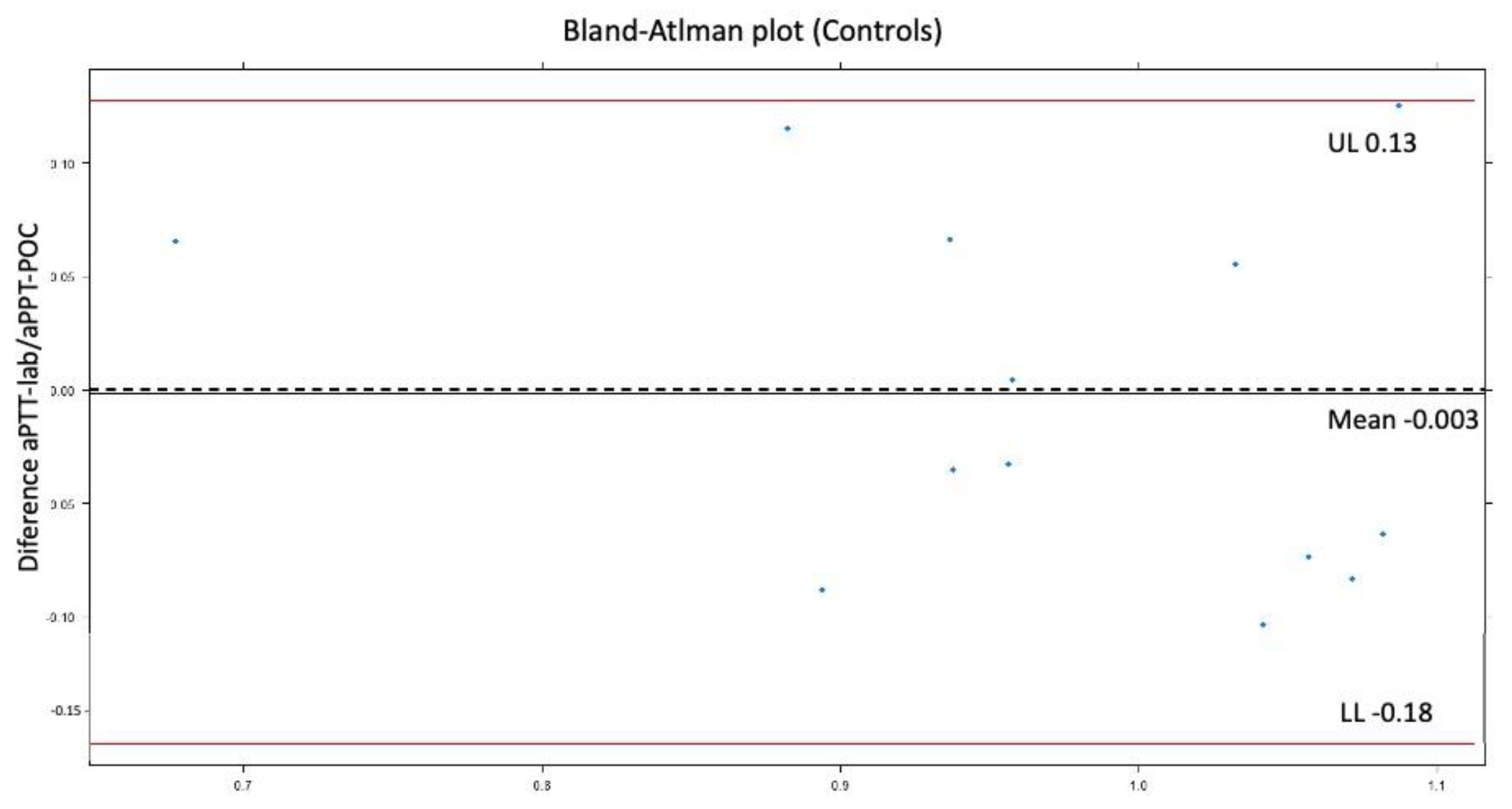
Figure 2.
Scatter plot ACT-LR y APTT-lab. All the patients (left side) and stratifies análisis by therapy (right).
Figure 2.
Scatter plot ACT-LR y APTT-lab. All the patients (left side) and stratifies análisis by therapy (right).
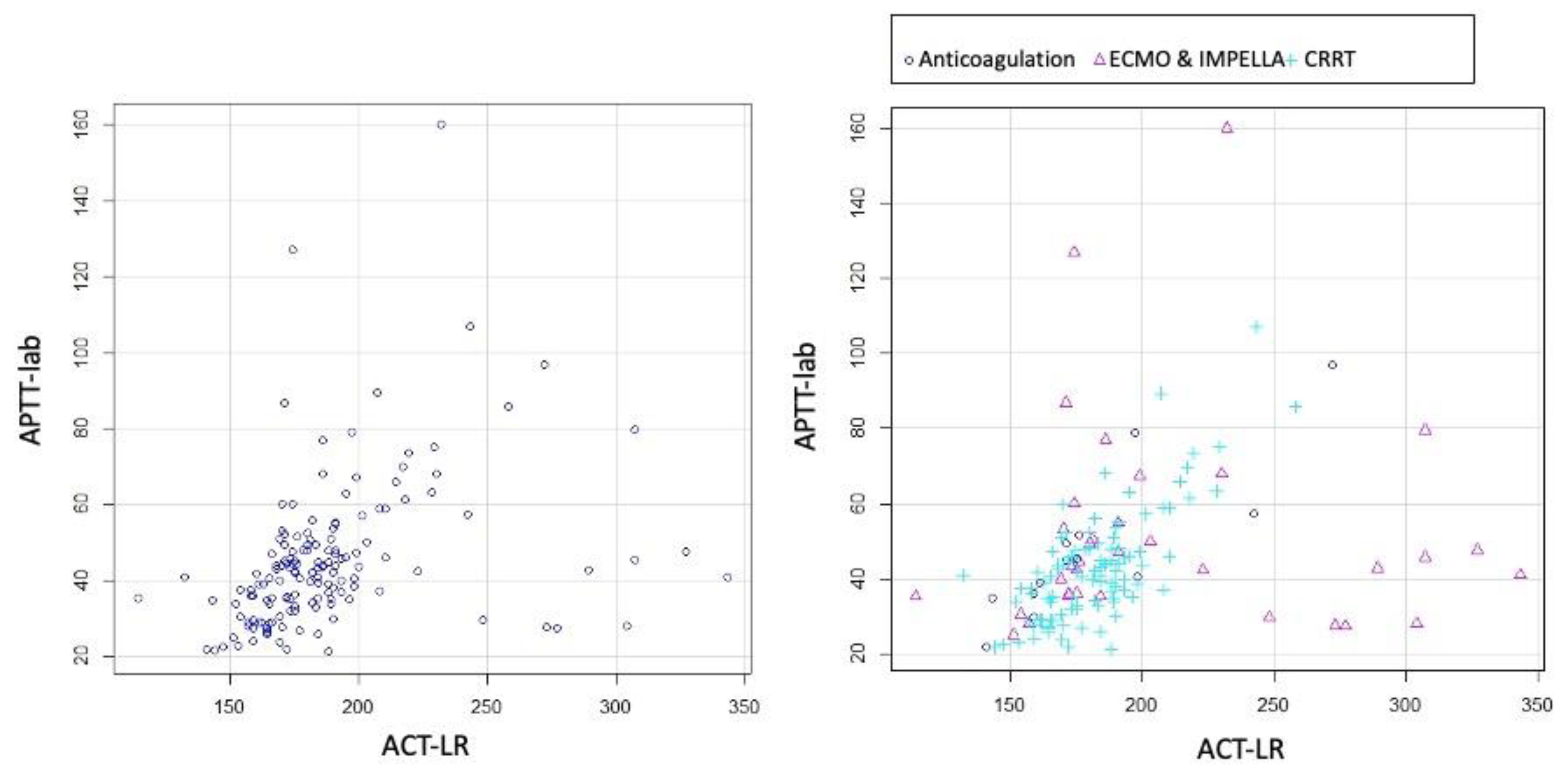
Figure 3.
Bland-Altman plot. I´s a reasonable agreement by ± 2dt. The negative bias means and underestimation of APPT-lab compared to APTT-poc. Shows a good degree of agreement of the measurements for 2dt (continuous line).
Figure 3.
Bland-Altman plot. I´s a reasonable agreement by ± 2dt. The negative bias means and underestimation of APPT-lab compared to APTT-poc. Shows a good degree of agreement of the measurements for 2dt (continuous line).
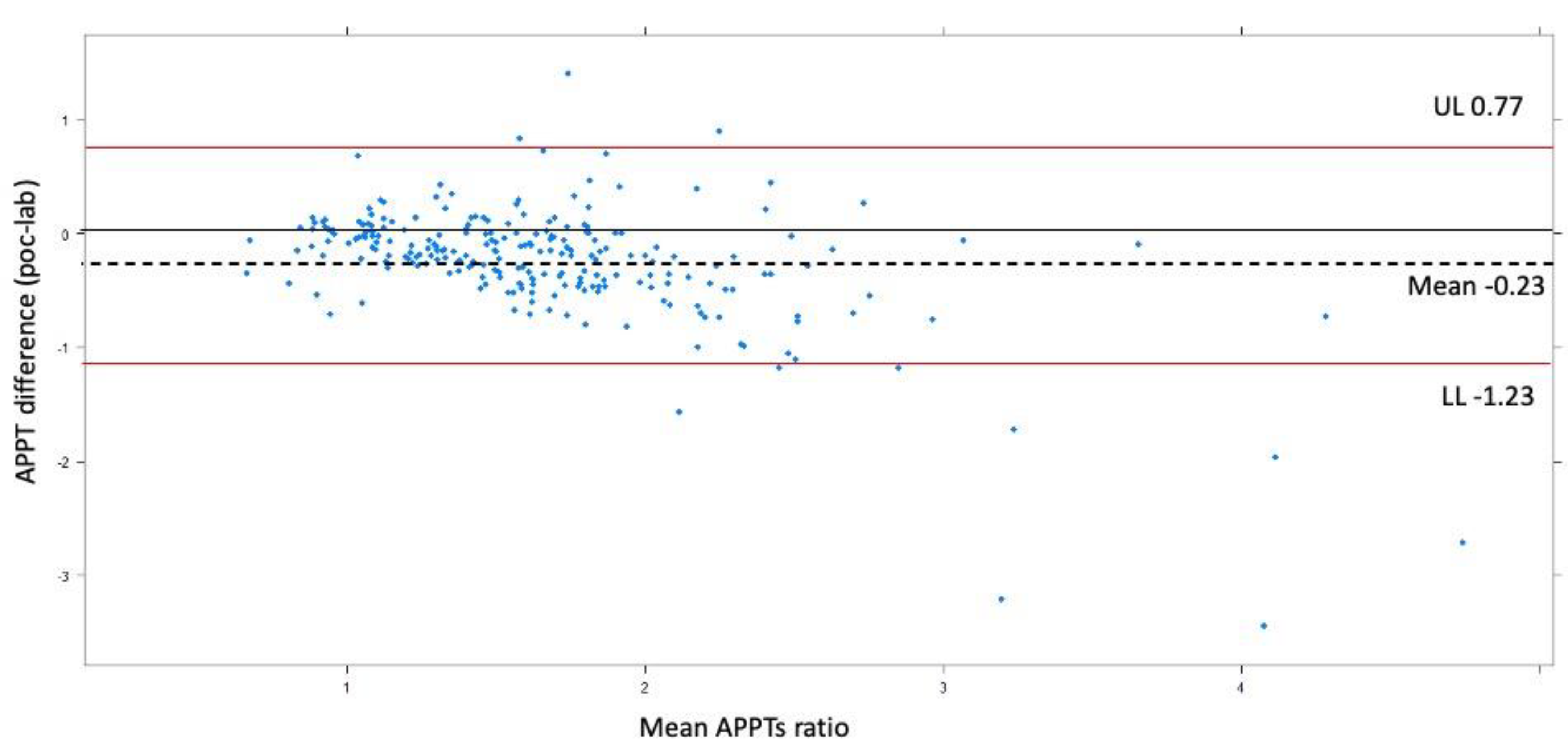
Figure 4.
Disagreement survival plots. (A)The cutoff points for 80% and 90% agreement are 0.48 and 0.71 for the absolute difference in ratios. (B) In the stratified disagreement-survival analysis, agreement is similar in the ventricular assist device, renal replacement therapy, and anticoagulation without devices groups.
Figure 4.
Disagreement survival plots. (A)The cutoff points for 80% and 90% agreement are 0.48 and 0.71 for the absolute difference in ratios. (B) In the stratified disagreement-survival analysis, agreement is similar in the ventricular assist device, renal replacement therapy, and anticoagulation without devices groups.
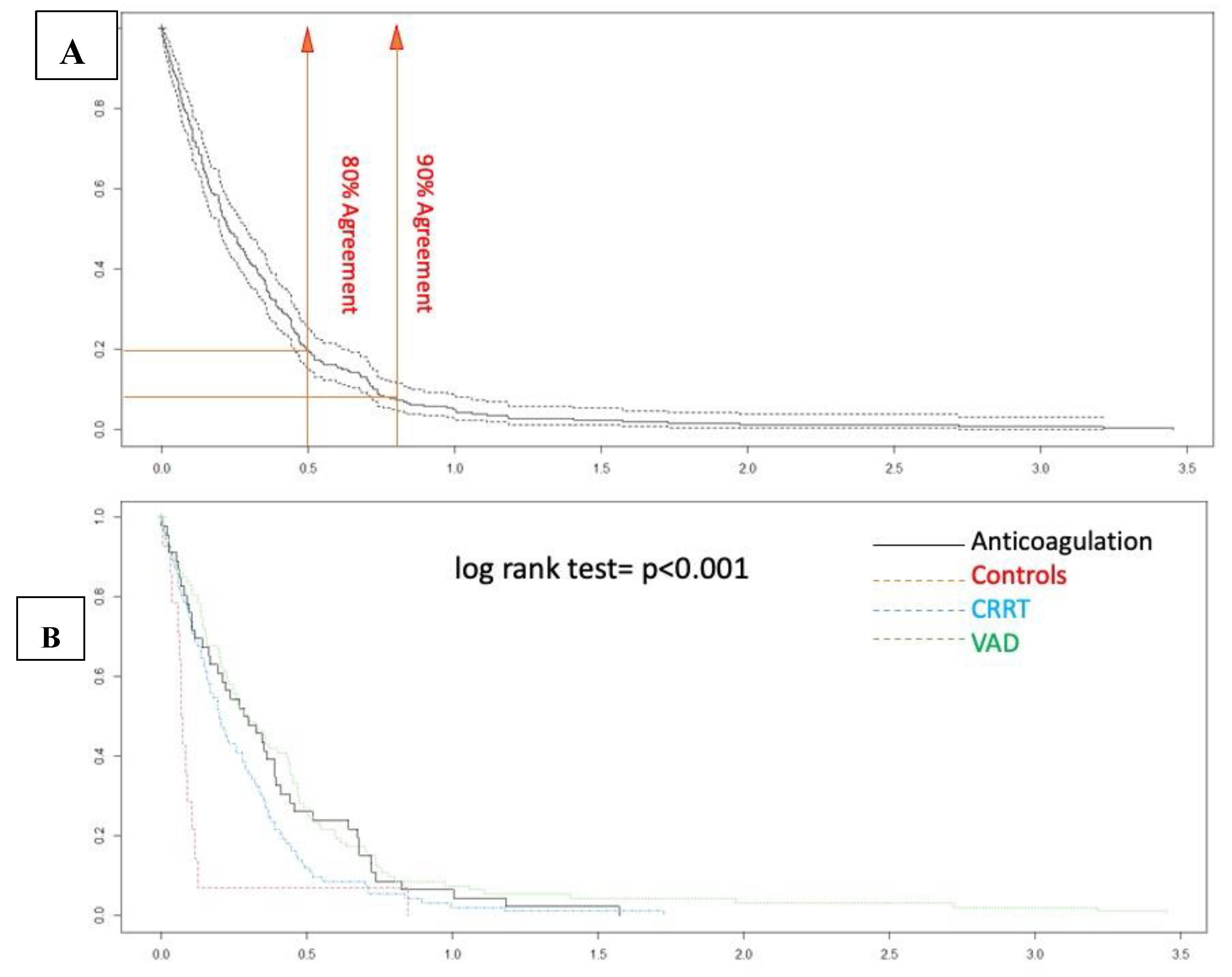
Figure 5.
Agreement stratified análisis. (A): albumin; (B) hematocrit; (C) creatinine; (D) platelets: platelet count lower than 100.000 mcl is significant.
Figure 5.
Agreement stratified análisis. (A): albumin; (B) hematocrit; (C) creatinine; (D) platelets: platelet count lower than 100.000 mcl is significant.
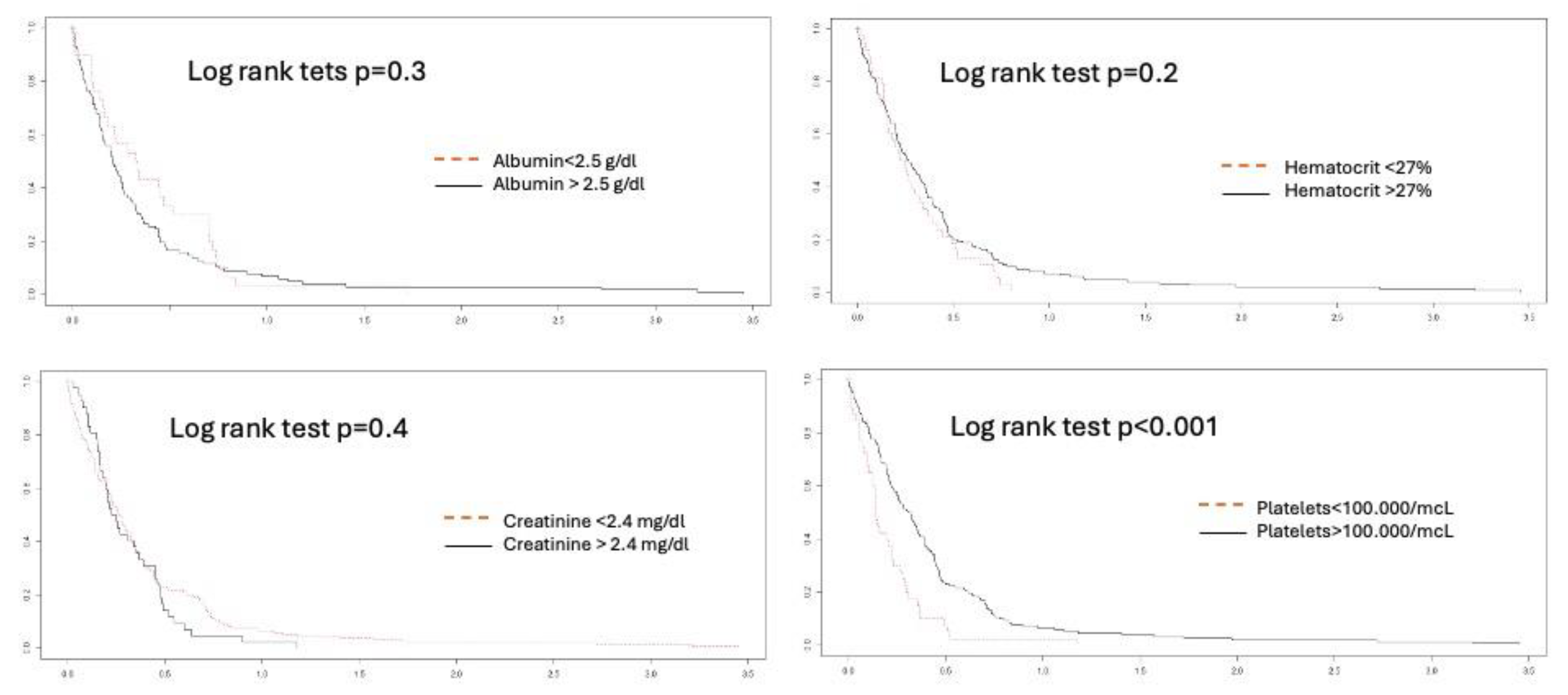

Table 2.
Patient characteristics. Number of patients (N); number of samples (n). .
| Characteristics N=30 | n=256 | % | |
| Ages (mean) | |||
|
61.3 (dt 12.3) |
|||
| Sex | Male 17 | 56.6% | |
| Female 13 | 43.4% | ||
| Indication of treatment | Need for anticoagulation | 46 | 17,9% |
| ECMO | 34 | 13.3% | |
| CRRT | 102 | 39.8% | |
| IMPELLA | 60 | 23.4% | |
| Control patients | 14 | 5.6% | |
| Hematocrit (mean) | 31 (dt 5.3) | ||
| Creatinine (mean) | 1.84 (dt 1.28) | ||
| Albumin (mean) | 2.76 (dt 0.38) | ||
| Platelets (median) | 183000 (IQR 108000, min 40000, max 560000) | ||
Disclaimer/Publisher’s Note: The statements, opinions and data contained in all publications are solely those of the individual author(s) and contributor(s) and not of MDPI and/or the editor(s). MDPI and/or the editor(s) disclaim responsibility for any injury to people or property resulting from any ideas, methods, instructions or products referred to in the content. |
© 2025 by the authors. Licensee MDPI, Basel, Switzerland. This article is an open access article distributed under the terms and conditions of the Creative Commons Attribution (CC BY) license (http://creativecommons.org/licenses/by/4.0/).
Copyright: This open access article is published under a Creative Commons CC BY 4.0 license, which permit the free download, distribution, and reuse, provided that the author and preprint are cited in any reuse.


