

Submitted:
14 July 2025
Posted:
16 July 2025
You are already at the latest version
Abstract
This study examines the role of cultural heritage sites as facilitators of place-making within the evolving paradigm of smart city development. As cities worldwide adopt data-driven models of governance, integrating cultural identity and heritage becomes increasingly critical. This research addresses the conceptual and practical gap in understanding how heritage can support inclusive, sustainable, and meaningful urban transformation in smart city contexts. To do so, it selects Geelong in Australia as a case study. The study then employs a qualitative methodology drawing on semi-structured interviews with experts and professionals across urban planning, architecture, sustainability, and heritage management. Thematic analysis derived five key themes: heritage as an identity anchor, digital technologies enhancing cultural narratives, community engagement, adaptive reuse, and economic-policy integration. Findings highlight that heritage sites are dynamic assets that foster community identity, historical continuity, and digital storytelling. Digital tools enhance the visibility and accessibility of herit-age, while adaptive reuse strategies align cultural preservation with environmental sustainability and economic growth. The resulting conceptual and assessment frame-work positions heritage both as a cultural and functional urban asset, offering actionable insights for planners, policymakers, and designers aiming to create smart cities that are not only technologically advanced but also socially inclusive and culturally grounded.
Keywords:
cultural heritage
; smart cities
; place making
; urban identity
; digital innovation
1. Introduction
Urban transformation is increasingly shaped by the emergence of smart cities, which are redefining how urban areas are planned, managed, and experienced. At the core of this transformation lies the integration of advanced information and communication technologies (ICTs), enabling data-driven, real-time decision-making processes that promote efficiency, sustainability, and enhanced quality of life for urban residents [1]. The smart city market is expected to grow into a multi-trillion-dollar global sector in the coming decades, signifying not only economic expansion but also a fundamental shift in the governance and operation of urban environments [2]. However, the smart city paradigm extends far beyond the mere application of digital technologies. Its true potential lies in its capacity to merge technological innovation with social inclusivity and cultural depth. The development of smart cities must therefore be guided by an integrated vision that balances technological advancements with social equity and environmental stewardship. In this context, cultural heritage sites offer unique and underutilized opportunities to anchor the human and historical dimensions of urban life within the framework of digital transformation [3].
Cultural heritage sites serve not only as repositories of collective memory and identity but also as active agents in promoting cultural continuity, community engagement, and urban revitalization. These spaces possess the potential to enrich urban experience, stimulate cultural tourism, and generate economic value, all while contributing to more sustainable and participatory models of urban development. When integrated with digital tools and urban design strategies, heritage sites can support the co-creation of meaning and foster dynamic forms of place making [4]. Within the smart city discourse, the concept of place making has gained increasing attention, referring to the multifaceted process by which spaces are transformed into meaningful places through social interaction, cultural expression, and spatial design [5,6]. While the theoretical roots of place making are well established in urban studies, its application within smart cities particularly through the lens of cultural heritage remains insufficiently explored. This underlines the need to examine how heritage spaces can be reimagined as facilitators of meaningful urban experiences in technologically mediated environments.
Despite growing international recognition of the value of cultural heritage in urban development, academic literature reveals a lack of coherent theoretical grounding regarding its role in smart cities, especially in the context of place making. Existing studies often fall short in articulating how heritage sites contribute to creating vibrant, inclusive, and adaptive urban environments. The absence of an integrated theoretical approach obscures the broader significance of heritage in shaping the identity and spatial dynamics of smart cities. Moreover, current urban planning practices lack a robust conceptual framework that guides the incorporation of cultural heritage in smart city initiatives. Without such a framework, planning and policy interventions tend to be fragmented, reactive, and context-specific, limiting their scalability and impact. The need for a comprehensive, interdisciplinary model that captures the complexity of place making through heritage is therefore urgent and timely.
Alongside this conceptual gap, there exists a practical deficiency in evaluation mechanisms. While heritage-informed initiatives are being increasingly implemented in smart city projects, there is no standardized assessment model that allows stakeholders to systematically measure their effectiveness. This hinders the ability to monitor progress, identify best practices, and refine future interventions. In light of these challenges, this research proposes to develop a comprehensive conceptual framework that articulates the role of cultural heritage in place making within smart cities. By integrating theoretical insights from urban studies, cultural heritage management, digital innovation, and socio-spatial theory, the framework aims to provide a holistic understanding of how heritage sites can serve as catalysts for inclusive urban transformation. The framework will address both symbolic and functional dimensions of place making, acknowledging heritage not only as a cultural asset but also as a living, interactive space. This dual perspective will enable a deeper examination of the emotional, historical, and social relationships that citizens form with heritage spaces, as well as the ways these relationships can be enhanced through smart technologies. Beyond conceptual development, the study also seeks to construct an effective assessment model that evaluates the success of heritage-driven place making initiatives. Such a tool will support urban planners, policymakers, designers, and developers in making informed decisions based on measurable outcomes. It will also provide a platform for comparative analysis and iterative refinement of strategies across different urban contexts.
The theoretical contribution of this research lies in addressing the interdisciplinary gap within urban studies literature by offering an integrated perspective on cultural heritage and place making in the context of smart cities. The framework developed through this study will serve as a reference for future research, enriching theoretical discourse and promoting cross-disciplinary collaboration. From a practical standpoint, the proposed conceptual and assessment frameworks are designed to support effective implementation of smart city strategies that prioritize cultural identity and community participation. These tools will help align policy development with local needs, enabling more responsive, resilient, and culturally grounded urban planning. Furthermore, the findings of this research are expected to inform policy recommendations, offering actionable guidelines for integrating cultural heritage into smart city initiatives. These recommendations will aid cities in leveraging their unique cultural assets while addressing broader urban challenges related to sustainability, inclusivity, and innovation. By reimagining cultural heritage as an enabler of place-making, rather than a static or nostalgic element, this research advocates for a more dynamic role of heritage in shaping the future of cities. It underscores the importance of creativity, continuity, and community engagement in building urban environments that are not only smart but also meaningful and equitable.
Ultimately, this study aims to contribute to the evolution of smart cities from technologically efficient spaces to culturally vibrant and socially inclusive places. The research embraces a future-oriented vision that values both innovation and tradition, recognizing that sustainable urban futures require a synthesis of digital progress and cultural rootedness. Guided by this vision, the central research question of this study is: How can the leveraging of cultural heritage sites in smart cities for place making be structured into a conceptual framework, and how can an assessment framework be developed to evaluate its effectiveness? Addressing this question entails a comprehensive exploration of the conceptual foundations, practical applications, and evaluative dimensions of heritage-driven place making in smart cities. By pursuing this objective, the research sets out to provide a theoretically rigorous and practically applicable contribution that not only advances academic understanding but also supports cities in becoming more culturally conscious, technologically advanced, and socially inclusive.
1.2. Literature Review
The intersection of cultural heritage, place making, and smart city development is emerging as a pivotal area of interdisciplinary inquiry [7]. This literature review critically examines existing theories and debates concerning cultural heritage sites, the evolving dynamics of smart cities, and the socio-spatial practices of place-making. Framed within the broader context of Geelong as a case study, this synthesis seeks to identify how heritage spaces can be mobilized as catalysts for inclusive, resilient, and intelligent urban futures. Cultural heritage, encompassing both tangible and intangible expressions, has long served as a cornerstone of identity, continuity, and community pride. It reflects the values, memories, and stories of people across time and space. Scholars such as Kim et al. [8] and Tan et al. [9] argue that heritage sites possess transformative potential, capable of functioning not merely as relics of the past but as living elements within modern urban contexts. These sites frequently act as focal points for tourism, economic regeneration, and community engagement. Yet, this optimistic narrative warrants scrutiny. Contemporary research, such as that by Llamas et al., challenges the notion that heritage is inherently inclusive, urging a re-evaluation of how and for whom these spaces’ function [10].
Architectural heritage, embedded in culturally significant structures, offers insight into societal values and histories [11]. While often celebrated as national symbols, these edifices may project selective historical narratives, contributing to a sanitized version of the past [12]. Skounti contends that architectural heritage must be critically assessed not only for its aesthetic merit but also for its ability to genuinely reflect multifaceted histories [13]. Such interrogation is essential to avoid perpetuating historical biases and to promote inclusive remembrance. The role of intangible heritage, including rituals, oral histories, and craft traditions, is equally central. Buonincontri et al. and Tavares et al. underscore the fragility of such elements under globalization, which often threatens their continuity [14,15]. Preserving authenticity becomes a priority, as Schreiber notes, in resisting homogenizing pressures while fostering cultural diversity and dialogue [16]. In the case of Geelong, acknowledging the heritage of the Wadawurrung people is essential, despite its marginal representation in mainstream narratives [17]. Although not the central focus of this study, Indigenous heritage forms a critical backdrop for any holistic cultural strategy in smart cities.
Parallel to discussions on heritage is the evolving concept of place making the deliberate process of shaping meaningful, inclusive, and vibrant public spaces. Kalandides conceptualizes "sense of place" as emotional and symbolic ties to spatial environments. However, he critiques its reductionist use in urban planning, which often omits the personal, historical, and sensory dimensions [18]. Pendlebury & Porfyriou similarly caution against commodified forms of place making that prioritize aesthetics and economic gain over community identity and authenticity [19].
Place making is intended to foster inclusion, yet it can paradoxically result in exclusion. As Fincher et al. highlight, interventions that disregard local voices may erode the social fabric, particularly among marginalized communities [20]. Msrlsoy & Günçe further assert that heritage-based development can provoke gentrification and cultural erasure if not managed sensitively [21]. These risks necessitate a critical, bottom-up approach to place making, where community agency is foregrounded.
The social dimension of place making, rooted in the work of Jane Jacobs, emphasizes community interaction and accessibility [22]. Ellery & Ellery warn, however, that even participatory models may fail to incorporate diverse perspectives, thus entrenching social inequalities [23]. Zuma & Rooijackers note that when local governments utilize place-making for economic growth, the priorities of underrepresented groups are often sidelined [24]. To be truly inclusive, place-making must transcend consultation and embrace co-creation.
Urban design plays a central role in operationalizing place-making, yet it has been critiqued for its narrow focus on aesthetics and short-term economic outcomes. Carmona argues that design strategies often neglect long-term sustainability and ecological resilience [25]. Fincher et al. [20] and Vukmirovic & Gavrilović [26] note that despite claims of inclusivity, marginalized voices remain underrepresented in planning processes. Hes & Hernandez-Santin advocate for an integrated design ethos that connects human activity with ecological systems, thereby reinforcing urban resilience [27]. The intersection between cultural heritage and place-making offers both opportunities and challenges. While heritage can provide a rich narrative context and foster civic pride, its instrumentalization risks reinforcing power imbalances [16,28]. Domínguez-Quintero et al. emphasize the need for genuine community engagement to ensure that heritage-based place-making reflects authentic local values [29]. Without this, interventions may become performative, further marginalizing the very communities they aim to empower.
Smart cities, defined broadly as urban environments that leverage ICT to optimize services, improve quality of life, and promote sustainability, provide fertile ground for reimagining place making. As Liotine et al. and Ramaprasad et al. note, the smart city is more than a technological construct; it is an evolving sociotechnical ecosystem [30,31]. Bhattacharya et al. emphasize the importance of iterative, citizen-responsive planning for long-term smart development [32].
Angelidou et al. define smart cities as environments where technological innovation converges with human capital and governance [33]. Central to this paradigm is the integration of data, digital infrastructure, and civic engagement. Halegoua [34] and Radziejowska & Sobotka [35] caution, however, that smart cities must not reduce urban life to technocratic processes. Rather, they must nurture social inclusion and cultural expression alongside innovation.
Place making in smart cities is thus enabled through both technological means and participatory governance. Khan et al. identify core components: technology, data, innovation, and sustainability [36]. Technologies such as IoT, GIS, AR/VR, and crowdsourcing apps empower citizens and enhance spatial planning [37]. These tools support not only technical efficiency but also transparency and community voice in shaping urban space.
Data-driven insights can inform more responsive and adaptive design. Karimi et al. (2021) illustrate how real-time data enables predictive planning and personalised urban solutions [37]. Nonetheless, such capabilities must be deployed with care, ensuring equitable access and avoiding surveillance or exclusion. Innovation in smart city development hinges on inclusive collaboration. Smith stresses the value of multi-stakeholder involvement [38], while Caragliu & Del Bo demonstrate that innovation fosters environmentally conscious urbanism [39]. Smart city place making should thus champion both technological ingenuity and social equity.
Sustainability underpins many smart city strategies. Zygiaris [40], Kammen & Sunter [41], and Nam & Pardo [42] link smart technologies with environmental resilience. From smart grids to adaptive infrastructure, technology enables cities to mitigate climate risks and enhance liveability a precondition for effective place making.
The integration of cultural heritage into smart city strategies introduces a unique set of possibilities. Angelidou & Stylianidis [33] and El-Basha [43] argue for a nuanced balance between conservation and modernization. Projects like Rome Reborn [44] show how digital tools can preserve and showcase heritage while expanding public access. Yet, such integration must honour cultural values. In Australia, Dawson et al. advocate for Indigenous consultation and agency in smart city planning [45]. Without meaningful recognition of Indigenous heritage, smart urban development risks repeating colonial erasures.
Smart city heritage initiatives must also embed participatory governance. Eichler highlights models where local communities co-manage heritage sites using digital platforms, fostering ownership and stewardship [46]. Angelidou et al. underscore the importance of aligning digital heritage strategies with community aspirations [33].
Summarising key themes, the literature reveals that heritage-infused smart city place-making can augment urban environments, foster inclusive spaces, and promote sustainability. It also enhances tourism and liveability, as noted by Rodrigues et al. (2020) [47], Buonincontri et al. (2017) [14], and Seamon (2022) [48]. These contributions are contingent on critical, inclusive, and context-specific frameworks.
For Geelong, a city with layered colonial and Indigenous histories, this literature underscores the need for thoughtful integration of heritage in smart city strategies. The development of a conceptual framework and assessment model as proposed by this study will support this aim, ensuring that technological innovation, cultural authenticity, and social equity coalesce in the urban fabric.
2. Materials and Methods
This study adopts a qualitative research approach, aiming to explore how cultural heritage sites can function as facilitators for place-making within smart city development, specifically in the city of Geelong. The qualitative paradigm is particularly suitable for this inquiry as it allows for an in-depth understanding of participants’ experiences, insights, and professional knowledge regarding the integration of cultural heritage in urban planning and technological innovation. By focusing on meaning-making, context, and human-centred interpretations, qualitative research enables the researcher to explore complex socio-cultural phenomena and values embedded in cultural heritage planning within the broader smart city agenda.
2.1. Research Design
This research is structured as an exploratory qualitative study and a data collection method based on semi-structured in-depth interviews with specialists and experts in various disciplines; the design emphasizes thematic analysis as a method for interpreting participants’ narratives and discourse, ensuring that emerging patterns are rooted in the specific realities of each context. This research does not aim for generalization, but rather for depth, richness, and theory development within a bounded case Geelong.
2.2. Conceptual Model
This research is guided by a conceptual framework that integrates three core dimensions:
- Cultural heritage as a multidimensional urban asset (historical, symbolic, economic, and social),
- Place making as a dynamic process of spatial identity, community engagement, and cultural continuity, and
- Smart city principles as an operational layer involving technology, sustainability, and participatory governance.
The interaction of these domains forms the analytical lens through which interviews were conducted and themes were coded. The conceptual model is not imposed deductively, but rather used to inform inductive reasoning and the iterative development of new insights through participant discourse.
2.3. Data Collection
2.3.1. Participants and Sampling Strategy
A total of 11 participants were selected for qualitative in-depth interviews in this study and responded to semi-structured in-depth interviews. A purposive sampling strategy was employed to ensure the inclusion of diverse voices across sectors directly relevant to the intersection of heritage and urban development. Participants were grouped into three interdisciplinary clusters, including experts in urban planning, architecture, sustainability, landscape design, cultural anthropology, and heritage management.
Key inclusion criteria included:
Professional expertise in urban planning, design, heritage conservation, or smart city initiatives;
Involvement in or familiarity with cultural heritage projects in the City of Geelong;
Willingness and availability to participate in a one-on-one semi-structured interview
The professional diversity of the sample was instrumental in capturing a broad range of experiences, values, and critical perspectives, aligning with the study’s aim to understand cultural heritage as a multidimensional driver of place making.
2.3.2. Interview Method and Protocol
Semi-structured interviews were conducted using a flexible guide tailored to elicit rich qualitative data while allowing interviewees to reflect on their specific knowledge and perspectives. Questions revolved around key areas such as:
- The role of cultural heritage in urban identity and continuity;
- Use of digital technologies for storytelling and activation of heritage;
- Community engagement and co-design;
- Sustainable planning and adaptive reuse;
- Economic and policy implications.
Interviews were conducted face-to-face or online (as appropriate), and were audio-recorded with consent. Each session lasted between 45–75 minutes.
2.4. Data Analysis
Interview data were analysed using Braun and Clarke’s six-phase thematic analysis (2006), which provides a rigorous yet flexible framework for identifying, interpreting, and reporting patterns across qualitative data. The six steps followed were:
- Familiarisation – Interview transcripts were read multiple times for immersion.
- Generating initial codes – Open coding was conducted manually to highlight recurrent ideas and categories.
- Searching for themes – Codes were grouped into potential themes and sub-themes through pattern recognition.
- Reviewing themes – Themes were reviewed in relation to coded extracts and the entire dataset for coherence.
- Defining and naming themes – Final themes were refined, clearly named, and supported by direct quotes.
- Producing the report – A narrative was developed for each theme with analytical depth and relevance to research questions.
This method allowed the researcher to retain close proximity to participants’ perspectives while developing a structured thematic synthesis. Five main themes emerged:
- Heritage as Identity Anchor in Smart Cities
- Digital Technologies Enhancing Cultural Narratives
- Community Engagement and Ownership
- Adaptive Reuse and Sustainable Planning
- Economic Potential and Policy Integration
Each theme was further broken down into sub-themes and visually mapped in figures within the results chapter to illustrate interconnections.
2.5. Research Tools and Validity
The primary data collection tool was the semi-structured interview guide, developed based on prior literature and piloted with two urban planning professionals to ensure clarity and relevance. Audio recordings were transcribed verbatim, and NVivo (or manual coding, if applicable) was used to organise and code data.
To enhance credibility and trustworthiness, the study employed:
- Triangulation of data sources (interviews) and perspectives (from diverse disciplines)
- Member checks, where select participants reviewed thematic summaries;
- Peer debriefing, involving discussions with academic supervisors to challenge emerging interpretations.
2.6. Ethical Considerations
The research was conducted in full compliance with ethical guidelines set by Deakin University. All participants provided informed consent. Confidentiality and anonymity were maintained through pseudonyms and data storage in secure, password-protected formats.
2.7. Summary
This chapter detailed the qualitative methodological framework underpinning the investigation of cultural heritage sites as facilitators for place making in smart city development. Through purposive sampling, in-depth expert interviews, and thematic analysis, the study offers a grounded, context-sensitive exploration of Geelong’s urban identity, innovation practices, and participatory heritage strategies. The next chapter presents and discusses the key findings derived from this methodology.
3. Results
3.1. Participant Overview
The study engaged a total of 11 professionals with diverse expertise relevant to the intersection of cultural heritage and smart city development. Of these, 11 participants contributed through in-depth qualitative interviews. Participants were strategically grouped into three multidisciplinary clusters, each bringing together professionals from urban planning, sustainability, heritage management, architecture, landscape design, and community development. This diversity ensured a holistic exploration of the research questions, drawing insights from government officials, consultants, designers, policy advisors, and cultural experts. The composition of the participants reflects the integrated nature of place making within smart city frameworks, emphasizing the value of cross-sectoral dialogue in understanding and activating cultural heritage in Geelong.
3.2. Thematic Analysis of Qualitative Data
In this section, theme analysis is based on the 6-step approach of Braun and Clarke Thematic Analysis.
At this point, interviews with people were carefully refined, and after removing irrelevant cases, the interview data were revealed through a thorough reading and re-reading of the interviews.
This section provides the text for all 11 interviews.
Below is a table summarizing the roles and expertise of each person in their respective groups.

Table 1.
Roles and Expertise of Individuals in Project Groups.
| Group | Person | Expertise |
|---|---|---|
| Group 1 | Budrish Kapoor | Smart City Specialist |
| Group 1 | Armando Aragon | Sustainability and Climate Chage Expert |
| Group 1 | Shwiti Ravisankar | Urban Planner, City of Geelong |
| Group 2 | Mardi Hirst | Community Developer, City of Geelong |
| Group 2 | Fiona Tribe | Cultural Anthropologist |
| Group 2 | Azin Saeedi | Heritage Consultant |
| Group 2 | Benjamin Petkov | Heritage Project Officer, City of Greater Geelong |
| Group 3 | Majid Ettefaghioun | Senior Architect, Architectus |
| Group 3 | Farzaneh Khamehchian | Landscape Architect |
| Group 3 | Margie McKay | Urban Designer, City of Greater Geelong |
| Group 3 | Shwiti Ravisankar | Architect and Urban Designer, City of Greater Geelong |
3.3. Heritage as Identity Anchor in Smart Cities
Covered by:
- Smart City Specialist (Group 1)
- Urban Planner (Group 1 & 3)
- Cultural Anthropologist (Group 2)
- Community Developer (Group 2)
This theme reflects discussions about how heritage sites contribute to shaping urban identity and a sense of place in Geelong.
“Geelong, one of Victoria’s oldest cities, boasts significant cultural heritage from both the early European settlers and the Indigenous Wathaurong people… Over the years, each era has added new layers of significance to our heritage sites… These sites represent an ongoing dialogue between history and modernity.” (Urban Planner, City of Geelong)
“Preserving heritage might have seemed like a side issue compared to all the development happening. But now we realize these sites are absolutely crucial for the city’s soul. They give the community a shared identity, a connection to the past.” (Sustainability and Climate Expert)
“From the industrial roots of the Waterfront to the growing celebration of Wadawurrung culture, the city’s blending history with modern needs. These sites aren’t just preserved, they’re activated, creating spaces that respect the past while building community connections today.” (Smart City Specialist)
“Now, these places aren’t just reminders of the past. They’re platforms for dialogue, education, and cultural exchange… They help us bridge the gaps between different communities and understand our shared history.” (Cultural Anthropologist)
These insights reflect a shared understanding among experts that cultural heritage sites in Geelong are no longer perceived as static or purely historical artifacts. Rather, they serve as evolving, dynamic anchors of local identity and memory, interwoven with both Indigenous and settler histories. As urban growth and technological transformation accelerate, these sites offer continuity, a sense of belonging, and an opportunity to foster inclusive narratives that shape place making in a smart city context.
3.4. Digital Technologies Enhancing Cultural Narratives
Covered by:
- Urban Planner (Group 1)
- Heritage Officer (Group 2 & 3)
- Sustainability Expert (Group 1)
- Landscape Architect (Group 3)
All the talk was about using AR/VR, apps, sensors, and technologies that make heritage more tangible for today’s generations.
“In Geelong, integrating cultural heritage into smart city projects means using technology not just for efficiency but to deepen connections to the city’s history and culture… For example, digital tools like augmented reality could bring the Wadawurrung heritage to life for residents and visitors.” (Smart City Specialist)
“To enhance the interpretation and storytelling of cultural heritage sites, I recommend leveraging augmented reality (AR) and virtual reality (VR) technologies… an AR app could provide additional context… displaying historical images, videos, and narratives that enrich understanding.” (Smart City Specialist)
“One really effective strategy is using geolocation-based storytelling… accessing site-specific narratives right on their smartphones… We can also collaborate with local universities and tech companies to create amazing digital exhibits and interactive displays.” (Sustainability and Climate Change Expert)
“Digital technologies have opened up so many possibilities… One great example is interactive projection mapping… QR codes… or even community-generated digital archives that make history accessible online.” (Senior Architect, Group 3)
“We can use data analytics to better understand visitor patterns at our heritage sites… This data can then inform our management strategies… We’re also exploring the use of technology to improve accessibility—such as real-time audio descriptions or virtual tours.” (Heritage Project Officer, Geelong)
The interviews reveal strong consensus on the transformative potential of digital technologies in amplifying and democratizing cultural heritage narratives. Tools like augmented and virtual reality, geolocation apps, projection mapping, and real-time data analytics not only enhance engagement but also expand accessibility and inclusivity. In Geelong’s smart city trajectory, such technologies are seen as pivotal in revitalizing the meaning, visibility, and reach of heritage for diverse audiences.
3.5. Community Engagement and Ownership
Covered by:
- Community Developer (Group 2)
- Cultural Anthropologist (Group 2)
- Architect (Group 3)
- Landscape Architect (Group 3)
Interviewees mentioned public participation, collective storytelling, co-design, and the role of the public in protecting sites.
“Fostering community engagement and ownership in cultural heritage planning is all about making people feel connected, heard, and invested... participatory design... digital platforms where people can share ideas or vote on proposals.” (Smart City Specialist)
“In Geelong, we’re encouraging things like community markets, cultural events, even public gatherings within these historic spaces. This not only brings them to life but also builds a sense of community pride and ownership.” (Sustainability and Climate Expert)
“We’ve prioritized community-driven initiatives, such as local heritage committees… digital storytelling tools have enabled residents to narrate their connections to these sites, fostering a sense of ownership and pride.” (Community Developer, City of Geelong)
“Interactive digital platforms where residents can share photos, stories, and their memories of these places… It’s like creating a community archive.” (Cultural Anthropologist)
“Heritage festivals are a fantastic way to celebrate our history and get people excited about preserving it… These events can involve everyone, from local musicians and dancers to historians and volunteers.” (Heritage Project Officer, Geelong)
Across the interviews, participants consistently emphasized the importance of inclusive and participatory approaches to heritage planning. Community engagement was described not just as consultation but as co-creation—empowering residents to shape, share, and celebrate the meanings embedded in cultural sites. Strategies such as co-design workshops, digital archives, cultural events, and participatory storytelling were seen as key to cultivating long-term stewardship and relevance of heritage in smart urban development.
3.6. Adaptive Reuse and Sustainable Planning
Covered by:
- Architect (Group 3)
- Sustainability and Climate Expert (Group 1)
- Urban Planner (Group 1 & 3)
Emphasis on the reuse of historic buildings, waste reduction in new construction, and the coordination of sustainable development and cultural values.
“Cultural heritage preservation should be seen as a foundational element of sustainable urban development… supporting sustainability by encouraging adaptive reuse of existing structures, reducing construction waste, and promoting local materials.” (Smart City Specialist)
“We’re looking at innovative approaches like adaptive reuse—taking historic buildings and giving them new life with modern, eco-friendly features. This minimizes the need for new construction, which is much better for the environment.” (Sustainability and Climate Expert)
“Adaptive reuse… can be a fantastic way to breathe new life into old buildings while preserving their historical fabric.” (Heritage Consultant)
“We made sure to incorporate the character of the area by reflecting the architectural styles and reusing materials from existing structures. It ended up being this great blend where the new spaces felt like they truly belonged to the community.” (Senior Architect)
“Preserving our cultural heritage sites isn’t just about history; it’s a key part of building a sustainable city… We should recognize the environmental benefits of adapting and reusing existing buildings.” (Urban Planner)
Interviewees from diverse professional backgrounds strongly supported adaptive reuse as a strategy that bridges cultural preservation with sustainable development. By integrating environmentally conscious retrofitting and architectural sensitivity into historic structures, adaptive reuse minimizes waste, reduces resource consumption, and revitalizes the social and cultural fabric of urban areas. In the context of Geelong, this approach was seen as essential to reconciling heritage protection with modern infrastructure demands and environmental goals.
3.7. Economic Potential and Policy Integration
Covered by:
- Urban Planner (Group 1 & 3)
- Smart City Specialist (Group 1)
- Heritage Consultant (Group 2)
- Project Officer (Group 3)
Economic development driven by tourism, increased property values, the role of urban policies, and public-private partnerships (PPP).
“The integration of cultural heritage sites into smart city development plans can have significant positive economic implications… promoting our heritage can stimulate sectors such as hospitality, retail, and services, create jobs and support local businesses.” (Smart City Specialist)
“These sites can become major attractions, draw tourists and boost local businesses… We can focus on sustainable tourism, promoting local experiences and responsible travel.” (Sustainability and Climate Expert)
“Integrating our cultural heritage sites into our smart city plans is a real economic game-changer for Geelong… These sites are huge tourist draws… Well-preserved heritage sites also increase property values and attract investment.” (Urban Planner)
“By showcasing our unique historical assets, we can attract new residents, businesses, and visitors, create jobs and contribute to a more prosperous community.” (Heritage Consultant)
“Public-private partnerships are absolutely important… imagine businesses partnering with the city to restore and adapt historic buildings into hotels or cultural hubs… It benefits both the economy and the preservation of our history.” (Urban Planner)
“By joining forces, we can come up with some really creative solutions… Our ‘Cultural Heritage Fund’ here in Geelong encourages private businesses to get involved by offering tax incentives and grants.” (Heritage Project Officer)
Participants widely recognized the economic value of cultural heritage as both a tourist draw and a catalyst for local regeneration. From stimulating creative industries and small businesses to increasing property value and attracting investment, heritage was framed as an asset rather than a constraint. Many also highlighted the role of enabling policy frameworks such as zoning incentives, adaptive reuse guidelines, and public-private partnerships as essential tools for maximizing heritage’s economic potential while preserving cultural integrity within smart city development.
Table 2.
Main Themes.
| Main Themes | Person |
|---|---|
| Sustainable Development and Balance | Sustainable Development |
| Balance | |
| Economic Growth and Value | |
| Adaptive Reuse and Integration | |
| Smart Cities and Technological Innovation | Smart Cities |
| Technology | |
| Smart Integration | |
| Innovation | |
| Tech-Enhanced Heritage | |
| Digital Storytelling | |
| Community Engagement and Social Impact | Community Engagement and Empowerment Metrics |
| Cultural Heritage and Identity | |
| Collaboration and Partnerships | |
| Urban Planning and Design | Urban Planning and Design |
| Evolution and Transformation | |
| Policy and Adaptation | |
| Challenges and Conflicts | Challenges and Conflicts |
Figure 1 illustrates the theme of “Smart Cities and Technological Innovation” along with its associated sub-themes, derived through thematic analysis of expert interviews. This figure reflects participants’ emphasis on the transformative role of digital tools such as augmented reality (AR), geolocation-based storytelling, interactive platforms, and real-time data analytics in preserving, interpreting, and promoting cultural heritage in Geelong. Sub-themes such as "Digital Storytelling," "Tech-Enabled Accessibility," and "Smart Heritage Integration" highlight how technology is being harnessed not merely for efficiency but to deepen public engagement, enhance inclusivity, and embed historical narratives within everyday urban experiences. This thematic structure underscores the belief among professionals that innovation and heritage are not in opposition, but can be meaningfully aligned to enrich the urban fabric of smart cities.
Figure 2 presents the thematic structure related to “Community Engagement and Social Impact,” as identified through the qualitative analysis of expert interviews. This figure outlines the key sub-themes such as co-design, cultural pride, local identity, public storytelling, and participatory governance that collectively reflect how heritage-related initiatives in Geelong have fostered a stronger sense of ownership and connection among residents. Participants consistently highlighted the role of inclusive planning practices, community-led storytelling, and heritage-based events as mechanisms that bridge past and present while enhancing social cohesion. The diagram also underscores the importance of recognizing community memory and everyday cultural practices as central to effective place making strategies within the smart city agenda. These sub-themes reveal that engagement is not a secondary benefit but a foundational principle for sustainable and culturally responsive urban development.
Figure 3 presents the thematic structure surrounding the concept of “Urban Planning and Design,” as derived from the expert interviews. The figure synthesizes three critical sub-themes: Urban Planning and Design, Evolution and Transformation, and Policy and Adaptation. Participants emphasized the spatial and aesthetic integration of heritage within the urban fabric of Geelong, advocating for design strategies that harmonize old and new elements while addressing evolving community needs. The theme reflects how cultural heritage informs city-making not only through architectural preservation but also by shaping zoning policies, mobility infrastructure, and long-term adaptability. Interviewees consistently described planning as both a technical and cultural act, guided by regulations, but also by creativity, public memory, and identity. This theme underscores the central role of design in ensuring heritage contributes to smart, functional, and culturally resonant urban environments.
Figure 4 highlights the thematic structure associated with “Challenges and Conflicts,” which emerged across interviews as a cross-cutting concern in the integration of cultural heritage within smart city development. This theme encompasses a range of interrelated sub-issues such as gentrification, stakeholder misalignment, insufficient funding, advocacy challenges, regulatory barriers, and the complexity of conflict resolution. Participants noted that despite broad support for integrating heritage into future-oriented planning, significant tensions remain—between preservation and development, between economic growth and social equity, and between institutional policies and community priorities. The theme also captures the nuanced dynamics of negotiation, where urban transformation must navigate competing interests, shifting political will, and limited resources. As illustrated in Figure 5, these conflicts are not merely obstacles but structural realities that shape how cities like Geelong must balance heritage values within rapidly evolving smart city agendas.
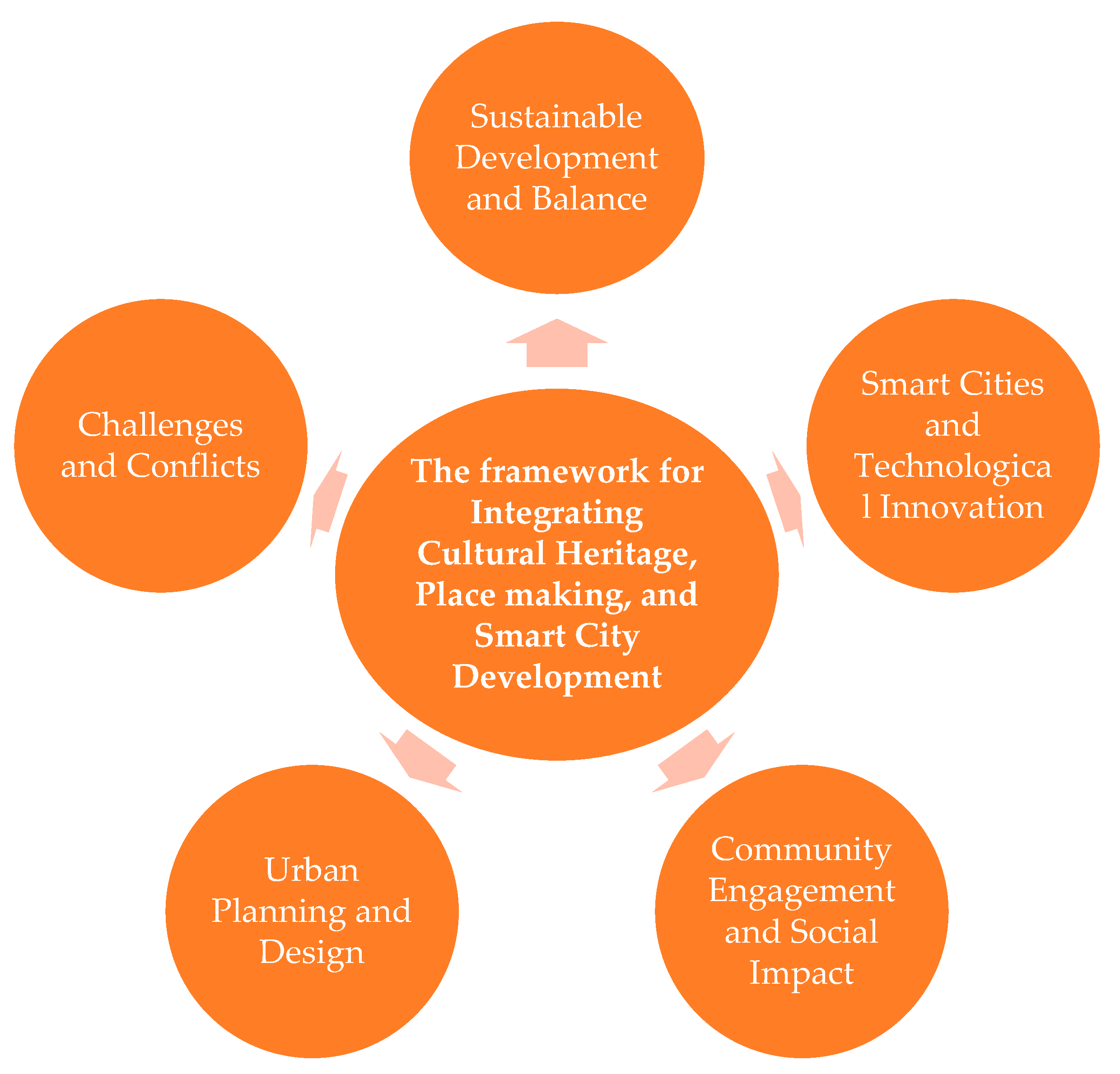
Figure 5 presents the final conceptual model developed through the thematic synthesis of qualitative findings. The model illustrates the dynamic and interconnected relationship between cultural heritage, place making, and smart city principles in the context of Geelong. It positions cultural heritage not as a passive backdrop but as an active facilitator of inclusive urban identity, community engagement, and sustainable innovation. The model integrates key thematic domains such as digital technology, urban planning, adaptive reuse, governance, and socio-economic drivers, demonstrating how they converge around heritage-led place making strategies. It reflects participants’ collective vision of how smart city agendas can amplify cultural value while responding to contemporary urban challenges. As a visual summary of the research, this model provides a conceptual foundation for future policy, design, and planning approaches aiming to embed cultural heritage into smart city development frameworks.
4. Discussion
The qualitative findings of this research reveal the deep interdependence between cultural heritage, community identity, urban sustainability, and technological innovation in the context of smart city development. Through in-depth thematic analysis of expert interviews, it becomes evident that cultural heritage sites are not merely remnants of the past, but evolving spaces that carry social meaning and urban value, particularly when activated through participatory and digitally enhanced place making strategies. Experts from Geelong emphasized the potential of heritage to anchor urban identity, promote inclusivity, and generate shared memory within a rapidly modernizing cityscape [49]. One of the core themes to emerge from the interviews is the role of heritage as an identity anchor. Participants from diverse fields including urban planning, cultural anthropology, and community development converged on the idea that heritage spaces in Geelong, both Indigenous and colonial, contribute significantly to the community’s collective memory and urban narrative. Far from being static, these sites are dynamic and open to reinterpretation [50]. Their evolving meanings foster continuity in an otherwise changing urban environment, reinforcing emotional connections and offering residents a stable cultural compass amidst rapid technological transformation. Closely tied to identity is the theme of community engagement and co-creation. Experts emphasized the need for participatory approaches in heritage planning and management. Rather than treating the public as passive recipients of top-down initiatives, the research highlights models where citizens—especially underrepresented groups are invited to co-produce, share stories, and actively shape the design and activation of cultural spaces. These insights align with contemporary place-making theories that prioritize belonging, inclusivity, and experiential ownership over surface-level beautification. Tools like digital storytelling platforms and interactive workshops were identified as particularly effective in fostering a sense of shared stewardship.
This emphasis on participatory heritage aligns with the findings of scholars like Fincher et al., who argue that community engagement must move beyond consultation and into genuine collaboration [20]. The interviewees’ references to “collective storytelling,” “community archives,” and “cultural festivals” suggest that cultural heritage, when harnessed through participatory means, becomes a powerful conduit for social cohesion and civic pride in the smart city landscape. In this sense, digital platforms serve not merely as technological tools, but as cultural enablers. Another strong theme in the findings is the role of digital innovation in enhancing heritage narratives. Participants widely discussed the application of tools such as augmented reality (AR), interactive projection mapping, geolocation apps, and smart sensors as mechanisms to animate historical content, increase accessibility, and engage younger generations [51]. Such technologies do not replace heritage but serve to mediate and enrich interactions with it, allowing residents and visitors to experience cultural sites in immersive and contextually relevant ways. This aligns with global shifts toward “digital place making,” where technology acts as an interpretive lens that deepens spatial and historical awareness. However, the use of digital tools also presents tensions. While technologies can democratize access and personalize experience, there were concerns among participants about overreliance on digital platforms at the expense of embodied, human experiences of place [52]. This finding resonates with critiques in the literature, which warn that the techno-centricity of smart cities can obscure local cultures, traditions, and needs. As such, participants advocated for a balanced approach one that leverages technology as a complement rather than a replacement for the social and historical dimensions of heritage. A recurrent concern across interviews was the balance between modern development and heritage preservation. Urban designers, sustainability experts, and architects noted the challenges in reconciling the city’s growth pressures with the need to protect culturally significant sites. The notion of “adaptive reuse” emerged as a solution, wherein historic buildings are repurposed with environmentally conscious upgrades. This strategy reflects a merging of cultural and ecological sustainability, suggesting that heritage conservation need not be at odds with innovation but can be integral to resilient urban futures. Moreover, adaptive reuse was framed not only as an environmental or architectural intervention but also as a social strategy—a way of reinvigorating community narratives while retaining the physical anchors of local memory. Experts highlighted successful examples where historic factories, warehouses, or precincts were transformed into vibrant, multifunctional spaces. Such interventions were seen to preserve the past while making it meaningful and functional for contemporary life, adding both symbolic and economic value to the urban landscape.
In discussing policy integration, interviewees stressed the importance of flexible regulatory frameworks that support heritage-sensitive development. The suggestion for public-private partnerships, financial incentives, and targeted grants emerged repeatedly. This indicates that successful cultural heritage integration in smart cities requires not only community participation and technological innovation but also enabling governance structures that align policy, planning, and local aspirations. There was also an acute awareness among participants of the marginalization of Indigenous heritage in mainstream planning narratives. While Geelong is home to the Wadawurrung people, whose culture predates colonial settlement by thousands of years, their narratives have historically been underrepresented. Interviewees advocated for deeper collaboration with Indigenous communities not as token inclusion, but as co-authors of the city’s evolving story. This reflects a growing scholarly emphasis on decolonizing urban heritage practices and ensuring that smart city development respects cultural pluralism [53].
The challenges discussed by experts such as lack of funding, internal resistance to innovation, and limited technical capacity also point to the institutional and cultural barriers that must be addressed for meaningful progress. Particularly important is the notion that cultural heritage planning must not be siloed or secondary to smart city development, but deeply embedded within it. If smart cities aim to be inclusive, sustainable, and human-centered, then heritage must be seen not as a constraint but as an asset for design, governance, and innovation.
5. Conclusions
In sum, the qualitative data in this document shows that Geelong’s cultural heritage serves as an ever-evolving infrastructure of identity, belonging, and meaning associated with place as opposed to a remnant of history. When participatory governance is put into practice, enriched with digital storytelling, heritage sites have the potential to facilitate place-making and smart city development anchored in lived memory, local values, and culture. The research illustrates that the inclusion of cultural heritage in smart city frameworks shifts urban planning towards more socially resilient cities. By adopting policies that promote adaptive reuse, digital mediation, and community co-creation, cities are able to go beyond the technocentric ideals of smart urbanism and foster environments that combine cutting-edge technology with a focus on human needs. This study provides a change which urban planners, designers, and policymakers can utilize and regard heritage as an opportunity to create sustainable change instead of viewing it as an obstacle. It looks at the evolution of policy toolkits designed to replicate and assess the cultural impact of smart cities in different socio-political landscapes.
Author Contributions
E.T. contributed to the data collection, formal analysis, investigation, data curation, writing of the original draft, and visualisation of the study. S.P. conceptualised the study, developed methodology, provided resources and managed project administration. M.R.M. and C.K.K. contributed to the methodology, validation, writing—review, and editing, as well as the overall supervision of the project. All authors were involved in review-ing and editing the manuscript. All authors have read and agreed to the published version of the manuscript.
Funding
This research received no external funding.
Data Availability Statement
Due to the nature of the ethics approval, the collected data cannot be made publicly available, in accordance with ethical guidelines.
Acknowledgments
We would like to acknowledge Deakin University for its support in providing any resources essential to this research.
Conflicts of Interest
The authors declare no conflicts of interest.
References
- Jacks BS, Ajala OA, Lottu OA, Okafor ES. Exploring theoretical constructs of smart cities and ICT infrastructure: Comparative analysis of development strategies in Africa-US Urban areas. World Journal of Advanced Research and Reviews. 2024;21(3):401-7.
- Sharma P, Singh R, Srivastava A. Analyzing the role of geospatial technology in smart city development. Geospatial Technology and Smart Cities: ICT, Geoscience Modeling, GIS and Remote Sensing. 2021:1-20.
- Grazuleviciute-Vileniske I, Zmejauskaite D. ‘Archeology’of Hidden Values of Underutilized Historic Industrial Sites in Context of Urban Regeneration and Nature-Based Solutions. Buildings. 2025 Jan 11;15(2):205.
- Shih CM, Treija S, Zaleckis K, Bratuškins U, Chen CH, Chen YH, Chiang CT, Jankauskaitė-Jurevičienė L, Kamičaitytė J, Koroļova A, Lee HC. Digital placemaking for urban regeneration: Identification of historic heritage values in Taiwan and the Baltic states. Urban planning. 2021;6(4):257-72.
- Amirzadeh M, Sharifi A. The evolutionary path of place making: From late twentieth century to post-pandemic cities. Land Use Policy. 2024 Jun 1;141:107124.
- Chen K, Guaralda M, Kerr J, Turkay S. Digital intervention in the city: a conceptual framework for digital placemaking. Urban Design International. 2024 Mar;29(1):26-38.
- Geng S, Chau HW, Jamei E, Vrcelj Z. Understanding place identity in urban scale Smart Heritage using a cross-case analysis method. International Journal of Tourism Cities. 2023 Nov 7;9(3):729-50.
- Kim, S., M. Whitford, and C. Arcodia, Development of intangible cultural heritage as a sustainable tourism resource: The intangible cultural heritage practitioners’ perspectives, in Authenticity and authentication of heritage. 2021, Routledge. p. 34–47.
- Tan, S.-K., et al., A cultural creativity framework for the sustainability of intangible cultural heritage. Journal of Hospitality & Tourism Research, 2020. 44(3): p. 439–471.
- Llamas, J., et al., Classification of architectural heritage images using deep learning techniques. Applied Sciences, 2017. 7(10): p. 992.
- Harrison, R., et al., Heritage futures: comparative approaches to natural and cultural heritage practices. 2020: UCL press.
- Allen, K.-A., et al., Belonging: A review of conceptual issues, an integrative framework, and directions for future research. Australian journal of psychology, 2021. 73(1): p. 87–102.
- Skounti, A., Tangible and Intangible Heritage: Two UNESCO Conventions, in Evolving Heritage Conservation Practice in the 21st Century. 2023, Springer. p. 33–50.
- Buonincontri, P., A. Marasco, and H. Ramkissoon, Visitors’ experience, place attachment and sustainable behaviour at cultural heritage sites: A conceptual framework. Sustainability, 2017. 9(7): p. 1112.
- Tavares, D.S., F.B. Alves, and I.B. Vásquez, The relationship between intangible cultural heritage and urban resilience: a systematic literature review. Sustainability, 2021. 13(22): p. 12921.
- Schreiber, H., Intangible cultural heritage and soft power–exploring the relationship. International Journal of Intangible Heritage, 2017. 12(44-57).
- Rowe, D., About Corayo: A thematic history of Greater Geelong. 2021: City of Greater Geelong.
- Kalandides, A., The problem with spatial identity: revisiting the “sense of place”. Journal of Place Management and development, 2011. 4(1): p. 28–39.
- Pendlebury, J. and H. Porfyriou, Heritage, urban regeneration and place-making. 2017, Taylor & Francis. p. 429–432.
- Fincher, R., M. Pardy, and K. Shaw, Place-making or place-masking? The everyday political economy of “making place”. Planning Theory & Practice, 2016. 17(4): p. 516–536.
- Mısırlısoy, D. and K. Günçe, Adaptive reuse strategies for heritage buildings: A holistic approach. Sustainable cities and society, 2016. 26: p. 91–98.
- Jacobs, J., Downtown is for People. The exploding metropolis, 1958. 168: p. 124–131.
- Ellery, P. and J. Ellery, Strengthening community sense of place through placemaking. Urban Planning, 4 (2), 237–248. 2004.
- Zuma, B. and M. Rooijackers, Uncovering the potential of urban culture for creative placemaking. Journal of Tourism Futures, 2020. 6(3): p. 233–237.
- Carmona, M., Public places urban spaces: The dimensions of urban design. 2021: Routledge.
- Vukmirovic, M. and S. Gavrilović, Placemaking as an approach of sustainable urban facilities management. Facilities, 2020. 38(11/12): p. 801–818.
- Hes, D. and C. Hernandez-Santin, Placemaking fundamentals for the built environment. 2020: Springer.
- Colella S. Embedding engagement: participatory approaches to cultural heritage. Scires-It. 2019;9:69-78.
- Domínguez-Quintero, A.M., M.R. González-Rodríguez, and J.L. Roldán, The role of authenticity, experience quality, emotions, and satisfaction in a cultural heritage destination, in Authenticity and Authentication of Heritage. 2021, Routledge. p. 103–117.
- Liotine, M., A. Ramaprasad, and T. Syn. Managing a smart city’s resilience to ebola: An ontological framework. in 2016 49th Hawaii International Conference on System Sciences (HICSS). 2016. IEEE.
- Ramaprasad, A., A. Sánchez-Ortiz, and T. Syn. A unified definition of a smart city. in Electronic Government: 16th IFIP WG 8.5 International Conference, EGOV 2017, St. Petersburg, Russia, September 4-7, 2017, Proceedings 16. 2017. Springer.
- Bhattacharya, S., et al., A review on deep learning for future smart cities. Internet Technology Letters, 2022. 5(1): p. e187.
- Angelidou, M., et al., Cultural heritage in smart city environments. The International Archives of the Photogrammetry, Remote Sensing and Spatial Information Sciences, 2017. 42: p. 27–32.
- Halegoua, G., Smart cities. 2020: MIT press.
- Radziejowska, A. and B. Sobotka, Analysis of the social aspect of smart cities development for the example of smart sustainable buildings. Energies, 2021. 14(14): p. 4330.
- Khan, Z., et al., Developing knowledge-based citizen participation platform to support Smart City decision making: The Smarticipate case study. Information, 2017. 8(2): p. 47.
- Karimi, Y., et al., Leveraging big data in smart cities: A systematic review. Concurrency and computation: Practice and experience, 2021. 33(21): p. e6379.
- Smith, J., Urban development today: harmonising technological transitions with socioeconomic and environmental interests. Journal of Urban Development, 2021.
- Caragliu, A. and C.F. Del Bo, Smart innovative cities: The impact of Smart City policies on urban innovation. Technological Forecasting and Social Change, 2019. 142: p. 373–383.
- Zygiaris, S., Smart city reference model: Assisting planners to conceptualize the building of smart city innovation ecosystems. Journal of the knowledge economy, 2013. 4: p. 217–231.
- Kammen, D.M. and D.A. Sunter, City-integrated renewable energy for urban sustainability. Science, 2016. 352(6288): p. 922–928.
- Nam, T. and T.A. Pardo. Conceptualizing smart city with dimensions of technology, people, and institutions. in Proceedings of the 12th annual international digital government research conference: digital government innovation in challenging times. 2011.
- El-Basha, M., Urban interventions in historic districts as an approach to upgrade the local communities. HBRC Journal, 17 (1), 329-364. 2021.
- Paladini, A., et al., Impact of virtual reality experience on accessibility of cultural heritage. The international archives of the photogrammetry, remote sensing and spatial information sciences, 2019. 42(W11): p. 929–936.
- Dawson, N.M., et al., The role of Indigenous peoples and local communities in effective and equitable conservation. Ecology and Society, 2021. 26(3): p. 19.
- Eichler, J., Intangible cultural heritage, inequalities and participation: who decides on heritage? The International Journal of Human Rights, 2021. 25(5): p. 793–814.
- Rodrigues, C., et al., Towards a theoretical framework on sensorial place brand identity. Journal of Place Management and Development, 2020. 13(3): p. 273–295.
- Seamon, D., Sense of place. International Encyclopedia of Geography: People, the Earth, Environment, and Technology, 2022.
- Rashid MM, Khoo CK, Pancholi S. Augmented Geelong: Digital technologies as a tool for place-A case of regional town of Geelong. InProceedings of the International Conference of Architectural Science Association, 2022-Decem 2022 (pp. 144-155).
- Wang K, Fouseki K. Sustaining the Fabric of Time: Urban Heritage, Time Rupture, and Sustainable Development. Land. 2025;14(1):193.
- Predescu A. Applications: Interactive Maps and Augmented Reality. Level Up! Exploring Gamification’s Impact on Research and Innovation. 2024 Aug 21:23.
- Lupton D, Clark M, Southerton C. Digitized and datafied embodiment: A more-than-human approach. InPalgrave handbook of critical posthumanism 2022 Jan 21 (pp. 1-23). Cham: Springer International Publishing.
- Rabady RA, Abu-Khafajah S. Liberating genealogies in Amman: urban histories between a colonizing legacy and a decolonizing illusion. Journal of Social Archaeology. 2021 Oct;21(3):259-82.
Figure 1.
Main theme (Smart Cities and Technological Innovation) and Sub-themes.
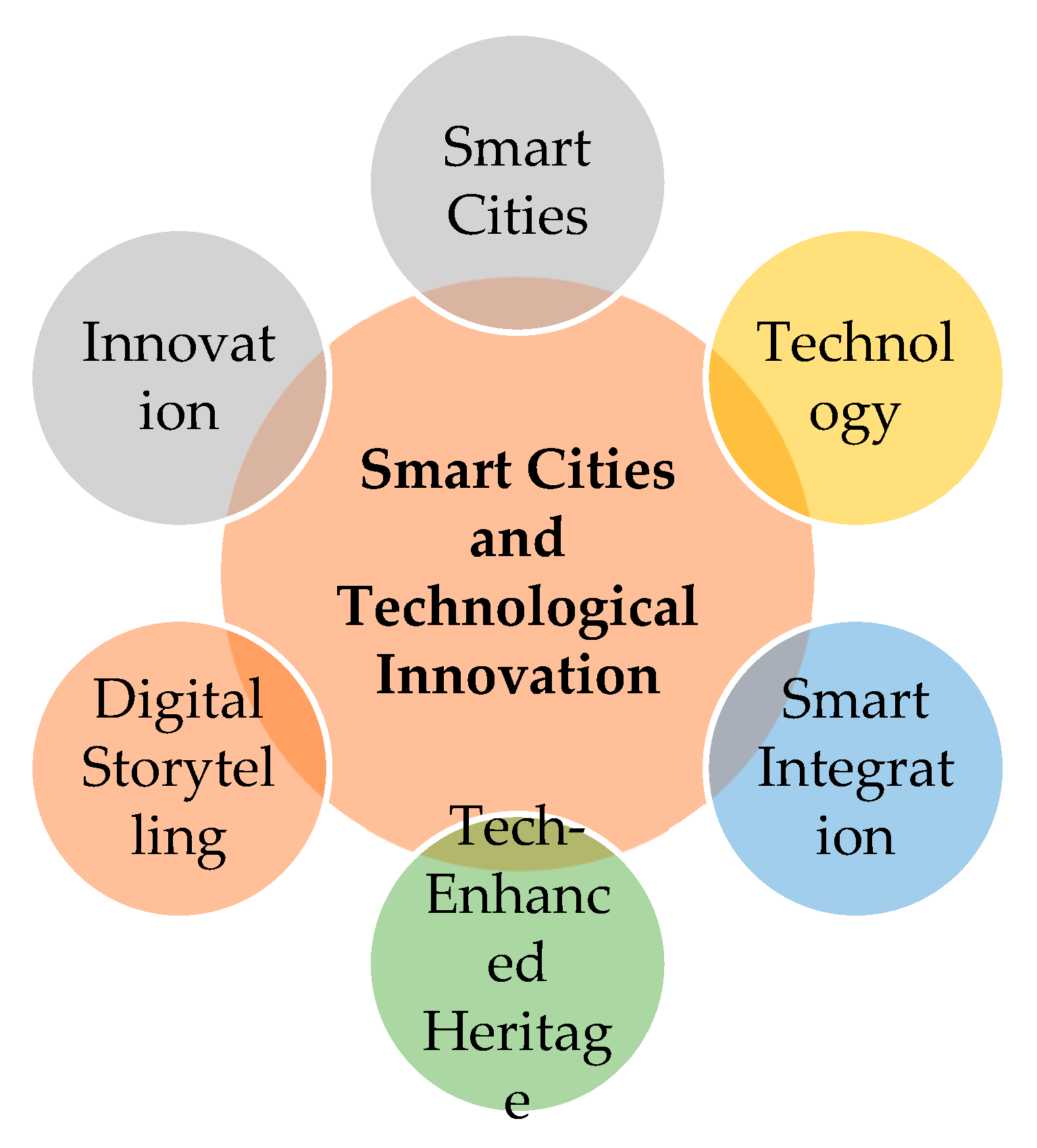
Figure 2.
Main theme (Community Engagement and Social Impact) and Sub-themes.
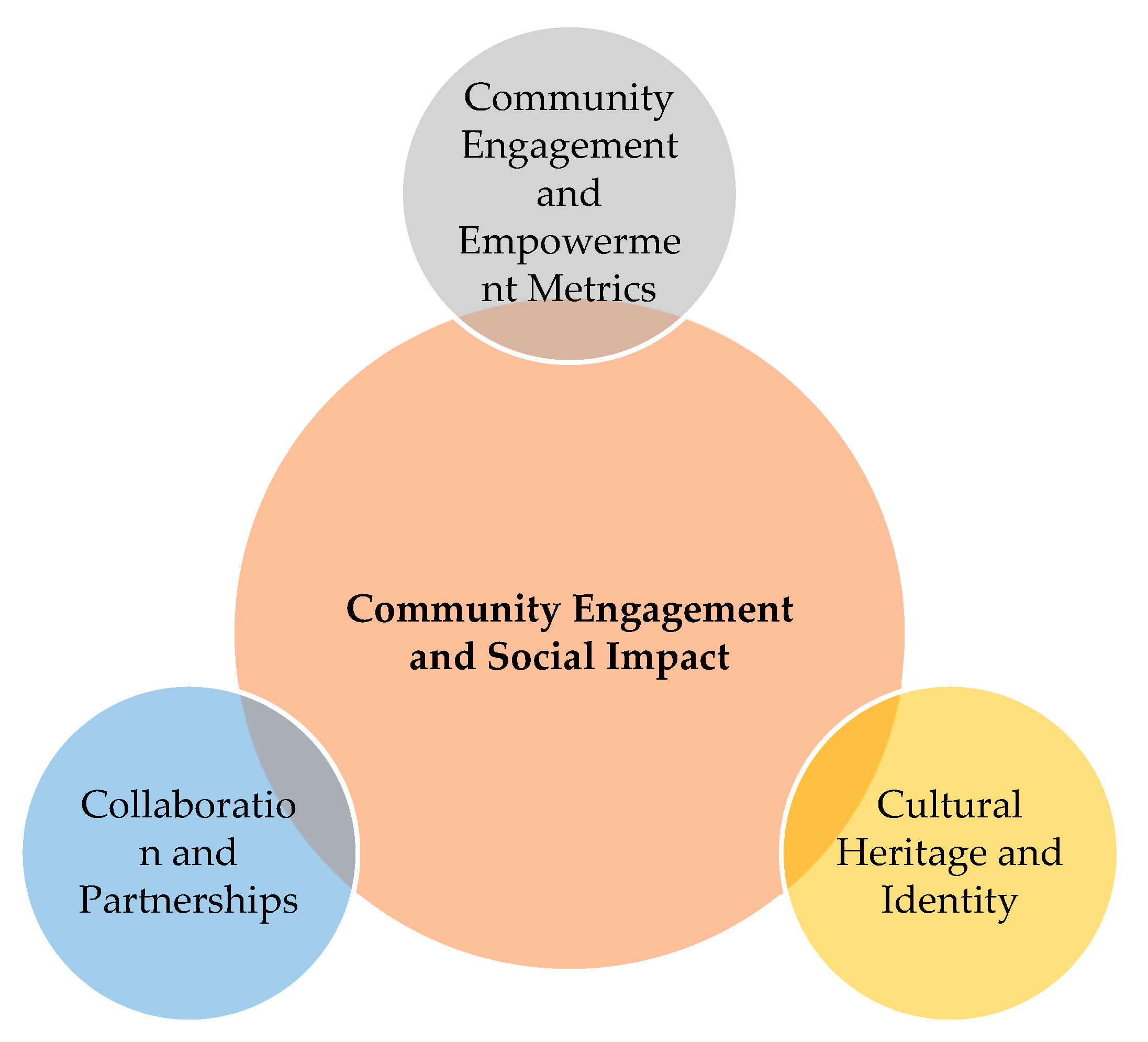
Figure 3.
Main theme (Urban Planning and Design) and Sub-themes.
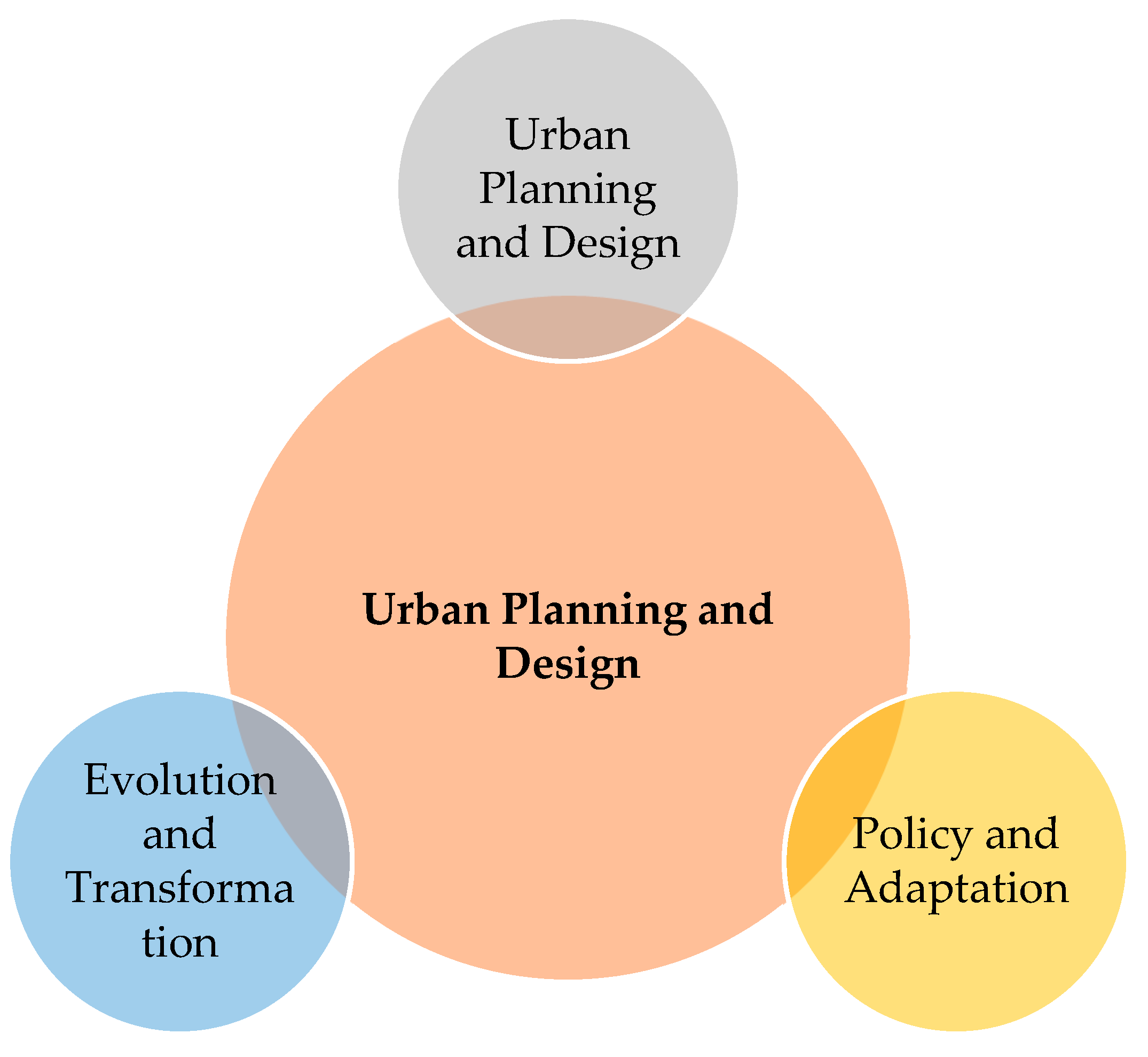
Figure 4.
Main theme (Challenges and Conflicts) and Sub-themes.
Figure 5.
Final model of the research for Integrating Cultural Heritage, Place making, and Smart City Development (CHP-SCD).
Figure 5.
Final model of the research for Integrating Cultural Heritage, Place making, and Smart City Development (CHP-SCD).
Disclaimer/Publisher’s Note: The statements, opinions and data contained in all publications are solely those of the individual author(s) and contributor(s) and not of MDPI and/or the editor(s). MDPI and/or the editor(s) disclaim responsibility for any injury to people or property resulting from any ideas, methods, instructions or products referred to in the content. |
© 2025 by the authors. Licensee MDPI, Basel, Switzerland. This article is an open access article distributed under the terms and conditions of the Creative Commons Attribution (CC BY) license (http://creativecommons.org/licenses/by/4.0/).
Copyright: This open access article is published under a Creative Commons CC BY 4.0 license, which permit the free download, distribution, and reuse, provided that the author and preprint are cited in any reuse.


