

Submitted:
19 June 2025
Posted:
20 June 2025
You are already at the latest version
Abstract
The digital economy era has witnessed the widespread application of 5G, big data, and artificial intelligence across industries. This trend has promoted the deep integration of digitalization and traditional sectors, thereby injecting new momentum into industrial development. n this context, this paper utilizes panel data from 29 Chinese provinces covering the period from 2017 to 2023. The conclusions are as follows: (1) Digital economy development significantly promotes new energy vehicle exports. (2) Digital economy indirectly facilitates exports by advancing technological innovation and financial services. (3) The digital economy exerts a notably stronger influence on new energy vehicle exports in eastern China compared to other regions. Based on these findings, the paper proposes 4 key policy recommendations: intelligent digital marketing, technological innovation, expanded openness, and government support, aiming to promote the sustainable development of China’s new energy vehicle export trade. This paper provides theoretical support for the sustainability of Chinese enterprises' competitiveness in the international market. It also offers practical guidance for policymakers and industry stakeholders.
Keywords:
digital economy
; export trade
; new energy vehicles
; sustainability
1. Introduction
The world is undergoing a profound transformation characterized by digitalization. Emerging technologies such as big data, artificial intelligence, and cloud computing have been deeply integrated with traditional industries. The digital economy is reshaping the global industrial landscape at an unprecedented pace. Moreover, it has become a central force driving global economic recovery and sustainability. Since the 2016 G20 Hangzhou Summit, China has actively promoted the digital economy on the global stage. Furthermore, it initiated the G20 Digital Economy Development and Cooperation Initiative, marking its elevation to a national strategic priority. In 2018, the National Conference on Cybersecurity and Informatization emphasized the need to accelerate the development of the digital economy. In addition, it called for the promotion of digital production, new industries, and new business models. By 2021, the total value of China’s digital economy reached RMB 45.5 trillion, ranking second globally after the United States. Additionally, the 14th 5-Year Plan for Digital Economy Development, released in 2022, emphasized integrating the digital economy with the real economy. It further set a goal for related industries to contribute 10% of GDP, signaling China’s transition to high-quality and sustainability-oriented digital development.
Meanwhile, the digital economy has accelerated the development of green and low-carbon industries such as new energy vehicles. With rising global environmental awareness and intensifying energy crises, the automobile industry is undergoing a fundamental shift from traditional fuel to new energy. In this context, China plays a leading role in exporting new energy vehicles. It has further applied digital technologies across the industry chain to enhance product quality and international competitiveness. According to the China Association of Automobile Manufacturers, carbon emissions from the automobile sector rank just below high-carbon industries such as coal and machinery. However, pure electric vehicles emit almost zero carbon dioxide, making their promotion essential for energy conservation, emission reduction, and climate action. China started its development of the new energy vehicle sector in 2000 and now has a solid technological foundation. Nevertheless, it continues to encounter challenges in foreign markets and fast-paced technological upgrades. Therefore, it is necessary to harness the digital economy to support the global expansion of the industry. Such efforts are crucial for advancing industrial upgrading and promoting sustainability.
Digital technology continues to advance, enhancing the sustainability of economic and social systems. Meanwhile, the “dual carbon” strategy has made new energy vehicles a key green industry supported by the state. Most studies focus on the digital economy’s influence on growth and manufacturing efficiency. Nevertheless, its impact on export performance in specific industries remains understudied. In particular, how the digital economy promotes export growth in the new energy vehicle sector remains underexplored. The mechanisms involved include technological empowerment, information matching, and supply demand optimization. However, empirical evidence on these mechanisms is lacking. In this context, it is urgent to investigate the role of the digital economy in new energy vehicle exports. It is necessary to clarify whether and how it enhances product competitiveness and market expansion. This research not only provides empirical support for green trade policy but helps corporations secure favorable positions. These positions are crucial during the restructuring of global value chains.
This paper focuses on China’s new energy vehicle export trade and aims to systematically examine the impact of digital economy development on export performance. The specific research objectives are as follows: (1) By analyzing the internal relationship between the digital economy and new energy vehicle exports, this paper constructs a mechanism model. It proposes both direct impact pathways and potential mediating mechanisms through which the digital economy affects exports. (2) Based on provincial panel data, this paper uses the entropy method to construct an index system for digital economy development. It measures the digital economy level in each province and establishes a regression model using export data of new energy vehicles to conduct empirical tests. (3) According to the empirical results, this paper proposes targeted policy recommendations to promote China’s new energy vehicle exports. These suggestions aim to support green, high-quality, and export-oriented industrial upgrading.
This paper makes the following marginal contributions: First, it introduces a breakthrough in the research subject. Existing literature mainly focuses on either the digital economy or new energy vehicle exports. However, few studies systematically explore the internal linkage between the two. This paper integrates digital economy development with the new energy vehicle industry. It explains the mechanisms by which the digital economy affects exports from a theoretical perspective and verifies these mechanisms through empirical analysis. Second, it innovates the application of research methods. By constructing a two-way fixed effects regression model, this paper empirically examines the impact of the digital economy on new energy vehicle exports at the macro level. Furthermore, it introduces 2 mediating variables—financial services and technological innovation. It constructs a theoretical framework of “digital economy–mediating variables–new energy vehicle exports” to analyze the indirect mechanisms in depth. This provides a new analytical perspective and methodological reference for related studies. Third, it offers a novel research perspective. After confirming that the digital economy promotes new energy vehicle exports both directly and indirectly, this paper further divides China into eastern, central, and western regions. It analyzes the regional differences in the effect of the digital economy on exports. This regional analysis offers policy insights tailored to local conditions. It also provides practical guidance for promoting the sustainability of China’s new energy vehicle industry development.
The structure of this paper is arranged as follows: (1) Literature Review. This section focuses on three aspects: research on the digital economy, research on the influencing factors of new energy vehicle export trade, and studies on the impact of the digital economy on new energy vehicle exports. (2) Theoretical Analysis and Research Hypotheses. This part includes both the direct and indirect effects of the digital economy on new energy vehicle exports. (3) Research Design. This section covers sample selection, data sources, model specification, and variable definitions. (4) Results. It includes descriptive statistical analysis, multicollinearity analysis, baseline regression results, robustness tests, heterogeneity analysis, and mechanism testing. (5) Conclusions, Implications, and Limitations. This section presents the research conclusions, policy implications, limitations of the current study, and directions for future research.
2. Literature Review
2.1. The Digital Economy
The theoretical foundation of the digital economy can be traced back to the evolution of information economics. In the 1960s, systematic discussions on the knowledge industry recognized the independent role of information product manufacturing and service provision in economic activities. During this period, intellectual property also emerged as a core element. These early studies in information economics laid the groundwork for the initial development of the digital economy’s theoretical framework and created a solid basis for its subsequent evolution.
In the early stage of the digital economy, it was widely regarded as the deep integration of information technology and economic activities. The digital economy relies on information technology to construct a transaction system for goods and services [1]. It also optimizes resource allocation and reconstructs business processes through online platforms, creating new value increments while improving efficiency. As digital technologies permeate various economic scenarios, the digital economy gradually shows structural complexity, functional diversity, and a growing focus on sustainability. Furthermore, its structural framework has become increasingly clear. It consists of three layers: digital infrastructure, e-commerce, and technological implementation, which reflect its multidimensional operational logic [2]. Meanwhile, defining the digital economy from the perspectives of industrial sectors, output structure, and production factors helps capture its structural characteristics as a new economic paradigm [3]. This approach clarifies how the digital economy differs from traditional models. Based on this foundation, it has evolved into an innovation-driven model. This model is primarily mediated by the internet and is characterized by high efficiency and strong penetration capacity [4]. The essence of the digital economy lies in its capacity to disrupt and reshape traditional production logic. Its operation is driven by digital technologies, while its industrial system is built upon specialized sectors that provide digital products and services [5]. This economic model can be quantified by aggregate output indicators. It centers around digital products and their supporting services, forming a fully digitalized value chain that covers production, exchange, and consumption [6].
At the internal structural level, the digital economy is generally divided into two intertwined development paths that jointly promote sustainability. On one hand, information and communication technology empowers traditional industries by upgrading production factors and redesigning processes. On the other hand, industrial digitalization focuses on digital products and services, driving the expansion of new business models and the restructuring of value chains [7]. Together, these two paths drive the digital economy’s deep extension from a technological system to an economic system, enhancing its sustainability and long-term resilience. Moreover, the multidimensional expansion of the concept has also enriched the theoretical connotations of the digital economy. Firstly, at the technological level, its narrow scope mainly includes the equipment and software bundles that provide basic services. Secondly, at the industrial level, its broad scope extends to various fields such as entertainment publishing, healthcare, education, and industrial control [8]. The digital economy not only reflects the aggregation of technological elements but represents a deep integration process with the socio-economic system. Particularly in the realm of digital trade, the digital economy has reshaped the production and delivery methods of goods and services, driving a fundamental transformation in business logic [9]. Furthermore, from the perspective of international institutional consensus, the digital economy is widely understood as an economic form powered by modern information technology systems. It is also driven by digital cognitive resources. Its fundamental nature is an economic transformation model driven by digital technologies. This model is characterized by high adaptability and dynamic evolution, continuously generating new industrial forms and development mechanisms [10]. This view has also gained broad acceptance in domestic academic circles. It serves as a crucial theoretical foundation for understanding the operational logic of the digital economy.
2.2. Factors Influencing the Export of New Energy Vehicles
The factors influencing the export of new energy vehicles involve multiple dimensions. These include technological innovation, policy environment, industrial structure, market demand, and international cooperation. Among existing studies, technological innovation is consistently regarded as one of the key drivers for enhancing new energy vehicle exports. Technological progress directly improves vehicle performance and added value. It also affects the upstream industry chain, boosting overall export competitiveness. Research highlights that the development of the new energy vehicle industry is closely linked to industrial upgrading. Technological innovation promotes simultaneous improvements in production efficiency and product quality, which further supports export growth [11]. Moreover, the enhancement of technological content changes the structure of export products, steering them towards higher value-added directions. This shift contributes to the transformation of multinational trade patterns [12,13]. Such studies also emphasize the mediating role of innovation. Innovation acts not only as an independent driver but also indirectly promotes exports. It does so by optimizing product functions, enhancing brand recognition, and increasing international acceptance [14,15].
Government policies and the construction of standardized systems are another indispensable factor. The U.S. government promotes new energy vehicle exports through a series of policy supports and subsidy mechanisms. This institutional intervention provides strong support for exports [16]. In addition, standardized production processes and unified technical standards help reduce production costs and improve market access efficiency. This enhances international competitiveness [17]. Meanwhile, differences in fuel prices, insurance systems, and industry regulations across countries and regions directly affect the export costs and market acceptance of new energy vehicles [18]. Therefore, a mature export system often requires the joint role of technological innovation and institutional coordination.
It is worth noting that market factors also receive significant attention in the research. The consumption capacity, human capital, and urban density of export destination countries influence the import demand for new energy vehicles.For example, in the EU market, per capita income is a key determinant of new energy vehicle demand [19]. Urbanization level also plays an important role. Additionally, the development of transportation infrastructure significantly influences demand. Moreover, structural equation modeling reveals that resource control and recommendations from key opinion leaders significantly enhance consumers’ purchase intentions. Operational convenience is another important practical factor affecting purchase decisions. These factors together create a linkage effect in export countries [20]. Therefore, the export of new energy vehicles is not only a matter of supply-side technology and products. It is also closely related to the sustainability of socio-economic conditions and infrastructure development on the demand side.
Finally, regional and strategic cooperation pathways, such as the Belt and Road Initiative and free trade agreements, play a positive role in shaping export routes. For example, China has established cooperation with countries along the Belt and Road in lithium battery trade and infrastructure construction. This resource and technology synergy not only increases export scale but also optimizes the structural layout of export markets, promoting sustainability [21]. Furthermore, gravity model analysis shows that free trade agreements and fuel bans also contribute to the expansion of new energy vehicle exports, supporting sustainable growth [22].
2.3. Impact of Digital Economy Development on Export Trade
The impact mechanism of the digital economy on export trade is characterized by multiple levels and diverse pathways. Its effects are evident in the adjustment of trade structures at the macro national level. At the same time, it promotes the optimization of market behaviors at the micro enterprise level, supporting sustainability in both dimensions.
At the macro level, the widespread adoption of the internet and digital infrastructure is considered a crucial prerequisite for the growth of service trade and goods exports. As early as 2002, research analyzing data from 14 service sectors showed that higher levels of network services significantly enhance bilateral service trade [23]. Subsequently, large-scale panel data studies covering more than 160 countries further confirmed the dynamic interaction between internet penetration and economic growth. This interaction also significantly affects export trade. This effect is especially pronounced in non-high-income countries [24,25]. This indicates that digital infrastructure not only improves the efficiency of traditional economies. It also creates export capacity through new forms of services, contributing to sustainable economic development. Moreover, in the context of cultural and agricultural product exports, the development of the digital economy has been found to correlate positively with export performance [26]. This positive relationship is even more prominent among trading partners with significant economic, institutional, and cultural differences [27]. This finding reveals the unique role of digital technology in bridging institutional barriers and cultural gaps, thereby fostering sustainability in international trade.
At the micro-enterprise level, the digital economy profoundly influences corporate export behavior by reshaping transaction organization and market channels. The rise of virtual organizations and e-commerce platforms enables enterprises to offer customized products and services. This helps them overcome the limitations of traditional export channels and quickly integrate into the global market [28]. Specifically, the increase in internet penetration and e-commerce usage rates is positively correlated with enterprise export intensity. This indicates that digital platforms have become key catalysts for corporate export development [29]. Furthermore, research highlights that e-commerce platforms especially help agricultural and food enterprises quickly integrate into the global value chain. They also expand these enterprises` scale effects [30]. In addition, the application of robotics and automation technologies enhances production efficiency. It also increases product added value, making export goods more competitive [31].
From the perspective of the mechanism, the digital economy promotes export trade mainly through six pathways. First, e-commerce reduces information search and transaction costs. This improves matching efficiency between enterprises and consumers. Second, communication technology enhances information transparency. It reduces information asymmetry and lowers international trade barriers [32,33]. Third, digitalization breaks time and space limits, enabling transactions anytime and anywhere [34]. Fourth, digital processes improve order management, supply chain coordination, and logistics efficiency [35]. Fifth, platforms trigger network effects. This leads to broader international market coverage [36,37]. Sixth, highly digitalized enterprises increase capital investment in innovation and R&D [38,39]. This further optimizes export product structure and added value.
In addition, the uneven development of regional digital economies leads to differences in export performance. For example, in China’s exports to ASEAN countries, the interaction effect is stronger in target countries with higher digital economy levels. Consequently, their export scale grows faster [40]. Digital platforms enable enterprises to access more market information. They also reduce geographical and institutional barriers.As a result, enterprises can expand overseas markets more quickly, promoting long-term sustainability in their international growth.
3. Theoretical Analysis
3.1. The Direct Impact of Digital Economy Development on China’s New Energy Vehicle Export Trade
Against the backdrop of rapid digital economy development, China’s export trade of new energy vehicles has experienced unprecedented growth. This growth contributes significantly to the sustainability of its green industrial development. The fundamental driving force behind this trend lies in the deep integration of multiple digital elements. These include digital payment, data resources, digital marketing, and digital technologies, which work together in a synergistic manner. These factors have significantly improved the efficiency, scale, and competitiveness of new energy vehicle exports.
First, as a key enabler of the digital economy, digital payment significantly reduces the cost and risk of cross-border transactions involving new energy vehicles. Traditional payment systems often face challenges such as complex contract procedures, complicated remittance routes, and high information security risks. In contrast, digital payment uses advanced encryption technologies and secure protocols to ensure instant and highly secure transactions. This not only strengthens exporters’ expectations for stable payments and reduces financial and fraud risks, but also optimizes payment procedures. It simplifies intermediary steps in the cross-border payment chain, improves payment efficiency, and lowers labor costs and additional expenses caused by logistics delays. As a result, it provides more efficient and convenient financial support for China’s new energy vehicle exports.
Second, data has become a new core production factor in the digital economy era. It injects intelligent momentum into resource allocation and production decisions in new energy vehicle export trade. Through technologies such as real-time data collection via Internet of Things devices and cloud-based processing, corporations can accurately monitor key information. This includes global market demand, supply chain stability, and policy trends. Such insights enable better decision-making and operational adjustments. Based on these insights, they can adjust production plans, manage inventory, and optimize transportation routes [41]. Data-driven supply chain optimization not only improves the rationality of resource allocation. It also enhances coordination efficiency among upstream and downstream firms through data-sharing mechanisms. This accelerates the stable and efficient entry of new energy vehicles into international markets. Meanwhile, big data analytics helps corporations identify potential markets and risk points. It improves the foresight and precision of decision-making and, to some extent, addresses resource misallocation caused by information asymmetry in traditional trade.
Digital marketing acts on the demand side, continuously expanding the export scale of new energy vehicles. Compared with traditional marketing methods, digital marketing relies on mobile internet, social media, and big data technologies. It achieves precision, interactivity, and globalization in marketing. New energy vehicle companies can use user behavior analysis to accurately identify consumer preferences and purchasing power across different countries and regions. This allows them to develop more localized and differentiated product and pricing strategies. Moreover, digital marketing breaks the limitation of one-way information dissemination. It enables real-time interaction with consumers through social platforms. This interaction enhances brand recognition and user engagement. As a result, it increases consumers’ trust and willingness to purchase new energy vehicles. More importantly, the construction of online sales platforms helps new energy vehicle companies overcome traditional geographical market limits. It enables a leap in international brand influence and effective expansion of market scale.
Digital technology plays a fundamental role in driving the optimization and intelligent upgrading of the new energy vehicle industry structure. It promotes industry chain collaboration and improves supply chain management efficiency. It also advances technological progress in the domestic substitution of core components. In the “motor, battery, and electronic control” system, domestic firms have gradually narrowed the technology gap with foreign brands through digital innovation. This has enhanced the technological content and added value of exported products [42]. The integration of intelligent technologies, such as artificial intelligence and big data algorithms, improves the intelligence level of new energy vehicles. This includes driving assistance, energy management, and remote control. Moreover, these technologies extend vehicle lifespan and increase acceptance in overseas markets. In addition, digital platforms accelerate technology diffusion and knowledge sharing. They promote the formation of industrial clusters. For example, the Yangtze River Delta region has basically established a “4-hour new energy vehicle industry circle.” This significantly enhances the region’s export responsiveness and coordination ability.
In summary, the digital economy drives the high-quality development of China’s new energy vehicle exports across multiple dimensions. It enhances sustainability by optimizing payment systems, reshaping resource allocation, strengthening marketing, and promoting technological upgrading. Therefore, the following research hypothesis is proposed:
H1.
The digital economy positively impacts China’s new energy vehicle export trade.
3.2. The Indirect Impact of Digital Economy Development on China’s New Energy Vehicle Export Trade
3.2.1. Digital Economy, Technological Innovation, and New Energy Vehicle Export
The development of the digital economy promotes technological innovation in new energy vehicle export. First, the information diffusion path is undergoing a digital transformation. This shifts the information distribution mechanism from centralized to decentralized. As a result, consumer demand expands. Users’ awareness of new energy vehicle export goes beyond traditional vehicles. They expect cars to evolve into terminals with autonomous driving, zero-emission travel, and intelligent interaction. To meet diverse consumer demands, corporations must carry out technological innovation [43]. Second, the digital economy fosters research and development cooperation between corporations and research institutes. This improves corporations’ innovation capacity. At the same time, integrating the new energy vehicle export industry with digital technology helps develop new technologies. It also achieves the innovation spillover effect of digital technology in the new energy vehicle export industry.
Technological innovation mainly affects new energy vehicle export through product quality, corporate production efficiency, and improvement of global value chain position. First, technological innovation, as a production factor, may change a country’s comparative advantage in product export. This influences export benefits. As a technology-intensive product, technology is the leading factor in new energy vehicle export development. Improving technology in three main areas—battery, motor, and electronic control systems—can enhance performance, safety, and endurance. This, in turn, improves export stability and competitiveness. Second, corporations differ significantly in production efficiency, organizational structure, and scale. Only companies with higher productivity can cover the fixed costs of export [44]. Technological innovation can improve production efficiency. It helps corporations overcome diminishing marginal returns and increase the marginal benefit of input factors. New energy vehicle export is a technology-intensive product. Technological innovation is the most effective way to improve production efficiency. This raises corporations’ willingness to export. In addition, technological innovation promotes developing countries to move up the global value chain. They shift from processing and assembly to research and development. This climb in global value chain position enhances export competitiveness [45]. Based on the above analysis, the following research hypothesis is proposed:
H2.
The development of the digital economy can positively impact new energy vehicle export by promoting technological innovation, which acts as a mediator.
3.2.2. Digital Economy, Financial Services Development, and New Energy Vehicle Export
The development of the digital economy has spawned digital finance, which includes new financial models such as mobile payment, online lending, and block chain. These models lower the barriers to financial services, increase service efficiency, and expand coverage. Digital technology helps financial institutions conduct more accurate risk assessment and management by using big data analysis, artificial intelligence, and other methods. This enables more personalized and efficient financial services [46]. The digital economy also drives the rapid global flow of capital, which expands financing channels for new energy vehicle export corporations and reduces financing costs.
As financial development progresses, new energy vehicle export corporations find it easier to obtain funding. This funding supports technology upgrading, production expansion, and market development. By relying on digital finance platforms, corporations can quickly secure loans and issue bonds. Innovations in financial instruments help corporations better manage risks such as exchange rates and market fluctuations. This strengthens their competitiveness in the international market. The development of digital finance also promotes innovations in supply chain finance. It guides corporations to manage supply chain cash flow more efficiently and reduce operating costs. Taking Chinese new energy vehicle export corporations as an example, the digital economy provides strong financial support and market expansion capabilities. Through online digital finance platforms, corporations gain access to low-cost financing channels for technology introduction and market development. Using big data analysis, corporations accurately target the European and Southeast Asian markets. With the help of cross-border e-commerce platforms, they achieve rapid export growth.
The improvement in financial services development provides new momentum for new energy vehicle export. Financial innovation and faster capital flow help corporations access funding more efficiently and manage risks more effectively. The application of digital technology also directly promotes the collection of market information, the expansion of e-commerce, and the optimization of brand building. With the further expansion of the digital economy, new energy vehicle export will have broader development potential. Based on the above analysis, the following research hypothesis is proposed:
H3.
The development of the digital economy can positively affect new energy vehicle export by promoting financial services development, which plays a mediating role.
As shown in Figure 1, this paper summarizes the above theoretical analysis. The paper first analyzes the effect of the development level of the digital economy on new energy vehicle export. Furthermore, it analyzes the mediating roles of technological innovation and financial services development. In conclusion, based on these analyses, Hypotheses 1-3 are proposed. The paper would next analyze and test these hypotheses, further validating the effectiveness of the theoretical model.
4. Research Design
4.1. Sample Selection and Data Sources
Based on data availability and completeness, this paper selects data from 29 provinces in China from 2017 to 2023 (excluding Qinghai, Tibet, Hong Kong, Macao, and Taiwan). Stata is used to examine how the development of the digital economy affects new energy vehicle export in China. The variables and related descriptions are as follows.
4.1.1. Explanatory Variable
This paper applies the entropy method to calculate a composite score for the digital economy. An evaluation system of digital economy development level (Digital) is constructed. Based on this system, the information entropy method is used to determine the weight of each indicator. First, all selected indicators are standardized. Absolute values are converted into relative values. Since all indicators of the digital economy development level are assumed to have a positive effect on industrial export trade, positive transformation is applied to all indicators. Standardized data are then obtained.

The proportion of each province under each indicator is then calculated. Based on this, the entropy value of each indicator is determined.

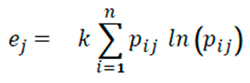
Here, K=1/ln(n)>0, ensuring that ej≥0. The information redundancy is calculated as dj=1−ej. The weight of each indicator is then obtained based on its information redundancy.
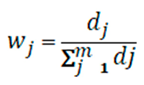
This paper designs an evaluation system for the digital economy development level (Digital) based on its essential characteristics and development patterns. The design follows the principles of scientific rigor, objectivity, systematization, and comprehensiveness. It draws on the indicator framework proposed by Guo Feng (2020) [47]. The system includes three secondary indicators: digital infrastructure, digital industry, and digital finance. It further consists of 13 tertiary indicators. The detailed calculation results are presented in Table 1.
4.1.2. Explained Variable
This paper follows the approach of Jing Shouwu (2023), using the natural logarithm of the total new energy vehicle export value of each province as the explained variable [48]. The data are sourced from the General Administration of Customs. A higher value indicates a greater export volume of new energy vehicles.
4.1.3. Control Variables
(1) Economic development level (gdp). This paper follows Fan Xin (2020) and uses per capita GDP to measure economic development level. Higher per capita GDP usually indicates stronger technological innovation capacity. It helps improve production efficiency and reduce production costs, thereby promoting new energy vehicle export [49].
(2) Trade openness (open). Based on the method of Niu Xiaoyu (2021), this paper uses the ratio of total annual import and export trade value to regional GDP for each province as the core indicator of trade openness [50]. This indicator effectively reflects the degree of regional integration into the global value chain and international economic cooperation. The data are sourced from provincial statistical yearbooks.
(3) Urbanization level (urb). This paper uses the proportion of urban population in each region to measure urbanization level. The data come from provincial statistical yearbooks. Yan Xingyu et al. (2019) find a significant correlation between regional industrial agglomeration and local urbanization level. Higher urbanization rates lead to industrial concentration and scale effects, which promote export trade growth [51].
(4) Foreign direct investment (fdi). This paper analyzes the intensity of foreign capital inflow based on the percentage of foreign direct investment in regional GDP. The data are from provincial statistical yearbooks. Chen Dongjing et al. (2019) show that technology spillover effects brought by foreign direct investment can enhance corporate innovation and management, thus promoting industrial structure optimization and export trade development [52].
(5) Industrialization level (industry). The level of industrialization is measured by the proportion of industrial added value to regional GDP, following the World Bank’s method. Data come from the China Statistical Yearbook. Zhu Zhaoyan (2017) argues that improving industrialization can optimize the new energy vehicle supply chain, reduce production costs, and enhance export competitiveness [53].
4.1.4. Mediating Variables
(1) Technological innovation (lnip). Technology level is a key factor in enhancing export competitiveness. Especially with the rise of the digital economy, its value continues to emerge. The development of the digital economy can accelerate technological progress and drive innovation. Zhao Wenxia et al. (2021) point out that technological innovation can promote product quality upgrading, thereby improving export stability and competitiveness. Therefore, technological innovation is used as a mediating variable, measured by the logarithm of the number of patent grants [54].
(2) Financial services development (fin). Digital financial services, such as supply chain finance and insurtech, reduce trade risks and improve transaction efficiency. Thus, financial services development is chosen as a mediating variable. Following Zhou Li (2004), it is measured by the ratio of the sum of deposits and loans of financial institutions to GDP in each province [55]. The data comes from the China Financial Yearbook. The specific variables and their descriptions are presented in Table 2.
4.2. Research Model
4.2.1. Baseline Regression Model
This paper uses a panel data model for empirical analysis. The dependent variable is the natural logarithm of new energy vehicle export trade value. The core independent variable is the digital economy development index measured by the entropy method. To ensure the robustness and reliability of the model, a series of control variables are added. These include the level of regional economic development, the degree of trade openness, the level of urbanization, the scale of foreign direct investment, and the level of industrialization. The model is specified as equation (5).
LnEDit=â0+â1Digitalit+â2gdpit+â3openit+â4urbit+â5industryit+â6fdiit+ìit
In the model, i represents different provinces, and t represents different years. ìit is the random error term. LnED is the dependent variable. Digital is the independent variable. The control variables include five indicators: economic development (gdp), openness (open), urbanization (urb), industrialization (industry), and foreign direct investment (fdi).
4.2.2. Mediating Effect Model
The development of digital economy in China may promote technological innovation and financial services. These factors then play a mediating role in boosting new energy vehicle export. Therefore, this paper adopts the three-step method proposed by Wen Zhonglin (2014) to test the mediating mechanism [56]. The mediating variables are technological innovation (lnip) and financial services (fin). Technological innovation is measured by the logarithm of patent applications granted. Financial services level is measured by the ratio of total deposits and loans of financial institutions to GDP in each province. The mediating effect model is as follows:
LnEDit= â0+â1Digitalit+â2industryit+â3Openit+â4Urbit+â5gdpit +â6 fdiit+ ìit
Mit= á0+ á1Digitalit+ á2industryit+ á3Openit+ á4Urbit+ á5gdpit+ á6 fdiit+ ìit
LnEDit= è+è0Mit+ è1Digitalit+è2industryit+è3Openit+è4Urbit+è5gdpit+è6FDIit+ ìit
Here, Mit represents the mediating variable. Other indicators are consistent with the baseline regression model.
5. Results
5.1. Descriptive Statistics
Table 3 presents the descriptive statistics of all variables used in this paper. The mean value of the logarithm of new energy vehicle export is 16.23, and the median is 16.71, indicating no significant skewness. Moreover, the standard deviation is 3.516, confirming large regional differences in new energy vehicle export. The minimum value is 7.467, while the maximum is 23.57. These results suggest a wide gap in new energy vehicle export across regions. This phenomenon may be related to differences in economic development, industrial base, and policy support.
In terms of the development level of the digital economy, the mean value of the digital economy index across provinces is 0.188, and the median is 0.140. The distribution is right-skewed, indicating that a few regions have a relatively high level of digital economy development. In addition, the standard deviation is 0.130, suggesting significant differences among regions. The minimum value of the digital economy index is 0.0580, while the maximum is 0.747. This reflects a large gap in digital economy development across regions. This disparity may be related to differences in digital infrastructure, technological innovation capacity, and policy support.
In terms of the mediating variables, there are significant differences in technological innovation and financial services development across provinces in China. On the one hand, these differences result from variations in talent resources and levels of economic development. On the other hand, the development of the financial services sector shows a clear trend of concentration. Regions with abundant production factors and better infrastructure tend to have higher levels of development.
5.2. Correlation Analysis
Correlation analysis helps to preliminarily assess the rationality of selected variables in the empirical study by examining whether correlations exist among them. The correlation coefficient measures the linear relationship between variables, ranging from -1 to 1. A larger absolute value indicates a stronger correlation, while the sign reflects the direction. Table 4 presents the simple correlation analysis of all variables.
The results show that, at the 1% significance level, new energy vehicle export is positively correlated with the level of digital economy development across provinces. This finding confirms the existence of a mutually reinforcing mechanism between the digital economy and new energy vehicle export. Specifically, new energy vehicle export is significantly and positively correlated with digital economy development, industrialization level, openness, economic development, and urbanization. Among them, the correlation with digital economy development is the strongest.
5.3. Multicollinearity Test
Among the methods for diagnosing multicollinearity, the variance inflation factor (VIF) is one of the most commonly used indicators. The VIF value is positively related to the severity of multicollinearity. This paper uses the VIF test to diagnose potential multicollinearity in the model. The detailed results are shown in Table 5.
The test results show that the VIF value is 3.560, which is below the critical threshold of 5. Therefore, it can be concluded that there is no significant multicollinearity among the selected explanatory variables.
5.4. Regression Results
As shown in Table 6, the coefficient of digital economy is positive in all models and significant at the 1% level. This indicates that the development of the digital economy has a significant positive impact on new energy vehicle export. As more control variables are added, the coefficient of digital economy decreases from 28.541 to 24.914. Although there is a slight decline, the coefficient remains at a high level. This suggests that the positive effect of digital economy on new energy vehicle export is robust.
Regarding other control variables, industrialization level shows a significant positive effect on new energy vehicle exports. Its coefficient gradually increases as the model improves, indicating a stronger promotion effect of industrial development on exports. And trade openness also has a significant positive impact on exports. Improved resource allocation efficiency helps reduce manufacturing costs and supports export expansion. Moreover, economic development level positively affects exports; although its coefficient is small, it is statistically significant, indicating a stable contribution of economic growth to exports. The coefficient of foreign direct investment is negative and insignificant, suggesting a limited impact on new energy vehicle exports. Besides, urbanization level has a positive but relatively limited effect on exports. With the advancement of regional integration, industrial agglomeration effects gradually emerge, enhancing export competitiveness. Overall, the models fit well and the regression results have strong explanatory power.
5.5. Mechanism Test
5.5.1. The Role of Technological Innovation
The results of the mechanism test for technological innovation (lnip) are shown in Table 7. In column (1), digital economy has a significantly positive impact on new energy vehicle export. Column (2) shows that the coefficient of digital economy is 5.533, indicating that digital economy significantly promotes technological innovation. The progress of technological innovation in China is closely related to the development of digital economy.
From column (3), the coefficient of technological innovation is 1.765, which confirms its positive effect on new energy vehicle export. Compared with column (1), the coefficient of digital economy drops significantly from 12.399 to 2.633 in column (3). This result confirms that technological innovation plays a mediating role in the relationship between digital economy and new energy vehicle export, thereby supporting hypothesis H2.
5.5.2. The Role of Financial Services
The mechanism test results for financial services (fin) are presented in Table 8. Column (1) shows that the growth of digital economy significantly promotes new energy vehicle export. In column (2), the coefficient of digital economy is 5.290, indicating that digital economy strongly improves the level of financial services. The development of financial services is closely linked to the digital economy.
In column (3), the coefficient of financial services is 1.966 and is significant at the 1% level. This confirms that financial services effectively promote the growth of new energy vehicle export. Compared with column (1), the coefficient of digital economy decreases from 24.914 to 14.512 in column (3). This finding supports that financial services act as a key mediating variable through which digital economy influences new energy vehicle export, thus confirming hypothesis H3.
5.6. Robustness Tests
5.6.1. Alternative Measurement of Digital Economy Development Level
In the previous regression analysis, the level of digital economy development is measured using the entropy method. To improve the robustness of the findings, this paper follows the research paradigm of Chao Xiaojing and Ren Baoping (2011). It then applies the Principal Component Analysis (PCA) method to re-measure the digital economy development level [57]. A new panel regression is then conducted based on the recalculated index. The results are presented in Table 9.
The regression results using the alternative measurement of digital economy development are reported in Table 9. In Model (1), no control variables are included. A positive relationship is observed between the digital economy and new energy vehicle export. The regression coefficient is 28.797. In Model (2), all control variables are added. After including these variables, the positive impact of the digital economy on export is slightly reduced. However, the regression still confirms that the digital economy promotes the expansion of new energy vehicle exports. The coefficient reaches 27.743. Based on the empirical results of both models, the conclusion remains robust. Even with a different measurement method, the digital economy significantly promotes new energy vehicle exports. This further validates the baseline regression in Table 9 and strengthens the support for Hypothesis H1.
5.6.2. Bootstrap Test
According to the previous three-step mediation test, technological innovation and financial services act as mediators between the digital economy and new energy vehicle export. To verify the reliability of the mediation effect, this paper uses the Bootstrap sampling technique for robustness testing. Bootstrap generates confidence intervals of the mediation effect through repeated sampling. This method captures the distribution characteristics of the mediation effect more accurately. It also avoids the problem of multiple testing and improves the reliability of the results.
Therefore, this paper applies the Bootstrap method to test the mediation effect. The null hypothesis (H0) assumes that ab = 0, indicating no mediation effect. To improve estimation accuracy, 1,000 repetitions are conducted. If the 95% confidence interval excludes zero, the null hypothesis is rejected. This result confirms that the mediation effect is statistically significant.
Table 10 presents the detailed Bootstrap test results. The regression shows that the mediation effect coefficient is 9.767. The p-value is much lower than the 0.1 threshold. Under the 1% significance level, the null hypothesis is rejected. The bias-corrected 95% confidence interval does not contain zero. After applying the Bootstrap method, the mediation effect is further confirmed. This indicates that the digital economy has an indirect effect on new energy vehicle export. The empirical results are stable and reliable.
5.6.3. Changing the Regression Model
This paper conducts a robustness check by modifying the regression model from an econometric perspective. Given the progressive nature of digital economy development over time and the heterogeneity of new energy vehicle exports across provinces, a two-way fixed effects panel model is applied for empirical analysis. This model is used to investigate the impact of the digital economy on new energy vehicle exports across different provinces. The results are presented in Table 11.
According to the results of the two-way fixed effects regression shown in Table 11, the digital economy has a positive impact on China’s new energy vehicle exports. The robustness test results do not differ significantly from the previous regression outcomes. This indicates that the panel regression results in this paper are robust.
5.7. Heterogeneity Test
This paper investigates regional differences in the impact of the digital economy on new energy vehicle exports. Based on China’s administrative division into eastern, central, and western regions, 29 provincial-level administrative units were selected as the research sample. Specifically, the eastern region includes 11 provinces and municipalities: Beijing, Tianjin, Hebei, Liaoning, Shanghai, Jiangsu, Zhejiang, Fujian, Shandong, Guangdong, and Hainan. The central region covers 8 provinces: Shanxi, Jilin, Heilongjiang, Anhui, Jiangxi, Henan, Hubei, and Hunan. Meanwhile, the western region includes 10 provinces: Inner Mongolia, Guangxi, Chongqing, Sichuan, Guizhou, Yunnan, Shaanxi, Gansu, Ningxia, and Xinjiang. The regression results are shown in Table 12. Notably, the correlation between the digital economy and new energy vehicle export volume shows regional heterogeneity. In the eastern region, the estimated coefficient is 20.971 and is significant at the 1% level. This indicates that the digital economy significantly promotes the export of new energy vehicles. The strong effect may be attributed to the advanced technological development and well-established infrastructure in the eastern region. In contrast, in the central region, the negative effect of the digital economy may reflect a conflict between digital development and industrial structure adjustment. For example, the digital economy may crowd out resources from traditional manufacturing sectors. Furthermore, in the western region, the impact of the digital economy is not significant, possibly because the level of digital development remains relatively low and has yet to provide effective support for the export of new energy vehicles.
There are also regional differences in how control variables affect new energy vehicle exports. First, the level of industrial development has a significant impact in the eastern region. This may be due to the region’s strong industrial base, which effectively supports the growth of the new energy vehicle industry. However, in the central and western regions, the impact is not significant. This may result from industrial structures that have not yet adapted to the needs of the new energy sector. Second, the effect of openness varies significantly across regions. In the western region, openness strongly promotes exports. This may be because openness attracts more foreign capital and technology, boosting the new energy vehicle industry. In contrast, in the central region, openness shows a negative effect. This may reflect problems such as uneven resource allocation or intensified competition during the opening-up process. Third, the impact of economic development is mainly observed in the eastern region. This may be because economic growth in the east depends more on high-tech industries, including new energy vehicles. However, in the central and western regions, the effect is not significant. This may be due to their growth models not fully shifting toward high-tech development. Fourth, foreign direct investment (FDI) mainly influences the western region. This may be because western provinces attract foreign capital to offset local capital shortages, which helps expand the new energy vehicle industry. Yet in the eastern and central regions, the impact of FDI is limited. This may be because these areas already have sufficient capital, reducing the marginal effect of FDI. Finally, urbanization has a significant effect in the central and western regions. This may be due to increasing market demand and improved infrastructure driven by the urbanization process. In the eastern region, however, the effect is not significant. This may result from already high levels of urbanization, where further urban growth has limited marginal benefits.
6. Conclusions, Implications, and Research Limitations
6.1. Conclusions
This paper systematically studies the impact of digital economy development on China’s new energy vehicle exports from both theoretical and empirical perspectives. First, it reviews relevant literature and analyzes the current situation. Then, it explores the influence mechanisms. Finally, empirical tests are conducted. Based on these steps, the paper draws the following conclusions.
First, from a theoretical perspective, this paper analyzes the influence mechanisms of the digital economy on China’s new energy vehicle exports. It finds that the digital economy affects exports through both direct and indirect mechanisms. The direct mechanisms include digital payments reducing transaction costs and data elements optimizing resource allocation. In addition, digital marketing expands export scale, while digital technology promotes industrial transformation and upgrading. The indirect mechanisms work through the mediating roles of technological innovation and financial service development. Technological innovation improves the quality and production efficiency of new energy vehicles. Meanwhile, the improvement in financial services provides more financing channels and risk management tools for new energy vehicle enterprises, enhancing their international competitiveness.
Second, based on the theoretical analysis, this paper constructs an empirical model. In this model, the digital economy is the core explanatory variable, and new energy vehicle export is the explained variable. Moreover, technological innovation and financial service development serve as mediating variables. The empirical test shows that digital economy development has a significant positive effect on new energy vehicle exports. Furthermore, technological innovation and financial service development play mediating roles in this process. Thus, the digital economy promotes new energy vehicle exports indirectly by advancing technological innovation and financial services. Additionally, the digital economy has a more significant promoting effect on new energy vehicle exports in the eastern region, while its impact on the central and western regions is relatively weaker.
Finally, based on the previous research findings, corresponding policy recommendations are proposed to promote China’s new energy vehicle exports. Since the study finds that the digital economy can promote exports through technological innovation, enterprises should increase investment in core technology innovation. The baseline regression shows that trade openness positively correlates with new energy vehicle exports. Therefore, provinces should value local openness and actively integrate into global value chains. They should also strengthen international communication and cooperation to promote the internationalization of the new energy vehicle industry. Meanwhile, financial services need enhanced digital financial infrastructure. Enterprises should also focus on digital marketing. The government should increase industrial support and improve digital infrastructure, especially in central and western regions. Additionally, it should strengthen talent cultivation in the digital economy and new energy vehicle sectors to promote balanced regional development.
6.2. Implications
To further illustrate the practical significance of this paper’s conclusions, a series of feasible recommendations are proposed for enterprises based on the above findings. The details are as follows:
(1) To promote China’s new energy vehicle exports, enterprises need to strengthen core technology innovation and overcome development bottlenecks. In this process, digital transformation plays a key role in enhancing industrial competitiveness. Specifically, smart factories connect equipment, robots, and sensors via the Internet of Things, which achieves automated production and real-time monitoring. Moreover, it supports data sharing and collaboration. In addition, digital technology optimizes supply chain management by enabling full visualization of material flow, thereby increasing transparency and responsiveness. Meanwhile, AI dynamically predicts market supply and demand, which reduces supply chain risks and improves inventory turnover and production efficiency. Furthermore, enterprises should strengthen digital R&D to promote technological progress. Technologies such as CAD and simulation shorten design cycles and lower costs. Artificial intelligence also plays a role in key component design, where machine learning predicts battery life and performance. It further optimizes battery and motor design, improving efficiency and power density. Digital tools promote cross-department data sharing and collaboration, while cloud platforms support real-time data sharing among design, engineering, and testing teams. As a result, information errors are reduced, and R&D efficiency is enhanced. Finally, developing intelligent connected vehicles is an important direction. The Internet of Vehicles integrates cars with the internet and builds communication networks among vehicles, roads, and people. This integration enhances road safety and driving experience. Vehicles obtain real-time traffic and environmental data, which helps optimize driving strategies and improve safety.
(2) Trade openness is positively correlated with China’s new energy vehicle exports. Therefore, strengthening international exchange and cooperation is essential to enhance export capacity and competitiveness. To achieve sustainability, Chinese new energy vehicle manufacturers should explore overseas markets, establish service networks, and deepen cooperation in technology research, resource sharing, and talent training. These efforts help reduce costs, expand export scale, and support industry sustainability. The government should introduce supportive policies to guide corporations in global market expansion and promote the sustainable shift from manufacturing to research and brand building. Enhancing cross-border finance, logistics, and after-sales systems is also vital for service quality and sustainable export growth. China should strengthen its role in international rule-making to gain a sustainable competitive edge, especially in developing countries and Belt and Road markets. Active participation in free trade zones and bilateral agreements can provide institutional support for sustainability. In complex trade environments, using international rules and WTO mechanisms can protect corporate interests and ensure long-term sustainability. Moreover, international cooperation and standardization are critical. Enterprises should engage in joint research with leading global firms in battery, smart driving, and vehicle networking technologies, and participate in organizations like ISO, IEC, and the 5G Automotive Alliance. Government support for standardization and cross-border R&D will enhance sustainability and resilience in China’s new energy vehicle export industry.
(3) Building an intelligent digital marketing system is crucial to expanding China’s new energy vehicle export scale and promoting industry sustainability. First, a big data platform should be developed to cover R&D, production, sales, and service. This platform must support real-time data collection and unified storage. By applying big data and artificial intelligence, enterprises can analyze user behavior, market demand, and vehicle performance to optimize design, improve supply chains, and identify quality risks, enhancing sustainable development. Data sharing among enterprises, research institutes, and government departments is also essential. It supports collaborative innovation and industrial upgrading, improving sustainability across the value chain. To ensure data security, encryption, access control, and data masking must be implemented. The government should support these efforts through policies and funding to accelerate the sustainable digital transformation of the industry. Second, expanding digital marketing channels helps new energy vehicles enter international markets sustainably. Enterprises should use cross-border e-commerce platforms such as Alibaba International, Amazon, and eBay to reach global consumers and improve brand visibility. In addition, platforms like Facebook, Instagram, and TikTok allow companies to engage users through product updates, technology highlights, and user stories. Collaborating with influencers further amplifies brand reach, fostering sustainable growth in global markets.
(4) The government should enhance industrial support by strengthening digital financial infrastructure and talent cultivation while promoting coordinated regional digital economy development to ensure sustainability. First, digital financial infrastructure is vital for improving financial services in new energy vehicle exports, supporting sustainable growth. Enterprises should adopt global payment innovations to shorten the settlement cycle to T+0.5 and improve overseas payment efficiency. Establishing a digital credit passport system that integrates customs certification, sales, and social media data can enhance international credit recognition and reduce financial risks through satellite sensing and machine learning. Second, cultivating talent in digital economy and new energy vehicle sectors is key to sustainable integration. Education authorities should promote interdisciplinary courses in intelligent vehicles, power batteries, and artificial intelligence, while encouraging school-enterprise cooperation to build practical training bases. Enterprises should offer regular training on digital technologies to foster innovation and build a sustainable talent pool. Finally, promoting region-specific digital development supports balanced and sustainable growth. The central government should fund digital infrastructure in central and western regions, including broadband, data centers, and cloud platforms. Community-based digital literacy programs and regional technology promotion platforms can improve public digital skills and provide technical support, advancing the integration of digital technologies into daily life and boosting long-term regional sustainability.
6.3. Research Limitations
This paper still has certain limitations, mainly reflected in two aspects:
(1) Data availability constraints. Although the concept of new energy vehicles was proposed early, the Ministry of Industry and Information Technology of China did not officially define them until 2017. This was done in the "Administrative Measures for the Access of New Energy Vehicle Production Enterprises and Products." Therefore, it is difficult to obtain systematic and standardized export data of new energy vehicles from the General Administration of Customs of China before that year. This limits the extension of the study period.
(2) As the digital economy is an emerging field, its theoretical system is still immature. Currently, research on how the digital economy specifically affects China’s new energy vehicle export trade remains preliminary. There is still a lack of a systematic and in-depth theoretical framework to support the study.
It would be valuable for future studies to focus on the following aspects: First, as more data accumulates, the study period can be extended forward or backward to capture the long-term dynamic changes in new energy vehicle exports. Second, further expand the connotation and measurement dimensions of the digital economy. This includes integrating micro mechanisms such as platform economy, intelligent manufacturing, and big data applications to build a more explanatory analytical framework. Third, strengthen the analysis of industry heterogeneity and regional differences. This involves exploring the differentiated impacts of the digital economy on new energy vehicle exports across different industry chain segments and regional development levels. Such efforts will enhance the depth and breadth of research.
Author Contributions
Conceptualization, C.W. and M.L.; methodology, M.L. and W.D.; software, M.L. and C.L.; validation and formal analysis, C.W. and C.L.; investigation, C.W.; resources, M.L. and C.W.; data curation, C.L.; writing—original draft preparation, C.L. and W.D; writing—review and editing, all authors; visualization, C.W. and M.L.; supervision, C.W. All authors have read and agreed to the published version of the manuscript.
Funding
Major Project of the National Social Science Fund of China (grant number 23&ZD069); Heilongjiang Province social science research planning think tank key project (grant number 24ZKT030); Postdoctoral Research Project of Heilongjiang Province (grant number LBH-Z23128).
Institutional Review Board Statement
Not applicable.
Informed Consent Statement
Not applicable.
Data Availability Statement
Data are contained within the article.
Conflicts of Interest
The authors declare no conflicts of interest. The supporting entities had no role in the design of the paper; in the collection, analyses, or interpretation of data; in the writing of the manuscript; or in the decision to publish the results.
References
- Awad, M.; Nuseibeh, H.; Amro, A. Competitiveness in the era of circular economy and digital innovations: An integrative literature review. Sustainability 2025, 17, 4599. [Google Scholar] [CrossRef]
- Keles, C.; Cruz, F.; Hoque, S. Digital technologies and circular economy in the construction sector: A review of lifecycle applications, integrations, potential, and limitations. Buildings 2025, 15, 553. [Google Scholar] [CrossRef]
- Liu, B.; Wang, F. The impact of the global digital economy on carbon emissions: A review. Sustainability 2025, 17, 5044. [Google Scholar] [CrossRef]
- Yang, J.; Tan, F. Exploring the progress of global digital economy research: A bibliometric study via r-tool. Environment, Development and Sustainability 2025, 27, 5447–5477. [Google Scholar] [CrossRef]
- Oloyede, A.; Faruk, N.; Noma, N. Measuring the impact of the digital economy in developing countries: A systematic review and meta-analysis. Heliyon 2023, 9, e17654. [Google Scholar] [CrossRef]
- Yu, W.; Zhang, L.; Yang, C. The impact of the digital economy on enterprise innovation behavior: Based on CiteSpace knowledge graph analysis. Frontiers in Psychology 2023, 14, 1031294. [Google Scholar] [CrossRef]
- Li, H.; Zhang, J. Several insights into the definition of the digital economy. Enterprise Economy 2021, 40, 13–22. [Google Scholar]
- Ma, F.; Zhang, Z. Government digital governance of emerging industries: A case study of the national monitoring and management platform for new energy vehicles. Management Review 2021, 33, 94–105. [Google Scholar]
- Al-Zoubi, W.K. Economic development in the digital economy: a bibliometric review. Economies 2024, 12, 53. [Google Scholar] [CrossRef]
- Xu, L.; Wang, K. A review of the connotation and measurement index system of the digital economy. Statistics and Decision 2024, 40, 5–11. [Google Scholar]
- Xia, L.; Han, Q.; Yu, S. Industrial intelligence and industrial structure change: Effect and mechanism. International Review of Economics & Finance 2024, 93, 1494–1506. [Google Scholar]
- Ye, L.; Xue, X. The impact of digital trade on the technological complexity of manufacturing exports. Journal of International Business Studies 2025, 46, 88–102. [Google Scholar]
- Song, L.; Li, K.; Gao, Q. The impact of digital technology innovation on the domestic value-added ratio of corporate exports: Empirical evidence from China’s manufacturing industry. International Business and Trade Research 2025, 41, 4–21. [Google Scholar]
- Xin, D.; Qiu, Y. Artificial intelligence, stability of industrial and supply chains, and corporate export resilience. Economic Theory and Business Management 2025, 45, 37–54. [Google Scholar]
- Li, X.; Liu, Y.; Yang, J. Technological innovation and new energy vehicle sales: An empirical test based on the theory of innovation-induced demand. Journal of Dalian University of Technology (Social Sciences) 2022, 43, 31–41. [Google Scholar]
- Jiang, Y.; Wu, Q.; Li, M.; et al. What is affecting the popularity of new energy vehicles? A systematic review based on the public perspective. Sustainability 2023, 15, 13471. [Google Scholar] [CrossRef]
- Jiang, F.; Yuan, X.; Hu, L.; et al. A comprehensive review of energy storage technology development and application for pure electric vehicles. Journal of Energy Storage 2024, 86, 111159. [Google Scholar] [CrossRef]
- Bian, X.; Panyagometh, A. The influence of perceived ESG and policy incentives on consumers’ intention to purchase new energy vehicles: Empirical evidence from China. Innov. Mark. 2023, 19, 187–198. [Google Scholar] [CrossRef]
- Rahman, M.M.; Thill, J.C. What drives people’s willingness to adopt autonomous vehicles? A review of internal and external factors. Sustainability 2023, 15, 11541. [Google Scholar] [CrossRef]
- Tu, C.; Yang, C. Key factors influencing consumers’ purchase of electric vehicles. Sustainability 2019, 11, 3863. [Google Scholar] [CrossRef]
- Cong, H.; Zou, D.; Gao, B. Trade network pattern of new energy vehicles and its influencing factors among countries along the Belt and Road. Economic Geography 2021, 41, 109–118. [Google Scholar]
- Zhao, X.; Mao, Y.; Li, X. Energy prices and new energy vehicle consumption: From the perspective of consumer expectations. Soft Science 2025, 39, 136–144. [Google Scholar]
- Beltozar-Clemente, S.; Iparraguirre-Villanueva, O.; Pucuhuayla-Revatta, F.; et al. Contributions of the 5G network with respect to decent work and economic growth (sustainable development goal 8): a systematic review of the literature. Sustainability 2023, 15, 15776. [Google Scholar] [CrossRef]
- Turskis, Z.; Šniokienė, V. IoT-Driven transformation of circular economy efficiency: An overview. Mathematical and Computational Applications 2024, 29, 49. [Google Scholar] [CrossRef]
- Ali, J.; Zafar, M.H.; Hewage, C.; et al. The advents of ubiquitous computing in the development of smart cities—A review on the Internet of things (IoT). Electronics 2023, 12, 1032. [Google Scholar] [CrossRef]
- Valencia-Arias, A.; Ramírez Dávila, J.; Londoño-Celis, W.; et al. Research trends in the use of the internet of things in sustainability practices: A systematic review. Sustainability 2024, 16, 2663. [Google Scholar] [CrossRef]
- Cui, X.; Zhang, Z.; Huang, A. Mechanism test of how the digital economy promotes the upgrading of manufacturing value chain position. Statistics and Decision 2025, 41, 24–29. [Google Scholar]
- Yan, L.; Tai, L.; Zhong, C. How does the Internet affect the intensive and extensive margins of corporate exports: From the perspectives of trade costs and local market effects. International Business and Trade Research 2022, 38, 38–52. [Google Scholar]
- Si, J.; Deng, K.; Zhang, R. Does the Internet promote international trade? Evidence from the gravity model and micro-level enterprises. Systems Engineering—Theory & Practice 2024, 44, 2915–2933. [Google Scholar]
- Jouanjean, M.A. Digital Opportunities for Trade in the Agriculture and Food Sectors. OECD Food, Agriculture and Fisheries Papers; OECD Publishing: Paris, France, 2019. [Google Scholar]
- Acemoglu, D.; LeLarge, C.; Restrepo, P. Competing with Robots: Firm-Level Evidence from France. NBER Working Paper; National Bureau of Economic Research: Cambridge, MA, USA, 2020. [Google Scholar]
- Ning, K.; Chen, X.; Xiao, Y. Cross-border e-commerce, foreign investment and export trade resilience. Finance Research Letters 2025, 82, 107595. [Google Scholar] [CrossRef]
- Wu, H.; Qiao, Y.; Luo, C. Cross-border e-commerce, trade digitisation and enterprise export resilience. Finance Research Letters 2024, 65, 105513. [Google Scholar] [CrossRef]
- Chaney, T. The network structure of international trade. American economic review 2014, 104, 3600–3634. [Google Scholar] [CrossRef]
- Wang, D.; Xu, P.; An, B.; et al. How does the development of the digital economy in RCEP member countries affect China’s cross-border e-commerce exports? PloS One 2024, 19, e0310975. [Google Scholar] [CrossRef] [PubMed]
- Zhou, K.; Lu, F.; Ruan, Y.; et al. Research on the influence and mechanism of cross-border E-commerce on the quality of agricultural products exported by China. Journal of Global Information Management, 2023; 31, 1–23. [Google Scholar]
- Han, B.; Rizwanullah, M.; Luo, Y.; et al. The role of cross-border E-commerce on the export of goods and services. Electronic Commerce Research 2024, 24, 1367–1384. [Google Scholar] [CrossRef]
- Ma, S.; Fang, C.; Zhang, H. Can cross-border e-commerce overcome the constraints of geographical distance? Finance & Trade Economics 2019, 40, 116–131. [Google Scholar]
- Shen, G.; Yuan, Z. The impact of corporate Internetization on innovation and exports of Chinese corporations. Economic Research Journal 2020, 55, 33–48. [Google Scholar]
- Zhang, L.; Pham, T.D.; Li, R.; et al. Enhancing the sustainable development of the ASEAN’s digital trade: the impact mechanism of innovation capability. Sustainability 2025, 17, 1766. [Google Scholar] [CrossRef]
- Yao, H. Digitalization of Property Rights and the Fourth Pole of China’s Economy; Culture Development Press: Beijing, China, 2021. [Google Scholar]
- Lu, X.; Jiang, D. Industrial robot application and the mode selection of chinese corporations’ internationalization. Int. Bus. Trade Explor. 2025, 41, 38–56. [Google Scholar]
- Sun, M. The role of information technology in promoting the growth of the modern industrial economy. Modern Industrial Economy and Informatization 2024, 14, 54–55+58. [Google Scholar]
- Li, X.; Zhang, C.; Li, D. The impact of the digital economy on technological innovation in the new energy vehicle industry. Journal of Xinyang Normal University (Philosophy and Social Sciences Edition) 2024, 44, 44–50. [Google Scholar]
- Li, X.; Xu, F. Technological innovation and the transformation of China’s foreign trade development mode: An export structure optimization study from the value chain perspective. Journal of East China Normal University (Philosophy and Social Sciences Edition) 2015, 47, 75–83+169. [Google Scholar]
- Wang, D.; Hu, X. Research progress in digital finance: Origin, impact, challenges and prospects. Journal of Southwest University (Social Sciences Edition) 2023, 49, 101–110. [Google Scholar]
- Guo, F.; Wang, J.; Wang, F.; et al. Measuring the development of digital inclusive finance in china: Index construction and spatial characteristics. Econ. 2020, 19, 1401–1418. [Google Scholar]
- Jing, S.; Yang, L.; Zhao, Y. The impact of subsidy withdrawal on China’s new energy vehicle exports. Ind. Technol. Econ. 2023, 42, 134–141. [Google Scholar]
- Fan, X. Digital economy development, international trade efficiency, and trade uncertainty. Finance & Trade Economics 2020, 41, 145–160. [Google Scholar]
- Niu, X. A study on the impact of digital economy development in ASEAN on China’s export trade. Master’s Thesis, Anhui University, Hefei, 2021. [Google Scholar]
- Yan, X.; Xu, S. Urbanization, marketization, and industrial structure upgrading. Industrial Economics Review 2019, 10, 48–58. [Google Scholar]
- Chen, D.; Peng, M.; Liu, R. A study on the impact of FDI and environmental regulations on industrial structure upgrading. Jianghan Tribune 2019, 38, 84–93. [Google Scholar]
- Zhu, Z. Industrial transformation of Zhaoqing in the post-industrialization era: A case study of the new energy vehicle industry. Tropical Agricultural Engineering 2017, 41, 56–59. [Google Scholar]
- Zhao, W.; Yang, J. Trade diversification and technological innovation as stabilizers of export volatility: The mechanism of trade barriers mitigating export volatility and the Chinese experience. Western Forum 2021, 31, 27–39. [Google Scholar]
- Zhou, L. Regional Financial Development and Economic Growth in China 1978–2000; Tsinghua University Press: Beijing, China, 2004. [Google Scholar]
- Wen, Z.; Ye, B. Mediation effect analysis: Methodological and model development. Advances in Psychological Science 2014, 22, 731–745. [Google Scholar] [CrossRef]
- Chao, X.; Ren, B. An empirical analysis of China’s economic growth structure and the quality of economic growth. Contemporary Economic Science 2011, 33, 50–56+123–124. [Google Scholar]
Figure 1.
Research Model.
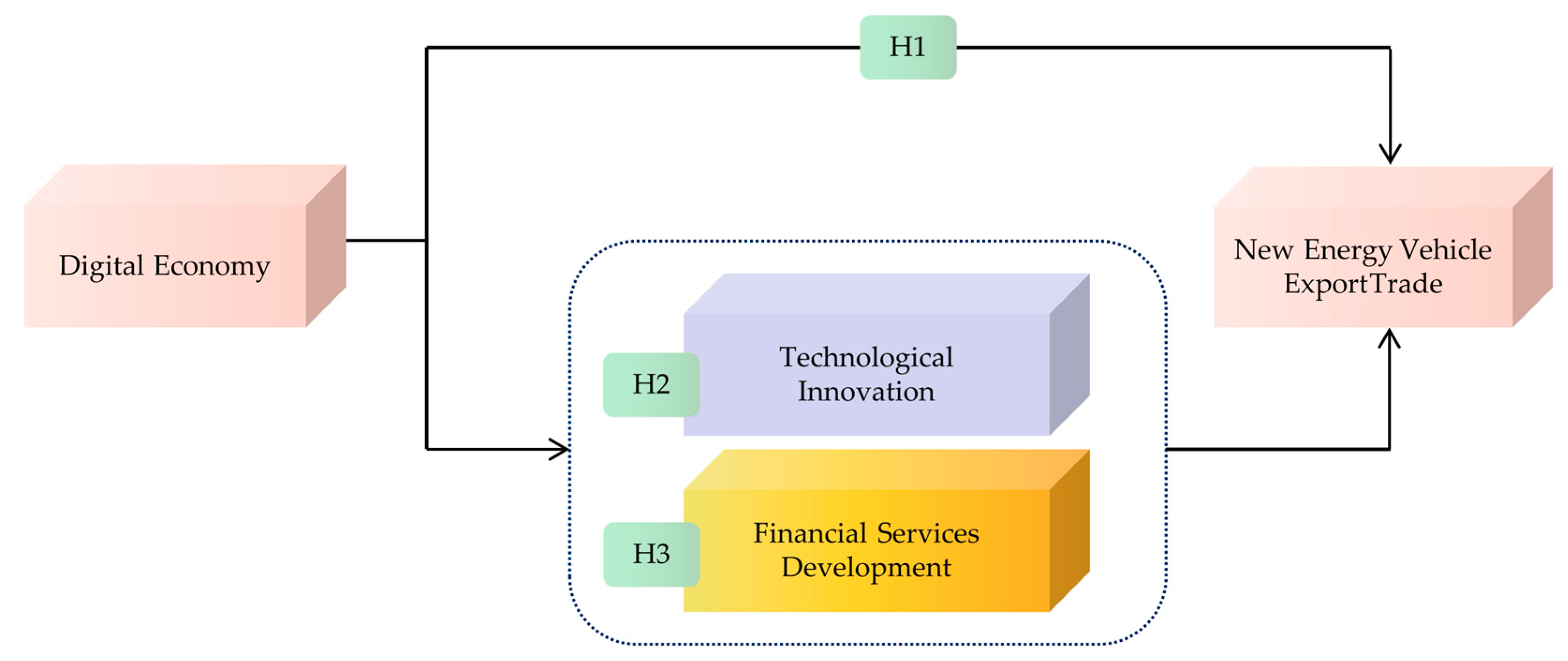

Table 1.
Indicators and Weights of Digital Economy Development Levels of China.
| Primary Indicator | Secondary Indicator | Tertiary Indicator | Weight | Data Source |
|---|---|---|---|---|
| Digital Economy Development Level | Digital Infrastructure | Number of Domain Names | 0.0647 | China Statistical Yearbook China City Statistical Yearbook |
| Number of IPv4 Addresses | 0.0609 | |||
| Number of Internet Broadband Access Ports | 0.0889 | |||
| Mobile Phone Penetration Rate | 0.0965 | |||
| Optical Cable Length per Unit Area | 0.0686 | |||
| Digital Industry Development | Number of Information Technology Enterprises | 0.3131 | Statistical Yearbook | |
| Number of Enterprises with Websites per 100 Enterprises | 0.1027 | |||
| Proportion of Enterprises Engaged in E-commerce Transactions | 0.0614 | |||
| E-commerce Sales Volume | 0.0879 | |||
| Software Business Revenue | 0.0450 | |||
| Digital Inclusive Finance Index | Coverage Breadth Index | 0.0934 | Measuring the Development of Digital Inclusive Finance in China: Index Compilation and Spatial Characteristics |
|
| Usage Depth Index | 0.0964 | |||
| Digitalization Level Index | 0.1017 |
Table 2.
Variable Symbol and Explanation.
| Variable | Code | Symbol | Definition |
|---|---|---|---|
| Explained Variable | LnED | New Energy Vehicle Export Trade Volume | General Administration of Customs of China |
| Explanatory Variable | Digital | Digital Economy Development Level | Entropy Weight Method Calculation |
| Control Variables |
gdp | Economic Development Level | China Statistical Yearbook |
| open | Trade Openness Degree | Statistical Yearbooks of Provinces and Autonomous Regions | |
| urb | Urbanization Level | Statistical Yearbooks of Provinces and Autonomous Regions | |
| industry | Industrialization Level | National Bureau of Statistics of China | |
| fdi | Foreign Direct Investment | Statistical Yearbooks of Provinces and Autonomous Regions | |
| Mediating Variables | lnip | Technological Innovation | Statistical Yearbooks of Provinces and Autonomous Regions |
| fin | Financial Services Development Level | China Financial Yearbook |
Table 3.
Descriptive Statistics.
| Variable | Obs. | Mean | Median | SD. | Min | Max |
|---|---|---|---|---|---|---|
| lnED digtial |
203 203 |
16.23 0.188 |
16.71 0.140 |
3.516 0.130 |
7.467 0.0580 |
0.747 0.747 |
| industry | 203 | 0.304 | 0.308 | 0.0730 | 0.101 | 0.498 |
| open | 203 | 0.254 | 0.147 | 0.230 | 0.0270 | 0.977 |
| gdp | 203 | 13317 | 10016 | 8980 | 5771 | 49352 |
| urb | 203 | 0.634 | 0.622 | 0.112 | 0.334 | 1.166 |
| fdi | 203 | 0.0170 | 0.0140 | 0.0180 | 0 | 0.101 |
| lnip | 203 | 10.11 | 10.09 | 1.195 | 7.394 | 12.40 |
| fin | 203 | 3.608 | 3.387 | 1.177 | 1.279 | 8.164 |
Table 4.
Correlation Test Results.
| lnED | digtial | industry | open | gdp | fdi | urb |
|---|---|---|---|---|---|---|
| lnED | 1 | |||||
| digtial | 0.538*** | 1 | ||||
| industry | 0.133* | 0.0910 | 1 | |||
| Open | 0.461*** | 0.704*** | -0.166** | 1 | ||
| gdp | 0.351*** | 0.589*** | -0.280*** | 0.883*** | 1 | |
| fdi | 0.258*** | 0.606*** | -0.0290 | 0.542*** | 0.374*** | 1 |
| urb | 0.389*** | 0.442*** | -0.0520 | 0.717*** | 0.645*** | 0.275*** |
Note: ***, **, and * represent significance at the 1%, 5%, and 10% levels, respectively.
Table 5.
Results of Multicollinearity Test.
| Variable | VIF | 1/VIF |
|---|---|---|
| open | 8.180 | 0.122 |
| gdp | 5.330 | 0.188 |
| digtial | 2.570 | 0.389 |
| urb | 2.190 | 0.456 |
| fdi | 1.820 | 0.550 |
| industry | 1.260 | 0.794 |
| Mean | VIF | 3.560 |
Table 6.
Baseline Regression Results.
| (1) | (2) | (3) | (4) | (5) | (6) | |
|---|---|---|---|---|---|---|
| lnED | lnED | lnED | lnED | lnED | lnED | |
| digtial | 28.541*** | 32.332*** | 32.890*** | 28.089*** | 27.961*** | 24.914*** |
| (6.527) | (7.331) | (7.833) | (6.997) | (6.986) | (5.704) | |
| industry | 22.112*** | 25.571*** | 28.652*** | 26.954*** | 25.394*** | |
| (3.271) | (3.945) | (4.727) | (4.379) | (4.103) | ||
| Open | 22.595*** | 15.666*** | 14.365*** | 12.082** | ||
| (4.352) | (3.126) | (2.831) | (2.313) | |||
| gdp | 0.001*** | 0.001*** | 0.001*** | |||
| (5.231) | (5.174) | (4.413) | ||||
| fdi | -22.605 | -19.200 | ||||
| (-1.451) | (-1.229) | |||||
| urb | 7.458* | |||||
| (1.695) | ||||||
| _cons | 10.848*** | 3.404 | -3.494 | -12.506*** | -11.113*** | -13.134*** |
| (12.922) | (1.408) | (-1.251) | (-4.009) | (-3.415) | (-3.808) | |
| N | 203 | 203 | 203 | 203 | 203 | 203 |
| R2 | 0.198 | 0.245 | 0.320 | 0.414 | 0.421 | 0.431 |
| F | 42.597 | 27.843 | 26.811 | 30.049 | 24.617 | 21.221 |
Note: ***, **, and * indicate significance at the 1%, 5%, and 10% confidence levels, respectively. Values in parentheses are t-statistics based on robust standard errors.
Table 7.
Mediation Effect Test of Technological Innovation.
| (1) | (2) | (3) | |
| lnED | lnip | lnED | |
| digtial | 12.399*** | 5.533*** | 2.633* |
| (4.948) | (9.570) | (0.947) | |
| industry | 4.309 | 2.957*** | -0.910 |
| (1.372) | (4.082) | (-0.304) | |
| Open | 4.862* | 2.709*** | 0.081 |
| (1.930) | (4.660) | (0.033) | |
| gdp | -0.000 | -0.000 | -0.000 |
| (-1.561) | (-0.990) | (-1.261) | |
| fdi | -28.736* | -4.264 | -21.210 |
| (-1.921) | (-1.236) | (-1.543) | |
| urb | 4.339 | -2.307*** | 8.410*** |
| (1.617) | (-3.726) | (3.308) | |
| lnip | 1.765*** | ||
| (6.226) | |||
| _cons | 10.163*** | 9.168*** | -6.019** |
| (5.841) | (22.839) | (-1.974) | |
| N | 203 | 203 | 203 |
| R2 | 0.347 | 0.699 | 0.456 |
| F | 17.384 | 76.019 | 23.309 |
Note: ***, **, and * indicate significance at the 1%, 5%, and 10% confidence levels, respectively. Values in parentheses are t-statistics based on robust standard errors.
Table 8.
Mediation Effect Test of Financial Services.
| (1) | (2) | (3) | |
| lnED | fin | lnED | |
| digtial | 24.914*** | 5.290*** | 14.512*** |
| (5.704) | (7.856) | (2.973) | |
| industry | 25.394*** | 2.958*** | 19.578*** |
| (4.103) | (3.100) | (3.219) | |
| Open | 12.082** | 0.746 | 10.615** |
| (2.313) | (0.926) | (2.121) | |
| gdp | 0.001*** | -0.000*** | 0.001*** |
| (4.413) | (-5.421) | (5.846) | |
| fdi | -19.200 | -6.071** | -7.262 |
| (-1.229) | (-2.521) | (-0.477) | |
| urb2 | 7.458* | 2.283*** | 2.969 |
| (1.695) | (3.366) | (0.684) | |
| fin | 1.966*** | ||
| (4.111) | |||
| _cons | -13.134*** | 1.970*** | -17.007*** |
| (-3.808) | (3.705) | (-4.961) | |
| N | 203 | 203 | 203 |
| R2 | 0.431 | 0.446 | 0.483 |
| F | 21.221 | 22.525 | 22.325 |
Note: ***, **, and * indicate significance at the 1%, 5%, and 10% confidence levels, respectively. Values in parentheses are t-statistics based on robust standard errors.
Table 9.
Robustness Test by Changing the Calculation Method.
| (1) | (2) | |
| lnED | lnED | |
| dig | 28.797*** | 27.743*** |
| (17.467) | (12.819) | |
| industry | 7.901* | |
| (1.693) | ||
| Open | 8.170** | |
| (2.049) | ||
| gdp | 0.000 | |
| (1.593) | ||
| fdi | 6.229 | |
| (0.508) | ||
| urb2 | -3.134 | |
| (-0.891) | ||
| _cons | 6.880*** | 1.817 |
| (12.607) | (0.634) | |
| N | 203 | 203 |
| R2 | 0.638 | 0.657 |
| F | 305.105 | 53.567 |
Note: Standard deviations are shown in parentheses. ***, **, and * represent significance at the 1%, 5%, and 10% levels, respectively.
Table 10.
Robustness Test by Bootstrap.
| Variables | Coefficient | Z | P | 95%Confidence Interval |
|---|---|---|---|---|
| Mediation Effect | 9.766106 | 4.39 | 0.000 | (6.094558,14.88182) (P) |
| (6.101089 14.99698) (BC) | ||||
| Direct Effect |
2.633364 | 0.99 | 0.321 | (-2.807706 7.542252) (P) |
| (-2.825381 7.40504) (BC) | ||||
| Replications | 1000 | |||
Note: (P) represents uncorrected bias, and (BC) represents bias correction.
Table 11.
Two-way Fixed Effects Regression Results.
| Variables | (1) |
| lnED | |
| digtial | 24.9143*** |
| (4.367) | |
| industry | 25.3942*** |
| (6.189) | |
| Open | 12.0818** |
| (5.223) | |
| gdp | 0.0007*** |
| (0.000) | |
| fdi | -19.2000 |
| (15.620) | |
| urb | 7.4581* |
| (4.399) | |
| _cons | -13.1337*** |
| (3.449) | |
| year | Yes |
| city | Yes |
| N | 203.0000 |
| r2 | 0.4311 |
Note: Standard deviations are shown in parentheses. ***, **, and * indicate significance at the 1%, 5%, and 10% levels, respectively.
Table 12.
Regional Heterogeneity Test.
| Eastern Region | Central Region | Western Region | |
| digtial | 20.971*** | -23.466* | -1.754 |
| (4.384) | (13.136) | (14.362) | |
| industry | 43.952*** | -4.918 | 18.800 |
| (13.375) | (6.880) | (12.214) | |
| Open | 6.655 | -25.648** | 38.715** |
| (5.250) | (12.640) | (14.860) | |
| gdp | 0.001*** | 0.000 | 0.000 |
| (0.000) | (0.000) | (0.001) | |
| fdi | 5.764 | 6.910 | 103.803* |
| (20.076) | (19.702) | (56.517) | |
| urb | 0.788 | 132.142*** | 78.559*** |
| (4.142) | (19.900) | (18.724) | |
| _cons | -19.812** | -57.991*** | -43.868*** |
| (7.456) | (8.687) | (7.072) | |
| N | 77.000 | 56.000 | 70.000 |
| r2 | 0.471 | 0.817 | 0.652 |
| r2_a | 0.330 | 0.760 | 0.556 |
Note: Standard deviations are shown in parentheses. ***, **, and * indicate significance at the 1%, 5%, and 10% levels, respectively.
Disclaimer/Publisher’s Note: The statements, opinions and data contained in all publications are solely those of the individual author(s) and contributor(s) and not of MDPI and/or the editor(s). MDPI and/or the editor(s) disclaim responsibility for any injury to people or property resulting from any ideas, methods, instructions or products referred to in the content. |
© 2025 by the authors. Licensee MDPI, Basel, Switzerland. This article is an open access article distributed under the terms and conditions of the Creative Commons Attribution (CC BY) license (http://creativecommons.org/licenses/by/4.0/).
Copyright: This open access article is published under a Creative Commons CC BY 4.0 license, which permit the free download, distribution, and reuse, provided that the author and preprint are cited in any reuse.


