
Submitted:
12 May 2025
Posted:
12 May 2025
You are already at the latest version
Abstract
The aim of this article is to analyse the context of climate change and the need for public policies from a global perspective in the aspects of degradation and impact, as well as the identification of more effective methodologies for the formulation of public policies. The method used in this article was a literature review, and information was obtained from 61 scientific articles indexed mostly in the Scopus and Dialnet databases. The results show large-scale deforestation in industrialized countries, plus 35% in the Alps, which has led to a reduction of more than 80% in the length of most Alpine glaciers. In conclusion, climate change is generating devastating effects worldwide such as rising temperatures, shrinking glaciers, water loss, deforestation and black carbon emissions, which are affecting local economies and natural resources, and water scarcity is looming in the future, which will generate a war for water resources between dominant states due to low agricultural production and food shortages.
Keywords:
climate change
; environmental policies
; public policies
; renewable energy
; environmental regulation
; sustainability
Introduction
In the current context, the world is undergoing sudden climatic changes in which climate change and the COVID 19 pandemic are the global crises that most affect human beings (Khojasteh et al., 2022). Studies suggest that climate change is linked to the COVID 19 virus (Drews et al., 2022), one of Europe's greatest concerns and one that has put the population on edge, forcing them to take measures to reduce environmental impact by creating public policies for the preservation of natural resources and the well-being and health of human beings (Cifuentes, 2022).
In Germany, awareness of climate change has prompted politicians and the German population to take action to protect the environment (Venghaus et al., 2022). The problem has been affecting urban populations and farming communities in China, who have found it necessary to generate adaptation techniques to cope with climate change through the formulation of public policies to make it sustainable and ensure the integrity of rural people (Mir et al., 2022).
Also, Pakistan's atmospheric space is the most polluted in the world, which directly affects its economy and health, due to its weak national strategy to mitigate climate change (Sohail et al., 2022). In this context, international standards have been developed with the aim of reducing carbon emissions in the atmosphere, generated by the energy, industrial and agroforestry sectors, as a measure to mitigate climate change (Honegger et al., 2022). The war between Russia and Ukraine has been causing an energy crisis, increasing the cost of living due to rising fuel prices. This situation also has a negative impact on the environment, as it contributes to global warming and hinders the goal of keeping the global temperature increase below 1.5°C (Berglund et al., 2022).
Another important aspect concerns public policies in the United States that focus on electricity generation and seek to reduce greenhouse gas emissions in order to achieve environmental justice (Declet & Rosenberg, 2022), All of this shows that Americans are attentive to the consequences, but their concern is nevertheless low compared to other state policies (Cole et al., 2022). On the other hand, the European Union has identified sustainable development as a key strategy for the development of countries worldwide (Medeiros et al., 2022); despite the alternatives of geoengineering technologies as a strategy to tackle global warming (Hart et al., 2022) there is still no progress on concrete policy responses at the global level to address the problem. (Wamsler & Bristow, 2022).
In addition to the implementation of the Paris agreements, all European states are reporting on the implementation of environmental policies (Borghesi et al., 2022), with public spending having the greatest significance for sustainable policies (Sovacool et al., 2022). Science is also constantly searching for ways to prevent global temperatures from exceeding 1.5°C and 2°C (Van Beek et al., 2022). Hence the importance of studying climate change and public policies to adapt to it, which continues to be a challenge (Carneiro et al., 2022).
It is also worth mentioning that in Africa there was a process of glacier increase due to the decrease of temperature in the sea Waters (Mekonnen et al., 2022) que está modificando el clima y está afectando a los glaciares debido al impulso de forma abrupt man-made abrupt change to nature a (Braumann et al., 2022), and as a product of the embaste there has been a very significant glacial retreat in the central Andes of Chile during the last 60 years (Cereceda et al., 2022). Even at the beginning of the marine glaciers there was a marine situation called Neoproterozoic snowball, where the oceans had sea ice layer of 1000 m thick, it had to happen a global warming event produced by CO2, but there is no exact data that can explain the time it took the process of marine deglaciation nor what physical form it had in the ocean (Zhao et al., 2022). In this sense, public policies play a very important role in the preservation of the ecological footprint of nations, which, depending on their management, can accelerate or decrease the ozone footprint through the formulation of environmental policies (Ahmed et al., 2022).
This article is justified by an understanding of climate change, which has been causing serious damage to the planet, directly affecting economies, public health and ecosystems. It is therefore crucial to understand public policies for effective and sustainable mitigation of the effects. The main objective was to analyse the context of climate change and the need for public policies from a global perspective, focusing on deglaciation, its impact and the identification of effective methodologies for the formulation of public policies. The importance of this study lies in the search for prevention policies to help mitigate climate change. Sub-themes such as the importance of climate change adaptation policies, the process of marine deglaciation and its impact on marine diversity and glaciers, glacier melting in Latin America and Peru, and the impact of climate change on industry were explored.
Methodology
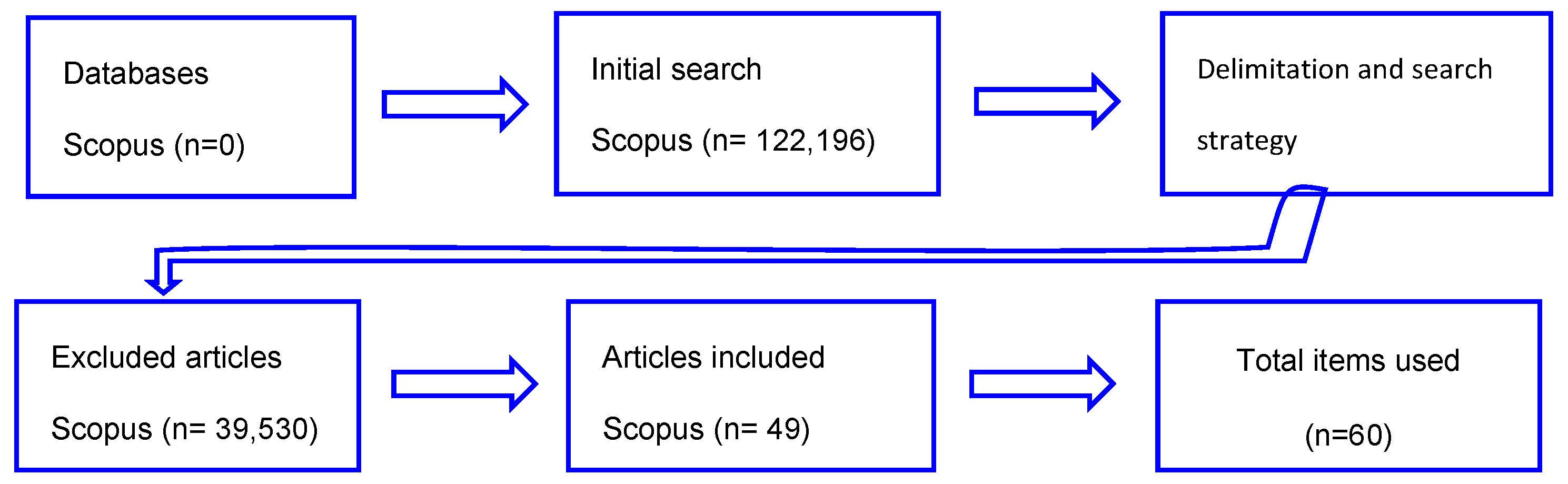
The review article was developed under the qualitative approach, under the methodology of documentary analysis, mostly of scientific articles indexed in the Scopus and Dialnet databases, the Boolean operators AND and OR were applied in Scopus, considering open access articles, product of this, articles were identified according to the sub-themes, which were selected one by one, because of this is shown in Figure 1 which explains the flow of the articles.
Results
The results show that the use of the methodologies favours the fight against climate change, which is why it is important to use the methodology of documentary analysis to understand and assess the local impact, and to recommend the guarantee of work, the construction of green infrastructures, the promotion of clean transport in order to achieve climate stabilization (Khojasteh et al., 2022), on the other hand, using online surveys as a methodology, they found the existence of a relationship between the variables COVID 19 and climate change in Spain (Drews et al., 2022). Through the methodology of the analysis, the experts proposed public policies through the approach divided into four components such as the milestones, the green pact in the EU, the climate law and the circular economy aimed at climate care in order to combat climate change (Cifuentes, 2022).
In order to show the importance of the climate change problem in Germany, they used the quantitative and qualitative methodology of scientific and governmental documentary analysis and statistical reports to identify key indicators (Venghaus et al., 2022). Using the ARDL methodology, AARDL (Autoregressive Distributed Lag Lag Model) determined the influence of democracy on the ecological footprint (EF) of the environment, adding the density, purified energy and economic development of Pakistan (Ahmed et al., 2022). On the other hand, through the GAINS simulation methodology, they managed the prevention of air pollution through the Ener Neo model to combat climate change (Mir et al., 2022).
Using the quantitative method, the literature and a semi-structured questionnaire collected information in Kasur, Punjab, and Pakistan, for the generation of public policies in response to climate change (Sohail et al., 2022). Using a qualitative approach, they researched and compiled information on the principles of climate governance that are most relevant to carbon dioxide decontamination (Honegger et al., 2022). They showed that the paradigm of public policy on climate change is underpinned by social theories (Berglund et al., 2022). Also, by conceptualising environmental justice, it allowed the economic situation to be calculated, using the k-means analysis algorithm as a technique for looking at the effects of coal-fired power on the environment (Declet & Rosenberg, 2022).
Using regression analysis, they evaluated the climate change policies issued by Congress (Cole et al., 2022). The EIT methodology (TARGET_TIA) assisted in the research to assess impacts in five dimensions in the five regions of mainland Portugal. In this context, the Operational Programme for Sustainability and Efficient Use of Resources (POSEUR) played a key role in the path towards carbon neutrality by supporting policy actions such as the promotion of green public transport through the replacement of old fleets with vehicles powered by hydrogen generated from renewable energy sources (Medeiros et al., 2022).
Using the methodology of thematic analysis, the results of their research enabled decision-makers to recognise the relationship between mental health and climate change, and how this is reflected in current policies (Wamsler & Bristow, 2022). While study 1 investigated the role of political ideology in mediation, study 2 analysed the effects of climate change and climate solutions, highlighting the importance of considering climate risk and communicating carbon reduction solutions (Hart et al., 2022). The prioritisation of green policies by governments may result in a redistribution of investment from carbon-intensive companies to more sustainable sectors, which may have long-term negative consequences for the carbon-intensive sector in terms of competitiveness and capital attraction (Borghesi et al., 2022).
According to studies, research on climate change adaptation is the most funded, followed by mitigation through energy systems, transport, agro-climatic engineering and industrial decarbonisation, although funding has been unevenly allocated to specific technologies such as resilience, energy efficiency and electric vehicles (Sovacool et al., 2022). In the IPCC SR1.5 report, a number of mutually reinforcing interactions between scientific modelling and policy making are observed, which have led to the goal of limiting global warming to 1.5°C gaining prominence on the global climate agenda (Van et al., 2022).
The results show that large-scale deforestation, human activities in general, industry, governments of industrialised countries and urbanisation are the main factors contributing to climate change (Cheval et al., 2022). Another study used digital methods to investigate the interaction between climate science and agriculture, its results indicate that CCAFS has had a positive impact by increasing public awareness of Climate-Smart Agriculture (CSA), engaging with key stakeholders in a network of over 60,000 members, influencing the debate on climate change adaptation (Carneiro et al., 2022). Another study used simulations of the Weddell Sea that incorporated cavities in the ice shelves and considered the physical and biological processes associated with carbon accumulation in the deep ocean. These simulations were conducted under the high-emissions climate change scenario SSP5-8.5 and revealed changes in the production of dense water, which could affect the distribution of carbon between the atmosphere and the ocean, accelerating climate change (Meredith, 2022). On the other hand, analysis of mountain glaciers reveals that, after the Last Glacial Maximum (LGM), there were periods when deglaciation stopped or glaciers stabilised, possibly during the transition from the Old Dryas to the Bølling (periods), (Braumann et al., 2022).
Based on experimental methodology, it was revealed that cooling of tropical sea surface waters led to the formation of glaciers in East African mountains such as Mount Kenya, Kilimanjaro, Ruwenzori and the Ethiopian highlands. In addition, the southward shift of the intertropical convergence zone (ITCZ) during the ice shedding events of the Heinrich 1 (H1) event is thought to have been a major cause of the drought in north and southeast Africa around 16-17 cal kyr BP (Mekonnen et al., 2022). Another mapping study was conducted using semi-automated and manual methods, using LANDSAT imagery downloaded from the USGS, EROS, with a spatial resolution of 30m. Where images were selected from austral summer periods to minimise the presence of seasonal snow, the impact of atmospheric pollutants emitted by local mining activities on glacial retreat of the Western High-range Glacier (OAG) compared to the Bello Glacier (BG) was examined. A relationship was found between pollutants and glacial retreat rates, indicating that retreat is not related to climatic or glaciological factors (Cereceda et al., 2022).
Through the simulation method, it is highlighted that the estimated time for the deglaciation of the snowball Earth varies from 350 to 1500 years, depending on the surface albedo of the ice. The retreat of the marine glacier edge from 5° latitude to 10° latitude can take 100 to 1000 years, while the retreat from 10° to 15° latitude takes 90 to 250 years. The deglaciation time is shortened with higher ice albedo (Zhao et al., 2022). Therefore, it is important to highlight and define public policies on climate change (Porto de Oliveira, 2022; Urbina, 2020). In this regard, greenhouse gas emissions caused by human activities have increased significantly, which have been identified as the main cause of global warming observed since the mid-20th century (IPCC, 2014).
Peru stands out for its ecological diversity but also faces limitations in relation to historical meteorological data, due to the lack of reliable information, the mathematical models used to predict the country's climate are unstable and unreliable (Sánchez, 2016). However, there is a model chain methodology that integrates different numerical models to analyse spatial and temporal patterns of climate-related hazard metrics, making it possible to assess potential environmental and socio-economic impacts in the coastal zone (Torresan et al., 2019). Another study shows that collaboration between science and the humanities, together with the involvement of researchers and local actors, is essential to mitigate climate risks (Krauß, 2020). In this regard, the international community has been seeking responses to economic, social and environmental imbalances through the 2030 Agenda for Sustainable Development and the 17 Sustainable Development Goals (SDGs), these commitments are based on equality and sustainability as guiding principles for new global, regional and national strategies and policies (Velia et al., 2016).
To understand the capacities that influence state performance, it is important to have a conceptual framework that describes the public policy cycle in order to establish performance indicators for each stage of the process (Pablo & Pablo, 2015). Within this approach, the characteristics of the actors involved are described, considering their capacity of veto and support, which allows the generation of indicators of viability and legitimacy of a policy. These indicators reflect the causes or possibilities of success of such policies (Cortés & Marín, 2014)
The most relevant results of this study are: 1) The participation of the regional government in the definition of public policies is fundamental to guarantee the representation of regional interests. 2) Coordination between regional government and national policy is crucial to avoid overlaps and to achieve efficient management at regional and national level (Santibáñez & Barra, 2008). As an experience, it was identified that the Municipal Sanitation Council of Belo Horizonte has had difficulties in involving the population due to a lack of understanding of the concept of sanitation and its technical approach, which hindered participation and understanding of climate change (Cardoso & Rezende, 2014).
It was taken into account that, due to human activity, the global temperature has risen by more than 1 ◦C in 120 years and continues to increase at a rate of 0.2 ◦C per decade. And by not taking mitigation measures, in less than 50 years an increase of 2 ◦C will be reached, endangering life on the planet and all that lives on it (Miralles & Miralles, 2022), one of the notable consequences is the increased danger of fires in forest areas (Shi & Touge, 2023), This has led to the implementation of actions practically separated from those of climate change mitigation and biodiversity conservation, without taking into account possible conflicts between the outcomes, leading to missed opportunities for synergistic measures (Rusch et al., 2022).
1. The Effects of the Marine Deglaciation Process
Based on the results of the NGR adjustment, they determined that the upper sediments of Sounding U1538A were deposited in the last 1.85 million years, with an average sedimentation rate of 23 cm per thousand years. In addition, a correlation was found between opal-rich sediments and warm stages, suggesting that the Early Pleistocene interglacials experienced a WAIS retreat (Bailey et al., 2022). A comparison is made between the deglaciation simulation and geological reconstructions of ice sheet change in the KNS region, which revealed that there was a rapid retreat of ice during the early Holocene (Cuzzone et al., 2022). The decrease in sediment accumulation may be linked to the increase in sea ice extent and the decrease in melting of the Northeast Greenland Ice Sheet (NEGIS) glaciers due to water cooling (Davies et al., 2022).
In that sense, the Holocene, which began 10,000 years ago, is important (RAE, 2021), Also, studies in Brazil suggest that melting ice sheets in the northern hemisphere and increased atmospheric CO2 were the main drivers of post-GWP warming (Santos et al., 2022). The areas of greatest marine biodiversity are found in tropical and mid-latitudes, where sea surface temperatures have remained stable during centuries of extreme global-scale ocean warming. However, these areas are expected to experience significant changes in rapid warming rates between the pre-industrial and post-industrial periods, exposing them disproportionately to rates of temperature increase that are not analogous to those of the pre-industrial and post-industrial periods (Brown et al., 2022).
2. The Effects of Melting Glaciers in the World Latin America and Peru
Research in New Zealand's glacial cirque on the Moraines revealed a reduction in ice volume due to temperatures that were approximately 5.8 degrees Celsius colder than today, warming that coincided with changes in westerly southerly winds and an increase in atmospheric carbon dioxide (Moore et al., 2022). Also, moraine belt-3 in the Ahuriri River valley was formed approximately 19.8 ± 0.3 thousand years ago, indicating the location of the glacier margin at that time. In addition, ancient shorelines were found in moraine belt-3, suggesting the existence of an ancient lake and its subsequent retreat (Tielidze et al., 2022). Another experiment revealed that the higher orbital eccentricity in period T2 compared to T1 had a significant impact on the mass balance of the Northern Hemisphere ice sheets during deglaciation, as well as on the meltwater flux due to ice sheet volume loss (Obase et al., 2021).
According to the results, global warming has caused a noticeable increase in temperatures and a slight change in precipitation patterns in the Shiyang River basin (Jun et al., 2022). The study notes that by 1875 AD, a significant increase in residual black carbon (RBC) ice core concentrations was observed, coinciding with the more than 80% reduction in the length of most alpine glaciers during the 19th century. This suggests that soot may not have been the determining factor in the end of the Little Ice Age (Sigl et al., 2018). Water scarcity is the main manifestation of the influence of climate change, affecting both water availability and demand. A marked decrease in the amount of accessible water is expected in most regions (Ray Biswas et al., 2022). Water from the Huaytapallana glaciers is vital for the Mantaro valley, which impacts the Peruvian economy by sustaining local agriculture and the water supply for almost half a million people in Concepción and Huancayo. It also contributes to the production of approximately 35% of the country's hydroelectric power (Torres et al., 2018).
3. Impact of Climate Change on Industry
The decrease of glaciers directly affects tourism due to the low number of visitors, thus affecting the local economy due to climate change (Salim et al., 2021). In addition, rising global temperatures are causing a transformation in weather patterns and an increase in the occurrence of fires, with serious consequences for economic development, social structure and the tourism industry (Sibitane et al., 2022). Also, the deforestation of 30% of the Alps has caused a catastrophe in its contours as large snow avalanches, which are seriously affecting the economy of the place becoming unsustainable (Brugger et al., 2021). The emission of black carbon (BC) in the USA, India, China and other areas of Asia represents a significant threat to Himalayan glaciers and the Tibetan Highlands (HTP), which is why it is essential to reduce these emissions in order to preserve these valuable water resources and counteract the impact of climate change in the area (Yi et al., 2019). Against this background, the use of empirical evidence in policy making has been crucial in advancing environmental protection, as evidenced by the effective actions taken to address the ozone hole problem (Chen, 2021).
Global freshwater depletion will affect food production because it will lead to food shortages, which is one of the UN's priorities (Feizizadeh et al., 2022). Companies that manufacture means of transport are also involved in carbon emissions (Miklautsch & Woschank, 2022). The unstoppable progress of climate change is cited as the main factor behind the retreat of glaciers, which will result in diminishing water resources and eventual global freshwater shortages (Cueva et al., 2023).
Discussion of the Results
In the discussion of the results, similarities were found in terms of the public policy approach: Khojasteh et al. (2022), Cifuentes (2022), Sohail et al. (2022), y Wamsler & Bristow (2022) emphasize the importance of developing informed public policies to combat climate change. Another similarity is in the use of documentary analysis methodologies. While Venghaus et al. (2022), Khojasteh et al. (2022), y Drews et al. (2022) use documentary analysis to assess the impact of climate change and the effectiveness of policies. A variety of methodologies were identified, on the one hand Ahmed et al. (2022) apply ARDL and AARDL to study democracy and the ecological footprint, whereas Meredith (2022) uses ocean simulations to understand climate change. Other authors such as: Cheval et al. (2022) focus on specific issues such as deforestation and urbanisation, and Braumann et al. (2022) investigate the history of deglaciation. Common understanding of the impact of climate change on policy: All studies recognise that climate change is a critical factor that needs to be addressed through evidence-based policy. The importance of research is key to understanding climate change and its effects, as demonstrated by the studies of Carneiro et al. (2022) y Sovacool et al. (2022). There is also a consensus on the need for coordinated global action, as suggested by the emphasis on EU climate legislation and climate law (Cifuentes, 2022).
Hart et al. (2022) examine the impact of climate change information on threat perception and communication of solutions. On the other hand, Borghesi et al. (2022) discuss the consequences of green policies on the investment and competitiveness of carbon-intensive firms. Along these lines, Van Beek et al. (2022) analyse the interaction between scientific modelling and policy making in the context of the IPCC SR1.5 report. In addition, Honegger et al. (2022) investigate the principles of climate governance and their importance in the generation of public policies. In this regard Berglund et al. (2022) argue that public policy on climate change is based on social theories. Another study such as the Declet & Rosenberg (2022) use the k-means analysis algorithm to study the effects of coal-fired power. Also, Cole et al. (2022) conduct a regression analysis to evaluate the climate change policies issued by Congress and Medeiros et al. (2022) assess the impacts of policies in five dimensions in mainland Portugal's regions.
In terms of methodologies and findings, Mekonnen et al. (2022) suggest that changes in sea surface temperature and movements of the ITCZ influenced the formation of glaciers in East Africa and droughts in North and Southeast Africa. Also, Cereceda et al. (2022) use LANDSAT imagery to analyse the impact of pollutants from mining activities on glacial retreat, finding a direct relationship between pollutants and retreat. Along these lines Zhao et al. (2022) simulations show that the Earth's deglaciation time depends on the albedo of the ice, with shorter times associated with higher albedo. On the other hand, they identified Porto de Oliveira (2022) y Urbina (2020) which emphasise the importance of defining clear public policies to address climate change. It takes into account IPCC (2014) that this scientific meeting identifies greenhouse gas emissions as the main cause of global warming since the mid-20th century.
On the other hand Sánchez (2016) highlighted Peru's limitations in meteorological data and the instability of climate models. In response, the following was identified Torresan et al. (2019) who propose a model chain methodology for assessing environmental and socio-economic impacts in coastal zones, while Krauß (2020) advocates for the inclusion of the humanities in climate risk management and the development of place-based climate services de Velia et al. (2016) discussing the 2030 Agenda and the SDGs as frameworks for addressing economic, social and environmental imbalances. In terms of governance and public policy, the following were identified Pablo & Pablo (2015) y Cortés & Marín (2014) describe a conceptual framework for the policy cycle, establishing indicators of performance and feasibility. Some authors such as Santibáñez & Barra (2008) y Cardoso & Rezende (2014) examine the involvement of regional and local government in defining and understanding public policies. In terms of overall impact and future actions, the following are considered Miralles & Miralles (2022) warn about the rise in global temperature and its consequences, such as the increased danger of forest fires. In this regard Shi & Touge (2023) y Rusch et al. (2022) propose transformative governance principles to address constraints to climate change mitigation and biodiversity conservation.
In terms of similarities, it was found that both Bailey et al. (2022) as Davies et al. (2022) relate changes in sedimentation to climatic variations, suggesting that warmer or colder conditions have a direct impact on sediment deposition and glacier dynamics. Coincidences were also found between the studies of Bailey et al. (2022) y Cuzzone et al. (2022) agree that interglacial periods, characterised by warmer temperatures, have influenced the retreat of the ice sheets. Another type of concurrence was in the retreat of the ice sheets according to the findings of Bailey et al. (2022) and Cuzzone et al. (2022) show that there has been a significant retreat of ice sheets during warm periods, which is reflected in the correlation between opal-rich sediments and warm stages, as well as in the rapid retreat of ice during the early Holocene. Due to multiple factors in this respect; Santos et al. (2022) y Brown et al. (2022) highlight global warming as a key factor affecting both ice sheets and marine biodiversity, with significant implications for the future.
On the other hand, differences were found in terms of temporal and spatial scale Bailey et al. (2022) y Cuzzone et al. (2022) focus on specific geological periods and regions, Brown et al. (2022) address ocean warming on a global scale and over centuries. While Santos et al. (2022) identify melting ice sheets and rising CO2 as drivers of post-GWP warming, whereas Brown et al. (2022) focus on how warming will affect areas of high marine biodiversity in the future. The studies of Moore et al. (2022), Tielidze et al. (2022b) and Obase et al. (2021) reveal that changes in climate, either through variations in temperature or atmospheric composition, directly impact glaciers, using geological formations such as moraines and shorelines to infer historical changes in glaciers. As for the coincidences, Moore et al. (2022) and Obase et al. (2021) agree that periods of warming have been associated with deglaciation and significant changes in the environment, whereas Ray Biswas et al. (2022) and Torres et al. (2018) highlight the relevance of glaciers as a source of freshwater and their impact on water availability due to climate change.
On the other hand, the differences arise in the time scale addressed by the studies, since Moore et al. (2022) and Tielidze et al. (2022) focus on specific periods in the geological past, whereas Jun et al. (2022) and Ray Biswas et al. (2022) examine the contemporary and future effects of climate change. In addition, Sigl et al. (2018) The results show that soot was not the determining factor in the end of the Little Ice Age, challenging the common notion that anthropogenic pollution has been a key driver of climate change. Other results show that the decline of glaciers, essential for tourism, negatively impacts the local economy by reducing the influx of visitors, highlighting the urgency of action to mitigate climate change and its effects (Salim et al., 2021). Rising temperatures are causing climate change and increasing the frequency of fires, severely affecting economic development and the tourism industry (Sibitane et al., 2022). Deforestation in the Alps has led to natural disasters such as avalanches, compromising the economic sustainability of the region (Brugger et al., 2021).
In addition, the use of empirical data has been essential for formulating effective environmental protection policies, such as those aimed at addressing the ozone hole (Chen, 2021). Black carbon emissions in countries such as the US, India and China pose a threat to Himalayan glaciers and the Tibetan Highlands, highlighting the need to reduce these emissions to preserve water resources (Yi et al., 2019). Climate change is causing lakes, such as Lake Urnia in Iran, to dry up, anticipating a decline in agricultural production with significant regional and local economic impacts (Feizizadeh et al., 2022). Furthermore, according to the sixth IPCC report, the industry and transport sectors contribute significantly to greenhouse gas pollution (Miklautsch & Woschank, 2022). And it is the main driver of glacier retreat, which could result in diminishing water resources and eventually freshwater scarcity (Cueva et al., 2023).
Conclusion
Climate change is generating devastating effects worldwide such as the reduction of glaciers, water loss, rising temperatures, deforestation and black carbon emissions, which are affecting local economies and the natural resources they possess, therefore, there is a need to generate public policies for environmental protection whose function is to reduce polluting emissions, in response to which the importance of using empirical data from the formulation of internal policies in each State was identified. In addition, the importance of addressing deforestation and promoting sustainable practices in key sectors such as industry and transport.
Finally, due to 35% deforestation, there has been a reduction of more than 80% in the length of most alpine glaciers, and one of the problems looming in the future is water scarcity, which will generate war for water resources between the dominant states, and due to low agricultural production, there will be a global food shortage. In view of this, there is a need for the preservation of water resources and ecosystems in order to mitigate the impacts of climate change on local and global communities.
Future Directions
The studies reflect the complexity of the Earth's climate and geological systems and the interconnectedness of climate, geology and biodiversity. Understanding these processes is crucial for predicting and mitigating the effects of climate change in the future. It is therefore important to understand the historical and current factors influencing climate change, including evidence of ice volume reduction and its impact on water resources. This evidence is crucial for climate change adaptation and mitigation policies, underlining the relevance of glaciers as indicators of climate change and critical resources for human communities and ecosystems. It should be noted that renewable energy generation is also at risk, due to the absence of water in the future.
Finally, climate change must be addressed from an interdisciplinary approach, combining science, policy and economics, incorporating methodologies, ranging from satellite imagery analysis to simulations and conceptual frameworks, that can mitigate the effects of climate change and promote sustainability.
References
- Ahmed, Z., Caglar, A. E., & Murshed, M. (2022). A path towards environmental sustainability: The role of clean energy and democracy in ecological footprint of Pakistan. Journal of Cleaner Production, 358(April), 132007. [CrossRef]
- Bailey, I., Hemming, S., Reilly, B. T., Rollinson, G., Williams, T., Weber, M. E., Raymo, M. E., Peck, V. L., Ronge, T. A., Brachfeld, S., O’Connell, S., Tauxe, L., Warnock, J. P., Armbrecht, L., Cardillo, F. G., Du, Z., Fauth, G., Garcia, M., Glueder, A., … Zheng, X. (2022). Episodes of early pleistocene west Antarctic Ice sheet retreat recorded by Iceberg Alley sediments. Paleoceanography and Paleoclimatology, 37, 1–26. [CrossRef]
- Berglund, O., Dunlop, C., Weible, C., & Koebele, E. (2022). Transformational Change through Public Policy. Policy & Politics, 50. no 3(Xx), 302–331. [CrossRef]
- Borghesi, S., Castellini, M., Comincioli, N., Donadelli, M., Gufler, I., & Vergalli, S. (2022). European green policy announcements and sectoral stock returns. Energy Policy, 166(November 2021), 113004. [CrossRef]
- Braumann, S. M., Schaefer, J. M., Neuhuber, S., & Fiebig, M. (2022). Moraines in the Austrian Alps record repeated phases of glacier stabilization through the Late Glacial and the Early Holocene. Scientific Reports, 12(1), 1–15. [CrossRef]
- Brown, S. C., Mellin, C., García, J., Lorenzen, E. D., & Fordham, D. A. (2022). Faster ocean warming threatens richest areas of marine biodiversity. Technical Asvance, June, 1–10. [CrossRef]
- Brugger, S. O., Schwikowski, M., Gobet, E., Schwörer, C., Rohr, C., Sigl, M., Henne, S., Pfister, C., Jenk, T. M., Henne, P. D., & Tinner, W. (2021). Alpine Glacier Reveals Ecosystem Impacts of Europe’s Prosperity and Peril Over the Last Millennium. Geophysical Research Letters, 48(20), 1–12. [CrossRef]
- Cardoso, M. C., & Rezende, S. (2014). O conselho municipal de saneamento de Belo Horizonte: desafios e possibilidades. Engenharia Sanitaria e Ambiental, 19(4), 479–488. [CrossRef]
- Carneiro, B., Resce, G., Läderach, P., Schapendonk, F., & Pacillo, G. (2022). What is the importance of climate research? An innovative web-based approach to assess the influence and reach of climate research programs. Environmental Science and Policy, 133(March), 115–126. [CrossRef]
- Cereceda, F., Ruggeri, M. F., Vidal, V., Ruiz, L., & Fu, J. S. (2022). Understanding the role of anthropogenic emissions in glaciers retreat in the central Andes of Chile. Environmental Research, 214(P1), 113756. [CrossRef]
- Chen, D. (2021). Impact of climate change on sensitive marine and extreme terrestrial ecosystems: Recent progresses and future challenges: This article belongs to Ambio’s 50th Anniversary Collection. Theme: Climate change impact. Ambio, 50(6), 1141–1144. [CrossRef]
- Cheval, S., Bulai, A., Croitoru, A. E., Dorondel, Ștefan, Micu, D., Mihăilă, D., Sfîcă, L., & Tișcovschi, A. (2022). Climate change perception in Romania. Theoretical and Applied Climatology, 149(1–2), 253–272. [CrossRef]
- Cifuentes, J. (2022). European Union policies and their role in combating climate change over the years. Air Quality, Atmosphere and Health, 15, 1333–1340. [CrossRef]
- Cole, J. C., Ehret, P. J., Sherman, D. K., & Boven, L. Van. (2022). Social norms explain prioritization of climate policy. Climatic Change, 1–21. [CrossRef]
- Cortés, R., & Marín, G. (2014). Análisis de las políticas públicas desde los actores: un modelo de cuantificación aplicado a casos de gobierno digital en Costa Rica y Chile. Anuario Centro de Investigación y Estudios Políticos, 5(2014), 170–193.
- Cueva, N., Morales, M., Gonzales, A., Ludeña, G., & Medina, C. (2023). Políticas públicas sobre el cambio climático. Produccion y Limpia, 18(1), 154–172. [CrossRef]
- Cuzzone, J. K., Young, N. E., Morlighem, M., Briner, J. P., & Schlegel, N.-J. (2022). Simulating the Holocene deglaciation across a marine-terminating portion of southwestern Greenland in response to marine and atmospheric forcings. The Cryosphere, 16(6), 2355–2372. [CrossRef]
- Davies, J., Mathiasen, A. M., Kristiansen, K., Hansen, K. E., Wacker, L., Alstrup, A. K. O., Munk, O. L., Pearce, C., & Seidenkrantz, M. S. (2022). Linkages between ocean circulation and the Northeast Greenland Ice Stream in the Early Holocene. Quaternary Science Reviews, 286, 107530. [CrossRef]
- Declet, J., & Rosenberg, A. A. (2022). Environmental justice and power plant emissions in the Regional Greenhouse Gas Initiative states. Plos one, 17 (7), 1–22. [CrossRef]
- Drews, S., Savin, I., van den Bergh, J. C. J. M., & Villamayor-Tomás, S. (2022). Climate concern and policy acceptance before and after COVID-19. Ecological Economics, 199(June). [CrossRef]
- Feizizadeh, B., Lakes, T., Omarzadeh, D., Sharifi, A., Blaschke, T., & Karimzadeh, S. (2022). Scenario-based analysis of the impacts of lake drying on food production in the Lake Urmia Basin of Northern Iran. Scientific Reports, 12(1), 1–16. [CrossRef]
- Hart, S., Campbell, V., Wolske, K., & Raimi, K. (2022). Moral hazard or not? The effects of learning about carbon dioxide removal on perceptions of climate mitigation in the United States. Energy Research and Social Science, 89(June), 102656. [CrossRef]
- Honegger, M., Baatz, C., Eberenz, S., Holland-cunz, A., Michaelowa, A., Pokorny, B., Poralla, M., & Winkler, M. (2022). The ABC of Governance Principles for Carbon Dioxide Removal Policy. Frontiers in Environmental Sciecie, 4(July), 1–15. [CrossRef]
- IPCC. (2014). Climate Change 2014 Synthesis Report Summary Chapter for Policymakers. Ipcc, 31.
- Jun, Z. J., Ming, L. K., Qiang, C. Y., Min, W., & Xin, P. Z. (2022). Impacts of changing conditions on the ecological environment of the Shiyang River Basin, China. Water Supply, 22(6), 5689–5697. [CrossRef]
- Khojasteh, D., Davani, E., Shamsipour, A., Haghani, M., & Glamore, W. (2022). Science of the Total Environment Climate change and COVID-19 : Interdisciplinary perspectives from two global crises. Science of the Total Environment, 844(June), 157142. [CrossRef]
- Krauß, W. (2020). Narratives of change and the co-development of climate services for action. Climate Risk Management, 28(December 2019), 100217. [CrossRef]
- Medeiros, E., Valente, B., Gonçalves, V., & Castro, P. (2022). How Impactful Are Public Policies on Environmental Sustainability? Debating the Portuguese Case of PO SEUR 2014–2020. Sustainability, 14(13), 7917. [CrossRef]
- Mekonnen, B., Glaser, B., Zech, R., Zech, M., Schlütz, F., Bussert, R., Addis, A., Gil-Romera, G., Nemomissa, S., Bekele, T., Bittner, L., Solomon, D., Manhart, A., & Zech, W. (2022). Climate, vegetation and fire history during the past 18,000 years, recorded in high altitude lacustrine sediments on the Sanetti Plateau, Bale Mountains (Ethiopia). Progress in Earth and Planetary Science, 9(1). [CrossRef]
- Meredith, M. P. (2022). Carbon storage shifts around Antarctica. Nature Communications, 13(1), 1–3. [CrossRef]
- Miklautsch, P., & Woschank, M. (2022). A framework of measures to mitigate greenhouse gas emissions in freight transport : Systematic literature review from a Manufacturer ’ s perspective. Journal of Cleaner Production, 366(June), 132883. [CrossRef]
- Mir, K. A., Purohit, P., Cail, S., & Kim, S. (2022). Co-benefits of air pollution control and climate change mitigation strategies in Pakistan. Environmental Science and Policy, 133(January), 31–43. [CrossRef]
- Miralles, M., & Miralles, J. (2022). Decarbonization and the Benefits of Tackling Climate Change. International Journal of Environmental Research and Public Health, 19(13), 7776. [CrossRef]
- Moore, E. M. M., Eaves, S. R., Norton, K. P., Mackintosh, A. N., Anderson, B. M., Dowling, L. H., & Hidy, A. J. (2022). Climate reconstructions for the Last Glacial Maximum from a simple cirque glacier in Fiordland, New Zealand. Quaternary Science Reviews, 275, 107281. [CrossRef]
- Obase, T., Abe-Ouchi, A., & Saito, F. (2021). Abrupt climate changes in the last two deglaciations simulated with different Northern ice sheet discharge and insolation. Scientific Reports, 11(1), 1–11. [CrossRef]
- Pablo, S., & Pablo, B. (2015). Un Estado más efectivo (CAF Editor, Org.; Primera).
- Porto de Oliveira, O. (2022). Global public policy studies. Policy & Politics, 50(1), 59–77. [CrossRef]
- RAE. (2021). holoceno , na. Diccionario de la Lengua Española. https://dle.rae.es/holoceno?m=form.
- Ray Biswas, R., Sharma, R., & Gyasi-Agyei, Y. (2022). Urban water crises: Making sense of climate change adaptation barriers and success parameters. Climate Services, 27(May), 100302. [CrossRef]
- Rusch, G. M., Bartlett, J., Kyrkjeeide, M. O., Lein, U., Nordén, J., Sandvik, H., & Stokland, H. (2022). A joint climate and nature cure: A transformative change perspective. Ambio, 51(6), 1459–1473. [CrossRef]
- Salim, E., Ravanel, L., Bourdeau, P., & Deline, P. (2021). Glacier tourism and climate change: effects, adaptations, and perspectives in the Alps. Regional Environmental Change, 21(4). [CrossRef]
- Sánchez, C. A. (2016). Evolución del concepto de cambio climático y su impacto en la salud pública del Perú. Revista Peruana de Medicina Experimental y Salud Publica, 33(1), 128–138. [CrossRef]
- Santibáñez, A., & Barra, M. (2008). Participación de los gobiernos regionales en la definición de políticas públicas en Chile: el caso del gobierno regional de Los Lagos y la política nacional de acuicultura. Revista de Administração Pública, 42(3), 581–608. [CrossRef]
- Santos, T. P., Shimizu, M. H., Nascimento, R. A., Venancio, I. M., Campos, M. C., Portilho-Ramos, R. C., Ballalai, J. M., Lessa, D. O., Crivellari, S., Nagai, R. H., Chiessi, C. M., Kuhnert, H., Bahr, A., & Albuquerque, A. L. S. (2022). A data-model perspective on the Brazilian margin surface warming from the Last Glacial Maximum to the Holocene. Quaternary Science Reviews, 286. [CrossRef]
- Shi, K., & Touge, Y. (2023). Identificación del cambio en las condiciones climáticas globales de incendios forestales en las últimas cuatro décadas : un análisis basado en puntos de cambio y tendencias a largo plazo. Geocience Letters, 10,3, 1–16. [CrossRef]
- Sibitane, Z., Dube, K., & Lekaota, L. (2022). Global Warming and Its Implications on Nature Tourism at Phinda Private Game Reserve, South Africa. International Journal of Environmental Research and Public Health, 19(9). [CrossRef]
- Sigl, M., Abram, N. J., Gabrieli, J., Jenk, T. M., Osmont, D., & Schwikowski, M. (2018). 19th century glacier retreat in the Alps preceded the emergence of industrial black carbon deposition on high-alpine glaciers. Cryosphere, 12(10), 3311–3331. [CrossRef]
- Sohail, M. T., Mustafa, S., Ali, M. M., & Riaz, S. (2022). Agricultural Communities ’ Risk Assessment and the Effects of Climate Change : A Pathway Toward Green Productivity and Sustainable Development. Frontiers in Environmental Sciecie, 10(July), 1–9. [CrossRef]
- Sovacool, B. K., Daniels, C., & AbdulRafiu, A. (2022). Science for whom? Examining the data quality, themes, and trends in 30 years of public funding for global climate change and energy research. Energy Research & Social Science, 89(March), 102645. [CrossRef]
- Tielidze, L. G., Eaves, S. R., Norton, K. P., Mackintosh, A. N., & Hidy, A. J. (2022). Cosmogenic 10Be constraints on deglacial snowline rise in the Southern Alps, New Zealand. Quaternary Science Reviews, 286, 107548. [CrossRef]
- Torres, C., Suárez, L., Schmitt, C., Estevan, R., & Helmig, D. (2018). Measurement of light absorbing particles in the snow of the Huaytapallana glacier in the central Andes of Peru and their effect on albedo and radiative forcing. Optica Pura y Aplicada, 51(4), 1–14. [CrossRef]
- Torresan, S., Gallina, V., Gualdi, S., Bellafiore, D., Umgiesser, G., Carniel, S., Sclavo, M., Benetazzo, A., Giubilato, E., & Critto, A. (2019). Assessment of climate change impacts in the North Adriatic coastal area. Part I: A multi-model chain for the definition of climate change hazard scenarios. Water (Switzerland), 11(6). [CrossRef]
- Urbina, M. D. (2020). Las políticas públicas venezolanas en materia de género: Tradición vs demandas sociales. Revista de Ciencias Humanas, Teoría Social y Pensamiento Crítico, 41–56. [CrossRef]
- Van Beek, L., Oomen, J., Hajer, M., Pelzer, P., & van Vuuren, D. (2022). Navigating the political: An analysis of political calibration of integrated assessment modelling in light of the 1.5 °C goal. Environmental Science and Policy, 133(March), 193–202. [CrossRef]
- Van, L., Oomen, J., Hajer, M., Pelzer, P., & van, D. (2022). Navigating the political: An analysis of political calibration of integrated assessment modelling in light of the 1.5 °C goal. Environmental Science and Policy, 133(March), 193–202. [CrossRef]
- Velia, A., Beltrones, G., Inés, M., & Salcido, A. (2016). Importancia de crear una Política Pública abierta para el logro de la igualdad de género Importance of create an open public policy in order to achieve gender equality. BIOLEX Revista Jurídica del Departamento de Derecho UNISON URC Academia de Derecho Administrativo, Tercera Ép(14), 69–96.
- Venghaus, S., Henseleit, M., & Belka, M. (2022). The impact of climate change awareness on behavioral changes in Germany: changing minds or changing behavior? Energy, Sustainability and Society, 12(1), 1–11. [CrossRef]
- Wamsler, C., & Bristow, J. (2022). At the intersection of mind and climate: Integrating inner dimensions of climate change into policymaking. Climatic Change, 7, 1–22. [CrossRef]
- Yi, K., Meng, J., Yang, H., He, C., Henze, D. K., Liu, J., Guan, D., Liu, Z., Zhang, L., Zhu, X., Cheng, Y., & Tao, S. (2019). The cascade of global trade to large climate forcing over the Tibetan Plateau glaciers. Nature Communications, 10(1). [CrossRef]
- Zhao, Z., Liu, Y., & Dai, H. (2022). Sea-glacier retreating rate and climate evolution during the marine deglaciation of a snowball Earth. Global and Planetary Change, 215(January), 103877. [CrossRef]
Figure 1.
Research flowchart.
Disclaimer/Publisher’s Note: The statements, opinions and data contained in all publications are solely those of the individual author(s) and contributor(s) and not of MDPI and/or the editor(s). MDPI and/or the editor(s) disclaim responsibility for any injury to people or property resulting from any ideas, methods, instructions or products referred to in the content. |
© 2025 by the authors. Licensee MDPI, Basel, Switzerland. This article is an open access article distributed under the terms and conditions of the Creative Commons Attribution (CC BY) license (http://creativecommons.org/licenses/by/4.0/).
Copyright: This open access article is published under a Creative Commons CC BY 4.0 license, which permit the free download, distribution, and reuse, provided that the author and preprint are cited in any reuse.


