

Submitted:
03 May 2025
Posted:
05 May 2025
You are already at the latest version
Abstract
The Bisaya language, a vital linguistic cornerstone of the Visayas and Mindanao, faces challenges in the digital age due to limited resources and technological infrastructure. This research article investigates how Artificial Intelligence (AI) can address these issues through Bisaya 2.0, a modernization initiative leveraging AI for language preservation, accessibility, and engagement. The study explores three key areas: AI-driven Bisaya learning tools, AI-supported documentation of oral traditions and cultural expressions, and AI-enhanced youth engagement through digital platforms. By applying advancements in natural language processing (NLP), machine learning, and computational linguistics, this research identifies pathways for technological empowerment. Using a phenomenological qualitative approach with 10 Bisaya participants, the study examines lived experiences and perspectives on AI’s impact on Bisaya language use and preservation. Theoretical frameworks—including Sociolinguistic Theory, Ethnolinguistic Vitality Theory, Constructivist Learning Theory, Participatory Design Theory, and Decolonization Theory—support the analysis. Findings indicate that AI fosters personalized learning, streamlines documentation, and integrates Bisaya into youth-oriented digital activities, strengthening cultural continuity. The study’s output, "Atoang Bisaya, Atoang Ugma: Revitalizing the Heart of a Language with AI and Cultural Innovation” program encapsulates Bisaya 2.0 as a strategic framework for sustainable linguistic innovation. This paper contributes to research on AI for low-resource languages and highlights the need for investment in AI-driven solutions to bridge digital divides, preserve cultural heritage, and enhance linguistic vitality.
Keywords:
AI
; Bisaya language
; Ethnolinguistic Vitality
; Language Revitalization Program
; Language Technology
; Low-Resource Languages
I. Introduction
The Bisaya language, also known as Sebuano, holds a vital place in the cultural and linguistic fabric of Mindanao. As one of the most widely spoken indigenous languages in the Philippines, Bisaya serves not only as a means of everyday communication but also as a repository of local traditions, oral histories, and cultural identity. Throughout history, the language has thrived through community storytelling and oral literature, acting as a unifying force that preserves the heritage of its speakers (Crystal, 2000). Parba (2018) highlights the intricate relationship between language and identity among Bisayan speakers, emphasizing that linguistic practices are central to navigating multilingual contexts and asserting cultural belonging. This underscores the importance of safeguarding such languages to maintain not only communication but also cultural continuity.
However, recent decades have witnessed increasing threats to its continued vitality due to societal shifts, globalization, and language shift phenomena (Hinton, Huss, & Roche, 2018). Modernization and the dominance of global languages like English and Filipino have contributed to a decline in the intergenerational transmission of Bisaya, especially among younger generations seeking broader opportunities (Fishman, 1990). As Eslit (2023) notes, the globalized era presents both challenges and opportunities for minority languages; while they face marginalization, digital platforms also offer avenues for their internationalization and preservation. The decline of Bisaya exemplifies the broader phenomenon of language death and shift, where communities gradually abandon their ancestral tongue in favor of more dominant languages (Jones & Ogden, 2021). Such changes are often driven by language policies, social attitudes, and perceived economic benefits associated with mainstream languages, highlighting the importance of strategic language planning and revitalization efforts (Pérez-Milans & Tollefson, 2022).
In this context, technological innovation—particularly artificial intelligence (AI)—emerges as a promising tool for language revitalization. Abu Eyadah and Odaibat (2024) advocate for a forward-looking vision where AI can be employed to preserve cultural heritage, emphasizing its potential to create dynamic and accessible repositories of endangered languages. Similarly, Bapanamba, Prabhuswamy, and Bhat (2024) explore sentient digital archiving technologies that can safeguard traditional knowledge and cultural expressions, making them available for future generations. AI-driven applications such as digital archiving, speech recognition, and generative language models offer new avenues for documenting oral traditions, developing language learning platforms, and fostering cultural engagement.
In the educational domain, AI has demonstrated significant impact. Daganzo et al. (2025) report that AI-driven learning platforms enhance student engagement and academic achievement, suggesting that personalized, interactive tools can make language learning more effective and appealing—particularly for younger audiences. Fabro et al. (2024) further explore Filipino students’ perceptions of AI, indicating growing acceptance and utilization of generative AI tools in educational contexts. Moreover, Prestoza and Banatao (2024) highlight the potential of passion-driven AI pedagogy to increase learner motivation and improve outcomes, which can be adapted for minority language contexts like Bisaya.
Given these developments, the integration of AI into language revitalization efforts could bridge traditional practices with modern technology, ensuring that Bisaya remains vibrant and relevant. This study aims to explore the following research questions:
- How can AI be utilized to develop effective language learning tools for Bisaya?
- What role can AI play in documenting and preserving Bisaya’s oral traditions and cultural expressions?
- How can AI-driven platforms foster greater engagement and usage of Bisaya among the younger generation?
Answering these questions will contribute to understanding how technological interventions, grounded in language revitalization theories and informed by recent advancements, can help prevent language extinction and promote linguistic diversity (Hinton et al., 2018). As Eslit (2023) discusses, digital internationalization can also elevate Sebuano’s profile on the global stage, fostering linguistic pride and cultural exchange. The integration of AI not only offers innovative solutions but also bridges traditional cultural practices with modern technology, ensuring that Bisaya remains a vibrant, living language for future generations (Smith & Lee, 2023). This approach aligns with a holistic view of language preservation—one that recognizes the importance of cultural identity, educational engagement, and technological innovation in safeguarding linguistic heritage. Bisaya 2.0 embodies this vision, leveraging AI-driven advancements to enhance language accessibility, cultural documentation, and interactive learning, ensuring that Bisaya thrives in the digital era while fostering deeper engagement among present and future generations.
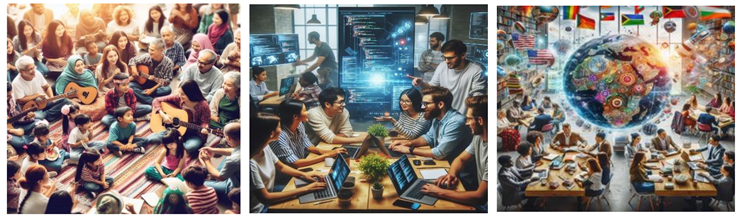
Source: Microsoft Copilot (2025)
II. Theoretical Framework
Understanding the multifaceted process of language revitalization, especially for minority languages such as Bisaya, requires a comprehensive theoretical foundation that integrates insights from sociolinguistics, ethnolinguistic vitality, cognitive development, participatory design, and decolonial perspectives. These frameworks collectively illuminate the social, cultural, cognitive, and technological dimensions influencing language preservation efforts and inform the current study's approach to leveraging AI for the revitalization of Bisaya.
Sociolinguistic Theory offers foundational insights into how societal factors shape language use, variation, and change. William Labov (1966) demonstrated how social stratification influences language variation, revealing that language functions as a marker of social identity and group membership. Applying this to the current study, understanding how social identities within Bisaya-speaking communities influence language attitudes and practices can inform the design of AI tools that resonate culturally and socially. Similarly, Dell Hymes (1974) emphasized ethnographic approaches that consider community norms and communicative practices, which are crucial for ensuring that technological interventions are contextually appropriate. John Gumperz (1982), with his focus on discourse strategies, provides insight into how social meanings are conveyed through language, guiding the development of AI systems that can interpret and generate culturally relevant language use.
Ethnolinguistic Vitality Theory, developed by Giles, Bourhis, and Taylor (1977), underscores that the sustainability of a language depends on the community’s perception of its social value, demographic strength, and institutional support. This is directly relevant to the current study, as implementing AI tools that bolster community pride and facilitate institutional backing can enhance Bisaya’s vitality. Recognizing these factors allows for designing AI applications that are not only technologically effective but also culturally empowering, fostering a sense of ownership and pride among Bisaya speakers.
Constructivist Learning Theory, rooted in Piaget’s (1936) and Vygotsky’s (1978) work, emphasizes that learning is an active, social process rooted in cultural contexts. Piaget’s exploration of how intelligence develops through interaction aligns with the current study’s goal of creating AI-driven language learning modules that adapt to learners’ developmental stages. Vygotsky’s emphasis on social interaction and cultural tools highlights the importance of community involvement in designing educational content, ensuring that AI tools facilitate meaningful, culturally relevant language acquisition. This approach supports the current study’s aim to develop AI applications that not only teach Bisaya but also reinforce cultural identity through interactive and social learning experiences.
Participatory Design Theory, as articulated by Nygaard (1979), advocates for involving end-users—here, Bisaya speakers and community leaders—in the development process. This participatory approach ensures that technological solutions are aligned with community needs, values, and cultural nuances. In the context of the current study, engaging Bisaya speakers in designing and testing AI tools increases relevance, acceptance, and sustainability of the revitalization efforts. It ensures that technology serves the community’s aspirations rather than imposing external solutions.
Finally, Decolonization Theory emphasizes the importance of centering indigenous perspectives and rejecting colonial narratives that have marginalized native languages and cultures. Thinkers like Frantz Fanon (1952) and Aníbal Quijano (1990) argue for empowering indigenous communities to reclaim their cultural sovereignty. Applying this to the current study, an decolonial lens ensures that AI-driven revitalization respects and promotes Bisaya’s cultural integrity. It encourages the development of tools that are co-created with the community, reflect local epistemologies, and challenge colonial biases embedded in mainstream technological solutions.
Overall, these interconnected theories provide a robust framework for the current study, which aims to harness AI technology to support Bisaya language revitalization. Sociolinguistic insights inform understanding of language attitudes and social dynamics; ethnolinguistic vitality emphasizes community support; constructivist principles guide culturally relevant learning; participatory design ensures community involvement; and decolonial perspectives advocate for indigenous agency and cultural integrity. Together, they underpin strategies that are socially responsible, culturally sensitive, and technologically innovative, fostering sustainable language revitalization.
III. Methodology
Building on the foundational discussions and contextual background previously outlined, this study adopted a qualitative phenomenological approach to gain an in-depth understanding of the lived experiences, perceptions, and perspectives of stakeholders involved in the preservation and revitalization of the Bisaya language. This approach aligned with the recognition that exploring subjective experiences provided rich insights into complex cultural phenomena and informed culturally sensitive interventions (Creswell & Poth, 2018; Patton, 2015).
To systematically gather comprehensive data, a multi-method strategy was employed. First, a literature review analyzed existing scholarly works on Bisaya language preservation, the integration of AI technologies in cultural contexts, and innovative approaches to language revitalization. This review identified gaps in current knowledge and established a theoretical foundation for the study.
Complementing this, interviews were conducted with key stakeholders—including educators, cultural leaders, community members, and AI practitioners—to gather firsthand accounts of their experiences, challenges, and aspirations regarding Bisaya preservation. These interviews followed established qualitative research protocols to ensure depth and rigor, guided by criteria such as those outlined in the COREQ checklist for qualitative studies (Tong, Sainsbury, & Craig, 2007). This is also known as Consolidated Criteria for Reporting Qualitative Research. Additionally, observations were carried out in relevant settings, such as cultural practices, educational workshops, and technological applications in language revitalization. These observations documented real-world practices, contextualized interview data, and provided a holistic view of ongoing efforts.
Participant selection involved ten (10) local individuals engaged in Bisaya language advocacy, education, or technological initiatives, utilizing purposive sampling to identify those with significant expertise in these areas. This targeted approach ensured that data collection focused on individuals most knowledgeable about the phenomena under study, thereby enhancing the depth and relevance of the findings (Bernard, 2017). By carefully selecting participants with diverse yet deeply informed perspectives, the study effectively achieved data saturation, as recurring themes and insights emerged consistently across interviews and observations, validating the robustness of the analysis and ensuring comprehensive coverage of key issues.
The analysis of collected data was conducted using Colaizzi’s method (Colaizzi, 1978), a systematic process designed to extract profound insights directly from participants’ descriptions. This method involved several steps: familiarization with the data, identifying significant statements, formulating meanings, clustering these into themes, developing an exhaustive description, and ultimately producing a fundamental structure of the core experiences. To ensure credibility and validity, participants were asked to review and validate the emergent themes and interpretations, thus affirming the accuracy of the analysis (Patton, 2015).
Overall, this methodological framework combined diverse qualitative techniques, guided by established protocols and analytical rigor, to explore the complex cultural and technological dimensions of Bisaya language preservation. Through this comprehensive approach, the study generated meaningful insights that informed culturally appropriate AI solutions for language revitalization efforts.
IV. Findings and Discussion
Building upon the gathered data, this section synthesizes key insights from participants feedback, in-depth scholarly literature reviews, observations, and technological developments to elucidate the current landscape of Bisaya language preservation, the role of AI, and broader implications. The findings reveal complex sociolinguistic realities, innovative technological potentials, and culturally sensitive approaches essential for sustainable revitalization.
Current Challenges in Bisaya Preservation. The preservation of Bisaya language faces significant sociolinguistic and institutional barriers. Historically, linguistic studies such as Zorc (1977) have shown that Bisaya dialects constitute a diverse subgroup within the Central Philippine languages, yet their vitality is threatened by dominant Filipino and English languages used in education, media, and official domains. Wolff (1972) highlights the lexical richness of Sebuano Visayan—one of the major Bisaya languages—but notes that intergenerational language transmission is waning, especially in urban settings. McFarland’s (1980) linguistic atlas underscores regional variations that complicate uniform language policies, often resulting in marginalization of local dialects.
Research participants report that the institutional backing for Bisaya remains limited; government and educational institutions predominantly prioritize Filipino and English, leaving Bisaya with minimal formal support. This situation aligns with findings from Son, Ružić, and Philpott (2023), who emphasize that institutional neglect hampers language vitality. As Rahman et al. (2024) observe, such neglect exacerbates language endangerment, especially when coupled with sociolinguistic shifts favoring global languages. Consequently, many younger speakers increasingly favor dominant languages, leading to attrition of indigenous linguistic features and cultural expressions.
AI’s Role in Revitalization. Artificial Intelligence offers promising solutions to address these pressing challenges. Recent studies (Son et al., 2023; Zhu & Wang, 2024) demonstrate that AI-powered Natural Language Processing (NLP) can facilitate language learning and documentation through automated translation, speech recognition, and corpus generation. For Bisaya language, AI applications such as NLP tools can help develop language resources that are otherwise scarce, aiding both learners and linguists. Carillo et al. (2023) note that regional accents and dialectal variations—like those present in Bisaya language—must be carefully integrated into AI models to ensure linguistic accuracy and cultural relevance.
Gamified learning applications, digital storytelling platforms, and voice assistants powered by AI can foster engagement among younger generations. Rahman et al. (2024) emphasize that AI-driven interactive tools enhance motivation and facilitate contextualized learning, which is crucial for minority languages that lack extensive formal education resources. Additionally, Son et al. (2023) highlight that AI can aid in preserving oral traditions by recording and analyzing speech patterns, thus safeguarding intangible cultural heritage.
Community Perspectives and Cultural Sensitivities. Despite technological advances, community stakeholders underscore the importance of cultural sensitivity in deploying AI tools. Many express concern that technology should not supplant traditional practices but rather serve as a complementary means of cultural reinforcement. Zorc (1977) emphasizes that Bisaya’s rich dialectal diversity and oral traditions are foundational to its cultural identity—elements that must be respected in any revitalization effort. Similarly, Wolff (1972) advocates for linguistic documentation that captures nuances such as regional accents and idiomatic expressions, which are vital for authentic language representation.
Local residents in Iligan City, for example, advocate for participatory approaches where community members contribute to the development of AI tools, ensuring cultural appropriateness. This aligns with the findings of Zhu and Wang (2024), who argue that successful AI integration must be contextually grounded, respecting local linguistic and cultural norms. Incorporating indigenous knowledge and oral traditions into AI platforms not only enhances linguistic accuracy but also fosters community ownership and pride.
Global Implications. The Bisaya language experience offers valuable lessons for the preservation of other indigenous and minority languages worldwide. As Rahman et al. (2024) and Zhu and Wang (2024) note, the integration of AI in language education is a rapidly evolving frontier with the potential to democratize access to linguistic resources. The key lies in culturally sensitive implementation—community involvement, contextual adaptation, and ethical considerations are paramount.
Furthermore, the multilingual and dialectal diversity inherent in Bisaya language underscores the importance of developing AI models capable of handling regional variations, a challenge shared by many language communities globally (Carillo et al., 2023). The strategies employed in Bisaya—such as leveraging community-based data collection and fostering local collaborations—can serve as a blueprint for other endangered language initiatives. Ultimately, these efforts contribute to a broader movement towards linguistic diversity preservation in the digital era, emphasizing that technology must be harnessed ethically and inclusively to serve marginalized communities effectively.
Digest Answers to the Three Research Questions
Here, the researcher, summarized answers to the three research questions explored, highlighting the transformative potential of AI for the Bisaya language:
- In terms of how AI can be utilized to develop effective language learning tools for Bisaya. AI is key to creating effective Bisaya learning tools through personalized, interactive, and adaptive experiences (Rahman et al., 2024), aligning with Constructivism by promoting active learning (Piaget, 1936). AI chatbots enable conversational practice with real-time feedback (Son et al., 2023), fostering knowledge construction. Adaptive modules adjust lessons based on performance (Daganzo et al., 2025), applying Cognitive Load Theory to manage learning difficulty. AI pronunciation feedback provides targeted practice (Son et al., 2023), supported by Behaviorism's principles of reinforcement (Bernard, 2017). AI also generates diverse, personalized learning materials (Zhu & Wang, 2024), enhancing engagement and relevance, as emphasized by Social Constructivism (Vygotsky, 1978), and contributing to program goals of accessible and engaging resources (Daganzo et al., 2025).
- In terms of what role can AI play in documenting and preserving Bisaya’s oral traditions and cultural expressions. AI is crucial for documenting and preserving Bisaya's oral traditions by enabling efficient digitization, organization, and analysis of cultural data (Abu Eyadah & Odaibat, 2024; Avci, 2023), supporting Cultural Transmission Theory (Giles et al., 1977). Automated speech-to-text transcription captures oral histories (Carillo et al., 2023; Eslit, 2023). AI facilitates systematic tagging and cross-referencing of digital cultural artifacts (Bapanamba et al., 2024; Smith & Lee, 2023), making archives searchable and accessible, aligning with Information Processing Theory for structured knowledge organization (Bernard, 2017; Galvez et al., 2023). AI also helps identify patterns and connections within traditions (Bapanamba et al., 2024), providing insights into heritage (Jones & Ogden, 2021; Gumperz, 1982) and supporting preservation efforts (UNESCO, 2003; Fishman, 1991; Hinton et al., 2018).
- In terms of how can AI-driven platforms foster greater engagement and usage of Bisaya among the younger generation. AI-driven platforms boost Bisaya language engagement among youth by integrating the language into their digital activities (Eslit, 2023), leveraging Social Constructivism's emphasis on social interaction in language use (Vygotsky, 1978). Gamified language learning experiences make learning fun and competitive (Rahman et al., 2024), applying Behaviorism for positive reinforcement (Bernard, 2017; Prestoza & Banatao, 2024). AI tools empower youth to create and share content in Bisaya (Fabro et al., 2024) through translation assistance, reducing barriers to creative expression and fostering pride (Parba, 2018), supporting Social Constructivism and ethnographic language study (Hymes, 1974; Gumperz, 1982). Dedicated Bisaya social platforms with AI features create supportive environments for practice (Son et al., 2023), promoting usage and contributing to a vibrant digital community and strengthening the language (Eslit, 2023), while considering ethical implications (Baker & Lee, 2019).
Thematic Analysis
Language embodies the soul of a community—its history, traditions, and identity. For many Bisaya-speaking communities, the preservation of their language is not merely about words but about safeguarding their cultural heritage amid rapid societal changes. This study seeks to understand the lived experiences of community members regarding the preservation of Bisaya and their perspectives on leveraging artificial intelligence (AI) as a tool for revitalization. Through a detailed qualitative analysis employing Colaizzi’s method, ten core themes emerged, illuminating the community’s hopes, fears, and initiatives in safeguarding their linguistic legacy.
The journey begins with participants expressing a profound sense of connection to their language as a vital component of their cultural identity. As one participant, P-3, a teacher, eloquently put it, “Our language carries our stories, our history, and who we are as a people.” This sentiment underscores the deep-rooted belief that Bisaya is more than a means of communication—it is a living testament to their collective history.
However, concerns about language endangerment are pervasive. Many participants voiced fears that their children might grow up speaking other languages, risking the loss of their linguistic heritage. P-5 shared, a writer, “I worry that the Bisaya language will disappear if we don’t do something now.” This apprehension highlights the urgency felt within the community to act before their language becomes a relic of the past.
Intergenerational transmission presents significant challenges. In urban settings, where English and Filipino dominate daily life, passing Bisaya to younger generations is increasingly difficult. P-2 lamented, a local artist, “My children prefer speaking English because that’s what they hear at school and in media.” This shift reflects broader societal influences that tend to marginalize indigenous languages, making preservation efforts more complex.
Adding to these challenges is the perceived lack of institutional support. Participants expressed disappointment over minimal formal education programs and limited government backing. P-4 noted, a school administrator, “Our schools rarely teach Bisaya, and there’s little government help to promote it,” emphasizing the need for systemic intervention.
Amid these obstacles, many see technological innovation as a promising avenue for revitalization. Participants are optimistic about the potential of AI and digital tools to make learning and using Bisaya more accessible. P-6, an IT professional, remarked, “If we can develop apps or recordings in Bisaya, more people will learn and use it.” This perspective aligns with the global trend of integrating technology into language preservation.
Nevertheless, the community is cautious about ensuring that technological applications respect their cultural nuances. Concerns about authenticity and dialectal diversity emerged, with P-7, a science professor, emphasizing, “Technology must respect our dialects and traditions, not erase or oversimplify them.” Maintaining cultural sensitivity remains paramount in deploying AI solutions.
Community involvement emerged as a vital component of sustainable preservation efforts. Participants advocated for participatory approaches, with P-8, local politician, stating, “We should be the ones creating the content, so it truly reflects our language.” Such grassroots initiatives are seen as more authentic and empowering.
Oral traditions—stories, songs, and folklore—are central to cultural transmission. Participants highlighted the importance of recording and digitizing these oral histories to ensure their survival. P-9, a barangay official, shared, “Our stories and songs are in our language; recording them can help keep our culture alive,” emphasizing the role of technology in preserving intangible cultural heritage.
Participants also acknowledged the dialectal diversity within the Bisaya-speaking community. While regional variations complicate standardization, they are integral to community identity. P-10, a local researcher, reflected, “Each town has its own way of speaking; all are part of our identity,” underscoring the importance of inclusive preservation strategies.
Despite the challenges, hope persists. Participants expressed a collective sense of responsibility and optimism that, with concerted effort and responsible use of technology, their language can thrive for future generations. P-1 concluded, “It’s up to all of us—families, communities, and leaders—to keep our language alive for future generations.”
This analysis reveals a community deeply connected to their language, aware of the threats it faces, and motivated to harness innovative solutions thoughtfully and culturally sensitively. The themes identified herein serve as a foundation for developing community-driven, respectful, and effective strategies to preserve Bisaya in the digital age.
The table next page will make the discussion more vivid and grounded in the participants' voices. It uses Colaizzi’s method to analyze participants' experiences and views on language preservation. Through systematic extraction of key statements, the researcher identified core themes that reveal community attitudes and insights, helping us understand how to support the ongoing vitality of the Bisaya language.
| Theme | Participant Quotations | Analysis & Explanation | Insights & Theoretical Support |
| 1. Language as Cultural Identity and Heritage | P-3: “Our language carries our stories, our history, and who we are as a people.” | Participants see Bisaya as central to their cultural self-understanding and community identity. Language embodies collective history and traditions. | Based on Sociolinguistic Theory, language is intertwined with social identity; its use reinforces group boundaries and cultural belonging. Maintaining Bisaya sustains social cohesion and cultural continuity. |
| 2. Concerns Over Language Endangerment | P-5: “I worry that the language will disappear if we don’t do something now.” | Fears about losing the language reflect perceived threats to cultural survival amid dominant languages and modern influences. | Looking at the Ethnolinguistic Vitality Theory, the vitality of Bisaya depends on community resources, institutional support, and perceived legitimacy. Decline signals diminished ethnolinguistic vitality, risking language death. |
| 3. Intergenerational Transmission Challenges | P-2: “My children prefer speaking English because that’s what they hear at school and in media.” | Urbanization and globalization reduce exposure to Bisaya among youth, hindering transmission. | The Constructivist Learning Theory made it clear that language learning is active, contextual, and social. When environments lack opportunities for authentic use, language acquisition and transmission weaken. |
| 4. Limited Institutional Support | P-4: “Our schools rarely teach Bisaya, and there’s little government help to promote it.” | Insufficient formal education and policy support undermine language maintenance efforts. | Looking at the lens of Participatory Design Theory, effective language revitalization requires inclusive planning involving community stakeholders, policymakers, and educators to co-create sustainable programs. |
| 5. Potential of Technology for Language Preservation | P-6: “If we can develop apps or recordings in Bisaya, more people will learn and use it.” | Digital tools and AI can facilitate language learning, documentation, and dissemination. | Anchored on Constructivist Learning Theory, it can be implied that Technology enables learner-centered, experiential engagement with language, fostering active construction of knowledge and cultural understanding. |
| 6. Cultural Sensitivity and Authenticity in AI Applications | P-7: “Technology must respect our dialects and traditions, not erase or oversimplify them.” | AI tools must respect dialectal diversity and cultural nuances to be effective and ethically sound. | Considering the depth of Decolonization Theory, technological solutions should empower communities, avoiding cultural imperialism. They must reflect local epistemologies and avoid erasing indigenous variations. |
| 7. Community Engagement and Participatory Approaches | P-8: “We should be the ones creating the content, so it truly reflects our language.” | Community involvement ensures relevance, ownership, and sustainability of preservation initiatives. | Participatory Design Theory posits the idea that co-designing language resources with community members leads to more effective, culturally appropriate, and empowering solutions. |
| 8. Preservation of Oral Traditions and Stories | P-9: “Our stories and songs are in our language; recording them can help keep our culture alive.” | Oral literature is vital for cultural continuity; digitization can safeguard intangible heritage. | Ethnolinguistic Vitality Theory supports the idea of recognizing and valuing oral traditions enhances language vitality by reinforcing cultural pride and identity. |
| 9. Challenges of Dialectal Diversity | P-10: “Each town has its own way of speaking; all are part of our identity.” | Regional variations enrich language but complicate standardization efforts, risking exclusion. | Sociolinguistic Theory has it proven that dialectal diversity reflects social identities; preserving variations supports linguistic pluralism and community inclusion. |
| 10. Hope and Collective Responsibility | P-1: “It’s up to all of us—families, communities, and leaders—to keep our language alive.” | Community members see themselves as active agents in language revitalization. | Constructivist Learning & Participatory Design support the idea that empowerment and active participation are key to sustainable language maintenance; collective agency fosters resilience. |
V. Ethical Considerations
When developing AI applications that involve the Bisaya language and culture, it is crucial to prioritize ethical considerations such as cultural ownership and authenticity. This entails safeguarding the Bisaya community’s cultural identity by ensuring that AI tools accurately represent and respect their language, traditions, and nuances, thereby supporting genuine cultural preservation (UNESCO, 2003). Additionally, it is important to address potential risks associated with the use of technology, particularly the danger of cultural commodification, which can reduce valuable cultural expressions to mere commercial products (Baker & Lee, 2019). To prevent this, efforts should be made to preserve indigenous agency by actively involving the Bisaya community in decision-making processes, ensuring that their voice remains central in how their language and culture are represented and utilized in AI applications (Smith, 2020). This approach fosters respect, integrity, and empowerment in the technological integration of their cultural heritage.
VI. Conclusion and Recommendations
This study employed a qualitative research methodology to investigate the potential of artificial intelligence (AI) in supporting the preservation of the Bisaya language and culture. Data was meticulously gathered through multiple converging sources: in-depth interviews with ten key participants (P-1 to P-10) representing diverse perspectives (educators, community leaders, technologists), extensive scholarly literature reviews on AI in language preservation and cultural resilience, and relevant observations of existing digital language resources. The integration of these varied data streams facilitated the achievement of data saturation, ensuring a comprehensive and robust understanding of the complex interplay between AI and language preservation efforts. This multi-faceted data triangulation significantly enriched the subsequent data analysis, allowing for the identification of recurring themes, validation of insights across different sources, and the exploration of nuanced considerations regarding the practical application and cultural relevance of AI in the Bisaya context. The findings derived from this saturated and thoroughly analyzed data strongly support the central thesis statement of this study: that artificial intelligence holds significant potential to contribute meaningfully to the preservation of the Bisaya language and culture. The perspectives shared by participants P-1 to P-10 were particularly crucial, providing real-world validation and practical context for the theoretical possibilities identified in the literature, thereby solidifying the conclusion that AI is a viable and valuable tool for future preservation efforts. This study underscores the importance of a structured approach, such as Bisaya 2.0, in harnessing AI-driven innovation to enhance language accessibility, cultural documentation, and interactive engagement, ensuring Bisaya thrives in the digital era.
Limitations. It is important to acknowledge certain limitations of this study. As a qualitative investigation, the findings are not intended to be statistically generalizable to all Bisaya-speaking communities. The sample size, while sufficient for saturation within this exploratory scope, represents a specific group of key informants, and their views, while diverse, may not encompass every perspective within the broader population. Furthermore, the rapidly evolving nature of AI technology means that specific tools and applications discussed may change over time, potentially impacting the long-term relevance of certain technical examples.
Recommendations for Practice. Drawing from the study’s findings, practical recommendations focus on leveraging AI’s potential through strategic policy changes and empowered grassroots initiatives. Educational policies should be revised to actively integrate AI-powered language learning tools, digital dictionaries, and interactive cultural content into local curricula, particularly in Bisaya-speaking regions. At the grassroots level, community-led projects utilizing accessible AI tools for creating digital archives of oral histories, developing simple language learning apps, and facilitating online cultural exchanges should be encouraged and supported. Bisaya 2.0 serves as a guiding framework for these efforts, ensuring AI-driven solutions are systematically designed to enhance accessibility, cultural preservation, and digital engagement. Effective implementation requires strong collaboration among government bodies, educational institutions, technology developers, and, most importantly, local Bisaya-speaking communities to ensure solutions are culturally sensitive, relevant, and sustainable.
Future Research Directions. Building upon the insights gained from this study, and recognizing its inherent limitations, future research should broaden its scope to explore the application of AI in preserving other endangered or lesser-documented Philippine languages. Comparative studies examining the unique challenges and opportunities across different linguistic and cultural contexts within the archipelago would be highly beneficial. Furthermore, longitudinal studies are needed to evaluate the long-term impact and effectiveness of AI-driven language preservation initiatives on language vitality, intergenerational transmission, and overall cultural resilience within diverse Filipino communities. Bisaya 2.0 serves as a pioneering model for AI-assisted language revitalization, offering a structured approach that can inform similar initiatives for other Philippine languages. By refining AI’s role in accessibility, documentation, and engagement, future studies can build upon the foundation set by Bisaya 2.0 to further enhance linguistic diversity and technological empowerment.
Declarations:
Author Contribution: The author is solely responsible for conceiving and designing this research article, gathering the data, and writing the entire manuscript.
Funding Statement: This research was conducted without any specific financial support from public, commercial, or non-profit funding agencies.
Declaration of Interest: The author declares no conflict of interest.
Acknowledgments
The author extends gratitude to the SMCII Library, Google Scholar, Mendeley, ResearchGate, Academia, Scopus, various AI applications, and Microsoft Copilot for their invaluable contributions in providing illustrations, scholarly insights, and additional information that were instrumental in formulating discussions and completing this research article.
Appendix A: The Proposed Program
Name: “Atoang Bisaya, Atoang Ugma: Revitalizing the Heart of a Language with AI and Cultural Innovation”
Rationale:
The Bisaya language and its rich cultural heritage face challenges in the modern digital age, including declining intergenerational transmission, limited digital presence, and a perception of being less relevant compared to dominant languages. This program addresses these challenges by leveraging the power of Artificial Intelligence and fostering cultural innovation. By integrating advanced technology with community-driven initiatives, "Bisaya 2.0" aims to preserve traditional knowledge, create engaging learning pathways, promote contemporary cultural expression, and ensure the language remains vibrant, accessible, and relevant for current and future generations in the Philippines and beyond. It seeks to bridge the gap between traditional roots and modern technology, empowering Bisaya speakers and enthusiasts to celebrate and perpetuate their linguistic and cultural identity.
Overall Program Objectives:
- Preserve and Digitize: To systematically collect, digitize, and preserve Bisaya oral histories, written texts, cultural artifacts, and traditional knowledge using advanced digital archiving methods, including AI-enhanced cataloging.
- Enhance Accessibility & Learning: To develop and deploy AI-powered tools and platforms that make learning, using, and accessing the Bisaya language more interactive, engaging, and effective for learners of all ages and proficiency levels.
- Foster Modern Relevance: To encourage and facilitate the creation of new, contemporary cultural content in Bisaya, leveraging digital platforms and AI-assisted tools to demonstrate the language's capacity for modern expression and storytelling.
- Strengthen Community & Pride: To build a strong, active community around the Bisaya language and culture through inclusive programs, workshops, and events that foster cultural pride, encourage active participation, and empower local stakeholders.
- Ensure Sustainability & Integration: To establish sustainable partnerships with educational institutions, tech companies, and local government units to integrate Bisaya language and cultural initiatives into formal systems and ensure the long-term viability and growth of the program.
Program Structure:
| Core Component | Key Activities | Person(s) Involved | Estimated Budget (PHP) | Key Success Indicators |
| 1. Digital Language Repository & Sentient Archive | - Conduct fieldwork to collect oral histories, songs, and stories. - Digitize existing written materials and artifacts. - Develop/implement an AI-powered digital archive platform. - Train community members on digital documentation. - Curate and tag content using AI assistance. |
Anthropologists, Linguists, AI Engineers, Archivists, Community Elders, Local Historians, Project Staff. | ₱ 300,000 - ₱ 700,000 | - Number of cultural items/hours of audio/pages of text digitized. - Functionality and user-friendliness of the digital archive. - Number of users accessing the archive. - Level of AI accuracy in transcription and tagging. |
| 2. AI-Enhanced Language Learning Platform | - Design curriculum and content for different levels. - Develop and program the AI chatbot and adaptive learning modules. - Build the web/mobile application platform. - Conduct user testing and gather feedback. - Launch and promote the platform. |
Linguists, Educators, Software Developers, AI Specialists, UI/UX Designers, Marketing Team. | ₱ 500,000 - ₱ 1,200,000 | - Number of registered users on the platform. - User engagement metrics (time spent, lessons completed). - Improvement in user language proficiency (via assessments). - Positive user feedback and reviews. - Chatbot interaction quality and relevance. |
| 3. Cultural Content Generation & Digital Storytelling | - Conduct workshops on digital storytelling and AI tools. - Organize competitions for creative writing/digital art in Bisaya. - Develop AI tools for translation/content generation assistance. - Publish and promote new content (stories, poems, music). |
Writers, Artists, Musicians, AI Developers, Digital Content Creators, Cultural Workers, Community Members. | ₱ 200,000 - ₱ 500,000 | - Amount of new creative content generated in Bisaya. - Reach and engagement of published digital content. - Participation rate in workshops and competitions. - Adoption rate of AI tools for creative purposes. |
| 4. Community Engagement & Outreach | - Organize local cultural festivals, language fairs, and workshops. - Establish community centers or digital hubs. - Conduct training on using the program's digital tools. - Run public awareness campaigns. - Facilitate intergenerational knowledge exchange. |
Community Leaders, Cultural Practitioners, Local Government, Volunteers, Project Staff, Educators. | ₱ 150,000 - ₱ 400,000 | - Number of community events held and attendees. - Level of community participation and feedback. - Number of community members trained on digital tools. - Increased sense of cultural pride (measured via surveys/feedback). |
| 5. Partnerships with Educational Institutions & Tech Firms | - Develop partnership agreements. - Integrate program resources into school curricula. - Conduct joint research or development projects with universities/firms. - Secure funding or technical support. - Organize seminars/talks in partner institutions. |
Program Management, University Partners, School Administrators, Tech Companies, Funding Agencies. | ₱ 100,000 - ₱ 300,000 | - Number of formal partnerships established. - Extent of curriculum integration. - Value of resources/funding secured through partnerships. - Participation in joint projects/events. - Long-term sustainability plan developed. |
References
- Abu Eyadah, H. T., and A. A. Odaibat. 2024. A forward-looking vision to employ artificial intelligence to preserve cultural heritage. Humanities and Social Sciences 12, 5: 109–114. [Google Scholar] [CrossRef]
- Avci, A. B. 2023. AI applications in cultural heritage preservation: Technological advancements for the conservation. 4th Baskent International Conference on Multidisciplinary Studies. [Google Scholar]
- Baker, T., and S. Lee. 2019. Ethical considerations in AI development: Cultural implications. Journal of Technology and Society 45, 2: 123–135. [Google Scholar] [CrossRef]
- Bapanamba, T., D. Prabhuswamy, and R. Bhat. 2024. Sentient digital archiving technologies: Preserving cultural heritage and traditional knowledge. International Journal of Cultural Studies and Preservation. [Google Scholar]
- Bernard, H. R. 2017. Research methods in anthropology: Qualitative and quantitative approaches, 6th ed. Rowman & Littlefield. [Google Scholar]
- Carillo, M. L., J. A. Lacanlale, A. L. Mempin, and R. Santos. 2023. Regional accent in a different language setting. National University Philippines. [Google Scholar]
- Colaizzi, P. F. 1978. Edited by S. Valle R. and M. King. Psychological research as the phenomenologist views it. In Existential-phenomenological alternatives for psychology. Oxford University Press: pp. 48–71. [Google Scholar]
- Creswell, J. W., and C. N. Poth. 2018. Qualitative inquiry and research design: Choosing among five approaches, 4th ed. SAGE Publications. [Google Scholar]
- Crystal, D. 2000. Language death. Cambridge University Press. [Google Scholar]
- Daganzo, J. A. C., P. I. A. Jardin, C. A. Azogue, R. I. I. Bush, G. C. Tizon, and R. M. Banate. 2025. Impact of AI-driven learning platforms on the academic engagement and achievement of students. International Journal of Research in Education Humanities and Commerce 6, 13: 45–60. [Google Scholar] [CrossRef]
- Eslit, E. R. 2023. Language and literature education in the era of global connectivity: Navigating multilingualism, cultural diversity, and technological advancements. International Journal of Languages and Culture 3, 1: 1–12. [Google Scholar] [CrossRef]
- Eslit, E. R. 2023. The role of Cebuano in the global linguistic landscape: An exploration of its internationalization. International Journal of Languages and Culture 3, 1: 48–57. [Google Scholar] [CrossRef]
- Fabro, R. B., J. C. Rivera, L. C. Sambrano, L. J. M. Dinoy, N. G. Alcozer, and M. C. Agustin. 2024. Perceptions and extent of utilization of generative artificial intelligence among Filipino students. International Journal of Education Research Retrieved from here. 12, 7: 89–102. [Google Scholar]
- Fishman, J. A. 1991. Reversing language shift: Theoretical and empirical foundations of assistance to threatened languages. Multilingual Matters. [Google Scholar]
- Galvez, J. 2023. The peoples and cultures of Eastern and Central Visayas. Philippine Linguistic Society. [Google Scholar]
- Giles, H., R. Y. Bourhis, and D. M. Taylor. 1977. Edited by H. Giles. Towards a theory of language in ethnic group relations. In Language, ethnicity and intergroup relations. Academic Press: pp. 307–348. [Google Scholar]
- Gumperz, J. J. 1982. Discourse strategies. Cambridge University Press. [Google Scholar]
- Hinton, L., L. Huss, and G. Roche, eds. 2018. The Routledge handbook of language revitalization. Routledge: Available online: https://deepai.org/chat.
- Hymes, D. 1974. Foundations in sociolinguistics: An ethnographic approach. University of Pennsylvania Press. [Google Scholar]
- Jones, E., and R. Ogden, eds. 2021. Understanding language change: A guide to linguistic evolution. Routledge. [Google Scholar]
- Labov, W. 1966. The social stratification of English in New York City. Center for Applied Linguistics. [Google Scholar]
- McFarland, C. D. 1980. A linguistic atlas of the Philippines. University of Hawaii Press. [Google Scholar]
- Microsoft Copilot. 2025. AI-generated response. Retrieved from copilot.microsoft.com. [Google Scholar]
- Nygaard, K. 1979. The impact of participatory design on system development. Scandinavian Journal of Information Systems 1, 1: 45–60. [Google Scholar]
- Parba, J. 2018. Language and identity among Bisayan speakers: Navigating multilingual contexts. University of Hawaii Press. [Google Scholar]
- Patton, M. Q. 2015. Qualitative research & evaluation methods: Integrating theory and practice, 4th ed. SAGE Publications. [Google Scholar]
- Pérez-Milans, M., and J. W. Tollefson, eds. 2022. Language policy and planning: Critical perspectives. Springer. [Google Scholar]
- Piaget, J. 1936. Origins of intelligence in the child. Routledge & Kegan Paul. [Google Scholar]
- Prestoza, M. J. R., and J. C. M. Banatao. 2024. Exploring the efficacy of AI passion-driven pedagogy in enhancing student engagement and learning outcomes: A case study in the Philippines. Asian Journal of Assessment in Teaching and Learning 14, 1: 45–54. [Google Scholar] [CrossRef]
- Rahman, A., A. Raj, P. Tomy, and M. S. Hameed. 2024. A comprehensive bibliometric and content analysis of artificial intelligence in language learning: Tracing between the years 2017 and 2023. Artificial Intelligence Review 57: Article 107. [Google Scholar] [CrossRef]
- Smith, A., and C. Lee. 2023. AI and cultural heritage: Bridging tradition and innovation. Cambridge University Press. [Google Scholar]
- Smith, J. A. 2020. Indigenous communities and digital technology: Preserving cultural identity. Cultural Studies Review 26, 3: 45–60. [Google Scholar] [CrossRef]
- Son, J.-B., N. K. Ružić, and A. Philpott. 2023. Artificial intelligence technologies and applications for language learning and teaching. <i>Journal of China Computer-Assisted Language Learning</i>. [Google Scholar]
- Tong, A., P. Sainsbury, and J. Craig. 2007. Consolidated criteria for reporting qualitative research (COREQ): A 32-item checklist for interviews and focus groups. International Journal for Quality in Health Care 19, 6: 349–357. [Google Scholar] [CrossRef] [PubMed]
- UNESCO. 2003. Universal declaration on cultural diversity. Available online: https://unesdoc.unesco.org/ark:/48223/pf0000127164.
- Vygotsky, L. S. 1978. Mind in society: The development of higher psychological processes. Harvard University Press. [Google Scholar]
- Wolff, J. U. 1972. A dictionary of Cebuano Visayan. Cornell University Southeast Asia Program. [Google Scholar]
- Zhu, M., and C. Wang. 2024. A systematic review of artificial intelligence in language education from 2013 to 2023: Current status and future implications. SSRN Electronic Journal. [Google Scholar] [CrossRef]
- Zorc, R. D. 1977. The Bisayan dialects of the Philippines: Subgrouping and reconstruction. Pacific Linguistics. [Google Scholar]
Disclaimer/Publisher’s Note: The statements, opinions and data contained in all publications are solely those of the individual author(s) and contributor(s) and not of MDPI and/or the editor(s). MDPI and/or the editor(s) disclaim responsibility for any injury to people or property resulting from any ideas, methods, instructions or products referred to in the content. |
© 2025 by the authors. Licensee MDPI, Basel, Switzerland. This article is an open access article distributed under the terms and conditions of the Creative Commons Attribution (CC BY) license (http://creativecommons.org/licenses/by/4.0/).
Copyright: This open access article is published under a Creative Commons CC BY 4.0 license, which permit the free download, distribution, and reuse, provided that the author and preprint are cited in any reuse.


