

Submitted:
17 April 2025
Posted:
18 April 2025
You are already at the latest version
Abstract
Strawberry production in tropical and subtropical climates has been adversely affected by rising temperatures and reduced cooling periods, leading to a decrease in flower induction and overall yield. This experiment aimed to investigate the effects of root zone cooling on short-day strawberry plants cultivated under evaporative greenhouse conditions. The cooling methods employed included of four root zone cooling treatments: normal water dripping (NWD), cold-water (10 °C) dripping (CWD), cold-water dripping plus cold-water pipe (CWD+CWP), and normal water dripping plus cold-water pipe (NWD+CWP) embedded within the growing media. The results indicated that the CWD+CWP treatment being particularly effective, reducing RZT by approximately 2 °C compared to other treatments. Thereby promoting both vegetative and reproductive growth, particularly in the ‘Akihime’ strawberry. In the absence of root zone cooling, ‘Akihime’ and ‘Pharachatan 88’ were still capable of producing flowers and yield, whereas ‘Pharachatan 80’ was no. In addition, ‘Pharachatan 80’ was affected by CWD+CWP which shown highest of total phenolic compound, total anthocyanin and total vitamin C among all treatments. It can be concluded that reducing the root zone temperature through the combined use of cold water dripping embedded cold-water pipe in the growing media can enhance the growth and development of short-day strawberry plants cultivated under evaporative greenhouse conditions in tropical climate.
Keywords:
‘Pharachatan 88’
; ‘Pharachatan 80’
; ‘Akihime’
; cold water
; flowering
1. Introduction
Strawberry (Fragaria × ananassa Duch.) is among the most extensively cultivated economic fruits across numerous countries with temperate, tropical, and subtropical regions. As a subtropical fruit, strawberries demonstrate adaptability and robust performance under a variety of climatic conditions. Recently, the value of fresh strawberry production in California, which accounts for 91% of the total strawberry crop, reached 14 billion USD in 2020, reflecting an increase in consumption [1]. Global strawberry production reached 9.2 million tons in 2020 [2]. China is the world’s largest producer, yielding 3.8 million tons, followed by the USA with 1.21 million tons, and Turkey with 0.67 million tons [3]. In Thailand, the northern sub-tropical region is a significant area for strawberry production. Strawberry cultivation in Thailand predominantly occurs in open fields, with ‘Pharachatan 80’ being the major commercial cultivar. Strawberry planting is typically carried out during September and October. The plants require low temperatures of approximately 10-15°C and short-day conditions (daylengths of less than 14 hours) for flower initiation, and they prefer cool weather for optimal fruit growth and development [4,5]. Vernalization at 2-4°C can induce off-season flowering by upregulating the expression of the flowering genes VRN5, FT, and SOC1, indicating their involvement in the flowering process of the subtropical strawberry cultivar ‘Pharachatan 80’ [6].
Temperature plays a crucial role in determining flowering, yield, and fruit quality in strawberries. Climate change, characterized by rising temperatures, induces heat stress in strawberry plants, leading to poor flowering, accelerated fruit ripening, and consequently, lower fruit quality, including smaller size, reduced sugar content, diminished aroma, and inferior texture. Additionally, these temperature increases affect the incidence and severity of pests and diseases [7,8]. As a result, climate change has had a significant impact on strawberry production. To mitigate these effects, strategies such as protected cultivation and controlled weather conditions have been considered.
Growing strawberry plants in greenhouses has proven highly successful in many temperate-zone countries. Harvesting can occur 3-4 weeks earlier, and yields are often higher compared to open field production, while also mitigating damage from heavy rain and cold temperatures during the autumn and winter seasons [9,10]. In Thailand, evaporative greenhouses optimize growing conditions by regulating temperature, humidity, and light. Compared to air conditioning and refrigeration systems, evaporative cooling systems have lower installation and operating costs. These systems function by reducing temperature through the evaporation of water. However, achieving adequate cooling in tropical and subtropical regions with high ambient temperatures, particularly during the daytime, remains a challenge. The temperature inside an evaporative greenhouse is independent of the outdoor temperature, being primarily influenced by the dew point temperature and maintaining relatively low relative humidity. Consequently, in addition to reducing the ambient temperature, cooling the root zone temperature can significantly enhance the quality and yield of strawberry production. Studying root zone temperature is crucial for understanding the growth and development, floral cluster formation, and chemical composition of various plants [11,12]. The author of [12] demonstrated that a root zone temperature of 30°C decreases these values, whereas temperatures of 10°C and 20°C maintain similar levels that enhance the inflorescences and fruit production in strawberries. The author of [13] found that nutrient uptake was greatest at a root zone temperature of 18°C. Cooling treatments improve water and nutrient absorption by promoting better root function, preventing water stress, and maintaining optimal hydration levels in the plant. This is particularly important for strawberry plants, as they possess shallow root systems that are susceptible to desiccation in warm conditions. Cooling the root zone can help alleviate heat stress in strawberry plants. Elevated root temperatures can induce early flowering and accelerate fruit ripening, resulting in lower fruit quality and a shorter harvesting period. By cooling the root zone, strawberry plants were better equipped to withstand heat stress, leading to healthier plants and improved yields [14,15,16]. Cooling root zone techniques, such as drip irrigation, can be employed to regulate soil temperature and maintain moisture levels in the root system. Studies have shown that fruits contained higher levels of fructose, glucose, and total carbohydrates when root zone temperatures were maintained at lower levels (18/12°C) [17,18]. Techniques such as plastic mulching, air conditioning devices, and underground source cooling with heat pumps are employed to reduce the temperature of the growth medium in greenhouse strawberry cultivation. Monitoring soil temperature and adjusting cooling strategies accordingly is crucial to ensure optimal growing conditions for strawberry plants. In the previous research has revealed a paucity of studies focused on root zone cooling. Therefore, this study aimed to investigate the growth and development of strawberries grown under evaporative greenhouse systems and to assess the impact of root zone cooling on the growth and fruit quality of strawberries in subtropical regions.
2. Materials and Methods
The experiment was conducted at the Agriculture Innovation Research, Integration, Demonstration and Training Center, Faculty of Agriculture, Chiang Mai University, located in Chiang Mai Province, Thailand. The geographical coordinates are latitude 18° 44′ 36″ N, longitude 98° 57′ 50″ E, at an altitude of 304 meters above sea level.
2.1. Plant Materials and Experimental Design
Disease-free strawberry plantlets derived from tissue culture were acclimatized in the greenhouse for one day and subsequently transplanted into 3-inch pots containing a mixture of perlite and coconut coir. After 45 days, the strawberry plants produced stolons and daughter plants. The three-week-old daughter plants from each cultivar were then collected, transplanted, and nursed in the greenhouse for the experiment. A factorial 3x4 design in a completely randomized design (CRD) was employed for this experiment, with 16 replications, where each experimental unit consisted of one strawberry plant. Factor A comprised three short-day strawberry cultivars: 1) ‘Pharachatan 88’ (‘P88’), 2) ‘Pharachatan 80’ (‘P80’), and 3) ‘Akihime’. Factor B consisted of four root zone cooling treatments: 1) normal water dripping (NWD), 2) cold-water (10 °C) dripping (CWD), 3) cold-water dripping plus cold-water pipe (CWD+CWP), and 4) normal water dripping plus cold-water pipe (NWD+CWP) (Figure 1).
2.2. Greenhouse Conditions, Root Zone Cooling System and Strawberry Planting
The evaporative greenhouse, measuring 9.6 by 40 meters, features a circular cover wrapped in 1.5-millimeter-thick transparent plastic, with cooling pads and fans covered on two sides by a 300-micron-thick, single-layer plastic material.
The strawberry root zone cooling system comprises a cooling water tank (a one-cubic-meter insulated plastic container), an electric pump, pipelines embedded in the growing media, and a control unit. The tank is filled with nutrient-rich water proportional to the anticipated daily water consumption. A cooling coil from a 12000 BTU modified air conditioning unit is submerged in the tank, utilizing a type-K thermocouple thermostat to maintain the tank water temperature at approximately 10°C. The cooled water circulates continuously through the pipe and returns to the tank. The system includes a 220V, 0.5 horsepower centrifugal water pump.
In late September 2022, 192 strawberry daughter plants were grown with a spacing of 25 cm in a planting trough measuring 16 meters in length. The growing medium consists of a mixture of perlite and peat moss at a 30:70 ratio by volume, subjected to four different root zone cooling treatments (Figure 1,2). Sensors for measuring temperature, relative humidity, carbon dioxide levels, and light intensity were installed. The IoT system controlled the daily water drip schedule, administering water five times a day between 13:00 and 17:00, with each drip delivering 20 ml of water over one minute. Consequently, each strawberry plant received a total of 100 ml of water per day.
2.3. Greenhouse Monitoring System
Climate conditions in the evaporative greenhouse, including temperature, relative humidity, light intensity, and CO2 content, as well as media temperature and moisture, were monitored by installed sensors and an IoT system that collects the data. A temperature monitor embedded in the growing media controls the operation of the pump. Cold water was returned circulated through insulated PVC pipelines and double steel pipes inserted into the growing media, then to the storage tank. The use of double pipelines maximizes the surface area for heat transfer between the cold water inside the pipes and the growing media. The control box performs multiple functions: it regulates the pump operation based on readings from the soil temperature probe, manages the refrigeration systems according to the water temperature probe in the tank, and collects data from all sensors in the growth channel to relay to the IoT junction box.
2.4. Physiology Measurement
Various plant parameters were measured post-planting, including plant height, canopy width, leaf width, leaf length, crown diameter, number of inflorescences, number of flowers, and chlorophyll content (using SPAD-502, Minolta Corp., Spectrum Technologies, Osaka, Japan). Post-harvest measurements included fruit weight, fruit size, fruit firmness, and chemical composition analysis.
2.5. Chemical Analysis
2.5.1. Total Soluble Solid (TSS), Titratable Acidity (TA), and pH
The TSS content was measured using a digital refractometer with a wide measurement range of 0.0 - 53.0% Brix (ATAGO Pal-1, ATAGO Co., Tokyo, Japan). The Titratable Acidity (TA) was determined following AOAC methods [19]. For this, 1 g of homogenized fresh sample was added to 100 ml of distilled water and titrated with 0.1 N NaOH until the endpoint was reached, indicated by a pH of 8.2, measured using a pH meter (FE20-1, Mettler-Toledo, Switzerland). The results were expressed as a percentage of citric acid.
2.5.2. Total Vitamin C
The total vitamin C content was determined according to AOAC methods [19]. A 1 g fresh sample was added to 0.4% oxalic acid, and the volumetric flask was filled to 100 mL. Subsequently, 10 mL of this solution was pipetted into each 50 mL Erlenmeyer flask and titrated with 0.04% 2,6-dichloroindophenol (DPIP) until a light but distinct rose-pink color persisted. The obtained values were recorded and compared to the standard curve.
2.5.3. Total Phenolic Compound Extraction
The total phenolic content was determined using a modified Folin–Ciocalteu method [20] with reagent spectrophotometry adapted from Sellappan’s method [21]. The sample was ground using a mortar grinder mixer, and 1 gram of the sample was mixed with 100% methanol to a total volume of 20 mL. The mixture was then covered with parafilm and shaken for 2 hours in the dark. The extract was filtered using Whatman No.1 paper, and 5 mL of the supernatant was adjusted to 25 mL with 100% methanol. The extract was then filtered again using a 0.45 μM nylon syringe filter and stored in an amber vial in the dark at 4°C.
For the analysis, 50 μL of the extract was mixed with 50 μL of 100% methanol, 2000 μL of distilled water, 375 μL of Na₂CO₃, and 125 μL of Folin–Ciocalteu reagent. The mixture was incubated in the dark for 2 hours and then measured using a UV-Spectrophotometer (Genesys 20 Spectrophotometer, Thermo Scientific, USA) at a wavelength of 765 nm. The obtained optical density (OD) was used to calculate the phenolic compounds using the standard curve formula y = 0.0186x - 0.0176, R² = 0.9893, where the concentration range is 0-100 micrograms, expressed as micrograms of gallic acid equivalents per gram of fresh weight.
2.5.4. Total Anthocyanin Content
The total anthocyanin content was determined using a modified method by Ranganna [22]. The sample was ground, and 1 gram was added to 20 mL of ethanolic solvent (ethanol/hydrochloric acid ratio 85:15). This mixture was shaken in the dark for 2 hours and then filtered using Whatman No.1 filter paper. The filtrate was adjusted to a volume of 100 mL with the ethanolic solvent in a volumetric flask. A spectrophotometer (Genesys 20 Spectrophotometer, Thermo Scientific, USA) was used to measure the absorbance at a wavelength of 535 nm, with ethanolic HCl serving as the blank. The optical density (OD) obtained was used to calculate the total anthocyanin content, expressed as milligrams per 100 grams of fresh weight, using the equations as following.
Total optical density =
Total anthocyanin content (mg/100 g) =
2.6. Statistical Analysis
Statistically comparative data were analyzed using an analysis of variance and the mean difference was compared using LSD at a 95% confidence level by using Statistical 9 software (analytical software SX, version 9, Tallahassee, FL, USA).
3. Results
The data collected from the IoT sensor system indicated that, from October 2022 to January 2023, the maximum and minimum temperatures, as well as relative humidity (RH) within the evaporative greenhouse, were recorded at 29.6 °C, 15.9 °C, 90%, and 56%, respectively. During this period, the average carbon dioxide (CO2) concentration was measured at 495 ppm, with light intensity averaging 43,923 lux. In contrast, outdoor conditions saw maximum and minimum temperatures of 33.8 °C and 14.3 °C, with RH values ranging from 98% to 34%. Notably, the maximum temperature inside the greenhouse was approximately 4 °C lower than the outdoor maximum, while the minimum temperature was about 2 °C higher than the outdoor minimum.
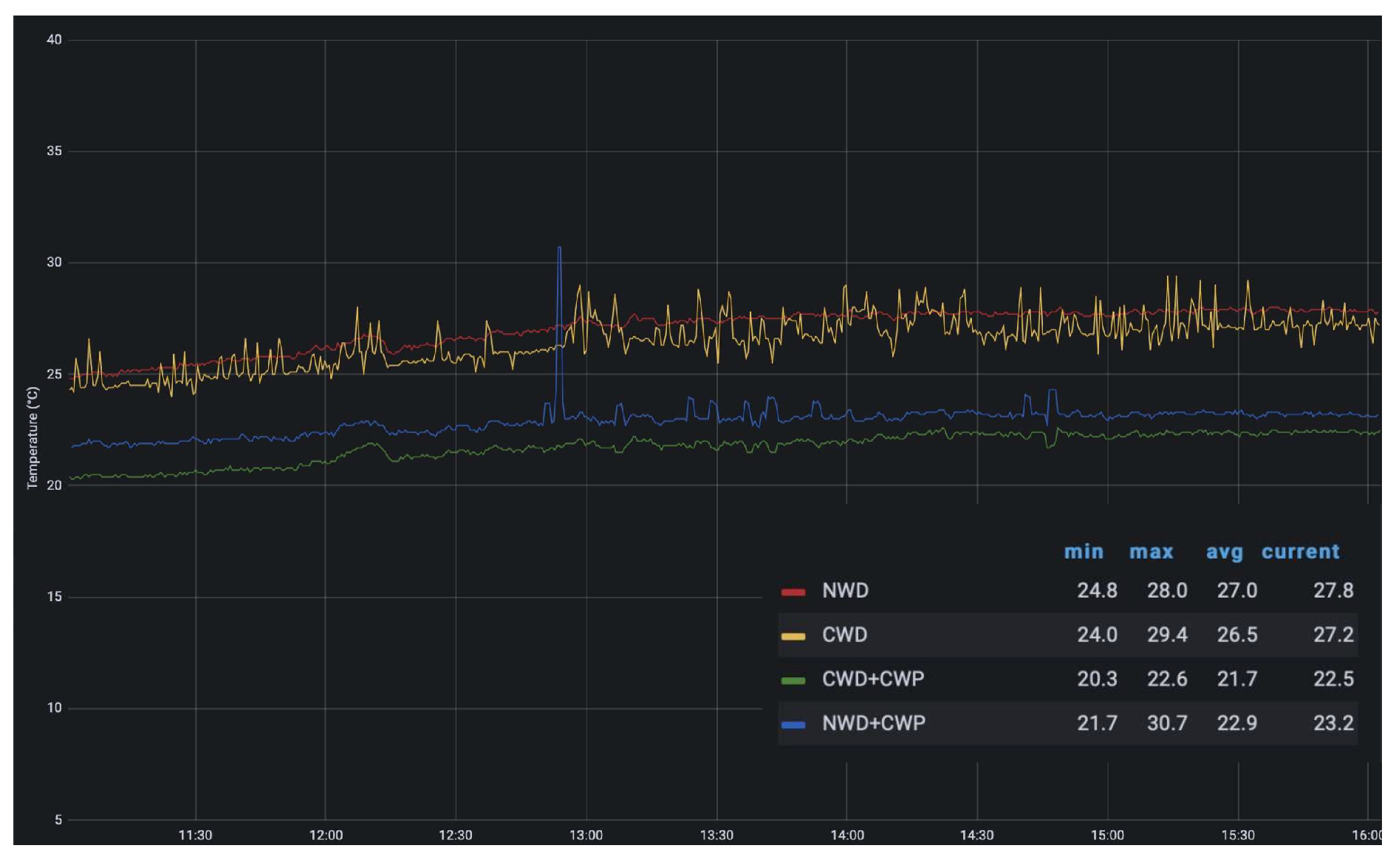
In the first month following the application of cooling treatments (October), root zone temperatures (RZT) of strawberry plants were showed no significant differences across various treatments, with averages of 23.8 °C, 24.3 °C, 22.9 °C, and 24.4 °C for NWD, CWD, CWD+CWP, and NWD+CWP treatments, respectively. By January, RZTs decreased to 19.2 °C, 19.7 °C, 17.7 °C, and 19.5 °C, respectively, with the CWD+CWP treatment being particularly effective, reducing RZT by approximately 2 °C compared to other treatments. The dashboard includes graphs illustrating temperatures of the growing media, air, and water, as well as ambient and indoor relative humidity, light intensity, and CO2 concentration, with Figure 3 showcasing root zone temperatures under different cooling treatments.
Figure 3.
The dashboard displays root zone temperatures in different cooling treatments.
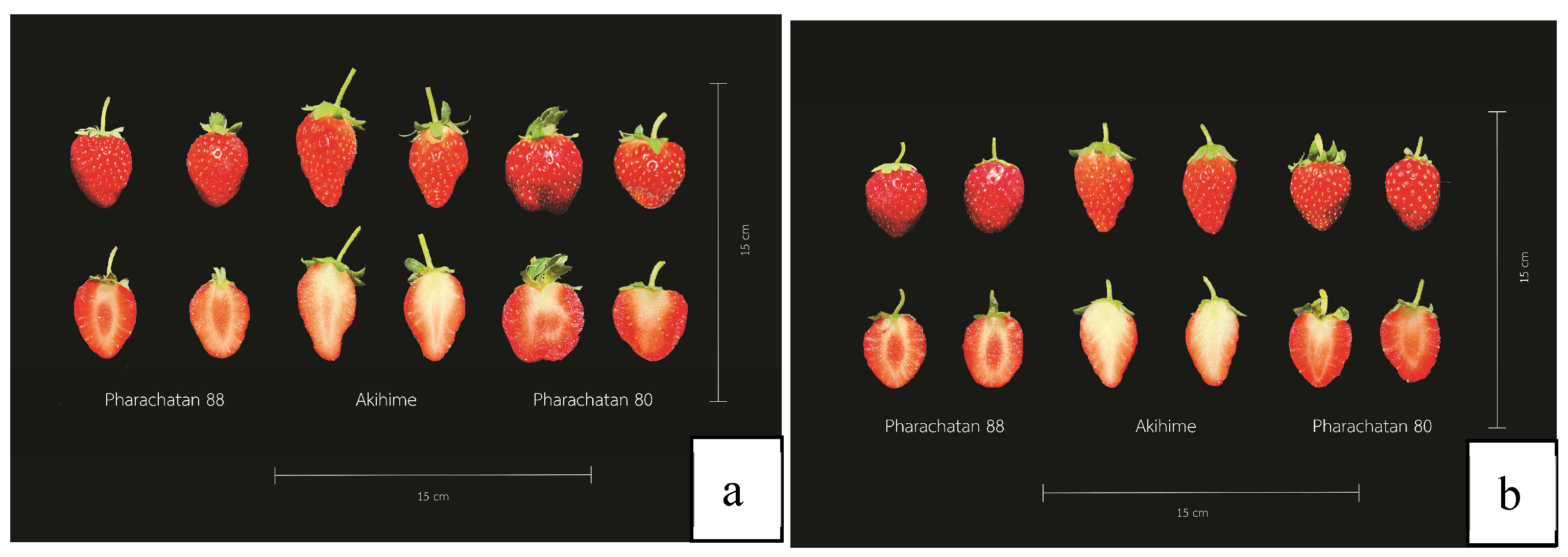
Three months after the treatments, there was an interaction between two factors, as in Table 1. Each strawberry cultivar responded to the root zone cooling treatments differently. ‘Akihime’ and ‘P80’ strawberry in all root zone cooling treatments showed significantly higher performances in canopy width and leaf width than ‘P88’. On the other hand, ‘Akihime’ and ‘P88’ strawberry together with CWD+CWP treatment gave bigger crowns than ‘P80’, which showed no difference in crown diameter. Interestingly, the cooling treatments resulted in a higher percentage of flowering in each cultivar compared to the NWD treatment. However, the ‘P80’ strawberry did not produce any flowers under either the NWD or CWD treatments. Interactions were not found in plant height, leaf length, chlorophyll content, and number of inflorescences. ‘Akihime’ gave the highest plant height and leaf width as compared to ‘P80’ and ‘P88’, whereas ‘P80’ had the lowest chlorophyll content (Table 2). The root zone cooling treatments had no effect on plant height and chlorophyll content (Table 3). There was an interaction between two factors in terms of fruit quality and yield. The root zone cooling treatments tended to have better fruit qualities, particularly in ‘Akihime’, in terms of fruit weight, fruit length, TSS, and fruit color. In any case, ‘P88’ gave higher fruit firmness values than other cultivars (Table 4, 5) (Figure 3,4).
Figure 4.
The root zone temperatures in different cooling treatments.
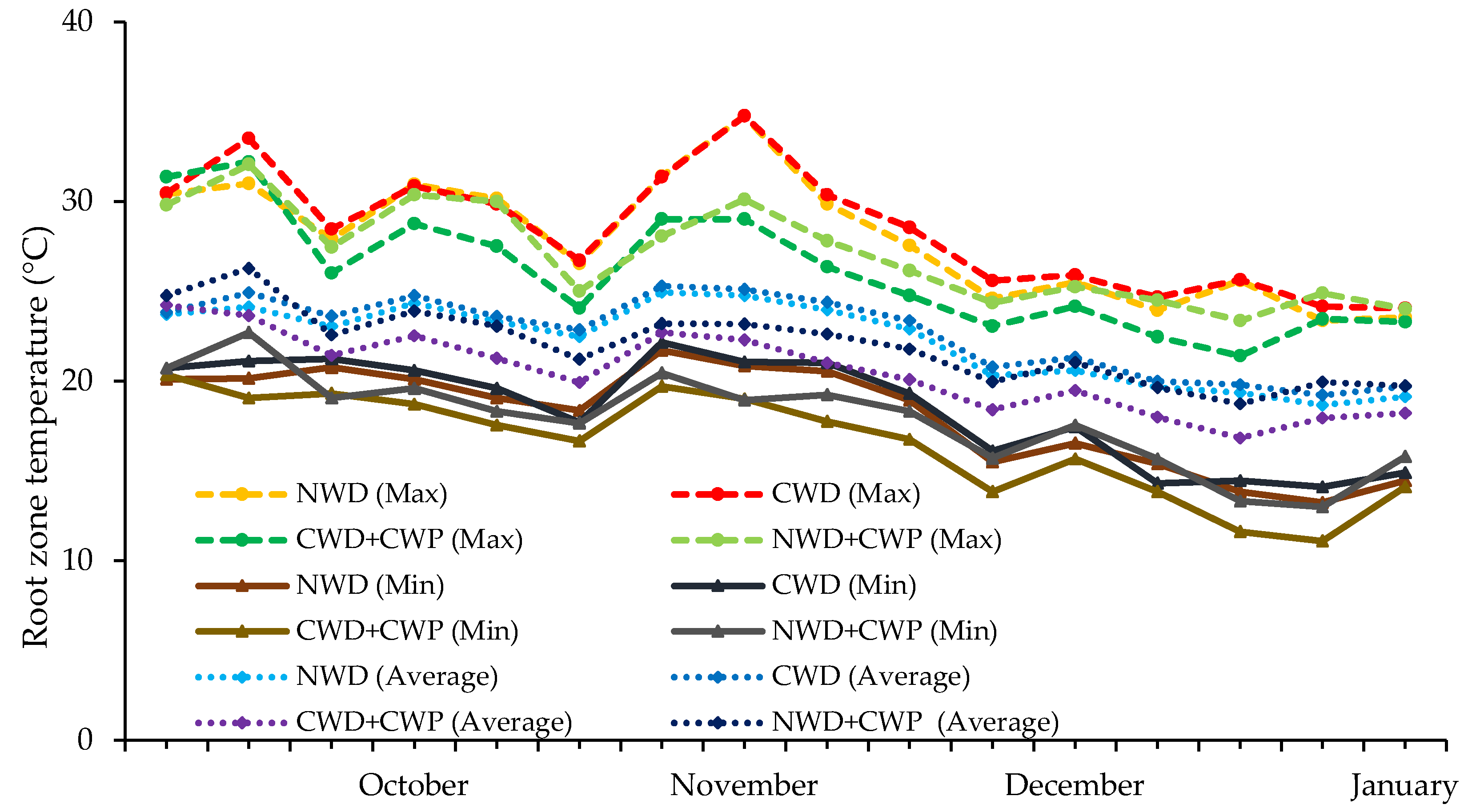
Figure 3.
‘P88’ and ‘Akihime’ strawberry fruits after (a) NWD and (b) CWD treatments.
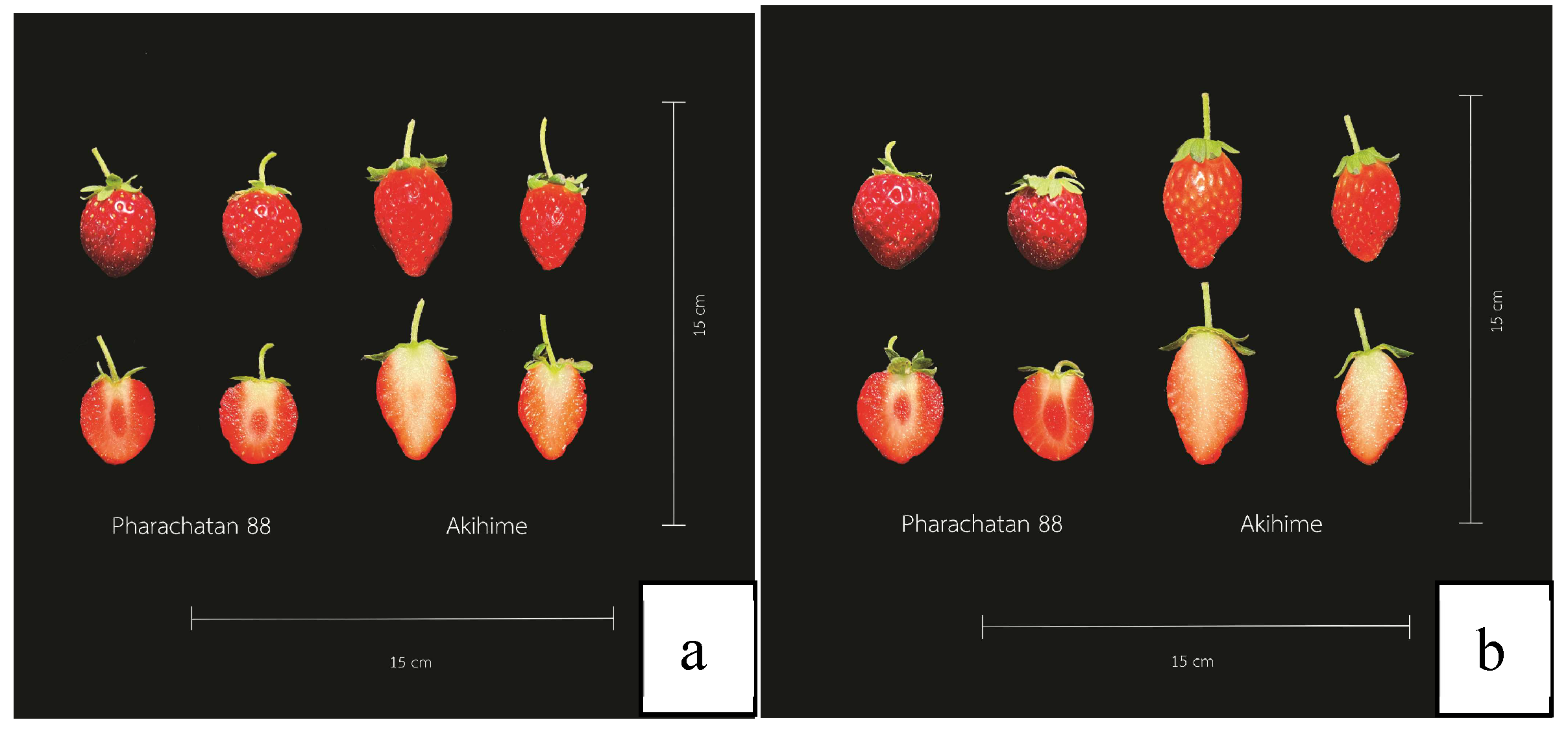
Figure 4.
‘P88’, ‘Akihime’ and ‘P80’ strawberry fruit color after (a) CWD+CWP and (b) NWD+CWP treatments.
Figure 4.
‘P88’, ‘Akihime’ and ‘P80’ strawberry fruit color after (a) CWD+CWP and (b) NWD+CWP treatments.
The total acidity content (TA) and TSS/TA in strawberry fruits were different in each cultivar after cooling treatments. It seemed that the cooling treatments reduced the TA then led to higher TSS/TA (Table 6). In addition, the vitamin C content was increased after the cooling treatments. Phenolic compounds and anthocyanin contents in ‘P80’ and ‘Akihime’ seemed higher after cooling treatments as compared to ‘P88’ (Table 7).
4. Discussion
In Thailand, situated in tropical and subtropical regions, strawberry production in greenhouses encounters high temperatures during the summer, resulting in poor flowering and a shortened harvesting period. This study aimed to manipulate the root zone temperature (RZT) of three short-day strawberry cultivars grown in an evaporative greenhouse by automatically dripping cold water (10 °C) and embedding a cold-water pipe into the growing media. The results indicated that dripping cold water directly onto the surface of the growing media was ineffective in reducing RZT during the period from October 2022 to January 2023. The growing media, composed of a 70:30 mixture of peat moss and perlite, demonstrated insulating properties, which maintained consistent temperatures. The practice of dripping cold water for 1 minute, five times in the afternoon (20 ml/time), was insufficient to lower the temperature of the growing media. Notably, a combination of cold water dripping and embedding a cold-water pipe into the growing media successfully reduced RZT by approximately 2 °C. Under this treatment, the maximum RZT was recorded at 23.4 °C, and the minimum at 11.1 °C, with the average air temperature and relative humidity being 21.5 °C and 84%, respectively. The average CO2 concentration and light intensity in the evaporative greenhouse were recorded at 495 ppm and 43,923 lux, respectively. These conditions were conducive to promoting both vegetative and reproductive growth of strawberry plants in our experiment. Previous research has demonstrated that increasing light intensity from 27,000 to 54,000 lux at temperatures between 15-21 °C enhances CO2 uptake and photosynthesis in June-bearing strawberries [23]. Optimal root zone temperature (RZT) is crucial as it enhances root respiration, oxygen consumption, and cell viability, leading to increased nutrient uptake and biomass accumulation. Furthermore, RZT can significantly influence the vegetative and reproductive growth of hydroponically grown strawberry plants [15]. The author of [23] also found that large fluctuations in RZT negatively impacted strawberry plant growth, leaf area, and the uptake of certain nutrients. Similarly, author [24] was reported that groundwater cooling reduced the rhizosphere temperature from 26.9 °C to 24.9 °C, effectively improving the growth and productivity of strawberries under high-temperature conditions.
Furthermore, cooling root zone temperatures (RZTs) to around 20 °C, combined with short-day (8-hour daylength) treatment for 22 days, has been shown to accelerate and stabilize flower bud formation in the ‘Nyoho’ and ‘Tochiotome’ cultivars [14]. Conversely, maintaining root zone temperatures at 20-23 °C through heating was found to be effective in increasing the productivity and quality of strawberries during winter cultivation in greenhouses [25]. In our experiment, the ‘Akihime’ and ‘P88’ cultivars exhibited better flowering and yield following root zone cooling (RZC) treatments compared to the ‘P80’ cultivar. The RZC treatments did not affect chlorophyll content, although ‘P80’ demonstrated lower chlorophyll content than the other cultivars. Additionally, RZC treatments appeared to enhance fruit weight, TSS, and overall yield compared to the non-cooling treatment. Different strawberry cultivars responded variably to environmental conditions. For example, when six strawberry cultivars (‘Maehyang’, ‘Seolhyang’, ‘Keumhyang’ – Korean short-day cultivars; ‘Akihime’, ‘Red Pearl’, ‘Sachinoka’ – Japanese short-day cultivars) were exposed to short-day (10-hour photoperiod) conditions at an elevation of 800 meters for 35 days starting in late June, they exhibited different numbers of flowers and fruits [26]. The treatment of seven 9-hour short days at 21/21 °C (day/night) followed by seven 9-hour short days at 21/12 °C (day/night) was identified as the most effective conditioning method for off-season ‘Sweet Charlie’ strawberry production in greenhouses [27]. The author of [28] reported that strawberries harvested at a root zone temperature (RZT) of 15 °C had greater soluble solid content (SSC) compared to those harvested at 22 °C. Higher RZTs negatively impacted the of phosphorus (P), potassium (K), and magnesium (Mg), reducing their uptake by approximately 35%. Potassium is known to play a crucial role in sugar translocation from source to sink. The author of [29] indicated that the K nutrient is positively correlated with sugar content (°Brix) in ‘Fortuna’ strawberries. Similar studies on other plants, such as tomatoes, have confirmed that cooling RZTs promotes growth and nutrient uptake, as well as affecting sugar accumulation in the fruit. Two tomato cultivars exhibited differential responses to root cooling treatments. Specifically, root cooling enhanced the accumulation of vitamin C and lycopene in the ‘Delioso’ cultivar, likely due to the activation of protection mechanisms against low-temperature-induced oxidative stress [30]. This study concludes that root zone cooling treatments can improve the growth, flowering, fruit quality, and yield of short-day strawberries in subtropical production areas. However, the efficacy of these treatments is also contingent upon other climatic factors and the specific cultivar used.
5. Conclusion
Research indicates that cold water dripping (10°C) combined with embedding a cold-water pipe into the growing media can reduce the root zone temperature by approximately 2 °C, thereby enhancing the vegetative and reproductive growth of short-day strawberry cultivars, as well as improving fruit quality and yield. Without the root zone cooling treatment, the ‘Akihime’ and ‘Pharachatan 88’ cultivars were still capable of producing flowers and yield, whereas the ‘Pharachatan 80’ cultivar was not. Therefore, the ‘Pharachatan 80’ cultivar appears to be more dependent on root zone cooling for optimal growth and productivity.
Author Contributions
Conceptualization, Daruni Naphrom; Data curation, Werapat Panchai and Anucha Promwungkwa; Formal analysis, Daruni Naphrom; Resources, Suwit Boonraeng; Software, Anucha Promwungkwa; Supervision, Daruni Naphrom; Validation, Choochad Santasup and Anucha Promwungkwa; Writing—original draft, Daruni Naphrom and Werapat Panchai ; Writing—review and editing, Daruni Naphrom.
Funding
Fundamental Fund, 2022 was supported by (i) Chiang Mai University (CMU), (ii) Thailand Science Research and Innovation (TSRI), and (iii) the National Science, Research, and Innovation Fund (NSRF), Thailand Science, Research, and Innovation (TSRI).
Data Availability Statement
D.N. and A.P. are responsible for data keeping, and data are available upon request.
Acknowledgments
We wish to thank the Central Laboratory, Faculty of Agriculture, and Faculty of Engineering, Chiang Mai University, for supporting materials, scientific equipment, and places to conduct research.
Conflicts of Interest
The authors declare no conflicts of interest.
References
- Nelda R. Hernández-Martínez, Caroline Blanchard, Daniel Wells, Melba R. Salazar-Gutiérrez, Current state and future perspectives of commercial strawberry production: A review, Scientia Horticulturae, 2023, 312, 111893.
- “Strawberry production in 2021, Crops/Regions/World list/Production Quantity (pick lists)”. UN.
- Food and Agriculture Organization, Corporate Statistical Database (FAOSTAT). 2023. (accessed on 2 August 2023).
- Phiphatthanawong, N. Strawberry New Economic Crops; Kasetsart University: Bangkok, Thailand, 2007; p. 158.
- Phiphatthanawong, N. Strawberry production and the royal project foundation, Thailand. Journal of Developments in Sustainable Agriculture 2015, 10, 15–18. [Google Scholar]
- Thammasophon, T.; Pusadee, T.; Bundithya, W.; Naphrom, D. Effects of Vernalization on Off–Season Flowering and Gene Expression in Sub-Tropical Strawberry cv. Pharachatan 80. Horticulturae, 2023, 9, 87.
- Wang, S.Y.; Camp, M.J. Temperatures after bloom affect plant growth and fruit quality of strawberry. Scientia Horticulturae 2000, 85, 183–199. [Google Scholar] [CrossRef]
- Palencia, P.; Martinez, F.; Medina, J. J.; Vázquez, E.; Flores, F.; López-Medina, J. Effects of climate change on strawberry production. Acta Hortic, 2009, 838, 51-54.
- Khammayom, N.; Maruyama, N.; Chaichana, C. The effect of climatic parameters on strawberry production in a small walk-in greenhouse. AgriEngineering 2022, 4, 104–121. [Google Scholar] [CrossRef]
- Khoshnevisan, B.; Rafiee, S.; Mousazadeh, H. Environmental impact assessment of open field and greenhouse strawberry production. European journal of Agronomy 2013, 50, 29–37. [Google Scholar] [CrossRef]
- Greer, D.H.; Wünsche, J.N.; Norling, C.L.; Wiggins, H.N. Root-zone temperatures affect phenology of bud break, flower cluster development, shoot extension growth and gas exchange of ‘Braeburn’ (Malus domestica) apple trees. Tree Physiology, 2006, 26, 105-11.
- Sakamoto, M.; Uenishi, M.; Miyamoto, K.; Suzuki, T. Effect of root-zone temperature on the growth and fruit quality of hydroponically grown strawberry plants. Journal of Agricultural Science 2016, 8, 122–131. [Google Scholar]
- Udagawa, Y.; Ito, T.; Gomi, K. Effects of root temperature on the absorption of water and mineral nutrients by strawberry plants ‘Reiko’ grown hydroponically. Journal of the Japanese Society for Horticultural Science 1991, 59, 711–717. [Google Scholar] [CrossRef]
- Mizuno, S.; Muramatsu, Y.; Tateishi, A.; Watanabe, K.; Shinmachi, F.; Koshioka, M.; Kubota, S. Effects of Root-zone Cooling with Short-day Treatment in Pot-grown Strawberry (Fragaria × ananassa Duch.) Nurseries on Flowering and Fruit Production. The Horticulture Journal 2022, 91, 1–7.
- Masaru, S.; Uenishi, M.; Miyamoto, K.; Suzuki, T. Effect of Root-Zone Temperature on the Growth and Fruit Quality of Hydroponically Grown Strawberry Plants. Journal of Agricultural Science 2016, 8, 122. [Google Scholar] [CrossRef]
- Deschamps, S.S.; Whitaker, V.M.; Agehara, S. White-striped plastic mulch reduces root-zone temperatures during establishment and increases early season yields of annual winter strawberry. Scientia horticulturae 2019, 243, 602–608. [Google Scholar] [CrossRef]
- Kumar, S.; Dey, P. Effects of different mulches and irrigation methods on root growth, nutrient uptake, water-use efficiency and yield of strawberry. Scientia Horticulturae 2011, 127, 318–324. [Google Scholar] [CrossRef]
- Moritani, S.; Nanjo, H.; Itou, A.; Imai, T. Root-zone cooling evaluation using heat pump for greenhouse strawberry production. HortTechnology 2018, 28, 570–577. [Google Scholar] [CrossRef]
- AOAC. (1995). Official methods of analysis (16th ed.). Washington DC, USA: Association of Official Analytical Chemists.
- Sellappan, S., Akoh, C. C., & Krewer, G. Phenolic compounds and antioxidant capacity of Georgia-grown blueberries and blackberries. Journal of agricultural and food chemistry, 2002, 50(8), 2432-2438.
- Folin O. Tyrosine and tryptophan determination in proteins. J. Biol Chem 1927, 3:649–673.
- Ranganna, S. “Handbook of analysis and quality control for fruit and vegetable products” 2004, 2nd ed. Tata McGraw-Hill. New Delhi.
- Rivero, R.; Sønsteby, A.; Solhaug, K.A.; Heide, O.M; Remberg, S.F. Effects of temperature and photoperiod on photosynthesis in everbearing strawberry. Acta Hortic 2021, 1309, 379–386. [Google Scholar] [CrossRef]
- Lee, G.B.; Lee, J.E.; Choe, Y.U.; Park, Y.H.; Choi, Y.W.; Kang, N.J.; Kang, J.S. Effects of Groundwater Cooling Treatment on Growth, Yield, and Quality of Strawberries under High Temperature Conditions. Journal of Environmental Science International 2018, 27, 631–639. [Google Scholar] [CrossRef]
- Jo, W.J.; Shin, J.H. Effect of root-zone heating using positive temperature coefficient film on growth and quality of strawberry (Fragaria x ananassa) in greenhouses. Horticulture, Environment, and Biotechnology 2022, 63, 89-100.
- Ruan, J.; Lee, Y.H.; Yeoung, Y.R.; Larson, K. Influence of short-day treatment on autumn fruit production of June-bearing strawberry cultivars. Horticulture, Environment and Biotechnology 2011, 52, 259-264.
- Durner, Edward F. “Photoperiod and temperature conditioning of ‘Sweet Charlie’ strawberry (Fragaria× ananassa Duch.) plugs enhances off-season production. Scientia horticulturae 2016, 201, 184-189.
- MacKenzie, S.J.; Chandler, C.K. , The late season decline in strawberry fruit soluble solid content observed in Florida is caused by rising temperatures. Acta Hortic 2008, 842, 843–846. [Google Scholar] [CrossRef]
- Nakro, A.; Bamouh, A.; Bouslama, H.; San Bautista, A.; Ghaouti, L. The effect of potassium–nitrogen balance on the yield and quality of strawberries grown under soilless conditions. Horticulturae 2023, 9, 304. [Google Scholar] [CrossRef]
- He, F.; Thiele, B.; Watt, M.; Kraska, T.; Ulbrich, A.; Kuhn, A. J. , Effects of root cooling on plant growth and fruit quality of cocktail tomato during two consecutive seasons. Journal of Food Quality 2019, 3598172, 1–15. [Google Scholar] [CrossRef]
Figure 1.
Four cooling root zone treatments: (a) normal water dripping (NWD), (b) cold water dripping (CWD), (c) cold water dripping + cold water pipe (CWD+CWP), and (d) normal water dripping + cold water pipe (NWD+CWP).
Figure 1.
Four cooling root zone treatments: (a) normal water dripping (NWD), (b) cold water dripping (CWD), (c) cold water dripping + cold water pipe (CWD+CWP), and (d) normal water dripping + cold water pipe (NWD+CWP).
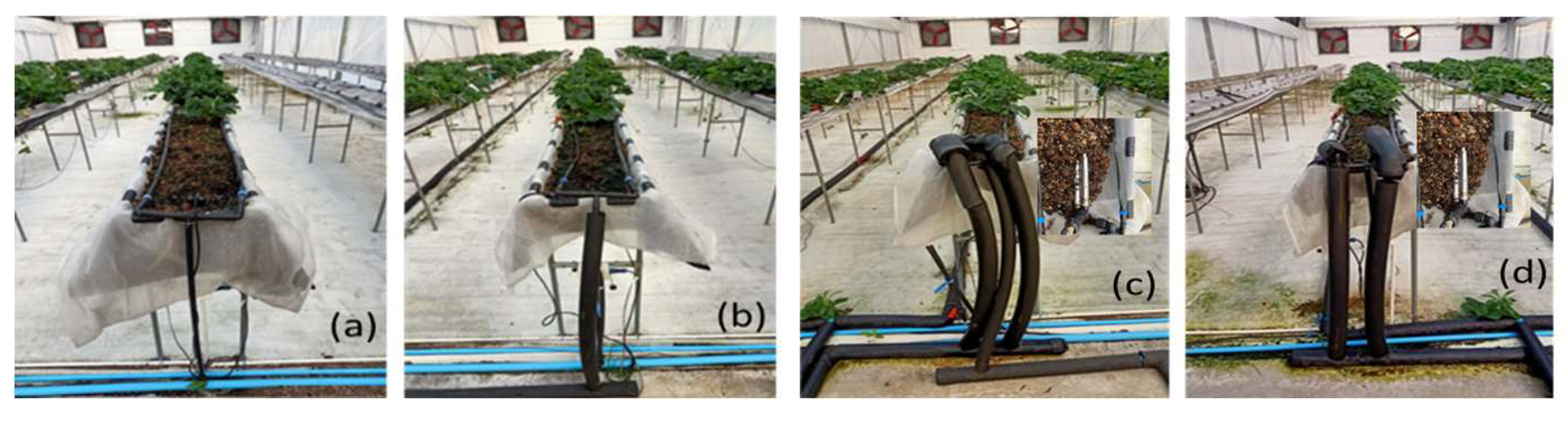
Figure 2.
Water dripping tubes and double cold-water pipes positions in strawberry growing trough.
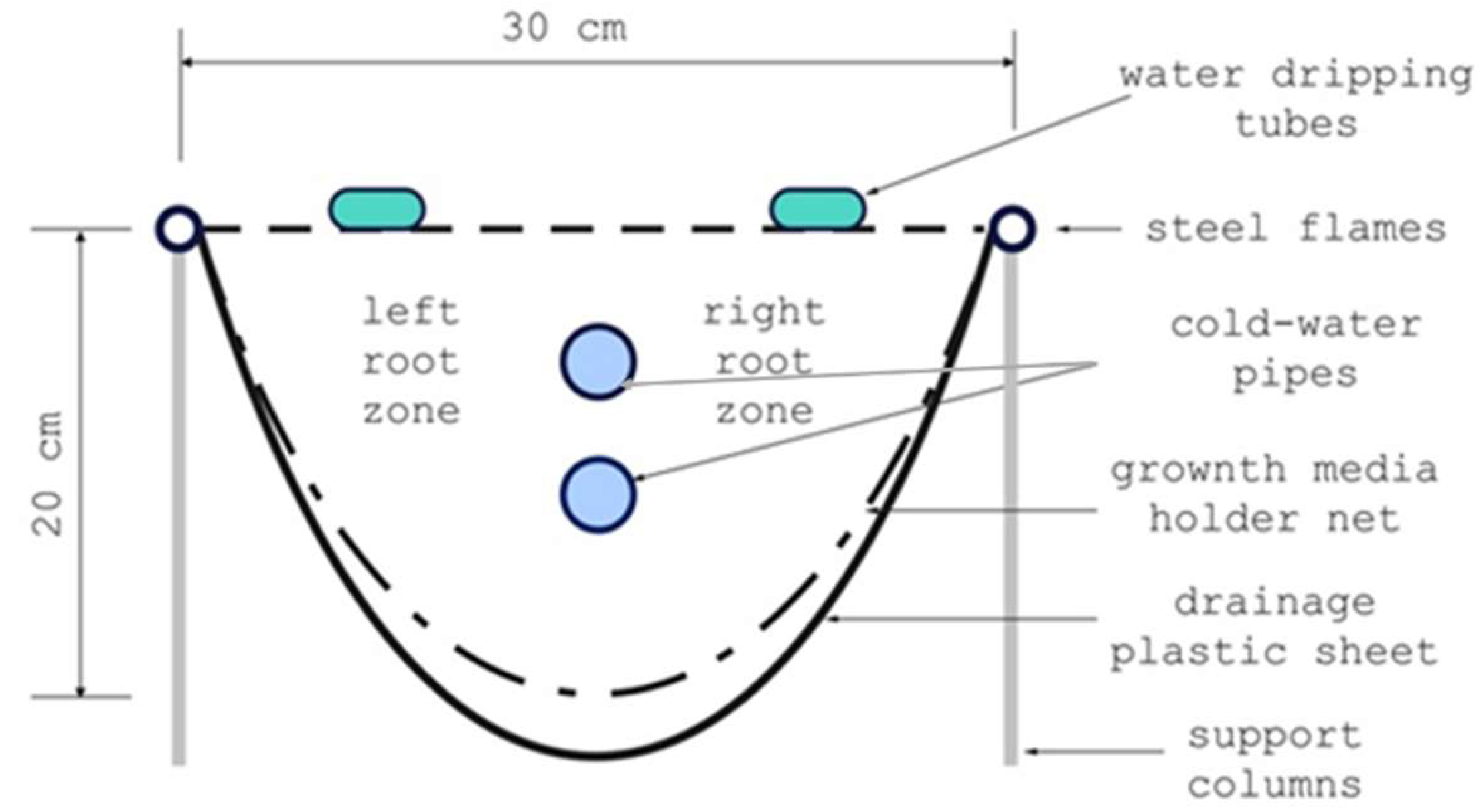

Table 1.
Canopy width, leaf width, crown diameter, percentage of flowering in different treatments.
| Treatments | Canopy width (cm) |
Leaf width (cm) |
Crown diameter (mm) |
% of flowering | |
|---|---|---|---|---|---|
| ‘P88’ | NWD CWD CWD+CWP NWD+CWP |
28.55 d 29.71 d 29.80 d 28.81 d |
7.31 c 6.71 c 7.12 c 7.17 c |
15.26 cde 18.24 bcd 19.65 ab 16.35 bcde |
68.75 81.25 100.00 81.25 |
| ‘P80’ | NWD CWD CWD+CWP NWD+CWP |
38.86 abc 40.40 a 38.25 abc 34.19 bcd |
7.68 bc 9.23 ab 9.32 a 7.63 bc |
18.61 bcd 19.22 abc 18.92 bcd 18.51 bcd |
0.00 0.00 100.00 81.25 |
| ‘Akihime’ | NWD CWD CWD+CWP NWD+CWP |
38.15 abc 33.20 cd 43.03 a 39.51 ab |
6.81 c 6.52 c 8.00 abc 7.96 abc |
14.57 de 13.86 e 23.51 a 18.55 bcd |
75.00 87.50 93.75 93.75 |
| A | ** | ** | ns | - | |
| B | ns | ns | ** | - | |
| A x B | * | * | * | - | |
Note: means followed by different lowercase letters within the same column are significantly different at p < 0.05 (ns = non-significant; * = significant).
Table 2.
Plant height, leaf length, and chlorophyll content of three cultivars of strawberry.
| Cultivars | Plant Height (cm) |
Leaf length (cm) |
Chlorophyll content (SPAD unit) |
|---|---|---|---|
| ‘P88’ P80 ‘Akihime’ |
21.08 b 22.99 b 24.94 a |
6.92 c 8.44 b 9.67 a |
41.46 a 33.51 b 40.03 a |
| F-test | ** | ** | ** |
Note: means followed by different lowercase letters within the same column are significantly different at p < 0.05 (ns = non-significant; * = significant).
Table 3.
Plant height, leaf length, and chlorophyll content in different root zone cooling treatments.
Table 3.
Plant height, leaf length, and chlorophyll content in different root zone cooling treatments.
| Treatments | Plant Height (cm) |
Leaf length (cm) |
Chlorophyll content (SPAD unit) |
|---|---|---|---|
| NWD CWD CWD+CWP NWD+CWP |
22.35 22.56 23.70 23.41 |
8.21 ab 8.70 a 8.67 a 7.79 b |
39.37 39.09 37.70 37.16 |
| F-test | ns | * | ns |
Note: means followed by different lowercase letters within the same column are significantly different at p < 0.05 (ns = non-significant; * = significant)..
Table 4.
Strawberry fruit qualities and yield in different treatments.
| Treatments | Fruit weight (gram) | Fruit width (mm) | Fruit length (mm) | Fruit firmness (kg) | Yield (gram/plant) |
|
|---|---|---|---|---|---|---|
| ‘P88’ | NWD CWD CWD+CWP NWD+CWP |
7.60 b 11.66 a 7.24 b 9.33 ab |
22.84 ab 26.27 a 22.95 ab 24.34 ab |
27.44 d 32.38 bcd 27.59 d 31.01 cd |
0.27 de 0.30 cd 0.37 abc 0.24 def |
163.75 b 327.75 a 183.00 b 127.25 ab |
| ‘P80’ | NWD CWD CWD+CWP NWD+CWP |
- - 9.63 ab 12.04 a |
- - 24.46 ab 25.32 ab |
- - 30.06 cd 27.43 d |
- - 0.41 ab 0.41 a |
- - 148.75 ab 276.25 a |
| ‘Akihime’ | NWD CWD CWD+CWP NWD+CWP |
7.50 b 9.32 ab 10.04 ab 9.51 ab |
22.11 b 23.71 ab 23.56 ab 22.77 b |
34.01 bc 31.89 bcd 40.41 a 36.39 ab |
0.15 f 0.19 ef 0.19 ef 0.33 bcd |
210.00 b 239.50 ab 385.75 ab 363.75 ab |
| A | * | * | * | * | * | |
| B | * | * | * | * | * | |
| A x B | * | * | * | * | * | |
Note: means followed by different lowercase letters within the same column are significantly different at p < 0.05 (ns = non-significant; * = significant).
Table 6.
pH, TA, and TSS/TA of strawberry fruits after treatments.
| Treatments | TSS |
Total acidity content (%) | TSS/TA | |
|---|---|---|---|---|
| ‘P88’ | NWD CWD CWD+CWP NWD+CWP |
9.08 c 10.28 abc 9.97 abc 10.28 abc |
2.12 a 0.88 c 1.00 c 1.05 c |
4.50 d 13.15 a 9.39 abc 10.23 abc |
| ‘P80’ | NWD CWD CWD+CWP NWD+CWP |
- - 10.85 ab 10.74 ab |
- - 1.77 b 1.05 c |
- - 6.27 cd 9.04 bc |
| ‘Akihime’ | NWD CWD CWD+CWP NWD+CWP |
10.62 abc 9.39 bc 11.48 a 10.37 abc |
1.79 ab 0.95 c 1.16 c 1.07 c |
4.90 d 10.28 abc 9.11 abc 11.37 ab |
| A | * | ** | ** | |
| B | * | ** | ** | |
| A x B | * | ** | ** | |
Note: means followed by different lowercase letters within the same column are significantly different at p < 0.05 (ns = non-significant; * = significant).
Table 7.
Total phenolic compound, anthocyanin, and vitamin C contents of strawberry fruits after treatments.
Table 7.
Total phenolic compound, anthocyanin, and vitamin C contents of strawberry fruits after treatments.
| Treatments | Total phenolic compound (μg GAE/gFW) |
Total Anthocyanin content (mg/100gFW) |
Total vitamin C content (mg/100gFW) |
|
|---|---|---|---|---|
| ‘P88’ | NWD CWD CWD+CWP NWD+CWP |
1,647.00 de 1,396.10 e 1,252.70 e 2,435.50 abc |
10.93 b 13.34 b 19.34 b 14.18 b |
33.77 d 50.65 abcd 64.41 ab 51.90 abcd |
| ‘P80’ | NWD CWD CWD+CWP NWD+CWP |
- - 3,134.40 a 2,704.30 abc |
- - 34.14 a 14.42 b |
- - 66.29 a 58.78 abcd |
| ‘Akihime’ | NWD CWD CWD+CWP NWD+CWP |
1,440.90 e 1,369.20 e 2,820.80 ab 2,175.60 cd |
9.82 bc 13.71 b 12.49 b 15.58 b |
38.77 cd 39.40 bcd 62.53 abc 52.33 abcd |
| A | ** | ns | ** | |
| B | ** | ** | ** | |
| A x B | ** | ** | * | |
Note: means followed by different lowercase letters within the same column are significantly different at p < 0.05 (ns = non-significant; * = significant).
Disclaimer/Publisher’s Note: The statements, opinions and data contained in all publications are solely those of the individual author(s) and contributor(s) and not of MDPI and/or the editor(s). MDPI and/or the editor(s) disclaim responsibility for any injury to people or property resulting from any ideas, methods, instructions or products referred to in the content. |
© 2025 by the authors. Licensee MDPI, Basel, Switzerland. This article is an open access article distributed under the terms and conditions of the Creative Commons Attribution (CC BY) license (http://creativecommons.org/licenses/by/4.0/).
Copyright: This open access article is published under a Creative Commons CC BY 4.0 license, which permit the free download, distribution, and reuse, provided that the author and preprint are cited in any reuse.


