

Submitted:
12 April 2025
Posted:
14 April 2025
You are already at the latest version
Abstract
Educational guidance is a fundamental right of children recognized in the Convention on the Rights of the Child (1989). In this sense, in the 2030 Agenda for Sustainable Development, the fourth goal “quality education” states that it is necessary to guarantee inclusive, equitable and quality education, as well as to promote lifelong learning opportunities for all. This education must therefore respond to the needs and potential of each student, and educational guidance is key to the development of this task. At present, there still coexist diverse conceptions of educational guidance derived from the great variety of functions assigned to professionals and the indistinct use of the terms counseling and guidance. Thus, psycho-pedagogical intervention can oscillate between actions of an assistential nature of a therapeutic nature and actions of an educational nature linked to the principles of prevention and development. Therefore, this article analyzes the main intervention models that coexist in Spain, according to their theoretical paradigm and their potential contribution to the development of Goal 4. Among the main conclusions drawn from the review are that most authors recognize the models of counselling, consultation, services and programs, with the existence of a technological model of guidance being more controversial. Likewise, according to the 2030 Agenda, the models of consultation and programs favor to a greater extent the fulfilment of SDG 4, also enhancing the development of other goals, such as Goal 3, Goal 5, Goal 10 and Goal 16.
Keywords:
Educational guidance
; counseling
; consultation
; programs
; SDG 4
; sustainable education
; technologies
1. Introduction
The 2030 Agenda for Sustainable Development, in its fourth goal ‘quality education’, establishes that it is necessary to guarantee inclusive, equitable and quality education, as well as to promote lifelong learning opportunities for all [1,2]. For this to be possible, it is necessary to implement measures that enhance individualised attention to each student, as well as to offer alternatives and plural itineraries that allow for the academic, personal and professional development of the students. This education must therefore respond to the needs and potential of each student, with educational guidance being key to the development of this task. In this sense, the Convention on the Rights of the Child (1989) recognizes guidance as a fundamental aspect of the education of minors [3]. One might ask: what is educational guidance? How should it be implemented in education systems? What methods are most effective in making such guidance effective?
For decades, attempts have been made to answer the first of the questions posed, trying to conceptualise educational guidance. At present, there is still some debate about the meaning and extent of educational guidance, despite a general acceptance of its relevance. On the one hand, the word "guidance" is part of common parlance, sometimes restricting the nuances of its meaning. On the other hand, it is a term coined from different disciplines by a variety of professionals, increasing its complexity and polysemy. In recent years, for example, coaching, a form of counseling as gained ground in the field of personal guidance, being developed by professionals of various kinds [4,5,6,7], not always related to the field of pedagogy or psychology [8]. Thus, even today there coexist different conceptions of educational or psycho-pedagogical guidance. In this sense, for Vélaz de Medrano [9] this disorder is mainly due to the use of adjectives such as vocational, school or personal to delimit its meaning, to the great variety of functions assigned to guidance professionals in each era, and to the indistinct use of the terms counseling and guidance, since they are conceptually.
It is worthwhile to differentiate between guidance (orientation) and counseling (advice/counseling). The root of the former alludes to the concept of guidance, management, governance... From the semantic analysis of classic definitions of this term, Santana Vega concludes that guidance:
"[...] involves the process of systematic and professional help/support, through the use of educational and interpretative procedures with the aim of: improving self-knowledge; teaching how to solve problems of various kinds; teaching how to make prudent decisions; how to make responsible life project planning; and, finally, teaching how to relate fruitfully to the local and global environment" [10] (p. 40).
Counseling, on the other hand, is a more restricted term that implies a relationship of direct help through the use of interpersonal communication strategies, generally the interview. As we will see below, it constitutes a model of educational guidance. In this sense, the same author indicates that:
"[…] counseling is also a process of help, of a direct and interpersonal nature, which, through personal, face-to-face communication, aims to contribute to the solution and/or improvement of the person's problems" [10] (p.41).
In view of the above, it can be stated that guidance is a broader term than counseling, being the basis for the current conceptualization of guidance. It can be seen, therefore, that there are different ways of providing help: counseling, psychological assistance, information, program development, etc. The actors in guidance are also diverse, from the addressees to the people who develop the guidance action (families, teachers, tutors, guidance counselors, community agents). The context is key from a double perspective. On the one hand, given the influence it has on the development of individuals and the adaptive transcendence that results from it. And on the other, because guidance can take place in different contexts with their own idiosyncrasies: educational institutions, within the family, in organizations such as companies, in the field of communication such as in Social Action Centers, and even in an integrated manner in several of them. It is also noteworthy the plurality of fields or areas in which guidance can have an impact.
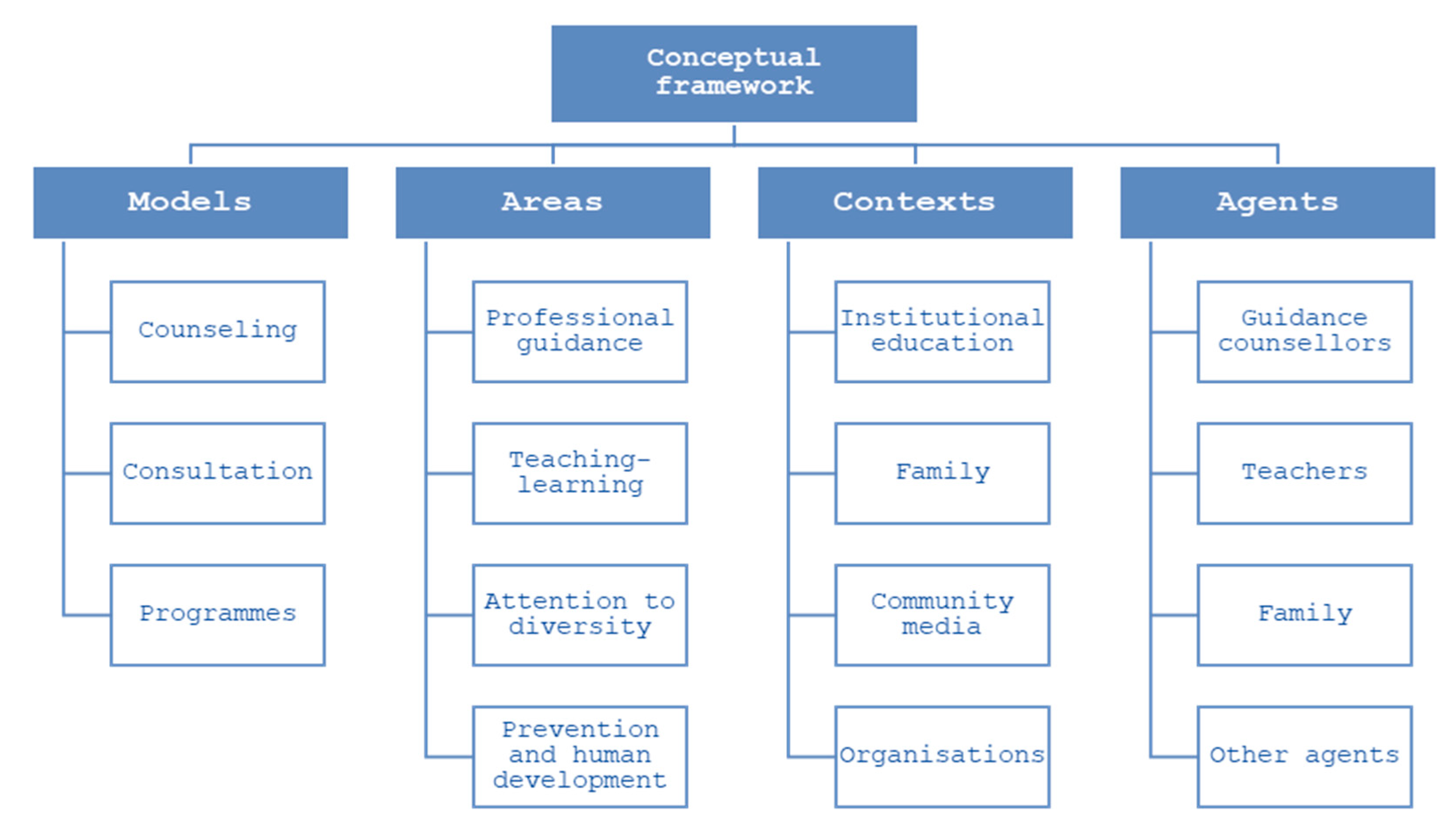
It is thus a discipline with a broad and complex field of intervention. In order to clarify this issue and generate a conceptual framework, Bisquerra and Álvarez González propose the model shown in Figure 1 [11]. In general terms, it can be considered an adequate starting point for understanding educational guidance. This model is characterized by providing a global vision of psycho-pedagogical intervention, involving teachers in its development. It shows areas and contexts of intervention, which, although they will be nuanced, allow us to see that guidance goes beyond the school environment or the attention to diversity.
Educational guidance, therefore, must be understood according to the conceptual framework of intervention and its subsequent update [11,12]. It has to seek, likewise to overcome stereotypical visions of educational guidance linked to welfare and therapeutic approaches. In this sense, it is interesting to mention the proposal of criteria, dimensions and poles made by De la Oliva et al. [13], the result of a research in secondary schools. Although it focuses on institutionalized educational guidance, it provides relevant issues to be taken into account in the practice of educational guidance (Table 1).
Figure 1.
Conceptual framework for guidance intervention. Source: Adapted from Bisquerra and Álvarez González [11] (p.14).
Figure 1.
Conceptual framework for guidance intervention. Source: Adapted from Bisquerra and Álvarez González [11] (p.14).
The authors establish seven dimensions in psychoeducational intervention, the first four centered on the theoretical principles that support such intervention, and the remaining ones linked to the intervention itself. Each of these dimensions can be articulated as a continuum between two poles. The pole on the left, called assistive by Solé and Martin [14], is linked to a remedial and directive approach, which must be developed by professionals who are experts in the field of guidance. For this reason, the resources in many cases are located outside the centers, in the Educational and Psychopedagogical Guidance Teams or in other specialized places. The pole of the right, called educational by Solé and Martín [14], is collaborative and preventive, involving all educational, social and community agents in the guidance of individuals. It is more in line with a modern conception of guidance and guidance praxis, based on the following principles [13,14]:
- The main objectives are prevention and human development, understanding that the latter is culturally and socially mediate.
- Guidance action must be foreseen, planned and evaluated, and it is essential that it be proactive and systemic in nature.
- Guidance must reach all people in a generalized manner. For this reason, efficient mechanisms must be promoted, and it is advisable that guidance specialists do not intervene directly.
- Teachers are first order guidance agents, being the tutorial action the tool/space to develop guidance.
- The specialists work symmetrically and collaboratively with other educational, social and community agents.
It should be noted, however, that unfortunately the welfare centre is still too present in educational centres [13,14,15]. Nevertheless, the potential of educational counselling is unquestionable. It allows us to address various issues related to the objectives of sustainable development, such as the promotion of health (SDG 3), gender equality and the prevention of gender-based violence (SDG 5), or civic and democratic education (SDG 10 and SDG 16). Therefore, like the way in which guidance is carried out, the topics and issues that can be addressed through it are very varied. Watts and Van Esbreck [16] grouped them into the ‘Guidance Triangle’, whose sides (foci) would be made up of school or academic guidance, career guidance and personal guidance, and from which one could contribute to the objectives of sustainable development. Subsequent analyses have shown that these foci of interest are present in different guidance systems in European countries (France, Belgium, Germany, Holland, Ireland, Great Britain, Italy, Portugal and Greece) [12,17]. For this reason, the present work analyses the theoretical models of psychodagogy intervention, delving into their nature, characteristics, objectives, etc. It also aims to identify the focuses or topics that are addressed, or can be addressed, from each of these models, in order to determine their potential for promoting the objectives of sustainable development.
2. Materials and Methods
A narrative review of educational guidance models is presented, according to the stages of elaboration and writing proposed by Gasparyan et al [18]. This type of exhaustive review is usually carried out by experts in the field [19], in this case researchers linked to educational guidance and psycho-pedagogical intervention. The methodological process involved three distinct phases [18]:
- First phase: In this phase, the scope of the review was delimited with the advice of a group of 8 experienced colleagues. It was decided to focus on the analysis of theoretical models of educational guidance and psycho-pedagogical intervention.
- Second phase: Characterised by the search for sources in databases (Scopus, Dialnet, ERIC, Science Direct, Taylor & Francis, Google Scholar and InDICEs-CSIC) and in the Network of Spanish University and Scientific Libraries, in order to incorporate manuals and reference works in the field of educational guidance (Table 2).
- Third phase: In this phase, the sources were collected, analysed and organised, and the information extracted was synthesised in tables, as shown below. For this phase, the same criteria applied by Barbosa-Chacón et al. [20] in the hermeneutic phase of the reviews were used. For this purpose, four sub-stages were established: (1) classification and establishment of order of the sources of information and summary of data; (2) definition of categories (educational models or principles, content, methodology, agents involved); (3) search for central categories; (4) qualitative-interpretative analysis of the information; (5) analysis of the information and its interpretation; and (6) analysis of the information and its interpretation.
3. Results
3.1. Guidance Intervention Models
The proposal made by De la Oliva et al. shows that psycho-pedagogical intervention is articulated within the framework of the so-called intervention models [13]. In the scientific and professional field, the term is not used in a univocal way. In general, it is understood as a concept that straddles theory and practice. From a practical perspective, a model can be considered to be the set of strategies used to achieve the proposed results [21]. On a more theoretical level, Rodríguez Diéguez points out that models in counselling make theory more accessible from systematic approaches, and allow the selection of empirical facts for the elaboration of theories [22]. Therefore, it can be said that the model is understood as the instrument that allows theory to be brought closer to practice, to contrast this theory and to serve as a frame of reference for research and intervention.
There are various classifications of the models of intervention in guidance, according to issues as diverse as their history and trajectory, the type of help, the professional style, according to the theoretical-conceptual framework of reference, the type of intervention or its organizational nature. In this case, a classification has been adopted according to the type of intervention, selecting the models most recognized by different authors (Table 3).
There is a general consensus, as can be seen in Table 3, on the nature of the counseling, consultation and program models. Bisquerra considers these to be the basic models of educational guidance and psycho-pedagogical intervention [38]. The service model, and its extension to services acting by programs, has been questioned by different specialists. Santana Vega states that "the service model is not a model in itself either, it is, in fact, the result of the organization of support agents (external or internal) to the school institution" [10] (p. 97). The technological model has been much more questioned. Authors such as Vélaz de Madrano or Santana Vega believe that technologies are a resource at the service of guidance rather than a model in itself [9,10]. In contrast, Pantoja, a precursor and advocate of the model, is optimistic about its possibilities and progress [35]. The truth is that, for the moment, the model or quasi-model has not achieved the expected development and scope.
In this way, the basic models of counseling intervention (counseling or clinical model, consultation model and program model) are developed in depth and in detail, and the service model and the technological model are presented succinctly.
3.1.1. Counseling Model
At the beginning of the article the main differences between guidance and counseling were discussed, concluding that the latter is a model within the broad field of educational guidance. This model, also called clinical or counseling, is characterized by having a strong remedial or therapeutic character, which is why it is also called clinical model. Direct and interpersonal communication, generally through the interview, is a key element of this model, hence another name for this model is counseling. It can be affirmed that it responds to the archetypical image that el has of educational guidance.
This model has its origins in Pearson's model, Differential Psychology, Psychometry, Mental Hygiene, the traits and factors approach, and other therapeutic contribution [29]. Its fundamental objective in the helping relationship is to attend to the needs that the person may have in different areas such as personal, educational or socio-professional [41]. For Pantoja there are four areas of intervention for which this model is particularly appropriate, according to the proposal of the American School Counselor Association (ASCA) [35]. These are: intervention in family, interpersonal, academic and personal adjustment problems. In any case, the basic characteristics of this model should be underlined:
- −
- Personal, direct and individual assistance relationship.
- −
- Dyadic character: counsellor and counselee.
- −
- Asymmetric relationship.
- −
- Therapeutic and reactive purposes.
Therefore, the method par excellence used in this guidance intervention is the interview [17,38,41]. Benavent and Fossati masterfully define this:
"A communication process that acts on two levels (cognitive and emotional) and that takes place in three dimensions: interviewer-coach, interviewee-coachee and context (...). The purpose of the interview in the helping relationship is to help people to better understand and cope with their existential problems and to improve communication and interpersonal relationships by creating a facilitating climate (rapport) that favors the personal involvement of the person being helped in the process" [41] (p. 72).
Rapport and empathy are key aspects for the functioning of the model. Recent studies show the positive effect of rapport between counsellor and client on the results of therapy. It has been demonstrated that a good therapeutic alliance and the positive perception of this by the client are crucial aspects for the effectiveness of the treatment [42]. Other works centred on the impact of empathy in interviews of different kinds point in the same direction, being a key aspect for the success of the interviews [43,44,45].
For this reason, in this model, the counsellor is the one who directs the intervention process, and their training and technical preparation are key. For Santana Vega [10], the attitudes, treatment and procedures used by the interviewer are key to the functioning of the interview and the establishment of an adequate rapport. Thus, he considers that acceptance and understanding are indispensable elements in the model. Therefore, it requires the interviewer to have the following characteristics [37,38]:
- −
- Authenticity and sincerity. Ability of the interviewer to be free, genuine and sincere.
- −
- Empathy. Ability to perceive what the interviewee is experiencing, identify with him/her, share his/her feelings and communicate appropriately.
- −
- Closeness and understanding. Ability to be approachable, respecting the dignity of the person being interviewed and showing acceptance of the interviewee's decisions.
- −
- Concreteness. Ability to express in concrete and specific terms with feelings expressed by the interviewee.
- −
- Confrontation of incongruities. Ability to adequately show discrepancies be-tween what the interviewee thinks, feels, says and does.
- −
- Assertiveness. Ability of the interviewer to express opinions and thoughts in an appropriate manner and without denying, offending or demeaning the interviewee.
- −
- Personalization. Ability to help the oriented person to take ownership of his or her problem, accepting his or her degree of control and assuming responsibility for it.
- −
- Self-disclosure. Ability to share, in a measured and responsible manner, the interviewer's personal feelings and experiences for the benefit of the person being inter-viewed.
- −
- Acceptance of the person being interviewed. This is a fundamental attitude of the person being interviewed. In the words of Repetto "positive and unconditional acceptance, respect and cordiality" [37] (p. 271).
- −
- Self-realization. Ability to live autonomously, freely and openly, that is, to be self-directed.
- −
- Relationship to the moment. Ability of the interviewer to interpret the feelings of the interviewee and the relational situation between the interviewee and the interviewee in each moment, that is, in the here and now.
According to the review carried out, the model is specified in the following intervention phases [32,37]:
-
Initial phase: beginning of the helping relationship:Request for assistance from the person in need. An appropriate relationship is established between the counseling specialist and the person being counseled.
-
Phase one: diagnosis:Diagnosis of the situation posed by the person requesting help. Internalization and self-exploration by the person requesting help. Top-down character.
-
Phase two: treatment:Treatment is issued based on diagnosis. Construction and initiation of action. Self-concept, self-acceptance and self-esteem are enhanced. Bottom-up and constructive character.
-
Evaluation phase:Follow-up and evaluation of the intervention.
Counselling as a direct and individual intervention with reactive aims is conducive to solving various health problems, especially in the field of mental health. Its therapeutic nature connects it directly with SDG 3 ‘Ensure healthy lives and promote well-being for all at all ages’, its impact on improving personal well-being in the treatment of different health problems having been demonstrated [46,47].
3.1.2. Consultation Model
It arose as a response to the inadequacy of the clinical model in the field of education and given its relevance in the development of organizations. In our country, the first publications on this model appeared in the 1980s. In any case, it has acquired a great boom, exercising its function from a therapeutic, preventive or developmental perspective.
This model focuses on indirect action on groups or individuals. Hervás Avilés based on the conceptual analysis of various definitions, points out eleven characteristics of the model. These are [36] (p.177):
- The consultation is a relational model, as it includes all the characteristics of the counseling relationship.
- It is a model that promotes information and training of professionals and for professionals.
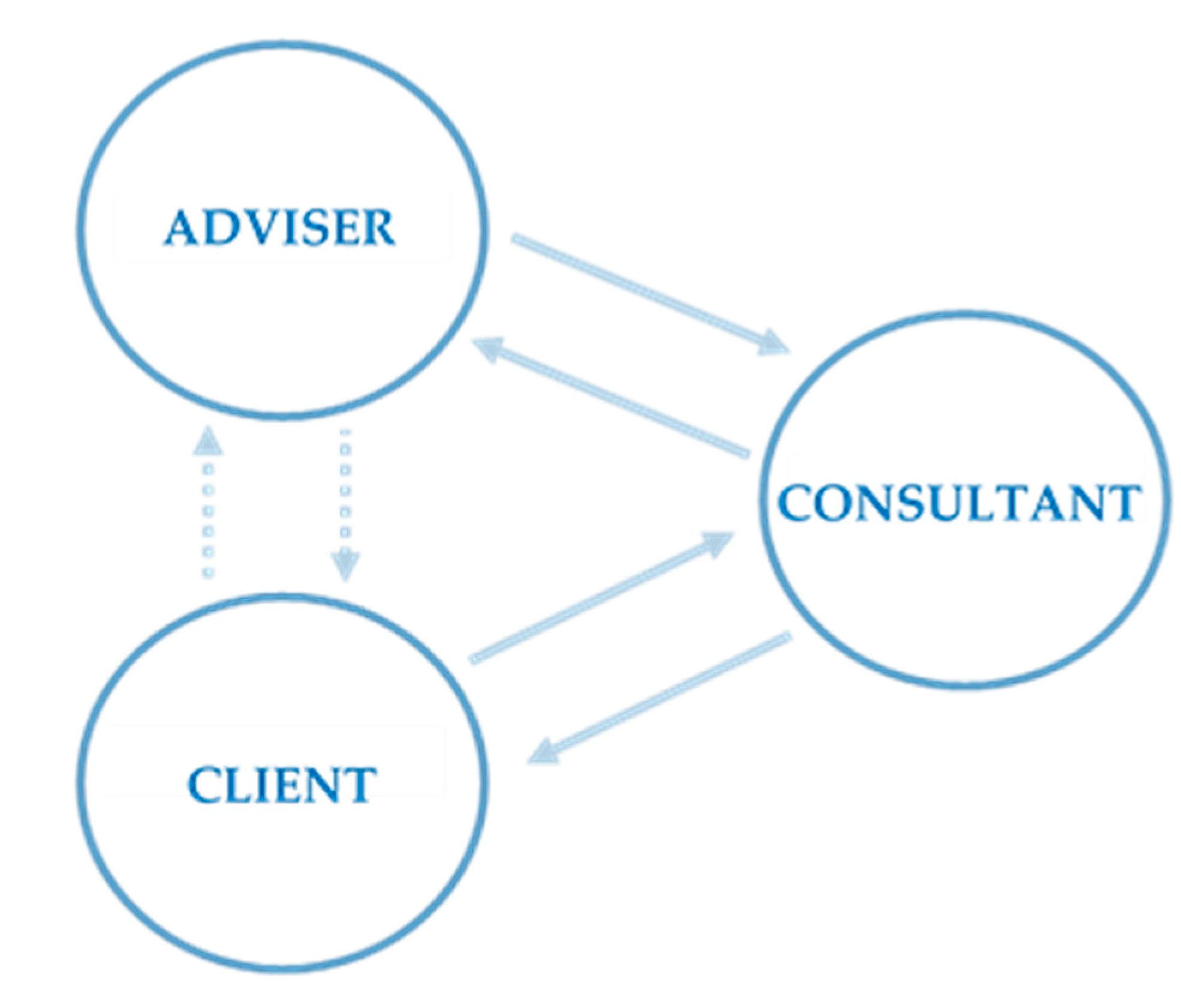
- It is based on a symmetrical relationship between people or professionals with similar status, in which there is acceptance and respect that favors equal treatment (Figure 2).
- It is a triadic relationship involving three types of agents: consultant, consultant, client (Figure 2).
- The relationship can be established not only with individuals, but also with representatives of services, resources and programs.
- Its objective is to help a third party, which may be an individual or a group (Figure 2).
- It approaches the relationship from different approaches: therapeutic, preventive and developmental.
- The relationship is temporary, not permanent.
- The consultant intervenes indirectly with the client, although, extraordinarily, he may do so directly (Figure 2).
- The consultant acts as an intermediary and mediator between the consultant and the client (Figure 2).
- It is necessary to work with all persons substantially related to the client.
This model makes individual and group guidance interventions more effective, since it is essential that all the agents involved intervene: teachers, parents, the educational institution, etc. Consequently, the role of the counselor is not only focused on the subject, but also acts as a consultant, trainer, generator of changes in all the people involved. Therefore, as Bisquerra [38] indicates, its two main goals are: (a) to increase the consultant's competence in his/her relations with a client, and (b) to develop the consultant's skills so that he/she will be able to solve similar problems by him/herself in the future.
As can be seen in Figure 3, the following figures can be distinguished in this model:
- −
- Adviser (specialist): Works in collaboration with the organization.
- −
- Consultant: Seeks help with the consultant through a systematic process of problem solving, social influence and professional support. In turn assists clients through the selection and application of interventions.
- −
- Clients: People who receive assistance indirectly.
Figure 2.
Schematic of the consultation model. Source: Adapted from Hervás Avilés [36] (p. 177) and Bisquerra [38] (p.189).
Following Caplan [48], four specific types or modes of consultation can be distinguished, depending on the object of the consultant's attention/action: (a) client-centered consultation; (b) consultant-centered consultation; (c) program-centered consultation; and (d) organization-centered consultation. In the first of these, the focus will be on understanding the problem, need or difficulty that the client has. The specialist will try to increase the techniques of the client in order to improve the client's situation. In the second, the attention will be focused on the client, identifying, in this, hindering elements that are hindering the client's situation. According to Caplan the consultant may have a lack of knowledge, lack of skills, loss of self-confidence or objectivity with respect to the client. In the third, the consultation is directed to a new program or the improvement of the existing one. Finally, following the same author, the consultation focuses on the organization itself. It takes place when, despite the existence of sufficient resources, the objectives are not achieved. In this case, the difficulties are located in attitudinal elements present in the personal resources of the system [48].
In general, this model is appropriate in the fields of mental health, organizations and education [10,38,49], connecting with SDG 3 and SDG 4. It is an indirect intervention of a corrective, preventive or developmental nature, the objective of which, in the school environment, is the training of teachers as guides or tutors. The model aims to train teachers in the role of guidance counsellor, a key aspect of a comprehensive and inclusive school model. In other words, this model connects directly with Goal 4 ‘Ensure inclusive and equitable quality education and promote lifelong learning opportunities for all’. Its basic characteristics are:
- −
- Objective: to help a third party (person or group).
- −
- It follows the three principles of guidance.
- −
- The relationship is temporary.
- −
- The adviser intervenes indirectly.
- −
- The consultant is a mediator.
- −
- It requires working with all the people substantially related to the client.
3.1.3. Model Programs
Most authors agree that this model arose as a response to the limitations of the models that preceded it, such as the clinical model or the service model [17]. It is an eminently pedagogical model, based on didactics and the design of educational programs. However, the terme has been coined by different types of professionals, with a certain polysemy, but it has mostly been linked to planning for the learning of its recipients. Bisquerra after a conceptual analysis of the term program, defines it as "a continuous action, previously planned, aimed at achieving certain objectives, with the purpose of satisfying needs, and/or enriching, developing or enhancing certain competencies" [38] (p. 85). It is, therefore, a direct intervention on groups, which is a differential aspect with respect to other models. In this sense, Grañeras Pastrana and Parras Laguna [17] emphasize that this model, of a proactive nature, is aimed at the bulk of the educational community, being the only one that guarantees the educational nature of guidance [23].
From a temporal perspective, programs are continuous actions developed over a more or less prolonged period of time [38]. It is important to emphasize that these are not one-off actions, such as talks or workshops, but more profound proposals that have an impact on people's behavior and lives. However, their size means that we can talk about microprograms, when they are of short length, which are usually integrated into broader programmes. In this sense, Fernández Rey [50] discusses the different possibilities offered by intervention in the programme model: occasional guidance, parallel programmes, op-tional subjects, synthesis subjects, tutorial action, curricular integration, interdisciplinary curricular integration, integrated programme systems. Those strategies that are integrated into the curriculum can be considered adequate, given the positioning of guidance at the educational pole [13,14]. Therefore, tutorial action is proposed as a starting point and the program model is linked to the spiral curriculum (Figure 3). This curriculum is based on successive steps through the same domain of knowledge, in order to promote the learning of the deep structure in an increasingly powerful and reasoned way [51]. This approach, not only enhances the construction of the learning itself, but also facilitates intuitive thinking about it [52]. Moreover, as indicated by Harden and Stamper [53] this approach can break down the barriers and boundaries between courses and levels, allowing a gradual and integrated learning of the contents linked to the tutorial action [54,55] (Figure 3).
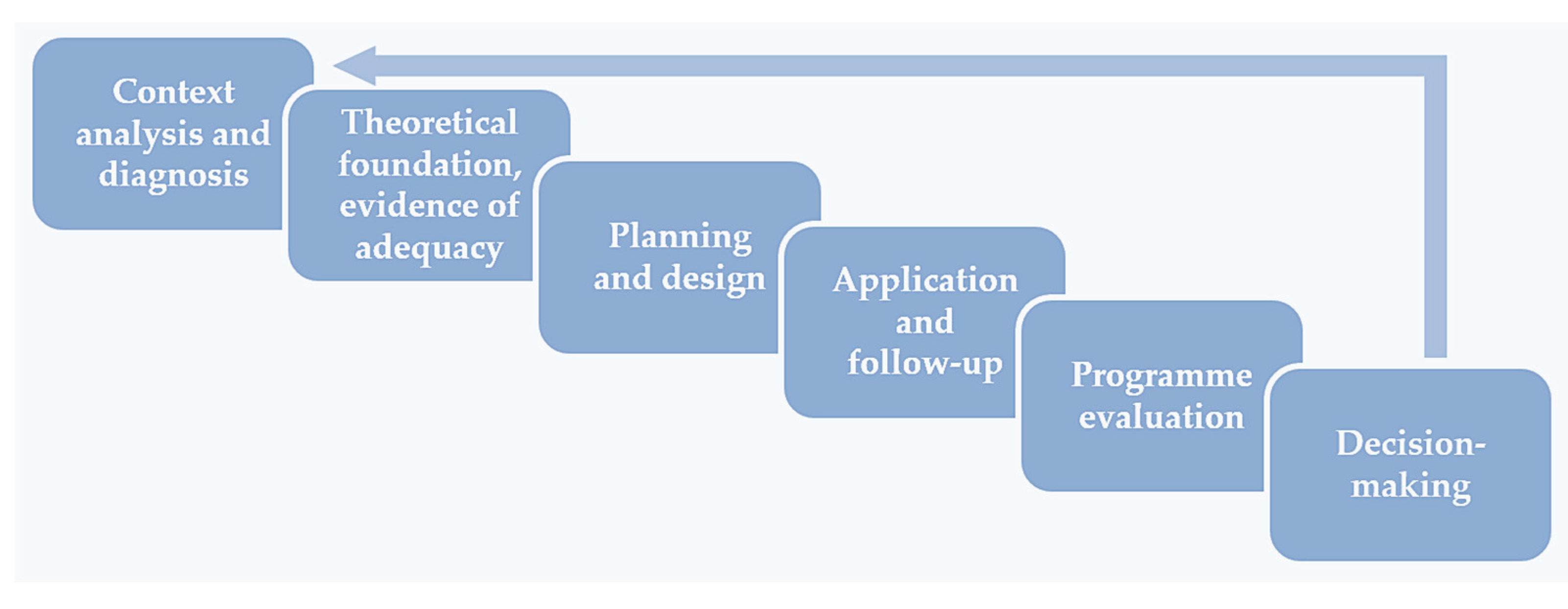
In any case, beyond the extension of the program or degree of curricular integration, the model assumes the characteristics of educational programs, and therefore follows a process that contemplates different phases in its development. In general, most authors consider among these phases the analysis of the context, the detection of needs and establishment of objectives, the design and planning of the program, the development and monitoring of the program, its evaluation and the proposal of improvement actions, with no major differences among the proposals [9,10,12,17,36,37,38,39,40]. Of the review carried out, the phases proposed by Álvarez González and Bisquerra [12] can be highlighted for their specificity, similar to those illustrated by Repetto [37] (Figure 4):
- −
- Analysis of the context, mainly environmental factors, organization, structure, attitudes, etc.
- −
- Identification of needs.
- −
- Formulation of objectives, these must be clear, concrete, concise and operational.
- −
- Program planning, mainly through the sequencing of activities.
- −
- Program development and implementation: of the proposed activities and strategies.
- −
- Evaluation of the program, both of the process and its effectiveness.
- −
- Assessment of program costs. To which could be added, decision making on the improvement, continuity or modification of the program.
Figure 3.
Program intervention strategies integrated in the curriculum Source: Simplified adaptation of Fernández Rey [50] (p. 56).
Figure 3.
Program intervention strategies integrated in the curriculum Source: Simplified adaptation of Fernández Rey [50] (p. 56).
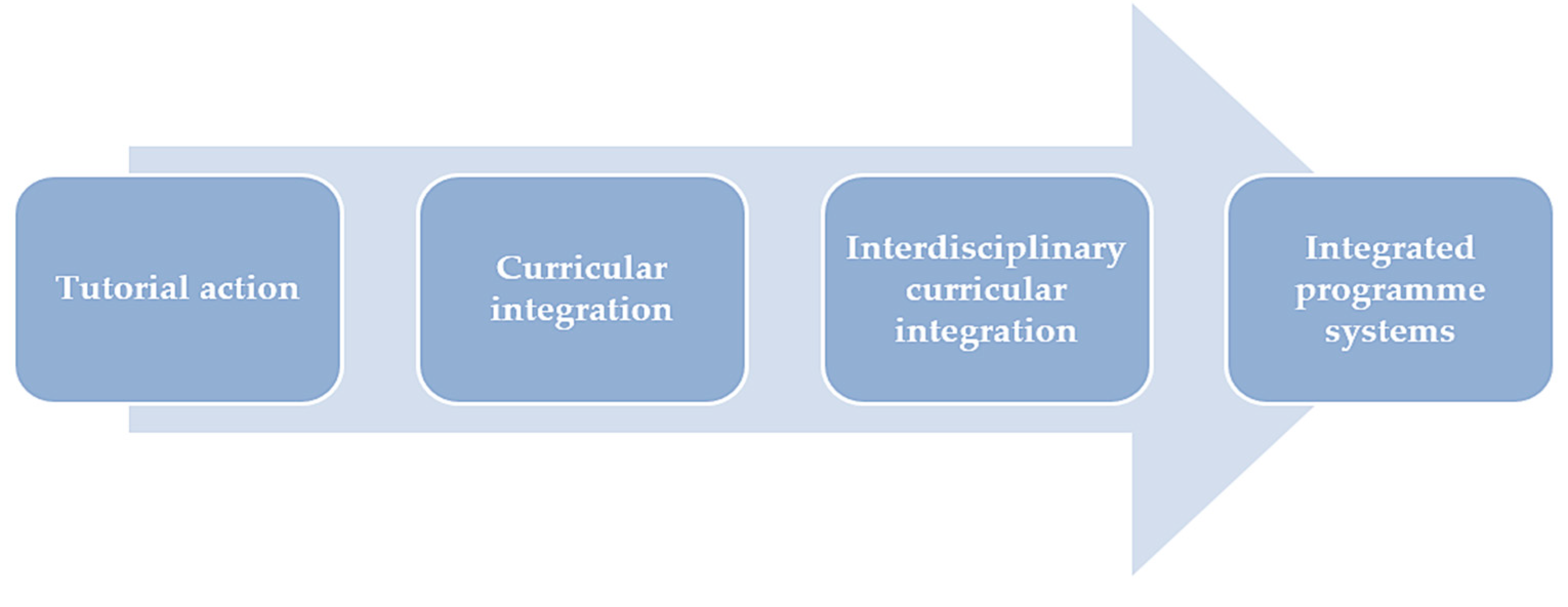
Figure 4.
Phases of the program development process. Source: Repetto [37] (p. 304).
Figure 4.
Phases of the program development process. Source: Repetto [37] (p. 304).
In summary, program intervention is characterized by being an intervention developed according to the diagnosed needs (of the students, teachers, the center, the institution's services, etc.). This makes it very versatile, in addition to bringing guidance closer to a larger number of clients [37]. Its preventive and developmental potential is indisputable, being remarkable its capacity to focus on the needs of the people being guided and the intervention on the context itself. The model acts by objectives over a period of time, and it is advisable that the programs be continuous and integrated into the curriculum, which makes it an especially relevant model for the development of goal 4. As already indicated, the action is proactive, involving all agents and users. For this reason, it is the most suitable model for enhancing human development, promoting healthy habits, developing personal and social skills, preventing difficulties and preparing people for adaptation, change and problem solving.
This model has a high potential for working on the objectives of sustainable development in the classroom, especially those related to health (goal 3), coexistence (goals 5 and 16) and equality (goals 5 and 10). Among the main objectives of this model are the promotion of health and the development of skills that enable responsible and healthy decision-making. In this sense, different studies and meta-analyses show the effectiveness of this model in the prevention of drug addiction [55], eating disorders [56,57], in the promotion of sexual health and the prevention of sexual risks [58,59,60,61]. The development of personal and social skills that foster coexistence and contribute to the eradication of any form of discrimination or violence are also priority aims of this model. In this sense, various studies and meta-analyses on gender violence prevention programs demonstrate the effectiveness of the model [62,63,64,65,66], which supports its contribution to Goal 5 "Achieve gender equality and empower all women and girls”.
3.1.4. Service Model and Service Model Acting by Programs
This model has had an important development in Europe, since it has taken a long time for guidance to be integrated into educational institutions [17]. In Spain, during the dictatorship this type of services were practically nonexistent, and in the 1970s they reappeared with a marked therapeutic character. The model focuses on direct action on some members of the population, generally in situations of risk or deficit. The characteristic features of this model are [40]:
- −
- Direct intervention by specialists on subjects with a need, difficulty or at-risk situation, focusing on the problem.
- −
- External and sectorial in nature, as they are usually located in specific areas outside educational institutions.
- −
- Corrective intervention, mainly of a therapeutic nature.
- −
- They act mainly on the basis of functions (generally set by the Administration), although there may be objectives.
- −
- The functions of the specialist are mainly evaluation, diagnosis and psycho-pedagogical counseling, information on academic and professional itineraries, support for integration and design and implementation of curricular adaptations and attention to diversity, among others.
The interventions of this model can be group-based. This model follows a two-phase procedure: (1) The request for assistance is made by the subject in need of help; and (2). The institution attends to the applicant's requirements.
Intervention may vary depending on whether the service is public or private. In private counseling services, the intervention is carried out through a service model that introduces the appropriate adaptations. The service model is fully identified with public social and educational institutions. The tasks and functions developed by the guidance services are generally predominantly top-down, generally acting on the problem and not on the context in which the situation develops. It is a remedial intervention, centered on the specialist, where there is little involvement of educational and community agents. In this sense, several authors [17,39] point out the following limitations or drawbacks of the model:
- −
- Little connection with the school institution, in addition to a certain lack of knowledge about it.
- −
- Little contextualization of the problems and their own interventions.
- −
- Broad and predefined functions set by the Administration (objectives are forgotten).
- −
- Its approach is mainly therapeutic, neglecting the principles of development and prevention.
- −
- Activities are often limited to diagnosis through the use of psychometric tests.
- −
- Limitations of time, schedule and resources to address the assigned functions and train the teachers who carry out the tutorial action. The timetable, moreover, does not facilitate work with the family and the community.
For all these reasons, the program-based service model has become widespread in recent decades. It involves direct intervention with groups at risk or in deficit. It is unique in that it considers the analysis of needs as a preliminary step to any planning, and once these needs have been identified, specific intervention programs are designed. For Vélaz de Medrano [9], the combination of the service model with the program model offers great possibilities, overcoming the disadvantages of both models. Like other authors, we consider that services, whether or not they act through programs, are not a model in themselves, but the application or combination of other models such as advice, consultation or programs [10,38]. The combination of approaches allows for more integrated and systemic action, maximizing the contribution to the sustainable development objectives set out in the previous models.
3.1.5. Technological Model
This model is not recognized by all authors (Table 3) Vélaz de Madrano, Martínez Clares and Santana Vega [9,10,33], for example, consider that Information and Communication Technologies (ICT) are a resource at the service of guidance rather than a model in itself. In contrast, authors such as Pantoja give ICTs a higher status. In any case, whether as a model or as a resource, there is a general consensus on the potential of ICT in the field of guidance [35,67]. It can be affirmed that at present it is still being discussed whether technology at the service of guidance should be characterized as an intervention model or as a psycho-pedagogical resource.
In Spain, Rodríguez Espinar et al. who state the following provide one of the first references to this model:
"This model based on systems and/or self-applicable programs does not eliminate the figure and functions of the counselor. The counselor will have to be present in the process playing the role of consultant, clarifying doubts, solving problems, commenting on some of the information provided and helping the subject in his work of synthesis and reflection. The purpose of these systems is to free the counselor in informative tasks and leave him/her freer to carry out his/her consultation and counseling functions. This model, fully realized, can contribute to the development of the functions of guidance interaction" [23] (p. 191-182).
From this perspective, either as a model or as a resource, ICTs can increase the efficiency of the guidance action, maximize resources, automate tasks and expand the potential number of people using/targeting educational guidance. ICTs support the rest of the models described above. In this sense, more specifically, Pantoja proposes the integration of ICT in a comprehensive intervention program, mainly aimed at prevention and development [35,67]. In this way, according to Pantoja, the dimensions of external - internal, direct - indirect and individual - group intervention alternate, depending on the needs of each moment [35,67]. The model, therefore, will approach the different models described, all according to figure 5.
In recent times, various technological resources have been developed for the purpose of guidance. The following can be mentioned: Guidance program, Socio-school, SAVI-2000, Self-Help Program for Decision Making at the End of Compulsory Secondary Education, Self-Applied Program for the Control of Test Anxiety, Decide Your Itinerary Program, Sexumusu Affective-Sexual Education Program, Detective for dyslexia, Vocational Test, etc. Nowadays, a person who needs help choosing a profession can receive assistance from a computer, for example, to: find out about different occupations, compare educational programs, obtain information about scholarships and other training aids or to learn job search strategies, etc. In addition to the aforementioned benefits, ICTs have made it possible to develop the following through the computer: automation of the administration and scoring of vocational interest tests, their computerized interpretation, computer-assisted counseling, etc.
Figure 5.
Defining categories of the orientation models integrating the technological model. Source: Pantoja [67] (p. 197).
Figure 5.
Defining categories of the orientation models integrating the technological model. Source: Pantoja [67] (p. 197).
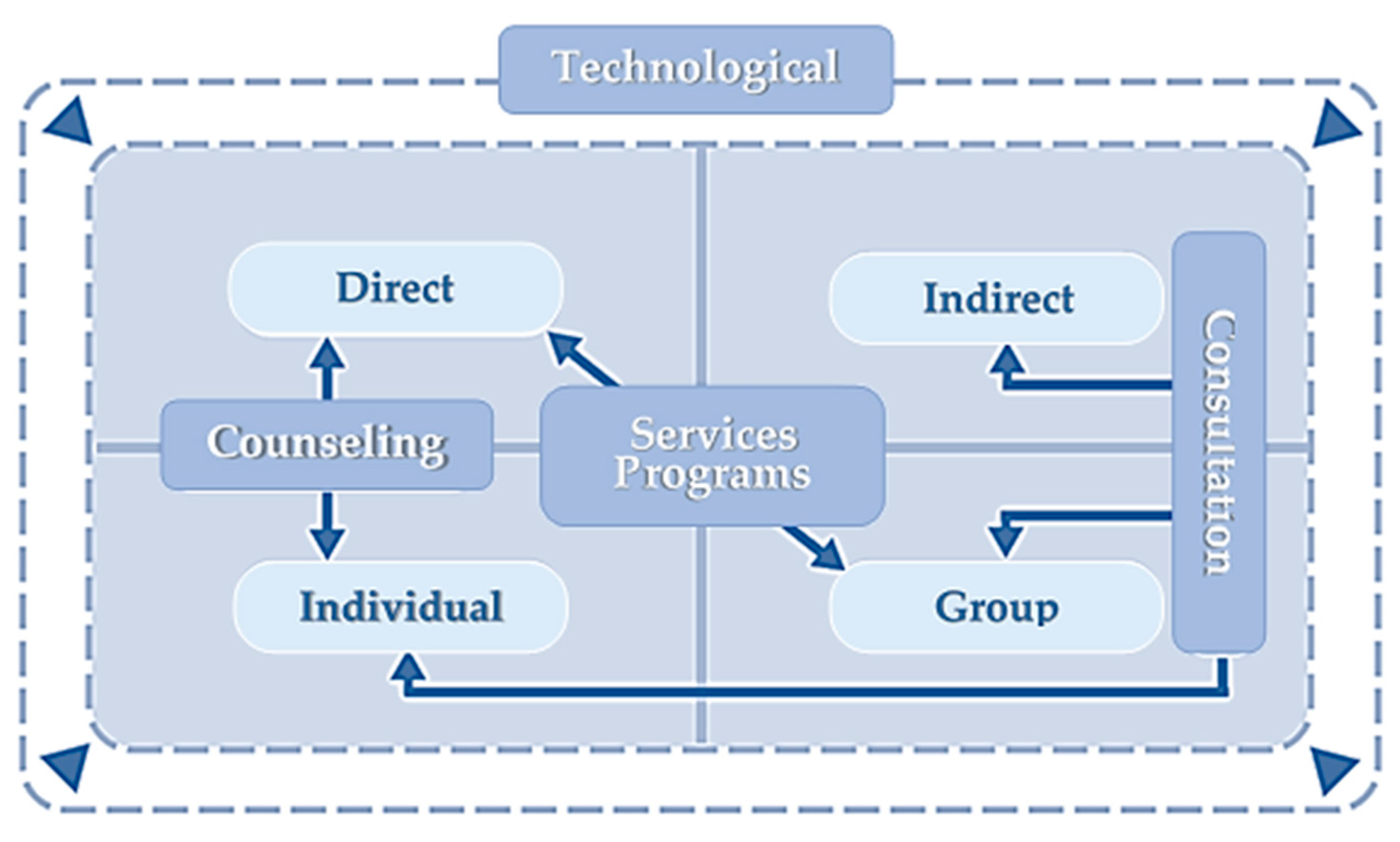
Various studies confirm the potential and effectiveness of the use of ICT in educational guidance, especially in issues related to SDG 4. The use of ICT can significantly improve teaching and learning outcomes [68,69]. Technology-mediated games, for example, promote educational inclusion and the development of social skills that are essential for coexistence [68,70]. Technologies are also excellent allies in tutorial action, having demonstrated their positive impact on the development of emotional skills [71]. Other studies, in the field of health, have shown that rapport and the therapeutic alliance are not affected in teleconsultation therapy [72,73], and some studies even suggest that teletherapy is perceived as more effective than individual counseling [74]. In short, whether as a tool or as a model, ICTs can facilitate the work of guidance, contributing to the work of the sustainable development goals indicated in the rest of the model (SDG 3, SDG 4, SDG 5, SDG 10, SDG 16).
4. Discussion and Conclusions
As already indicated, educational guidance is recognized as a fundamental aspect in the education of minors by the Convention on the Rights of the Child [3], and is therefore key to the development of SDG 4 “quality education”. Educational guidance favors the choice of academic pathways and alternatives tailored to the needs and expectations of the students. It also promotes individualized and inclusive education, responding to the potential of each student. Furthermore, as we have seen throughout this article, it allows for the personal and social development of students [23,24,25,26,27,28,29,30,31,32,33,34,35,36,37,38,39,40], prevents the emergence of problems of various kinds [55,56,57,58,59,60,61,62,63,64,65,66] or deals with them when they are already present [43,44,45,46,47,72,73,74], contributing to sustainable development goals 3, 5, 10 and 16. All of this means that the relevance of educational guidance as an institutionalized element of the education system is not questionable. It is therefore worth questioning the way in which this guidance is provided. The narrative analysis carried out reveals that most authors recognize counseling, the consultation model and the program model as the main theoretical models of psycho-pedagogical intervention [9,23,24,25,26,27,28,29,30,31,32,33,34,35,36,37,38,39,40]. We agree with Bisquerra that these three models can be considered the basic models of counseling [38]. The service model is also quite widely accepted. However, authors such as Santana Vega and Bisquerra warn of the weaknesses or limitations of the model, since counseling sticks to the problem, without a systemic approach that takes context into account [9,38]. As already indicated, it is a corrective intervention, where there is little involvement of educational and community agents. Therefore, we can say that this model moves away from the educational pole of guidance [13,14]. The technological model is more controversial from a theoretical point of view. Quite a few authors do not recognize it as such [9,10,24,26,31,33,36,37,38], considering ICT a tool at the service of guidance rather than a model. In this sense, research on ICT and guidance reveals both its high potential in guidance and the plurality of uses it is having [68,69,70,71,72,73,74]. In general, it can be said that ICTs are used as resources, tools or moderators in the basic theoretical models of psycho-pedagogical intervention: programs, counseling and consultation. For this reason, they can be excellent allies for the work of the SDGs indicated (SDG 3, SDG 4, SDG 5, SDG 10, SDG 16).
Given the broad consensus found regarding counseling, the consultation model and the program model as theoretical models of psycho-pedagogical intervention [9,10,23,24,25,26,27,28,29,30,32,33,34,35,36,37,38,39,40], and that they are considered by some authors as the basic theoretical models [38], we will now highlight the elements that define them and the contribution they make to the objectives of sustainable development.
Counseling, which is dyadic in nature, focuses on direct and individual attention to the subject who presents a problem or need [9,10,23,24,25,26,27,28,29,30,32,33,34,35,36,37,38,39,40]. Its aims are, therefore, reactive and therapeutic, placing it at the left or welfare pole of counseling [13,14]. According to Pantoja and ASCA, counseling is very suitable for addressing four major areas of intervention: family, interpersonal, academic and personal adjustment problems [35]. Currently, it is being used in all of them, being frequently used in personal counseling or attention to diversity. Due to its therapeutic purpose, the usual method of intervention is the interview [17,38,41]. This is characterized by operating on the cognitive and emotional levels, which allows for support, emotional expression and confrontation of incongruities. For this, it is necessary to create an adequate rapport. In this sense, it is worth noting that recent studies show that therapeutic alliance and empathy are key aspects for the functioning of the model [42], having even demonstrated its impact on teletherapy [72,73,74]. All of this means that this model can contribute significantly to Sustainable Development Goal (SDG) 3 (Good Health and Well-Being), as it can address mental health issues, promote emotional resilience and support general psychological well-being [46,47].
There is unanimity among the authors in considering the consultation model as a psycho-pedagogical intervention model [9,10,23,24,25,26,27,28,29,30,31,32,33,34,35,36,37,38,39,40]. It is a triadic and symmetrical relational model, where there are three types of actors: advisor, consultant and client/s. Normally the advisor establishes an indirect action on groups or individuals, through the collaboration, training and empowerment of other educational and social agents. Therefore, it can be said that this model develops and strengthens the organization, as it emphasizes the development of professional skills and can lead to more comprehensive and sustainable improvements in educational environments, impacting on SDG 4. On the other hand, this model is based on the principles of prevention, development and intervention of guidance. For this reason, we can say that it is or can be situated at the right or educational pole of guidance [13,14]. Several authors consider this model to be particularly suitable in the fields of mental health, organizations and education [10,38,49], which allows us to affirm that the consultation model contributes to SDGs 3 and 4.
The program model is widely recognized among experts in the field [9,10,23,24,25,26,27,28,29,30,32,33,34,35,36,37,38,39,40]. It is characterized by direct intervention with groups for preventive purposes and the integral development of the personality. It is, without doubt, the model that most closely aligns with the right or educational pole of the orientation [13,14], both in terms of basic theoretical principles and in terms of the specific principles linked to educational intervention. It is worth highlighting the importance that this model places on context, adopting a systemic approach and including the analysis of context in the development and implementation phases of the programs. Regarding the latter, most authors agree that these phases are: context analysis, needs assessment and objective setting, program design and planning, program development and monitoring, evaluation and the proposal of improvement actions [9,10,12,17,36,37,38,39,40]. The greatest debate is found in the extension and integration of the programs. In this sense, we advocate, like Fernández Rey [50], for an integrated system of programs, which can be structured through a spiral curriculum [53,54,55]. Both the analysis carried out and the results of various investigations on the effectiveness of programs reveal that this is the model with the greatest potential to address the 2030 Agenda, since different SDGs can be worked on simultaneously. In relation to SDG 3, the model is used to implement health education initiatives. As already indicated, different meta-analyses and reviews show the effectiveness of this model in the prevention of drug addiction and eating disorders, in the promotion of sexual health and in the prevention of sexual risks [55,56,57,58,59,60,61]. In relation to SDG5, the model allows for work on equality, coexistence, STEAM vocations, new masculinities, co-responsibility, family plurality, etc. In this sense, various studies support the effectiveness of the model, for example, gender violence prevention programs demonstrate the effectiveness of the model [62,63,64,65,66]. Like the other models, the program model contributes to SDG 4. Traditionally, different aspects of learning have been worked on using this model, such as study techniques, academic and professional guidance or personal development [10,37,38,39]. Finally, in relation to SDG 10 and SDG 16, as already indicated, the model promotes personal and social skills that are essential for coexistence [11,12,25,36,38]. This includes training in conflict resolution, programs on civic and citizenship skills, or activities within the framework of other programs that promote human rights and respect for diversity.
In summary, we agree with De la Oliva that educational guidance has to go beyond remedial approaches, placing greater emphasis on prevention and student development from a contextual and systemic perspective [13,14]. Although the program model seems to be the most optimal for this task, quality educational guidance must address different needs and enable difficulties to be overcome. For this reason, the other basic models are essential: counseling and consultation [38]. Furthermore, the strategic combination of models, adapted to specific contexts and needs, will allow us to maximise the impact of educational guidance on the SDGs. In this sense, the role that ICTs play, as we have seen, is worth highlighting. Their use and impact on educational guidance must continue to be researched, in order to determine good practices and generate innovative solutions in the field of guidance.
Author Contributions
Conceptualization, D.H.-S. and V.A.-V.; methodology, D.H.-S., D.L.-R., M.P.-M and V.A.-V.; analysis, D.H.-S., D.L.-R., M.P.-M. and V.A.-V; investigation, D.H.-S., D.L.-R., M.P.-M. and V.A.-V; resources, D.H.-S., D.L.-R., and V.A.-V..; writing—original draft preparation, D.H.-S.; writing—review and editing, D.H.-S., D. L.-R., M.P.-M. and V.A.-V.; visualization, D.L.-R., M.P.-M and V.A.-V.; supervision, D.H.-S. and V.A.-V.; project administration, D.H.-S.
Funding
This research received no external funding.
Institutional Review Board Statement
As this was a review, this study did not need to be approved by the Bioethics Commission of the University of Burgos. It complies with the ethical standards of the Declaration of Helsinki and the National Research Committee.
Conflicts of Interest
The authors declared no potential conflicts of interest with respect to the research, authorship, and/or publication of this article
Abbreviations
The following abbreviations are used in this manuscript:
| SDG | Sustainable Development Goals |
| ICT | Information and Communication Technologies |
| ASCA | American School Counselor Association |
References
- Artyukhov, A.; Vasylieva, T.; Artyukhova, N.; Wołowiec, T.; Bogacki, S. SDG 4, Academic Integrity and Artificial Intelligence: Clash or win-win cooperation? Sustainability 2024, 16, 8483. [Google Scholar] [CrossRef]
- Saini, M.; Singh, H.; Singh, M.; Singh, J.; Sengupta, E. Sustainable Development Goal for Quality Education (SDG 4): A study on SDG 4 to extract the pattern of association among the indicators of SDG 4 Employing a Genetic Algorithm. Education and Information Technologies 2022, 28, 2031–2069. [Google Scholar] [CrossRef] [PubMed]
- Convention on the Rights of the Child. Annual review of population law 1989, 16, 95–501.
- Ammentorp, J.; Ehrensvärd, M.; Uhrenfeldt, L.; Angel, F.; Carlsen, E.B.; Kofoed, P.-E. Can life coaching improve health outcomes? A systematic review of intervention studies. BMC Health Serv Res 2013, 13, 428–439. [Google Scholar] [CrossRef]
- Erdös, T.; Ramseyer, F.T. Change process in coaching: interplay of nonverbal synchrony, working alliance, self-regulation, and goal attainment. Frontiers in Psychology 2021, 12, 580351. [Google Scholar] [CrossRef]
- Sánchez Mirón, B.; Boronat Mundina, J. Coaching educativo: modelo para el desarrollo de competencias intra e interpersonales. Educación xx1 2014, 17, 221–242. [Google Scholar] [CrossRef]
- Taylor, D. Career coaching in private practice a personal view. Journal of the National Institute for Career Education and Counselling 2024, 30, 13–18. [Google Scholar] [CrossRef]
- De Haan, E.; Nilsson, V.O.; Molyn, J. New findings on the effectiveness of the coaching relationship: time to think differently about active ingredients? Consulting Psychology Journal: Practice and Research 2020, 72, 155–167. [Google Scholar] [CrossRef]
- Vélaz de Medrano, C. Orientación e intervención psicopedagógica. Concepto, modelos, programas y evaluación. Aljibe: Málaga, España; 1998.
- Santana Vega, L.E. Orientación educativa e intervención psicopedagógica. Cambian los tiempos, cambian las responsabilidades profesionales. Pirámide: Madrid, España; 2009.
- Bisquerra, R.; Álvarez González, M. Concepto de orientación e intervención psicopedagógica. En Modelos de orientación e intervención psicopedagógica 1ªed.; Bisquerra Alzina, R., Eds.; Ciss Praxis: Valencia, España; 1998, pp. 9–2.
- Álvarez González, M.; Bisquerra Alzina, R. Orientación educativa: modelos, áreas, estrategias y recursos. Wolters Kluwer: Madrid, España; 2012.
- De la Oliva, D.; Martín Ortega, E.; Vélaz de Medrano, C. Modelos de intervención psicopedagógica en centros de educación secundaria: identificación y evaluación. Infancia y aprendizaje, 2005, 28, 115–140. [Google Scholar] [CrossRef]
- Sole, I.; Martín, E. Un modelo educativo para la orientación y el asesoramiento. En Orientación educativa. Modelos y estrategias de intervención,; Martín Obregon, E., Solé i Gallart, I., Eds.; Grao, Barcelona, España, 2011; pp.13-32.
- Arfasa, A.J.; Weldmeskel, F.M. Practices and challenges of guidance and counseling services in Secondary schools. Emerging Science Journal, 2020, 4, 183–191. [Google Scholar] [CrossRef]
- Watts, A.G.; Van Esbrroeck, R. New skills for new futures: higher education guidance and counselling services in the European Union. VUBPress: Bruselas, Bélgica; 1997.
- Grañeras Pastrana, M.; Parras Laguna, A. Orientación educativa: fundamentos teóricos, modelos institucionales y nuevas perspectivas. CIDE, Madrid, España, 2009; págs. 123-140.
- Gasparyan, A.Y.; Ayvazyan, L.; Blackmore, H.; Kitas, G.D. Writing a narrative biomedical review: considerations for authors, peer reviewers and editors. Rheumatol. Int. 2011, 31, 1409–1417. [Google Scholar] [CrossRef] [PubMed]
- Manterola, C.; Rivadeneira, J.; Delgado, H.; Sotelo, C.; Otzen, T. ¿Cuántos tipos de revisiones de la literatura existen? Enumeración, descripción y clasificación. Revisión cualitativa. International Journal of Morphology 2023, 41, 1240–1253. [Google Scholar] [CrossRef]
- Barbosa Chacón, J.W.; Barbosa Herrera, J.C.; Rodríguez Villabona, M. Revisión y análisis documental para estado del arte: una propuesta metodológica desde el contexto de la sistematización de experiencias educativas. Investigación Bibliotecológica: Archivonomía, bibliotecología e información, 2013, 27, 83–105. [Google Scholar] [CrossRef]
- Bausela Herreras, E. Áreas, contextos y modelos de orientación en intervención psicopedagógica. Diálogos educativos, 2006, 12, 16–28, https://dialnet.unirioja.es/servlet/articulo?codigo=2473883. [Google Scholar]
- Rodríguez Diéguez, A. La búsqueda de un modelo integrado de Orientación. Revista electrónica de formación de profesorado en comunicación lingüística y literaria 2008, 24, 13–33. [Google Scholar]
- Rodríguez Espinar, S.; Álvarez, M.; Echeverría, B.; Martín, M.A. Teoría y práctica de la Orientación Educativa. PPV, Madrid, España, 1993, págs.451-478.
- Álvarez Rojo, V. Orientación educativa y acción Orientadora. EOS, Madrid, España, 1994, págs. 98-136.
- Álvarez González, M. Orientación Profesional.; CEDECs, Madrid, España, 1995, págs. 154-178.
- Jiménez, R.; Porras, R. Modelos de acción psicopedagógica entre el deseo y la realidad. Archidona, Sevilla, España 1997, págs. 45-69.
- Bisquerra, R.; Álvarez González, M. Los modelos en orientación. Modelos de orientación e intervención psicopedagógica.; Mc Graw Hill, Madrid, España, 1998, 55–65.
- Sampascual, G.; Navas, L.; Castejón, J.L. Funciones del orientador en primaria y secundaria.; Alianza, Madrid, España, 1999.
- Sobrado, L.; Ocampo, O. Evaluación Psicopedagógica y orientación educativa.; Estel, Valencia, España, 2000.
- Lázaro, A.J.; Mudarra, M.J. Análisis de los estilos de orientación en Equipos Psicopedagógicos. Contextos educativos: Revista de educación, 2000, 3, 253–280. [Google Scholar]
- Sanz Oro, R. Evaluación de programas en orientación educativa.; Pirámide: Madrid, España, 2001; págs. 154-193. [Google Scholar]
- Repetto, E. Modelos de orientación e intervención psicopedagógica. UNED: Madrid, España, 2002; págs. 104-133.
- Martínez Clares, P. La orientación psicopedagógica: modelos y estrategias de intervención. EOS: Madrid, España, 2002; págs. 250-273.
- Martínez González, M.D.C.; Téllez, J.A.; Quintanal, J. La orientación escolar: fundamentos y desarrollo. Dykinson: Madrid, España 2002; pp. 87-121.
- Pantoja, A. La intervención psicopedagógica en la sociedad de la información. EOS Madrid, España, 2004; pp. 147-163.
- Hervás Avilés, R.M. Orientación e intervención psicopedagógica y procesos de cambio. Grupo Editorial Universitaria: Madrid, España, 2006; págs. 286-312.
- Repetto, E. Modelos de orientación e intervención psicopedagógica. UNED: Madrid, España, 2009; págs.163-187.
- Bisquerra, R. Orígenes y desarrollo de la orientación psicopedagógica. Narcea: Madrid, España, 2011; págs.113-140.
- Cano González, R. Orientación y tutoría con el alumnado y las familias. Biblioteca Nueva: Madrid, España, 2013; págs. 95-126.
- González-Benito, A. Revisión teórica de los modelos de orientación educativa. RECIE. Revista Caribeña De Investigación Educativa 2018, 2, 43–60. [Google Scholar] [CrossRef]
- Benavent, J.A.; Fossati, R. El modelo clínico y la entrevista. En Modelos de orientación e intervención psicopedagógica.; Benavent, J.A., Fossati, R., Eds.; EOS: Madrid, España, 1998; pp. 71–84. [Google Scholar]
- Duff, C.T.; Bedi, R.P. Counsellor behaviours that predict therapeutic alliance: from the client’s perspective. Counselling psychology quarterly 2010, 23, 91–110. [Google Scholar] [CrossRef]
- Collins, K.; Carthy, N. No Rapport, No Comment: The relationship between rapport and communication during investigative interviews with suspects. Journal of Investigative Psychology and Offender Profiling 2018, 16, 18–31. [Google Scholar] [CrossRef]
- Gomez-Bedoya, M. Rapport in police interviews with victims: a linguistic comparison between UK and Spain. Journal of Criminal Psychology 2024, 15, 242–259. [Google Scholar] [CrossRef]
- Jokiniemi, S.; Halinen, A.; Pullins, E.B.; Hosoi, K. Rapport building in B2B sales interactions: the process and explananda. Journal of Personal Selling & Sales Management 2023, 44, 177–195. [Google Scholar] [CrossRef]
- Moradi, F.; Enjezab, B.; Ghadiri-Anari, A.; Dehghani, A.; Vaziri, S. The effectiveness of Counseling Based on Acceptance and Commitment Therapy on Body Image and Self-Esteem in Polycystic Ovary Syndrome: An RCT. International Journal of Reproductive BioMedicine (IJRM) 2020, 18. [Google Scholar] [CrossRef]
- Zhang, J.; Zhang, W.; Zhou, Z. Intervention effect of research-based psychological counseling on adolescents’ mental health during the COVID-19 epidemic. Psychiatria Danubina 2021, 33, 209–216. [Google Scholar] [CrossRef] [PubMed]
- Caplan, G. The theory and practice of mental health consultation. Basic Books:New York, EEUU, 1970, págs. 205-231.
- Giorgi, G.; Arcangeli, G.; Alessio, F.; Mucci, N.; Lulli, L.G.; Bondanini, G.; Lecca, L.I.; Finstad, G.L. COVID-19-Related Mental Health Effects in the Workplace: A Narrative Review. International Journal of Environmental Research and Public Health 2020, 17, 7857. [Google Scholar] [CrossRef] [PubMed]
- Fernández Rey, E. Teorías y modelos explicativos de la Orientación en Educación. En Orientación educativa. Nuevas perspectivas, Sobrado Fernández, L., Fernández Rey, E., and Rodicio García, L., Coords.; ). Biblioteca Nueva: Madrid, España, 2013; pp 43-62.
- Bruner, J.S. Desarrollo educativo y educación. Morata: Madrid, España, 1988; pp. 204-219.
- Durán Chacón, M.L. Diseño de una Propuesta Didáctica Basada en la Metodología del Curriculum en Espiral para el Desarrollo de la Competencia Comunicativa de los Estudiantes de Tercer Año de la Carrera de Medicina (Trabajo de Maestría). Universidad Industrial de Santander 2019.
- Heras-Sevilla, D.; Ortega-Sánchez, D.; Rubia-Avi, M. Conceptualización y reflexión sobre el género y la diversidad sexual. Hacia un modelo coeducativo por y para la diversidad. Perfiles educativos 2021, 43, 148–165. [Google Scholar] [CrossRef]
- Urruzola, M.J. Educación de las relaciones afectivas y sexuales, desde la filosofía coeducadora. Canal Editora Madrid, España, 1999.
- Tremblay, M.; Currie, C.; Davidson, R.; Burkholder, C.; Morley, K.; Stillar, A.; Baydala, L.; Khan, M. Primary Substance Use Prevention Programs for Children and Youth: A Systematic Review. Pediatrics 2020, 146. [Google Scholar] [CrossRef]
- Chua, J.Y.X.; Tam, W.; Shorey, S. Research Review: Effectiveness of universal eating disorder prevention in-terventions in improving body image among children: a systematic review and meta-analysis. Journal of Child Psychology and Psychiatry 2019, 61, 522–535. [Google Scholar] [CrossRef]
- Faller, J.; Perez, J.K.; Mihalopoulos, C.; Chatterton, M.L.; Engel, L.; Lee, Y.Y.; Le, P.H.; Le, L.K.-D. . Economic evidence for prevention and treatment of eating disorders: An updated systematic review. The International Journal of Eating Disorders 2023, 57, 265–285. [Google Scholar] [CrossRef]
- Barriuso-Ortega, S.; Fernández-Hawrylak, M.; Heras-Sevilla, D. Sex education in adolescence: A systematic review of programmes and meta-analysis. Children and Youth Services Review, 2024, 107926. [CrossRef]
- He, J.; Wang, Y.; Du, Z.; Liao, J.; He, N.; Hao, Y. Peer education for HIV prevention among high-risk groups: a systematic review and meta-analysis. BMC infectious diseases, 2020, 20, 1–20. [Google Scholar] [CrossRef]
- Morales, A.; Espada, J.P.; Orgilés, M.; Escribano, S.; Johnson, B.T.; Lightfoot, M. Interventions to reduce risk for sexually transmitted infections in adolescents: A meta-analysis of trials, 2008-2016. PloS one 2018, 13, e0199421. [Google Scholar] [CrossRef]
- Rocha, A.C.; Silva, M.; Duarte, C. How is sexuality education for adolescents evaluated? A systematic review based on the Context, Input, Process and Product (CIPP) model. Sex Education 2022, 22, 198–216. [Google Scholar] [CrossRef]
- Edwards, K.M.; Banyard, V.L.; Waterman, E.A.; Mitchell, K.J.; Jones, L.M.; Kollar, L.M.M.; Hopfauf, S.; Simon, B. Evaluating the Impact of a Youth-Led Sexual Violence Prevention Program: Youth Leadership Retreat Outcomes. Prevention Science, 2022, 23, 1379–1393. [Google Scholar] [CrossRef]
- Graham, L.M.; Embry, V.; Young, B.-R.; Martin, S.L.; Macy, R.J.; Moracco, K.E.; Reyes, H.L.M. Evaluations of Prevention Programs for Sexual, Dating, and Intimate Partner Violence for Boys and Men: A Systematic Review. Trauma, Violence, & Abuse, 2019, 22, 439–465. [Google Scholar] [CrossRef]
- Marcos-Marcos, J.; Nardini, K.; Briones-Vozmediano, E.; Vives-Cases, C. Listening to stakeholders in the prevention of gender-based violence among young people in Spain: a qualitative study from the positivMasc project. BMC Women’s Health, 2023, 23, 293. [Google Scholar] [CrossRef] [PubMed]
- Melendez-Torres, G.J.; Bonell, C.; Shaw, N.; Orr, N.; Chollet, A.; Rizzo, A.; Rigby, E.; Hagell, A.; Young, H.; Berry, V.; Humphreys, D.K.; Farmer, C. Are school-based interventions to prevent dating and relationship violence and gender-based violence equally effective for all students? Systematic review and equity analysis of moderation analyses in randomised trials. Preventive Medicine Reports, 2023, 34, 102277. [Google Scholar] [CrossRef]
- Wong, J.S.; Bouchard, J.; Lee, C. The Effectiveness of College Dating Violence Prevention Programs: A Meta-Analysis. Trauma, Violence, & Abuse, 2021, 24, 684–701. [Google Scholar] [CrossRef]
- Pantoja, A. El modelo tecnológico de intervención psicopedagógica. REOP-Revista Española de Orientación y Psicopedagogía, 2002, 13, 189–210. [Google Scholar] [CrossRef]
- Requejo Fernández, E.; Raposo-Rivas, M.; Sarmiento Campos, J.A. El uso de tecnologías en la orientación profesional: Una revisión sistemática. REOP - Revista Española de Orientación y Psicopedagogía 2022, 33, 40–65. [Google Scholar] [CrossRef]
- Peng, R.; Halili, S.H.; Razak, R.A. Investigating the factors affecting ICT integration of in-service teachers in Henan Province, China: structural equation modeling. Humanities and Social Sciences Communications, 2023, 10, 380. [Google Scholar] [CrossRef]
- Pineda-Martínez, M.; Llanos-Ruiz, D.; Puente-Torre, P.; García-Delgado, M.Á. Impact of video games, gamification, and game-based learning on sustainability education in higher education. Sustainability, 2023, 15, 13032. [Google Scholar] [CrossRef]
- Fernández-Herrero, J. Evaluating Recent Advances in Affective Intelligent Tutoring Systems: A Scoping Review of Educational Impacts and Future Prospects. Education Sciences, 2024, 14, 839. [Google Scholar] [CrossRef]
- Giovanetti, A.K.; Ilardi, S.S.; Punt, S.E.W.; Nelson, E.-L. Teletherapy Versus In-Person Psychotherapy for Depression: A Meta-Analysis of Randomized Controlled Trials. Telemedicine and E-Health, 2022, 28, 1077–1089. [Google Scholar] [CrossRef] [PubMed]
- Davis, K.A.; Zhao, F.; Janis, R.A.; Castonguay, L.G.; Hayes, J.A.; Scofield, B.E. Therapeutic alliance and clinical outcomes in teletherapy and in-person psychotherapy: A noninferiority study during the COVID-19 pandemic. Psychotherapy Research : Journal of the Society for Psychotherapy Research, 2023, 34, 589–600. [Google Scholar] [CrossRef] [PubMed]
- Mark, T.L.; Tzeng, J.; Gilbert, M.; Henretty, K.; Padwa, H.; Treiman, K. Addiction Treatment and Telehealth: Review of Efficacy and Provider Insights During the COVID-19 Pandemic. Psychiatric Services, 2021, 73, 484–491. [Google Scholar] [CrossRef]

Table 1.
Theoretical criteria and dimensions that shape psychoeducational intervention in practice.
| CRITERIA/STARS | DIMENSIONS | POLES THAT MAKE UP THE PSYCHOPEDAGOGICAL INTERVENTION | ||
|---|---|---|---|---|
| BASICS (Theoretical principles) | Concept of human development | Maturation | Development | |
| Purpose of the intervention | Remedial | Development and preventive |
||
| Approach to reality | Linear-causal | Systemic | ||
| Relationship of the counsellor with other professionals or educators | Expert and directive |
Symmetrical and collaborative |
||
| SPECIFIC (specific to the intervention) | Relationship with the target groups of the intervention | Direct | Indirect | |
| Organisation of the intervention | Reactiva | Proactiva | ||
| Locating resources | External | Internal | ||
Source: Adapted from De la Oliva et al. [13] (p.132).
Table 2.
Search and text review protocols.
| Bibliographic search | |
| Review period |
|
| Terms |
|
| Information resources |
|
| Strategies |
|
| Review of documentary sources. | |
| Rules |
|
| Exclusion criteria |
|
| Inclusion criteria |
|
| Extraction strategies |
|
Source: Own elaboration based on Barbosa Chacón et al. [20] (p. 94).
Table 3.
Summary table of different classifications of theoretical models of educational guidance and psycho-pedagogical intervention.
Table 3.
Summary table of different classifications of theoretical models of educational guidance and psycho-pedagogical intervention.
| Authors/Year/Reference | Counseling | Consultation | Services | Programs | Services by program | Technological |
|---|---|---|---|---|---|---|
| Rodríguez Espinar et al. (1993) [23] | X | X | X | X | X | X |
| Álvarez Rojo (1994) [24] | X | X | X | |||
| Álvarez González (1995) [25] | X | X | X | X | X | |
| Jiménez and Porras (1997) [26] | X | X | X | |||
| Bisquerra and Álvarez-González (1998) [27] | X | X | X | X | X | |
| Vélaz de Medrano (1998) [9] | X | X | X | X | X | |
| Sampascual et al. (1999) [28] | X | X | X | X | X | X |
| Sobrado and Ocampo (2000) [29] | X | X | X | X | X | X |
| Lázaro and Mudarra (2000) [30] | X | X | X | X | X | X |
| Sanz Oro (2001) [31] | X | X | ||||
| Repetto (2002) [32] | X | X | X | X | X | |
| Martínez Clares (2002) [33] | X | X | X | |||
| Martínez González et al. (2002) [34] | X | X | X | X | X | X |
| Pantoja (2004) [35] | X | X | X | X | ||
| Hervás Avilés (2006) [36] | X | X | X | |||
| Santana Vega (2009) [10] | X | X | X | |||
| Repetto (2009) [37] | X | X | X | X | ||
| Bisquerra (2011) [38] | X | X | X | |||
| Cano González (2013) [39] | X | X | X | X | X | |
| González Benito (2018) [40] | X | X | X | X | X | X |
| Total | 17 | 18 | 11 | 17 | 6 | 10 |
Source: Own elaboration.
Disclaimer/Publisher’s Note: The statements, opinions and data contained in all publications are solely those of the individual author(s) and contributor(s) and not of MDPI and/or the editor(s). MDPI and/or the editor(s) disclaim responsibility for any injury to people or property resulting from any ideas, methods, instructions or products referred to in the content. |
© 2025 by the authors. Licensee MDPI, Basel, Switzerland. This article is an open access article distributed under the terms and conditions of the Creative Commons Attribution (CC BY) license (http://creativecommons.org/licenses/by/4.0/).
Copyright: This open access article is published under a Creative Commons CC BY 4.0 license, which permit the free download, distribution, and reuse, provided that the author and preprint are cited in any reuse.


