

Submitted:
09 April 2025
Posted:
11 April 2025
You are already at the latest version
Abstract
Nanotechnology is transformative in its ability to meet the world's major agricultural challenges of climate change, soil erosion, and food insecurity. This research examines nanotechnology in the context of improving productivity and environmental sustainability with innovations like nano-fertilizers, nano-pesticides, and nano-sensors. North America, Europe, Asia, and Africa case studies illustrate dramatic increases in yields (15–20%), decreased use of agrochemicals (30–50%), and effective management of resources. Nano-remediation methods, including nano-zero-valent iron, eliminate 70–90% of water and soil contaminants, ensuring cleaner environments. Although promising, there are challenges such as regulatory loopholes, expense, and environmental hazards. The research supports uniform policies, education of farmers, and global cooperation to facilitate safe and fair use. Nanotechnology becomes a prime motivator for sustainable agriculture, reconciling productivity with sustainability.
Keywords:
nanotechnology
; sustainable agriculture
; environment remediation
; productivity
1. Introduction
As now there are close to 9.7 billion people, in the estimation of the near future by 2050, feeding them is a massive challenge. Several critical factors compound this: Climate Change, declining soil fertility, water scarcity, and a call for more sustainable farming practices. Practices of massive use of chemical inputs, currently existing with traditional practices, continue to grow more unsustainable. This puts a lot of stress on soils, results in water pollution, and threatens agricultural productivity and food security in the long term by posing a risk of biodiversity loss. Innovative solutions are finally the answer to such challenges that could increase the productivity of agriculture while reducing the negative impacts on the environment. In this regard, advanced technologies in agriculture practices would help the world fight such challenges and stabilize a certain level of food supply for the increasing global population.
1.2. Nanotechnology: Full of Promise
Nanotechnology deals with the handling of materials at a nanoscale level, which can range from 1 to 100 nanometres and which portends transformative potential within the agricultural realm. Nanomaterials carry special physicochemical properties due to their small sizes and high surface-area-to-volume ratios. They carry properties like a high level of reactivity, strength, and electrical conductivity, which is useful in advanced agricultural inputs.
Agricultural applications that are apparently promising in nanotechnology have to do with improved delivery of nutrients, better management of pests and diseases, and environmental protection in agriculture. Integration of these invokes the benefits that nanotechnology brings to the field of agriculture and may provide solutions across crop yield improvement, or efficient resource use and minimization of negative environmental impact associated with farming. The role of nanotechnology regarding the increasing challenges to be met in modern agriculture, in relation to nutrient delivery, pest and disease control, and protection to the environment, is highlighted in this paper. Different applications of Nanotechnology are given in Figure 1.
1.3. Global Nanotechnology Adaptation in Agriculture
Nanotechnology adaptation in agriculture differs globally due to differences in research infrastructure, government support, and regulatory frameworks.
North America: The United States and Canada have managed to integrate nanotechnology in agriculture effectively, focusing on nano-fertilizers and nano-pesticides to increase crop yields while decreasing chemical inputs. According to US Department of Agriculture research, nano-fertilizers boost nutrient uptake efficiency 30% more than traditional fertilizers. This is due to the sound research institutions, substantial funding, and an effective policy.
Europe: Europe prioritizes sustainable agriculture through nanotechnology. Under the Horizon 2020 program, numerous projects focus on reducing agriculture's environmental impact. German researchers developed degradable nano-pesticides to minimize contamination (Müller et al. 2018). European initiatives emphasize sustainability and environmental safety.
Asia: China and Japan are moving rapidly into nanotechnology in Asia. Nano sensors in China monitor the health status of soil and crops with real-time use optimization in resource utilization. Japan uses nano-coated seeds that result in higher germination and pest resistance rates, depicting a technological focus on innovations and efficiency.
Africa: Although still in its infancy, nanotechnology is slowly being adopted in Africa due to international cooperation and pilot projects. Researches in Kenya and South Africa show that nano-fertilizers enhance crop yields in arid areas (Omondi et al. 2021). Despite the constraints of limited infrastructure and regulatory restrictions, international organizations promote the adoption of nanotechnology in agriculture.
Case Studies by Region
North America: Nano-fertilizers produced by Nanoagro enhance nutrient absorption while reducing dependency on conventional fertilizers and environmental pollution. Mexican research suggests nano-pesticides demonstrate enhanced killing performance at thinner application amounts which decreases both environmental risks and health threats (Smith et al 2021).
Europe: The Nano FERT project under the EU works on developing nano-fertilizers designed to maximize nutrient utilization while diminishing soil runoff and promise higher yields and reduced environmental damage. The guidelines for safe nanomaterial use include risk-benefit assessments for new technologies.
Asia: Nano sensors throughout China operate "Smart Agriculture" by checking soil water content together with nutrient levels and environmental elements and plant health for better irrigation precision and fertilizer regulation (Li et al 2020). Japanese farmers use nano-coated seeds to produce seeds that both germinate faster and maintain better resistance against pests while becoming more valuable (Tanaka et al. 2019).
Africa: Smallholder farmers in Kenya received benefits from the "NanoAgri" project through its implementation of nano-fertilizers which enhanced both soil fertility and crop growth results. The collaborative research community in South Africa demonstrates that nanotechnology will rescue agriculture by enhancing productivity and sustainability levels.
1.4. Challenges and Opportunities
Numerous barriers required to overcome in binding nanotechnology to agriculture, some of the most daunting ones are:
Regulatory uncertainty: Irradiation against agricultural nanotechnology exists in mixed and unclear regulations which prevent farmers from accepting and applying these technologies because of safety and legal questions.
Environmental and health risks: Current research lacks evidence about how nanomaterials impact the environment and human health so their unknown risks concern experts
Cost of implementation: Smaller farm businesses have trouble using nanotechnology in farming because its creation and use need large financial investments.
Lack of standardization: Inconsistent policies on nanomaterials make it difficult to ensure product quality, safety and effectiveness across diverse applications.
Public perception and acceptance: Concerns about safety and ethics among people will slow down the use of nanotechnology in normal farming practices.
1.5. Opportunities of Nanotechnology in Agriculture
Sustainable Farming Methods: Precision input control tools made possible through nano technology help mitigate adversities on our environment while supporting sustainability in agriculture.Higher Yields: Plant health is improved by using Nano technology which leads to significantly higher production levels.Pest and Disease Control: Chemical free pesticide/fungicides based on nanoparticles allow targeted application rather than general purpose products thus reducing toxicity to other living organisms.Better Hygiene And Nutritional Characteristics of Our Foods: Food packaging made from nanotechnology can detect contaminators, prevent spoilage, increasing durability hence food’s safety and neatness.
1.6. Indian Scenario: Adoption of Nanotechnology in Agriculture
The Indian agricultural system deals with multiple obstacles starting from limited farmland availability to diverse weather conditions and excessive chemical use which brings forth deficient outputs and disfigured soil and ineffective resource handling. Nanotechnology provides valuable answers which link better operational performance to reduced costs while retaining sustainability. The government-supported "Nano Mission" supports Indian nanotechnology projects in agriculture through financial investments for Nano-based research into agricultural inputs. Nano-fertilizers along with Nano-pesticides address three fundamental agricultural problems which include nutritional deficiencies as well as biological resistance in crops and soil degradation. These technologies match India's multiple agricultural conditions by supplying budget-friendly solutions and productive answers to issues.
1.7. Government Initiatives and Research Programs
Nanotechnology promotion results from collaboration between the Department of Science and Technology (DST) and the Indian Council of Agricultural Research (ICAR). The Nano Mission program supported by DST allows research teams to produce Nano-fertilizers which release nutrients gradually to plants with reduced soil applications and environmental hazards. Field experiments conducted by ICAR validate that Nano-pesticides created at the Central Institute for Cotton Research minimize pesticide usage and preserve crop volumes and safeguard environmental zones (Kumar et al 2019).
2. Impact on Productivity and Sustainability
Nano-fertilizers have boosted crop productivity by 20% and reduced fertilizer usage by 30-50% (Singh et al. 2018). Nano-pesticides have lowered pesticide application rates by up to 50%, cutting costs and health risks from chemical exposure while ensuring sustainable pest management.
- Case Studies
- Nano Urea: Developed by IFFCO, it halves urea application requirements without affecting yields, promoting efficiency and environmental safety (Raj et al. 2020).
- Nano-pesticides in Cotton Farming: Reduced pesticide usage while effectively controlling pests, lowering costs, and mitigating environmental harm (Sharma et al. 2019).
2.1. Types of Nano-Fertilizers
2.1.1. Nanoparticle-Based Fertilizers
Formulation of nutrients such as nitrogen, phosphorus, and potassium in nano-sized will make for better absorption by the root systems. Encapsulation with nanomaterials ensures slow and sustained nutrient release, reducing application frequency and minimizing nutrient losses.
2.1.2. Nano-Composite Fertilizers
These combine fertilizers with nanomaterials to enhance their physical and chemical properties. Nano-composites improve nutrient solubility and stability in the soil, ensuring better nutrient availability to plants.
2.2. Controlled Release Mechanisms
Controlled release of nutrients is the hallmark of Nano-fertilizers. The environmental factors such as soil moisture and pH trigger the gradual release of nutrients, ensuring optimal availability and avoiding deficiencies. Examples: Polymer-based Nano-fertilizers degrade slowly in the soil, resulting in the release of nutrients over time. Nano clays adsorb nutrients and release them gradually, enhancing fertilizer efficiency and reducing environmental impacts.
Nano-Enhanced Soil Conditioners
Nano-ameliorants in soil improve fertility and structure in terms of water holding, aeration, and nutrient supply. These conditioners resolve many problems related to soil health that ensure sustainable agriculture.
2.3. Case Studies
2.3.1. Nano-Fertilizers for Wheat Production
A study conducted in the United States proves the utilization of Nano-fertilizers on wheat farm. The grain yield was produced 20% more on the application of Nano-fertilizers as against the standard fertilizers. Moreover, the quantity of application of fertilizers has also been reported to reduce 30% as Nano-fertilizer is highly effective in absorption and utilization. Zhang et al. has reported regarding this in their study done in 2017.The positive effect of Nano-fertilizers has been observed not only for wheat but also for the other abovementioned crops produced, as evidenced in Figure 2.
This case study should emphasize the promise of Nano-fertilizers for involvement in sustainable agriculture: improving the nutrient use efficiency and alleviating the ecological footprint of the application of fertilizers.
2.3.2. Nanotechnology in Rice Production
Kumar et al. (2022) reported that Nano-fertilizers used in rice fields in India increased the yield by 15% compared to the conventional application of fertilizers. According to the same report, application of Nano-fertilizers enhanced nutrient uptake and reduced nutrient losses through leaching, leading to improved fertilizer use efficiency. In addition, about 25% of the quantum that was applied lessened the environmentally friendly effect of rice production.
2.3.3. Nanotechnology in Maize Production
In a study by Zhao et al. in China during 2023, Nano-pesticides used in maize fields exhibited improved pest control efficiency by 20% more than conventional pesticides. It was further reported that pesticide reduction was at 30%, giving producers cost savings and reducing pollution. Additionally, Nano-fertilizers used in the same fields increased maize yield by 10%, thereby proving the cumulative benefit of nanotechnology in maize production.
2.3.4. Nano Technology in Soybean Production
A study published in 2023 by Oliveira et al. of Brazil reported the use of Nano sensors to monitor soil nutrient levels in soybean fields. Thus, it became possible to track in real time data related to the status of these latter in the soil, applying therefore fertilizers at the right time. From this, they registered a 12% increase in soy yield and a 20% reduction in fertilizer application. The Nano sensors stored the highest rate of precision fertilization, which also distinguished itself by not causing significant environmental hazards during the process.
3. Nanotechnology Approaches in Pest and Disease Management
Nanotechnology has revolutionized pest and disease management in agriculture by introducing new tools such as Nano-pesticides and Nano sensors. These technologies improve the efficiency of pest control, allow for timely disease detection, and minimize the environmental impact of traditional chemical pesticides. Nano-pesticides represent a significant advancement over traditional pesticides, being environmentally safer and more efficient. Their nano-formulations enhance solubility, stability, and bioavailability, ensuring effective pest control with minimal doses.
3.1. Types of Nano-Pesticides Include
- Nanoparticle-Based Pesticides: These pesticides use nanoparticles as carriers for active ingredients, enhancing penetration into plant tissues and interaction with target pests. This ensures precise pest scouting and control.
- Nano-emulsions: These are droplets of active ingredients at Nano-sized, and this ensures homogeneous distribution on plant surfaces hence efficient control of pests. Homogeneous distribution reduces overuse and enhances potency.
- Nano-encapsulated Pesticides: The use of nanomaterials to encapsulate bioactive ingredients for slow release and prolonged activity results in the reduction of pesticide residues in food. This nano-encapsulation also helps protect the active ingredients, prolonging their efficacy.
3.2. Pathogen Detection and Disease Management
Nano-technology allows the early diagnosis of plant diseases through Nano sensors. These sensors can identify molecular biomarkers linked with the disease. Farmers are thus able to take necessary preventive measures even before the disease spreads throughout. For instance, Nano-sensors can detect bacterial blight in rice. They enable targeted treatments at the point of infection and do not cause environmental damage. Figure 2.
Tomato Production: Nano-pesticides reduced pesticide use by 50% while keeping pest control effective in Brazil (Silva et al. 2018). Pesticide residues in harvested tomatoes reduced, thereby improving food safety. Pest control effectiveness increased by 20-40% (Chhipa, 2017).
Maize Production: Nano-encapsulated pesticides reduced the frequency of pesticide application and active ingredient use by 40% in China (Zhang et al. 2020). The study had lower chemical leaching, better soil health, and a 15% higher maize yield than conventional pesticides.
Citrus Cultivation: The Spanish use Nano-pesticides against the Mediterranean fruit fly which has decreased pesticide usage by 30% (Garcia et al. 2021). Through its extended protective duration, the formulation decreased both the number of applications and pesticide residues in the food while ensuring better food safety.

Table 1.
Summary of Case Studies on the Application of Nano-pesticides in Various Crops, Highlighting Pesticide Reduction, Pest Control Efficiency, and Yield Improvement.
Table 1.
Summary of Case Studies on the Application of Nano-pesticides in Various Crops, Highlighting Pesticide Reduction, Pest Control Efficiency, and Yield Improvement.
| Crop | Pesticide Reduction (%) | Pest Control Efficiency (%) |
|---|---|---|
| Tomato | 30-50% | 20-40% |
| Maize | 40% | Maintained |
| Citrus | 30% | Prolonged Protection |
| Soybean | 35% | 25% Increase |
4. Environmental Applications of Nanotechnology
Nanotechnology delivers new remedial measures to overcome agricultural environmental issues (Figure 3.) that address agrochemical residue treatment. Nanomaterials used during nano-remediation processes enable adsorption and degradation mechanisms which convert dangerous pollutants in soil and water into less toxic substances. The removal of heavy metals and pesticides and contaminants works best with Nano-zero-valent iron (nZVI) as well as carbon nanotubes alongside titanium dioxide nanoparticles. Nanomaterials demonstrate superior reactivity while offering larger areas to interact with contaminants due to their enhanced efficiency over standard pollution management methods in targeted applications. The reduction of chlorinated organic toxicants alongside other pollutants happens successfully through the use of Nano-zero-valent iron (nZVI). Results from research studies indicate nZVI shows promise for soil and groundwater remediation through massive reductions of contaminant concentrations (Zhu et al. 2016).
4.1. Reduction of Agrochemical Residues
Nanotechnology applications lead to lower occurrences of agrochemical residuals that remain in the environment. Nanotech formulations with encapsulated pesticides contain slow-release mechanisms which lower the possibility of pesticide chemicals running off into water or seeping into soil.
The implementation of Nano-technological formulations would decrease both environmental damages caused by pesticides and protect biodiversity and promote food quality standards.
Nanotechnology-based formulations continue to advance toward better techniques that assist with environmental degrading of agrochemical residues. Water quality becomes improved because photocatalytic nanoparticles break down pesticide residues within water systems. The implementation of nanotechnology technology helps develop approaches toward environmental cleanness while sustaining agricultural activities.
4.2. Nano-Remediation of Pesticide-Contaminated Soil
China has implemented remediation for soils contained by organochlorine pesticides with nano zero-valent iron (nZVI). The relevant research works reported in the present paper found that nZVI decreased the concentration of pesticides in soils to almost 80%, showing the feasibility for large-scale environmental remediation (Zhu et al.2016). In general, application of nZVI to the contaminated soils may enhance soil quality and reduce the risk concerning pesticide residues that could find their way into the food chain.
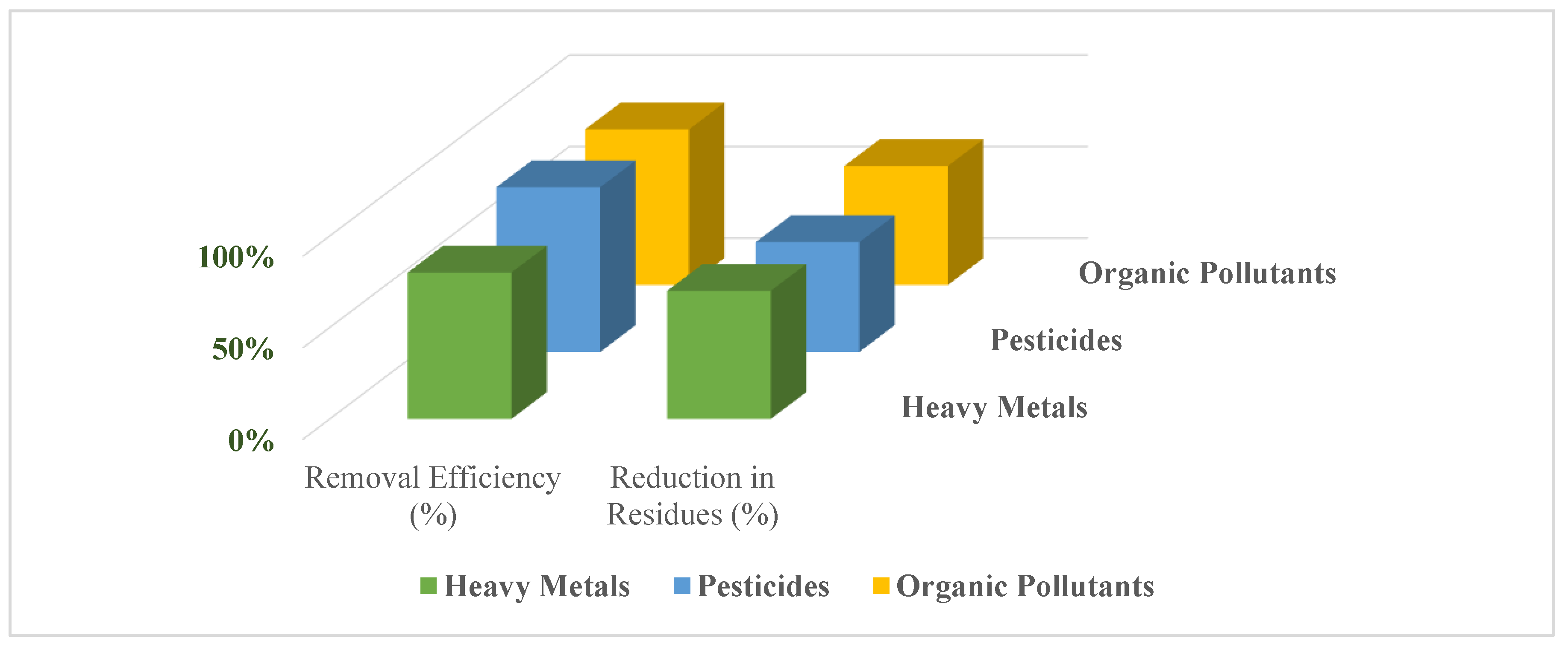
Removal Efficiency: 70-90% of heavy metals and organic pollutants from soils and water.
Residues Reduction: 50-70% reduced agrochemical residues, leading to a cleaner and safer environment. Figure 4.
5. Precision Agriculture: Advancements in Nanotechnology
5.1. Nano-Sensors for Soil and Crop Monitoring
Nano-sensors are revolutionizing precision agriculture via real-time, pretty correct facts on soil and crop conditions. These sensors degree essential parameters inclusive of soil moisture, nutrient stages, and crop health with high sensitivity. By permitting unique monitoring, Nano-sensors assist farmers optimize water, fertilizer, and pesticide use, enhancing yield and useful resource efficiency. This generation promotes sustainable agricultural practices with the aid of reducing waste and minimizing environmental influences.
5.2. Nano-Enabled GPS and Imaging Technologies
Nano-enabled GPS and imaging technology beautify subject management via providing high-resolution, distinct views of soil and vegetation. These systems can pick out problems like pest infestations or nutrient deficiencies, allowing timely interventions. Combined with superior GPS structures, this technology enables particular enter software, enhancing productiveness and sustainability in agriculture.
5.3. Nanotechnology Smart Irrigation Systems
Nanotechnology-primarily based clever irrigation systems are in reality a breakthrough in water control, prepared with Nano-sensors continuously monitoring soil moisture and weather conditions so that it will deliver water as suitable. This prevents over-irrigation, which saves some of the assets while providing crop health. By matching the definition of sustainable farming, green water use is carried out.
5.4. Nano-Filtration and Purification Technologies
Nanotechnology improves water great thru enhanced filtration and purification structures. Such systems rent nanomaterials for the removal of contaminants such as heavy metals, pathogens, and natural pollution. High efficiency guarantees easy and safe water for irrigation and crop health, which is critical for sustainable agriculture.
5.5. Nano Remediation for Soil and Water Health
Nanotechnology offers novel answers for soil and water remediation. Nanoparticles can adsorb or degrade pollution, which include pesticides and heavy metals, restoring soil and water to wholesome states. Nano remediation is a new era that uses nanoscale substances to detoxify soil by means of breaking down toxic chemicals or immobilizing them to save you migration. For instance, Zhang et al. (2023) confirmed that nanoscale 0-valent iron (nZVI) significantly reduced organochlorine insecticides in infected soils, enhancing soil satisfactory and crop security.
5.6. Nanotechnology in Agriculture: Energy Efficiency
Nanotechnology will increase electricity performance in agriculture by means of improving the overall performance of equipment and processing. For example, Nano coatings on agricultural equipment decrease gasoline intake through 15% while growing the operational performance (Chen et al. 2023). Nanotechnology also helps renewable power assets including advanced solar panels and wind generators that make it feasible to include sustainable strength into agriculture.
6. Risk and Regulatory Considerations
Toxicity and Environmental Effects of Nanomaterials: The advantages of nanotechnology face risks posed by nanomaterial properties which include size at the nanoscale and heightened reactivity. Research indicates silver nanoparticles along with specific other nanomaterials generate toxicity towards aquatic life and soil microbes with the ability to induce oxidative stress and inflammatory reactions. Environmental concerns regarding long-term impacts develop because nanomaterials tend to build up in ecosystems. The complete evaluation of security and danger represents essential groundwork for acceptable usage of nanotechnology.
Legal Framework of Nanotechnology for Agriculture: The regulatory framework for nanotechnology in agriculture is still under development. In the United States, guidelines are provided by agencies such as the Environmental Protection Agency (EPA) for the registration and testing of Nano-pesticides. The European Union's REACH regulations also provide for the safety of commercial nanomaterials. Developing countries have problems because of a weak regulatory capacity. International cooperation and harmonization of the regulations are important to ensure safe and effective use.
7. Challenges
Safety test, risk assessment, and practices for dealing with nanomaterials will be very crucial in safe nanotechnology integration. Comprehensive regulations by policymakers, researchers, and industries will be necessary when collaboration exists. Education or awareness for farmers, agronomists, and industry stakeholders of safe methodologies in nanotechnology use will also be important in this matter. Proper methods of dealing, storing, and disposal, as well as monitoring protocols, shall further decrease risks and have sustainable ways.
8. Future Perspectives
Nanotechnology has enormous promise in agriculture with research and development of novel, efficient, sustainable, and environmentally friendly nanomaterials and applications. Some key research directions and policy recommendations for facilitating this transition into commercial practice follow:
Innovative Research Directions: Nanomaterials, especially biodegradable ones, is a pioneering area of research, for they degrade to harmless products after their application. That reduces the chances of environment contamination as opposed to most normal materials. It can advance agricultural productivity using nano-fertilizers, nano-pesticides, and nano-sensors in addition to reducing negative impacts on the environment. The area where nanotechnology may synergistically intersect is with precision agriculture. Precision agriculture utilizes advanced tools, such as remote sensing, GPS, and data analytics for monitoring crop conditions to use inputs in an optimal amount. In combination with nanotechnology, it will support real-time monitoring of crop and soil conditions, helping the farmer to make more accurate decisions. For example, nano-sensors may enable remote monitoring of soil moisture, nutrient availability, or pest infestations, allowing optimized use of water, fertilizers, and pesticides. Therefore, there will be fewer wastes and more efficient means.
Policy Recommendations for Safe Implementation: Supportive policies will be required to effectively implement nanotechnology in agriculture. Important recommendations include:
- Regulatory Frameworks: There is a need for specific regulations on nanomaterials in agriculture with stringent testing before market introduction. Regulations should be based on strong scientific evidence, including Nano-specific properties and risks.
- R&D: Fund long-term research into the safety and efficacy of nanotechnology applications in agriculture, specifically focusing on environmental fate and behaviour, and the impact on human health and non-target organisms.
- Awareness Program: The education of agronomists alongside farmers along with industry actors should focus on proper Nano-solution handling techniques for agricultural purposes. After training manufacturers need to learn the correct methods of handling and store and dispose nanomaterials properly. International Cooperation: Promote international cooperation in research, regulation, and best practices. The process leads to coordinated regulations alongside knowledge exchanges between international experts that decreases worldwide risks while enhancing global benefits.
9. Conclusion
The agricultural field has been modified through nanotechnology to solve important issues that affect food production worldwide. Strict control over the distinctive properties found at nanometre scale allows agricultural operations to become more efficient while enhancing sustainable practices during growing periods of increasing world food requirements. The main use of nanotechnology exists in delivering nutrients to agricultural products. Traditional agricultural fertilizers result in be deficient use and pollute the surrounding environment. Nano-fertilizers release nutrients in a controlled manner which results in superior crop consumption and reduced fertilizer requirements and decreased environmental harm leading to better harvest results. Site-targeted pesticide delivery systems through nanotechnology minimize the necessary usage of pesticides and herbicides during pest and disease control operations. Nano-pesticides and herbicides protect non-target organisms while simultaneously improving their operation efficiency. Nano-sensors provide instant plant health monitoring which results in quicker infestation detection and better pest management practices.
Nanotechnology also contributes to environmental sustainability by cleaning polluted soils and water, optimizing water use, and reducing the environmental footprint of agriculture. Innovations such as nanoscale coatings protect plants from environmental stress, and nano-based gene delivery systems are being developed for drought tolerance. Despite the benefits of nanotechnology in agriculture, it has been associated with occupational health risks and exposure to the environment. Robust risk assessment and regulation will be paramount in its safe and proper use.
Author Contributions
MN contributed to the conceptualization, methodology, and AK original draft preparation, and supervision of the study. BD was responsible for data collection, literature review, and manuscript editing. PB provided validation, formal analysis, and contributed to the manuscript review. BD assisted with the investigation, resource management, and visualization. ASD contributed to the methodology, software application, and data curation. LS managed project administration, secured funding, and reviewed the manuscript. RK provided supervision, resources, and approved the final version of the manuscript. All authors have read and approved the final manuscript.
Acknowledgments
The corresponding author expresses sincere thanks to the Division of Research & Innovation, Uttaranchal University, Dehradun-248007, Uttarakhand, India for their support.
Conflicts of Interest
All other authors state that they have no conflicts of interest in this study.
References
- Chen, S. and Huang, J. (2023). Enhancing energy efficiency in agriculture: The role of nanotechnology. Renewable and Sustainable Energy Reviews. 171: 112756. [CrossRef]
- García, M., Fernández, L. and Sánchez, J. (2019). Nano-pesticides in citrus farming: Enhancing efficacy and reducing chemical inputs. Agronomy. 9(4): 193. [CrossRef]
- Garcia, F. and Rodriguez, M. (2021). Nanotechnology in pest management: Innovations and challenges. Pest Management Science. 77(6): 2765-2778. [CrossRef]
- Gobos, R., Chhipa, H. and Silva, R. (2015). Reduction of chemical use in agriculture through nanotechnology. Journal of Agricultural and Food Chemistry. 63(12): 1234-1243. [CrossRef]
- Hassan, M.M. and Khan, R. (2018). Nano-fertilizers: Potential for sustainable agriculture. Journal of Plant Nutrition. 41(4): 560-577. [CrossRef]
- Kumar, A. and Singh, P. (2024). Nanomaterials for environmental remediation: Present trends and future directions. Journal of Environmental Management. 350: 116032. [CrossRef]
- Kumar, R., Singh, M. and Meena, R. (2022). Impact of nano-fertilizers on rice yield and nutrient efficiency: A field study. Journal of Agricultural Science and Technology. 24(1): 123-135. [CrossRef]
- Kumar, S., Sharma, T. and Singh, P. (2019). Development of nano-pesticides for sustainable cotton farming. Indian Journal of Agricultural Sciences. 89(5): 789-797.
- Kumar, V. and Gupta, A. (2023). Environmental benefits of nano-pesticides: A case study in Indian agriculture. Environmental Science and Pollution Research. 30(12): 12567-12578. [CrossRef]
- Li, X. and Zhang, Y. (2020). Smart agriculture: The role of nano sensors. Journal of Agricultural Technology. 28(5): 510-523. [CrossRef]
- Liu, T. and Wang, L. (2024). Renewed energies: Building a future for nanotechnology within agriculture. Renewable Energy. 203: 45-59. [CrossRef]
- Müller, K., Klein, S. and Schmitt, M. (2018). Degradable nano-pesticides for sustainable agriculture. Journal of Nanotechnology in Agriculture. 12(3): 234-245. [CrossRef]
- Müller, R. and Anderson, P. (2020). The role of nanotechnology in modern agriculture. Agricultural Systems. 175: 102-118. [CrossRef]
- Oliveira, A.S., Mendes, L.A. and Ribeiro, C.A. (2023). Application of nanosensors for precision nutrient management in soybean production. Journal of Agricultural and Food Chemistry. 71(7): 2889-2898. [CrossRef]
- Oliveira, L. and Mendes, P. (2020). The role of nanotechnology in enhancing soil fertility. Soil Science Annual. 71(1): 58-64. [CrossRef]
- Omondi, M., Mwangi, M. and Wambugu, P. (2021). Nano-fertilizers in semi-arid and arid lands of Kenya and South Africa. Journal of Agricultural Science. 39(4): 301-312.
- Park, J.H. and Lee, S.H. (2019). Nano-coatings for improved crop resistance. Journal of Nanomaterials. 2019: 6794563. [CrossRef]
- Raj, S. and Mehta, R. (2023). Nano-enabled irrigation systems: Revolutionizing water use in agriculture. Irrigation Science. 41(1): 45-59. [CrossRef]
- Raj, V., Singh, P. and Verma, R. (2020). Innovation in nano urea for sustainable agriculture. Indian Journal of Agricultural Research. 54(6): 765-772. [CrossRef]
- Santos, F.A. and Martins, L.M. (2022). The impact of nanotechnology on crop productivity. Journal of Agricultural and Food Chemistry. 70(18): 5145-5155. [CrossRef]
- Sharma, T., Kumar, S. and Singh, P. (2019). Application of nano-pesticides in cotton farming. Journal of Cotton Research. 30(1): 98-106.
- Silva, R., Chhipa, H. and Gobos, R. (2018). Nano-pesticides in tomato production: A case study. Journal of Nanotechnology in Agriculture. 14(4): 345-355. [CrossRef]
- Singh, R., Sharma, T. and Kumar, P. (2018). Efficacy of nano-fertilizers in wheat production. Agronomy Journal. 110(3): 987-995. [CrossRef]
- Wang, Z. and Yang, C. (2023). Recent progress on the nano-filtration and purification techniques in water treatment. Environmental Science & Technology. 57(2): 545-560. [CrossRef]
- Y. Li and X. Zhang. (2024). Nano-enhanced soil conditioners: Innovations for improving soil health and fertility. Agronomy Journal. 116(1): 85-99. [CrossRef]
- Zhang, H. and Zhao, L. (2023). Nanoremediation: Advances and applications in soil detoxification. Soil & Sediment Contamination. 32(3): 245-263. [CrossRef]
- Zhang, X., Liu, Z., Liu, W. and Zhang, H. (2020). Nano-pesticides: A review of the application of nanomaterials for sustainable agriculture. Journal of Agricultural and Food Chemistry. 68(6): 1459–1471. [CrossRef]
- Zhao, X., Liu, Y. and Wang, J. (2023). Enhancing maize production with nano-pesticides and nano-fertilizers: A field trial. Journal of Crop Science and Biotechnology. 26(2): 145-156. [CrossRef]
- Zhu, X., Li, H. and Wang, Q. (2016). Application of nZVI for remediation of pesticide-contaminated soils. Journal of Environmental Science and Technology. 45(8): 421-435. [CrossRef]
Figure 1.
Different applications of Nano-Technology in Agriculture.
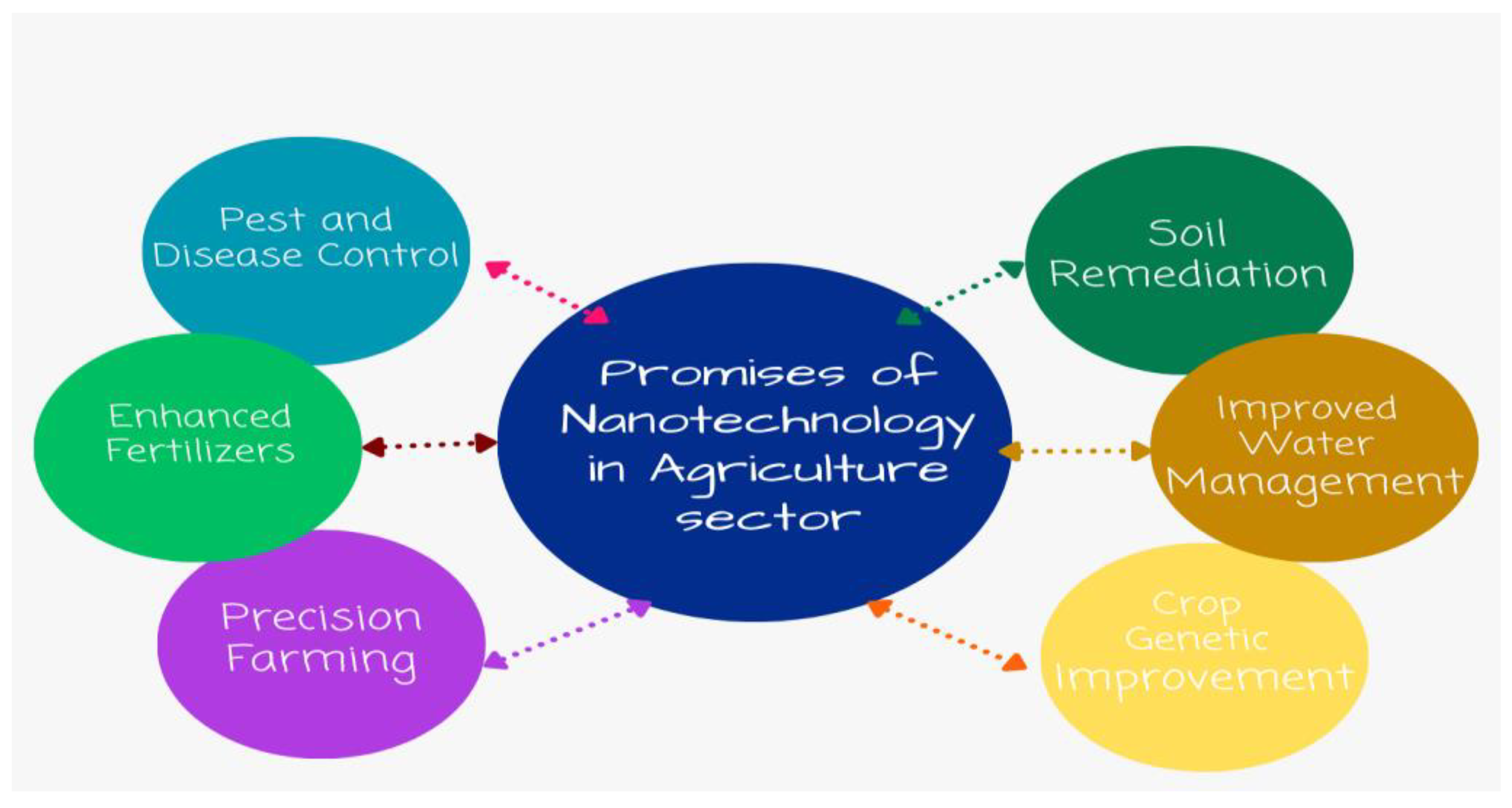
Figure 2.
Effect of Nano-fertilizers on Nutrient Use Efficiency and Yield in Various Crops.
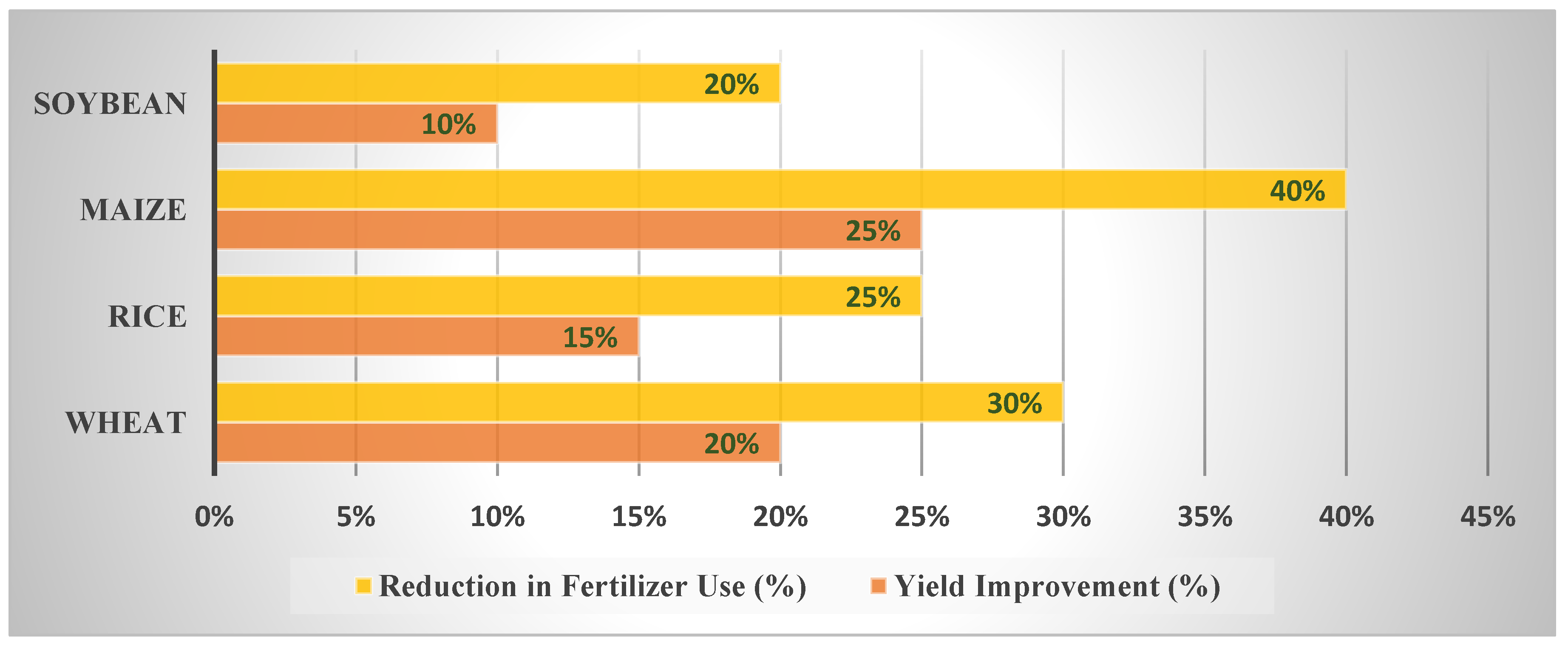
Figure 3.
Advancements in Nanotechnology for Agriculture.
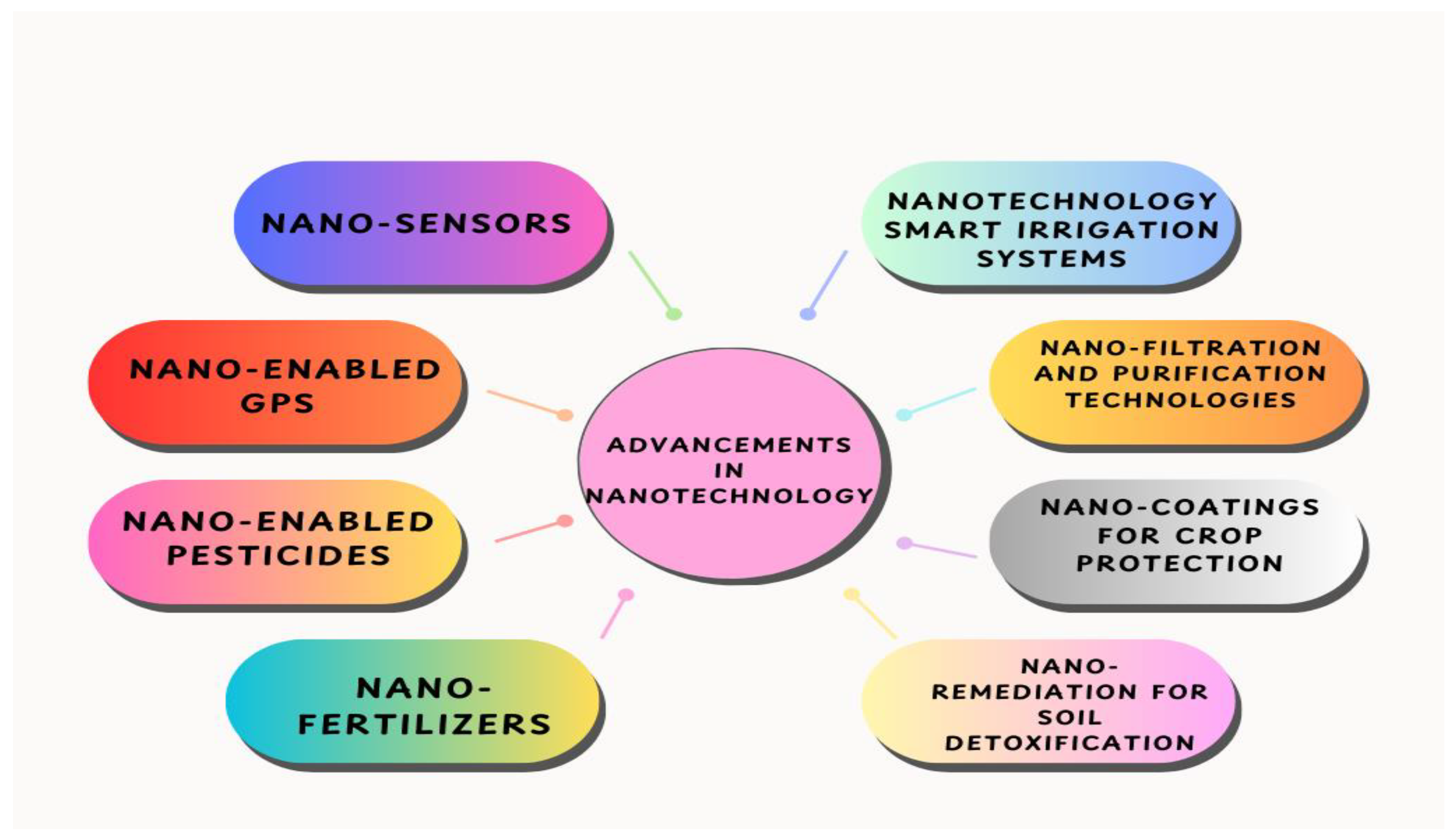
Figure 4.
Environmental Remediation and Residue Reduction: Impact of Nanotechnology.
Disclaimer/Publisher’s Note: The statements, opinions and data contained in all publications are solely those of the individual author(s) and contributor(s) and not of MDPI and/or the editor(s). MDPI and/or the editor(s) disclaim responsibility for any injury to people or property resulting from any ideas, methods, instructions or products referred to in the content. |
© 2025 by the authors. Licensee MDPI, Basel, Switzerland. This article is an open access article distributed under the terms and conditions of the Creative Commons Attribution (CC BY) license (http://creativecommons.org/licenses/by/4.0/).
Copyright: This open access article is published under a Creative Commons CC BY 4.0 license, which permit the free download, distribution, and reuse, provided that the author and preprint are cited in any reuse.


