

Submitted:
07 February 2025
Posted:
08 February 2025
You are already at the latest version
Abstract
The urgent global mandate to achieve net-zero carbon emissions by 2030 has accelerated innovation in sustainable construction materials, particularly natural insulation solutions. This study addresses persistent challenges such as complex production processes, non-compostable components, and limited adherence to industry standards by developing and evaluating a novel slim insulation panel made from agricultural waste, specifically wheat straw. Targeted at retrofitting Grade 2 Listed dwellings in the UK—where external modifications are restricted—the panels combine simplicity, full compostability, and conformity with regulatory benchmarks. Prototypes were fabricated using wheat straw and two compostable binders, tested for thermal performance, moisture stability, and biodegradability using an innovative Actual Wall Replication Method (AWRM) to mimic real-world conditions. Findings demonstrated superior thermal conductivity and durability, with panels achieving significant energy-saving potential without compromising heritage integrity. The work highlights wheat straw's viability as an eco-friendly insulation material and accentuates the necessity of realistic testing for accurate performance assessment. This study offers a replicable framework for integrating circular economy principles into heritage retrofitting, bridging the gap between ambitious environmental targets and historic building preservation, thereby contributing to broader sustainable development goals.
Keywords:
sustainable retrofitting
; heritage building insulation
; agricultural waste utilisation
; wheat straw panels
; circular economy
; compostable building materials
; grade 2 listed
1. Introduction and Context
The drive for energy efficiency in buildings is central to the EU’s 2030 Climate and Energy Framework, which emphasises reducing carbon emissions and environmental degradation (European Commission, 2011). This goal has global relevance, especially in regions with less stringent policies. While there has been considerable focus on improving energy performance in new buildings, research on existing structures, particularly historical and listed buildings, has highlighted significant challenges. Pacheco-Torgal (2014) noted that the construction industry is heavily reliant on non-renewable natural resources, contributing significantly to environmental degradation and stagnation in sustainable development. Previous studies, such as those by Lechtenböhmer & Schüring (2011), have explored the incorporation of waste materials in construction as a sustainable alternative. However, their findings revealed gaps in the market availability and performance of these materials, especially regarding insulation retrofitting in heritage buildings. This study addresses these gaps by investigating sustainable, regionally sourced substrate and binder alternatives like wheat straw insulation, compostable binders as psyllium husk and bioplastic or starch-based plastic evaluating their environmental impact and feasibility in retrofitting historical homes to improve energy efficiency without compromising architectural integrity(Alqadi & Elnokaly, 2023).
The urgency of this research study is accentuated by the residential sector’s substantial contribution to the UK’s greenhouse gas emissions, accounting for approximately 20% of the total, with pre-1919 dwellings—a category that includes many heritage properties—contributing disproportionately (Historic England, 2021). Approximately 21% of UK homes were built before 1919, and many are either listed or situated in conservation areas, presenting significant retrofitting challenges (Potton & Hinson, 2020; Salonen, Fischer, & Korjenic, 2023). A wall replication method was engineered and implemented to evaluate the thermal insulation properties and biodegradation of the panels under realistic conditions of a Grade 2 listed buiding (Elnokaly & Elseragy, 2011). The experimental phase involved the development of practical manufacturing methods, applicable across diverse economic contexts. Prototypes were created using wheat straw and two innovative compostable binders, followed by a comprehensive testing regimen. The evaluation of thermal conductivity I (Salonen et al., 2023)method and an Actual Wall Replication Method (AWRM) utilising a cold box setup. This dual-method approach aimed to overcome the limitations inherent in the hotbox method and to provide a more holistic understanding of the thermal conductivity characteristics of the panels.
The findings of this study highlight the efficacy of wheat straw as an insulation material derived from agricultural waste, offering a cost-effective and fully compostable solution . This is attributable to the natural composition of the binder and the straightforward manufacturing process. Furthermore, the introduction of a novel testing methodology presented in this study emphasises the necessity of mimicking real-life conditions for an accurate assessment of the panels’ performance capabilities
2. Material Substrate and Binders
In this study, wheat straw was utilised as the primary panel substrate. Wheat straw is abundantly available throughout the UK, irrespective of the municipality or season, making it an ideal choice (Soto, Rojas & Cárdenas-Ramírez, 2023). The UK ranks as the third-largest producer of wheat straw in Europe (See Figure 1) In 2007 alone, the UK generated approximately 8 million tonnes of wheat crop waste. Notably, around 70% of this waste is unsuitable for biofuels due to varying local pedo-climates and market conditions.
The choice of wheat straw aligns with our goal (with the aim of this study) to create a complete panel from local agricultural waste. To bind these panels, the research explored two compostable binders. The first binder is psyllium husk (PH), derived from the Plantago ovata plant, PH possesses gelatinous properties suitable for binding composites together (Masood and Miraftab, 2010). While compostable, PH is not locally sourced in the UK. The second binder is potato starch-based bioplastic (PB), which has been widely adopted in research projects using various starch sources as binders for insulation panels (Palumbo et al., 2014; Bumanis et al., 2020). PB can be produced from locally sourced raw materials in the UK. Despite criticism for their relatively low mechanical strength, starch-based binders offer cost-effectiveness, renewability, wide availability, and biodegradability without toxic residues (Mohammed, Elnokaly & Aly, 2021; Costes et al., 2017).
3. Manufacturing and Evaluation of Panel Assemblies
The panels were fabricated and tested at thicknesses of 2.5, 5, 7.5, and 10 cm since EPS foam is typically used within these thickness ranges for Grade II listed homes (Historic England, 2016). Results for thermal conductivity and moisture levels varied based on the compostable binder used (PH or PB) and the thickness of the panels. To produce the panels, a custom mould was constructed, allowing for the creation of wheat straw panels measuring 60x30x, with variable heights and thicknesses.
Hybrid Production Process
The experimental procedure for preparing wheat straw-based panels is described in detail below. It is worth noting that production methods in this field typically employ either advanced mechanised processes or entirely manual techniques. However, a hybrid approach, combining mechanised and manual labor, may also yield satisfactory results (Romero Quidel, Soto Acuña, Rojas Herrera, Rodríguez Neira, & Cárdenas-Ramírez, 2023). The steps in the production process were as follows:
1. Purification Process of Wheat Straw Biomass: Initially, wheat straws are cleaned using a conventional industry-standard blower to eliminate dust particles. For the manual method, a traditional outdoor beating process is employed. In this case, 1.5m² square plots are marked on the ground, and the batches of straws are periodically moved after 30 seconds of dusting. This evaluation helps determine the optimal dusting duration.
2. Contingent Thermal Treatment (Boiling) Procedure: This step is optional since boiling or steaming has proven to improve the surface matrices adhesion of wheat straw, releasing lipophilic extractives by 41–53 % (Sun, Salisbury, & Tomkinson, 2003). It involves boiling the wheat straw at temperatures of 80°C, 100°C, and 120°C. The treatment duration at boiling temperatures is approximately 2 minutes. Boiling enhances the structure and pore volume of the straws, facilitating better binding with the natural binder.
3. Mixing with Natural Binder: The wheat straw is mixed with the chosen natural binder (either PH-psyllium husk or BP-bioplastic potato starch binder) and warm water. Mixing is carried out in an EC (European Community) standards-compliant laboratory concrete mixer C100, equipped with telescopic handles for ease of mobility. Approximately 3 minutes of mixing time is required. A manual mixing attempt was also made, which took approximately 2.7 times longer than the concrete blender. After mixing in the concrete mixer, the composite is carefully reviewed to eliminate any irregular coagulations, ensuring uniformity.
4. Compression Moulding: The wheat straw and binder mixture is subjected to compression moulding. Both automated and manual methods were employed to assess the force in Newtons and timeframes required for compression. For practical experimental purposes, MDF moulds were used instead of steel moulds to accommodate various sample sizes that align with industry-standard panel dimensions.
5. Weight Application: To prevent expansion, sample panels are placed under the influence of weights. Various time intervals and weights were employed to expedite the process and significantly reduce panel thickness. The primary research objective is to produce, monitor, and test a novel slim wheat straw insulation panel that does not compromise the interior space of Grade 2 Listed homes while preserving their facades.
6. Drying Methods: The subsequent phase involves drying the panels using one of three methods: oven drying, industrial fan drying, or air drying. Each method varies in terms of its impact on panel thickness and structural integrity. Oven drying, for instance, may cause swelling and occasional cracking, while fan and air-drying methods are more conducive to maintaining thickness and structural integrity. Industrial drying typically takes 24 hours, while air drying requires 2.5 to 4 days, depending on panel thickness.
Figure 2 illustrates the stages of the hybrid production process. The manufacturing process depicting 3 main processes of the hybrid production process. The first row depicts the 3 mixing methods used to bind the wheat straw with the compostable binders PH and BP. The second row depicts the manual and mechanised methods of hydraulic pressing. The last row reveals the compression and drying processes.
Figure 3 provides a framework depicting the pre-manufacturing process, primary process, and optional steps that were tested but require further research before being recommended. Gray boxes represent more energy-intensive options at each stage, while cross-lined boxes or lines indicate alternative methods that were successfully tested but not adopted as the primary production method.
Figure 4 showcases the 3 moulds used to produce the sample wheat straw panels. The first (from left) was made of steel with dimensions 20*30 cm; the second was MDF with dimensions 60*40 cm; the third was MDF, 120*55 cm.
4. Results and Discussion
Heat-Flow Metres (Used Method)
An advanced and precise heat flux meter was employed in this study. This meter, known for its accuracy (GreenTEG, 2020), yielded results that surpassed those obtained using the BS EN ISO 6946 calculation method by 20% and the in-situ thermal conductivity (Hukseflux) heat flux sensor by 10%. This technology has been utilised in numerous refurbishment projects to assess the efficiency of insulation products when installed both internally and externally in buildings (John Gilbert Architects, 2019) (Durrer and Hendrichs, 2018). The gSKIN® Heat Flux Sensor played a pivotal role in thermal measurement and control systems, offering rapid response times, minimal invasiveness, ease of use, customisable design, robustness, and high sensitivity. In this research, both the hotbox experiment and the AWRM (Actual Wall Replication Method) experiment were employed.
Calibrated Hotbox Design
The hotbox configuration adhered to European ISO standards EN ISO 8990 (ISO, 2019). Traditional insulation materials, such as foam or fillings, differ significantly from agro-waste fibre insulation panels, which possess rough surfaces and may exhibit multiple air gaps when applied to walls. This presents a challenge for conventional methods or apparatuses used to measure thermal conductivity, often resulting in inaccuracies. To mitigate this, substantial quantities of sealants are frequently used to eliminate air gaps, inadvertently creating thermal bridges(Sheweka & Elnokaly, 2016) (Peters, Sharag-Eldin, & Callaghan, 2017).
To accommodate one of the larger 60cm x 25cm panels, a 10cm thick polyurethane foam envelope was used. This not only provided structural support without the need for wooden casings but also offered superior insulation, mimicking the outdoor and indoor conditions of a Grade 2 listed residential building’s wall. The gSKIN® heat flux measuring kit, constructed by GreenTEG, was employed for measurements. A parallel coil of heat wire served as the heating source, achieving temperatures of up to 38°C when combined with a circulating fan. A temperature difference of approximately 15°C was maintained between the hot and cool chambers, exceeding the minimum requirement of 5°C as stipulated by GreenTEG. The experiment extended over three consecutive days, complying with the BS ISO 9869 standard (ISO, 1994) for obtaining thermal conductivity values for an insulation panel (Refer to Figure 5 and Figure 6).
Results of Pilot Test: Hotbox
The hotbox testing method produced results with significant discrepancies, yielding thermal conductivity coefficients ranging from 0.5 to 0.6 W/mK. A comparative analysis of the thermal conductivity values acquired through the hotbox method and the anticipated values when the panel is applied to a conventional Grade 2 listed house exterior wall revealed that the values exceeded those reported by other researchers and experiments involving similar panels of comparable thickness. For example, in Smith (2016), hotbox testing of EPS foam panels yielded values between 0.03 and 0.04 W/mK, while Alhawari, Alhawari, & Mukhopadhyaya, (2022) studied the thermal conductivity of panels using a calibrated hotbox, and their tests on EPS panels yielded values of around 0.035-0.040 W/mK, which aligns with typical EPS performance in retrofit projects (Asdrubali, D’Alessandro, & Schiavoni, 2015). Consequently, a decision was made to employ the Actual Wall Replication Method (AWRM) as an alternative. This method entails testing the material’s thermal conductivity within a full-sized, on-site structure with walls and a roof, ensuring proper sealing. Further details on the AWRM will be presented in the subsequent section.
Table 1 illustrates that when tested for thermal conductivity values using the hotbox method, wheat straw panels exhibited a range of 0.6 to 0.5 W/mK across densities ranging from 133 to 385 kg/m3. The hotbox thermal conductivity values are presented as well as the assumed values once applied to a traditional Grade 2 listed wall with 30 cm masonry brick and plaster rendering on either side. These values were found to be ten times higher than those reported in similar experiments (Lopez Hurtado, Rouilly, Vandenbossche, & Raynaud, 2016) (Tangjuank, 2011) (Binici, Eken, Dolaz, Aksogan, & Kara, 2014)(Jones, Mautner, Luenco, Bismarck, & John, 2020)(Palladino, Scrucca, Calabrese, Barberio, & Ingrao, 2021) (Please see Table 3). This outcome highlights the inadequacy of the hotbox method, prompting the development of a novel Actual Wall Replication Method (AWRM) to obtain accurate thermal conductivity values. It is noteworthy that the total thermal conductivity of the wall following the application of the panels was calculated to gauge the impact of refurbishment, aligning with the required standards of 0.30 - 0.55 W/mK(Historic England, 2016).
The please see additions preceding table demonstrates that the hotbox test, as employed initially in this study, failed to accurately ascertain the thermal conductivity values of the insulation panel. Additionally, investigations conducted by other researchers on materials with comparable densities have yielded significantly more favourable thermal conductivity levels. This collectively highlights the need for alternative testing methodologies to evaluate the insulation panel’s performance (Soto et al., 2023) These researchers used agro-waste fibrous materials that informed this study, such as pineapple leaves (Tangjuank, 2011), sunflower composites with plaster or epoxy binders (Binici et al., 2014), straw bale (Chougan, Ghaffar, Al-Kheetan, & Gecevicius, 2020) (Carfrae, Wilde, Goodhew, Walker, & Littlewood, 2009) (Ashour, Wieland, Georg, Bockisch, & Wu, 2010) (Palladino et al., 2021), seeds, and bagasse exhibited thermal conductivity values ranging from 0.035 to 0.043 W/mK, with densities ranging from 178 to 232 kg/m3 (Tangjuank, 2011). Additionally, panels incorporating pineapple leaf fibres and natural rubber displayed a thermal conductivity of 0.057 W/mK with a density of 338 kg/m3 (Kumfu & Jintakosol, 2012). Straw bales, when not modified into panels and with a thickness of 50 cm, exhibited a thermal conductivity of 0.067 W/mK at a density of 60 kg/m3 (Goodhew & Griffiths, 2005). The impetus for this study to devise an alternative thermal conductivity testing methodology that could more accurately assess the true potential, or lack thereof, of the panel was the overlapping multi-directional straws of he panel which were identified as having lower thermal conductivity values for straw fibre insulation thermal conductivity, particularly when fibres are oriented perpendicular to the direction of heat flow (Pruteanu, 2010). Through residential case studies, a Lithuanian investigation demonstrated that the use of straw bale insulation panels with various orientations in the straw could yield a reduction in daily heating requirements by approximately 60%, equivalent to roughly 2000 kWh of solar gains during warmer seasons (Milutiene, Staniškis, Kručius, Auguliene, & Ardickas, 2012). Reeds used as panels exhibited thermal insulation levels ranging from 0.045 to 0.056 W/mK depending on the fibres orientation, with densities varying from 130 to 190 kg/m3 (Moncada, Asdrubali, & Rotili, 2013)(Almusaed, Almssad, Alasadi, Yitmen, & Al-Samaraee, 2023).
- Actual Wall Replication Method: Accurate thermal conductivity
As mentioned earlier, the hotbox method failed to provide results that aligned with the standards or those found in similar studies. This may be attributed to the fact that the hotbox method in most cases were not validated. The paramount concern was assessing the resilience of wheat straw panels under varying moisture conditions, a vital aspect in understanding their potential during installation phases and drying. The study developed an innovative method known as the Actual Wall Replication Method (AWRM), as illustrated in Figure 7.
The AWRM was devised to focus on conducting a cost-effective small-scale experiment that could evaluate moisture levels within the wheat straw panels. It aimed to assess how atmospheric conditions affected the application of wet traditional hydraulic lime render on these panels. The experiment involved the use of a cold box, positioned behind a double brick wall simulating an exterior environment resembling the temperate climate of the UK. Meanwhile, the wheat straw panels, and classic lime render layers (3.5 lime render with sand and water, excluding cement) were applied on the opposite side. The room housing the experiment was maintained at temperature and humidity levels typical of indoor conditions in British homes of indoor temperatures for living spaces between 18°C and 21°C, and humidity levels between 40% and 60% for comfort and health (CIBSE, 2015). This setup allowed for the evaluation of water vapor transfer from the warm room, through the brick wall, to the cold box on the other side.
The results indicated that the moisture levels in some of the wheat straw panels were well within acceptable limits, measuring below 8.5-10%. It’s noteworthy that wheat straw bales can tolerate moisture levels up to 25% at temperatures not exceeding 10°C. This assessment was carried out by accessing the panel’s front and rear surfaces, as well as its contact points with the lime render and masonry brick layer (please refer to the energy framework for a detailed description of the AWRM and its expected outcomes, and see Figure 8 for the AWRM experiment design).
(Please see Figure 8(a) for an exploded axonometric view of the Actual Wall Replication Method, and Figure 8(b) for an illustration of the AWRM setup).
- Design and build of the AWRM method
The experimental apparatus consisted of three modular wheat straw panels, each measuring 60x30x2.5 cm. These panels were positioned vertically and in parallel on the masonry wall, adhered with adhesive spray.
Externally, a 3 cm thick lime mortar mixture was applied to the wheat straw panels. The external portion of the chamber represented the interior of a Grade 2 Listed household, while the cold chamber simulated outdoor conditions. The lime mixture consisted of 3 parts 3.5 NHL (natural hydraulic lime) to 1 part fine construction sand, closely resembling the lime renders commonly found in classical Grade 2 homes, as discussed in the literature review. These homes traditionally feature external walls with a thickness of 0.22 m and internal medium-density plaster renderings of approximately 0.016 m or 1.5 cm (Allen and Pinney, 1990). The lime render layer incorporated three openings for moisture measurements on the front end of the panels. Thermal conductivity values were determined using the gSKIN® heat flux sensor by GreenTEG, placed on the final lime render layer (Williamson & Finnegan, 2021).
To replicate the exterior climate of the UK, the cold chamber utilised two Peltier Modules and a foam box chamber (please refer to Figure 9 for the placement of the Peltier Modules within the cold chamber). Two 12V 6A Thermoelectric Peltier Refrigeration Cooling Systems were employed, equipped with heat sinks and 12V fans (0.12A) measuring 11x12x11 cm, which facilitated heat dissipation from the cold box to the experiment room. The laboratory room’s indoor temperature was maintained at 23°C, with humidity controlled at 36%.
The experimental design included leaving the upper sections of the wheat straw panels to rest against cement blocks. Instead of trimming the panels to match the height of the masonry blocks, the cement blocks were manually adjusted since the wheat straw panels were not affixed to them. This allowed for precise monitoring of moisture percentage readings between the panels and the wall, offering a more accurate representation of moisture levels at these contact points. Cement bricks were selected due to their ease of removal and replacement on a daily basis. Adhesive spray was applied once and allowed to dry to secure the panels to the masonry blocks. Cement blocks were temporarily removed and repositioned during moisture level measurements at the points of contact with the interior.
While this method presents certain complexities and potential implications for readings, particularly with regard to exposed monitoring points, which may not be fully covered with plaster, it provided valuable preliminary insights into moisture level fluctuations. This method could serve as a practical substitute for experiments necessitating a full-sized rig until such resources become accessible.
Replication of Site Conditions
To obtain as accurate thermal conductivity values as possible, it was essential to replicate real-life parameters, particularly indoor and outdoor temperatures and humidity levels. The Actual Wall Replication Method (AWRM), with its cold chamber and controlled indoor room temperature and humidity, allowed the wheat straw panels to react naturally in terms of biodegradation and thermal conductivity. These parameters closely mimicked the humidity and temperature datasets typical of the UK within DesignBuilder Software Ltd. (Refer to Figure 9.) This was done to ensure that future research assessing long-term heating and cooling load savings from the straw panels would yield results consistent with the expected outdoor environment simulated by DesignBuilder Software Ltd, a popular tool among academics, students, and companies alike.
The indoor room temperatures in the simulated houses were adjusted to match the indoor temperature of the lab in Nottingham, which represented the indoor environment of Grade 2 Listed houses. Normally, DesignBuilder Software Ltd sets these temperatures to 21°C for most rooms, with the bathroom at 22°C, slightly higher than the suggested 18°C to 20.2°C (Ji, Fitton, Swan, & Webster, 2014). The lab, emulating the interior of a Grade 2 Listed house, maintained a temperature of 20.7°C. The ideal relative humidity (RH) levels in UK homes range from 30% to 60% (Dore et al., 2008)(Council, 2022). The lab achieved an RH of 36.2%. While the average outdoor temperature in Nottingham throughout the year was 9.8°C, the cold chamber simulating outdoor conditions maintained an average temperature of 12.8°C (Climate Data, 2022). The average humidity levels in Nottingham were around 78%, but the cold chamber reached an average of 55%, which did not precisely match the required humidity levels (Council, 2022).
The experiment couldn’t be monitored over a full year with varying temperature and relative humidity controls due to lab access restrictions until May 2021. As a result, the average temperature values for the year and relative humidity levels were replicated as closely as possible, given the available equipment and timeframe.
HOBO sensors were programmed to capture readings every minute, with weekly data downloads, and their batteries lasted up to two months with an accuracy sensitivity of 0.1°C or 0.1°F and 0.01% RH, respectively.
Figure 9 shows the similarity between the AWRM’s cool chamber and indoor room chamber temperature and humidity control with the humidity and temperature data sets of the UK within DesignBuilder Software Ltd.
The readings from the HOBO sensors, placed in the cold chamber (emulating outdoor conditions) and the lab (simulating indoor conditions of a Grade 2 Listed house), revealed average temperatures of 12.8°C and 20.7°C, with the lowest and highest readings at 11.6°C and 18.9°C, and 23.7°C and 22.9°C, respectively. Standard deviations were approximately 0.48 and 0.57, respectively (Refer to Table 3).

Table 3.
Average results of the RH and temperature values of the cold chamber and indoor lab conditions.
Table 3.
Average results of the RH and temperature values of the cold chamber and indoor lab conditions.
| Temperature Cold chamber (Outdoor Conditions) °C | Temperature (Indoor Conditions) % | RH Cold chamber (Outdoor Conditions) % | RH Lab (Indoor Conditions) % | |
| Standard deviations | 0.5 | 0.6 | 3.7 | 4.2 |
| Maximum | 23.7 | 22.9 | 64.6 | 50.6 |
| Minimum | 11.6 | 18.9 | 29.8 | 28.4 |
| Averages | 12.8 | 20.7 | 55.6 | 36.2 |
Figure 10 illustrates how the AWRM emulated Nottingham’s climate through the cold box method. It presents dry and wet bulb temperatures in Nottingham from July 2017 to July 2018. The summer temperature in 2018 was notably higher than the previous year due to the 2018 heatwave (Met Office, 2022).
AWRM Preliminary Results
The Actual Wall Replication Method (AWRM) played a pivotal role in providing realistic values for the performance of a typical masonry wall in Grade 2 listed homes under conditions similar to the temperate climate of the UK. This was achieved by utilising the cold box, created on the masonry block side, equipped with Peltier Modules to mimic outdoor conditions in Nottingham. Simultaneously, the temperature and humidity levels in the lab emulated indoor conditions of a typical household where the straw panels and lime render side were exposed. It’s important to note that the panels were installed on the interior of a Grade 2 listed building, not on the exterior. The results obtained constituted thermal conductivity values for the total wall, as the panels were applied to the masonry wall. A calculation method was subsequently employed to obtain thermal conductivity values for the wheat straw panels independently of other wall layers.
The classic equation for calculating insulation thermal conductivity could not be applied, as it necessitates an equation that considers multiple factors simultaneously, including density (ρ), conductivity (λ), permeability (μ), specific heat density (c), Young’s modulus (ε), and thickness. To obtain results that didn’t rely solely on the thermal conductivity levels of different materials used in the AWRM, Ubakus was used as a highly useful tool. It allowed for the calculation of thermal conductivity values, moisture levels, and other building physics parameters based on a vast material library. Custom parameters were input for the novel wheat straw panels, derived from the thermal conductivity results obtained from the gSKIN® heat flux sensor by GreenTEG (Refer to Figure 11).
The correct application of the wheat straw panels was of paramount importance. The AWRM included layers of lime render plaster, wheat straw, and masonry brick, as indicated (Refer to Figure 4.11). These layers are presented in order from the interior of a listed home (the lab or warm room) to the outdoor environment (or the cold chamber used to simulate outdoor conditions). Notably, there were considerable air gaps and pockets between the wheat straw panel and the masonry brick walls. These were calculated after researching approximate air depths for each thickness. Since the software couldn’t recognise them as an integral part of the wheat straw layer, they were added as a separate layer in the Ubakus tool. The lime render used in the experiment was a mixture of sand and lime without cement. It was a blend of pure lime and sand stuccos, using NHL3.5, which is highly permeable and minimises condensation risks due to dew point percentages or temperature gradients overlapping, as observed in lime, cement, and sand renderings (Straube, 2000) (Grilo et al., 2014). Refer to Figure 12 which shows the considerable difference in the permeability of renders using varied combinations and rations of cement, slaked lime and sand.
Final AWRM Thermal Conductivity
It’s important to acknowledge that some of the insulation panels exhibited thermal conductivity levels that didn’t perform as expected, particularly the 7.5 cm and 10 cm panels. These panels showed increased air gaps disproportionate to their thickness, resulting in higher heat transmittance between the interior and exterior of the wall, rather than heat retention (Bovo et al., 2022).
The Actual Wall Replication Method (AWRM) identified the 5 cm and 7.5 cm panels of the PH-based (Psyllium husk) panel as the best performers, with thermal conductivity values of 0.017 and 0.023 W/mK. Meanwhile, the 2.5 cm and 10 cm panels had higher values of 0.025 and 0.028 W/mK. For the BP-based (bioplastic) panels, the 7.5 cm and 5 cm panels had thermal conductivity values of 0.021 and 0.0215 W/mK, respectively, making them favourable. On the other hand, the thinnest and thickest panels of 2.5 cm and 25 cm showed thermal conductivity values of 0.033 and 0.026 W/mK. Table 3 shows the thermal conductivity values of PH (psyllium husk) binder-based wheat straw panel when tested using the hotbox or AWRM. It also represents the thermal conductivity values of the BP (bio plastic potato starch) binder-based wheat straw panels when tested only using the AWRM. The densities of each of the PH and BP based panels are represented.
However, it’s worth noting that the thermal conductivity values provided by the hotbox method significantly deviated from the normal range of bio-based insulation with similar thickness (Please see Table 4).
Table 3.
Thermal conductivity values and densities of PH and BP binder-based wheat straw panels when tested using hotbox or AWRM.
Table 3.
Thermal conductivity values and densities of PH and BP binder-based wheat straw panels when tested using hotbox or AWRM.
| Hotbox Method | Actual Wall replication | |||||||
| PH binder panels (Psyllium husk) | BP binder panels (Bioplastic) | |||||||
| Wheat straw panel Thickness (cm) | Manually calculated total wall Thermal conductivity from Hotbox obtained Hotbox values(W/mK) | Panel Thermal conductivity, Hotbox (W/mK) | Manually calculated total wall Thermal conductivity from actual wall replication method (W/mK) | Panel Thermal conductivity from actual wall replication method (W/mK) | Density (Kg/m3) |
Potato wall Thermal conductivity (W/mK) |
Assumed potato panel Thermal conductivity (W/mK) |
Density (Kg/m3) |
| 2.5 | 1.036 | 0.6 | 0.57 | 0.025 | 133 | 0.66 | 0.033 | 146 |
| 5 | 0.986 | 0.55 | 0.27 | 0.017 | 186 | 0.31 | 0.0215 | 218 |
| 7.5 | 0.937 | 0.52 | 0.24 | 0.023 | 270 | 0.225 | 0.021 | 324 |
| 10 | 0.89 | 0.5 | 0.22 | 0.028 | 385 | 0.23 | 0.026 | 470 |
Table 4.
The disproportionate thermal conductivity values between the PH and BP based wheat straw panels.
Table 4.
The disproportionate thermal conductivity values between the PH and BP based wheat straw panels.
| PH binder panels (Psyllium husk) | BP binder panels (Bioplastic) | |||||
| Wheat straw panel Thickness (cm) |
Assumed wall Hotbox panel Thermal conductivity (W/mK) |
Wall Thermal conductivity, actual wall replication method (W/mK) | Ratio of Hotbox to AWRM experiment | Assumed wall Hotbox panel Thermal conductivity (W/mK) |
Potato wall Thermal conductivity (W/mK) |
Ratio of Hotbox to AWRM experiment |
| 2.5 | 1.036 | 0.57 | 1.82 | 1.036 | 0.66 | 1.57 |
| 5 | 0.986 | 0.27 | 3.65 | 0.986 | 0.31 | 3.18 |
| 7.5 | 0.937 | 0.24 | 3.90 | 0.937 | 0.225 | 4.16 |
| 10 | 0.89 | 0.22 | 4.05 | 0.89 | 0.23 | 3.87 |
The disproportionately higher thermal conductivity values obtained from the hotbox method, or errors in thermal conductivity determination for the same panels tested in the AWRM, could be attributed to various factors. These factors may include non-uniform temperature distribution within the hotbox (Lucchi, Roberti and Alexandra, 2018), lack of clear moisture content control in the mock-up (Asdrubali & Baldinelli, 2011), specific test setup (Aviram, Fried, & Roberts, 2001), small metering section (Kus, Özkan, Göcer, & Edis, 2013), limited measuring points with that section (Asdrubali & Baldinelli, 2011) , and a small temperature difference (ΔT) between the cold and hot chambers or between the chamber and room simulating the exterior and interior environments (Sala, Urresti, Mart\’\in, Flores, & Apaolaza, 2008). Additionally, inaccuracies in hotbox results can stem from factors like non-accurate surface temperature measurements, number, location, and type of sensors and probes, thermal bridges, and variation or shielding of the temperature gradient (Peng & Wu, 2008) (Ahmad, Maslehuddin, & Al-Hadhrami, 2014) (Nardi, Paoletti, Ambrosini, De Rubeis, & Sfarra, 2015). The absence of radiative cooling in the hotbox may have led to heat shielding issues among the probe numbers and locations, contributing to major inaccuracies in thermal conductivity values (Cesaratto, De Carli, & Marinetti, 2011).
The AWRM, on the other hand, yielded results that were more aligned with other experiments involving bio-based insulation made from agro-fibre waste and natural materials. It helped bridge the gap between the hotbox method and actual on-site performance. Thermal conductivity values for PH and BP binder-based panels were ranked differently based on thickness. However, these preferences changed when energy performance simulations were conducted on semi-detached, terraced, and detached 3D models (Ali, Issa, & Elshaer, 2024).
Resistance to Moisture
Concerns regarding the decay of agro-waste fibres when used in wall insulation under specific conditions stem from high moisture levels that persist for a short time or low levels that persist for a long time. The moisture resistance experiment aimed to evaluate the effects of atmospheric conditions and plaster rendering on the moisture content of wheat straw. Complex water vapor passage within the wheat straw panels was monitored at several surface points.
The results indicated a level of moisture to be expected from wheat straw insulation, which didn’t pose a threat to the structural integrity of a wall through decay. Moisture levels fluctuated and reached a maximum of 25%, which didn’t surpass the undesirable threshold of 37% (Robinson, 2014), at which point straw deterioration begins. However, it’s worth noting that although the wheat straw was pre-treated via boiling and steam treatments, reducing the likelihood of fungal activity by eliminating live matter or pests in the straw bales, this may not be the case once the binder is added to the wheat straw panels after treatment.
5. Discussion
This study introduced a novel slim insulation panel utilising wheat straw and compostable binders, providing a sustainable retrofitting solution for Grade 2 Listed dwellings in the UK. These findings are significant in the broader context of achieving net-zero carbon targets by 2030 (Czajkowski, Kocewicz, Weres, & Olek, 2022), while preserving the architectural integrity of heritage buildings (Abu-Bakar & Charnley, 2024). Specifically tailored for Grade 2 Listed homes in the UK, which are subject to constraints in exterior renovation, this panel aims to offer an interior insulation solution that is both uncomplicated in construction and fully compostable, while adhering to industry benchmarks. The experimental framework involved the utilisation of wheat straw and compostable binders to fabricate prototype panels, which were then subjected to a series of tests to ascertain their thermal conductivity, moisture level stabilisation, and biodegradation under conditions that closely mimic real-life scenarios. The outcomes of these tests highlight the potential of wheat straw as a viable, cost-effective, and compostable material for insulation purposes. The study highlights the criticality of employing realistic testing environments to accurately gauge the true performance capabilities of these insulation panels (Palladino et al., 2021).
The development and testing of these panels focused on three primary objectives: thermal efficiency, environmental sustainability, and compatibility with conservation requirements. The initial phase of testing the fabricated panels involved employing the conventional hotbox method. However, this approach was deemed ineffective due to its significant error margin.
The adoption of the Actual Wall Replication Method (AWRM) in conjunction with cold box testing proved instrumental in evaluating the panel performance under conditions that closely simulate real-world scenarios. Subsequently, a more realistic wall replication method was developed to assess the panels’ performance under actual conditions. This involved the construction of a cold box to mimic the outdoor temperature and humidity levels typical of the UK, alongside utilising the laboratory environment to simulate average indoor conditions. The findings from this approach indicated that panels utilising a 5 and 7.5 cm thickness of psyllium husk-based binder were most effective, exhibiting thermal conductivities of 0.017 and 0.023 W/mK, respectively. In the context of the bioplastic potato starch-based binder, both the 5 cm and 7.5 cm panels demonstrated superior performance, with the 7.5 cm panel marginally outperforming the 5 cm panel, registering thermal conductivities of 0.021 and 0.0215 W/mK, respectively. These results corroborate the findings of Lawrence, Heath, & Walker (2008), who determined that the application of NHL lime render to straw bale insulation results in a moisture content that is at least 3% lower than when utilising a 1:1:6 lime:cement:sand render, attributing this to the enhanced ‘breathability’ of the formulated lime render as compared to its cement counterpart, with an average moisture level of 14%.
In practice, the integration of these panels into heritage buildings involves regulatory and logistical challenges, including adherence to conservation guidelines, cost considerations, and the need for skilled labour for installation. These barriers emphasise the need for policy incentives and training programs to facilitate adoption.
- Significance of the Study
This research fills a critical gap by providing a replicable framework for integrating circular economy principles into the retrofitting of heritage properties. Unlike conventional insulation solutions that often compromise sustainability or architectural preservation, these panels offer a balanced approach, demonstrating that natural materials like wheat straw can meet modern thermal and environmental standards.
6. Conclusion
This study has successfully demonstrated the potential of slim wheat straw-based insulation panels as a sustainable retrofitting solution for Grade 2 Listed dwellings in the UK. Key findings indicate that these panels, utilising PH and PB binders, can achieve thermal conductivity values comparable to conventional materials while offering the added benefits of compostability and alignment with conservation requirements.
- Main Contributions and Impact
- 1.
- Innovative Materials: The research established wheat straw, an abundant agricultural waste product, as a viable substrate for insulation, offering an eco-friendly alternative to non-renewable materials.
- 2.
- Novel Methodologies: By developing the Actual Wall Replication Method (AWRM), this study set a precedent for more realistic performance evaluation of insulation panels, addressing the limitations of conventional testing techniques.
- 3.
- Heritage Compatibility: The proposed solution bridges the gap between environmental sustainability and the strict conservation requirements of heritage properties.
- Limitations and Future Directions
While the study provides a robust foundation, certain limitations remain. The scalability of the hybrid production process and the availability of suitable binders, such as PH, warrant further exploration. A comprehensive life-cycle assessment should be conducted to fully evaluate the environmental impacts of the panels across their production, use, and disposal phases. Additionally, long-term field tests in diverse climatic and occupancy conditions are needed to validate the durability and biodegradation of the panels.
- Recommendations
Future research should focus on:
- Enhancing Production Efficiency: Refining the hybrid production process for greater scalability and uniformity across manufacturing setups.
- Policy and Incentives: Engaging stakeholders to establish regulatory support, training, and subsidies for heritage retrofitting projects using sustainable materials.
- Material Optimisation: Exploring alternative binders with higher thermal and moisture performance while maintaining compostability and local availability.
The findings of this study highlight the potential of agricultural waste as a transformative resource in the construction sector. By aligning heritage preservation with sustainable innovation, this research contributes a vital step towards meeting net-zero carbon targets and setting a benchmark for future developments in the field of sustainable retrofitting.
References
- Abu-Bakar, H. , & Charnley, F. Developing a Strategic Methodology for Circular Economy Roadmapping: A Theoretical Framework. Sustainability 2024, 16, 6682. [Google Scholar] [CrossRef]
- Ahmad, A. , Maslehuddin, M., & Al-Hadhrami, L. M. In situ measurement of thermal transmittance and thermal resistance of hollow reinforced precast concrete walls. Energy and Buildings 2014, 84, 132–141. [Google Scholar]
- Alhawari, A. , Alhawari, A., & Mukhopadhyaya, P. Construction and Calibration of a Unique Hot Box Apparatus. Energies 2022, 15, 4677. [Google Scholar] [CrossRef]
- Ali, A. , Issa, A., & Elshaer, A. A Comprehensive Review and Recent Trends in Thermal Insulation Materials for Energy Conservation in Buildings. Sustainability 2024, 16, 8782. [Google Scholar] [CrossRef]
- Almusaed, A. , Almssad, A., Alasadi, A., Yitmen, I., & Al-Samaraee, S. Assessing the Role and Efficiency of Thermal Insulation by the “BIO-GREEN PANEL” in Enhancing Sustainability in a Built Environment. Sustainability (Switzerland) 2023, 15, 10418. [Google Scholar] [CrossRef]
- Alqadi, S., & Elnokaly, A. (2023). An Empirical Study of a Residential Building. In 20th International Conference on Sustainable Energy Technologies (p. 158).
- Asdrubali, F. , & Baldinelli, G. Thermal transmittance measurements with the hot box method: Calibration, experimental procedures, and uncertainty analyses of three different approaches. Energy and Buildings 2011, 43, 1618–1626. [Google Scholar] [CrossRef]
- Asdrubali, F. , D’Alessandro, F., & Schiavoni, S. A review of unconventional sustainable building insulation materials. Sustainable Materials and Technologies 2015, 4, 1–17. [Google Scholar] [CrossRef]
- Ashour, T. , Wieland, H., Georg, H., Bockisch, F. J., & Wu, W. The influence of natural reinforcement fibres on insulation values of earth plaster for straw bale buildings. Materials and Design 2010, 31, 4676–4685. [Google Scholar] [CrossRef]
- Aviram, D. P. , Fried, A. N., & Roberts, J. J. Thermal properties of a variable cavity wall. Building and Environment 2001, 36, 1057–1072. [Google Scholar]
- Binici, H. , Eken, M., Dolaz, M., Aksogan, O., & Kara, M. An environmentally friendly thermal insulation material from sunflower stalk, textile waste and stubble fibres. Construction and Building Materials 2014, 51, 24–33. [Google Scholar] [CrossRef]
- Bovo, M. , Giani, N., Barbaresi, A., Mazzocchetti, L., Barbaresi, L., Giorgini, L., … Tassinari, P. Contribution to thermal and acoustic characterization of corn cob for bio-based building insulation applications. Energy and Buildings 2022, 262, 111994. [Google Scholar] [CrossRef]
- Carfrae, J., Wilde, P., Goodhew, S., Walker, P., & Littlewood, J. (2009). Detailing the effective use of rain-screens to protect walls made from straw bales in combination with hygroscopic, breathable finishes.
- Cesaratto, P. G. , De Carli, M., & Marinetti, S. Effect of different parameters on the in situ thermal conductance evaluation. Energy and Buildings 2011, 43, 1792–1801. [Google Scholar]
- Chougan, M., Ghaffar, S. H., Al-Kheetan, M. J., & Gecevicius, M. Wheat straw pre-treatments using eco-friendly strategies for enhancing the tensile properties of bio-based polylactic acid composites. Industrial Crops and Products 2020, 155. [CrossRef]
- CIBSE. (2015). Guide A Environmental design (2015, updated 2021).
- Climate Data. (2022). Climate in Nottingham, UK.
- Costes, J.-P. , Evrard, A., Biot, B., Keutgen, G., Daras, A., Dubois, S., … Courard, L. Thermal conductivity of straw bales: Full size measurements considering the direction of the heat flow. Buildings 2017, 7, 11. [Google Scholar] [CrossRef]
- Council, O. C. (2022). Keeping Your Home Free From Damp.
- Czajkowski, Ł. , Kocewicz, R., Weres, J., & Olek, W. Estimation of Thermal Properties of Straw-Based Insulating Panels. Materials 2022, 15, 1073. [Google Scholar] [CrossRef]
- Dore, C., Murrells, T., Passant, N., Hobson, M., Thistlethwaite, G., Wagner, a, … Hann, M. (2008). UK emissions of air pollutants 1970 to 2006. AEA Energy & …, (October), 194. Available online: http://uk-air.defra.gov.uk/reports/cat07/0810141045_2006_Report_Final_Version_ready_to_print.pdf.
- Elnokaly, A. , & Elseragy, A. (2011). Sustainable urban regeneration of historic city centres: lessons learnt.
- European Commission. (2011). COMMUNICATION FROM THE COMMISSION TO THE EUROPEAN PARLIAMENT, THE COUNCIL, THE EUROPEAN ECONOMIC AND SOCIAL COMMITTEE AND THE COMMITTEE OF THE REGIONS.
- Goodhew, S. , & Griffiths, R. Sustainable earth walls to meet the building regulations. Energy and Buildings 2005, 37, 451–459. [Google Scholar]
- GreenTEG. (2020). Instruction Manual for gSKIN® U-Value Kit, 1–7.
- Grilo, J. , Faria, P., Veiga, R., Santos Silva, A., Silva, V., & Velosa, A. New natural hydraulic lime mortars - Physical and microstructural properties in different curing conditions. Construction and Building Materials 2014, 54, 378–384. [Google Scholar] [CrossRef]
- Historic England. Energy efficiency and historic buildings: Insulating Solid Walls. Historic England 2016, 29, 16–17. [Google Scholar]
- Historic England. (2021). “Greening” Historic Homes Could Save up to 84% in Carbon Emissions. Historic England, 1–6. Available online: https://historicengland.org.uk/whats-new/news/greening-historic-homes/.
- ISO. (1994). ISO 9869:1994(en) Thermal insulation — Building elements — In-situ measurement of thermal resistance and thermal transmittance.
- ISO. (2019). BS ISO 8990:1994 Thermal insulation — Determination of steady-state thermal transmission properties — Calibrated and guarded hot box.
- Ji, Y. , Fitton, R., Swan, W., & Webster, P. Assessing overheating of the UK existing dwellings - A case study of replica Victorian end terrace house. Building and Environment 2014, 77, 1–11. [Google Scholar] [CrossRef]
- Jones, M. , Mautner, A., Luenco, S., Bismarck, A., & John, S. Engineered mycelium composite construction materials from fungal biorefineries: A critical review. Materials and Design 2020, 187, 108397. [Google Scholar] [CrossRef]
- Kumfu, S., & Jintakosol, T. (2012). Thermal insulation produced from pineapple leaf fiber and natural rubber latex. In Advanced Materials Research (Vol. 506, pp. 453–456).
- Kus, H. , Özkan, E., Göcer, Ö., & Edis, E. Hot box measurements of pumice aggregate concrete hollow block walls. Construction and Building Materials 2013, 38, 837–845. [Google Scholar]
- Lawrence, M. , Heath, A. , & Walker, P. THE IMPACT OF EXTERNAL FINISHES ON THE WEATHER RESISTANCE OF STRAW BALE WALLS 2008, 161, 87–98. [Google Scholar]
- Lechtenböhmer, S. , & Schüring, A. The potential for large-scale savings from insulating residential buildings in the EU. Energy Efficiency 2011, 4, 257–270. [Google Scholar]
- Lopez Hurtado, P. , Rouilly, A., Vandenbossche, V., & Raynaud, C. A review on the properties of cellulose fibre insulation. Building and Environment 2016, 96, 170–177. [Google Scholar] [CrossRef]
- Met Office. (2022). Climate in Nottingham 2017-2022. Available online: https://www.metoffice.gov.uk/weather/forecast/gcrjp3v96#?date=2023-04-05.
- Milutiene, E. , Staniškis, J. K., Kručius, A., Auguliene, V., & Ardickas, D. Increase in buildings sustainability by using renewable materials and energy. Clean Technologies and Environmental Policy 2012, 14, 1075–1084. [Google Scholar]
- Mohammed, A. M. , Elnokaly, A., & Aly, A. M. M. Empirical investigation to explore potential gains from the amalgamation of phase changing materials (PCMs) and wood shavings. Energy and Built Environment 2021, 2, 315–326. [Google Scholar]
- Moncada, L. G. G., Asdrubali, F., & Rotili, A. (2013). Influence of new fac tors on global energy prospects in the medium term: compar ison among the 2010, 2011 and 2012 editions of the IEA’s World Energy Outlook reports. Economics and Policy of Energy and the Environment 2013.
- Nardi, I., Paoletti, D., Ambrosini, D., De Rubeis, T., & Sfarra, S. Validation of quantitative IR thermography for estimating the U-value by a hot box apparatus. Journal of Physics: Conference Series, 2015; 655. [CrossRef]
- Pacheco-Torgal, F. Eco-efficient construction and building materials research under the EU Framework Programme Horizon 2020. Construction and Building Materials 2014, 51, 151–162. [Google Scholar] [CrossRef]
- Palladino, D. , Scrucca, F., Calabrese, N., Barberio, G., & Ingrao, C. (2021). Durum-Wheat Straw Bales for Thermal Insulation of Buildings : Findings from a Comparative Energy Analysis of a Set of Wall-Composition Samples on the Building Scale.
- Peng, C. , & Wu, Z. In situ measuring and evaluating the thermal resistance of building construction. Energy and Buildings 2008, 40, 2076–2082. [Google Scholar]
- Peters, B., Sharag-Eldin, A., & Callaghan, B. (2017). Development of a simple hot box to determine the thermal characteristics of three-dimensional printed bricks, 2017. Architecture of Complexity: Design, Systems, Society, and the Environment (2017 ARCC), (June), 457–466. Available online: https://www.brikbase.org/sites/default/files/ARCC2017_Session4B_Peters_Sharag-Eldin_Callaghan.pdf%0Ahttps://www.brikbase.org/sites/default/files/ARCC2017_Session4B_Peters_Sharag-Eldin_Callaghan.pdf%0Ahttps://www.brikbase.org/sites/default/files/ARCC2017_S.
- Potton, E., & Hinson, S. (2020). Housing and Net Zero, (8830), 3. Available online: https://researchbriefings.files.parliament.uk/documents/CBP-8830/CBP-8830.pdf.
- Pruteanu, M. Investigations regarding the thermal conductivity of straw. Buletinul Institutului Politehnic Din Lasi. Sectia Constructii, Arhitectura 2010, 56, 9. [Google Scholar]
- Robinson, J. A. 2014. Quantifying and evaluating the risk posed to straw bale constructions from moisture, (February), 35–44. Available online: http://irep.ntu.ac.uk:80/R/?func=dbin-jump-full&object_id=218939.
- Romero Quidel, G. , Soto Acuña, M. J., Rojas Herrera, C. J., Rodríguez Neira, K., & Cárdenas-Ramírez, J. P. Assessment of Modular Construction System Made with Low Environmental Impact Construction Materials for Achieving Sustainable Housing Projects. Sustainability 2023, 15, 8386. [Google Scholar] [CrossRef]
- Sala, J. M. , Urresti, A., Mart\’\in, K., Flores, I., & Apaolaza, A. Static and dynamic thermal characterisation of a hollow brick wall: Tests and numerical analysis. Energy and Buildings 2008, 40, 1513–1520. [Google Scholar]
- Salonen, T. , Fischer, H., & Korjenic, A. Chopped Straw as an Insulation Material: The Influence of Different Blow-In Technologies and Flame Retardants on Hygrothermal Properties. Buildings 2023, 13, 2555. [Google Scholar] [CrossRef]
- Sheweka, S. M. , & Elnokaly, A. (2016). Waste management and material recycle as a potential of sustainable building envelope for low income housing.
- Smith, S. 2016. Development of the Modified Hot Box: A Convective Heat Transfer Device for Measuring the Steady State and Transient Thermal Properties of Non-homogenous Building Materials, (December). Available online: https://tigerprints.clemson.edu/all_theses/2548/.
- Soto, M. , Rojas, C., & Cárdenas-Ramírez, J. P. Characterization of a Thermal Insulating Material Based on a Wheat Straw and Recycled Paper Cellulose to Be Applied in Buildings by Blowing Method. Sustainability (Switzerland) 2023, 15, 58. [Google Scholar] [CrossRef]
- Straube, J. Moisture Properties of Plaster and Stucco for Straw Bale Buildings. Research Highlight 2000, 4. [Google Scholar]
- Sun, R. C. , Salisbury, D., & Tomkinson, J. Chemical composition of lipophilic extractives released during the hot water treatment of wheat straw. Bioresource Technology 2003, 88, 95–101. [Google Scholar] [CrossRef]
- Tangjuank, S. Thermal insulation and physical properties of particleboards from pineapple leaves. International Journal of Physical Sciences 2011, 6, 4528–4532. [Google Scholar]
- Williamson, A. , & Finnegan, S. Sustainability in heritage buildings: Can we improve the sustainable development of existing buildings under approved document l? Sustainability (Switzerland) 2021, 13, 3620. [Google Scholar] [CrossRef]
Figure 1.
Graph demonstrating tonnes of wheat straw produced from European countries and the UK.
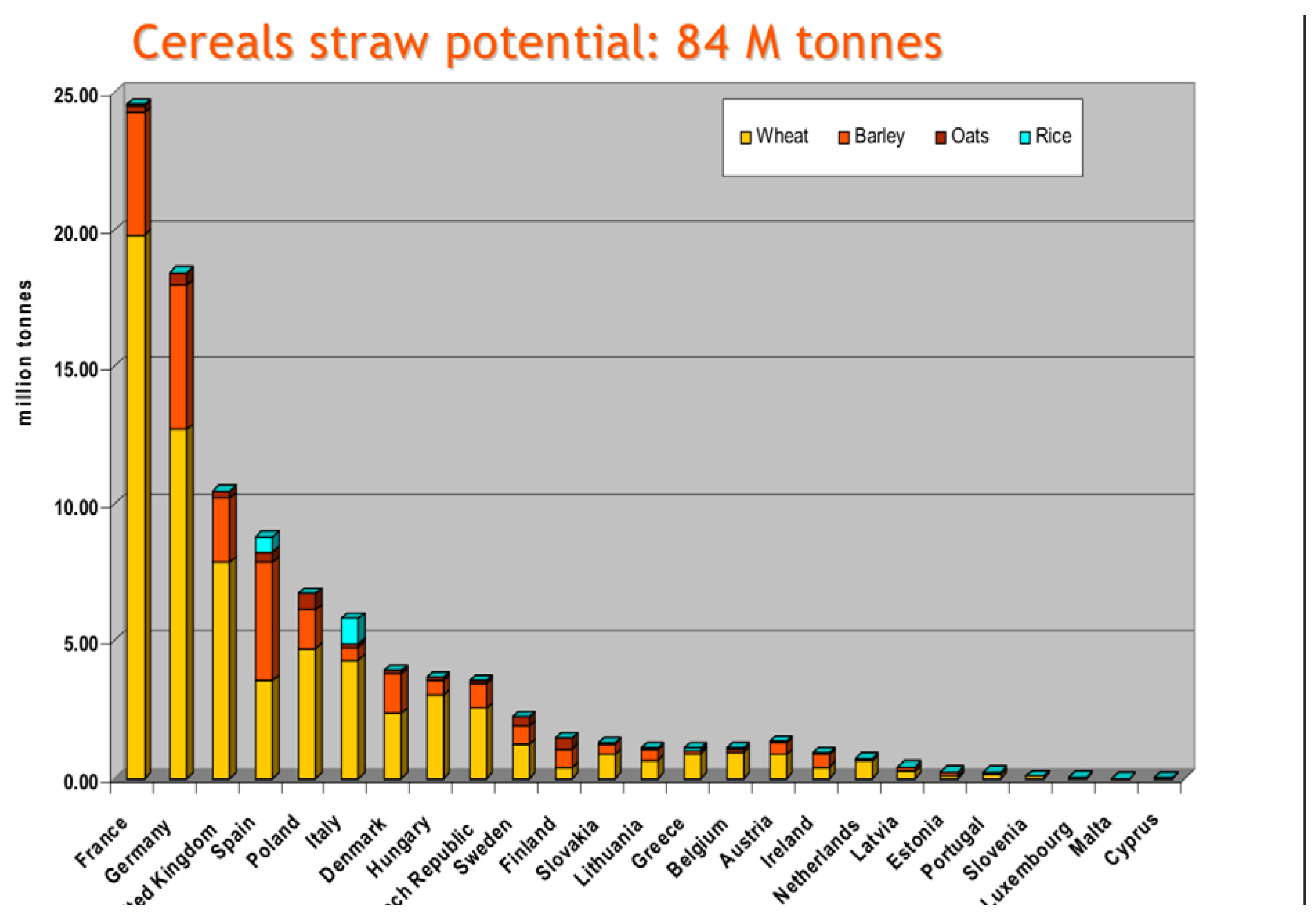
Figure 2.
The stages of the hybrid production process including mortar mixing, hydraulic pressing and pre drying compression. (a)Hand mixing (b)Mixing using a table-sized mortar mixer (c)Mixing using an on-site cement mixer (d) Manual panel pressing (e) Electric panel press (f)Post-compression weight application to panels to prevent expansion during drying.
Figure 2.
The stages of the hybrid production process including mortar mixing, hydraulic pressing and pre drying compression. (a)Hand mixing (b)Mixing using a table-sized mortar mixer (c)Mixing using an on-site cement mixer (d) Manual panel pressing (e) Electric panel press (f)Post-compression weight application to panels to prevent expansion during drying.
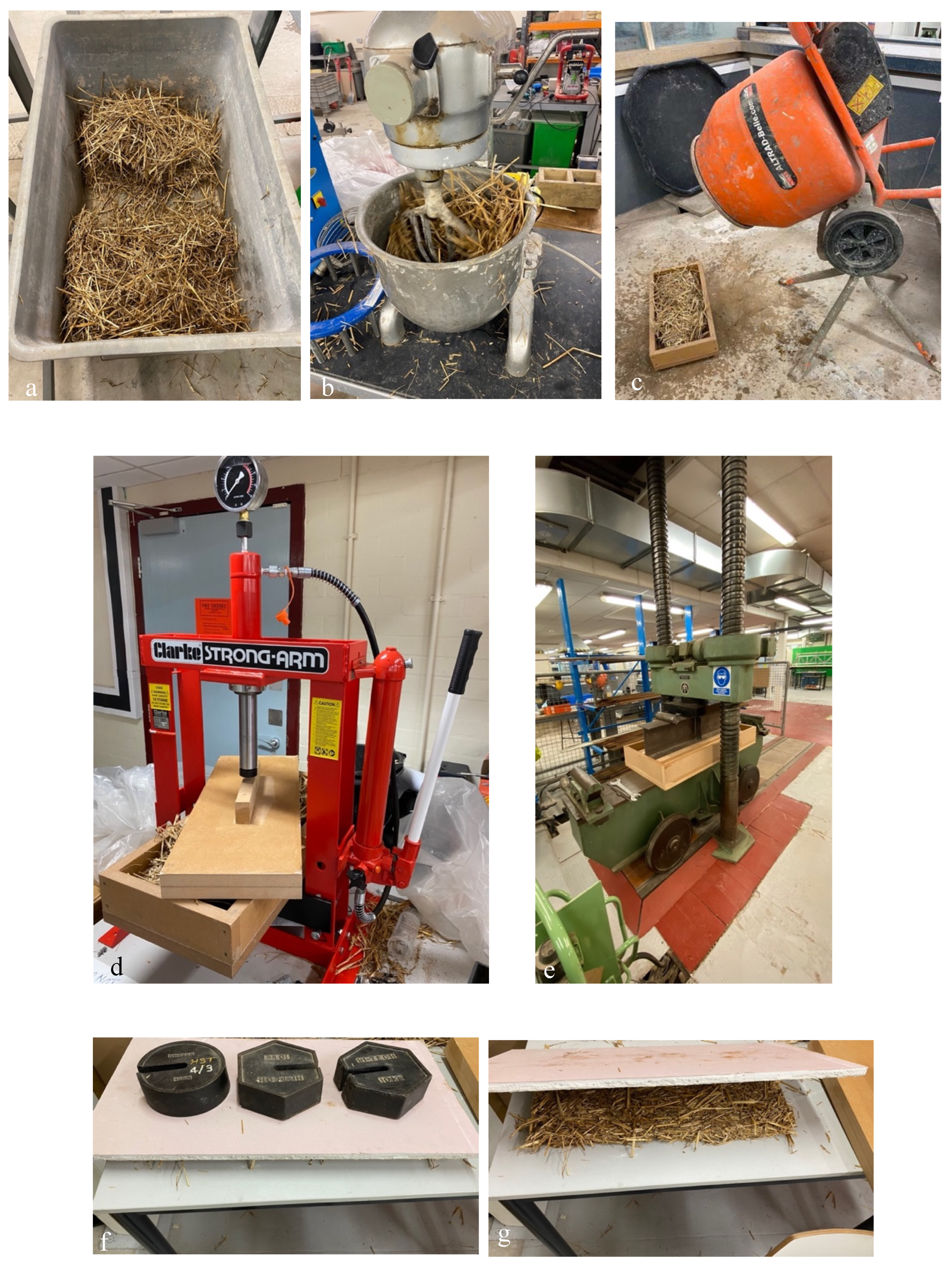
Figure 3.
Framework hybrid production process.
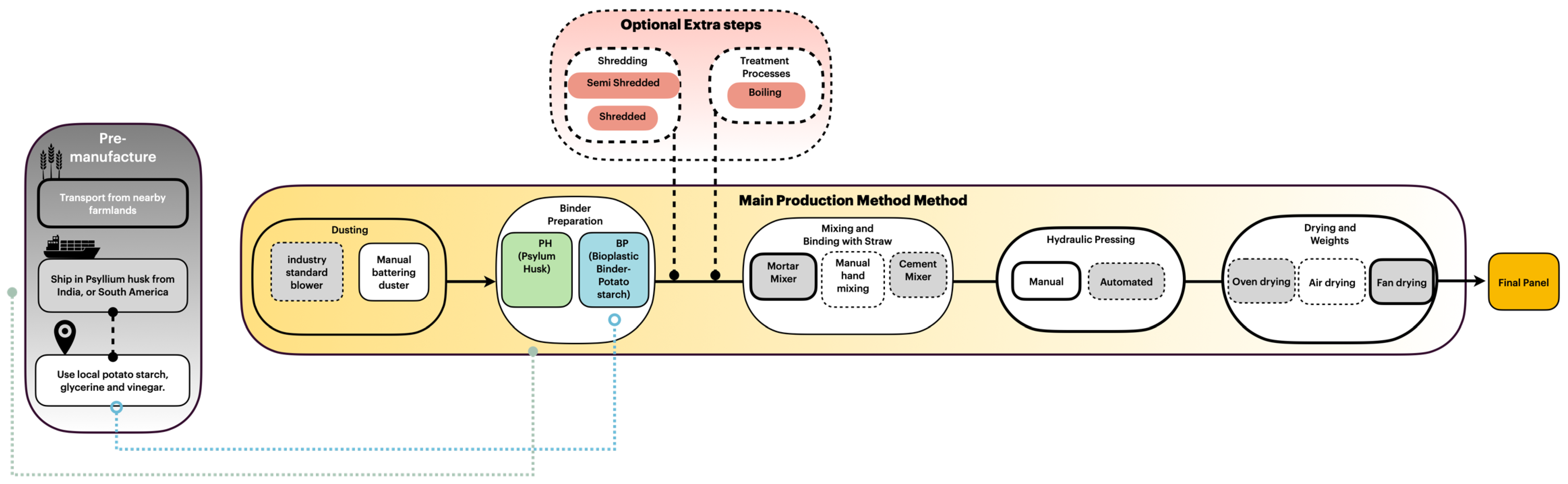
Figure 4.
The 3 moulds used to produce the sample wheat straw panels.
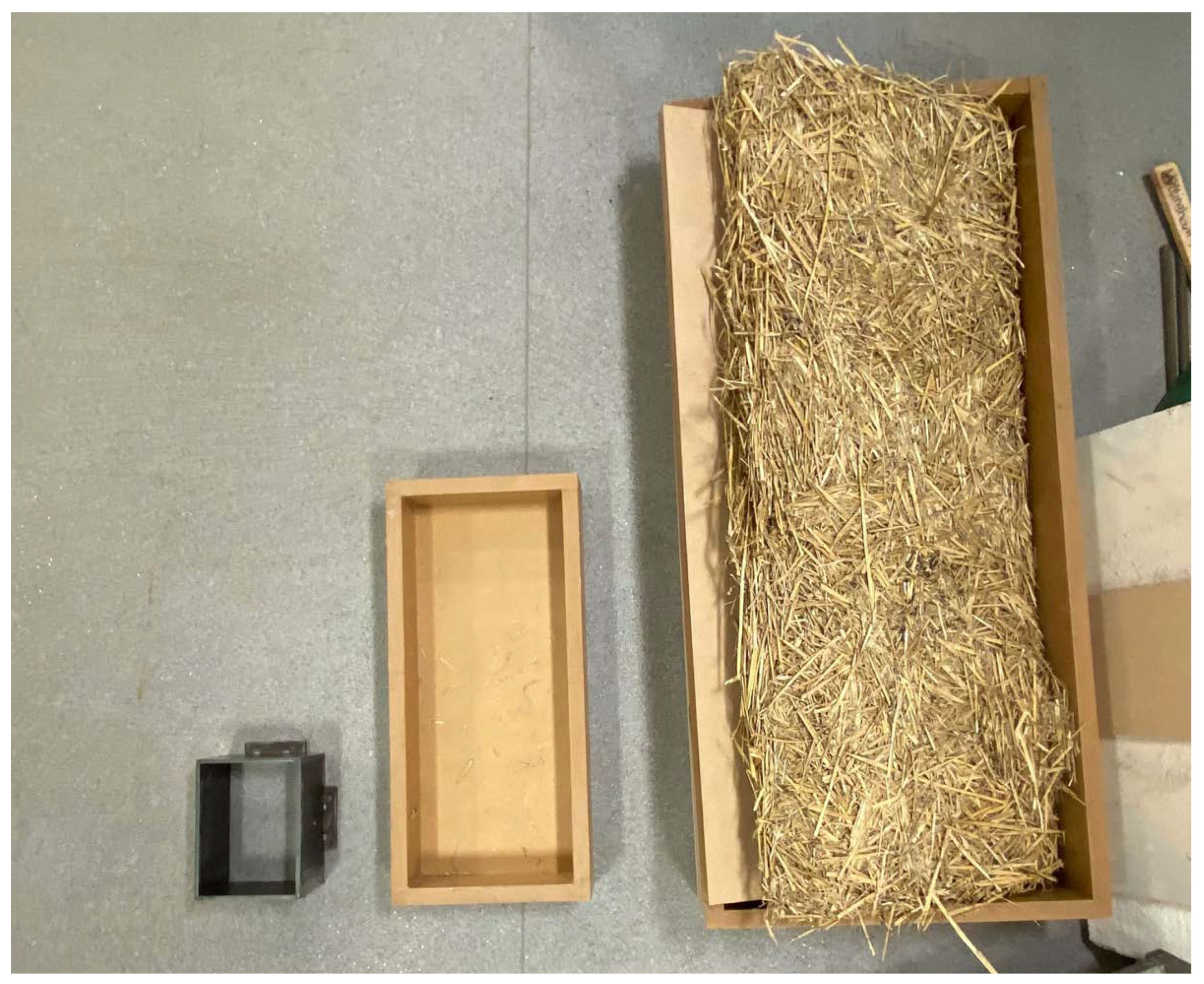
Figure 5.
BS ISO 9869 standard Hotbox.
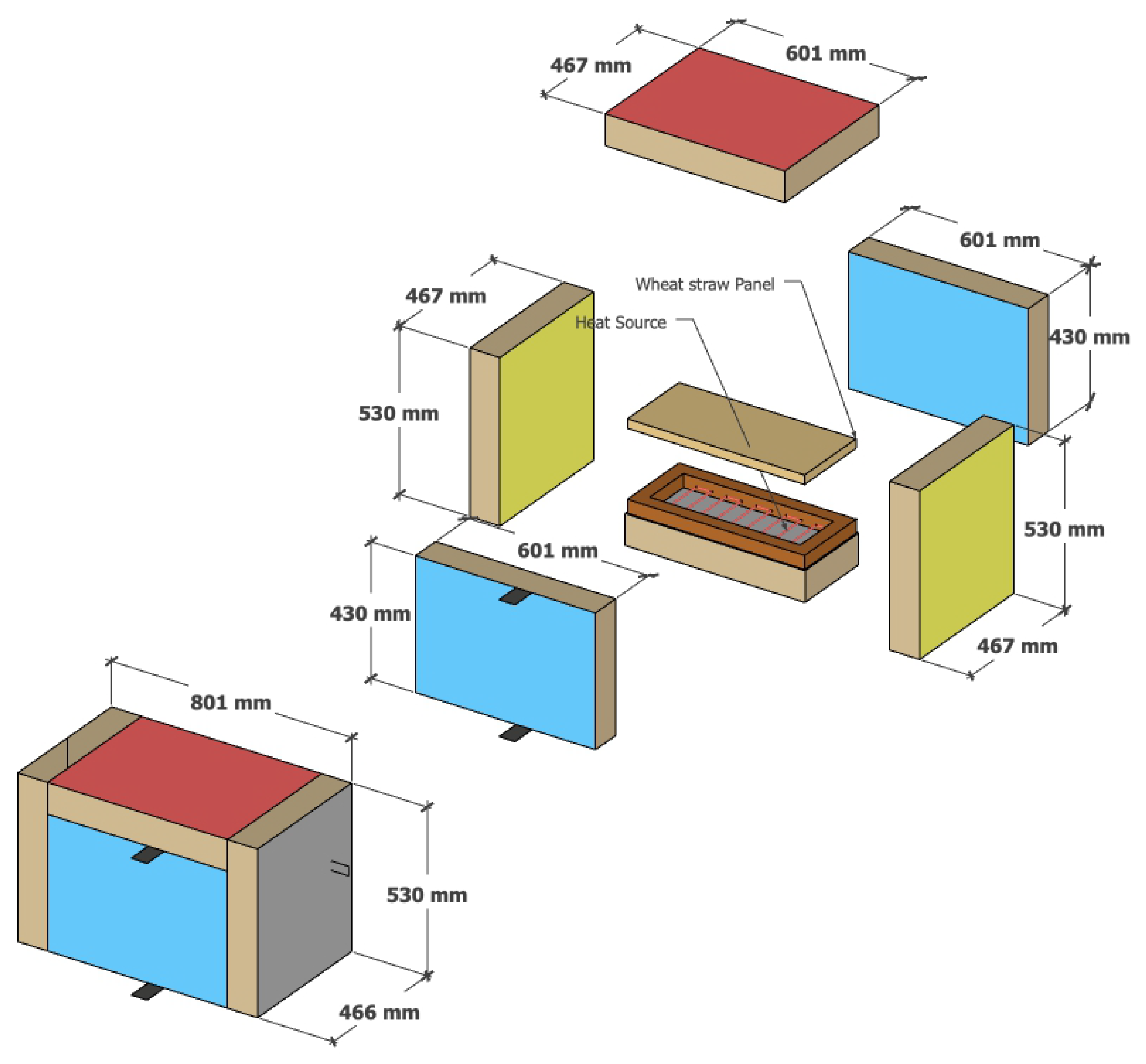
Figure 6.
The hotbox interior and the wheat straw panel with heat flux sensor.
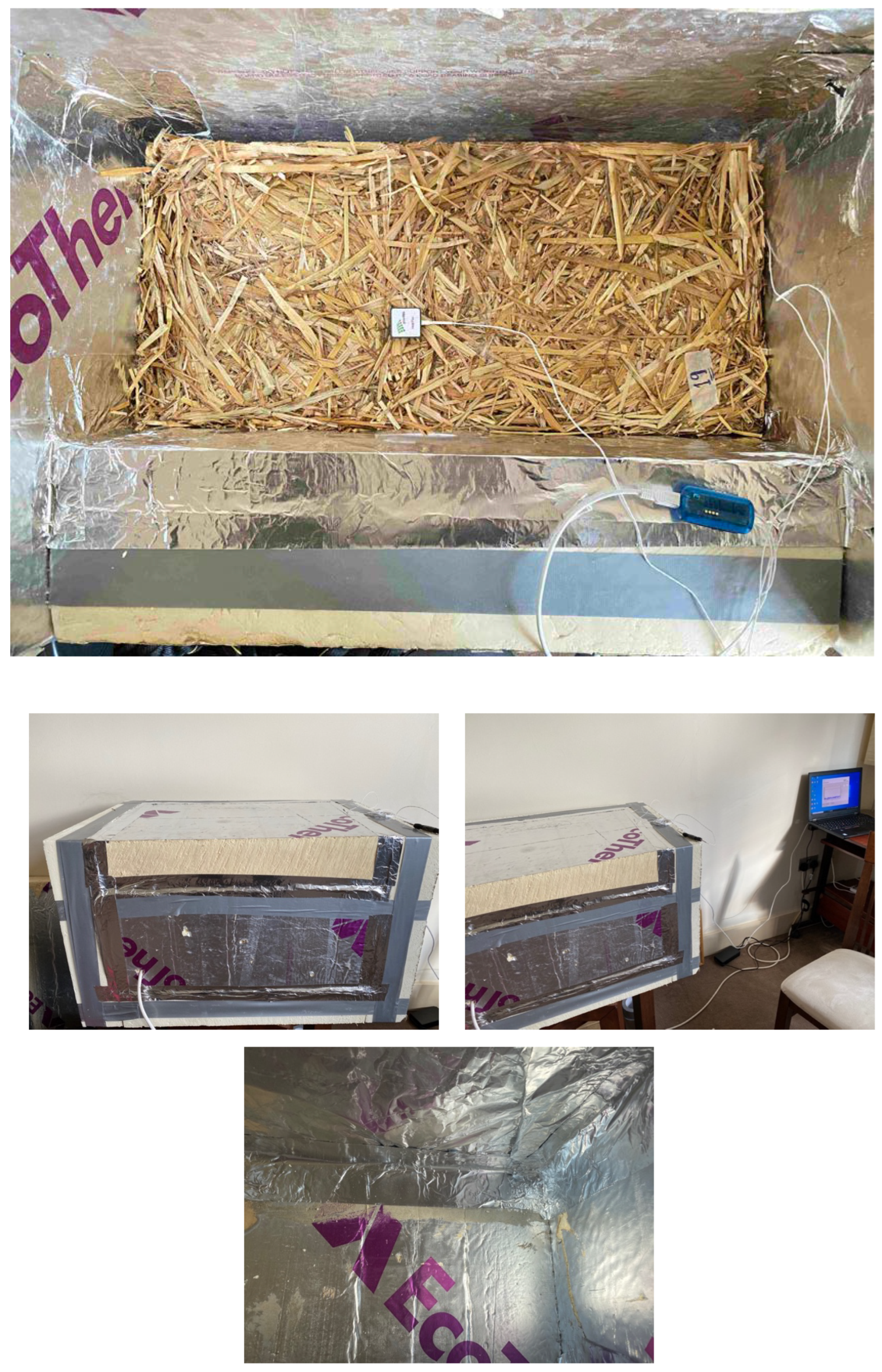
Figure 7.
Actual wall replication method framework when compared to the hotbox method framework.
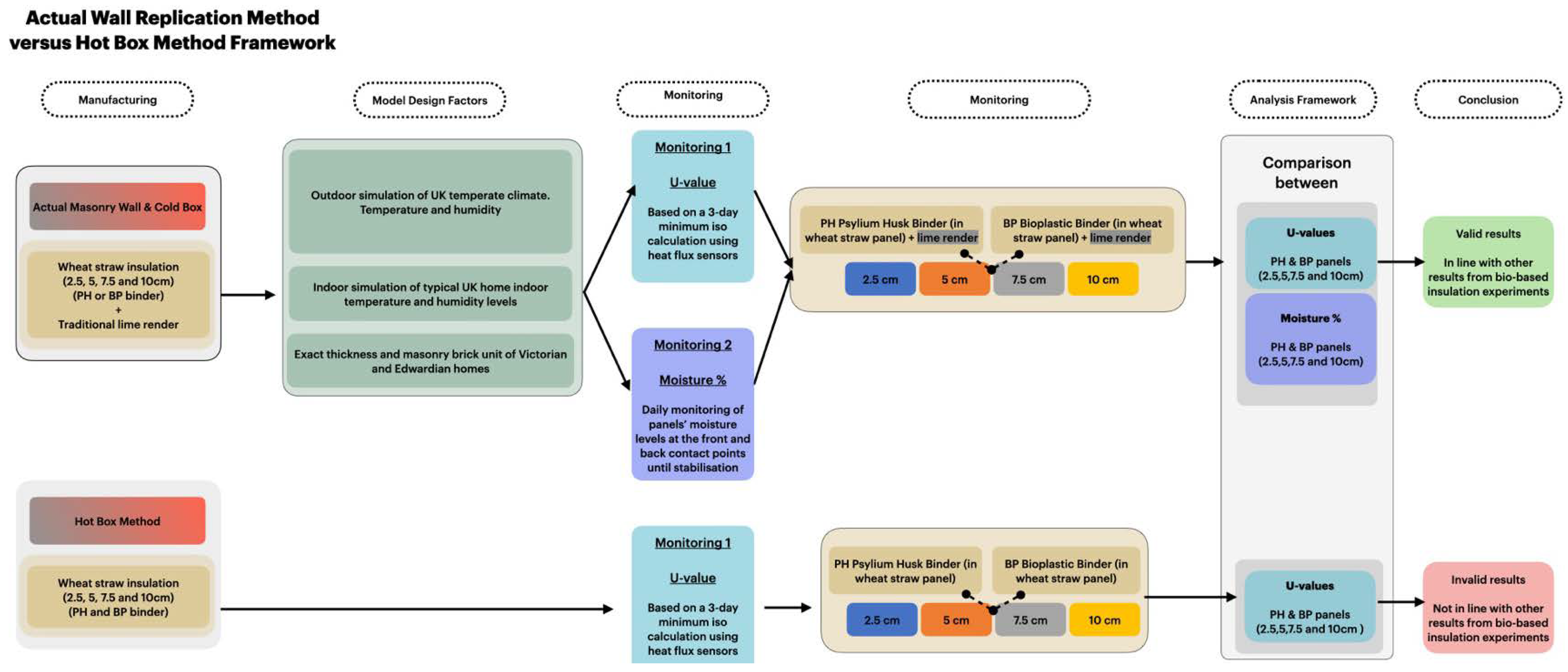
Figure 8.
(a) Exploded diagram of the different layers utilised to develop the actual wall replication method (AWRM) (b) How the panels were applied to the AWRM with the lime render.
Figure 8.
(a) Exploded diagram of the different layers utilised to develop the actual wall replication method (AWRM) (b) How the panels were applied to the AWRM with the lime render.
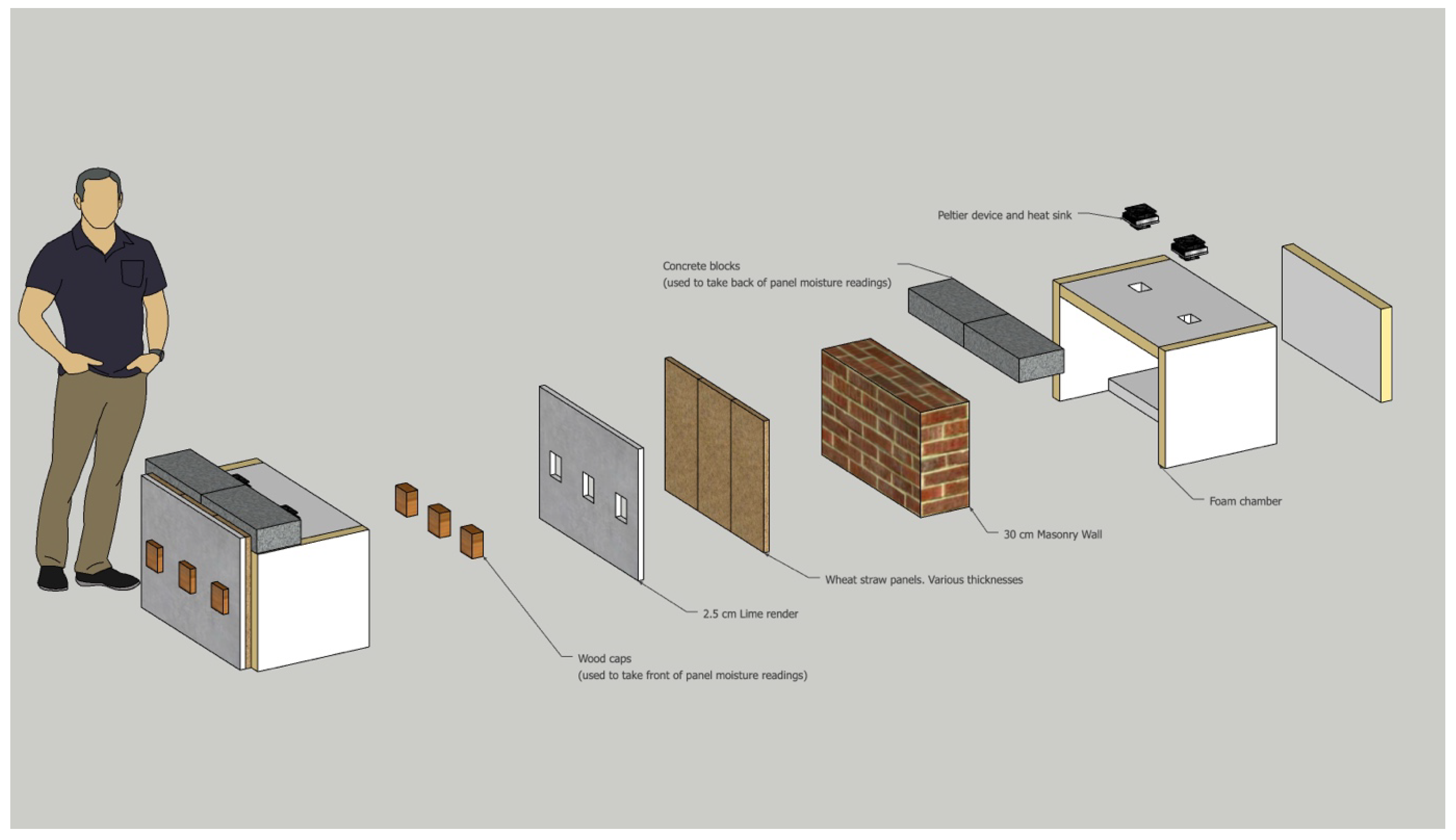
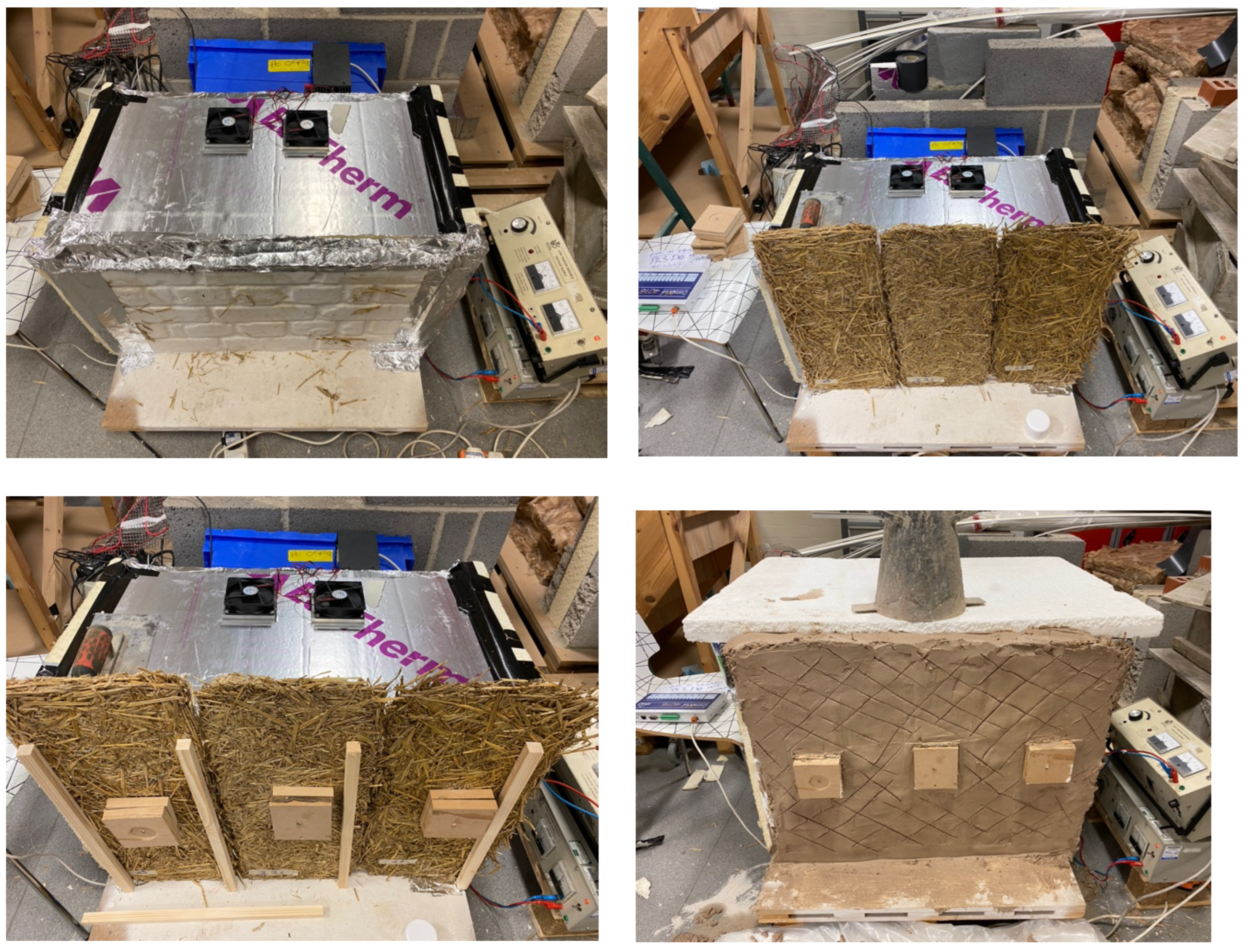
Figure 9.
AWRM cool chamber and indoor room chamber temperature and humidity comparison within DesignBuilder Software Ltd.
Figure 9.
AWRM cool chamber and indoor room chamber temperature and humidity comparison within DesignBuilder Software Ltd.
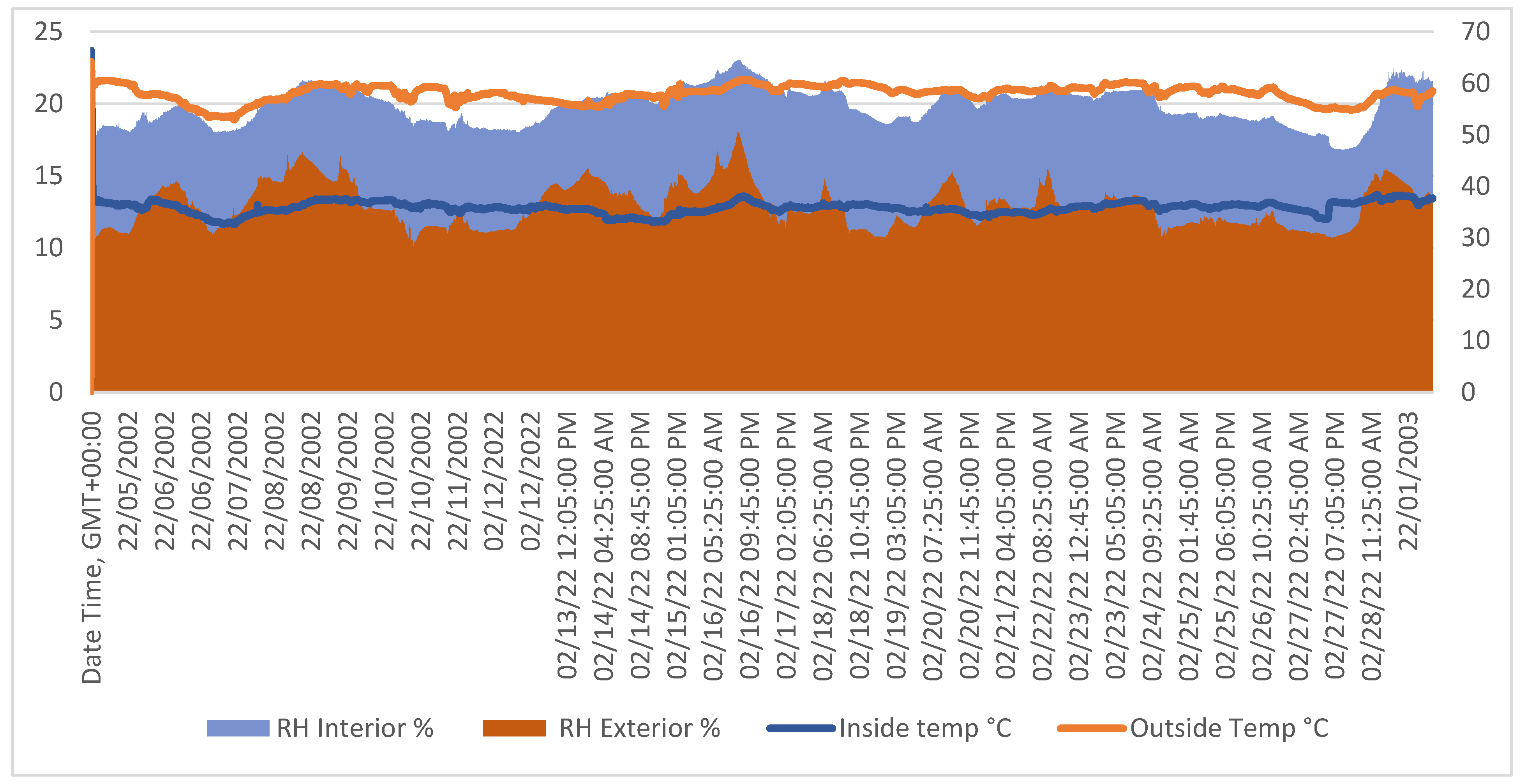
Figure 10.
Temperature data of Nottingham from the UK Met Office.
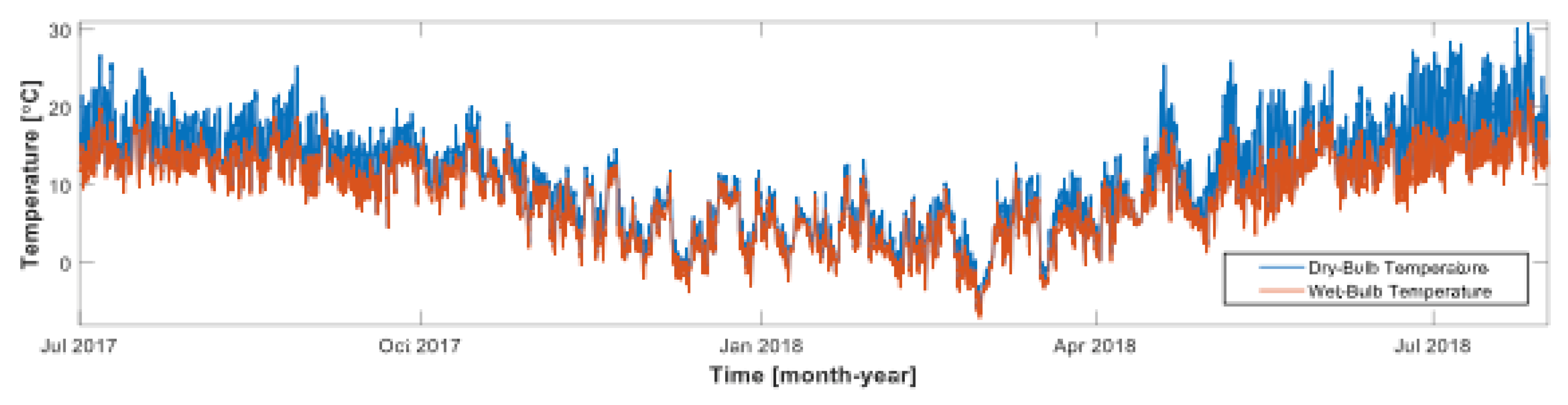
Figure 11.
The Ubakus software interface.
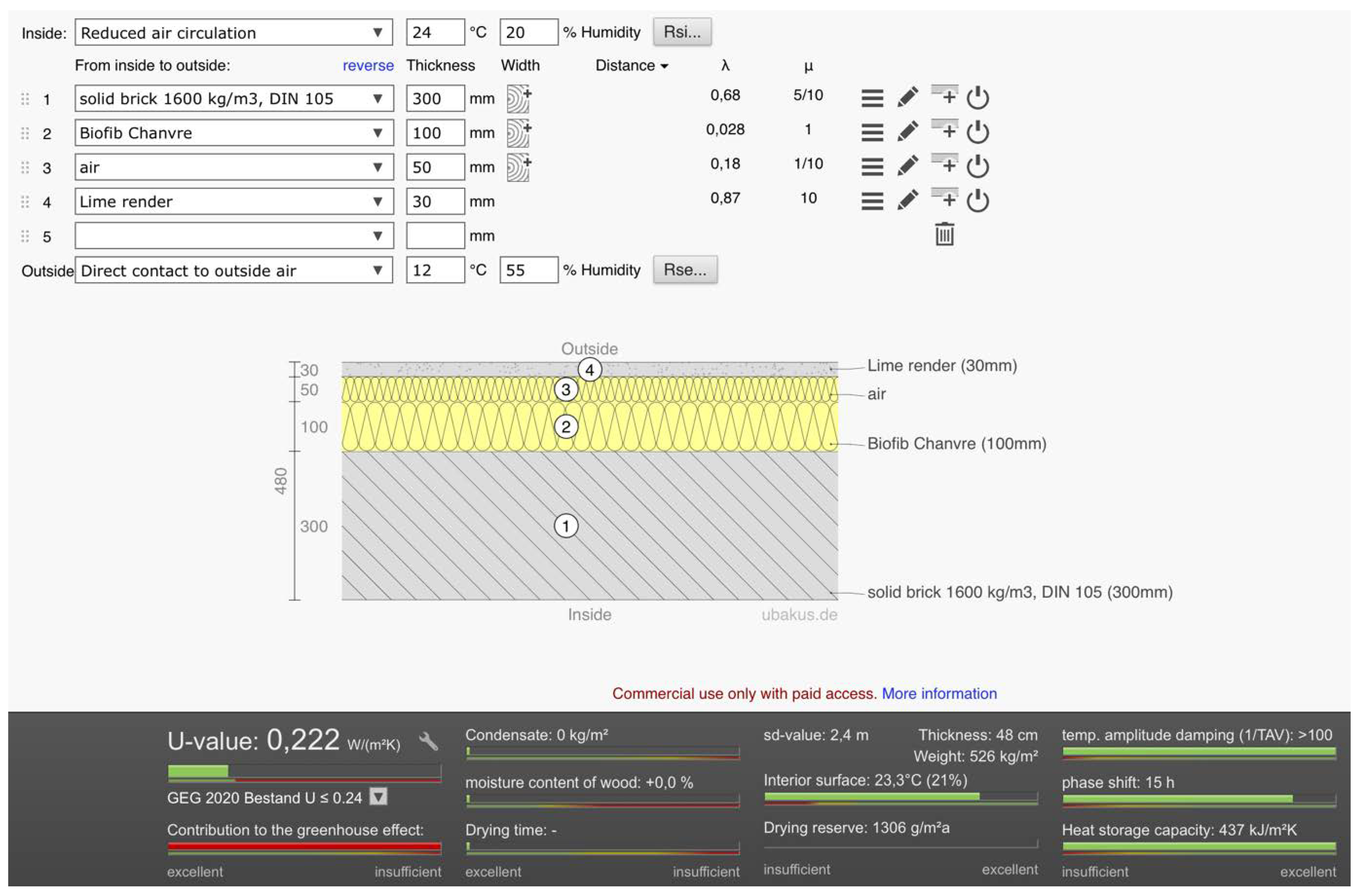
Figure 12.
Graph comparing permeability of various renders.
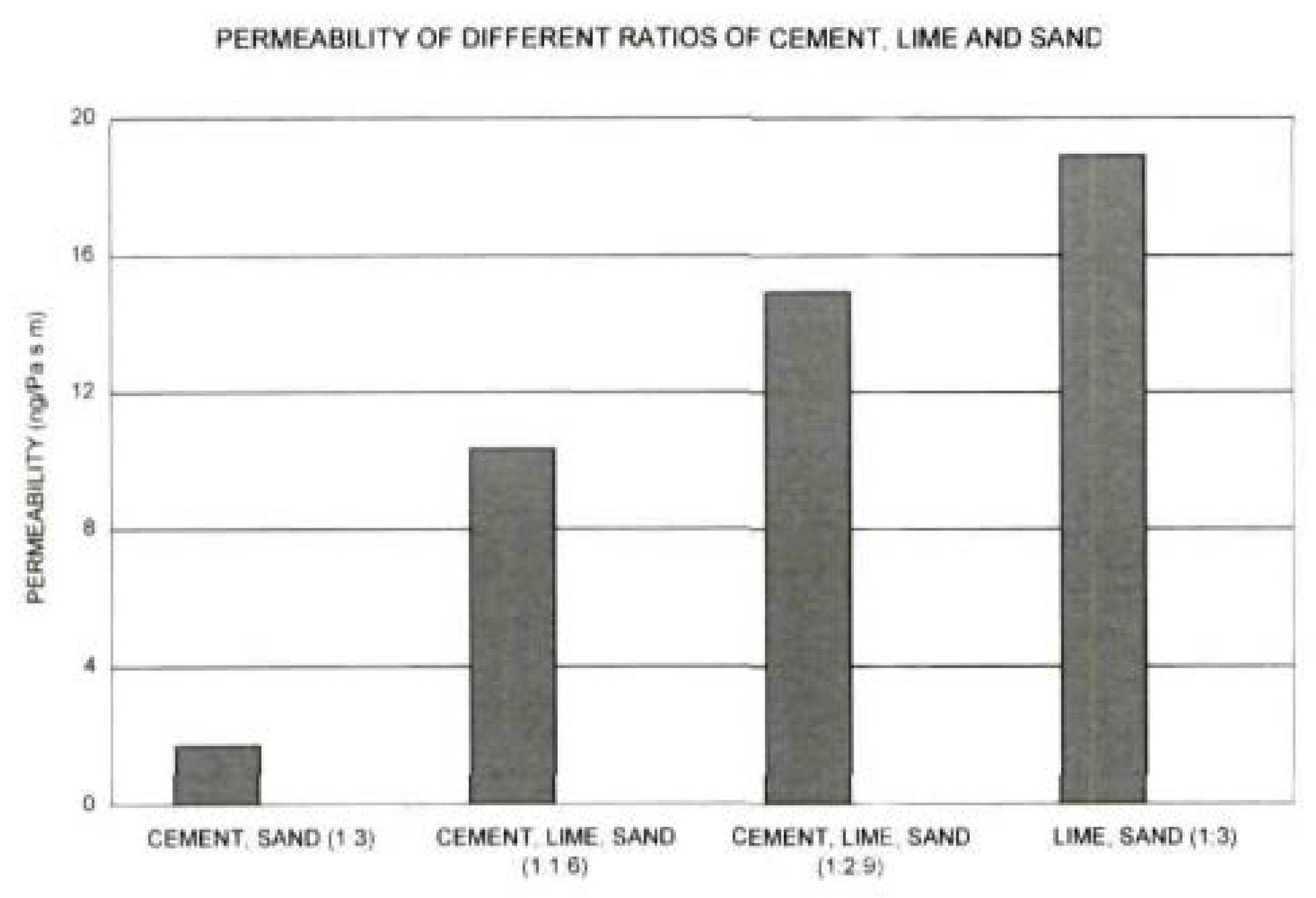
Table 1.
Assumed and actual thermal conductivity values of the hotbox.
| Hotbox Method | |||
| PH binder panels (psyllium husk) | |||
| Wheat straw panel thickness (cm) | Panel Thermal conductivity, hotbox (W/mK) | Manually calculated total wall Thermal conductivity from Hotbox obtained Hotbox values(W/mK) | Density (kg/m3) |
| 2.5 | 0.6 | 1.036 | 133 |
| 5 | 0.55 | 0.986 | 186 |
| 7.5 | 0.52 | 0.937 | 270 |
| 10 | 0.5 | 0.89 | 385 |
Table 3.
Natural insulation products, thermal performances and densities. Adapted by Author.
| Insulation Material Type | Product density (kg/m3) |
Thermal conductivity (W/ mK) | References |
|---|---|---|---|
| Cellulose fibre | 50 | 0.04 | (Lopez Hurtado et al., 2016) |
| Pineapple leaves | 178-232 | 0.035-0.045 | (Tangjuank, 2011} |
| Sunflower, sunflower stalks and cotton textile waste | 200 | 0.1642 | (Binici et al., 2014) |
| Sunflower, rape straw, sunflower bark, sunflower pith and a mix of sunflower pith and bark |
235-714 | 0.055-0.156 | (Jones et al., 2020) |
| Straw bales | 1 5 | 0.155 | (Palladino et al., 2021) |
Disclaimer/Publisher’s Note: The statements, opinions and data contained in all publications are solely those of the individual author(s) and contributor(s) and not of MDPI and/or the editor(s). MDPI and/or the editor(s) disclaim responsibility for any injury to people or property resulting from any ideas, methods, instructions or products referred to in the content. |
© 2025 by the authors. Licensee MDPI, Basel, Switzerland. This article is an open access article distributed under the terms and conditions of the Creative Commons Attribution (CC BY) license (http://creativecommons.org/licenses/by/4.0/).
Copyright: This open access article is published under a Creative Commons CC BY 4.0 license, which permit the free download, distribution, and reuse, provided that the author and preprint are cited in any reuse.


