Preprint
Article

This version is not peer-reviewed.

Chlorine Resistance in Salmonella Typhimurium and Campylobacter jejuni Isolated from Poultry Processing Line

Submitted:

09 January 2025

Posted:

09 January 2025

You are already at the latest version

Abstract

Salmonella Typhimurium and Campylobcater jejuni are major food-borne pathogens that continue to persist in the poultry processing industry and cause health and economic burdens. Chlorine is commonly used to mitigate bacterial contamination in poultry processing. However, inducing of adaptive stress response mechanism in sub-lethal exposure limits the effectiveness of chlorine. In the present study, we determined the effect of pre-exposure to chlorine on chlorine tolerance in S. Typhimurium and C. jejuni. MIC and MBC were determined in caecal, neck skin, post– chill carcass washing, and the environmental isolates. The carcass washings were exposed to either 3-5 ppm, 20-30 ppm, or 40- 50 ppm of chlorine in the chill tank and MICs and MBCs were significantly higher (p<0.05). Notably, 60% of C. jejuni isolated from the carcasses in a 20-30 ppm chill tank showed the highest MBC of 160 ppm. Chlorine-resistant percentage in S. Typhimurium and C. jejuni of the carcass was 78.8% and 83% respectively, while 94.1% and 80% of resistance were detected in 20-30 ppm chill tank isolates. The highest resuscitation detected carcass washing isolates exhibited the sub-lethal injury. Chlorine resistance limits the space to work with concentration adjustments. Therefore moving to alternative chemical and novel multi-huddle interventions is crucial.

Keywords: 
;  ;  ;  ;  ;  ;  

1. Introduction

Foodborne infections are the main public health problem that remains a common cause of illness and death, worldwide. The public health impacts due to foodborne pathogens such as Salmonella and Campylobacter are enormous in addition to significant social and economic burdens [1]. According to the European Union One Health 2021 Zoonoses Report Campylobacter and Salmonella as the first and second most reported zoonoses in humans, accounting for >65 % and >29% of confirmed human cases respectively [2]. Globally, it is estimated that 93.8 million cases are caused by non-typhoidal Salmonella every year [3], While around 96 million bacterial gastroenteritis cases each year are caused by Campylobacter [4,5]. These two foodborne pathogens are colonized in the chicken gut and contaminate the poultry carcass during processing, especially in evisceration. The likelihood of an outbreak occurring is estimated to be 12% in slaughtering and 33.5 % in processing for Salmonella [6] and is estimated that chickens are responsible for up to 30% of human Campylobacteriosis cases [7]. Therefore, safe production and distribution of food across the farm-to-fork continuum are crucial to ensure that consumers receive wholesome food. As the poultry-processing environment is in optimal conditions to host the bacteria’s growth, the persistence of Salmonella and Campylobacter throughout the processing line is significant. During processing, chicken carcasses get contaminated with bacteria from feathers, skin, and ruptured intestinal tracts [8]. Cross-contamination of carcasses can also occur during the different stages of processing such as chilling, portioning and packing [8,9]. Furthermore, the cross-contamination of the kitchen utensils and bench tops during cooking and, the refrigerator in storing is also significant [10,11]. While the farm interventions applied to prevent and reduce colonization of these pathogens in poultry are desirable, none have upheld adequate to eliminate the food-borne pathogens from poultry products [12,13]. Therefore, processing interventions such as chilling and post-chill dip are critical to reducing the contamination of poultry products before reaching the customer. USDA Food Safety and Inspection Service (FSIS) implemented a procedure and pathogen reduction performance standards; hazard analysis and critical control point (HACCP) to mitigate the contamination of food-borne pathogens in poultry meat [14]. This regulation resulted in additional water use by poultry processors to eliminate carcass contamination by adding inside/ outside carcass washers, sprays, chilling carcasses to 4 °C and, antimicrobial chemical decontamination [15]. USDA-FSIS has permitted of using antimicrobials in poultry production, such as chlorine, sodium hypochlorite (SH) acidified sodium chlorite (ASC), and peracetic acid (PAA) are referred to as GRAS (Generally Recognized as Safe. Due to the cost-effectiveness, easy availability, and easy application, chlorine has become the most common sanitizer used in carcass washing. There, immersion chilling in chlorinated water is the most common method of application [9]. Further, a previous study reported that 73% of processing plants used chlorine or a combination of chlorine and another antimicrobial to reduce the bacterial load on the carcasses during processing [15]. Chlorine is an oxidizing agent that has been shown to reduce the membrane permeability in both Gram-negative and Gram-positive bacterial species [16]. Although the European Union has banned the use of chlorine, the USA, Australia, and most of the Asian countries still use chlorine in the chill tank [17,18,19]. Due to the constant addition of organic material into the chill tank, chemical decontamination with chlorine represents a significant challenge. The efficacy of chlorine, however, is dependent on organic load and total bacterial load [20,21]. Increasing concentrations of organic matter content and contact time reduces the total free chlorine availability, which reduces the effectiveness of chlorine in pathogen reduction. Therefore chlorine tolerance levels of Salmonella and Campylobacter can be higher than the current chlorine concentrations used in the chill tank to reduce the bacterial load [21,22].The USDA permits the use of sodium hypochlorite at 50 ppm of free or available chlorine on chicken carcasses and 200 ppm of free chlorine on food-contact surfaces during sanitation [20]. The ability of resistance development against the biocidal also plays a major role in the persistence of foodborne pathogens in the food chain [23]. Salmonella and Campylobacter have shown the ability to survive and persist in poultry processing environments [24]. This can be credited to its microbial ability to adapt and develop/acquire tolerance and/or resistance to different antimicrobial agents including oxidizers such as chlorine [22,25]. Therefore, pathogens like Campylobacter jejuni, Listeria monocytogenes, and Salmonella enterica could adapt to diverse processing environment-related stressors, influencing their growth, survival, and persistence in the poultry processing line [26,27]. Notably, exposure to sublethal doses of chlorine can cause sub-lethal injury and can be resuscitated after removing the stress condition and providing an enriched environment [21]. This could be a continuous problem even the processors altered the chlorine concentrations in the chill tank to cope up the situation. Therefore, it is very crucial to determine the effective dosage of chlorine in reducing bacterial load and their resistance profiles to chlorine to optimize the current decontamination protocols.
A recent prevalence study demonstrated that the contamination rates of Campylobacter and Salmonella on raw post-slaughter meat is 80.66% and 68.66 %, respectively, in Sri Lanka [28]. As in other Asian countries, 90% of the poultry processing plants use chlorine in spin chill tanks. Due to the unavailability of a standard protocol or guideline, three different chlorine concentrations are used; 3-5 ppm, 20-30 ppm, and 40-50 ppm, in the processing plants in Sri Lanka [28]. Further during pre-chill carcass washing usually 2-3 ppm of chlorine is used in inside – outside carcass washers. Therefore foodborne pathogens such as Salmonella and Campylobacter are exposed to different chlorine concentrations during processing. Studies conducted to explore the resistant profiles of food-borne pathogens for biocidal are limited. The present study was designed to understand the chlorine tolerance level of Salmonella Typhimurium and Campylobacter jejuni for chlorine during chemical decontamination in the chill tank. Further, we determined the effect of previous exposure to different chlorine concentrations on chlorine resistance in Salmonella Typhimurium and Campylobacter jejuni isolated from poultry processing line.

2. Materials and Methods

2.1. Preparation of Campylobacter and Salmonella Inoculums

Salmonella Typhimurium and Campylobacter jejuni isolates, isolated from poultry processing plants in a previous study were used in the present study [28]. These food-borne pathogens were isolated from different stages of the processing line. The environmental pooled samples were collected from the unloading area of the processing plant. Caeca and neck skin samples were collected from the carcasses after going through inside/outside carcass washers (2-3 ppm of chlorine in potable water). Post-chill carcass washers were collected after being exposed to chlorine in the chill tank. Here, the chlorine concentrations used by the poultry processing plants in their chill tanks were 3-5 ppm, 20-30 ppm, and 30-50 ppm (Table 1). The chlorine contact time in the chill tank was similar in all the processing plants, where samples were collected. S. Typhimurium and C. jejuni isolates were stored at -80 in Brilliant Heart Infusion Broth with 50 % glycerol. In preparation for MIC/MBC experiments, S. Typhimurium was subcultured into Columbia sheep blood agar (SBA) and incubated at 37°C for 24 h, while C. jejuni was subcultured onto Columbia sheep blood agar (SBA) and incubated at 42°C in 10% CO2 for 48 h.

2.2. Minimum Inhibitory Concentrations (MIC) Determination to Chlorine

To determine the bacteriostatic effect of chlorine Minimum inhibitory concentrations (MIC) test was performed. S.Typhimurium (n=111) confirmed by serotyping and C . jejuni (n=96) confirmed by qPCR used in MIC and MBC assays [28]. The broth micro-dilution method of MIC determination was done according to the CLSI standards [29]. Chlorine (10% Sodium hypochlorite, SIGMA-ALORICH, USA) concentrations were prepared to range from 2.5 ppm to 160 ppm in Nutrient Broth No. 2 (NB2-Oxoid, UK) considering the WHO recommended industrial standards for the chicken meat industry. Chlorine levels were measured using a digital chlorine meter (LOVIBOND, Germany). Ninety micro-liters (90 µL) of chlorine was added into round bottom 96-well microtiter plates S. Typhimurium and C. jejuni inoculums were prepared in sterile distilled water to obtain 108 CFU/mL using 0.5 McFarland Standard. Subsequently 10 µL of the prepared inoculum was added into the wells with 90 µL of chlorine dilutions to obtain 107 CFU/mL The NB2 without chlorine was considered as the positive control (growth control) at the 11th well and the NB2 without either chlorine or bacterial inoculum was the negative control (sterility control) at the 12th well in the test. All the isolates and the negative and positive controls were tested in duplicates. S. Typhimurium plates were incubated at 37 °C for 20 h while Campylobacter jejuni plates were incubated at 42°C in 10% CO2 for 20 h. The lowest concentration, which does not give visible bacterial growth in 96 well plates, was defined as the MIC value. Salmonella Typhimurium ATCC 133111 and Campylobacter jejuni ATCC 33291 strains was used as a control strain.

2.3. Minimum Bactericidal Concentrations (MBC) Determinations to Chlorine

Minimum bactericidal concentration (MBC) is the lowest concentration of antibiotics that kills 99.9% of the inoculum. The MBC of S.Typhimurium and C. jejuni were conducted to determine the bactericidal effect of chlorine in the MIC assay. Subsequently, 10μl of broth from each growth inhibited well in the MIC plates was drop plated on sheep blood agar. S.Typhimurium plates were incubated at 37 °C for 24 h, and C . jejuni plates were incubated at 42°C in 10% CO2 for 48 h. The MBC was determined as the lowest concentration of chlorine required to reduce viable cell numbers below the detection limit. The resistance of S.Typhimurium and C . jejuni to chlorine considered the MIC and MBC values higher than the highest concentration used in the chill tanks in the processing plants in Sri Lanka of 40 ppm.

2.4. Resuscitation Assay

Resuscitation assay was conducted to determine the bacterial recovery after the growth inhibition in MIC/MBC assay [21]. While doing the MBC assay 50 μL of bacterial growth-inhibited wells up to 160 ppm were inoculated into 150 μL of enriched broth for S.Typhimurium and C. jejuni resuscitation. S.Typhimurium inhibited wells were inoculated into Nutrient broth and incubated at 37°C for 24 h and for C. jejuni, inoculated into Preston broth (nutrient broth number 2 with Campylobacter selective supplement) (Oxoid, UK) and incubated at 42°C in 10% CO2 for 24 h. After incubation, 10 μL was drop-plated onto SBA to determine the recovery of S.Typhimurium and C. jejuni isolated from different sample types from exposure to chlorine.

2.5. Statistical Analysis

The MIC /MBC data were presented as percentages. The prevalence data were analyzed using Fisher’s exact test. To determine the significant differences in the effect of chlorine on S.Typhimurium and C. jejuni along with the previous exposure of chlorine in different steps in the processing line was analysed by One-way Analysis of Variance (ANOVA) and Two-way ANOVA followed by Turkey’s multiple comparison tests by. All statistical analyses were performed using GraphPad Prism Version 8 (GraphPad Software, Inc., United States). In all cases, a P-value of < 0.05 was considered statistically significant.

3. Results

3.1. Salmonella Typhimurium and Campylobacter Jejuni Susceptibility to Chlorine: MIC and MBC Determination

The results were analyzed to understand the chlorine tolerance levels of S.Typhimurium ( Table 2) and C. jejuni ( Table 3) isolated from different steps in the processing line.
The majority of S.Typhimurium (65.6%) isolated from carcass washing exhibited MIC at 80 ppm and it was significant (p<0.05). And, 68.95% of isolates exhibited MBC at 80 ppm for chlorine. Notably, 9.9% of whole carcass S.Typhimurium required ≥160 of chlorine to have bactericidal effect. When considered the MIC and MBC values of S.Typhimurium , isolated from neck skin samples, 62.5% of isolates showed 40 ppm of MIC level and it was significant (p<0.05). The MBC at 40 ppm and 80 ppm was observed in 44.4% of the population. S.Typhimurium isolated from the environmental samples exhibited similar MIC and MBC values for chlorine, while the highest proportion was exhibited at 40 ppm and it was 41.1% and 54.5% respectively. When we compared the MIC values of S.Typhimurium, the lowest MIC values were detected in the isolates from the environmental samples.
In C . jejuni In C. jejuni, the highest percentage (52,8%) of the population from whole carcass washing exhibited MIC at 40 ppm , while the MBC was 160 ppm in 39.6% of the population. Further, in whole carcass C. jejuni detected higher MBC at ≥160 ppm in the 49% of the population. Interestingly, there was a significant (p<0.01) difference, in between the MIC and MBC values of C. jejuni isolated from the carcass washings.
There 36.6% of C. jejuni isolated from neck skin exhibited 20 ppm and 40 ppm of MIC values, while a similar MBC pattern was observed with 42.1% in either 20 or 40 ppm MBC. A similar percentage of C. jejuni (41.1%) isolated from the environment exhibited 40 ppm of MIC for chlorine.

3.2. Chlorine Resistance Profiles of S. Typhimurium and C. jejuni

Considering the highest chlorine concentration (40 ppm) used in the chill tank as a cut-off point, the chlorine resistant of S.Typhimurium and C . jejuni was analysed (Figure 1).
According to the MIC (Figure 1A), 65.5 % of S.Typhimurium isolates from whole carcass washing were resistant to chlorine. While chlorine resistant was observed in 78.8% of isolates when considering the MBC values (Figure 1B). S.Typhimurium isolated from neck skin and caecal samples, detected 37.5% and 43.8 % resistant respectively. In C. jejuni 9.4 % of isolates were resistant to chlorine when considering the MIC of from carcass wash isolates, while it was 83% when considered the MBC. The Resistant percentage of C. jejuni isolated from neck skin and caeca was 44.4% and 37.5% respectively.
When the resistant levels of S. Typhimurium and C. jejuni compared according to the MICs , S.Typhimurium resistant percentage was significantly higher ( P<0.01) in carcass wash, neck skin, and caecal isolates compared to those of C. jejuni. Interestingly, when the MBC of C. jejuni considered, isolates from carcass wash showed higher resistance compared to that of S.Typhimurium. Notably in S.Typhimurium, the chlorine-resistant percentage was more or less similar in all types of Sample isolates. However, the resistant percentage was significantly (p< 0.05) higher, in carcass washing isolates in C. jejuni. Notably, no chlorine resistance was observed in the environmental isolates in both S. Typhimurium and C. jejuni.

3.3. Effect of Chlorine Concentration in the Chill Tank on MIC/MBC Profiles of S. Typhimurium and C. jejuni

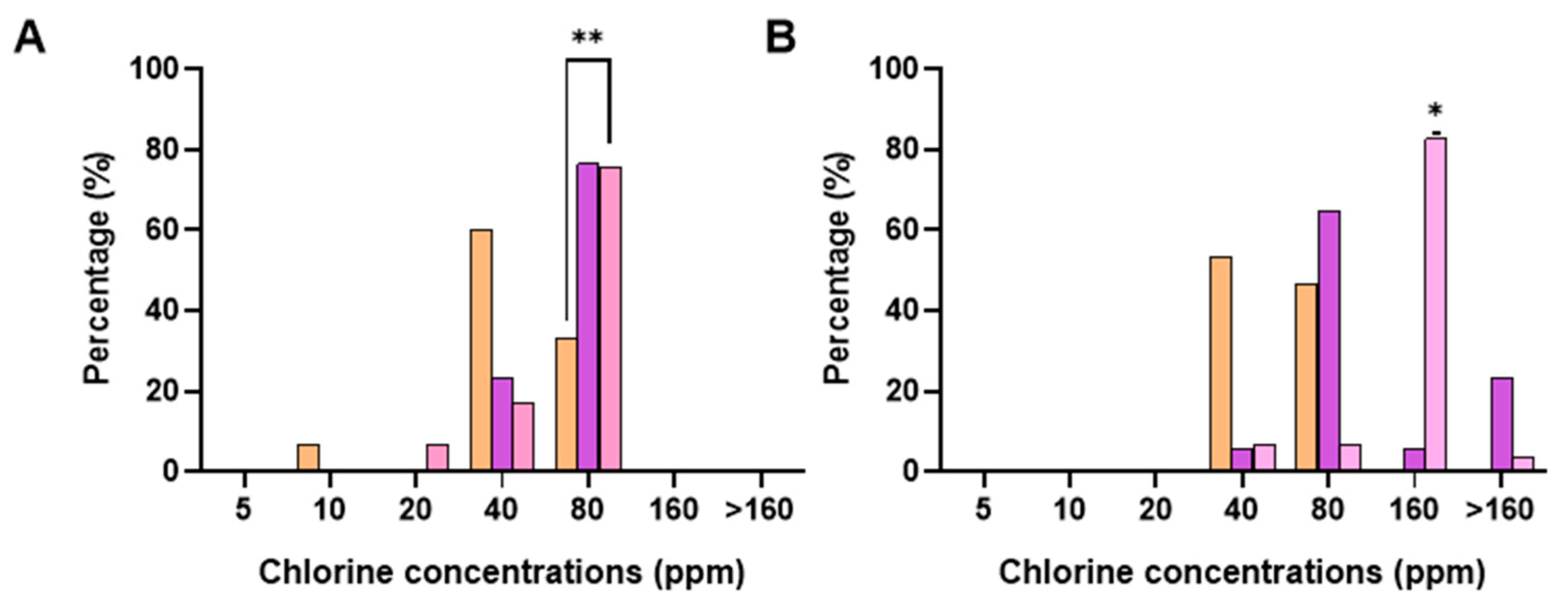
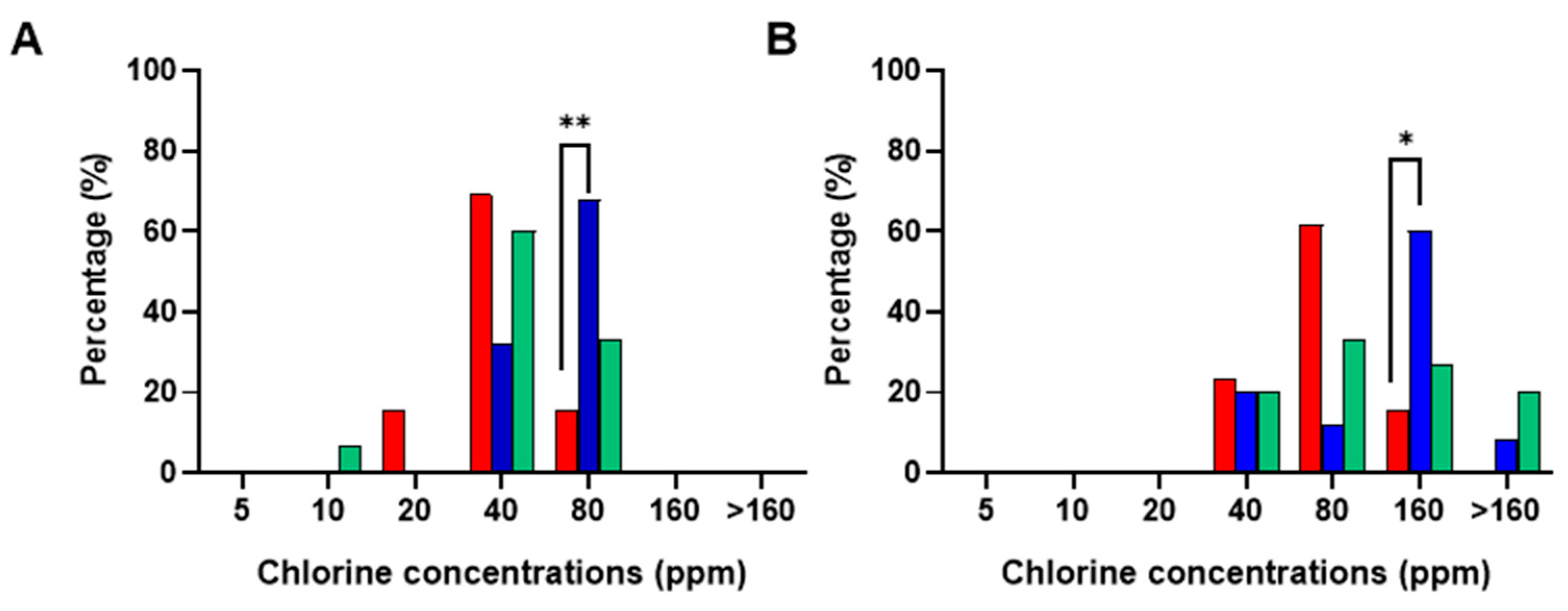
The MICs and MBCs of S. Typhimurium and C. jejuni isolated from the whole carcass washings were analyzed according to the chlorine concentrations in the chill tanks, where the samples were collected. The effect of differences in chlorine concentrations in the chill tank on the tolerance levels of S. Typhimurium (Figure 2) and C . jejuni. (Figure 3) was determined.
A significantly high (p<0.001),percentage of S. Typhimurium was detected at 80 ppm of MICs / MBCs from carcass wash isolates where 20-30 ppm and 40- 50 ppm chlorine was used. Interestingly 100% S. Typhimurium isolated from the chill tank with 3-5 ppm chlorine showed ≥40 ppm of MBC value, which is 8 times higher than the actual chlorine concentration used in the chill tank. Further, 80% of S. Typhimurium from 40-50 ppm chlorine chill tanks detected MBC at 160 ppm and it was significantly high (p<0.05).
The highest percentage of C. jejuni (69.2%, 60%) was detected MIC at 40 ppm, in the isolates isolated from 3-5 ppm and 40-50 ppm chill tanks, while the highest MBC percentage was exhibited at 80 ppm. Notably the highest C. jejuni percentage (68%) showed MIC at 80 ppm with chlorine treatment at 20-30 ppm in the chill tank, while the MBC was 160 ppm in most of the population (60%).
Similarly, significantly higher (p<0.05) MIC (80 ppm) and MBC (160 ppm) were determined in C. jejuni , when the chill tank chlorine concentrations were 20-30 ppm and 40-50 ppm compared to 3-5 ppm.

3.4. Chlorine Resistance Profiles of S. Typhimurium and C. jejuni Isolated from Carcass Wash

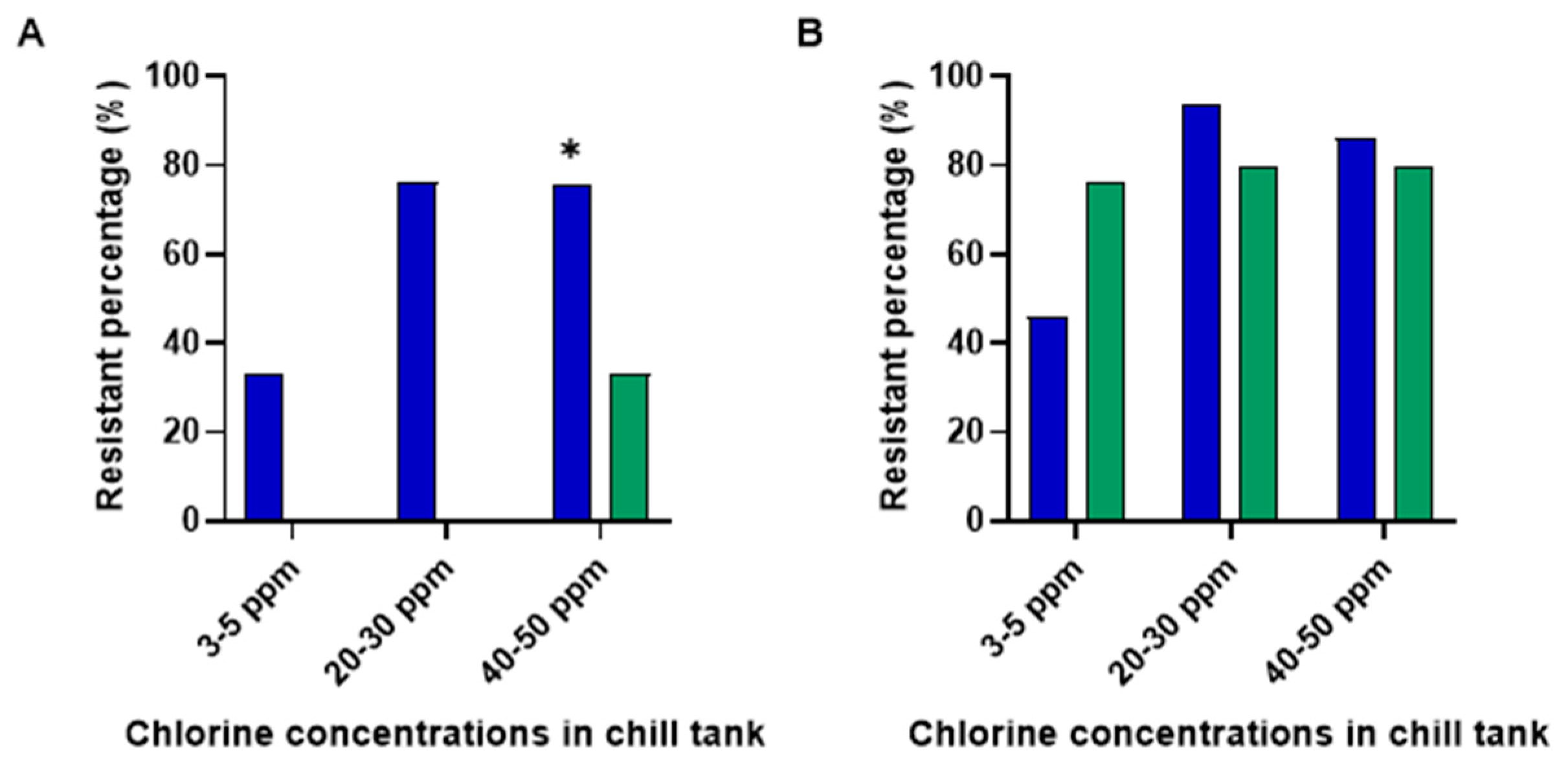
Considering the highest chlorine concentration (40 ppm) used in the chill tank as a cut-off point, the chlorine resistant of S.Typhimurium and C. jejuni from carcass washings was analyzed (Figure 4).
According to the MIC /MBC data, the highest resistant percentage for S. Typhimurium was detected in carcass wash isolates from 20-30ppm chlorine in the chill tank, which was 76.5% and 94.1% respectively. According to the MIC and MBC data 75.8% S. Typhimurium isolated from 40-50 ppm chlorine also showed a higher resistance. Interestingly, according to MICs, no resistance was detected in C. jejuni at 3-5 ppm and 20-30 ppm chlorine, but a significantly higher (p<0.001) percentage (80%) was detected as resistant when considered the MBCs. Notably, a significant difference (p <0.01) was observed in resistant profiles of C. jejuni between the MIC and MBCs.

3.5. Recovery of S. Typhimurium and C. jejuni after Exposed to Chlorine

A resuscitation assay was conducted to determine the sub lethal damage to S. Typhimurium and C. jejuni in exposure to chlorine (Table 4)
The lowest resuscitation percentage was observed in both S. Typhimurium and C. jejuni was observed in caecal isolates. While the highest recovery rate was observed in carcass wash isolates. The bacterial resuscitation of S. Typhimurium and C. jejuni in carcass wash and Neck skin samples was around 50%. The lowest resuscitation of S. Typhimurium and C. jejuni was observed in environmental isolates.

4. Discussion

Human salmonellosis and campylobacteriosis are major foodborne infections, attributed to the consumption of contaminated poultry meat and meat by-products. Despite the measures taken to minimize cross-contamination during processing, the persistence of these two pathogens in the food processing chain is significant. With the presence of organic matter content pathogens get exposed to sub-lethal doses of chlorine-inducing resistance in Salmonella and Campylobacter [22,25]. In the present study, we investigated the tolerance levels of food-borne pathogens in exposure to chlorine. Due to the unavailability of the guidelines to interpret the resistant levels, both MIC and MBC values were taken to determine the chlorine resistance in the present study.
It was revealed that the highest percentage of S.Typhimurium (65.6%) isolated from carcass washing has MIC at 80 ppm, while it was 40 ppm in C. jejuni (58.8%). Required higher chlorine concentration in growth inhibition of S. Typhimurium compared to C. jejuni can be due to the strain variation in the stress response mechanism of S. Typhimurium, which increases the survivability in chlorine exposure [30]. Higher MICs in S. Typhimurium can cause higher carcass contamination in the chill tank, which was detected in a previous study with a higher prevalence of Salmonella (80.66%) compared to Campylobacter (68.66%) in carcass washings [28]. When considering the MBCs, the chlorine tolerance of C. jejuni was reported as higher at 160 ppm. These results revealed that, although C. jejuni can be inhibited at 80 ppm, it requires a higher chlorine concentration to kill the bacteria, which allows the persistence of sub-lethally injured C. jejuni in the food chain [31]. The adaptive stress response mechanism cause sub lethal damage in Campylobacter, which limits the complete inactivation and develop resistance [22,32]. The chlorine resistance was significant (p <0.05) in C. jejuni isolated from carcass washings, when considering the MIC (78.8%) and MBC (83%) data. Interestingly the resistant percentages in C. jejuni were significantly different (p<0.01) when considering the MIC and MBC separately. Therefore the present findings highlighted that determining only MIC would be not enough when deciding the effective chlorine concentrations for foodborne pathogens. The inconsistent effectiveness of chlorine reported in recent years can be due to the developed resistance to chlorine as the pathogens are exposed to various stressors during processing. Stress-adapted bacteria frequently provide cross-protection against other stressors and enhance the survival of stressed Campylobacter and Salmonella throughout the food processing chain [24]. Further, presence of organic matter increases the resistant to chlorine in foodborne pathogens [16]. A previous study reported that Salmonella required chlorine concentrations as high as 400 ppm and 800 ppm to have complete inactivation [33]. Also, a recent study conducted in Australia, reported that the MIC level of Campylobacter is 128 ppm, although the permitted chlorine concentration in the chill tank is 8 ppm [21]. The findings of the present study confirmed that common food-borne pathogens found in broiler processing have developed a greater tolerance to chlorine-based antimicrobials.
In Sri Lanka, three different chlorine concentrations are used in the chill tank; from 3-5 ppm, 20-30 ppm, and 40-50 ppm. Therefore the isolates used in MIC/MBC assay have been previously exposed to different chlorine concentrations in the chill tank. There we determined the effect of exposure to different chlorine concentrations in the chill tank on chlorine tolerance levels of S. Typhimurium and C. jejuni.
S. Typhimurium isolated from chill tanks with 20-30 ppm and 40- 50 ppm chlorine m, exhibited significantly high (p<0.001) MIC and MBC values of 80 ppm, which is 4 times and 2 times higher than the actual chlorine used in the chill tanks respectively. Further, we observed that 80% of S. Typhimurium isolated from 40-50 ppm chill tank detected 160 ppm MBC value and it was significantly high (p<0.05). This shows the limitation of chlorine in eliminating Salmonella during processing [34]. A previous study has reported S. Enteritidis, S. Kentucky, and S. Typhimurium isolates with higher chlorine tolerance levels (MIC > 256 mg/L) in 90.9%, 95.5%, and 94.4%, respectively [35]. However, to comply with the demand for cleaner food and less use of chemicals in processing, the maximum permissible limit for chlorine is now 50 ppm [36].
Interestingly 100% of S. Typhimurium isolates exposed to 3-5 ppm of chlorine in the chill tank detected ≥40 ppm of MIC/ MBC, which is almost 8 times of actual chlorine limit. A recent study has shown that 90% of carcass contamination of Salmonella in the chill tank where used 3-5 ppm of chlorine [28]. Previous tudies have demonstrated that diverse changes in chlorine tolerance in different Salmonella strains after sub lethal exposure as expressed by higher MICs compared to the initial MIC before exposure to chlorine [37,38,39,40]. Further, it has reported an increment of 0.5-fold to 2-fold MIC levels after sublethal chlorine stress. The present study has given similar results and further confirms that sublethal exposure to chlorine induces chlorine resistance in S. Typhimurium.
Similarly higher MIC (40 ppm) and MBC (80 ppm) in C. jejuni, exposed to 3-5 ppm of chlorine in the chill tank could be due to the chlorine-induced adaptive stress response mechanism of C. jejuni [22]. Interestingly 60% of the population showed the highest MBC value of 160 ppm, which was previously exposed to 20-30 ppm of chlorine in the chill tank. This can be because even 20-30 ppm chlorine becomes sublethal to C. jejuni and induces the highest stress response. In addition, a change in cell structure including morphology induces in Salmonella and Campylobacter as a response to chlorine stress, which allows the bacterium to become more tolerant to higher chlorine concentrations and other antimicrobials [21,25]. Further, we observed the highest resistance in C. jejuni, which were previously exposed to 20-30 ppm of chlorine in the chill tank. Notably, MICs of C . jejuni showed either less or no resistance to chlorine, while significantly higher resistance was detected in MBCs (80%). This highlighted although 20-30 ppm chlorine can inhibit the growth of C . jejuni , it requires a higher chlorine concentration to have a biocidal activity. The present study shows the development of chlorine resistance in C . jejuni, when they have previously been exposed to chlorine. In a study investigating the efficacy of chlorine in chilling applications of carcasses, 30 ppm of chlorine reduced the percentage of positive isolates by only 56.8% and 12.8% for Salmonella and Campylobacter, respectively [41].
In the present study, the neck skin samples were taken from the carcass after going through inside/outside carcass washers. The isolates were only exposed to 2-3 ppm of chlorine as they get washed in potable water. Even though a higher S. Typhimurium percentage showed 40 ppm of MIC (62,5%) and MBC (44.4%0), still a considerable percentage required 80 ppm for bacterial inhibition. We observed similar MIC/MBC data in C . jejuni neck skin isolates. Comparative to the carcass washing isolates, the neck skin isolates exhibited very low resistant percentages for both S. Typhimurium (44.4%) and C . jejuni (10.5%). This can be due to the chlorine concentration and the exposure time is very low in carcass washers, compared to the chill tank.
Further, the MIC/MBCs of caecal S. Typhimurium were at 40 ppm, while in C . jejuni although the MIC was at 20 ppm, the MBC was 40 ppm. In caecal isolates, chlorine resistance of S. Typhimurium was significantly low (p<0.05), while no chlorine-resistant C. jejuni was detected. As the isolates came from caecal contents, they had not been exposed to chlorine previously. Hence, they have not developed resistance as carcass wash isolates. Similarly, the environment S. Typhimurium and C. jejuni exhibited low MIC/ MBC values in the present study. Both S. Typhimurium and C. jejuni exhibited 40 ppm of MIC/MBC value in the present study. Notably, neither S. Typhimurium nor C . jejuni isolated from the environment were resistant to chlorine in the present study. This can be due to the environmental S. Typhimurium and C . jejuni have not been exposed to chlorine previously. This result further proves the previous exposure to chlorine-induced chlorine resistance in foodborne pathogens.
Sublethally injured S. Typhimurium and C . jejuni can be resuscitated after giving appropriate enrichment conditions [21,42]. The lowest resuscitation percentage was observed in both S. Typhimurium (16.6%) and C. jejuni (14.2%), which were isolated from environmental samples, while the highest recovery rate was shown in carcass wash isolates, and it was 52.4% and 58.5 respectively. As the environmental isolates were not resistant to chlorine, the exposed chlorine levels might be lethal to bacteria and they might undergone irreversible cell death, which could not be resuscitated [21]. However, the whole carcass wash isolates were sub-lethally injured due to stress response mechanism induced by previously exposed sublethal chlorine dosage. The resuscitation of S. Typhimurium and C. jejuni after exposure to chlorine suggested that it is possible to revive bacteria after a sublethal injury caused by chlorine exposure [21]. The persistence of S. Typhimurium and C . jejuni in the food chain creates a major public health risk [23,28].
The present study revealed that increasing concentrations of chlorine is not an option in poultry processing to mitigate food borne pathogen contamination. A study has shown that the incidence of foodborne disease linked with the consumption of chicken meat and the potential for the emergence of sodium hypochlorite resistant food borne pathogens [43]. Moreover, increased chlorine concentration increases the risk of having chlorine residues in chicken meat. Therefore the risk of persistence of either resistant or sub-lethally injured foodborne pathogens in the post-spin chill carcasses is significant and they might have more stress tolerance levels and higher virulence which could be a serious public health risk. The virulence potential of sub-lethally injured S. Typhimurium and C. jejuni following exposure to chlorine has been reported [28,44]. Even more concerning are the correlations between chlorine resistance and multidrug-resistant foodborne pathogens [32]. Therefore optimizing the current chemical decontamination protocols in poultry processing is timely important.

5. Conclusions

To our knowledge, this is the first study to demonstrate the chlorine resistance in S. Typhimurium and C. jejuni which were previously exposed to different chlorine concentrations in the chill tank. The present study revealed that the chlorine tolerance levels of S. Typhimurium and C. jejuni are significantly high. Pre exposure to chlorine, further increases the chlorine tolerance level. This could be the reason for the lower effectiveness of current chlorine concentrations used in the poultry industry, which is unable to eliminate S. Typhimurium and C. jejuni. Despite having an arsenal of interventions available for poultry processing, new food safety challenges are presented by Salmonella and Campylobacter. Oxidative stress due to chlorine can induce the formation of biofilms and the develop cross protection to other stresses such as acid tolerance heat tolerance and oxygen tolerance and, antimicrobial resistance in S. Typhimurium and C. jejuni. To overcome these emerging challenges poultry industry, moving to an alternative chemical and novel multi-huddle interventions is crucial.

Author Contributions

“Conceptualization, G.W. and M.A.R.P.; methodology, G.W.; software, G.W.; validation, G.W., H.M.T.D , and P.S.dA.; formal analysis, G.W.; data curation, G.W., H.M.T.D , and P.S.dA.; writing—original draft preparation, G.W.; writing—review and editing, M.A.R.P.; visualization, G.W.; supervision, M.A.R.P.; project administration, GW.; funding acquisition, M.A.R.P. All authors have read and agreed to the published version of the manuscript.”

Funding

This research was funded by the World Health Organization (WHO), Biennial funding (2024) for foodborne pathogen surveillance in poultry, in Sri Lanka. This study was also funded by Government of Sri Lanka (GOSL).

Data Availability Statement

All the data are available with the corresponding author.

Acknowledgments

The World Health Organization (WHO) is acknowledged for funding support. Also, the authors thank the management and the staff of the poultry processing plants for their support in sampling. And, the laboratory staff, Bacteriology Division, Veterinary Research Institute for their support in laboratory activities.

Conflicts of Interest

The authors declare no conflicts of interest

Abbreviations

The following abbreviations are used in this manuscript:
USDA United States Department of Agriculture
HACCP Hazard Analysis and Critical Control Point
MIC Minimum inhibitory concentrations
MBC Minimum bactericidal concentrations
ASC Acidified Sodium Chlorite
PAA PerAcetic Acid
SH Sodium Hypochlorite
GRAS Generally Recognized as Safe
FSIS Food Safety and Inspection Service

References

  1. WHO. The Global View of Campylobacteriosis: Report of an Expert Consultation; WHO: Utrecht, The Netherlands, 2012; pp. 9–11.
  2. EFSA, European Food Safety Authority; European Centre for Disease Prevention and Control. The European Union One Health 2019 Zoonoses Report. EFSA J. 2021, 19, e06406.
  3. Antunes, P., Mourão, J., Campos, J., & Peixe, L. Salmonellosis: the role of poultry meat. Clinical microbiology and infection,2016. 22(2): p. 110-121.Author 1, A.; Author 2, B. Book Title, 3rd ed.; Publisher: Publisher Location, Country, 2008; pp. 154–196. [CrossRef]
  4. Llarena, A.-K., E. Taboada, and M. Rossi, Whole-genome sequencing in epidemiology of Campylobacter jejuni infections. Journal of Clinical Microbiology, 2017. 55(5): p. 1269-1275. [CrossRef]
  5. Thames, H.T. and A. Theradiyil Sukumaran, A review of Salmonella and Campylobacter in broiler meat: emerging challenges and food safety measures. Foods, 2020. 9(6): p. 776. [CrossRef]
  6. Akil, L. and H.A. Ahmad, Quantitative risk assessment model of human salmonellosis resulting from consumption of broiler chicken. Diseases, 2019. 7(1): p. 19. [CrossRef]
  7. Fouts, D. E., Mongodin, E. F., Mandrell, R. E., Miller, W. G., Rasko, D. A., Ravel, J., Brinkac, L. M., DeBoy, R. T., Parker, C. T., & Daugherty, S. C. Major structural differences and novel potential virulence mechanisms from the genomes of multiple Campylobacter species. PLoS biology, 2005. 3(1): p. e15. [CrossRef]
  8. Hardie, K. M., Guerin, M. T., Ellis, A., & Leclair, D. Associations of processing level variables with Salmonella prevalence and concentration on broiler chicken carcasses and parts in Canada. Preventive veterinary medicine, 2019. 168: p. 39-51. [CrossRef]
  9. Pavic, A., J.M. Cox, and J.W. Chenu, Effect of extending processing plant operating time on the microbiological quality and safety of broiler carcasses. Food Control, 2015. 56: p. 103-109. [CrossRef]
  10. Chen Fur, C., S.L. Godwin, and A. Kilonzo-Nthenge, Relationship between cleaning practices and microbiological contamination in domestic kitchens. Food Protection Trends, 2011. 31(11): p. 672-679.
  11. Donelan, A. K., Chambers, D. H., Chambers IV, E., Godwin, S. L., & Cates, S. C. Consumer poultry handling behavior in the grocery store and in-home storage. Journal of food protection, 2016. 79(4): p. 582-588.
  12. Leone, C., Xu, X., Mishra, A., Thippareddi, H., & Singh, M.A. Interventions to reduce Salmonella and Campylobacter during chilling and post-chilling stages of poultry processing: a systematic review and meta-analysis. Poultry Science, 2024: p. 103492. [CrossRef]
  13. Backert, S., Fighting Campylobacter Infections: Towards a One Health Approach.Springer Nature , 2021.Vol. 431. 2021:.
  14. USDA-FSIS; The U.S. Department of Agriculture’s (USDA) Food Safety and Inspection Service (FSIS). USDA Finalizes New Food Safety Measures Reduce Salmonella and Campylobacter in Poultry, Washington. 4 February 2016. Available online: https://www.usda.gov/media/press-releases/2016/02/04/usda-finalizes-new-food-safety-measures-reduce-salmonella-and (accessed on 4 February 2016).
  15. Northcutt, J., Smith, D., Musgrove, M., Ingram, K., & Hinton Jr, A. Microbiological impact of spray washing broiler carcasses using different chlorine concentrations and water temperatures. Poultry Science, 2005. 84(10): p. 1648-1652.
  16. Virto, R., Manas, P., Alvarez, I., Condon, S., & Raso, J. Membrane damage and microbial inactivation by chlorine in the absence and presence of a chlorine-demanding substrate. Appl. Environ. Microbiol., 2005. 71(9): p. 5022-5028.
  17. Anonymous, Regulation (EC) No 853/2004 of the European parliament and of the council of 29 april 2004 Laying down specific hygiene rules for food of animal origin. Official Journal L, 2004. 139: p. 55-205.
  18. Anonymous (2005). Scientific Assessment of the Public Health and Safety of Poultry Meat in Australia. New Zealand: Food Standards Australia New Zealand.
  19. Chousalkar, K., Sims, S., McWhorter, A., Khan, S., & Sexton, M. The effect of sanitizers on microbial levels of chicken meat collected from commercial processing plants. International journal of environmental research and public health, 2019. 16(23): p. 4807. [CrossRef]
  20. Lillard, H., Factors affecting the persistence of Salmonella during the processing of poultry. Journal of Food Protection, 1989. 52(11): p. 829-832. [CrossRef]
  21. Muhandiramlage, G.K., A.R. McWhorter, and K.K. Chousalkar, Chlorine Induces Physiological and Morphological Changes on Chicken Meat Campylobacter Isolates. Frontiers in Microbiology, 2020. 11: p. 503. [CrossRef]
  22. Obe, T., A.S. Kiess, and R. Nannapaneni, Antimicrobial Tolerance in Salmonella: Contributions to Survival and Persistence in Processing Environments. Animals, 2024. 14(4): p. 578. [CrossRef]
  23. Weerasooriya, G., Khan, S., Chousalkar, K. K., & McWhorter, A. R. Invasive potential of sub-lethally injured Campylobacter jejuni and Salmonella Typhimurium during storage in chicken meat juice. Food Control, 2022: p. 108823. [CrossRef]
  24. Keener, K., Bashor, M., Curtis, P., Sheldon, B., & Kathariou, S. Comprehensive review of Campylobacter and poultry processing. Comprehensive reviews in food science and food safety, 2004. 3(2): p. 105-116. [CrossRef]
  25. Weerasooriya, G., McWhorter, A. R., Khan, S., & Chousalkar, K. K. Transcriptomic response of Campylobacter jejuni following exposure to acidified sodium chlorite. npj Science of Food, 2021. 5(1): p. 23. [CrossRef]
  26. Sheridan, À., Lenahan, M., Duffy, G., Fanning, S., & Burgess, C. The potential for biocide tolerance in Escherichia coli and its impact on the response to food processing stresses. Food Control, 2012. 26(1): p. 98-106. [CrossRef]
  27. Braoudaki, M. and A. Hilton, Adaptive resistance to biocides in Salmonella enterica and Escherichia coli O157 and cross-resistance to antimicrobial agents. Journal of clinical microbiology, 2004. 42(1): p. 73-78.
  28. Weerasooriya, G., Dulakshi, H., de Alwis, P., Bandara, S., Premarathne, K., Dissanayake, N., Liyanagunawardena, N., Wijemuni, M., & Priyantha, M. Persistence of Salmonella and Campylobacter on Whole Chicken Carcasses under the Different Chlorine Concentrations Used in the Chill Tank of Processing Plants in Sri Lanka. Pathogens, 2024. 13(8): p. 664. [CrossRef]
  29. CLSI, M107 Methods for Dilution Antimicrobial Susceptibility Tests for Bacteria That Grow Aerobically; Approved Standard-11th edition, December 2018. 2018.
  30. Murphy, C., C. Carroll, and K.N. Jordan, Environmental survival mechanisms of the foodborne pathogen Campylobacter jejuni. Journal of Applied Microbiology, 2006. 100(4): p. 623-632. [CrossRef]
  31. Karki, A.B., H. Wells, and M.K. Fakhr, Retail liver juices enhance the survivability of Campylobacter jejuni and Campylobacter coli at low temperatures. Scientific reports, 2019. 9(1): p. 1-13. [CrossRef]
  32. Touati, D., Jacques, M., Tardat, B., Bouchard, L., & Despied, S. Lethal oxidative damage and mutagenesis are generated by iron in delta fur mutants of Escherichia coli: protective role of superoxide dismutase. Journal of Bacteriology, 1995. 177(9): p. 2305-2314. [CrossRef]
  33. Tamblyn, K.C. and D.E. Conner, Bactericidal activity of organic acids against Salmonella Typhimurium attached to broiler chicken skint. Journal of Food Protection, 1997. 60(6): p. 629-633. [CrossRef]
  34. Thames, H.T. and A. Theradiyil Sukumaran, A review of Salmonella and Campylobacter in broiler meat: emerging challenges and food safety measures. Foods, 2020. 9(6): p. 776. [CrossRef]
  35. Xiao, X., Bai, L., Wang, S., Liu, L., Qu, X., Zhang, J., Xiao, Y., Tang, B., Li, Y., & Yang, H. Chlorine tolerance and cross-resistance to antibiotics in poultry-associated Salmonella isolates in China. Frontiers in Microbiology, 2022. 12: p. 833743. [CrossRef]
  36. USDA-FSIS. (United States Department of Agriculture, FSIS). Safe and Suitable Ingredients Used in the Production of Meat, Poultry, and Egg Products–Revision 58. Available online: https://www.fsis.usda.gov/policy/fsis-directives/7120.1 (accessed on 21 October 2023).
  37. Condell, O., Iversen, C., Cooney, S., Power, K. A., Walsh, C., Burgess, C., & Fanning, S. Efficacy of biocides used in the modern food industry to control Salmonella enterica, and links between biocide tolerance and resistance to clinically relevant antimicrobial compounds. Applied and environmental microbiology, 2012. 78(9): p. 3087-3097. [CrossRef]
  38. Obe, T., Nannapaneni, R., Sharma, C. S., & Kiess, A. Homologous stress adaptation, antibiotic resistance, and biofilm forming ability of Salmonella enterica serovar Heidelberg ATCC8326 on different food-contact surfaces following exposure to sublethal chlorine concentrations. Poultry science, 2018. 97(3): p. 951-961. [CrossRef]
  39. Molina-González, D., Alonso-Calleja, C., Alonso-Hernando, A., & Capita, R. Effect of sub-lethal concentrations of biocides on the susceptibility to antibiotics of multi-drug resistant Salmonella enterica strains. Food Control, 2014. 40: p. 329-334. [CrossRef]
  40. Capita, R., Alonso-Calleja, C., Garcia-Fernandez, M. d. C., & Moreno, B. Microbiological quality of retail poultry carcasses in Spain. Journal of food protection, 2001. 64(12): p. 1961-1966. [CrossRef]
  41. Bauermeister, L. J., Bowers, J. W., Townsend, J. C., & McKee, S. R. Validating the efficacy of peracetic acid mixture as an antimicrobial in poultry chillers. Journal of food protection, 2008. 71(6): p. 1119-1122. [CrossRef]
  42. Wesche, A. M., Gurtler, J. B., Marks, B. P., & Ryser, E. T. Stress, sublethal injury, resuscitation, and virulence of bacterial foodborne pathogens. Journal of food protection, 2009. 72(5): p. 1121-1138. [CrossRef]
  43. Rhouma, M., Romero-Barrios, P., Gaucher, M.-L., & Bhachoo, S. Antimicrobial resistance associated with the use of antimicrobial processing aids during poultry processing operations: cause for concern? Critical Reviews in Food Science and Nutrition, 2021. 61(19): p. 3279-3296.
  44. Guillén, S., Nadal, L., Álvarez, I., Mañas, P., & Cebrián, G. Impact of the Resistance Responses to Stress Conditions Encountered in Food and Food Processing Environments on the Virulence and Growth Fitness of Non-Typhoidal Salmonellae. Foods, 2021. 10(3): p. 617. [CrossRef]
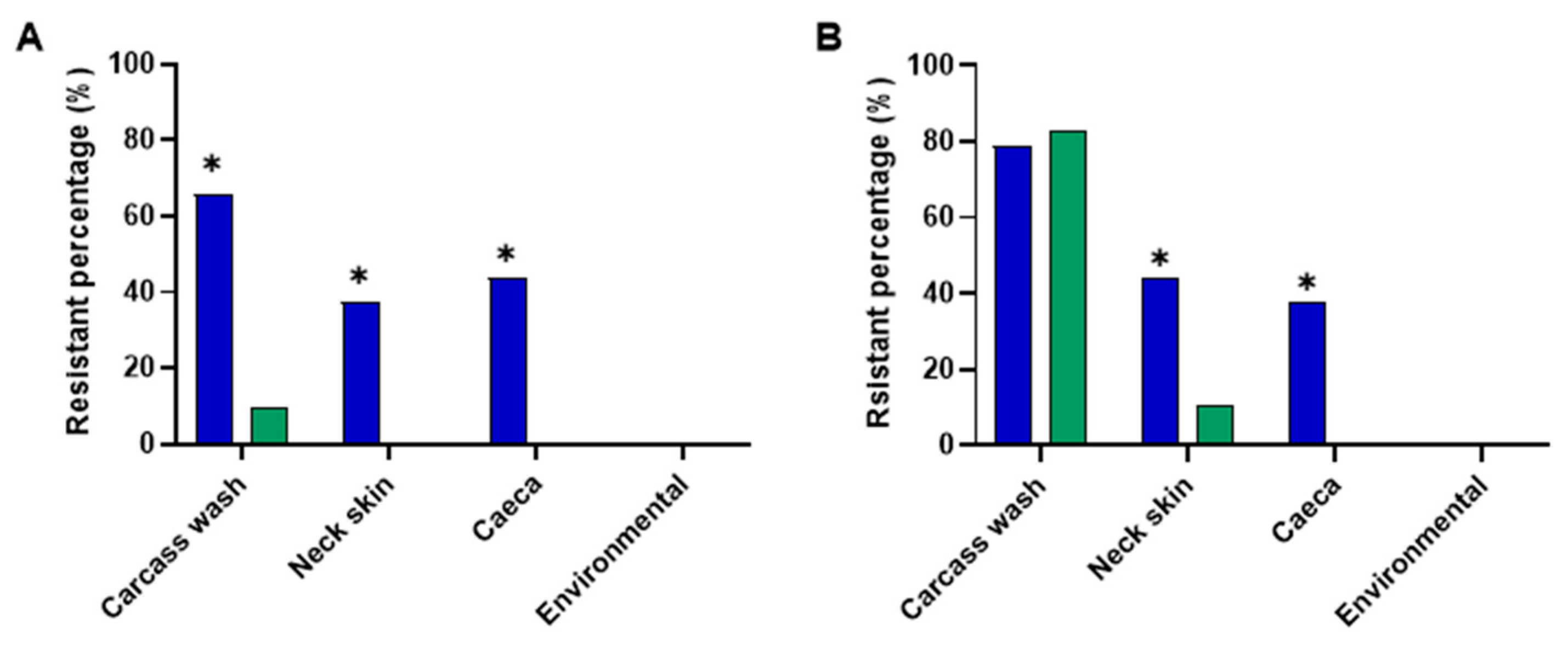
Figure 1. Resistant percentage of S.Typhimurium (Blue), C. jejuni (Green), according to the MIC (A) and MBC (B) data in different isolation points in the processing plant. * Denotes statistically significance (p < 0.05).
Preprints 145667 g001
Figure 2. Percentage of S. Typhimurium, given different chlorine tolerance levels in MIC (A) and MBC (B) assay. The isolates were collected from the chill tanks treated with 3-5 ppm (Orange), 20-30 ppm (Purple), and, 40-50 ppm (Pink) chlorine concentrations. * Denotes statistically significance (p < 0.05). ** Denotes statistically significance (p < 0.001).
Preprints 145667 g002
Figure 3. Percentage of C . jejuni, given different chlorine tolerance levels in MIC (A) and MBC (B) assay. The isolates were collected from the chill tanks treated with 3-5 ppm (Green), 20-30 ppm (Red), and, 40-50 ppm (Blue) chlorine concentrations. * Denotes statistically significance (p < 0.05). ** Denotes statistically significance (p < 0.001).
Preprints 145667 g003
Figure 4. Resistant percentage of S.Typhimurium (Blue), and C. jejuni (Green), according to the MIC (A) and MBC (B) data in different isolation points in the processing plant. * Denotes statistically significance (p < 0.05).
Preprints 145667 g004
Table 1. Sampling points and isolation number of S.Typhimurium and C. jejuni.
Sample point Isolation number ( n)
S.Typhimurium C. jejuni
Ceaca 16 11
Neck skin 12 15
Carcass washing ( 3-5 ppm) 15 13
Carcass washing (20-30 ppm) 17 25
Carcass washing ( 3-5 ppm) 29 15
Environmental samples 22 17
Total isolate number 111 96
Table 2. Percentage of Salmonella Typhimurium isolates at different MIC and MBC levels.
Chorine Concentrations
(ppm)
Minimum inhibitory concentration (MIC)
Isolate percentage (%)
Minimum bactericidal concentration (MBC)
Isolate percentage (%)
Carcass
wash
Neck skin Caeca
Environment Carcass
wash
Neck skin Caeca
Environment
2.5 0.0 0.0 0.0 0.0 0.0 0.0 0.0 0.0
5 0.0 0.0 0.0 11.7 0.0 0.0 0 4.5
10 1.6 0.0 0.0 11.7 0.0 0.0 0 4.5
20 3.3 0 6.2 35.2 3.2 11.2 6.25 36.3
40 29.5 62.5 50.0 41.1 18.0 44.4 56.25 54.5
80 65.6 37.5 43.8 0.0 68.9 44.4 37.5 0.0
160 0.0 0 0.0 0.0 3.3 0 0 0.0
>160 0.0 0 0.0 0.0 6.6 0 0 0.0
Table 3. Percentage of Campylobacter jejuni isolates at different MIC and MBC levels.
Chorine Concentrations
(ppm)
Minimum inhibitory concentration (MIC)
Isolate percentage (%)
Minimum bactericidal concentration (MBC)
Isolate percentage (%)
Carcass
wash
Neck skin Caeca
Environment Carcass
wash
Neck skin Caeca
Environment
2.5 0.0 0 0.0 0.0 0.0 0.0 0.0 0.0
5 0.0 5.3 9.0 11.7 0.0 0.0 0.0 11.7
10 5.7 21.1 45.5 23.5 0.0 5.3 18.2 11.7
20 32.1 36.8 45.5 23.5 0.0 42.1 27.3 35.2
40 52.8 36.8 0.0 41.1 17.0 42.1 54.5 41.1
80 9.4 0.0 0.0 0.0 34.0 10.5 0.0 0.0
160 0.0 0.0 0.0 0.0 39.6 0.0 0.0 0.0
>160 0.0 0.0 0.0 0.0 9.4 0.0 0.0 0.0
Table 4. Percentage of resuscitated S.Typhimurium and C. jejuni after expose to chlorine in MIC/MBC assay.
Isolated Sample S.Typhimurium recovery percentage (%) C . jejuni recovery percentage (%)
Carcass wash 52.4% (32/61) 58.5 (30/51)
Neck skin 50 % (4/8) 55.5 % (5/9)
Caeca 33.3 % (5/15) 16.6 % (1/6)
Environmental 16.6 % (2/12) 14.2 % (1/7)
Disclaimer/Publisher’s Note: The statements, opinions and data contained in all publications are solely those of the individual author(s) and contributor(s) and not of MDPI and/or the editor(s). MDPI and/or the editor(s) disclaim responsibility for any injury to people or property resulting from any ideas, methods, instructions or products referred to in the content.
Copyright: This open access article is published under a Creative Commons CC BY 4.0 license, which permit the free download, distribution, and reuse, provided that the author and preprint are cited in any reuse.
Prerpints.org logo

Preprints.org is a free preprint server supported by MDPI in Basel, Switzerland.

Subscribe

Disclaimer

Terms of Use

Privacy Policy

Privacy Settings

© 2026 MDPI (Basel, Switzerland) unless otherwise stated