

Submitted:
26 December 2024
Posted:
27 December 2024
You are already at the latest version
Abstract
Artificial Intelligence, Big Data and the Internet of Things ( IoT ) have been in constant development within various fields of study for their application, especially within Traffic Management Systems and sustainable urban transport, the above was born with the need to reduce, mitigate and control large traffic flows, polluting emissions from vehicles, long travel times and traffic accidents that occur within cities, especially cities in underdeveloped countries, such as the Latin American zone. It is important to generate development strategies that consider a multidimensional and long-term perspective, the success of urban development requires strategic governance and the construction of public projects and the construction of the habitat as a public matter with social inclusion. Coordinated action is needed for environmental protection, territorial planning and public policies. Therefore, the purpose of this research is to analyze the implementation of Artificial Intelligence, Big Data and IoT within Traffic Management systems, specifically, within the Ibero-American zone, likewise, to examine the most effective artificial intelligence technologies and algorithms such as Predictive Models that provide traffic flows helping to have better control within the roads, these use Neural Networks to improve the statistical models used in these models, Machine Learning and Deep Learning among others, which have shown to have positive results in predicting demand and reducing vehicular congestion and accidents within cities and identify the challenges and limitations found in the implementation of these solutions within cities. For the above, a bibliographic review and a bibliometric analysis were carried out, which was performed using the Scopus database, supported by Bibliometrix and VOSviewer for bibliometrics, analyzing information on data, trends and characteristics of research publication, most preferred and productive journals, author, journal and productive countries, thematic evaluation and co-occurrence of words. The results show a low relevance of Ibero-America within the field of study despite having several investigations developed within it. The knowledge obtained in this research will be valuable for young researchers, industry professionals, transport policy makers and government entities in their search to identify solutions to road congestion.
Keywords:
Artificial Intelligence
; Transport
; Big Data
; IoT
; Urban transportation
; Sustainability
; Ibero-America
1. Introduction
In recent years, several cities in emerging countries, such as Latin America, have become urban centers with large traffic flows. According to Salazar-Cabrera the most relevant problems of the transport vehicle service in intermediate cities in Latin America include: the high number of passengers involved in traffic accidents; the vehicular congestion caused by transport vehicles and the pollution generated by these vehicles, which increases in high congestion scenarios [1].
Likewise, these problems on the roads increase travel times, affecting the quality of life of citizens and at the same time damaging the environment due to the increase in polluting gases.[2]
Thanks to these problems, the term “Smart Cities ” has begun to be talked about , with some authors who have talked about the subject Filho et al. (2020), Garcia -Retuerta et al. (2021), Gonzalez et al. (2020), Guillen-Pérez and Cano (2021), Jaramillo- Alcazar et al. (2023) and Paiva et al. (2021) in large urban areas, not only in Latin America, but also in countries such as Spain and Portugal [2,3,4,5,6,7]
In this context, this term is defined as follows: A smart city is an environment that uses innovative technologies to make networks and services more flexible, efficient and sustainable with the use of information, digital and telecommunications technologies, improving the functioning of the city [4].
Consequently, the term “Smart Mobility ”, used by Ketter [8], Maldonado [9] and Paiva et al. [7] has been developing thanks to new technological and transportation advances within cities, “the concept of smart mobility emerged with the popularity of smart cities and is aligned with the sustainable development goals defined by the United Nations.”[7]
Additionally, another of the most resonant concepts in recent years has been the importance of data science and Big Data analysis, which are expanding rapidly as institutions strive to exploit their information resources to gain a competitive advantage. The adaptability offered by Big Data analysis boosts both functional and organizational performance [10]
IoT for sustainable urban transport is therefore transforming how cities are managed around the world, improving the efficiency of mobility systems and reducing their environmental impact. In fact, smart cities are leveraging these technologies to monitor transport, prevent accidents and optimise route planning and safety, as well as to monitor the environment and improve traffic efficiency [7,11,12]
Among the technologies for grouping huge volumes of data in real time we can find that: One of the key ways to collect the necessary data is through sensors and cameras installed in traffic infrastructure. These are the most common components of modern information systems used for traffic monitoring and management. [13]
It is worth highlighting that the data collection provided by technologies must improve the user experience and consider the impact on their safety. It was already seen in the case of electric dashboards in cars how it could distract and put the driver’s life at risk, so solutions must be adapted to the needs and requirements of users (Dudziak et al., 2024). A good example of the use of technologies to minimize the impact of incidents and external factors is the prediction of passenger flows from origin to destination, minimizing interruptions and optimizing resource allocation [14]
It is in this context that the following research question arises: How have emerging technologies, such as Big Data, IoT and artificial intelligence, impacted the development and implementation of traffic management systems for sustainable urban transport in Latin America? To answer this question, our general objective is to: Analyze the current state of the implementation of traffic management systems based on artificial intelligence in Latin America and its relationship with the impact of emerging technologies, such as Big Data and IoT, on the development of sustainable urban transport.
1.1. Theoretical Framework
Over the past twenty years, technological advances have led to a radical change in the way companies manage their operations and resources, adopting intelligent solutions to optimize processes, improve efficiency and adapt to an increasingly competitive and digitalized business environment.
The origins of AI date back to the 1950s, when visionaries such as Alan Turing, John McCarthy and Marvin Minsky laid the conceptual foundations of discipline. At that time, the idea of creating machines capable of emulating human intelligence was considered mere futuristic speculation. However, as computing technologies advanced, AI became increasingly relevant.
In its early days, AI focused on the development of expert systems and problem-solving algorithms based on logical rules. These systems were applied in areas such as medical diagnosis, task planning, and financial analysis. However, the computational limitations of time and the inherent complexity of human intelligence represented major challenges for the progress of AI.
Artificial Intelligence has come a long way in recent decades, evolving from a purely theoretical discipline to a very important and key technology in different sectors, including industry. During this time, AI has experienced paradigm shifts driven by technological advances in different areas, which have expanded its capabilities and applications. Figure 1 shows the timeline of AI since its origin.
During the 1970s and 1980s, AI experienced a boom in the development of expert systems and rule-based simulations. These techniques made it possible to encode the knowledge of human experts into computer systems, facilitating decision-making and solving complex problems in a variety of fields, including medicine, engineering, and finance. In the late 1980s and early 1990s, AI went through a period of stagnation known as the “AI winter.” This was mainly due to the limitations of rule-based approaches and the lack of significant progress in developing truly intelligent systems.
However, at the end of the 20th century, the emergence of artificial neural networks and machine learning techniques marked a turning point in the field of AI. These technologies allowed systems to learn and improve their performance from data, rather than relying solely on programmed rules. This opened new possibilities for dealing with complex problems in areas such as pattern recognition, NLP, and computer vision. It was not until the beginning of the 21st century that AI really took off, driven by the exponential increase in data processing capacity and the development of advanced deep learning techniques. learning) within machine learning. These advances, combined with the increasing availability of large volumes of data (Big Data) and the increase in computing power, laid the foundation for the creation of increasingly sophisticated and capable intelligent systems. AI, defined as the replication of human intellectual processes by machines, especially computer systems, and ML, a subset of AI that optimizes business processes with minimal human intervention, have had a significant impact on decision-making and risk management. “The literature on AI and ML suggests that their application in various industries has significantly enhanced decision-making processes and risk management practices.
Similarly, research into predictive models within traffic systems (Traffic Lights) has been initiated by Del Valle et al. [15] Díaz-Casco et al. [16], Garcia -Retuerta et al. [4] Gomes [17] Jyothi [18], Medina-Salgado et al.[19], Mena-Oreja & Gozalvez [20] Navarro-Espinoza [21], Zeynivand [22] and Zißner [23], where “traffic prediction helps mitigate the impact of traffic congestion. The accuracy of traffic predictions depends on the availability of the data used for the prediction as well as the prediction model.”.[20]
Although it is true that predictive models help mitigate traffic congestion, it is not an immediate solution, because it predicts based on the information provided and collected over a certain period. However, several studies have used “Smart Traffic Lights”, which adapt dynamically to the environment, showing excellent results in helping with the correct operation within roads and streets. [24]
In this same field of study, there is also the “Traffic Signal Control” developed Noaeen [25] and Pérez-Acebo [26], it’s use is very similar to Smart Traffic Lights, where the system reacts immediately to the environment, “one way to control traffic lights is through reinforcement learning (RL) techniques, in which traffic light controllers learn to respond dynamically to traffic changes in real time.”
Continuing with the data part of these systems, it can be stated that they are essential for the proper functioning within the models and their possible innovations in them, however, there are several studies that speak of the absence of standardized and/or coherent data as a major impediment to the evaluation of progress towards sustainable transport. In addition, they underline the importance of unrestricted access to user-generated data and advocate for the uniformity of travel surveys within cities and for the proliferation of bicycle meter networks to improve the effectiveness of data collection, along with the presentation of various methodologies aimed at increasing the generation of the same. [27]
Within these studies, the usefulness of analytical instruments such as E2PAT (Neves et al., 2020) is highlighted to examine spatiotemporal data patterns, which facilitates the improvement of urban planning results. Additionally, these investigations clarify how disparities within urban environments affect transportation systems, privileging the use of motorized vehicles and negatively affecting more sustainable transportation modalities, especially in a study based on cities in Colombia, Malta and Sierra Leone, these same ones being carried out by the authors Attard [28], Chevance [27] and Neves et al. [29]
Furthermore, with the use of Big Data, Deep Learning (DL) and Machine Learning (ML) models, historical patterns and user behaviors can be analyzed to predict demand peaks[30]. This allows for better resource preparation and saturation avoidance. “Accurately identifying the travel patterns of urban residents is crucial for urban traffic planning and intelligent transportation systems” [31]
These travel patterns can be identified through displacement estimates, urban and freight transport flows, timetables, telecommunications datasets, walkability levels, among others [32,33,34,35,36].
Similarly, models based on Machine Learning and Deep Learning algorithms , which is also a branch of AI, have proven to be efficient in predicting traffic flow [21], “among them, Convolutional Graph Networks have achieved remarkable results for their ability to address the complicated spatial dependencies of road networks, given their natural graphic structure.” [19]
Another term already mentioned above and which is an area of study within Artificial Intelligence is Deep Reinforcement. Reinforcement learning or Deep Reinforcement Learning, is characterized by: Reinforcement learning (RL) is a type of machine learning algorithm that lies between supervised and unsupervised learning. It cannot be classified as supervised learning because it does not rely solely on a set of labeled training data, but it is not unsupervised learning either because we seek for our reinforcement learning agent to maximize a reward [37].
Consequently, and following the previous definition, recent research carried out a model using this type of algorithm, where De Souza Pereira Borges [38] described it as follows: This study proposes a model, based on Deep Reinforcement Learning , to synchronize the traffic lights of an urban traffic network consisting of two intersections. The calibration of this model, including the training of its neural network, was performed using real traffic data collected on the approach to each intersection.
In parallel to this study, other research and models have been conducted and calculated based on the efficiency of Graph Neural Networks, one of these was developed by Jyothi [18], who explains: The study presents a sophisticated traffic flow prediction system with innovative components, such as dynamic graph construction, multimodal data integration, and a custom graph neural network (GNN) architecture with adaptive learning (…). Through comprehensive evaluations, the research demonstrates the superior performance of their approach. It significantly improves the accuracy of predictions compared to existing methods.
Following the same path, the analysis of the optimization of public transport routes allows the adjustment of bus routes and other means of transport such as taxis, adapting them to demand [39]. This improves the punctuality and efficiency of transport, reducing waiting times and polluting emissions. This was already demonstrated by Pamula with her study in: “Development of a deep learning network to derive estimates of stop-by-stop energy consumption of bus lines” thus finding that: “The results of the study indicate points in the public transport network with potential energy deficiency that can be alleviated by introducing a charging station or correcting bus travel schedules.” [40]
Likewise, new models and systems have been developed for the identification of possible traffic jams or problems on the road, one of these is the “automatic detection of incidents in intelligent transportation systems (ITS), which refers to the process of identifying incidents such as accidents, congestion or road hazards in real time using advanced technologies and data analysis techniques.”[41]
More specifically, Intelligent Transport Systems (ITS) used by Gkioka [41] Llamosí et al. [42], Marina [43], Navarro-Espinoza [21], Ribeiro [44], Salazar-Cabrera [1] and Zißner [23] developed to help urban traffic and the people who use it. [44]
Thanks to the above, studies have appeared where communication between vehicles allows for better management of urban traffic by using real-time traffic data, communication technologies and dynamic routing, where its main objective is to minimize time on the roads and mitigate congestion, developed by the authors Gomides [45] and Tomás [46].
As previously mentioned, in the development of different models and systems, there has been an increase in new cases and study topics used to improve traffic efficiency such as Artificial Intelligence, research done by De Souza Pereira Borges [38] Garcia -Retuerta [4], Gkioka [41], Gonzalez [5], Navarro-Espinoza [21] , Noaeen [25], Ordoñez [24], the previous studies developed and applied mostly to simulated cities and streets to verify their efficiency in traffic mitigation, traffic prediction and vehicular incidents, in addition to the implementation of these in the context of Smart Cities.
Likewise, Neural Networks have been found to have a positive influence within the statistical models used in traffic prediction, studies carried out by the following authors: De Souza Pereira Borges et al.[38] Gkioka [41], Gomes [17]), Gonzalez [5], Jaramillo- Alcazar [2], Jyothi [18] and Mena-Oreja [20]
To be more specific with the branches of Artificial Intelligence, we can talk about Machine Learning by the authors Gkioka [41], Marina [43] Medina-Salgado [19] Navarro-Espinoza [21] and The Zero- Touch Network and Service Management also developed by Gallego-Madrid [47], which have demonstrated positive results in the implementation of new systems within cities to assist in traffic signal management.
With all the above information in mind, it is understandable why the implementation of these emerging technologies is so beneficial for regions such as Latin America. Their use could be widely productive in terms of population growth, traffic congestion and environmental pollution that characterize this group of countries. Even so, there are barriers to their implementation, which can be explained by the challenges that arise in this region of the world: deficient systems, high costs or resistance to change can affect the development of these new technologies and make it difficult, for example, to predict demand [48]. As Yañez-Pagans et al. [49] state in their research on urban transport systems in Latin America and the Caribbean: “There are almost no studies that explore the effects of displacement, which should be examined further to better understand the social inclusion role of transport systems”
Cases such as Mexico, Brazil and Peru, attempts have been made to implement the intelligent information systems; however, there are obstacles such as limited infrastructure to offer real-time data, the difficulty in obtaining information from users, and the presence of chaotic, inefficient and low-quality transport systems.
The solution that researchers have found is to propose low-cost and equally efficient alternatives. This is the case in Mexico, where it was proposed to use smartphones to connect drivers and users to the IoT network (Estrada-Esquivel et al., 2022). Or in Peru, where it was concluded that the IoT- based carsharing system is viable in the capital and can contribute to the improvement of urban mobility [50]. Or also in Brazil, where the proposal for a Smart Bus using RFID and NFC technologies is launched, allowing users to access data on schedules, routes and delays using their mobile phones. [51]
On the other hand, environmental trends and climate change have led to the study of transport and its impact on urban areas. An example of this is Valencia and Bogotá, which face a great task in designing effective strategies to decarbonize the transport sector, a challenge that is further intensified by the increase in demand and the lack of innovation in the vehicle fleet, the research authors being Llamosí [42] and Valencia [52]
Due to the growth of cities, pronounced levels of congestion and reliance on private transport such as cars significantly aggravate climate change and negatively affect air quality, in addition, existing public transport systems and electric vehicle charging infrastructure are inadequate to meet the growing demand, to improve urban logistics and mitigate associated emissions, the adoption of smart technologies and synergistic collaboration between companies is advocated. For a more sustainable future, it is recommended that policies be enacted to encourage the use of public and active transport modes, along with the implementation of green taxes, this should be achieved through collaboration between government agencies, corporate entities and citizens, according to Calan [53], Giret , A.[54], Khurshid [55], Ketter [8] and Rosero [56]
Finally, certain studies discuss how the reduction of diesel consumption in the transport industry could be improved in emerging countries, such as Brazil, where the focus would be on repairing and maintaining the roads where this type of transport passes, such as highways, studies carried out by Santos [57] and Martínez-Hernández [58] On the other hand, route methodologies have been developed for electric buses in European cities, specifically in Spain and Poland, where a reduction in pollution and an optimization in the use of their electric batteries have been seen [59].
It is also proposed to control traffic flow and optimize road infrastructure parameters to minimize pollution generated by vehicles on the road [60]. The line of studying mobility patterns and planning transport routes is followed [35]. The environmental and economic impact of urban fuel consumption is also understood [61] and the need for a comprehensive approach between transport and sustainable development that includes public policies, technological innovation, education, awareness, and international cooperation [62,63]
Artificial Intelligence (AI) refers to systems that attempt to imitate or match human intelligence (logical reasoning) based on information provided by programmers or, failing that, that these same systems collect through their interactions with sources or humans, having the ability to improve. Its main objective is to perfect human capabilities and contributions [24]
Thanks to the above definition, Artificial Intelligence is divided into several branches as discussed above, therefore, these branches and AI itself have been used in several fields of study, one of these is the traffic management system, where different algorithms and models are used for the prediction and improvement of data processing and analysis within these systems.
First, it is important to highlight that one of the most used and researched branches within this area is Machine Learning (ML), defined as follows:
Machine learning is a subfield of computer science that deals with building algorithms that, to be useful, rely on a collection of examples of some phenomenon. These examples can come from nature, be created by humans, or generated by another algorithm [64].
For this reason, Machine Learning has been used in several models for automation in the process of detecting incidents within roads or urban areas, providing real-time alerts and knowledge to improve emergency response, causing an immediate response by organizations and authorities, reducing times and mitigating potential risks [41]
Similarly, models based on Machine Learning and Deep Learning algorithms, which is also a branch of AI, have proven to be efficient in predicting traffic flow [21] among them, Convolutional Graph Networks have achieved remarkable results for their ability to address the complicated spatial dependencies of road networks, given their natural graphic structure [19]
Although their uses have been within traffic systems, “in recent years, vehicle-to-vehicle communication systems have demonstrated the enormous potential they have to improve the efficiency and safety of road traffic.” (Marina et al., 2022). Hand in hand with this system are wireless optical communication technologies, which allow the exchange of information between vehicles, increasing the development of autonomous driving. According to Marina [43] in this way, different ML-based classification models are trained with the generated data sets. In this work, we offer a solution, using Big Data and artificial vision, using a road data set and the average speed of vehicles to automatically detect road traffic lights to establish a VLC communication link.
Another term already mentioned above, and which is an area of study within Artificial Intelligence is the Deep Reinforcement Reinforcement learning or Deep Reinforcement Learning, is characterized by: Reinforcement learning (RL) is a type of machine learning algorithm that lies between supervised and unsupervised learning. It cannot be classified as supervised learning because it does not rely solely on a set of labeled training data, but it is not unsupervised learning either because we seek for our reinforcement learning agent to maximize a reward [37].
Consequently, and following the previous definition, recent research carried out a model using this type of algorithm, where De Souza Pereira Borges [38] described it as follows: This study proposes a model, based on Deep Reinforcement Learning, to synchronize the traffic lights of an urban traffic network consisting of two intersections. The calibration of this model, including the training of its neural network, was performed using real traffic data collected on the approach to each intersection.
In parallel to this study, other research and models have been conducted and calculated based on the efficiency of Graph Neural Networks, one of these was developed by Jyothi [18] who explains: the study presents a sophisticated traffic flow prediction system with innovative components, such as dynamic graph construction, multimodal data integration, and a custom graph neural network (GNN) architecture with adaptive learning (…). Through comprehensive evaluations, the research demonstrates the superior performance of their approach. It significantly improves the accuracy of predictions compared to existing methods.
In short, Artificial Intelligence and its branches of study have managed to improve and perfect traffic management systems with different models, systems and algorithms, making it possible to alleviate traffic jams or incidents on roads in urban centers, in addition to generating greater safety among drivers and pedestrians, not only in predictive models, but also in real-time traffic efficiency.
Therefore, the research question is: What is the status of the implementation of traffic management systems based on artificial intelligence in Latin America?
To answer this question, the general objective was developed, which is to analyze the current state of the implementation of traffic management systems based on artificial intelligence in Latin America, and the specific objectives, to evaluate the state of the art in AI and sustainable mobility technologies applied to traffic management in Latin America, examine the most effective artificial intelligence technologies and algorithms that are being used for traffic control, including real-time data analysis and machine learning, identify the challenges and limitations encountered in the implementation of these solutions.
In the context of transport and mobility, big data is defined as a set of technologies that allows the management of large volumes of data from various sources and formats. This involves capturing, processing, analyzing and storing huge amounts of data with the aim of making decisions and optimizing processes. Big data includes the use of advanced tools to manage data that has a high volume, frequency of generation and variety, which in turn allows the development of more efficient and personalized transport systems [65]
Big data has evolved due to several technological and market factors. Initially, data processing and capture in transport was quite limited. Over time, digitalization offered by technologies such as the Internet of Things, decreased storage costs and improved connectivity have transformed this area [65]. Various innovations have made it easier to collect data in real time from various sources, including mobile devices and social networks.
Big data has become an advanced means of monitoring and managing transport systems in real time. This includes the development of intelligent transport systems (ITS) that can analyze large data streams and thus improve aspects such as route planning and transport network design. These advances also enable predictive and prescriptive analysis that helps anticipate problems, understand demand and optimize user experience [65].
The Internet of Things (IoT) refers to the interconnection of devices and objects through the Internet, allowing them to collect, exchange and process data in real time and improve decision-making in various fields.
For example, one study found that IoT enables the monitoring and control of bicycles and other urban elements in smart cities, optimizing transportation and contributing to sustainability by collecting environmental and mobility data (Oliveira et al., 2021). On another occasion, IoT was used in the context of a smart city, where sensors connected in different urban locations collected data to improve the planning and operation of public services, such as parking spaces and pollution monitoring [66].
The continued evolution of IoT involves improving policies and collaboration between the public and private sectors. As connected devices increase, cities are expected to continue developing new applications and business models to address different urban and environmental challenges [66]
Today, AI has become a fundamental component of the so-called Industry 4.0, highlighted by the integration of CPS systems, intelligent automation and the digitalization of industrial processes. In addition, it is emerging as a key technology in the emerging concept of Industry 5.0, which seeks a symbiosis between humans and intelligent machines.
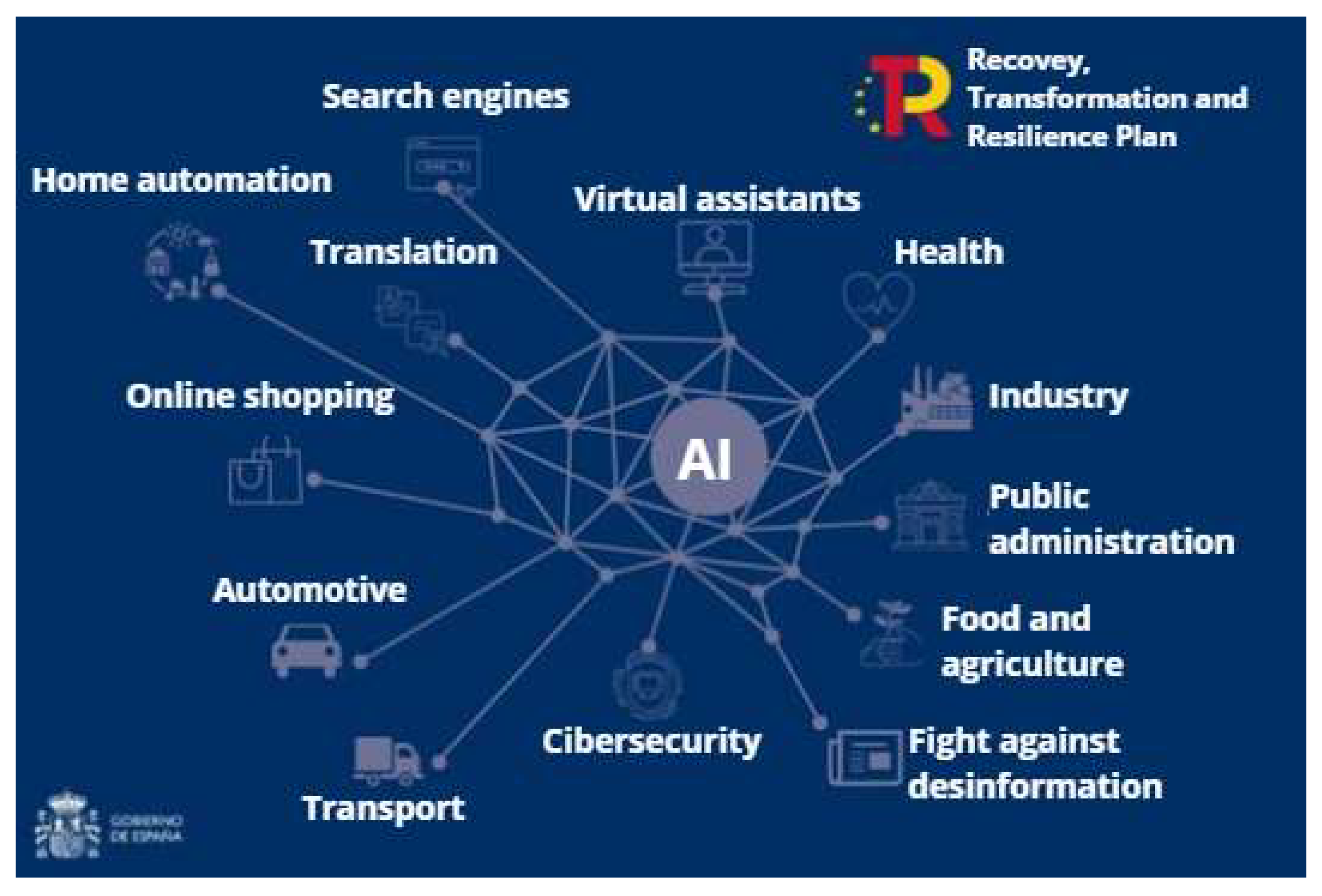
The following image shows a summary of examples of uses and applications of AI according to the Government of Spain and in accordance with the Recovery, Transformation and Resilience Plan.
Figure 2.
Fuente: de España, G. (2023). “Ejemplos de uso de la IA”. https://planderecuperacion.gob.es. https://planderecuperacion.gob.es/sites/default/files/inline- ima ges/19042023_infografia_inteligencia_artifical_prtr.png.
Figure 2.
Fuente: de España, G. (2023). “Ejemplos de uso de la IA”. https://planderecuperacion.gob.es. https://planderecuperacion.gob.es/sites/default/files/inline- ima ges/19042023_infografia_inteligencia_artifical_prtr.png.
The emergence of new technologies such as 5G or future 6G networks and quantum computing is laying the groundwork for a new wave of innovations in the field of AI applied to industry. These technologies will make it possible to process and analyze large volumes of data in real time, opening new opportunities for process optimization, advanced predictive maintenance and adaptive automation in industrial environments.
Furthermore, AI is expected to continue to evolve and expand its reach through areas such as reinforcement learning, explainable AI, and generalist AI, enabling it to address increasingly complex challenges and improve the trust and transparency of intelligent systems in industrial environments.
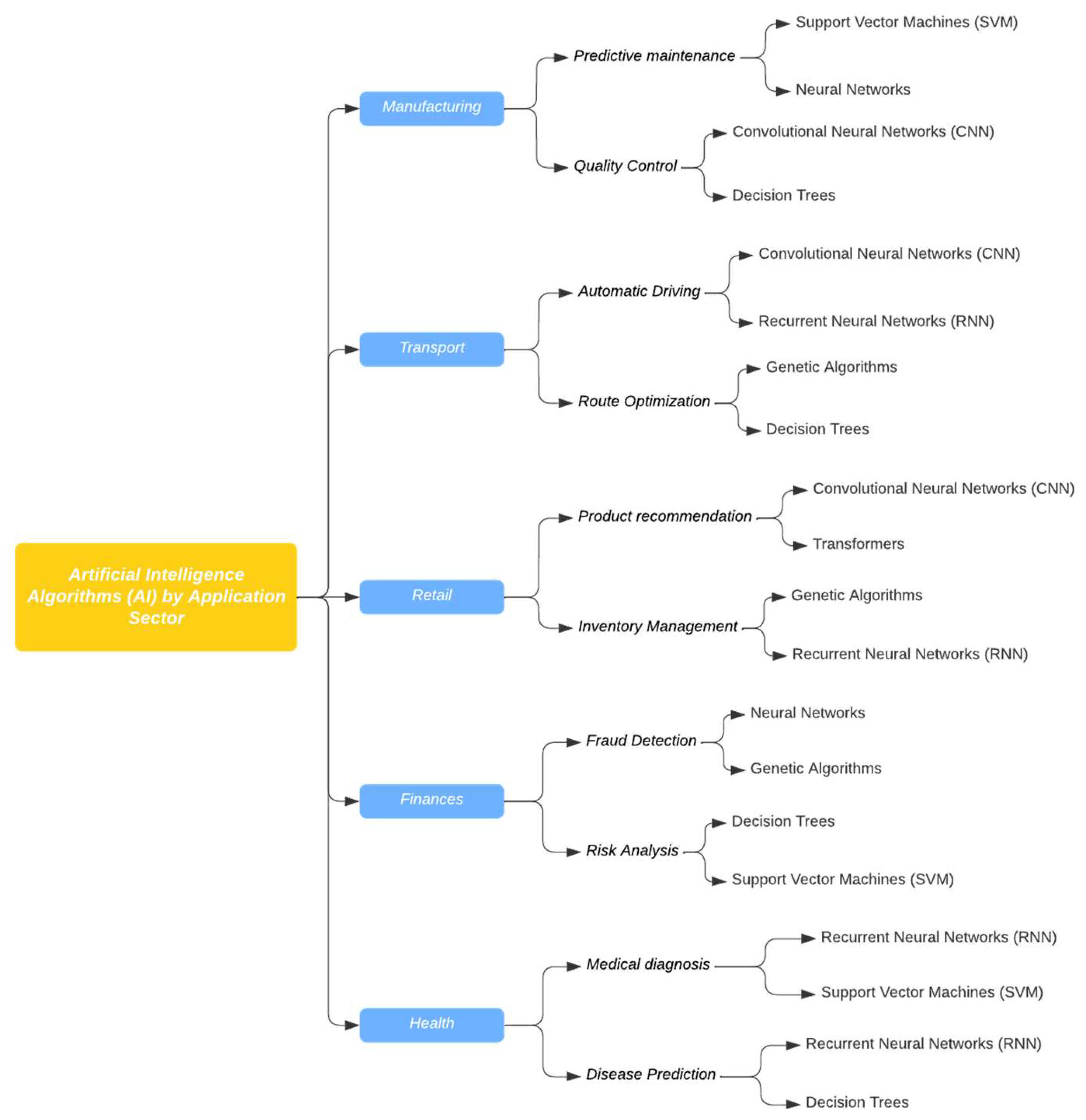
Figure 3.
AI Algorithms by Utility, use or application, own elaboration.
2. Materials and Methods
The methodology used for this research is based on a qualitative method because it focuses on an analysis of articles related to Traffic Management Systems based on Artificial Intelligence and Big Data and their application in urban transport. The research was developed based on two pillars. In the first pillar, the data extraction process was described, which includes the selection of databases and the search strategy; subsequently, a bibliometric analysis was carried out using appropriate techniques with the support of specialized software ( Bibliometrix , VOSviewer ). The details of the flow of the methodology used are shown in Figure 4
Scopus database was selected, which records all relevant literature related to the topic in question. This platform is widely used by researchers to perform literature searches and bibliometric analysis due to its absolute coverage and reliability. Therefore, it was employed as the primary source for data collection, processing, and analysis.
The study divided the bibliometric review into two parts: the first part focused on articles related to Traffic Management Systems based on Artificial Intelligence, and the second highlighted documents linked to Big Data and its application in urban transport.
The first data collection was based on the following search equation, ((TITLE-ABS-KEY (“Artificial Intelligence “) AND TITLE-ABS-KEY ( traffic ) AND TITLE-ABS-KEY ( transport ))) in the Scopus database , in this specific case, no filters were used, first, for the proper realization of the bibliometric a minimum of 500 documents is needed for the analysis to be sufficiently relevant, second, the filters proposed for the analysis were: A range of years between 2019 and 2024 and countries belonging to the Ibero-American zone shown in Figure 5
Scopus database was not enough to complete the 500 documents necessary for the analysis, therefore, it was decided to use all the data obtained with the search equation mentioned above.
Thanks to this, 1,121 documents were collected, from which information was obtained on bibliographic citations, abstracts, keywords and other information exported in CVS format. Then, the data set in a file of the Bibliometrix package was transferred from the Rstudio software to perform bibliometric analysis and thematic trend analysis [68]. Next, the information was transferred in CVS format to the VOSviewer software for the creation and extraction of bibliometric networks on relevant data such as keywords and publishing countries.
Next, the second query was performed: Search by keywords (“Big data” AND “urban“”transportation” AND “sustainability”) This query retrieved 1,118 publications (documents of all types) from 1988 to 2025 on October 25 (2024). 1,118 identified literature records, citation information, bibliographic information, abstract and keywords, and other information were exported to .bib and .csv format files. The dataset was also taken to Bibliometrix and VOSviewer for trend review and targeted analysis.
Bibliometrics applies mathematical and statistical methods to quantitatively analyze scientific literature, evaluating aspects such as the production, growth, maturation and consumption of publications. Therefore, it has become a fundamental tool to examine and evaluate the state of development of a research field, as well as the production of researchers [69] and the collaboration between institutions [70]
Bibliometric analysis is composed of performance analysis and scientific mapping analysis. Performance analysis uses bibliometric indicators to measure the output of individual actors (such as authors, institutions, countries and journals) and assess the impact of their publications using citation data [71].
There is a wide variety of bibliometric tools available for bibliometric analysis; the main bibliometric analysis tools include Biblioshiny (R package), VOSviewer , BibExcel , SciMAT and CiteSpace [68,71,72]. Each tool has different mapping principles, algorithms, visual results and strengths and weaknesses. Therefore, for this case, the software Bibliometrix and VOSviewer were used. The details of each tool are detailed below.
Biblioshiny is an open-source tool that allows the import of data from various sources, such as Scopus and Web of Bibliometrics are a bibliometric analysis tool that is used to analyze the bibliometric data of the scientific community in the United States and offers multiple types of bibliometric analysis [68]. In this analysis, different modules available in the Bibliometrix application have been used, including basic information, annual scientific production, most significant sources, authors and notable affiliations, as well as an analysis by country. This approach allows validating the identification of the periodicity of topics or articles, connections, centrality, clusters of authors and texts, publication trends, knowledge bases, author networks, readership, influence and importance. It is essential to measure, compare and establish key objectives to understand scientific activity, since in the measurement process it must be determined what is the impact of scientific activity, what role bibliometrics plays and its importance, since this assigns a value that is measurable and can be quantified according to the results of the scientific activity.
VOSviewer is a widely recognized bibliometric tool for the creation of bibliometric networks involving different actors, such as authors and organizations. It uses various network analysis methods, including co-authorship, co-citation, co-occurrence of terms and bibliographic coupling [73].
Defining co-citation as the co-occurrence of documents in reference lists that suggests a conceptual link between them, the more frequently two documents are cited together, the greater the probability that they address similar topics or concepts [74]
Similarly, Kessler (1963) says that two documents are closely related to the extent that they have a greater number of bibliographic references in common. In this way, bibliographic coupling becomes an interrelation criterion that allows obtaining groups of articles with a high degree of similarity [74]
In this study, term co-occurrence analysis was applied, “the study of the co-occurrences, or joint appearances, of two terms in a given text with the purpose of identifying the conceptual and thematic structure of a scientific domain.” [75], to identify the predominant topics within a research area and the countries with the highest publications within a specific period. The maps generated by this tool show nodes, which represent keywords, and edges, which illustrate the relationships between them.
3. Results
Having carried out two bibliometric analyses with complementary approaches, the results will be divided into two parts with the corresponding graphs and their analysis.
3.1. Part 1: Big Data Results and Its Application in Urban Transport. General Information about the Data
3.1.1. Analysis of Literature Trends and Characteristics of Publications
The study of the implications and effects of using Big Data in urban transport aims to facilitate the growing adoption of these technologies soon, particularly in regions such as Latin America, where the arrival of these advances is often delayed. The promotion of this research can encourage prominent organizations and institutions to participate in this initiative, thus achieving substantial advances in the operational dynamics of urban transport systems.

Table 1.
Descriptive statistical information about the data.
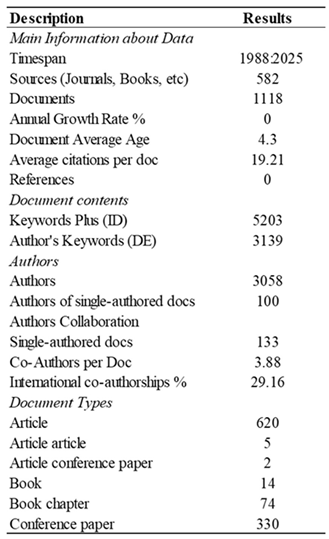
The information found in the database and exemplified in Figure 3 is therefore of significant relevance, as it shows a continuous upward trend. Most of the documents have been published from 2020 to 2024, which suggests that the importance of this topic has been given greater importance in recent years.
3.1.2. Most Relevant Authors
Of the 1118 documents analyzed, the 25 most relevant authors stand out (see Table 2). Liu Y leads with 33 publications, followed by Wang J with 27, Shibasaki R with 23, Zhang H with 19 and Song X with 18. Wang J has the highest number of citations, with a total of 787, while Liu Y has the highest h-index, with 15 publications that have at least 15 citations each, reflecting their impact in the field.
3.1.3. Countries with the Highest Scientific Production
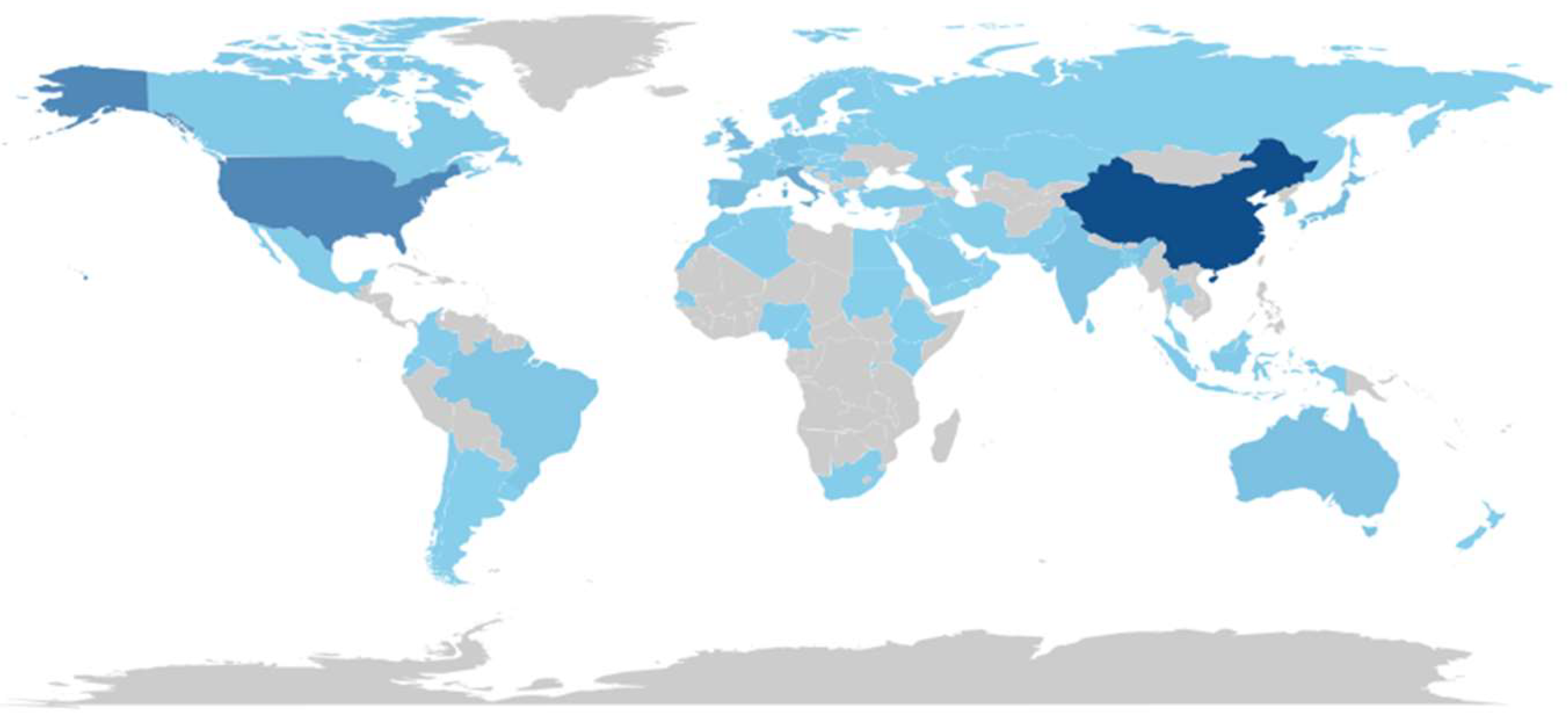
According to Figure 8, the papers originated from 79 countries and the geographical distribution of production was as follows: China is the most prolific country with 754 papers, followed by the United States and Italy with 398 and 199 respectively. The three countries account for most of the total publications, indicating their position in the research field. Furthermore, as evidenced in Table 3, China’s publications have received the highest number of citations, with 3541, demonstrating its academic influence on research.
Figure 6.
The intensity of the blue color reflects the number of documents published. Prepared by the author using Bibliometrix .
Figure 6.
The intensity of the blue color reflects the number of documents published. Prepared by the author using Bibliometrix .
3.1.4. Annual Scientific Production
According to Figure 7, scientific production has had a notable growth, registering the highest number of publications in 2023 with 154 documents. Research began to have more relevance from 2014 and has not stopped since then.
3.1.5. Keyword Analysis
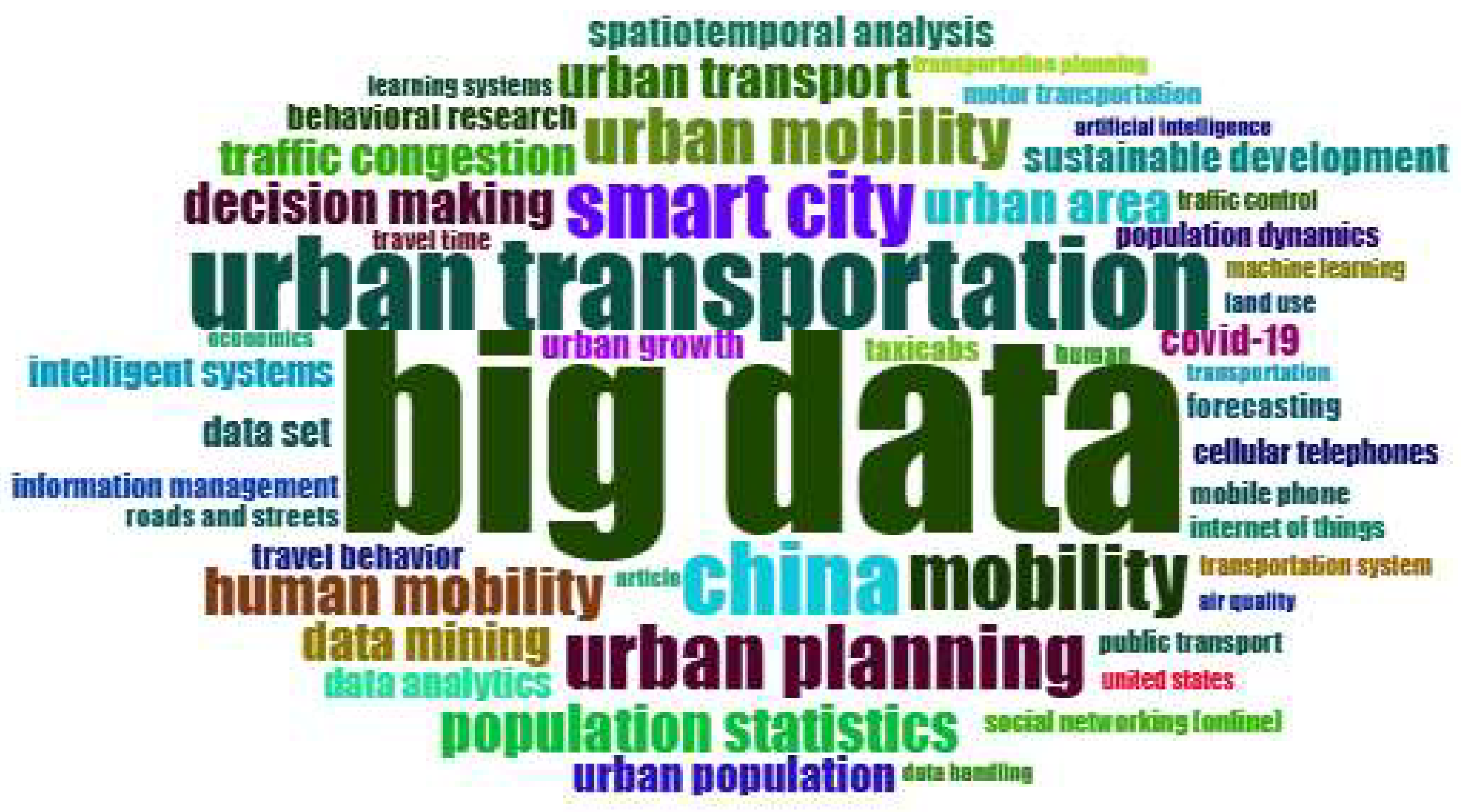
Keywords are used to provide a concise description of the research content. Therefore, it is a way to identify current topics in a research domain [22] The selected documents in the field of Big Data and urban transportation were further examined based on high-frequency keywords through Bibliometrix software and later VOSviewer . The results are presented in word clouds and co-occurrences.
Figure 8.
Word cloud.
3.2. Part 2: Traffic Management Systems Based on Artificial Intelligence
3.2.1. General Information
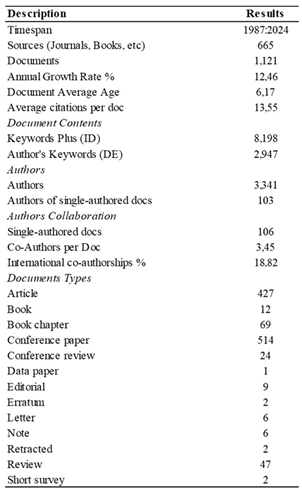
Scopus database , they have their origin from 1987 to 2024, where a total of 1,121 documents published in 664 journals, books, etc. were found. Within these, 3,341 authors contributed to these documents, there was a 3.45 co-authorship per document, that is, 3 authors participated in a single document and an international participation percentage of 18.82%, a high percentage thanks to the fact that the topic is studied from different perspectives and models. With 514, most of these documents are conference articles or conference proceedings, followed by articles, being 427 of these and, finally, 69 book chapters were found.
Table 4.
Main information about the data.
3.2.2. Annual Scientific Publications
Scientific production refers to documents or articles published between 1987 and 2024, which is the period under study. Figure 7 shows this data in graph form, with the lowest production between 1987 and 2007, with no publications even during this period, due to the novelty that the field of study of Artificial Intelligence represented at that time in the improvement of traffic and transportation management systems. On the other hand, the years with the highest production have been from 2015 to 2024, in a range of 44 to 154 documents. Despite the problems caused by the COVID-19 pandemic, production remained intact and there was even a significant increase in publications as can be seen in the graph.
3.2.3. Main Sources of Publication
During the years 1987 and 2024, 6 main sources were found in which the documents were published, this information is gathered in Figure 8, in this, it is observed that the largest number of documents were published in “ Lecture Notes in Computer Science ”, “this distinguished series of conference proceedings publishes the latest research advances in all areas of computer science.” (Lecture Notes In Computer Science Science (LNCS) , n.d. This source began publishing in 1998, being one of the first to publish on this topic among the 6 mentioned above. It began publishing 2 articles that year, and so far in 2024, it has published 55 articles in conference proceedings.
The second source with the most publications during this time is “Communications in Computer and Information Science”, a journal responsible for publishing computer science proceedings, and began publishing in 2011 with 2 articles, by 2024, it has published 17 documents. Finally, the third source with the most publications is “Advances in Intelligent Systems and Computing”, “are primarily proceedings of major conferences, symposia, and congresses. They cover the latest significant advances in the field, both foundational and applicable.” (Advances In Intelligent Systems and Computing Systems And Computing (n.d.). It began publishing in 2013 with a single document; it has currently published 17 articles.
3.2.4. Countries with the Highest Publication and Scientific Production
The analysis included the authors’ affiliations and their corresponding country, therefore, according to these affiliations, Figure 9 shows, as a map, the countries that have published scientific documents regarding this topic. The most important countries according to this map are China, India, the United States, Spain and the United Kingdom with a number of documents of 590, 442, 244, 220 and 162 respectively.
On the other hand, the countries with the lowest number of publications during this period are Venezuela, Nigeria, Madagascar and Luxembourg, all with only one published document. Therefore, it could be concluded that the most important research on Artificial Intelligence and its applications in traffic management systems is developed in China, India and the United States. This could be since they are the countries with the largest population in the world, having the need and sufficient resources to generate research on this topic specifically to alleviate and improve traffic and incidents within these large and overpopulated cities [62].
3.2.5. Main Countries to Which the Authors Belong
As mentioned above, the main publishing countries are China, India and the United States, in this same way, Figure 10 shows the countries to which the most important authors belong or published, in addition, it can be observed that most of these documents have been researched without the collaboration of other regions of the world, this means that most of the information that can be obtained about this field of study comes from research in the cities of China, India, the United States, Spain and the United Kingdom, urban centers with a high demand for people and drivers that can lead to large traffic flows on the roads and incidents on them, therefore, research in this field can become very important for these countries to prevent and solve the traffic problems that are experienced day to day.
3.2.6. Authors with the Greatest Relevance and Publications
As can be seen in Figure 12, the main authors with the highest number of publications within the study area are García CR, Alayón F, Padrón G and Quesada-Arencibia A, with the most important author having 14 publications, and the next 3 authors 12. In this case, the authors’ surnames indicate that they come from Spanish-speaking European areas, or failing that, from America.
3.2.7. Most Relevant Affiliations and Institutions
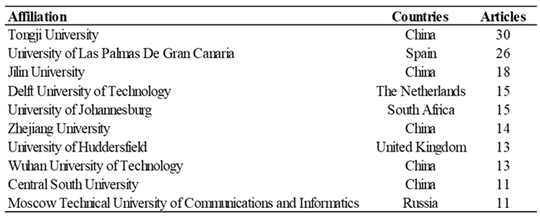
Table 3 shows the universities and/or institutions with the highest number of publications within this area of study. The most important was Tongji University, located in China, which has published 30 documents in this period. The second most important is the University of Las Palmas De Gran Canaria, located in Spain, confirming that the most important authors come from this region as mentioned above. Although the table shows that most of the institutions are from China, European countries such as the Netherlands, the United Kingdom and Russia stand out.
Table 5.
Universities and/or institutions with the highest number of publications.
3.2.8. Most Relevant Topics
Within this field of study, there are topics that have been worked on and that have reflected great relevance in research over the years, as shown in Figure 13. In this, it can be observed that the most important topics are Intelligent Systems, Traffic Control, Intelligent Road Systems for Vehicles, Artificial Intelligence, Transportation and Decision Support Systems, the latter could be developed hand in hand with the predictive and real-time models described above. On the other hand, the specialized topics within this field of study are Traffic and Transportation and Human.
3.2.9. Co-Occurrence of Keywords
The co-occurrence of the keywords within the 1,121 documents found with research in this area of study are in Figure 14 and Figure 15, in which it can be observed that the words with the highest repetition within these are Artificial Intelligence, Intelligent Systems, Intelligent Transportation, Intelligent Transportation Systems, Decision Making, Decision Support Systems, Traffic Control and Traffic Congestion, agreeing with Figure 17 in terms of the most important topics.
4. Discussion
In the time period covered by the bibliometry was from 1987 to 2024, in the analysis, it could be observed that the field of study began to be researched more widely since the 2010s, in previous years, there were very few articles and research published, this may be due to the lack of development in the application, creation and research on Artificial Intelligence and its branches, in addition to its applicability in the infrastructure of cities, as this is such an innovative topic within its field of study, few saw the potential of this same in traffic management systems.
Although the topic and field of study is relatively new, many models and systems have been created, as can be seen in the relevant keywords and topics, where there are many different types of research, and they are applied in different ways in the case studies.
On the other hand, based on the analysis and results obtained in this work, it has been observed how organizations and institutions have been using learning models and massive data collection for research and planning of routes, transportation systems and service optimization. As indicated by Lavalle et al., (2020), smart cities can and are making use of these technologies to improve their traffic management, a phenomenon that shows a continuous upward trajectory, as demonstrated by the examination of Figure 7. entitled “Annual Scientific Production”.
It can be said that there has been a wide implementation of Artificial Intelligence within traffic management systems, however, not in the Ibero-American zone, as can be observed in the analysis of the results, that the majority of scientific production is in the countries of the United States, India and China, although Spain appears within bibliometrics as an emerging country in this type of research, it does not have sufficient research strength unlike the previously mentioned countries.
In this framework, Spain, being an Ibero-American country, it can be said that the European zone of Ibero-America is beginning to have participation within the development of Artificial Intelligence and Intelligent Systems within traffic, also, Portugal and Brazil, as can be seen in Figure 6, are linked in the neural network with Spain, demonstrating that these countries have worked together in research and documents in the field of study, of course, with much less research than the areas with greater participation.
However, it should be noted that the Latin American zone has had low levels of scientific production over the years since the field of study was first raised in 1987. The countries in this zone that have developed this type of research, in order of importance, are Brazil, Mexico, Ecuador, Colombia, Chile, Venezuela and Cuba, with 43, 30, 11, 8, 4 and 1, the last two countries respectively. Of the 19 countries that make up the Ibero-American zone on the American side, only 7 have developed research in this field, lagging far behind the other countries.
However, it is not due to a lack of progress in science, technology or scientific talent, but rather to a lack of political will to invest in this sector, that the leaders of the region have not prioritized research and development, which has hindered scientific progress [76].
The results of the bibliometric analysis also indicate that research and development of the emerging technologies are more concentrated in developed countries (apart from the obvious Chinese leadership) than in developing countries. The results analyzed in Figure 2 “Countries with the greatest scientific production” show this phenomenon and even expose several regions and countries that do not have any study or publication made in their territory. This supports what was mentioned by authors such as Yañez-Pagans [49] regarding the little exploration of the impact in the sector compared to the other groups of countries.
However, although the bibliometric analysis indicates that these countries have low production, in the bibliographic review carried out, 50 articles and research were found that explore and apply these systems and algorithms within the Traffic Systems and Smart Cities produced in this specific area.
The introduction mentioned important topics developed within the research framework of countries such as Spain, Ecuador, Portugal, Brazil, Colombia, Peru, Chile and Mexico. In several of them, case studies were carried out, where the theoretical part was applied to real case studies in cities such as Valencia, Madrid, Bogotá, Loja, Popayán, Lima, Granada, Álava, Nuevo León, Badalona, Mexico City, Alicante and Murcia. In most of these case studies, efficiency was seen in the reduction of traffic congestion and travel time.
Furthermore, in the case of a research carried out in the city of Bogotá, specifically on Avenida Caracas, between streets 45 and 47, its main objective was to reduce travel times by applying a supervised neural network model, the results were that “it was observed that the use of a supervised neural network with a good amount of data and an adequate selection of the inputs that allows a good simulation of the architecture with a low error.” [5].
Instead, the scientific production analyzed in the bibliometry carried out can be observed in the most cited documents, and, therefore, the most important ones developed in this study framework, have a certain similarity with the topics discussed above in the introduction, these topics were extracted from the first 7 most cited articles according to the analysis made by Bibliometrix , which are Big Data, Artificial Intelligence, Intelligent Traffic Management Platforms, Railway Communications and Autonomous Vehicles, in the engineering and computer science part, however, many of these focus on research areas but not on the applied part as mentioned research, these being developed by Abduljabbar [77], Ai [78], Mondejar [79], Nallaperuma [80] and Panagiotopoulos [81]
On the other hand, these documents also touch on topics that are alluded to in different ways in the bibliographic review, such as Ethical Considerations, Political Implications and Social Impact on issues such as climate change and inequality, showing a similar approach to the study of Artificial Intelligence and management in transportation previously mentioned in the introduction, with the authors of the most cited documents being Bonnefon [82] and Cath[83].
In relation to the findings associated with sustainability, The concept of Smart Cities is always evident and has significant relevance for the advancement of urban areas characterized by sustainable practices. Scientific research is present, such as that carried out by Grimaldia [66] that seeks to use sensors located in different parts of a smart city for the timely collection of data. The achievements of this research facilitate the advancement of sustainable practices in urban environments.
In certain studies, such as that of Maldonado [9] it is also discussed how public policies are important for mobility and modernization within urban areas. Likewise, in the previously mentioned case of Bogotá and Avenida Caracas, the need for a strategic plan in the construction of roads to respond to the growing demand of people within this Colombian city was also indicated.
Thanks to the above, it is necessary to mention that both the main documents within the bibliometric analysis and the documents analyzed within the bibliographic review have similarities within their study approaches, however, most of the articles developed within the Ibero-American zone focus on the application of their models and systems within cities and how these could help within Traffic Management, on the other hand, the most important research developed by their number of citations focus more on the theoretical, environmental and political part.
Finally, and continuing with the response to the specific objectives within the research, the models and systems developed by the Ibero-American zone, previously mentioned in the introduction, will be briefly discussed in more detail, in addition to specifying their limitations in Table 6.
In the present research, the analysis of the current state of the implementation of Traffic Management Systems based on Artificial Intelligence in Latin America and the evolution of trends, trajectories and perspectives related to Big Data and the Internet of Things in the context of urban transport was carried out, therefore, a bibliographic review was carried out in the introduction and a bibliometric analysis, consisting of the bibliographic review in the analysis and collection of research documents on a specific topic, creating a more complete and objective vision in the research.
In the bibliometric analysis it was observed that Latin America does not have a high relevance within the field of study compared to other countries previously mentioned. Although Spain, Brazil and Portugal appear in the analysis, their studies are not significant enough.
However, in the bibliographic review it was observed that there are countries with research development within the study area, the main contributors being Spain, Ecuador, Portugal, Brazil, Colombia, Peru, Chile and Mexico, although it is true that it agrees with what was found within the bibliometry, the analysis of the work carried out by these regions demonstrates a high degree of evolution in the development of models and systems using Artificial Intelligence and its branches as seen in Table 4 for the control and mitigation of traffic in cities, the prevention of accidents and the prediction of traffic flows among others.
Regarding the results obtained about Big Data in urban transport, the three main countries with the highest number of publications and citations correspond to the developed world or are economic powers (China, the United States and Italy), while the countries that contribute the least are developing regions. Consequently, the most productive authors belong to the developed world and the research is carried out under this concept, which makes it difficult to adapt these results to the Latin American context, in addition to making evident the disparity and need for support for researchers in the region.
In summary, both analyses carried out demonstrate that Latin America has had research within this area of study with the different models and systems previously described at the beginning of the work, despite this, they have not become relevant within the field of study.
The above is due to the fact that the Ibero-American zone needs greater support from governments for the realization and expansion of scientific production, this with the purpose of carrying out a greater number of investigations within the field, this would also help to have a better structural planning within the roads in the cities with the greatest demand within the Ibero-American zone.
Therefore, it is necessary for the governments of these countries, especially those in Latin America, to begin investing within universities and institutions in aspects such as research professionals, research-oriented students, in addition to the infrastructure necessary to carry out this type of research that requires specialized equipment for programming and modeling the systems and models in development.
In addition, the government could encourage private universities or companies through honorary mentions and financial or infrastructure support to generate greater scope and high performance of research development within the countries, generating not only motivation, but also having high-quality scientific production with greater relevance in the field.
It is recommended to incorporate other databases to broaden the scope of the bibliometric review of the topic, and to analyze how these technologies can be implemented in various global contexts. Emerging trends indicate an increase in the adoption of generative AI, the use of advanced algorithms for big data analysis, and the integration of cyber-physical systems in smart manufacturing. Investment in generative AI, which has seen exponential growth, suggests a future where AI technologies will not only optimize existing processes, but also create new business models and market opportunities. In addition, collaboration between humans and machines will be strengthened, promoting a synergy that improves both operational efficiency and work quality.
Emerging trends indicate an increase in the adoption of generative AI, the use of advanced algorithms for big data analytics, and the integration of cyber-physical systems in smart manufacturing. Investment in generative AI, which has seen exponential growth, suggests a future where AI technologies will not only optimize existing processes but also create new business models and market opportunities. Furthermore, collaboration between humans and machines will be strengthened, promoting a synergy that improves both operational efficiency and the quality of work.
From a policy and legislative perspective, the need to develop consistent regulatory frameworks is critical. Regulations must strike a balance between fostering innovation and protecting people’s rights. It is essential that public policies foster transparency, fairness, and ethics in the implementation of AI, ensuring that technological benefits are distributed fairly and that risks are adequately mitigated.
Author Contributions
For research articles with several authors, a short paragraph specifying their individual contributions must be provided. The following statements should be used “Conceptu-alization, Mercedes Gaitan Angulo and ; methodology, Melva Inés Goméz.; validation, Laura Manuela Rodriguez Baquero1, Juliana Salazar Quiroga, writing—original draft preparation, Mercedes Gaitan Angulo, Melva Inés Goméz, Vladimir Ballesteros Ballesteros, Nelson Orlando Alarcón Villamil All authors have read and agreed to the published version of the manuscript.”
Funding
This research was funded by the Konrad Lorenz University Foundation, Fundación Universitaria Los Libetadores, Gobernación de Cundinamarca
Conflicts of Interest
The authors declare no conflicts of interest.
References
- Salazar-Cabrera, R.; Pachón de la Cruz, Á.; Madrid Molina, J.M. Sustainable Transit Vehicle Tracking Service, Using Intelligent Transportation System Services and Emerging Communication Technologies: A Review. J. Traffic Transp. Eng. 2020, 7, 729–747. [CrossRef]
- Jaramillo-Alcazar, A.; Govea, J.; Villegas-Ch, W. Advances in the Optimization of Vehicular Traffic in Smart Cities: Integration of Blockchain and Computer Vision for Sustainable Mobility. Sustainability 2023, 15, 15736. [CrossRef]
- Rocha Filho, G.P.; Meneguette, R.I.; Torres Neto, J.R.; Valejo, A.; Weigang, L.; Ueyama, J.; Pessin, G.; Villas, L.A. Enhancing Intelligence in Traffic Management Systems to Aid in Vehicle Traffic Congestion Problems in Smart Cities. Ad Hoc Netw. 2020, 107, 1–10. [CrossRef]
- Garcia-Retuerta, D.; Chamoso, P.; Hernández, G.; Guzmán, A.S.R.; Yigitcanlar, T.; Corchado, J.M. An Efficient Management Platform for Developing Smart Cities: Solution for Real-Time and Future Crowd Detection. Electronics 2021, 10, 2–15. [CrossRef]
- Gonzalez, R.A.; Ferro, R.E.; Liberona, D. Government and Governance in Intelligent Cities, Smart Transportation Study Case in Bogotá Colombia. Ain Shams Eng. J. 2020, 11, 25–34. [CrossRef]
- Guillen- Perez, A.; Cano, M. Intelligent IoT Systems for Traffic Management: A Practical Application. IET Intell. Transp. Syst. 2021, 15, 273–285. [CrossRef]
- Paiva, S.; Ahad, M.A.; Tripathi, G.; Feroz, N.; Casalino, G. Enabling Technologies for Urban Smart Mobility: Recent Trends, Opportunities and Challenges. Sensors 2021, 21, 1–41. [CrossRef]
- Ketter, W.; Schroer, K.; Valogianni, K. Information Systems Research for Smart Sustainable Mobility: A Framework and Call for Action. Inf. Syst. Res. 2023, 34, 1045–1065. [CrossRef]
- Maldonado Silveira Alonso Munhoz, P.A.; da Costa Dias, F.; Kowal Chinelli, C.; Azevedo Guedes, A.L.; Neves dos Santos, J.A.; da Silveira e Silva, W.; Pereira Soares, C.A. Smart Mobility: The Main Drivers for Increasing the Intelligence of Urban Mobility. Sustainability 2020, 12, 1–25. [CrossRef]
- Grover, P.; Kar, A.K. Big Data Analytics: A Review on Theoretical Contributions and Tools Used in Literature. Glob. J. Flex. Syst. Manag. 2017, 18, 203–229. [CrossRef]
- Lavalle, A.; Teruel, M.A.; Maté, A.; Trujillo, J. Improving Sustainability of Smart Cities through Visualization Techniques for Big Data from IoT Devices. Sustainability 2020, 12, 1–17. [CrossRef]
- Oliveira, F.; Nery, D.; Costa, D.G.; Silva, I.; Lima, L. A Survey of Technologies and Recent Developments for Sustainable Smart Cycling. Sustainability 2021, 13, 1–28. [CrossRef]
- Čolaković, A.; Memić, B.; Karahodža, B.; Goran, N. Improvement of Urban Mobility Supported with IoT Technologies.; National and University Library Of Bosnia and Herzegovina: Sarajevo, May 26 2024; pp. 99–105.
- Zou, L.; Wang, Z.; Guo, R. Real-Time Prediction of Transit Origin–Destination Flows during Underground Incidents. Transp. Res. Part C Emerg. Technol. 2024, 163, 1–24. [CrossRef]
- Del Valle, M.; La Rosa, X.; Silvera, M.; Campos, F.; Silvera, M.; Palacios-Alonso, D. Vehicular Conflict Assessment on a Road with Lane Reduction Using the SSAM Methodology.; Buenos Aires, July 19 2023; pp. 2–6.
- Díaz-Casco, M.A.; Carvajal-Gámez, B.E.; Gutiérrez-Frías, O.; Osorio-Zúñiga, F.S. Comprehensive—Model Based on Time Series for the Generation of Traffic Knowledge for Bus Transit Rapid Line 6 of México City. Electronics 2022, 11, 1–28. [CrossRef]
- Gomes, B.; Coelho, J.; Aidos, H. A Survey on Traffic Flow Prediction and Classification. Intell. Syst. Appl. 2023, 20, 1–13. [CrossRef]
- Jyothi, E.V.N.; Srinivasa Rao, G.; Sharada, M.; Anusha, C.; Macherla, H.; Bhavsingh, M.; Addepalli, L. A Graph Neural Network-Based Traffic Flow Prediction System with Enhanced Accuracy and Urban Efficiency. J. Electr. Syst. 2023, 19, 336–349. [CrossRef]
- Medina-Salgado, B.; Sánchez-DelaCruz, E.; Pozos-Parra, P.; Sierra, J.E. Urban Traffic Flow Prediction Techniques: A Review. Sustain. Comput. Inform. Syst. 2022, 35, 1–16. [CrossRef]
- Mena-Oreja, J.; Gozalvez, J. On the Impact of Floating Car Data and Data Fusion on the Prediction of the Traffic Density, Flow and Speed Using an Error Recurrent Convolutional Neural Network. IEEE Access 2021, 9, 133710–133724. [CrossRef]
- Navarro-Espinoza, A.; López-Bonilla, O.R.; García-Guerrero, E.E.; Tlelo-Cuautle, E.; López-Mancilla, D.; Hernández-Mejía, C.; Inzunza-González, E. Traffic Flow Prediction for Smart Traffic Lights Using Machine Learning Algorithms. Technologies 2022, 10, 1–11. [CrossRef]
- Zeynivand, A.; Javadpour, A.; Bolouki, S.; Sangaiah, A.K.; Ja’fari, F.; Pinto, P.; Zhang, W. Traffic Flow Control Using Multi-Agent Reinforcement Learning. J. Netw. Comput. Appl. 2022, 207, 1–12. [CrossRef]
- Zißner, P.; Rettore, P.H.L.; Santos, B.P.; Loevenich, J.F.; Lopes, R.R.F. DataFITS: A Heterogeneous Data Fusion Framework for Traffic and Incident Prediction. IEEE Trans. Intell. Transp. Syst. 2023, 24, 11466–11478. [CrossRef]
- Samaniego-Calle, V.; Viñán-Ludeña, M.S.; Jaramillo Sangurima, W.E.; Jácome Galarza, L.; Sinche-Freire, J. Smart Traffic Lights and Vehicular Traffic: A Comparative Case Study to Reduce Traffic Jams and Polluting Emissions. RISTI - Rev. Iber. Sist. E Tecnol. Inf. 2019, 403–414.
- Noaeen, M.; Naik, A.; Goodman, L.; Crebo, J.; Abrar, T.; Abad, Z.S.H.; Bazzan, A.L.C.; Far, B. Reinforcement Learning in Urban Network Traffic Signal Control: A Systematic Literature Review. Expert Syst. Appl. 2022, 199, 1–32. [CrossRef]
- Pérez-Acebo, H.; Otxoa-Muñoz, X.; Marquina-Llaguno, M.; Gonzalo-Orden, H. Evaluation of the Efficiency of Traffic Lights Turning Red in Case of Exceeding Speed Limit with Previous Panels Indicating the Speed. Transp. Res. Procedia 2021, 58, 45–52. [CrossRef]
- Chevance, G.; Nieuwenhuijsen, M.; Braga, K.; Clifton, K.; Hoadley, S.; Kaack, L.H.; Kaiser, S.K.; Lampkowski, M.; Lupu, I.; Radics, M.; et al. Data Gaps in Transport Behavior Are Bottleneck for Tracking Progress towards Healthy Sustainable Transport in European Cities. Environ. Res. Lett. 2024, 19, 1–5. [CrossRef]
- Attard, M.; Guzman, L.A.; Oviedo, D. Urban Space Distribution: The Case for a More Equitable Mobility System. Case Stud. Transp. Policy 2023, 14, 1–11. [CrossRef]
- Neves, F.; Finamore, A.C.; Henriques, R. Efficient Discovery of Emerging Patternsin Heterogeneous Spatiotemporal Data from Mobile Sensors.; Association for Computing Machinery: Darmstadt Alemania, December 7 2020; pp. 158–167.
- Nosratabadi, S.; Mosavi, A.; Keivani, R.; Ardabili, S.; Aram, F. State of the Art Survey of Deep Learning and Machine Learning Models for Smart Cities and Urban Sustainability. In Proceedings of the Engineering for Sustainable Future; Várkonyi-Kóczy, A.R., Ed.; Springer International Publishing: Cham, 2020; pp. 228–238.
- Yang, Z.; Xie, Z.; Hou, Z.; Ji, C.; Deng, Z.; Li, R.; Wu, X.; Zhao, L.; Ni, S. A Method of User Travel Mode Recognition Based on Convolutional Neural Network and Cell Phone Signaling Data. Electronics 2023, 12, 1–19. [CrossRef]
- Credit, K.; Arnao, Z. A Method to Derive Small Area Estimates of Linked Commuting Trips by Mode from Open Source LODES and ACS Data. Environ. Plan. B Urban Anal. City Sci. 2023, 50, 709–722. [CrossRef]
- Hadavi, S.; Rai, H.B.; Verlinde, S.; Huang, H.; Macharis, C.; Guns, T. Analyzing Passenger and Freight Vehicle Movements from Automatic-Number Plate Recognition Camera Data. Eur. Transp. Res. Rev. 2020, 12, 37. [CrossRef]
- Xia, D.; Ma, J.; Sharif Azadeh, Sh. Integrated Timetabling and Vehicle Scheduling of an Intermodal Urban Transit Network: A Distributionally Robust Optimization Approach. Transp. Res. Part C Emerg. Technol. 2024, 162, 104610. [CrossRef]
- Šoštarić, M.; Vidović, K.; Jakovljević, M.; Lale, O. Data-Driven Methodology for Sustainable Urban Mobility Assessment and Improvement. Sustainability 2021, 13, 1–22. [CrossRef]
- Angel, A.; Cohen, A.; Nelson, T.; Plaut, P. Evaluating the Relationship between Walking and Street Characteristics Based on Big Data and Machine Learning Analysis. Cities 2024, 151, 1–13. [CrossRef]
- Baheti, P. The Beginner’s Guide to Deep Reinforcement Learning [2024] Available online: https://www.v7labs.com/blog/deep-reinforcement-learning-guide (accessed on 20 December 2024).
- Borges, F. de S.P.; Fonseca, A.P.; Garcia, R.C. Deep Reinforcement Learning Model to Mitigate Congestion in Real-Time Traffic Light Networks. Infrastructures 2021, 6, 1–22. [CrossRef]
- Schatzinger, S.; Lim, C.Y.R. Taxi of the Future: Big Data Analysis as a Framework for Future Urban Fleets in Smart Cities. In Smart and Sustainable Planning for Cities and Regions: Results of SSPCR 2015; Bisello, A., Vettorato, D., Stephens, R., Elisei, P., Eds.; Springer International Publishing: Cham, 2017; pp. 83–98 ISBN 978-3-319-44899-2.
- Pamuła, T.; Pamuła, W. Estimation of the Energy Consumption of Battery Electric Buses for Public Transport Networks Using Real-World Data and Deep Learning. Energies 2020, 13, 1–17. [CrossRef]
- Gkioka, G.; Dominguez, M.; Tympakianaki, A.; Mentzas, G. AI-Driven Real-Time Incident Detection for Intelligent Transportation Systems. In Emerging Cutting-Edge Developments in Intelligent Traffic and Transportation Systems; IOS Press, 2024; pp. 56–68.
- Sancha Llamosí, R.; Coll Aliaga, E.; Porres De La Haza, M.J.; Lerma Arce, V.; Lorenzo-Sáez, E. Analysis of Decarbonization Potential in Mobility Sector with High Spatial Resolution: Study Case of the Metropolitan Area of Valencia (Spain). Appl. Sci. 2024, 14, 1–14. [CrossRef]
- Marina, H.; Soto, I.; Valerio, J.; Zamorano-Illanes, R.; Toledo-Mercado, E.; Wang, R. Automatic Traffic Light Detection Using AI for VLC. In Proceedings of the 2022 13th International Symposium on Communication Systems, Networks and Digital Signal Processing (CSNDSP); July 2022; pp. 446–451.
- Ribeiro, D.A.; Melgarejo, D.C.; Saadi, M.; Rosa, R.L.; Rodríguez, D.Z. A Novel Deep Deterministic Policy Gradient Model Applied to Intelligent Transportation System Security Problems in 5G and 6G Network Scenarios. Phys. Commun. 2023, 56, 101938. [CrossRef]
- Gomides, T.S.; De Grande, R.E.; Meneguette, R.I.; Souza, F.S.H. de; Guidoni, D.L. Predictive Congestion Control Based on Collaborative Information Sharing for Vehicular Ad Hoc Networks. Comput. Netw. 2022, 211, 108955. [CrossRef]
- Tomás, V.R.; García, L.A.; Alonso, A.L. An Agent-Based Platform to Evaluate V2X Routing Road Traffic Scenarios. Simul. Model. Pract. Theory 2023, 125, 102750. [CrossRef]
- Gallego-Madrid, J.; Sanchez-Iborra, R.; Ruiz, P.M.; Skarmeta, A.F. Machine Learning-Based Zero-Touch Network and Service Management: A Survey. Digit. Commun. Netw. 2022, 8, 105–123. [CrossRef]
- Zannat, K.E.; Laudan, J.; Choudhury, C.F.; Hess, S. Developing an Agent-Based Microsimulation for Predicting the Bus Rapid Transit (BRT) Demand in Developing Countries: A Case Study of Dhaka, Bangladesh. Transp. Policy 2024, 148, 92–106. [CrossRef]
- Yañez-Pagans, P.; Martinez, D.; Mitnik, O.A.; Scholl, L.; Vazquez, A. Urban Transport Systems in Latin America and the Caribbean: Lessons and Challenges. Lat. Am. Econ. Rev. 2019, 28, 15. [CrossRef]
- Vásquez-Garaya, J.P.; Munayco-Apolaya, E.; Ugarte, W. Carsharing System for Urban Transport in Lima Using Internet of Things.; December 20 2024; pp. 324–331.
- Nassar, V.; Vieira, M.L.H. O compartilhamento de informações no transporte público com as tecnologias RFID e NFC: uma proposta de aplicação. Urbe Rev. Bras. Gest. Urbana 2017, 9, 327–340. [CrossRef]
- Valencia, V.; Olaya, Y.; Arango-Aramburo, S. Is Switching Propulsion Technologies the Path to Sustainable Land Transport? Decarbonizing Bogotá. Transp. Res. Part Transp. Environ. 2023, 122, 1–14. [CrossRef]
- Calan, C.; Sobrino, N.; Vassallo, J.M. Understanding Life-Cycle Greenhouse-Gas Emissions of Shared Electric Micro-Mobility: A Systematic Review. Sustainability 2024, 16, 1–22. [CrossRef]
- Giret, A. Smart and Sustainable Urban Logistic Applications Aided by Intelligent Techniques. Serv. Oriented Comput. Appl. 2019, 13, 185–186. [CrossRef]
- Khurshid, A.; Khan, K.; Saleem, S.F.; Cifuentes-Faura, J.; Cantemir Calin, A. Driving towards a Sustainable Future: Transport Sector Innovation, Climate Change and Social Welfare. J. Clean. Prod. 2023, 427, 1–14. [CrossRef]
- Rosero, F.; Fonseca, N.; Mera, Z.; López, J.-M. Assessing On-Road Emissions from Urban Buses in Different Traffic Congestion Scenarios by Integrating Real-World Driving, Traffic, and Emissions Data. Sci. Total Environ. 2023, 863, 1–17. [CrossRef]
- Santos, A.; Maia, P.; Jacob, R.; Wei, H.; Callegari, C.; Oliveira Fiorini, A.C.; Schaeffer, R.; Szklo, A. Road Conditions and Driving Patterns on Fuel Usage: Lessons from an Emerging Economy. Energy 2024, 295, 130979. [CrossRef]
- Martínez-Hernández, J.A.; Gámez-García, D.C.; Saldaña-Márquez, H. Operational LCA of a Street with Active Mobility Strategies in Northern México. Transp. Res. Part Transp. Environ. 2024, 135, 1–21. [CrossRef]
- Ruiz, P.; Aragón-Jurado, J.M.; Seredynski, M.; Cabrera, J.F.; Peña, D.; de la Torre, J.C.; Zomaya, A.Y.; Dorronsoro, B. Optimal Battery Management Strategies for Plug-in Electric Hybrid Buses on Routes Including Green Corridors. Sustain. Cities Soc. 2023, 94, 1–14. [CrossRef]
- Mateichyk, V.; Tsuman, M.; Weigang, G.; Kozodoy, D.; Sansyzbajeva, Z.; Grytsuk, Y. The Information and Analytical System for Monitoring Roadside Pollution by Traffic Flows. In Proceedings of the ICTE in Transportation and Logistics 2019; Ginters, E., Ruiz Estrada, M.A., Piera Eroles, M.A., Eds.; Springer International Publishing: Cham, 2020; pp. 352–359.
- Ali, M.; Kamal, M.D.; Tahir, A.; Atif, S. Fuel Consumption Monitoring through COPERT Model—A Case Study for Urban Sustainability. Sustainability 2021, 13, 1–12. [CrossRef]
- United Nations Population World Population Dashboard Available online: https://www.unfpa.org/en/data/world-population-dashboard (accessed on 20 December 2024).
- Lozzi, G.; Marcucci, E.; Gatta, V.; Rodrigues, M.; Teoh, T. Sustainable and Smart Urban Transport; Policy Department for Structural and Cohesion Policies: European Union, 2020;
- Burkov, A. The Hundred-Page Machine Learning Book; Andriy Burkov: Polen, 2019; ISBN 978-1-9995795-0-0.
- Torre-Bastida, A.I.; Del Ser, J.; Laña, I.; Ilardia, M.; Bilbao, M.N.; Campos-Cordobés, S. Big Data for Transportation and Mobility: Recent Advances, Trends and Challenges. IET Intell. Transp. Syst. 2018, 12, 742–755. [CrossRef]
- Grimaldi, D.; Fernandez, V. Performance of an Internet of Things Project in the Public Sector: The Case of Nice Smart City. J. High Technol. Manag. Res. 2019, 30, 27–39. [CrossRef]
- Gang, L.; Filipe, J.; Zhiwei, X. Communications in Computer and Information Science; Springer Nature, 2024;
- Aria, M.; Cuccurullo, C. Bibliometrix: An R-Tool for Comprehensive Science Mapping Analysis. J. Informetr. 2017, 11, 959–975. [CrossRef]
- Ellegaard, O.; Wallin, J.A. The Bibliometric Analysis of Scholarly Production: How Great Is the Impact? Scientometrics 2015, 105, 1809–1831. [CrossRef]
- Skute, I.; Zalewska-Kurek, K.; Hatak, I.; de Weerd-Nederhof, P. Mapping the Field: A Bibliometric Analysis of the Literature on University–Industry Collaborations. J. Technol. Transf. 2019, 44, 916–947. [CrossRef]
- Cobo, M.J.; López-Herrera, A.G.; Herrera-Viedma, E.; Herrera, F. Science Mapping Software Tools: Review, Analysis, and Cooperative Study among Tools. J. Am. Soc. Inf. Sci. Technol. 2011, 62, 1382–1402. [CrossRef]
- Moral-Muñoz, J.A.; Herrera-Viedma, E.; Santisteban-Espejo, A.; Cobo, M.J. Software Tools for Conducting Bibliometric Analysis in Science: An up-to-Date Review. Prof. Inf. 2020, 29. [CrossRef]
- van Eck, N.J.; Waltman, L. Software Survey: VOSviewer, a Computer Program for Bibliometric Mapping. Scientometrics 2010, 84, 523–538. [CrossRef]
- Arencibia-Jorge, R.; Vega-Almeida, R.L.; Carrillo-Calvet, H. Evolución y alcance multidisciplinar de tres técnicas de análisis bibliométrico. Palabra Clave Plata 2020, 10, 1–16. [CrossRef]
- Galvez, C. Co-word analysis applied to highly cited articles in Library and Information Sciences. Transinformação 2018, 30, 277–286. [CrossRef]
- Ávila, K.I.C.; Iturralde, L.P.; Freire, E.L.M. Evolución de la Investigación Científica en América Latina. Recimundo 2018, 2, 464–476. [CrossRef]
- Abduljabbar, R.; Dia, H.; Liyanage, S.; Bagloee, S.A. Applications of Artificial Intelligence in Transport: An Overview. Sustainability 2019, 11, 1–24. [CrossRef]
- Ai, B.; Molisch, A.F.; Rupp, M.; Zhong, Z.-D. 5G Key Technologies for Smart Railways. Proc. IEEE 2020, 108, 856–893. [CrossRef]
- Mondejar, M.E.; Avtar, R.; Diaz, H.L.B.; Dubey, R.K.; Esteban, J.; Gómez-Morales, A.; Hallam, B.; Mbungu, N.T.; Okolo, C.C.; Prasad, K.A.; et al. Digitalization to Achieve Sustainable Development Goals: Steps towards a Smart Green Planet. Sci. Total Environ. 2021, 794, 148539. [CrossRef]
- Nallaperuma, D.; Nawaratne, R.; Bandaragoda, T.; Adikari, A.; Nguyen, S.; Kempitiya, T.; De Silva, D.; Alahakoon, D.; Pothuhera, D. Online Incremental Machine Learning Platform for Big Data-Driven Smart Traffic Management. IEEE Trans. Intell. Transp. Syst. 2019, 20, 4679–4690. [CrossRef]
- Panagiotopoulos, I.; Dimitrakopoulos, G. An Empirical Investigation on Consumers’ Intentions towards Autonomous Driving. Transp. Res. Part C Emerg. Technol. 2018, 95, 773–784. [CrossRef]
- Bonnefon, J.-F.; Shariff, A.; Rahwan, I. The Social Dilemma of Autonomous Vehicles. Science 2016, 352, 1573–1576. [CrossRef]
- Cath, C.; Wachter, S.; Mittelstadt, B.; Taddeo, M.; Floridi, L. Artificial Intelligence and the ‘Good Society’: The US, EU, and UK Approach. Sci. Eng. Ethics 2018, 24, 505–528. [CrossRef]
Figure 1.
Artificial Intelligence (AI) Timeline Infographic. Marsden (2017).
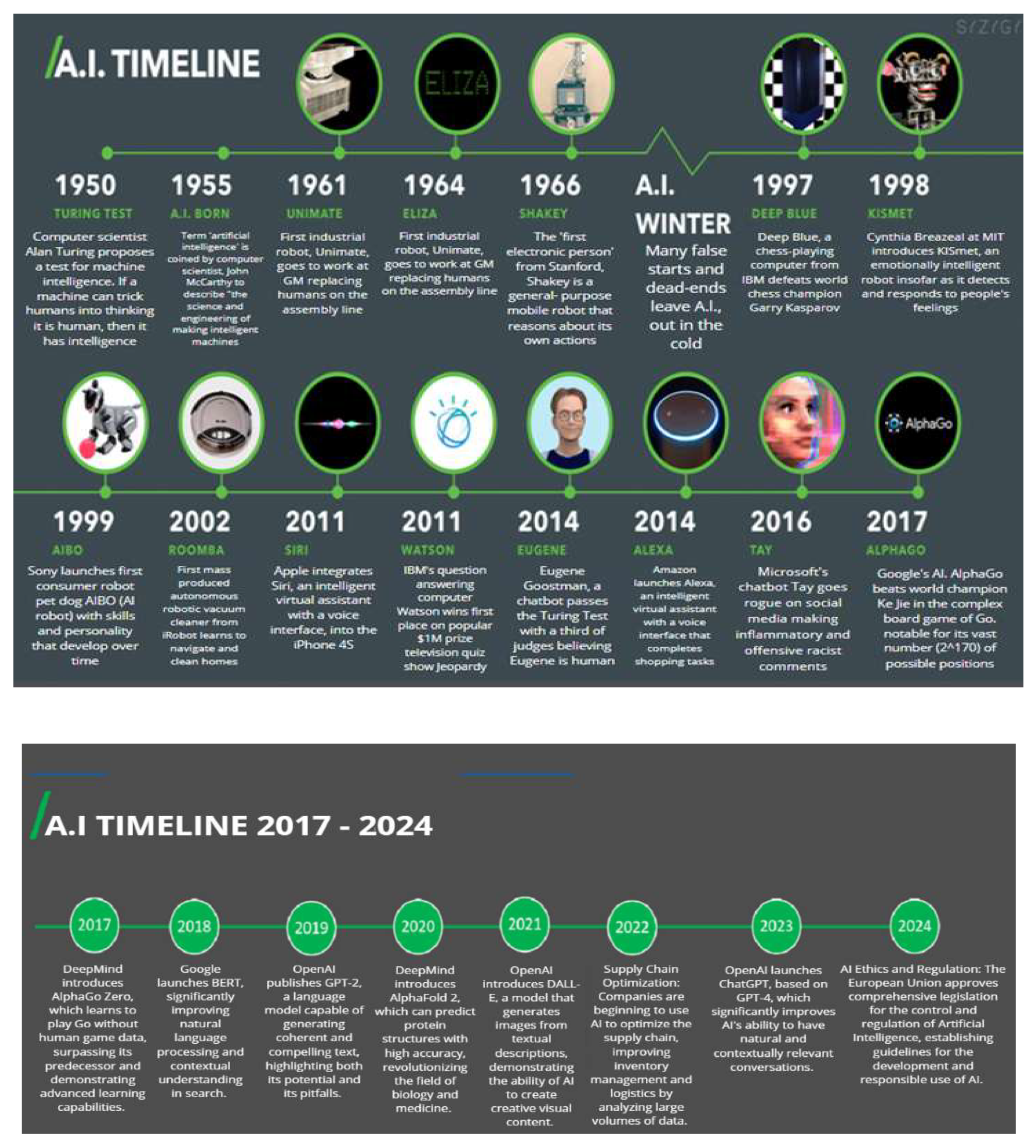
Figure 4.
Flow of methodology used.
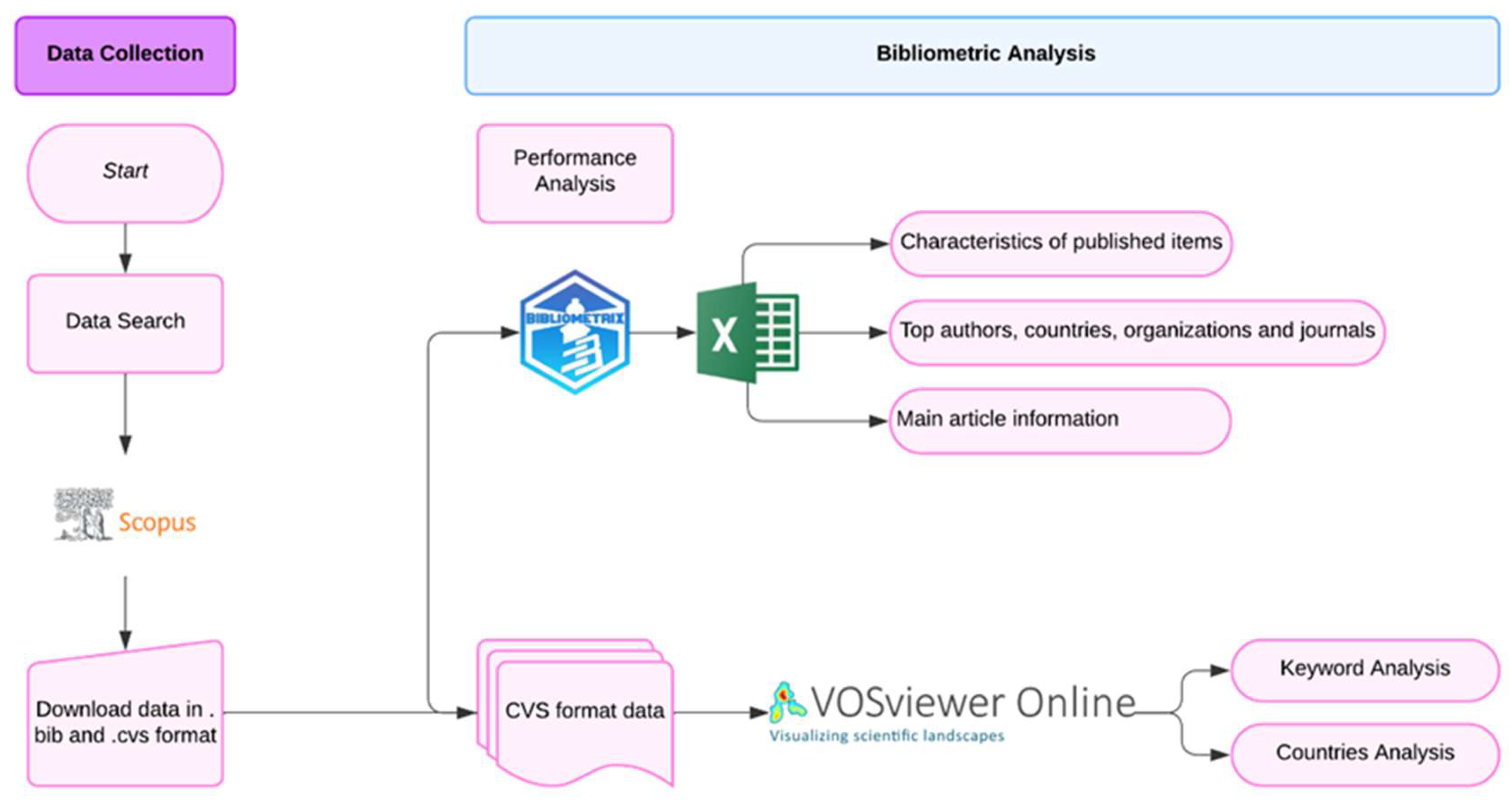
Figure 5.
Iberoamerican countries. Cancilleria(s.f); [67].
Figure 5.
Iberoamerican countries. Cancilleria(s.f); [67].
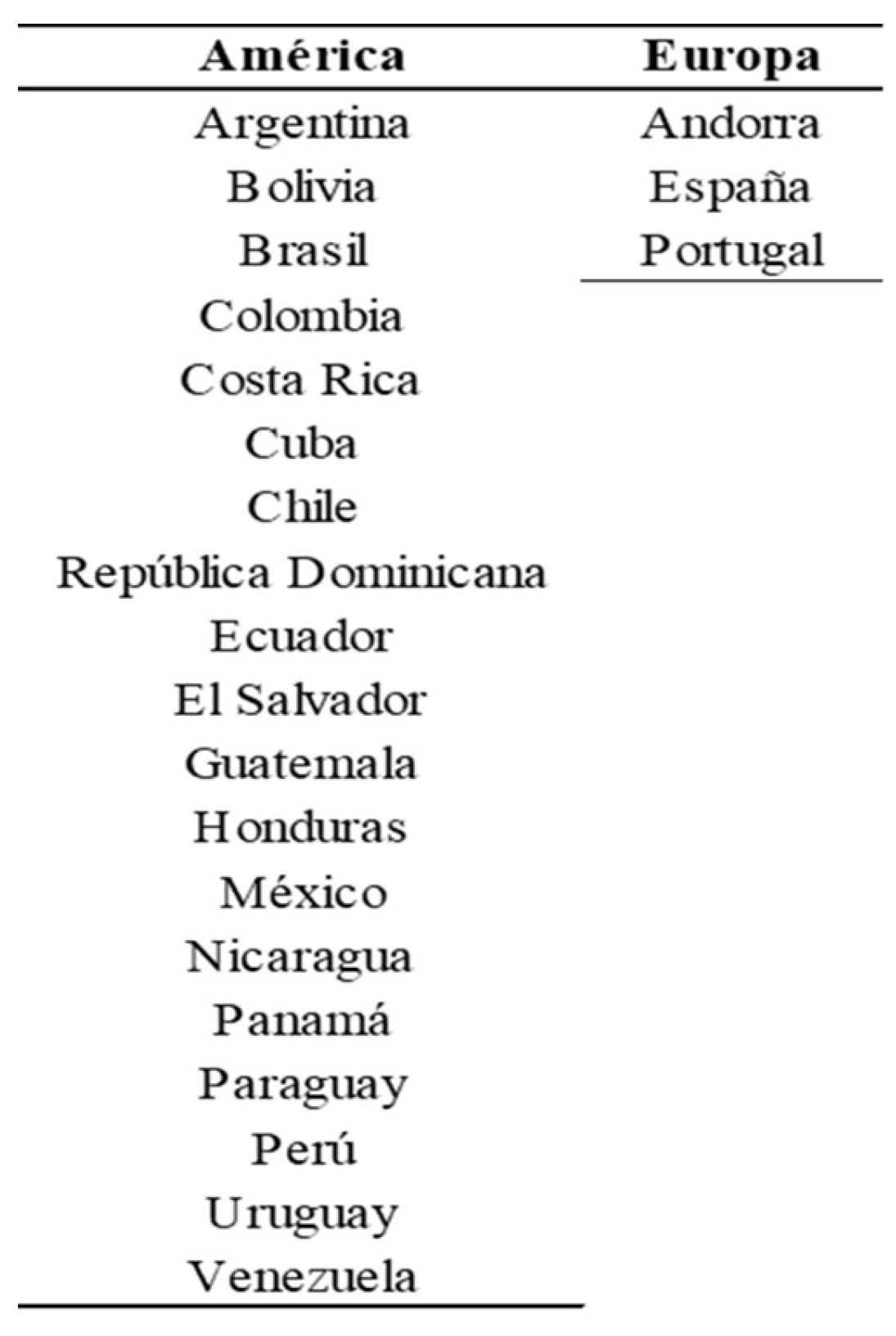
Figure 7.
Annual scientific production.
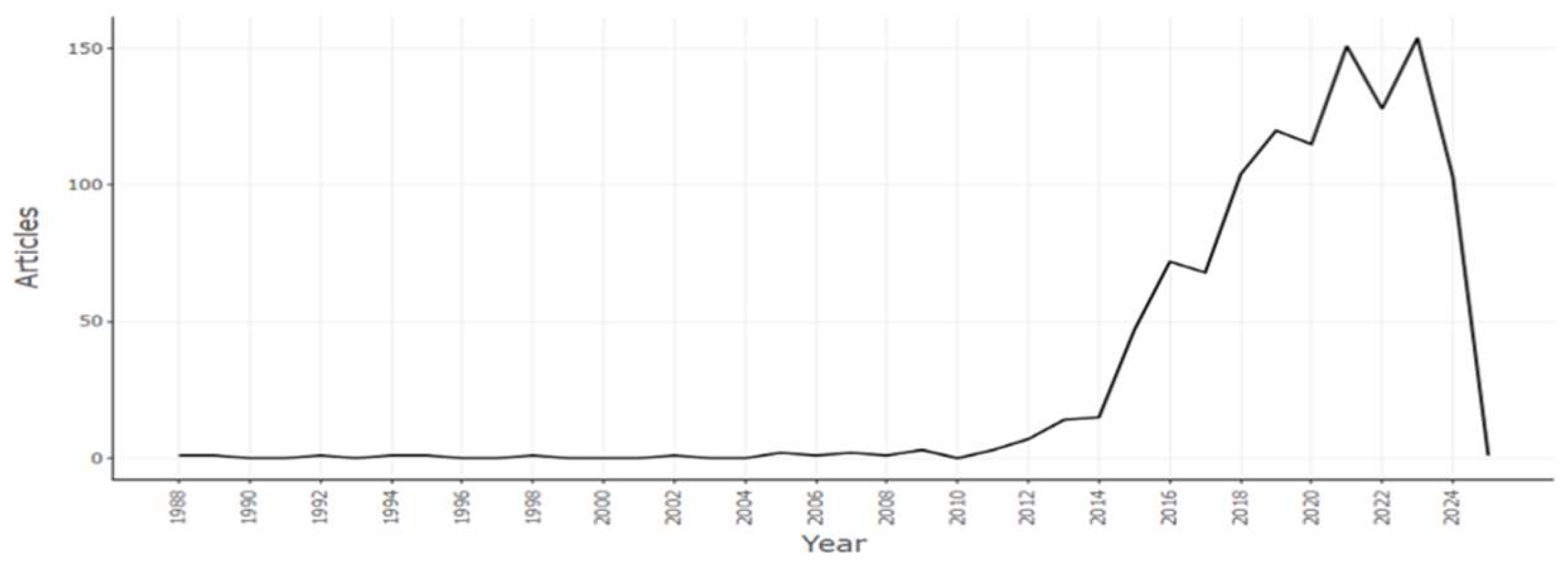
Figure 9.
Keyword Occurrence. The co-occurrence of 1009 keywords (at least 5 times). The size of the words represents the relevance that they had in the articles, determined by the frequency with which they appeared in the documents.
Figure 9.
Keyword Occurrence. The co-occurrence of 1009 keywords (at least 5 times). The size of the words represents the relevance that they had in the articles, determined by the frequency with which they appeared in the documents.
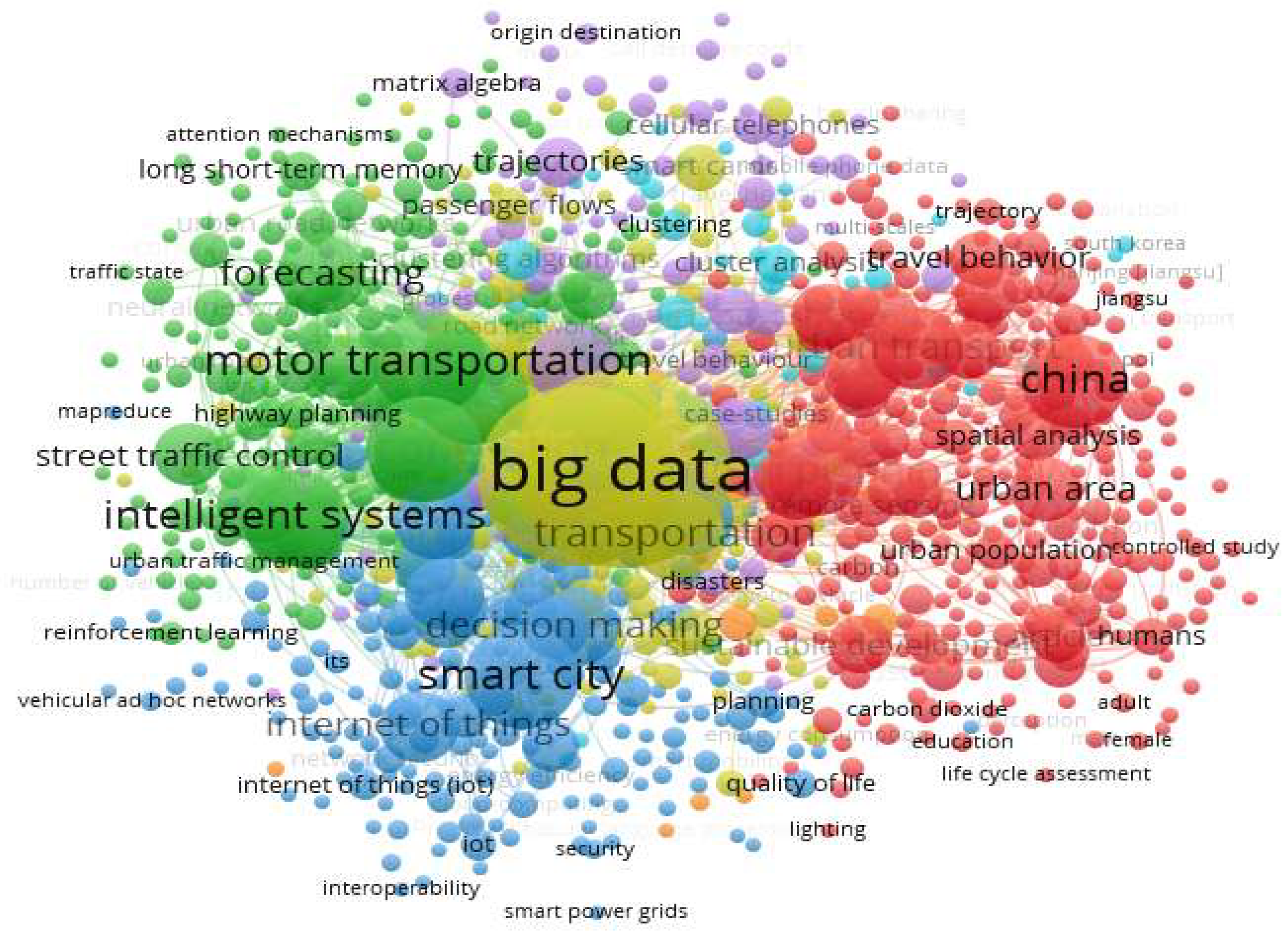
Figure 10.
Annual scientific production from 1987 to 2024.
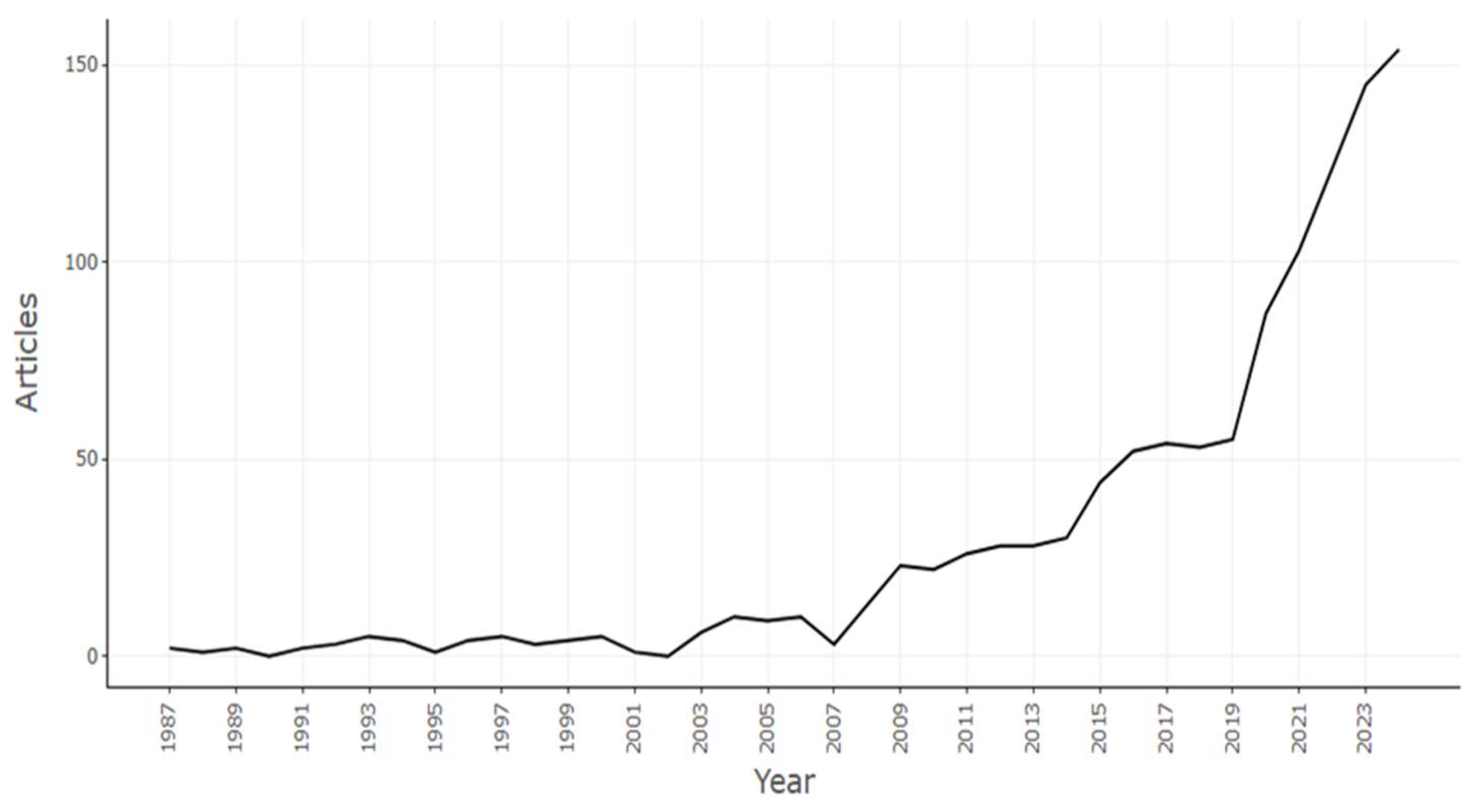
Figure 11.
Main sources of publication between 1987 and 2024.
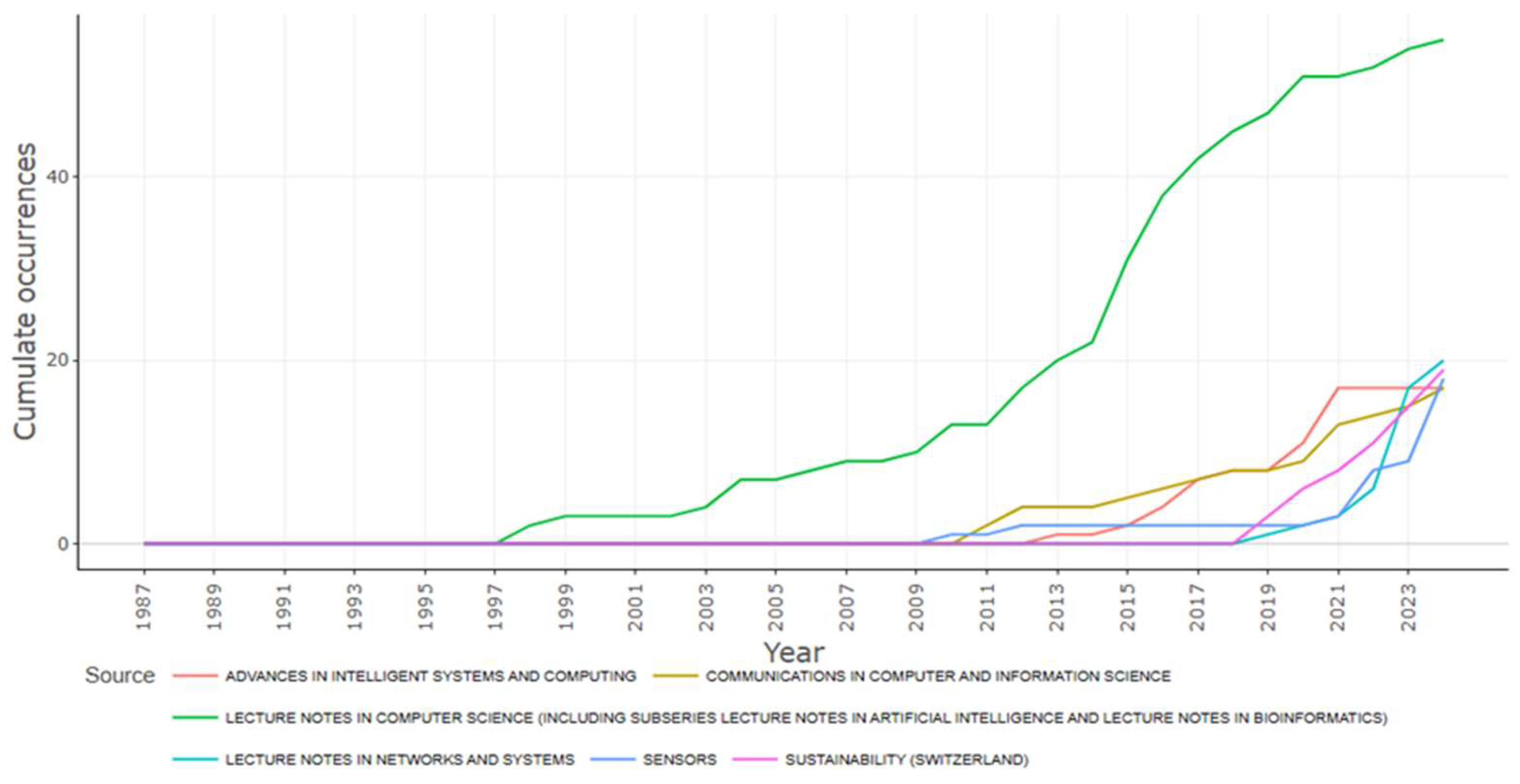
Figure 12.
Countries with the highest number of scientific publications in the years 1987 to 2024. The intensity of the blue color depends on the number of published documents. The more intense the color, the greater the number of publications.
Figure 12.
Countries with the highest number of scientific publications in the years 1987 to 2024. The intensity of the blue color depends on the number of published documents. The more intense the color, the greater the number of publications.
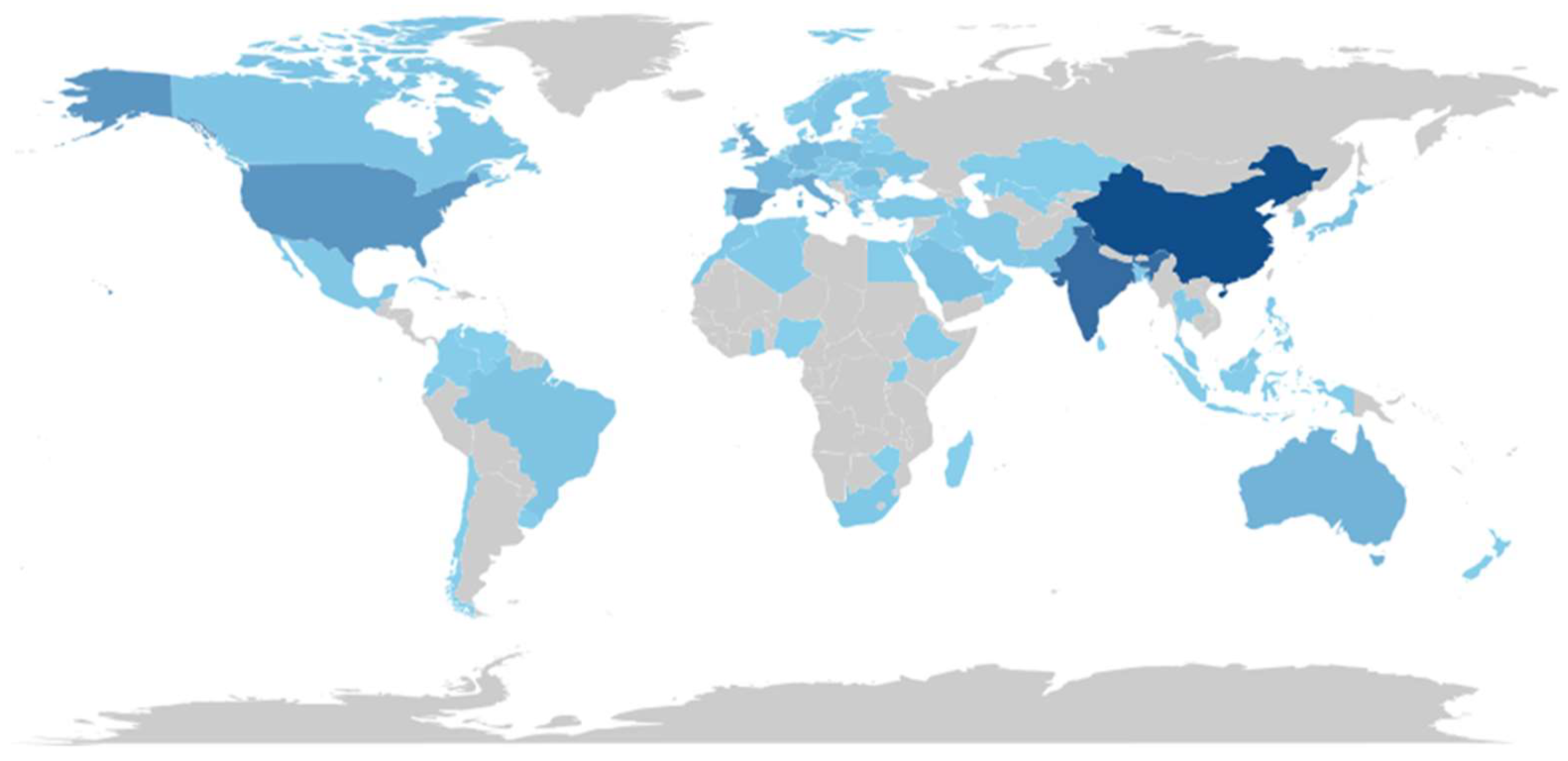
Figure 13.
Main countries to which the authors with the most publications belong. MCP indicates multiple country publication and SCP indicates single country publication.
Figure 13.
Main countries to which the authors with the most publications belong. MCP indicates multiple country publication and SCP indicates single country publication.
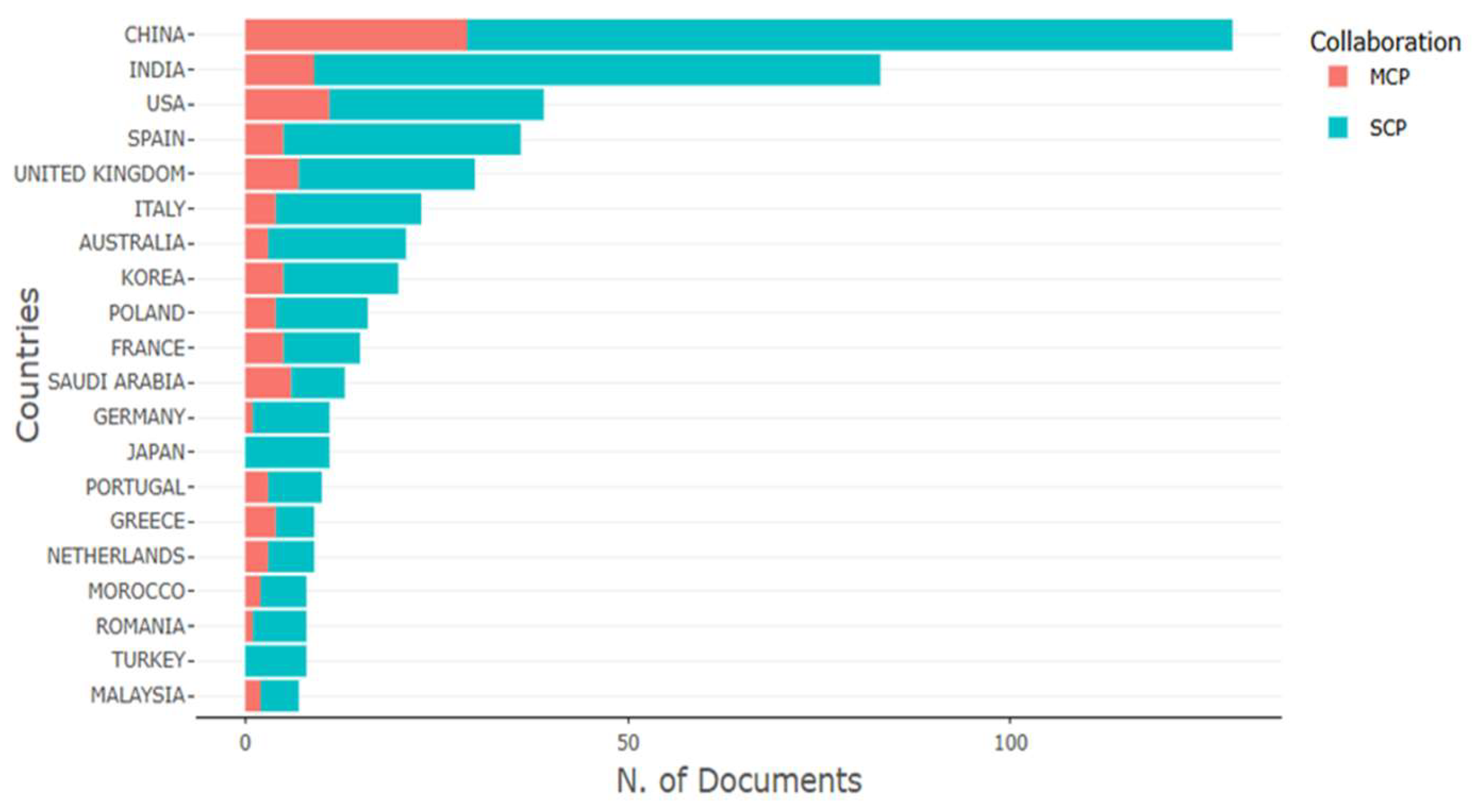
Figure 14.
Main countries with scientific production.
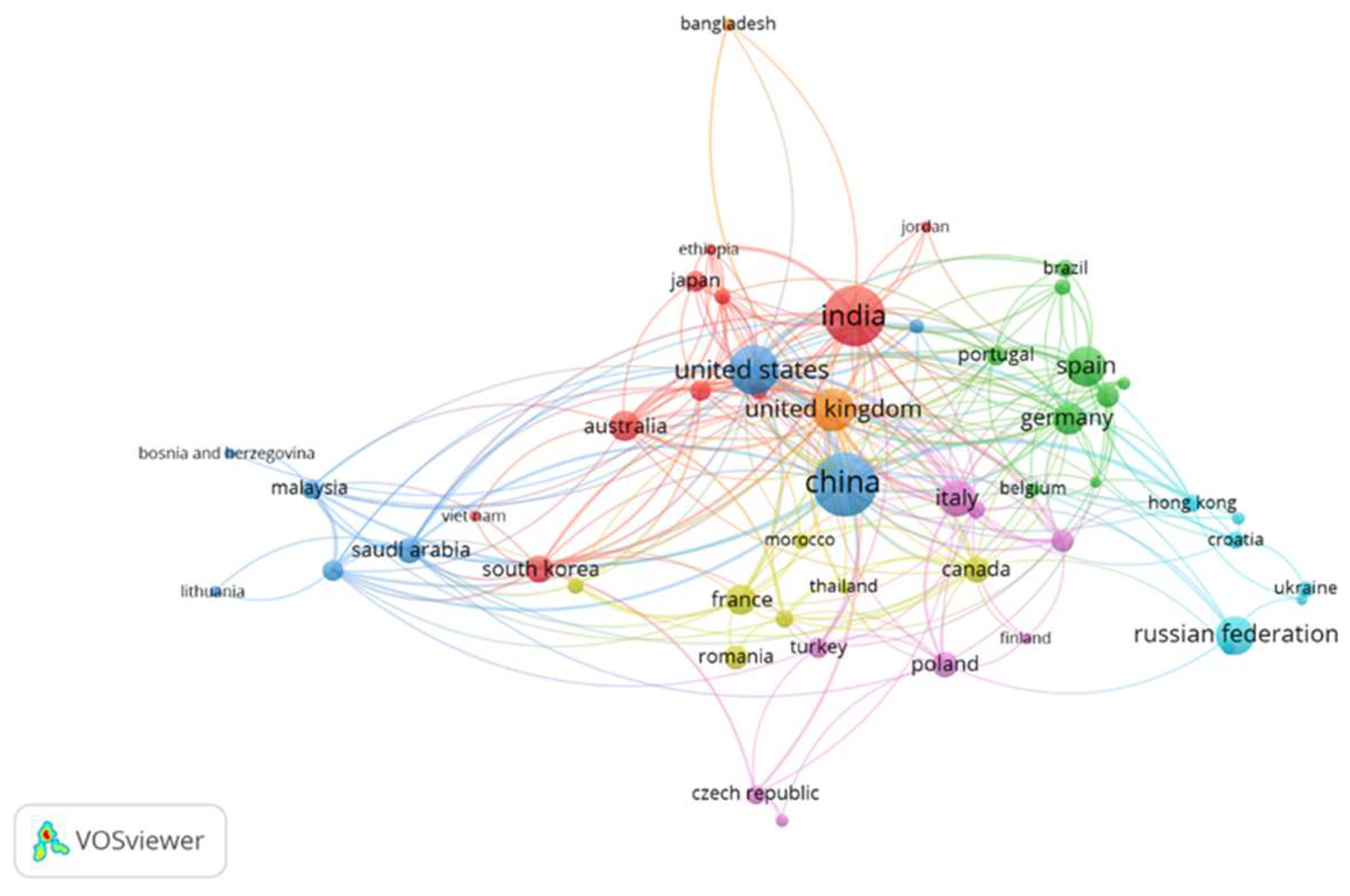
Figure 15.
Authors with the greatest relevance and number of documents published by them.
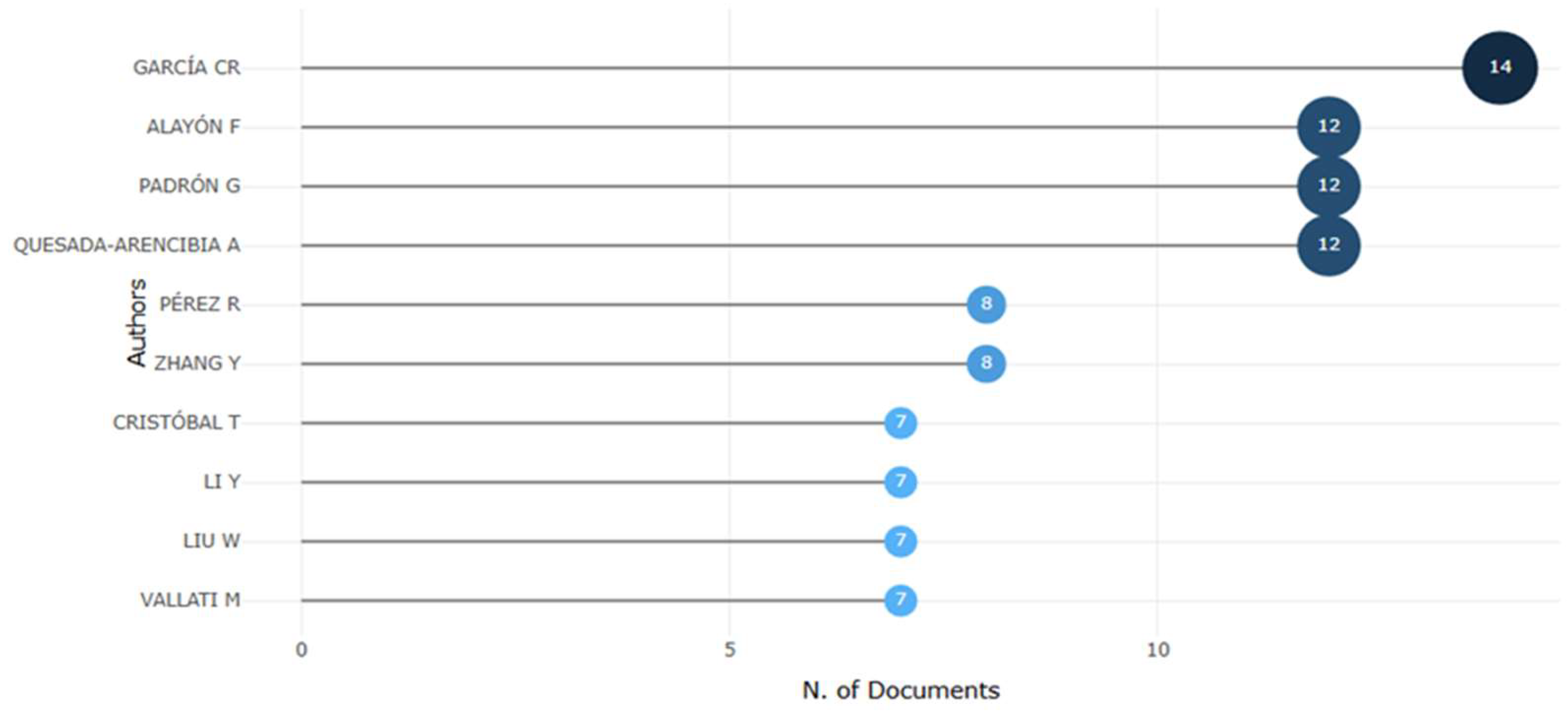
Figure 16.
Thematic map.
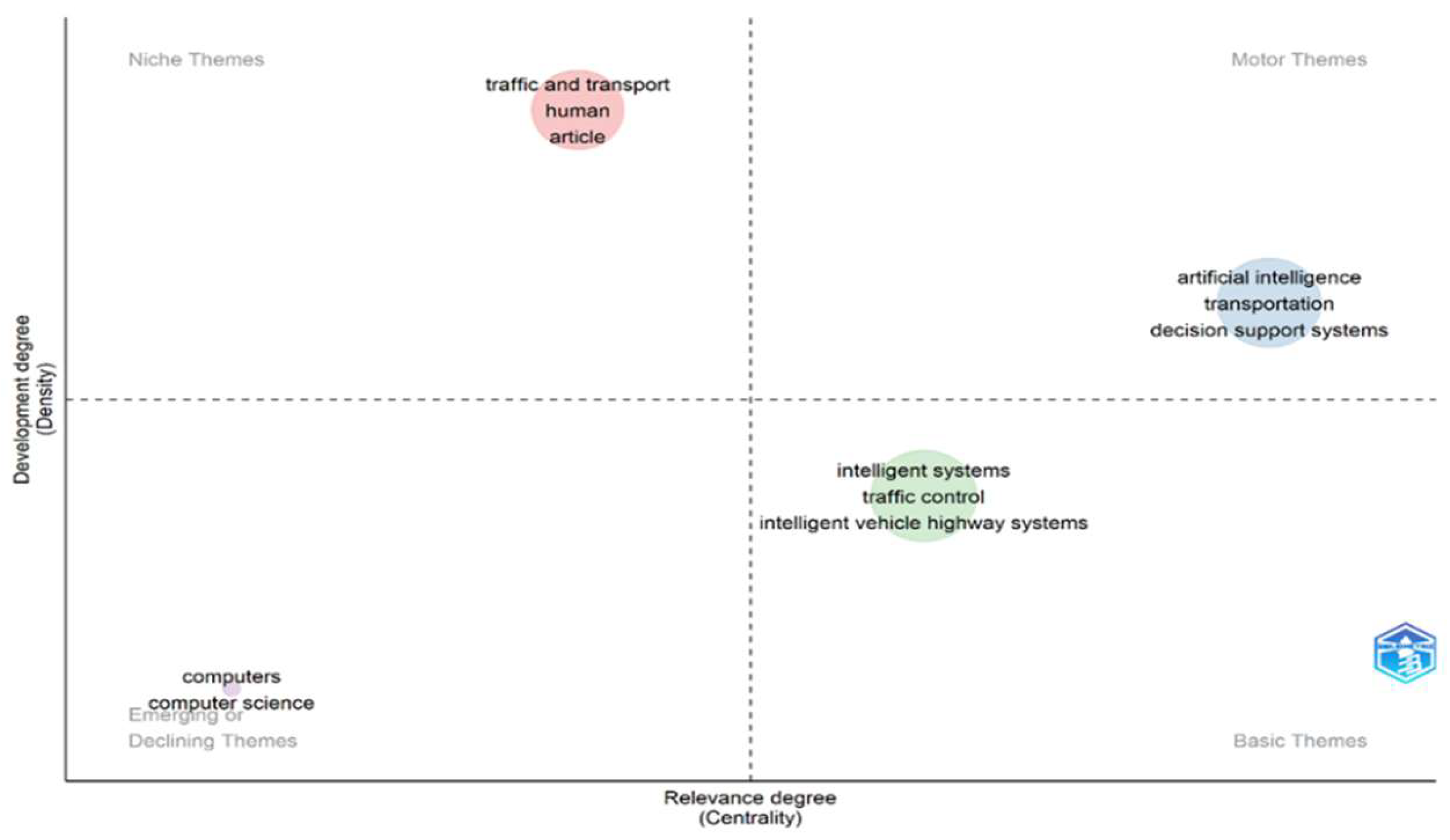
Figure 17.
Co-occurrence of keywords.
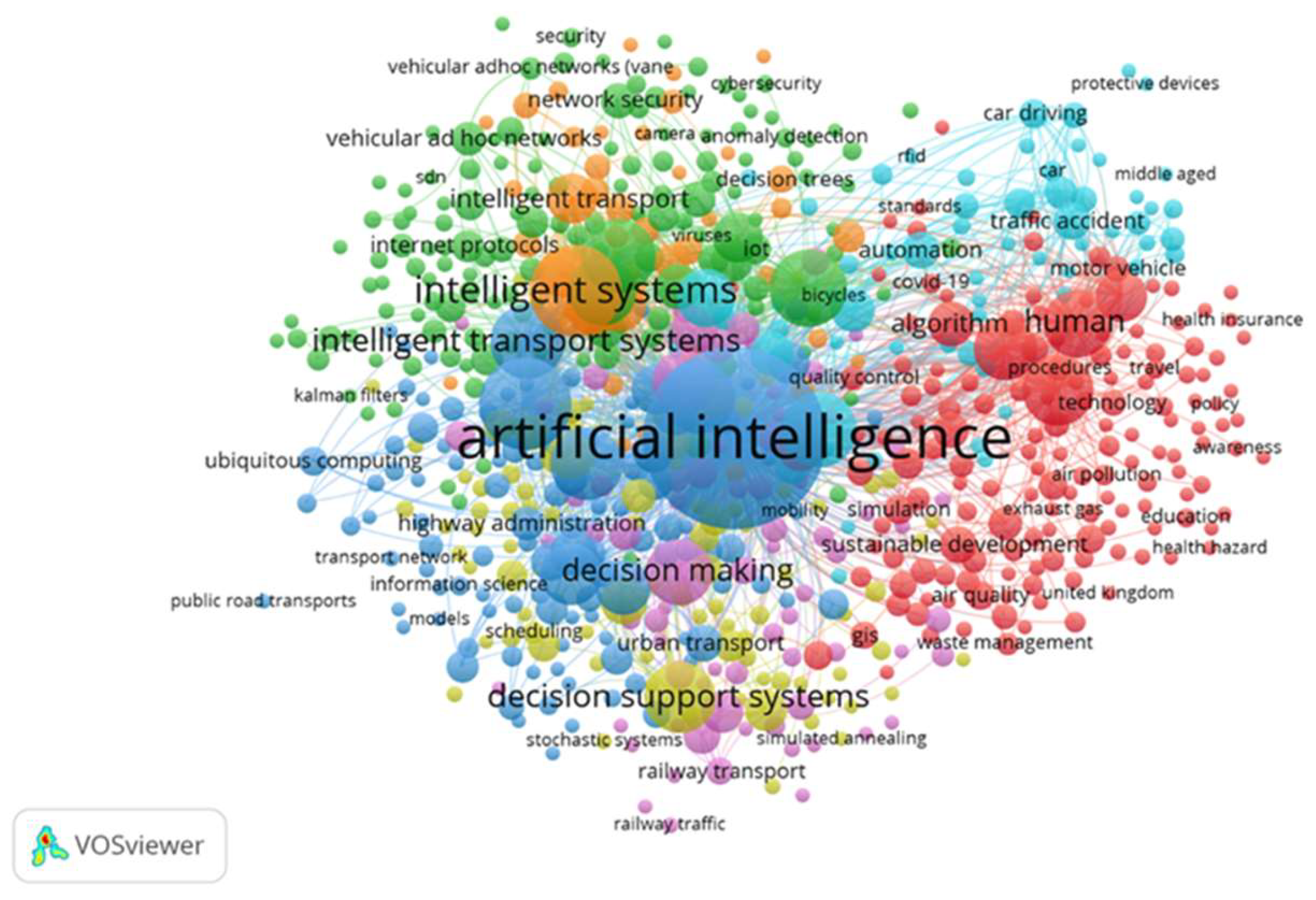
Figure 18.
Word cloud.

Table 2.
Most relevant authors. NP = Total publications and TC = Total citations.
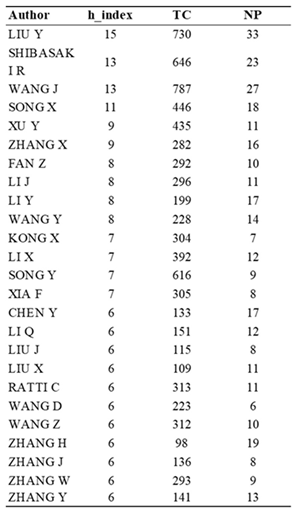 |
Own elaboration through Bibliometrix.
Table 3.
Most cited countries.
| Country | TC | Average Article Citations |
|---|---|---|
| CHINA | 3541 | 16.10 |
| USA | 2657 | 30.20 |
| ITALY | 1071 | 17.00 |
| HONG KONG | 933 | 42.40 |
| AUSTRALIA | 752 | 32.70 |
| UNITED KINGDOM | 622 | 20.70 |
| SPAIN | 597 | 17.60 |
| BELGIUM | 592 | 65.80 |
| KOREA | 503 | 26.50 |
| JAPAN | 492 | 20.50 |
Prepared by the authors using Bibliometrix .
Table 6.
Models and systems developed in the Ibero-American region and their limitations.
| Authors | Models and Systems | Limitations |
|---|---|---|
| De Souza Pereira Borges et al., 2021; Del Valle et al., 2023; Díaz-Casco et al., 2022; Gallego -Madrid et al., 2022; Garcia -Retuerta et al., 2021; Gkioka et al., 2024; Gomes et al., 2023; Gonzalez et al., 2020; Jaramillo - Alcazar et al., 2023; Jyothi et al., 2023; Medina-Salgado et al., 2022; Mena-Oreja & Gozalvez , 2021; Navarro-Espinoza et al., 2022; Zeynivand et al., 2022; Zißner et al., 2023. | Predictive Models (Neural Networks) | For the proper application of these models, it is essential to have high quality data used; if there is incomplete data, there could be inaccurate predictions. Being highly complex models, such as neural networks, they can be difficult to interpret and adjust, limiting their practical use in environments that require rapid decision making. Some models would have difficulty scaling appropriately, due to the volume of data or the complexity of the system where the model is applied. Integration with existing systems and processes can be a limitation in implementation. |
| Samaniego-Calle et al., 2019. | Smart Traffic Lights | The current traffic light strategy does not improve congestion. Need for real-time data from sensors and cameras. Importance of justifying civil works before building. |
| From or Before et al., 2022; Noaeen et al., 2022; Pérez-Acebo et al., 2021 | Traffic Signal Control (Reinforcement Learning RL) | Obtaining high-quality real-world traffic data, including sensor data, traffic flow information, and pedestrian behavior, is difficult and expensive. Labeling large datasets for training RL models is time-consuming. Deploying hierarchical RL models is computationally expensive, especially for large-scale traffic networks. Training these models requires significant computational resources and time. In the real world, traffic conditions are highly dynamic and can change rapidly due to accidents and weather conditions, making it difficult for models to adapt to these. There is no generalization of a single RL model because traffic infrastructures vary across regions. |
| De Souza Pereira Borges et al., 2021; Gallego -Madrid et al., 2022; Garcia -Retuerta et al., 2021; Gkioka et al., 2024; Gonzalez et al., 2020; Navarro-Espinoza et al., 2022; Noaeen et al., 2022; Ordoñez et al., 2023; Zeynivand et al., 2022 | Artificial intelligence | Acquiring high-quality, real-world traffic data is expensive and time-consuming. Collecting personal data such as vehicle trajectories or pedestrian movements can raise privacy concerns. Models may have difficulty adapting to unforeseen events or changing traffic patterns if historical data is not complete. Real-time decision making can be hampered by the slow processing speed of some models. Ensuring the robustness of these models to avoid malfunctions is critical. Compatibility with existing systems can be complex and requires careful planning. Building confidence in the security of these models is important for their acceptance. |
| Gallego-Madrid et al., 2022; Gkioka et al., 2024; Marina et al., 2022; Medina-Salgado et al., 2022; Navarro-Espinoza et al., 2022 | Machine Learning | Obtaining quality data and labeled data can be challenging, especially for specific traffic scenarios or regions. Biased data can lead to underperforming models or making wrong decisions. Training complex models requires a lot of computing power and time. Models may exhibit unpredictable behavior, which could lead to safety risks. Real-time traffic management requires models to make fast predictions and decisions, which can be computationally intensive. |
| Gomides et al., 2022 ; Tomás et al., 2023 | V2V Communication between vehicles | Complexity of traffic behavior complicates assessments High message volume negatively impacts data communication load Difficult to estimate traffic conditions using only local information Efficient information exchange for decision making is a challenge Urbanisation increases traffic complexity and management demands Difficulty in achieving reproducible results in simulations |
| Jimenez -Moreno et al., 2022 | Fuzzy Inference Algorithm | Vehicle obstruction reduces confidence levels in ambulance detection. High vehicle flow complicates traffic light state management. Side views of ambulances affect the network’s learning accuracy. |
| Neves et al., 2020 | E2PAT | Multiple viewpoints need to be combined from heterogeneous data. Need for robust and timely pattern detection. Massive size of signal data from sensor networks. Ensuring actionability, interpretability and navigability of solutions. |
Disclaimer/Publisher’s Note: The statements, opinions and data contained in all publications are solely those of the individual author(s) and contributor(s) and not of MDPI and/or the editor(s). MDPI and/or the editor(s) disclaim responsibility for any injury to people or property resulting from any ideas, methods, instructions or products referred to in the content. |
© 2024 by the authors. Licensee MDPI, Basel, Switzerland. This article is an open access article distributed under the terms and conditions of the Creative Commons Attribution (CC BY) license (http://creativecommons.org/licenses/by/4.0/).
Copyright: This open access article is published under a Creative Commons CC BY 4.0 license, which permit the free download, distribution, and reuse, provided that the author and preprint are cited in any reuse.


