

Submitted:
02 December 2024
Posted:
04 December 2024
You are already at the latest version
Abstract
Vehicle washing facilities (VWFs) consume substantial tap water and produce wastewater with harmful compounds. This study examines Nature-based Solutions (NbS) for treating and recycling vehicle wash wastewater. Conducted at a VWF in Girona, Spain, the project tested three pilot systems: Vertical Flow Treatment Wetland (VFTW), Horizontal Flow Treatment Wetland (HFTW), and Infiltration-Percolation (IP) filter. Over two years, 32 quality parameters, including physicochemical and microbiological indicators, were monitored. VFTW and IP systems were the most effective, reducing turbidity below 5 NTU, COD to under 20 mg/L, and E. coli below 10 CFU/100 mL, meeting Spanish reuse standards. Pre-treatment was critical for managing oils, fats, and hydrocarbons, preventing clogging in the HFTW and IP systems. A final chlorination step ensured residual disinfectant, particularly for controlling Legionella, allowing the treated water to be safely used in the pre-wash and initial wash stages. The systems achieved up to 60% water reuse, reducing the need for potable water, minimizing pollutants, and cutting operational costs, contributing to a more sustainable approach in vehicle washing operation.
Keywords:
vehicle washing facilities
; nature based solutions
; treatment wetlands
; infiltration-percolation
; wastewater reclamation
1. Introduction
Vehicle Washing Facilities (VWFs) are a prevalent feature in urban environments worldwide, particularly in high-income countries. These facilities are major consumers of tap water and electricity while also generating large volumes of wastewater containing various harmful compounds. The standard operational procedure in VWFs typically involves several stages: the application of degreasing agents, the use of acid and alkaline cleaners, and a final coating process [1]. This sequence produces wastewater that is contaminated with detergents, phosphates, oils, greases, and a wide range of hydrocarbons [2].
Recent research has increasingly focused on the environmental impacts of VWF effluents. These waste streams are known to carry a complex mixture of pollutants, including sand, dust, surfactants, organic matter, oils, salts, and heavy metals. These substances contribute to high levels of turbidity, organic material, phosphorus, nitrogen compounds, plasticizers, brake dust, and diverse heavy metals [3]. Moreover, the car washing process releases polycyclic aromatic hydrocarbons (PAHs) from vehicle surfaces and engines, which are particularly challenging to remove [4]. Conventional wastewater treatment methods in VWFs, such as settling tanks, coagulation, filtration, and hydrocarbon separators, are generally sufficient for meeting basic sewage discharge requirements. However, in more environmentally sensitive areas, additional treatments—such as biological or advanced oxidation processes—may be required to meet stricter water quality standards [5].
Water consumption in VWFs also varies significantly, depending on factors such as the type of washing system, vehicle size, and the selected washing program. Regulations in certain European countries have introduced limits on water usage, capping it at 60–70 liters per vehicle, and mandating water recycling practices to reduce consumption [6]. In Spain, many VWFs remain connected to the potable water supply, using high-quality water for all stages of the washing process, although opportunities for water conservation through rainwater harvesting or the use of reclaimed wastewater remain underexplored [7].
In recent years, the concept of Nature-based Solutions (NbS) has gained significant attention for its potential in treating various types of wastewater. NbS, such as treatment wetlands and infiltration-percolation systems, utilize natural processes to treat and purify water. These systems mimic the biological, chemical, and physical functions of natural ecosystems, using plants, soils, and microbial communities to filter and break down pollutants. NbS offer several advantages, including low energy requirements, operational simplicity, and the potential for integration into urban landscapes, providing co-benefits such as biodiversity enhancement and aesthetic improvement [8,9].
Despite the increasing use of NbS in various industrial and agricultural sectors, they have not been widely applied for treating vehicle wash wastewater. The complexity and pollutant load of VWF effluents, which include oils, hydrocarbons, and heavy metals, make their treatment particularly challenging. Conventional NbS, like constructed wetlands, have proven effective in treating municipal and agricultural wastewater [9], but their potential in handling the specific contaminants present in car wash wastewater remains largely unexplored.
This study introduces the use of NbS to treat VWF effluents, addressing a gap in current research. Under the LIFE11-ENV-569 MINAQUA project, three pilot plants—a Vertical Flow Treatment Wetland (VFTW), a Horizontal Flow Treatment Wetland (HFTW), and an Infiltration-Percolation (IP) filter—were designed and implemented at two VWF stations in Montfullà, Catalonia. These pilot systems were monitored over a two-year period to evaluate their effectiveness in removing pollutants from car wash wastewater and their ability to produce water suitable for internal recycling. This study represents a novel application of NbS for an industrial wastewater source that has not been traditionally treated using these methods.
2. Materials and Methods
2.1. Vehicle Washing Facility
The Montfullà VWF is situated in the industrial park of Montfullà, in the city of Girona, Catalonia, Spain. Operational since 2011, the facility comprises a conveyor or pull-along car wash, a gantry car wash for commercial and large vehicles (such as buses and trucks), and a self-service car wash. Since its inception, the facility has been equipped with a system to segregate different water flows. The domestic sewage from toilets and dressing rooms is directly discharged into the sewerage system. The water used for car washing is initially processed through a series of settlers and a lamellar hydrocarbon separator before being released into the sewage system.
2.2. Nature-Based Solution Pilots
To assess whether NbS can produce recycled water of acceptable quality for specific vehicle washing stages and thus reduce tap water consumption, three NbS pilot plants were specifically designed and constructed for the project. These include two treatment wetlands (HFTW and VFTW) and one IP filter. The IP filter is equipped with subsurface drip irrigation and disk filters. Figure 1 illustrates the overall pilot installation scheme. Each pilot was housed within a movable container, filled with suitable filtering and drainage materials. Table 1 provides a summary of the characteristics of these pilot plants.
The pilot plants were operated using different strategies (Supplementary Material: Table ST1). The HFTW was operated continuously with three hydraulic loads (1.4, 7.5, and 14 cm/day), and was fed using a peristaltic pump. In the case of the VFTW, the system was operated discontinuously, consisting of 4 and 8 batches per hydraulic load. Three hydraulic loads were performed, with a range of 6, 19, and 36 cm/day. The feeding strategy was an instant flow of 4.8 m3/h. As the VFTW, the IP was operated discontinuously, with two feedings regimens, 4 and 8 batches per hydraulic load. Three hydraulic loads were implemented 4.5, 19, and 36 cm/day. The IP was fed through a drip irrigation system (2.3 L/h).
2.2.1. Monitoring of NBS Pilot Plants
The three pilot plants at the Montfullà VWF operated from 2015 to 2017, treating wastewater from a settling tank. Throughout this period, water quality monitoring was conducted at various points in the system, with sampling frequency tailored to specific parameters and locations. Four sampling points were established: at the inlet to the pilot plants (before entering the HFTW), at the outlet (where treated water was collected), and at two piezometers positioned within the wetland—one near the inlet and one near the outlet. These points allowed for a detailed understanding of the treatment process, from entry to exit.
Daily on-site monitoring included parameters such as pH, electrical conductivity (EC), water temperature, and redox potential, measured using a digital tester. Turbidity was also tracked using a portable turbidity meter. These in-situ measurements provided real-time insights into the system's performance and helped identify any operational irregularities early on.
Laboratory analyses were conducted at different intervals. Weekly to biweekly tests covered chemical oxygen demand (COD), dissolved COD (dCOD), biological oxygen demand (BOD5), suspended solids (SS), and microbiological parameters, specifically E. coli levels. These frequent tests ensured that the treatment systems-maintained compliance with required standards for water quality, particularly for reuse purposes. Biweekly monitoring was also conducted for additional water quality indicators such as volatile suspended solids (VSS), total Kjeldahl nitrogen (TKN), ammonium (N-NH4+), nitrates (N-NO3-), and phosphates (P-PO43-). These parameters are essential for understanding the nutrient load in the water and assessing the treatment system’s ability to remove nitrogen and phosphorus compounds effectively. Monthly assessments were focused on salinity and related parameters, such as sulphates (SO42-), chlorides (Cl-), calcium (Ca2+), and magnesium (Mg2+). This monitoring was important for evaluating potential long-term effects on the infrastructure, such as corrosion in the piping network. Bimonthly tests also included the analysis of oils, fats, hydrocarbons, Legionella spp., and overall water toxicity, ensuring that the recycled water met safety and hygiene standards. Additionally, an annual sample was collected to test for helminth eggs (including Ancylostoma, Trichuris, and Ascaris), ensuring the absence of parasitic contamination in the treated water. This sampling regime was designed to safeguard both the infrastructure and public health, while ensuring the effectiveness of the natural treatment systems over the long term.
2.3. Water Recycling System
To maximize the recycling of treated water and based on the efficiency results of the natural treatment systems, a study was conducted on the hydraulic integration of the pilot plant effluents with the car wash machinery. Figure 2 illustrates the layout of the finalized reclamation system. The effluents from the three NbS are combined into a 3000-liter storage tank. This water is then transferred to the main storage tank, which pre-exists at the Montfullà VWF. Equipped with a chlorination system, this tank also houses two pumps that distribute the reclaimed water to the tunnel’s rollover brushes and the gantry. The chlorine dosage is calibrated according to the flow of recycled water entering the storage tank, maintaining a residual chlorine concentration of 0.5-2 mg/L.
2.3.1. Monitoring of Water Recycling System
The water recycling system was monitored intensively over a six-month period, designed to ensure the recycled water met high sanitary standards and was safe for use within the vehicle wash facility. This period was critical to evaluating both the operational efficiency of the NbS and the long-term viability of recycling treated wastewater on-site. During these six months, samples were collected at four key points in the system (Figure 2).
Throughout the six months, in situ measurements were taken weekly to monitor parameters like pH, temperature, EC, turbidity, and free chlorine levels. These measurements were essential to ensuring real-time water quality and identifying any sudden changes that could affect the system’s performance. Free chlorine was carefully monitored to ensure effective disinfection and avoid microbial contamination in the recycled water. Additionally, samples were sent for laboratory analyses at regular intervals, including BOD5, COD, and microbiological contaminants such as E. coli and Legionella spp.. Special attention was given to monitoring E. coli and Legionella spp. at the spray nozzles (P4-DIF), as these points represented the final stage where the water came into contact with vehicles, posing potential health risks if not properly treated. Salt concentrations were also closely monitored to assess any risks related to corrosion or scaling within the system. Parameters like sulphates, chlorides, calcium, magnesium, and alkalinity were measured monthly at the storage tank (P3-REC) and the spray nozzles (P4-DIF) to ensure that these salts did not accumulate to harmful levels.
At the beginning of the six-month monitoring period, an extensive analysis of metals in the vehicle wash wastewater was conducted. Metals such as antimony, iron, copper, lead, and zinc were identified in the initial characterizations, and this information helped streamline the monitoring process by focusing on these metals in later analyses. Monitoring metals was critical, as even low concentrations could lead to long-term damage to the facility’s infrastructure if not properly managed. The protocol also included regular checks on microbial contamination. Weekly sampling at the outlet of each pilot plant ensured continuous monitoring of turbidity and identified any potential anomalies in the system, allowing for quick interventions if necessary. This process was particularly important to prevent issues like clogging, which could impact the performance of the treatment systems.
2.4. Data Analysis
Data analysis was conducted using Microsoft Excel. Statistical metrics, such as maximum and mean values, percentage standard deviation (% SD), max, min, and regulatory compliance rates, were calculated. Removal efficiency was determined by comparing pre- and post-treatment concentrations. ULog reduction values were calculated for microbiological parameters, assessing pathogen removal efficacy in line with safety standards.
3. Results and Discussion
3.1. Vehicle Washing Facility Wastewater Quality
The wastewater from the Montfullà VWF (Table 2) displayed significant variability in its characteristics throughout the two-year monitoring period, driven by factors such as vehicle type (cars, trucks) and the varying degrees of dirt accumulation on vehicles. Sampling was performed from the sedimentation tank at different depths, specifically between 30 and 120 cm above the tank bottom, ensuring that the solids settled to some extent before the influent reached the pilot treatment systems. This approach allowed for a more representative analysis of the effluent being treated in the various pilot plants, minimizing the influence of heavy particulate matter on the system [6,1].
The SS concentrations in the VWF wastewater were notably high, with roughly 40% of these solids being inorganic. These high levels of SS are largely due to the dirt, sand, and fine sediments washed off vehicles, particularly from wheels, undercarriages, and other areas where particulate matter tends to accumulate. The overall SS concentration regularly exceeded 150 mg/L, with peaks above 200 mg/L in some sampling campaigns, especially when the pump was positioned near the bottom of the settling tank, where the accumulation of heavy particles was more pronounced [1]. The majority of these particles were inorganic, consisting mainly of mineral solids such as sand, grit, and dust [6].
The VSS, which indicate the organic portion of the total SS, made up an average of 41% of the SS content. This percentage was relatively stable, reflecting a consistent level of organic material, likely derived from the organic debris (e.g., leaf litter, road residue) collected on vehicles. However, the data suggested that inorganic material, primarily mineral solids, dominated the SS load. This is consistent with other studies of vehicle wash wastewater [10], where non-organic materials, such as sand and gravel, constitute the majority of the particulate load.
The wastewater biodegradability, measured through the BOD5/COD ratio, was moderate at approximately 0.3, which is typical for vehicle washing facilities and suggests a moderate organic load that would require appropriate biological or chemical treatment for effective degradation [11]. Despite the presence of biodegradable organics, nutrient concentrations in the influent were relatively low, with nitrogen and phosphates detected at minimal levels. These findings are consistent with previous studies that noted low nutrient loads in vehicle wash wastewater, which is often devoid of fertilizers or other nitrogen-rich substances commonly found in other types of wastewater [12]. The low nutrient levels indicate that secondary nutrient removal processes would not be a primary concern in the treatment of this wastewater [13].
Surfactants, a common component of vehicle wash effluents due to the extensive use of detergents, were detected at lower-than-expected levels. Anionic and cationic surfactants were largely undetectable, while non-ionic surfactants, which are typically more biodegradable, were found in concentrations as high as 1.4 mg/L. The reduced presence of surfactants may be attributed to optimized detergent dosing and the facility’s efforts to reduce chemical use during the washing process. This is an important consideration for facilities aiming to lower their chemical footprint and reduce the environmental impact of their operations [2].
In terms of soluble constituents, substances such as chlorides, sulphates, calcium, and magnesium were present in concentrations similar to those found in other studies on vehicle wash wastewater. These compounds are typically associated with water hardness and the use of detergents and other cleaning agents. The presence of these salts, while not in excessive amounts, is noteworthy for the long-term operation of water reclamation systems, as their accumulation can lead to scaling and corrosion in piping and equipment [14]. Monitoring these parameters is essential to ensure that any reclaimed water does not pose a risk to infrastructure, particularly in high-reuse scenarios. Hydrocarbons, oils, and fats were found at relatively low levels in the influent, averaging around 0.3 mg/L with a peak of 0.6 mg/L. These levels are lower than those reported in other studies, which often record hydrocarbon concentrations closer to 5 mg/L in vehicle wash effluents. This discrepancy may be due to the effective pre-treatment measures in place at Montfullà, which include the use of settling tanks to separate lighter oils from the bulk of the wastewater before it enters the pilot systems.
The presence of E. coli was highly variable, with concentrations reaching 59,000 CFU/100 mL at certain points during the study. This high microbial load highlights the importance of effective treatment processes, especially for any reuse or discharge scenarios where compliance with microbiological standards is critical [15]. The variability in E. coli concentrations suggests that microbial contamination is influenced by the types of vehicles washed and the environmental conditions at the time of sampling. Despite this, Legionella spp. was not detected in any of the samples throughout the monitoring period. This absence may be attributed to effective control of water temperatures and disinfection practices at the facility, which are critical in preventing the proliferation of Legionella in systems where water is stored or recirculated [7,15].
In summary, the influent wastewater exhibited considerable variability, both in terms of organic and inorganic content. The concentrations of suspended solids and microbial contaminants were particularly high at certain points, while nutrient and surfactant levels were lower than expected. The data from Montfullà underscore the need for robust and adaptable treatment solutions that can handle fluctuating loads and ensure consistent effluent quality for reuse purposes [16,17]. The effective removal of both organic and inorganic pollutants, along with the control of microbiological contaminants, will be key to ensuring the long-term viability of any water reuse strategies implemented at vehicle washing facilities.
3.2. Nature-Based Solutions Performance
3.2.1. Effluent Quality
Table 3 presents the effluent quality for three NbS systems: IP, VFTW, and HFTW. It provides the average, maximum, and minimum concentrations of various water quality parameters in mg/L, demonstrating the performance of each system in treating pollutants from car wash effluents. As shown in Table 3, the IP system demonstrated exceptional performance in effluent quality across key physicochemical parameters, including COD, SS, turbidity, and surfactants. Notably, concentrations of anionic, cationic, and non-ionic surfactants, as well as hydrocarbons, oils, and fats, were consistently below detection limits in the effluent, underscoring the system’s robust ability to eliminate these pollutants. This result is significant given the wide variability in influent water quality, especially under high hydraulic loads, where other systems typically struggle [1].
One of the key strengths of the IP system is its resilience to fluctuating operational conditions, including variations in flow and pollutant loads. Despite changes in influent water characteristics, the system maintained stable effluent quality, with low concentrations of SS, turbidity, and COD—well within regulatory limits. This consistent performance, even under peak hydraulic loading, highlights the system's filtration and oxidation processes [6]. These findings confirm the suitability of infiltration-percolation systems for industrial applications, where effective handling of both organic and inorganic pollutants is crucial. In contrast, the VFTW system, while achieving good results in microbial removal, showed more variability in handling turbidity and SS. Fluctuations were most pronounced under higher hydraulic loads, suggesting that further optimization is needed to stabilize the system's efficiency during peak flows [18]. However, the VFTW system excelled in microbial removal, particularly with E. coli reductions, confirming its potential for applications requiring stringent microbial control [8]. The HFTW system, on the other hand, exhibited the weakest overall performance. Operational issues such as clogging at the inlet significantly impaired its efficiency, particularly for SS and organic matter removal. Despite regular maintenance, the HFTW system struggled to achieve the consistent effluent quality observed in the IP and VFTW systems [17]. This highlights the limitations of this system in treating high-strength wastewater such as that from vehicle washing facilities.
Microbiological safety was a critical focus of this study due to the high levels of microbial contamination present in the influent, particularly E. coli. Vehicle wash wastewater often contains significant quantities of organic pollutants and pathogens due to the nature of the cleaning process, which dislodges dirt, oils, and various contaminants from vehicle surfaces [13]. Effective removal of microbial pollutants is essential for ensuring the treated water is safe for reuse or discharge, particularly for applications where human contact is possible. Among the three treatment systems evaluated (Table 4), the IP system was the most effective in reducing E. coli concentrations. It achieved an impressive 2.4 Ulog removal, with effluent E. coli concentrations consistently below detection limits (<10 CFU/100 mL). This high microbial removal efficiency is indicative of the IP system's robustness, particularly in its capacity to filter and retain pathogens within its substrate. The absence of Legionella spp. in both the influent and effluent further confirms the microbial safety of the treated water [15]. These results align with earlier studies on IP systems, which highlight their efficiency in removing bacterial contaminants and providing stable effluent quality under various loading conditions [1]. The IP system's superior microbial removal makes it particularly well-suited for reuse applications where water quality standards are stringent, such as irrigation or industrial processes that require pathogen-free water [6]. The consistent microbial performance even under fluctuating hydraulic loads further underscores its adaptability to varying operational demands, making it a viable solution for high-strength wastewater treatment.
The VFTW system also performed well in terms of microbial removal, achieving a 2.1 Ulog reduction in E. coli. This result is consistent with other studies on vertical flow wetlands, which have demonstrated their capacity to reduce bacteria loads through a combination of physical filtration and biological degradation processes [8]. However, despite its overall effectiveness, the VFTW system exhibited greater variability in performance, particularly when subjected to higher hydraulic loads. This variability suggests that while the VFTW system can be highly effective in microbial removal, its performance may fluctuate under operational stress, and further optimization may be required to stabilize its removal efficiency in such conditions. The HFTW system, in contrast, exhibited the weakest performance in terms of microbial removal, achieving an average E. coli reduction of 1.9 Ulog. This is relatively modest and aligns with typical removal efficiencies reported for HFTW systems, which generally range around 1.5 Ulog [9].
The absence of Legionella spp. across all systems, including the HFTW, is noteworthy. Legionella, which can proliferate in warm, stagnant water systems, poses serious health risk, especially in facilities where water is aerosolized, such as vehicle washing stations. The lack of detection of Legionella spp. in both the influent and effluent suggests that the operational temperatures and disinfection measures implemented within the pilot systems were effective in preventing its growth [15]. The Legionella results highlight the importance of maintaining controlled water temperatures and ensuring adequate disinfection in wash facilities to mitigate bacterial proliferation [6].
The primary goal of the NbS prototypes is to treat car wash wastewater to a quality suitable for reuse within the facility, especially during critical washing stages. This approach promotes water sustainability by reducing the need for potable water in car wash operations. Although no specific Spanish regulation mandates car wash facilities to recycle wastewater, many companies implement internal guidelines to ensure the quality of recycled water meets operational standards. In Catalonia, facilities connected to the municipal sewer system must adhere to Decree 130/2003 [19], which regulates wastewater discharge, typically requiring pre-treatment methods like decantation and hydrocarbon separation. Facilities that discharge directly into natural water bodies must comply with the stricter standards outlined in RD 606/2003 [20] under Spain’s Hydraulic Public Domain regulations.
Spain’s main legal framework for water reuse (Table 5), Royal Decree (RD) 1620/2007 [21], sets criteria for different applications, including vehicle washing, under the “urban uses” category. It defines “reuse” as water treated for a new application, and “recycling” as water treated for reuse within the same process. This study initially followed RD 1620/2007 [21] standards, particularly "Quality 1.2 Services" for industrial vehicle washing. However, Royal Decree (RD) 1085/2024 [22], implemented in October 2024, introduced updated standards, incorporated into this study’s comparative analysis. The updated decree enforces stricter microbial limits and allows for greater operational flexibility in other parameters. Notably, RD 1085/2024 [22] reduces the allowable E. coli limit from 200 CFU/100 mL (RD 1620/2007 [21]) to 100 CFU/100 mL to enhance health safety. It also raises the Suspended Solids (SS) limit from 20 mg/L to 35 mg/L, ensuring quality while accommodating operational needs. Additionally, RD 1085/2024 [22] no longer requires monitoring Intestinal Nematodes, reflecting advancements in treatment technology that have minimized associated risks.
The compliance of all three systems—IP, VFTW, and HFTW—with the reuse standards set by RD 1620/2007 [21] varied across the measured parameters (Figure 3). Both the IP and HFTW systems consistently met the standards for SS and turbidity, achieving full compliance with turbidity levels below 10 NTU and SS levels under 20 mg/L. However, in the case of E. coli, the HFTW system demonstrated reduced compliance due to its lower microbial removal efficiency, achieving only less than 80% compliance as a result of its lower Ulog removal rates. The VFTW system showed high compliance across most parameters but faced challenges with E. coli and turbidity compliance during high hydraulic loads (80 cm/day). In contrast, the IP system demonstrated the highest overall performance, with 100% compliance across all parameters, showcasing its superior efficiency in water treatment for reuse applications.
3.2.2. Pollutant Removal Efficiency
The removal efficiency of the three systems for key parameters is outlined in Figure 4. The IP system consistently achieved the highest removal rates for COD, SS, BOD5, and turbidity, with removal efficiencies often exceeding 90%. The system's ability to maintain these high removal rates even under fluctuating hydraulic conditions underscores the robustness of its design, which combines effective filtration and oxidation processes [9]. These results highlight the IP system’s capability for treating industrial wastewater with a complex mix of organic and inorganic pollutants.
In contrast, the VFTW system, while effective in microbial removal, showed lower overall efficiency for COD and SS, with removal percentages around 81.5% for COD and 74.0% for SS. This performance can be attributed to the system's vulnerability to hydraulic overloads, which temporarily reduces its filtration capacity [8]. Further optimization of the filtration media or adjustments to hydraulic loading could help stabilize the system's performance under varying conditions. The HFTW system demonstrated the lowest removal efficiencies, particularly for SS and COD, with removal rates of 65.1% and 73.2%, respectively. The frequent clogging issues at the inlet, combined with the system’s limited capacity to handle high hydraulic loads, significantly affected its overall performance [17]. These findings suggest that while HFTW systems may be effective in less demanding conditions, their application in high-strength wastewater treatment, such as car wash effluent, requires significant maintenance or redesign to prevent clogging and maintain efficiency.
In the context of NbS, such as the IP and HFTW systems, effective metal removal was observed. The IP system, without the presence of plants, depends on sand filtration and a longer hydraulic retention time (HRT), which appears to contribute to its superior removal of metals like zinc. The extended HRT in the IP system enhances the contact time between water and the filtration medium, allowing for more efficient metal removal. The HFTW system, with its added biological processes through plant roots, also showed decent performance, but the shorter HRT compared to the IP system seems to explain its lower removal rates for certain metals. For iron removal, the aerobic conditions in both IP and vertical systems enhance the oxidation process, leading to iron precipitation and better removal. The IP system’s higher removal rate of 50.4% compared to HFTW (36.6%) can be attributed to the optimized aerobic environment. Copper, on the other hand, presented relatively low concentrations at the influent, with the IP system achieving 82.4% removal, while HFTW showed lower efficiency at 29.4%. The low influent concentrations of antimony made further removal negligible across all systems. Zinc removal was particularly efficient in the IP system, likely due to its reliance on longer HRT and filtration. In contrast, the HFTW system’s removal rate was lower, possibly influenced by root-zone interactions and shorter HRT, which reduced the time available for zinc retention. The overall metal removal trends seen in this study are consistent with findings by Knox et al. (2021) [23], who observed long-term retention of metals such as zinc and iron in constructed wetlands due to their complex filtration and adsorption processes over extended periods. The improved retention of zinc and iron in systems with longer retention times, like IP, can be attributed to the same processes, where metals bind to sediment or filtration media.
In summary, the IP system consistently outperformed the other two systems in terms of pollutant removal, achieving stable and high-quality effluent across a range of parameters. Its ability to handle fluctuating operational conditions without compromising performance makes it the most suitable system for treating complex wastewater streams, such as those from vehicle washing facilities. The VFTW system also demonstrated strong removal but requires optimization for handling suspended solids and turbidity at maximum levels at the higher HL [1], while the HFTW system presents less performance and requires more frequent maintenance and operational adjustments to achieve consistent results.
3.2.3. Recycling Capacity of the Nature-Based Solutions
The pilot systems achieved a daily purification capacity of 9 m³. Given that the car wash facility generates an average of 10 m³ of wastewater per day (depending on vehicle throughput), the NbS systems were capable of treating nearly all the wastewater on most days. With an average water consumption of 275 L per vehicle (Table 7), and the potential to reuse 57.8% of the water (approximately 158 L per vehicle), the system was capable of recycling enough water to wash about 57 vehicles per day. If all wastewater generated were fully recycled, the facility could wash up to 32 vehicles per day using only recycled water.
However, operational challenges such as overflow during off-peak times (e.g., at night when the pilot plants operated without corresponding demand) limited the system's maximum efficiency. Despite these limitations, the pilot system succeeded in reducing tap water consumption by 25%, meeting a key objective of the project. Optimizing and scaling the system for real-world operations could further increase the recycling capacity, enabling more efficient use of purified water. Both the VFTW and IP systems demonstrated slightly higher recycling efficiency (60%) compared to the HFTW (57.8%), which translates into significant tap water savings. Each system treats up to 9 m³/day of wastewater, enabling the recycling of water for washing 57 vehicles per day, assuming an average water use of 275 L per vehicle.
3.3. Sustainability, System Scaling, and Comparative Performance
3.3.1. Area Requirements and Hydraulic Loads
Scaling NbS for car wash wastewater treatment requires considering space and hydraulic load capacity (Table 8). Among the systems, the HFTW demands significantly more space than both the VFTW and IP systems. The HFTW requires 2.5 m² per general vehicle, compared to 1.0 m² for VFTW and IP systems. For industrial vehicles, the HFTW needs 3.2 m², whereas VFTW and IP require 1.3 m². The hydraulic load is also higher for the VFTW and IP systems, with both handling up to 36 cm/day, while the HFTW manages only 10 cm/day.
Both the VFTW and IP systems are more compact, making them suitable for car wash facilities with space constraints. Their ability to handle higher hydraulic loads without compromising performance enhances their scalability for larger operations.
3.3.2. System Sustainability and Maintenance
The long-term sustainability of these systems is linked to their maintenance needs. The HFTW, despite its simple design, is prone to clogging at the inlet due to accumulated solids, requiring more frequent maintenance. Evapotranspiration rates in HFTW were higher, leading to 20% water loss, reducing the volume of water available for reuse. By contrast, the VFTW and IP systems were more resistant to clogging and fluctuations in load. The deeper filtration media and better hydraulic distribution of the VFTW ensured consistent performance without clogging issues, making it a more reliable choice for high-throughput operations. These systems also require lower energy input and are simpler to maintain, contributing to their overall sustainability.
3.3.3. Comparative Analysis and Recommendations
While all three systems demonstrated potential for sustainable carwash wastewater treatment, the VFTW and IP systems showed superior performance. Their higher hydraulic load capacity, compact size, and resistance to clogging make them ideal for large-scale deployment. The HFTW, although cost-effective and simpler, may be more suited for smaller facilities with less space constraints and where regular maintenance is feasible. Both the VFTW and IP systems’ ability to recover 60% of treated water for reuse, combined with their higher hydraulic load capacity and compact footprint, makes them the preferred choice for minimizing water consumption. Integrating these systems with chlorination for microbial control further enhances their sustainability. Therefore, the VFTW and IP systems are recommended for wider adoption in carwash facilities due to their scalability, efficiency, and lower maintenance requirements. The HFTW, while less adaptable to large-scale operations, remains a viable option for smaller setups where simplicity and low energy use are priorities.
This figure (Figure 5) provides a comparative ranking of three NbS systems studied for car wash wastewater treatment. Each system is rated from 0 (least favorable) to 5 (most favorable) across attributes like maintenance requirements, performance stability, and space needs, to give a perspective on NbS efficacy relative to other treatment methods.
4. Conclusions
Inlet water quality in car wash facilities typically includes high concentrations of inorganic suspended solids, variable levels of E. coli and organic matter, low nutrient concentrations, and the presence of hydrocarbons, fats, and oils. Additionally, non-ionic surfactants are commonly present but at lower concentrations due to the biodegradability of the detergents used and lower dosing practices. This combination of pollutants requires efficient treatment technologies to ensure the water can be recycled effectively within the system, especially in processes with higher water consumption, such as prewashing with hand-held lances and the first wash step with brush arches.
The performance of the treatment systems tested—HFTW, VFTW, and IP—proved highly effective in treating car wash wastewater. All three systems demonstrated the ability to remove turbidity, organic matter, and suspended solids to a high degree. The IP system, in particular, showed superior performance, with effluent values often falling below detection limits for these parameters. Both the IP and VFTW systems were successful in removing E. coli, with effluent concentrations consistently below 200 CFU/100 mL, meeting the regulatory limits for water reuse in Spain. The HFTW system, while still effective, experienced more frequent clogging issues and operated under anaerobic conditions, which limited its nitrification potential compared to the other two systems.
Regarding the removal of hydrocarbons, oils, fats, and non-ionic surfactants, all three technologies performed exceptionally well. However, these compounds were present in the inlet water at lower concentrations due to efficient pre-treatment measures, such as decantation, which eliminated them before they reached the treatment systems. As a result, the removal of these substances could not be studied in detail, although the systems effectively reduced them to below detection limits.
The VFTW and IP systems also excelled in nitrifying the effluent, whereas the HFTW system did not produce nitrates due to the anaerobic conditions within its media. Nitrogen and phosphate concentrations were almost completely removed across all systems, and nutrient levels were generally too low to stimulate significant plant growth in the constructed wetlands. Phragmites australis, used in the wetland systems, grew more slowly than it would with other types of wastewater, particularly in the HFTW system.
Despite the challenges associated with treating car wash wastewater, including frequent clogging in the HFTW system, the study demonstrated the overall resilience of subsurface flow constructed wetlands (SSFCWs) and infiltration-percolation systems to load fluctuations, hydraulic variations, and variable environmental conditions. These systems are simple to operate, require minimal energy, and provide aesthetic value, making them suitable for long-term use in car wash facilities.
A final disinfection step, such as chlorination, is recommended to ensure the presence of residual disinfectants in the recycling pipes, minimizing microbiological risks such as E. coli and Legionella. Further studies are needed to assess the long-term effects of recycling water that contains potentially corrosive pollutants, such as metals and salts, on the machinery in car wash facilities.
Nature-based solutions, including SSFCWs and IP systems, offer a robust, sustainable approach for treating car wash effluents and producing high-quality recycled water. These systems are resilient to variations in load and pollutant concentrations, making them highly suitable for water recycling in car wash facilities. Their simplicity, minimal energy requirements, and added aesthetic value further enhance their appeal as long-term solutions for sustainable water management.
Supplementary Materials
The following supporting information can be downloaded at: www.mdpi.com/xxx/s1, Figure SF1: Pilot plants design: (a) Horizontal-flow treatment wetland (HFTW) outlet device, (b) Vertical-flow treatment wetland (VFTW) distribution system, (c) Infiltration-percolation (IP) drip irrigation, (d) IP pre-treatment (disk filters)., Figure SF2: Pilot plants views after one year of operation: (a) HFTW, (b) VFTW, (c) IP.; Table ST1: Operational Parameters of Nature-based Solutions (NbS) for Vehicle Wash Wastewater Treatment.
Author Contributions
“Conceptualization, A.T.; methodology, A.T., M.A. and M.F.; formal analysis, A.T. and P.S..; writing—original draft preparation, A. T..; writing—review and editing, A.T. and P.S.; visualization, A.T. and P.S.. All authors have read and agreed to the published version of the manuscript.”
Funding
This research was funded by by LIFE11-ENV-569 MINAQUA project.
Data Availability Statement
Data will be made available on request.
Conflicts of Interest
The authors declare no conflicts of interest and The funders had no role in the design of the study; in the collection, analyses, or interpretation of data; in the writing of the manuscript; or in the decision to publish the results.
References
- Torrens, A., Aulinas, M., Folch, M., & Salgot, M. Recycling of carwash effluents treated with subsurface flow constructed wetlands. In Constructed Wetlands for Industrial Wastewater Treatment; A. Stefanakis, Ed.; Publisher: John Wiley & Sons, Ltd., 2018; pp. 469-492. [CrossRef]
- Gönder, Z. B., Balcıoğlu, G., Vergili, I., & Kaya, Y. An integrated electrocoagulation–nanofiltration process for carwash wastewater reuse. Chemosphere, 2020, Vol. 253, p. 126713. [CrossRef]
- Kashi, G., Younesi, S., Heidary, A., Akbarishahabi, Z., Kavianpour, B., & Kalantary, R. R. Carwash wastewater treatment using chemical processes. Water Science and Technology, 2021, Vol. 84(1), p. 16-26. [CrossRef]
- Ilyas, M., Ahmad, W., & Khan, H. Polycyclic aromatic hydrocarbons removal from vehicle-wash wastewater using activated char. Desalination and Water Treatment, 2021, Vol. 236, p. 55-68. [CrossRef]
- Sarmadi, M., Foroughi, M., Najafi Saleh, H., Sanaei, D., Zarei, A. A., Ghahrchi, M., & Bazrafshan, E. Efficient technologies for carwash wastewater treatment: A systematic review. Environmental Science and Pollution Research, 2020, Vol. 27(28), p. 35448-35459. [CrossRef]
- Aulinas, M., Folch, M., Torrens, A., & Salgot, M. (2016). Good Practices Guide for Car Wash Installations. Grup Fundació Ramon Noguera, in collaboration with Consorci Life MinAqua. Legal deposit: GI 1485-2016.
- Ajibode, O. M., Rock, C., Bright, K., McLain, J. T., Gerba, C. P., & Pepper, I. L. Influence of residence time of reclaimed water within distribution systems on water quality. Journal of Water Reuse and Desalination, 2013, Vol. 3(3), p. 185–196. [CrossRef]
- Castellar, J. A. C., Torrens, A., Buttiglieri, G., Monclús, H., Arias, C. A., Carvalho, P. N., Galvao, A., & Comas, J. Nature-based solutions coupled with advanced technologies: An opportunity for decentralized water reuse in cities. Journal of Cleaner Production, 2022, Vol. 340, 130660. [CrossRef]
- Torrens, A., de La Varga, D., Ndiaye, A. K., Folch, M., & Coly, A. Innovative multistage constructed wetland for municipal wastewater treatment and reuse for agriculture in Senegal. Water, 2020, Vol.12(11), 3139. [CrossRef]
- Bali, M., Gueddari, M., & Boukchina, R. Treatment of secondary wastewater effluents by infiltration percolation. Desalination, 2010, Vol. 258(1–3), 1-4. [CrossRef]
- Ganiyu, S. O., Vieira dos Santos, E., Tossi de Araújo Costa, E. C., & Martínez-Huitle, C. A. Electrochemical advanced oxidation processes (EAOPs) as alternative treatment techniques for carwash wastewater reclamation. Chemosphere, 2018, Vol.211, p.998-1006. [CrossRef]
- Cui, Z., Ma, H., & Zhang, L. Carwash wastewater quality and treatment: A review. Environmental Technology Reviews, 2021, Vol. 10(1), p. 1-20.
- Bakare, B. F., Mtsweni, S., & Rathilal, S. Characteristics of greywater from different sources within households in a community in Durban, South Africa. Journal of Water Reuse and Desalination, 2017, Vol. 7(4), p. 520–528. [CrossRef]
- Zaneti, R. N., Etchepare, R., & Rubio, J. (2013). Constructed wetlands and water recycling in car wash facilities. Journal of Water Process Engineering, 2013, Vol.1, p.31-40. [CrossRef]
- Blanky, M., Rodríguez-Martínez, S., Halpern, M., & Friedler, E. Legionella pneumophila: From potable water to treated greywater; quantification and removal during treatment. Science of The Total Environment, 2015, Vol.533, p. 557-565. [CrossRef]
- Dotro, G., Langergraber, G., Molle, P., Nivala, J., Puigagut, J., Stein, O., & von Sperling, M. (2017). Treatment Wetlands. IWA Publishing, Volume 16. ISBN electronic: 9781780408774. [CrossRef]
- Kadlec, R. H., & Wallace, S. D. Treatment Wetlands, 2nd ed.; CRC Press. 2008. ISBN: 978-1-56670-526-4.
- Vymazal, J., & Březinová, T.. The use of constructed wetlands for removal of pesticides from agricultural runoff and drainage: a review. Environmental International, 2015, 75, 11-20. [CrossRef]
- Decree 130/2003, of 13 May, approving the Regulation of public sanitation services. Catalunya Government, 2003.
- Royal Decree-Law 606/2003, of May 23, amending Royal Decree 849/1986, of April 11, approving the Regulation of the Public Hydraulic Domain, which Develops Preliminary Titles, I, IV, V, VI and VIII of Law 29/1985. Official State Gazette (BOE),2003.
- Royal Decree 1620/2007, of December 7, establishing the legal regime for the reuse of treated water. Official State Gazette (BOE), 294, 50639-50661.
- Royal Decree 1085/2024, of October 22, by which the Water reuse regulation and several regulations are modified decrees that regulate water management. Official State Gazette (BOE), 256, 2024.
- Knox, A. S., Paller, M. H., Seaman, J. C., Mayer, J., & Nicholson, C. Removal, distribution, and retention of metals in a constructed wetland over 20 years. Science of The Total Environment, 2021, Vol. 796, p.149062. [CrossRef]
Figure 1.
Montfullà Vehicle Washing Facility (VWF) pilot plant scheme.
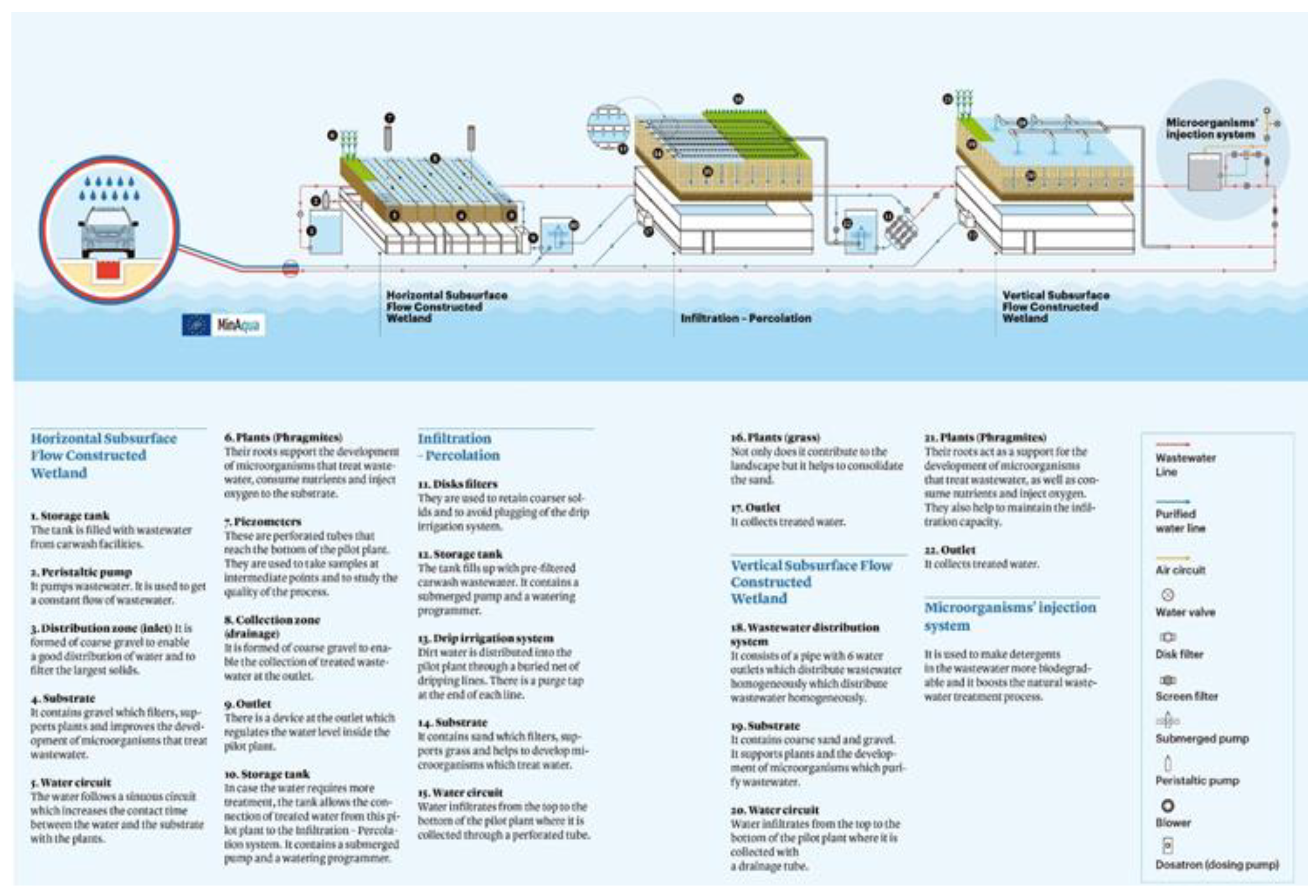
Figure 2.
Layout of the recycling system implemented at the VWF of Montfullà. Sampling points: P1-E: inlet of the pilot plants; P2-S: effluents of the pilot plants; P3-REC: recycled and disinfected water storage tank; P4-DIF: final usage point.
Figure 2.
Layout of the recycling system implemented at the VWF of Montfullà. Sampling points: P1-E: inlet of the pilot plants; P2-S: effluents of the pilot plants; P3-REC: recycled and disinfected water storage tank; P4-DIF: final usage point.
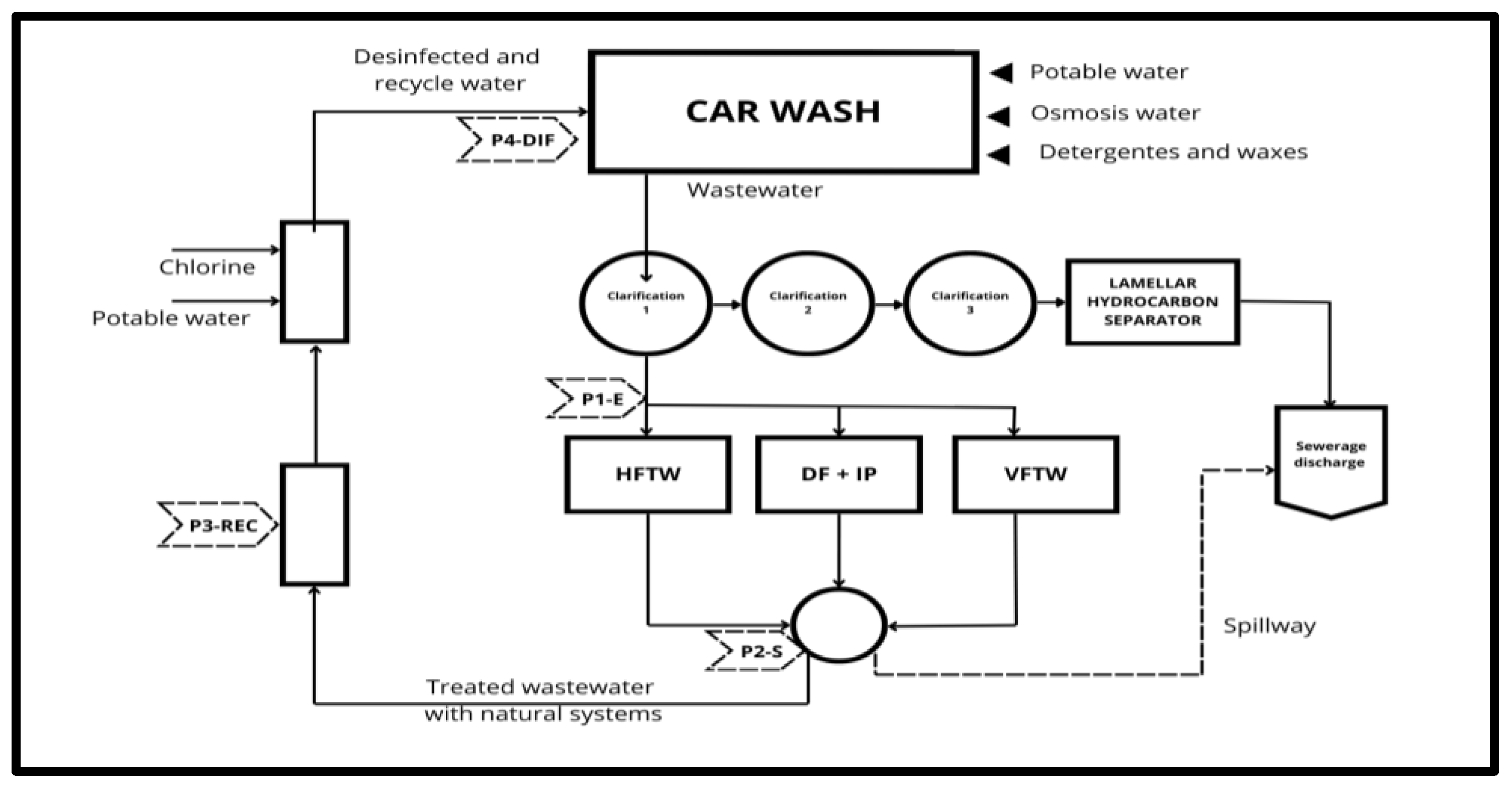
Figure 3.
Compliance of NbS Effluent with RD 1620/2007 and RD 1085/2024.
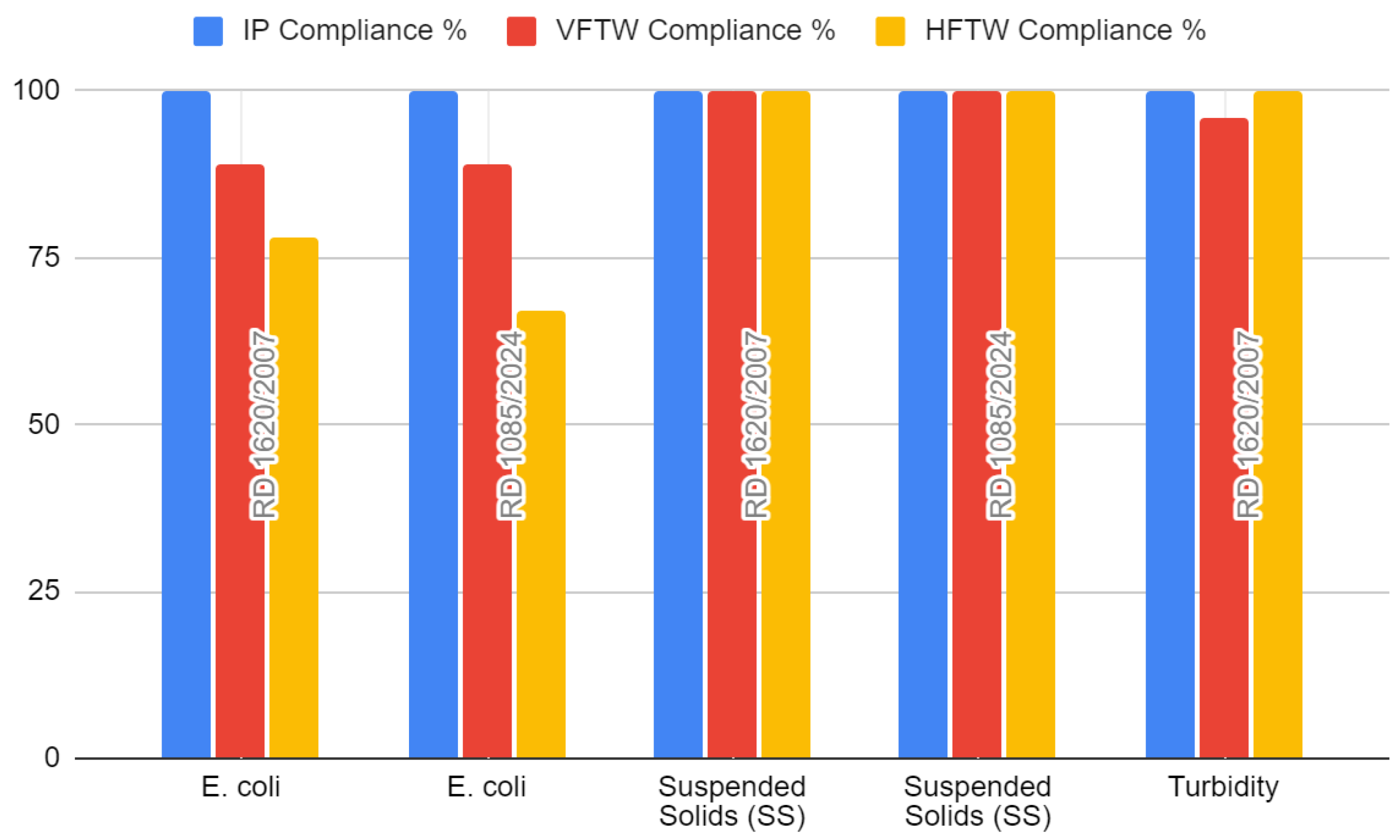
Figure 4.
Percentage Removal Efficiency of the pilot plants: IP: Infiltration-percolation system; VFTW: vertical-flow treatment wetland; HFTW: horizontal-flow treatment wetland. (a) Key Parameters: CODt: COD total; CODs: COD soluble; BOD5; SS; Turbidity. (b) Metals: Zinc, Iron and Copper.
Figure 4.
Percentage Removal Efficiency of the pilot plants: IP: Infiltration-percolation system; VFTW: vertical-flow treatment wetland; HFTW: horizontal-flow treatment wetland. (a) Key Parameters: CODt: COD total; CODs: COD soluble; BOD5; SS; Turbidity. (b) Metals: Zinc, Iron and Copper.
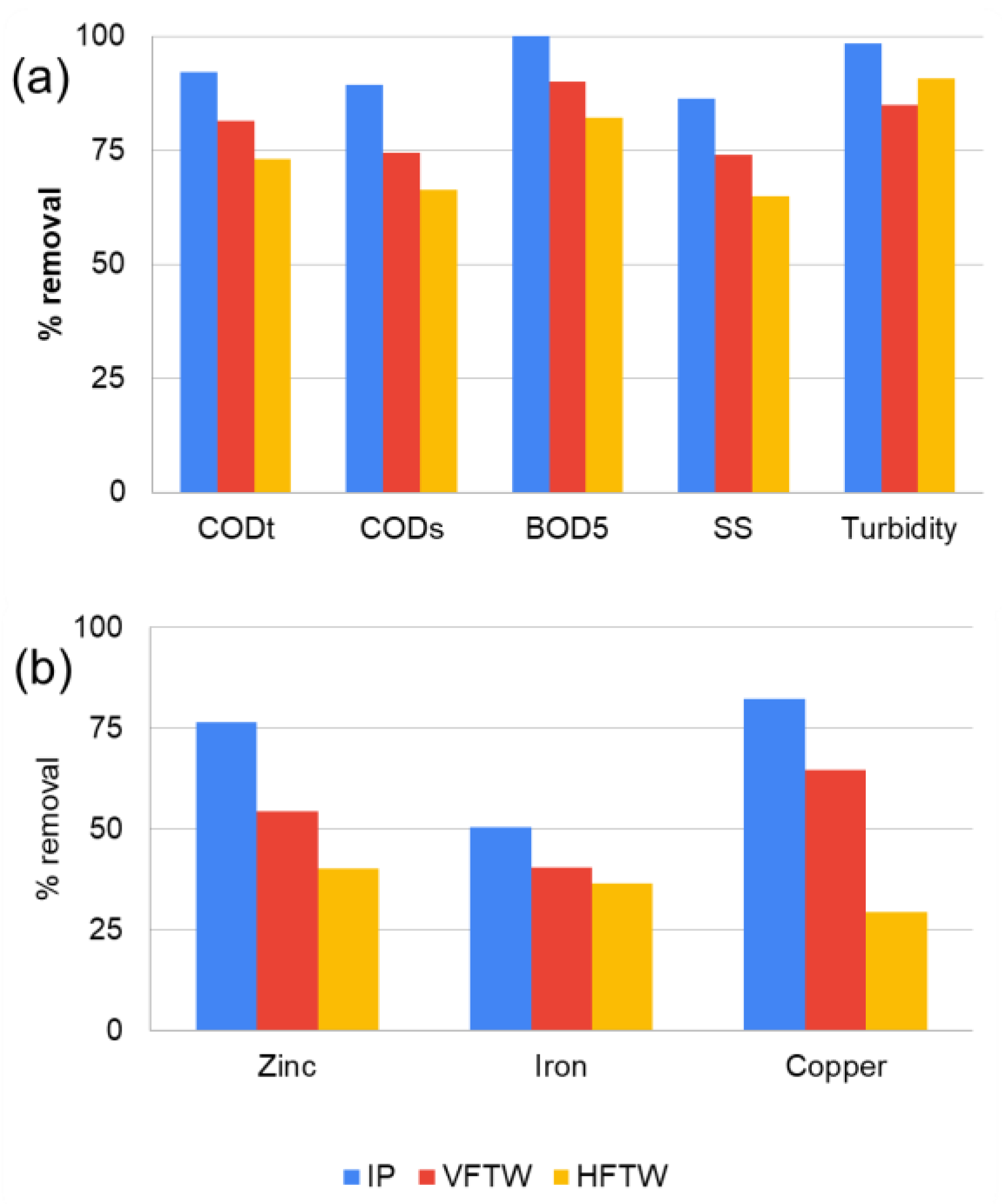
Figure 5.
Comparative features of the three NbS. Performance and demands rated 0 (worst) to 5 (best).
Figure 5.
Comparative features of the three NbS. Performance and demands rated 0 (worst) to 5 (best).
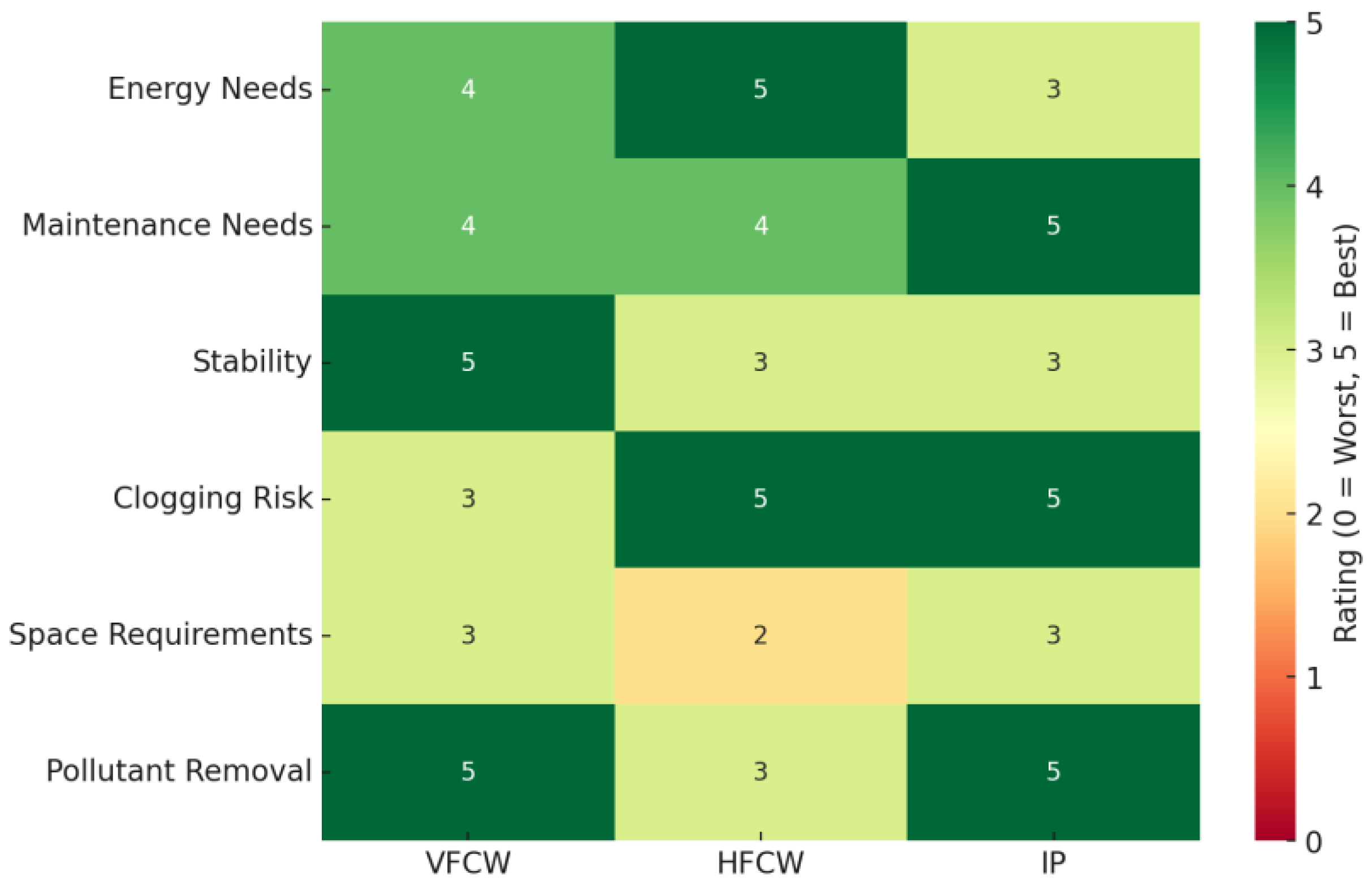

Table 1.
Nature-based Solutions pilots design. Infiltration-percolation (IP); Horizontal-flow Treatment Wetland (HFTW); Vertical-flow Treatment Wetland (VFTW).
Table 1.
Nature-based Solutions pilots design. Infiltration-percolation (IP); Horizontal-flow Treatment Wetland (HFTW); Vertical-flow Treatment Wetland (VFTW).
| Parameter | Nature-based Solutions Pilot Plants | ||
|---|---|---|---|
| IP | HFTW | VFTW | |
| Pre-treatment | 4 disk filters (120 mesh) installed in parallel | - | - |
| Feeding system | Submerged pump (activated by a timer) feeding from accumulation tank | - | - |
| Distribution system | 8 pipelines with 2.3 l/h self-compensating and heat-sealed drips are distributed. Subsurface drip irrigation systems, at 10 cm from the surface and separated 40 cm between lines and 30 cm between emitters |
Inlet (25-40 mm gravel; 1 m length of this gravel is placed in the inlet zone) | Overground pipeline with 6 outlets |
| Container | Built in steel | Built in steel; interior compartments of 2 x 0.6 m every 0.6 m | Built in steel |
| Size | Container total surface: 10.58 m2 Total length: 4.6 m Total width: 2.3 m Height: 1.3 m |
Pilot total surface: 10.58 m2 Total pilot length: 4.6 m Total pilot width: 2.3 m Height: 0.6 m |
Container total surface: 10.58 m2 Total length: 4.6 m Total width: 2.3 m Height: 1.3 m |
| Filtering material | Calibrated sand 0-3 mm, 1 m (d10: 0.30 – 0.40 mm; CU: 2-3; fines content < 3%) | Filtering zone (12-18mm gravel) | Two layers of filtering material: - Top layer of calibrated fine sand (d10: 0.23; CU: 3.2; fines content < 3%) 0.40 m height - Bottom layer of fine gravel (2-8 mm) 0.50 m height |
| Draining material | Transition layer 0.10 m (7-12 and 3-7mm mixed gravel) Draining layer 0.20 m (25-40 mm gravel) | Outlet areas (25-40 mm gravel; 0,5 m length in the outlet zone) | Transition layer 0.1 m (7-12 mm gravel) Draining layer 0.2 m (25-40 mm gravel) |
| Vegetation | Grass: seed mix Zulueta Compact (10% Lolium perenne, 5% Poa pratense and 85% Festuca arundinacea) |
Phragmites australis | Phragmites australis |
| Outlet structure | PVC 1 ½ pipeline with 1” brass tap for sampling and outlet pipe | Adjustable pipe for water level control | PVC Pipeline |
Table 2.
VWF Inlet Quality. Electrical conductivity (EC); Dissolved oxygen (DO); Chemical oxygen demand (COD); Dissolved Chemical oxygen demand (dCOD); Particulated Chemical oxygen demand (pCOD); Biological oxygen demand (BOD5); Suspended solids (SS); Volatile suspended solids (VSS); Total Kjeldahl nitrogen (TKN). Max=maximum, Min=minimum, bdl=below detection limit.
Table 2.
VWF Inlet Quality. Electrical conductivity (EC); Dissolved oxygen (DO); Chemical oxygen demand (COD); Dissolved Chemical oxygen demand (dCOD); Particulated Chemical oxygen demand (pCOD); Biological oxygen demand (BOD5); Suspended solids (SS); Volatile suspended solids (VSS); Total Kjeldahl nitrogen (TKN). Max=maximum, Min=minimum, bdl=below detection limit.
| Parameters | Units | n | Average (whole period) |
Max | Min | |
|---|---|---|---|---|---|---|
| Temperature | ºC | 67 | 18.7 | 27.8 | 9.5 | |
| pH | 67 | 7.9 | 9.3 | 6.7 | ||
| Redox | mV | 67 | 86.2 | 225 | -47 | |
| EC | µS/cm | 67 | 548 | 1259 | 179 | |
| DO | mg/L | 67 | 0.9 | 5.9 | 0.0 | |
| Turbidity | FNU | 67 | 114 | 265 | 33.8 | |
| COD | mg/L | 66 | 71.6 | 438 | bdl | |
| dCOD | mg/L | 66 | 32.4 | 190 | bdl | |
| pCOD | mg/L | 66 | 41.3 | 346 | 5.0 | |
| BOD5 | mg/L | 66 | 18.8 | 70 | bdl | |
| SS | mg/L | 66 | 63.8 | 421 | bdl | |
| VSS | mg/L | 31 | 25.6 | 210 | bdl | |
| TKN | mg/L | 31 | 3.8 | 34.2 | bdl | |
| N-NO3- | mg/L | 31 | 2.1 | 14.8 | bdl | |
| N-NH4+ | mg/L | 31 | 0.6 | 3.3 | bdl | |
| P-PO43- | mg/L | 31 | 0.7 | 6.5 | bdl | |
| S-SO42- | mg/L | 15 | 48.7 | 157 | 31.8 | |
| Cl- | mg/L | 15 | 51.5 | 250 | 20.1 | |
| Ca2+ | mg/L | 15 | 59.6 | 79.2 | 50.6 | |
| Mg2+ | mg/L | 15 | 9.8 | 12.5 | 8.5 | |
| Alkalinity | mg/L CaCO3 | 32 | 174 | 239 | 58.1 | |
| Anionic surfactants | mg/L | 32 | ild | 0.9 | bdl | |
| Cationic surfactants | mg/L | 32 | ild | 0.4 | bdl | |
| Non-ionic surfactants | mg/L | 32 | 0.4 | 1.4 | bdl | |
| Hydrocarbons, oil and fats | mg/L | 6 | 0.3 | 0.6 | bdl | |
| E. coli | CFU/100 mL | 64 | 2382 | 59000 | 0 | |
| Legionella spp. | CFU/L | 8 | 0 | 0 | 0 | |
| Nematode eggs | Eggs/10L | 2 | 0 | 0 | 0 | |
Table 3.
Effluent Quality for IP, VFTW, and HFTW Systems. Average, Max and Min.
| Parameter (mg/L) |
IP | VFTW | HFTW | ||||||
| Average | Max | Min | Average | Max | Min | Average | Max | Min | |
| COD | 7.46 | 64 | bdl | 13.23 | 54 | bdl | 19.37 | 58 | bdl |
| dCOD | 5.72 | 26 | bdl | 8.26 | 32 | bdl | 10.00 | 40 | bdl |
| pCOD | 1.71 | 59 | 0 | 3.58 | 16 | 0 | 9.37 | 34 | 0 |
| BOD5 | bdl | 5 | bdl | bdl | 6 | bdl | 5.12 | 8 | bdl |
| SS | bdl | 24 | bdl | 3.42 | 17 | bdl | 3.08 | 22 | bdl |
| Turbidity (FNU) | 1.31 | 2.43 | 0 | 5.58 | 30.77 | 0 | 0.43 | 0.43 | 0.41 |
| N-NO3- | 3.38 | 13.6 | bdl | 6.36 | 31.2 | bdl | 1.58 | 7.7 | bdl |
| N-NH4+ | 0.25 | 32.7 | 0.05 | 0.33 | 1.55 | 0.05 | bdl | 0.7 | 0.05 |
| S-SO42- | 96.14 | 423.7 | 32.7 | 45.96 | 56.3 | 27 | 43.02 | 73.8 | 31.2 |
| Ca2+ | 59.57 | 69.3 | 46.5 | 71.04 | 72.3 | 44.8 | 64.85 | 71 | 56.3 |
| Mg2+ | 9.19 | 10.8 | 6.8 | 11.24 | 12.1 | 7.7 | 10.42 | 11.2 | 9.1 |
| Cl- | 46.81 | 137 | 25.5 | 56.67 | 97.4 | 28.4 | 59.53 | 82.3 | 22.2 |
| Anionic surfactants | bdl | bdl | bdl | bdl | bdl | bdl | bdl | Bdl | bdl |
| Cationic surfactants | bdl | bdl | bdl | bdl | bdl | bdl | bdl | Bdl | bdl |
| Non-ionic surfactants | bdl | bdl | bdl | bdl | bdl | bdl | bdl | Bdl | bdl |
| Hydrocarbons, oil and fats | bdl | bdl | bdl | bdl | bdl | bdl | bdl | Bdl | bdl |
Table 4.
Microbiological Effluent Quality for IP, VFTW, and HFTW Systems.
| Parameter | IP | VFTW | HFTW | ||||||
|---|---|---|---|---|---|---|---|---|---|
| Average | Max | Min | Average | Max | Min | Average | Max | Min | |
|
E. coli (CFU/100 mL) |
<10 | 20 | bdl | <10 | 15 | Bdl | 100 | 300 | bdl |
|
Legionella spp. (CFU/L) |
Absent | 0 | 0 | Absent | 0 | 0 | Absent | 0 | 0 |
| Nematode eggs (Eggs/10L) | 0 | 0 | 0 | 0 | 0 | 0 | 0 | 0 | 0 |
Table 5.
Vehicle Wash Wastewater Reuse Standards – RD 1620/2007 [21], and RD 1085/2024 [22] (Applicable Uses: Urban green area watering, street washing, firefighting systems, industrial vehicle washing).
| Parameter | RD 1620/2007 (Urban Uses) | RD 1085/2024 (Urban Uses) | Comments |
|---|---|---|---|
| Intestinal nematodes | 1 egg/10L | Not specified | Likely removed due to advancements in treatment technology |
| E. coli | 200 CFU/100 mL | 100 CFU/100 mL | Stricter limit in 2024 (100 CFU/100 mL) for enhanced health protection |
| Suspended solids (SS) | 20 mg/L | 35 mg/L | Increased limit in 2024, providing more operational flexibility while maintaining quality. |
| Turbidity | 10 NTU | Not specified | Specified in 2007 to ensure water clarity; not defined in 2024. |
| Legionella spp. | 100 CFU/L (if aerosolization risk) | Monitoring required by RD 487/2022 | Mandatory monitoring remains, with compliance under RD 487/2022 |
Table 7.
Recycling efficiency by NbS.
| NbS | Recycling efficiency | Max daily capacity (m3/day) |
|---|---|---|
| HFTW | 57.8 | 9 |
| VFTW | 60 | 9 |
| IP | 60 | 9 |
Table 8.
Requirements to scale NbS.
| NbS | Max hydraulic load (cm/day) | Area per general vehicle (m2) | Area per car (m2) |
Area per industrial vehicle (m2) |
|---|---|---|---|---|
| HFTW | 10 | 2.5 | 1.8 | 3.2 |
| VFTW | 36 | 1.0 | 0.7 | 1.3 |
| IP | 36 | 1.0 | 0.7 | 1.3 |
Disclaimer/Publisher’s Note: The statements, opinions and data contained in all publications are solely those of the individual author(s) and contributor(s) and not of MDPI and/or the editor(s). MDPI and/or the editor(s) disclaim responsibility for any injury to people or property resulting from any ideas, methods, instructions or products referred to in the content. |
© 2024 by the authors. Licensee MDPI, Basel, Switzerland. This article is an open access article distributed under the terms and conditions of the Creative Commons Attribution (CC BY) license (http://creativecommons.org/licenses/by/4.0/).
Copyright: This open access article is published under a Creative Commons CC BY 4.0 license, which permit the free download, distribution, and reuse, provided that the author and preprint are cited in any reuse.


