

Submitted:
02 December 2024
Posted:
03 December 2024
You are already at the latest version
Abstract
Enabling technologies (KETs) offer transformative potential for agriculture by addressing major challenges such as climate change, resource efficiency, and sustainable development across economic, social, and environmental dimensions. However, KET adoption is often limited by high R&D requirements, rapid innovation cycles, investment costs, and cultural or training barriers, especially among small agricultural businesses. Sicily's agricultural sector, already strained by pandemic-related economic setbacks and inflationary pressures, faces additional barriers in adopting these technologies. To investigate these adoption challenges and develop viable solutions, the ARIA Living Lab (Agritech Research Innovation Environment) was established within the PNRR framework. A qualitative approach was used, involving documentary analysis and data from stakeholders across Sicilian agriculture. This approach enabled an in-depth exploration of sector-specific needs, infrastructure, and socio-economic factors influencing KET adoption. The analysis highlighted that adoption barriers differ significantly across sectors (citrus, olive, and wine), with public incentives and digital infrastructure playing key roles. However, a persistent lack of technical skills among farmers reduces the effectiveness of these innovations. The findings suggest that an integrated approach—combining targeted incentives, training, and enhanced infrastructure—is essential for a sustainable transition to KETs. Future research should examine collaborative efforts between farms and tech providers and evaluate the impact of public policies in promoting the widespread, informed adoption of enabling technologies.
Keywords:
KETs
; open innovations
; participatory innovation
; agriculture
; cause and effect analysis
; barriers to adoption innovations
1. Introduction
In recent years, the agricultural sector has undergone a remarkable transformation due to the increasing adoption of enabling technologies. These technologies, ranging from precision farming tools to digital platforms, have helped to improve the productivity, sustainability and efficiency of farming practices. The adoption of such innovations is important not only for farmers, but also for the entire food production system and environmental conservation efforts [1,2].
Enabling technologies in agriculture refer to a wide range of innovative tools, systems and solutions that are revolutionising the way farming practices are conducted [3,4,5]. These technologies are designed to increase the productivity, efficiency, sustainability and profitability of agricultural activities [6,7,8,9].
Some common examples of enabling technologies in agriculture are precision agriculture (involving the use of technologies such as GPS, sensors, drones and satellite imagery to optimise farm management); the Internet of Things (IoT) (to collect real-time data on crop health, soil conditions, weather patterns and equipment performance); artificial intelligence (AI) and machine learning (for crop yield prediction, plant disease detection, irrigation schedule optimisation and inventory management); robotics and automation (transforming activities such as planting, weeding, harvesting and sorting in agriculture with autonomous vehicles, robotic arms and smart machines); blockchain technology (to improve traceability, transparency and trust in the food supply chain); farm management software (for functionalities such as inventory management, crop planning, financial analysis and compliance monitoring) [10].
These are almost always technologies that enable farmers to make data-driven decisions, resulting in more efficient use of resources and increased yields [11,12,13].
Enabling technologies in agriculture continue to evolve and play a crucial role in modernising the sector, addressing sustainability challenges and meeting the growing demand for food production. By harnessing these technological innovations, farmers can improve their productivity, reduce their environmental impact and achieve long-term success in a rapidly changing agricultural landscape [14].
Despite the clear benefits of these enabling technologies, gaps persist in the literature regarding the extent of their adoption, the challenges faced by farmers in integrating them into their practices, and the overall impact on agricultural sustainability [15,16,17]. Understanding these gaps is critical to formulating effective strategies to promote the widespread adoption of technological innovations in agriculture [17,18,19].
Several barriers to the adoption of enabling technologies in agriculture have been identified in the existing literature. Some common barriers include upfront investment, lack of technical skills and training, difficulties in accessing reliable internet connectivity and infrastructure, data privacy and security issues, as well as those of complexity and compatibility with existing farm management systems; finally, resistance to change and regulatory and political constraints [20,21]. Understanding these barriers is essential for developing strategies and interventions that facilitate the adoption of KETs in agriculture. Addressing these challenges through targeted initiatives, capacity building programmes, policy advocacy and stakeholder collaboration can help overcome barriers and unlock the full potential of technological innovations in transforming the agricultural sector for sustainable growth and resilience [22,23].
A possible enabling technology deployment strategy can be set up with the contribution of living labs (LLs). LLs in agriculture are collaborative platforms where farmers, researchers, technology developers and other stakeholders come together to co-create, test and implement innovative solutions, including enabling technologies. The integration of enabling technologies in living labs can facilitate the dissemination and adoption of these innovations through the following approaches [24,25,26,27]:
- Co-creation and user involvement: LLs encourage active participation and co-creation between farmers and end-users in the development and testing of enabling technologies. By involving farmers in the design process, understanding their needs and incorporating their feedback, technology developers can customise solutions to better meet the requirements of farming practices.
- Demonstrations and field trials: in LLs farmers can observe the practical application of these technologies, interact with experts and gain hands-on experience in using the tools within their own farming operations. This hands-on approach enhances learning and facilitates technology adoption.
- Knowledge sharing and networking: Farmers can learn from colleagues, researchers and technology providers, benefiting from different perspectives and best practices in technology adoption and implementation.
- Training and capacity building: because they offer training programmes and capacity building initiatives to improve farmers' technical skills and knowledge in the use of KETs.
- Feedback mechanisms and iterative improvement: because they facilitate continuous feedback loops and iterative improvement processes to refine and optimise KETs.
- Political engagement and advocacy: as they serve as platforms to engage policymakers, practitioners and regulators in discussions related to KETs in agriculture. By showcasing the benefits and outcomes of technology adoption within living labs, stakeholders can advocate for supportive policies, funding mechanisms and regulatory frameworks that promote innovation in agriculture.
By harnessing the collaborative and experimental nature of living labs, enabling technologies can be effectively disseminated, validated and scaled up in agriculture, leading to sustainable adoption, increased productivity and positive socio-economic impacts for farmers and the wider agricultural ecosystem [28].
In the context of Sicily, a region with a rich agricultural heritage, it is crucial to evaluate the challenges associated with the adoption of these innovations and explore ways to overcome existing barriers. By examining the socio-economic and environmental factors that influence technology adoption in this region, valuable knowledge can be gained to improve agricultural practices and ensure the long-term sustainability of farming activities [29,30].
In this context, the following research questions were developed:
- What are the main challenges and specific barriers faced by Sicilian farmers in the citrus, olive and wine-growing sectors in adopting KETs, and to what extent do these vary between different production sectors?
- What socio-economic factors, including availability of incentives, digital infrastructure and technical skills, influence the adoption of KETs in the Sicilian agricultural sector, and how do these elements affect the degree of innovation in different production sectors?
- What customised strategies can be implemented to foster widespread and sustainable KETs adoption in the main Sicilian agricultural sectors, considering the different levels of perceived usefulness and sectoral priorities in terms of efficiency, quality and revenue stability?
The aim of this research is to provide insight into the complexities surrounding the adoption of enabling technologies in Sicilian agriculture. The findings will inform evidence-based solutions to improve technology adoption and promote agricultural sustainability in the region.
2. Materials and Methods
2.1. Context in Which the Study Was Carried Out
The research, conducted in Sicily—a region in Southern Italy—analyzed the structure of agricultural production and the sector's openness to innovation. Data from ISTAT’s 2020 VII General Census of Agriculture [31] reveal a concerning trend: only 11% of Italian farms invested in innovation between 2018 and 2020, with this percentage dropping sharply to just 5.7% in Sicily. This difference underlines the structural difficulties and the climate of uncertainty that has negatively affected the propensity for innovation in the region.
Table 1 shows that Sicily accounts for only 6.5% of farms that have undertaken at least one innovative initiative. This figure reflects not only local economic challenges, but also a broader context marked by economic crises and unstable international confidence. Despite these difficulties, some areas of investment show signs of interest on the part of entrepreneurs.
Figure 1 shows that innovations were mainly focused on traditional agricultural techniques and production management, varieties and breeds, irrigation, fertilisation, and pruning activities. There is also evidence of a commitment to product sales and marketing, a crucial aspect for improving the competitiveness of farms in the market. However, the available data do not allow for a precise assessment of the use of enabling technologies, although it is assumed that they implicitly fall into some of the categories presented.
Another significant finding concerns company size: innovative companies tend to be larger in size, as can be seen in Table 2. In Italy, 58% of the companies that invest in innovation have more than 10 adult work units per year (AWU or the amount of work performed in the year by a full-time employee, or the equivalent amount performed by part-time workers or by workers who do double work) [32]. In Sicily this percentage is reduced to 41%, indicating a greater fragmentation of the sector.
However, the numerical decline of Sicilian companies over the last ten years is marked: compared to 2010, the region has lost 35% of its companies, from 220,000 to around 142,000. This change has led to larger companies, but with an on average older entrepreneurial population, less inclined to adopt new technologies. The size and age of companies are key factors influencing their openness to innovations, particularly advanced technological innovations.
The overall picture suggests the urgency of targeted policies to support the digital and technological transformation of the Sicilian agricultural sector, stimulating both the renewal of production structures and the adoption of innovative tools capable of ensuring greater competitiveness and sustainability.
2.2. Living Lab as a Tool for the Co-Construction of Innovation Needs
The context analysis on the propensity to adopt innovations based on ISTAT data, revealed significant opportunities to foster the use of enabling technologies. This was the main objective of the research project developed under the PNRR Agritech, which led to the creation of a living lab to foster the integration of research and innovation processes in real-world contexts [33]. Such an environment makes it possible to:
- identify the main factors influencing the adoption of innovations by actors in the various supply chains
- identify potential barriers to the diffusion of such innovations at the local level;
- facilitate the scalability of innovations to other communities and promote large-scale diffusion;
- support decision-makers in defining strategies for the ecological and digital transition of the agricultural sector.
The living lab, called ARIA (Agritech Research Innovation and Environment), promotes a participatory and collaborative approach and has been operational since May 2024. The stakeholder engagement phase was particularly challenging and required preliminary meetings, both in-person and online, with different stakeholders and partner researchers from other Agritech Spoke 3 projects (Figure 2).
Collaborations with strategic partners, including companies and start-ups, technology holders (drones, sensors, meteorological huts, satellite systems for monitoring plant development conditions, etc.), consultants and operators of professional associations (agronomists and graduate agro-technicians), have been set up.
The ARIA living lab activated a calendar of periodic meetings, articulated in moments of confrontation, practical demonstrations in the field and discussions according to the ‘World Café’ methodology. Each meeting was made dynamic and interactive through the adoption of instant polling technologies, ensuring active involvement of the participants (Figure 3).
The sectors selected for study were olive growing, agriculture and wine growing, which are all areas of regional excellence in production, providing an optimal context for experimentation and innovation.
2.3. Tools Used
The ARIA Living Lab integrated innovative participatory methodologies such as the World Café, the Ishikawa diagram and the Business Model Canvas. These tools supported an in-depth collaborative reflection on motivations and barriers related to technology adoption, facilitating the co-creation of concrete solutions.
The World Café methodology, as suggested by Brown and Isaacs (2005) [34], allows participants to engage in structured and inclusive dialogues, facilitating the emergence of shared perspectives on complex issues. In ARIA, the World Café made it possible to investigate the innovation needs of local actors and to analyse the main motivations and barriers to the adoption of advanced technologies. Through thematic tables and open discussions, participants shared experiences and perceptions on the potential of innovation, while highlighting barriers such as high initial costs and lack of specific skills for implementation [34,35]. This approach strengthened the involvement of all participants, facilitating a participatory dialogue in which ideas could be freely compared [36,37,38,39,40,41].
Subsequently, the Ishikawa diagram, also known as a fishbone diagram, was used for an in-depth analysis of the causes of the barriers that emerged and for the identification of corrective actions. Ishikawa (1986) [42] describes this technique as essential for structuring and systematically analysing the factors contributing to a specific problem. In the context of ARIA, the Ishikawa diagram made it possible to visualise the root causes of the difficulties faced by stakeholders in adopting technologies, such as technical complexity, access costs and training. This structured representation enabled the identification of targeted actions, such as technical training and financial support, to facilitate the adoption of innovations and overcome existing barriers [42,43,44,45,46,47,48].
To develop a concrete plan forthe adoption of enabling technologies, ARIA adopted the Business Model Canvas, a tool developed by Osterwalder and Pigneur (2010) [49] to outline business models that facilitate the adoption and sustainability of innovations. Through the Canvas, participants analysed key components such as the value proposition, essential resources, distribution channels and strategic partnerships. This approach enabled a clear and practical visualisation of the ways in which each actor can benefit from the implementation of new technologies, supporting integrated and sustainable planning in the local context [49,50,51,52,53,54,55,56,57].
Ultimately, the integration of these three methodologies allowed the ARIA Living Lab to explore in a systematic and participatory manner the key factors for the adoption of enabling technologies in agriculture. These tools, combined in a participatory process, facilitated an in-depth understanding of the challenges and opportunities, enabling the co-creation of concrete strategies adaptable to the local context. The combination of these methodologies is an effective example of open innovation and stakeholder involvement in building shared solutions for a sustainable technology transition [58,59].
3. Results and Discussion
3.1. Propensity for Innovation Through KETs
The analysis conducted at the regional level showed widespread participation of stakeholders from the main agricultural sectors under study: citrus, olive and wine growing. The geographical coverage was wide, including both conventional and Protected Designation of Origin (PDO) growing areas, as illustrated in Figure 4.
In recent years, operators have adopted or encouraged the introduction of innovative technologies on farms, also supported by public interventions. A crucial element for the widespread adoption of such innovations is the availability of appropriate financial instruments to promote KETs (Figure 5).
In Italy, various instruments at both national and regional level have been developed to stimulate these transformations, such as:
- Strategic Plan for Innovation and Research in Agriculture, Food and Forestry (2014-2020): approved by Decree of the Ministry of Agriculture, Food and Forestry (Mipaaf) No. 7139 of 1 April 2015, this plan established a specific Working Group for precision agriculture, which drew up Guidelines for the sector. This provided a solid basis for the adoption of innovative techniques in Italian agricultural practices.
- ISMEA Incentives for Agricultural Innovation: The Istituto di Servizi per il Mercato Agricolo Alimentare (ISMEA) has earmarked 75 million euros per year for the period 2023-2025, with the aim of supporting agricultural enterprises in adopting advanced technologies and sustainable production methods.
- PNRR - Investment 2.3: as part of the National Recovery and Resilience Plan, a specific measure aims to modernise agricultural machinery, thus promoting the adoption of precision farming techniques to increase productivity and efficiency.
In Sicily, further local regulations have been introduced to incentivise the adoption of innovative practices:
- Bill No. 394 of 11 October 2018: this bill aimed to promote the diffusion of precision agriculture techniques through the creation of a Regional Observatory for Precision Agriculture (ORAdP). Although the DDL was not fully implemented, some of its provisions were integrated into Regional Law 21 of 29 July 2021, which emphasises the protection of biodiversity and the strengthening of agroecology in Sicily, reaffirming the establishment of the Regional Observatory.
- PSR Sicily 2014-2022: the Sicilian Rural Development Programme has included specific incentives, such as Commitment 2.3 and measure SRA24 - ACA24, to encourage the use of precision techniques, optimising the use of fertilisers and other agricultural resources.
Knowledge of KETs among stakeholders is varied (Figure 6). Some technologies are well known and widespread, while others are less well known, despite their potential value for agriculture.
For instance, tools such as sensors for soil monitoring or drones for crop observation are among the best known, probably because of their practical and immediate application in improving productivity and efficiency. In contrast, other technologies, such as advanced big data platforms or artificial intelligence for crop forecasting, seem less popular. This could be due to a combination of factors, including technical complexity, the lack of specific skills and the need for advanced digital infrastructure to support the use of these innovations.
In their assessment of perceived usefulness, many stakeholders give enabling technologies a high degree of relevance for business efficiency (Figure 7).
Figure 7 presents a detailed examination of the perceived usefulness of KETs, employing a rating scale that ranges from 1 (strongly disagree) to 5 (strongly agree). The data indicate that the majority of stakeholders recognise the high usefulness of enabling technologies for business efficiency. Technologies that promote precision in farming practices - such as automated irrigation systems and digital crop management - score high, demonstrating widespread agreement on their ability to improve production processes and reduce environmental impact. This appreciation confirms that stakeholders are aware of the transformative potential of the technologies, while still requiring technical and financial support for large-scale implementation.
Alongside the benefits, stakeholders also identify some risks associated with the adoption of these technologies, which may hold back faster deployment (Figure 8).
Among the main fears are the initial cost of equipment, the complexity of use, and potential problems with handling sensitive data. The fear of high costs can be a significant barrier for small companies, which often lack the means to invest in new technology without adequate incentives or funding. Difficulty in managing data is also perceived as a critical risk, especially for companies lacking the necessary digital skills. The lack of adequate digital infrastructure and the risk of cyber vulnerabilities are further factors that may hinder widespread adoption.
3.2. Analysis of Barriers to KET Adoption
The limited adoption of KETs in agriculture is a complex phenomenon, influenced by multiple, interconnected factors that hinder the diffusion of innovations that are essential for improving farm competitiveness and sustainability. To analyse the main causes of these difficulties, an Ishikawa diagram, or cause-and-effect diagram, known for its effectiveness in highlighting the roots of structural problems, was used. The visual tool presented in Figure 9 allows for the observation of the decisive influence exerted by different elements on the adoption of new technologies, thereby facilitating the identification of targeted strategies.
Among the main factors emerging from the analysis, the availability of financial resources is one of the most significant barriers. Enabling technologies often require large upfront investments to be implemented, making access to public funds and incentives a crucial issue for many companies, especially smaller ones that are unlikely to be able to afford these expenses without external support. Figure 9 also highlights how access to adequate infrastructure, such as high-speed internet connections and modern communication networks, is essential for the successful implementation of digital technologies. However, the lack of infrastructure in rural areas results in a major constraint, which holds back the possibilities of innovation in many rural areas.
Government support emerges as a key factor in encouraging technology adoption, and takes various forms, such as tax incentives, subsidised financing and dedicated training programmes. Public policies therefore play a decisive role: their presence or absence directly influences the propensity of farms to adopt innovations. A further critical factor is the awareness of farmers with regard to the technologies that are available to them and the training that is required in order for them to use these technologies effectively. It is frequently the case that farmers are not adequately informed about the potential of these innovations, or lack the requisite skills to integrate them correctly into farm practices.
The structural characteristics of the farm also influence the adoption of KETs: larger farms have a greater capacity for investment, while small farms, limited by limited economic resources, are less willing to take the financial risk associated with innovation. Furthermore, the environmental context plays a significant role; technologies must be adaptable to specific climatic and territorial conditions, and in some regions this may require costly customisation and adaptation.
In addition to economic and infrastructural factors, the importance of cultural acceptance also emerges. The predisposition of farmers to adopt innovative practices varies according to personal and cultural factors: established habits, mistrust of change and limited familiarity with modern technologies may represent significant obstacles, especially in more traditional settings.
Using a causal map, the main factors influencing the adoption of enabling technologies in agriculture were visualised, highlighting the cause-effect interactions between them (Figure 10). This framework helps to understand how to improve intervention strategies by identifying where action can be taken to foster a more widespread adoption of agricultural innovations.
Each node represents a relevant aspect; such as the ‘technical skills of operators,’ the ‘availability of technological infrastructure,’ or ‘support policies’. The arrows show how one factor can stimulate or hinder other elements within the farming system: for example; ‘training support’ can improve technical skills and reduce ‘resistance to change,’ thus facilitating technology adoption. At the same time, ‘economic factors’ such as ‘adoption costs’ and ‘economic incentives’ determine the accessibility of new technologies for farmers
These findings highlight how the adoption of KETs in agriculture requires an integrated approach, where knowledge, financial support and favourable regulations work together to overcome existing barriers. Investment in awareness-raising and training programmes is essential so that farmers can appreciate the benefits of new technologies and learn how to use them effectively. Furthermore, enhanced access to financial resources can expedite the incorporation of innovative techniques, whereas an encouraging regulatory environment can stimulate the pursuit of technological advancement by agricultural enterprises. In conclusion, the combination of these measures is essential for fostering a sustainable and inclusive modernisation of the agricultural sector, improving productivity and ensuring greater competitiveness for farms of all sizes.
3.3. Tools to Promote the Adoption of Innovations
The adoption of enabling technologies on farms is a strategic response to environmental and market pressures, as well as the need to improve production efficiency. To better understand the benefits and costs of KET adoption and facilitate informed decision-making, a business model canvas has been developed (Table 3).
The distinction into productivity- and sustainability-oriented farms, small and medium-sized farms, family farms, and market differentiation-oriented producers is strategic. This segmentation takes into account the variety of specific needs in technology and management. However, a critical challenge may lie in the ability to customise technological demand, especially for small and family farms that may have limited budget constraints and technical skills [60].
With reference to the value proposition, reduced operating costs, optimised yield per hectare and easier access to data are essential elements for modern farms that want to stand out. Moreover, access to eco-certification not only responds to changing regulations, but also increases the perceived value of products. Perceived benefits may take a significant time to emerge, which makes an accurate assessment of the return on investment and the potential for amortisation of initial costs essential [61].
The use of multiple channels, ranging from local agricultural technology suppliers to specialised sales representatives, facilitates access to technologies. The effectiveness of these channels depends on the ability of farmers to understand and apply the technologies. Participation in agricultural fairs and workshops can help disseminate knowledge, but technology transfer remains a challenge, especially for small producers [62].
Customer relationships, including customised support, training and the creation of communities of practice, are essential for successful technology adoption. Ongoing support and customised training are crucial to ensure optimal technology integration. Creating communities of farms also facilitates the dissemination of experiences and best practices, improving the collective learning curve. This cooperative approach can increase farmers' confidence in the effectiveness of technologies [63].
In addition to reducing operating costs, the potential for enhancing the value of products through certifications and incentives for technology transition emerges. Innovation in the agricultural sector also offers new business opportunities, such as the sale of anonymised agronomic data. However, the effectiveness of such revenues is closely linked to the ability of the farm to manage data securely and to gain a real competitive advantage from the technology adopted [64].
The key resources listed, such as technical expertise, data collection infrastructure, start-up capital and qualified personnel, represent crucial investments. Continuous training and upgrading of skills are essential aspects of successful technology integration, while the availability of capital can be a barrier for smaller farms. Moreover, the resilience of the infrastructure is crucial to ensure the business continuity of the implemented technologies [65].
Key activities, such as technology selection, staff training, equipment maintenance and data analysis, are resource-intensive operations. In particular, data analysis is crucial for adapting agricultural practices to real field needs, but requires advanced interpretation and management skills. Collaboration with partners for sustainability projects is also strategic, but requires careful management of relationships and expectations between the parties involved. Identified key partners - including technology providers, academic institutions and industry associations - are an essential element in supporting technology adoption. Such partnerships can facilitate the transfer of knowledge and resources, as well as access to funding for innovation. Collaboration with research organisations and consultants also allows technologies to be adapted to local specificities, increasing the value and effectiveness of investments [66].
Finally, the cost structure highlights the main economic barriers, which include high initial investments, training and maintenance costs, and technical consultancy. Although the implementation costs are significant, the long-term benefits may justify the investment, especially through reduced waste and increased production efficiency. However, the variability of agricultural conditions may affect the actual return on investment, making accurate and flexible financial planning crucial [67].
In summary, in order to ensure successful implementation and a positive return on investment, it is essential that farms balance the drive for innovation with available resources and technology management capacity. Ongoing support from the living lab and research institutions is required to reduce the risk associated with adoption and enhance the long-term sustainability and competitiveness of the farm.
Deepening the analysis on the main productive sectors of Sicilian agriculture, stakeholders were asked to evaluate the individual items of the business model canvas in order to make it possible to define customised adoption strategies for each sector (Figure 11).
Figure 11 shows how the three sectors attach different importance to the key items of the Business Model Canvas. Citrus growers are the most sensitive to the benefits of adopting technology to improve efficiency and sustainability, while grape growers maintain a strong focus on quality and market relations. Olive growers, although more tied to traditions, are beginning to consider the potential of technological innovation, but with different priorities.
In detail, citrus growers attach high importance (score 7) to customer segments and the value proposition, reflecting an urgent need to reduce operating costs and improve sustainability to remain competitive in global markets. Consequently, they attach high values to optimising revenues and containing costs in order to remain competitive (score 7); to this end, technology and skills are perceived as essential (score 6). They also value the contribution of partners to modernisation (6).
In contrast wine growers see certified products and new markets as an opportunity to increase revenues (6) as quality and innovation are essential to maintain the prestige of Sicilian wine and promote a premium product (6); they attach high importance to the adoption and effective use of technology (7) as key resources and activities and consider collaborations with technology and research partners to improve quality and innovate (7) as essential.
Finally, for olive growers, revenue stability is more of a priority than diversification probably due to the more traditional and less technologically oriented nature of the sector (5); they value traditional skills more, although interest in innovations is growing (5) collaborating mainly with trade associations (5). Olive growers see customer relations as important, but in a more traditional way (5).
4. Discussion
Regarding research question QR1, the adoption of enabling technologies in Sicilian agriculture encounters numerous barriers that vary between the main production sectors - citrus, olive and wine growing - depending on sectoral needs and specific structural barriers. Citrus growers, with greater exposure to global markets and sustainability pressures, perceive the need for technologies to increase efficiency and reduce costs, but are hampered by initial equipment costs and management complexity [68]. Olive growers, more oriented towards tradition and revenue stability, show less inclination to change and encounter difficulties in integrating complex technologies, mainly due to cost and difficulty in training [69]. Winegrowers, who emphasise quality and certification, see technologies as essential tools to preserve the competitiveness of a premium product, although the cost and technical complexity of precision innovations are critical barriers [70].
These specific barriers reflect the results of studies that have shown that the adoption of smart technologies in agriculture is limited by a lack of awareness of the benefits and uncertainty about the economic returns, especially in more traditional settings with fewer financial resources [71,72]. Moreover, the lack of skills to use advanced technologies, such as artificial intelligence and big data analysis, is a further obstacle, particularly for small and medium-sized agricultural enterprises [73]. Sectoral differences show that adoption strategies need to be modulated taking into account the characteristics and priorities of each sector to be effective.
Regarding the influencing factors (QR2), socio-economic factors, including public incentives, digital infrastructure and technical skills, play a central role in KET adoption in agriculture, especially in Sicily, where infrastructural inequalities and limited economic resources represent crucial challenges. The analysis of public policies in Italy shows that incentives such as the National Recovery and Resilience Plan (PNRR) and the Strategic Plan for Innovation are key to mitigating the costs of KET adoption [68]. However, the distribution and accessibility of these incentives are often limited by the administrative capacities of small farms, which lack the skills to apply for and manage adequate funding [74].
Digital infrastructures, such as high-speed internet connection, are lacking in many rural areas of Sicily, preventing the adoption of technologies that require continuous access to data and remote support, in line with Akella et al.'s [75] findings on systemic barriers to the adoption of smart technologies in rural areas. Furthermore, the lack of technical skills - from data monitoring via sensors to the use of digital management tools - is relevant in all the analysed sectors. This lack of skills limits the diffusion of KETs, as farmers and producers often lack adequate training to fully exploit the benefits of new technologies [76,77].
Socio-economic factors influence technology adoption both directly, through the availability of incentives and infrastructure, and indirectly, through access to training and technical support. This influence varies between production sectors, as wine-producing companies, due to their size and propensity to innovation, are more able to access resources and incentives than small-scale olive and citrus producers.
Finally, on QR3, to facilitate a sustainable adoption of KETs in Sicily, a strategic differentiation is needed that takes into account the sectoral needs and specific priorities of farmers. In particular, there is a need for the introduction of targeted and accessible incentives to support small olive farms, e.g. subsidies that cover a significant portion of the initial costs of technology adoption, a strategy also suggested by studies that emphasise the importance of reducing economic burdens in the early stages to increase the adoption of innovations [69,72]. For the wine sector, the integration of partnerships with research institutions and universities for the use of advanced technologies could promote sustainable production, while ensuring a competitive advantage through eco-certification and market premiums [70].
The creation of a digital ‘Living Lab’ for the citrus sector can facilitate technology transfer and training, promoting collaborative learning between farmers and technology operators, as indicated by Scuderi et al. [68] in the context of the Italian citrus chain. This approach has proven effective in stimulating technology adoption through the creation of local support networks and the sharing of experiences among farmers [73]. Finally, a strategy to improve digital skills, as suggested by [71], should include targeted training programmes for Sicilian farmers, specifically oriented towards the use and management of precision technologies.
5. Conclusions and Future Policy Recommendations
Enabling technologies represent a fundamental pillar for the future of Sicilian and global agriculture, with transformative potential in terms of efficiency, sustainability and competitiveness. However, the adoption of such innovations cannot be approached in a generalised manner: each technology has specific characteristics and requirements that need to be adapted to the different needs of production sectors [70]. In the future, these differences will become increasingly marked, with varying impacts in the citrus, olive and wine sectors, which will benefit differently from innovations according to their respective market needs, investment capacities and access to resources.
The role of the market, in particular large retail chains (GDO), will be decisive in determining the adoption of enabling technologies, demanding products with increasingly high sustainability standards [69]. Therefore farms will have to adapt to these demands, especially to maintain competitiveness in the long term. This change requires policies that encourage the adoption of innovative practices and offer tailored technical and educational support to farmers, promoting the diffusion of advisory services and new opportunities based on artificial intelligence and collaborative solutions such as digital ‘Living Labs’ [68,73,78].
A crucial aspect for technology adoption is the enhancement of the supporting infrastructure. The diffusion of broadband and reliable Internet networks in inland areas of Sicily is a prerequisite for the functioning of many digital technologies, as suggested by [75]. The lack of infrastructure currently limits access to digitalisation, highlighting the need for public and private interventions to fill these gaps, particularly in rural areas.
The issue of privacy and security remains an open question, with important implications for the management of sensitive data collected by advanced technologies such as drones and smart sensors [74]. Farmers, who are already inclined to be sceptical of innovations, may be further disincentivised by the risk of data theft or unauthorised access. Consequently, it is essential to promote security solutions that increase trust in the use of enabling technologies, through clear regulations on data protection and educational support that reduces resistance to change.
Finally, to facilitate a successful transition to KETs adoption, access to funding needs to be improved, with more inclusive eligibility criteria and a broad spectrum of targeted grants [77,79]. Funding criteria and support programmes should be adapted to include small farms, which often face the greatest difficulties in investing in innovation [72,80]. Such measures need supportive regulations that facilitate the diffusion of technological and sustainable practices by offering long-term incentives and reducing economic entry barriers [81].
This study offered a detailed overview of the challenges and opportunities for the adoption of enabling technologies in Sicily's main agricultural sectors. However, it has some limitations that need to be considered. First, the research is limited to the Sicilian region and the specificities of its production sectors, which makes it difficult to generalise the results to other geographical areas with different economic and infrastructural conditions. An extension to comparable contexts in the Mediterranean or other Italian regions could allow a broader evaluation of success and critical factors, improving the transferability of the proposed solutions.
A second limitation is the absence of longitudinal data showing the evolution of barriers and enabling factors over time. Precision agriculture and enabling technologies are constantly evolving, necessitating constant monitoring that can adapt intervention strategies to new technological requirements and changes in supporting policies.
Finally, the study is predominantly based on a qualitative perspective, which limits the possibility of quantifying the direct economic impact of technology adoption for individual sectors. Future studies could benefit from integrating quantitative data to analyse the return on investment and economies of scale achievable through precision technologies and automation.
Future research will have to combine an integrated, multi-sectoral view, focusing on the specific needs of production sectors and continuous technological and regulatory developments. Such an approach may contribute not only to enriching existing knowledge, but also to effectively orient policies and strategies for the adoption of KETs in agriculture.
In conclusion, the policy implications of these reflections are relevant for several stakeholder categories. It is imperative that public decision-makers implement policies that facilitate the development of inclusive digital infrastructures and financing systems. Technology providers must prioritise the creation of robust security solutions and the provision of technical support. Agricultural associations must intensify their training and awareness-raising programmes to address the urgent need for enhanced digital literacy. By adopting an integrated approach that combines innovation, sustainability and support, Sicily can position itself as a leader in the adoption of advanced agricultural technologies, transforming current challenges into opportunities for sustainable and competitive growth for all sectors.
Author Contributions
Conceptualization, G.T. and G.V.; methodology, G.T. and V.T.F..; validation, G.T., G.C., M.T. and A.G.; investigation, G.T., G.V., M.T. and A.G.; resources, G.T. and G.V.; writing—original draft preparation, G.T., V.T.F. and G.C.; writing—review and editing, X.X.; project administration, G.T. and G.V.; funding acquisition, G.T. and G.V. All authors have read and agreed to the published version of the manuscript.
Funding
This study was carried out within the Agritech National Research Center and received funding from the European Union Next-GenerationEU (PIANO NAZIONALE DI RIPRESA E RESILIENZA (PNRR) –MISSIONE 4 COMPONENTE 2, INVESTIMENTO 1.4 – D.D. 1032 17/06/2022, CN00000022). This manu script reflects only the authors’ viewsand opinions; neither the European Union nor the European Commission can be considered responsible for them.
Institutional Review Board Statement
Not applicable.
Conflicts of Interest
The authors declare no conflicts of interest.
References
- Ahmed, B., Shabbir, H., Naqvi, S. R., & Peng, L.. Smart Agriculture: Current State, Opportunities and Challenges, 2024, IEEE Access. [CrossRef]
- Ammann, J., Umstätter, C., & El Benni, N.. The adoption of precision agriculture enabling technologies in Swiss outdoor vegetable production: a Delphi study. Precision Agriculture, 2022, 23(4), 1354-1374. [CrossRef]
- Finger, R.. Digital innovations for sustainable and resilient agricultural systems. European Review of Agricultural Economics, 2023, 50(4), 1277-1309. [CrossRef]
- Gallego-García, S., Gallego-García, D., & García-García, M.. Sustainability in the agri-food supply chain: a combined digital twin and simulation approach for farmers. Procedia Computer Science, 2023, 217, 1280-1295. [CrossRef]
- Giorgio, A., Penate Lopez, L. P., Bertoni, D., Cavicchioli, D., & Ferrazzi, G.. Enablers to Digitalization in Agriculture: A Case Study from Italian Field Crop Farms in the Po River Valley, with Insights for Policy Targeting. Agriculture, 2024, 14(7), 1074. [CrossRef]
- Gutiérrez Cano, L. F., Zartha Sossa, J. W., Orozco Mendoza, G. L., Suárez Guzmán, L. M., Agudelo Tapasco, D. A., & Quintero Saavedra, J. I.. Agricultural innovation system: analysis from the subsystems of R&D, training, extension, and sustainability. Frontiers in Sustainable Food Systems, 2023, 7, 1176366. [CrossRef]
- Jararweh, Y., Fatima, S., Jarrah, M., & AlZu’bi, S.. Smart and sustainable agriculture: Fundamentals, enabling technologies, and future directions. Computers and Electrical Engineering, 2023, 110, 108799. [CrossRef]
- Khaspuria, G., Khandelwal, A., Agarwal, M., Bafna, M., Yadav, R., & Yadav, A.. Adoption of Precision Agriculture Technologies among Farmers: A Comprehensive Review. Journal of Scientific Research and Reports, 2024, 30(7), 671-686. [CrossRef]
- Meemken, E. M., Becker-Reshef, I., Klerkx, L., Kloppenburg, S., Wegner, J. D., & Finger, R.. Digital innovations for monitoring sustainability in food systems. Nature Food, 2024, 1-5. [CrossRef]
- Pawera, L., Manickam, R., Wangungu, C., Bonnarith, U., Schreinemachers, P., & Ramasamy, S.. Guidance on farmer participation in the design, testing and scaling of agricultural innovations. Agricultural Systems, 2024, 218, 104006. [CrossRef]
- Perrin, A., Yannou-Le Bris, G., Angevin, F., & Pénicaud, C.. Sustainability assessment in innovation design processes: place, role, and conditions of use in agrifood systems. A review. Agronomy for Sustainable Development, 2023, 43(1), 10. [CrossRef]
- Piot-Lepetit, I.. Digitainability and open innovation: how they change innovation processes and strategies in the agrifood sector?. Frontiers in Sustainable Food Systems, 2023, 7, 1267346. [CrossRef]
- Velden, D. V. D., P, L., Dessein, J., & Debruyne, L.. Cyborg farmers: Embodied understandings of precision agriculture. Sociologia Ruralis, 2024, 64(1), 3-21. [CrossRef]
- Yang, X., Shu, L., Chen, J., Ferrag, M. A., Wu, J., Nurellari, E., & Huang, K.. A survey on smart agriculture: Development modes, technologies, and security and privacy challenges. IEEE/CAA Journal of Automatica Sinica, 2021, 8(2), 273-302. [CrossRef]
- Basso, B., & Antle, J.. Digital agriculture to design sustainable agricultural systems. Nature Sustainability, 2020, 3(4), 254-256. [CrossRef]
- Agnoli, L., Urquhart, E., Georgantzis, N., Schaeffer, B., Simmons, R., Hoque, B., ... & Tyler, A.. Perspectives on user engagement of satellite Earth observation for water quality management. Technological Forecasting and Social Change, 2023, 189, 122357. [CrossRef]
- SS, V. C., Hareendran, A., & Albaaji, G. F.. Precision farming for sustainability: An agricultural intelligence model. Computers and Electronics in Agriculture, 2024, 226, 109386. [CrossRef]
- Tankosić, J. V., Mirjanić, B., Prodanović, R., Lekić, S., & Carić, B.. Digitalization in Agricultural Sector: Agriculture 4.0 for Sustainable Agriculture. Journal of Agronomy, Technology and Engineering Management, 2024, 7(1), 1036-1042. [CrossRef]
- Yücer, A. A.. An assessment of the water, irrigation, and food security by a fishbone analysis in Turkey. Open Access Library Journal, 2020, 7(11), 1. [CrossRef]
- Bissadu, K. D., Sonko, S., & Hossain, G.. Society 5.0 enabled agriculture: Drivers, enabling technologies, architectures, opportunities, and challenges. Information Processing in Agriculture, 2024. [CrossRef]
- Berberi, A., Beaudoin, C., McPhee, C., Guay, J., Bronson, K., & Nguyen, V. M.. Enablers, barriers, and future considerations for living lab effectiveness in environmental and agricultural sustainability transitions: a review of studies evaluating living labs. Local Environment, 2023, 1-19. [CrossRef]
- Fragomeli, R., Annunziata, A., & Punzo, G.. Promoting the Transition towards Agriculture 4.0: A Systematic Literature Review on Drivers and Barriers. Sustainability, 2024, 16(6), 2425. [CrossRef]
- Rizzo, G., Migliore, G., Schifani, G., & Vecchio, R.. Key factors influencing farmers’ adoption of sustainable innovations: a systematic literature review and research agenda. Organic Agriculture, 2024, 14(1), 57-84. [CrossRef]
- Chapagain, M. R., & Mikkelsen, B. E.. Is a Living Lab Also a Learning Lab?—Exploring Co-Creational Power of Young People in a Local Community Food Context. Youth, 2023, 3(2), 753-776. [CrossRef]
- Herzog, M., Wilkens, U., Bülow, F., Hohagen, S., Langholf, V., Öztürk, E., & Kuhlenkötter, B.. Enhancing digital transformation in SMEs with a multi-stakeholder approach. Digitization of the work environment for sustainable production, 2022, 17-35. [CrossRef]
- Soini, K., Anderson, C. C., Polderman, A., Teresa, C., Sisay, D., Kumar, P., ... & Tuomenvirta, H.. Context matters: Co-creating nature-based solutions in rural living labs. Land Use Policy, 2023, 133, 106839. [CrossRef]
- Trivellas, P., Mavrommati, S., Anastasopoulou, A., Grapas, C., & Kallikantzarou, E.. Agro living Labs: Creating innovative, sustainable, resilient and social inclusive food systems. In IOP Conference Series: Earth and Environmental Science (2023, May, Vol. 1185, No. 1, p. 012036). IOP Publishing. [CrossRef]
- Yousefi, M., & Ewert, F.. Protocol for a systematic review of living labs in agricultural-related systems. Sustainable Earth Reviews, 2023, 6(1), 11. [CrossRef]
- Addison, M., Bonuedi, I., Arhin, A. A., Wadei, B., Owusu-Addo, E., Antoh, E. F., & Mensah-Odum, N.. Exploring the impact of agricultural digitalization on smallholder farmers' livelihoods in Ghana. Heliyon, 2024, 10(6). [CrossRef]
- Rose, D. C., Barkemeyer, A., De Boon, A., Price, C., & Roche, D.. The old, the new, or the old made new? Everyday counter-narratives of the so-called fourth agricultural revolution. Agriculture and Human Values, 2023, 40(2), 423-439. [CrossRef]
- ISTAT (2024). VII Censimento Generale dell'Agricoltura, Rome. Available on line: https://7censimentoagricoltura.it.
- ISTAT (2024). Il mercato del lavoro. Rome. Available on line. https://www.istat.it/it/files//2024/03/Mercato-del-lavoro-IV-trim-2023.pdf.
- Cascone, G., Scuderi, A., Guarnaccia, P., & Timpanaro, G.. Promoting innovations in agriculture: Living labs in the development of rural areas. Journal of Cleaner Production, 2024, 141247. [CrossRef]
- Brown, J., & Isaacs, D.. The World Café: Shaping Our Futures Through Conversations That Matter. Berrett-Koehler Publishers, 2005. ISBN 1605092517, 9781605092515.
- Fouché, C., & Light, G.. An Invitation to Dialogue: ‘The World Café In Social Work Research. Qualitative social work, 2011, 10(1), 28-48. [CrossRef]
- Löhr, K., Weinhardt, M., & Sieber, S.. The “World Café” as a participatory method for collecting qualitative data. International journal of qualitative methods, 2020, 19. [CrossRef]
- Wezel, A., Goris, M., Bruil, J., Félix, G. F., Peeters, A., Bàrberi, P., ... & Migliorini, P.. Challenges and action points to amplify agroecology in Europe. Sustainability, 2018, 10, 1598; [CrossRef]
- Cheyns, E.. Multi-stakeholder initiatives for sustainable agriculture: Limits of the ‘inclusiveness’ paradigm. Governing through standards: Origins, drivers and limits, 2011, 318-354. [CrossRef]
- Bröring, S., Laibach, N., & Wustmans, M.. Innovation types in the bioeconomy. Journal of Cleaner Production, 2020, 266, 121939. [CrossRef]
- Blay-Palmer, A., Sonnino, R., & Custot, J.. A food politics of the possible? Growing sustainable food systems through networks of knowledge. Agriculture and Human Values, 2016, 33, 27-43.
- Singh-Peterson, L., & Underhill, S. J.. A multi-scalar, mixed methods framework for assessing rural communities’ capacity for resilience, adaptation, and transformation. Community Development, 2017, 48(1), 124-140. [CrossRef]
- Ishikawa, K.. Guide to Quality Control. Asian Productivity Organization, 1986. ISBN:9789283310365, 9283310365.
- Gallego-García, S., Gallego-García, D., & García-García, M.. Sustainability in the agri-food supply chain: a combined digital twin and simulation approach for farmers. Procedia Computer Science, 2023, 217, 1280-1295. [CrossRef]
- Ouchida, K., Kanematsu, Y., Fukushima, Y., Ohara, S., Sugimoto, A., Hattori, T., ... & Kikuchi, Y.. Coordinated Integration of Agricultural and Industrial Processes: a Case Study of Sugarcane-Derived Production. Process Integration and Optimization for Sustainability, 2023, 7(5), 1191-1209.
- Yücer, A. A.. An assessment of the water, irrigation, and food security by a fishbone analysis in Turkey. Open Access Library Journal, 2020, 7(11), 1. [CrossRef]
- Zielińska-Chmielewska, A., Mruk-Tomczak, D., & Wielicka-Regulska, A.. Qualitative research on solving difficulties in maintaining continuity of food supply chain on the meat market during the COVID-19 pandemic. Energies, 2021, 14(18), 5634. https:// doi.org/10.3390/en14185634.
- Apeinans, I., Litavniece, L., Kodors, S., Zarembo, I., Lacis, G., & Deksne, J.. Smart fruit growing through digital twin paradigm: systematic review and technology gap analysis. Engineering Management in Production and Services, 2023, 15(4), 128-143. [CrossRef]
- Tang, Q., Yu, F. R., Xie, R., Boukerche, A., Huang, T., & Liu, Y.. Internet of intelligence: A survey on the enabling technologies, applications, and challenges. IEEE Communications Surveys & Tutorials, 2022, 24(3), 1394-1434. [CrossRef]
- Osterwalder, A., & Pigneur, Y.. Business Model Generation: A Handbook for Visionaries, Game Changers, and Challengers. Wiley, 2010. ISBN 0470876417, 9780470876411.
- Vlachopoulou, M., Ziakis, C., Vergidis, K., & Madas, M.. Analyzing agrifood-tech e-business models. Sustainability, 2021, 13, 5516. [CrossRef]
- Santini, A., Di Fonzo, A., Giampietri, E., Martelli, A., Cimino, O., Dalla Marta, A., ... & Altobelli, F.. A Step toward Water Use Sustainability: Implementing a Business Model Canvas for Irrigation Advisory Services. Agriculture, 2023, 13(5), 1081. [CrossRef]
- Cavazza, A., Dal Mas, F., Campra, M., & Brescia, V.. Artificial intelligence and new business models in agriculture: the “ZERO” case study. Management Decision. 2023. Vol. ahead-of-print No. ahead-of-print. [CrossRef]
- de Lauwere, C., Smits, M. J., Dijkshoorn-Dekker, M., Brummelhuis, A. K. T., & Polman, N.. Understanding Circular and Nature-Inclusive Agricultural Business Models. Circular Economy and Sustainability, 2024, 1-32. [CrossRef]
- Partalidou, M., Paltaki, A., Lazaridou, D., Vieri, M., Lombardo, S., & Michailidis, A.. Business model canvas analysis on Greek farms implementing Precision Agriculture. Agricultural Economics Review, 2018, 19(2), 28-45.
- Wijaya, D., Daniawan, B., & Lorenza, A.. Business Model Canvas for Internet of Things Application on Hydroponic in Tangerang. bit-Tech, 2024, 6(3), 389-399. [CrossRef]
- Santini, A., Di Fonzo, A., Giampietri, E., Martelli, A., Cimino, O., Dalla Marta, A., ... & Altobelli, F.. A Step toward Water Use Sustainability: Implementing a Business Model Canvas for Irrigation Advisory Services. Agriculture, 2023, 13(5), 1081. [CrossRef]
- Rashmi, N. P., Radhakumari, C., & Pranav, N. S.. Business Model Framework and Cost Effectiveness of IoT Solutions. i-Manager's Journal on Computer Science, 2020, 8(1), 33. [CrossRef]
- Chesbrough, H. W.. Open Innovation: The New Imperative for Creating and Profiting from Technology. Harvard Business Press, 2003, ISBN 1578518377, 9781578518371.
- Isaacs, W.. Dialogue and the Art of Thinking Together. Bantam Books, 2008. ISBN 0385479999, 9780385479998.
- Carolan, M.. Automated agrifood futures: Robotics, labor and the distributive politics of digital agriculture. The Journal of Peasant Studies, 2020, 47(1), 184-207. [CrossRef]
- Klerkx, L., Jakku, E., & Labarthe, P.. A review of social science on digital agriculture, smart farming and agriculture 4.0: New contributions and a future research agenda. NJAS-Wageningen journal of life sciences, 2019, 90, 100315. [CrossRef]
- Eastwood, C., Klerkx, L., & Nettle, R.. Dynamics and distribution of public and private research and extension roles for technological innovation and diffusion: Case studies of the implementation and adaptation of precision farming technologies. Journal of rural studies, 2017, 49, 1-12. [CrossRef]
- Pantano, E., & Vannucci, V.. Who is innovating? An exploratory research of digital technologies diffusion in retail industry. Journal of Retailing and Consumer Services, 2019, 49, 297-304. [CrossRef]
- Rotz, S., Gravely, E., Mosby, I., Duncan, E., Finnis, E., Horgan, M., ... & Fraser, E.. Automated pastures and the digital divide: How agricultural technologies are shaping labour and rural communities. Journal of Rural Studies, 2019, 68, 112-122. [CrossRef]
- Fielke, S., Taylor, B., & Jakku, E.. Digitalisation of agricultural knowledge and advice networks: A state-of-the-art review. Agricultural Systems, 2020, 180, 102763. [CrossRef]
- Schroeder, R.. Social theory after the internet: Media, technology and globalization (p. 210). UCL Press, 2018. ISBN: 978–1–78735–122–6. [CrossRef]
- Wolfert, S., Ge, L., Verdouw, C., & Bogaardt, M. J.. Big data in smart farming–a review. Agricultural systems, 2017, 153, 69-80. [CrossRef]
- Scuderi, A.; La Via, G.; Timpanaro, G.; Sturiale, L. The Digital Applications of “Agriculture 4.0”: Strategic Opportunity for the Development of the Italian Citrus Chain. Agriculture, 2022, 12, 400. [CrossRef]
- Barnes, A. P., Soto, I., Eory, V., Beck, B., Balafoutis, A., Sánchez, B., ... & Gómez-Barbero, M.. Exploring the adoption of precision agricultural technologies: A cross regional study of EU farmers. Land use policy, 2019, 80, 163-174. [CrossRef]
- Vecchio, Y., De Rosa, M., Adinolfi, F., Bartoli, L., & Masi, M.. Adoption of precision farming tools: A context-related analysis. Land use policy, 2020, 94, 104481. [CrossRef]
- Aubert, B. A., Schroeder, A., & Grimaudo, J.. IT as enabler of sustainable farming: An empirical analysis of farmers' adoption decision of precision agriculture technology. Decision support systems, 2012, 54(1), 510-520. [CrossRef]
- Fragomeli, R.; Annunziata, A.; Punzo, G. Promoting the Transition towards Agriculture 4.0: A Systematic Literature Review on Drivers and Barriers. Sustainability 2024, 16, 2425. [CrossRef]
- Giua, C., Materia, V. C., & Camanzi, L.. Smart farming technologies adoption: Which factors play a role in the digital transition?. Technology in Society, 2022, 68, 101869. [CrossRef]
- Alabdali, S.A.; Pileggi, S.F.; Cetindamar, D. Influential Factors, Enablers, and Barriers to Adopting Smart Technology in Rural Regions: A Literature Review. Sustainability 2023, 15, 7908. [CrossRef]
- Akella, G.K.; Wibowo, S.; Grandhi, S.; Mubarak, S. A Systematic Review of Blockchain Technology Adoption Barriers and Enablers for Smart and Sustainable Agriculture. Big Data Cogn. Comput. 2023, 7, 86. [CrossRef]
- Shang, L., Heckelei, T., Gerullis, M. K., Börner, J., & Rasch, S.. Adoption and diffusion of digital farming technologies-integrating farm-level evidence and system interaction. Agricultural systems, 2021, 190, 103074. [CrossRef]
- David, P., Roemer, C., Anibaldi, R., & Rundle-Thiele, S.. Factors enabling and preventing farming practice change: an evidence review. Journal of Environmental Management, 2022, 322, 115789. [CrossRef]
- Scuderi, A., Cascone, G., Timpanaro, G., Sturiale, L., La Via, G., & Guarnaccia, P.. Living labs as a method of knowledge value transfer in a natural area. In International Conference on Computational Science and Its Applications, 2023, 537-550. Cham: Springer Nature Switzerland.
- Shaikh, F. K., Karim, S., Zeadally, S., & Nebhen, J.. Recent trends in internet-of-things-enabled sensor technologies for smart agriculture. IEEE Internet of Things Journal, 2022, 9(23), 23583-23598. [CrossRef]
- Nayal, K., Raut, R. D., Narkhede, B. E., Priyadarshinee, P., Panchal, G. B., & Gedam, V. V.. Antecedents for blockchain technology-enabled sustainable agriculture supply chain. Annals of operations research, 2023, 327(1), 293-337. [CrossRef]
- Sharma, A., Georgi, M., Tregubenko, M., Tselykh, A., & Tselykh, A.. Enabling smart agriculture by implementing artificial intelligence and embedded sensing. Computers & Industrial Engineering, 2022, 165, 107936. [CrossRef]
Figure 1.
Areas of innovation in which investments have been made in Sicily and its incidence % on the total Italy.
Figure 1.
Areas of innovation in which investments have been made in Sicily and its incidence % on the total Italy.

Figure 2.
Types of stakeholders involved in ARIA Living Lab activities (2024).
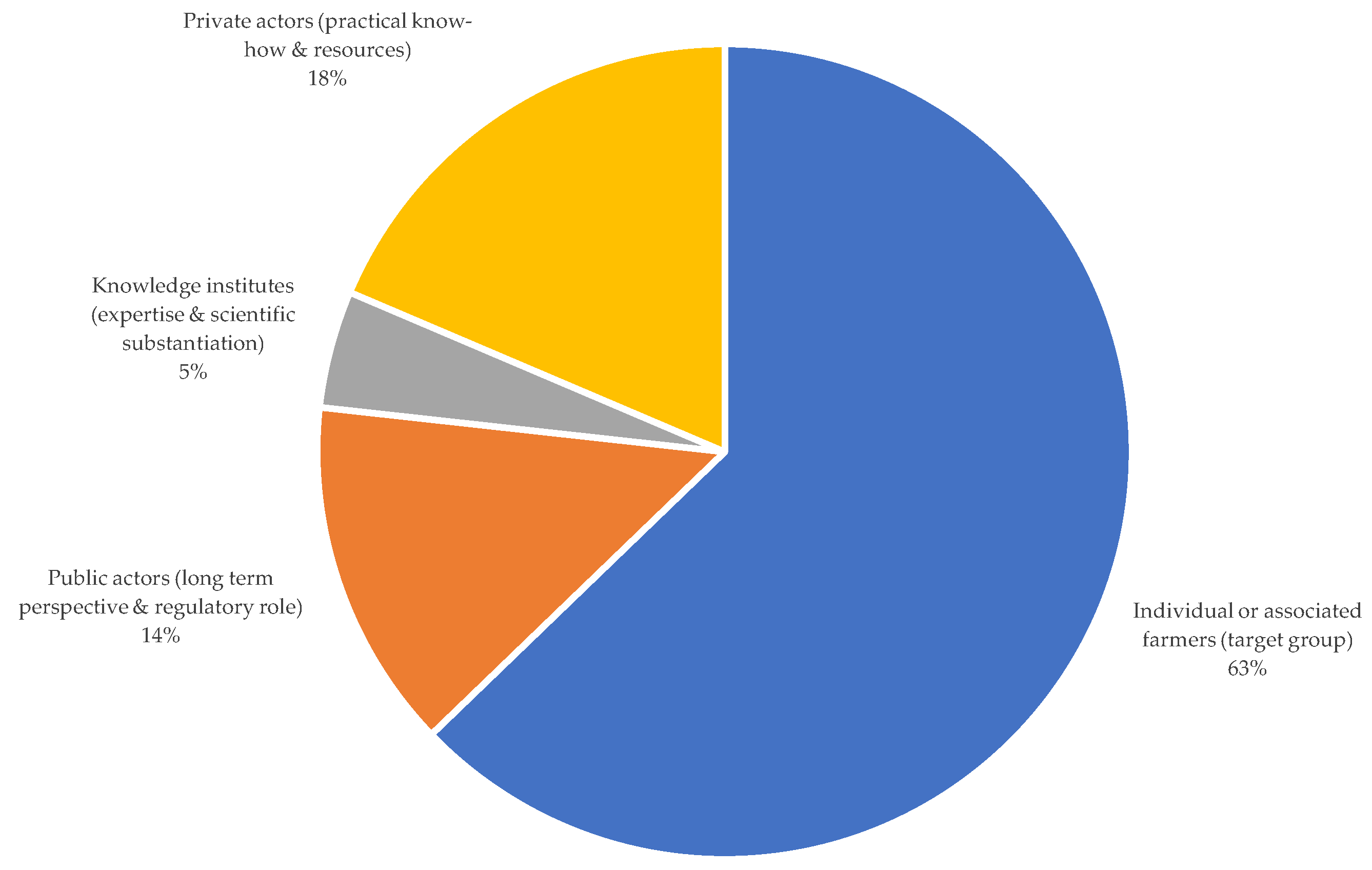
Figure 3.
Moments of the Living Lab ARIA activities (2024).
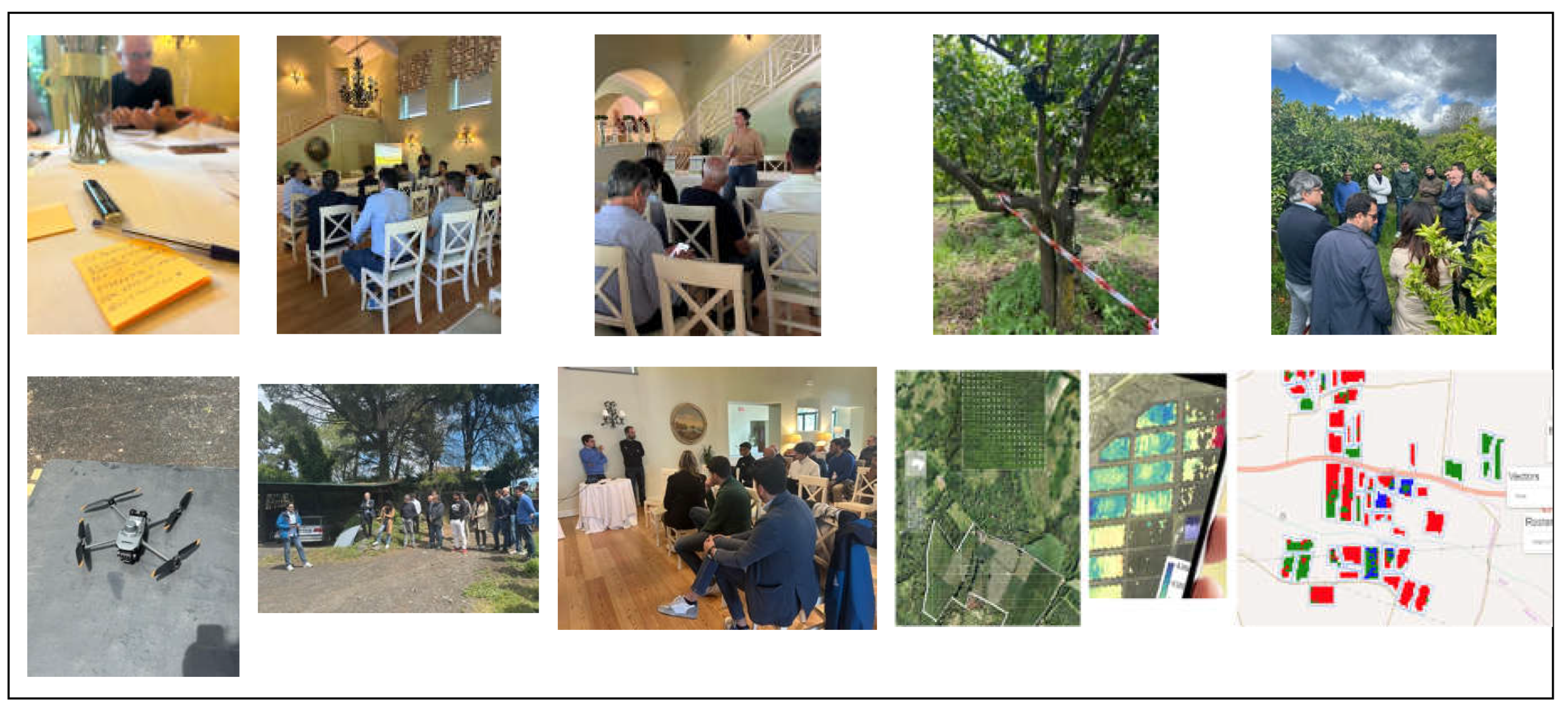
Figure 4.
Stakeholders involved in the ARIA Living Lab by origin (2024).
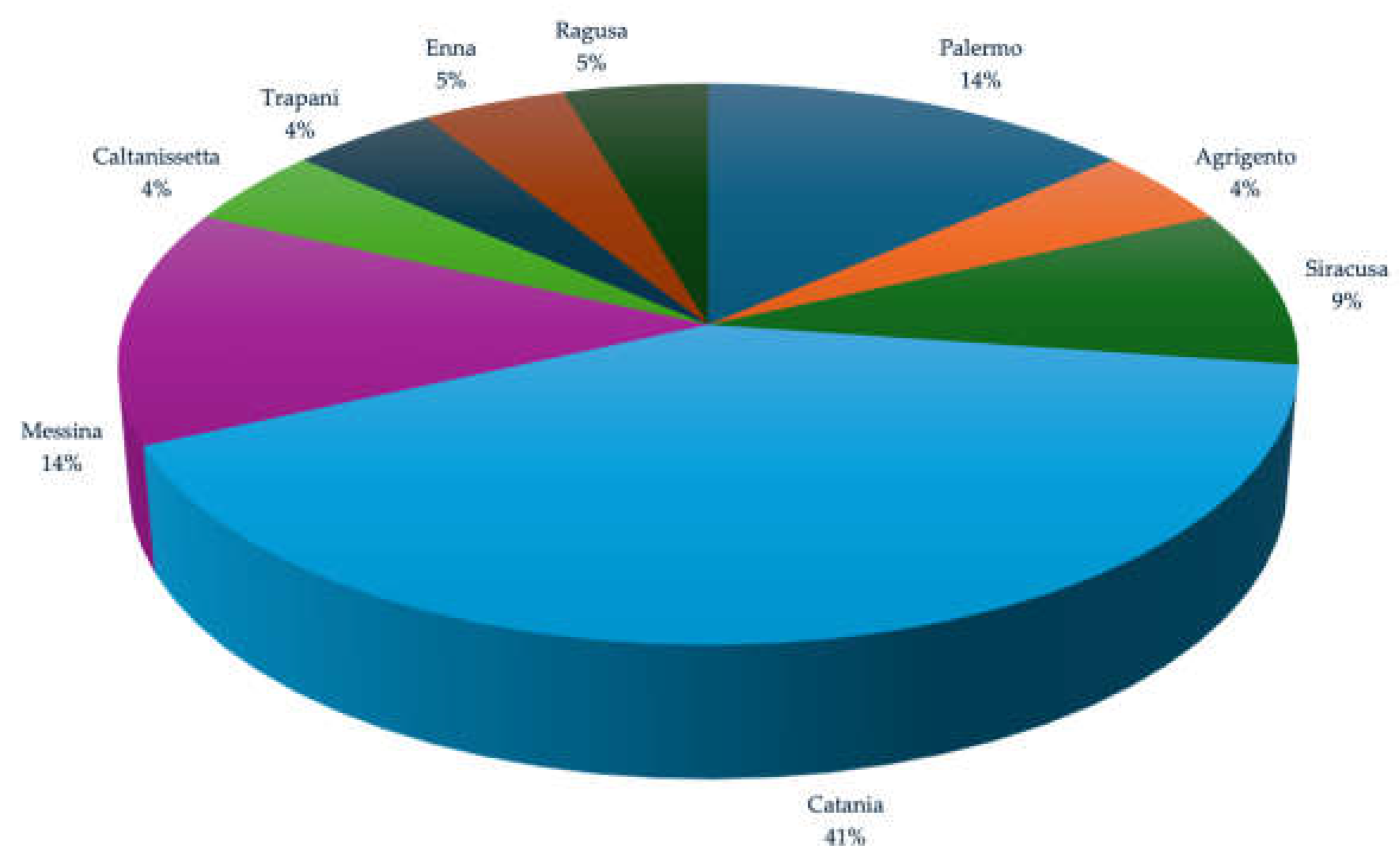
Figure 5.
Innovations introduced in agriculture in the last three years, by main type (2024).
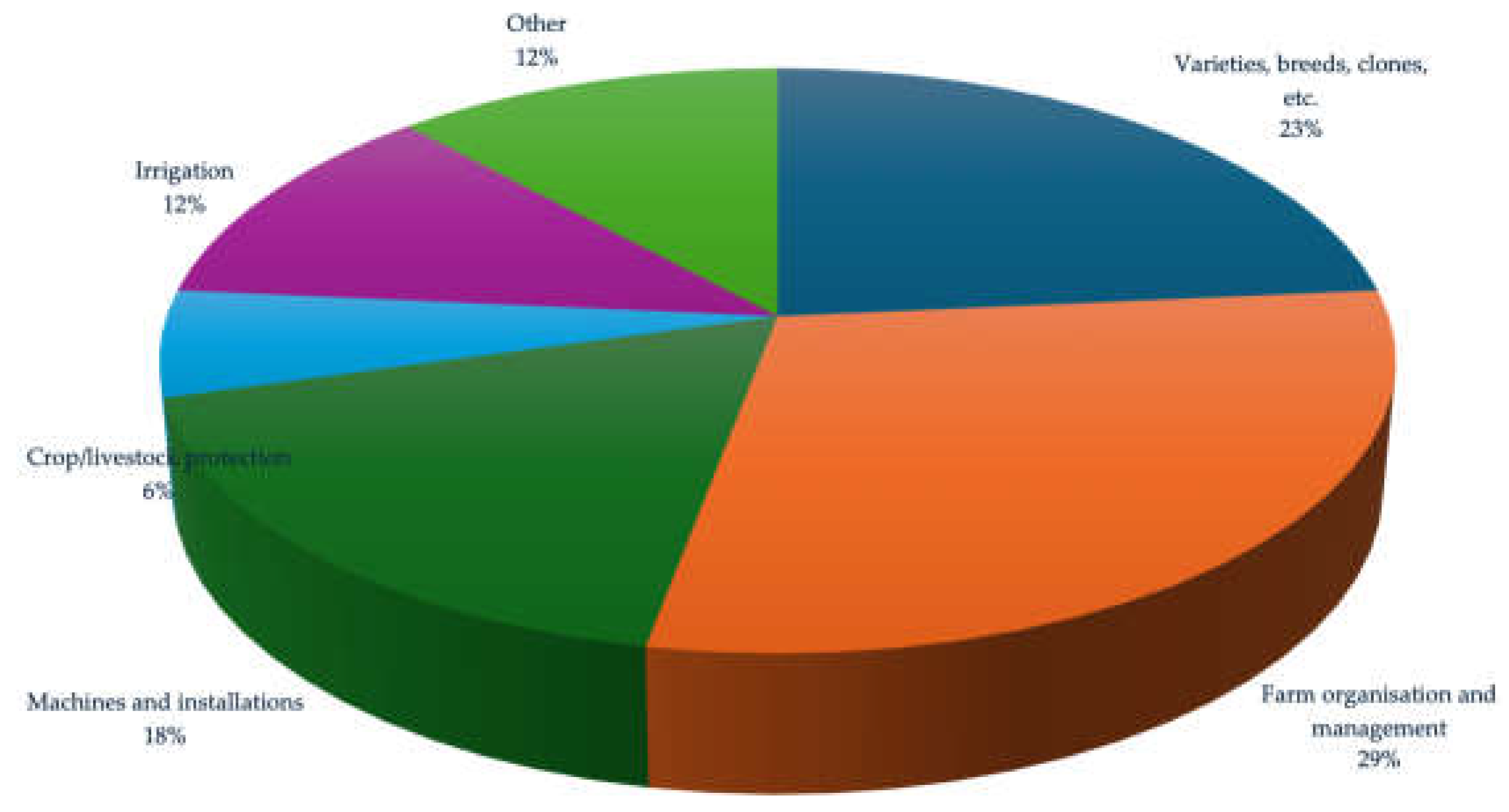
Figure 6.
Type of enabling technology known to the stakeholders involved in the ARIA Living Lab (2024).
Figure 6.
Type of enabling technology known to the stakeholders involved in the ARIA Living Lab (2024).
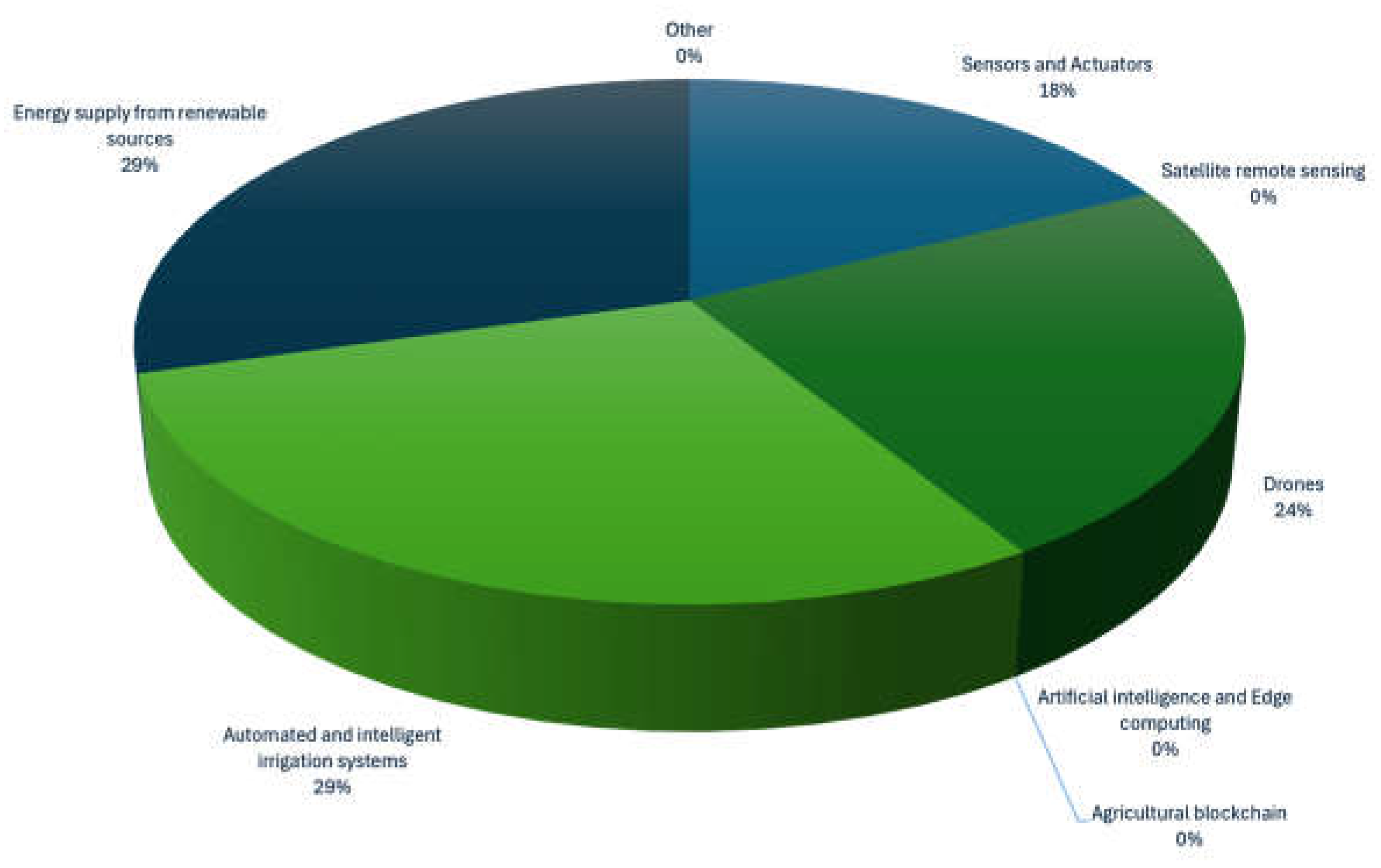
Figure 7.
Perceived usefulness of enabling technology adoption in agriculture by ARIA Living Lab stakeholders (2024).
Figure 7.
Perceived usefulness of enabling technology adoption in agriculture by ARIA Living Lab stakeholders (2024).
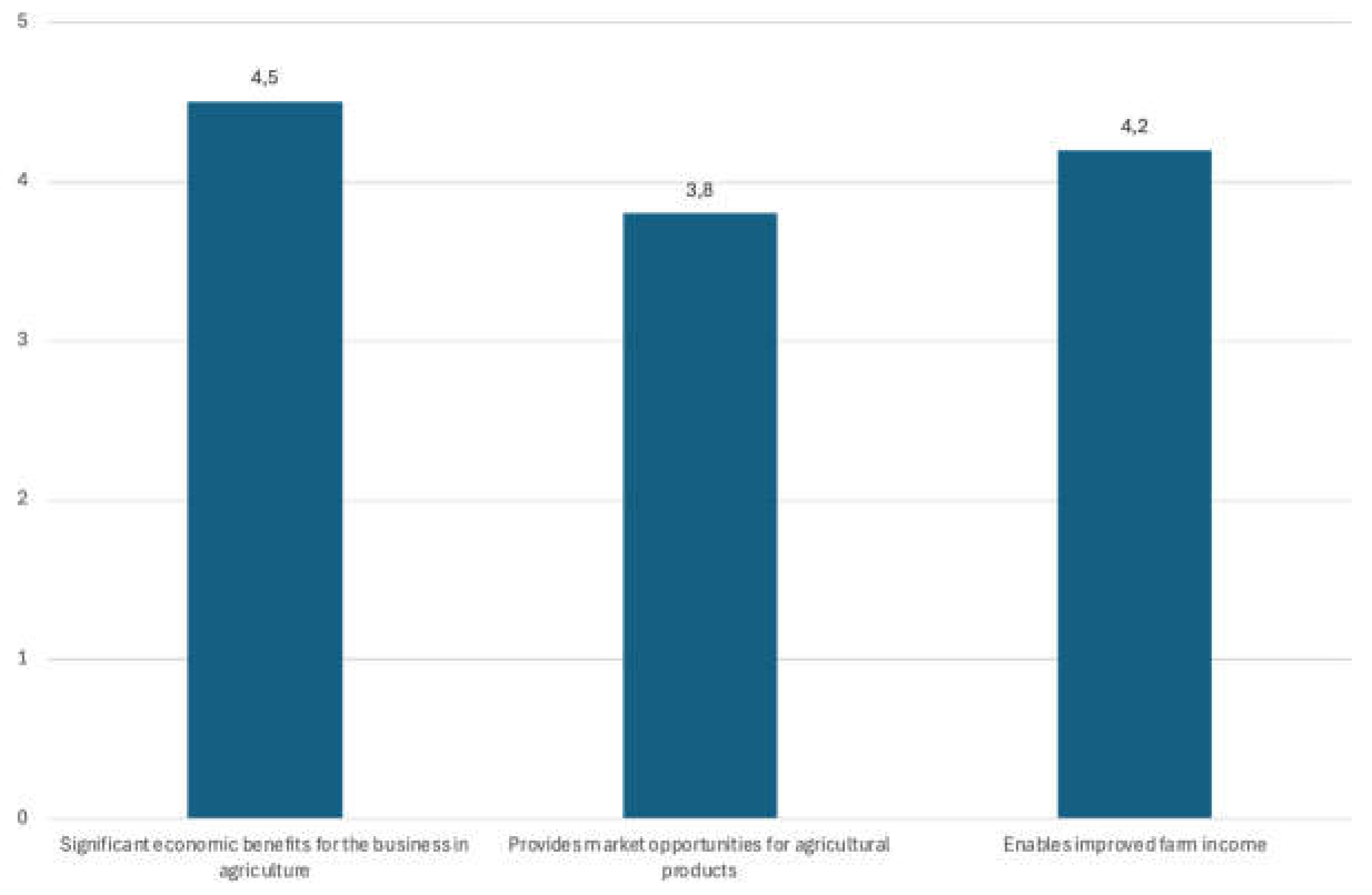
Figure 8.
Perceived risks of enabling technology adoption in agriculture by ARIA Living Lab stakeholders (2024).
Figure 8.
Perceived risks of enabling technology adoption in agriculture by ARIA Living Lab stakeholders (2024).
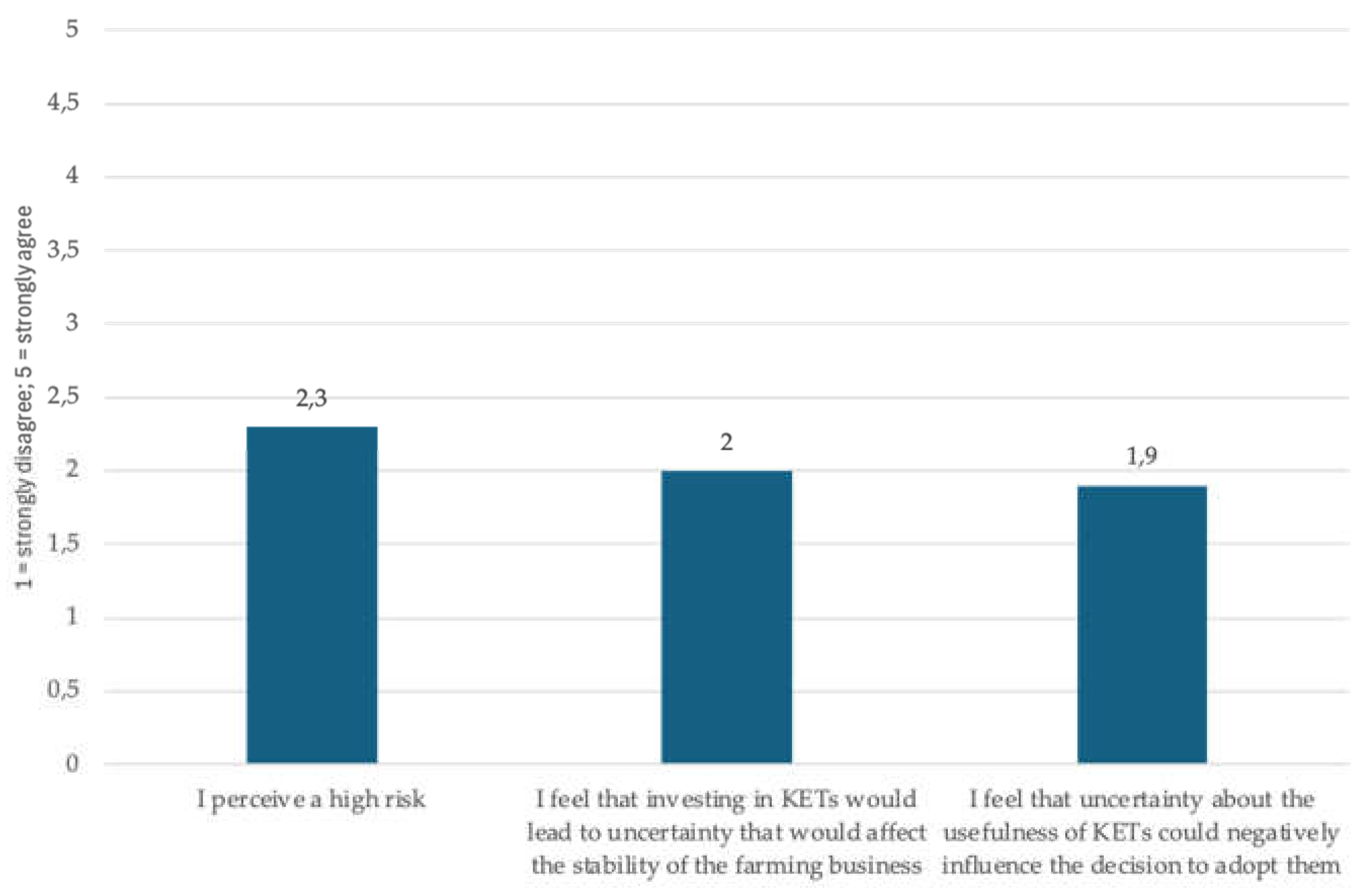
Figure 9.
Cause and effect analysis in the Ishikawa diagram on the adoption of enabling technologies in agriculture (2024).
Figure 9.
Cause and effect analysis in the Ishikawa diagram on the adoption of enabling technologies in agriculture (2024).
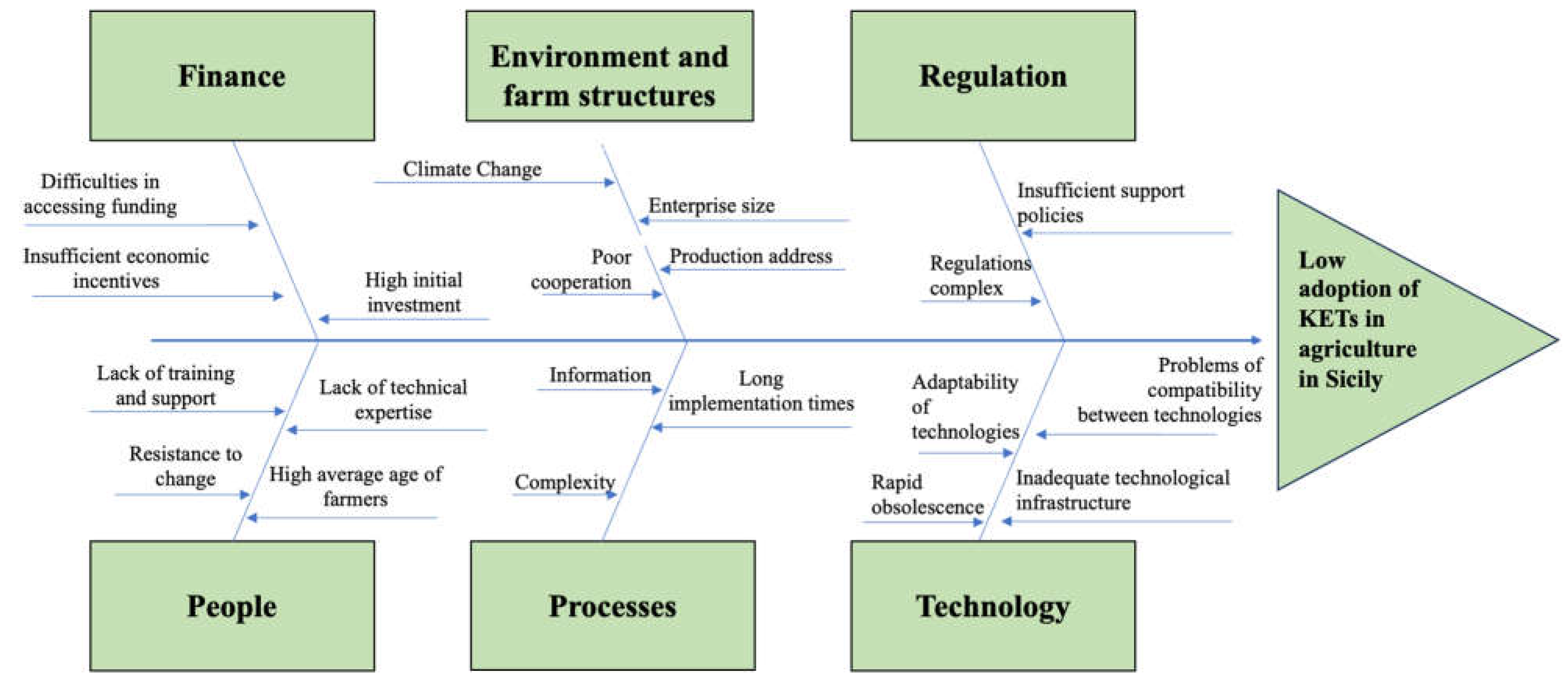
Figure 10.
Causal map on the adoption of KETs in agriculture in Sicily (2024).
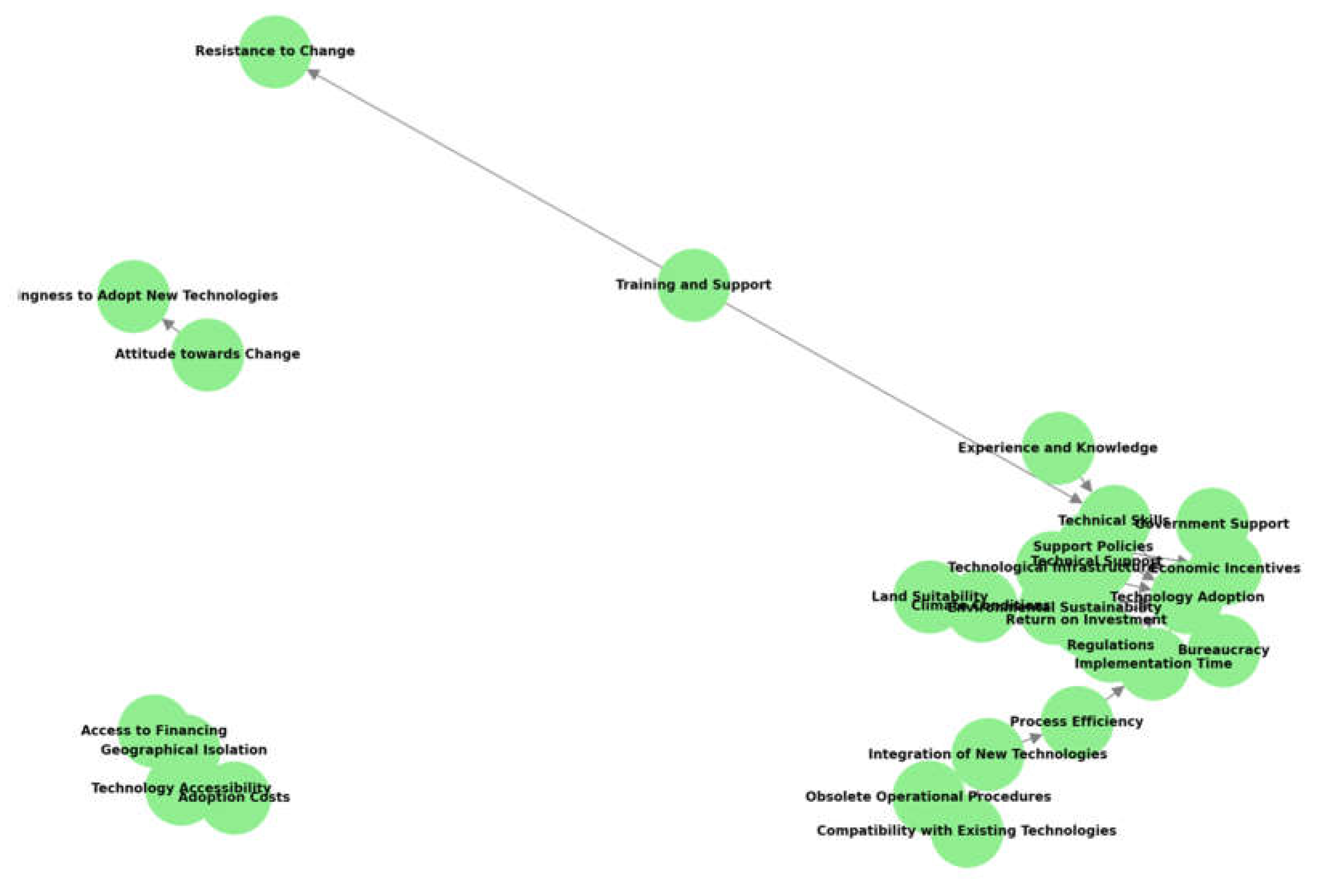
Figure 11.
Evaluation of the relative importance of Business Model Canvas items for three key sectors of Sicilian agriculture: citrus, wine and olive growing (2024).
Figure 11.
Evaluation of the relative importance of Business Model Canvas items for three key sectors of Sicilian agriculture: citrus, wine and olive growing (2024).
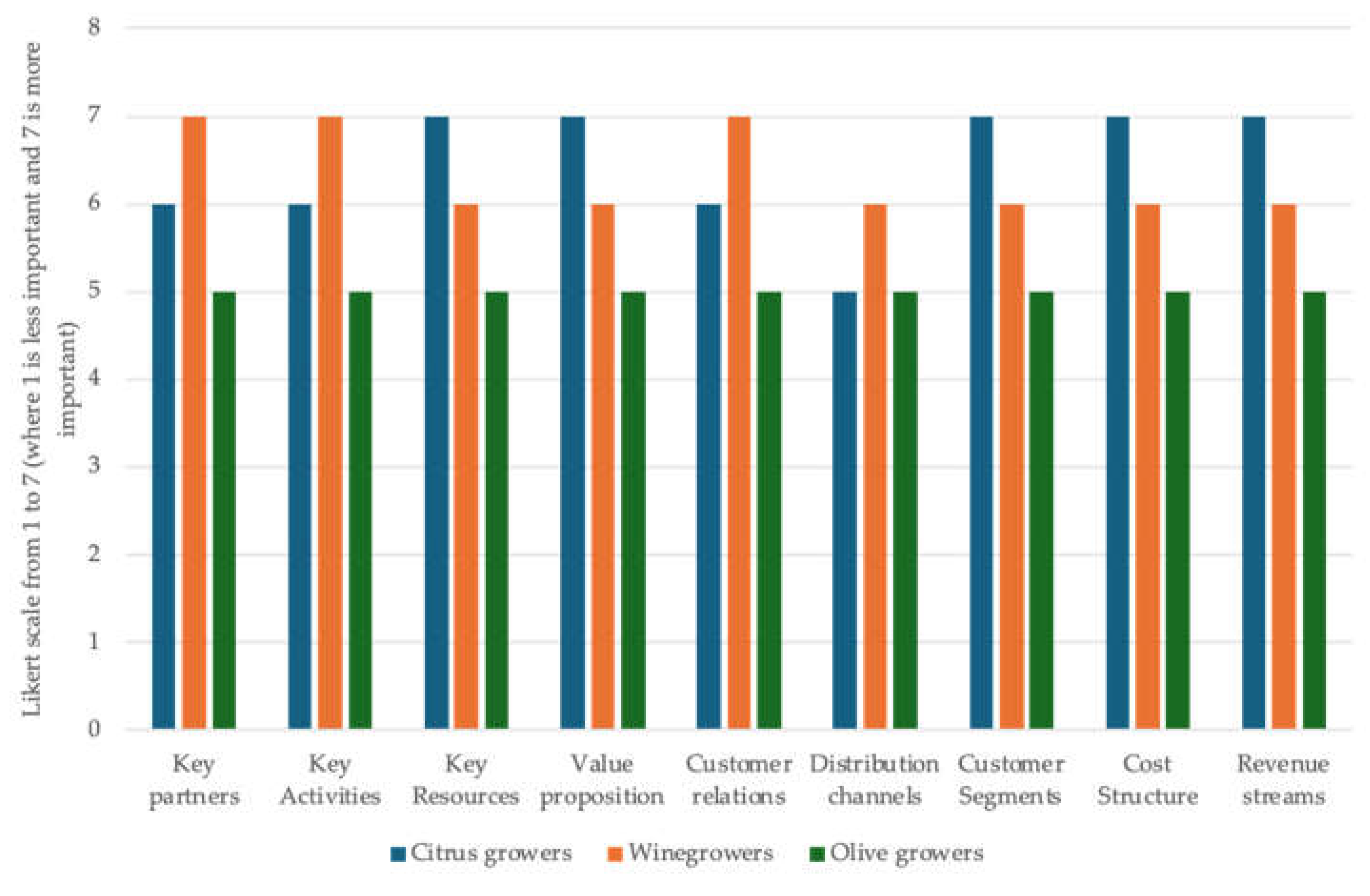

Table 1.
Innovative farms in Italy and Sicily (2024) (*).
| Areas | Total farms | Farms with at least one innovative investment in the three-year period 2018-2020 | % | ||
|---|---|---|---|---|---|
| Sicily, a | 142,416 | 8,114 | 5.7 | ||
| Italy, b | 1,133,023 | 124,904 | 11.0 | ||
| % a/b | 12.6 | 6.5 | |||
| The total of 1,133,023 contains 2,495 collective properties for which the questions on the tendency to innovate were not provided. VII General Agricultural Census, ISTAT, Rome. | |||||
Table 2.
Innovative farms by AWU classes (2024) (*).
| All farms | Innovative farms | ||||||||
| AWU classes | AWU classes | ||||||||
| Areas | Total Farm, n. | 0<AWU<=1 | 1<AWU<=10 | AWU>10 | Total Farm, n. | 0<AWU<=1 | 1<AWU<=10 | AWU>10 | |
| Sicily, a | 142,416 | 123,563 | 18,409 | 358 | 8,114 | 4,792 | 3,174 | 148 | |
| 5.7 | 3.9 | 17.2 | 41.3 | ||||||
| Italy, b | 1,133,023 | 912,938 | 214,117 | 3,473 | 124,904 | 55,995 | 66,895 | 2,014 | |
| 11 | 6.1 | 31.2 | 58 | ||||||
| % a/b | 12.6 | 13.5 | 8.6 | 10.3 | 6.5 | 8.6 | 4.7 | 7.3 | |
(*) Source. VII General Census of Agriculture, ISTAT, Rome.
Table 3.
Business Model Canvas for the adoption of enabling technologies in agriculture in Sicily.
Key partners:
|
Key Activities:
|
Value proposition:
|
Customer relations:
|
Customer Segments:
|
|
Key Resources:
|
Distribution channels:
|
||||
Cost Structure:
|
Revenue streams:
|
||||
Disclaimer/Publisher’s Note: The statements, opinions and data contained in all publications are solely those of the individual author(s) and contributor(s) and not of MDPI and/or the editor(s). MDPI and/or the editor(s) disclaim responsibility for any injury to people or property resulting from any ideas, methods, instructions or products referred to in the content. |
© 2024 by the authors. Licensee MDPI, Basel, Switzerland. This article is an open access article distributed under the terms and conditions of the Creative Commons Attribution (CC BY) license (http://creativecommons.org/licenses/by/4.0/).
Copyright: This open access article is published under a Creative Commons CC BY 4.0 license, which permit the free download, distribution, and reuse, provided that the author and preprint are cited in any reuse.


