1. Introduction
Sustainable development serves as an overarching framework for global development, prioritizing the well-being of both humanity and the planet. The
2030 Agenda for Sustainable Development [
1] adopted by all member states of the United Nations, which sets out the global Sustainable Development Goals (SDGs) to ensure that everyone on the planet, now and in the future, can live a sustainable, peaceful, prosperous and fair life. The 2030 Agenda encompasses 17 SDGs and 169 related targets and provides a comprehensive and integrated framework for tackling complex global challenges. This paradigm shift means moving away from isolated, sector-specific interventions towards a holistic approach to sustainable development [
2,
3]. The adoption of the 2030 Agenda alongside the Paris Climate Agreement marks a pivotal moment in global sustainability governance. This dual framework establishes a comprehensive paradigm that supports both national-level implementation and international collaboration on sustainable development, necessitating transformative actions from governments, civil society, academia, and the private sector [
4,
5]. Its wide-ranging influence is already evident through its integration into national policy frameworks, corporate sustainability strategies, and interdisciplinary research agendas. Furthermore, it has catalyzed the emergence of a new sustainability discourse, embedding concepts such as the circular economy, climate resilience, and inclusive growth into diverse sectors and academic disciplines [
6,
7,
8].
The World in 2050 initiative [
9] aims to develop and analyze scenarios that concurrently demonstrate how the SDGs can be achieved within planetary boundaries to ensure prosperity, social inclusion and good governance for the world's population [
9]. The
TWI2050 framework is based on complex systems thinking and transdisciplinary approaches to address the complex interactions between socio-economic development and environmental sustainability. By using advanced modelling techniques and synthesizing diverse expert knowledge, the framework strives to identify synergies and trade-offs between different sustainable development goals [
10,
11]. The
TWI2050 framework proposes six SDG transformations as modular building blocks for achieving the SDGs, also addressed as six key domains: (1) Human capacity and demography (education, gender and inequality); (2) Consumption and production (health, well-being and demography); (3) Decarbonization and energy (energy decarbonization and sustainable industry); (4) Food, biosphere and water (sustainable food, land, water and oceans); (5) Smart cities (sustainable cities and communities); and (6) Digital revolution for sustainable development. Each of the transformation domains identifies priority investments and regulatory challenges that require action from well-defined parts of government in collaboration with business and civil society and can be operationalized considering the strong interdependencies between all the 17 SDGs.
TWI2050 framework also outlines an action agenda for science to provide the research-based support needed to design, implement and monitor six SDG transformations [
4].
In elaboration of sixth SDG transformation domain, Digital revolution for sustainable development, it is defined as follows [
4] pp. 14:
“Artificial Intelligence and other digital technologies – sometimes referred to as the Fourth Industrial Revolution – are disrupting nearly every sector of the economy, including agriculture (precision agriculture), mining (autonomous vehicles), manufacturing (robotics), retail (e-commerce), finance (e-payments, trading strategies), media (social networks), health (diagnostics, telemedicine), education (online learning), public administration (e-governance, e-voting), and science and technology. Digital technologies can raise productivity, lower production costs, reduce emissions, expand access, dematerialize production, improve matching in markets, enable the use of big data, and make public services more readily available. They can also improve resource-use efficiencies, support the circular economy, enable zero-carbon energy systems, help monitor and protect ecosystems, and assume other critical roles in support of the SDGs.”
In that context, it has been recognized that the advances such as the Internet of Things (IoT), Information and Communication Technology (ICT), Big Data (BD), Artificial Intelligence (AI), have enormous potential for solving problems related to sustainability, as they can integrate various aspects of sustainability, improve resource management, accelerate innovation, improve collaboration between stakeholders, and enable long-term sustainable planning [
12,
13]. For example, digital technology can transform cities by implementing urban mobility schemes to improve air quality, social inclusion, and reduce congestion [
14], enhance the resilience and adaptability of various agricultural systems, such as smart farming, precision agriculture, and circular economy models [
15], algorithms for automatic identification of possible oil spills to prevent and reduce marine pollution [
16] etc. However, additionally to the mentioned in general positive impacts of digital technology, some authors indicate also their negative impacts on sustainable development. For example that AI-enhanced agricultural equipment may not be accessible to small farmers and thus produce an increased gap with respect to larger producers in more developed economies [
17], the future markets may rely heavily on data analysis and these resources could not be equally available in low- and middle- income countries, which may be increase the economical gap [
18].
AI in relation to sustainable development has been implemented in many fields and recognized for potential contributions to SDGs, but it has also been pointed to its possible negative impacts. Vinuesa [
19] has addressed this issue in a review article, where they provide an overview of the general areas of positive and negative impacts of AI. Thereby, they categorised the SDGs into three groups, according to the three pillars of sustainable development, namely Society (SDG 1 – SDG 7, SDG 11, SDG 16), Economy (SDG 8 – SDG 10, SDG 12, SDG 17), and Environment (SDG 13 – SDG 15). In their survey, they found that AI can enable the accomplishment of 134 targets (79%) across all 17 SDGs generally through a technological improvement, which may allow to overcome certain present limitations, but it may also inhibit 59 targets (35%) also across all SDGs. The most positive impact was found in Environmental pilar (93%), followed by Society (82%) and Economy pilars (70%), on the other hand the most negative impact was found in Society pilar (38%), Economy (33%) and Environment (30%).
The concept of twin-transitions — the integration of digital and green transformation — is increasingly recognized as crucial to achieving a sustainable future. This perspective is supported by the European Commission's Strategic Foresight Report 2022 [
20], which emphasizes the importance of synchronizing these transitions to enhance resilience and sustainability across different sectors. Twin-transitions can reinforce each other in many areas, but they are not automatically synchronized, as the report
Towards a green and digital future - Key requirements for successful twin transitions in the European Union, produced by the Joint Research Center of the European Union, shows [
21]. In the report, it is pointed out how these two transitions mutually reinforce each other, especially in five of the most greenhouse gas emitting sectors (agriculture, buildings and construction, energy, energy-intensive industries, and transport and mobility). Additionally, the OECD's analysis highlights the role of digital technologies in facilitating the green transition, underscoring their combined significance in addressing environmental challenges [
22].
Education is in last decades undergoing rapid innovation, driven by digital technology [
23,
24,
25]. AI, is also pointed out as one of the technologies, playing an increasingly significant role in helping educators improve their efficiency and learning outcomes [
26,
27]. The literature review on the use of AIEd tools in higher education (AIEd HE) by Crompton and Burke [
28] identified as much as 138 scientific articles for the period 2016 to 2022. The AIEd HE were mostly used at the undergraduate and graduate levels with the following purposes: (1)
Assessment/Evaluation (e.g. automated assessment, generating tests, feedback, review of students' online activities, evaluation of educational resources), (2)
Predicting (e.g. academic performance, project topics, dropout, career decisions, innovative ability etc.), (3)
AI Assistant (e.g. virtual agents, chatbot assistance, general help) (4)
Intelligent Tutoring System (adaptive instructional systems that involve the use of AI techniques and educational methods), and (5)
Managing Student Learning (e.g. learning analytics, identification of learning patterns, curriculum sequencing, instructional design, analysis of teaching effects, clustering students' personal characteristics, etc.). Thereby almost 50% of the studies were conducted in the areas of language learning, computer science, management and engineering, whereas only few studies reported in math, education, medicine and music [
28]. The review of literature for the period 2012–2021 by Chiu et al.[
29]identified 13 roles of AI technologies in the four key educational domains. Thereby, four roles for
application of AI to student learning (assigning tasks based on individual competence; providing human–machine conversations; analyzing student work for feedback; increasing adaptability and interactivity in digital environments), three roles for
AI in teaching (providing adaptive teaching strategies; enhancing academics’ ability to teach; supporting teacher professional development), two roles for
AI in assessment (providing automatic marking; predicting students’ performance) and three roles for
AI in administration (improving the performance of management platforms; providing convenient and personalized services; supporting educational decision-making with evidence) [
30].
Despite the excitement and a variety of possibilities that modernizing education with contemporary digital technology can offer, it is also important to be aware of the important role of education in promoting sustainable development, as highlighted in UNESCO's calls for countries to fully commit to the Education for Sustainable Development (ESD) vision [
31]. It is crucial to prepare the ground for a twin-transition also in education, where digital technology will support the sustainable transition and vice versa.
The University of Ljubljana is committed to both digital and green transitions, as reflected in its involvement in national and international projects [
32] aligned with
Strategy of the University of Ljubljana for the period 2022-2027 [
33]. Based on its strategy, the University of Ljubljana between 2021 and 2024 launched various actions focusing on digitalization or sustainability in the framework of so-called
Development Pillar of Funding (RSF). Among these actions, the development of a support system for academics and students to integrate ICT and modern technological solutions into pedagogical process was prioritized, resulting in the project call entitled
Artificial intelligence in education at the University of Ljubljana (January 2023 – November 2024). The project aimed to support the meaningful implementation of AI in the pedagogical process and to facilitate the exchange of best practises in different faculties of the University of Ljubljana. In the description of the project call
Artificial intelligence in education at the University of Ljubljana sustainable development or SDGs and its specific targets were not mentioned, as other projects under the
Development Pillar of Funding targeted particularly with issues of sustainable development.
However, as the implementation of the twin-transitions is increasingly recognized as important for achieving a sustainable future, the purpose of our paper is to analyze the results of the project
Artificial intelligence in education at the University of Ljubljana, which focused primarily on digitalization, for the documented evidence of the potential positive and negative impacts of AI in education for achieving the SDGs and their specific targets, using the methodology of Vinuese [
19]. The main significance of this article is therefore to draw research-based attention to the importance of twin-transition issue also in education to facilitate its further elaboration and development in the future at the national level as well as internationally.
4. Results
Our analysis of the reported practices shows that the implementation of AI in the pedagogical process can have an impact on the achievement of 11 SDGs and 28 targets.
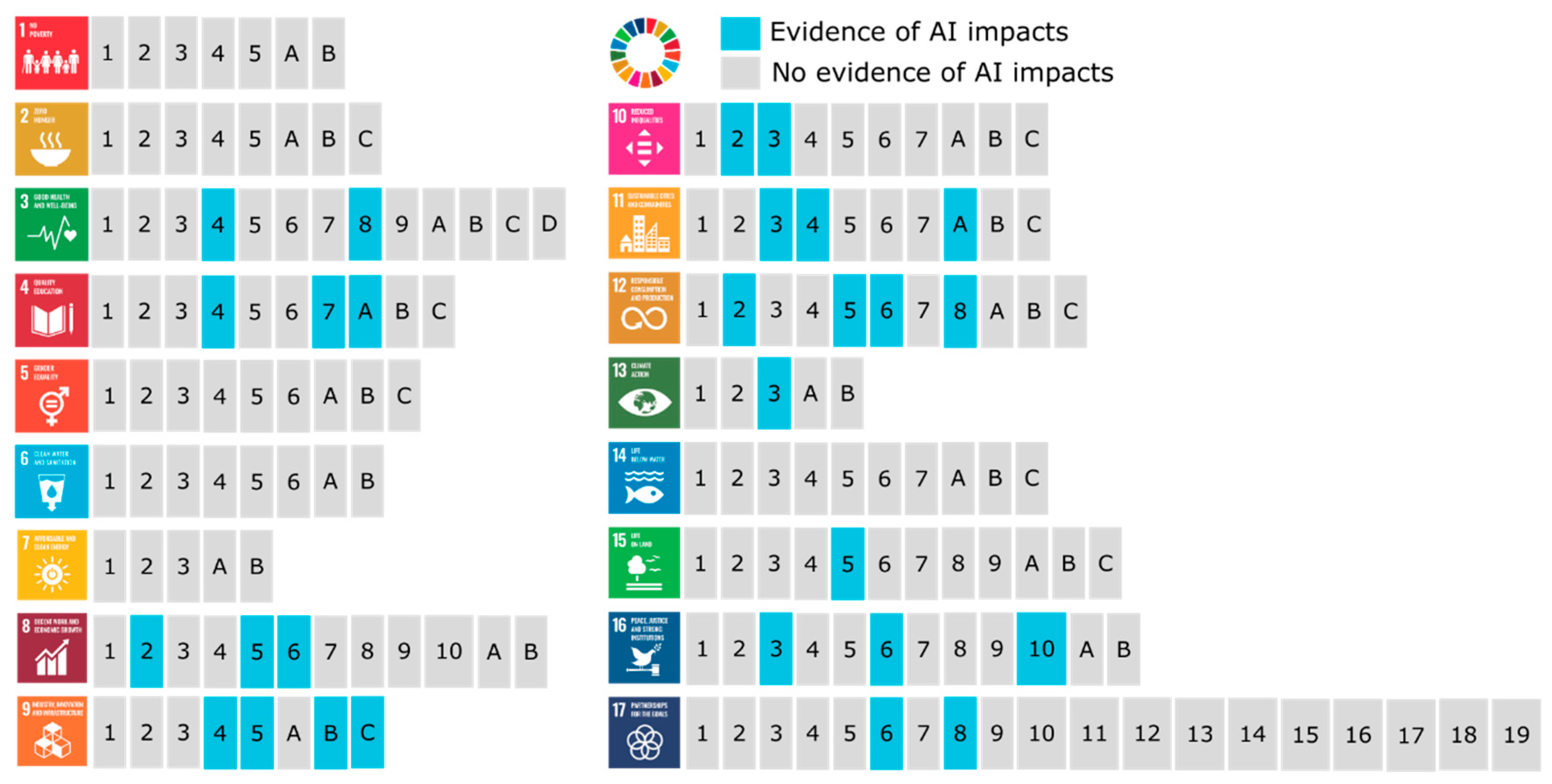
Figure 1 highlights the significant but uneven impact of AI implementation on the SDG targets. Evidence of the impact of AI was found in the areas of Good Health and Well-being (SDG 3), Quality Education (SDG 4), Decent Work and Economic Growth (SDG 8), Industry, Innovation and Infrastructure (SDG 9), Reduced Inequalities (SDG 10), Sustainable Cities and Communities (SDG 11), Responsible Consumption and Production (SDG 12), Climate Action (SDG 13), Life on Land (SDG 15), Peace, Justice and Strong Institutions (SDG 16) and Partnership for the Goals (SDG 17). The findings show the potential for further use of AI in educational processes in previously unaddressed areas such as No Poverty (SDG 1), Zero Hunger (SDG 2), Gender Equality (SDG 5), Clean Water and Sanitation (SDG 6), Affordable and Clean Energy (SDG 7) and Life Below Water (SDG 14). By using these insights, educators and policy makers can expand the implementation of AI in educational processes to maximize its transformative impact on achieving the SDGs.
In the remainder of the article, the impact of the implementation of AI in the pedagogical process on the achievement of the 11 SDGs and 28 targets, mentioned in
Figure 1, will be elaborated in terms of their categorization into three groups, corresponding to the three pillars of sustainable development, namely Society (SDG 1 – SDG 7, SDG 11, SDG 16), Economy (SDG 8 – SDG 10, SDG 12, SDG 17), and Environment (SDG 13 – SDG 15) based on Vinuesa's methodology [
19].
AI in the Pedagogical Process related to Societal Outcomes
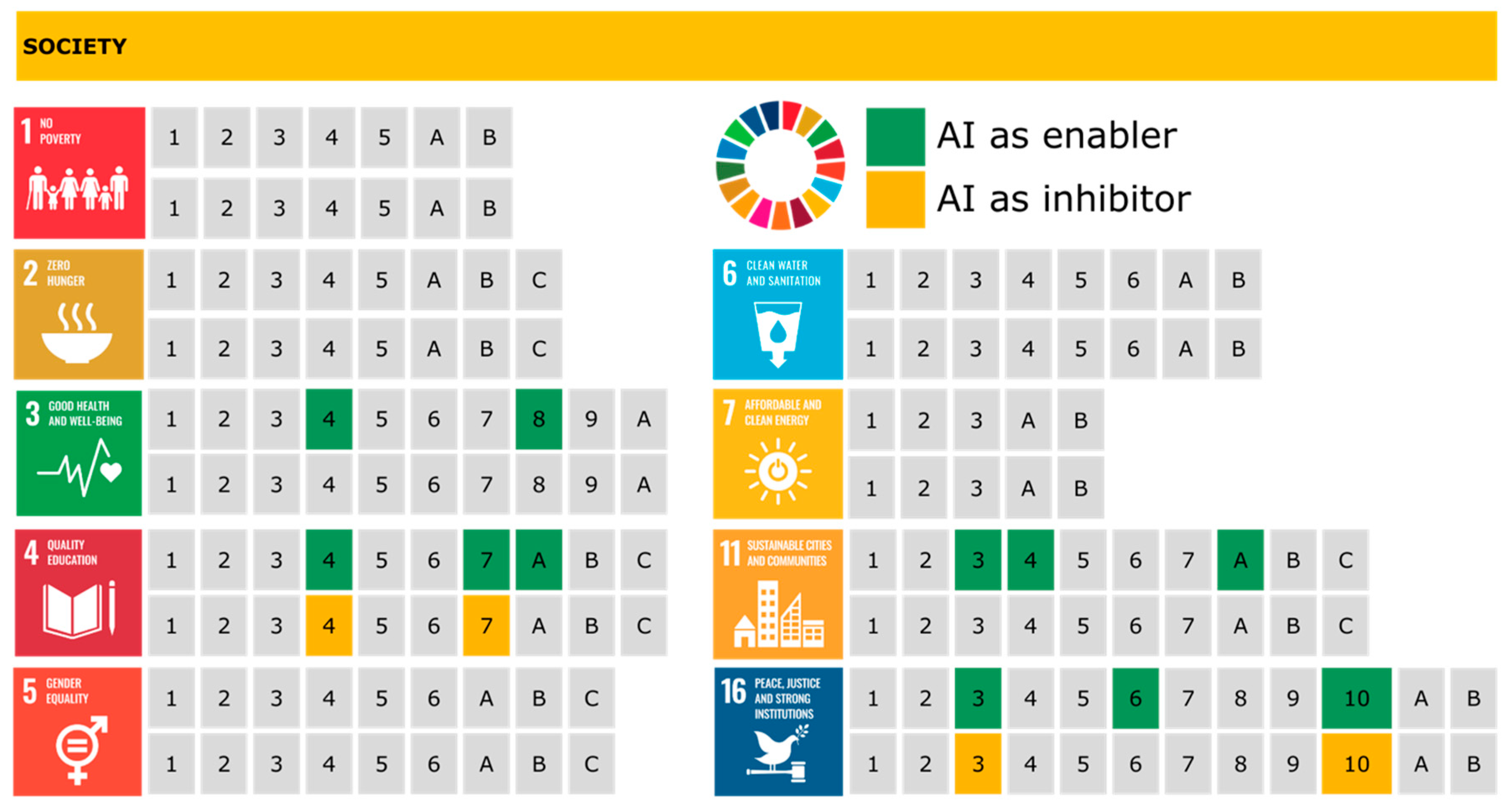
The Society group comprises a total of 9 SDGs and 76 targets. As can be seen in
Figure 2 11 targets could potentially benefit from the implementation of AI in the educational process. These targets were addressed 71 times in the text in all 26 reports. On the other hand, it was found, that four targets could have a negative impact on the implementation of AI in the pedagogical process. These targets were addressed four times in the text of Practices N
o 1, 3 and 13.
For instance, in SDG 3 on Good Health and Well-being, SDG 4 on Quality Education, SDG 11 on Sustainable Cities and Communities and SDG 16 on Peace, Justice and Strong Institutions, AI implementation in the educational process can serve as an enabler. On the other hand, we noticed, that in SDG 4 and SDG 16 AI can act as inhibitor as well.
More specifically, the implementation of AIEd tools such as OpenCV, Neural Networks CNN (VGG16, VGG19, ALEXNET or similar), TensorFlow and Keras in healthcare education, e.g. in assessing the quality of ultrasound equipment, has improved diagnostic accuracy and preventive healthcare measures. This contributes to better health outcomes by improving the quality of healthcare diagnostics, which is critical to reducing mortality rates (Target 3.4, i.e. reported Practice No 17). The use of AIEd tools in education facilitates the quality of services and the efficiency of healthcare delivery. This is a fundamental aspect of achieving universal health coverage through the promotion of innovative, technology driven approaches (Target 3.8, i.e. reported Practice No 17).
The implementation of AIEd tools has played a crucial role in providing students with practical and technical skills that are highly relevant to the modern employment contexts (Target 4.4, in all 26 reported practices). Tools such as ChatGPT, Midjourney, DALL-E and CodeQ were used to promote digital literacy, creative skills and critical thinking so that students could learn hands-on and improve their employability. AI also enabled exposure to real-world scenarios, such as digital marketing simulations, navigating patent databases and healthcare research, bridging the gap between academic learning and the professional environment. In addition, AIEd tools such as Virtual Caliper, Blender and CLO 3D helped students gain specialized skills in areas such as visual design and architecture to ensure they are prepared for technology-driven careers. Overall, AI integration promoted independent learning, adaptability, and innovation, which are key competencies for the future workforce. On the other hand, we found that academics indicated that potential overreliance on AIEd tools could hinder deep conceptual understanding if not paired with foundational knowledge (i.e. reported Practice No 1).
AI-enhanced education has contributed positively to promoting awareness of sustainable development and global citizenship (Target 4.7, i.e. in all reported practices, beside reported Practice No 2) by engaging students in real-world challenges. Tools such as Midjourney, ChatGPT and DALL-E were utilised to help students with an understanding of sustainability issues such as environmental scenarios and resource efficient design whilst encouraging innovative thinking. In addition, the integration of AI into activities related to global citizenship enabled students to reflect on ethical dilemmas, justice and human rights, thus promoting responsible digital citizenship. However, we must bear in mind that a limited understanding of the ethical implications of AI can lead to misuse (i.e. reported Practice No. 1). Nonetheless, AIEd tools such as Virtual Caliper and CLO 3D promote sustainable practices by replacing physical prototypes with digital models, thus supporting the reduction of waste. Furthermore, interdisciplinary learning with AI facilitated students' understanding of complex global issues such as bioinformatics, genomics and sustainable agriculture, empowering them with the knowledge and skills to contribute to sustainable development.
The inclusion of AIEd tools such as ChatGPT, Google Translate, DeepL in educational process supports an innovative and inclusive learning environment (Target 4.A, i.e. reported practice No 3) by enabling customised translations and adaptability for diverse linguistic and cultural contexts. Students tested the AI's accessibility features, such as adapting complex texts for younger or specific audiences.
The use of AIEd tools such as DALL-E, Stable Diffusion, Midjourney and ChatGPT has facilitated the exploration of innovative and sustainable architectural design strategies, contributing to more effective urban planning solutions (Target 11.3, i.e. reported Practices No 8, 10, 15, 19). By using the generative capabilities of these AI tools, students were able to conceptualise, design and visualise urban spaces, promoting efficient, climate-resilient and inclusive planning practises. For example, the visualisation of a future landscape for a hypothetically flooded Ljubljana promoted an in-depth exploration of climate-resilient urban planning approaches. In addition, AI enabled students to engage in projects focused on public spaces such as libraries and community centres, deepening their understanding of inclusive urban development through the iterative visualisation and refinement of sustainable design concepts.
AIEd tools have helped to raise awareness of the need to preserve cultural heritage (Target 11.4, in i.e. reported Practice No 10), especially in the face of climate-related threats. By visualising potential flooding scenarios in Ljubljana, the AIEd tools provided students with a comprehensive understanding of the vulnerability of cultural heritage sites and highlighted the need for proactive conservation measures. Tools such as ChatGPT, Midjourney and DALL-E were used effectively to simulate future environmental scenarios, making the risks to cultural heritage more tangible and fostering a proactive mindset in terms of mitigation strategies.
AI has also been used to propose integrated, innovative solutions to address the diverse needs of urban and rural communities, effectively bridging urban-rural linkages (Target 11.A, i.e. reported Practice No 19). In particular, the use of Midjourney in workshops facilitated the creative exploration of solutions that promote balanced socio-economic development between urban and rural areas.
AIEd tools such as ChatGPT, Grammarly and DeepL have been pivotal in promoting students' understanding of international legal frameworks and the rule of law (Target 16.3, i.e. reported Practices No 18, 13, 23). Through simulations of International Criminal Court (ICC) legal proceedings, these tools facilitated efficiency in drafting and presenting legal arguments, enhancing students' understanding of legal standards and procedural subtleties. However, AI-generated inaccuracies in legal content, particularly the inability to fully grasp the complexity of sophisticated legal arguments, underscored the essential role of human oversight in maintaining the quality and validity of legal discourse (i.e., reported Practice No 13). A more detailed argumentation on the positive and negative impact related to Societal Outcomes can be found in Supplementary Data 2.
AI in the Pedagogical Process related to Economical Outcomes
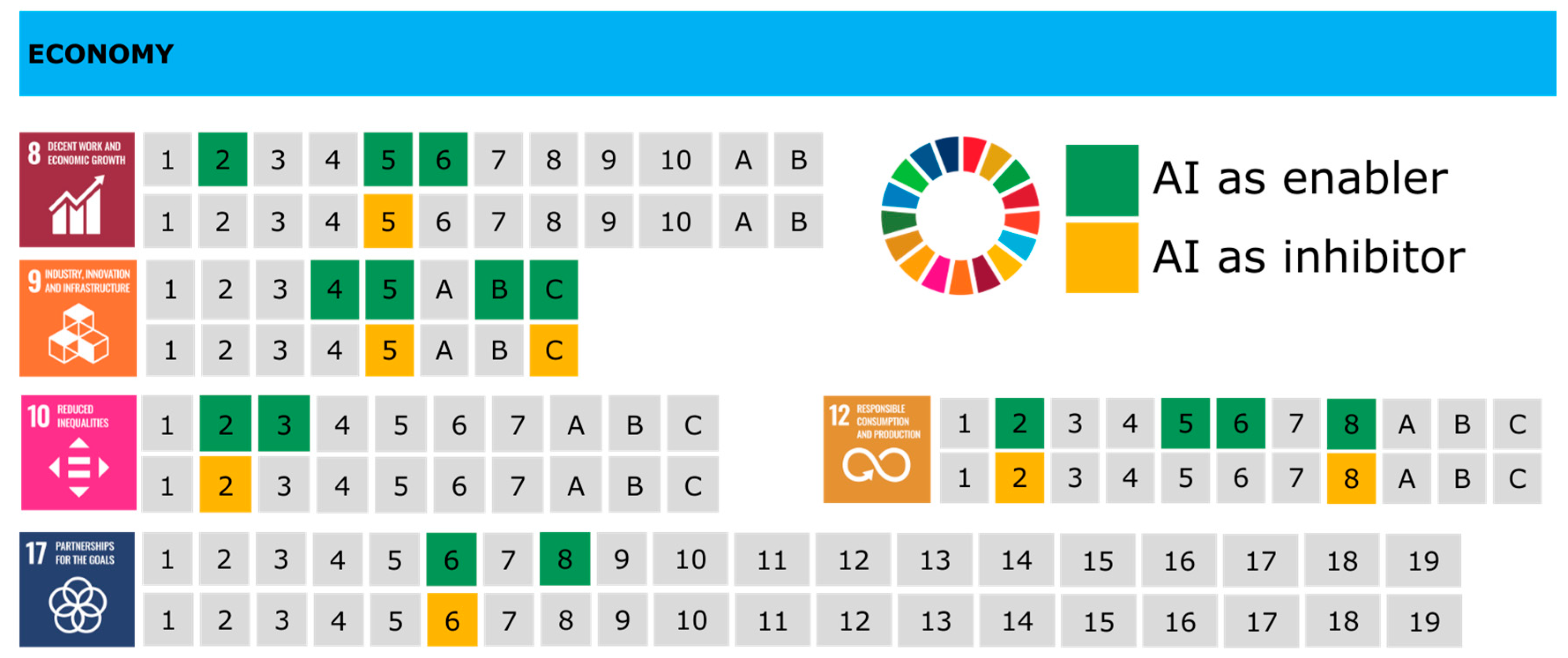
The Economy group comprises a total of 5 SDGs and 60 targets, of which 15 targets could potentially benefit from the implementation of AI in the pedagogical process. The targets were addressed 81 times in the text of all reported practices. It was also noted that seven targets may experience negative impacts from the implementation of AI in the pedagogical process. The targets were addressed 12 times in the text of Practices No 1, 3, 4, 6, 7, 8, 13, 18, 24).
The integration of AI tools in pedagogical process has shown significant positive impacts on several SDGs, particularly in relation to Industry, Innovation and Infrastructure (SDG 9), Economic Growth (SDG 8), Reduced Inequalities (SDG 10), Responsible Consumption and Production (SDG 12) and Partnerships for the Goals (SDG 17). However, certain limitations and challenges were also identified for all the SDGs mentioned, which emphasize the need for responsible and inclusive use of AI.
AIEd tools such as Virtual Caliper, Blender in CLO 3D and Midjourney have enabled technological advances in high-value sectors such as fashion and graphic communication, increasing economic productivity through innovation (Target 8.2, i.e. reported Practices No 5, 7, 11, 14, 16, 24). The use of Mimic Pro Digital Marketing Simternship and CodeQ has helped prepare students for high-growth industries by teaching practical skills and improving technological literacy. AI has helped expand employment opportunities and facilitate inclusion (Target 8.5., i.e. reported Practice No 7). Tools such as Virtual Caliper and Blender in CLO 3D enable customization for different user needs and promote access to jobs in tailoring and design. However, unequal access to these advanced technologies could exacerbate inequalities and disadvantage those who do not have equal access (i.e. reported Practice No 7). Hands-on simulations using tools such as Midjourney, Mimic Pro Digital Marketing Simternship have increased student engagement and better prepared students for professional roles, helping to reduce youth unemployment. CodeQ has also made coding accessible, contributing to the acquisition of skills in technological fields, reducing the skills gap among youth (Target 8.6, i.e. reported Practice No 5, 11, 14).
AIEd tools such as Midjourney, DALL-E and ChatGPT have introduced sustainable practices into design and planning processes. By promoting innovative approaches, these tools can help modernize infrastructure with sustainability in mind, especially in architecture and construction (Target 9.4., i.e. reported Practice No 10, 25). Tools such as ChatGPT, Teachable Machine, Elicit, expoze.io, Coursera and others have created an environment that encourages creativity and experimentation. They have exposed students to cutting-edge technologies in various fields, including digital tailoring, healthcare, and construction (Target 9.5., i.e. all reported Practices, except No 13). However, the lack of robust infrastructure or teacher training could limit the effectiveness of the tools, resulting in less student exposure to innovation (i.e. reported Practice No 1). The integration of AI into local educational practices, such as Midjourney in architecture, has encouraged innovation in design methods and contributed to technological development in the country (Target 9.B, i.e., reported Practice No 19). Tools such as ChatGPT and Elicit have promoted the use of ICT in education, democratized access to information and narrowed the digital divide (Target 9.C, i.e. reported Practice No 3. 8, 12, 20, 21). However, the requirement of institutional licenses and the cost of advanced tools such as the newer model of ChatGPT pose barriers to equal access, thus limiting the full potential of ICT inclusion (i.e. reported Practices No 3, 8).
AIEd tools such as ChatGPT, Grammarly and InstaText have helped to promote equity by making modern technology accessible to diverse groups of students and supporting the empowerment of marginalized groups through digital literacy and language skills. Virtual Caliper and Blender in CLO 3D have helped to tailor content to different users, promoting social inclusion (Target 10.2., i.e. reported Practices No 4, 7, 11, 13, 14, 17, 18, 24, 25). However, inequalities in access to technology, insufficient digital literacy and challenges in dealing with cultural nuances can hinder the role of AI in ensuring full inclusion (i.e. reported Practices No 4, 7, 13, 18, 24). AIEd tools such as DeepL and Grammarly have helped to make information accessible to non-native speakers, break down language barriers, and promote equity for all students (Target 10.3, i.e., reported Practice No 13).
Tools such as expoz.io, Coursera and a simulation programme for dairy cattle breeding have helped to educate students about efficient resource management in agriculture and promote sustainable production practices through AI-assisted learning. This has indirectly contributed to responsible resource consumption (Target 12.2, i.e. reported Practices No 6, 16, 11). AIEd tools such as Virtual Caliper, Blender, Nvidia and Midjourney have minimized reliance on physical materials by enabling digital modelling and prototyping, which substantially reduces waste. Tools such as DALL-E and OpenCV have optimized production processes, contributing to responsible production and consumption by reducing material waste (Target 12.5, i.e. reported Practices No 7, 9, 10, 15, 17, 26). AIEd tools such as ChatGPT, Midjourney and Elicit have been used in education to raise awareness of sustainability issues and encourage students to adopt sustainable practices. By visualizing environmental impacts and providing insights into efficient resource use, AI has helped to inform and inspire students about environmentally friendly practices (Target 12.8, i.e. reported Practices No 1, 2, 3, 5, 9, 10, 11, 12, 20, 21, 22, 25). However, inappropriate or excessive use of AI without adequate critical analysis can undermine the true value of sustainability (Target 12.8, i.e. reported Practice No 1).
The integration of AI in pedagogical process has shown the potential for partnerships and building networks for knowledge sharing in promoting the use of ICT in education (among students from different countries and academics) (Target 17.6, i.e. reported practice No 1, 20), although the reliance on external platforms may pose challenges in terms of data protection and the sustainability of these collaborations (i.e. reported practice No. 1). The use of tools such as ChatGPT, Google Bard and many similar platforms has demonstrated the value of technology integration for improving educational outcomes and promoting technological literacy on a global scale. These tools have enabled students to gain global competencies and become part of larger technology and research networks, thereby fostering capacity building and innovation in education (Target 17.8., i.e., reported Practice No 19, 26). A more detailed argumentation on the positive and negative impacts in terms of economic outcomes can be found in Supplementary Data 2.
5. Discussion
This paper aims to emphasize the importance and value of implementing digital transformation in higher education, aligning with strategic priorities at both international [
37] and national levels [
33]. However, sustainability concerns highlight the need for thoughtful integration of digital tools such as AIEd technologies to support the achievement of the SDGs not only during their study, but also to support the development of students' competencies so that they are able to use future AI tools to promote sustainable development once they are graduates in the workforce. The concept of twin transitions—where digital technology is effectively leveraged to promote sustainability—has gained increasing recognition as essential for building a sustainable future, as noted in the recent agenda of the EU Joint Research Centre [
38].
In our paper the results of the project Artificial intelligence in education at the University of Ljubljana, which focused primarily on digitalization, were analysed for the documented evidence of the potential positive and negative impacts of AI in education for achieving the SDGs and their specific targets, using the methodology of Vinuesa et al. [
19]. To our knowledge, there are no existing studies that apply the methodology of Vinuesa et al. [
19] (or a similar), focusing specifically on the education sector and thereby seeking for the potential positive and negative impacts of the use of AI in higher education courses that could have impact on the achievement of the SDGs.
In their review study, Vinuesa et al. [
19] proved that AI can generally enable the realization of all 17 SDGs with their 134 targets through a technological improvement that allows certain current limitations to be overcome, but it may also hinder 59 targets in all SDGs. In our study focusing solei on the implementation of AI in higher education courses, we found that AI can act as enabler on the achievement of 11 SDGs and 28 targets, while it can also hinder 7 SDGs and their 11 targets. Our study is limited to reports on practices in one of the projects of the University of Ljubljana, where the SDGs could be achieved indirectly through the implementation of AIEd tools in the pedagogical process, therefore a smaller number of SDGs addressed was expected at this point, but the findings still convey a valuable insight into the potential of twin-transition in education.
Similar to Vinuesa et al. [
19], who found the most positive impacts of AI in Environmental pilar, followed by Society and Economy pilar, the most negative impacts were found in Society pilar, Economy and Environment, also the trends in addressing specific SDG pillars could be recognized in our study, albeit in a different order of importance. In our study, the strongest impacts were identified in Economy pillar, followed by Society and Environment pillar. Interestingly, the most negative impacts were also found in the Economy pillar, followed by the Society pillar, while no negative impacts on the Environment pillar were found in the reported practices.
We found that in Economy pillar, on the one hand, AIEd tools contributed significantly to promoting innovation and economic growth and to reducing the skills gap among young people. On the other hand, the most negative impacts identified also in this pillar are due to addressing challenges such as unequal access to technology and privacy concerns, which emphasize the need for equitable access and a robust infrastructure to fully exploit the potential of AI in education.
The positive impact in the Society pillar is attributed to the improvement of health education, the promotion of digital literacy and the support of inclusive learning environments. However, it may also act as a barrier, raising concerns about overuse of AI and limited understanding of the ethical implications.
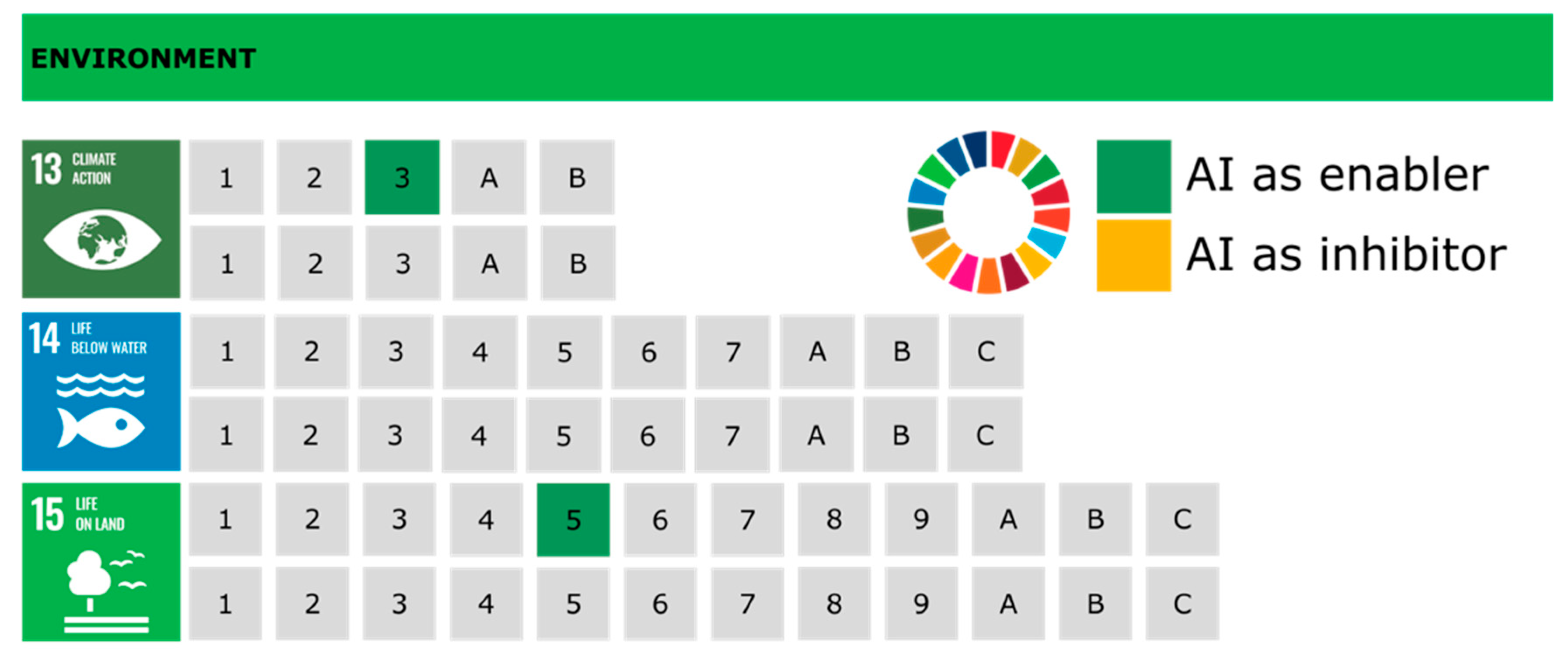
Surprisingly, in our study, the Environmental pillar has the lowest number of targets affected by AI implementation, which is in contrast to what was observed in review by Vinuesa et al. [
19]. Positive impacts in this pillar were observed in promoting awareness of climate change and sustainability practices. However, in our study, no negative impacts were observed in this pillar, suggesting that the role of AI in environmental education is largely positive. These results indicate that there is still much unrecognized potential in the current implementation of the digital transformation that could better support environmental issues so important to sustainable development. The latter can be achieved by raising awareness of the added value of the twin-transition and addressing it more clearly, including through future project calls.
Overall, the implementation of AI in higher education courses has shown significant positive effects on all three SDG pillars. However, our study highlights the importance of responsible and comprehensive use of AI in conjunction with critical human oversight to maximize benefits and minimize potential risks, which can be achieved in the future by raising awareness of the added value of the twin-transition. It seems essential to acknowledge that many SDG targets remain unaddressed in this study due to the limited sample size. To overcome this limitation, future efforts could expand the dataset by collecting more examples of AI implementation in study courses at different faculties at the University of Ljubljana and possibly also at other universities in a national or international context. A deeper insight into the implementation of AI in the study courses would also be welcome and could be achieved through interviews with academics and students or by analysing videotapes of the pedagogical process.
It would be thought-provoking also to continue the research by examination of the development of students’ higher-order thinking skills during the implementation of AIEd tools in the pedagogical process, especially in relation to the SAMR (Substitution, Augmentation, Modification, Redefinition) model, to ensure that the integration of AI in education promotes deep learning and transformative experiences for students in terms of employment opportunities, social transfer and sustainable development of future graduates.