

Submitted:
11 November 2023
Posted:
13 November 2023
You are already at the latest version
Abstract
The fall armyworm, Spodoptera frugiperda, arrived during the 2016/2017 cropping season in Limpopo, South Africa and it continues to cause devastating damage on maize in this region. The present study investigated knowledge, perception and management of S. frugiperda by smallholder farmers at Dzindi and Tshiombo irrigation schemes in this region. The study was conducted in 16 focus group discussion interviews, 12 at Dzindi and four at Tshiombo irrigation scheme. Although farmers failed to identify S. frugiperda eggs and pupal stages, they positively identified the pest by its larval stage and refer to it by several local names. All farmers relied extensively on insecticides for S. frugiperda control. With the exception of the Dzindi irrigation scheme farmers, who have adopted Bt maize, very few farmers have adopted alternative methods to chemical control such as mechanical control, physical control (crushing egg and handpicking of larvae), biological control, cultural practices (such as Push-Pull Technology), possible indigenous knowledge, or the use of monitoring tools, for the management of S. frugiperda. The study provided valuable information for designing sustainable management practices to control S. frugiperda on maize in smallholder farming communities.
Keywords:
Fall armyworm
; focus group discussion
; insect pest management
1. Introduction
Maize (Zea mays) is one of the main staple crops to over 300 million people in Africa [1]. Smallholder farmers are the main maize producer in Sub-Saharan Africa. They produce maize on approximately 40 million ha of land [2]. Smallholder farmers utilize maize in various ways. Green maize is harvested, sold and eaten roasted or boiled, whereas dry milling of maize grain may produce maize mealie, maize flour, corn oil, pop corns and other industrial uses such as alcoholic beverages [3]. Various abiotic stresses (such as poor soil fertility and drought) [4], socio-economic constraints (including lack of access to new technologies such as improved seed cultivars), poor infrastructures, and high cost of fertilizers and pesticides [5] limit maize production. Further, biotic stresses, including weeds (e.g. Striga), [6] pathogens (e.g. gray leaf spot, downy mildew and maize lethal necrosis), and insect pests (e.g. the maize stalkbores Busseola fusca and Chilo partellus [7] and the recent arrival in Sub-Saharan Africa, Spodoptera frugiperda) [8] put additional threat to maize production.
Spodoptera frugiperda, also known as the fall armyworm (FAW) is native to America [9] and was first confirmed in South Africa in 2017 [10]. Spodoptera frugiperda has a holometabolous life cycle which includes egg, six larval instars, pupal and adult stages. It is the S. frugiperda larvae that are responsible for damage of more than 353 host plants from 76 different families which include Poaceae, Fabaceane, Solanaceae, Asteraceae and Rosaceae [11]. While cereals such as wheat, sorghum and maize are the main host of S. frugiperda, its preference is maize [12]. Spodoptera frugiperda larvae feed on both vegetative (developing leaves, stem, and whorl) and reproductive (tassel, ear, kernel and silk) parts of the maize plant [13]. The feeding of S. frugiperda on maize results in reduced quality leading to yield losses. The potential yield loss from S. frugiperda damage on maize in Africa is currently estimated at US$ 9.4 billion [14]. Yield losses due to S. frugiperda reduce household income and threatens food security, especially for smallholder farmers in African communities [15]. This is attributed to increased cost of production due to increased labour and pesticide costs for controlling S. frugiperda.
Although studies have indicated that effective control of any insect pest requires Integrated Pest Management (IPM), it is not applicable to all farmers due to variations in their socio-economic conditions [16]. Integrated Pest Management requires correct identification of the pest and financial resources to purchase pesticides, traps and improved seeds, that most smallholder farmers in rural communities cannot afford [12].
Understanding smallholder farmers’ knowledge (what they know about the biology, ecology and behaviour), perception (how farmers perceive S. frugiperda infestations, damage caused by this pest and the effectiveness of the management practices they have adopted) and practice (what they currently do), as well as their challenges in controlling pests are important for the development of research designed for sustainable integrated management. For example, understanding smallholders’ perceptions about biological control can provide an insight into their motivation to apply or not apply pest management methods that use natural enemies [17]. Similarly, understanding smallholder perception on GM/Bt maize technology may provide answers on its adoption as well as compliance to those already planting Bt maize [18]. It is also important to understand farmer’s indigenous knowledge and strategies they use to control insect pests. Such information is useful for researchers in designing IPM strategies that can meet their needs. However, information regarding smallholder farmer’s perception, knowledge and management of S. frugiperda is limited and varies among maize producers. Emerging evidence suggests that S. frugiperda management practices varies among farmers in Ethiopia, Kenya [19], Malawi [20] Mozambique [21], Zimbabwe [22], Ghana [23] and Zambia [24]. However such studies are lacking in South Africa.
The present study investigated the perception, knowledge and management practices for S. frugiperda of smallholder farmers in the Dzindi and Tshiombo irrigation schemes of Limpopo province, South Africa. The study was conducted using focus group discussions, including groups of different gender and age classes. Discussions assessed knowledge of the identification of the pest; management practices; source, frequency and efficacy of insecticides; and the use and compliance of Bt maize. Results from this study will help to inform pest management strategies in this region.
2. Materials and Methods
2.1. Study Site Description
The study was conducted at the Dzindi and Tshiombo irrigation schemes in the Thulamela Municipality, Vhembe District, Limpopo Province of South Africa. The two schemes are about 45 km apart.
Dzindi (23°01’S; 30°26’E) is a smallholder irrigation scheme which was constructed in 1954. The scheme is situated 6 km south-west of Thohoyandou, a main town in Vhembe District. It is a surface irrigation scheme that covers an area of about 136 hectares. The production area is divided into four separate blocks subdivided into 106 plots of approximately 1.28 hectares each. There are 25 plots in Block 1, 35 in Block 2, 13 in Block 3 and 33 in Block 4. Irrigation water is supplied by a diversion of the Dzindi River, a perennial river flowing south of Itsani village through a concrete weir. A concrete canal distributes water for irrigation. Concrete furrows bring the water to the farmers’ plots. The distribution of furrows has been designed to allow water to enter the fields at a regular interval. In three of the four irrigation blocks, the main canal directly supplies the secondary distribution furrows, which brings the irrigation water to the plot edge. In Block 1, the channel provides water to an earthen dam, from where it is transferred to the distribution furrows and the plots. Farmers rotate maize in summer and vegetables in winter.
Tshiombo irrigation scheme (S 22°47.863; E30°27.194) was constructed between 1959 and 1964. It is situated 40 km north-east of Thohoyandou. It is the largest irrigation scheme in the Limpopo Province, covering 1196 hectares of production area in the western end of Tshiombo. The scheme covers seven villages in which the smallholders live: Matangari, Tshiombo, Maraxwe, Mianzwi, Matombotswuka, Mbahela and Mutshenzheni. The scheme is subdivided into 1041 plots, each 1.2 hectares in size. Maraxwe has 96 plots, Mutshenzheni 47 plots, Matombotswuka 201 plots, Tshiombo 115, Mianzwi 97, Maraxwe 100, Mbahela 100 and Matangari 285. The Mutale river borders the Tshiombo irrigation schemes on the north and the Mudaswali river on the east. Farmers plant maize throughout the year. Therefore the plots always have maize at different growth stages intercropped or rotated with mainly sweet potatoes, groundnuts, sugar bean and vegetables such as cabbage, night shade and spinach.
2.2. Study Design
The study adopted an explorative qualitative approach. This approach is ideal for this study since data is collected directly from people, via verbal responses [25]. Purposive sampling using a non-probalitity technique was selected for the present study. The study targeted the population of both young and old, male and female smallholder farmers in the study sites, as all these groups are active in farming. Smallholder farmers from the selected study sites were selected because they hold less than 2 ha of land on which they grow maize as their staple. Most elders (older than 50 years old) have a long history in farming and youth (less than 35 years) that are interested in farming are less experienced due to their age. There may be differences in the experiences of these populations which needed to be explored.
These smallholder farms fall under the traditional leadership. Thus, prior to sampling, the ‘vhakoma’ (headman) was consulted in order to request permission from the ‘vhamusanda’ (chief) and the agricultural extension officer for the study to be conducted. Research assistants (assigned to take notes during the sessions) were trained on protocols needed when consulting the ‘vhakoma’ and during sampling.
Prior to sampling, the study site was visited from 4-12 March 2022. The purpose of the visit was to obtain all necessary documents required for ethics which included the consent from the chief, participants and the extension officer. Engagement with the extension officer of the study site assisted with organizing participants who were willing to be part of the focus group discussion. A WhatsApp group, which included the farmers (with smartphones) and extension officers, was created to enhance communication during preparations. Other farmers received communication through the extension officers and the leader of the farmer’s committee.
2.3. Data Collection
Data was collected via focus group discussions, also referred to as focus interviews, intensive interviews, unstructured conversational interviews, or ethnographic interviews [26]. This method was selected because it helps in obtaining comprehensive information which includes reasons behind the answers, opinions or emotions expressed.
Focus group discussion procedure
In order to understand smallholder farmer’s perception, knowledge and management practices for S. frugiperda, 16 focus group discussions were organised and conducted with smallholder farmers around Dzindi and Tshiombo irrigation schemes from 28 June to 6 July 2022. Twelve focus group discussions were conducted at Dzindi and four at Tshiombo irrigation scheme.
Each focus group discussion was comprised of the following groups:
- ▪ More males, n=3
- ▪ More females, n=5
- ▪ Youth (less than 35 years old) dominating, n=3
- ▪ Equitable representations, n=5
The selection of participants was assisted by agricultural extension officers in the respective study sites, who provided names of farmers who were assumed to be interested and willing to participate in the process. Farmers were approached personally to request their participation in the focus group discussion. The study was conducted in line with Covid 19 regulations. There was sanitizer at the entrance and each farmer was provided with a mask. Seatswere arranged in a circle to facilitate group discussion.
The facilitator (moderator) started the session by welcoming all participants and requested for their consent to record the session on a tape recorder and if photos and videos can be taken during the discussion. A Zoom H1n portable (handy) recorder was used to record the session. At least two research assistants in addition to the facilitator were assigned to take notes. Both of the research assistants had grown up in the study area. This allowed the facilitator to focus on managing the session, ensuring that all farmers were provided the opportunity to participate in the discussions and that all topics were covered. Written comments were accepted from smallholder farmers who felt more comfortable expressing their opinions in writing. The moderator gave a brief introduction about the research objectives and overview of the topic followed by ground rules for the discussion. A printed questionnaire to obtain the socioeconomic demographic information of the smallholder farmers was distributed to the participants. Additionally, a focus group discussion confirmation letter, consent to participate in focus group discussion and letter of gratitude to the participants were distributed to the smallholder farmers.
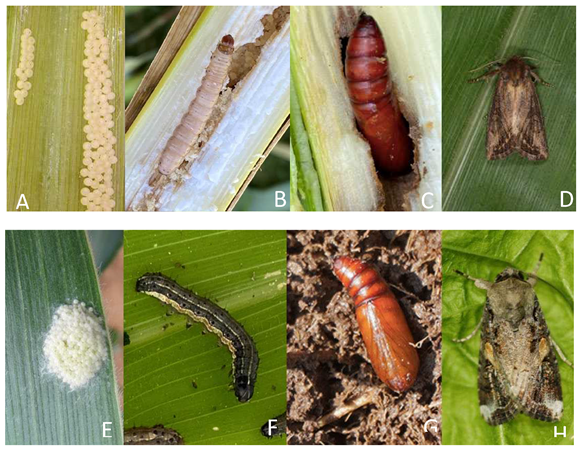
The focus group discussion was planned so that participants could describe their knowledge and management practices used to control S. frugiperda. A set of focus group discussion topics had been developed prior to conducting the focus group (Appendix A). The topics included pictures of different maize lepidopterans life stages (egg, larval, pupal and adult) which gave an insights on the ability of smallholder farmers to correctly identity S. frugiperda. Pictures of different life stages were used to determine farmer’s ability to associate these stages with S. frugiperda.
At the end of the session, the facilitator asked the participants to offer their opinions and reflect on the discussion. Furthermore, the notes of the research team were consolidated, to create a consensus description of the focus group discussion. The same set of topics were used at all focus group discussions to ensure consistency across different groups. Each session was aimed to last for about 1 hour 30 minutes.
2.4. Data Analysis
Smallholder farmers socio-demographic data was encoded in Microsoft Excel and imported to Statistical Package for Social Sciences (SPSS) version 25 to describe demographics in terms of frequency and percentages. Smallholder farmers knowledge, perception and management practices of S. frugiperda data adopted thematic analysis using steps guided according to [27]. The steps include: becoming familiar with the data by arranging and sorting transcripts, generate initial codes, search for themes, review themes, define themes followed by a final write up of the results.
2.5. Anonymity and Confidentiality
In the present study, participants identity document (ID) numbers as well as their names were not used in the analysis. Pseudonyms were used in the study. All pseudonyms that are preceded with Vho- are for the elderly whereas the ones without Vho- represent the youth.
3. Results
3.1. Demographic Information of Smallholder Farmers in the Two Study Sites
The socio-economic features of the smallholder farmers in the two study sites are provided in Table 1.
The largest group (23% of all respondents) are the farmers aged over 60 years with no formal education and having 21 to 30 years of farming experience. This group is made up of 6 males and 23 females. The majority of youth were females (less than 36 years old) who received high school education and had less than 11 years farming experience. Among the adult or middle age group (36 to 60 years), a majority had secondary education and between 11 to 30 years experience.
3.2. Focus Group Discussions
3.2.1. Identification of Spodoptera frugiperda Life Stages by Smallholder Farmers
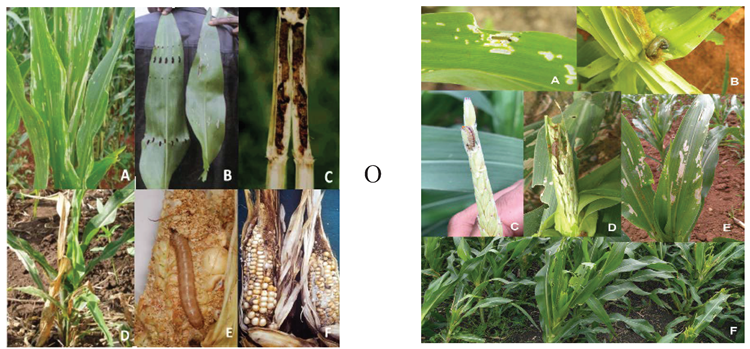
Farmers were provided with pictures of S. frugiperda life stages which included eggs, larvae, pupae and adults (moths), as well as damage symptoms caused by the maize stalkborers, Busseola fusca and S. frugiperda, without explaining to them what they were.
Eggs: Although the majority of participants confirmed that they had seen egg masses on their crops (especially maize), they were unable to correctly identify S. frugiperda eggs. The majority of farmers referred to S. frugiperda eggs as spider webs, bird droppings (guano) or a sugary substance.
Larvae: All farmers were able to identify S. frugiperda at its larval stage by describing its feeding habits and frass as an indication of S. frugiperda presence on their crops. However, the majority of farmers confused frass with S. frugiperda eggs. The majority of farmers were in agreement with a female farmer who indicated that S. frugiperda has two heads.
Vho-Maria1: “Luvhungu lu na ṱhoho mbili, lu ḽa mavhele lwo ṱoka ṱhoho nthihi fhasi ngeno inwe yo sedza nṱha, lu tshi ḓi dzumba nga malaṱwa alwo”.
Translation: Spodoptera frugiperda larvae has two heads, when the one is facing down, the other one is responsible for covering the body with frass.
In addition, farmers refer to the larval stage as Luvhungu which is the Tshivenda local name for S. frugiperda (collective Tshivenda term for worms). Other Tshivenda local names used by smallholder farmers from Dzindi and Tshiombo irrigation schemes are Mbungu, Tshivhungu and Tshirende. Shona people who work in the farms refer to S. frugiperda as Tshibagarasi and Makonya.
Pupae: Only the minority of farmers had seen pupae on dry maize. Farmers refer to pupae as Sumbandila (meaning “lead the way”) which is the local name used to refer to any pupae. Farmers did not associate pupae with S. frugiperda or any other insect. They believe that pupae assist them in finding a direction if they are lost or direct them to their lost livestock. They touch pupae, then it wriggles and rests with its cremaster pointing the position towards which the livestock had moved to.
Adult moths: Adult moths are known by farmers as Tshisusu (which is a Tshivenda collective term for butterflies). Farmers believe that all moths that they see during the day are responsible for laying S. frugiperda larvae.
All farmers have encountered S. frugiperda damage symptoms on their maize throughout the vegetative and reproduction stages from 2016/2017 to date. Spodoptera frugiperda is the most damaging insect pest threatening maize farmer’s production recently. Farmers start to experience more damage especially after rainfall. The majority of these farmers believe that S. frugiperda arrive with the rainfall. Some farmers believe that they started to encounter S. frugiperda when they started to learn about improved maize cultivars because white people brought it so that they can always purchase their maize seeds instead of recycling them. Farmers were confident that they never experienced any S. frugiperda long ago when they were planting their local maize seeds called Tshikundanwedzhi. However, Tshikundanwedzhi is no longer available as it is replaced by new improved seeds.
As Vho- Josephina2 puts it: “Luvhungu lwo ḓisiwa nga makhuwa musi vha tshi ri ḓisela mbeu dzavho hedzi dzo no tea u rengiwa tshifhinga tshoṱhe, riṋe ri tshi lima Tshikundanwedzhi fhedzi ro vha ri sina Luvhungu”.
Translation: Spodoptera frugiperda was brought by scientists with their improved cultivars so that we can repurchase the seeds unlike in the past when we used to plant Tshikundanwedzhi (indigenous maize cultivar) that was not susceptible to any insect pest.
3.2.2. Spodoptera frugiperda Management Practices by Smallholder Farmers
Chemical control by use of insecticides was reported as the main control of S. frugiperda by all farmers. In exception to Dzindi irrigation farmers who have adopted Bt maize, almost all farmers have not yet adopted alternative methods to chemical control such as biological, cultural practices (such as Push Pull Technology), indigenous knowledge, or the use of monitoring tools (traps) for the management of S. frugiperda. According to the majority of farmers, insecticides are modern ways of controlling insect pests.
Vho-Siaga 3 : “Ri shumisa mishonga, ndi nnyi ane a do fara mafola nga tshimanzhe-manzhe”
Translation: We only use pesticides to control S. frugiperda as it is the modern way of controlling insects and we have neglected the indigenous knowledge of controlling insects.
Source of insecticides by smallholder farmers
All smallholder farmers receive insecticides once a year as part of a government subsidy through the Department of Agriculture, Land Reform and Rural Development’s Farmer Support Programme (FSP). Farmers reported that they receive insecticides such as include Methomyl 200 SL (WHO class IA), Methomex ®900 SP (WHO class IB), Tamron 505 SL MSDS (WHO class IB), Masta 900 SP (WHO class IB), while they purchase some from local certified retailers (mainly NTK, known as Koporasi by farmers) (Table 2).
Frequency of insecticide application
Farmers apply insecticides as a preventative measure against S. frugiperda. They start to apply insecticides before they encounter any damage symptoms. A male farmer reported applying insecticides on soil immediately after ploughing, once noticing white web-like substances on the soil. According to the farmer, the white web-like substances represent the presence of S. frugiperda. The majority of farmers start to apply insecticides when maize is at the two leaf stage and stop applying at the reproductive stage (tassel formation). All farmers use knapsacks or mist blowers to apply insecticides.
Effectiveness of insecticides used by smallholder famers against S. frugiperda
Farmers from Dzindi irrigation scheme reported Stalkborer granules and Tamron as the most effective insecticides to control S. frugiperda. However Tamron is no longer easily available. Farmers from Dzindi irrigation scheme report that Methomax is no longer effective while with Tshiombo farmers it is the most effective insecticide. The majority farmers at Tshiombo irrigation scheme find insecticide cocktails more effective in controlling S. frugiperda; they mix Ampblingo, Adama and Methomex. One male farmer from Dzindi irrigation scheme mixes any insecticides (even for other lepidopterans) he has in his storage as a preventative measure against S. frugiperda. Other cocktails mixed to control S. frugiperda by farmers includes Melasol, Allice 222 SL and Cartap and Allice 222 SL, Cartap and Methomex ®900. Farmers believe that cocktails enhance efficacy and reduce the smell (odour) of insecticides.
Simbarase4 : “Ri vha ri khou zama plane uri Luvhungu lu fe”.
Translation : We are trying our luck to kill S. frugiperda.
The use of Bt maize by smallholder farmers
In the present study, knowledge about GM maize varies among farmers. Tshiombo irrigation scheme farmers lack access to information about GM maize technology. In contrast, Dzindi irrigation farmers have adopted GM maize technology after receiving training from a seed company and a demonstration in a trial plot. Farmers prefer GM maize seeds because of increased yield due to much bigger grains and for the fact that they do not have to use insecticides to control S. frugiperda.
Vho-Mudau5: ‘’Mbeu hei i sa ḽiwi i a ri thusa ngauri a ri tsha hwala tshigubu tsha mushonga”
Translation : GM maize varieties are important to us because we no longer apply pesticides to control S. frugiperda.
Farmers source their seeds from NTK. The most preferred cultivar due to a bigger size grain is DKC 7374 BR. The majority of farmers did not know the difference between Bt (BR) and Roundup ready (R) maize cultivars. As a result, farmers refer to all these cultivars as Roundup.
Bt compliance by smallholder farmers
When farmers who cultivate Bt/BR maize were asked about the refuge, specifically if they knew what it was and the requirements for planting a non-Bt maize refuge next to their Bt maize fields, answers differed greatly among farmers. Farmers referred to non-Bt maize refuge as a free token or a gift for purchasing the seeds.
Vho-Masindi6: ”Heiḽa phakhethe yo no rengisiwa na mavhele a sa ḽiwi ndi basela.”
Translation: Refuge maize is a free token (a complimentary gift after purchasing Bt maize).
Farmers who received training on GM/ Bt maize technology referred to it as a security guard or a fence which is used as a protective barrier against damage by S. frugiperda on Bt maize. All surveyed farmers did not plant non-Bt refuge maize correctly. Some farmers plant refuge in their homes and Bt maize in their field. Some do not plant a refuge at all, whereas others only plant if they run out of Bt maize seeds and still have available space for planting. Some farmers intercrop Bt maize with non-Bt refuge maize. Some farmers recycle Bt maize because it is their traditional way of selecting the best cultivars to be used in the second season. They believe that seed companies want to make money and that is why they are asked to buy seeds instead of recycling the seeds. They believe that recycling Bt will provide the same insecticidal effects towards S. frugiperda.
Other management practices of S. frugiperda by smallholder farmers
When farmers were provided with an opportunity to mention some of the indigenous/traditional ways of controlling S. frugiperda they mentioned practices that they used in the past to control other insects but they have not tried them on S. frugiperda. These practices include intercropping sugarcane with maize, morning sprinkling of nicotine aqueous solution (soaked overnight), and aqueous solution of the Lemon Bush (Lippia javanica), known as Musudzungane. The majority of farmers are reluctant to try these methods on S. frugiperda, because they were used in the ‘olden days’ and were replaced by insecticides.
Vho-Rosinah7: “Ndi tshikhuwa, ri shumisa mushonga, zwa mafola ndi zwa kale”
Translation: We cannot use nicotine leaves in the modern days, we only prefer insecticides.
4. Discussion
This study provided insights on Dzindi and Tshiombo irrigation scheme farmers perception and knowledge about S. frugiperda (identification, its biology or life stages), as well as the way they manage this insect pest on maize. The results indicated that all surveyed farmers perceived S. frugiperda as the most devastating insect pest of maize. This is consistent with smallholder farmers from Ghana who associated S. frugiperda with “witchcraft”, the works of their enemies, anger of the gods and bad luck on their government [23]. In contrast, some Ugandan farmers believe that it is not a threat to maize production because they find it easy to manage, provided they have the correct and effective insecticides [28]. Dzindi and Tshiombo irrigation scheme farmers knowledge about S. frugiperda is limited and they differ in the strategies they use to control S. frugiperda.
Oviposition by insect pests act as an early warning signal for its presence. Therefore, smallholder farmers inability to identify S. frugiperda eggs in the study area means that they are unable to control it at an early stage of development. Those smallholder farmers in sub-Saharan Africa who are able to identify S. frugiperda eggs crush them in order to reduce the infestation level which is the most effective timing of control before they move into the maize whorl [29]. In instances where pheromone lure traps are used to monitor for S. frugiperda, it is important for farmers to correctly identify the adults (moths), as some of the moths from different species may be attracted on the trap making it difficult to quantify the level of infestation. For example, Nonanal S. frugiperda sex pheromone-baited traps captured 105 S. frugpiperda males, one female and 15 noctuid moths species [30]. Therefore, farmers inability to correctly identify S. frugiperda life stages (egg, larva, pupa and adult) has an implication in its control.
Farmers were able to identify the larvae, but knowledge about S. frugiperda larvae identification varied among smallholder farmers. The majority (91%) of farmers in Zambia [24], Ethiopia and Kenya [19] were able to correctly identify S. frugiperda larvae whereas some of the farmers and extension officers in Mozambique still confuse it with other lepidopteran larvae such as stemborers [21]. Smallholder farmers at Dzindi and Tshiombo use several local names such as Luvhungu, Makonya and Tshibaragasi to refer to S. frugiperda larva. It thus appears that it is common for most smallholder farmers in sub-Saharan Africa to be able to identify the insect pest by its local name [31,32]. Therefore, it is important for extension officers to familiarize themselves with the local insects names used by farmers so that they can provide appropriate advice to farmers.
Smallholder farmers’ limitations of understanding S. frugiperda life stages is an indication of a poor understanding of its biology, perhaps partly because S. frugiperda is a new invasive pest in sub-Saharan Africa [33]. Knowledge of the biology and behaviour of S. frugiperda enable farmers to target planting time and ensure correct timing of control (when the insect is in the most vulnerable stage) [20]. Monitoring and scouting requires knowledge of insect pest biology, its correct identification coupled with correct sampling methods, and smallholder farmers at both study sites lacked those attributes. Farmers did not know anything about the use of traps or standardized sampling techniques. In contrast, smallholder farmers from Cameroon monitor and scout their maize fields immediately four to five days after planting in order to evaluate damage symptoms and frass on the stem which is a positive indicator of S. frugirperda presence [34]. The most effective S. frugiperda monitoring was adopted by smallholder farmers from Rwandan communities who received smart cell phones installed with Fall Armyworm Monitoring and Early Warning System (FAMEWS) and sex pheromone lures with bucket traps from FAO to assist them with early warning of S. frugiperda [35]. The lack of adoption to scouting or monitoring tool (Food and Agricultural Organization of the United Nations) of the Dzindi and Tshiombo irrigation scheme farmers may be attributed to lack of access to technology, skills and training on insect pest scouting.
All sampled farmers from both sites relied on insecticides as the main control for S. frugiperda. This is consistent with other smallholder farmers in African countries such as Botswana [36], Kenya and Ethiopia [19], Malawi [20], Mozambique [21] , Zimbabwe [22] and Ghana [23]. This reliance of insecticides by farmers may be due to the fact that the response of many African governments to S. frugiperda invasion was the immediate registration followed by farmers subsidy of pesticides for its control [12]. For instance, the South African government registered about 50 insecticides in response to S. frugiperda invasion and annually subsidize smallholder farmers with some of these insecticides [37]. This is consistent with the government in Ghana, which supplied smallholder farmers with pesticides as part of a planting for food and job initiative [23]. Rwanda deployed their army in order to halt the spread of S. frugiperda through distribution of pesticides and hand-picking of larvae on farmer’s fields [38]. Of great concern is that the farmers at Dzindi and Tshiombo irrigation schemes use insecticides that are highly toxic (falls under category WHO IA, 1B and II), among which is Tamron banned by the United States in 2009 [39] and also banned in Zimbabwe, due to its high toxicity to non-target organisms including humans [40]. Highly hazardous pesticides from WHO class 1B and II are not recommended for use by smallholder farmers as they lack knowledge and resources for protecting themselves against these harmful pesticides [12]. Selection of these highly hazardous pesticides by farmers at Dzindi and Tshimbo irrigation schemes may be attributed to availability, or accessibility and efficacy coupled with farmers experience on the insecticide.
Farmers have the tendency to try every chemical or material rumoured to assist in controlling S. frugiperda due to desperation and lack of knowledge on other alternative control strategies of the pest [40]. Some smallholder farmers at Tshiombo irrigation scheme were advised by their neighbours to use insecticide cocktails in order to enhance efficacy. This is consistent with farmers in Macate, Zimbabwe who mix two or more insecticides for S. frugiperda control [21]. The efficacy of insecticide cocktails and its cost effectiveness needs to be evaluated further.
Perception of insecticide efficacy on S. frugiperda vary among smallholder farmers worlwide. Smallholder farmers from Dzindi irrigation scheme reported that Methomex ®900 SP is no longer effective in controlling S. frugiperda. This is consistent with farmers from Mankweng and Ga-Mashashane (about 300 km from Dzindi irrigation scheme) [41] and farmers from China’s Yunnan province [42], Kenya [19] and Zimbabwe [22] who reported that Methomex ®900 SP has become less effective in controlling S. frugiperda. However, the majority of farmers in Ethiopia indicated that Ethiolathion, malathion and chlorpyrifos were effective in controlling S. frugiperda [19].
Variations in the efficacy of different insecticides used to control S. frugiperda may be attributed to factors such as timing of application. As farmers from Dzindi and Tshiombo irrigation scheme lack monitoring tools and scouting skills, it is possible that in most cases they apply insecticides in the absence of the vulnerable life stage of S. frugiperda. Insecticides are only effective on early larval instars of S. frugiperda as older instars hide on maize whorls, feeding and using frass as a covering [43] or use maize reproductive parts such as the whorl, ear or kernel to induce a protection to insecticide application [13]. The best time of day for insecticide application is at dawn because young larvae hide in maize whorls during the day and become active during the night [10]. However, farmers at Dzindi and Tshiombo irrigation schemes do not consider timing of application. They apply insecticides anytime of the day depending on the availability of labour or family members willing to assist them.
Although there is no official confirmation of S. frugiperda resistance to insecticides used, it is not known if there was a S. frugiperda population already resistant to insecticide groups upon its arrival in South Africa [12]. In the case of Dzindi and Tshiombo irrigation schemes, similar to Mankweng and Ga-Mashashane in Limpopo Province, farmers reported that they are provided with insecticides from the same chemical group (carbamates) and as a result S. frugiperda might have already developed resistance due to repeated application. In addition, the registered insecticides for S. frugiperda falls under insecticide groups that S. frugiperda has developed resistance in Puerto Rico and Mexico [44] and China [45]. Therefore, further screening of possible insecticide resistance of S. frugiperda in South Africa is needed.
Effective control of S. frugiperda requires Integrated Pest Management (IPM) using the coordinated integration of multiple and complementary control strategies that reduce insect pest population in a safe, cost effective and environmentally friendly manner [46]. Smallholder farmers from Benin use insecticides (such as Emamectin benzoate, acetamiprid, cypermethrin, chlorpyriphos-cyhalothrin and emamectin benzoate) with botanical pesticides (such as Yellow nutsedge, chan, shea tree, neem, tamarind and soybean) [16]. Farmers from upper west regions of Ghana alternate insecticides with early planting, use of improved seeds, uprooting and disposal of infested plants, use of washing detergent (OMO), and handpicking of eggs and larvae [47]. However, smallholder farmers at Tshiombo irrigation scheme are solely dependent on insecticides without considering other alternatives in order to enhance control of S. frugiperda. Farmers from Dzindi irrigation scheme indicated indigenous knowledge to manage insect pests, but have neglected those practices. This is consistent with farmers from Umtata (Eastern Cape), South Africa who have neglected indigenous knowledge of controlling some maize insect pests [48]. This may be attributed to the promotion of pesticides.
Only farmers at Dzindi irrigation scheme have adopted Bt maize. This might be attributed to the fact that only Dzindi irrigation scheme received training on Bt maize. Similarly, in the Eastern Cape, the farmers who attended the programme on GM maize were the ones who adopted the technology [49]. Dzindi irrigation scheme farmers indicated that regardless of high seed cost, GM maize is economically effective. According to these farmers, Bt maize benefits include an increased yield and less labour due to non or less insecticide application. This is consistent with the results from the demonstration of Bt maize to smallholder farmers in Mpumalanga, Gauteng, North-West, Free State, Eastern Cape and KwaZulu-Natal provinces of South Africa that indicated higher yield due to less insect damage on GM maize, reduce need for scouting and less labour for smallholder farmers who relied on knapsack for insecticide application as compared to conventional maize as main advantages of this technology [50]. In contrast famers in Christiana, North West province of South Africa viewed GM maize as non-beneficial due to Busseola fusca developing resistance in their area [51].
GM maize growers are required to plant a refuge area of non-Bt maize adjacent to their Bt maize fields in order to delay resistance development. Current refuge requirements are either a 20% non-Bt planted (refuge) which may be sprayed with insecticides or a 5% refuge area that may not be sprayed [52]. Dzindi irrigation scheme farmers have been non-compliant to GM maize planting. Most farmers did not plant refuge because they were not aware of the importance and consequences associated with not planting refuges. Farmers in Christiana and Standerton in Mpumulanga, South Africa, find refuge planting as being labour intensive and time consuming [53]. As a result those who planted refuge preferred planting a 5% refuge rather than a 20% refuge, and appllied insecticide on the refuge, resulting in it being uneffective. Non-compliance to refuge requirement by smallholder farmers at Dzindi irrigation may be attributed to lack of training on Bt compliant requirements. For example, knowledge about Bt compliance increased after farmers from North Carolina, USA receive training on the purpose and necessity of non Bt maize refuge [55]. There is a need for proper training of farmers on Bt technology at Dzindi irrigation scheme and a need for regular evaluation of possible S. frugiperda Bt resistance.
5. Conclusions
Although the study focus was in Limpopo Province, findings could have relevance in smallholder farmers around sub-Saharan Africa experiencing S. frugiperda invasion. Despite government interventions in regular supply of pesticides to smallholder farmers in order to halt S. frugiperda, it still remains a devastating insect pest of maize. Farmers’ limitations in understanding the biology and monitoring of S. frugiperda and other alternative management strategies indicates that regular training and education of famers in both Tshiombo and Dzindi irrigation schemes is needed. This is also considering that most of the farmers in the two study sites were elderly and illiterate and as a result may require more support in handling of pesticides and their risks associated with their use. Regular screening of possible S. frugiperda Bt and insecticide resistance is necessary and alternative indigenous knowledge of controlling S. frugiperda should be promoted.
Author Contributions
Conceptualization, P.D.N., B.P.H., M.N.M. and B.S.; methodology, M.N.M., P.D.N.; validation, P.D.N., B.P.H., M.N.M. and B.S.; formal analysis, P.D.N.; investigation, P.D.N.; resources, B.S.; data curation, P.D.N.; writing—original draft preparation, P.D.N.; writing—review and editing, B.P.H., M.N.M. and B.S.; visualization, P.D.N, B.P.H., M.N.M. and B.S.; supervision, B.P.H.; M.N.M.; B.S. project administration, B.S.; funding acquisition, B.S. All authors have read and agreed to the published version of the manuscript.
Funding
This research was funded by the Forestry and Agricultural Biotechnology Institute (FABI).
Institutional Review Board Statement
Ethics approval to conduct the study was granted from the University of Pretoria Research and Ethics Committee (ethics approval number is NAS309/2021).
Data Availability Statement
All data underlying the results are available as part of the article and no additional source data are required.
Acknowledgments
The authors would like to thank Prof Sheryl Hendriks and Dr Tsakani Ngomane for assistance with the research methodology. The authors also thank the chief and headmen from both study sites to allow this research to be conducted in their land. Mr Naledzani C. Netshithuthuni (the extension officer) from the Department of Agriculture and Rural Development as well as the smallholder farmers at Dzindi and Tshiombo irrigation scheme for granting permission to interview them during data collection, Dr Thizwilondi J Daswa Madima for assistance during data collection and Prof Alphonse Amey and Cynthia Ngwane with data analysis.
Conflicts of Interest
The authors declare no conflict of interest.
Appendix A
Topics for discussion at Focus Group Discussion
- Which crops and cultivars do you cultivate?
- Have you seen the following stages of this insect on your crops?
Have you seen the following damage symptoms on your maize?
- 3.
- What do you call these insect pests?
- 4.
- What do you do when you see these insect pests?
- 5.
- Who gives you advice on the control strategy that you have selected to control these insect pests?
- 6.
- When do you apply that control strategy?
- 7.
- If you apply the control strategy, do you see any changes on the numbers of the insect pests?
- 8.
- If you observe any changes after control, how long do you observe those changes?
- 9.
- Do you think this insect pest affects your yield? Please elaborate
Is there anything that you would like to add or comment on?
References
- Santpoort, R. The drivers of maize area expansion in Sub-Saharan Africa. How policies to boost maize production overlook the interest of smallholder farmers. Land 2020, 9, 68. [Google Scholar] [CrossRef]
- (FAOSTAT) Food and Agriculture Organization of the United Nations. 2021. Available online: http://www.fao.org/faostat/en/#data/QC (accessed on 25 August 2022).
- Ekpa, O.; Palacios-Rojas, N.; Kruseman, G.; Fogliano, V.; Linnemann, A.R. Sub-Saharan African maize-based foods-processing practices, challenges and opportunities. Food Rev. Int. 2019, 35, 609–639. [Google Scholar] [CrossRef]
- Salika, R.; Riffat, J. Abiotic stress responses in maize: A review. Acta Physiol. Plant. 2021, 43, 130. [Google Scholar] [CrossRef]
- Chimonyo, V.G.P.; Mutengwa, C.S.; Chiduza, C.; Tandzi, L.N. Characteristics of maize growing farmers, varietal use and constraints to increase productivity in selected villages in the Eastern Cape province of South Africa. S. Afr. J. Agric. Ext. 2020, 48, 64–82. [Google Scholar] [CrossRef]
- Parker, C. Parasitic weeds: A world challenge. Weed Sci. 2012, 60, 269–276. [Google Scholar] [CrossRef]
- Hardwick, K.M.; Ojwang, A.M.E.; Stomeo, F.; Maina, S.; Bichang’a, G.; Calatayud, P.A.; Filée, J.; Djikeng, A.; Miller, C.; Cepko, L.; Darby, N.C. Draft genome of Busseola fusca, the maize stalk borer, a major crop pest in Sub-Saharan Africa. Genome Biol. Evol. 2019, 11, 2203–2207. [Google Scholar] [CrossRef] [PubMed]
- Matova, P.M.; Kamutando, C.N.; Magorokosho, C.; Kutywayo, D.; Gutsa, F.; Labuschagne, M. Fall-armyworm invasion, control practices an; resistance breeding in Sub-Saharan Africa. Crop Sci. 2020, 60, 2951–2970. [Google Scholar] [CrossRef] [PubMed]
- Sparks, A.A. A review of the biology of the fall armyworm. Fla. Entomol. 1979, 62, 82–87. [Google Scholar] [CrossRef]
- FAO) Food and Agriculture Organization. Briefing note on FAO actions on fall armyworm in Africa: 5 March 2019. Available online: http://www.fao.org/3/a-bs183e.pdf (accessed on 22 August 2022).
- Montezano, D. G.; Specht, A.; Sosa-Gómez, A.; Roque-Specht, D. R.; Sousa-Silva, V. F.; Paula-Moraes, J. C.; Peterson, S. V.; Hunt, T. E. Host plants of Spodoptera frugiperda (Lepidoptera: Noctuidae) in the Americas. Afr. Entomol. 2018, 26, 286–300. [Google Scholar] [CrossRef]
- Day, R.; Abrahams, P.; Bateman, M.; Beale, T.; Clottey, V.; Cock, M.; Colmenarez, Y.; Corniani, N.; Early, R.; Godwin, J.; Gomez, J. Fall armyworm: Impacts and implications for Africa. Outlooks Pest Manag. 2017, 28, 196–201. [Google Scholar] [CrossRef]
- Pannuti, L.E.R.; Baldin, E.L.L.; Hunt, T.E.; Paula-Moraes, S.V. On-plant larval movement and feeding behaviour of fall armyworm (Lepidoptera: Noctuidae) on reproductive corn stages. Environ. Entomol. 2015, 45, 192–200. [Google Scholar] [CrossRef] [PubMed]
- Eschen, R.; Beale, T.; Bonnin, J.M.; Constantine, K.L.; Duah, S.; Finch, E.A.; Makale, F.; Nunda, W.; Ogunmodede, A.; Pratt, C.F; Thompson, E. Towards estimating the economic cost of invasive alien species to African crop and livestock production. CABI Agric. Biosci. 2021, 2, 1–18. [Google Scholar] [CrossRef]
- Bannor, R.K.; Oppong-Kyeremeh, H.; Aguah, D.A.; Kyire, S.K.C. An analysis of the effect of fall armyworm on the food security status of maize-producing households in Ghana. Int. J. Soc. Econ. 2022, 49, 562–580. [Google Scholar] [CrossRef]
- Houngbo, S.; Zannou, A.; Aoudji, A.; Sossou, H.C.; Sinzogan, A.; Sikirou, R.; Zossou, E.; Vodounon, H.S.T.; Adomou, A.; Ahanchédé, A. Farmers’ knowledge and management practices of fall armyworm, Spodoptera frugiperda (JE Smith) in Benin, West Africa. Agriculture 2020, 10, 430. [Google Scholar] [CrossRef]
- Wyckhuys, K.A.; Bentley, J.W.; Lie, R.; Nghiem, L.T.P.; Fredrix, M. Maximizing farm-level uptake and diffusion of biological control innovations in today’s digital era. BioControl 2017, 63, 133–148. [Google Scholar] [CrossRef]
- Mushunje, A.; Muchaonyerwa, P.; Mandikiana, B.W.; Taruvinga, A. Smallholder farmers’ perceptions on Bt maize and their relative influence towards its adoption: The case of Mqanduli communal area, South Africa. Afr. J. Agric. Res. 2011, 6, 5918–5923. [Google Scholar] [CrossRef]
- Kumela, T.; Simiyu, J.; Sisay, B.; Likhayo, P.; Mendesil, E.; Gohole, L.; Tefera, T. Farmers’ knowledge, perceptions, and management practices of the new invasive pest, fall armyworm (Spodoptera frugiperda) in Ethiopia and Kenya. Int. J. Pest Manag. 2019, 65, 1–9. [Google Scholar] [CrossRef]
- Murray, K.; Jepson, P.C.; and Chaola, M. Fall armyworm management by maize smallholders in Malawi: An integrated pest management strategic plan. 2019. Mexico, CDMX, CMMYT. Available online: https://catalog.extension.oregonstate. Edu/em9238/html (accessed on 10 March 2022).
- Caniço, A.; Mexia, A.; Santos, L. Farmers’ knowledge, perception and management practices of fall armyworm (Spodoptera frugiperda Smith) in Manica province, Mozambique. NeoBiota 2021, 68, 127–143. [Google Scholar] [CrossRef]
- Baudron, F.; Zaman-Allah, M. A.; Chaipa, I.; Chari, N.; Chinwada, P. Understanding the factors influencing fall armyworm (Spodoptera frugiperda J.E. Smith) damage in African smallholder maize fields and quantifying its impact on yield. A case study in eastern Zimbabwe. Crop Prot. 2019, 120, 141–150. [Google Scholar] [CrossRef]
- Asare-Nuamah, P. Smallholder farmers’ adaptation strategies for the management of fall armyworm (Spodoptera frugiperda) in rural Ghana. Int. J. Pest Manag. 2022, 68, 8–18. [Google Scholar] [CrossRef]
- Kansiime, M.K.; Mugambi, I.; Rwomushana, I.; Nunda, W.; Lamontagne-Godwin, J.; Rware, H.; Phiri, N.A.; Chipabika, G.; Ndlovu, M. Day, R. Farmer perception of fall armyworm (Spodoptera frugiderda JE Smith) and farm-level practices in Zambia. Pest Manag. Sci. 2019, 75, 2840–2850. [Google Scholar] [CrossRef]
- Aspers, P.; Corte, U. What is qualitative in qualitative research. Qual. Sociol. 2019, 42, 139–160. [Google Scholar] [CrossRef] [PubMed]
- Parker, A.; Tritter, J. Focus group method and methodology: Current practice and recent debate. Int. J. Res. Method Educ. 2006, 29, 23–37. [Google Scholar] [CrossRef]
- Braun, V.; Clarke, V. Using thematic analysis in psychology. Qual. Res. Psychol. 2006, 3, 77–101. [Google Scholar] [CrossRef]
- Kalyebi, A.; Otim, M.H.; Walsh, T.; Tay, W.T. Farmer perception of impacts of fall armyworm (Spodoptera frugiperda JE Smith) and transferability of its management practices in Uganda. CABI agric. Biosci. 2023, 4, 1–14. [Google Scholar] [CrossRef]
- Gebreziher, H.G. Review on management methods of fall armyworm (Spodoptera frugiperda JE Smith) in Sub-Saharan Africa. Int. J. Entomol. Res. 2020, 5, 9–14. [Google Scholar]
- Saveer, A.M.; Hatano, E.; Wada-Katsumata, A.; Meagher, R.L; Schal, C. Nonanal, a new fall armyworm sex pheromone component, significantly increases the efficacy of pheromone lures. Pest Manag. Sci. 2023, 79, 2831–2839. [Google Scholar] [CrossRef] [PubMed]
- Abtew, A.; Niassy, S.; Affognon, H.; Subramanian, S.; Kreiter, S.; Garzia, G.T.; Martin, T. Farmers' knowledge and perception of grain legume pests and their management in the Eastern province of Kenya. Crop Prot. 2016, 87, 90–97. [Google Scholar] [CrossRef]
- Midega, C.A.; Nyang'au, I.M.; Pittchar, J.; Birkett, M.A.; Pickett, J.A.; Borges, M. Khan, Z.R. Farmers' perceptions of cotton pests and their management in western Kenya. Crop Prot. 2012, 42, 193–201. [Google Scholar] [CrossRef]
- Kasoma, C.; Shimelis, H.; Laing, M.D. Fall armyworm invasion in Africa: Implications for maize production and breeding. J. Crop Improv. 2021, 35, 111–146. [Google Scholar] [CrossRef]
- Akeme, C.N.; Ngosong, C.; Sumbele, S.A.; Aslan, A.; Tening, A.S.; Krah, C.Y.; Kamanga, B.M.; Denih, A.; Nambangia, O.J. November. Different controlling methods of fall armyworm (Spodoptera frugiperda) in maize farms of small-scale producers in Cameroon. In IOP Conference Series: Earth and Environmental Science, 2021, 911: 012053. IOP Publishing.
- (FAO; CABI) Food and Agriculture Organization (FAO) and Centre for Agriculture and Bioscience International (CABI). Community based fall armyworm (Spodoptera frugiperda) monitoring, early warning and management training of trainers manual. 2019, First Edition. 112 pp. Licence: CC BY-NC-SA 3.0 IGO.
- Makale, F.; Mugambi, I.; Kansiime, M.K.; Yuka, I.; Abang, M.; Lechina, B.S.; Rampeba, M.; Rwomushana, I. Fall armyworm in Botswana: Impacts, farmer management practices and implications for sustainable pest management. Pest Manag. Sci. 2022, 78, 1060–1070. [Google Scholar] [CrossRef]
- (DAFF) Departmen of Agricultue, Forestry and Fisheries. Guideline for registered agrochemicals to control Fall armyworm in South Africa. 2017. Available online: http://www.daff.gov.za/ (accessed on 15th July 2020).
- Rukundo, P.; Karangwa, P.; Uzayisenga, B.; Ingabire, J.P.; Waweru, B.W.; Kajuga, J.; Bizimana, J.P. Outbreak of fall armyworm (Spodoptera frugiperda) and its impact in Rwanda agriculture production. In Sustainable management of invasive pests in Africa, eds S. Niassy, S. Ekesi, L., Migiro and W. Otieno (Cham: Springer International Publishing), 2020; 139-157.
- U.S. Environmental Protection Agency (U.S. EPA). Interim Registration Eligibility Decisio (RED) Methamidophos. Case No. 0043. April 7, 2002. Available online: https://www.epa.gove/oppsrrd1/REDs/methamidophos red.pdf iconexternal icon. 4/4/13 (accessed on 10 August 2023).
- Chimweta, M.; Nyakudya, I.W;, Jimu, L.; Bray Mashingaidze, A. Fall armyworm [Spodoptera frugiperda (JE Smith)] damage in maize: Management options for flood-recession cropping smallholder farmers. Int. J. Pest Manag. 2020, 66, 142–154. [CrossRef]
- Makgoba, M.C.; Tshikhudo, P.P.; Nnzeru, L.R.; Makhado, R.A. Impact of fall armyworm (Spodoptera frugiperda) (JE Smith) on small-scale maize farmers and its control strategies in the Limpopo province, South Africa. Jamba-J. Disaster Risk Stud. 2021, 13, 1016. [Google Scholar] [CrossRef]
- Yang, X.; Wyckhuys, K.A.; Jia, X.; Nie, F.; Wu, K. Fall armyworm invasion heightens pesticide expenditure among Chinese smallholder farmers. J. Environ. Manage. 2021, 282, 111949. [Google Scholar] [CrossRef] [PubMed]
- Prasanna, B. M., J. E; Huesing, V. Eddy, V. M.; Peschke (eds). 2018. Fall armyworm in Africa: A guide for integrated pest management. First Edition. CIMMYT, Mexico City.
- Gutiérrez-Moreno, R.; Mota-Sanchez, D.; Blanco, C.A.; Whalon, M.E.; Terán-Santofimio, H.; Rodriguez-Maciel, J.C.; DiFonzo, C. Field-evolved resistance of the fall armyworm (Lepidoptera: Noctuidae) to synthetic insecticides in Puerto Rico and Mexico. Econ. Entomol. 2019, 112, 792–802. [Google Scholar] [CrossRef] [PubMed]
- Zhang, L.; Liu, B.; Zheng, W.; Liu, C.; Zhang, D.; Zhao, S.; Li, Z.; Xu, P.; Wilson, K.; Withers, A. Jones, C.M. Genetic structure and insecticide resistance characteristics of fall armyworm populations invading China. Mol. Ecol. Resour. 2020, 20, 1682–1696. [Google Scholar] [CrossRef] [PubMed]
- Kogan, M. Integrated pest management: Historical perspectives and contemporary developments. Annu. Rev. Entomol. 1998, 43, 243–270. [Google Scholar] [CrossRef] [PubMed]
- Isaac, G. K.; Ansah, F.T.; Bright K. D. Tetteh. Farmers’ control strategies against fall armyworm and determinants of implementation in two districts of the Upper West Region of Ghana, Int. J. Pest Manag. 2021, 1-15. [CrossRef]
- Abate, T.; van Huis, A; Ampofo, J.K.O. Pest management strategies in traditional agriculture: An African perspective. Annu. Rev. Entomol. 2000, 45, 631–659.
- Kotey, D.A.; Assefa, Y.; Van den Berg, J. Enhancing smallholder farmers’ awareness of GM maize technology, management practices and compliance to stewardship requirements in the Eastern Cape Province of South Africa: The role of public extension and advisory services. S. Afr. J. Agric. Ext. 2017, 45, 49–63. [Google Scholar] [CrossRef]
- Keetch, D.P.; Ngqaka, A.; Akanbi, R.; Mahlanga, P. Bt maize for small scale farmers: A case study. Afr.J. Biotechnol. 2005, 4, 1505–1509. [Google Scholar] [CrossRef]
- Kruger, M.; Van Rensburg, J.B.J.; Van den Berg, J. Transgenic Bt maize: farmers’ perceptions, refuge compliance and reports of stem borer resistance in South Africa. J. Appl. Entomol. 2012, 13, 38–50. [Google Scholar] [CrossRef]
- Kruger, M.; Van Rensburg, J.B.J.; Van den Berg, J. Perspective on the development of stem borer resistance to Bt maize and refuge compliance at the Vaalharts irrigation scheme in South Africa. Crop Prot. 2009, 28, 684–689. [Google Scholar] [CrossRef]
- Reisig, D.D. Factors associated with willingness to plant non-Bt maize refuge and suggestions for increasing refuge compliance. J. Integr. Pest Manag. 2017, 8, 1–10. [Google Scholar] [CrossRef]

Table 1.
Demographic information of smallholder farmers who participated in the focus group discussion.
Table 1.
Demographic information of smallholder farmers who participated in the focus group discussion.
| Age Group | Educational Level | Years of Farming Experience. | % of all Respondents |
|---|---|---|---|
| All Respondents (n=118) | |||
|
Less than 36 years (n=24) Males=17, Females=7 |
No schooling (n=0) Males=0, Females=0 |
0 | |
|
Primary education (n=0) Males=0, Females=0 |
0 | ||
|
Secondary education (n=13) Males=9, Females=4 |
Less than 11 years (n=12) Males=9, Females=3 |
10 | |
|
11 to 20 years (n=1) Males=0, Females=1 |
1 | ||
|
Tertiary education (n=11) Males=8, Females=3 |
Less than 11 years (n=11) Males=8, Females=3 |
9 | |
| 11 to 20 years (n=0) | 0 | ||
|
36 to 60 years (n=47) Males=16, Females=31 |
No schooling (n=0) | 0 | |
|
Primary education (n=8) Males=2, Females=6 |
Less than 11 years (n=2) Males=1, Females=1 |
2 | |
|
11 to 20 years (n=1) Males=0, Females=1 |
1 | ||
|
21 to 30 years (n=5) Males=1, Females=4 |
4 | ||
|
Secondary education (n=36) Males=12, Females=24 |
Less than 11 years (n=4) Males=0, Females=4 |
3 | |
|
11 to 20 years (n=18) Males=7, Females=11 |
15 | ||
|
21 to 30 years (n=14) Males=5, Females=9 |
12 | ||
|
Tertiary education (n=3) Males=2, Females=1 |
Less than 11 years (n=1) Males=0, Females=1 |
1 | |
|
11 to 20 years (n=1) Males=1, Females=0 |
1 | ||
|
21 to 30 years (n=1) Males=1, Females=0 |
1 | ||
|
More than 60 years (n=47) Males=19, Females= 28 |
No schooling (n=29) Male=6, Females=23 |
Less than 11 years (n=1) Males=0, Females=1 |
1 |
|
11 to 20 years (n=1) Males=1, Females=0 |
1 | ||
|
21 to 30 years (n=27) Males=5 Females=22 |
23 | ||
|
Primary education (n=9) Males=5, Females=4 |
Less than 11 years (n=0) Males=0, Females=0 |
0 | |
|
11 to 20 years (n=2) Males=2, Females=0 |
2 | ||
|
21 to 30 years (n=7) Males=3, Female=4 |
6 | ||
|
Secondary education (n=7) Males=6, Females=1 |
Less than 11 years (n=0) Males=0, Females=0 |
0 | |
|
11 to 20 years (n=3) Males=3 Females=0 |
3 | ||
|
21 to 30 years (n=4) Males=3, Females=1 |
3 | ||
|
Tertiary education (n=2) Males=2, Females=0 |
Less than 11 years (n=0) Males=0, Females=0 |
0 | |
|
11 to 20 years (n=0) Males=0, Females=0 |
0 | ||
|
21 to 30 years (n=2) Males=2, Females=0 |
2 |
Table 2.
Types of insecticides used by smallholder farmers from Dzindi and Tshiombo irrigation schemes.
Table 2.
Types of insecticides used by smallholder farmers from Dzindi and Tshiombo irrigation schemes.
| Insecticide | WHO Group | Active Ingredient | Chemical Group |
|---|---|---|---|
| Trade name | |||
| Adama abamectin | 6 | Abamectin | Avermectin |
| Allice 222 SL | 4A | Acetamiprid | Neonicotinoid |
| Avi guard | IB | Mercaptothion | Organophosphate |
| Cartap | 14 | Cartap hydrochloride | Cartap hydrochloride |
| Cypermetrin 200 EC | 3A | Cypermetrin | Pyrethroid |
| Hunter 24SC | 13 | Chlorfenapyr | Pyrrole |
| Kemprin 200 EC | 3A | Cypermetrin | Pyrethroid |
| Kombat Malathion | 3 | Mercaptothion | Organophosphate |
| Makhro cyper | 3A | Cypermetrin | Pyrethroid |
| Malasol | IB | Mercaptothion | Organophosphate |
| MECTI | 6A | Abametin | Avermectin |
| Methomex ®900 | II | Methomyl | Carbamate |
| Methomyl 200 SL | 1A | Methomyl | Carbamete |
| Phosdrin ®500 SL | IB | Mevinphos | Organophosphate |
| Stalkborer granules | II | Carbaryl | Carbamate |
| Steward ®150 EC | II | Oxadiazine | Indoxacarb |
| Supermetrin | 3A | Cypermetrin | Pyrethroid |
| Tamron 585 SL | IB | Methamidophos | Organophosphate |
| Warlock® 19.2 EC | 6 | Emamectin benzoate | Avermectin |
Notes: WHO Recommended classification of pesticides by hazard and guidelines to classification. 1a-=Extremely hazardous;1b=highly hazardous; II=Moderately hazardous; III=Slightly hazardous.
Disclaimer/Publisher’s Note: The statements, opinions and data contained in all publications are solely those of the individual author(s) and contributor(s) and not of MDPI and/or the editor(s). MDPI and/or the editor(s) disclaim responsibility for any injury to people or property resulting from any ideas, methods, instructions or products referred to in the content. |
© 2023 by the authors. Licensee MDPI, Basel, Switzerland. This article is an open access article distributed under the terms and conditions of the Creative Commons Attribution (CC BY) license (http://creativecommons.org/licenses/by/4.0/).
Copyright: This open access article is published under a Creative Commons CC BY 4.0 license, which permit the free download, distribution, and reuse, provided that the author and preprint are cited in any reuse.


