

Submitted:
04 August 2023
Posted:
22 August 2023
You are already at the latest version
Abstract
Before the green revolution, crude plant materials and plant-extracts were used for crop protection. However, their use was swiftly replaced by synthetic pesticides after World War II due to increased demand for more effective pesticides in intensified farming systems. The 20th century saw a steady increase in the use of synthetic pesticides until the mid-21st century when the world started to realize the negative impact of synthetic pesticides. The increased environmental awareness and the need for safe human food led to increased research and development of biopesticides as crop protection options in modern agriculture. This paper brings into perspective the global history of the application and use of botanical biopesticides in crop production. It also highlights the research progress, product development and registration challenges, and opportunities for business and adoption at the farm level in Kenya.
Keywords:
Biopesticides
; Formulations
; Fungicidal
; Pesticidal plants
; Plant extracts
; Regulations
Introduction
- Importance of plant diseases
The diversity of plant pathogens all over the globe includes fungi, bacteria, and nematodes that cause severe loss in terms of economics and production in the agriculture sector (Kannan et al., 2015). Fungal pathogens play a significant role in plant health (Yang et al., 2017). and as such, played a key role in driving technological advances in agricultural sciences from 1845 when the potato famine struck Ireland following successive crop failures (from 1845 to 1852) due to infection by Phytophthora infestans (Goyal & Manoharachary, 2014). Downy mildew (Plasmopara viticola) and powdery mildew (Erysiphe necator) nearly destroyed grapevine fields threatening wine production in many European countries. Potato late blight has remained the most important potato disease in Europe since its introduction from Central Mexico in the 19th century (Goss et al., 2014). Coffee leaf rust caused by the fungus, Hemileia vastatrix, Berk. and Broome, wiped out coffee in Ceylon (now Sri Lanka) (Hindorf & Omondi, 2011) and has continued to be the most significant disease of Arabica coffee in the world as well as one of the most studied plant pathogens (Talhinhas et al., 2017). Rust of wheat has caused a rise in yield losses, mitigation costs, and wheat import bans between countries (Suurbaar et al., 2017). The losses associated with wheat rusts called for wide-range studies in the genetics of plant disease resistance, the life cycle of plant pathogens, and host-parasite interactions (Muleta, 2007). To date, rust diseases have remained a major threat to wheat crops causing significant yield losses and reduced grain quality. The continued emergence of the Ug99 race of stem rust is of particular importance. There are three types of rusts disease affecting wheat: leaf rust (Puccinia triticina Eriks), stripe rust or yellow rust (P. striiformis Westend. f. sp. tritici Eriks), and stem rust (P. graminis Pers: Pers. f. sp. tritici Eriks) (Raja et al., 2017; Singh, 2014). Fungal plant diseases have continued to cause havoc among farming communities, with some causing significant economic losses or total loss of crops in some countries (Ahmad et al., 2010). Thus, world food production continues to be adversely affected by plant diseases during crop growth, harvest, and storage. Eliminating these diseases will go a long way in reducing the food crisis, thus enhancing food security.
Plant bacterial pathogens adversely caused significant agricultural impact as early as 1932 when bacterial spot was detected in peach orchards (Stefani, 2010). Since then, bacterial spot has been detected in stone fruit farms in various geographical areas. The most pathogenic bacteria species belong to genera such as Erwinia, Pectobacterium, Pantoea, Agrobacterium, Pseudomonas, Ralstonia, Burkholderia, Acidovorax, Xanthomonas, Clavibacter, Streptomyces, Xylella, Spiroplasma, and Phytoplasma (Kannan et al., 2015). For instance, Erwinia spp has been reported as one of the most important bacterial diseases causing several diseases in several economically important plants and is referred to as the premier phytopathogenic bacterium (Kannan et al., 2015). These bacteria are widespread in many production areas worldwide and degrade pectin causing soft rot diseases. The phytopathogenic Agrobacterium has a worldwide impact and has been reported to cause significant losses in fruit trees, nuts, grapevines, vegetables, and ornamentals such as roses and chrysanthemums (Pulawska, 2010). The losses associated with this disease in nurseries may go up to 30%, and the crops may not be fit for market. Ralstonia solanacearum infects over 200 plant species in more than 50 families and causes diseases such as potato brown rot, tobacco, eggplant, several ornamental bacterial wilts, and banana moko disease. R. solanacearum's direct economic impact is difficult to quantify, but given its extensive geographic spread and host range, this disease is quite destructive. Xanthomonas spp causes at least 350 diseases with rotting symptoms, resulting in tremendous economic losses in agriculture. Xanthomonas species have numerous pathovars that affect various economically significant host plants and cause important diseases (Mansfield et al., 2012).
Plant parasitic nematodes cause damages of 157 billion dollars worldwide (Singh et al., 2015). They damage the host plant by causing wounds on the plant roots forming brown spots on the root, and swelling or rotting of the tubers (Bernard et al., 2017). The most successful plant-parasitic nematodes are the sedentary groups, which establish a stable feeding site within the plant host and absorb nutrients while completing their lifecycles. Sedentary nematodes have a natural advantage over their migratory relatives due to a fascinating and sophisticated host cell transformation that results in a sustained feeding structure. The topmost important plant parasitic nematodes include root-knot nematodes (Meloidogyne spp) comprising Meloidogyne javanica, Meloidogyne arenaria, Meloidogyne hapla, and Meloidogyne incognita representing the most devastating threat to agricultural crop production. Cyst nematodes (Heterodera and Globodera spp) come second, as they damage vascular tissues, weakening them and causing stunting and discolour. Potato cyst nematodes are an example and have been reported to cause crop failure and financial losses to farmers (Mburu et al., 2020). Lesion nematodes (Pratylechus spp), with a worldwide distribution with a host range of nearly 400 plants, are considered major economic significance in cereals. (Smiley, 2015). Four Pratylechus spp, P. thornei, P. neglectus, P. penetrans, and P. crenatus, are the most important and widely distributed. Pratylechus thornei, on the other hand, is thought to be more damaging, causing yield losses of up to 50% in the United States and 85% in Australia. (Mokrini et al., 2018). The lesion nematodes are migratory, feed on the root cortex, and may enter vascular tissues to obtain nutrients. Burrowing nematodes (Radophlus similis) are listed as a quarantine pest hosted by over 250 plant species. R. similis damages banana, citrus, pepper, coffee and other crops and is considered the most important phytopathogenic nematode in banana-growing areas.
- Bio-Pesticides
Biopesticides are compounds or organisms that occur naturally with low risks and are used to control pests and diseases (Kansiime et al., 2017). According to Suman and Dikshit (2010), biopesticides are a diverse group of microbial pesticides and biochemicals derived from microorganisms and natural sources. They are effective, biodegradable with no residuals to the environment (; Chandler et al., 2011, S. Sharma & Malik, 2012: Kachhawa, 2017; Kutawa et al., 2016; Arjjumend & Koutouki, 2018). They are either made from parts (phytochemicals, microbial products), by-products (Semiochemicals) or whole living organisms (natural enemies) (Kachhawa, 2017; Kutawa et al., 2016; S. Sharma & Malik, 2012). Plant-based biopesticides were used for crop protection by the Greeks, Romans, and Egyptians (Alburo & Olofson, 1987; Raghavendra et al., 2016) long before the agrarian revolution (Figure 1).
- a)
- Microbial biopesticides
These are derived from microorganisms and their metabolites (Chandler et al., 2011). Studies have reported over 3000 bacteria, 1000 viruses, 800 fungi, 1000 protozoa and 67 nematode species, all entomopathogenic to crop pests (Arjjumend & Koutouki, 2018; Holmes et al., 2019; Kutawa et al., 2016; Ruiu, 2018). These microbial biopesticides offer an alternative to synthetic insecticides with high specificity plus ecological safety (Kansiime et al., 2017). The most successful and widely adopted of these is the bacterium Bacillus thuringiensis Berliner (Bt), which produces a crystal protein during bacterial spore formation capable of causing lysis of gut cells when consumed by susceptible insects (Speckbacher & Zeilinger, 2018). Currently, around 400 Bt formulations have been registered as biological control products and may be applied directly in sprays. Other microbial biopesticides include Trichoderma harzianum, Coniothyrium minitans, the K84 strain of Agrobacterium radiobacter used to control crown gall, Bacillus subtilis, Pseudomonas fluorescens and Pseudomonas aureofaciens. Microbial biopesticides are specific, nonpathogenic to wildlife, humans and other organisms, can be established in a pest population and can also be used as root and plant growth regulators. However, these biopesticides have their limitations as well. When exposed to heat, they lose efficacy and are only toxic to specific pests. Because they require unique formulations and storage procedures, there may be complications in the production and distribution of these pest control products (Kansiime et al., 2017).
- b) Macrobial biopesticides
Under the changing agricultural environment, biological control agents (BCA) remain one of the preferred technologies promising to manage plant diseases without disturbing the environment's and ecosystem's composition. Macrobial biopesticides achieve crop protection through the effect of macro-organisms classified as natural enemies, such as parasites, predators and parasitoids (Kutawa et al., 2016; Sharma & Malik, 2012). Dozens of predators and parasitoids are reared worldwide and have been economically significant in managing plant pests and diseases. The production of parasites or predators, fungi, protozoa, bacteria, viruses, sterile males, or genetically incompatible individuals has become integral to biological control programmes. Laboratory stocks or those for mass production are derived from a small amount of field materials which are further inbred for many generations and can be released in the field. During this process, the genetic variability of the stock reduces while the adaptability to different environmental conditions improves. Therefore, effort should be made to maintain or increase genetic variability in mass-propagation programmes in an efficient way.
- c) Semiochemicals
These natural chemical signals produced by an organism affect another organism of the same or different species (Chandler et al., 2011; Koul, 2011). They can be volatile or non-volatile signals that operate long or short-range to modify the recipient's behaviour (Singh, 2014). They usually induce behavioural changes as attractants, repellants or mating disruptors (Holmes et al., 2019). Semiochemicals provide alternative solutions to synthetic pest control products. However, the product development process takes a long time and constitutes only a small fraction of the market (Arjjumend & Koutouki, 2018). Some semiochemical-based control methods commercially available include attractants or stimulants, arrestants, repellents and deterrents. The most widely used semiochemicals for crop protection are sex pheromones, which can be synthesized and used for monitoring or pest control by mass trapping, lure-and-kill systems, and mating disruption (Chandler et al., 2011).
- d) Plant Incorporated Protectants (PIP)
These are biopesticide substances produced by plants from genetic material that have been added or incorporated into their genetic make-up, e.g., Bt protein (Chandler et al., 2011; Damalas & Koutroubas, 2018; Gupta & Dikshit, 2010; Kutawa et al., 2016; K. R. Sharma et al., 2018). When plants are genetically modified to produce a pesticide, they are regulated as pesticides by Environmental Protection Agency (EPA) in the USA and National Biosafety Authority (NBA) in Kenya and as plant products under EU plant protection regulations. Hence, the pesticide produced by such plants and the genetic material introduced are defined as PIPs. To date, scientists have had a lot of focus on the use of virus coat protein and replication genes for genetic engineering by incorporating them into plants. Several breeding programs across the globe have successfully incorporated genetic material into various crops for disease resistance as a long-lasting disease management strategy.
- e) Botanical biopesticides (Plant Extracts)
Botanicals or plant extracts are plant derivatives that can be used to control crop pests and diseases. Plant extracts were used to control crop insect pests long before the green revolution by the Greeks, Egyptians and Romans (Alburo & Olofson, 1987; Pavela, 2016; Raghavendra et al., 2016). However, after DDT's discovery, botanical biopesticides' use decreased significantly in the 20th century (Pavela, 2016). The 20th century was characterized by the significant development of synthetic pesticides, mainly pushed by the need for more food due to the increasing human population and more pesticides due to intensified farming systems and economic pressure (Oberemok et al., 2015). Synthetic pesticides are easier to use and highly effective, which fuels further industry growth (Oberemok et al., 2015). The intensive crop production systems led to the excessive use of synthetic pesticides negatively impacted humans and the In the last three decades, global concern on the safe use of pesticides, food safety, and environmental degradation has led to a significant shift from synthetics to biopesticides (Damalas & Koutroubas, 2018). This change in preference and consumer demands has also resulted in increased adoption of plant extracts in Integrated Pest Management (IPM) options and organic farming systems.
Botanical pesticide plants are readily and commercially available, with most having multiple uses, such as medicines, spices, ornamentals, and organic soil amendments. Studies have reported antimicrobial effects of products from neem, custard apple, garlic, and ginger, among other medicinal plants. These can be applied as secondary metabolites, crude extracts or powder of dried plant parts (Choudhury et al., 2018). Commercialized pyrethrum, neem, and sabadilla biopesticides are less toxic to beneficial and non-target organisms, making them acceptable and reliable in a sustainable production system.
- Mechanisms of pest control of biopesticides
The antimicrobial activity of botanical biopesticides is based on plant bioactive compounds, mainly secondary metabolites, which are usually affected by genetic structure and environment (Murtaza et al., 2015). Extracts for control of phytopathogens have mainly been obtained from plant species such as Aloe vera, Eucalyptus (Eucalyptus globulus), neem (Azadirachta indica), and herbaceous species like garlic (Allium sativum), mint (Mentha spicata), ginger (Zingiber officinale). These plants synthesize aromatic secondary metabolites like phenols, phenolic acids, quinones, flavones, flavonoids, flavanols, tannins and coumarins. The compounds containing phenolic structures, such as carvacrol, eugenols, and thymol, are highly active against plant pathogens and serve as plant defence mechanisms against plant pathogenic microorganisms (Table 1). However, their efficacies differ based on diversity in the chemical bio-composition, such as the secondary metabolites of plants. The antimicrobial activity of medicinal plants may be because of the synergistic activity of diverse bioactive metabolites that may act as antiseptic, cicatrizant and antiparasitic (Fyhrquist, 2007). These compounds are classified into four classes: - Terpenoids, Saponins, phenolic compounds and flavones, flavonoids and flavonols.
- Global Research Progress on the Use of Plant Biopesticides to Control Crop Diseases
Various studies have been carried out on the efficacy of botanical biopesticides against plant pathogens. Though the success has been low compared to synthetic pesticides, there are some novel documented success stories across the globe (Table 2).
- Regulation and Policy Framework of Biopesticides
Globally, various regulatory bodies and agencies such as International Organization for Biological Control (IOBC), the European and Mediterranean Plant Protection Organization (EPPO) and Organization for Economic and Co-operative Development (OECD) have been involved in resolving registration impediments faced by countries (FAO, 2012). Over the past ten years, there has been an increase in the usage of bio-based products among farmers to manage pests and diseases in crops (Arora et al., 2016). However, the commercialization of these plant protection products is a rigorous process that necessitates testing and registration, which can be difficult with underdeveloped regulatory frameworks (AATF, 2013). Even in countries with well-developed regulatory frameworks, issues persist since existing regulations mainly apply to conventional chemicals rather than biological pesticides. Establishing competent biopesticide guidelines is critical for safety and ensuring minimal restrictions on biopesticide commercialization (Guest, 2015). According to AATF (2013), it is crucial to develop robust systems for the registration of biopesticides based on scientific data, standards and working registration systems. Registering these biopesticides is critical to such regulatory regimes, ensuring that only approved pesticides are registered. Biopesticides are utilized worldwide, although the regulatory processes and agencies involved differ at the regional and national levels.
Various African countries have developed or are developing regulatory systems for biopesticides as part of an Integrated Pest Management (IPM) strategy. In each of these countries, various organizations have the authority to regulate emerging biopesticides. For instance, in South Africa, laws and guidelines for regulations of registration and commercialization of biological control agents are under the Department of Agriculture, Forestry and Fisheries (DAFF) under the Act 36 of 1947 (DAFF 2010), while in Nigeria, National Agency for Food & Drug Administration (NAFDAC) is the agency mandated to regulate manufacturing, selling and distribution of fertilizers, biofertilizer and biopesticides. Closer home, in East Africa, in Tanzania, the regulatory body is the Tanzania Plant Health and Pesticides Authority (TPHPA) under the Ministry of Agriculture established by Act No. 4 of 2020 to comply with the requirements of the International Plant Protection Convention (IPPC) (Stadlinger et al., 2013). In Uganda, the National Agricultural Chemicals Board (UNACB) and the Agricultural Chemical Control Committee (ACCTC) are mandated by Ugandan laws to inspect and certify agrochemical trade (Arora et al., 2016).
The regulation of pesticide use and distribution is made through registration, legislation and enforcement of laws governing pesticides. Among East African countries, Kenya has well-developed biopesticides-specific registration legislation and mechanisms that ensure accurate assessment of the safety and dangers associated with microbial pesticides (Arora et al., 2016; Kabaluk et al., 2010). The Pest Control and Products Board (PCPB) is the regulatory body mandated to register all pest control products. It is supported by stakeholders such as the UK DFID (Kabaluk et al., 2010). PCPB was created through an act of Parliament, the Pest Control Products Act, Cap 346, Laws of Kenya which was enacted in 1982 (PCPB, 1985). This organization, therefore, regulates the importation, exportation, manufacture, distribution and use of products to control pests. The Pest Control Products Act also provides for registration and regulations for microbial pesticides (Wabule et al., 2004); (Kimani, 2014). The Kenya Plant Health Inspectorate Service (KEPHIS), through the Act, Cap 512 of 2013, and Plant Protection Act, regulates the imports and exports of live organisms. The act provides for application for introducing microbial and macrobials through KEPHIS, where the Kenya Standing Technical Committee on Imports and Exports (KSTCIE) operates under Cap 324 and advises the importer of the requirements and the areas to be addressed by the applicant.
- Biopesticides development process
The process of biopesticide development involves two phases (Figure 2). Phase I involves the research and product development guided by regulations within the country of origin. This process is usually done under strict and controlled environments in research facilities. The experimental step begins with collecting and isolating potential microbes or fortifying the microorganisms, followed by identification, characterization and performance of efficacy bioassays (Mandakini and Manamgoda, 2021). Once a potential microorganism is identified for biopesticide production, it is accurately identified and characterized. Efficacy bioassays can be in vitro, ex vivo, or in vivo, depending on the target pathogen or pest organism, and pilot trials under actual application conditions. Phase II entails mass production, formulation, field testing and safety evaluation. Here several steps are involved with product and process development. Formulations are developed in the laboratory and pilot facilities which are scaled in manufacturing facilities (Strobel and Daisy, 2003). Field studies are conducted and data are gathered for the regulatory submissions supporting product registration (USDA, 2017a). Finally, biopesticides can be registered and introduced to the market upon completing safety evaluation and regulatory approval.
- Analysis of the Kenyan Legal Framework on Biocontrol Agents
All pesticides, including biopesticides for use in Kenya, are regulated by the Pest Control Products Board (PCPB), a statutory organization established in 1985 under Cap 346 Laws of Kenya. The Board is mandated to oversee all matters related to pesticides, including but not limited to regulation on importation and exportation, manufacture, distribution, sale and use of pest control products while mitigating their harmful effects on human health, animal health and the environment.
- a)
- Registration process
The registration process of pesticides in Kenya is governed by the Pest Control Products Act (PCPB) Cap 346 of the Laws of Kenya. The act defines a pest control product as a product, device, organism, substance or thing manufactured, sold or used to directly or indirectly control, destroy, attract or repelling any pest. Biopesticides can be categorized into five major classes: microbial pesticides, biochemical pesticides, botanical pesticides, natural enemies and plant-incorporated protectants. The board considers pest control products' safety, efficacy, quality, and economic value in line with the registration regulations LN46/1984. To facilitate the registration and adoption of biopesticides, a face-to-face pre-submission consultation between the applicant/registrant and the registration authority (PCPB) is recommended. The registrant provides summary data containing details of the biopesticide, origin of the active agent, deposition of culture in a nationally recognized culture collection, any non-microbial active ingredients, and proof of ownership of the microbial biopesticides to be registered. A decision must be made on whether to grant registration according to the completeness of the data and a satisfactory outcome of risk assessments. In the case of an application for a complete registration, the registration authority may decide to grant provisional approval if further data are required. This situation may arise with a new product with insufficient field use experience. For regulation purposes, local efficacy trials should be conducted following the laid down procedures and data generated.
- b) Current status of registration of biopesticides
The Pest Control Products Board (PCPB) has registered various pest control products. Over the last decade, there has been an increase in the number of applications for registration of biopesticides because of the maximum residue limits concerns locally and in the European and other export markets (Ngaruiya, 2004). As at now, ninety-one (91) biopesticides are listed at the PCPB website as fully registered (www.pcpb.go.ke/biopesticides-on-crops/)
- Formulation of Botanical biopesticides
Over 20% of known plants have been used in pharmaceutical and crop protection studies across the globe. This has been facilitated by the high number of diverse bioactive compounds found in plants (Altemimi et al., 2017). For these products to be successfully utilized, they have to be extracted and formulated into forms that can be easily applied on plants as well as increase their shelf life (Marrone, 2007). However, according to Gasic and Tanovic, (2013) acceptable formulations are difficult to develop and this is mainly because the formulated product must keep its original biological function throughout storage and application. The formulation process leads to a final product by mixing with different carriers and adjuvants for survival as well improved bioactivity and storage stability (Hynes et al., 2011). Many of these biopesticides are based on living organisms and their viability must be maintained at levels that are acceptable during formulation and storage (Gasic and Tanovic, 2013). The development of biopesticide formulations that are both effective and safe is an important step in integrating this technology into integrated pest management systems (Hynes et al., 2011). However, the formulation type is determined by the biocontrol agent's mode of action and the stage at which the host plant is most vulnerable to the agent. Formulation can be done through extraction methods by use of solvents such as methanol, hexane, ethyl alcohol; microwave-assisted extraction which involves the use of electromagnetic radiation in the range of 300mHz to 300GHz; and the most efficient and effective being Ultrasonic assisted extraction which uses ultrasound (>20kHz) to lyse cell walls. Isolation and purification techniques of active ingredients can be done through paper chromatography, column chromatography, High-performance liquid chromatography (HPLC) and InfraRed while identification is done using Nuclear magnetic resonance and mass spectrometry. Hynes et al. (2011) when formulating granula biopesticide of bacteria and fungi employed extrusion –spheronization fluidized bed drying. Most biopesticides are formulated as dry (solid) formulations for direct application and they include dusts (DP), wettable powders (WP), and Granules (G). Liquid biopesticides formulations for dilution in water with adjuvants, protectants and nutrient and they include emulsions, suspension concentrates (SC) (Bharti and Ibrahim, 2020). Others are called inerts whose components are other than the active ingredients or microorganisms (Teicher, undated)
- Safety, toxicity, and application of Botanical biopesticides
The toxicity level of pesticidal plants is not as high as that of most synthetic pesticides. However, pesticidal plants still contain toxic compounds. Thus, care and safety measures should be applied by both users and consumers. For several plants, the active ingredients are well known, with solid evidence of relatively low toxicity, such as rotenoids, azadirachtin and pyrethrin (Branco, 2011; FRAC, 2018; Pavela, 2016; Singh, 2014; Tembo et al., 2018). Risks of toxicity are further mitigated in that the amount of active ingredients naturally found in parts of plants is often low and certainly not present in the artificially concentrated amounts found in synthetic pesticides. Many of the compounds in pesticidal plants are also found in food and medicines, notably herbs and spices, from which essential oil pesticides are made. The USA has categorized them as GRAS (generally regarded as safe) and not subject to toxicity testing requirements. It is nevertheless essential to remember that plants contain toxins and to use appropriate safety measures such as gloves, face masks, and protective clothing. Exercise caution when processing, grinding, sieving plant powders, and applying them to crops. The Biocontrol products can be used as bait sprays for pheromone baits, spraying in the case of Bt-related products, the release of parasitoids and predators on crops, application as droplets in the case of baculoviruses, other biopesticides such as mycoinsecticide can be applied in an oil formulation (Gan-Mor and Mathews, 2003). Users of the products should avoid inhaling powders or contact with skin and eyes. In case of accidental contact, the affected area should be washed with clean running water.
- Challenges and Drawbacks to Uptake of Botanical Biopesticides
Development, utilization, and promotion of Plant-based protectants, like other crop protection products, face challenges at various levels. Development is hampered by high costs of product development, legal restrictions, limited availability of germplasm, product formulation and short shelf life of the products (Chandler et al., 2011; Holmes et al., 2019). Utilization is minimal among farmers because the products are usually specific to pests, while the users prefer broad-spectrum products to minimize the costs of applications. This is further curtailed by the ability of the products to control pests at only specific growth stages and specific dosages. This, therefore, renders them less preferred as farmers have to buy and apply several products as opposed to synthetic pesticides (Arjjumend & Koutouki, 2018; Kutawa et al., 2016; Marrone, 2007). there is a need for coordination in developing biopesticides to address the challenges through research, which requires skilled human resources and adequate physical infrastructure. There is also a need for greater interaction and collaboration between various disciplines and sectors. The adoption can be enhanced through advocacy and integration with other pest management practices.
- Opportunities for the Growth of the Botanical Biopesticides Industry
Based on earlier studies by Glare et al. 2016; Glare et al. 2012; Koul (2011), biopesticides were set to increase worldwide. An assessment by Travis et al. (2016) put the increase to 15% annually worldwide; as such, biopesticides may be entering a new era of mainstream use. In the last decade, there has been an increase in the range of registered biopesticides. Larger companies are acquiring small-sized ones, which indicates the growing market (Glare et al., 2016). Many countries have or are developing regulatory processes; however, the regulatory processes for one country may not fit the specific needs for microbial-based requirements for another country. Harmonization of regulations and development of particular guidelines for biopesticides assessment hamper the development and commercialization of biopesticides. As demonstrated by the increasing sales, the future of biopesticides is promising; however, there is a need to develop a policy framework that will support commercialization and remove barriers to commercialization on a global scale.
- Policy Framework and business environment
Policy changes in Europe and elsewhere requiring more detailed safety data and maximum residue limits for synthetic pesticides may have changed the commercial interest in plant-based pesticides. Some countries such as China, India and Brazil have created favourable regulatory frameworks and have subsequently observed considerable growth in registered and commercialized plant-based pesticides (Arjjumend & Koutouki, 2018). Similar efforts need to be pursued by other countries worldwide. In Africa, strong heritage and ongoing use of plants as pesticides exist, particularly in smallholder agriculture (Singh, 2014). In addition, until relatively recently, East Africa was the leading global provider of crude pyrethrum. Therefore, there is great potential for natural pesticide development in Africa, towards which many African governments, policymakers and scientists can create the enabling regulatory and promotional environments required to encourage and facilitate entrepreneurs wanting to develop local practices into sustainable value chains for commercialized natural pest control products.
- Research and development
Though research on plant-based pesticides has been ongoing for decades in Kenya, there has been limited focus and support for research in this area. Most of the research work has not been moved from the laboratory to the field due to a lack of suitable infrastructure, equipment and motivation to facilitate this level of research. Most of the research has been on using crude extracts of the plants and whole plant parts. However, this is not practical when it comes to adoption and application by farmers due to low efficacy and shelf life. There is a need to invest in the research and development of commercial products by refining research outputs into suitable formulations and toxicity studies. Governments must also deliberate efforts to facilitate the process of Intellectual property protection, research enablers/incentives to researchers and entrepreneurs, and public-private partnerships to accelerate the uptake of research outputs by the industry.
Conclusions
Plant-based (botanical) pesticide products have historically been used and have the potential to manage plant diseases. Various active compounds have been isolated and identified from multiple effective formulations that can potentially manage plant diseases if used and applied in the correct doses. However, the development and utilization of these products face various challenges at various levels. Due to the need for safe and sustainable pest control products, biopesticides provide opportunities for the sector's growth. The government and policymakers should create an enabling regulatory environment to help facilitate sustainable value chains for commercialized botanical pest control products. Consumers can also promote investment in this area by developing a remunerative market segment that encourages the use of these products.
Acknowledgements
The authors appreciate various scientists' reviews and contributions to this paper under the Institute Scientific Technical and Advisory Committee at KALRO-CRI. This paper is published with the permission of the Institute Director, KALRO-CRI, on behalf of the Director General, KALRO.
References
- AATF [African Agricultural Technology Foundation].2013. A Guide to the Development of Regulatory Frameworks for Microbial Biopesticides in Sub-Saharan Africa. Nairobi: African Agricultural Technology Foundation.
- Adongo, J.O.; Omolo, J.O.; Cheplogoi, P.K.; Otaye, D.O. In vitro inhibition of the grey mould fungus - Botrytis cinerea by Phaseolinone and Phomenone compounds isolated from Xylaria species. The First International Conference on Pesticidal Plants 2013, 48. [Google Scholar]
- Ahmad, I., Owais, M., Shahid, M., & Aqil, F. (2010). Combating fungal infections: Problems and remedy. In Combating Fungal Infections: Problems and Remedy (Issue June). [CrossRef]
- Alburo, R.; Olofson, H. Agricultural history and the use of botanical insecticides in Argao, Cebu. Philippine Quarterly of Culture & Society 1987, 15, 151–172. [Google Scholar]
- Al-Huqail, A.A.; Behiry, S.I.; Salem MZ, M.; Ali, H.M.; Siddiqui, M.H.; Salem, A.Z.M. Antifungal, antibacterial, and antioxidant activities of Acacia saligna (Labill.) H. L. Wendl. Flower extract: HPLC analysis of phenolic and flavonoid compounds. Molecules 2019, 24. [Google Scholar] [CrossRef] [PubMed]
- Altemimi, A.; Lakhssassi, N.; Baharlouei, A.; Watson, D.G.; Lightfoot, D.A. Phytochemicals: Extraction, isolation, and identification of bioactive compounds from plant extracts. Plants 2017, 6. [Google Scholar] [CrossRef] [PubMed]
- Ambikapathy, V. , Gomathi, S., & Panneerselvam. Effect of antifungal activity of some medicinal plants against Pythium debaryanum (Hesse). Pelagia Research Library Asian Journal of Plant Science and Research 2011, 1, 131–134. [Google Scholar]
- Arjjumend, H.; Koutouki, K. Science of biopesticides and critical analysis of Indian legal frameworks regulating biocontrol agents. International Journal of Agriculture, Environment and Biotechnology 2018, 11, 563–571. [Google Scholar] [CrossRef]
- Arora, N. K., Verma, M., Prakash, J., & Mishra, J. (2016). Regulation of biopesticides: global concerns and policies. In Bioformulations: for sustainable agriculture (pp. 283-299). Springer, New Delhi.
- Baysal, Ö.; Zeller, W. Extract of Hedera helix induces resistance on apple rootstock M26 similar to Acibenzolar-S-methyl against Fire Blight (Erwinia amylovora). Physiological and Molecular Plant Pathology 2004, 65, 305–315. [Google Scholar] [CrossRef]
- Bhardwaj, A.; Sharma, D.; Jadon, N.; Agrawal, P.K. Antimicrobial and phytochemical screening of endophytic fungi isolated from spikes of Pinus roxburghii. Archives of Clinical Microbiology 2015, 6, 1–9. [Google Scholar]
- Branco, S. Fungal Diversity – An Overview. The Dynamical Processes of Biodiversity - Case Studies of Evolution and Spatial Distribution, December 2011, 1–17. 20 December 2011; 1–17. [CrossRef]
- Chandler, D.; Bailey, A.S.; Mark Tatchell, G.; Davidson, G.; Greaves, J.; Grant, W.P. The development, regulation and use of biopesticides for integrated pest management. Philosophical Transactions of the Royal Society B: Biological Sciences 2011, 366, 1987–1998. [Google Scholar] [CrossRef]
- Chaudhary, R.; Prashant, S.; Chaudhary, F.; Chudhari, M.; Prajapati, V.P. Antifungal activity of plant extracts on uredospores germination of leaf rust of wheat antifungal activity of plant extracts on uredospores germination of leaf rust of wheat. Trends in Biosciences 2015, 8, 2739–2742. [Google Scholar]
- Chiriac, I.P.; Ulea, E. Antibacterial activity of some plant extracts and different pesticides against an Erwinia amylovora (Burrill.) Winslow et al. strain isolated from a nursery stock. Research Journal of Agricultural Science 2012, 44, 19–23. [Google Scholar]
- Choudhury, D.; Dobhal, P.; Srivastava, S.; Saha, S.; Kundu, S. Role of botanical plant extracts to control plant pathogens. Indian Journal of Agricultural Research 2018, 52, 341–346. [Google Scholar] [CrossRef]
- DAFF (2010) Department of Agriculture, Forestry and Fisheries. Act No. 36 of 1947, Guidelines on the data required for registration of biological/biopesticides remedies in South Africa, Republic of South Africa.
- Damalas, C.A.; Koutroubas, S.D. Current status and recent developments in biopesticide use. Agriculture (Switzerland) 2018, 8. [Google Scholar] [CrossRef]
- Draz, I.S.; Elkhwaga, A.A.; Elzaawely, A.A.; El-Zahaby, H.M.; Ismail, A.-W.A. Application of plant extracts as inducers to challenge leaf rust of wheat. Egyptian Journal of Biological Pest Control 2019, 29, 4–11. [Google Scholar] [CrossRef]
- Dulf, F.V.; Vodnar, D.C.; Dulf, E.H.; Pintea, A. Phenolic compounds, flavonoids, lipids and antioxidant potential of apricot (Prunus armeniaca L.) pomace fermented by two filamentous fungal strains in solid state system. Chemistry Central Journal 2017, 11, 1–10. [Google Scholar] [CrossRef]
- FAO (2012) Food and Agriculture Organization. Guidance for harmonizing pesticide regulatory management in Southeast Asia RAP publication 2012/13.Food and Agriculture Organization of the United Nations, Regional Office for Asia and the Pacific, Bangkok, p 480.
- FRAC. (2018). List of plant pathogenic organisms resistant to disease control agents (Issue May).
- Freire, E.S.; Campos, V.P.; Pinho RS, C.; Oliveira, D.F.; Faria, M.R.; Pohlit, A.M.; Noberto, N.P.; Rezende, E.L.; Pfenning, L.H.; Silva, J.R.C. Volatile substances produced by Fusarium oxysporum from coffee rhizosphere and other microbes affect Meloidogyne incognita and Arthrobotrys conoides. Journal of Nematology 2012, 44, 321–328. [Google Scholar]
- Fyhrquist, P. (2007). Traditional medicinal uses and biological activities of some plant extracts of African Combretum Loefl ., Terminalia L . and Pteleopsis Engl . species ( Combretaceae ). In Africa. University of Helsinki.
- Gan-Mor, S.; Matthews, G.A. Recent developments in sprayers for application of biopesticides—An overview. Biosystems Engineering 2003, 84, 119–125. [Google Scholar] [CrossRef]
- Gašić; S; Tanović, B. Biopesticide formulations, possibility of application and future trends. Pesticidi i fitomedicina 2013, 28, 97–102.
- Glare, T.R.; Caradus, J.; Gelernter, W.D.; Jackson, T.A.; Keyhani, N.O.; Köhl, J.; Marrone, P.G.; Morin, L.; Stewart, A. Have biopesticides come of age? Trends Biotechnol 2012, 30, 250–258. [Google Scholar] [CrossRef] [PubMed]
- Glare, T.R.; Gwynn, R.L.; Moran-Diez, M.E. Development of biopesticides and future opportunities. Microbial-Based Biopesticides 2016, 211–221. [Google Scholar]
- Glare, T.R.; Gwynn, R.L.; Moran-Diez, M.E. Development of biopesticides and future opportunities. Microbial-based biopesticides: methods and protocols 2016, 211–221. [Google Scholar]
- Goss, E.M.; Tabima, J.F.; Cooke, D.E.L. The Irish potato famine pathogen Phytophthora infestans originated in central Mexico rather than the Andes. Proceedings of the National Academy of Sciences of the United States of America. 2014, 111, 8791–8796. [Google Scholar] [CrossRef]
- Goyal, A.; Manoharachary, C. (2014). Future challenges in crop protection against fungal pathogens. In Fungal biology, (pp. xiii, 364 pages).
- Guest PJ (2015) Global biopesticide regulations – challenges, opportunities and future prospects. Available at https://www.agra-net.net/agra/agra-europe/policy-and-legislation/environment/analysis-global-biopesticide-regulations-challenges-opportunities-andfuture-prospects-477586.htm.
- Gupta, S., & Dikshit, A. K. (2010). Biopesticides: An ecofriendly approach for pest control. Journal of Biopesticides, 3(1 SPEC.ISSUE), 186–188.
- Gurjar, M.S.; Ali, S.; Akhtar, M.; Singh, K.S. Efficacy of plant extracts in plant disease management. Agricultural Sciences 2012, 03, 425–433. [Google Scholar] [CrossRef]
- Gwa, V. I., A. O., N., & Ekefan, E. J. Antifungal Effect of Five Aqueous Plant Extracts on Mycelial Growth of Penicillium Expansum Isolated from Rotted Yam Tubers in Storage. Acta Scientific Agriculture 2018, 2, 65–70. [Google Scholar]
- Handley, J. (2019). Pesticides - A brief history and analysis. Pitchcare Articles.
- Hindorf, H.; Omondi, C.O. A review of three major fungal diseases of Coffea arabica L. in the rainforests of Ethiopia and progress in breeding for resistance in Kenya. Journal of Advanced Research 2011, 2, 109–120. [Google Scholar] [CrossRef]
- Holmes, K., Chaudhary, M., Babendreier, D., Bateman, M., Grunder, J., Mulaa, M., Durocher-Granger, L., & Faheem, M. (2019). Biopesticides manual: guidelines for selecting, sourcing and using biocontrol agents for key pests of tobacco. In CAB International (Issue 5). [CrossRef]
- Hynes, R. K., Bailey, K., Boyetchko, S. M., Erlandson, M., & Peng, G. (2011). Formulation development and delivery of biopesticides. In Soils and Crops Workshop. https://core.ac.uk/display/226159631?utm_source=pdf&utm_medium=banner&utm_campaign=pdf-decoration-v1.
- Jalander, V.; Gachande, B.D. Effect of aqueous leaf extracts of Datura Sp. against two plant pathogenic fungi. International Journal of Food, Agriculture and Veterinary 2012, 2, 131–134. [Google Scholar]
- Jangam, S.S.; Chaudhari, P.S.; Chaudhari, S.V.; Baheti, K.G. Herbal Plants for Insect Pest Management. International Journal of Scientific & Engineering Research 2014, 5, 882–884. [Google Scholar]
- Kabaluk JT, Antonet MS, Mark SG, Stephanie GW (2010) The use and regulation of microbial pesticides in representative jurisdictions worldwide. IOBC Global. www.IOBC-Global.org.
- Kachhawa, D. Microorganisms as a biopesticides. Journal of Entomology and Zoology Studies 2017, 5, 468–473. [Google Scholar]
- Kansiime, M., Mulema, J., Karanja, D., Romney, D., & Day, R. (2017). Crop pests and disease management in Uganda: status and investment needs (Issue March).
- Kimani V (2014) Bio-pesticides development, use and regulation in Kenya regional experts, workshop on development, regulation and use of bio-pesticides in East Africa, Nairobi. Presented at the Regional Experts Workshop on Development, Regulation and Use of Bio-pesticides in East Africa, Nairobi, Kenya, 22–23 May 2014. 22–23 May.
- Koche, D.; Shirsat, R.; Kawale, M. An overview of major classes of phytochemicals: Their type and role in disease prevention. Hislopia Journal 2016, 9, 2016. [Google Scholar]
- Kokoskova, B., Pavela, R., & Pouvova, D. Effectiveness of plant essential oils against Erwinia amylovora, Pseudomonas syringae pv. syringae and associated saprophytic bacteria on/in host plants. Effectiveness of Plant Essential Oils Against Erwinia Amylovora, Pseudomonas syringae pv. syringae and Associated Saprophytic Bacteria on/in Host Plants 2011, 133-139.
- Koul O (2011) Microbial biopesticides: opportunities and challenges. CAB Rev: Perspect Agric Vet Sci Nutr Nat Resour 6, No. 056.
- Koul, O. Microbial biopesticides: Opportunities and challenges. CAB Reviews: Perspectives in Agriculture, Veterinary Science, Nutrition and Natural Resources 2011, 6. [CrossRef]
- Kurmukov, A.G. Phytochemistry of medicinal plants. Medicinal Plants of Central Asia: Uzbekistan and Kyrgyzstan 2013, 1, 13–14. [Google Scholar] [CrossRef]
- Kutawa, A.B.; Muhammad, A.; Abdullahi, G.; State, A.; Musa, H. Biopesticides for Pests Control : a Review Biopesticides for Pests Control : a Review. Journal of Biopesticides and Agriculture 2016, 3. [Google Scholar]
- Mandakini, H.T.; Manamgoda, D.S. (2021). Microbial Biopesticides: Development and Application. In Microbial Technology for Sustainable Environment (pp. 167-189). Springer, Singapore.
- Mansfield, J.; Genin, S.; Magori, S.; Citovsky, V.; Sriariyanum, M.; Ronald, P.; Dow, M. Top 10 plant pathogenic bacteria in molecular plant pathology. Molecular Plant Pathology 2012, 13, 614–629. [Google Scholar] [CrossRef]
- Marrone, P.G. Barriers to adoption of biological control agents and biological pesticides. CAB Reviews: Perspectives in Agriculture, Veterinary Science, Nutrition and Natural Resources 2007, 2(January 2010). 20 January. [CrossRef]
- Mburu, H. , Cortada, L., Haukeland, S., Ronno, W., Nyongesa, M., Kinyua, Z.,... & Coyne, D. Potato cyst nematodes: a new threat to potato production in East Africa. Frontiers in Plant Science 2020, 11, 670. [Google Scholar] [PubMed]
- Mikiciński, A.; Sobiczewski, P.; Berczyński, S. Efficacy of fungicides and essential oils against bacterial diseases of fruit trees. Journal of Plant Protection Research 2012. [CrossRef]
- Mokrini, F.; Viaene, N.; Waeyenberge, L.; Dababat, A.A.; Moens, M. Root-lesion nematodes in cereal fields: importance, distribution, identification, and management strategies. Journal of Plant Diseases and Protection 2019, 126, 1–11. [Google Scholar] [CrossRef]
- Monteiro AC, A.; de Resende ML, V.; Valente TC, T.; Ribeiro Junior, P.M.; Pereira, V.F.; da Costa, J.R.; da Silva JA, G. Manganese phosphite in coffee defence against Hemileia vastatrix, the coffee rust fungus: Biochemical and Molecular Analyses. Journal of Phytopathology 2016, 164, 1043–1053. [Google Scholar] [CrossRef]
- Muleta, D. (2007). Microbial Inputs in Coffee ( Coffea arabica L .) Production Systems , Southwestern Ethiopia. Swedish University of Agricultural Sciences/Uppsala 2007. 2007.
- Murtaza, G.; Mukhtar, M.; Sarfraz, A. A Review: Antifungal Potentials of Medicinal Plants. Journal of Bioresource Management 2015, 2. [Google Scholar] [CrossRef]
- Ngadze, E. In vitro and greenhouse evaluation of fungicidal properties of botanical extracts against Rhizoctonia solani and Phythopthora infestans. Proceedings of the First International Conference on Pesticidal Plants 2013, 1, 204–208. [Google Scholar]
- Ngaruiya, P. N. 2004. Overview of registration of pesticides in Kenya. In registration for biocontol agents in Kenya. Workshop Proceedings of the PCPB/KARI/DFID CPP Workshop held in Nakuru, Kenya 14th-16th 2003.
- Ngouegni, Y.Y.; Tsopmbeng Noumbo, G.R.; Keuete Kamdoum, E.; Nchongboh, C.G. Antifungal activities of plant extracts against coffee berry disease caused by Colletotrichum kahawae L. International Journal of Current Research in Biosciences and Plant Biology 2017, 4, 60–66. [Google Scholar] [CrossRef]
- Oberemok, V.V.; Laikova, K.V.; Gninenko, Y.I.; Zaitsev, A.S.; Nyadar, P.M.; Adeyemi, T.A. A short history of insecticides. Journal of Plant Protection Research 2015, 55, 221–226. [Google Scholar] [CrossRef]
- Paradza, V.; Icisishahayo, D.; Ngadze, E. Assessing effectiveness of botanical extracts from garlic and neem on controlling potato soft rot pathogens. Proceedings of the First International Conference on Pesticidal Plants 2013, 1, 73–77. [Google Scholar]
- Parveen, S.; Wani, A.H.; Ganie, A.A.; Pala, S.A.; Mir, R.A. Antifungal activity of some plant extracts on some pathogenic fungi. Archives of Phytopathology and Plant Protection 2014, 47, 279–284. [Google Scholar] [CrossRef]
- Pavela, R. History, presence and perspective of using plant extracts as commercial botanical insecticides and farm products for protection against insects - A review. Plant Protection Science 2016, 52, 229–241. [Google Scholar] [CrossRef]
- Pharmacopeia, B. British pharmacopeia. British Pharmacopeia. 1998, 137–138. [Google Scholar]
- Pulawska, J. Crown gall of stone fruits and nuts—Economic significance and diversity of its causal agent tumorigenic Agrobacterium spp. Journal of Plant Pathology 2010, 92, 87–98. [Google Scholar]
- Raghavendra, K.V.; Gowthami, R.; Lepakshi, N.M.; Dhananivetha, M.; Shashank, R. Use of botanicals by farmers for integrated pest management of crops in karnataka. Asian Agri-History 2016, 20, 173–180. [Google Scholar]
- Rahman, M.; Hasan, M.F.; Das, R.; Khan, A. The determination of antibacterial and antifungal activities of polygonum hydropiper (l.) root extract. Advances in Biological Research 2009, 3, 53–56. [Google Scholar]
- Rahman, S.; Biswas, S.K.; Barman, N.C.; Ferdous, T. Plant extract as selective pesticide for integrated pest management. Biotechnological Research 2016, 2, 6–10. [Google Scholar]
- Raja, H.A.; Miller, A.N.; Pearce, C.J.; Oberlies, N.H. Fungal identification using molecular tools: a primer for the natural products research community. Journal of Natural Products 2017, 80, 756–770. [Google Scholar] [CrossRef]
- Ruiu, L. Microbial biopesticides in agroecosystems. Agronomy 2018, 8, 1–12. [Google Scholar] [CrossRef]
- Salhi, N.; Mohammed Saghir, S.A.; Terzi, V.; Brahmi, I.; Ghedairi, N.; Bissati, S. Antifungal activity of aqueous extracts of some dominant algerian medicinal plants. BioMed Research International 2017, 2017. [Google Scholar] [CrossRef]
- Sen, A.; Batra, A. Determination of antimicrobial potentialities of different solvent extracts of the medicinal plant: Phyllanthus amarus Schum. and Thonn. International Journal of Green Pharmacy 2012, 6, 50–56. [Google Scholar] [CrossRef]
- Sharma, K.R.; Raju SV, S.; Deepak, K.J.; Sudeshna, T. Biopesticides: An effective tool for insect pest mangement and current scenario in India. Indian Journal of Agriculture and Allied Sciences 2018, 4, 59–62. [Google Scholar]
- Sharma, S.; Malik, P. Biopestcides : Types and Applications. International Journal of Advances in Pharmacy 2012, 1, 508–515. [Google Scholar]
- Sherkhane, A.S.; Suryawanshi, H.H.; Mundada, P.S.; Shinde, B.P. Control of bacterial blight disease of pomegranate using silver nanoparticles. Journal of Nanomedical and. Nanotechnology 2018, 9, 500. [Google Scholar]
- Shomari, S.H.; Menge, D.S.N. Investigations on the performance of potential botanicals against cashew powdery mildew disease in Tanzania. Proceedings of the First International Conference on Pesticidal Plants 2013, 1, 11–15. [Google Scholar]
- Signh, S.; Singh, B.; Singh, A.P. Nematodes: A threat to sustainability of agriculture. Procedia Environmetal Sciences 2015, 29, 215–216. [Google Scholar]
- Singh, D. (2014). Advances in plant biopesticides. In D. Singh (Ed.), Advances in Plant Biopesticides (pp. 1–401). Springer.
- Smiley, R. Root-lesion nematodes: Biology and management in Pacific Northwest wheat cropping systems.Bharti, V., & Ibrahim, S. Biopesticides: Production, formulation and application systems. International Journal of Current Microbiology and Applied Science 2020, 9, 3931–3946. [Google Scholar]
- Speckbacher, V., & Zeilinger, S. (2018). Secondary Metabolites of Mycoparasitic Fungi. Secondary Metabolites - Sources and Applications. [CrossRef]
- Stadlinger N, Mmochi AJ, Kumblad L (2013) Weak governmental institutions impair the management of pesticide import and sales in Zanzibar. Ambio.
- Stefani, E. Economic significance and control of bacterial spot/canker of stone fruits caused by Xanthomonas arboricola pv. pruni. Journal of Plant Pathology 2010, 92, 99–103. [Google Scholar]
- Strobel, G.; Daisy, B. Bioprospecting for microbial endophytes and their natural products. Microbiol Mol Bio Rev 2003, 67, 491–502. [Google Scholar] [CrossRef]
- Suurbaar, J.; Mosobil, R.; Donkor, A.M. Antibacterial and antifungal activities and phytochemical profile of leaf extract from different extractants of Ricinus communis against selected pathogens. BMC Research Notes 2017, 10, 1–6. [Google Scholar] [CrossRef] [PubMed]
- Talhinhas, P. , Batista, D., Diniz, I., Vieira, A., Silva, D. N., Loureiro, A., Tavares, S., Pereira, A. P., Azinheira, H. G., Guerra-Guimarães, L., Várzea, V., & Silva, M. do C. The coffee leaf rust pathogen Hemileia vastatrix: one and a half centuries around the tropics. Molecular Plant Pathology 2017, 18, 1039–1051. [Google Scholar] [CrossRef] [PubMed]
- Teicher, H. (Undated). Formulating biopesticides: the labcoat guide to pesticides & biopesticides. https://biocomm.eu/2017/12/11/formulating-biopesticides-labcoat-guide-pesticides-biopesticides/.
- Tembo, Y., Mkindi, A. G., Mkenda, P. A., Mpumi, N., Mwanauta, R., Stevenson, P. C., Ndakidemi, P. A., & Belmain, S. R. (2018). Pesticidal plant extracts improve yield and reduce insect pests on legume crops without harming beneficial arthropods. Frontiers in Plant Science, 9(September), 1–10. [CrossRef]
- USDA. United States Department of Agriculture. 2017a. About AMS.
- Uwague, A. Phytochemical Screening and Proximate Analysis of Sweet Orange ( Citrus Sinesis ) Fruit Wastes. IJSRST 2017, 3, 48–53. [Google Scholar]
- Yang, J., Hsiang, T., Bhadauria, V., Chen, X. L., & Li, G. (2017). Plant Fungal Pathogenesis. BioMed Research International. [CrossRef]
Figure 1.
Timeline of the development of pesticides (Handley, 2019).
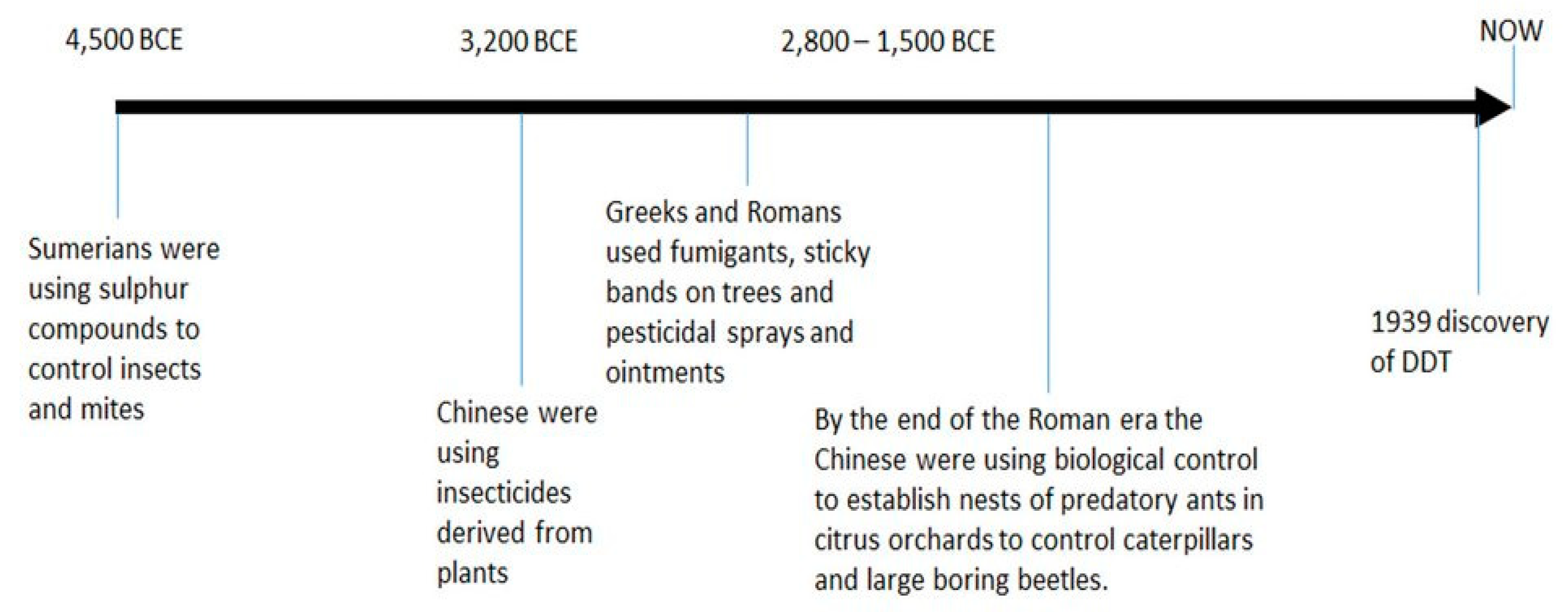
Figure 2.
Regulatory and development processes.
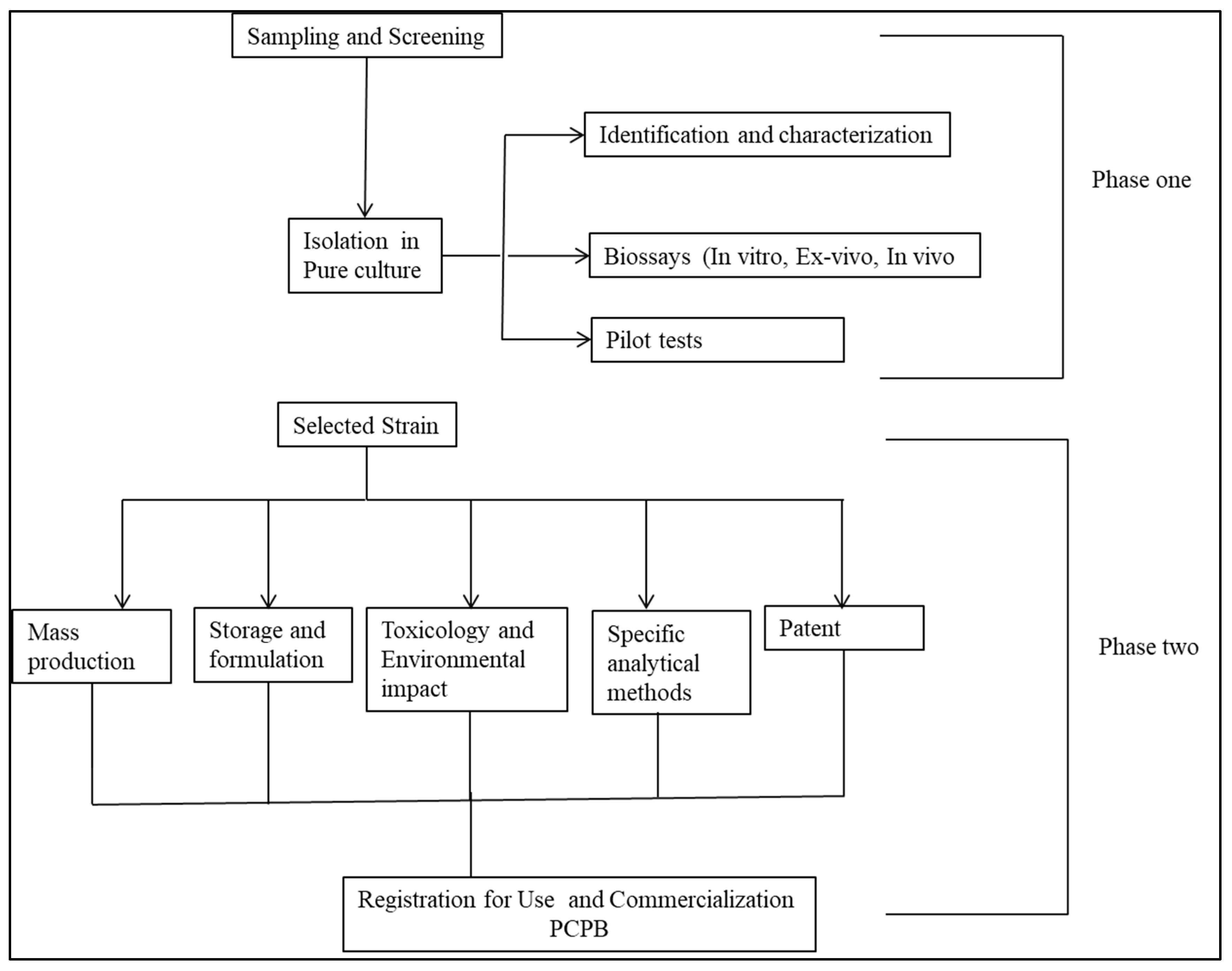

Table 1.
Common classification of phytochemicals and the modes of action.
| Class | Sub-Class | Description | Mechanism of control | References |
| Phenolic compounds | Simple and alkylated phenols | Plant defence mechanisms against pathogens and insects. | -Membrane disruption, substrate deprivation | (Bhardwaj et al., 2015; Choudhury et al., 2018) |
| Phenolic acids | Aromatic acids that contain a phenolic ring and a carboxyl functional group | -Bind to adhesins, forms complex with the cell wall, inactivate enzymes | (Altemimi et al., 2017; Draz et al., 2019; Dulf et al., 2017; Kurmukov, 2013; Pharmacopeia, 1998) | |
| phenylpropanoids coumarins, quinines, anthraquinones, xanthones |
Aromatic plants mainly produce them and have antifungal and antibacterial properties | - Interaction with eucaryotic DNA | (Al-Huqail et al., 2019; Gurjar et al., 2012; Monteiro et al., 2016). | |
| Tannins | Astringent, polyphenolic biomolecules | Bind to and precipitate proteins, enzyme inhibition, substrate deprivation | (Gurjar et al., 2012; Koche et al., 2016; Kurmukov, 2013; Salhi et al., 2017) | |
| Terpenoids (Isoprenoids) sesquiterpenes, diterpenes, diterpenoids, triterpenoids | Essential oils prenyllipids | These are the oldest group of small molecular products synthesized by plants and the most widely spread. | Cell membrane disruption | (Bhardwaj et al., 2015; Koche et al., 2016; Kurmukov, 2013) |
| Alkaloids | Basic, naturally occurring organic compounds that contain at least one nitrogen, such as morphine or caffeine | Intercalate into cell wall | (Koche et al., 2016; Salhi et al., 2017) | |
| Flavones, flavonoids and flavonols- | Plants synthesize them in response to microbial infections. They are phenolic compounds with one carboxyl group. |
Bind to adhesins, forms complex with the cell wall, Inactivate enzymes | (Kurmukov, 2013; Salhi et al., 2017; Uwague, 2017) | |
| Lectins and Polypeptides | Carbohydrate-binding proteins that are highly specific for sugar groups that are part of other molecules | Form disulfide bridges Cause agglutination |
(Freire et al., 2012) | |
| Saponins | Constitutive antifungal plant metabolites that act as natural detergents chemically related to triterpenes saponins and steroidal saponins | - antimicrobial, cholesterol-lowering, and anti-cancer. The main compound produced by cayenne pepper. |
(Kurmukov, 2013; Salhi et al., 2017) |
Table 2.
Examples of plants with antimicrobial effects and the pathogens they control.
| Plant | Common name | Target pathogen | Reference |
|---|---|---|---|
| Datura stramonium | Datura |
Puccinia triticina Eriks Alternaria solani and Fusarium oxysporum |
(Chaudhary et al., 2015; Draz et al., 2019; M. Rahman et al., 2009), (Jalander & Gachande, 2012) |
| Acalypha wilkesiana | Acalypha | Puccinia triticina Eriks | (Draz et al., 2019) |
| Lawsonia inermis | Henna | Puccinia triticina Eriks | (Ambikapathy et al., 2011; Draz et al., 2019) |
| Melia azedarach | Chinaberry | Puccinia triticina Eriks | (Draz et al., 2019) |
| Punica granatum | Pomegranate | Puccinia triticina Eriks | (Draz et al., 2019) |
| Lantana camara | Lantana | Puccinia triticina Eriks | (Draz et al., 2019) |
| Allium cepa | Onion | Helminthosporium turcicum and Ascochyta rabiei | (Gwa et al., 2018) |
| Calotropis procera | Giant milkweed | Helminthosporium turcicum and Ascochyta rabiei | (Gwa et al., 2018) |
| Adenocallima alliaceum | garlic vine | Alternaria alternate and Fusarium oxysporum | |
| Zingiber officinale | Ginger | Penicillium expansum | (Gwa et al., 2018; Parveen et al., 2014) |
| Piper nigrum | Black pepper | Penicillium expansum | (Gwa et al., 2018) |
| Azadirachta indica | Neem |
Penicillium expansum, Pectobacterium carotovorum subspecies carotovorum, Pectobacterium atrosepticum, Dickeya dadantii, Oidium anacardia, Phytophthora infestans and Rhizoctonia infestans |
(Gwa et al., 2018; Ngadze, 2013; Paradza et al., 2013; Shomari & Menge, 2013) |
| Nicotiana tabacum | Tobacco | Penicillium expansum | (Gwa et al., 2018; Jangam et al., 2014; S. Rahman et al., 2016) |
| Acacia saligna (Labill.) H. L. Wendl. | Golden wattle | Rhizoctonia solani, Fusarium culmorum and Penicillium chrysogenum | (Al-Huqail et al., 2019) |
| Xylaria spp | Botrytis cinerea | (Adongo et al., 2013) | |
| Allium sativum | Garlic |
Pectobacterium carotovorum subspecies carotovorum, Pectobacterium atrosepticum Dickeya dadantii, Phytophthora infestans and Rhizoctonia infestans |
(Ngadze, 2013; Paradza et al., 2013) |
|
Morinda morindoides, Senna occidentalis Opuntia cactus Opuntia vulgaris |
- - - - |
Oidium anacardii | (Shomari & Menge, 2013) |
| Carica papaya | Pawpaw | Colletotrichum kahawae L., Phytophthora infestans and Rhizoctonia infestans | (Ngadze, 2013; Ngouegni et al., 2017) |
|
Tagetes minuta Vinca rosea |
Mexican marigold Periwinkle |
Phytophthora infestans and Rhizoctonia infestans | (Ngadze, 2013) |
|
Artemisia herba alba Cotula cinereal Asphodelus tenuifolius Euphorbia guyoniana |
desert or white wormwood Onion weed Euphorbia |
Fusarium graminearum and Fusarium sporotrichioides | (Salhi et al., 2017) |
|
Phyllanthus amarus Schum. and Thonn. |
- | Aspergillus niger, Aspergillus flavus, Fusarium oxysporum, and Rhizopus stolonifera | (Sen & Batra, 2012) |
|
Lawsonia inermis L. Mimosa pudica L. Phyllanthus niruri L. Tephrosia purpurea Pens. Vinca rosea L. |
- | Pythium debaryanum | (Ambikapathy et al., 2011) |
| Cymbopogon citratus | - | Colletotrichum kahawae L., Ustilago maydis, Ustilaginoidea virens, Curvularia lunata, and Rhizopus spp | (Ngouegni et al., 2017) |
| Eucalyptus saligna | - | Colletotrichum kahawae L. | (Ngouegni et al., 2017) |
| Phenopodium ambroides | - | Rhizoctonia solani | (Singh, 2014) |
|
Chromoleana odorata Xylopia aethiopica |
- | Ustilago maydis, Ustilaginoidea virens, Curvularia lunata, and Rhizopus spp | (Singh, 2014) |
| Leonotis nepetifolia L. | - | Phoma exigua | |
| Ocimum gratissimum L. | - | Phoma exigua, Ustilago maydis, Ustilaginoidea virens, Curvularia lunata, and Rhizopus spp | (Singh, 2014) |
| Pelargonium odoratissimum | Apple geranium | Erwinia armylovora | (Chiriac and Ulea 2012) |
| Salvia officinalis | Sage | Erwinia armylovora | (Chiriac and Ulea 2012) |
| Tagetes minuta | French marigold | Erwinia armylovora | (Chiriac and Ulea 2012) |
| Hedera helix L | Ivy | Erwinia armylovora | (Baysal and Zeller, 2004) |
| Syzygium aromatcum | Clove |
Erwinia amylovora Xanthomonas arboricola pv. corylina, Xanthomonas arboricola pv. juglandis, Pseudomonas syringae pv. Syringae Agrobacterium tumefaciens |
(Mikicinski et al., 2012) |
| Origanum compactum | Oregano |
Erwinia amylovora Pseudomonas syringae pv.Syringae, Pseudomonas fluorescens, Pantoea dispersa Pantoea agglomerans |
(Kokoskova et al., 2011) |
| Thymus vulgaris | Thyme |
Erwinia amylovora Pseudomonas syringae pv.Syringae, Pseudomonas fluorescens, Pantoea dispersa, Pantoea agglomerans |
(Kokoskova et al., 2011) |
| Origanum vulgare | Wild oregano | Pseudomonas syringae pv. garcea | (Kokoskova et al., 2011) |
| Ocimum tenuiflorum | Holy basil | Xanthomonas axonopodis pv. punicae | (Sherkhane et al., 2018) |
Disclaimer/Publisher’s Note: The statements, opinions and data contained in all publications are solely those of the individual author(s) and contributor(s) and not of MDPI and/or the editor(s). MDPI and/or the editor(s) disclaim responsibility for any injury to people or property resulting from any ideas, methods, instructions or products referred to in the content. |
© 2023 by the authors. Licensee MDPI, Basel, Switzerland. This article is an open access article distributed under the terms and conditions of the Creative Commons Attribution (CC BY) license (http://creativecommons.org/licenses/by/4.0/).
Copyright: This open access article is published under a Creative Commons CC BY 4.0 license, which permit the free download, distribution, and reuse, provided that the author and preprint are cited in any reuse.


