

Submitted:
11 December 2025
Posted:
14 December 2025
You are already at the latest version
Abstract
This study examines the impact of harvest-time temperature on the aroma composition and sensory expression of Hárslevelű wines from the Tokaj region, with particular re-levance to sustainable gastronomy, where freshness, aromatic precision and reduced technological inputs are increasingly prioritised. Grapes were harvested either at night under cool pre-dawn conditions (18 °C) or at midday during high-temperature (28 °C) exposure, and subsequently processed through controlled microvinifications using bi-oprotection with Metschnikowia pulcherrima, applied alone or in combination with SO₂. Volatile compounds were analysed by HS-SPME–GC–MS and interpreted through PLS-DA, while sensory evaluation followed OIV standards and was complemented by qualitative insights from fine-dining chefs. Night-harvested wines contained higher levels of fresh, floral and citrus-associated terpene- and ester-derived volatiles, whereas sun-harvested wines exhibited riper aromatic traits and higher perceived acidity. Bi-oprotection increased metabolic diversity and enhanced ester formation but did not eliminate the fundamental differences imposed by harvest temperature. Sensory results consistently showed that night-harvested wines displayed greater aromatic purity, freshness and overall harmony across treatments. These findings demonstrate that night harvesting, particularly when combined with bioprotection, supports the pro-duction of aromatically expressive, high-quality Tokaj wines in alignment with the principles of sustainable gastronomy.

Keywords:
night harvesting
; aroma composition
; bioprotection
; Metschnikowia pulcherrima
; harvest-time temperature
; Hárslevelű
; sustainable gastronomy
; Tokaj wines
1. Introduction
The Tokaj wine region in northeastern Hungary, situated at the foothills of the Zemplén Mountains, is one of the world’s oldest delimited viticultural areas and a UNESCO World Heritage Site, internationally recognised for its distinctive terroir and historically significant sweet wine styles [1]. Its heterogeneous volcanic bedrock, loess–clay topsoils and sheltered mesoclimates shaped by the Bodrog and Tisza rivers provide favourable conditions for cultivating white grape varieties with high natural acidity and strong aromatic potential. Among the authorised cultivars, Furmint, Hárslevelű and Sárgamuskotály (Muscat Blanc) are the most emblematic. While Furmint is traditionally associated with structure, tension and ageing capacity, Hárslevelű is valued for its floral, spicy and honeyed aromatic character, reflecting its rich pool of volatile precursors [2]. These varietal traits contribute not only to Tokaj’s classical botrytised wines but also to the increasingly prominent category of high-quality dry wines that now shape the region’s contemporary identity and export profile [3].
Sustainability has become a central principle within modern food systems, influencing agricultural production, consumer expectations and gastronomic culture worldwide. According to the FAO, sustainable gastronomy encompasses sourcing, production and consumption practices that protect environmental integrity, support local communities and preserve cultural identity while remaining economically viable [4]. This multidimensional concept has become especially influential in fine dining, where transparency of origin, low-impact production and regional authenticity represent core values guiding restaurant philosophy and consumer choices [5,6].
Wine occupies a unique position within this framework, standing at the intersection of agriculture, culture and regional identity. Terroir-driven wine regions—such as Tokaj—serve as important expressions of locality, biodiversity and historical continuity [7,8]. UNESCO World Heritage wine landscapes are increasingly understood as “living cultural systems,” where sustainability is inseparable from heritage preservation and long-term socio-economic resilience [9]. The Tokaj Wine Region Historic Cultural Landscape exemplifies this connection between tradition, ecological stewardship and place-based identity.
In viticulture, sustainability encompasses soil conservation, biodiversity protection, integrated pest management, reduced chemical inputs and water–energy efficiency. A substantial body of research demonstrates that sustainable vineyard practices enhance grape quality, resilience to climatic variability and ecosystem functioning [10,11,12]. In cool-climate regions such as Tokaj, marked diurnal temperature variation and increasing climatic instability heighten the importance of adaptive practices that preserve aroma precursors, reduce oxidative degradation and support microbial stability during harvest and vinification [13].
Parallel developments in sustainable winemaking emphasise reduced SO2 usage, improved oxygen management, circular utilisation of winery by-products, energy-efficient processing and environmentally friendly packaging [14,15]. The growth of low-intervention and “natural” winemaking has further accelerated the adoption of microbial management strategies, such as non-Saccharomyces bioprotection, which aim to reduce chemical additives while enhancing aromatic freshness and microbial stability [16,17,18]. These approaches align closely with consumer preferences favouring authenticity, purity and minimal technological manipulation [19].
Harvest timing has recently been recognised as an important sustainability-relevant decision. Harvesting grapes during the cooler night or early morning hours can reduce energy requirements for must cooling, limit oxidative reactions, suppress spoilage microorganisms and preserve temperature-sensitive aroma compounds—thereby decreasing the need for corrective enological interventions [20,21,22]. Conversely, grapes harvested during warm midday conditions often require more intensive cooling, higher antioxidant additions and stricter microbial control, increasing both environmental footprint and chemical input. Night harvesting therefore represents a practical low-impact strategy that can simultaneously support sustainability goals and enhance the sensory quality of aromatic white wines.
These considerations resonate strongly with developments in global gastronomy. Michelin Green Star restaurants, for example, prioritise environmentally conscious sourcing, waste reduction and regionally grounded gastronomic narratives [23]. Recent studies indicate that chefs consider wines produced through sustainable methods—particularly those with clarity, freshness and a strong sense of terroir identity—as especially compatible with contemporary fine dining [24,25]. In this context, dry Tokaj wines made from Hárslevelű, with their naturally floral–citrus aromatic signature and compatibility with low-intervention winemaking, are increasingly viewed as gastronomically versatile and sustainability-oriented products.
The interplay of sustainability, regional identity and sensory quality highlights the importance of examining how specific viticultural and enological decisions—such as harvest-time temperature and bioprotection—shape the aromatic profile and gastronomic potential of Tokaj wines. Understanding these relationships contributes not only to scientific knowledge on white wine aroma management but also to broader discussions on how heritage wine regions can adapt to evolving environmental and gastronomic expectations while preserving cultural integrity.
Over the past two decades, the stylistic spectrum of Tokaj wines has broadened considerably. Historically, the region’s prestige rested on sweet, botrytised wines such as Aszú and Szamorodni, whose complexity derives from noble rot (Botrytis cinerea), oxidative maturation and extended barrel ageing. Today, however, dry Tokaj wines—often sourced from single vineyards—play a central role in expressing site-specific differences and varietal character. Within this context, Hárslevelű has gained renewed focus, as its distinctive aromatic profile makes it particularly suited to fresh, gastronomically versatile dry wines. Its characteristic descriptors—lime blossom, citrus, stone fruit, honey and herbal notes—arise from the interaction of primary grape-derived aroma compounds (including monoterpenes and C13-norisoprenoids) and fermentation-derived volatiles such as esters and higher alcohols [26]. Because these compounds are highly sensitive to viticultural and enological conditions, their preservation is essential for producing high-quality dry Tokaj wines.
White wine aroma results from the interaction of primary varietal compounds, fermentation-derived secondary volatiles and tertiary ageing-related constituents. Primary aroma molecules include monoterpenes (e.g., linalool, geraniol, nerol), C13-norisoprenoids (e.g., β-damascenone), C6 aldehydes and alcohols, and glycosidically bound precursors [27]. Their concentrations depend on grape variety, vineyard site, canopy management, water status and, critically, berry temperature during ripening and harvest [28]. Secondary aroma compounds—ethyl esters, acetate esters, higher alcohols and volatile fatty acids—are produced through yeast metabolism and influenced by must composition, fermentation temperature, yeast species and strain, nutrient status and oxygen exposure [29]. Even subtle changes in these parameters can produce perceptible differences in sensory expression, particularly in varieties such as Hárslevelű, where floral, citrus and honeyed notes require delicate balance.
Considering this, harvest timing and temperature have emerged as key determinants of white wine aroma composition. Studies across multiple cultivars show that grapes harvested under cooler conditions retain higher concentrations of volatile precursors and experience less oxidative degradation than grapes picked during the warmest hours of the day [30,31]. Elevated berry temperatures at harvest accelerate enzymatic reactions (e.g., PPO-mediated oxidation), promote pigment browning and reduce the pool of aroma-active molecules. The volatilisation of thermally labile compounds, particularly monoterpenes and certain esters, is also enhanced at higher temperatures. Conversely, night or early-morning harvesting at lower temperatures has been associated with improved aromatic freshness, sensory purity and colour stability, as cooler grapes require less intervention to prevent oxidation.
Tokaj’s microclimate—characterised by warm autumn days and significantly cooler nights—creates conditions under which harvest-time temperature contrasts are likely to have a substantial impact. Midday temperatures during harvest often exceed 25–30 °C, whereas pre-dawn temperatures may remain below 15–18 °C [32]. Such differences influence both must composition—through differential preservation or degradation of aroma precursors—and must microbiology. Grapes harvested under hot, sun-exposed conditions typically exhibit higher microbial loads and more active indigenous populations than grapes picked under cooler conditions, affecting the onset of fermentation and early aroma formation [33]. In aromatic cultivars like Hárslevelű, where sensory quality depends heavily on preserving floral, citrus and honeyed notes, the interaction between temperature, oxidation and microbial dynamics becomes particularly significant.
Oxidation is a central concern in aromatic white wine production. Must processed at elevated temperatures and exposed to oxygen undergoes rapid enzymatic and chemical oxidation, leading to browning, loss of varietal freshness and the development of oxidative off-notes [34]. Polyphenols are readily oxidised to quinones, which may react with aroma compounds and other must constituents, thereby diminishing aromatic intensity and clarity. Warmer conditions also favour the proliferation of spoilage microorganisms, such as acetic acid bacteria and certain non-Saccharomyces yeasts, which can increase volatile acidity and promote undesirable sensory attributes. As a result, modern white winemaking increasingly prioritises techniques that limit oxygen exposure, reduce must temperature and stabilise microbial conditions from the earliest processing stages.
One promising strategy within this context is the use of selected non-Saccharomyces yeasts for bioprotection. Although traditionally considered spoilage microorganisms, these yeasts have gained recognition over the past decade for their ability to enhance complexity, modulate fermentation and improve microbial stability [35]. Bioprotection involves inoculating must with beneficial non-Saccharomyces strains at pressing or shortly thereafter, enabling them to dominate the early fermentation environment, outcompete unwanted microorganisms and contribute metabolically to desirable aroma outcomes.
Among these species, Metschnikowia pulcherrima has received considerable attention due to its enologically valuable traits: oxygen consumption, which reduces oxidative stress; production of pulcherrimin, an iron-chelating pigment that inhibits spoilage microbes; and β-glucosidase activity capable of hydrolysing glycosidically bound precursors to release free aromatic compounds [36,37]. In co-inoculation or sequential strategies with Saccharomyces cerevisiae, M. pulcherrima has been shown to modulate ester profiles—often enhancing fruity and floral notes—and to improve overall aromatic purity [38,39].
Bioprotection closely aligns with current objectives to reduce SO2 use and implement more sustainable winemaking practices. Early colonisation by M. pulcherrima can limit spoilage organisms, lower SO2 requirements and protect vulnerable aroma compounds from oxidation [40]. This may be particularly advantageous under warm-harvest conditions, where oxidative and microbial pressures are heightened. However, despite growing interest in non-Saccharomyces yeasts, few studies have examined how bioprotection interacts with contrasting harvest-time temperatures.
This knowledge gap is especially relevant for Hárslevelű in Tokaj. While the general influence of harvest temperature on white wine aroma has been documented in other cultivars [30,33], systematic comparisons of night versus midday harvests of Hárslevelű under controlled vinification conditions are lacking. Likewise, although M. pulcherrima has been investigated for bioprotection and aromatic enhancement in several white wine varieties, its combined effect with contrasting harvest temperatures remains insufficiently characterised [36,37,38,39]. Given Tokaj’s pronounced diurnal temperature shifts and its strategic emphasis on high-quality dry wines, clarifying these interactions is of both scientific and practical importance.
In this study, we examine how harvest timing and bioprotection jointly influence the volatile composition and sensory properties of Hárslevelű wines from the Tokaj region. Grapes were harvested either during cool pre-dawn hours (“night harvest”) or at midday under warm, sun-exposed conditions (“sun harvest”), and were processed under strictly controlled microvinification conditions to enable direct comparison of the resulting wines.
By integrating chemical, sensory and qualitative perspectives, this study aims to clarify how contrasting harvest temperatures and bioprotection with M. pulcherrima jointly shape the aromatic identity and gastronomic potential of Hárslevelű wines. More broadly, the findings contribute to ongoing discussions in Tokaj and other cool-climate regions on how harvest strategies and microbial management can serve as complementary tools to preserve varietal typicity, enhance freshness and meet the evolving expectations of both wine professionals and contemporary gastronomy.
2. Materials and Methods
2.1. Microvinification and Sampling
Hárslevelű grapes from the Tokaj wine region were used for the study, harvested on 5th September 2025 with totally healthy state. Harvesting was carried out twice on the same day at two distinct time points: “night”—at 4:00 a.m., when the temperature had not yet exceeded 18 °C, and “sun”—at 12:00 p.m., when the temperature was already above 28 °C. Grapes were hand-harvested from conventionally managed vineyards. In both cases, processing was performed immediately after harvest while maintaining the respective harvest temperature.
Vinification was conducted at Tokajbor-Bene Winery (Bodrogkeresztúr, Hungary). After destemming, grapes were pressed without prior crushing. Following sedimentation, the juice was divided into 20 L tanks, and the treatments described in Figure 1 were applied in parallel (series a and b) for both the night and sun harvests.
The initial must composition was 195 g/L sugar, 9.2 g/L total titratable acidity, and pH 3.0. These parameters were determined using a WineScan™ 3 FT-IR analyser (FOSS Analytical, Hillerød, Denmark). The initial must parameters were determined using a WineScan™ 3 FT-IR analyser (FOSS Analytical, Hillerød, Denmark), yielding values of 195 g/L of total sugar, 9.2 g/L of total titratable acidity, and pH 3.0.
To enhance aromatic complexity and ensure microbiological stabilization, bioprotection was applied in the NH2, NH3, SH2, and SH3 treatments. Metschnikowia pulcherrima (EnartisFerm QMCK) was added directly after pressing at 10 g/hL. For alcoholic fermentation, Saccharomyces cerevisiae (EnartisFerm Aroma White) was used at 40 g/hL for samples NH1 and SH1, and—following a 24-h delay after the M. pulcherrima inoculation—for samples NH2, NH3, SH2, and SH3. This S. cerevisiae strain is selected for the production of fruity white wines from neutral or aromatic grape varieties. A nutrient and biological fermentation regulator composed of autolyzed yeast enriched in free amino acids and thiamine (Nutriferm® Arom Plus) was added at 20 g/hL in all treatments.
2.2. Analytical Characteristics, GC-MS Measurements, Sensory Panel
The following parameters were determined by classical analytical methods [41] at the end of the fermentation. Alcohol content: OIV-MA-AS312-01A method; total acidity: OIV-MA-AS313-01 method; pH: OIV-MA-AS313-15 method; volatile acid: OIV-MA-AS313-02 method.
Analyses of reducing sugar, glycerol, gluconic acid, lactic acid, malic acid, and tartaric acid were performed every two days using a WineScan™ 3 FT-IR analyser (FOSS Analytical, Hillerød, Denmark).
Flavouring compounds were analysed by headspace solid-phase microextraction coupled with gas chromatography–mass spectrometry (HS-SPME-GC-MS). For each samples, 1 mL of wine was added to 4 mL of water together with 1 g of NaCl. 4-methyl-2-pentanol was used as internal standard. For the extraction of volatile compounds, DVB/CAR/PDMS 50/30 µm fibre was used. The extraction time from headspace was 30 min, and desorption in the injector was carried out at 250 °C for 0.9 min.
Measurements were performed using a Shimadzu GCMS-QP2010 Plus gas chromatograph equipped with an AOC-6000 autosampler (Shimadzu Corporation, Kyoto, Japan) . Helium 5.0 (99.9990% purity) was used as a carrier gas at a flow rate of 1.11 mL/min. Separation was carried out on a 60.0 m × 0.25 mm × 0.50 µm ZB-WAXplus capillary column (Phenomenex Inc., Torrance, CA, USA). The oven temperature was initially set at 50 °C and held for 5 min, then increased to 230 °C at a rate of 4 °C/min. This temperature was maintained for 1 min, after which the oven was heated to 250 °C at a rate of 20 °C/min. The MS was operated in electron ionization mode at 70 eV in full-scan mode (m/z 35–300 at 3.0 scans/s). Both the ion source and interface temperatures were 250 °C. Shimadzu GCMSsolution software (version 2.53) was used to control the parameters of the GC-MS system, to search for components, to analyze the mass spectra, and to further evaluate the data and to perform a full comparison of the chromatograms. The identification of the chromatographic peaks, i.e., the resulting components, was performed using the NIST Mass Spectral Search Program (NIST/EPA/NIH Mass Spectral Library, version 2.3, NIST 17) and Wiley FFNSC 2 Mass Spectral Library (Wiley, 2011 edition).
The detected aroma compounds have been grouped according to chemical structure and organoleptic profile. The NIST Chemistry WebBook (https://webbook.nist.gov/chemistry/, accessed on 24 November 2025) was used for the chemical structure grouping, the Good Scents Company Database C (https://www.thegoodscentscompany.com, accessed on 25 November 2025) was used for the sensory characteristics.
Wine sensory analysis was carried out by a panel composed of five panellists (non-professional ones, “trained assessors”) in the tasting room of University of Eger according to OIV standard, OIV-MA-AS312-01B (Sensory analysis of wine). The sensory booths were compliant with ISO standards, ISO 8589:2022 Sensory analysis—General guidance for the design of test rooms. International Organization for Standardization: Geneva, Switzerland, 2022. Samples of 30 mL were served to the judges in ISO 3591 tasting glasses (ISO 3591:1977—Sensory analysis—Apparatus—Wine-tasting glass. International Organization for Standardization: Geneva, Switzerland, 1977) at 10 °C, with de-carbonated water and neutral bread as flavour-neutralisers. Before the judging started, the judges attended a training session in which they were trained to measure each sensory attribute using standard samples and shown how to use the scale for each attribute. The samples were tasted blindly and randomly according to codes. The sensory evaluation was carried out on a five-point scale, where 1 indicated the absence of the sensation and 5 represented extreme intensity. The visual evaluation focused on colour (from 1 — defensible to 5 — highly likeable). The olfactory evaluation included smell purity (from 1 — strong off-odours to 5 — clean), aroma purity (from 1 — strong off-notes to 5 — clean), flowery/citrus notes (from 1 - little to 5 - high) and honey/apricot notes (from 1 - very little to 5 - high). The taste evaluation considered acidity (from 1 — mild to 5 — vibrant, crips), and harmony (from 1 — disharmonious to 5 — elegant).The scores for each property were evaluated with the aid of a statistical programme.
2.3. In Depth Interviews
To complement the analytical and experimental results, qualitative insights were collected through semi-structured in-depth interviews, a well-established method for exploring expert perspectives, contextual knowledge and decision-making processes in gastronomy and wine research [42]. This approach allowed the researcher to follow predefined thematic lines while maintaining sufficient flexibility for interviewees to elaborate on personal professional experiences.
All three participants were contacted in person, and each interview followed the same predefined set of five questions to ensure comparability across responses. Interviews were conducted individually, and answers were documented through detailed note-taking with the participants’ consent.
The interview guide consisted of the following core questions:
- If you could freely select a wine style from the Tokaj portfolio—either a botrytised wine or a fresh, crisp, lighter style—and create a dish to pair with it, which would you choose and why? What type of dish would you recommend for that wine?
- When considering food pairing, which characteristic plays a more decisive role for you in Tokaj wines: the aromatic profile or the residual sugar content?
- What do traditional Tokaj winemaking practices represent for today’s generation of chefs?
- In your view, do Tokaj wines have a future in international fine dining, and under what conditions could they succeed?
- Do you think the current Tokaj wine portfolio meets the requirements of sustainable gastronomy? If yes or no, in what ways?
Three professionals representing different segments of the Hungarian fine-dining and gastronomic landscape participated in the study:
Máté Boldizsár, owner of the Michelin Green Star-awarded SALT restaurant in Budapest and featured in The World’s 50 Best Restaurants – Discovery, places sustainability at the centre of his culinary philosophy, emphasising reduced ecological footprint through local and organic sourcing. SALT’s three beverage-pairing concepts—natural wine selections, prestige pairings from classic European estates and non-alcoholic ferments including house-made juices, water kefirs and kombuchas—illustrate a modern, innovative approach to pairing in contemporary fine dining.
Gábor Horváth, founder of the culinary concept „aSÉFésaKERTÉSZ”, previously served for nearly a decade as chef of the Gusteau Culinary Experience Workshop in Mád, contributing to its transformation from a countryside restaurant into an award-winning fine-dining establishment. After gaining national recognition through publications and media work, he adopted an autonomous gastronomic path centred on seasonal organic vegetables and herbs grown in his own garden, integrating ecological production with creative cuisine.
Gergő Bajusz, owner of Első Mádi by BG in Mád, represents a hospitality tradition deeply rooted in the Tokaj region. His restaurant concept integrates regional identity, local ingredients and a wine-focused dining culture, reflecting a strong connection to the culinary and viticultural heritage of the area.
The insights obtained from these interviews provided meaningful interpretative depth, highlighting how chefs conceptualise Tokaj wine styles, sustainability considerations, culinary pairing strategies and the perceived international potential of Tokaj wines in modern fine dining.
2.4. Statistical Analyses
Volatile compound data were evaluated by partial least squares discriminant analysis (PLS-DA). The analysis was performed in the R statistical environment (R Core Team, version 4.4.1) using the mixOmics and ggplot2 packages [43]. The X matrix consisted of the peak areas of the individual aroma compounds, while the categorical response variable (Y) encoded the experimental groups (night harvest - NH, sun harvest - SH). Non-numeric entries in the data set (e.g., “nd”) were treated as missing and replaced by zero prior to modelling. A two-component PLS-DA model was retained, and group separation was visualised using a PLS-DA biplot. In this biplot, points represent individual samples and arrows indicate the direction and relative contribution of the most influential aroma compounds (top 30 loadings) to the discrimination among groups.
Sensory data were imported from our table contained scores from the judgers and grouped according to the sample codes (NH1ab, NH2ab, NH3ab and SH1ab, SH2ab, SH3ab). Mean values for each sensory attribute were computed separately for each treatment and group. Radar charts were then created in the R statistical environment (R Core Team, version 4.4.1) with the fmsb package, visualising the comparative aroma profiles of NH and SH wines across the three treatments [44].
3. Results
3.1. Influence of Harvest Time on Wine Aroma Profiles
GC-MS analysis resulted in the detection of 29 aroma compounds. PLS-DA Biplot statistical modelling was performed to select the total detectable aroma components, the results of which are shown in Figure 2.
The PLS-DA biplot revealed a clear separation between the night-harvested (NH) and sun-harvested (SH) wine groups, indicating that the contrasting harvest-time temperatures resulted in distinct volatile profiles. The first two latent variables captured the major discriminative structure of the dataset, and the score plot displayed minimal overlap between NH and SH samples, confirming consistent differences in aroma composition.
Within the NH group, the bioprotected samples (NH2, NH3) showed greater dispersion compared with the non-bioprotected control (NH1). This broader distribution reflects the enhanced metabolic diversity typically associated with M. pulcherrima. These samples exhibited higher loadings for compounds such as ethyl phenylacetate, ethyl butyrate, nerol, isobutyl alcohol and ethyl dodecanoate—volatiles known to contribute richer, waxier and more fruit-driven aromatic notes.
A similar pattern was observed in the SH group: bioprotected samples (SH2, SH3) were associated with a wider range of aroma-active metabolites, whereas SH1 remained more tightly clustered. Volatiles more strongly associated with the SH samples included ethyl isobutyrate, hexanoic acid, 3-methylpentanoic acid, linalool and β-damascenone, contributing to floral, citrus-like and riper aromatic characteristics.
Taken together, the PLS-DA model demonstrates that:
(i) NH and SH wines exhibit systematic differences in volatile composition;
(ii) bioprotection increases the diversity of characteristic aroma metabolites within each harvest group; and
(iii) the separation between groups is primarily driven by specific esters, higher alcohols and terpenes that distinguish the NH and SH wines.
3.2. Influence of Harvest Timing on the Sensory Profile of Wine
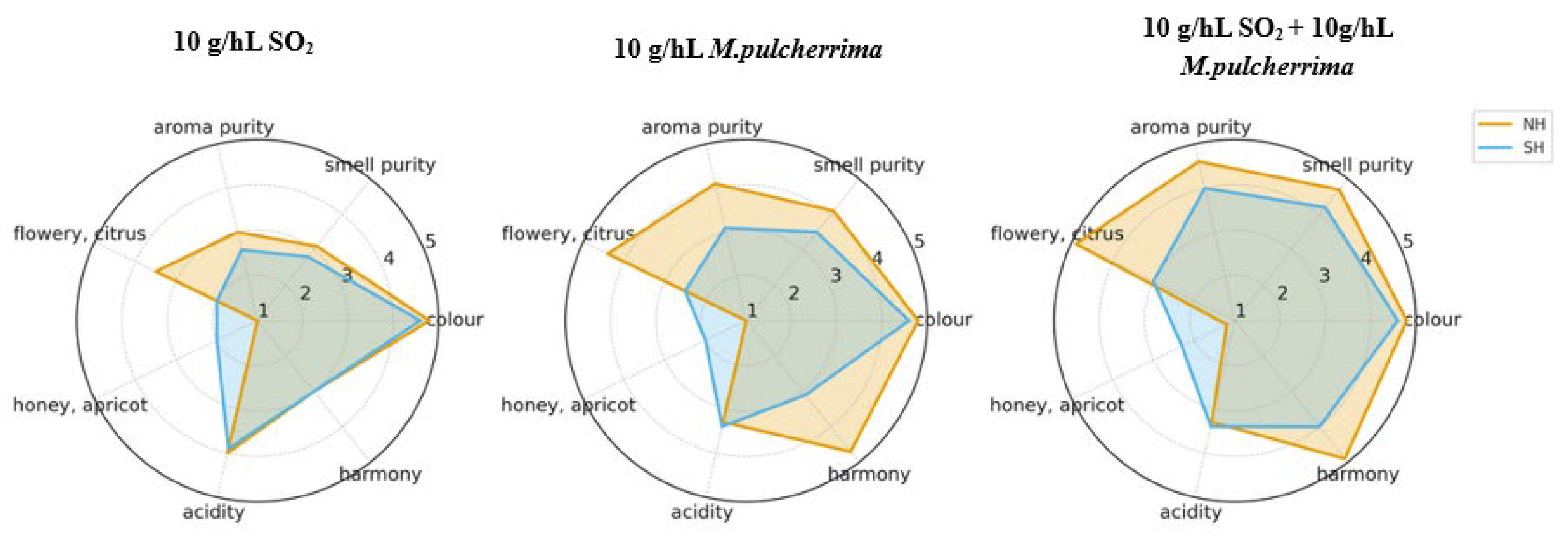
The results of the organoleptic evaluation are illustrated in Figure 3 for night harvest and sun harvest according to the treatments.
Figure 3 provides a detailed comparison of the sensory profiles of night-harvested (NH) and sun-harvested (SH) wines produced under the three treatment conditions (10 g/hL SO2, 10 g/hL M. pulcherrima, and the combined SO2 + M. pulcherrima application). In the SO2-only wines, NH samples displayed a notably cleaner and more vivid aromatic character, with higher scores for colour intensity, aroma purity, and flowery–citrus notes. By contrast, SH wines tended toward a slightly riper sensory expression, showing elevated acidity alongside more evident honey–apricot nuances.
The sensory distinction between NH and SH wines became more pronounced when M. pulcherrima was applied as a single treatment. NH wines in this group exhibited a consistently brighter and more refined aromatic profile, characterized by enhanced floral–citrus expression, improved aroma and smell purity, and a more integrated overall impression. SH wines, while maintaining acceptable aromatic quality, showed comparatively muted freshness and a greater presence of warm, ripe fruit attributes.
Under the combined SO2 + M. pulcherrima treatment, NH wines achieved the most favourable and well-rounded sensory evaluations across all attributes assessed. These wines were marked by exceptional clarity of aroma and smell, a strong and attractive colour appearance, and a notably harmonious overall balance. SH wines treated in the same manner demonstrated a solid sensory performance but continued to present higher perceived acidity and a stronger emphasis on honey–apricot notes, consistent with the trends observed in the other treatments.
Taken together, the results indicate that night harvesting systematically enhances the freshness, aromatic clarity, and overall sensory harmony of the wines, whereas sun harvesting accentuates acidity and promotes the development of riper, warmer aromatic notes. This pattern was evident across all treatment conditions, suggesting that harvest timing exerts a strong and consistent influence on the sensory expression of the resulting wines.
3.3. Qualitative Results: Thematic Synthesis of Chef Interviews
This section presents a thematic synthesis of the three in-depth interviews conducted with chefs representing different segments of Hungarian fine dining: Máté Boldizsár (SALT, Budapest), Gábor Horváth (aSÉFésaKERTÉSZ), and Gergő Bajusz (Első Mádi by BG). The analysis follows a question-by-question structure and summarises the responses without direct quotations.
i. Preferred Tokaj wine style (botrytised vs. fresh) and prospective dish pairing
All three chefs expressed openness to both fresh and botrytised Tokaj wine styles, although their preferred contexts differed.
Boldizsár emphasised a dual approach: fresh, often natural-style dry wines symbolise regional identity at SALT, whereas botrytised wines pair effectively with desserts or dishes incorporating fermented or mould-derived flavours.
Horváth favoured botrytised wines in colder seasons—particularly those with balanced sweetness and acidity—which he associated with warm, spice-forward dishes from Levantine or Southeast Asian cuisines.
Bajusz took a flexible position, noting that fresh wines suit everyday dining, while mature or sweet wines fit celebratory or contemplative occasions.
Overall, chefs attribute distinct culinary roles to the two styles: botrytised wines align with richer, spiced or dessert dishes, while fresh dry wines support lighter, mineral-driven pairings. Tokaj’s stylistic diversity is therefore regarded as an advantage in menu development.
ii. Dominant factor in food pairing: aromatic profile or residual sugar
All chefs acknowledged the relevance of both factors, though with different emphases.
Boldizsár viewed residual sugar as a structurally useful pairing tool but regarded aromatic structure as offering greater creative potential.
Horváth highlighted the situational importance of both acidity and residual sugar depending on a dish’s sequence within a menu.
Bajusz prioritised distinctive aromatic character, especially in relation to locally sourced, terroir-driven ingredients.
Across interviews, aromatic complexity emerged as the more intellectually defining component of pairing decisions, while residual sugar was perceived as a supportive structural element in specific contexts.
iii. Significance of Tokaj winemaking traditions for contemporary chefs
Perceptions of tradition varied across respondents.
Boldizsár noted that chefs rarely design dishes specifically to match traditional winemaking practices, suggesting limited direct influence on culinary decisions.
Horváth acknowledged the coexistence of Tokaj’s winemaking heritage with the region’s contemporary shift toward fresher, more vibrant dry styles.
Bajusz, working directly within the region, regarded Tokaj’s heritage as a cultural responsibility that should be reflected in local gastronomy.
Collectively, the chefs recognised Tokaj’s traditions as culturally and symbolically significant, though their impact on menu creation differs: for some they serve as inspiration, for others as a heritage component to be honoured.
iv. Future of Tokaj wines in international fine dining
All three chefs agreed that Tokaj wines hold strong international potential, though success depends on various conditions.
Boldizsár pointed to Tokaj’s existing representation on global wine lists and stressed that both sweet and dry styles can compete internationally when supported by consistent quality.
Horváth emphasised the necessity of more coordinated and strategic international marketing efforts.
Bajusz argued that global perceptions must move beyond classic pairings such as foie gras or blue cheese, advocating broader communication of Tokaj’s stylistic diversity.
Consensus emerged that Tokaj wines are well-suited for high-end gastronomy, with the primary barriers involving market visibility and entrenched stereotypes rather than wine quality.
v. Alignment of the Tokaj wine portfolio with sustainable gastronomy principles
Interviewees perceived meaningful progress toward sustainability in the region but also identified areas requiring improvement.
Boldizsár acknowledged increasing sustainability efforts, though noted that organic or low-impact viticulture is not yet widespread.
Horváth highlighted positive developments among younger producers, especially those transitioning toward organic or environmentally conscious practices.
Bajusz applied a structured evaluation—considering biowines, sustainable farming, fair trade, local sourcing and environmentally conscious packaging—and concluded that only a limited portion of Tokaj’s current portfolio meets all criteria.
Overall, chefs recognised that while sustainability initiatives are gaining momentum, the Tokaj region remains in transition. Broader adoption of sustainable vineyard and cellar practices is viewed as essential for aligning with contemporary gastronomic expectations.
4. Discussion
4.1. Influence of Night and Sun Harvest on Volatile Composition and the Role of Bioprotection
The PLS-DA results clearly demonstrate that night-harvested (NH) and sun-harvested (SH) grapes produce distinct volatile profiles, reinforcing the concept that harvest-time environmental conditions markedly influence the aromatic composition of wines. Temperature and light exposure during harvest have been repeatedly shown to affect grape berry metabolism, precursor availability and yeast–substrate interactions during fermentation, ultimately shaping the volatile profile of the finished product [20,45].
In the present study, the separation between NH and SH samples was pronounced, reflecting systematic differences in ester formation, higher alcohol production and terpene expression. Compounds contributing fresh, floral and citrus-associated notes—such as ethyl isobutyrate, linalool, β-damascenone and hexanoic acid derivatives—were associated with one harvest condition, whereas fuller, richer and more fruit-driven volatiles—including nerol, ethyl dodecanoate, ethyl butyrate, ethyl decanoate and isobutyl alcohol—characterised the opposite condition. These findings are consistent with previous reports demonstrating that the harvest-time microclimate modulates both primary grape aroma constituents and secondary fermentation-derived volatiles [20,28].
Bioprotection with M. pulcherrima introduced an additional layer of metabolic diversity. Bioprotected samples (NH2, NH3, SH2, SH3) displayed broader aromatic variability and were associated with volatiles characteristic of non-Saccharomyces metabolic activity, including ethyl phenylacetate, ethyl butyrate, nerol, isobutyl alcohol and ethyl dodecanoate. These observations align with findings from Bene et al. (2025), who reported that M. pulcherrima enhances ester formation, modulates nitrogen utilisation pathways and promotes the development of waxy, fruity and floral aroma compounds during fermentation [39].
Importantly, although bioprotection increased aromatic complexity within each harvest group, it did not eliminate the fundamental differences between NH and SH wines. Rather, M. pulcherrima acted within the boundaries set by harvest temperature, diversifying fermentation-derived volatiles without shifting NH wines toward SH characteristics or vice versa. This indicates that while non-Saccharomyces yeasts effectively modulate secondary aroma formation, the baseline aroma potential determined by harvest environment remains the primary driver of group-level differentiation.
Taken together, these results confirm that harvest conditions (night versus sun harvest) exert a strong and deterministic influence on volatile composition; bioprotection with M. pulcherrima enhances aromatic diversity, particularly through ester and higher alcohol pathways; and specific families of volatiles—esters, higher alcohols and terpenes—underlie the separation observed between NH and SH samples. These findings underscore the combined importance of harvest strategy and microbial management in shaping the aromatic profile of wines.
4.2. Influence of Harvest Timing on Sensory Expression
The sensory evaluation results indicate that harvest timing exerted a consistent and substantial influence on the organoleptic properties of the wines, independent of the enological treatments applied. Night-harvested (NH) grapes produced wines that were systematically judged as fresher, more aromatic, and more harmonious, whereas sun-harvested (SH) grapes resulted in wines with a riper aromatic expression, higher perceived acidity, and more pronounced honey–apricot notes. These observations align with previous findings showing that lower grape and must temperatures at harvest help preserve volatile aroma compounds and reduce oxidative degradation processes [46].
Across all treatments, NH wines showed higher aroma and smell purity, which is consistent with reports demonstrating that cooler night temperatures slow down enzymatic oxidation and limit volatilisation losses of delicate terpenes, thiols, and esters [47,48]. The enhanced expression of floral–citrus notes in NH wines supports this interpretation, indicating that harvesting during cooler periods favours the retention of temperature-sensitive aromatic compounds and preserves varietal typicity.
In contrast, SH wines exhibited sensory profiles dominated by warmer, riper aromatic nuances and elevated acidity perception. Similar sensory trends have been described in studies showing that elevated berry temperature during sun exposure accelerates metabolic and oxidative pathways, resulting in increased formation of C6 aldehydes, stone-fruit-associated volatiles, and other oxidative aroma markers [49,50,51]. The persistence of these characteristics across all treatments suggests that harvest timing remains a primary determinant of sensory differentiation, even when SO2 or M. pulcherrima is applied.
The microbial treatments did not diminish these harvest-driven differences; rather, they appeared to accentuate them. The combined SO2 + M. pulcherrima treatment, for example, yielded NH wines with particularly high aromatic clarity, purity, and balance. This outcome aligns with earlier findings that M. pulcherrima can enhance terpene- and ester-derived complexity while consuming oxygen and suppressing oxidative defects [37,38,39]. Nevertheless, SH wines treated with the same protocol retained stronger honey–apricot and acidity-related attributes, indicating that microbial modulation cannot override the foundational effects of grape temperature and oxidative state at harvest.
Taken together, these results reinforce the conclusion that harvest timing—through its influence on grape temperature, oxidative stability, and volatile preservation—plays a decisive role in shaping the sensory trajectory of dry Tokaj wines. Even under active enological interventions, the intrinsic sensory differences generated by night versus sun harvesting remain clearly identifiable, confirming earlier observations regarding the critical role of harvest timing as a winemaking strategy to maintain freshness and aromatic precision in white wines [46,52,53,54].
4.3. Discussion of Chef Interviews in the Context of International Gastronomy Research
The qualitative findings indicate that professional chefs perceive Tokaj wines as versatile, culturally significant and well-suited to integration into contemporary fine dining. These perspectives closely correspond with international research on wine pairing, regional identity and sustainability-driven menu design.
Tokaj wine styles and culinary applicability
The chefs’ emphasis on the dual gastronomic relevance of fresh dry Tokaj wines and botrytised sweet wines aligns with broader literature highlighting the value of wines with high acidity, aromatic precision and clear regional identity in haute cuisine [25,55,56]. Their view that botrytised wines pair effectively with spiced, umami-rich or fermented dishes is consistent with studies showing that high-acid sweet wines complement complex flavour matrices [57]. In parallel, the chefs’ strong preference for mineral-driven, crisp dry Tokaj wines for lighter courses reflects global fine dining trends favouring fresh, terroir-expressive white wines.
Notably, several chefs associated stylistic differences directly with harvest timing—not in technological terms but through sensory and gastronomic interpretation. Wines produced from night harvest were repeatedly described as crisper, fresher and more linear, qualities that suit contemporary tasting-menu formats. This observation echoes international sensory research showing that cooler night harvesting preserves delicate volatiles, resulting in increased vibrancy and aromatic purity [30,58]. By contrast, sun-harvest wines were characterised as riper and softer, traits consistent with findings linking higher harvest temperatures to warmer, more mature fruit profiles [31]. While not rejected by chefs, SH wines were described as more situational, underscoring the premium placed on tonal freshness in modern fine dining.
Aroma versus residual sugar in pairing decisions
Chefs described aroma profile and residual sugar as complementary but context-dependent elements in pairing, mirroring sensory-interaction research showing that sweetness modulates bitterness or spice, while aromatic compounds offer structural harmony or contrast [55,59]. Those working with regional, seasonal and fermentation-based flavours especially emphasised aromatic complexity—aligning with a global shift toward aroma-led, concept-driven pairing strategies.
Here again, harvest timing emerged as a practical consideration: the citrus–floral clarity of night-harvest wines was viewed as facilitating precise pairings in early menu sequences, whereas the denser aromatic profile of sun-harvest wines was judged more appropriate for richer dishes. This demonstrates how viticultural decisions can broaden or narrow a wine’s culinary application.
Perceived significance of winemaking traditions
The chefs expressed diverse but generally positive attitudes toward Tokaj’s historical winemaking practices. Some treated tradition as conceptual inspiration, while others viewed it as a cultural responsibility within the region. This variation reflects international findings that chefs integrate regional traditions strategically, balancing identity-building with menu innovation [60,61]. Recognition of Tokaj’s World Heritage status further aligns with studies showing that gastronomic professionals often regard UNESCO-designated regions as markers of narrative depth and cultural credibility [8].
Future of Tokaj wines in international fine dining
All participants agreed that Tokaj wines possess strong potential in global fine dining, though visibility, communication and stylistic education remain barriers. These observations parallel research showing that emerging or lesser-known wine regions face distribution and sommelier-adoption challenges even when quality is high [56,62,63,64,65]. The persistent association of Tokaj primarily with foie gras exemplifies “legacy pairings” that may limit interpretive flexibility unless actively reframed within contemporary gastronomy.
In this context, chefs’ appreciation of night-harvest wines as modern, precise and versatile underscores the importance of communicating stylistic diversity. Emphasising sensory clarity and gastronomic applicability may enhance Tokaj’s position within the international fine dining landscape.
Sustainability expectations in contemporary gastronomy
Chefs acknowledged that Tokaj is progressing toward sustainability but noted that the region has not yet fully met the expectations of high-end gastronomy. This reflects international research highlighting the increasing importance of organic viticulture, low-input winemaking and environmentally responsible packaging [5,66]. In Michelin-level settings, ecological credibility contributes to narrative value and brand alignment, influencing both procurement and menu philosophy [23,67].
Overall, the interview results align with international findings in three key domains: stylistic versatility essential for tasting-menu design; heritage-based identity as a tool for regional storytelling; and sustainability as a baseline expectation rather than an optional characteristic. Importantly, the chefs’ nuanced distinction between night- and sun-harvest-derived wines supports a growing body of literature indicating that harvest timing has gastronomic implications beyond enological ones. Together, these insights suggest that Tokaj wines possess the intrinsic attributes required for success in international fine dining—particularly when the freshness associated with night harvesting is effectively communicated to global culinary audiences.
5. Conclusions
This study demonstrates that harvest-time temperature exerts a decisive influence on the volatile composition and sensory properties of Hárslevelű wines from the Tokaj region. Night harvesting consistently preserved a wider range of fresh, floral and citrus-associated aroma compounds, resulting in wines with greater aromatic purity, balance and overall harmony. In contrast, grapes harvested at midday under higher temperatures produced wines with riper aromatic characteristics, more pronounced acidity perception and a less clearly defined expression of freshness.
Bioprotection with M. pulcherrima enhanced the diversity of fermentation-derived esters and higher alcohols and improved overall aromatic clarity; however, it did not override the fundamental differences imposed by harvest-time microclimate. Instead, it acted as a complementary tool, amplifying the favourable effects of cooler harvest conditions while maintaining the harvest-temperature-driven typicity of each wine group.
From a consumer-oriented perspective, these findings are particularly relevant. Contemporary wine drinkers tend to favour styles characterised by freshness, purity and clearly articulated fruit expression. Among the wine styles examined, those derived from night harvesting aligned most closely with this consumer-friendly sensory profile, offering greater coherence and ease of interpretation.
Overall, night harvesting—particularly when combined with bioprotection—emerges as an effective strategy for maintaining varietal typicity, enhancing aromatic precision and producing dry Tokaj wines that meet both professional and consumer expectations. More broadly, this approach supports the principles of sustainable gastronomy by reducing the need for chemical additives, lowering technological intervention and preserving sensory freshness under increasingly warm harvest conditions. As climate change continues to alter ripening-period temperature patterns, the coordinated use of harvest strategy and microbial management will become increasingly essential for safeguarding the aromatic identity, consumer appeal and gastronomic relevance of Tokaj wines.
Author Contributions
Conceptualization, Z.B. and V.S..; methodology, Z.B.; formal analysis, L.K.; writing—original draft preparation, Z.B.; writing—review and editing, Z.B., V.S., L.K., and Z.Z.; supervision, Z.M; funding acquisition, Z.M. All authors have read and agreed to the published version of the manuscript.
Data Availability Statement
This statement is concise and directly informs readers that all necessary data to support the reported results can be found by consulting the tables and figures included in the main body of your manuscript. It fulfills the requirement of providing a statement even when no external data repository is used.
Acknowledgments
The authors would like to thank Máté Boldizsár, Gábor Horváth and Gergely Bajusz for their valuable support and assistance during this study.
Conflicts of Interest
Zsuzsanna Bene, Tamás László Kőrösi, Zsolt Zsófi and Zoltán Madaras declare no conflicts of interest. Veronika Sziksz is an employee of Enartis s.r.l. Enartis s.r.l. did not have any role in the design of the study; in the collection, analyses, or interpretation of data; in the writing of the manuscript, or in the decision to publish the results, beyond Veronika Sziksz’s co-authorship contribution.
References
- UNESCO World Heritage Centre. Tokaj Wine Region Historic Cultural Landscape. 2002. Available online: https://whc.unesco.org/en/list/1063 (accessed on 14 November 2025).
- Robinson, J.; Harding, J.; Vouillamoz, J. Wine Grapes: A Complete Guide to 1,368 Vine Varieties, Including Their Origins and Flavours, 1st ed.; Ecco: Manhattan, New York City, United States, 2012; pp. 373–375. [Google Scholar]
- Magyar, I. Botrytized wines. Adv. Food Nutr. Res. 2011, 63, 147–206. [Google Scholar] [CrossRef]
- FAO. Sustainable Gastronomy Day: Background Paper. Food and Agriculture Organization of the United Nations. 2018. Available online: https://www.fao.org/sustainable-gastronomy-day/en (accessed on 02 December 2025).
- Szolnoki, G. A cross-national comparison of sustainability in the wine industry. Journal of Cleaner Production 2013, 53, 243–251. [Google Scholar] [CrossRef]
- Bessière, J.; Tibère, L. Heritagisation, a challenge for tourism promotion and regional development: An example of food heritage. Journal of Heritage Tourism 2013, 8, 275–291. [Google Scholar] [CrossRef]
- Correia, R.; Brito, C. Wine Tourism and Regional Development. In Wine and Tourism; Peris-Ortiz, M., Rama, Del Río, Rueda-Armengot, M.C., Eds.; Springer: Cham., 2016. [Google Scholar] [CrossRef]
- Timothy, D.J.; Ron, A.S. Understanding heritage cuisines and tourism: Identity, image, authenticity, and change. Journal of Heritage Tourism 2013, 8, 99–104. [Google Scholar] [CrossRef]
- Brunori, G.; Rossi, A. Synergy and Coherence through Collective Action: Some Insights from Wine Routes in Tuscany. Sociologia Ruralis 2000, 40, 409–423. [Google Scholar] [CrossRef]
- O’Brien, F.; Nesbitt, A.; Sykes, R.; Kemp, B. Regenerative viticulture and climate change resilience. OENO One 2025, 59 . [Google Scholar] [CrossRef]
- Palliotti, A.; Tombesi, S.; Silvestroni, O.; Lanari, V.; Gatti, M.; Poni, S. Changes in vineyard establishment and canopy management urged by earlier climate-related grape ripening: A review. Scientia Horticulturae 2014, 178, 43–54. [Google Scholar] [CrossRef]
- Pretorius, I.S. Grape and wine biotechnology: Challenges, opportunities and potential benefits. Austrian Journal of Grape and Wine Research 2008, 11, 83–108. [Google Scholar] [CrossRef]
- de Orduña, R. M. Climate change associated effects on grape and wine quality and production . Food Res. Int. 2010, 43, 1844–1855. [Google Scholar] [CrossRef]
- Rugani, B.; Vázquez-Rowe, I.; Benedetto, G.; Benetto, E. A comprehensive review of carbon footprint analysis as an extended environmental indicator in the wine sector. Journal of Cleaner Production 2013, 54. [Google Scholar] [CrossRef]
- Tyedmers, P.; Naugler, C. Life cycle environmental impacts of wine production and consumption in Nova Scotia, Canada. Journal of Cleaner Production 2012, 27, 11–20. [Google Scholar] [CrossRef]
- Ferreira, A.M.; Mendes-Ferreira, A.; Climaco, M.C.; Mendes-Faia, A. The role of non-Saccharomyces species in releasing glycosidic bound fraction of grape aroma components—A preliminary study. J. Appl. Microbiol. 2001, 91, 67–71. [Google Scholar] [CrossRef]
- Prior, K.J.; Bauer, F.F.; Divol, B. The utilisation of nitrogenous compounds by commercial non-Saccharomyces yeasts associated with wine. Food Microbiol. 2019, 79, 75–84. [Google Scholar] [CrossRef]
- Jeromel, A.; Korenika, A.-M.J.; Tomaz, I. An Influence of Different Yeast Species on Wine Aroma Composition. In Fermented Beverages; Grumezescu, A.M., Holban, A.M., Eds.; Woodhead Publishing: Cambridge, UK, 2019; pp. 171–285. [Google Scholar] [CrossRef]
- Capitello, R.; Sirieix, L. Consumers’ Perceptions of Sustainable Wine: An Exploratory Study in France and Italy. Economies 2019, 7, 33. [Google Scholar] [CrossRef]
- Bell, S.J.; Henschke, P.A. Implication of nitrogen nutrition for grapes fermentation and wine. Australian Journal of Grape and Wine Research 2008, 11, 242–295. [Google Scholar] [CrossRef]
- Szmania, C.; Waber, J.; Bogs, J.; Fischer, U. Sensory and aroma impact of mitigation strategies against sunburn in Riesling: This article is published in cooperation with IVAS 2022 (In Vino Analytica Scientia conference). OENO One 2023, 57, 127–140. [Google Scholar] [CrossRef]
- Elatafi, E.; Elshahat, A.; Xue, Y.; Shaonan, L.; Suwen, L.; Tianyu, D.; Fang, J. Effects of Different Storage Temperatures and Methyl Jasmonate on Grape Quality and Antioxidant Activity. Horticulturae 2023, 9, 1282. [Google Scholar] [CrossRef]
- Michelin Guide. Michelin Green Star Initiative. Michelin, 2020. Available online: https://guide.michelin.com/hu/en/article/news-and-views/michelin-guide-2020-the-new-sustainability-emblem (accessed on 02 December 2025).
- Durrieu, F.; Lick, E.; Lorey, T.; Stöckl, A.F. The impact of country and wine culture on ideal pairings of French white wine and cheese. International Journal of Gastronomy and Food Science 2023, 24 32. [Google Scholar] [CrossRef]
- Harrington, R.J. The Wine and Food Pairing Process. Journal of Culinary Science&Technology 2006, 4, 101–112. [Google Scholar] [CrossRef]
- Sáenz-Navajas, M. P.; Campo, E.; Fernández-Zurbano, P.; Valentin, D.; Ferreira, V. An assessment of the effects of wine volatiles on perceived aroma in white wines. Food Chemistry 2010, 121, 1139–1149. [Google Scholar] [CrossRef]
- Styger, G.; Prior, B.; Bauer, F.F. Wine flavor and aroma. J. Ind. Microbiol. Biotechnol. 2011, 38, 1145–1159. [Google Scholar] [CrossRef]
- Coombe, B. G.; McCarthy, M. G. Dynamics of grape berry growth and physiology of ripening. Australian Journal of Grape and Wine Research 2000, 6, 131–135. [Google Scholar] [CrossRef]
- Swiegers, J. H.; Bartowsky, E. J.; Henschke, P. A.; Pretorius, I. S. Yeast and bacterial modulation of wine aroma and flavour. Australian Journal of Grape and Wine Research 2005, 11, 139–173. [Google Scholar] [CrossRef]
- Reynolds, A.G.; Wardle, D.A. Impact of various canopy manipulation techniques on growth, yield, fruit composition, and wine quality of Gewürztraminer. American Journal of Enology and Viticulture 1989, 40, 121–129. [Google Scholar] [CrossRef]
- Pereira, G. E.; Gaudillère, J. P.; Pieri, P.; Hilbert, G.; Maucourt, M.; Deborde, C.; Moing, A.; Rolin, D. Microclimate influence on grape berry development and wine composition. Journal of Agricultural and Food Chemistry 2006, 54, 6765–6775. [Google Scholar] [CrossRef] [PubMed]
- European Commission. eAmbrosia—The EU Geographical Indications Register: Tokaji. 2023. Available online: https://ec.europa.eu/info/food-farming-fisheries/food-safety-and-quality/certification/quality-labels/geographical-indications-register (accessed on 14 April 2025).
- Modesti, M.; Shmulevitz, R.; Brizzolara, S.; Tonutti, P. Short-term low temperature treatments of harvested wine grapes (cv. Vermentino) affect the volatile organic compound profile of the berries. Advances in Horticultural Science 2020, 34(1S), 27–33. [Google Scholar] [CrossRef]
- Comuzzo, P.; Battistutta, F.; Vendrame, M.; Páez, M.S.; Luisi, G.; Zironi, R. Antioxidant properties of different products and additives in white wine. Food Chemistry 2015, 168, 107–114. [Google Scholar] [CrossRef] [PubMed]
- Jolly, N.P.; Varela, C.; Pretorius, I.S. Not your ordinary yeast: Non-Saccharomyces yeasts in wine production uncovered. FEMS Yeast Res. 2014, 14, 215–237. [Google Scholar] [CrossRef] [PubMed]
- Oro, L.; Martínez, J.P.; López, C. The role of Metschnikowia pulcherrima in wine production: From fermentation to bioprotection. Food Res. Int. 2016, 89, 808–818. [Google Scholar] [CrossRef]
- Puyo, M.; Simonin, S.; Bach, B.; Klein, G.; Alexandre, H.; Tourdot-Maréchal, R. Bioprotection in oenology by Metschnikowia pulcherrima: from field results to scientific inquiry. Food Microbiology 2023, 14. [Google Scholar] [CrossRef]
- Bustamante, M.; Giménez, P.; Just-Borras, A.; Solé-Clua, I.; Gombau, J.; Heras, J.M.; Sieczkowski, N.; Gil, M.; Canals, J.M.; Zamora, F. Inoculation of a selected strain of Metschnikowia pulcherrima as a bioprotective alternative to sulphites for preventing browning of white grape must. OENO One 2024, 58, 1–10. [Google Scholar] [CrossRef]
- Bene, Z.; Hegyi, Á.I.; Weninger, H.; Vaczy, K.Z. Metschnikowia pulcherrima as a Tool for Sulphite Reduction and Enhanced Volatile Retention in Noble Rot Wine Fermentation. Fermentation 2025, 11, 491. [Google Scholar] [CrossRef]
- Lebleux, M.; Alexandre, H.; Romanet, R.; Ballester, J.; David-Vaizant, V.; Adrian, M.; Tourdot Maréchal, R.; Rouiller-Gall, C. Must protection, sulfites versus bioprotection: A metabolomic study. Food Res. Int. 2023, 173, 113383. [Google Scholar] [CrossRef]
- OIV. Compendium of International Methods of Analysis of Wines and Musts, 1nd Volume, 2023. Available online: https://www.oiv.int/standards/compendium-of-international-methods-of-wine-and-must-analysis (accessed on 14 April 2025).
- Rubin, H.J.; Rubin, I.S. Qualitative Interviewing: The Art of Hearing Data, 3rd ed.; Sage Publications: Thousand Oaks, California, 2012; pp. 13–40. [Google Scholar]
- R Project; Development Core Team. R, version 4.4.1. R Project for Statistical Computing: Vienna, Austria, 2024.
- Nakazawa, M.; Nakazawa, M.M. Package ‘fmsb’. 2019. Available online: https://cran.r-project.org/web/packages/fmsb/fmsb.pdf (accessed on 14 April 2025).
- Koundouras, S. Environmental and Viticultural Effects on Grape Composition and Wine Sensory Properties. Elements 2018, 14, 173–178. [Google Scholar] [CrossRef]
- Marais, J. Effect of Grape Temperature, Oxidation and Skin Contact on Sauvignon blanc Juice and Wine Composition and Wine Quality. South African Journal of Enology and Viticulture 1998, 19, 10–16. [Google Scholar] [CrossRef]
- Ruiz, J.; Kiene, F.; Belda, I.; Fracassetti, D.; Marquina, D.; Navascués, E.; Calderón, F.; Benito, A.; Rauhut, D.; Santos, A.; Benito, S. Effects on varietal aromas during winemaking: a review of the impact of varietal aromas on the flavor of wine. Appl.Microbiol.Biotechnol 2019, 103, 7425–7450. [Google Scholar] [CrossRef]
- Masneuf-Pomarede, I.; Mansour, C.; Murat, M-L.; Tominaga, T.; Dubourdieu, D. Influence of fermentation temperature on volatile thiols concentrations in Sauvignon blanc wines. Int.J.Food Microbiol. 2006, 108, 385–390. [Google Scholar] [CrossRef]
- Darriet, P.; Thibon, C.; Dubourdieu, D. Aroma and Aroma Precursors in Grape Berry. In The Biochemistry of the Grape Berry, 1st ed.; Gerós, H., Chaves, M., Delrot, S., Eds.; Bentham Science Publisher: Sharjah, United Arab Emirates, 2012; Volume 1, pp. 111–136. [Google Scholar] [CrossRef]
- Schwab, W.; Wüst, M.J. Understanding the Constitutive and Induced Biosynthesis of Mono- and Sesquiterpenes in Grapes (Vitis vinifera): A Key to Unlocking the Biochemical Secrets of Unique Grape Aroma Profiles. Agric Food Chem. 2015, 63, 10591–603. [Google Scholar] [CrossRef]
- Alem, H.; Rigou, P.; Schneider, R.; Ojeda, H.; Torregrosa, L.J. Impact of agronomic practices on grape aroma composition: a review. J Sci Food Agric. 2019, 99, 975–985. [Google Scholar] [CrossRef] [PubMed]
- Grose, C. H.; Martin, D. J.; Stuart, L.; Albright, A.; McLachlan, A. R. G. Grape harvest time and processing method can be used to manipulate ‘Sauvignon Blanc’ wine style. Acta Horticulturae 2016, 1115, 139–146. [Google Scholar] [CrossRef]
- Parish-Virtue, K.; Herbst-Johnstone, M.; Bouda, F.; Deed, R. C.; Grose, C.; Martin, D.; Fedrizzi, B. Effect of holding temperature on the thiol potential of machine-harvested Sauvignon Blanc grapes. Australian Journal of Grape and Wine Research 2021, 27, 453–457. [Google Scholar] [CrossRef]
- Fuchsmann, P.; Wins, T.; Dienes-Nagy, Á.; Bieri, S.; Bühlmann, A. Harvesting at Night or During the Day – What Is the Impact on the Sauvignon Blanc’s Varietal and Aroma Profiles? Highlights of Analytical Sciences in Switzerland. CHIMIA 2024, 78(1-2), 61. [Google Scholar] [CrossRef]
- King, M.; Cliff, M.A. Evaluation of ideal wine and cheese pairs using a deviation-from-ideal scale with food and wine experts. Journal of Food Quality 2005, 28, 245–256. [Google Scholar] [CrossRef]
- Charters, S.; Spielmann, N. Characteristics of strong territorial brands: A wine region case study. Journal of Business Research 2014, 67, 1461–1467. [Google Scholar] [CrossRef]
- Kustosa, M.; Heymannc, H.; Jefferya, D.W.; Goodmanb, S.; Bastiana, S.E.P. Intertwined: What makes food and wine pairings appropriate? Food Research International 2020, 57, 136. [Google Scholar] [CrossRef]
- Mori, K.; Sugaya, S.; Gemma, H. Decreased anthocyanin biosynthesis in grape berries grown under elevated night temperature condition. Scientia Horticulturae 2005, 105, 319–330. [Google Scholar] [CrossRef]
- Köster, E.P.; Mojet, J. Theories of food choice development. In Understanding consumers of food products., 1st ed; Frewer, L., van Trijp, H., Eds.; Woodhood Publishing Limited: Abington, Cambridge, U.K, 2007. [Google Scholar] [CrossRef]
- Rune, C.J.B.; Münchow, M.; Perez-Cueto, F.J.A. Systematic Review of Methods Used for Food Pairing with Coffee, Tea, Wine, and Beer. Beverages 2021, 7, 50. [Google Scholar] [CrossRef]
- Gyimóthy, Sz.; Mykletun, R. Scary food: Commodifying culinary heritage as meal adventures in tourism. Journal of Vacation Marketing 2009, 15, 259–273. [Google Scholar] [CrossRef]
- Font, X.; Garay, L.; Jones, S. Sustainability motivations and practices in small tourism enterprises in European protected areas. J. Clean. Prod. 2016, 137, 1439–1448. [Google Scholar] [CrossRef]
- Bunakov, O.; Zaitseva, N.; Larionova, A.; Chudnovskiy, A.; Zhukova, M.; Zhukov, V. Research on the Evolution of Management Concepts of Sustainable Tourism and Hospitality Development in the Regions. J. Sustain. Dev. 2015, 8, 39–44. [Google Scholar] [CrossRef]
- Sims, R. Food, place and authenticity: Local food and the sustainable tourism experience. J. Sustain. Tour. 2009, 17, 321–336. [Google Scholar] [CrossRef]
- Carvalho, M.; Kastenholzm, E.; Carneiro, M.J. Pairing Co-Creation with Food and Wine Experiences—A Holistic Perspective of Tourist Experiences in Dão, a Portuguese Wine Region. Sustainability 2021, 13, 13416. [Google Scholar] [CrossRef]
- Velaoras, K.; Menegaki, A.N.; Polyzos, S.; Gotzamani, K. The Role of Environmental Certification in the Hospitality Industry: Assessing Sustainability, Consumer Preferences, and the Economic Impact. Sustainability 2025, 17, 650. [Google Scholar] [CrossRef]
- Pomarici, E.; Vecchio, R. Millennial generation attitudes to sustainable wine: An exploratory study on Italian consumers. Journal of Cleaner Production 2014, 66, 537–545. [Google Scholar] [CrossRef]
Figure 1.
Experimental flowchart of grape processing and fermentation treatments under night and sun harvest conditions.
Figure 1.
Experimental flowchart of grape processing and fermentation treatments under night and sun harvest conditions.
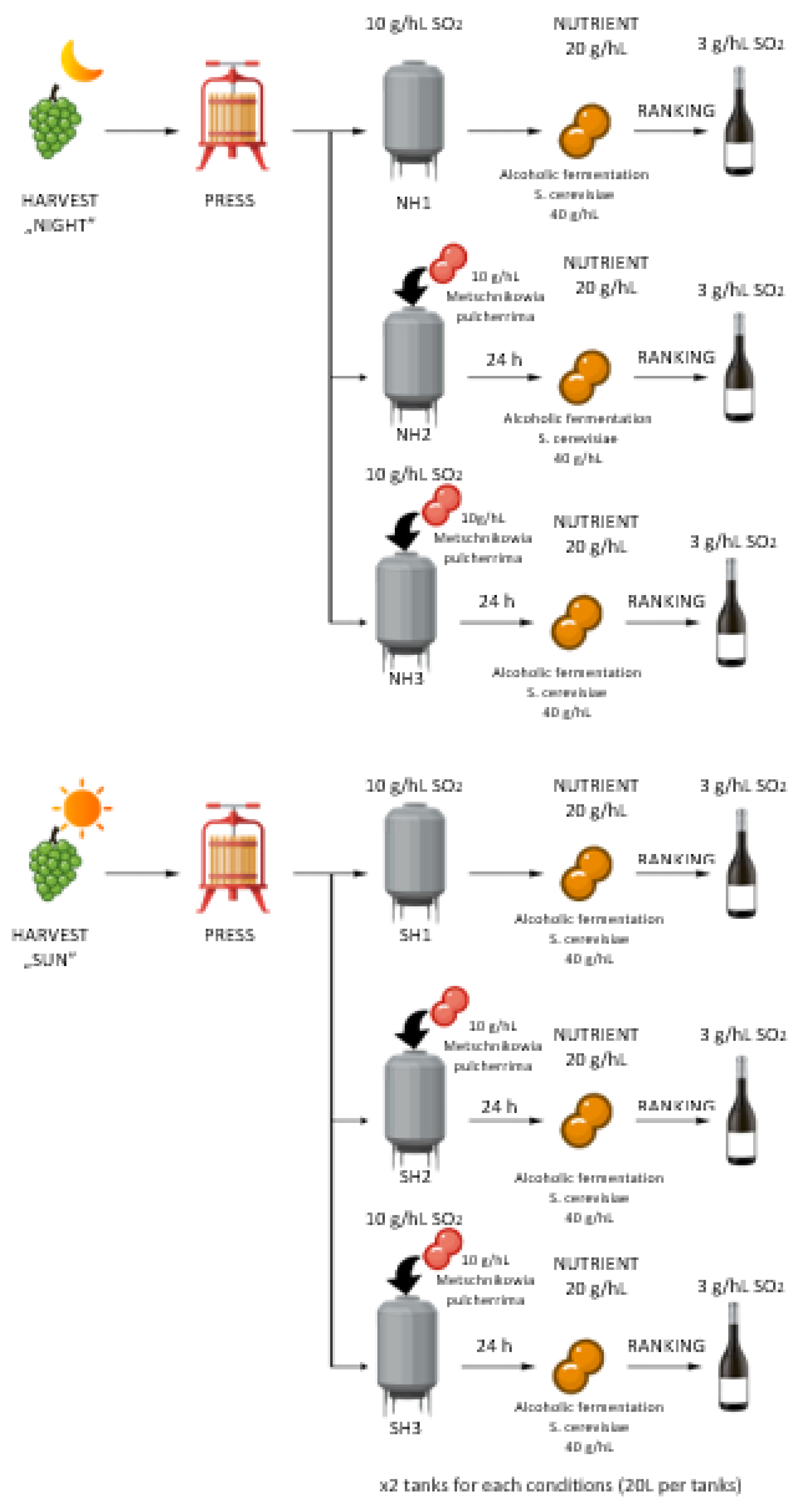
Figure 2.
PLS-DA Biplot according to the main aroma components (NH-Night harvest, SH-Sun harvest. The direction of the arrow indicates the major component to which it contributes, the length of the arrows indicates the importance of the compound in the separation of the samples.).
Figure 2.
PLS-DA Biplot according to the main aroma components (NH-Night harvest, SH-Sun harvest. The direction of the arrow indicates the major component to which it contributes, the length of the arrows indicates the importance of the compound in the separation of the samples.).
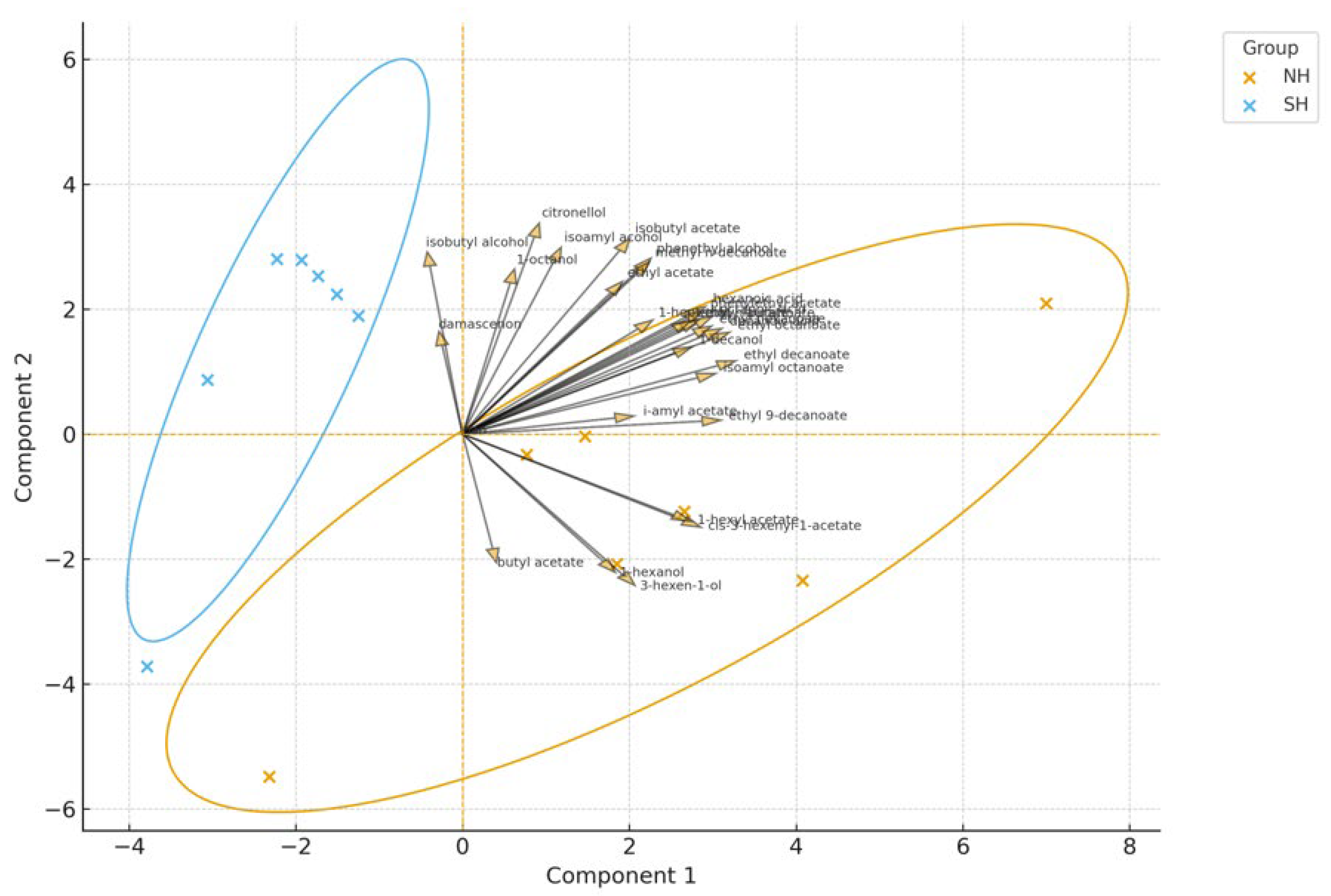
Figure 3.
The sensory wine profiles according to the different treatments.
Disclaimer/Publisher’s Note: The statements, opinions and data contained in all publications are solely those of the individual author(s) and contributor(s) and not of MDPI and/or the editor(s). MDPI and/or the editor(s) disclaim responsibility for any injury to people or property resulting from any ideas, methods, instructions or products referred to in the content. |
© 2025 by the authors. Licensee MDPI, Basel, Switzerland. This article is an open access article distributed under the terms and conditions of the Creative Commons Attribution (CC BY) license (https://creativecommons.org/licenses/by/4.0/).
Copyright: This open access article is published under a Creative Commons CC BY 4.0 license, which permit the free download, distribution, and reuse, provided that the author and preprint are cited in any reuse.


