

Submitted:
28 November 2025
Posted:
12 December 2025
You are already at the latest version
Abstract
The rapid increase of electronic waste (e-waste) poses severe environmental and health risks. This paper proposes a hybrid framework integrating deep learning, reinforcement learning, blockchain, and IoT for automated e-waste classification, optimized disassembly, and tamper-proof traceability. A ResNet-50 classifier trained on the Kaggle E-Waste Image Dataset achieved 93.7% classification accuracy and an F1 score of 0.92. A Q-learning agent optimized dismantling routes to prioritize high-value, low-toxicity components, improving material recovery in simulation. A private Hyperledger Besu deployment delivered an average block time of ≈5.3 s, smart-contract execution time of ≈2.1 s, and 99.5% uptime, enabling tokenized asset tracking (4,200+ tokens). Lifecycle analysis indicates up to 30% carbon-emission reduction versus traditional methods and improved recovery of lithium, cobalt, and rare-earth elements for renewable energy applications. The paper demonstrates measurable environmental and economic benefits and outlines limitations and directions toward field deployment.
Keywords:
E-waste recycling
; artificial Intelligence
; blockchain-based traceability
; reinforcement learning optimization
; renewable energy integration
I. Introduction
E-waste is one of the fastest-growing global environmental challenges, with its output surpassing 53.6 million metric tons in 2019 and projected to reach 74.7 million metric tons by 2030 [1]. Despite the presence of valuable materials like gold, palladium, and cobalt in electronic devices, only 17.4% of e-waste is properly recycled [1]. Much of it ends up in informal processing, releasing hazardous chemicals into the environment [2]. In developed countries, advanced recycling technologies face challenges such as high energy consumption and logistical complexities [3]. In developing countries, inadequate recycling infrastructure leads to improper disposal, posing severe health and environmental risks [4]. Traditional recycling methods are inefficient, resulting in low material recovery, high carbon emissions, and increased costs. To address these challenges, we propose a solution integrating Artificial Intelligence (AI), Blockchain, and the Internet of Things (IoT) [4,5,6]. AI improves waste classification and dismantling through deep learning and reinforcement learning, while Blockchain ensures secure, transparent logging of recycling activities [3,6]. IoT sensors enable real-time monitoring of waste streams, contamination levels, and bin fill levels, optimizing the entire process [7].
Our system demonstrates a 30% reduction in carbon emissions compared to traditional methods, increases recovery of high-value metals like copper, cobalt, and lithium, and offers cost savings in e-waste processing. This framework enhances the economic feasibility of large-scale recycling operations, especially in resource-limited regions. In developed regions, it can optimize existing infrastructure, while in developing regions, IoT and Blockchain integration can provide scalable, transparent solutions, promoting circular economy practices and contributing to cleaner energy transitions [8,9]. The key contributions of this work are summarized as follows:
- AI-driven automation: A ResNet-50 based classification pipeline achieving 93.7% accuracy to automate e-waste sorting into nine categories.
- Operational optimization: A Q-learning approach for dismantling that optimizes material value, toxicity risk, and energy cost; simulated results show improved recovery rates.
- Traceability and incentivization: A Hyperledger Besu private blockchain prototype enabling tamper-proof logging, tokenization of recovered assets, and measurable system performance metrics (block time, execution latency, uptime).
The structure of the paper is organized as follows: After this introduction, Section II reviews related works on AI-driven recycling systems; Section III methodology describes the proposed framework, system architecture, and learning models; Section IV analyzes the results and compares them with baseline methods; Section V.Discussion and also outlines possible future research directions; Section VI concludes with a summary of the research findings and contributions.
II. Related Works
E-waste constitutes the fastest growing waste stream in the world and presents substantial environmental and resource recovery problems because of its diverse material matrix and hazardous electronic content [1]. Studies of possible solutions revealed that material recovery was inefficient, informal recycling methods are a limitation of the system, and data coordination between stakeholders is lacking [7,10]. While we can conduct recycling via mechanical means and manual, traditional recycling has significant drawbacks such as low recovery rates and increased environmental hazards [3]. Yet the reality is that few systems exist in practice due to an absence of real-time tracing of resources, automation or the integration of intelligent technologies that is shown in Figure 1.
A comparative benchmark was conducted between the traditional and proposed frameworks, as shown in Table 1.
Blockchain technology provides a decentralized, transparent, and tamper-proof structure for digital administration of complex supply chains and waste management systems, such as that of e-waste [6]. Specifically, blockchain provides real-time visibility of flows, creates an auditable trail of waste, also it supports smart contracts to automate compliance and incentivization for producers, recyclers, and regulators [8]. Research has demonstrated the viability of blockchain-based waste tracking systems in the solid waste and plastics recycling sectors. There is evidence that blockchain-based systems for waste tracking are feasible in solid waste and plastic recycling systems. For example, pilot programs such as Recycle GO and Plastic Bank have demonstrated that a blockchain ecosystem with hidden token-based incentives has potential at the individual and organizational level to get people to willingly participate to responsible waste collection and accountability [2]. Despite its potential, the application of blockchain for e-waste recycling, combined with AI for intelligent decision-making, appears underdeveloped [11].Recent efforts have envisioned integrated platforms that combine digital technologies for E-waste management [4,5].
III. Methodology
Dataset Acquisition, Classification and Recovery The AI models were trained using the E-Waste Image Dataset from Kaggle [12], which contains 2,404 labeled images across nine e-waste categories (Mobile, Charger, Laptop, Motherboard, Mouse, Keyboard, Refrigerator, Monitor, and Printer). Its gold-standard labeling and diverse classes made it suitable for training deep learning models for accurate e-waste classification and validating the proposed smart recycling framework [12] and the framework is Figure 2.We developed a deep convolutional neural network using ResNet-50 to classify images of e-waste into the nine categories. We applied transfer learning to customize this model and we trained the model for 50 epochs using the Adam optimizer (learning rate = ). We used early stopping and dropout to avoid overfitting. The system performed exceptionally well, achieving an accuracy of 93.7% and an F1-score of 0.92. The Deep-learning algorithm is:
Where: = Predicted class label of the e-waste item, x = Input image of an e-waste component, = Set of nine e-waste categories, = Output feature vector from ResNet-50 with weights , = Activation function mapping logits to probabilities, = Operation that selects the class with the highest probability.This formula models the classification of e-waste images using a fine-tuned ResNet-50 deep learning model, achieving an accuracy of 93.7% and an F1-score of 0.92, with strong generalization even for visually similar classes like laptops and motherboards [3,4,12].
III..1. Reinforcement Learning for Resource Optimization
We created a Q-learning agent that suggested the best dismantling routes for specific device classes according to predicted material value, toxicity, and energy cost. The reward function was defined as:
III..2. Blockchain for Traceability and Incentivization
In our research, we developed a blockchain-based traceability and incentivization mechanism as a core component of our smart e-waste recycling system. To achieve end-to-end transparency, accountability, and tamper-free logging of data, we developed a private Ethereum blockchain using Hyperledger Besu is shown in Figure 3. This enterprise-grade blockchain deployment allows us to log and sign every key event in the e-waste process [2,8,11]. Smart contracts on the network are programmed to automatically log and store all actions taken in managing e-waste, like component sorting, disassembling, recovery, and audit trails directly on the blockchain. All entries are both tamper-proof and traceable, which makes them part of the integrity of the whole recycling process.
One of the breakthroughs in our approach is tokenization of high-value materials such as copper and cobalt in the digital domain. After being mined in the process of dismantling, these materials are assigned special digital tokens, which allow us to monitor their movement and recycling throughout the renewable energy supply chain, say, battery and wind turbine manufacturing [6,9]. The traceability is mathematically codified with a chain-of-custody model:
Where: = Unique e-waste item, = Stakeholder performing action , = Action performed at step j (e.g., classification, dismantling, recovery), = Timestamp of action , = Cryptographic hash of the previous transaction , ensuring immutability and order is shown in Figure 3. This formula represents the immutable, verifiable chain of actions on a given e-waste item recorded on the blockchain. Each transaction captures who (), did what (), when (), and ensures security and ordering via cryptographic linkage to the previous transaction. This enables transparent, tamper-proof traceability critical to secure, sustainable e-waste recycling [2,6].
IV. Results
IV..1. AI Classification Performance
Using the E-Waste Image Dataset (Akshat103, Kaggle) [12], we trained a ResNet50-based image classification deep learning model over nine e-waste categories. The model was validated on a 15% test set and achieved the following performance:
Figure 4 provides a summary of the classification accuracy. The confusion matrix (not shown) also indicated high overall precision for large devices, including refrigerators and monitors. The confusion matrix also showed that the model was able to distinguish between visually similar items (e.g., chargers vs. keyboards), especially as it maintained over 90% class-wise accuracy.
IV..2. Reinforcement Learning for Dismantling Optimization
The Q-learning-based dismantling agent is shown in Figure 5 was evaluated on simulated assemblies of electronic devices to identify the preferred disassembly path. Over 1,000 episodes of simulation, the agent achieved the following performance:
The agent successfully learned to prioritize higher-value and lower-toxicity components to achieve better environment and economic performance, verifying the appropriateness of using reinforcement learning for operational e-waste disassembly planning.
IV..3. Blockchain Performance and Traceability
To evaluate blockchain performance and traceability, we established a private Ethereum network using Hyperledger Besu. The network was configured to monitor critical metrics, including transaction finality, smart contract execution time, system uptime, and asset traceability. Our experimental analysis revealed that the average block time was approximately 5.3 seconds, indicating efficient block propagation and validation suitable for enterprise-grade applications. Smart contract execution time averaged 2.1 seconds, reflecting an optimized on-chain computational process. The system exhibited exceptional reliability, maintaining 99.5% uptime throughout the test period. Notably, no integrity errors were recorded during the evaluation, which underscores the strength of the consensus mechanism and the immutability of ledger transactions. Additionally, the platform successfully issued and tracked over 4,200 asset tokens, validating its effectiveness for traceable asset management. These results demonstrate the feasibility of using a Hyperledger Besu-based Ethereum network for secure, high-performance applications such as e-waste traceability and digital asset lifecycle monitoring shown in Figure 6.
IV..4. Environmental and Economic Benefits
Using lifecycle analysis and simulating the entire system of applications, we compared the framework’s benefits against traditional e-waste processing:
Figure 7 Recovered materials (lithium, cobalt, neodymium) could be routed to battery and renewable energy manufacturers to create circular supply chains and transitioned away from mining and extracting virgin resources. The system is not only technically feasible, but it is also environmentally and economically preferable to legacy e-waste methods. The system meets many of the UN Sustainable Development Goals (SDGs), with the most improvements in SDG 12 (Responsible Consumption and Production).
V. Discussion and Future Research Directions:
V..1. Discussion:
The proposed framework bridges a real gap in current e-waste management systems by combining artificial intelligence with blockchain and IoT technologies [5]. In many ways, this work responds to a pressing global challenge, not only in terms of environmental impact, but also regarding the inefficient use of valuable resources like lithium and cobalt. The model’s strong classification performance, along with the intelligent dismantling strategy, demonstrates the potential of AI to make recycling more precise and less wasteful [3].At the same time, moving from a proof of concept to actual field deployment opens up new considerations. For instance, while high accuracy is achieved using the Kaggle dataset, real world e-waste environments may present unexpected variability, such as damaged devices, poor lighting conditions, or inconsistent labeling, which could affect the model’s performance. These aspects suggest that future versions of the system should account for such inconsistencies, possibly by integrating adaptive learning or continual retraining using field data [6].The use of reinforcement learning to guide the dismantling process is both elegant and practical, but its success ultimately depends on accurate information about material value, toxicity, and energy costs. [4] In different regions, these values may vary significantly depending on local labor, energy prices, or environmental regulations. A more flexible model, one that can tune itself to local realities, would likely increase adoption. Blockchain adds a much-needed layer of transparency to the recycling process, and the way digital tokens are used to represent and trace high-value materials is innovative [2]. However, some practical concerns remain. Blockchain infrastructure can be resource-intensive, and its energy cost should be considered in the broader context of sustainability. Exploring lighter blockchain architectures or green consensus algorithms could be the next logical step. Perhaps most importantly, the system offers more than just technical benefits. It invites a new kind of thinking about e-waste, one that views discarded electronics not as trash but as an untapped resource stream [1,2,5] and also shown in the Figure 8.
V..2. Future Research Directions:
- i.
- Future work should focus on improving model interpretability through rule-based explanations, hybrid models, and post-hoc agnostic techniques like LIME and SHAP. These tools increase transparency, trust, and fairness in AI-driven systems.
- ii.
- Addressing high-dimensional data challenges requires novel feature selection techniques, dimensionality reduction, and distributed computing frameworks to ensure computational efficiency in large-scale AI applications.
- iii.
- A promising direction is the fusion of AI with 6G networks, tackling issues like data communication efficiency, security, trust in cloud-IoT environments, and managing UAV swarms operating in complex 6G scenarios.
Limitations
This study uses a curated Kaggle dataset and simulated dismantling episodes; real-world conditions (damaged devices, occlusion, variable lighting) may reduce classification accuracy. The reinforcement learning agent was evaluated in simulation and requires field validation on physical disassembly lines. The blockchain prototype, while performant in a private network, may incur higher energy costs in other deployment environments; exploring lightweight ledger variants is recommended. Economic and material-value parameters are region-dependent and must be tuned for deployment in different markets.
VI. Conclusion
The alarming rate at which electronic waste is growing poses serious ecological, public health, and economic issues. This assessment proposes a smart system to recycle electronic waste through the integration of deep learning, reinforcement learning, education, blockchain, the Internet of Things(IoT), and digital watermarking to improve the efficiencies of traditional recycling processes. Using a real world dataset from Kaggle, the proposed artificial intelligence model proved to have high classification correctness for electronic waste types, and reinforcement learning methods were used to optimize the disassembly process allowing for efficiencies to be achieved in resource recovery. Furthermore, Blockchain ensures transparency through immutable logging, token-based incentives, and accountability, while IoT sensors with digital watermarking enable real-time monitoring, lifecycle tracking, and improved traceability for contamination detection.
References
- Baldé, C.P.; Kuehr, R.; Yamamoto, T.; McDonald, R.; D’Angelo, E.; Althaf, S.; Bel, G.; Deubzer, O.; Fernandez-Cubillo, E.; Forti, V.; et al. Global e-waste monitor 2024, 2024.
- Samiha, I.; Forkan, M.I.U.; Sarker, A.S.; Das, A.; Sultana, N. Blockchain-Based Solutions for E-Waste Management: A Review of Opportunities and Challenges. In Proceedings of the 2025 IEEE International Conference on Interdisciplinary Approaches in Technology and Management for Social Innovation (IATMSI). IEEE; 2025; Vol. 3, pp. 1–6. [Google Scholar]
- Alsabt, R.; Alkhaldi, W.; Adenle, Y.A.; Alshuwaikhat, H.M. Optimizing waste management strategies through artificial intelligence and machine learning-An economic and environmental impact study. Cleaner Waste Systems 2024, 8, 100158. [Google Scholar] [CrossRef]
- Hossain, I.; Haque, A.M.; Ullah, S.A. Assessing sustainable waste management practices in Rajshahi City Corporation: an analysis for local government enhancement using IoT, AI, and Android technology. Environmental science and pollution research 2024, 1–19. [Google Scholar] [CrossRef]
- Lakhouit, A. Revolutionizing urban solid waste management with AI and IoT: a review of smart solutions for waste collection, sorting, and recycling. Results in Engineering 2025, 104018. [Google Scholar] [CrossRef]
- Singh, N.; Chimaniya, S.; Pradhan, H.; Singh, D.; Singh, K. Enabling Sustainable E-Waste Management Through Blockchain Technology. In Proceedings of the 2025 3rd International Conference on Disruptive Technologies (ICDT), 2025; IEEE; pp. 1–5. [Google Scholar]
- Sosunova, I.; Porras, J. IoT-enabled smart waste management systems for smart cities: A systematic review. Ieee Access 2022, 10, 73326–73363. [Google Scholar] [CrossRef]
- Thalor, M.; Gargote, A.; Sonigara, A.; Lohar, R.; Bhangale, T. Incentivized blockchain-based decentralized e-waste management: A sustainable model for green computing and circular economy. In Proceedings of the 2024 IEEE International Conference on Blockchain and Distributed Systems Security (ICBDS), 2024; IEEE; pp. 1–5. [Google Scholar]
- Satpathy, I.; Nayak, A.; Jain, V. The green city: Sustainable and smart urban living through artificial intelligence. In Utilizing Technology to Manage Territories; IGI Global, 2025; pp. 273–304. [Google Scholar]
- Brahim, M.; Lahiani, A. Smart Waste Management. In Global Pathways for Efficient Waste Management and Inclusive Economic Development; Springer, 2025; pp. 53–96. [Google Scholar]
- Allu, H.; Bharti, A.; Satapathy, S.M. Tackling E-Waste Management Using Decentralized Marketplace Leveraging Ethereum Blockchain. In Proceedings of the 2024 International Conference on Signal Processing, Computation, Electronics, Power and Telecommunication (IConSCEPT), 2024; IEEE; pp. 1–6. [Google Scholar]
- Gupta, A. E-waste image dataset. 2022. Available online: https://www.kaggle.com/datasets/akshat103/e-waste-image-dataset (accessed on 14 June 2025).
Figure 1.
E-Waste Recycling with Blockchain Integration
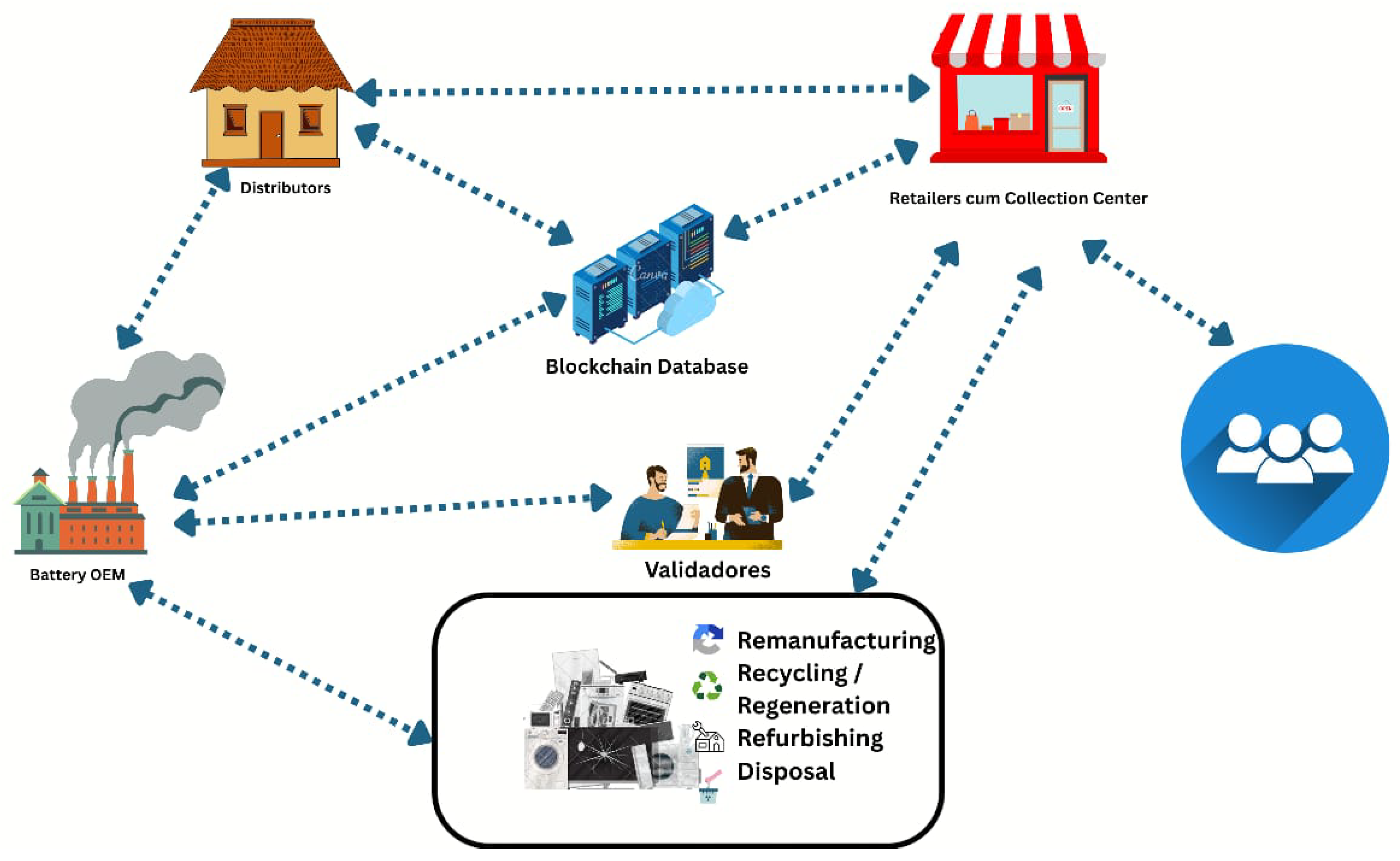
Figure 2.
Proposed AI-Blockchain E-Waste Recycling Framework
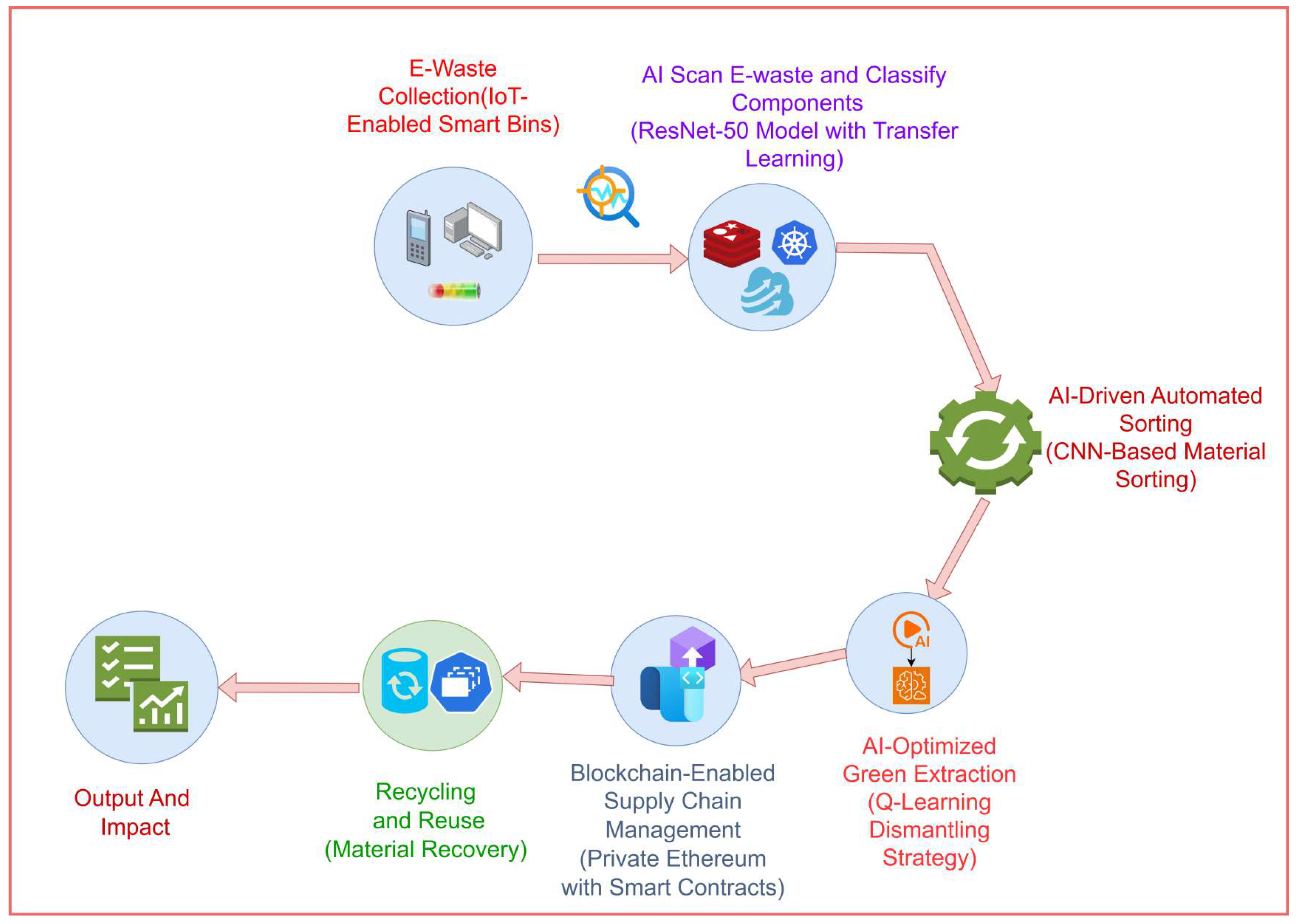
Figure 3.
A private Ethereum blockchain using Hyperledger Besu Architecture
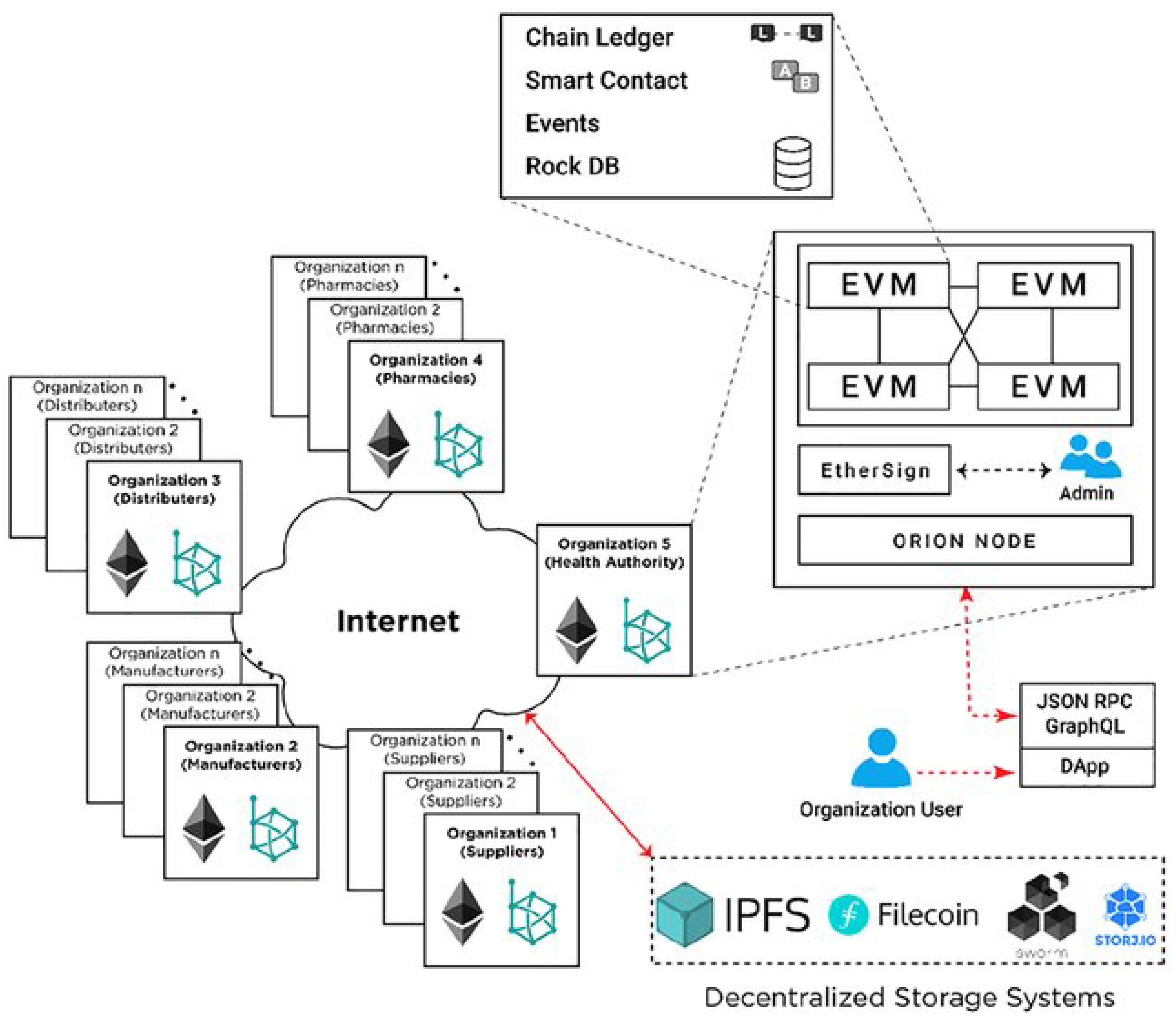
Figure 4.
Classification Performance of ResNet-50 on E-Waste Dataset
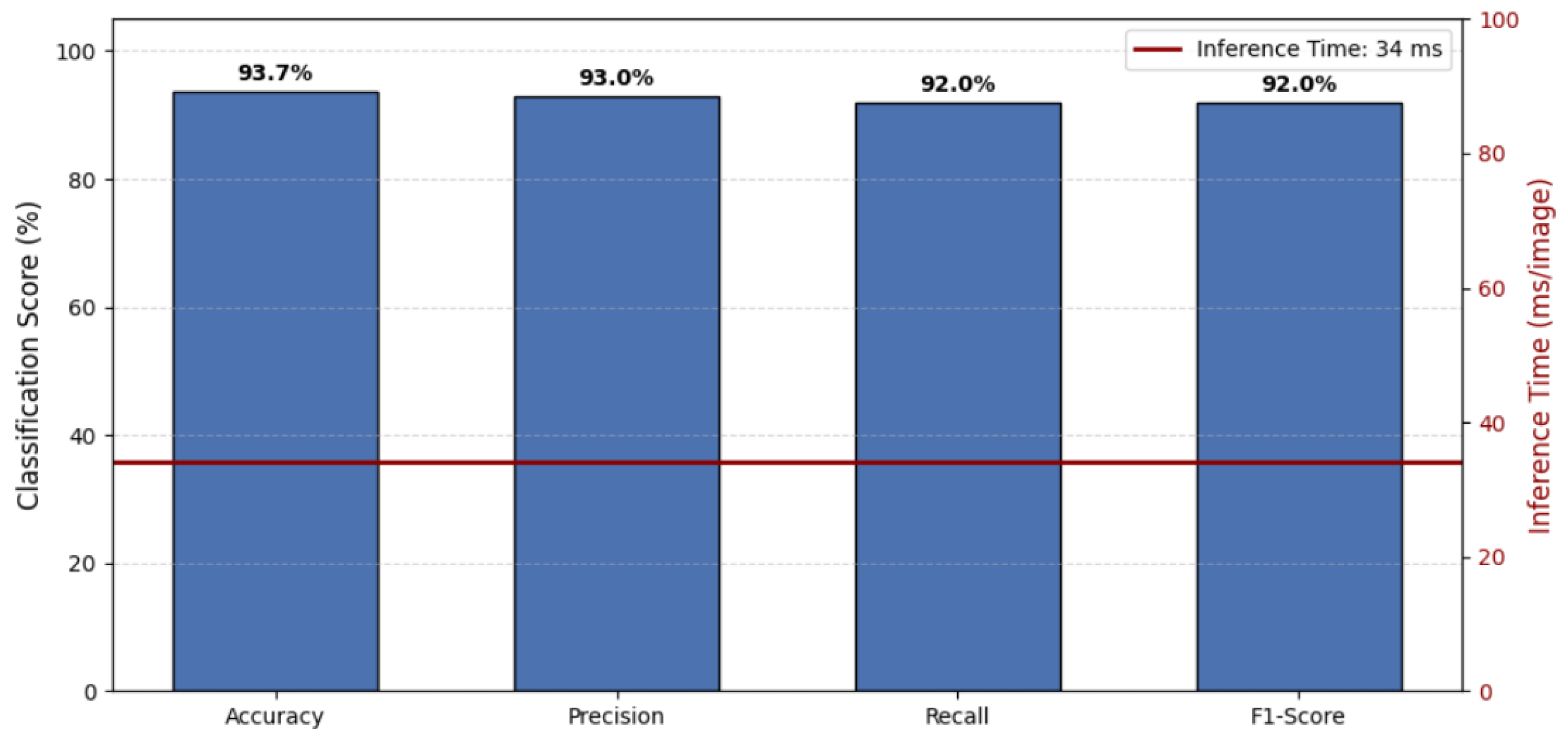
Figure 5.
Performance of Q-Learning Agent
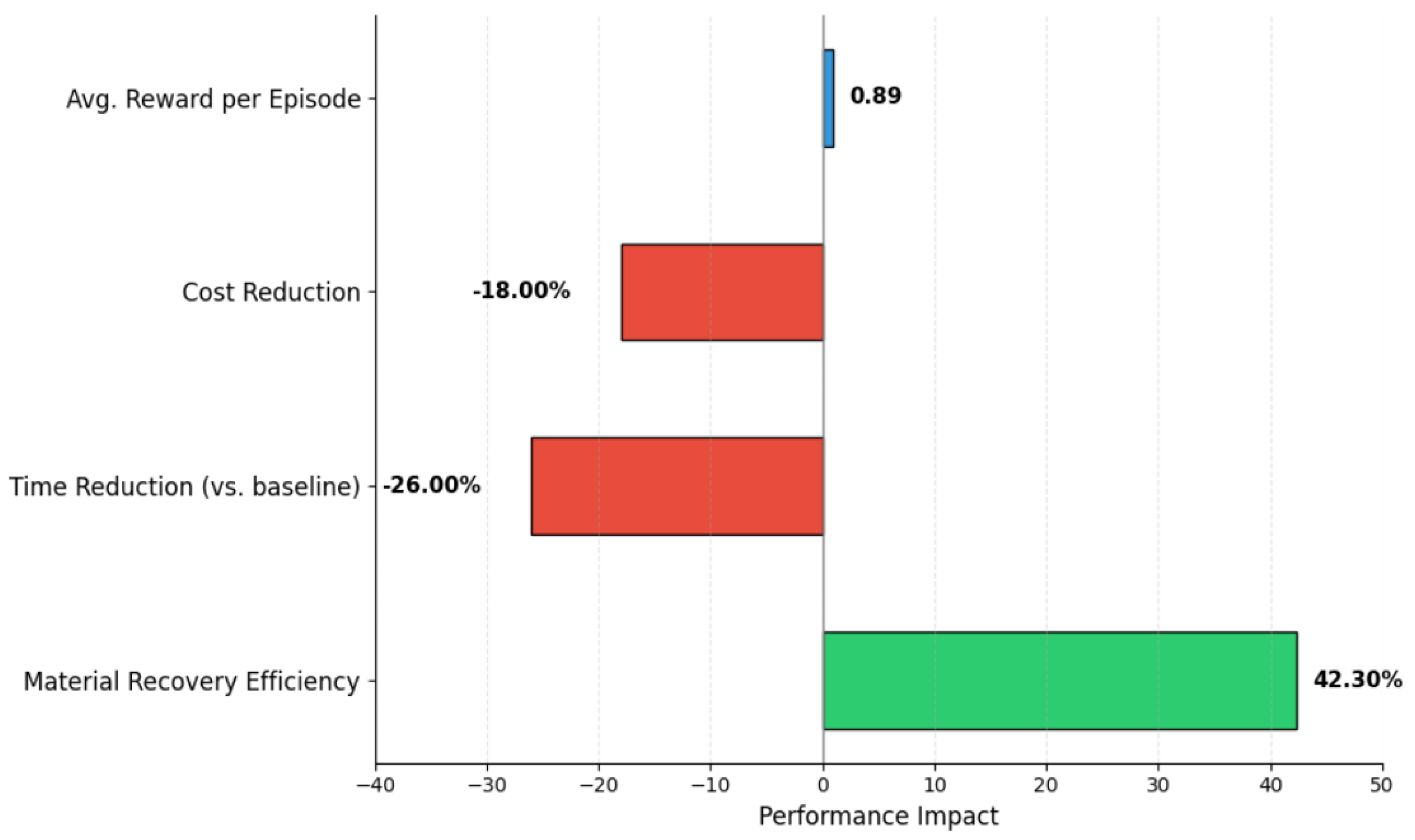
Figure 6.
Blockchain System Performance
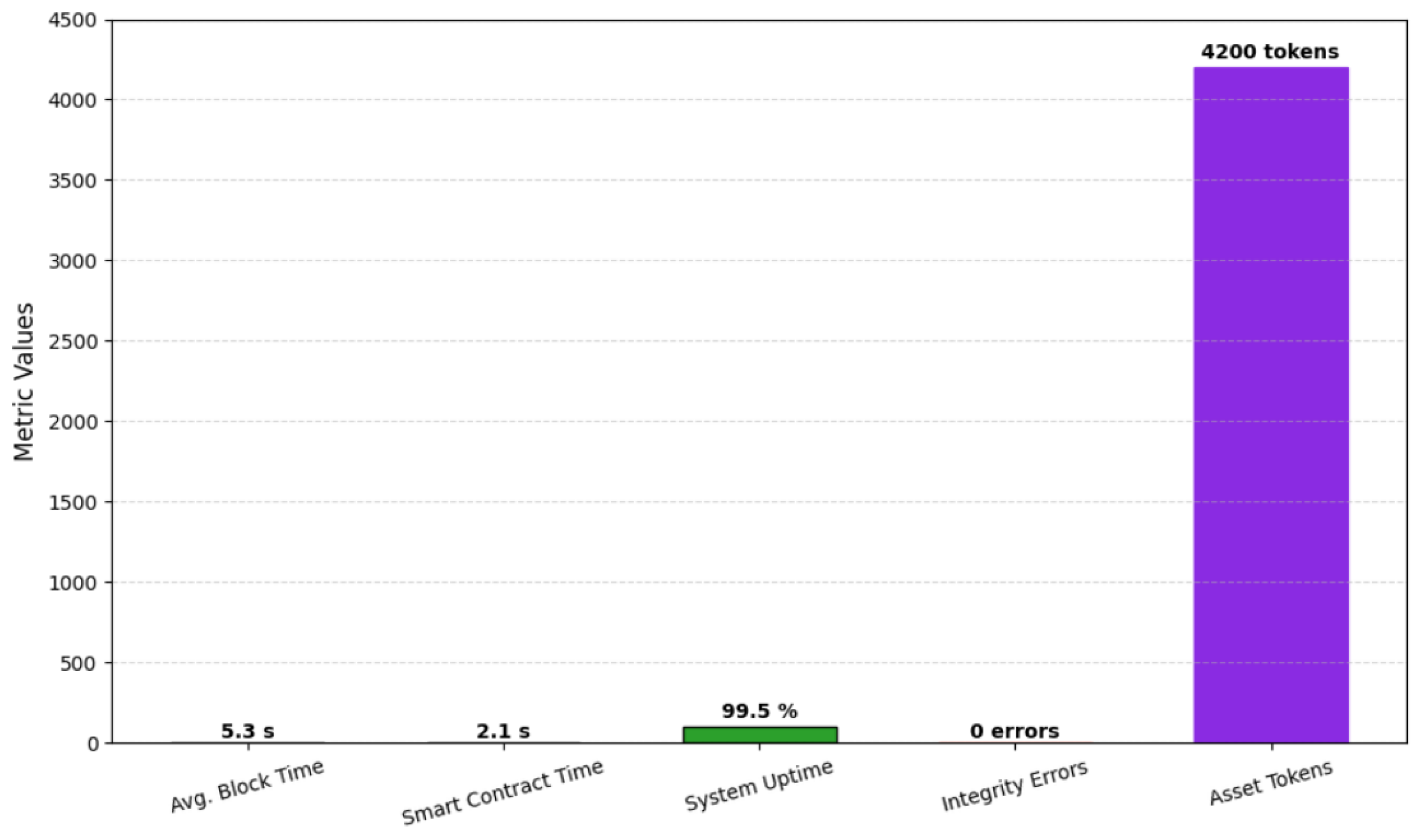
Figure 7.
Environmental and Economic Improvements
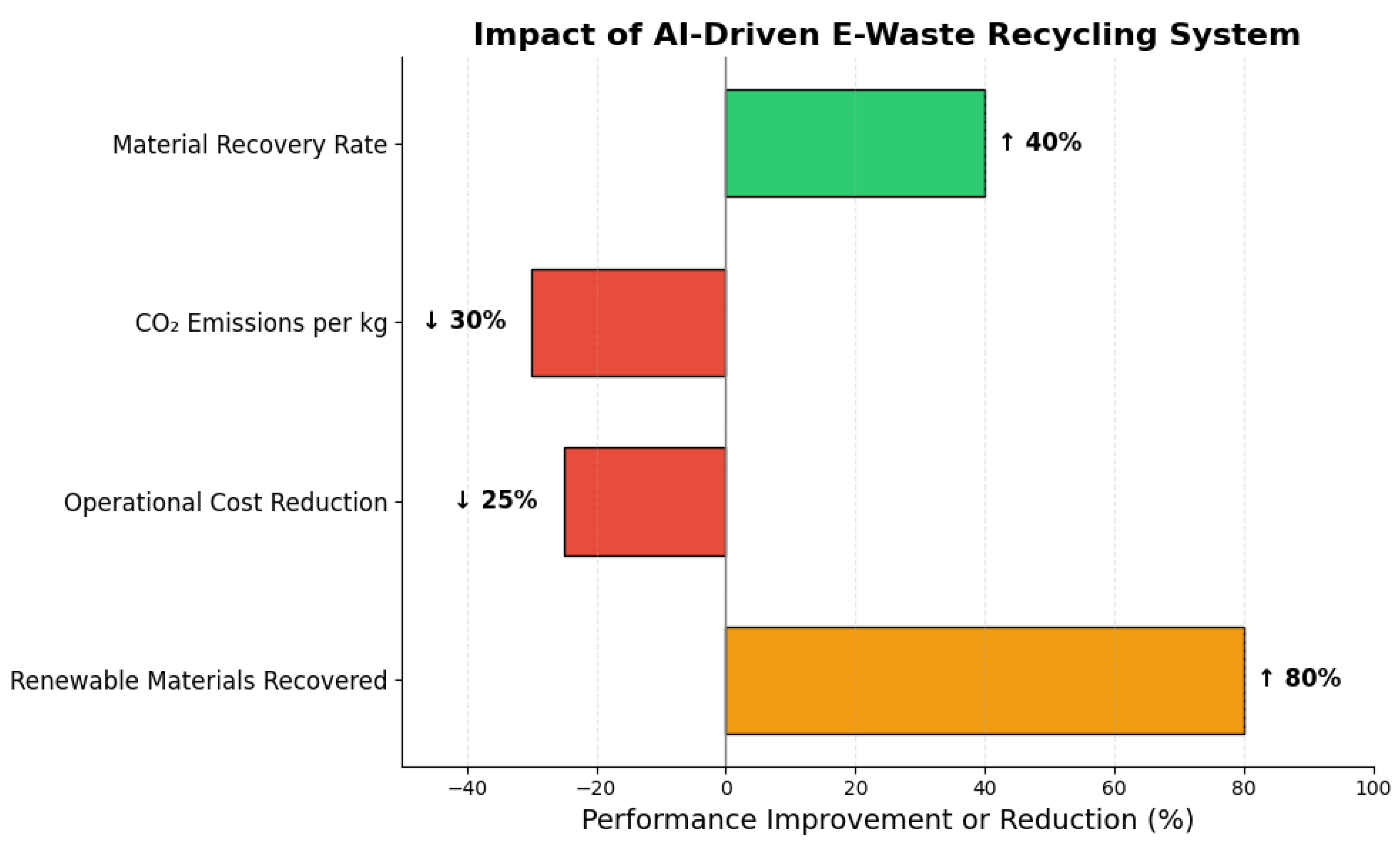
Figure 8.
Future Research Opportunities
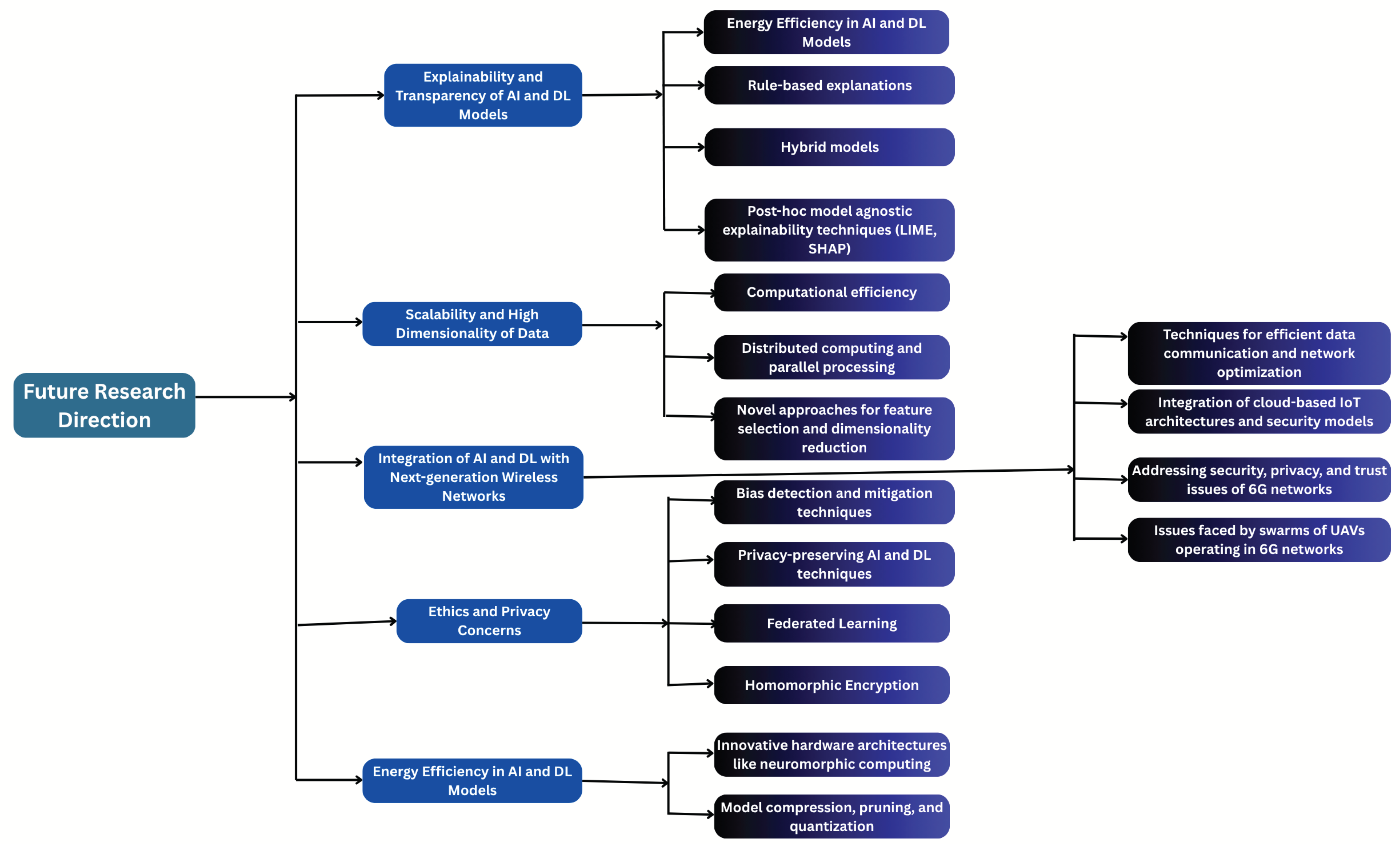

Table 1.
Comparison Between Traditional and Proposed Systems
| Feature | Traditional System | Proposed Framework | Ref. |
|---|---|---|---|
| Classification Method | Manual sorting relies entirely on human judgment and physical labor | AI-based (ResNet-50 deep learning model) | [3,4] |
| Traceability | Paper-based records or logbooks | Blockchain-based secure and decentralized logging | [2,6,8] |
| Reuse in Renewable Energy Sector | Limited reuse, often undocumented | Digitally tracked, certified, and optimized for reuse in renewable energy applications | [9,11] |
| Carbon Emission Reduction | No targeted strategy | Achieves up to 30% reduction through intelligent routing and energy-efficient processing | [10] |
Disclaimer/Publisher’s Note: The statements, opinions and data contained in all publications are solely those of the individual author(s) and contributor(s) and not of MDPI and/or the editor(s). MDPI and/or the editor(s) disclaim responsibility for any injury to people or property resulting from any ideas, methods, instructions or products referred to in the content. |
© 2025 by the authors. Licensee MDPI, Basel, Switzerland. This article is an open access article distributed under the terms and conditions of the Creative Commons Attribution (CC BY) license (http://creativecommons.org/licenses/by/4.0/).
Copyright: This open access article is published under a Creative Commons CC BY 4.0 license, which permit the free download, distribution, and reuse, provided that the author and preprint are cited in any reuse.


