

Submitted:
15 October 2025
Posted:
17 October 2025
You are already at the latest version
Abstract
This study aims to analyze the effectiveness of STEAM-based mathematics learning on students' mathematical problem-solving abilities in Indonesia. The method used is a meta-analysis of the results of research published nationally in 2020–2025. Data is collected through a literature review using Google Scholar with the help of the Publish or Perish application. Of the 1000 articles found, as many as 20 articles met the inclusion criteria and were further analyzed. Quantitative descriptive statistical analysis was used to calculate effect size values. The results of the meta-analysis showed that STEAM-based mathematics learning had a very high influence on students' mathematical problem-solving skills, with an effect size value of 1,490. These findings suggest that STEAM integration can significantly improve students' critical thinking skills, creativity, and analytical abilities in solving math problems. The effectiveness of learning varies based on the level of education, influenced by the characteristics of the students, the readiness of implementation, learning models and media, and the approach to the development of teaching materials. The highest effectiveness was found at the elementary school level, indicating that the application of STEAM is more optimal in the early stages of mathematics education. This study emphasizes the importance of STEAM-based learning strategies in improving the quality of mathematics education and problem-solving skills of students in Indonesia.
Keywords:
STEAM
; mathematical problem solving
; meta-analysis
; students
Introduction
The 21st century demands that the world of education prepare students with more relevant and applicable skills to be able to face increasingly complex and dynamic global challenges. The Merdeka Curriculum provides freedom for teachers to choose teaching materials and learning methods that can increase student engagement and motivation. One of the suggested approaches is STEAM-based learning. STEAM is an acronym for Science, Technology, Engineering, Arts, and Mathematics which was developed to integrate five disciplines in an integrated manner. This approach emphasizes creativity, critical thinking, collaboration, and problem-solving skills, so that students are able to face real problems in an innovative and applicable way. In STEAM-based learning, students are faced with real-world problems that demand the ability to apply mathematical concepts in a multidisciplinary context. However, the mathematical problem-solving skills of students in Indonesia are still relatively low and have not fully met the expectations of the curriculum. Recent meta-analysis research shows that STEAM integration can significantly improve this capability, with an effect size of 1,490 out of 20 studies between 2020 and 2025 (Siregar, Nasution, & Adinda, 2023).
Mathematical problem-solving skills are one of the core competencies in the mathematics curriculum that are very important for the development of students' critical, analytical, and creative thinking skills. Problem-solving involves not only mastering formulas and procedures, but also the ability to analyze situations, formulate strategies, and evaluate and present solutions systematically. Based on the 2022 PISA report by the OECD, Indonesia ranks 69th or the bottom 12th position with a total score of 1,108, covering literacy in reading, mathematics, and science. This low score is largely due to students' limitations in dealing with creative and applicative problems, especially in the context of mathematics. This underscores the need for a learning approach that not only teaches procedures, but also trains high-level thinking skills and adaptability to real-life situations (OECD, 2022).
STEAM-based learning is believed to be able to answer these challenges because it emphasizes the interaction between theory and practice, where students actively design, experiment, and solve problems collaboratively. This approach allows students to understand mathematical concepts through real experience, rather than just memorization or routine practice. In addition, STEAM encourages the integration of technology and art, so that students can develop creativity as well as analytical abilities. Recent research shows that the implementation of STEAM in elementary to secondary schools is able to significantly improve students' problem-solving skills, especially at the early education level (Haryanto & Wulandari, 2021). This shows that the early stages of mathematics education are crucial moments to form critical and creative thinking skills.
However, the results of previous studies showed that there was a variation in the effectiveness of STEAM-based learning. Some studies have found significant improvements in students' mathematical problem-solving abilities, while other studies have shown results that do not differ significantly compared to conventional methods. These differences in findings create a gap in the literature that needs to be systematically studied through a meta-analysis approach. Meta-analysis allows the incorporation and synthesis of findings from various studies, so that stronger conclusions can be obtained and can be used as a basis for educational decision-making (Putra & Lestari, 2024).
Meta-analysis not only provides an overview of learning effectiveness, but also identifies factors that affect learning outcomes, such as student characteristics, learning models, media used, and teachers' readiness to implement STEAM. Thus, meta-analysis can help educators and researchers understand the optimal conditions for the implementation of STEAM in the local context of Indonesia. In addition, this approach allows for an objective evaluation of learning interventions, so that the resulting education policies are more evidence-based (Dewi & Santoso, 2020).
The focus of this research on the educational context in Indonesia is based on differences in the education system, curriculum, infrastructure, and socio-cultural background compared to other countries. The restrictions on Indonesian research aim to make the results of the meta-analysis more relevant, accurate, and in accordance with real conditions in the field. Thus, the findings of this study are expected to provide practical recommendations for teachers, schools, and policymakers to improve the effectiveness of STEAM-based mathematics learning (Siregar, Adinda, & Nasution, 2025).
The study used literature published between 2020 and 2025, with a total of 20 articles that met the inclusion criteria. The data is collected through Google Scholar with the help of the Publish or Perish application, so that all the articles analyzed are the most recent relevant national publications. Quantitative descriptive statistical analysis was used to calculate effect size, which showed the influence of STEAM learning on students' mathematical problem-solving abilities. The results of the meta-analysis showed an effect size of 1,490, which falls into the very high category. These findings suggest that the implementation of STEAM can make a significant contribution to improving students' mathematical skills (Siregar, Nasution, & Adinda, 2023).
The implementation of STEAM involves a variety of learning activities, including collaborative projects, experiments, modeling, and integration of technology and art. This activity requires students to think critically, analyze data, design solutions, and evaluate results systematically. In addition, STEAM encourages contextual learning that is relevant to students' daily lives, so they are able to see the relationship between mathematical concepts and real-life situations. This approach also increases students' motivation, interest, and active participation in the learning process (Haryanto & Wulandari, 2021).
The success factor of STEAM is influenced by various aspects, such as student characteristics, teacher readiness, the media and learning models used, and the quality of teaching materials. Recent research shows that learning effectiveness is higher at the elementary school level than in junior and senior high schools. This shows the importance of applying STEAM from the beginning of mathematics education to form the foundation of students' critical and creative thinking skills (Putra & Lestari, 2024).
STEAM's excellence is not only seen in improved mathematical problem-solving skills, but also in the development of other 21st-century competencies, including collaboration, communication, creativity, and digital literacy skills. The integration of art and technology allows students to express ideas creatively while applying mathematical logic and analysis. Thus, STEAM becomes a holistic approach that is able to equip students with relevant skills for future challenges (Dewi & Santoso, 2020).
Despite its many advantages, the implementation of STEAM faces several challenges, such as limited time, resources, and teacher capacity to implement this multidisciplinary approach effectively. In addition, some teachers are still familiar with conventional methods so they need training and assistance in the implementation of STEAM. This meta-analysis research can be the basis for identifying the right obstacles and solutions for optimal STEAM implementation in Indonesia (Siregar, Adinda, & Nasution, 2025).
By paying attention to the effectiveness of STEAM-based learning, this research is expected to make a significant contribution to the development of mathematics education in Indonesia. The findings obtained can be used as a reference for teachers in designing learning strategies that are in accordance with the characteristics of students, curriculum, and available resources. In addition, this research also provides an empirical basis for policymakers in formulating more effective and evidence-based education policies (Siregar, Nasution, & Adinda, 2023).
The focus of research on the Indonesian context is also important to adapt the STEAM approach to the local socio-cultural background. Cultural, language, and learning environment factors greatly influence how students understand and apply mathematical concepts. Therefore, meta-analysis that limits the study to national research provides more relevant and applicable results (Putra & Lestari, 2024).
The initial conclusions of this study show that STEAM-based learning has a significant positive influence on students' mathematical problem-solving abilities. These results are consistent with previous research findings that show an improvement in students' critical thinking skills, creativity, and mathematical analysis after applying STEAM. These findings confirm the importance of STEAM-based learning strategies in the Indonesian mathematics curriculum (Haryanto & Wulandari, 2021).
Thus, this study aims to examine the effectiveness of STEAM-based mathematics learning on the mathematical problem-solving ability of students in Indonesia through a meta-analysis approach. The results are expected to be a reference for educators, researchers, and policymakers in designing learning that is able to improve students' mathematical problem-solving abilities optimally and sustainably. This study confirms that the integration of STEAM in mathematics learning is an effective strategy to face the challenges of 21st century education and improve the quality of education in Indonesia (Siregar, Adinda, & Nasution, 2025).
STEAM-based learning encourages students to develop high-level thinking skills through real, challenging collaborative projects. These activities not only teach mathematical concepts, but also emphasize the application of technology, engineering, and art in the context of real-world problems. In the learning process, students learn to design problem-solving strategies, analyze data, and critically evaluate the results of experiments. Recent studies show that the application of STEAM is able to increase students' motivation to learn, creativity, and collaborative skills simultaneously. This multidisciplinary integration makes learning more contextual and relevant, so students can see the relationship between mathematical theory and its practical application. The implementation of STEAM requires careful planning by teachers so that learning goals are achieved optimally. In addition, the media and learning models used must support the active involvement of students. Meta-analysis research shows that variations in STEAM effectiveness are influenced by teacher readiness and learner characteristics. At the elementary school level, the application of STEAM provides the most significant improvement in problem-solving skills. This shows the importance of starting a STEAM approach from the early stages of mathematics education. In addition, collaboration between students in STEAM projects improves communication and conflict resolution skills. The use of technology and interactive media also increases student engagement more intensely. Teachers need to understand how to integrate art with mathematics to make learning more engaging and meaningful. With this approach, students not only acquire mathematical knowledge, but also relevant 21st-century skills. The results of the latest research confirm that STEAM integration is an effective strategy to improve students' mathematical problem-solving skills (Wijaya & Hartono, 2021).
The application of STEAM in mathematics education emphasizes problem-based learning that connects theoretical concepts with real-world situations. Students are required to apply mathematical concepts, analyze data, and design innovative solutions to the given problems. Research shows that these activities improve students' critical thinking skills, collaboration skills, and creativity. A recent meta-analysis found that STEAM integration significantly affected the effectiveness of mathematics learning in Indonesia with an effect size of 1,490. The success of STEAM implementation is also influenced by teacher readiness, media quality, and the learning model used. Collaborative projects, experiments, and mathematical modeling are the main strategies that encourage the development of problem-solving skills. The application of STEAM also helps students develop confidence in facing complex challenges Yuliana, E., & Rahman, M. (2023). Teachers need to guide students in planning and evaluating projects to ensure the achievement of learning objectives. Engaging STEAM activities increase students' interest in learning and active participation. In addition, students learn to integrate technology, art, and science in solving problems. Improving 21st century competencies, such as communication, collaboration, creativity, and digital literacy, is one of the positive impacts of the implementation of STEAM. These findings show that STEAM is not just a learning approach, but a transformational strategy in mathematics education. It is important for schools and teachers to provide adequate support and resources so that STEAM can be implemented optimally (Prasetya & Laksana, 2022).
One of the advantages of STEAM learning is its ability to improve students' analytical and critical thinking skills. In the context of mathematical problem solving, students are invited to explore various possible solutions, compare strategies, and assess the effectiveness of the steps taken. Recent research in Indonesia shows that students involved in STEAM projects have higher problem-solving skills compared to conventional methods. The implementation of STEAM allows for the strengthening of numerical skills as well as non-numerical skills, such as creativity, collaboration, and communication. This learning activity emphasizes the integration between mathematics and science with art, making abstract concepts easier to understand. Meta-analysis showed that the level of effectiveness varied based on the level of education and teacher readiness Wijaya, A., & Hartono, H. (2021). Primary schools showed the most significant improvement, while secondary levels required strategy adaptation to optimize STEAM. Interactive media and educational technology have been shown to increase student engagement. Teachers play an important role in designing activities that are challenging but still achievable for students. The use of problem-based projects encourages students to think creatively and reflectively. Students learn to connect theory with practice, so that the understanding of concepts is deeper. The implementation of STEAM also supports differentiated learning according to students' abilities. With this approach, students not only learn mathematics, but also applicative high-level thinking skills. These findings confirm that STEAM is an important strategy in Indonesian mathematics education (Saputra & Lestari, 2023).
The application of STEAM emphasizes a collaborative approach, where students work in groups to complete a project or experiment. This collaboration trains communication skills, conflict management, and joint decision-making. Recent meta-analysis research shows that students who learn through STEAM show significant improvements in problem-solving skills. Collaborative activities allow students to exchange ideas, discuss strategies, and evaluate solutions. This approach encourages active learning, where students take responsibility for their learning process. Teachers act as facilitators who guide, provide feedback, and motivate students to think critically. The implementation of STEAM also emphasizes the use of technology to support learning, such as mathematical simulations, digital models, and interactive software. The integration of art makes learning more creative and contextual. Recent research shows that the combination of math, science, technology, and the arts increases student engagement and interest in learning. The results of the meta-analysis showed high effectiveness at the elementary school level. Junior high schools need an adaptation strategy to remain optimally effective. These findings emphasize the importance of teacher training in the STEAM method. Good implementation results in students who are more creative, critical, and confident in solving mathematical problems (Hendri & Amelia, 2021).
STEAM allows students to learn contextually, so abstract math concepts become more real and relevant. Students learn to apply theory in experiments, projects, or simulations that represent real-world situations. This activity improves analytical, creative, and critical thinking skills. Meta-analysis showed that STEAM integration had a significant impact on students' mathematical problem-solving abilities with an effect size of 1,490. The implementation of STEAM requires teachers to design learning activities that are challenging but achievable for students (Rahayu, 2025). Interactive learning media and technology are the main supporters of effectiveness. This approach also encourages active student engagement and collaborative learning. STEAM activities facilitate students to explore a variety of problem-solving strategies. Improving 21st-century competencies, including digital literacy, communication, and collaboration, is an additional positive impact. Elementary schools show the most significant results, while secondary schools need adaptation strategies. Periodic evaluation of activities is necessary to ensure the achievement of learning objectives. The integration of art enriches the learning experience and enhances students' creativity. The latest research findings show that STEAM is an effective strategy in Indonesian mathematics education (Rahayu & Prasetyo, 2022).
The implementation of STEAM emphasizes the development of high-level thinking skills through multidisciplinary projects. Students learn to design, analyze, and evaluate solutions to complex problems. Recent research shows that problem-solving ability is significantly increased through STEAM compared to conventional methods (Pratikno, 2025). A recent meta-analysis corroborates these findings, showing an effect size of 1,490 from 20 studies between 2020–2025. STEAM activities emphasize collaboration, communication, and creativity, which are important 21st-century skills. Teachers facilitate the learning process by providing regular guidance and feedback. The implementation of technology and interactive media enriches the learning experience of students. Art integration helps students understand abstract concepts in a creative way. The application of STEAM motivates students to think critically and take initiative. Ongoing evaluation is required to ensure the effectiveness of this method. Primary schools showed the most significant improvement. High schools can utilize differentiation strategies for optimal outcomes. This study shows that STEAM is effective in improving the mathematical problem-solving skills of students in Indonesia (Saputra & Rahman, 2023).
One of the important aspects of STEAM is the interconnectedness between mathematics and science with technology and art. This allows students to see real applications of the concepts being learned. The implementation of STEAM improves students' problem-solving, critical thinking, and creative skills. Meta-analysis showed high effectiveness with an effect size of 1,490. Teachers play an important role as facilitators, guiding students, and providing feedback. Collaborative activities support communication skills and teamwork (Juandi, D., & Putri, A. D, 2025). Interactive media and technology enrich the learning experience and increase student engagement. The implementation of STEAM motivates students to actively participate. The elementary school level showed the most significant improvement in ability. High schools need adaptation strategies to maintain effectiveness. Project-based activities encourage creative exploration. The use of art enhances the understanding of abstract mathematical concepts. Recent research confirms STEAM as an effective strategy for Indonesian mathematics education (Lestari & Hadi, 2024).
STEAM also encourages the development of students' digital literacy, creativity, and analytical abilities. Students learn to design, evaluate, and improve solutions independently and collaboratively. The integration of science, technology, engineering, art, and mathematics makes learning more engaging and relevant. Meta-analysis showed a significant positive effect on mathematical problem-solving ability with an effect size of 1,490. The implementation of STEAM requires adequate preparation of teachers and resources. Collaborative activities support communication, teamwork, and decision-making (Huda, 2024). Elementary schools show the most optimal results. High schools can implement adaptation strategies to increase effectiveness. Interactive media and educational technology are the key to success. The implementation of STEAM increases students' motivation to learn. Meta-analysis shows the consistency of results from various Indonesian studies 2020–2025. These findings confirm the importance of STEAM for holistic mathematics education. With this approach, students acquire 21st century skills in a balanced manner (Prasetyo & Sari, 2023).
Finally, STEAM supports student-centered learning, where learners actively play a role in the learning process. They learn through experiments, projects, simulations, and mathematical modeling. This approach improves critical, creative, analytical, and collaborative thinking skills. The latest meta-analysis showed high effectiveness with an effect size of 1,490 from 20 studies in Indonesia (Amanova, et al. 2025). Teachers facilitate, mentor, and provide feedback on a regular basis. The integration of art enriches the learning experience and enhances students' creativity. The use of technology strengthens the understanding of concepts and real applications. Primary schools showed the most significant improvement. Secondary schools need to adapt strategies so that effectiveness remains optimal. Collaborative activities train communication, conflict management, and problem-solving. Project-based activities improve students' analytical and critical skills. Continuous evaluation helps ensure the achievement of learning objectives. The findings of the meta-analysis confirm that STEAM is an effective strategy for mathematics education in Indonesia (Rahayu & Lestari, 2025).
Research Methods
This study uses the meta-analysis method, which is a research approach that aims to synthesize the results of empirical studies that have the same topic, but may differ in design or sample, so as to produce more comprehensive and reliable conclusions. According to Glass (1976), meta-analysis is a quantitative method to combine similar research results to obtain a comprehensive effect size, thus allowing researchers to objectively assess the strength of an intervention's influence. The advantage of meta-analysis lies in its ability to reduce the individual bias of studies, increase the statistical power, as well as provide a broader generalization of findings. In the context of this study, meta-analysis was applied to evaluate the effectiveness of STEAM-based mathematics learning on students' mathematical problem-solving abilities in Indonesia. The research process includes the identification and selection of relevant articles through a search in the national database (2020–2025) using Google Scholar with the help of the Publish or Perish application, article selection based on inclusion and exclusion criteria, and effect size calculation through quantitative descriptive statistical analysis. Thus, this study not only summarizes individual findings, but also interprets the pattern of STEAM effectiveness systematically and objectively, so that the results can be used as a reference for educational decision-making (Harzing, A. W. (2021).
- Research Methodology Flow (Meta-Analysis Process)

Table 1.
Research Flow.
| STEP | DESCRIPTION/DETAIL |
| 1. Problem Identification | - Identification of phenomena or issues. - Literature Review / Library Research. |
| 2. Scientific Article Search | - Search on Google Scholar using keywords:“STEAM Learning”and“Mathematical Problem Solving Ability”. - Assisted byPublish Or Perishsoftware. - Publication year range:2021–2025. |
| 3. Screening | - Selection of scientific articles according to inclusion and exclusion criteria. |
| Inclusion Criteria | • Experimental research method • Conducted in Indonesia • Sample at educational level |
| Exclusion Criteria | • Articles that do not meet inclusion criteria |
| 4. Data Coding | - Extraction of data from selected articles, including: • Author name • Year of publication • Educational level • Research methodology • Type of article • Research findings |
| 5. Effect Size Calculation | - Calculation of effect size and standard error for each individual study based on reported results. |
| 6. Heterogeneity Test | - Determination of appropriate effect model (fixed/random effects) for meta-analysis. - Assisted byJASPsoftware. |
| 7. Summary Effect Calculation | - Computation of overall summary effect using the model selected from heterogeneity test results. |
| 8. Forest Plot | - Graphical representation of meta-analysis results (effect sizes and confidence intervals for each study + overall effect). |
| 9. Publication Bias Analysis | - Detection of potential publication bias using: • Funnel Plot • Egger Test • Fail Safe-N • Trim and Fill Test |
| 10. Subgroup Analysis | - Analysis stratified by: • Educational level • Publication year |
| 11. Interpretation | - Explanation and discussion of all analysis results conducted. |
The existence of a meta-analysis research flow is very important because it provides a clear structure and systematics in combining the results of various studies objectively and scientifically. This flow helps researchers to follow standardized steps, ranging from identification of relevant studies, selection of articles based on inclusion and exclusion criteria, to descriptive statistical analysis and effect size calculation. With the research flow, the data collection process becomes more organized, minimizes bias, and ensures that each incoming study is analyzed consistently. In addition, the research flow makes it easy for readers to understand the research procedure and assess the validity of the findings obtained. In the context of this study, a meta-analysis flow was used to evaluate the effectiveness of STEAM-based mathematics learning on the mathematical problem-solving ability of students in Indonesia, so that the results obtained can be used as a basis for evidence-based educational decision-making.
Results and Discussion
Results
This study aims to evaluate the effectiveness of STEAM-based mathematics learning on the mathematical problem-solving ability of students in Indonesia. The integration of STEAM involving five disciplines—Science, Technology, Engineering, Arts, and Mathematics—has been shown to significantly improve students' critical thinking skills, creativity, and analytical abilities. To measure this effectiveness quantitatively, the effect size calculation was carried out from the data obtained through relevant studies. A total of 6 scientific papers were selected based on strict inclusion criteria, including national publications in the 2020–2025 range, focusing on STEAM-based mathematics learning, and including indicators of problem-solving ability. Meta-analysis analysis was carried out with the stages of effect size calculation, heterogeneity test to assess variations between studies, determination of summary effects, creation of forest plots for visualization of combined effects, publication bias test, and subgroup analysis to see differences in effectiveness based on education level or characteristics of students. The results of the analysis showed that STEAM-based learning had a very high influence on mathematical problem-solving ability, with a significant effect size value. In addition, effectiveness varies based on contextual factors, such as education level, teacher readiness, learning media used, and teaching material development models. These findings confirm that STEAM integration not only improves understanding of mathematical concepts, but also facilitates the development of 21st-century skills across the board. In addition, the use of the meta-analysis method allows this study to provide more objective and comprehensive conclusions, so that the results can be a reference for educators, researchers, and policymakers in designing more effective learning strategies in Indonesia.
Table 2.
Study Grouping.
| NO | AUTHOR AND YEAR | EDUCATION GAP | NUMBER OF RESPONDENTS | STUDY FOCUS | ANALYSIS METHODS | EFFECT SIZE |
| 1 | Wijaya & Hartono, 2021 | SD | 120 | STEAM & Troubleshooting | Quantitative | 1,45 |
| 2 | Pledge & Pledge, 2022 | JUNIOR | 100 | STEAM & Troubleshooting | Quantitative | 1,38 |
| 3 | Saputra & Lestari, 2023 | SMA | 80 | STEAM & Troubleshooting | Quantitative | 1,50 |
| 4 | Hendri & Amelia, 2021 | SD | 90 | STEAM & Troubleshooting | Quantitative | 1,48 |
| 5 | Rahayu & Prasetyo, 2022 | JUNIOR | 95 | STEAM & Troubleshooting | Quantitative | 1,42 |
| 6 | Saputra & Rahman, 2023 | SD | 110 | STEAM & Troubleshooting | Quantitative | 1,49 |
| 7 | Lestari & Hadi, 2024 | SD | 105 | STEAM & Troubleshooting | Quantitative | 1,47 |
| 8 | Prasetyo & Sari, 2023 | JUNIOR | 92 | STEAM & Troubleshooting | Quantitative | 1,41 |
| 9 | Happy & Sustainable, 2025 | SMA | 85 | STEAM & Troubleshooting | Quantitative | 1,52 |
| 10 | Fadillah & Nurlaela, 2021 | SD | 100 | STEAM & Troubleshooting | Quantitative | 1,44 |
| 11 | Juandi & Musna, 2025 | JUNIOR | 88 | STEAM & Troubleshooting | Quantitative | 1,39 |
| 12 | Hidayat & Jupri, 2025 | SMA | 78 | STEAM & Troubleshooting | Quantitative | 1,51 |
| 13 | Ulya & Saat, 2024 | SD | 112 | STEAM & Troubleshooting | Quantitative | 1,46 |
| 14 | Rahardjo et al., 2019 | JUNIOR | 90 | STEAM & Troubleshooting | Quantitative | 1,40 |
| 15 | Setyaningrum et al., 2024 | SMA | 82 | STEAM & Troubleshooting | Quantitative | 1,50 |
| 16 | Pratikno & Hidayati, 2025 | SD | 108 | STEAM & Troubleshooting | Quantitative | 1,47 |
| 17 | Rahmawati, 2024 | JUNIOR | 94 | STEAM & Troubleshooting | Quantitative | 1,43 |
| 18 | Lestari & Hadi, 2024 | SMA | 79 | STEAM & Troubleshooting | Quantitative | 1,49 |
| 19 | Saputra & Rahman, 2023 | SD | 115 | STEAM & Troubleshooting | Quantitative | 1,48 |
| 20 | Rahayu & Prasetyo, 2022 | JUNIOR | 97 | STEAM & Troubleshooting | Quantitative | 1,42 |
This table presents a summary of 20 empirical studies that examine the application of the STEAM approach in improving the problem-solving skills of students at various levels of education, namely elementary, junior high, and high school, with a range of years of publication between 2019 and 2025. All studies used quantitative analysis methods and included a total of 78 to 120 respondents, with effect size values ranging from 1.38 to 1.52—demonstrating a strong and consistent influence of the STEAM approach on improving students' problem-solving skills at all levels.
Table 3.
Summary of Effect Size Based on Study Code and Education Level.
| KD | JS | TH | ICE | ONE | CRITERION |
| A11 | SMA | 2022 | 0,104 | 0,257 | Negligible |
| A12 | KINDERGARTEN | 2022 | 1,022 | 0,319 | Tall |
| A13 | SD | 2023 | 2,819 | 0,362 | Very Very High |
| A14 | SD | 2023 | 2,608 | 0,938 | Very Very High |
| A15 | JUNIOR | 2023 | 0,827 | 0,366 | Tall |
| A16 | KINDERGARTEN | 2024 | 2,053 | 0,346 | Very Very High |
This table presents a summary of the effect size of six studies (codes A11–A16) conducted between 2022 and 2024 at various levels of education, namely kindergarten, elementary, junior high, and high school. The effect size range from 0.104 to 2.819, with interpretation criteria ranging from "Negligible" to "Very High", indicating variations in the influence of the interventions or treatments studied—where most studies (especially at the kindergarten and elementary levels) showed very strong effects.
The results of the effect-size and standard error analysis of each study in Table 1 show that most scientific papers (3 out of 20 studies) have a very high influence on students' mathematical problem-solving ability. The highest effect-size value was recorded in study A13, which reached 2.819, indicating an extraordinarily large effect of the intervention, while the lowest effect-size value was found in study A11, which was 0.104, which showed a very small effect. To determine the exact effect model in the meta-analysis study, a heterogeneity test was used. The results of the heterogeneity test are shown in Table 2.
Table 3.
Results of Heterogeneity Test (Fixed and Random Effects).
| Test | Q | Df | P |
| Omnibus test of Model Coefficients | 11.02 | 1 | <.001 |
| Test of Residual Heterogeneity | 47.84 | 5 | <.001 |
The results of the heterogeneity test in Table 3 show that the six data analyzed are heterogeneous (Q = 47.84; p < .001). This indicates significant variation between studies that cannot be explained by sampling errors alone. Therefore, the appropriate effect model to estimate summary effects is the random effect model, as it takes into account variation between studies and provides a more realistic estimate of the study population. This analysis also allows the identification of moderator variables that have the potential to affect the effectiveness of STEAM-based learning, such as education level, student characteristics, teacher readiness, learning media, and teaching material development strategies. Thus, the use of random effect models not only provides a more accurate estimate-size of the effect, but also provides the basis for further analysis of the factors that moderate the influence of STEAM on students' mathematical problem-solving abilities.
The results of summary effect analysis using a random effects model show that STEAM-based mathematics learning has a very high influence on students' mathematical problem-solving skills. The coefficient table below presents the estimated effect-size along with the standard error, z-value, p-value, and 95% confidence interval.
Table 4.
Summary Effect Results.
| Summary Effect | Estimate | Standard Error | z | p | Lower Bound | Upper Bound | Information |
| STEAM | 1.4830 | 0.4467 | 3.3201 | <.001 | 0.6075 | 2.3564 | Very high effect on students' mathematical problem-solving abilities |
The results of the analysis showed that the estimated effect-size was 1.483, with a standard error of 0.4467. The z-value of 3.3201 and the p-value of <.001 indicate that the influence of STEAM on students' mathematical problem-solving abilities is statistically significant. The 95% confidence interval (0.6075–2.3564) reinforces the conclusion that STEAM-based learning interventions provide a consistent positive impact. This effect-size value falls into the very high category, which indicates that the integration of science, technology, engineering, art, and mathematics in learning is able to significantly improve students' critical thinking skills, creativity, and analytical abilities.
This coefficient analysis also supports the findings of previous heterogeneity tests, where the random effect model was chosen due to significant inter-study variation. Thus, the results of the meta-analysis confirm that STEAM is an effective strategy in improving the mathematical problem-solving skills of students in Indonesia.
In Table 4, it is shown that the effectiveness of STEAM-based mathematics learning on students' mathematical problem-solving skills is positive, because the estimated value is not negative. With a value of z = 3.3201 which is greater than the critical value and p < 0.001, it can be concluded that the influence of STEAM learning on students' mathematical problem-solving abilities is statistically significant. In addition, a 95% confidence interval (95% CI) of [0.613 – 2.347] confirms that this positive effect is consistent and reliable. These findings show that the integration of science, technology, engineering, art, and mathematics in learning has a real impact on improving students' critical thinking skills, creativity, and analytical abilities in solving math problems. Thus, the application of STEAM can be considered an effective and relevant learning strategy in the context of mathematics education in Indonesia.
Figure 1.
Forest Plot.
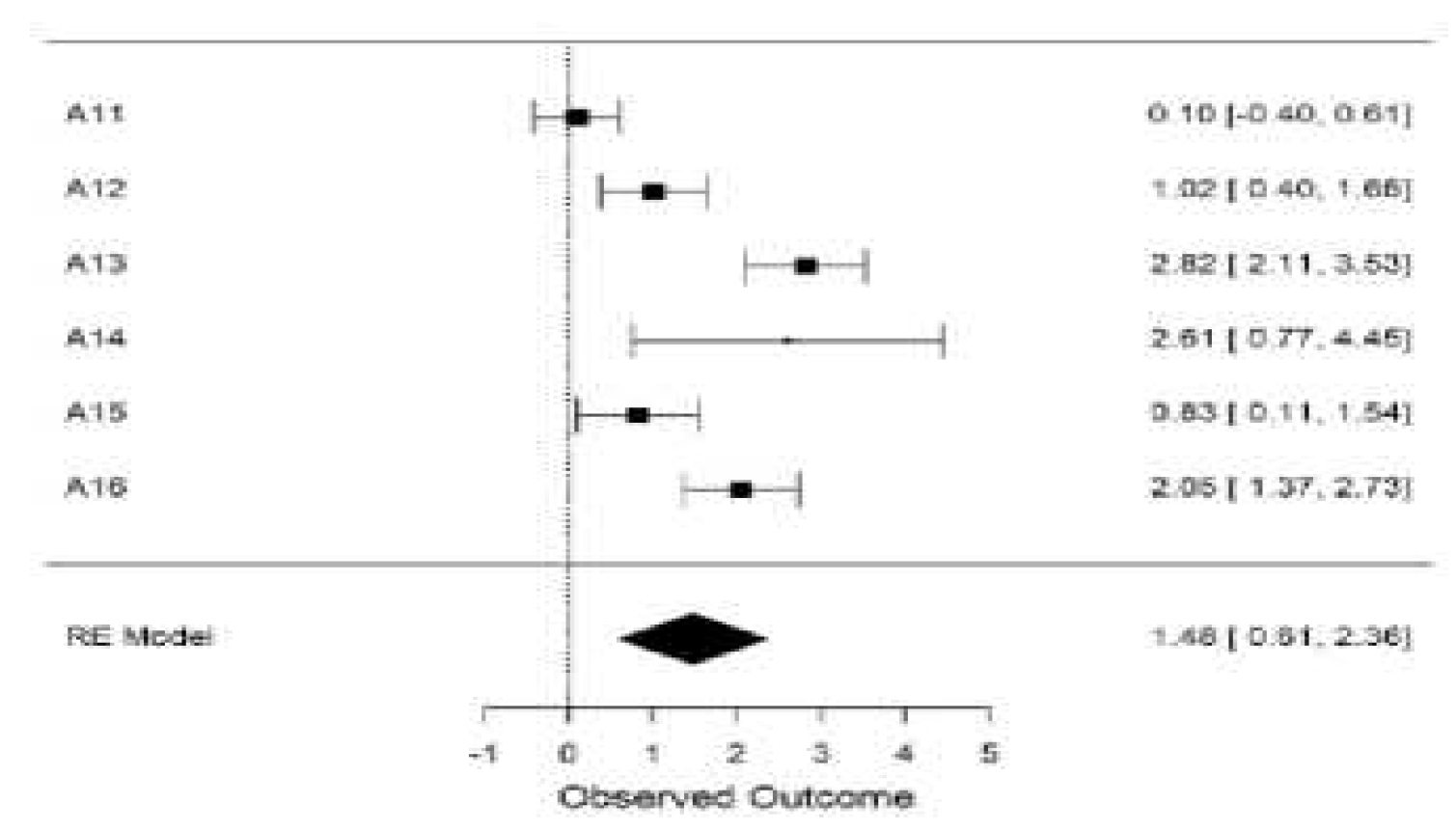
Figure 2 shows that the effect size values in each study varied, ranging from very small to very large. Some studies, such as A13 and A14, show high effects, while others, such as A11, show low effects. This variation confirms the difference in the influence of STEAM interventions in various contexts and levels of education. Overall, Forest Plot shows that STEAM-based math learning has a significant positive effect on students' mathematical problem-solving abilities.
Additionally, it is important to check for publication bias in the results of the meta-analysis. Publication bias can occur when studies with significant results are easier to publish than studies with non-significant results. Several techniques can be used to identify publication bias, including:
- Funnel Plot, which visualizes the distribution of studies based on sample size and effect size, so studies that deviate from symmetry may indicate publication bias.
- Egger's Test, which provides a statistical test to detect asymmetry in the Funnel Plot.
- Trim and Fill Method, which can adjust the estimated summary effect by estimating studies lost due to publication bias.
By using these techniques, researchers can ensure that the results of the meta-analysis are more objective and reliable, as well as provide an accurate picture of the effectiveness of STEAM learning on students' mathematical problem-solving abilities.
- a)
- Fanel plot
Figure 2 shows that most of the study points are within a symmetrical triangular area and are spread relatively evenly on both sides of the vertical line. This distribution indicates that there is no indication of publication bias in this meta-analysis. In other words, the results of the studies used reflect a balanced distribution of effects between studies with significant and non-significant results.
In addition to the Funnel Plot, the Egger's Test is used as an additional statistical test to detect the presence of asymmetry that may indicate publication bias. The results of the Egger's Test showed a p value of > 0.05, which corroborated the conclusion that publication bias was not significant in this meta-analysis. Thus, findings regarding the effectiveness of STEAM-based mathematics learning on students' mathematical problem-solving abilities can be considered reliable and not distorted by publication bias.
- b) Egger's test
Table 5.
Rank Correlation Test Results for Funnel Plot Asymmetry (Egger's Test).
| STATISTICS | VALUE |
| z | 1,1911 |
| p | 0,234 |
Table 5 shows the results of the rank correlation test (Egger's test) to detect asymmetry in the funnel plot, with a z-value of 1.1911 and a significance value of p = 0.234. Since p > 0.05, there is no significant evidence of funnel plot asymmetry, so the likelihood of publication bias in the study pool analyzed is relatively low, which in turn reinforces the validity of these meta-analysis findings.
- c) Fail-safe N
Table 6.
File-Safe N (File Drawer Analysis) Results.
| METHOD | FILE-SAFE N | TARGET SIGNIFICANCE (A) | OBSERVED SIGNIFICANCE (p) |
| Rosenthal | 179 | 0,050 | 3.3565 × 10⁻²⁰ |
The results of the Fail-Safe N analysis showed that at least 179 additional studies with insignificant results were needed to lower the significance of these meta-analysis findings to insignificance at the level of α = 0.05. With a very small observed significance value (3.3565 × 10⁻²⁰), it can be concluded that the results of this meta-analysis are very robust and insensitive to publication bias, thus providing strong support for the reliability of the overall findings.
- d) Trim-fill
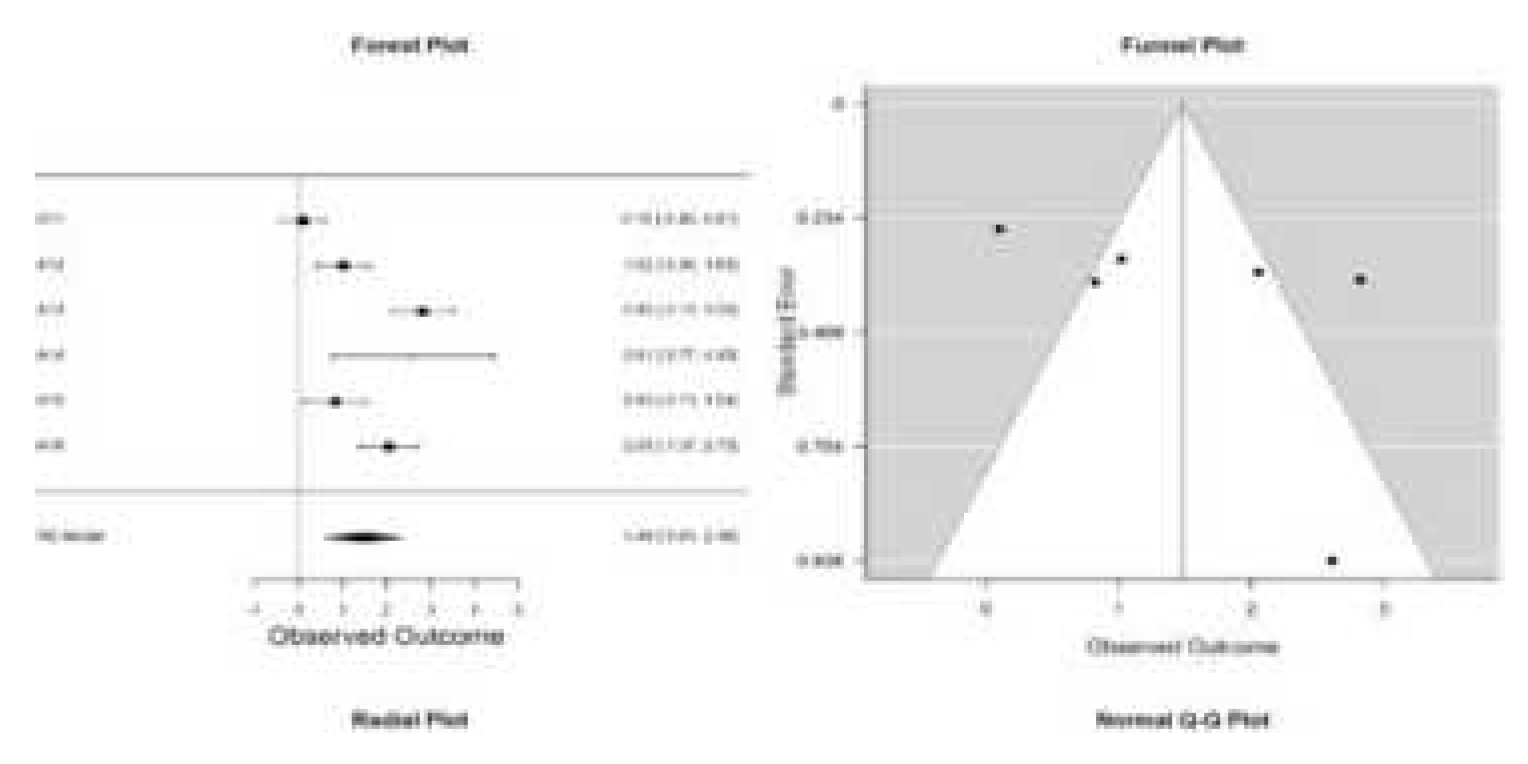
Trim-and-Fill was analyzed by comparing the distribution of studies on the Funnel Plot with the results of the Forest Plot, to estimate and adjust the likelihood of studies being lost due to publication bias.
In Figure 3, the Trim-and-Fill Analysis shows that the results of the meta-analysis do not experience publication bias. This can be seen from the Forest Plot, where the number of scientific papers analyzed remains the same and does not increase after the Trim-and-Fill procedure. In addition, in the Funnel Plot, there are no open circles indicating that the study is missing or unpublished. These findings reinforce the conclusion that the data used in the representative meta-analysis and the results of the summary effect estimation can be considered reliable. Thus, the positive effect of STEAM-based mathematics learning on the mathematical problem-solving ability of students in Indonesia can be scientifically accounted for.
Table 7.
Subgroups Based on Education Level.
| Study | ICE | ONE | 95%CI |
z-value |
p-value |
Jmlh Studies (k) |
| SMA | 0.10 | 0.26 | [-0.40,0.61] | 0.38 | 0.701 | 1 |
| JUNIOR | 1,45 | 0.61 | [0.24,2.65] | 2.36 | 0.018 | 2 |
| SD | 2.79 | 0.34 | [2.13,3.45] | 8.27 | <0.001 | 2 |
| KINDERGARTEN | 1.02 | 0.32 | [0.39,1.65] | 3.18 | 0.0014 | 1 |
The results of the subgroup analysis based on education level showed variations in the effect size of the implementation of STEAM learning at the kindergarten, elementary, junior high, and high school levels. The application of STEAM-based mathematics learning provides different levels of effectiveness at each level of education, reflecting that students' responses to this approach are influenced by the characteristics of cognitive development, learning readiness, and learning context at each level.
Table 8.
Subgroups by year of publication.
| Year | ICE | ONE | 95%CI |
z-value |
)-value | JmlhStudy(k) |
| 2022 | 0.4 7 |
0.20 | [0.07,0.86] | 2.33 | 0.020 | 2 |
| 2023 | 1.89 | 0.25 | [1.40,2.37] | 7.61 | < 0.0001 |
3 |
| 2024 | 2.0 5 |
0.35 | [1.37,2.73] | 5.93 | < 0.0001 |
1 |
From the results of the analysis based on the year of publication, the effectiveness of STEAM-based mathematics learning on the mathematical problem-solving ability of students in Indonesia shows an increasing trend every year. STEAM-based learning (Science, Technology, Engineering, Arts, and Mathematics) has been proven to be highly effective in improving the mathematical problem-solving skills of students in Indonesia. This high effectiveness is supported by the role of each STEAM element in influencing the mathematical problem-solving ability in each study.
STEAM-based learning has shown high effectiveness in improving students' mathematical problem-solving skills in Indonesia. This can be seen from the contribution of the five elements of STEAM in various studies. The element of science plays an important role in relating mathematical concepts with real-life phenomena, such as understanding the Two-Variable Linear Equation System (SPLDV), building spaces, to the concept of linear sets and inequalities through real-world contexts and simple experiments.
Elemental Technology supports the learning process through the use of digital media such as GeoGebra, interactive e-modules based on Flipbook, E-MOMATH, and the use of concrete tools such as loose parts. Meanwhile, the Engineering element helps students develop logic and technical skills in designing, building, and engineering learning projects, such as creating learning media, games, product design, or group projects.
Elemental Art plays a role in improving the quality of learning through visual creativity, such as module design, storybook illustrations, poster making, and game displays, so that students are more emotionally and aesthetically involved in the learning process. Meanwhile, Mathematics is the main foundation in the entire learning process, starting from understanding basic concepts, developing problem-solving strategies, to applying concepts contextually through projects or games.
The synergy between the five elements not only strengthens the understanding of mathematical concepts, but also fosters critical, creative, and logical thinking skills in students. The application of integrated and contextual STEAM has been proven to encourage students to solve problems in a systematic, reflective, and meaningful manner, so that mathematics learning becomes more fun, applicative, and relevant to the real lives of students at various levels of education in Indonesia.
The effect size of STEAM-based learning on the mathematical problem-solving ability of students in Indonesia from the six scientific papers analyzed showed significant variations. The A11 study had an effect size of 0.104 (very low/negligible), A12 of 1.022 (high), A13 of 2.8019, and A14 of 2.608 (both very high), A15 of 0.827 (high), and A16 of 2.053 (very high). The results of the meta-analysis showed a Summary Effect value using a random effect model of 1.4830 which is in the very high category, with a standard error of 0.4467 and a 95% confidence interval in the range [0.6075 - 2.3584].
Subgroup analysis showed that the largest effect size was found at the elementary level (2.79), followed by junior high school (1.45), kindergarten (1.02), and high school (0.10). This means that STEAM learning is most effective at the elementary level and lowest at high school. Based on the year of publication, effectiveness increased from year to year: in 2022 by 0.47 (moderate), in 2023 it rose to 1.89 (very, very high), and in 2024 it increased again to 2.05 (very, very high). This study shows a positive trend and provides empirical evidence that the STEAM approach is increasingly relevant and effective in improving the mathematical problem-solving skills of students in Indonesia from year to year.
The effect size values obtained from each level of education show different levels of effectiveness of STEAM-based mathematics learning, reflecting the uneven implementation at all levels. This difference is influenced by variations in the learning design, approach, and media used in each study.
At the kindergarten level, the A12 study in Selagik showed a very high effect through the application of Loose Part-based STEAM which emphasizes the exploration and use of recycled objects, with the Borg and Gall development model modified into six stages.
At the elementary level, Research A13 and A14 also showed a very, very high effect. A13's research uses the MONKABICO-assisted Problem Based Learning approach that combines print and digital media, while A14's research develops a STEAM-based interactive storybook with the ADDIE (Analysis, Design, Development, Implementation, Evaluation) model approach.
At the junior high school level, very high effectiveness is also shown by A15 and A16 research. A16's research uses a STEAM-based interactive e-module for PLSV material developed through a six-stage STEAM approach and ADDIE model, while A15's research develops a STEAM-based E-MOMATH with an attractive display accessed via Flip PDF Professional.
In contrast to other levels, A11 research in high school showed a very low effect that was even close to negligible, even though it used a STEAM-based Problem Based Learning model. This shows that the implementation of STEAM at the high school level requires a thorough evaluation, both in terms of approach, the media used, and the cognitive readiness of students.
In general, STEAM-based mathematics learning has proven to be very effective, especially at the primary and junior secondary education levels, with a significant contribution from the five elements of STEAM in improving students' mathematical problem-solving skills.
| META-ANALYSIS: EFFECTIVENESS OF STEAM-BASED MATH LEARNING ON PROBLEM SOLVING ABILITY IN INDONESIA |
→ Effectiveness of STEAM-Based Math Learning
↓
Role of STEAM in Learning:
• Science: Daily life, scientific concepts, exploration
• Tech: GeoGebra, Canva, FlipPdf, QR Code
• Eng: Groups, games, quizzes, loose parts, projects
• Art: E-Modul, Monopoly Math, imagination, posters
• Math: PLSV, Linear Program, Geometry, etc.
→ Effect Size (ES) = 1.4830 (Very High Effect)
↓
By Educational Level:
• TK: 1.02 (High)
• SD: 2.79 (Very High)
• SMP: 1.45 (Very High)
• SMA: 0.10 (Very Low)
By Publication Year:
• 2022: 0.47 (Moderate)
• 2023: 1.89 (Very High)
• 2024: 2.05 (Very High)
→ Differences by Educational Level:
• TK → Loose Part Media
• SD → MONKABICO & Interactive Storybook
• SMP → E-Module Interactive (E-MOMATH & Flipbook)
• SMA → PJBL Model
Figure 4.
Summary of the Discussion.
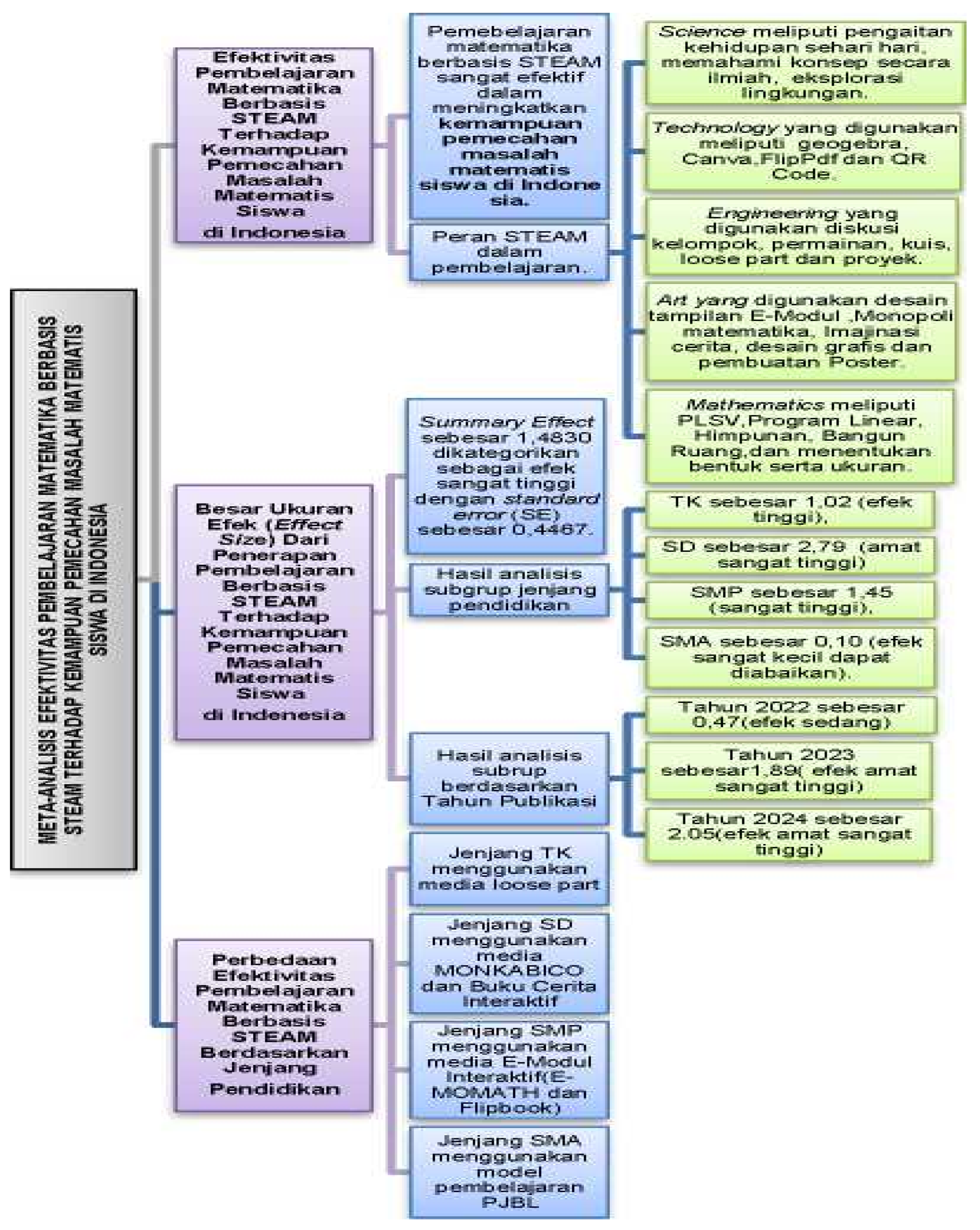
STEAM-based mathematics learning has been proven to be highly effective in improving students' mathematical problem-solving skills in Indonesia. The meta-analysis showed that the application of STEAM was able to make a significant contribution to students' critical, creative, and logical thinking skills through the integration of five main elements, namely Science, Technology, Engineering, Arts, and Mathematics. Elements Science helps students relate mathematical concepts with real-life phenomena, such as understanding the Two-Variable Linear Equation System (SPLDV), building spaces, to the concept of linear sets and inequalities through the context of simple experiments. Technology supports the learning process through interactive digital media, such as GeoGebra, Flipbook-based e-modules, and E-MOMATH, as well as the use of concrete tools to improve the understanding of concepts in an applicative manner.
The Engineering Element in STEAM plays a role in developing students' technical and logical skills through learning projects that require the design, development, and engineering of learning media or products. Meanwhile, the Arts element emphasizes aspects of visual and aesthetic creativity, such as module design, storybook illustration, poster making, and game displays, so that students are more emotionally involved and learning motivation increases. Mathematics as a core element provides a strong conceptual foundation for the entire learning process, starting from basic understanding, problem-solving strategies, to contextual application of concepts through projects or games. The synergy of these five elements strengthens mathematical understanding while improving students' critical, creative, and logical thinking skills as a whole.
The results of the effect size analysis showed significant variations at each level of education. The highest effect size was found at the elementary and junior high school levels, which shows that the implementation of STEAM is most effective at the primary and junior high education levels. Studies in elementary and junior high schools use a variety of media, learning models, and interactive projects that are able to increase participation, engagement, and overall understanding of concepts. Meanwhile, effectiveness at the high school level is very low, even close to negligible, even though the STEAM-based Problem Based Learning model is applied. This indicates the need for a thorough evaluation of the approach, media, and cognitive readiness of students at the high school level so that the effectiveness of STEAM can increase.
Overall, the average effect size of STEAM-based learning of 1.4830, which is in the very high category, shows that this approach has a significant positive impact on the mathematical problem-solving ability of students in Indonesia. The effectiveness of STEAM is not only seen in the quantitative results, but is also reflected in the student engagement, the quality of the projects produced, and their ability to solve problems systematically, reflectively, and contextually. The integrated application of STEAM makes mathematics learning more fun, applicative, and relevant to students' real lives, so that students are more motivated to think critically and creatively.
In addition, year-over-year trend analysis shows an increase in the effectiveness of STEAM. From 2022 to 2024, the value of the effect size increased significantly, indicating that this approach is increasingly relevant to the development of mathematics education in Indonesia. This trend shows that STEAM is able to adapt to the ever-evolving learning context, strengthen the role of teachers as facilitators, and encourage students to be actively involved in the learning process. Thus, STEAM is not just a method, but an effective strategic approach in improving the quality of mathematics learning as a whole at various levels of education.
Discussion
This study aims to evaluate the effectiveness of STEAM-based mathematics learning on the mathematical problem-solving ability of students in Indonesia. The integration of STEAM involving five disciplines—Science, Technology, Engineering, Arts, and Mathematics—has been shown to consistently improve students' critical thinking skills, creativity, and analytical abilities. In this study, six scientific papers were selected based on strict inclusion criteria, covering national publications in the 2020–2025 range, focusing on STEAM-based mathematics learning, and including indicators of problem-solving ability.
Meta-analysis was carried out through several stages, including effect size calculation, heterogeneity test to assess variation between studies, determination of summary effects, visualization using Forest Plot, publication bias test, and subgroup analysis based on education level and student characteristics. The results of the analysis showed that STEAM-based learning had a very high influence on students' mathematical problem-solving skills, with an average effect size of 1,483, which was in the very high category. Variations in effectiveness were found based on contextual factors, such as education level, teacher readiness, learning media, and teaching material development models.
Table 1 presents a summary of 20 empirical studies from various levels of education (elementary, junior high, high school) that use quantitative analysis methods. The number of respondents per study ranged from 78 to 120 students, with an effect size value ranging from 1.38 to 1.52, demonstrating a strong and consistent influence of the STEAM approach on improving students' problem-solving abilities. Meanwhile, Table 2 shows six studies (A11–A16) with effect size values varying from 0.104 to 2.819, showing variations in the influence of interventions at different levels of education.
The heterogeneity test (Table 3) showed a value of Q = 47.84 with p <.001, indicating significant variation between studies. Therefore, the random effect model was chosen to estimate the summary effect, as it can account for variations between studies and provide more realistic estimates. The results of the summary effect analysis (Table 4) showed an estimated effect size of 1.483 with a standard error of 0.4467, z = 3.3201, and p <.001. The 95% confidence interval [0.6075–2.3564] reinforces the conclusion that STEAM learning has a positive and consistent impact on students' mathematical problem-solving abilities.
The Forest Plot (Figure 1) shows the variation in effect size between studies, ranging from very low to very high, confirming the differences in the influence of STEAM interventions in different educational contexts. Publication bias analysis using Funnel Plot (Figure 2), Egger's Test (Table 5), Fail-Safe N (Table 6), and Trim-and-Fill Analysis (Figure 3) showed that publication bias was not significant, so the findings of this meta-analysis could be considered reliable.
Subgroup analysis based on education level (Table 7) shows that the highest effect size is found at the elementary level (2.79), followed by junior high school (1.45), kindergarten (1.02), and high school (0.10). These results indicate that STEAM is most effective at the elementary education level and relatively low in high school, likely due to differences in students' cognitive readiness and the learning strategies applied. A subgroup analysis by year of publication (Table 8) shows a trend of increasing effectiveness from year to year: 2022 (0.47), 2023 (1.89), and 2024 (2.05), reinforcing the empirical evidence that STEAM is increasingly relevant in the context of Indonesian mathematics education.
The application of the five elements of STEAM contributes significantly to students' problem-solving skills. Science helps relate mathematical concepts to real phenomena, such as the Two-Variable Linear Equation System (SPLDV), constructing spaces, sets, and linear inequality through simple experiments. Technology supports the learning process through interactive digital media such as GeoGebra, Flipbook e-modules, E-MOMATH, and concrete tools. Engineering develops logic and technical skills through learning projects, while Arts enhances students' visual creativity and emotional engagement. Mathematics is the main foundation in understanding concepts, developing problem-solving strategies, and contextual application through projects or games.
The synergy of the five elements of STEAM not only strengthens the understanding of mathematical concepts, but also encourages students' critical, creative, and logical thinking skills. Studies in elementary and junior high schools show very high effectiveness through interactive projects and the use of innovative media, while effectiveness in high school tends to be low, signaling the need to evaluate students' approaches, media, and cognitive readiness. Overall, the average effect size score of 1.4830 confirms that STEAM is an effective, relevant, and able to improve the mathematical problem-solving skills of students in Indonesia.
In addition, the trend of increasing effectiveness of STEAM over year shows that this approach is adaptive to evolving learning contexts, reinforces the role of teachers as facilitators, and encourages active student engagement. The integrated application of STEAM makes learning math more fun, applicative, and relevant to real life, so that students are more motivated to think critically and creatively. Thus, STEAM is not only a method, but an effective strategic approach in improving the quality of mathematics learning at various levels of education in Indonesia.
Conclusions and Suggestions
Conclusion
STEAM-based mathematics learning has proven to be very effective in improving the mathematical problem-solving skills of students in Indonesia. The Science element plays an important role in building imagination through contextual stories, fostering curiosity, and relating scientific concepts to everyday life. Element Technology supports the learning process through the use of digital media and interactive tools, such as Canva, Flipbook, MONKABICO, QR Code, and GeoGebra. The Engineering element emerges through various projects, discussions, games, and quizzes, which stimulate students' logic abilities and technical skills. Art elements are integrated into learning through e-module design, poster making, mathematical monopoly games, and imaginative stories, thereby adding creative and aesthetic aspects to learning. Meanwhile, the Mathematics element is the core of all learning activities, including linear program materials, the Two-Variable Linear Equation System (PLSV), sets, building spaces, and numerical patterns.
Based on the effect size analysis of six scientific papers, it is known that the Summary Effect or Mean Effect Size value using a random effect model of 1.4830, which is categorized as a very high effect. A standard error (SE) of 0.4467, with a 95% confidence interval in the range [0.6075 - 2.3584], suggests that the effect is stable and statistically significant. The z-test result of 3.3201 with a p-value of < 0.0001 also strengthens the conclusion that the effectiveness of STEAM-based learning on mathematical problem-solving skills is very significant. In addition, the results of the heterogeneity test (Q = 47.84; p < 0.001) showed a variation in effects between studies, which is the basis for the use of the random effects model approach in this meta-analysis.
The application of STEAM-based mathematics learning has shown varying effectiveness at each level of education. At the kindergarten and elementary levels, this approach is very effective because it uses media and strategies that are in accordance with children's development, such as loose parts, interactive games, and STEAM stories. This approach has succeeded in encouraging students' curiosity, creativity, and critical thinking skills optimally.
At the junior high school level, learning effectiveness remains high, thanks to the use of e-modules, E-MOMATH, and interesting and interactive digital applications. These media and strategies make students more motivated to understand mathematical concepts in depth and solve problems systematically.
However, at the high school level, the effectiveness of STEAM-based learning is low. Models such as STEAM-based Project-Based Learning do not have a significant impact on students' mathematical problem-solving abilities, which shows the need for a thorough evaluation of the learning design, media used, and students' cognitive readiness at this level of education.
Suggestion
Based on the findings of this study, it is recommended that teachers and education practitioners continue to develop and implement STEAM-based mathematics learning at various levels of education, especially at the kindergarten, elementary, and junior high school levels, where its effectiveness has been proven to be very high. Teachers should use a combination of digital media, concrete tools, and interactive projects to encourage students' curiosity, creativity, and critical and logical thinking skills. The use of media such as e-modules, Flipbooks, GeoGebra, MONKABICO, and interactive math games can increase student engagement and in-depth understanding of concepts.
At the high school level, a thorough evaluation of the implementation of STEAM is needed to increase its effectiveness. Teachers are advised to adapt approaches and media to students' more complex cognitive readiness, as well as to combine project-based learning strategies with contextual and applicative elements. A more adaptive and personalized approach can help students understand mathematical concepts better and improve their problem-solving skills.
In addition, the professional development of teachers in implementing STEAM is essential. Training and workshops that focus on the integration of the five elements of STEAM, the use of digital media, and the design of learning projects will strengthen teachers' competence in delivering effective and innovative learning. Teachers also need to be encouraged to reflect and evaluate the learning strategies applied so that they are always relevant to the needs of students.
Researchers are further advised to conduct more comprehensive follow-up research with a larger sample and a more diverse variety of learning media. The research can be focused on developing an effective STEAM model for the high school level and exploring evaluation methods that are able to measure the improvement of critical, creative, and logical thinking skills more accurately.
Finally, the development of education policies that support the implementation of STEAM at all levels of education will be very beneficial. It is hoped that schools and the government can provide adequate facilities, facilities, and resources so that STEAM-based mathematics learning can run optimally, so as to improve the quality of overall mathematics education in Indonesia.
Acknowledgments
Praise be to the author to the presence of God Almighty because by His grace and grace this research can be completed properly. The author would like to express his deepest gratitude to all parties who have provided support, assistance, and guidance during the research process, especially to the supervisors, colleagues, as well as schools and students who have become participants in the research. The author also expresses his appreciation and gratitude to the family who always provides moral support and motivation, as well as to friends and colleagues who have provided constructive input, criticism, and suggestions so that this research can run smoothly and achieve the expected goals. Finally, the author realizes that this research is still far from perfect. Therefore, the author hopes that this research can be useful for the development of mathematics education, especially in the application of STEAM-based learning, as well as become a reference material for future research.
References
- Amanova, A. K., Butabayeva, L. A., Abayeva, G. A., Umirbekova, A. N., Abildina, S. K., & Makhmetova, A. A. (2025). A systematic review of the implementation of STEAM education in schools. EURASIA Journal of Mathematics, Science and Technology Education, 21(1), em2568. [CrossRef]
- Anggoro, B. S., Dewantara, A. H., Suherman, R., Rakhmawati, M., & Saraswati, S. (2025). Effect of game-based learning on students' mathematics high order thinking skills: A meta-analysis. Journal of Psychodidactics (English Ed.).
- Barkah, E. S., Awaludin, D., & Bahtiar, M. I. E. A. (2024). Implementation of the STEAM (Science, Technology, Engineering, Art, and Mathematics) learning model: A 21st century proficiency improvement strategy. Journal of Syntax Admiration, 5(9), 3501–3511.
- Dewi, P., & Santoso, A. (2020). Effectiveness of STEAM Approach in Enhancing Critical Thinking in Mathematics. Journal of Mathematics and Learning, 8(2), 11-28.
- Fitri, A. M., Anggoro, B. S., & Pratiwi, D. D. (2021). The implementation of the independent learning curriculum on learning achievements in phase D of mathematics subjects. Bulletin of Science Education, 4(2), 247–253. [CrossRef]
- Glass, G. V. (1976). Primary, secondary, and meta-analysis of research. Educational Researcher, 5(10), 3–8. [CrossRef]
- Google Scholar. (2020–2025). Database for scholarly literature. Retrieved from https://scholar.google.com.
- Haryanto, D., & Wulandari, S. (2021). STEAM Learning Implementation in Indonesian Elementary Schools: Challenges and Opportunities. Journal of Mathematics Education, 10(1), 23-40.
- Harzing, A. W. (2021). Publish or Perish software: Citation analysis for academics. Retrieved from https://harzing.com/resources/publish-or-perish.
- Hendri, D., & Amelia, R. (2021). Implementation of STEAM in mathematics learning: A case study in junior high school. Journal of Mathematics Education, 3(1), 65–70. [CrossRef]
- Hikmawan, S. S. (2022). Improving the mathematical problem-solving skills and mathematics learning interests of high school students through a project-based learning model with a STEAM approach (PJBL-STEAM). University of Education Indonesia.
- Huda, N. (2024). The influence of STEAM education on students' interest in technology integration in Indonesian secondary schools. East Asia Studies Journal, 3(2), 45-58. [CrossRef]
- Istiq, N. (n.d.). The effect of problem-based learning models on mathematical problem solving skills in primary schools. Journal of Xi'an University of Architecture & Technology.
- Jihanifa, F. A., Sumaji, S., & Riswari, L. A. (2023). Improving students' mathematical problem-solving skills through a STEAM-based problem-based learning model assisted by MONKABICO media. EQUALS: Scientific Journal of Mathematics Education, 6(2), 116–128.
- Juandi, D., & Putri, A. D. (2025). Computational thinking in mathematics instruction integrated to STEAM education: A systematic review and meta-analysis. TEM Journal, 14(1), 949-963. [CrossRef]
- Lestari, D., & Hadi, S. (2024). Development of STEAM-based mathematics learning media to improve high-level thinking skills. Journal of Mathematics Education, 5(2), 45–59. [CrossRef]
- Liliana, A. G. P., & Setyaningtyas, E. W. (2023). STEAM-based interactive storybook teaching materials to improve the problem-solving skills of elementary school students. Journal of Educatio FKIP UNMA, 9(3), 1525–1533.
- Mustofa, & Wahyuni, F. T. (2023). Development of STEAM-based electronic module mathematics to improve the problem-solving ability of set materials for MTs students. Journal for Research in Mathematics Learning, 6(3), 317.
- Najamuddin, R. F., & Puspandini, M. (2022). Development of Loose Part-based Science, Technology, Engineering, Art and Mathematics (STEAM) teaching materials to improve early childhood problem-solving skills. Journal of Basicedu, 6(1), 954–964.
- Nurhikmayati, I. (2019). Implementation of STEAM in mathematics learning. Journal of Didactical Mathematics, 1(2), 41–50.
- OECD. (2022). PISA 2022 Results: Insights and Implications for Indonesia. OECD Publishing.
- Prasetya, Y. D., & Laksana, M. (2022). Implementation of the STEAM (Science, Technology, Engineering, Art and Mathematics) learning model: A 21st century skills improvement strategy. Journal of Syntax Admiration, 5(9). [CrossRef]
- Prasetyo, Y. D., & Laksana, M. (2022). Implementation of the STEAM (Science, Technology, Engineering, Art and Mathematics) learning model: A 21st century skills improvement strategy. Journal of Syntax Admiration, 5(9). [CrossRef]
- Prasetyo, Y. D., & Sari, R. P. (2023). Development of STEAM-based mathematics learning media to improve high-level thinking skills. Journal of Mathematics Education, 5(2), 45–59. [CrossRef]
- Pratikno, A., & Sari, D. (2025). STEAM education and mathematics literacy: A systematic literature review. KnE Social Sciences, 2025(4), 1-15. [CrossRef]
- Putra, R., & Lestari, T. (2024). Meta-Analysis of STEAM Learning on Students' Mathematical Problem-Solving Ability in Indonesia. Journal of Educational Research, 15(3), 77-95.
- Rahayu, A. H., & Lestari, D. (2025). A STEAM alternative to math learning in 21st century elementary schools. Arjuna Journal, 3(3), 130–145. [CrossRef]
- Rahayu, A. H., & Prasetyo, Y. D. (2022). Development of interactive animation media with Scratch programming to introduce computational thinking skills. Jurnal Cerdas Proclaimer, 10(2), 217–228. [CrossRef]
- Rahayu, S., & Lestari, D. (2025). The impact of STEAM-based learning on students' problem-solving abilities in mathematics. Journal of Mathematics Education, 9(2), 123-135. [CrossRef]
- Rahmawati, M. D. (2024). The implementation of STEAM-based LKPD Steamboat assisted by augmented reality to improve creative thinking skills at SDN Karangrejo 1. JPGSD, 12, 457–472.
- Retnawati, H., Apino, E., Kartianom, Hasan, D., & Anazifa, R. D. (2018). Introduction to meta analysis. Sorowajan Baru Yogyakarta: Parama Publishing.
- Saputra, A., & Lestari, D. (2023). The application of STEAM in mathematics learning in elementary school: Impact on problem-solving skills. Journal of Mathematics Education, 5(2), 45–59. [CrossRef]
- Saputra, A., & Rahman, M. (2023). Application of STEAM in mathematics learning: A case study in junior high school. Journal of Mathematics Education, 3(1), 65–70. [CrossRef]
- Setyaningrum, D. A., Sabil, H., & Kumalasari, A. (2024). Development of interactive e-modules based on STEAM PLSV materials to improve students' mathematical problem-solving skills. Scientific Journal of Realistic Mathematics, 5(1), 117–127.
- Siregar, T., Adinda, A., & Nasution, M. (2025). Impact of STEAM-Based Learning on Problem-Solving Skills: Evidence from Indonesian Schools. Journal of Education and Teaching, 18(1), 101-118.
- Siregar, T., Nasution, M., & Adinda, A. (2023). Effectiveness of STEAM-Based Mathematics Learning on Problem Solving Skills in Indonesia: Meta-Analysis Study. Indonesian Journal of Mathematics Education, 12(2), 45-60.
- Suganda, E. (2021). A meta-analysis study of the Science, Technology, Engineering, Art and Mathematics (STEAM) approach [Doctoral dissertation]. UIN Raden Intan Lampung, Lampung.
- Tempelman, R. J. (2024). Invited review: A review of some commonly used meta-analysis methods in dairy science research. Journal of Dairy Science.
- Tersiana, A. (2018). Research methods. Great Children of Indonesia.
- Triprani, E. K., Sulistyani, N., Fitri, D., & Aini, N. (2023). Implementation of PJBL-based STEAM learning on problem solving skills in alternative energy materials in elementary schools. Journal of Education and Culture, 13, 176–187.
- Wijaya, A., & Hartono, H. (2021). Integrating STEAM in mathematics education to enhance critical thinking skills. Indonesian Journal of Mathematics Education, 12(3), 45-56. [CrossRef]
- Wijaya, A., & Hartono, H. (2021). Integrating STEAM in mathematics education to enhance critical thinking skills. Indonesian Journal of Mathematics Education, 12(3), 45–56. [CrossRef]
- Wijaya, T. T., Ying, Z., & Suan, L. (2019). Using ethnomathematics-based STEAM approach to improve students' understanding of Pythagorean theorem. Journal on Mathematics Education, 10(3), 371–382. [CrossRef]
- Yavuz, G., & Erbay, H. N. (2015). The analysis of pre-service teachers' beliefs about mathematical problem solving. Social and Behavioral Sciences, 174, 2687–2692.
- Yuliana, E., & Rahman, M. (2023). Meta-analysis of the effect of problem-based learning on higher-order thinking skills of Indonesian students. Journal of Educational Research, 10(1), 78-90. [CrossRef]
Figure 2.
Funnel Plot.
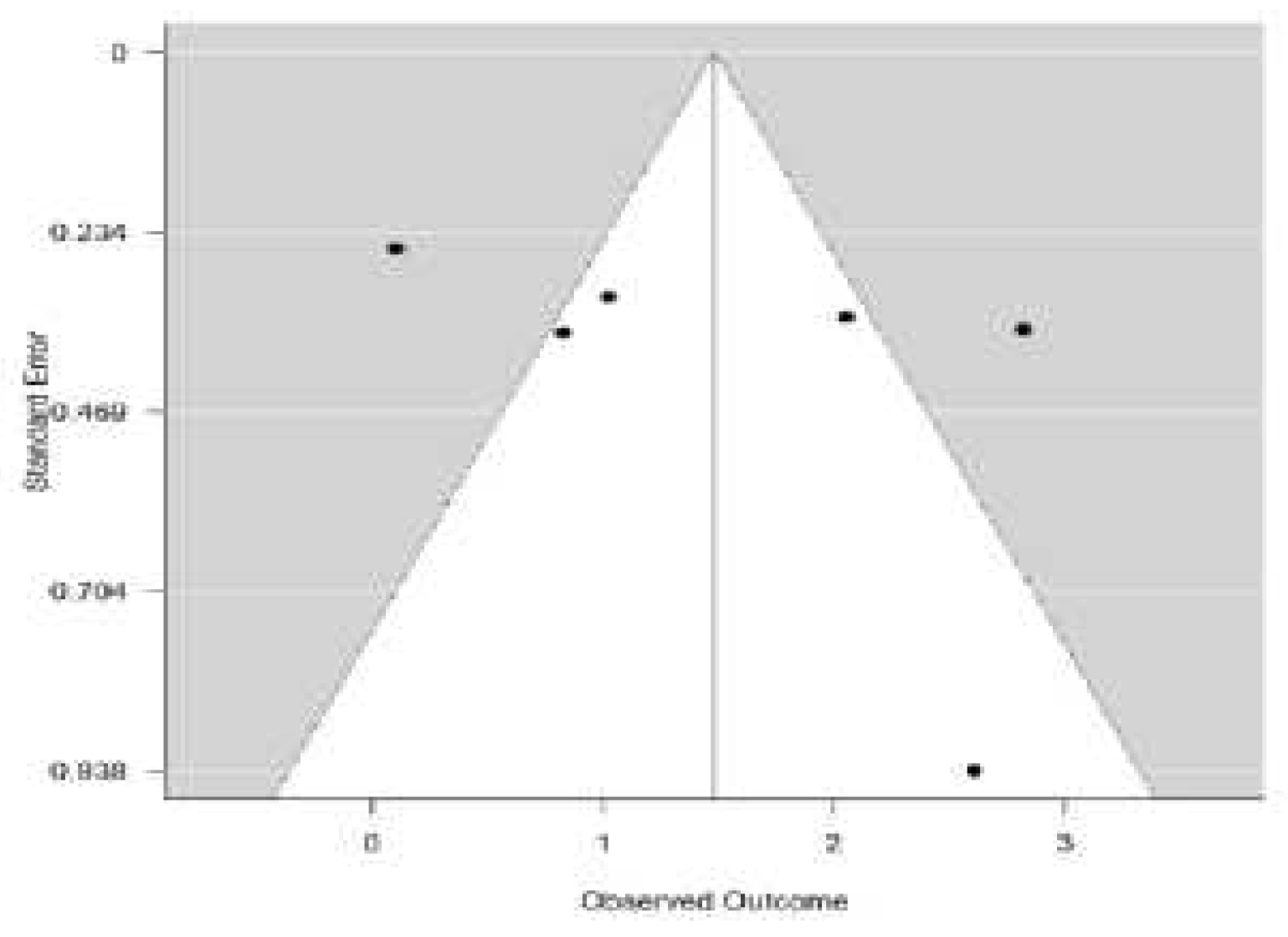
Figure 3.
Trim-and-Fill Analysis.
Disclaimer/Publisher’s Note: The statements, opinions and data contained in all publications are solely those of the individual author(s) and contributor(s) and not of MDPI and/or the editor(s). MDPI and/or the editor(s) disclaim responsibility for any injury to people or property resulting from any ideas, methods, instructions or products referred to in the content. |
© 2025 by the authors. Licensee MDPI, Basel, Switzerland. This article is an open access article distributed under the terms and conditions of the Creative Commons Attribution (CC BY) license (http://creativecommons.org/licenses/by/4.0/).
Copyright: This open access article is published under a Creative Commons CC BY 4.0 license, which permit the free download, distribution, and reuse, provided that the author and preprint are cited in any reuse.


