

Submitted:
25 September 2025
Posted:
25 September 2025
You are already at the latest version
Abstract
The Unified Theory of Acceptance and Use of Technology (UTAUT) has become a central framework for analyzing technology adoption across diverse fields, yet little is known about the epistemic community of scholars who sustain and expand this model and how their contributions connect to sustainable development. This study addresses the question of who the key actors are within the UTAUT research community and to what extent their work aligns with the Sustainable Development Goals (SDGs). A bibliometric analysis was conducted using Web of Science data from 2003 to 2025, applying Price’s, Lotka’s, Zipf’s, and Hirsch’s laws, together with co-authorship, cross-citation, and keyword co-occurrence network analyses, visualized through VOSviewer. The results reveal exponential growth in UTAUT-related publications, with 2,278 articles authored by 6,952 researchers, of whom only 31 can be considered central actors combining high productivity, impact, and thematic relevance. These authors are organized into distinct collaborative clusters, and their most influential works build directly upon Venkatesh et al.’s foundational contributions. Thematic evolution indicates a shift from general constructs of technology perception toward applications in mobile banking, education, and artificial intelligence. Overall, the findings confirm the vitality of UTAUT research and highlight its contributions to SDG 4 (quality education) and, to a lesser extent, SDG 11 (sustainable cities), SDG 3 (health), and others, underscoring the need to adapt adoption models to emerging sustainability challenges.
Keywords:
Technology adoption
; Sustainability
; Bibliometrics
; Prolific authors
; Quality education
; Sustainable cities and communities
1. Introduction
1.1. Epistemic Communities: Foundations, Dynamics and Current Challenges
Epistemic communities have become a key tool for understanding the interaction between expert knowledge and public decision making. Their theoretical development has been progressive, moving from normative approaches to more dynamic and contextual perspectives.
The concept of epistemic community was introduced by Peter Haas [1] to explain how experts influence international policy coordination. According to Haas [1], these communities are defined by shared causal beliefs about how a domain works, normative values about desirable ends, common criteria for validating knowledge, and a common policy orientation toward problem solving. This initial definition placed epistemic communities on a transnational plane, where scientific-technical knowledge becomes a tool for governance. Over time, the concept was broadened to encompass more diverse scales and non-exclusively institutional spaces.
One of the most relevant contributions of epistemic communities is their capacity to influence public policies. Haas [1] anticipated that, in contexts of high uncertainty, decision-makers seek reliable interpretative frameworks, and it is there where experts play a fundamental role. However, as Dunlop [2] highlights, this influence is not automatic. Communities must overcome institutional barriers that can limit the application of knowledge in concrete decisions, as policies occur in ecosystem services. Shapiro and Guston [3] warn of the risk of epistemic drift when internal validation procedures, such as excessively formalized peer reviews, discourage the social relevance of expert knowledge. Ultimately, the effectiveness of these communities depends as much on their technical capabilities as on their political insertion.
Beyond their external impact, it is crucial to understand how these communities are built internally. Gunn [4] proposes that their strength comes from deliberative practices that favor critical reflexivity, allowing different knowledge to dialogue without falling into dogmatism. This human and cooperative dimension of knowledge is complemented by Miller and Fox [5], who stress that language, academic forums, publications and networks act as mechanisms of disciplinary socialization. In this sense, an epistemic community is not formed solely by cognitive coincidences, but by a shared culture that is built over time.
Although initially conceived of as global actors, it is now recognized that epistemic communities operate at multiple scales and contexts. At the local level, for example, Mabon et al. [6] document how researchers and urban planners in Fukuoka, Japan, have influenced the development of green spaces in response to climate change. At the national level, Smirnova and Yachin [7] show how, in post-Soviet countries, experts have evolved into communities contesting power from new institutional frameworks. Even at the global public opinion level, Maliniak et al. [8] demonstrates that the visible presence of climate scientists can influence citizen support for international agreements such as Paris. Thus, epistemic communities are versatile actors that adapt their actions to diverse social and political conditions.
The studies reviewed allow us to identify three fundamental factors that condition the impact of an epistemic community:
Currently, the study of these communities faces several relevant challenges. The first is the inclusion of non-Western and local knowledge, still poorly represented in the literature, which limits the understanding of epistemic diversity [6]. The second is the digital reconfiguration of knowledge: social networks, open platforms and mass dissemination channels have expanded the spaces where legitimacy is constructed and disputed [8]. Thirdly, there is a need to rethink the mechanisms of accountability and legitimacy, without weakening scientific rigor [3]. Finally, there is a growing challenge around the interaction between expert and non-expert knowledge, where consultants, think tanks and organized citizens contest traditional knowledge hierarchies [7].
In this regard, bibliometrics offers valuable tools for the study of epistemic communities, allowing the empirical identification of their members, mapping collaborative networks and analyzing the thematic evolution of their research. Through the analysis of co-authorships, co-citations and key terms, it is possible to recognize patterns of production, circulation and consolidation of expert knowledge. In addition, it facilitates the detection of influence nucleus, theoretical consensus and transformations over time, providing solid evidence on how these communities are configured and act in different contexts. Thus, bibliometrics becomes an effective methodological complement to understanding the internal dynamics and external impact of epistemic communities [9,10,11,12].
1.2. Unified Theory of Acceptance and Use of Technology
The Unified Theory of Acceptance and Use of Technology (UTAUT) model, developed by Venkatesh et al. [13] in 2003, seeks to explain and predict people’s intention to use and effective use of technologies. This framework unifies eight fundamental theories on technology adoption: 1) Theory of Reasoned Action – TRA [14], which links beliefs, attitudes, and intentions; 2) Theory of Planned Behavior – TPB [15], which adds behavioral control; 3) Technology Acceptance Model – TAM [16], based on perceived usefulness and ease of use; 4) Motivational Model [17], which incorporates intrinsic/extrinsic motivation; 5) PC Usage Model [18], focused on habits and facilitating conditions; 6) Diffusion of Innovations Theory [19], on social influence; 7) Social Cognitive Theory [20], which emphasizes self-efficacy; and 8) Combined TAM – TPB Model [21]. Empirically, UTAUT explains 70% of the variance in intention to use and 50% in actual use [13], surpassing previous models (17%-53%). However, its organizational focus limits its applicability in consumer contexts, ignoring variables such as privacy or hedonic motivation [22]. In response to these limitations, Venkatesh et al. [23] developed the UTAUT2 model, which incorporates the constructs: hedonic motivation, habit, and perceived value, and the moderators: age, gender, and user experience, raising the predictive capacity to 74% for intention to use and 52% for effective use, improving the understanding of consumer interactions with emerging technologies.
The UTAUT and UTAUT2 models have been applied in various sectors, such as health, education, government, and business. In health, they have been used to study the adoption of technologies in patients and professionals, including the use of the Internet of Things [24], mHealth in older adults [25], electronic health record systems [26], and tools for self-management of diabetes [27]. These technologies have demonstrated improvements in efficiency, cost reduction, and patient focus, although studies warn of the need to consider contextual and demographic variables [26,28,29]. In education, research has examined the acceptance of digital micro-lessons [30], course management systems [31], and artificial intelligence [32,33,34]. In the government sector, the adoption of digital services and e-government platforms is strongly determined by institutional trust and risk management, with a moderate impact from cultural and demographic diversity [22,35,36]. Finally, in business, studies focus on integrating technologies to optimize processes and promote sustainable practices with environmental, economic, and social impacts [37,38]. Examples include AI-based recruitment [39], mobile payments [40,41,42,43], restaurant sector applications [44], social networks [38], online shopping by older adults [45], artificial intelligence integration [46], and Metaverse [37].
These applications reflect that the growing complexity of technology adoption requires models capable of incorporating contextual, emotional, and sustainability-related variables, thus expanding the applicability of UTAUT and UTAUT2 in different social scenarios.
Consequently, our study focuses on the research question: Who are the key actors in the epistemic community of the Unified Theory of Acceptance and Use of Technology (UTAUT), and how do their contributions impact the advancement of the Sustainable Development Goals (SDGs), according to a multicriteria bibliometric analysis? (See Figure 1).
2. Methods
This research was conducted using a bibliometric approach, with the aim of analyzing the evolution, thematic structure, and main academic actors linked to the epistemic community that conducts studies on the Unified Theory of Acceptance and Use of Technology (UTAUT). To this end, widely recognized methods and recommendations in the field of bibliometric studies [47,48] were applied, combined with classical theoretical foundations on scientific production, such as those provided by Price’s, Lotka’s, Zipf’s, and Hirsch’s laws.
These eponymous laws address specific dimensions of bibliometric analysis [49]. Price’s laws refer to the exponential growth of scientific production and its obsolescence [50,51,52], Lotka’s law describes the unequal distribution of productivity among authors, where a minority concentrates the majority of publications [52,53], Zipf’s law focuses on the relative frequency of keyword use in academic discourse [54], and Hirsch’s h-index evaluates the balance between productivity and scientific impact [55,56]. Together, these theoretical models allowed us to contextualize the findings and strengthen the identification of epistemic communities and strategic actors within the field of study on UTAUT theory.
2.1. Information Collection
The main source of data was the Web of Science (WoS) platform, one of the most comprehensive and widely used databases internationally for scientific analysis [57]. The search was conducted on June 6, 2025, and included only articles containing the term “UTAUT” in the title, abstract, or keywords with the search vector {TS=(UTAUT)}.
The criteria applied were as follows:
- Document type: scientific articles (Document Type: Article)
- Publication period: between 2003 and 2025, considering that the UTAUT theory was proposed in 2003.
- Language: no restriction, although a predominance of publications in English was observed
- Subject coverage: all subject categories available in the Web of Science Core Collection (WoSCC) database.
In addition, only those documents with complete metadata were selected to ensure the quality of subsequent analyses.
2.2. Applied Analysis Techniques
The bibliometric analysis was organized into three main sections:
2.2.1. Scientific Productivity
The authors with the highest number of publications on UTAUT were identified. To analyze the concentration of production, Lotka’s Law [53] was used, which states that a small group of authors usually generates most of the publications.
2.2.2. Academic Impact
The impact of authors was evaluated using the h-index or Hirsch index [55,56], which allows us to identify not only who publishes the most, but also who has the greatest influence in the field. This helped to recognize the key players in the scientific community researching UTAUT, understood as those authors who combine high productivity and high impact.
In addition, the Web of Science classification was used to examine the extent to which UTAUT research contributes to the Sustainable Development Goals (SDGs), thus providing insight into its social and political relevance.
2.2.3. Relationships and Scientific Networks
Network analysis allowed us to explore how the relevant academic community connects around UTAUT:
- Co-authorship networks: to identify collaborations between researchers and institutions.
- Cross-citation networks: to detect chains of causal knowledge generation between articles, based on the number of times they cite each other [58].
- Keyword co-occurrence: to understand the thematic organization of the field and its evolution over time [59].
2.3. Visualization of Information
The VOSviewer program [60] was used to generate scientific maps that visually represented the relationships between authors, institutions, keywords, and emerging topics. The maps made it possible to identify thematic clusters, research trends, and points of knowledge concentration.
2.4. Study Limitations
This study is limited to documents indexed in Web of Science (WoS). Although there is a high degree of overlap between WoS and other databases such as Scopus or Google Scholar, this choice implies the exclusion of potentially relevant works that are only found on those platforms, which could reflect regional differences in scientific output. However, incorporating these other sources presents methodological challenges, especially due to significant discrepancies in citation counts and document coverage [61,62,63]. Furthermore, it should be noted that bibliometric analysis offers a general and quantitative approach to the field, without addressing in depth the qualitative content of the texts analyzed, given that its method differs from the review method [64].

Table 1.
Characterization of document corpus to be analyzed.
| Variable | Value (or Sample, n) | Unit | Subsampling criterion |
| Time | 2003-2025 | Year | Period without blanks, Price’s Law |
| Authors | 6952 | Person | Lotka’s Law |
| Documents | 2278 | Article | Hirsch’s index (h-index) |
| Keywords Plus | 2064 | Words | Zipf’s Law |
3. Results
The search identified a total of 2,278 articles from the first indexed publication on UTAUT in 2003 to date. In the section without blank annual data and with complete years (2007 to 2024), 2,111 articles were identified, which comply with Price’s law by presenting an exponential growth in scientific production adjusted to 97%, reflecting the scientific interest in this UTAUT model (see Figure 2). Additionally, it should be noted that between 2022 and 2025, more than half of the publications studied on this topic were produced. Thus, the time limit between obsolete and contemporary knowledge occurs in 2022 [50,51,52].
The 2,278 articles are the result of the scientific work of 6,952 authors (see Figure 2). Among them, 90 prolific authors stand out with more than four publications on UTAUT (blue dots in Figure 3). This concentration of production, according to Lotka’s Law [53], shows an exponential decay with a degree of adjustment (R2) of over 99%, where a small group of authors (1.3%) generates most of the publications.
As a first step in assessing the impact of the 2,278 articles, the impact was evaluated using the h-index or Hirsch index [55], identifying the articles with the greatest influence in the field. Figure 4 marks an intersection limit at 126 articles with 126 or more citations, reaching a maximum of one article with 20,943 citations. The blue curve graphs the relationship between cited articles and published articles, and the green curve graphs the increasing count of articles (from 1 to 2,278).
Thematically, the relative frequency of keyword use in academic discourse is analyzed according to Zipf’s law [54], identifying 2,064 Keyword Plus, of which 45 have an occurrence (presence in published articles) of 60 or more times, which are called Outstanding Keyword Plus (OKWP). From the green point (label (60; 1)) to the right of Figure 5.
These 45 OKWPs show a co-occurrence of keywords, which allows us to understand the thematic organization of the field (see Figure 6A) and its evolution over time (see Figure 6B).
Figure 6A highlights the homogeneity of topics related to constructs specific to behavioral studies. The only differences are sector-specific themes, such as those related to education in the red cluster (education, higher education, and students) and banking in the green and yellow clusters (banking, mobile banking, and internet banking), reflecting the interdisciplinary nature of UTAUT model applications.
Additionally, Figure 6B shows the average temporal use of the 45 OKWPs identified, revealing that the oldest topics on average are those related to usage, perception, and the online environment (usage, online, perceived ease, perceptions, perceived usefulness, internet), while the most contemporary topics on average are those specific to the model (unified theory, UTAUT, and UTAUT model), the application to mobile banking, and the PLS-SEM (Partial Least Squares Structural Equation Modeling) method.
In another stage, the intersection of prolific authors (90 authors), their contribution to the production of highly cited articles identified by the h-index (126 articles), and their participation in the central themes reflected in the OKWP (45 words). This allows us to identify not only who publishes the most, but also who has the greatest influence in the field. This helped us recognize the key players in the scientific community researching UTAUT, understood as those authors who combine high productivity and high impact, with a focus on the central themes in this topic of study (details can be found in the Supplementary Material, Table S1: UTAUT4SDG.xlsx).
Thus, the 90 authors are reduced to 31 authors (31/6952 < 0.5%), a group that strictly reflects the key players in the Epistemic Community of the Unified Theory of Acceptance and Use of Technology (UTAUT) based on the highly selective criteria we have developed (see Table 2). Additionally, the classification of impact on the Sustainable Development Goals (SDGs) carried out by Web of Science for this research on UTAUT is indicated for each article in Table 2. Twenty-eight authors contribute to SDG 4, and three authors contribute to SDG 11.
These results do not seem to deviate from the set of 2,278 articles considered in the study. The SDGs most impacted are SDG4 – Quality education (1,753 articles), SDG3 – Good health and well-being (263 articles), and SDG 11 – Sustainable cities and communities (175 articles). Figure 7 shows details of the contribution assigned by WoSCC of these 2,278 articles to the various SDGs (note that an article could impact more than one SDG).
In terms of co-authorship, these 31 authors are linked through joint works, identifying: one pentad (Dwivedi, Rana, Shareef, Williams, and Abed), one tetrad (Venkatesh, Thong, Brown, and Xu), one triad (Ooi, Tan, and Hew), and four dyads (Rahi & Alghizzawi, Merat & Madigan, Khechine & Lakhal, and Chawla & Joshi), in addition to 11 authors who, given this level of elite requirements, can be considered solo authors.
Figure 8A details the average production over time of these 20 networked authors and 11 solo authors, identifying that the authors of the triad (Ooi, Tan, and Hew) and the author Bram Pyno have no contemporary production (see Table 2) and that the tetrad (Venkatesh, Thong, Brown, and Xu), despite their production in 2025, is the co-authorship network with the oldest average production. Figure 8B shows the average normalized citations by VOSviewer, identifying the tetrad (Venkatesh, Thong, Brown, and Xu), the pentad (Dwivedi, Rana, Shareef, Williams, and Abed), and the author Al-Emran, highlighting the role of the author Xin Xu (red node), although he no longer produces on this topic.
The identification of co-authorship among these 31 authors makes it possible to understand the duplicate, triplicate, and even quadruplicate counts of the results presented in Table 2 (Articles, h-index Articles, OKWP Articles, and SDGx Articles). Thus, in terms of impact on the SDGs, discount repetitions, the articles of interest are reduced to only 49. The search vector for retrieving these documents is detailed in Appendix A, detailed in Table S3, and whose cross-citation is visualized in Figure 9, where the causal relationships between articles can be seen, given the temporal sequence of citation. As well as the outgoing centrality of Venkatesh et al. [13], the predecessor article of 45 of the 49 articles of interest, and Venkatesh et al. [23], a predecessor article to 28 of the 49 articles of interest, which constitute the shoulders of giants on which this epistemic community advances, impacting “Ensure inclusive and equitable quality education and promote lifelong learning opportunities for all” (SDG 4) and “Make cities and human settlements inclusive, safe, resilient, and sustainable” (SDG 11).
4. Discussion
The adoption and use of digital technologies have been the subject of growing academic interest over the last two decades, especially since the consolidation of the Unified Theory of Acceptance and Use of Technology (UTAUT) as a central explanatory framework. This model has provided insight into the factors that influence technology acceptance in various contexts, although its application has generated debate about its scope, limitations, and need for adaptation. Bibliometric studies show that UTAUT has become a widely cited and discussed reference point. Williams et al. [65] identified early on the centrality of the model in the information systems literature, while Wang et al. [66] demonstrate its continued relevance and expansion into new domains, highlighting the diversification of application contexts. These findings suggest that, although the model remains relevant, its use requires conceptual and methodological adjustments to respond to emerging scenarios.
In the field of sectoral applications in health, education, and finance, Cobelli and Blasioli [67] show that the adoption of digital e-Health services faces tensions between technological innovation and resistance from users and professionals, while Cobelli and Blasi [68] broaden the perspective by analyzing the evolution of technological innovation in the health sector using topic modeling techniques. Both works reinforce the idea that technological acceptance cannot be understood in isolation, but rather in interaction with organizational, cultural, and regulatory factors. Secondly, in education, literature also reflects sustained interest. Mijač, Jadrić, and Ćukušić [69] systematize the success indicators of information systems in higher education, highlighting the need for more consistent evaluation frameworks. Additionally, Ayaz, Ozyurt, and Gurcan [70] identify patterns in research on e-learning acceptance, showing that the academic agenda has focused on certain factors (such as perceived usefulness and ease of use), while others, such as sustainability or digital equity, have received less attention. Thirdly, in the financial field, Alhazmi, Islam, and Prokofieva [71] analyze the impact of the adoption of artificial intelligence on the quality of financial reporting in Saudi Arabia. Their study reveals that the acceptance of emerging technologies in regulated sectors depends not only on individual factors, but also on institutional trust and the perception of transparency.
Beyond specific sectors, bibliometrics has established itself as a key tool for mapping the evolution of research on technology adoption. In this regard, the work of Sianes et al. [72] is fundamental, showing how the Sustainable Development Goals (SDGs) have begun to guide the scientific agenda. This opens space to integrate the debate on the acceptance of technology with the global challenges of sustainability, equity, and social responsibility.
Taken together, these studies allow us to identify three contributions of this article: (1) Consolidation of UTAUT as a reference framework, although with the need for adaptation to specific contexts, (2) Sectoral diversification, with applications in health, education, and finance that show both potential and limitations, and (3) Orientation towards sustainability, where the SDGs emerge as a cross-cutting theme that has not yet been fully incorporated into technology acceptance models. However, there are also gaps, such as the lack of consensus on success indicators, the lack of attention to ethical and equity factors, and the need to integrate interdisciplinary perspectives that transcend traditional approaches.
Despite the robustness of the findings, this study has some limitations that should be considered. First, the analysis was restricted exclusively to the Web of Science database, which, while ensuring quality and consistency of information, may exclude relevant contributions indexed to other platforms such as Scopus or Google Scholar, generating a geographical or linguistic bias in the representation of the scientific community. Second, the bibliometric approach, due to its quantitative nature, allows for mapping structures and dynamics of production, but does not delve into the qualitative dimension of content, theoretical debates, or contexts of application, aspects that could be explored in complementary systematic or narrative studies. Finally, the interpretation of the relationship between UTAUT and the Sustainable Development Goals depends on the automated classification of WoS, which does not always accurately reflect the actual orientation of the articles, so it is suggested that these metrics be contrasted with future qualitative evaluations
Thus, this manuscript positions itself as a contribution that articulates the theoretical advances of UTAUT with sectoral applications and global sustainability trends. In doing so, it not only engages with the existing literature, but also proposes an integrative framework that allows technological adoption to be understood as a complex, situated, and constantly evolving phenomenon.
5. Conclusions
This study reaffirms the centrality of the UTAUT model as a theoretical framework for understanding technology adoption but also highlights the need to adapt it to sectoral contexts and emerging sustainability challenges. The findings show that, alongside the classic factors of perceived usefulness and ease of use, dimensions such as institutional trust, transparency, quality of information, and orientation towards the Sustainable Development Goals are also relevant. Likewise, the literature review and bibliometric analyses identify gaps in digital equity and the integration of ethical perspectives. Taken together, this work provides an integrative framework that articulates theory, sectoral applications, and global trends, offering a solid starting point for future research and for the formulation of more inclusive and sustainable technology adoption policies and practices.
Supplementary Materials
The following supporting information can be downloaded at: Preprints.org, Table S1: UTAUT4SDG.xlsx; Table S2: UTAUT4SDG.zip (in txt format for VOSviewer); Table S3: UTAUT4SDG - Art49.xlsx.
Author Contributions
Conceptualization, G.C.-M. and A.V.-M.; methodology, A.V.-M., and G.S.-S.; validation, N.C.-B. and J.C.A.; formal analysis, A.V.-M. and N.C.-B.; data curation, A.V.-M.; writing—original draft preparation, G.C.-M., M.V.-S. and M.G.-M.; writing—review and editing, A.V.-M., G.C.-M., G.S.-S., J.C.A. and N.C.-B.; visualization, A.V.-M. and N.C.-B.; supervision, A.V.-M.; project administration, G.C.-M.; funding acquisition, A.V.-M., N.C.-B., G.S.-S., M.V.-S. and M.G.-M. All authors have read and agreed to the published version of the manuscript.
Funding
The Article Processing Charge (APC) was partially financed through the Publication Incentive Fund, 2025, by the Universidad Arturo Prat (Code: APC2025), Pontificia Universidad Católica de Valparaiso (Code: APC2025), Universidad Central de Chile (Code: APC2025), Universidad Bernardo O’Higgins (Code: APC2025), Universidad Católica de la Santísima Concepción (Code: APC2025), Universidad de Las Américas (Code: APC2025), and Universidad Autónoma de Chile (Code: APC2025).
Institutional Review Board Statement
Not applicable, this study does not involve humans or animals.
Informed Consent Statement
Not applicable.
Data Availability Statement
Data availability in Supplementary Data.
Conflicts of Interest
The authors declare no conflicts of interest.
Appendix A
The appendix is a search vector for 49 articles of interest.
UT=(WOS:000185196400005 OR WOS:000300480200011 OR WOS:000384929600002 OR WOS:000472559300013 OR WOS:000329479800001 OR WOS:000296066200004 OR WOS:000357869700006 OR WOS:000356549400042 OR WOS:000341556400012 OR WOS:000475818900001 OR WOS:000557934500019 OR WOS:000284138500002 OR WOS:000275879800002 OR WOS:000412967300004 OR WOS:000519616500018 OR WOS:000372774300016 OR WOS:000267558500008 OR WOS:000329005000011 OR WOS:000501800100001 OR WOS:000352103300006 OR WOS:000401268700012 OR WOS:000360575300005 OR WOS:000562347200002 OR WOS:000367560500007 OR WOS:000432502500022 OR WOS:000286314200001 OR WOS:000609125400001 OR WOS:000285368400067 OR WOS:000497989600009 OR WOS:000390712900008 OR WOS:000373748800030 OR WOS:000488530300005 OR WOS:000442066200006 OR WOS:000461394900007 OR WOS:000509384100023 OR WOS:000447357900070 OR WOS:000471928200010 OR WOS:000294319600009 OR WOS:000487806000006 OR WOS:000326428600002 OR WOS:000350483500009 OR WOS:000359057900009 OR WOS:000395675300006 OR WOS:000439672000026 OR WOS:000657788000030 OR WOS:000795144900008 OR WOS:000434834700007 OR WOS:000378559900006 OR WOS:000329898700005).
References
- Haas, P.M. Introduction: Epistemic communities and international policy coordination. Int. Organ. 1992, 46, 1–35. [CrossRef]
- Dunlop, C. The Possible Experts: How Epistemic Communities Negotiate Barriers to Knowledge Use in Ecosystems Services Policy. Environ. Plan. C Gov. Policy 2014, 32, 208–228. [CrossRef]
- Shapiro, S.; Guston, D. Procedural control of the bureaucracy, peer review, and epistemic drift. J. Public Adm. Res. Theory 2007, 17, 535–551. [CrossRef]
- Gunn, H.K. How Should We Build Epistemic Community? J. Specul. Philos. 2020, 34, 561–581. [CrossRef]
- Miller, H.; Fox, C. The Epistemic Community. Adm. Soc. 2001, 32, 668–685. [CrossRef]
- Mabon, L.; Shih, W.Y.; Kondo, K.; Kanekiyo, H.; Hayabuchi, Y. What is the role of epistemic communities in shaping local environmental policy? Managing environmental change through planning and greenspace in Fukuoka City, Japan. Geoforum 2019, 104, 158–169. [CrossRef]
- Smirnova, M.; Yachin, E. From expert to epistemic communities: On the transformation of institutional frames of power in the modern world. J. Soc. Sci. Res. 2014, 5, 649–657. [CrossRef]
- Maliniak, D.; Parajon, E.; Powers, R. Epistemic Communities and Public Support for the Paris Agreement on Climate Change. Political Res. Q. 2020, 74, 866-881. [CrossRef]
- Bornmann, L.; Leydesdorff, L. Scientometrics in a changing research landscape: Bibliometrics has become an integral part of research quality evaluation and has been changing the practice of research. EMBO Rep. 2014, 15, 1228–1232. [CrossRef]
- Gläser, J.; Laudel, G. The social construction of bibliometric evaluations. In The Changing Governance of the Sciences; Whitley, R., Gläser, J., Eds.; Sociology of the Sciences Yearbook, Volume 26; Springer: Dordrecht, The Netherlands, 2007; pp. 69–93. [CrossRef]
- van Eck, N.J.; Waltman, L. Software survey: VOSviewer, a computer program for bibliometric mapping. Scientometrics 2010, 84, 523–538. [CrossRef]
- Waltman, L. A review of the literature on citation impact indicators. J. Informetr. 2016, 10, 365–391. [CrossRef]
- Venkatesh, V.; Morris, M. G.; Davis, G. B.; Davis, F. D. User acceptance of information technology: Toward a unified view. MIS Q. 2003, 27, 425–478. [CrossRef]
- Fishbein, M.; Ajzen, I. Belief, attitude, intention, and behavior: An introduction to theory and research. Addison--Wesley, Reading, MA, USA, 1975. Available online: https://people.umass.edu/aizen/f&a1975.html. (accessed on 23 September 2025).
- Ajzen, I. From Intentions to actions: A theory of planned behavior. In Action Control. SSSP Springer Series in Social Psychology: Kuhl, J., Beckmann, J., Eds.; Springer Nature Link, Heidelberg, Germany, 1985, pp. 11-39. [CrossRef]
- Davis, F. D. Perceived usefulness, perceived ease of use and user acceptance of information technology. MIS Q. 1989, 13, 319–340. [CrossRef]
- Davis, F. D.; Bagozzi, R. P.; Warshaw, P. R. Extrinsic and intrinsic motivation to use computers in the workplace. J. Appl. Soc. Psychol. 1992, 22, 1111–1132. [CrossRef]
- Thompson, R. L.; Higgins, C. A.; Howell, J. M. Personal computing: Toward a conceptual model of utilization. MIS Q. 1991, 15, 125–143. [CrossRef]
- Rogers, E. Diffusion of innovations, 3rd ed.; The Free Press: New York, USA, 1983. Available online: https://www.taylorfrancis.com/chapters/edit/10.4324/9780203887011-36/diffusion-innovations-everett-rogers-arvind-singhal-margaret-quinlan. (accessed on 23 September 2025).
- Bandura, A. The explanatory and predictive scope of self-efficacy theory. J. Soc. Clin. Psychol. 1986, 4, 359–373. [CrossRef]
- Taylor, S.; Todd, P. Assessing IT usage: The role of prior experience. MIS Q. 1995, 19, 561–570. [CrossRef]
- Dwivedi, Y.; Rana, N.; Jeyaraj, A.; Clement, M.; Williams, M. Re-examining the UTAUT: Towards a revised theoretical model. Inf. Syst. Front. 2017, 19, 719–734. [CrossRef]
- Venkatesh, V.; Thong, J. Y.; Xu, X. Consumer acceptance and use of information technology: Extending UTAUT. MIS Q. 2012, 36, 157–178. [CrossRef]
- Ben Arfi, W.; et al. Technological innovations to ensure confidence in IoT healthcare adoption. Technol. Forecast. Soc. Change 2021, 167, 120688. [CrossRef]
- Cimperman, M.; Brenčič, M. M.; Trkman, P. Analyzing older users’ telehealth acceptance—extended UTAUT. Int. J. Med. Inform. 2016, 90, 22–31. [CrossRef]
- Hossain, A.; Quaresma, R.; Rahman, H. Factors influencing physicians’ EHR adoption in Bangladesh. Int. J. Inf. Manag. 2019, 44, 76–87. [CrossRef]
- Brzan, P.P.; Rotman, E.; Pajnkihar, M.; Klanjsek, P. Mobile apps for diabetes self-management: systematic review. J. Med. Syst. 2016, 40, 210. [CrossRef]
- Zahedul Alam, S. M.; et al. Factors influencing mobile banking: Extension of UTAUT. Int. J. Inf. Manag. 2020, 50, 128–143. [CrossRef]
- Hoque, R.; Sorwar, G. Understanding the adoption of mHealth by the elderly. Int. J. Med. Inform. 2017, 101, 75–84. [CrossRef]
- Wijaya, T.T.; Cao, Y.; Weinhandl, R.; Yusron, E.; Lavicza, Z. Applying UTAUT to micro-lecture usage by math teachers in China. Mathematics 2022, 10, 1008. [CrossRef]
- El-Masri, M.; Tarhini, A. Factors affecting e-learning adoption. Comput. Hum. Behav. 2017, 72, 650–664. [CrossRef]
- Dahri, N. A.; Yahaya, N.; Al--Rahmi, W. M.; Vighio, M. S.; Alblehai, F.; Soomro, R. B.; Shutaleva, A. AI academic support acceptance in Malaysian/Pakistani HEIs. Educ. Inf. Technol. 2024, 29, 18695–18744. [CrossRef]
- Tian, W.; Ge, J.; Zhao, Y.; Zheng, X. AI chatbots in Chinese higher education: UTAUT & ECM. Front. Psychol. 2024, 15, 1268549. [CrossRef]
- Bilquise, G.; Ibrahim, S.; Salhieh, S. M. Student acceptance of advising chatbot in HEIs. Educ. Inf. Technol. 2024, 29, 6357-6382. [CrossRef]
- Hooda, A.; Gupta, P.; Jeyaraj, A.; Giannakis, M.; Dwivedi, Y. K. Trust effects on e-government behavioral intention and use. Int. J. Inf. Manag. 2022, 67, 102553. [CrossRef]
- Blut, M.; Chong, A. Y. L.; Tsiga, Z.; Venkatesh, V. Meta-analysis of UTAUT: questioning validity and charting agenda. J. Assoc. Inf. Syst. 2022, 23, 1–27. [CrossRef]
- Al--Emran, M. Beyond technology acceptance: Tech--env--soc--econ sustainability theory. Technol. Soc. 2023, 75, 102383. [CrossRef]
- Albanna, B.; Al--Sharafi, M.; AlQudah, A. Social influence & performance expectancy in AI product adoption. Int. J. Inf. Manag. 2022, 63, 102452. [CrossRef]
- Tanantong, Y.; Wongras, T. Critical factors impacting AI applications adoption in Vietnam. Systems 2023, 12, 28. [CrossRef]
- Baptista, G.; Oliveira, T. Understanding mobile banking: UTAUT perspective. Comput. Hum. Behav. 2015, 50, 418–430. [CrossRef]
- Khalilzadeh, J.; Ozturk, A. B.; Bilgihan, A. Security-related factors in extended UTAUT for NFC mobile payment. Comput. Hum. Behav. 2017, 70, 460–474. [CrossRef]
- Merhi, M.; Hone, K.; Tarhini, A. UTAUT in Lebanon: E-learning adoption. Comput. Hum. Behav. 2019, 89, 234–246. [CrossRef]
- Al--Saedi, K.; Al--Emran, M.; Ramayah, T.; Abusham, E. Developing a general extended UTAUT model for M-payment adoption. Technol. Soc. 2020, 62, 101293. [CrossRef]
- Okumus, B. Food tourism research: A perspective article. Tour. Rev. 2021, 76, 38–42. [CrossRef]
- Erjavec, J.; Manfreda, A. Online shopping adoption during COVID-19: UTAUT & herd behavior. J. Retail Consum. Serv. 2022, 65, 102867. [CrossRef]
- Al--Sharafi, M. A.; Al--Emran, M.; Arpaci, I.; Iahad, N. A.; AlQudah, A. A.; Iranmanesh, M.; Al--Qaysi, N. Gen Z use of AI and environmental sustainability: cross-cultural. Comput. Hum. Behav. 2023, 143, 107708. [CrossRef]
- Zupic, I.; Cater, T. Bibliometric Methods in Management and Organization. Org. Res. Meth. 2015, 18, 429-472. [CrossRef]
- Mukherjee, D.; Lim, W.M.; Kumar, S.; Donthu, N. Guidelines for advancing theory and practice through bibliometric research. J. Bus. Res. 2022, 148, 101–115. [CrossRef]
- Valderrama-Zurian, J.C., Melero-Fuentes, D., and Aleixandre-Benavent, R. 2019. Origin, characteristics, predominance and conceptual networks of eponyms in the bibliometric literature, J. Info. 2019, 13, 434-448. [CrossRef]
- Price, D.A general theory of bibliometric and other cumulative advantage processes. J. Assoc. Inf. Sci. 1976, 27, 292–306. [CrossRef]
- Dobrov, G.; Randolph, R.; Rauch, W. New options for team research via international computer networks. Scientometrics 1979, 1, 387–404. [CrossRef]
- Nicholls, P. Price’s square root law: Empirical validity and relation to Lotka’s law. Inf. Process. Manag. 1988, 24, 469–477. [CrossRef]
- Lotka, A. The frequency distribution of scientific productivity. J. Wash. Acad. Sci. 1926, 16.
- Zipf, G. Selected Studies of the Principle of Relative Frequency in Language; Oxford University Press: Oxford, UK, 1932.
- Hirsch, J.E. An index to quantify an individual’s scientific research output. Proc. Natl. Acad. Sci. USA 2005, 102, 16569–16572. [CrossRef]
- Crespo, N., and Simoes, N. Publication performance through the lens of the h-index: how can we solve the problem of the ties? Soc. Sci. Q. 2019, 100, 2495–2506. [CrossRef]
- Clarivate (2025). Web of Science. Available at: https://www.webofknowledge.com/ (Accessed June 6, 2025).
- Sainaghi, R.; Phillips, P.; Baggio, R.; Mauri, A. Cross-citation and authorship analysis of hotel performance studies. Int. J. Hosp. Manag. 2018, 73, 75–84. [CrossRef]
- Tsai, H. Knowledge management vs. data mining: Research trend, forecast and citation approach. Expert Syst. Appl. 2013, 40, 3160–3173. [CrossRef]
- Van Eck, N. J., and Waltman, L. Software survey: VOSviewer, a computer program for bibliometric mapping. Scientometrics 2010, 84, 523–538. [CrossRef]
- Harzing, A.W.; Alakangas, S. Google Scholar, Scopus and the Web of Science: a longitudinal and cross-disciplinary comparison. Scientometrics 2016, 106, 787-804. [CrossRef]
- Delgado-Quirós, L.; Ortega, J.L. Citation counts and inclusion of references in seven free-access scholarly databases: A comparative analysis. J. Inf. 2025, 19, 101618. [CrossRef]
- Asubiaro, T.; Onaolapo, S.; Mills, D. Regional disparities in Web of Science and Scopus journal coverage. Scientometrics 2024, 129, 1469–1491. [CrossRef]
- Grant, M.J.; Booth, A. A typology of reviews: an analysis of 14 review types and associated methodologies. Health Info. Libr. J. 2009, 26, 91-108. [CrossRef]
- Williams, M.D.; Rana, N.P.; Dwivedi, Y.K. A Bibliometric Analysis of Articles Citing the Unified Theory of Acceptance and Use of Technology. In Information Systems Theory. Integrated Series in Information Systems; Dwivedi, Y., Wade, M., Schneberger, S., Eds.; Springer: New York, NY, USA, 2012; Volume 28, pp. 37–62. [CrossRef]
- Wang, J.; Li, X.; Wang, P.; Liu, Q.; Deng, Z.; Wang, J. Research Trend of the Unified Theory of Acceptance and Use of Technology Theory: A Bibliometric Analysis. Sustainability 2022, 14, 10. [CrossRef]
- Cobelli, N.; Blasioli, E. To be or not to be digital? A bibliometric analysis of adoption of eHealth services. The TQM Journal 2023, 35, 299–331. [CrossRef]
- Cobelli, N.; Blasi, S. Combining topic modeling and bibliometric analysis to understand the evolution of technological innovation adoption in the healthcare industry. European J. Innovation Management 2024, 27, 127–149. [CrossRef]
- Mijač, T., Jadrić, M. & Ćukušić, M. Measuring the success of information systems in higher education – a systematic review. Educ. Inf. Technol. 2024, 29, 18323–18360. [CrossRef]
- Ayaz, A.; Ozyurt, O.; Gurcan, F. The mainstream and pattern detection of e-learning acceptance research: Insights from a bibliometric analysis (2010-2021). COLLNET J. Scientometrics Inf. Manag. 2023, 17, 39-59. [CrossRef]
- Alhazmi, A.H.J.; Islam, S.M.N.; Prokofieva, M. The Impact of Artificial Intelligence Adoption on the Quality of Financial Reports on the Saudi Stock Exchange. Int. J. Financial Stud. 2025, 13, 21. [CrossRef]
- Sianes, A.; Vega-Muñoz, A.; Tirado-Valencia, P.; Ariza-Montes, A. Impact of the Sustainable Development Goals on the academic research agenda. A scientometric analysis. PLoS ONE 2022, 17, e0265409. [CrossRef]
Figure 1.
Theoretical Framework.
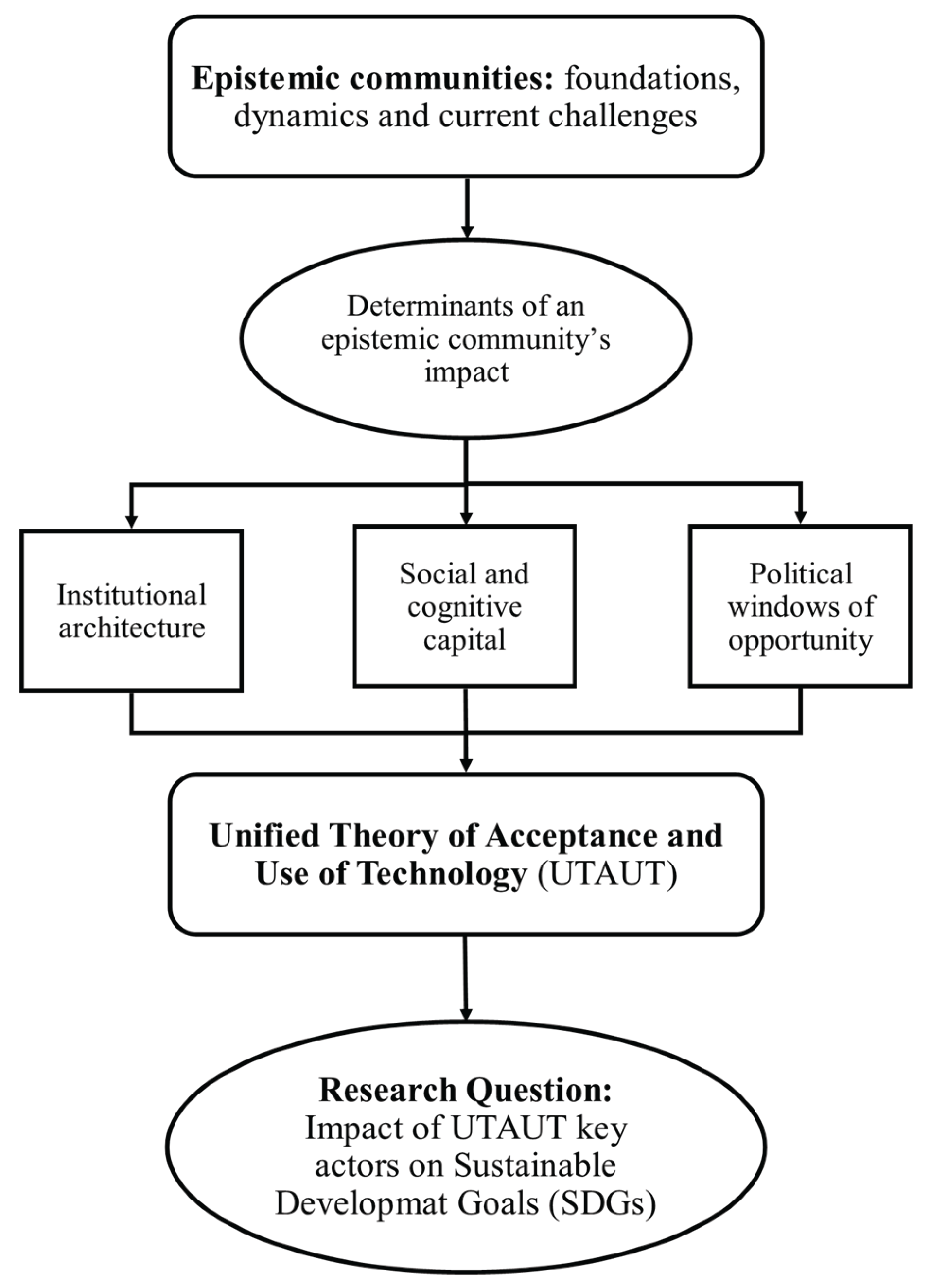
Figure 2.
Annual Scientific Production.
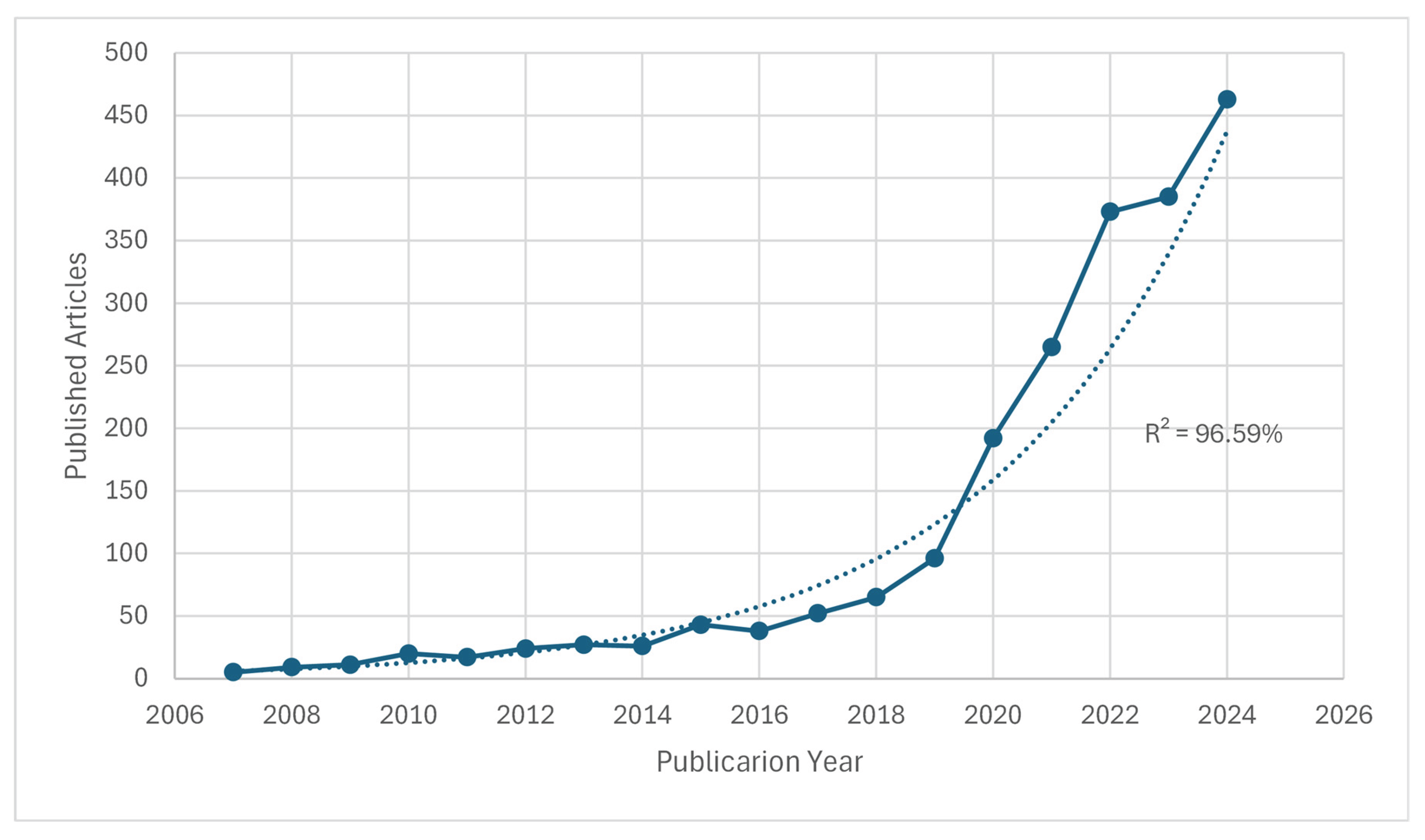
Figure 3.
Number of Authors per Published Articles.
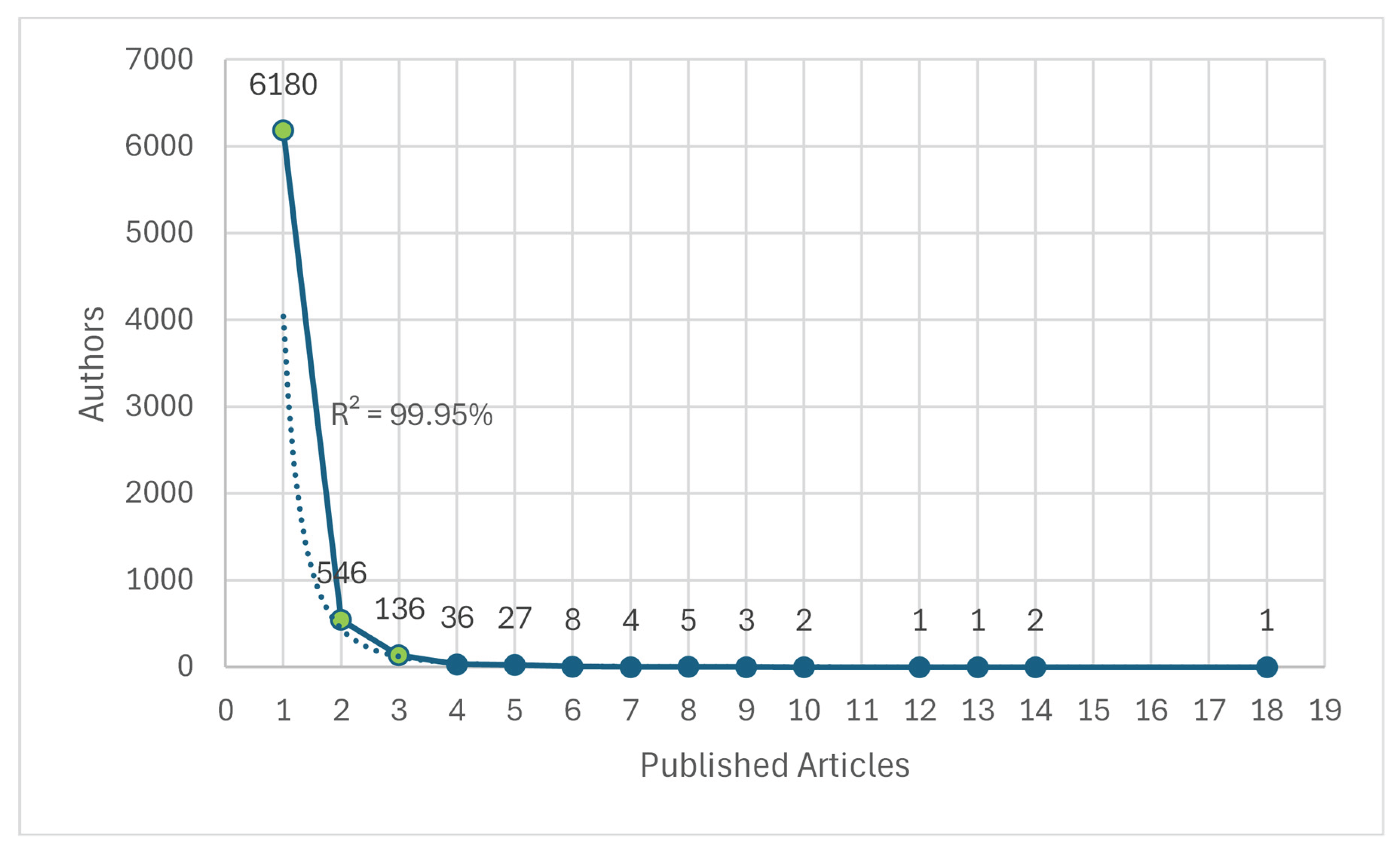
Figure 4.
Times Cited per Published Articles.
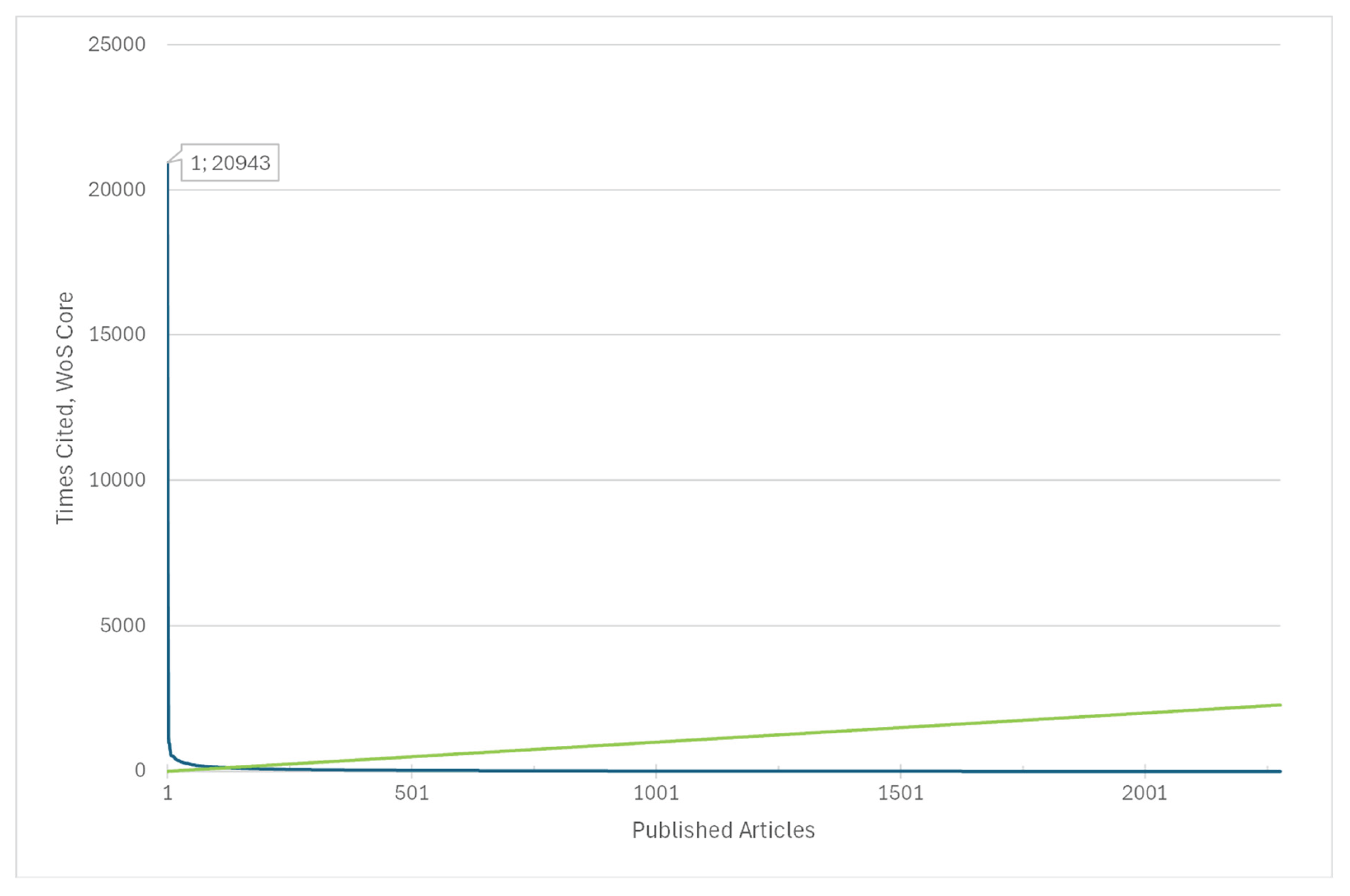
Figure 5.
Keywords Plus per Published Articles.
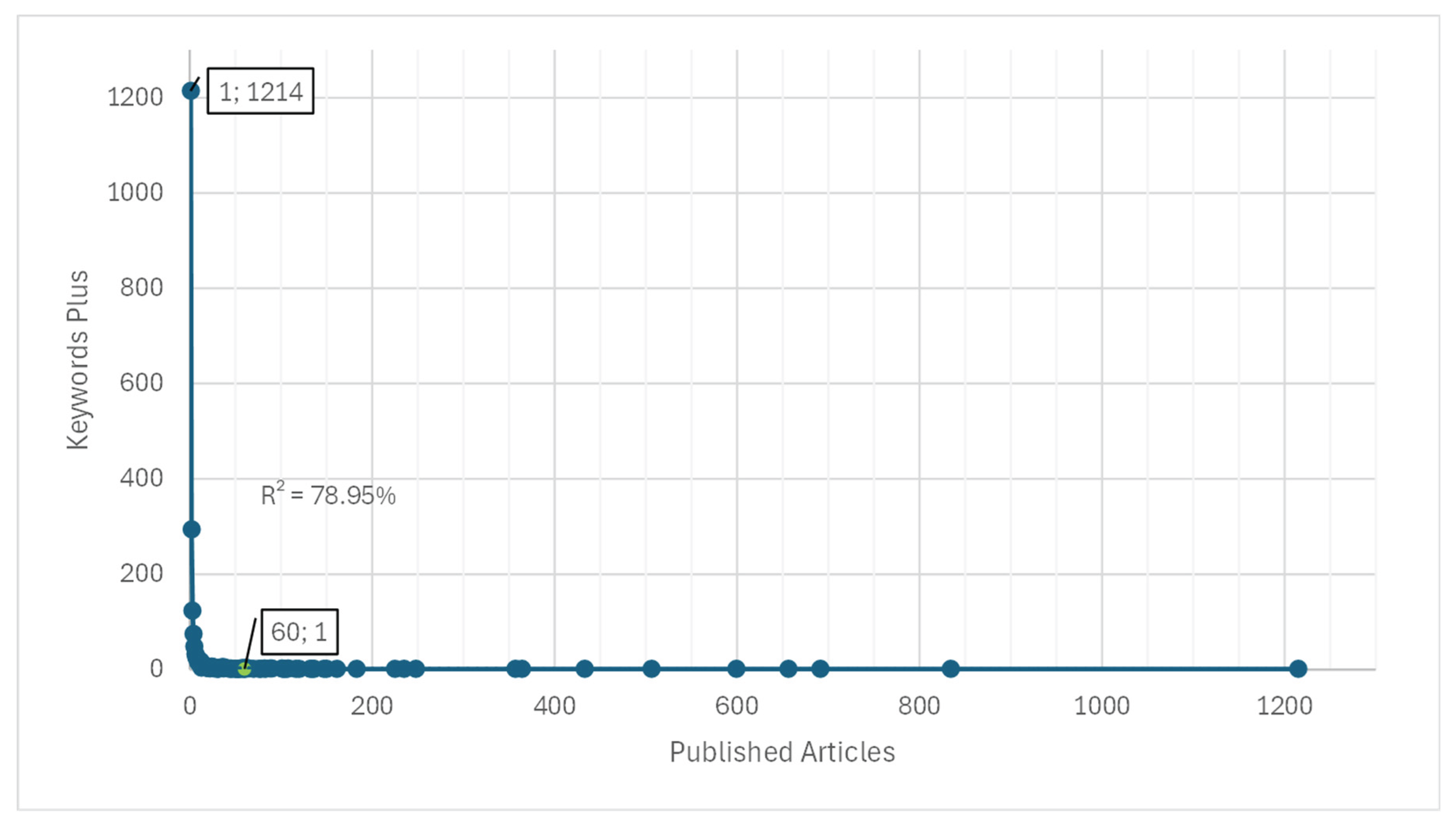
Figure 6.
A. Thematical graph. B. Temporal thematic graph.
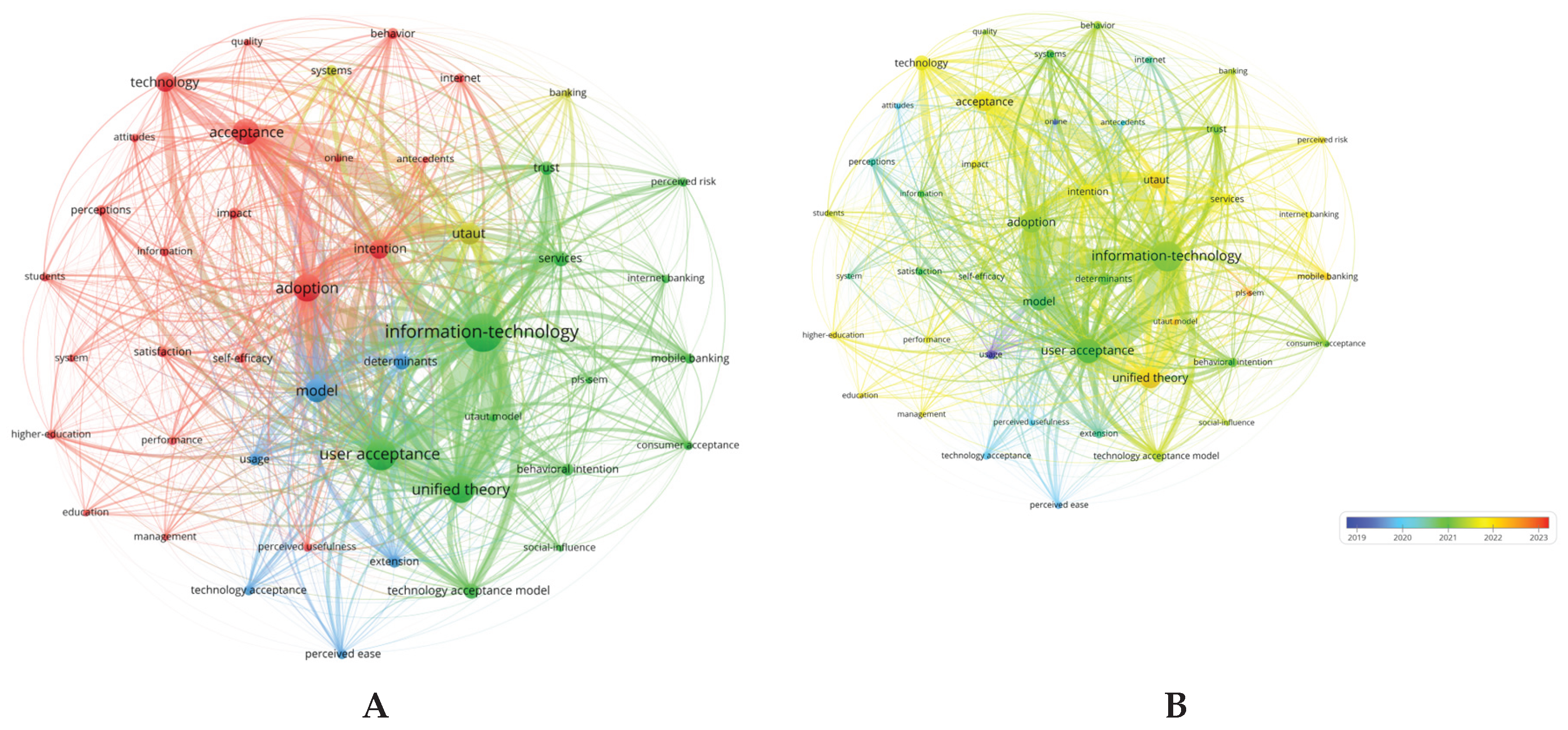
Figure 7.
Impact of 2278 selected articles on SDGs.
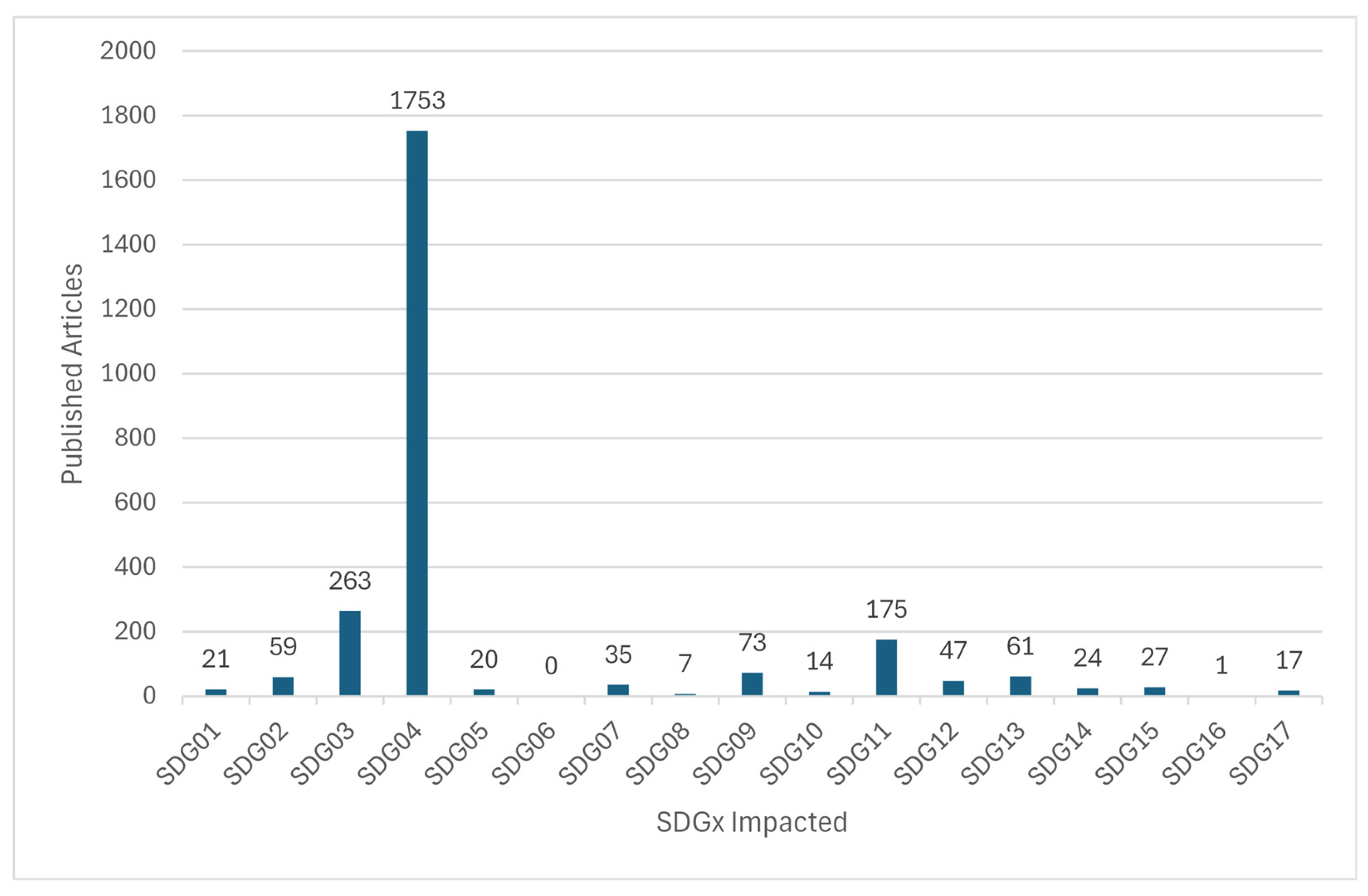
Figure 8.
A. Temporal co-authorship graph. B. Citation co-authorship graph.
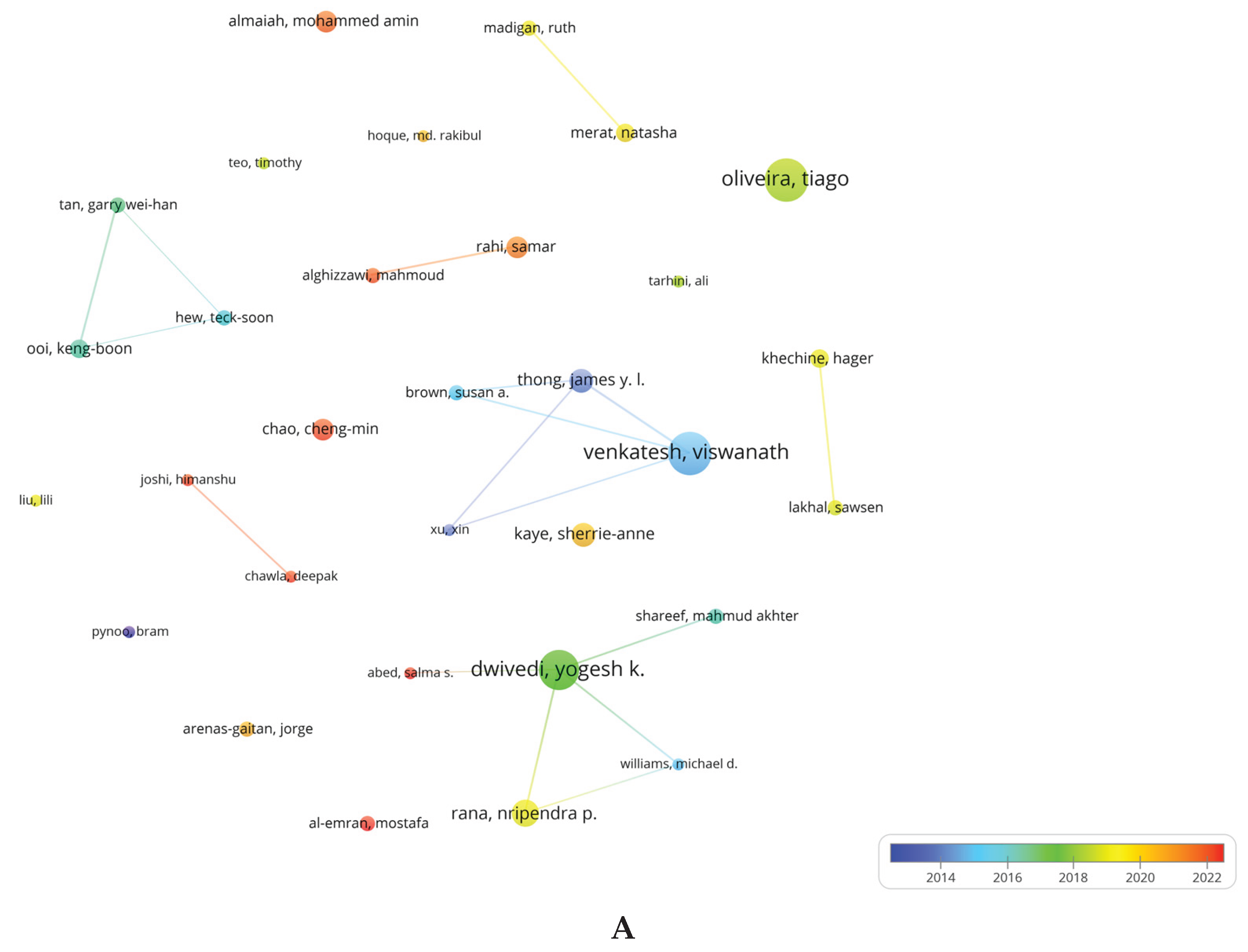
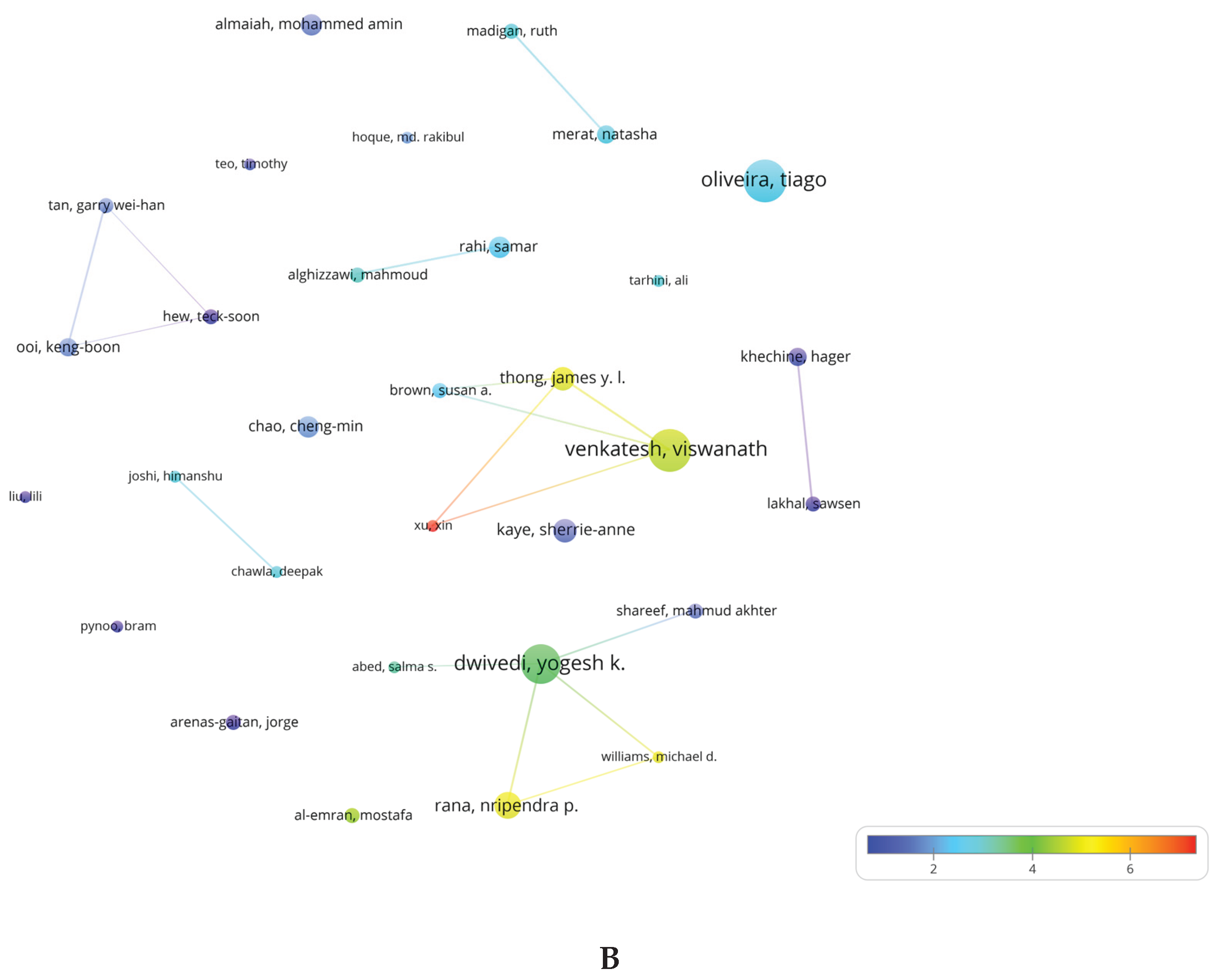
Figure 9.
Cross-citation graph.
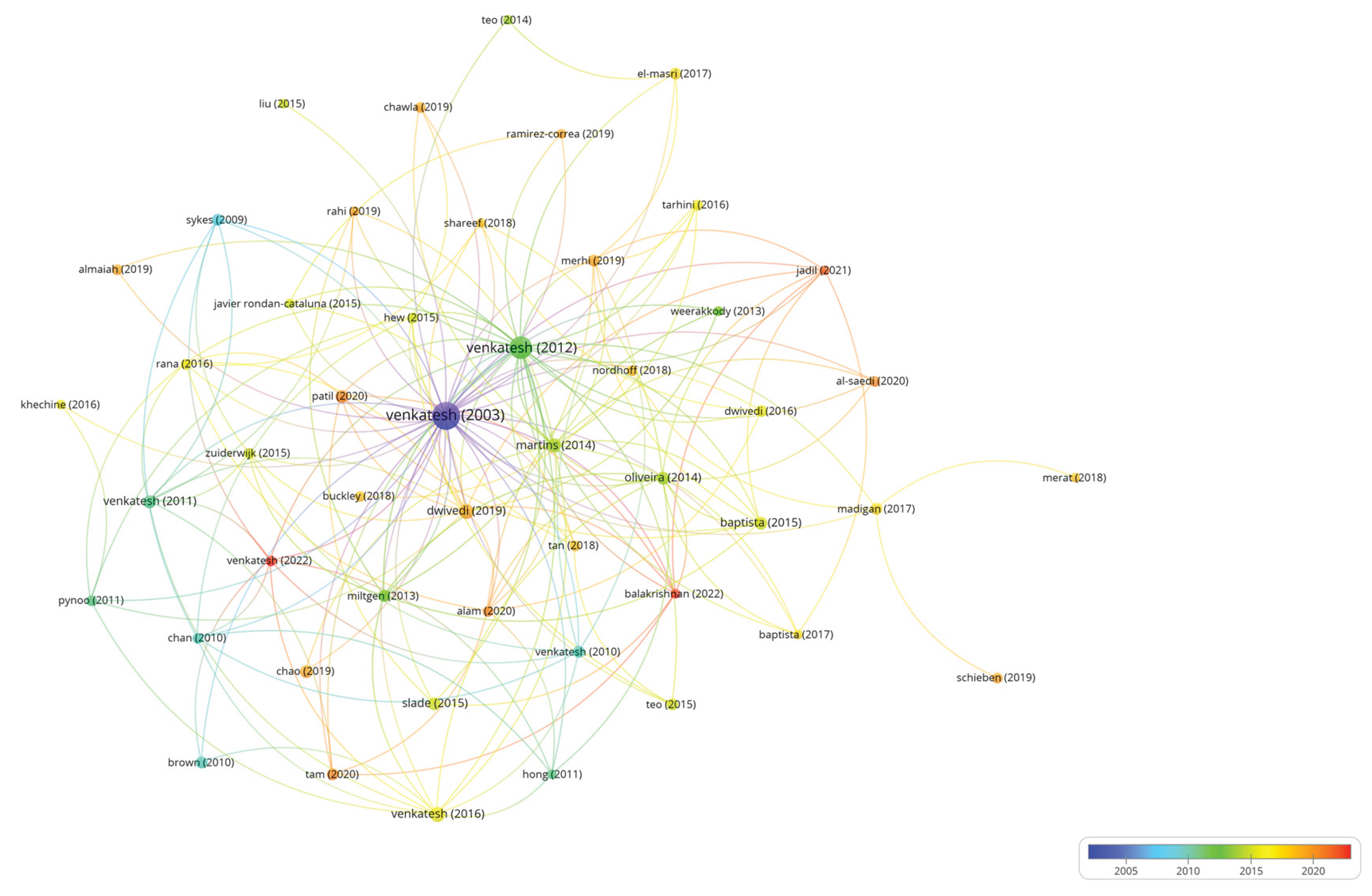
Table 2.
Characterization of 31 UTAUT key actors.
| Author Full Names | Initial Year |
Final Year |
Contemporaneus | Research Age |
Articles | Articles / Year |
Times Cited, WoSCC |
Citations / Articles |
h-index Articles |
OKWP Articles |
SDGx | SDGx Articles |
|---|---|---|---|---|---|---|---|---|---|---|---|---|
|
2003 | 2025 | Yes | 22 | 14 | 0.6 | 31676 | 2263 | 9 | 8 | SDG04 | 13 |
|
2013 | 2024 | Yes | 11 | 14 | 1.3 | 2841 | 203 | 6 | 6 | SDG04 | 13 |
|
2010 | 2022 | Yes | 12 | 13 | 1.1 | 3019 | 232 | 8 | 8 | SDG04 | 13 |
|
2010 | 2023 | Yes | 13 | 9 | 0.7 | 1971 | 219 | 4 | 4 | SDG04 | 9 |
|
2010 | 2025 | Yes | 15 | 8 | 0.5 | 9529 | 1191 | 5 | 5 | SDG04 | 8 |
|
2018 | 2023 | Yes | 5 | 8 | 1.6 | 475 | 59 | 1 | 1 | SDG11 | 8 |
|
2019 | 2024 | Yes | 5 | 7 | 1.4 | 430 | 61 | 1 | 1 | SDG04 | 7 |
|
2019 | 2024 | Yes | 5 | 7 | 1.4 | 576 | 82 | 1 | 1 | SDG04 | 7 |
|
2019 | 2024 | Yes | 5 | 7 | 1.4 | 460 | 66 | 1 | 1 | SDG04 | 7 |
|
2017 | 2024 | Yes | 7 | 6 | 0.9 | 858 | 143 | 4 | 4 | SDG11 | 6 |
|
2015 | 2021 | No | 6 | 6 | 1.0 | 939 | 157 | 3 | 3 | SDG04 | 6 |
|
2013 | 2023 | Yes | 10 | 6 | 0.6 | 357 | 60 | 1 | 1 | SDG04 | 6 |
|
2017 | 2024 | Yes | 7 | 5 | 0.7 | 824 | 165 | 4 | 4 | SDG11 | 5 |
|
2010 | 2025 | Yes | 15 | 5 | 0.3 | 1165 | 233 | 3 | 3 | SDG04 | 5 |
|
2013 | 2018 | No | 5 | 5 | 1.0 | 707 | 141 | 3 | 3 | SDG04 | 5 |
|
2015 | 2025 | Yes | 10 | 5 | 0.5 | 311 | 62 | 2 | 2 | SDG04 | 4 |
|
2015 | 2021 | No | 6 | 5 | 0.8 | 697 | 139 | 2 | 2 | SDG04 | 5 |
|
2020 | 2023 | Yes | 3 | 5 | 1.7 | 426 | 85 | 1 | 1 | SDG04 | 5 |
|
2019 | 2024 | Yes | 5 | 5 | 1.0 | 363 | 73 | 1 | 1 | SDG04 | 5 |
|
2015 | 2017 | No | 2 | 5 | 2.5 | 520 | 104 | 1 | 1 | SDG04 | 5 |
|
2013 | 2023 | Yes | 10 | 5 | 0.5 | 273 | 55 | 1 | 1 | SDG04 | 5 |
|
2016 | 2021 | No | 5 | 4 | 0.8 | 821 | 205 | 3 | 3 | SDG04 | 4 |
|
2010 | 2019 | No | 9 | 4 | 0.4 | 1690 | 423 | 3 | 3 | SDG04 | 4 |
|
2011 | 2017 | No | 6 | 4 | 0.7 | 8623 | 2156 | 2 | 2 | SDG04 | 4 |
|
2021 | 2024 | Yes | 3 | 4 | 1.3 | 254 | 64 | 1 | 1 | SDG04 | 4 |
|
2019 | 2024 | Yes | 5 | 4 | 0.8 | 285 | 71 | 1 | 1 | SDG04 | 4 |
|
2018 | 2025 | Yes | 7 | 4 | 0.6 | 312 | 78 | 1 | 1 | SDG04 | 4 |
|
2019 | 2024 | Yes | 5 | 4 | 0.8 | 285 | 71 | 1 | 1 | SDG04 | 4 |
|
2015 | 2022 | Yes | 7 | 4 | 0.6 | 166 | 42 | 1 | 1 | SDG04 | 3 |
|
2010 | 2019 | No | 9 | 4 | 0.4 | 338 | 85 | 1 | 1 | SDG04 | 3 |
|
2013 | 2024 | Yes | 11 | 4 | 0.4 | 231 | 58 | 1 | 1 | SDG04 | 4 |
Disclaimer/Publisher’s Note: The statements, opinions and data contained in all publications are solely those of the individual author(s) and contributor(s) and not of MDPI and/or the editor(s). MDPI and/or the editor(s) disclaim responsibility for any injury to people or property resulting from any ideas, methods, instructions or products referred to in the content. |
© 2025 by the authors. Licensee MDPI, Basel, Switzerland. This article is an open access article distributed under the terms and conditions of the Creative Commons Attribution (CC BY) license (http://creativecommons.org/licenses/by/4.0/).
Copyright: This open access article is published under a Creative Commons CC BY 4.0 license, which permit the free download, distribution, and reuse, provided that the author and preprint are cited in any reuse.


