

Submitted:
18 July 2025
Posted:
22 July 2025
You are already at the latest version
Abstract
Precise control and monitoring systems are essential for efficient energy consumption in food dehydration. This study develops an applied cyber-physical control system to optimize food dehydration in rotary dryers, integrating fuzzy control algorithms through data acquisition. The system architecture utilizes DHT22 transducers for temperature monitoring, a DHT11 for humidity measurement, an IP65 anemometer for dryer wind speed detection, and a load cell weight tracking system, all connected to an Arduino Mega 2560 R3 microcontroller implementing the integrated fuzzy logic library. Experimental evaluations were performed with different carrot loads (1.5, 2.5, and 3.5 kg), demonstrating optimal performance at the initial load of 3.5 kg with an energy consumption of 11,589 kJ for 9.33 hours, achieving a final moisture reduction of 10%. The 1.5 kg sample showed optimal dehydration kinetics at an average dryer hot air velocity of 1.5 m/s, while maximum efficiency (86%) was achieved with the 3.5 kg load, compared to 30% and 17% for the smaller batches. These results validate the integration of cyber-physical systems to optimize the dehydration rate (0.301 kg/h), thereby ensuring product quality in agro-industrial drying applications.

Keywords:
cyber-physical system
; DHT22
; DHT11
; IP65 anemometer
; Arduino Mega 2560 R3
; fuzzy control
; rotary dryer
1. Introduction
Food dehydration is one of the oldest preservation techniques that plays a fundamental role today, especially given the growing global interest in achieving greater energy sustainability and reducing post-harvest losses. Drying processes are not only applied to improve the quality and extend the shelf life of agricultural products, but also to optimize energy consumption, thus responding to environmental challenges. Although significant technological advances have been made in this area, significant gaps persist between traditional methods and new technologies in terms of efficiency, quality control, and sustainability. This situation highlights the importance of developing innovative solutions that incorporate innovative control and monitoring technologies, capable of effectively transforming industrial dehydration processes.
Efficient energy use and precise control are essential for optimizing food dehydration processes, especially in the food industry. These processes aim to preserve nutritional and sensory properties while reducing energy consumption [1]. Food dehydration and preservation are part of a process whose greatest impact is the removal of moisture content from products, through the implementation of solar and electric food dehydrators. Conventional food drying methods have been widely used, but their energy efficiency can vary considerably, up to 50% or more, depending on the operating conditions and the technical design used [2].
Current advances in food processing have highlighted the critical role of incorporating intelligent control systems along with real-time monitoring to increase the efficiency of the drying process. Specifically, the biochemical and physicochemical properties of food, dehydration, require continuous monitoring to ensure final product quality [3,4].
Factors such as the distribution of drying thermal energy, the speed of the dryer's hot air, and dehydration time are elements that affect both the nutrient retention and microbiological safety of dehydrated foods [4]. Furthermore, creative modeling methods, such as predictions using machine learning techniques and drying kinetics analysis, have proven to be efficient tools for optimizing industrial dryer parameters, achieving precise control over volume reduction and moisture content [1,5].
Solar drying is primarily limited to areas receiving high solar radiation. Several studies have shown that the use of parabolic solar dryers allows for the preservation of fruits such as pitahaya and pineapple, maintaining their sensory properties [5]. Furthermore, the type of drying method used has been observed to significantly influence the functional properties of fruit powders, as documented in research using guava pulp [6].
However, the application of heat-free dehydration techniques, combined with vacuum microwave drying, has led to advances in mass transfer and the preservation of sensitive bioactive compounds [7].
In recent years, the application of physical simulations and Monte Carlo methods to optimize carrot drying processes has gained relevance. This has resulted in significant advances in thermal energy allocation and reduction of dehydration times [8]. Furthermore, the use of machine learning algorithms, such as decision trees, random forest, and AdaBoost, has made it possible to accurately predict dehydration kinetics and energy consumption in temperature-controlled microwave drying [9]. In the case of products such as lucuma powder, the application of mathematical modeling and artificial intelligence techniques has facilitated the effective characterization of microstructural properties during the foam dehydration process [10].
Among the most recent technological advances are new dehydrator models, such as the fountain bed dryer. This equipment, thanks to its predictive systems, optimizes the efficiency of the dehydration process within modern fluidized bed systems [11]. Furthermore, the addition of thermal energy storage in indirect solar dehydrators has proven to be very effective, especially in the drying of red chili peppers. This allows dehydration to remain continuous and stable, even with changes in sunlight intensity [12].
In the technological field of indirect solar dehydrators, innovative systems have emerged that use the Internet of Things (IoT) to monitor variables in the moisture removal process in real time. This allows the potato dehydration process to be improved according to the thickness of the slices in the dryer [13].
Analyzing the performance of solar chambers for dewatering apples, it has been concluded that both chamber design and control of internal conditions are determining factors in increasing drying speed [14].
The integration of various sensors in dehydration processes that use far-infrared radiation and hot air, as is the case in ginger dehydration, is essential for achieving precise control of crucial variables such as temperature, humidity, and water content in the product [15]. Optimizing these aspects not only improves food quality but also promotes more efficient energy use. These advances project the current application of digitalization and automation in dehydration processes, highlighting the importance of incorporating technologies to achieve more sustainable and efficient agro-industrial production.
The development of technologies such as IoT has completely transformed the way we optimize agricultural drying processes. With the implementation of real-time monitoring systems, we have been able to improve not only energy efficiency but also the quality of the dehydrated product [16].
These innovations are very important in the design of solar forced convection dehydration systems, which leverage renewable sources to mitigate the environmental impact of the moisture removal process. Dehydration methods have been shown to be significantly related to the sensory properties of agricultural products such as coffee. This highlights the importance of selecting appropriate methods to preserve quality after harvest [17]. The relevance of this consideration increases even further when applying control and monitoring technologies to other foods, such as carrots, where maintaining their organoleptic properties is essential.
In control methods for dehydration processes, current studies have proposed the integration of Proportional-Integral (PI) control with fuzzy logic. This combination has improved stability and efficiency in rotary dryers, demonstrating significant advances in the precision of thermal variable control [18]. Furthermore, the application of sensing systems that incorporate signal conditioning and fuzzy systems in these dryers has enabled optimal data acquisition. This leads to more efficient and adaptive decision-making, both directly and in real time, resulting in higher operational efficiency [19].
The implementation of artificial neural networks to predict drying process parameters, such as dehydration time, energy consumption, and exergy efficiency, is relevant in the process of removing moisture from corn grains using convective-infrared rotary dryers [20]. This advancement has a significant impact on predictive modeling of dehydration processes in the field of food preservation.
A key element in the performance of rotary drum dryers is the maintenance and durability of their components, especially the internal sensors. The lifespan of these components can be estimated through experimental data, which facilitates preventive maintenance planning and ensures operational continuity [21].
The final result of dehydrated agricultural products is directly related to the drying method implemented. For Arara Arabica coffee, different dehydration techniques have been found to affect both the physical properties and sensory characteristics of the product. This highlights the crucial role of accurately instrumenting and controlling conditions during the process [22]. Furthermore, current studies have proposed approaches to accurately measure the overall heat transfer coefficient in rotary drum dehydrators. These data are essential for thermal energy optimization and the industrial expansion of these devices [23]. These research advances in thermal modeling are highly relevant for designing more innovative systems.
Research into dehydration methods has evolved toward the implementation of pretreatments such as osmotic impregnation, edible coatings, and the use of reduced pressures. These techniques have shown significant improvements in the physical and functional properties of carrots dehydrated using microwave and vacuum technologies, significantly minimizing structural damage [24]. These innovations open up new opportunities for adding pretreatments to rotary dryers, tailoring them to specific drying conditions.
Furthermore, the modification of carrot cell walls with pectin, influenced by ultrasound and infrared treatments, has demonstrated new texture formation mechanisms that are crucial for the quality of the dehydrated product. This helps strengthen multivariate control of moisture and temperature parameters in dehydration. This is especially relevant when seeking to optimize both the sensory and structural properties of low-moisture food [25].
The application of drying conditions at controlled temperatures has been shown to have a significant impact on the drying rate and key parameters of carrot. This highlights the importance of adjusting method conditions to increase the preservation of bioactive compounds [26]. This research is essential for developing strategies that allow for the sustainable use of agricultural waste through drying processes.
Although significant progress has been made in the implementation of various technologies in drying processes, the implementation of integrated cyber-physical systems with adaptive fuzzy control remains an emerging field. This technology offers significant opportunities for optimizing energy and the quality of dehydrated products.
This study focuses on the development and evaluation of a cyber-physical system that implements adaptive fuzzy control. This system aims to implement direct, real-time multivariate monitoring of temperature, humidity, dryer wind speed, and mass loss during the carrot dehydration process in a rotary dryer. Additionally, it is proposed that the use of sensors integrated into a microcontroller will allow for more precise automatic adjustments, optimizing drying conditions in the face of environmental variations. It is expected to validate that the intelligent control system can reduce the specific energy consumption of the process, improve the thermal stability of the dryer, and maintain the organoleptic properties of dehydrated product. In this way, the goal is to promote drying approaches in the agricultural sector aimed at optimizing resources, developing and implementing dehydration practices based on sustainability, energy efficiency and operational artificial intelligence.
2. Materials and Methods
The experimental trials were carried out at the Agroindustrial Processes Laboratory of the National Institute of Technology of Mexico in Celaya, Guanajuato, from January 2024 to February 2025. Locally sourced carrots (Daucus carota L.) were selected at their optimum state of commercial ripeness and with an initial water content close to 90% on a wet basis. Before each trial, the samples were stored under refrigeration at 4 ± 1 °C to ensure their microbiological stability. They were subsequently dehydrated using a rotary dryer with an adaptive fuzzy control system. This system allows real-time monitoring and regulation of the water removal process, continuously analyzing critical variables such as temperature, relative humidity during the drying process, and sample mass loss. The integration of these parameters into the system design seeks to maximize the energy efficiency of the process while maintaining optimal operating conditions to preserve the quality of the final product [27].
2.1. Design and operational characteristics of the drying system applied in carrot dehydration.
The dehydration system implemented in this study consists of a cylindrical rotary dryer, 0.35 m long and with an internal diameter of 0.30 m. The drum is coupled to a direct current motor that allows it to rotate at a constant speed of 1.5 revolutions per minute. This uniform rotation promotes even distribution of heat and airflow over the product surface, achieving uniform dehydration on the product surfaces and producing internal laminar flow in the dryer.
The drying chamber uses a 1 kW electric resistance, located at the bottom of the system, to generate heat by forced convection. The heat intensity is regulated by a pulse-width modulator (PWM), allowing the operating temperature to be controlled within an adjustable range of 50°C to 75°C, depending on the type of food and the specific process conditions. For the generation and circulation of the hot air flow, a 200 W centrifugal fan with variable flow rate, adjustable between 0.5 and 2.0 m/s, is used, which produces efficient heat exchange without generating turbulence.
The design of this moisture removal unit is based on recent studies on rotary dryers applied to agri-food products, which have proven effective in improving the thermal stability of the process and preserving the physicochemical properties of vegetables such as carrots [28,29,30]. The developed system integrates a cyber-physical environment by incorporating distributed sensors, enabling real-time multivariate monitoring. This advanced instrumentation facilitates the implementation of adaptive control based on fuzzy logic, as shown in Figure 1.
2.2. Preparation of carrot samples and experimental drying conditions.
In the development of the experimental phase of the study, fresh carrots with high water content, selected for their uniformity in size, were used. The roots were washed with potable water to remove residues and impurities. Subsequently, the carrots were peeled and cut into uniform slices with a thickness of 5 ± 0.2 mm, obtaining samples with an average major diameter of 3.7 cm and a minor diameter of 2.2 cm. The samples were weighed before each experiment and distributed in the drum of the rotary dryer. Three working loads (1.5 kg, 2.5 kg and 3.5 kg) were evaluated, maintaining average operating conditions: drying temperature of 75 ° C and average air flow velocity of 1.5 m / s, applying optimal parameters described in the literature for this type of process [31,32].
2.3. Cyber-physical monitoring and control system applied to carrot dehydration
The cyber-physical system was designed to monitor the main variables of the dehydration process in real time using high-precision sensors. DHT22 and DHT11 transducers were used to monitor drying temperature and relative humidity, respectively. Air flow velocity was recorded using an IP65 anemometer, while sample mass loss was measured using load cells connected to the data acquisition card. The analog signals from the sensors were conditioned and digitized using an Arduino Mega 2560 R3 unit, which eliminated electrical noise and improved the stability of the readings, ensuring reliable data for subsequent thermal efficiency analyses and process modeling.
The control system architecture utilized the Arduino Mega 2560 R3 open hardware platform, selected for its compatibility with multiple sensors and its processing capacity for real-time applications. Drying control was managed by an integrated fuzzy logic algorithm programmed in C++, utilizing the specialized artificial intelligence library. This automation scheme allowed for dynamic regulation of process conditions based on monitored variables, following a continuous decision-making logic. The controller structure was designed to respond to temperature fluctuations, changes in air velocity, and variations in product mass, replicating strategies employed in intelligent dehydration systems reported in recent literature [33,34,35].
The experimental trials were carried out with three different carrot loads (1.5, 2.5, and 3.5 kg), with three replicates for each condition. The previously prepared samples were placed in the drum of the rotary dryer, and the heating element and ventilation system. From that point, continuous recording of temperature, relative humidity, air velocity, and product mass began, continuing until a moisture content of ≤10% on a wet basis was reached. Once the process was complete and the drum had cooled, the final mass of the samples and the specific energy consumption were determined, following a process used in previous studies with products with similar characteristics, as shown in Figure 2.
2.4. Dryer Design and implementation of adaptive fuzzy control in Arduino.
To optimize the dehydration process through the application of intelligent control, an adaptive fuzzy control system was developed using Mamdani logic and programmed on an Arduino Mega 2560 R3 open hardware platform. This controller was designed to integrate real-time data from temperature, humidity, and airflow velocity sensors to dynamically regulate the heating system's resistance power. The adaptive control architecture enabled an efficient response to varying conditions, ensuring uniform product drying, as shown in Figure 3 [36].
2.4.1. Mamdani-type fuzzy logic model.
The Mamdani model was selected for its wide acceptance in industrial applications and its high capacity to represent expert knowledge through "If-Then" rules. This approach facilitates the implementation of control systems in environments with high uncertainty or nonlinearities, such as thermal processes in food dehydration. The model is structured in four phases: (1) fuzzification, which converts crisp values (temperature, humidity and wind speed) into degrees of membership in linguistic sets; (2) rule evaluation, where logical inferences based on minimum and maximum operators are applied; (3) aggregation of results from all activated rules; and (4) defuzzification, which translates the fuzzy results into a concrete numerical output using the centroid method, thus generating the PWM value that regulates the thermal power applied to the dryer resistance [37,38].
2.4.2. Definition of linguistic variables and fuzzy sets.
Three input variables were established: air temperature (20–85°C), indoor relative humidity (10–90%), and airflow velocity (0–3 m/s). The output variable was the heating power expressed as a percentage of pulse-width modulation within an operating range of 0–100%. Each variable was defined using three fuzzy sets (low, medium, and high), modeled with triangular membership functions. This formulation allowed for a more accurate representation of the uncertainty associated with sensor measurements and ensured smooth transitions between language levels.
Temperature was categorized as low (20–40°C), medium (35–65°C), and high (60–85°C). Relative humidity was classified into similar ranges: low (10–30%), medium (25–60%), and high (55–90%). Wind speed was segmented into low (0.0–0.8 m/s), medium (0.6–1.8 m/s), and high (1.6–3.0 m/s). Finally, PWM output power was defined with low (0–40%), medium (35–70%), and high (65–100%) settings [39].
2.4.3. Implementing the control system in Arduino with eFLL.
The fuzzy control algorithm was programmed on an Arduino Mega 2560 R3 using the eFLL (Embedded Fuzzy Logic Library), optimized for embedded systems. This library facilitates the definition of inputs, outputs, membership functions, and inference rules in a structured manner. The system was configured with three fuzzy inputs (temperature, humidity, and wind speed) and one fuzzy output (PWM power), using a total of 27 rules designed based on experimental knowledge of the rotary drying process [40].
The controller logic was structured through rule combinations using AND logical operators. These rules represented all possible scenarios among the three input variables (3 × 3 × 3), allowing the system to respond accurately to any condition in the drying process. For example, one rule was: "IF the temperature is high AND the humidity is low AND the wind speed is low, THEN the output power is high, as shown in Figure 4.
2.4.4. Fuzzy system rule base
The set of 27 rules was coded directly in Arduino using structures from the eFLL library. A representative example of these rules is shown below: when temperature and humidity are low, and the air speed is also low, the power is adjusted to a medium level (R1); conversely, if humidity is high and the wind speed is low, the power is increased to a high level (R7). This logic seeks to maximize heat transfer in conditions where moisture evaporation is slower, thus ensuring efficient dehydration. The rules were experimentally validated by observing the thermal behavior and response of the system [41].
2.4.5. Real-time control cycle: inference and defuzzification
After evaluating the rules using Arduino's Mamdani-type fuzzy inference system, the system proceeds to the aggregation phase, in which all the partial outputs generated by the rules are combined. This aggregation is performed using the maximum union operation (max), allowing the conditions of multiple rules to be applied to a single output membership function. The result is a composite fuzzy function that represents the cumulative degree of membership for each possible level of the variable, in this case, the heating power. The defuzzification phase is then applied, the objective of which is to transform the fuzzy representation into a crisp value that can be interpreted and executed by the physical system [42,43]. To do this, the centroid method (center of area) is used, due to its efficiency between computational precision and dynamic stability. This method, implemented by the fuzzy library application in Arduino, produces a single numerical value that represents the optimal performance level of the system. This value is converted into a PWM signal, precisely regulating the power supplied to the rotary dryer's electrical resistance. This continuous and adaptive control mechanism allows for maintaining stable thermal conditions, as shown in Figure 5.
2.4.6. Advantages of the Mamdani approach in dehydration processes
The Mamdani-type fuzzy control approach implemented in this work offers multiple advantages for dehydration processes: it offers high flexibility in the face of thermal and environmental variability; it is robust to the noise inherent in low-cost sensors; and it allows for empirical adjustments based on operator experience without the need for complex mathematical models. Furthermore, its scalable structure facilitates the future integration of new variables such as drying time and mass loss, consolidating its applicability in real-world production environments [44,45,46]
2.5. Evaluation of dehydration kinetics
During the experimental development, variables in the rotary dryer were monitored, with the objective of characterizing the drying kinetics in the dehydration process. The monitored parameters included the thermal energy distribution of the system, the total drying operation time, as well as the mass of the carrot samples in their dehydration process. From these data, energy and mass balance mathematical models were applied to calculate fundamental parameters such as the energy required for moisture removal, heat transfer between the hot air flow and the product surface, dehydration rate, and the efficiency of the drying process. This kinetic evaluation provides a solid basis for validating the proposed cyber-physical system and its applicability in the dehydration of vegetable products [43,47].
The energy consumed during the moisture removal process, HD (kJ), is calculated using equation (1).
The variable (kJ) represents the amount of energy required to increase the temperature of the water contained in the carrot until it reaches its boiling point. (kJ) corresponds to the latent heat required to induce the phase change from liquid water to vapor. The total value of thermal energy transferred in the process, represented as QT (kJ), integrates the two components mentioned above and constitutes a key magnitude for the analysis of the efficiency of the drying process [48].
In the energy analysis of the dehydration process, several thermodynamic properties of the system are considered. The parameter (kJ/kg°C) represents the specific heat of the carrot, while (°C) and (°C) correspond to the temperature of the product and the surrounding environment, respectively. The term (kJ/kg) refers to the latent heat of vaporization of water. The variables and (kg) indicate, respectively, the initial mass of the carrot, and the mass of evaporated water.
Based on these parameters, the total amount of thermal energy supplied by the hot air flow to the product during the drying process is calculated using equation (4) [49].
In the evaluation of system performance, air density (kg/m³) represents a fundamental variable, since it directly influences the air's capacity to transfer heat to the product. The parameter (kJ/kg°C) corresponds to the specific heat of air, the amount of energy required to increase its temperature by one unit per kilogram. The temperatures and (°C) indicate, respectively, the air temperatures at the inlet and outlet of the dryer, essential parameters for estimating the thermal gradient in heat transfer.
The total air volume implemented in the drying process, denoted as (m³), is determined by equation (5). (m/s) represents the air flow velocity generated by the fan, (m²) is the cross-sectional area of the ventilation system, and (s) corresponds to the total operating time of the process. This relationship allows calculating the efficient air volume in the transfer of energy to the material, a key parameter to estimate the thermal performance of the rotary dryer [43,50,51].
The moisture content of carrots is determined by continuously heating the samples until a constant mass is reached. The absence of variation in the product weight indicates the complete elimination of water. The moisture content (% wet basis) was calculated from the ratio of the initial mass of the product to its final dry mass (kg) [52].
The dehydration rate, represented as (kg/h), is calculated as the ratio between the mass of water evaporated during the process (kg) and the total drying time (h). This parameter is an indicator to evaluate the performance of the drying process, since it quantifies the amount of water removed per unit of time in the carrot. Throughout the process, this rate tends to progressively decrease as the moisture content approaches equilibrium, which directly influences the drying kinetics and the thermal efficiency of the system. The accurate measurement of this variable is important to establish control strategies that allow optimizing the operating conditions of the dryer [53].
The thermal efficiency of the dehydration process, (%), is determined from the ratio of the energy actually used to remove moisture from the product (kJ) to the total energy supplied to the system through the hot air flow (kJ). This indicator reflects the system's ability to transform the supplied energy into useful evaporation work, thus evaluating the degree of heat utilization in the system. Higher efficiency results in a higher proportion of the energy transferred directly to water removal, which minimizes thermal losses and improves operating efficiency. Variables such as air temperature, air velocity, product drying time, as well as the specific thermal properties of the food influence this parameter. Optimizing efficiency not only reduces the energy consumption of the process, but also favors the preservation of the nutritional and sensory characteristics of the final product, contributing to a more sustainable and efficient dehydration process [53,54].
3. Results and discussion
3.1. Evaluation of carrot dehydration kinetics.
This section analyzes the dynamics of moisture loss in fresh carrots during the dehydration process in a rotary dryer, which operates with a cyber-physical system implementing adaptive fuzzy control. Experimental tests were conducted using three different initial masses (1.5 kg, 2.5 kg, and 3.5 kg), maintaining an average temperature of 75°C and an average hot air velocity of 1.5 m/s. The instrumentation used DHT22 and DHT11 sensors, an IP65 anemometer, and load cells, all connected to an Arduino Mega 2560 R3 microcontroller, for real-time multivariate monitoring of the drying process.
At the start of each test, the internal temperature of the dryer was stabilized, and then the samples, previously weighed and evenly distributed, were introduced. The dough was continuously monitored by load cells connected to the data acquisition system, recording the progressive moisture loss until dehydration was reached. This behavior allowed drying curves to be established for each load tested.
The results showed a trend: the higher the initial load, the longer the total dehydration time, although with a significant improvement in the energy efficiency of the process. These results are consistent with recent studies that have shown that thermal efficiency and transfer capacity are optimized when working with product dough under controlled conditions [32,38,41].
Unlike traditional methods such as solar drying or convection drying without intelligent control, the system used in this study demonstrated an adaptive response capacity to variations in internal and external process conditions. This reduced the total operating time without compromising the quality of the final product, which has been supported by similar research incorporating fuzzy logic to improve energy consumption and the structural quality of dehydrated foods [29,36,40,44].
Figure 6 presents the evaluation of moisture loss as a function of time for each load evaluated. It is observed that the 1.5 kg load reached the final moisture content (10%) in an average time of 5.5 hours, while the 2.5 kg and 3.5 kg loads required 7.2 and 9.3 hours, respectively. This behavior is consistent with the principles of mass and heat transfer described in the literature, where the temperature gradient and the surface exposed to hot air are determining factors in the drying kinetics [31,35,45].
The implementation of fuzzy control allowed for the establishment of a dynamic balance between system parameters, optimizing process temperature based on internal humidity, hot air velocity, and monitoring of product residual weight. This confirms the findings of studies highlighting the potential of intelligent systems to adapt thermal processes in real time, reducing product dehydration time [28,30,50].
3.2. Analysis of temperature measurements during the dehydration process
The experimental tests performed with the cyber-physical system for thermal analysis were carried out through continuous, real-time monitoring of the internal temperature in the rotary dryer using DHT22 sensors. This monitoring allowed the identification of thermal behavior throughout the carrot drying process, with the goal of maintaining stable and adequate conditions for efficient moisture removal.
The adaptive fuzzy control system, programmed on the Arduino Mega 2560 R3 data acquisition board, processed the signals from the temperature sensors in real time, dynamically adjusting the system parameters based on thermal variations during the drying process. This adaptive capacity is essential to ensure uniform heat distribution and avoid temperature spikes that compromise the quality of the final product, as also suggested by recent studies on innovative food drying systems [28,30,39].
In tests with the initial masses of carrots, an average operating temperature of 75°C was observed, dropping to an average of 65°C at the product's drying point and stabilizing around 60°C at the end of the process, as shown in Figure 7. This temperature distribution coincides with thermal analyses reported on convective flow dryers [35], confirming that the system design and diffuse control allow for maintaining an adequate thermal gradient for efficient heat transfer without damaging the product structure.
Thermal fluctuations in the dehydration process are controlled by the diffuse system, which eliminates variations imposed by the dynamics of the hot air flow. Moderate temperature variations favor the preservation of bioactive compounds in plant products during drying [27,32]. The use of DHT22 digital sensors instead of analog sensors, such as the LM35, provides a significant advantage in terms of accuracy and stability of the readings, especially in environments with humidity and temperature variations such as those present inside the rotary dryer. This accuracy is essential to avoid errors in fuzzy logic, which directly depends on the quality of the input data [36,40].
During the dehydration process, there were no overheating or cooling zones, ensuring thermal efficiency. These results are consistent with similar research where multivariate monitoring was used to ensure uniformity in the drying of fruits and vegetables [29,31,45].
The thermal behavior of the system, monitored by DHT22 sensors and integrated into the fuzzy control system, provides stable and adaptive thermal conditions during the process. This cyber-physical integration, in addition to improving control over the temperature profile, represents a significant advance in the design of smart dryers for agro-industrial applications [33,44,52].
3.3. Analysis of the thermal energy used during the moisture removal process in carrots
Thermal energy consumption in the dehydration process in a rotary dryer depends on the system's ability to transfer heat through hot air to the product, especially in foods with high initial moisture content, such as carrots. The integration of an adaptive fuzzy control system and real-time multivariate monitoring allows for more precise management of the energy supplied, improving drying speed [28,36,44].
The thermal energy used during product drying is calculated using equation (1). Experimental tests showed that a 3.5 kg carrot load required a total of 1589 kJ per hour to reach a final moisture content of 10%, with an average drying time of 9.3 hours, as shown in Figure 8. This requirement is in line with studies that indicate a proportional increase in energy demand as the mass of the product to be dried increases, due to the higher water content that must evaporate and the reduction in the exposed surface [35,38].
In the case of the intermediate load of 2.5 kg, the system transferred approximately 1360 kJ over a drying period of 7.2 hours. This value was sufficient to achieve uniform dehydration without compromising the product's physical and chemical characteristics. This behavior is consistent with previous research where moderate loads demonstrated an efficient balance between energy consumption and final product quality [41,50].
The lowest load, 1.5 kg, was dehydrated to the optimal moisture level in 5.5 hours, with an estimated heat transfer of 1187 kJ. This reduction in time and energy required is associated with a lower internal resistance to heat flow and a higher area-to-volume ratio, which facilitates water evaporation in foods such as carrots [27,30,44].
The integration of the cyber-physical system with real-time multivariate monitoring capabilities facilitated a more precise energy supply, minimizing the occurrence of areas with insufficient drying, through the application of an adaptive fuzzy system. Several studies have shown that this type of intelligent control represents a significant advantage over traditional schemes such as PID or on-off control, by reducing thermal oscillation and improving drying uniformity [31,48,52].
3.4. Evaluation of Carrot Drying Rate Using a Cyber-Physical System
During experimental tests conducted with different carrot loads, a detailed analysis was performed of the drying rate, a fundamental parameter for evaluating the performance of the drying process based on the moisture content removed at each time interval. Determined using equation (7), this calculation allowed establishing a system performance parameter, demonstrating how the moisture removal rate varies over the operating time [53].
The evolution of this parameter showed a decreasing trend as low moisture levels were reached in the carrot. This behavior is consistent with drying kinetic models, where the initial constant-rate phase is replaced by a decreasing-rate phase as the free water content is depleted [33,46].
The data obtained during the tests showed that for the 1.5 kg load, an average dehydration rate of 0.218 kg/h was obtained, while for the 2.5 kg load it was 0.278 kg/h, and finally, for the 3.5 kg load, it reached a value of 0.301 kg/h, as shown in Figure 9. These results reflect an increasing trend in the drying rate with increasing load, which can be attributed to the higher water content in the product and the efficient regulation of the dryer's internal temperature. However, although the rate was higher for the 3.5 kg load, energy consumption also increased, which requires striking a balance between efficiency, energy consumption, and drying speed. Accurate measurement of this variable is key to establishing control strategies that optimize process operating conditions [30,33,53].
In compact dryers, the drying rate and efficiency can be maintained stable if thermal control responds in real time to product moisture loss [27,39]. In our study, this type of regulation was made possible by the fuzzy control system implemented, which continuously modified the levels of heat supplied based on humidity measurements, thereby improving the stability of the dehydration rate.
Analyzing the experimental results with theoretical models available in the literature, a similarity was found between the data obtained based on equation (7) and the actual mass data recorded by the load cells, validating the use of this parameter as an evaluation tool for establishing operating strategies in the drying process. This relationship between theory and practice is fundamental for future dehydration applications, where drying efficiency and speed represent critical variables for process viability [45,47].
Correct estimation of the dehydration rate through empirical equations and multivariate monitoring allowed not only to optimize operating times but also to ensure a homogeneously dehydrated product, avoiding areas with moisture retention. This characteristic represents a competitive advantage over traditional control methods, whose responses are often less accurate when faced with nonlinear system variations [36].
3.5. Evaluation of Drying Efficiency in the Rotary Dehydration Equipment
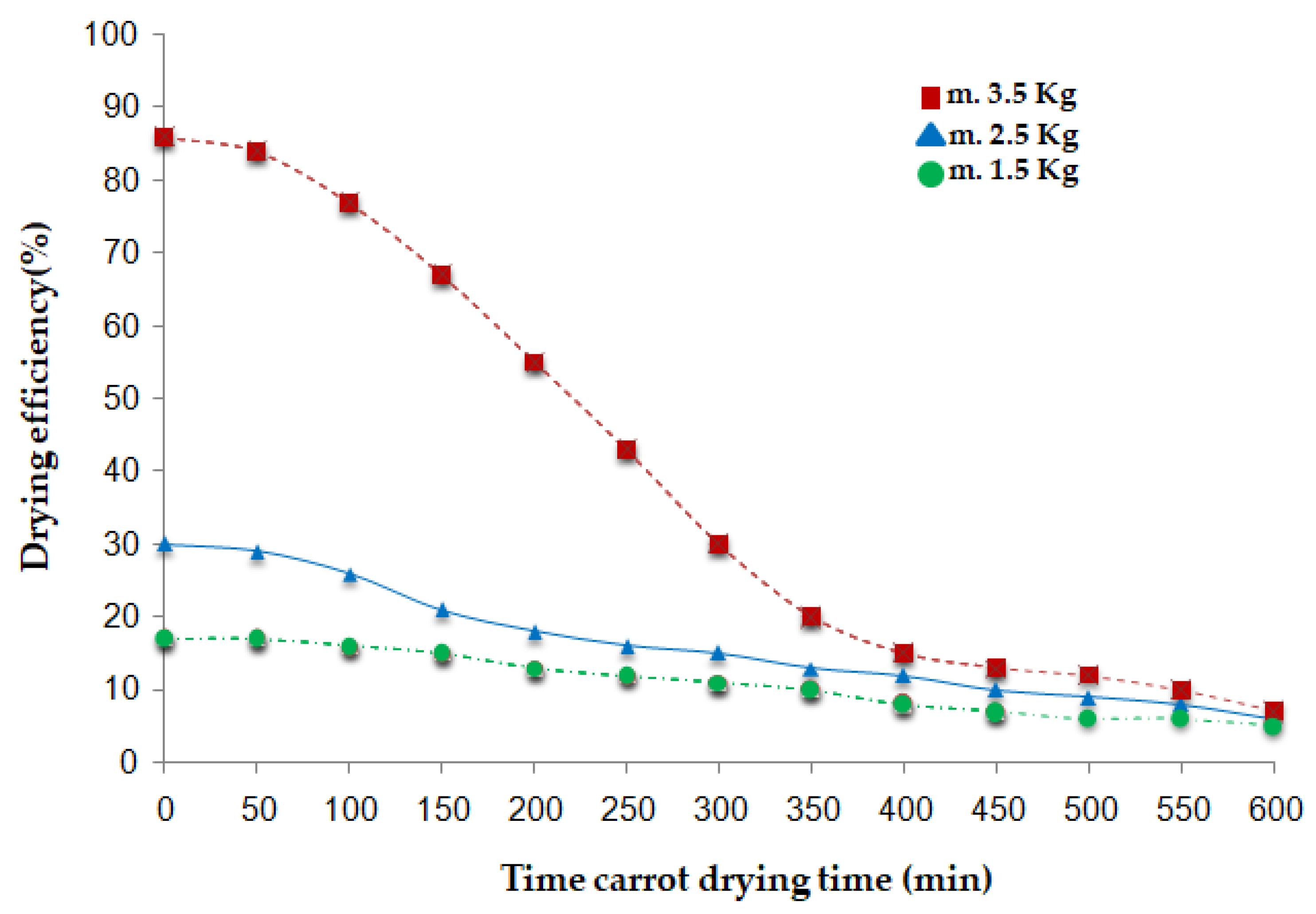
The thermal efficiency of the dehydration system was evaluated using the mathematical model defined in equation (8). To do this, experimental data obtained during continuous monitoring of the process using the developed cyber-physical system were used, which allowed variables such as temperature, relative humidity, product mass, and air velocity to be recorded in real time. The 3.5 kg load achieved the highest thermal efficiency at 86%, while the 2.5 kg and 1.5 kg loads showed lower efficiencies of 30% and 17%, respectively, as shown in Figure 10. These values reflect a relationship between product mass and energy utilization in the system.
In terms of process behavior, it can be observed that during the first hours of drying, efficiency increased significantly because thermal energy is mostly used to evaporate free water. However, as the moisture content approached 10%, the efficiency decreased continuously as heat began to be lost by convection without significant moisture removal as described in previous research on automatically controlled solar dryers [43].
The use of high-precision sensors for temperature (DHT22), humidity (DHT11), mass (load cells), and air velocity (IP65 anemometer) enabled continuous data recording without interrupting the process, which prevented thermal losses due to system opening, further improving process efficiency. This strategy has been identified as a critical factor in intelligent drying systems with multivariate monitoring [28,36,44].
The combination of fuzzy control and real-time data acquisition also made it possible to minimize signal noise and adapt to variations in product load, validating the integration of intelligent cyber-physical systems into dehydration processes with technological innovation and energy sustainability [27,34,49].
4. Conclusions
This study validates the implementation of a cyber-physical system based on adaptive fuzzy control for the optimization of the carrot dehydration process in a rotary dryer. By implementing a system with multivariate sensors (temperature, relative humidity, air velocity, and mass loss), real-time signal acquisition and conditioning were achieved, allowing for dynamic control of operating conditions, achieving uniform and efficient dehydration.
Experimental analysis showed that the energy efficiency of the process depends significantly on the initial product mass, with the largest initial mass (3.5 kg) achieving the highest efficiency of 86%, followed by smaller loads with lower efficiencies. This relationship is attributed to the fact that greater mass implies greater thermal inertia, which favors the absorption and retention of applied heat, as well as to the thermal distribution within the rotary dryer, which favors more effective mass and energy transfer during drying [19,26]. In addition, the average air velocity remained stable at around 1.5 m/s, promoting uniform heat distribution and precise humidity control in the drying chamber.
The use of fuzzy control demonstrates a significant advantage over traditional methods such as PID or neural networks. Fuzzy logic facilitated the management of uncertainties and dynamic variations in the drying process, such as fluctuations in initial product moisture content or environmental variations, without requiring constant manual adjustment or large volumes of data for pre-training, as is the case with neural networks [27,29,38]. This enabled more flexible and robust adaptive control, optimizing temperature based on the actual conditions detected by the sensors.
The implementation of a low-cost hardware-based cyber-physical system, using the Arduino Mega 2560 R3 microcontroller, together with the programming of a fuzzy control system, proved to be highly efficient for food dehydration applications [37,39]. Among the main advantages identified, the system's ability to optimize operating parameters based on actual drying conditions stands out. This resulted in a notable improvement in energy efficiency and reduction in operating times [29,40]. Furthermore, as it is an open and widely documented development platform, the use of Arduino Mega allows the replicability of the system in different drying applications, thus promoting its technological transfer and potential adoption in communities or small agro-industries with limited resources [34,41,46]. A possible restriction was identified regarding the sensitivity of some of the sensors used, especially in larger industrial scale applications or in highly demanding environments; these limitations do not compromise performance in small or medium scale scenarios, where the balance between cost, ease of programming and operational efficiency is essential [36,47].
The applied methodology, which includes signal conditioning, noise removal, and real-time fuzzy inference, contributed to improved measurement reliability and process performance, reflected in a significant reduction in dehydration time and a final product moisture content of 10%. For future research, the incorporation of microcontrollers with greater processing capacity is recommended to improve response speed and complex data handling, as well as the integration of machine learning techniques for online process prediction and optimization [16,40]. Furthermore, expanding the instrumentation to include additional physical variables and implementing cloud storage systems will enhance the system's applicability within smart agriculture.
Finally, this research demonstrates the technical and operational feasibility of a rotary dryer with adaptive fuzzy control for efficient carrot dehydration, highlighting the importance of signal conditioning and the flexibility of fuzzy control to optimize energy efficiency and final product quality in drying processes.
Author Contributions
Conceptualization, J.M.T.-M. and M.G.B.-S.; methodology, J.M.T.-M., M.G.B.-S. and A.G.-L.; software, J.M.T.-M, Y.V.P.-P. and S.M.A.-S.; validation, S.M.A.-S.; formal analysis, M.G.B.-S., A.G.-L., Y.V.P.-P and J.P.A.-Á.; investigation, J.M.T.-M and M.G.B.-S.; resources, J.M.T.-M., A.G.-L., S.M.A.-S, J.P.A.-Á. and Y.V.P.-P.; writing—original draft preparation, J.M.T.-M., A.G.-L. and M.G.B.-S. .; writing—review and editing, J.M.T.-M. and M.G.B.-S.; supervision, A.G.-L., S.M.A.-S., Y.V.P.-P. and J.P.A.-Á; project administration, J.M.T.-M. and M.G.B.-S. All authors have read and agreed to the published version of the manuscript.
Funding
This research received no external funding.
Institutional Review Board Statement
Not applicable.
Informed Consent Statement
Not applicable.
Data Availability Statement
The original contributions presented in the study are included in the article.
Conflicts of Interest
The authors declare no conflicts of interest.
References
- Thibault, B.; Zeynoddin, M.; Bonakdari, H.; Ratti, C.; Khalloufi, S. Effect of Model Selection Approach Obtained by Machine Learning Tools on Predicting the Volume Reduction of Plant-Based Dehydrated Foods. J. Food Engineering. 2025, 391, 112415. [CrossRef]
- Jimenez-Garcia, J.A.; Aguilar-Torres, D.; Luque-Zuñiga, G.; Camacho-Martínez, J.L.; Jiménez-Ramírez, O.; Vázquez-Medina, R. Evaluation of the Efficiency and Economic Feasibility of an Indirect Solar Dehydrator and Its Comparison with an Affordable Electric Dehydrator. Therm. Sci. Eng. Prog. 2025, 61, 103505. [CrossRef]
- Kominami, Y.; Takase, K.; Ushio, H. Time-Course Analysis of Kobujime Curing of Japanese Flounder (Paralichthys olivaceus): Biochemical Insights into Dehydration Processing of Fish Meat with Kombu. Int. J. Gastron. Food Sci. 2025, 39, 101124. [CrossRef]
- Lordi, A.; Conte, A.; Del Nobile, M.A. Nutritional and Antimicrobial Properties of Tomato By-Products as Affected by Dehydration Temperature. Food Biosci. 2025, 63, 105797. [CrossRef]
- Yalta Chappa, M.; Angeles, W.G.; Quispe-Sanchez, L.; Mori Servan, D.C.; Santillan Gomez, H.; Oliva-Cruz, M.; Barrena Gurbillón, M.Á. Modeling of Drying Kinetics and Chemical Analysis for Optimal Preservation of Pitahaya, Aguaymanto and Pineapple Fruits Using a Parabolic Solar Dehydrator in the Amazon Region - Peru. J. Agric. Food Res. 2025, 19, 101696. [CrossRef]
- Rakariyatham, K.; Boonyapranai, K.; Laokuldilok, T.; Utama-ang, N.; Nutprem, A.; Kaewprasit, K.; Tatongjai, K. Impact of Different Dehydration Methods on Physicochemical and Functional Properties of Guava (Psidium guajava L.) Powder Prepared from White and Pink Pomaces. Appl. Food Res. 2025, 5(1), 100696. [CrossRef]
- Fu, Y.; Ren, Y.; Sun, D.-W. Impacts of Non-Thermal Pretreatments on Banana Slices during Microwave Vacuum Dehydration Using THz-TDS and NIR-HSI Techniques. J. Food Eng. 2025, 394, 112518. [CrossRef]
- Schemminger, J.; Raut, S.; Sturm, B.; Defraeye, T. Mapping the Most Effective Measures to Optimize Carrot Slice Tray Drying Using Physics-Based and Monte Carlo Simulations. Int. J. Thermofluids. 2025, 101221. [CrossRef]
- Malaslı, M.Z.; Akkoyunlu, M.C.; Pekel, E.; Taşova, M.; Dursun, S.K.; Akkoyunlu, M.T. Prediction of Drying Kinetics and Energy Consumption Values of Purple Carrots Dried in a Temperature-Controlled Microwave Dryer by Decision Tree, Random Forest and Ada Boost Approaches. Chemom. Intell. Lab. Syst. 2025, 260, 105352. [CrossRef]
- Thuy, N.M.; Hao, H.V.; Duong, L.T.T.; Giau, T.N.; Minh, V.Q.; Tai, N.V. Foam-Mat Drying of Lucuma Powder: Mathematical and Artificial Modeling of Drying Kinetics, Physicochemical and Microstructural Properties. J. Agric. Food Res. 2025, 19, 101656. [CrossRef]
- Sukunza, X.; Rojcewicz, K.; Martin, A.; Bolaños, M.; Tellabide, M.; Olazar, M.; Dajnowiec, F.; Oksiuta, Z. A Model for Predicting the Performance and Maximizing the Drying Efficiency of an Innovative Fountain Bed Dryer. Particuology. 2025. [CrossRef]
- Kerse, A.Y.; Embiale, D.T.; Gunjo, D.G. Dehydration of Red Chilli Using an Indirect Type Forced Convection Solar Dryer Integrated with Thermal Energy Storage. Int. J. Thermofluids. 2025, 26, 101045. [CrossRef]
- Naniwadekar, M.; Walke, S.; Mandake, M.; Tapre, R.; Patil, K.; Komble, S. A Comprehensive Study of Performance Metrics and Potato Dehydration at Various Slice Thickness Using an IoT-Based Indirect Solar Dryer: An Experimental Approach. Sol. Energy. 2025, 288, 113269. [CrossRef]
- Kidane, H.; Farkas, I.; Buzás, J. Performance Evaluation of Solar Drying Chambers and Drying Kinetics of Apple Slices. Energy Rep. 2025, 13, 4528–4540. [CrossRef]
- Pei, Y.; Fan, L.; Wang, C.; Tian, G.; Meng, X.; Li, Z.; Xu, W. Intelligent Control of Ginger Far-Infrared Radiation and Hot-Air Drying Based on Multi-Sensor Fusion Technology. Food Bioprod. Process. 2025, 149, 415–427. [CrossRef]
- Villa-Medina, J.F.; Porta-García, M.Á.; Gutiérrez, J.; Porta-Gándara, M.Á. Solar Forced Convection Dryer for Agriproducts Monitored by IoT. Internet Things. 2025, 31, 101566. [CrossRef]
- Abreu, D.J.M.d.; Lorenço, M.S.; Machado, G.G.L.; Silva, J.M.; Azevedo, E.C.d.; Carvalho, E.E.N. Influence of Drying Methods on the Post-Harvest Quality of Coffee: Effects on Physicochemical, Sensory, and Microbiological Composition. Foods. 2025, 14, 1463. [CrossRef]
- Ortíz-Yescas, G.; Meléndez-Vázquez, F.; Quezada-Téllez, L.A.; Torres-Mendoza, A.; Morales-Peñaloza, A.; Fernández-Anaya, G.; Macías-Díaz, J.E. A Hybrid PI–Fuzzy Control Scheme for a Drum Drying Process. AppliedMath. 2025, 5, 45. [CrossRef]
- Tabares-Martinez, J.M.; Guzmán-López, A.; Bravo-Sánchez, M.G.; Barranco-Gutierrez, A.I.; Martínez-Nolasco, J.J.; Villaseñor-Ortega, F. Instrumentation and Evaluation of a Sensing System with Signal Conditioning Using Fuzzy Logic for a Rotary Dryer. Technologies. 2025, 13, 83. [CrossRef]
- Abbaspour-Gilandeh, Y.; Zadhossein, S.; Kaveh, M.; Szymanek, M.; Hassannejad, S.; Wojciechowska, K. Drying Time, Energy and Exergy Efficiency Prediction of Corn (Zea mays L.) at a Convective-Infrared-Rotary Dryer: Approach by an Artificial Neural Network. Energies. 2025, 18, 696. [CrossRef]
- Petrescu, M.G.; Burlacu, A.; Isbășoiu, G.D.; Dumitru, T.; Tănase, M. Estimating the Lifetime of Rotary Dryer Flights Based on Experimental Data. Processes. 2024, 12, 993. [CrossRef]
- Coelho, E.G.; Bertarini, P.L.L.; Gomes, M.S.; Amaral, L.R.; Zotarelli, M.F.; Santos, L.D.; Santana, R.C. Physicochemical and Sensory Properties of Arabica Coffee Beans of Arara cv. Dried Using Different Methods. Foods. 2024, 13, 642. [CrossRef]
- Donoso-García, P.; Henríquez-Vargas, L.; González, J.; Díaz, I.; Fuentes, I. A Study for Estimating the Overall Heat Transfer Coefficient in a Pilot-Scale Indirect Rotary Dryer. Processe.s 2024, 12, 357. [CrossRef]
- Ignaczak, A.; Woźniak, Ł.; Marzec, A.; Kowalska, J.; Chobot, M.; Kowalska, H. The Influence of Osmotic Treatment, Edible Coatings Application, and Reduced Pressure on Microwave–Vacuum-Dried Carrot Properties. Molecules. 2025, 30, 1877. [CrossRef]
- Gao, K.; Liu, B.; Wu, B.; Guo, Y.; Song, C.; Nan, S.; Dai, J.; Shen, Y.; Ma, H. A Study on the Effect Mechanism of Pectin Modification on the Carrot Cell Wall’s Texture Formation under Ultrasonic and Infrared Drying. Agriculture. 2024, 14, 803. [CrossRef]
- Vega-Gálvez, A.; Orellana-Palma, P.; Pasten, A.; Uribe, E.; Cortés, D.; Carvajal, M. Mild Temperature Conditions Applied to Carrot (Daucus carota L.) Waste Using Different Drying Methods: Effect on the Kinetics and Some Chemical Parameters. Processes. 2025, 13, 90. [CrossRef]
- Mierzwa, D.; Musielak, G. Microwave and Ultrasound Assisted Rotary Drying of Carrot: Analysis of Process Kinetics and Energy Intensity. Appl. Sci. 2024, 14, 10676. [CrossRef]
- Moura, J.R.R.d.O.; de Morais, B.R.S.; da Silva, J.H.F.; Alves, A.S.S.; Brandão, S.C.R.; Azoubel, P.M. Evaluation of Organic Acids and Ultrasound as Pretreatment in Convective Drying Kinetics and Quality Parameters of Pumpkin. Foods 2024, 13, 2502. [CrossRef]
- Francik, S.; Łapczyńska-Kordon, B.; Hajos, M.; Basista, G.; Zawiślak, A.; Francik, R. Modeling the Drying Process of Onion Slices Using Artificial Neural Networks. Energies 2024, 17, 3199. [CrossRef]
- Bogusz, R.; Nowacka, M.; Gondek, E.; Delman, M.; Szulc, K. Effect of Drying Method on Selected Physical and Functional Properties of Powdered Black Soldier Fly Larvae. Appl. Sci. 2025, 15, 4097. [CrossRef]
- Carrillo Luis, V.; Beristain Rios, D.; Hernández-Flores, O.A.; Romero-Salazar, C.; Sandoval-Torres, S. Mathematical Modeling of Goat Meat Drying Kinetics with Thermal Oscillations. Foods 2024, 13, 3836. [CrossRef]
- Sundarsingh, A.; BhagyaRaj, G.V.S.; Dash, K.K. Modeling and Optimization of Osmotic Dehydration of Wax Apple Slices Using Adaptive Neuro-Fuzzy Inference System. Appl. Food Res. 2023, 3(2), 100316. [CrossRef]
- Dash, K.K.; Sundarsingh, A.; BhagyaRaj, G.V.S.; Pandey, V.K.; Kovács, B.; Mukarram, S.A. Modelling of Ultrasonic Assisted Osmotic Dehydration of Cape Gooseberry Using Adaptive Neuro-Fuzzy Inference System (ANFIS). Ultrason. Sonochem. 2023, 96, 106425. [CrossRef]
- Kang, C.; Zhang, G.; Mu, G.; Guo, H.; Yuan, T.; Zhao, C.; Li, X.; Zhang, Q. Solar-Heat Pump Combined Drying with Phase Change Heat Storage: Multi-Energy Self-Adaptive Control. Renew. Energy. 2024, 230, 120867. [CrossRef]
- Kumar, V.; Devi, M.K. Impact of Different Drying Methods on Sensory and Physicochemical Analysis of Instant Green Bell Pepper Chutney Mix. Meas. Food. 2023, 9, 100077. [CrossRef]
- Song, F.; Zheng, Y.; Li, R.; Li, Z.; Liu, B.; Wu, X. Intelligent Control of Green Tea Fixation with Microwave Processing. J. Food Eng. 2023, 349, 111481. [CrossRef]
- Abioye, A.O.; Hussein, J.B.; Oke, M.O.; Bolarinwa, I.F. Modelling Some Quality Attributes of a Convective Hot-Air Dried Tomato Slices Using ANN and ANFIS Techniques. Meas. Food. 2024, 13, 100140. [CrossRef]
- Baidhe, E.; Clementson, C.L. A Review of the Application of Modeling and Simulation to Drying Systems for Improved Grain and Seed Quality. Comput. Electron. Agric. 2024, 222, 109094. [CrossRef]
- Ait Hmazi, O.; Bagar, H.; Madani, A.; Mrani, I. A Novel Approach for Modelling and Predicting the Drying Kinetics of Couscous Grains Using Artificial Neural Networks. J. Food Compos. Anal. 2024, 132, 106301. [CrossRef]
- El-Mesery, H.S.; Ali, M.; Qenawy, M.; Adelusi, O.A. Application of Artificial Intelligence to Predict Energy Consumption and Thermal Efficiency of Hybrid Convection-Radiation Dryer for Garlic Slices. Eng. Appl. Artif. Intell. 2024, 138, 109338. [CrossRef]
- Rojas Vargas, A.; Pérez García, L.; Sánchez Guillen, C.; AlJaberi, F.Y.; Salman, A.D.; Alardhi, S.M.; Le, P.-C. Performance Evaluation of a Flighted Rotary Dryer for Lateritic Ore in Concurrent Configuration. Heliyon. 2023, 9, e21345. [CrossRef]
- Alshehri, A.A.; Tolba, N.M.; Salama, M.A.; Saleh, M.; Kamel, R.M. Energy Analysis and Quality Characteristics of Flaxseed Oil by Using an Infrared Rotary Dryer. Case Stud. Therm. Eng. 2024, 54, 103988. [CrossRef]
- Susana, I.G.B.; Alit, I.B.; Okariawan, I.D.K. Rice Husk Energy Rotary Dryer Experiment for Improved Solar Drying Thermal Performance on Cherry Coffee. Case Stud. Therm. Eng. 2023, 41, 102616. [CrossRef]
- Nafisah, N.; Syamsiana, I.N.; Putri, R.I.; Kusuma, W.; Sumari, A.D.W. Implementation of Fuzzy Logic Control Algorithm for Temperature Control in Robusta Rotary Dryer Coffee Bean Dryer. MethodsX. 2024, 12, 102580. [CrossRef]
- Li, M.; Liu, M.; Xu, C.; Wang, J.; Yan, J. Thermodynamic and Sensitivity Analyses on Drying Subprocesses of Various Evaporative Dryers: A Comparative Study. Energy. 2023, 284, 128571. [CrossRef]
- Mihret, Y.C.; Hailemesikel, S.T.; Alemu, A.G.; Delele, M.A. Modeling the Drying Kinetics, Performance Evaluation, and Economic Analysis of Rice Drying Using a Rice Husk-Fueled Mixed-Flow Dryer. Energy Conversion and Management: X. 2024, 24, 100774. [CrossRef]
- Yu, M.; Zou, L.; Yu, J. Experimental Investigation on the Drying Characteristics in a Solar Assisted Ejector Enhanced Heat Pump Dryer System. Solar Energy. 2024, 267, 112265. [CrossRef]
- Hamdani, N.; Rizal, T.; Muhammad, Z. Fabrication and testing of hybrid solar-biomass dryer for drying fish. Case Stud. Therm. Eng. 2018, 12, 489–496. [CrossRef]
- Soponpongpipat, N.; Nanetoe, S.; Comsawang, P. Thermal and Torrefaction Characteristics of a Small-Scale Rotating Drum Reactor. Processes. 2020, 8, 489. [CrossRef]
- Yang, G.; Yang, X.; Li, C.; Wei, X.; Lu, Z.; Zhang, C.-a.; Wang, Q.; Wu, X. Numerical Study on the Uniform Distribution of Flow Field of Airflow Dryer. Heliyon. 2024, 10(8), e29439. [CrossRef]
- van Boven, A.P.; Dubbelboer, A.; Janssen, T.J.A.; Schröder, J.; Sewalt, J.J.W.; Kohlus, R.; Schutyser, M.A.I. Investigating the Impact of Air Distribution on Spray Dryer Operability Using CFD Simulations and Pilot-Scale Experiments. Powder Technology, 2024, 440, 119779. [CrossRef]
- Charmongkolpradit, S.; Somboon, T.; Phatchana, R.; Sang-Aroon, W.; Tanwanichkul, B. Influence of drying temperature on anthocyanin and moisture contents in purple waxy corn kernel using a tunnel dryer. Case Stud. Therm. Eng. 2021, 25, 100886. [CrossRef]
- Wang, Y.; Ding, C. Effect of Electro hydrodynamic Drying on Drying Characteristics and Physicochemical Properties of Carrot. Foods, 2023, 12, 4228. [CrossRef]
- Adegbite, S. A.; Asiru, W. B.; Sartas, M.; Tran, T.; Taborda, A. L.; Chapuis, A.; Ojide, M.; Abass, A. Development of a Pilot Scale Energy Efficient Flash Dryer for Cassava Flour. Resources, Environment and Sustainability. 2023, 13, 100117. [CrossRef]
Figure 1.
Removing moisture from carrot slices with a rotary dehydrator.
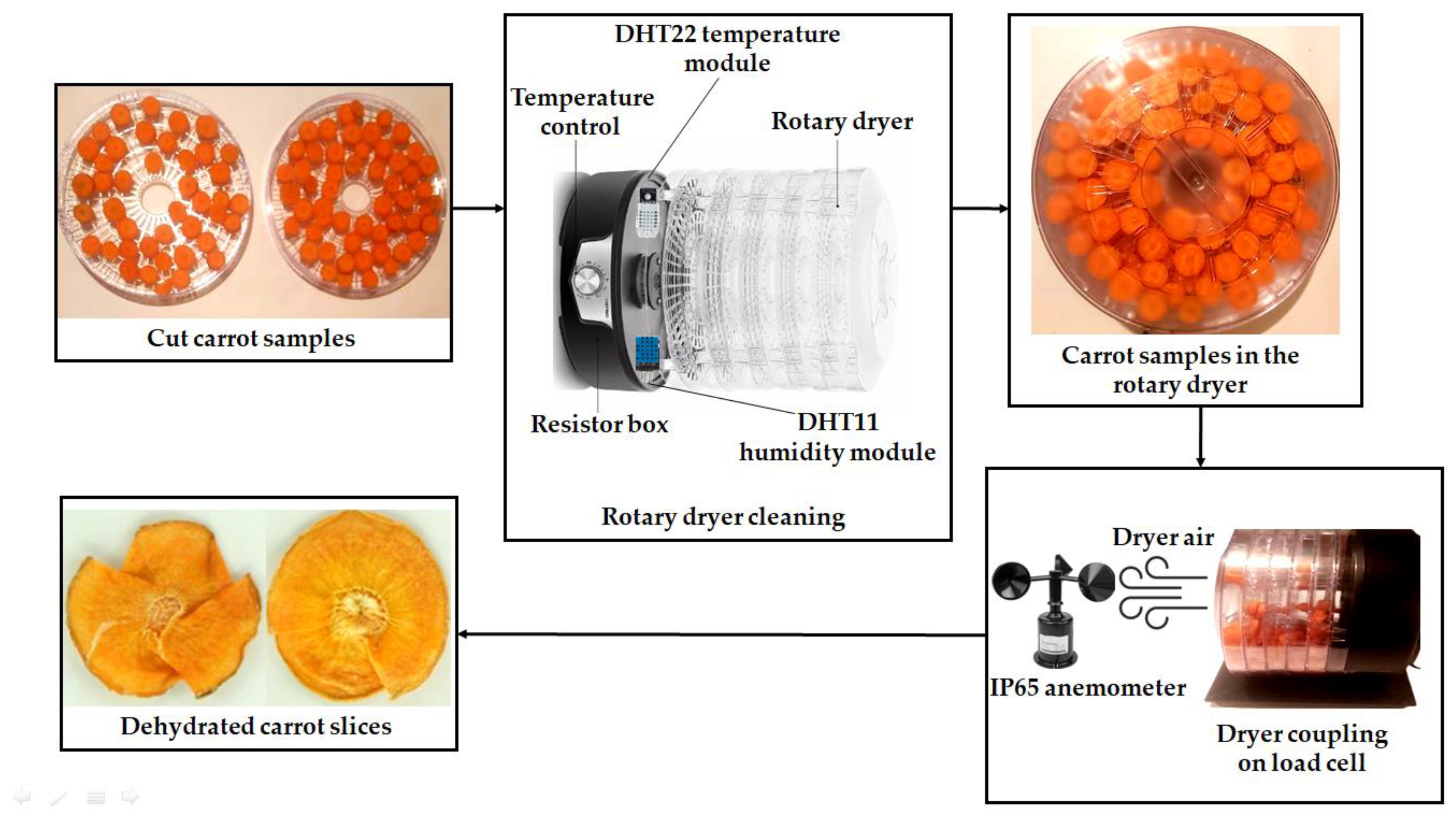
Figure 2.
Interconnection architecture between sensors, actuators and dryer control unit.
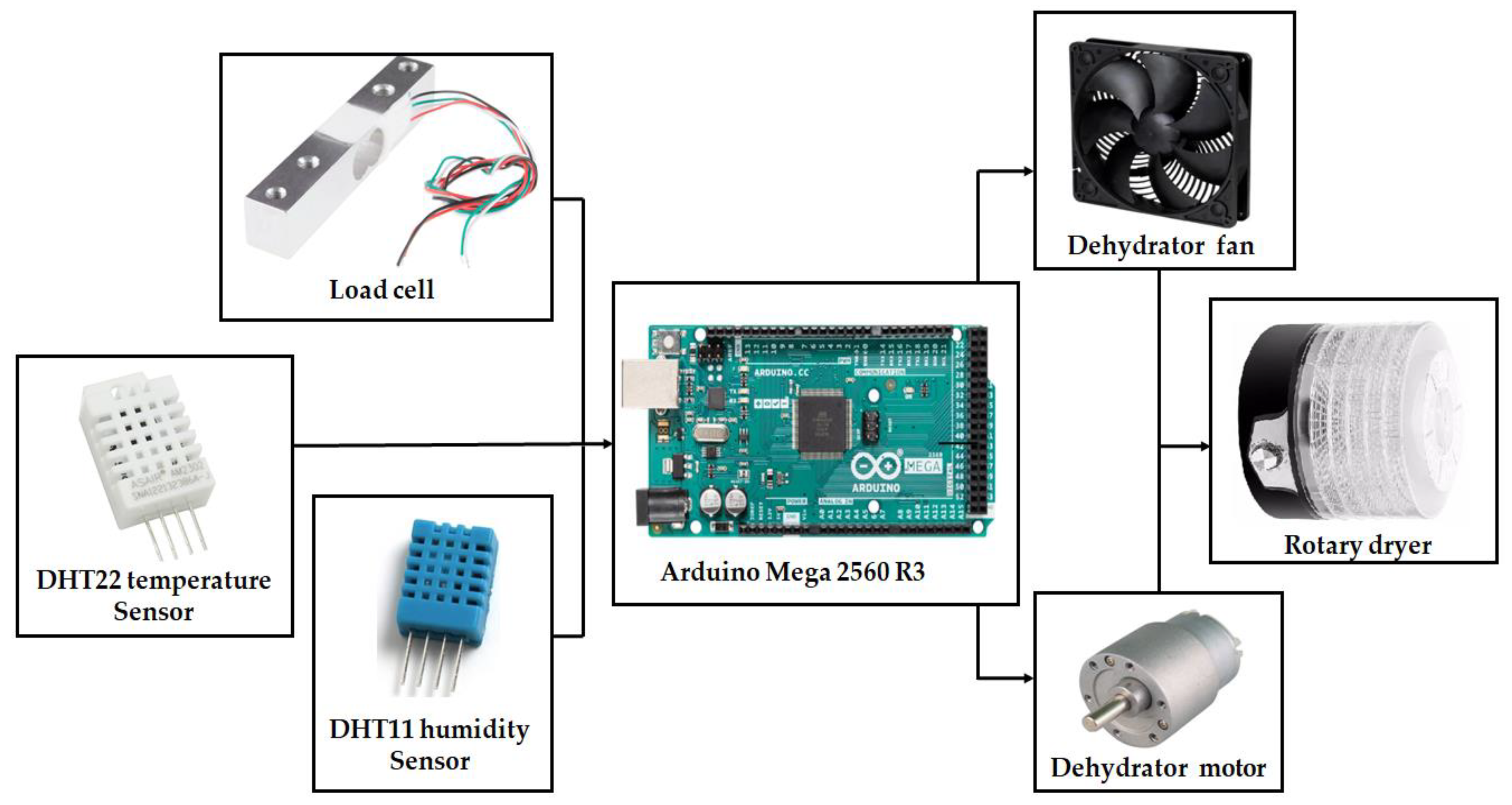
Figure 3.
Methodology implemented in the design of adaptive fuzzy control applied to dehydration.
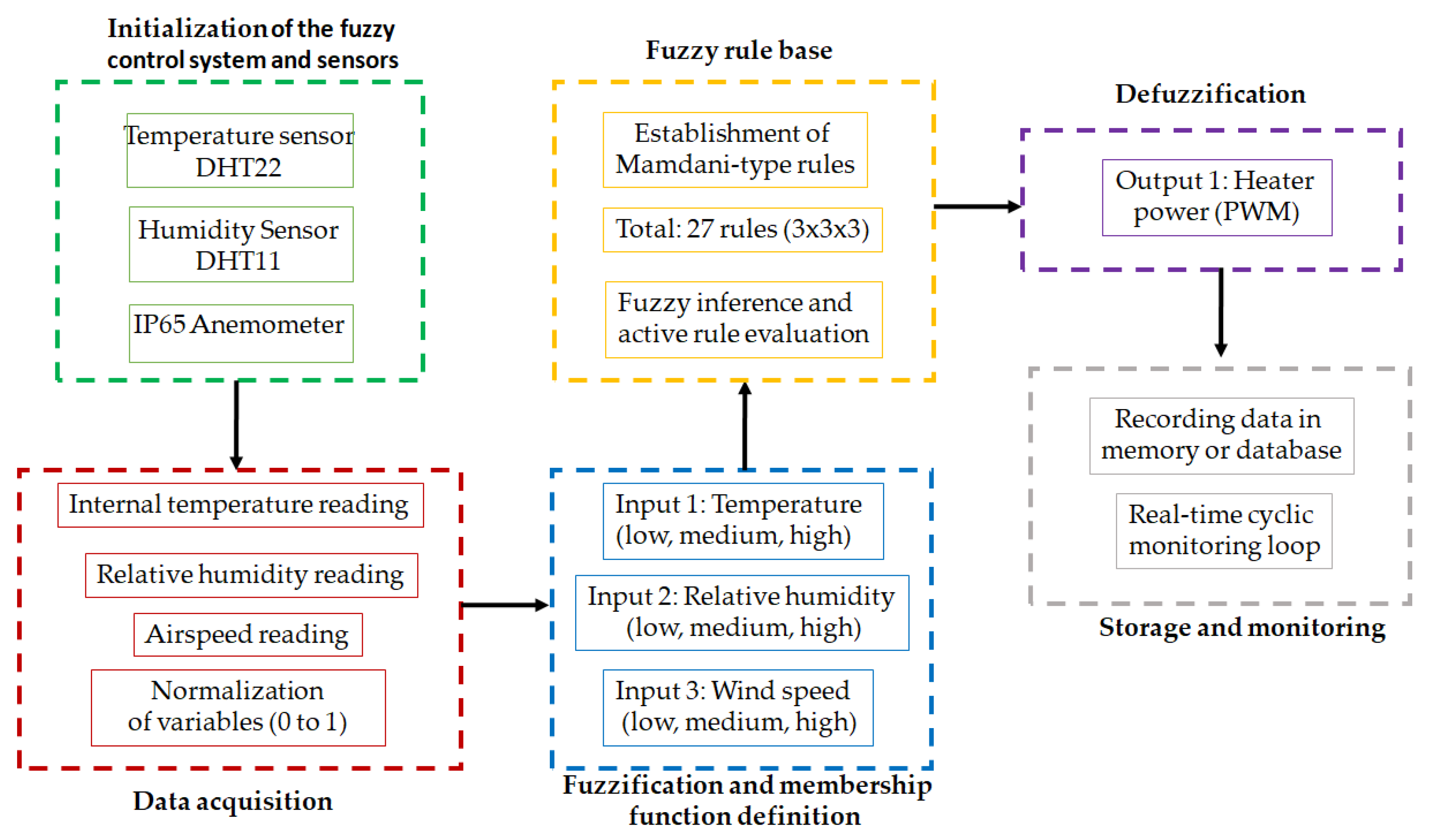
Figure 4.
Integrated fuzzy logic system algorithm.

Figure 5.
Operating cycle of the cyber-physical system for carrot dehydration.
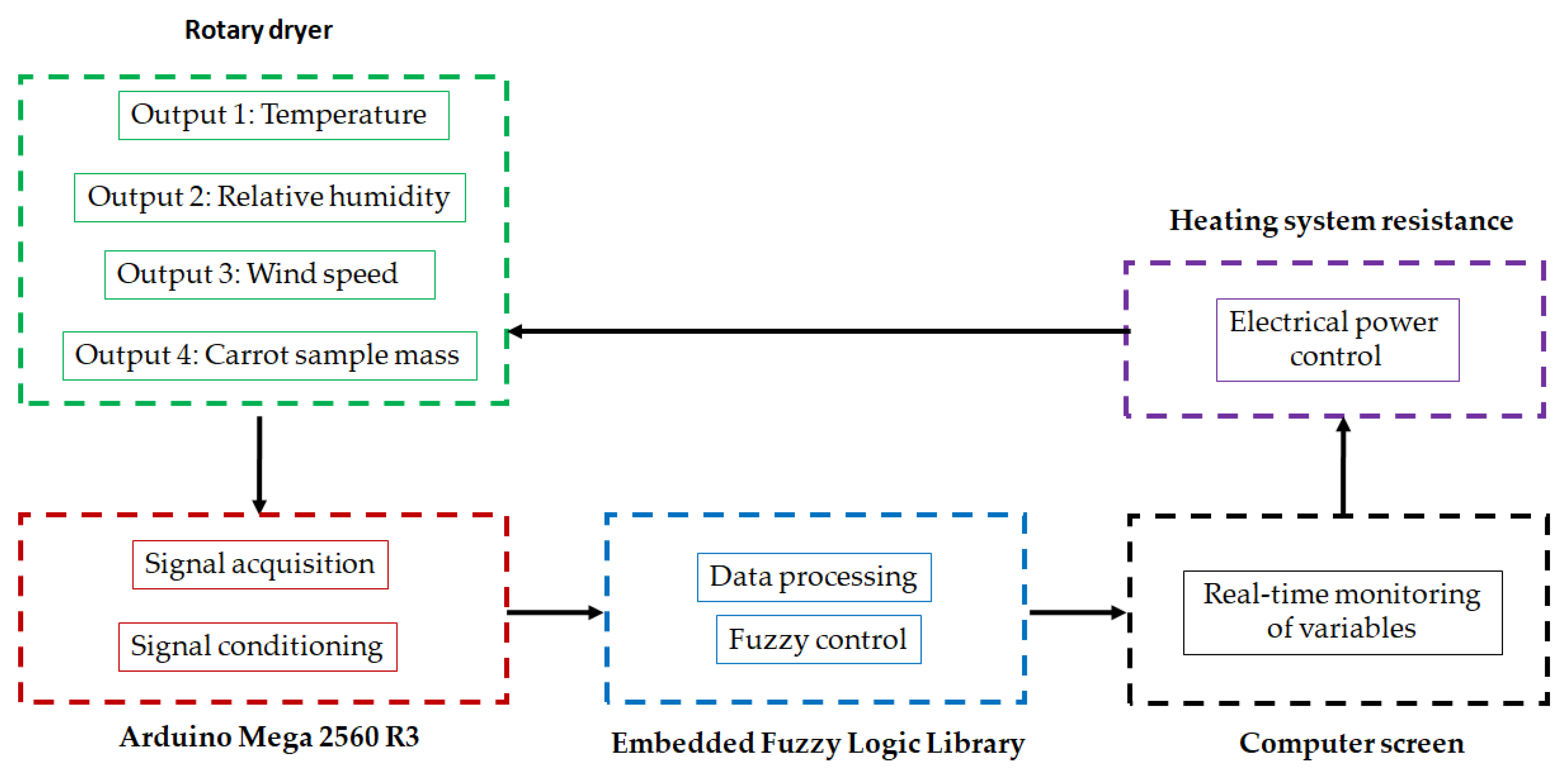
Figure 6.
Characterization of drying kinetics in carrots with variable initial loads.
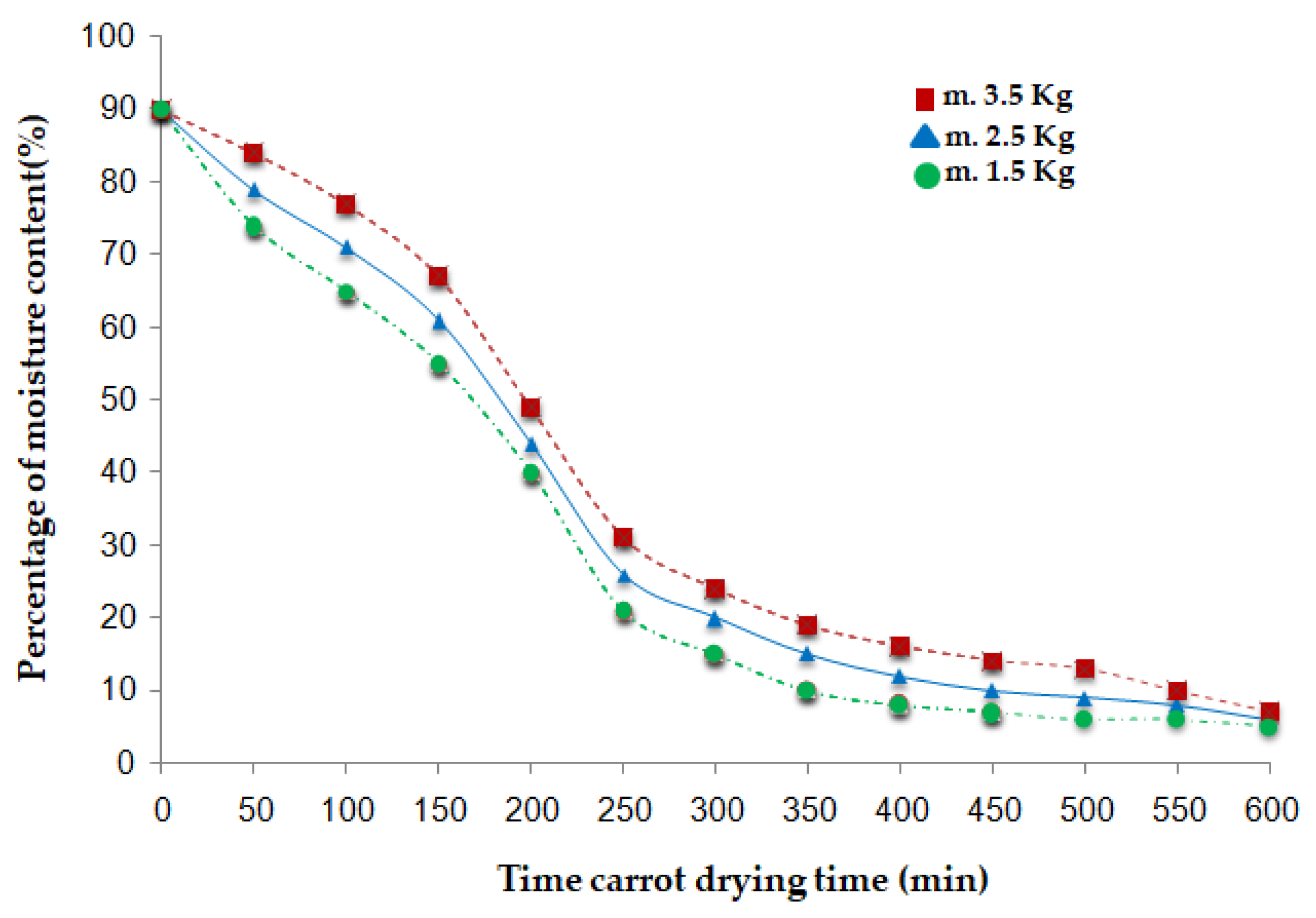
Figure 7.
Comportamiento de la distribución de temperatura en proceso de secado de zanahoria.
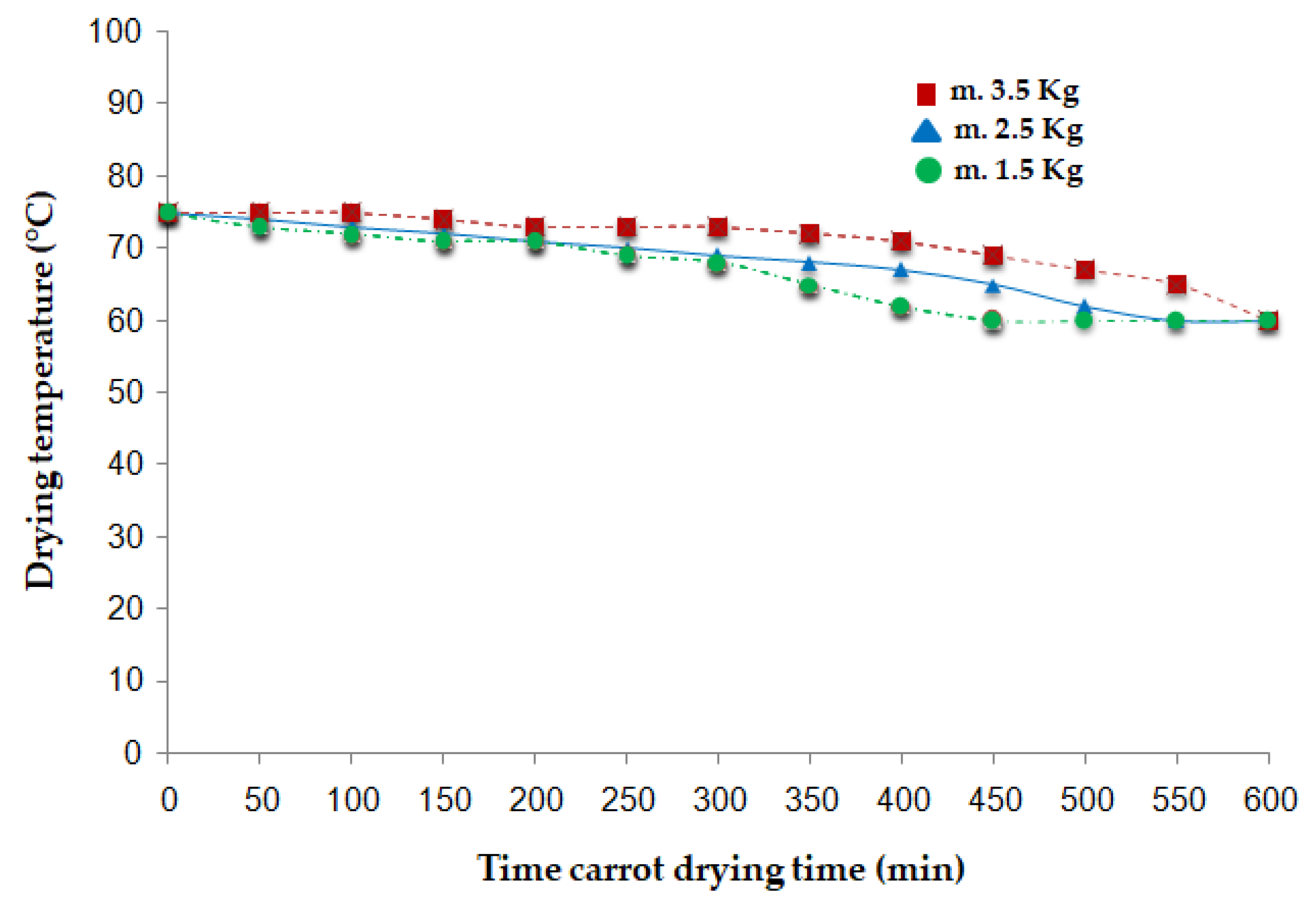
Figure 8.
Heat transferred by the hot air in the rotary dryer for the carrot dehydration process.
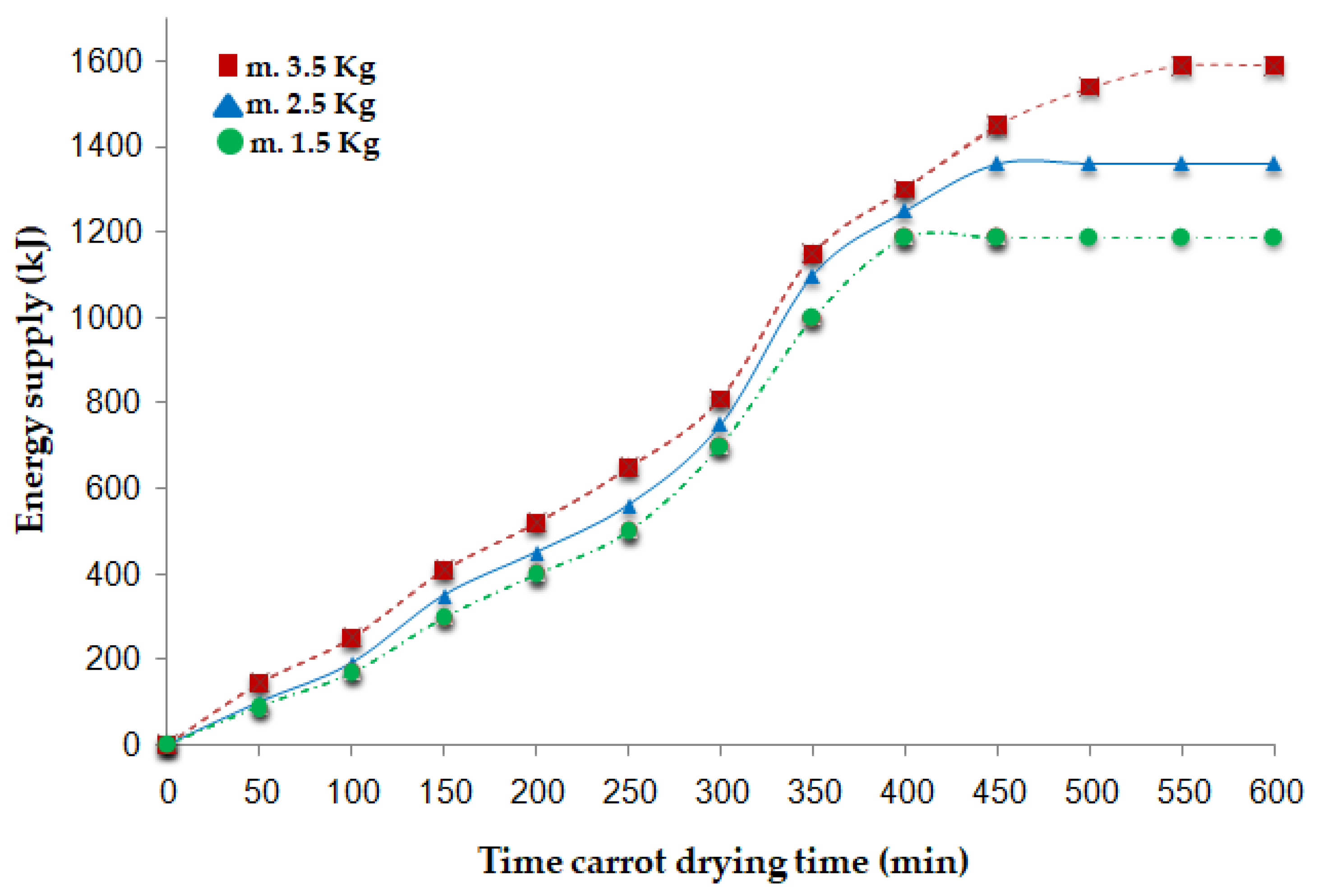
Figure 9.
Evaluation of mass loss through drying rate during the carrot dehydration process.
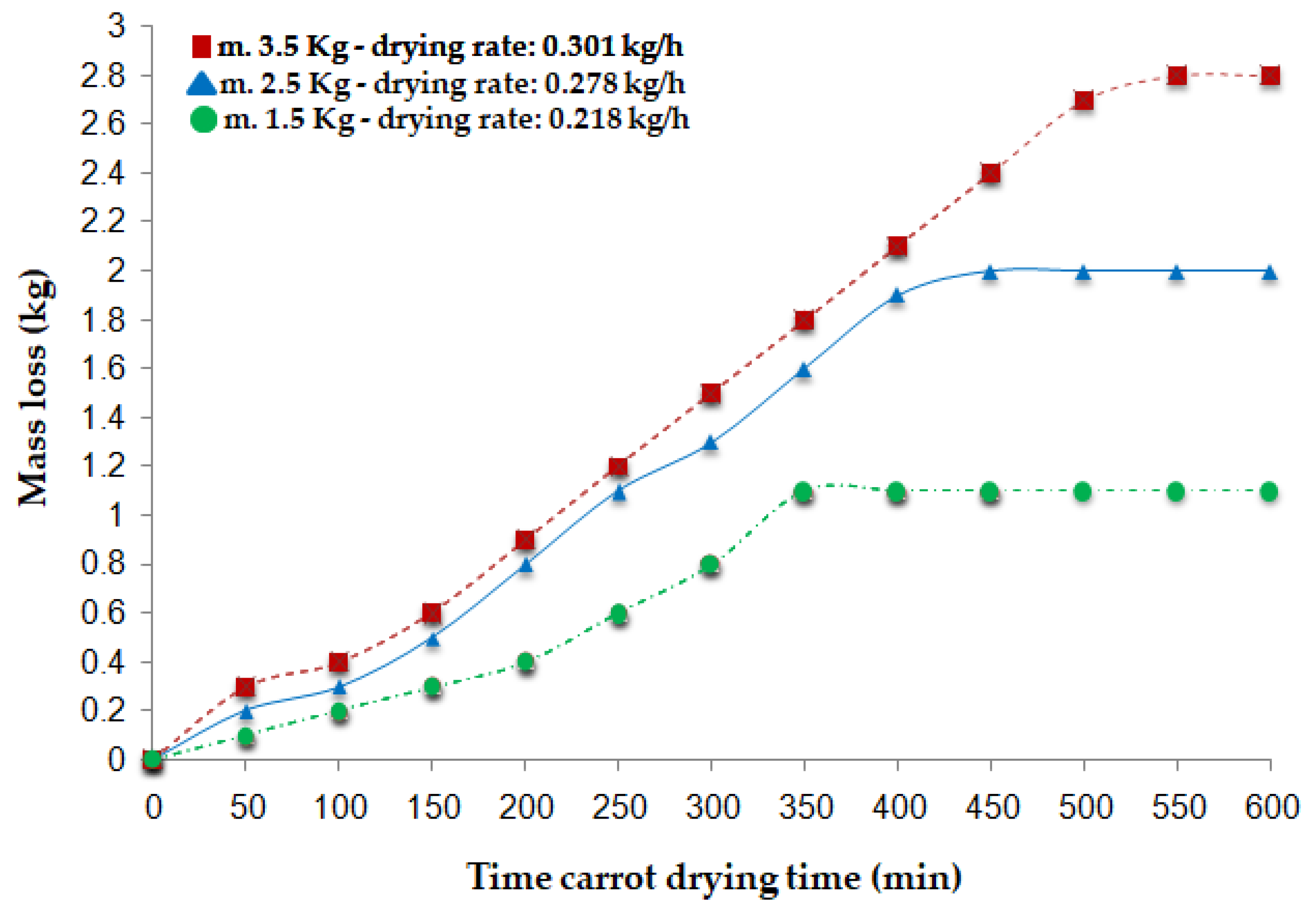
Figure 10.
Drying efficiency in the carrot dehydration process.
Disclaimer/Publisher’s Note: The statements, opinions and data contained in all publications are solely those of the individual author(s) and contributor(s) and not of MDPI and/or the editor(s). MDPI and/or the editor(s) disclaim responsibility for any injury to people or property resulting from any ideas, methods, instructions or products referred to in the content. |
© 2025 by the authors. Licensee MDPI, Basel, Switzerland. This article is an open access article distributed under the terms and conditions of the Creative Commons Attribution (CC BY) license (http://creativecommons.org/licenses/by/4.0/).
Copyright: This open access article is published under a Creative Commons CC BY 4.0 license, which permit the free download, distribution, and reuse, provided that the author and preprint are cited in any reuse.


