

Submitted:
27 May 2025
Posted:
28 May 2025
You are already at the latest version
Abstract
Aerogels are novel materials that span the gap between liquids and gases because of their distinctive physical properties, such as high surface area and low thermal conductivity. Aerogels are extremely light, highly porous, and low-density materials, but they may also be made to exhibit mechanical properties like increased stiffness and strength by controlling their feature structures while keeping their relative density low. Due to excellent properties shown by aerogels, they have a lot of different applications and are used in paints, pharmacy, sensors, insulators, acoustics and tank baffles etc. In the recent times, Research and Development have contributed a lot in aerogels but it has not been as successful to industrialise and commercialise a lot of those aerogels such as synthetic and polymer-based aerogels. In this article we will discuss the past, current and future perspectives to overcome such challenges for maximum commercialisation and scale up of aerogels as well as discuss about the properties and applications of different types of aerogels for sustainability and carbon neutrality.
Keywords:
synthetic aerogels
; polymeric aerogels
; sustainability
; carbon neutrality
; novel materials
1. Introduction
Science and mankind are going through a period of transition relating to the energy, the environment, and climate change. Pollution has been one of the most critical challenges not only because it causes climate change, but also it has a negative impact on the public health as a result of increased morbidity and mortality rates. Pollution is mainly the result of releasing chemicals o the environment, which poses harmful effects to the humans and other living creatures. Of late, petroleum extracts have become exorbitantly expensive as a result of their finite dependence, which is predicted to continue as the demands grow. Apart from the monetary realm, most petroleum-based products are creating much harm to the environment. Due to the advances of modern society, there has been an increased stress in the gap of fulfilling basic requirements of clean water, air, and food. For all these, sustainability is the key parameter to minimize or mitigate the effects of environmental pollution. These potential challenges can be met by an increase in the progress of polymeric materials and technology in relation to the environmental sustainability [1,2].
From the analysis done in, Figure 1 we can observe that the total emissions are increasing from 14.38 GtCO2 emissions in 2016 to 15.27 GtCO2 emissions solely caused by coal, which brings concern towards an urgent replacement and substitution of such petroleum-based sources with other substitutes which reduced environment pollutions and goes forward towards sustainability and carbon neutrality. Certain alternatives in regards to the substitution of fossil fuels and petroleum-based energy sources are synthetic and polymer based aerogels.
2. Aerogels
Aerogel, a novel material that bridges the gap between liquid and gas, is high because of its unique physical characteristics such as low thermal conductivity, high surface area, etc. [10]. They're made up of interlocking nanoscale filaments that form a microporous network [11]. Aerogels are the lightest solid materials with macrospores and mesoporous in a nano-scaled network with a porosity of >50% [12]. They are manufactured by substituting air for the solvent in gel network meshes. This substitution occurs during the drying process, which can be accomplished through supercritical drying or by using ambient pressure drying [13]. Placing the wet gel inside a closed container and drying the fluid beyond the solvent critical point contained within the gel pores is known as supercritical drying. The ambient pressure drying method is used to passivate the pore surface of wet gels [14]. Samuel Stephens Kistler invented aerogel for the first time in 1931 with silica [15,16]. Based on the nature of the materials utilized, aerogels are majorly divided into two groups; organic aerogels and inorganic aerogels. Aerogels made up of silica, fluoride, metal, oxides, and chalcogens are classified as inorganic aerogels. Carbon aerogels and polymer aerogels are two types of organic aerogels. Polymer aerogel is receiving increasing attention these days [13]. Various aerogel production methods towards sustainability have been showcased in Figure 2 which consists of all the modifications in the processes done in Ambient pressure drying, Rapid supercritical extraction and Aerogel beads taking into consideration the production of synthetic and bio-polymer based aerogels tending to zero carbon emissions.
2.1. Polymer Aerogels
The natural abundance of polymers has been exploited by the humans for many years in the form of oils, tars, resins, gums, and aerogel [3,4,5]. In the past decades, science and technological developments have resulted in a variety of synthetic polymers. Historically, plastic had a dramatic influence on the packaging industry and synthetic polymers have been widely utilized due to their durability and convenience. In recent years, the disposal of packaging plastics materials has become a major threat to the environment and these have now become a nuisance, damaging the natural resources such as water quality and soil fertility. During the 1990s, the plastic garbage has been tripled, which is still rising in the water, soil and air environments [6]. The most common form of polymer aerogel is a panel or thin sheet. Polyimides, polyurethanes, polyurea, polyamides, and other polymers are among those being investigated [17,18,19,20].Through the sol-gel method, polymer aerogels were created by copolymerizing several kinds of monomers, which is shown in Figure 3. Porous polymer aerogel can be made by polymerizing the successive phase of a high internal phase emulsion with an interconnected porous structure [21].
2.2. Biopolymer Aerogels
Biopolymers created from sustainable resources dominate non-renewable synthetic polymers due to their excellent features such as renewability, biodegradability, and biocompatibility [7,8,9]..The great features of biopolymer, such as renewability, biodegradability, and biocompatibility, are now being explored in the form of aerogel. There are two major ways to make biopolymer-based aerogels: (i) by forming colloid from molecular precursors, in which the biological feedstock was reduced to its molecular state, for example, chitosan, pectin, etc. (Figure 4) (ii) by the utilization of particle-based precursors with nanoscale particle sizes, for example, chitosan nanofibril, nanofibrous cellulose, etc. [22]. Freeze-drying, gas foaming, electrospinning, and thermally induced phase separation have all been employed to create biopolymer-based aerogels [23,24,25,26,27,28].
2.3. Synthetic Aerogels
A synthetic polymer is a macromolecule created by humans that consists of thousands of repeating units. These polymers come in both straight and branched chains. This means that nearby chains will form huge, net-like structures by bonding with one another. Crosslinking is the term for this type of chain bonding. Synthetic polymers are lightweight, durable, and long-lasting. They're pretty inexpensive to produce and uncomplicated to shape, hence such properties are used to manufacture aerogels. Various manufacturing techniques, properties and applications are shown in Table 1.
3. Classification of Synthetic Aerogels
3.1. Silica Aerogels
The primary class of extremely porous inorganic aerogels is silica aerogels. Since Kistler discovered silica aerogels in 1931, researchers have been working to improve their synthesis and characterization as shown in Figure 5. Mat, felt of filaments, needles, etc., forming a three-dimensional network, is the most likely structure of silica aerogel. As silica gel sets, its mechanical qualities suggest a fibrillar nature to the structure's constituents, according to his discovery. The fact that the liquid in a lump of gel at the critical temperature can be released very quickly without the outward rush of gas disrupting it, as well as the fact that diffusion and electrical conductivity in the hydrogels indicate an extremely free passage of particles the size of molecules through the solid framework [51].
It shows good transparency and good flatting efficiency [52]. In comparison to prior investigations, the suggested 192000 atoms computational silica aerogel model exhibited considerable improvements in evaluating mechanical properties [53,54]. Silica aerogel's thermal conductivity is lower than the thermal conductivity of still air [55,56,57,58,59,60].Photoluminescence and super hydrophobicity are the other two properties of silica aerogel [61,62,63].They can be used in a variety of contexts., including shock absorbers, drug carriers, Knudsen pumps, and thermal superinsulation. Fields of use for the latter include space technology, automotive and process technology, appliances, and buildings, as well as drug delivery [54,64,65,66].
3.2. Carbon Aerogel
Carbon aerogels (CAs) are a novel type of manufactured carbon. They are unique mesoporous materials with a variety of intriguing features, including low mass densities, continuous porosities, large surface areas. The aerogel microstructure, which is a network of linked primary particles with typical sizes between 3 and 25 nanometers, is responsible for these features.
They're made by pyrolysis of organic aerogels, which are made by supercritical drying of gels produced by the sol-gel polycondensation reaction of resorcinol and formaldehyde in aqueous solutions. They may be made as monoliths, thin films, powders, or microspheres, and they are electrically conductive, unlike all other forms of organic and inorganic aerogels (such as silica aerogels), which are ordinarily insulating materials. Carbon aerogels are intriguing materials for application as electrode materials for supercapacitors, broadband nonreflective materials, electro-sorption of ions from aqueous solutions, and rechargeable batteries summarized in the Figure 6. It shows enhanced catalytic supports due to their peculiar chemical and textural features [67,68,69].The carbon aerogel has a high oil/organic solvent absorption capacity and good recyclability, allowing it to selectively and swiftly absorb a variety of oily pollutants.
As a result, this adaptable and durable functionalized carbon aerogel has promise for oil cleaning and pollution remediation. CAs have been used to explore adsorbents for the removal of organosulfur compounds from fuel [70,71,72]. Compressible carbon aerogels are gaining popularity as a result of their favorable electrical and mechanical properties, as well as chemical and thermal stability. Carbon nanotubes and graphene are promising choices for fabricating lightweight, compressible, and elastic carbon aerogels due to their superior mechanical strength and electrical conductivity. Improving the interaction between building units is a viable strategy for enhancing its mechanical properties. It can also be used in pressure/strain sensors and wearable devices [73]. Because of their reversible resilience and resistance to damage from external stress, carbon aerogels with outstanding compressibility and resilience are receiving a lot of interest in a wide range of applications [74,75]. Winter melon was used as the only raw material in a hydrothermal and post-pyrolysis method to create three-dimensional carbon aerogels. Winter melon carbon aerogel (WCA) has a low density of 0.048 g/cm3, good hydrophobicity with a 135° water contact angle, and selective absorption of organic solvents and oils. WCA's ability to absorb organic solvents and low boiling point oils is about 100 percent more than its initial capability [76,77].
3.3. Polyimide Aerogel
Polyimides (PI) are a kind of engineering plastic used for high-temperature applications. Properties of polyimides are now utilized in aerogel form. The sol−gel confined transition (SGCT)-prepared polyimide (PI) aerogel fibre has a large specific surface area, excellent mechanical characteristics (with an elastic modulus of 123 MPa), superior hydrophobicity (with a contact angle of 153 °), and great flexibility (with a curvature radius of 200 m) [78].They may also be made by chemically imidizing anhydride-capped polyamic acid oligomers in solution and cross-linking them with aromatic triamine. Those films have tensile strengths of 4-9 MPa and are flexible enough to be rolled or folded back on themselves and recover entirely without breaking or flaking [79,80]. PI fabric woven from aerogel fibres has a low thermal conductivity (0.025 0.032 W m-1 K-1) and provides excellent thermal insulation over a wide temperature range (165 to 250 °C).
These findings show that PI aerogel fibres might be effective thermal insulators in difficult conditions, with applications in cold protection, fire resistance, everyday insulation, and other domains [78]. PI samples were thermally stable, with breakdown beginning at 560 °C and a substantial char output in nitrogen. The CO2 adsorption capabilities of PI aerogels, in particular, were much greater than those of prior porous materials [81]. Polyimide aerogels have a significant potential for filtration of high-temperature air due to their remarkable thermal resilience [82].Similar to silica aerogels, the relative dielectric constant changed linearly with density.
The polyimide aerogel antennas had a substantially wider bandwidth, higher gain, and lower mass than commercial substrate-based antennas, proving the viability of aerogel-based antennas as building blocks for aerospace applications [83].It was discovered that the polyimide aerogel is electrically insulating and has higher optical transmission [84,85,86]. Polyimide aerogel with high optical transparency and durable flexibility can be employed as an alternative for solar collectors and sophisticated optical elements. Without the usage of surfactants, pill-shaped polyimide aerogel microparticles were also created utilizing a co-flow microfluidic system [87,88,89,90,91,92].
3.4. Polyurea Aerogel
Polyurea (PUA) is a type of polymer that is formed when an isocyanate and an amine react together [93]. It is naturally hydrophilic. The water contact angle on smooth thick PUA made from an aliphatic tri-isocyanate and water was 69.10.2 °. However, PUA aerogels have hydrophobic characteristics, with contact angles of up to 150 degrees with water droplets [94].
Polyurea aerogel with densities of 0.19-0.26 g/cm3, high porosity (79-86 percent), and a BET surface area of 309 m2/g were manufactured from aromatic amines and methylene diisocyanate by forming three-dimensional cross-linked networks. With a compressive modulus of 69.4 MPa, these aerogels revealed commencement of thermal disintegration at 250o C and stiffer networks at greater cross-link densities [95,96,97,98]. The mechanical features of PU aerogels, which may include super elasticity, suggest that they could be a viable approach to shape memory aerogels.
Low shrinkage, low thermal conductivities, and great thermal stability were all observed in the polyurea-based aerogel. A sol-gel technique is used to create porous materials made of polyurea with three-dimensional, chemically cross-linked solid networks and liquid-filled meso and macropores created through an oil-in-oil (O/O) emulsion, and these materials are good for transporting nutrients and could be used as tissue scaffolds [99,100,101,102,103,104,105]. Structural features of some significant polymers are given in the Figure 7.
3.5. Polystyrene Aerogel
Polystyrenes are amorphous, high-molecular-weight linear polymers containing monomer styrene. Syndiotactic polystyrene (s-PS), a novel semicrystalline polymer, was synthesized and preliminarily characterized in 1986. s-PS has a polymorphic behaviour that is primarily based on four crystalline forms: α, β, γ, and δ. α-form s-PS aerogels have a high sorption capacity, quick kinetics, and accessible handling properties, making them particularly ideal as a sorption medium for removing residues of pollutants from water and wet air [106,107,108,109].
Long organic molecules can be detected and removed from water using -form aerogels [110,111,112]. Xylene was used to prepare s-PS gel, which was then exposed to solvent exchange with ethanol and water. Samples were freeze-dried to make the aerogel. As an alternative to traditional brittle aerogels, the generated s-PS aerogel with ultra-low dielectric constant, hydrophobicity, and mechanical strength can be employed [113]. Because nitrogen has a high sorption capacity at 77 K, microporous s-PS aerogels could be helpful for gas storage [114,115]. The Pickering emulsion approach was also used to make s-PS aerogel. When the s-PS chains are cooled to room temperature, they form thermo-reversible gels that trap the water droplets inside [116]. The s-PS aerogel's dielectric constant and porosity have a linear relationship. Also, its highly hydrophobic and oleophilic properties allowed it to be used in oil-water separation [117,118,119].
3.6. Synthetic Aerogel Composites
Two or more constituent materials combine to form a composite material, having significantly different physical or chemical properties that, when combined, generate material with qualities that are distinct from the individual components. Reinforcement (fibers, particles, flakes, and/or fillers) is incorporated in a matrix (polymers, metals, or ceramics) in a composite material. The matrix keeps the reinforcement in place so that it may create the required shape, while the reinforcement enhances the matrix's overall mechanical qualities. Composites show high strength, corrosion resistance, dimensional stability, low thermal conductivity, and excellent mechanical behaviour [120,121]. Many studies have been conducted to enhance aerogel qualities by utilizing these attributes (Table 2).
Chemical liquid deposition of titania onto nano porous silica scaffolds was used to create silica-titania composite aerogels. The photocatalytic properties of the resulting silica-titania composite aerogel are remarkable. This feature is aided by small particle size, high specific surface area (425 m2/g), and improved crystallinity after heat treatment at 600 °C [122].For the manufacture of graphene oxide(GO)/silica-based composite aerogels, an in-situ sol-gel reaction of organo-silanes in the presence of surface-functionalized GOs was established, followed by an ambient-pressure drying technique. The piezo-resistive behavior of GO/silica-based composite aerogels is stable. It exhibits intriguing uses under several hard and extreme circumstances due to its superior mechanical characteristics, thermal stability, and multifunctionality [123]. By co-gelation of prepared nanoparticles, create an anatase–silica composite aerogel.
Aerogels with a high titania content may be made using this method. Aerogels with pre-defined compositional and structural properties may be accessed in a flexible and modular manner using nanoparticle-based techniques, significantly expanding the capabilities of interesting materials [124].Reinforcing the aerogels using electro spun nanofibers improves and modifies the mechanical properties of low-thermal-conductivity silica aerogel composites [125,126].The sol-gel process has also been used to effectively synthesize a lightweight (carbon/alumina) C/Al2O3 composite aerogel with good strength and low thermal conductivity. The fracture toughness, bend strength, and heat conductivity of an organic fiber-reinforced organic aerogel composite generated by ambient drying and co-pyrolysis are all greater than the pure CA, implying that CAs will be used more in thermal management applications [127,128,129]. Unidirectional freezing was used to create anisotropic polyimide (PI)/graphene composite aerogels. Anisotropic conductivity, EMI shielding, heat transfer, and compression performance were all demonstrated in the PI/graphene composite aerogels [130,131].
4. Properties of Synthetic Aerogels
The structure of synthetic aerogels is unique among conventional materials, and it confers a variety of peculiar characteristics. These aerogels are solids with high porosity (100 nm), and, as a result, they have very low density, conductivity, sound velocity, and refractive index etc. which are summarized in the Figure 8. Such aerogels are one of the most promising high-performance thermal insulation materials available today for construction applications. They have a low thermal conductivity, which distinguishes them from standard thermal insulation materials.
Extraordinary dielectric characteristics and electrical behavior are also due to their nanostructure and extremely high porosity. The enormous volume fraction of trapped gas in the pores and the high concentration of adsorbed molecules on the numerous surfaces dictate the dielectric characteristics of such aerogels.
5. Applications of Synthetic Aerogels
One of the additional benefit of aerogels is their visual transparency for insulation applications, allowing them to be used in windows and skylights, helping architects and engineers to innovate architectural solutions. Biopolymer-based aerogels have a noticeable antibacterial activity. It has the potential to be employed in wound healing applications, which is a high-demand medical solution.
Silica aerogels are load-bearing and have a high compression strength of up to 3 bar, but their tensile strength is relatively low, making the material highly brittle [27,29,30,31,32]. Even though aerogel has low mechanical characteristics due to its lightweight, superior mechanical properties such as increased stiffness and strength can be achieved by controlling the feature structure of aerogel while maintaining a low relative density [33,34,35,36].
The other applications which aerogels and most particularly the recent aerogels which are the biopolymeric and most importantly synthetic aerogels hold are in areas of acoustics, shock absorption, tank baffles, carrier materials, paints, varnish, pharmacy, sensors, insulators, catalysis, adsorbents, nano vessels, extracting agents and many more shown in Figure 9.
6. Characterization Techniques of Synthetic Aerogels
One of the most critical parameters in controlling physical, mechanical, and thermal qualities is density. Aerogel is a material with low density. Normally, the displacement technique determines density using the ASTM D 1622 standard. To determine real density, an automated density analyser is also utilized.
6.1. Electron Microscopy
The microstructure, surface, pore size, and cross-section morphologies of synthetic aerogel fibres were studied using scanning electron microscopy (SEM), shown by the schematic Figure 10. The electron beam in an SEM produces high-energy electrons, some of which are backscattered by elements with a high atomic number, resulting in a negative image that allows the material structure to be detected. SEM can also be used to characterize the nanostructure and cell geometry of an aerogel [37,38,39,40,41,42,43,44,45,46]. Transmission electron microscopy (TEM) was also used to examine the microstructure of the aerogel. These aerogel samples were dispersed in ethanol, and TEM was performed on the suspensions in an ultrasonic bath. The dilute suspensions were then dropped on a carbon-coated copper grid with holes and evaporated dried at ambient temperature [42,44]. The interaction of radiation with matter is used to characterize the structures. The atoms contained in a sample can be determined using energy-dispersive X-ray spectroscopy (EDX).
6.2. Fourier-Transformed Infrared Spectroscopy (FTIR)
The chemical bonds and structure can be identified using Fourier-transformed Infrared Spectroscopy (FTIR). These techniques were utilized in silica aerogel to study the mat-aerogel interface for composite materials and to investigate graft reactions [40,42].The impacts of dissolution and protonation processes on the chemical structure of KNF aerogel fibres were also studied using FTIR technology. FTIR technology is utilized to determine not just the chemical compatibility of aerogels but also their hydrophobicity.
6.3. X-Ray Diffraction Patterns
X-ray diffraction (XRD) patterns, was used to confirm the dissolution and crystal structure of the aerogel [37,41,42,44]. X-ray photoelectron spectroscopy (XPS) is a surface-sensitive quantitative spectroscopic technique based on the photoelectric effect that can identify the elements present in a material as well as their chemical states and the overall electronic structure of the material. This technique is also used in chitosan aerogel characterization [39].
6.4. Raman Spectroscopy
Another valuable approach for determining the structural properties of aerogels is Raman spectroscopy. This is a non-destructive chemical analysis technique that offers precise information on chemical structure, phase and polymorphism, crystallinity, and molecular interactions without destroying the sample [46].
6.5. Other Characterization Techniques for Synthetic Aerogels
Different approaches may be used to validate the hydrophobic behaviour of an aerogel, mainly by estimating the water contact angle. The angle is formed by a liquid (usually water) colliding with a solid surface. When the contact angle is more than 90, the surface is considered to be hydrophobic, and when it is greater than 150, it is said to be highly hydrophobic. The hydrophobicity of the aerogel was additionally confirmed by FT-IR and TG-MS analyses [37,39,40,43,44]. Electronic universal testing equipment was used to test mechanical characteristics such as tensile, compression, etc. [41]. A dynamic mechanical analyser (DMA) is also used to analyse the mechanical property of aerogel [47].The main reason for using aerogel-enhanced material is their exceptionally low heat conductivity. The literature mentions flux meters, hot plates, transient plane source sensors, hot discs, and heat flowmeters for measuring thermal conductivity [37,40,42,45,46].
The thermal stability of the aerogel fibres was determined by thermogravimetric analysis (TGA). The mass of a sample is measured over time as the temperature varies in this method of thermal analysis. The phase change enthalpy of aerogel is determined using the differential scanning calorimeter (DSC) curve [39,41].In this thermos analytical technique, the difference in the amount of heat required to raise the temperature of a sample and a reference is calculated as a function of temperature. The waveguide transmission measuring method and the vector network analyser were used to test the permittivity of aerogels [48,49].The rheological characterization of aerogel was performed using a rheometer [50].
7. Current Perspectives
The current synthesis methods consist of precursor mixing in the first step leading to sol which is converted into hydrogel which is then converted into alcogel as shown in the Figure 11.
These alcogels are then consisting of three parts: i) cryogel, ii) synthetic aerogel, iii) xerogel. With the help of supercritical drying, alcogels are converted, and with the help of Freezing/drying, they are converted into synthetic Aerogels and finally with the help of evaporation, alcogels are converted into Xerogel. Therefore, it may be concluded that from one Synthesis, three products are formed with different applications, properties and perspectives.
Taking into account the current market of aerogels in 2023 which is approximate $2 billion USD which is projected to reach $3 billion USD in 2025 with the compounded annual growth rate of ~25 percent which is very large increase, also proving the potential substitution of conventional energy sources and previous technologies with aerogels and more specifically synthetic aerogels. The current research interests and the investments oriented towards the aerogels due to being one of the most promising materials, providing the lowest possible density along with the other high end special properties, as summarized in Figure 12.
8. Conclusions
Aerogels are one of the most promising and high-performance materials due to their high porosity and low density. Aerogel made of synthetic materials satisfies all of the requirements. One of the main reasons why synthetic aerogels should get a lot of attention is because of their excellent properties at the same time not harming environment like the conventional energy sources, when we looked at the synthetic aerogels, we discussed their characterization techniques, classifications, properties, applications and perspectives of such aerogels, and these are some of the conclusions:
- Silica Aerogels have low thermal conductivity and photoluminescence super hydrophobicity and have applications in vast number of fields like drug carriers, thermal insulation, space technology and Knudsen pumps.
- Carbon Aerogels has promising properties with high oil/organic solvent absorption capacity and very good hydrophobicity. Such materials also have showcased incredible properties in rechargeable batteries, supercapacitors and broadband non reflective materials.
- Polyimides Aerogels are one of the most important and crucial aerogels as they also overcome the weak mechanical properties which aerogels usually and in addition showcase superior hydrophobicity, great flexibility and low thermal conductivity with applications in solar collectors, sophisticated optical elements, thermal insulation and fire resistance.
- Polyurea and Polystyrene both have high hydrophobic characteristics and high sorption capacity and low thermal conductivities. The properties of Polyurea aerogels help in the tissue scaffolds and shape memory aerogels whereas polystyrene have their applications in oil-water separation gas storage.
Acknowledgements
OSK, KS and HM would like to acknowledge Indian Institute of Technology, Madras, CSIR-NIIST, Trivandrum and Guru Gobind Singh Indraprastha University for providing a healthy research atmosphere and required facilities. The authors would also like to acknowledge The MOKSH Research and Development for providing relevant support to ease this research.
References
- Manisalidis I, Stavropoulou E, Stavropoulos A, Bezirtzoglou E. Environmental and Health Impacts of Air Pollution: A Review. Frontiers in Public Health. 2020;8. [CrossRef]
- Rao MG, Bharathi P, Akila R. A COMPREHENSIVE REVIEW ON BIOPOLYMERS. Scientific Reviews and Chemical Communications. 2014;4:61-8. Available online: https://selling.farafile.ir/content/demo/201904/aaa78a1c-dc2e-46c3-9d77-ef6b966c6669.pdf.
- Mustafa NS, Omer MAA, Garlnabi ME, Ismail HA, Ch C. Reviewing of general polymer types, properties and application in medical field. Int J Sci Res (IJSR). 2016;5:212e21.
- Crompton T. Polymer microstructure. Practical Polymer Analysis: Springer; 1993. p. 437-505. [CrossRef]
- Tomar S, Singh L, Sharma V. INTERNATIONAL RESEARCH JOURNAL OF PHARMACY. [CrossRef]
- Pathak VM, Navneet. Review on the current status of polymer degradation: a microbial approach. Bioresources and Bioprocessing. 2017;4:15. [CrossRef]
- George A, Sanjay MR, Srisuk R, Parameswaranpillai J, Siengchin S. A comprehensive review on chemical properties and applications of biopolymers and their composites. International Journal of Biological Macromolecules. 2020;154:329-38. [CrossRef]
- Aaliya B, Sunooj KV, Lackner M. Biopolymer composites: a review. International Journal of Biobased Plastics. 2021;3:40-84. [CrossRef]
- Dassanayake RS, Acharya S, Abidi N. Biopolymer-based materials from polysaccharides: Properties, processing, characterization and sorption applications. Advanced sorption process applications. 2018:1-24. Available online: https://books.google.co.in/books?hl=en&lr=&id=xRf8DwAAQBAJ&oi=fnd&pg=PA3&dq=Dassanayake+RS,+Acharya+S,+Abidi+N.+Biopolymer-based+materials+from+polysaccharides:+Properties,+processing,+characterization+and+sorption+applications.+Advanced+sorption+process+applications.
- Du A, Zhou B, Zhang Z, Shen J. A Special Material or a New State of Matter: A Review and Reconsideration of the Aerogel. Materials (Basel). 2013;6:941-68. [CrossRef]
- Jones, SM. Aerogel: Space exploration applications. Journal of Sol-Gel Science and Technology. 2006;40:351-7. [CrossRef]
- Kharissova OV, Ibarra Torres CE, González LT, Kharisov BI. All-Carbon Hybrid Aerogels: Synthesis, Properties, and Applications. Industrial & Engineering Chemistry Research. 2019;58:16258-86. [CrossRef]
- Nita LE, Ghilan A, Rusu AG, Neamtu I, Chiriac AP. New Trends in Bio-Based Aerogels. Pharmaceutics. 2020;12. [CrossRef]
- Verma A, Thakur S, Goel G, Raj J, Gupta VK, Roberts D, et al. Bio-based sustainable aerogels: New sensation in CO2 capture. Current Research in Green and Sustainable Chemistry. 2020;3:100027. [CrossRef]
- Kistler, SS. Coherent Expanded Aerogels and Jellies. Nature. 1931;127:741-. [CrossRef]
- Fricke J, Emmerling A. Aerogels. Journal of the American Ceramic Society. 1992;75:2027-35. [CrossRef]
- Cashman JL, Nguyen BN, Dosa B, Meador MAB. Flexible Polyimide Aerogels Derived from the Use of a Neopentyl Spacer in the Backbone. ACS Applied Polymer Materials. 2020;2:2179-89. [CrossRef]
- Williams JC, Nguyen BN, McCorkle L, Scheiman D, Griffin JS, Steiner SA, et al. Highly Porous, Rigid-Rod Polyamide Aerogels with Superior Mechanical Properties and Unusually High Thermal Conductivity. ACS Applied Materials & Interfaces. 2017;9:1801-9. [CrossRef]
- Rewatkar PM, Saeed AM, Majedi Far H, Donthula S, Sotiriou-Leventis C, Leventis N. Polyurethane Aerogels Based on Cyclodextrins: High-Capacity Desiccants Regenerated at Room Temperature by Reducing the Relative Humidity of the Environment. ACS Appl Mater Interfaces. 2019;11:34292-304. [CrossRef]
- Chriti D, Raptopoulos G, Papastergiou M, Paraskevopoulou P. Millimeter-Size Spherical Polyurea Aerogel Beads with Narrow Size Distribution. Gels. 2018;4. [CrossRef]
- Lee K-Y, Jung H-N-R, Mahadik D, Park H-H. Characterization of Mechanical Property Change in Polymer Aerogels Depending on the Ligand Structure of Acrylate Monomer. Journal of the Microelectronics and Packaging Society. 2016;23:15-20. [CrossRef]
- Zhao S, Malfait WJ, Guerrero-Alburquerque N, Koebel MM, Nyström G. Biopolymer Aerogels and Foams: Chemistry, Properties, and Applications. Angewandte Chemie International Edition. 2018;57:7580-608. [CrossRef]
- Chen Y, Zhou L, Chen L, Duan G, Mei C, Huang C, et al. Anisotropic nanocellulose aerogels with ordered structures fabricated by directional freeze-drying for fast liquid transport. Cellulose. 2019;26:6653-67. [CrossRef]
- Mi H-Y, Jing X, Liu Y, Li L, Li H, Peng X-F, et al. Highly Durable Superhydrophobic Polymer Foams Fabricated by Extrusion and Supercritical CO2 Foaming for Selective Oil Absorption. ACS Applied Materials & Interfaces. 2019;11:7479-87. [CrossRef]
- Pirzada T, Ashrafi Z, Xie W, Khan SA. Cellulose Silica Hybrid Nanofiber Aerogels: From Sol–Gel Electrospun Nanofibers to Multifunctional Aerogels. Advanced Functional Materials. 2020;30:1907359. [CrossRef]
- Liu R, Wang J, Du Y, Liao J, Zhang X. Phase-separation induced synthesis of superhydrophobic silica aerogel powders and granules. Journal of Solid State Chemistry. 2019;279:120971. [CrossRef]
- Yahya EB, Jummaat F, Amirul AA, Adnan AS, Olaiya NG, Abdullah CK, et al. A Review on Revolutionary Natural Biopolymer-Based Aerogels for Antibacterial Delivery. Antibiotics. 2020;9:648. [CrossRef]
- Subrahmanyam R, Gurikov P, Meissner I, Smirnova I. Preparation of Biopolymer Aerogels Using Green Solvents. J Vis Exp. 2016:54116. [CrossRef]
- Baetens R, Jelle BP, Gustavsen A. Aerogel insulation for building applications: A state-of-the-art review. Energy and Buildings. 2011;43:761-9. [CrossRef]
- Thapliyal PC, Singh K. Aerogels as Promising Thermal Insulating Materials: An Overview. Journal of Materials. 2014;2014:127049. [CrossRef]
- Hrubesh L, Pekala R. Dielectric properties and electronic applications of aerogels. Sol-Gel Processing and Applications: Springer; 1994. p. 363-7.
- Akimov, YK. Fields of Application of Aerogels (Review). Instruments and Experimental Techniques. 2003;46:287-99. [CrossRef]
- Bostanci L, Sola OC. Mechanical Properties and Thermal Conductivity of Aerogel-Incorporated Alkali-Activated Slag Mortars. Advances in Civil Engineering. 2018;2018:4156248. [CrossRef]
- Ma H, Zheng X, Luo X, Yi Y, Yang F. Simulation and Analysis of Mechanical Properties of Silica Aerogels: From Rationalization to Prediction. Materials. 2018;11:214. [CrossRef]
- Woignier T, Primera J, Alaoui A, Etienne P, Despestis F, Calas-Etienne S. Mechanical Properties and Brittle Behavior of Silica Aerogels. Gels. 2015;1:256-75. [CrossRef]
- Ghodake Sagar S, Londhe Babasaheb C. A Review on Aerogel An Introduction. 2018. Available online: https://d1wqtxts1xzle7.cloudfront.net/56794759/IRJET-V5I3961-libre.pdf?1528977771=&response-content-disposition=inline%3B+filename%3DA_Review_on_Aerogel_An_Introduction.pdf&Expires=1680807528&Signature=HyD1UhnT1AZjcek2ZwnoHBgoOWY4U1E90Zyuu~Cp4rPkqt9KCOmVpJx8Z7OLzUE2sKOkYOC9dSQ-KX~2dG52E5E-sgyZmnQfShVlqRD0rMhm6VMYu6eRtDYewxcxybXiWSg7pGpf9lp1AIn6bOwQoPOcYGLf~~Xl0A1M7Eo5R2xSgLb60376O7rJw7-H3ymde-XkJsWcZh5JXwjUJsWfCcBrBOStBJmVbdsfmVTwUWXoF5i5XnFjedSWG2tlei2odBD-ogAQZ2oncRzDLfrF2rVXkMowlvlslFcgbh1yr6tiXrR2y66LJKBb8jd8IQz5tzaqfUqpO0lMm9mBDKivJQ__&Key-Pair-Id=APKAJLOHF5GGSLRBV4ZA.
- Nazeran N, Moghaddas J. Synthesis and characterization of silica aerogel reinforced rigid polyurethane foam for thermal insulation application. Journal of Non-Crystalline Solids. 2017;461:1-11. [CrossRef]
- Wi S, Berardi U, Loreto SD, Kim S. Microstructure and thermal characterization of aerogel–graphite polyurethane spray-foam composite for high efficiency thermal energy utilization. Journal of Hazardous Materials. 2020;397:122656. [CrossRef]
- Xiao W, Wang P, Song X, Liao B, Yan K, Zhang J-J. Facile Fabrication of Anisotropic Chitosan Aerogel with Hydrophobicity and Thermal Superinsulation for Advanced Thermal Management. ACS Sustainable Chemistry & Engineering. 2021;9:9348-57. [CrossRef]
- Nocentini K, Achard P, Biwole P, Stipetic M. Hygro-thermal properties of silica aerogel blankets dried using microwave heating for building thermal insulation. Energy and Buildings. 2018;158:14-22. [CrossRef]
- Liu Z, Lyu J, Fang D, Zhang X. Nanofibrous Kevlar Aerogel Threads for Thermal Insulation in Harsh Environments. ACS Nano. 2019;13:5703-11. [CrossRef]
- Jia G, Li Z, Liu P, Jing Q. Preparation and characterization of aerogel/expanded perlite composite as building thermal insulation material. Journal of Non-Crystalline Solids. 2018;482:192-202. [CrossRef]
- Berardi U, Zaidi S. Characterization of commercial aerogel-enhanced blankets obtained with supercritical drying and of a new ambient pressure drying blanket. Energy and Buildings. 2019;198:542-52. [CrossRef]
- Liu S, Wu X, Li Y, Cui S, Shen X, Tan G. Hydrophobic in-situ SiO2-TiO2 composite aerogel for heavy oil thermal recovery: Synthesis and high temperature performance. Applied Thermal Engineering. 2021;190:116745. [CrossRef]
- Zhang H, Zhang C, Ji W, Wang X, Li Y, Tao W. Experimental Characterization of the Thermal Conductivity and Microstructure of Opacifier-Fiber-Aerogel Composite. Molecules. 2018;23:2198. [CrossRef]
- Lakatos Á, Csík A, Csarnovics I. Experimental verification of thermal properties of the aerogel blanket. Case Studies in Thermal Engineering. 2021;25:100966. [CrossRef]
- Katti A, Shimpi N, Roy S, Lu H, Fabrizio EF, Dass A, et al. Chemical, Physical, and Mechanical Characterization of Isocyanate Cross-linked Amine-Modified Silica Aerogels. Chemistry of Materials. 2006;18:285-96. [CrossRef]
- Ye X, Chen Z, Ai S, Hou B, Zhang J, Liang X, et al. Novel Three-Dimensional SiC/Melamine-Derived Carbon Foam-Reinforced SiO2 Aerogel Composite with Low Dielectric Loss and High Impedance Matching Ratio. ACS Sustainable Chemistry & Engineering. 2019;7:2774-83. [CrossRef]
- Meador MAB, McMillon E, Sandberg A, Barrios E, Wilmoth NG, Mueller CH, et al. Dielectric and Other Properties of Polyimide Aerogels Containing Fluorinated Blocks. ACS Applied Materials & Interfaces. 2014;6:6062-8. [CrossRef]
- Tabernero A, Baldino L, Misol A, Cardea S, del Valle EMM. Role of rheological properties on physical chitosan aerogels obtained by supercritical drying. Carbohydrate Polymers. 2020;233:115850. [CrossRef]
- Kistler SS, Fischer EA, Freeman IR. Sorption and Surface Area in Silica Aerogel. Journal of the American Chemical Society. 1943;65:1909-19. [CrossRef]
- White JF, Wilson IV. Silica Aerogel as a Flatting Agent for Protective Coatings. Industrial & Engineering Chemistry. 1941;33:1169-73. [CrossRef]
- Rivas Murillo JS, Bachlechner ME, Campo FA, Barbero EJ. Structure and mechanical properties of silica aerogels and xerogels modeled by molecular dynamics simulation. Journal of Non-Crystalline Solids. 2010;356:1325-31. [CrossRef]
- Patil SP, Rege A, Sagardas, Itskov M, Markert B. Mechanics of Nanostructured Porous Silica Aerogel Resulting from Molecular Dynamics Simulations. The Journal of Physical Chemistry B. 2017;121:5660-8. [CrossRef]
- Du Y, Zhang X, Wang J, Liu Z, Zhang K, Ji X, et al. Reaction-Spun Transparent Silica Aerogel Fibers. ACS Nano. 2020;14:11919-28. [CrossRef]
- White, JF. Silica Aerogel Effect of Variables on Its Thermal Conductivity. Industrial & Engineering Chemistry. 1939;31:827-31. [CrossRef]
- Johnson MFL, Ries HE. Effect of Wetting on the Nitrogen Adsorption—Desorption Isotherm of a Silica Aerogel. Journal of the American Chemical Society. 1950;72:4289-. [CrossRef]
- Kistler, SS. The Relation between Heat Conductivity and Structure in Silica Aerogel. The Journal of Physical Chemistry. 1935;39:79-86. [CrossRef]
- Kistler SS, Caldwell AG. Thermal Conductivity of Silica Aërogel. Industrial & Engineering Chemistry. 1934;26:658-62. [CrossRef]
- An L, Petit D, Di Luigi M, Sheng A, Huang Y, Hu Y, et al. Reflective Paint Consisting of Mesoporous Silica Aerogel and Titania Nanoparticles for Thermal Management. ACS Applied Nano Materials. 2021;4:6357-63. [CrossRef]
- Malfait WJ, Jurányi F, Zhao S, Arreguin SA, Koebel MM. Dynamics of Silica Aerogel’s Hydrophobic Groups: A Quasielastic Neutron Scattering Study. The Journal of Physical Chemistry C. 2017;121:20335-44. [CrossRef]
- Kehrle J, Purkait TK, Kaiser S, Raftopoulos KN, Winnacker M, Ludwig T, et al. Superhydrophobic Silicon Nanocrystal–Silica Aerogel Hybrid Materials: Synthesis, Properties, and Sensing Application. Langmuir. 2018;34:4888-96. [CrossRef]
- Aghajamali M, Iqbal M, Purkait TK, Hadidi L, Sinelnikov R, Veinot JGC. Synthesis and Properties of Luminescent Silicon Nanocrystal/Silica Aerogel Hybrid Materials. Chemistry of Materials. 2016;28:3877-86. [CrossRef]
- Rajanna SK, Kumar D, Vinjamur M, Mukhopadhyay M. Silica Aerogel Microparticles from Rice Husk Ash for Drug Delivery. Industrial & Engineering Chemistry Research. 2015;54:949-56. [CrossRef]
- Sui R, Rizkalla AS, Charpentier PA. Synthesis and Formation of Silica Aerogel Particles By a Novel Sol−Gel Route in Supercritical Carbon Dioxide. The Journal of Physical Chemistry B. 2004;108:11886-92. [CrossRef]
- Chao X, Jun S, Bin Z. Ultralow density silica aerogels prepared with PEDS. Journal of Non-Crystalline Solids. 2009;355:492-5. [CrossRef]
- Saquing CD, Cheng T-T, Aindow M, Erkey C. Preparation of Platinum/Carbon Aerogel Nanocomposites Using a Supercritical Deposition Method. The Journal of Physical Chemistry B. 2004;108:7716-22. [CrossRef]
- Worsley MA, Satcher JH, Baumann TF. Synthesis and Characterization of Monolithic Carbon Aerogel Nanocomposites Containing Double-Walled Carbon Nanotubes. Langmuir. 2008;24:9763-6. [CrossRef]
- Zhao B, Huang H, Jiang P, Zhao H, Huang X, Shen P, et al. Flexible Counter Electrodes Based on Mesoporous Carbon Aerogel for High-Performance Dye-Sensitized Solar Cells. The Journal of Physical Chemistry C. 2011;115:22615-21. [CrossRef]
- Yang K-L, Ying T-Y, Yiacoumi S, Tsouris C, Vittoratos ES. Electrosorption of Ions from Aqueous Solutions by Carbon Aerogel: An Electrical Double-Layer Model. Langmuir. 2001;17:1961-9. [CrossRef]
- Dong J, Zeng J, Wang B, Cheng Z, Xu J, Gao W, et al. Mechanically Flexible Carbon Aerogel with Wavy Layers and Springboard Elastic Supporting Structure for Selective Oil/Organic Solvent Recovery. ACS Applied Materials & Interfaces. 2021;13:15910-24. [CrossRef]
- Zhang Y, Musselman IH, Ferraris JP, Balkus KJ. Gas Permeability Properties of Mixed-Matrix Matrimid Membranes Containing a Carbon Aerogel: A Material with Both Micropores and Mesopores. Industrial & Engineering Chemistry Research. 2008;47:2794-802. [CrossRef]
- Zhuo H, Hu Y, Chen Z, Peng X, Lai H, Liu L, et al. Linking Renewable Cellulose Nanocrystal into Lightweight and Highly Elastic Carbon Aerogel. ACS Sustainable Chemistry & Engineering. 2020;8:11921-9. [CrossRef]
- Lai H, Zhuo H, Hu Y, Shi G, Chen Z, Zhong L, et al. Anisotropic Carbon Aerogel from Cellulose Nanofibers Featuring Highly Effective Compression Stress Transfer and Pressure Sensing. ACS Sustainable Chemistry & Engineering. 2021;9:9761-9. [CrossRef]
- Li Y-Q, Samad YA, Polychronopoulou K, Alhassan SM, Liao K. Carbon Aerogel from Winter Melon for Highly Efficient and Recyclable Oils and Organic Solvents Absorption. ACS Sustainable Chemistry & Engineering. 2014;2:1492-7. [CrossRef]
- Hu Y, Zhuo H, Chen Z, Wu K, Luo Q, Liu Q, et al. Superelastic Carbon Aerogel with Ultrahigh and Wide-Range Linear Sensitivity. ACS Applied Materials & Interfaces. 2018;10:40641-50. [CrossRef]
- Zuo L, Zhang Y, Zhang L, Miao Y-E, Fan W, Liu T. Polymer/Carbon-Based Hybrid Aerogels: Preparation, Properties and Applications. Materials. 2015;8. [CrossRef]
- Li X, Dong G, Liu Z, Zhang X. Polyimide Aerogel Fibers with Superior Flame Resistance, Strength, Hydrophobicity, and Flexibility Made via a Universal Sol–Gel Confined Transition Strategy. ACS Nano. 2021;15:4759-68. [CrossRef]
- Meador MAB, Malow EJ, Silva R, Wright S, Quade D, Vivod SL, et al. Mechanically Strong, Flexible Polyimide Aerogels Cross-Linked with Aromatic Triamine. ACS Applied Materials & Interfaces. 2012;4:536-44. [CrossRef]
- Li M, Gan F, Dong J, Fang Y, Zhao X, Zhang Q. Facile Preparation of Continuous and Porous Polyimide Aerogel Fibers for Multifunctional Applications. ACS Applied Materials & Interfaces. 2021;13:10416-27. [CrossRef]
- Zhong Y, Kong Y, Zhang J, Chen Y, Li B, Wu X, et al. Preparation and Characterization of Polyimide Aerogels with a Uniform Nanoporous Framework. Langmuir. 2018;34:10529-36. [CrossRef]
- Zhai C, Jana SC. Tuning Porous Networks in Polyimide Aerogels for Airborne Nanoparticle Filtration. ACS Applied Materials & Interfaces. 2017;9:30074-82. [CrossRef]
- Meador MAB, Wright S, Sandberg A, Nguyen BN, Van Keuls FW, Mueller CH, et al. Low Dielectric Polyimide Aerogels As Substrates for Lightweight Patch Antennas. ACS Applied Materials & Interfaces. 2012;4:6346-53. [CrossRef]
- Guo H, Dewey OS, McCorkle LS, Meador MAB, Pasquali M. Polyimide Aerogels as Lightweight Dielectric Insulators for Carbon Nanotube Cables. ACS Applied Polymer Materials. 2019;1:1680-8. [CrossRef]
- Vivod SL, Meador MAB, Pugh C, Wilkosz M, Calomino K, McCorkle L. Toward Improved Optical Transparency of Polyimide Aerogels. ACS Applied Materials & Interfaces. 2020;12:8622-33. [CrossRef]
- Feng J, Wang X, Jiang Y, Du D, Feng J. Study on Thermal Conductivities of Aromatic Polyimide Aerogels. ACS Applied Materials & Interfaces. 2016;8:12992-6. [CrossRef]
- Hou X, Zhang R, Fang D. Polyimide Aerogel Membranes with Adjustable Transparency and High Flexibility for Highly Efficient Solar Thermal Collection. ACS Sustainable Chemistry & Engineering. 2021;9:7638-48. [CrossRef]
- Jin C, Kulkarni A, Teo N, Jana SC. Fabrication of Pill-Shaped Polyimide Aerogel Particles Using Microfluidic Flows. Industrial & Engineering Chemistry Research. 2021;60:361-70. [CrossRef]
- Teo N, Jana SC. Surfactant-Free Process for the Fabrication of Polyimide Aerogel Microparticles. Langmuir. 2019;35:2303-12. [CrossRef]
- Smith TM, Williams MK, Fesmire JE, Sass JP, Weiser ES. Fire and Engineering Properties of Polyimide-Aerogel Hybrid Foam Composites for Advanced Applications. Fire and Polymers V: American Chemical Society; 2009. p. 148-73. [CrossRef]
- Guo H, Meador MAB, McCorkle L, Quade DJ, Guo J, Hamilton B, et al. Tailoring Properties of Cross-Linked Polyimide Aerogels for Better Moisture Resistance, Flexibility, and Strength. ACS Applied Materials & Interfaces. 2012;4:5422-9. [CrossRef]
- Shen Y, Wang L, Liu F, Liu H, Li D, Liu Q, et al. Solvent Vapor Strengthened Polyimide Nanofiber-Based Aerogels with High Resilience and Controllable Porous Structure. ACS Applied Materials & Interfaces. 2020;12:53104-14. [CrossRef]
- Paraskevopoulou P, Chriti D, Raptopoulos G, Anyfantis GC. Synthetic Polymer Aerogels in Particulate Form. Materials. 2019;12. [CrossRef]
- Leventis N, Chidambareswarapattar C, Bang A, Sotiriou-Leventis C. Cocoon-in-Web-Like Superhydrophobic Aerogels from Hydrophilic Polyurea and Use in Environmental Remediation. ACS Applied Materials & Interfaces. 2014;6:6872-82. [CrossRef]
- Shinko A, Jana SC, Meador MA. Crosslinked polyurea aerogels with controlled porosity. RSC advances. 2015;5:105329-38. [CrossRef]
- Chidambareswarapattar C, McCarver PM, Luo H, Lu H, Sotiriou-Leventis C, Leventis N. Fractal Multiscale Nanoporous Polyurethanes: Flexible to Extremely Rigid Aerogels from Multifunctional Small Molecules. Chemistry of Materials. 2013;25:3205-24. [CrossRef]
- Donthula S, Mandal C, Leventis T, Schisler J, Saeed AM, Sotiriou-Leventis C, et al. Shape Memory Superelastic Poly(isocyanurate-urethane) Aerogels (PIR-PUR) for Deployable Panels and Biomimetic Applications. Chemistry of Materials. 2017;29:4461-77. [CrossRef]
- Yin W, Lu H, Leventis N, Rubenstein DA. Characterization of the Biocompatibility and Mechanical Properties of Polyurea Organic Aerogels with the Vascular System: Potential as a Blood Implantable Material. International Journal of Polymeric Materials and Polymeric Biomaterials. 2013;62:109-18. [CrossRef]
- Bang A, Buback C, Sotiriou-Leventis C, Leventis N. Flexible Aerogels from Hyperbranched Polyurethanes: Probing the Role of Molecular Rigidity with Poly(Urethane Acrylates) Versus Poly(Urethane Norbornenes). Chemistry of Materials. 2014;26:6979-93. [CrossRef]
- Mawhinney K, Jana SC. Design Of Emulsion-Templated Mesoporous–Macroporous Polyurea Gels and Aerogels. ACS Applied Polymer Materials. 2019;1:3115-29. [CrossRef]
- Weigold L, Mohite DP, Mahadik-Khanolkar S, Leventis N, Reichenauer G. Correlation of microstructure and thermal conductivity in nanoporous solids: The case of polyurea aerogels synthesized from an aliphatic tri-isocyanate and water. Journal of Non-Crystalline Solids. 2013;368:105-11. [CrossRef]
- Lee JK, Gould GL, Rhine W. Polyurea based aerogel for a high performance thermal insulation material. Journal of Sol-Gel Science and Technology. 2009;49:209-20. [CrossRef]
- Malakooti S, Churu HG, Lee A, Xu T, Luo H, Xiang N, et al. Sound insulation properties in low-density, mechanically strong and ductile nanoporous polyurea aerogels. Journal of Non-Crystalline Solids. 2017;476:36-45. [CrossRef]
- Leventis N, Sotiriou-Leventis C, Chandrasekaran N, Mulik S, Larimore ZJ, Lu H, et al. Multifunctional Polyurea Aerogels from Isocyanates and Water. A Structure−Property Case Study. Chemistry of Materials. 2010;22:6692-710. [CrossRef]
- Malakooti S, ud Doulah ABMS, Ren Y, Kulkarni VN, Soni RU, Edlabadkar VA, et al. Meta-Aerogels: Auxetic Shape-Memory Polyurethane Aerogels. ACS Applied Polymer Materials. 2021;3:5727-38. [CrossRef]
- Gurman JL, Baier L, Levin BC. Polystyrenes: A review of the literature on the products of thermal decomposition and toxicity. Fire and Materials. 1987;11:109-30. [CrossRef]
- Baugh LS, Schulz DN. Discovery of Syndiotactic Polystyrene: Its Synthesis and Impact. Macromolecules. 2020;53:3627-31. [CrossRef]
- Daniel C, Sannino D, Guerra G. Syndiotactic Polystyrene Aerogels: Adsorption in Amorphous Pores and Absorption in Crystalline Nanocavities. Chemistry of Materials. 2008;20:577-82. [CrossRef]
- Daniel C, Guerra G. Crystalline Organization in Syndiotactic Polystyrene Gels and Aerogels. Macromolecular Symposia. 2005;222:247-52. [CrossRef]
- D’Aniello C, Daniel C, Guerra G. ε Form Gels and Aerogels of Syndiotactic Polystyrene. Macromolecules. 2015;48:1187-93. [CrossRef]
- Daniel C, Giudice S, Guerra G. Syndiotatic Polystyrene Aerogels with β, γ, and ε Crystalline Phases. Chemistry of Materials. 2009;21:1028-34. [CrossRef]
- Wang X, Jana SC. Tailoring of Morphology and Surface Properties of Syndiotactic Polystyrene Aerogels. Langmuir. 2013;29:5589-98. [CrossRef]
- Joseph AM, Nagendra B, Shaiju P, Surendran KP, Gowd EB. Aerogels of hierarchically porous syndiotactic polystyrene with a dielectric constant near to air. Journal of Materials Chemistry C. 2018;6:360-8. [CrossRef]
- Daniel C, Guerra G. Structure and Sorption Properties of Syndiotactic Polystyrene Aerogels. Contemporary Science of Polymeric Materials: American Chemical Society; 2010. p. 131-47. [CrossRef]
- Longo S, Vitillo JG, Daniel C, Guerra G. Monolithic Aerogels Based on Poly(2,6-diphenyl-1,4-phenylene oxide) and Syndiotactic Polystyrene. ACS Applied Materials & Interfaces. 2013;5:5493-9. [CrossRef]
- Kulkarni A, Jana SC. Surfactant-free syndiotactic polystyrene aerogel foams via Pickering emulsion. Polymer. 2021;212:123125. [CrossRef]
- Nemoto N, Nagai K, Ono Y, Tanji K, Tanji T, Nakai M, et al. Polystyrene Based Foam Materials for Cryogenic Targets of Fast Ignition Realization Experiment (FIREX). Fusion Science and Technology. 2006;49:695-700. [CrossRef]
- Krishnan VG, Joseph AM, Kuzhichalil Peethambharan S, Gowd EB. Nanoporous Crystalline Aerogels of Syndiotactic Polystyrene: Polymorphism, Dielectric, Thermal, and Acoustic Properties. Macromolecules. 2021;54:10605-15. [CrossRef]
- Nguyen BN, Meador MAB, Tousley ME, Shonkwiler B, McCorkle L, Scheiman DA, et al. Tailoring Elastic Properties of Silica Aerogels Cross-Linked with Polystyrene. ACS Applied Materials & Interfaces. 2009;1:621-30. [CrossRef]
- Nagavally, RR. Composite materials-history, types, fabrication techniques, advantages, and applications. Int J Mech Prod Eng. 2017;5:82-7. Available online: https://www.digitalxplore.org/up_proc/pdf/240-146959633425-30.pdf.
- Hsissou R, Seghiri R, Benzekri Z, Hilali M, Rafik M, Elharfi A. Polymer composite materials: A comprehensive review. Composite Structures. 2021;262:113640. [CrossRef]
- Zu G, Shen J, Wang W, Zou L, Lian Y, Zhang Z. Silica–Titania Composite Aerogel Photocatalysts by Chemical Liquid Deposition of Titania onto Nanoporous Silica Scaffolds. ACS Applied Materials & Interfaces. 2015;7:5400-9. [CrossRef]
- Zheng Z, Zhao Y, Hu J, Wang H. Flexible, Strong, Multifunctional Graphene Oxide/Silica-Based Composite Aerogels via a Double-Cross-Linked Network Approach. ACS Applied Materials & Interfaces. 2020;12:47854-64. [CrossRef]
- Heiligtag FJ, Kränzlin N, Süess MJ, Niederberger M. Anatase–silica composite aerogels: a nanoparticle-based approach. Journal of Sol-Gel Science and Technology. 2014;70:300-6. [CrossRef]
- Li X, Feng J, Jiang Y, Li L, Feng J. Preparation and properties of PAN-based carbon fiber-reinforced SiCO aerogel composites. Ceramics International. 2019;45:17064-72. [CrossRef]
- Wu H, Chen Y, Chen Q, Ding Y, Zhou X, Gao H. Synthesis of flexible aerogel composites reinforced with electrospun nanofibers and microparticles for thermal insulation. J Nanomaterials. 2013;2013:Article 10. [CrossRef]
- Wu X, Zhong Y, Kong Y, Shao G, Cui S, Wang L, et al. Preparation and characterization of C/Al2 O3 composite aerogel with high compressive strength and low thermal conductivity. Journal of Porous Materials. 2015;22:1235-43. [CrossRef]
- Feng J, Zhang C, Feng J, Jiang Y, Zhao N. Carbon Aerogel Composites Prepared by Ambient Drying and Using Oxidized Polyacrylonitrile Fibers as Reinforcements. ACS Applied Materials & Interfaces. 2011;3:4796-803. [CrossRef]
- Kokhanovskaya OA, Razdyakonova GI, Likholobov VA. Method of Synthesis of Composite Materials of Aerogel Type Polyvinyl Alcohol/Technical Carbon. Procedia Engineering. 2015;113:103-7. [CrossRef]
- Wu W, Wang K, Zhan M-S. Preparation and Performance of Polyimide-Reinforced Clay Aerogel Composites. Industrial & Engineering Chemistry Research. 2012;51:12821-6. [CrossRef]
- Yu Z, Dai T, Yuan S, Zou H, Liu P. Electromagnetic Interference Shielding Performance of Anisotropic Polyimide/Graphene Composite Aerogels. ACS Applied Materials & Interfaces. 2020;12:30990-1001. [CrossRef]
- Y. Song, B. Li, S. Yang, G. Ding, C. Zhang, and X. Xie, “Ultralight boron nitride aerogels via template-assisted chemical vapor deposition,” Sci Rep, vol. 5, no. 1, p. 10337, May 2015. [CrossRef]
Figure 1.
Greenhouse Gas Emissions from Petroleum Based Energy Sources [Calculated in GtCO2 eq] (Data has been extracted from CAGR Report, 2016).
Figure 1.
Greenhouse Gas Emissions from Petroleum Based Energy Sources [Calculated in GtCO2 eq] (Data has been extracted from CAGR Report, 2016).
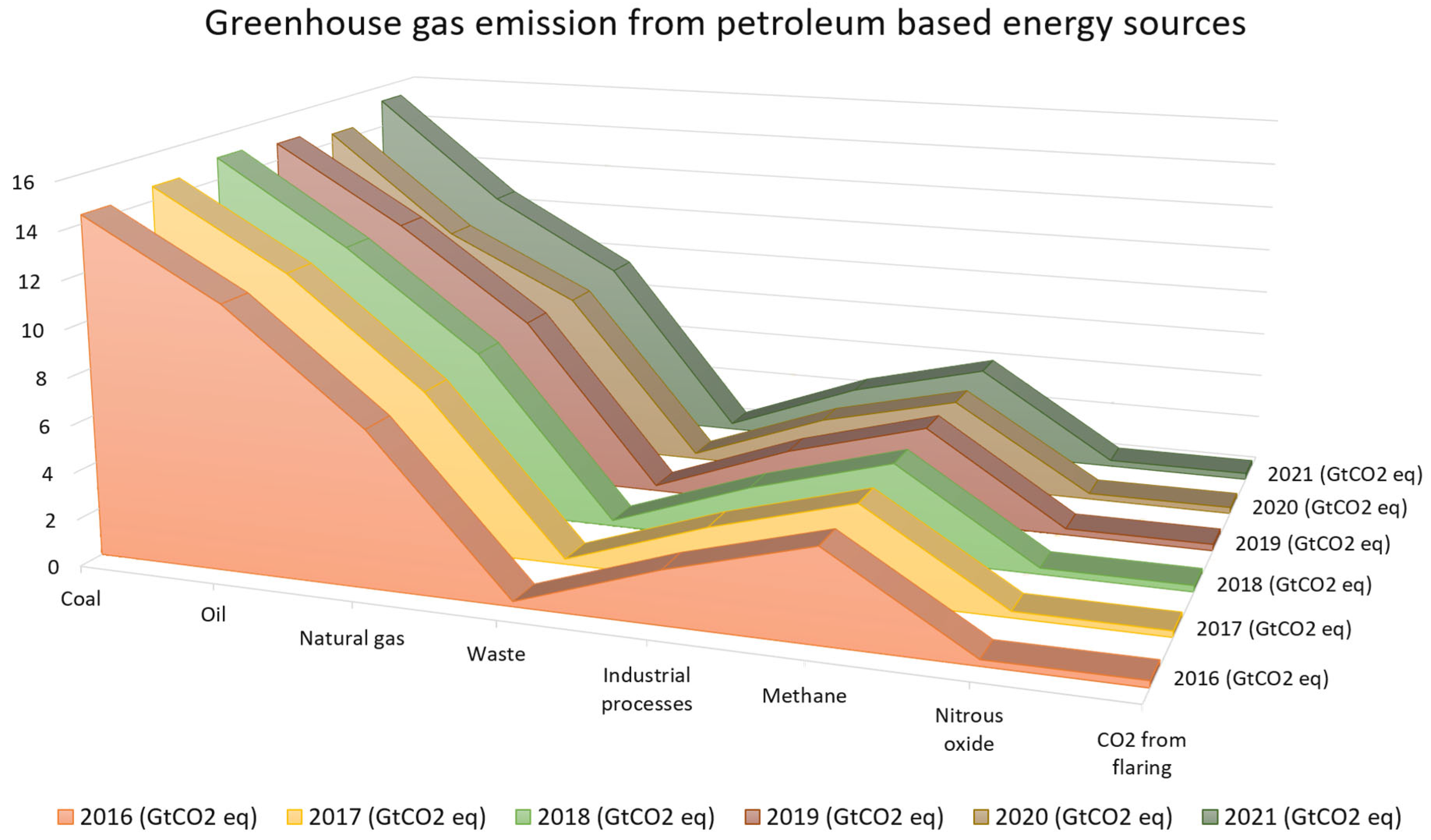
Figure 2.
Aerogel preparation, production and treatment methods towards Sustainability..
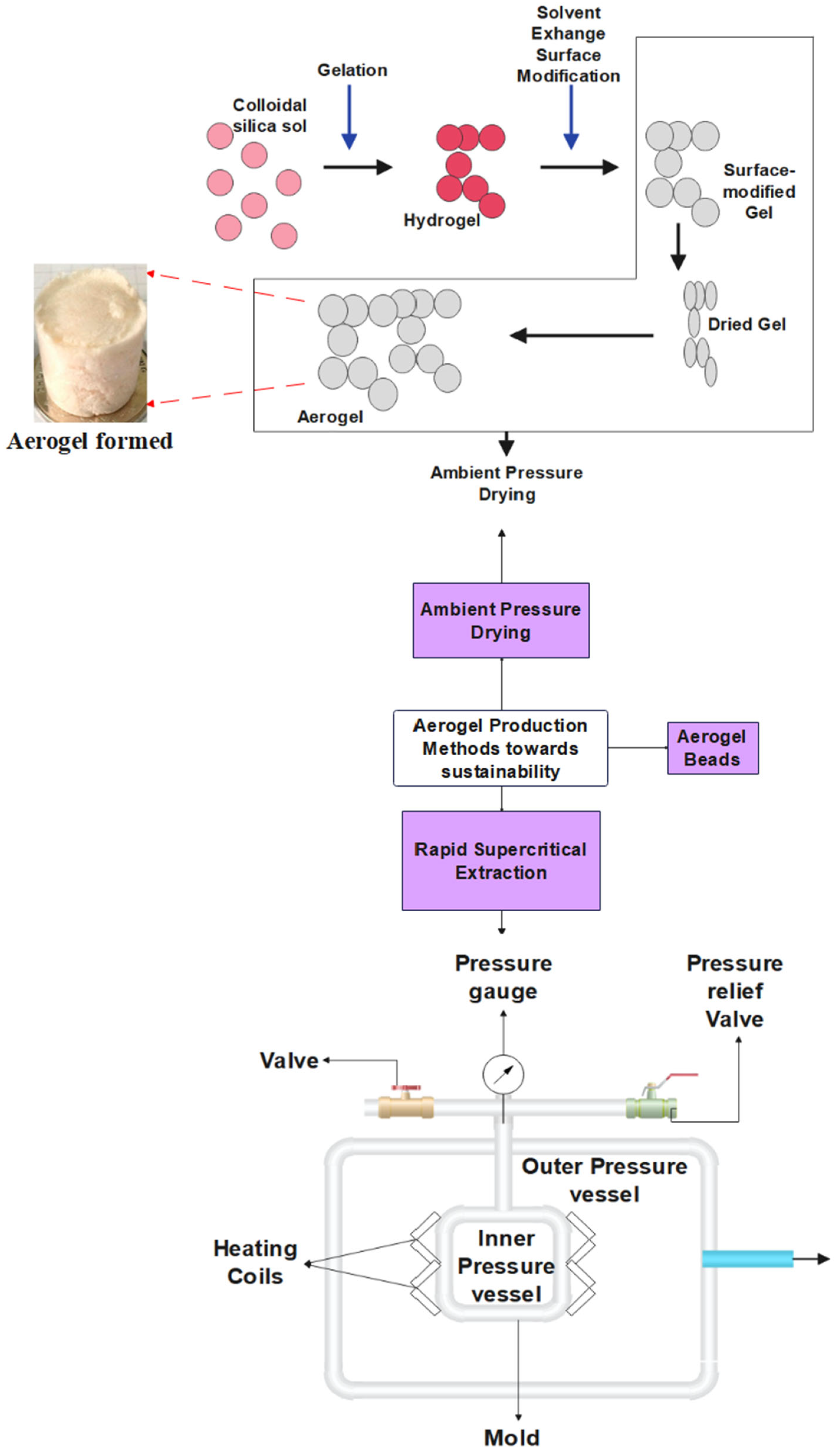
Figure 3.
Manufacturing of Polymer-based Aerogels by using the green technology route.
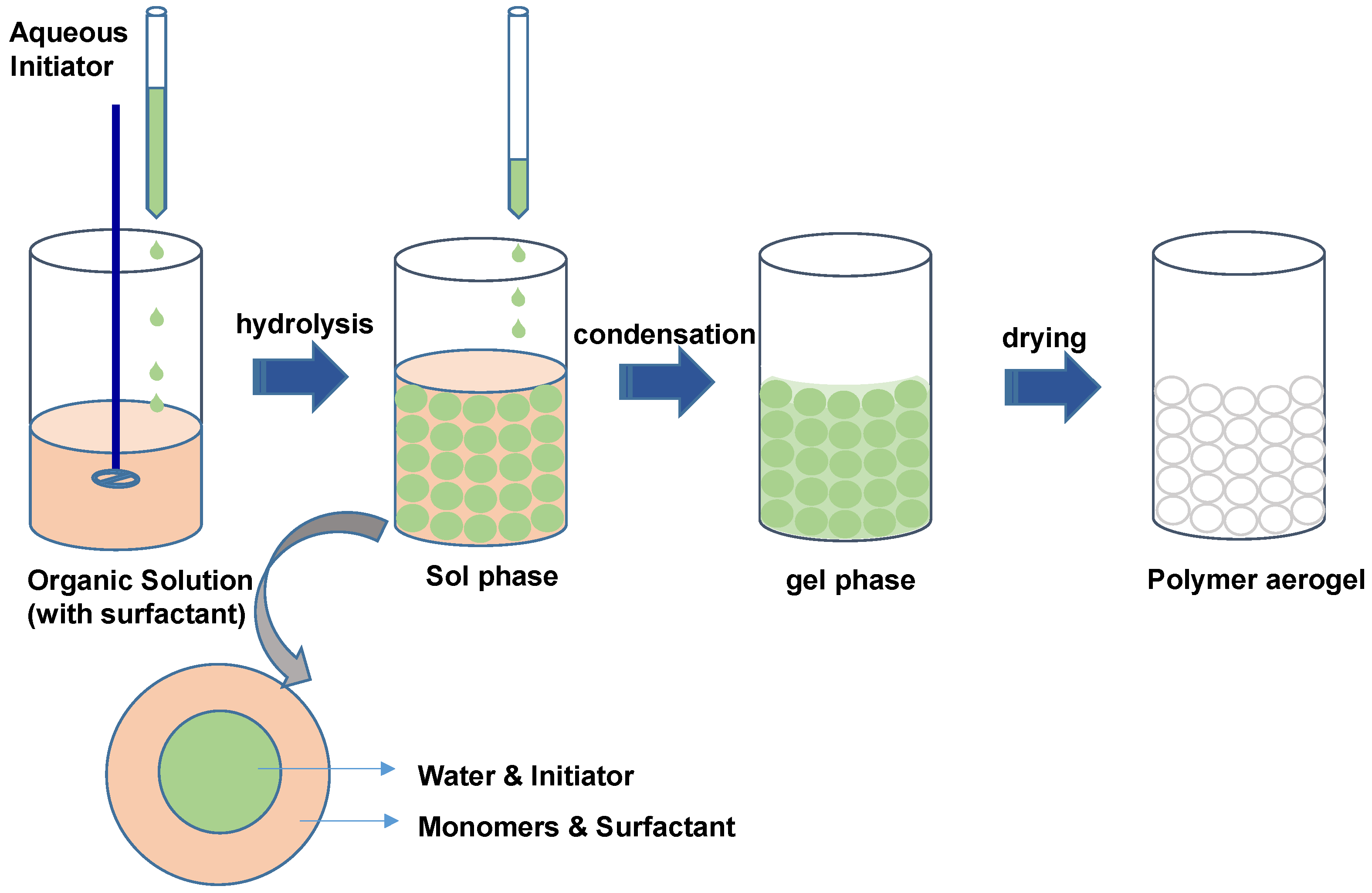
Figure 4.
Schematics of synthesis of biopolymer-based aerogels and tailoring them as per the final requirement.
Figure 4.
Schematics of synthesis of biopolymer-based aerogels and tailoring them as per the final requirement.
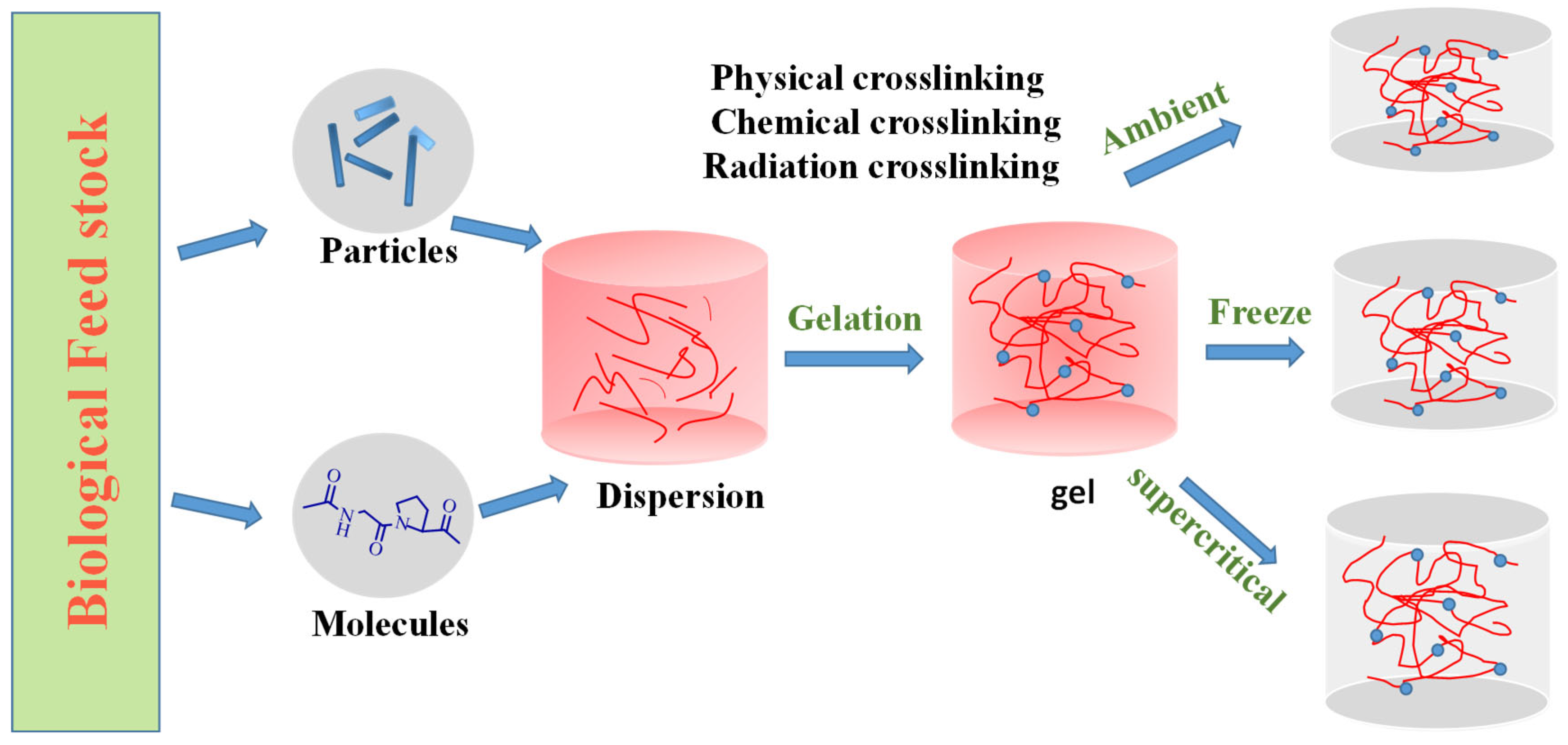
Figure 5.
Silica Aerogel synthesis for Acoustic Applications.
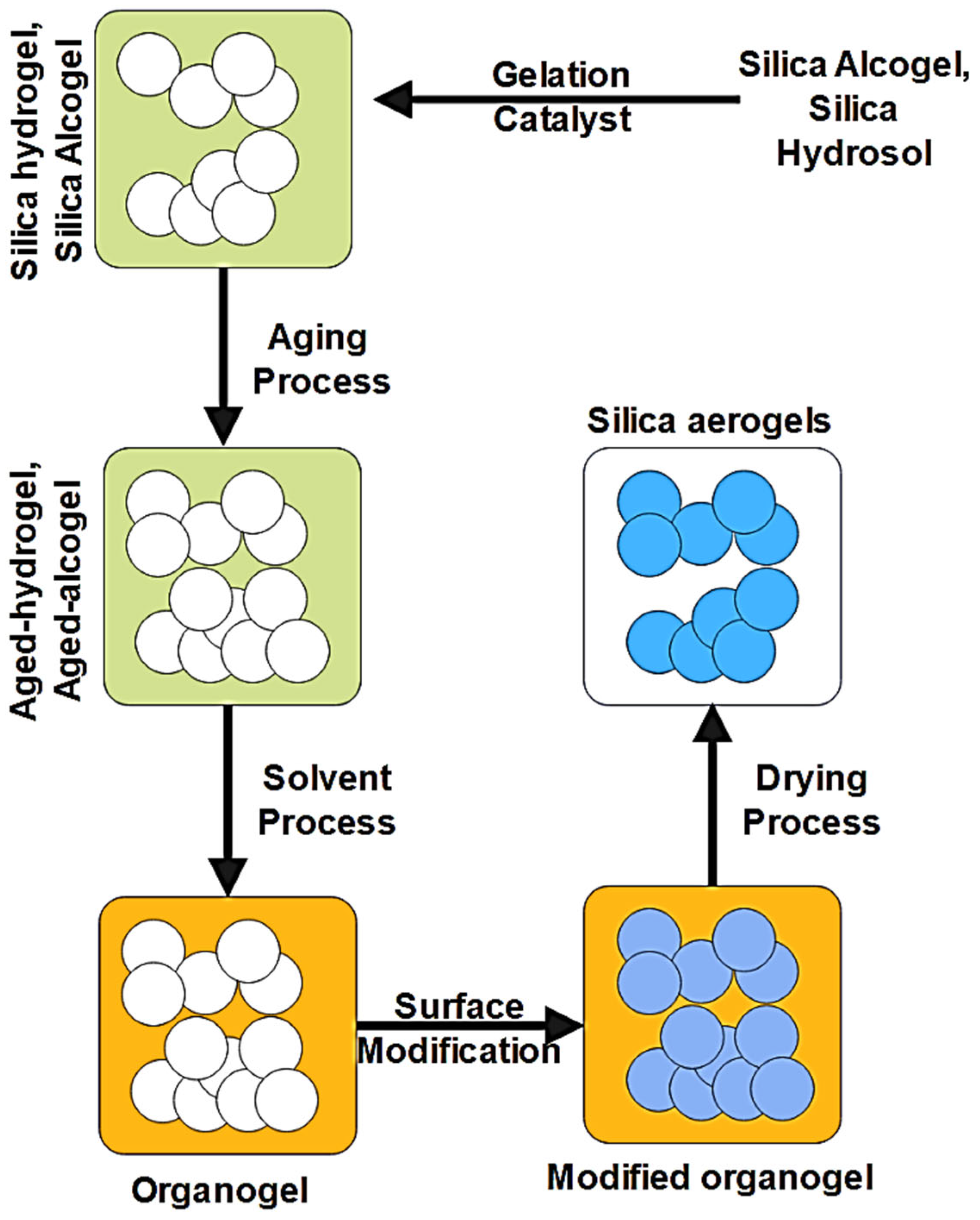
Figure 6.
Applications of Carbon Aerogels in Various Fields.
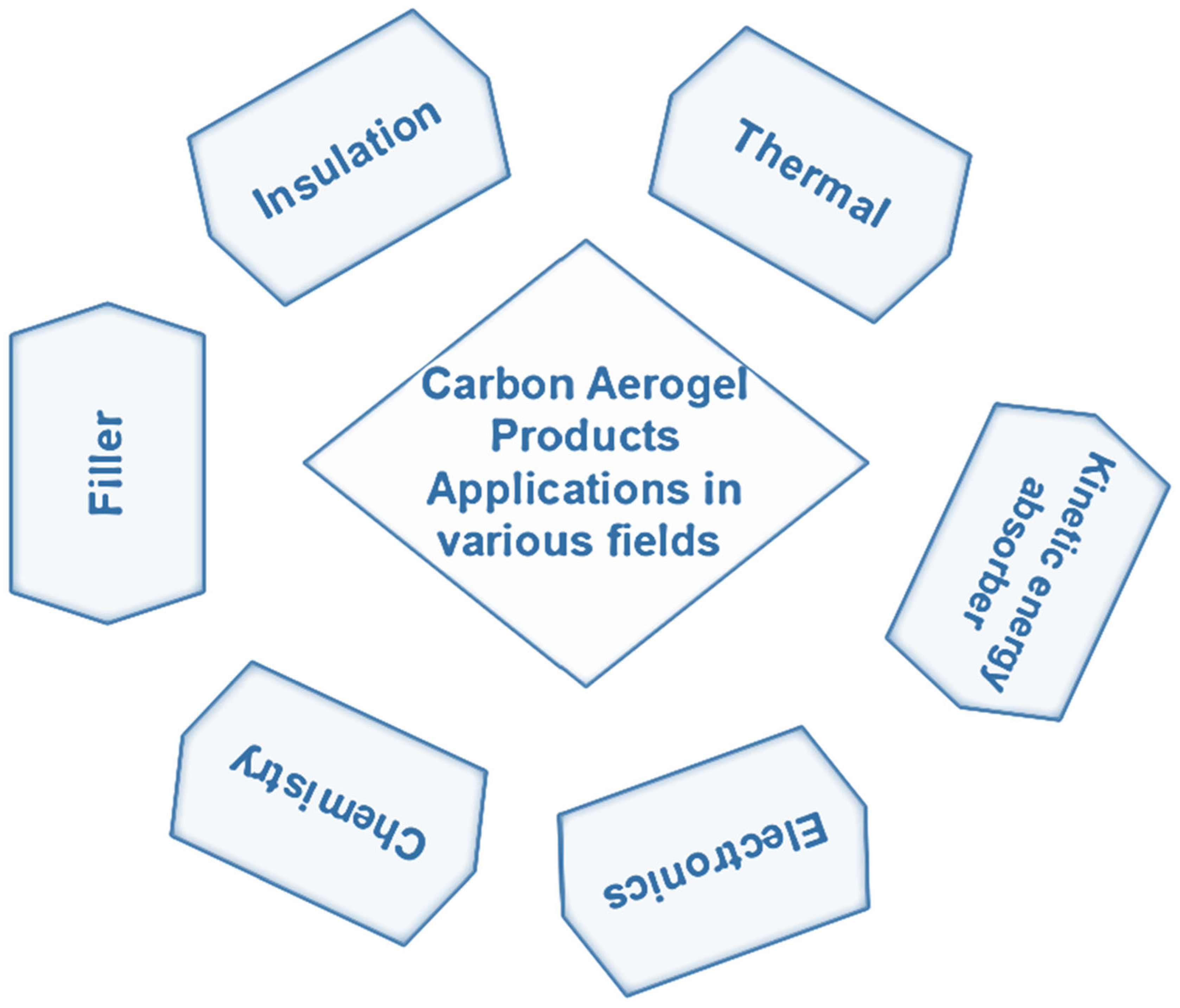
Figure 7.
Formulations of various types of Synthetic Aerosols.
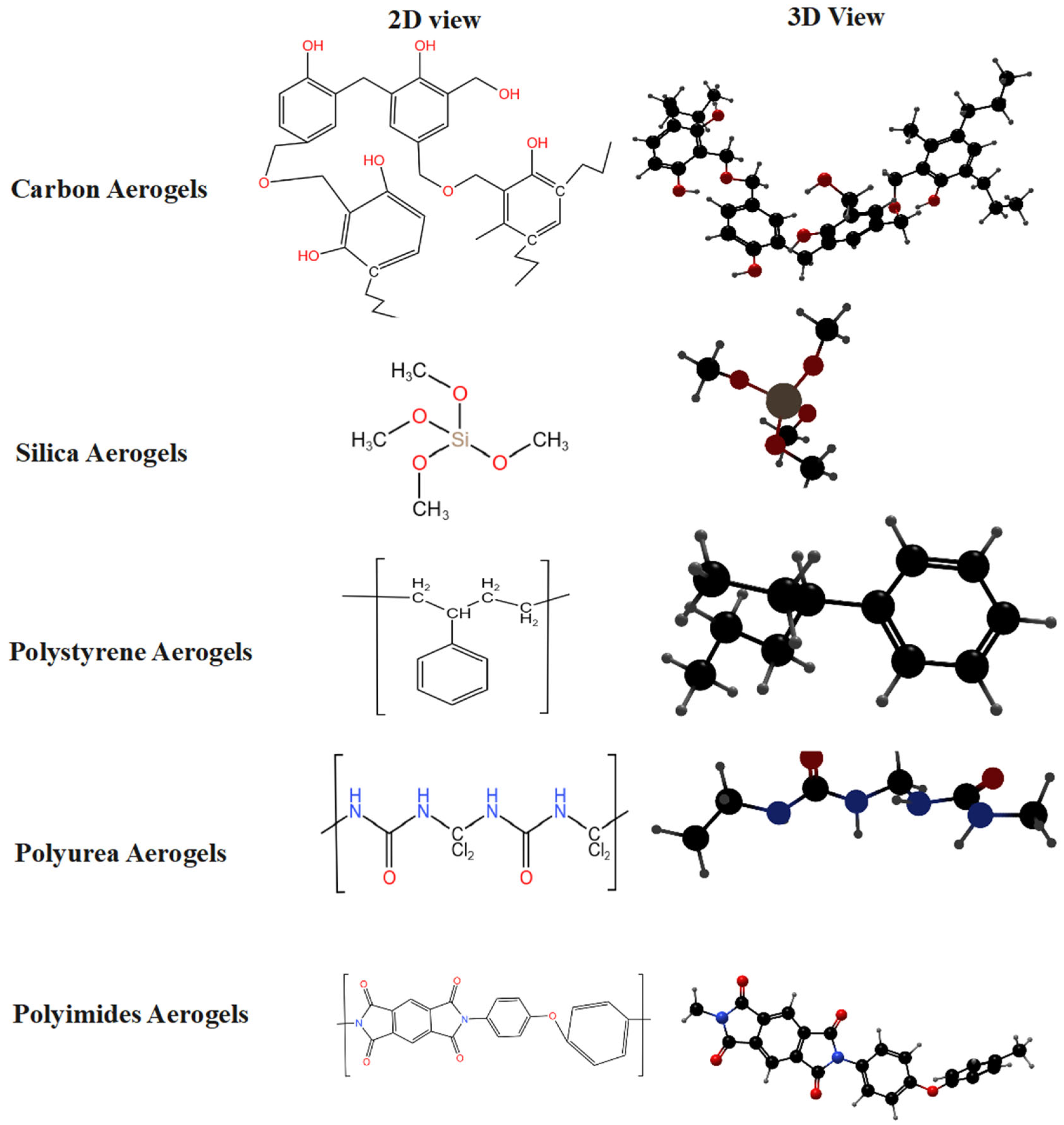
Figure 8.
Several Properties of Synthetic Aerogels.
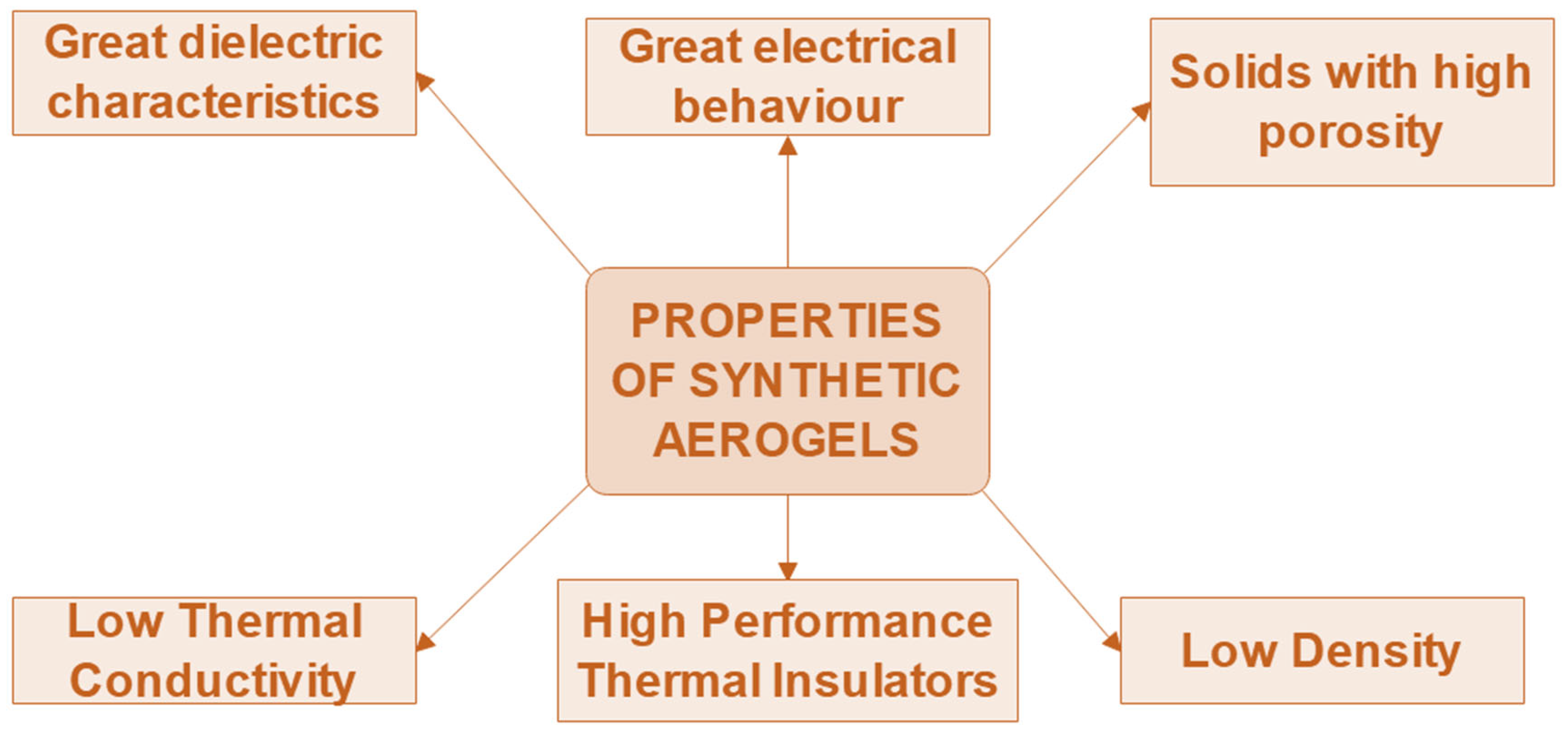
Figure 9.
Broad spectrum of Applications of Aerogels.
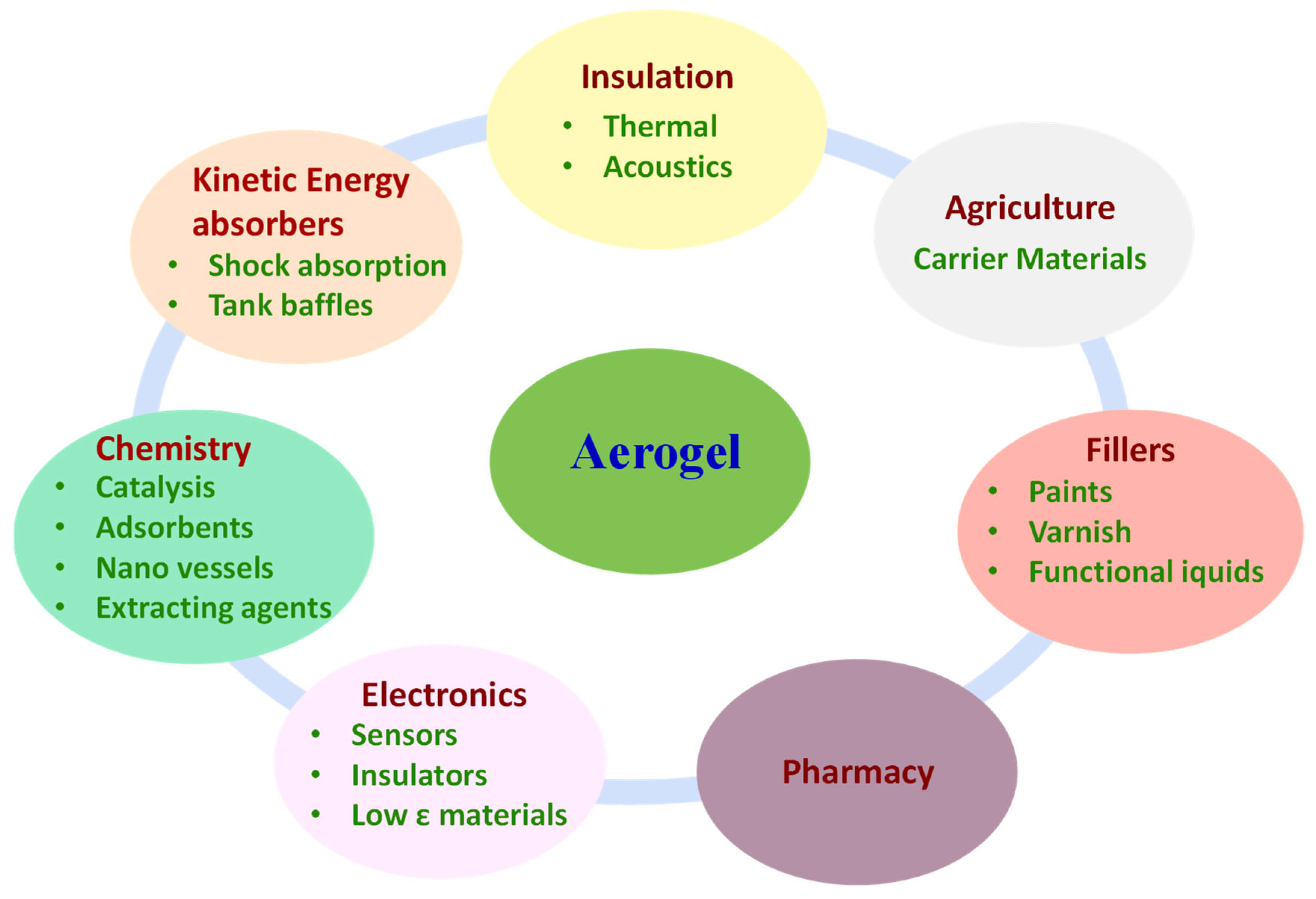
Figure 10.
Scanning Electron Microscopy for Synthetic Aerogels.
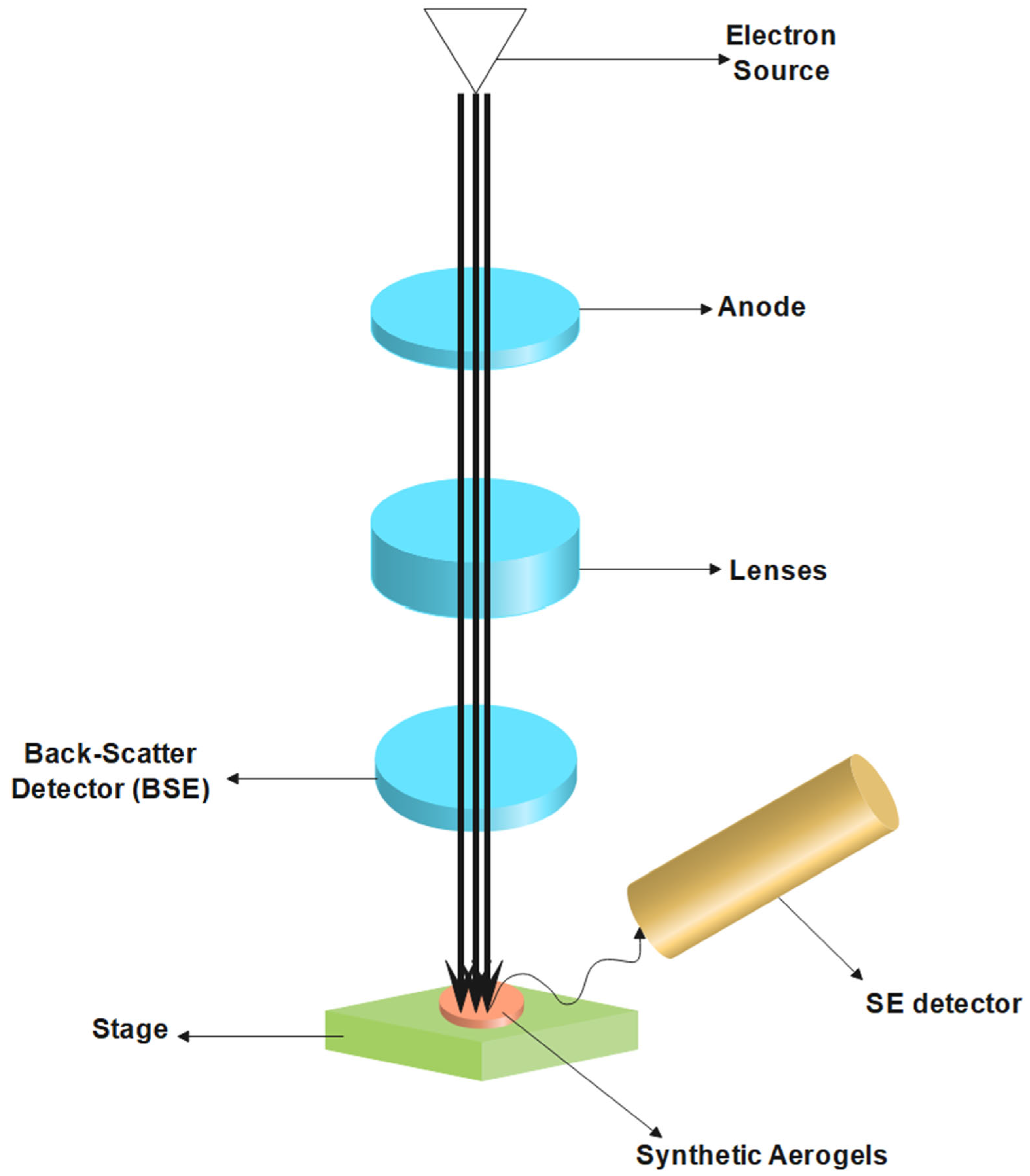
Figure 11.
Current Synthesis Methods of Aerogels.
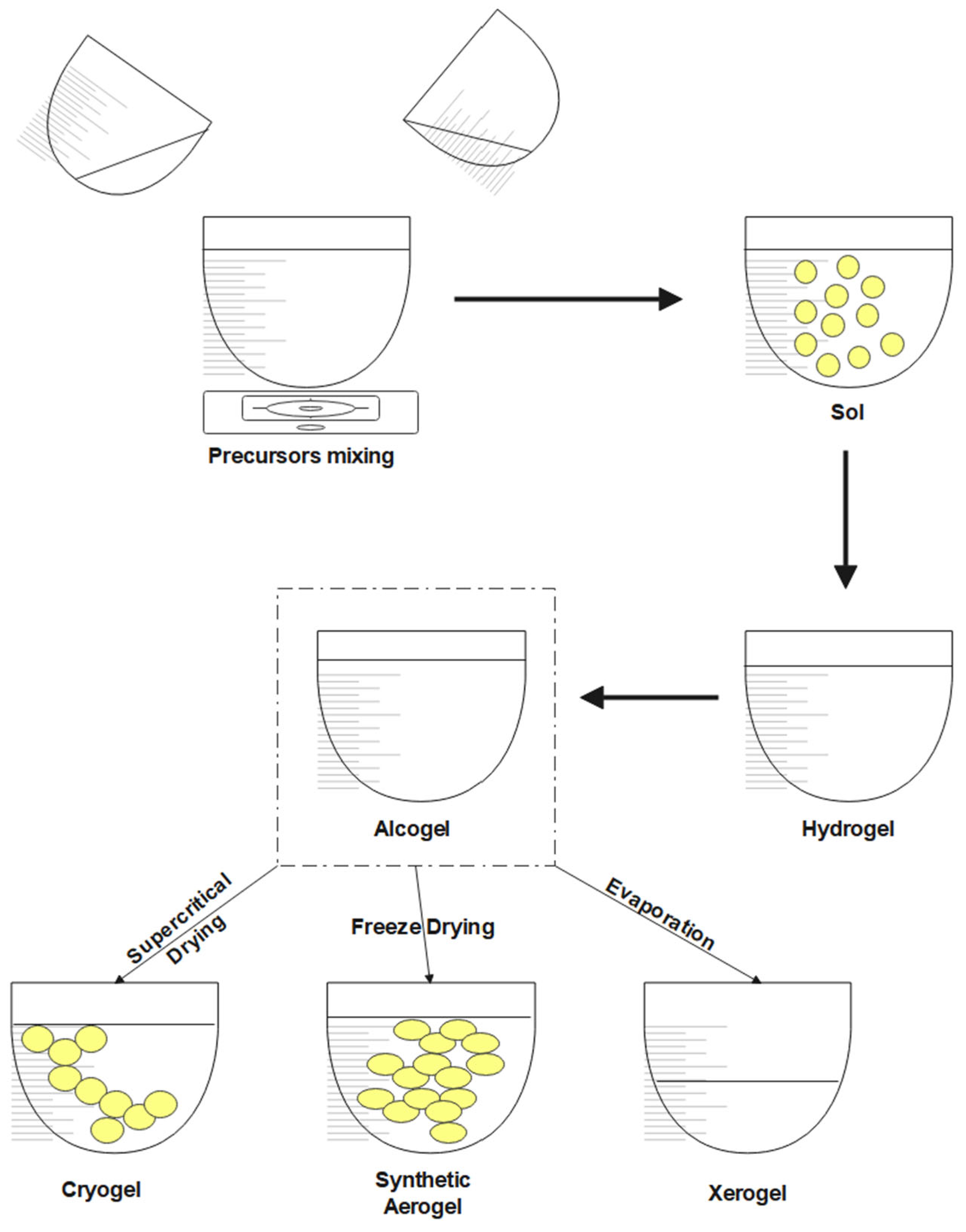
Figure 12.
Current market valuations and future projections of aerogels in USD billions.
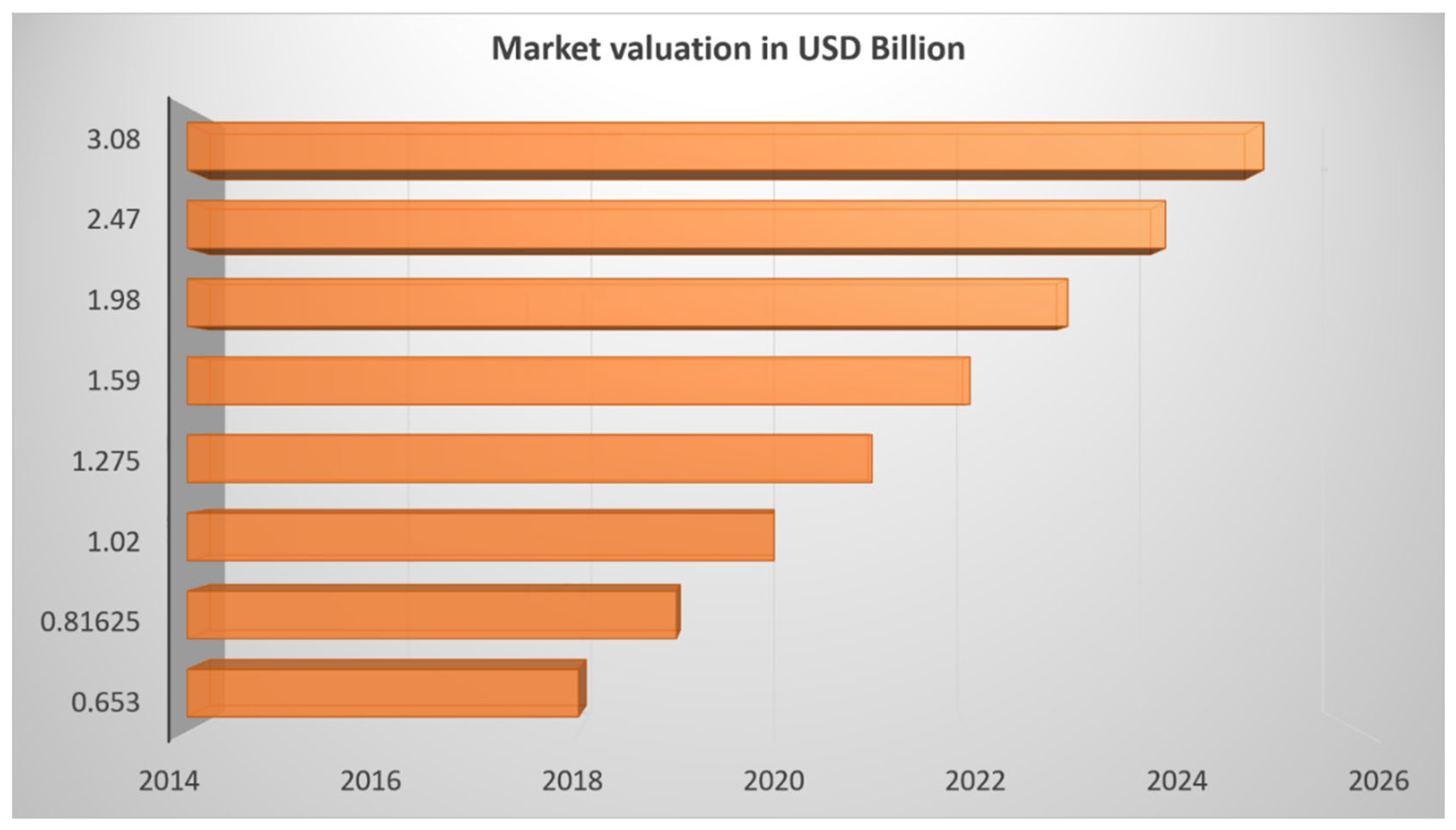

Table 1.
Manufacturing techniques, Properties and Applications of Synthetic Aerogels.
| Aerogels | Manufacturing Technique | Properties | Applications |
|---|---|---|---|
| Silica | Direct expansion of β-cristobalite | 1.Low Thermal conductivity 2.Photoluminescencesuperhydrophobicity |
1. shock absorbers 2. drug carriers 3. Knudsen pumps 4. thermal -superinsulation 5. space technologyautomotive |
| Carbon | Sol-gel polycondensation reaction of resorcinol and formaldehyde | 1.high oil/organic solvent absorption capacity 2.good hydrophobicityelectrically conductive |
1.electrosorption of ions from aqueous solutions 2. rechargeable batteries3.supercapacitors4. broadband nonreflective materials |
| Polyimides | Sol-gel confined transition | 1. good mechanical properties 2. superior hydrophobicity 3. great flexibility low thermal conductivity |
1.solar collectors 2. sophisticatedoptical elements 3. fire resistance 4. Thermal Insulation |
| Polyurea | Sol-gel technique | 1. hydrophobic characteristics 2. Super-elasticity low thermal conductivities |
1. tissue scaffolds 2. shape memory aerogels |
| Polystyrene | 1. Solvent exchange followed by freeze-drying 2. Pickering emulsion |
1. highly hydrophobic 2. oleophilic properties high sorption capacity |
Oil-water separation gas storage |
Table 2.
Composites of Aerogels Features.
| Materials | Composite Aerogel | Method of synthesis | Characteristics |
|---|---|---|---|
| Silica-Titania | Chemical liquid deposition of titania onto silica | Photocatalytic property | |
| Graphene oxide-Silica | In-situ-Sol -gel reaction | Stable Piezo- resistive behavior | |
| Silica | Mechanical Property | ||
| anatase–silica | co-gelation of nanoparticles | Better compositional and structural property | |
| C/Al2O3 | sol-gel process | good strength | |
| low thermal conductivity | |||
| Carbon | organic fiber-reinforced organic aerogel | co-pyrolysis | Superior property than pure Carbon aerogel |
| polyimide (PI)/graphene | Unidirectional freezing | Anisotropic conductivity | |
| EMI shielding | |||
| compression performance | |||
| Graphene | graphene/ZIF-8 | two-step reduction procedure and a layer-by-layer assembly method | high CO2 uptake capacity |
| variable mechanical robustness |
Disclaimer/Publisher’s Note: The statements, opinions and data contained in all publications are solely those of the individual author(s) and contributor(s) and not of MDPI and/or the editor(s). MDPI and/or the editor(s) disclaim responsibility for any injury to people or property resulting from any ideas, methods, instructions or products referred to in the content. |
© 2025 by the authors. Licensee MDPI, Basel, Switzerland. This article is an open access article distributed under the terms and conditions of the Creative Commons Attribution (CC BY) license (http://creativecommons.org/licenses/by/4.0/).
Copyright: This open access article is published under a Creative Commons CC BY 4.0 license, which permit the free download, distribution, and reuse, provided that the author and preprint are cited in any reuse.


