
Submitted:
27 May 2025
Posted:
28 May 2025
You are already at the latest version
Abstract
Access to improved water, sanitation, and hygiene (WASH) services is a fundamental human right that is essential for public health. However, rural communities often experience challenges in accessing these basic services. The main objective of this paper was to investigate the perceptions of community stakeholders in the rural Vhembe District, South Africa, regarding the status of WASH services, focusing on the availability and accessibility of water, toilet facilities, and refuse removal services, as well as potential community-driven WASH interventions that could be acceptable and feasible in the community. A qualitative exploratory approach was used to collect data from 69 stakeholders through focus group discussions, with participants selected using purposive sampling. Thematic analysis revealed that communities struggled with inadequate municipal water supply, leading to reliance on unimproved sources like rainwater, rivers and dams. Financial stable households purchased water from those with boreholes. Both ventilated and non-ventilated pit latrines were used as the primary source of sanitation. Open defecation was still prevalent due to a lack of proper toilet facilities or none. The provision of refuse removal services was also a challenge. The results revealed inadequate water supply, toilet facilities and refuse removal services, which could adversely affect public health. Addressing these issues requires collaboration among various stakeholders to improve WASH services, which is critical to enhancing the quality of life in rural communities, particularly for children under five.
Keywords:
water
; sanitation
; hygiene
; rural communities
; perceptions
; challenges
1. Introduction
Improved water, sanitation, and hygiene services (WASH) are essential not only for children's health, development and overall well-being but also for the country's economic growth. However, access to improved WASH remains an issue of global concern. Progress has been made to provide improved water and sanitation globally; nevertheless, as of 2020, approximately two billion people lacked access to improved drinking water, and 3.6 billion lacked improved sanitation services [1]. Sub-Saharan Africa had the lowest coverage of improved water and sanitation services, with only 61% of the population having access to basic drinking water services and 28% having access to basic sanitation [1]. In low- and middle-income countries (LMICs), access to WASH remains inadequate and inequitable, particularly in remote rural areas and small towns, where a lack of skilled personnel and funding further impedes efforts for equitable access [2].
Improved WASH entails the provision of uncontaminated, adequate water as well as hygienic sanitation facilities, including toilets and refuse removal facilities. These measures should be implemented to prevent diseases and death and improve the health and well-being of the population [3]. Access to improved WASH facilities is reflected as a human right within the 1996 constitutional framework of South Africa [4]. The proportion of households in South Africa with access to improved water slightly increased from 84.4% in 2002 to 88.5% in 2022, while sanitation increased from 61.7% to 83.2% over the same period [5]. However, like in other LMICs, challenges persist in ensuring the reliability, safety, and sustainability of WASH services in rural areas of South Africa [6].
Many rural communities in South Africa depend on untreated groundwater and surface water for their daily needs [7], particularly in the Limpopo and Eastern Cape Provinces, which have lower water and sanitation service coverage [10]. In Limpopo Province, the frequent occurrence of droughts exacerbates this reliance, forcing rural communities to use diverse water sources for both agricultural and domestic purposes [8]. In 2020, 2.4 billion people worldwide lived in water-stressed countries [3]. The Limpopo Province is recognised as one of the water-stressed South African provinces, with the Vhembe District strongly impacted by the water crisis [11]. The 2016 Community Survey reported that only 48.2% of households in Limpopo Province had access to improved piped water inside their dwelling, and 28.5% had no access to improved sanitation facilities [12]. The survey further showed that similar conditions were reported in the Vhembe District due to poor infrastructure development, leaving many communities reliant on unimproved water sources and inadequate sanitation facilities. Water sourced from unimproved sources was often used without any form of treatment. However, these alternative drinking water sources are often vulnerable to point and non-point sources of pollution and are frequently contaminated by faecal matter.
In rural areas, community-based organisations and local leaders are critical in mobilising resources and advocating for improved services, including rainwater harvesting, communal toilets, and hygiene education programs. Although these community-driven initiatives do not replace comprehensive infrastructure development, they provide immediate relief and improve the living conditions of affected communities [9].
In LMICs, lack of access to improved WASH services contributes to high rates of diarrhoeal diseases among children under five and impacts the quality of life [13]. Unimproved hygiene practices also increase the spread of infectious diseases, affecting the well-being of children and their capacity to attend and perform well in school. Moreover, the time spent by children, especially girls, fetching water reduces the time available for educational and recreational activities, further impeding their development [14]. Addressing the lack of access to improved water and sanitation is vital to enhancing the health and well-being of children [15].
The South African government has implemented various policies and measures to address challenges related to WASH. Despite these efforts, implementation had some disparities, leaving significant gaps in service delivery [16]. The lack of provisions to improve WASH facilities could hinder the country's progress and prolong the achievement of Sustainable Development Goal (SDG) 6 by 2030.
Addressing the increased lack of access to improved WASH services in rural communities requires active community participation to share their experiences and perspectives and influence decision-making at the community level. This study aimed to assess how communities in the Vhembe District, Limpopo Province, South Africa, perceived the availability and accessibility of water, toilet facilities, refuse removal services, and possible community WASH interventions that they would find acceptable and feasible in the community. These findings could inform recommendations for evidence-based interventions to tackle WASH challenges and promote sustainable development in rural communities.
2. Materials and Methods
2.1. Study Design and Setting
An exploratory cross-sectional qualitative study was conducted as part of a larger cross-sectional quantitative study conducted in the rural Collins Chabane Local Municipality (CCLM), which aimed at optimizing the nutritional status of infants through WASH interventions. The municipality is one of the four local municipalities in the Vhembe District Municipality (VDM), Limpopo Province, South Africa. The municipality was established in 2016 by amalgamating portions of Thulamela and Makhado Local Municipalities. It is geographically located at 220 35' South and 300 40' East and has an aerial coverage of 5003.1 km2 (500310 hectares), which is 20% of the district's total land size. The municipality is predominantly rural, with a population of about 443,798 residing in 173 communities, two towns and four informal settlements [17]. The municipality is divided into 36 wards, and the six selected communities were from wards 23, 26, 29 and 33. Figure 1 shows a map of CCLM with the location of the selected communities.
2.2. Paradigm and Theoretical Framework
The study was based on an interpretive paradigm, focusing on understanding individuals' interpretations of their experiences without imposing the researcher's views [18]. This paradigm was ideal for gathering insights from diverse participants about WASH services, as it values the subjective experiences and meanings constructed through interactions [19]. The study was grounded in constructivist theory, which posits that knowledge is constructed through social interaction [20], making it crucial to explore how stakeholders perceive WASH services and how their community interactions shape their understanding and experiences.
2.3. Population and Sampling
A total of 69 stakeholders from six communities, including community leaders, elderly people, adults and youth, participated in the focus group discussions (FGDs) (Figure 2). A purposive sampling, with the help of the office of the Traditional Authority, was used to select stakeholders who could willingly communicate and express their views and their willingness to take part in the study. Individuals with mental illness and visual or hearing impairment were excluded as they could not express their views accordingly.
2.4. Data Collection Procedures
Data was collected in May 2022 through eight FGDs, six in Xitsonga and two in Tshivenda spoken local languages. A pre-tested interview guide comprising five open-ended semi-structured questions was used. The questions covered topics such as (1) the availability and accessibility of water supply, sanitation facilities and refuse removal services, (2) stakeholders' perceptions regarding the delivery of these services, (3) potential intervention strategies deemed acceptable within the community, (4) appropriate intervention strategies to improve WASH services in the community, and (5) feasibility of intervention strategies. Probing was based on the participants' responses. The discussions were facilitated by the principal investigator (PI), with the assistance of two research assistants, one taking notes and the other observing non-verbal communication. Data collection occurred while safety measures related to the coronavirus disease 2019 (COVID-19) pandemic were still in place, and these were strictly observed.
2.5. Data Analysis
Audio-recorded information from FGDs was transcribed verbatim and translated from the local languages to English, and the PI checked for accuracy. Identifiers were removed from the transcript before analysis. Thematic analysis was conducted using ATLAS.ti version 8.4.23. Data were organised into text and assigned codes. Similar codes were further grouped to identify meaningful themes. This process involved data reduction and display to assess the relevance and significance of the information.
2.6. Trustworthiness
The study ensured trustworthiness through four key criteria: credibility, transferability, dependability and confirmability [21]. Credibility was ensured by using direct participants' quotations to support the results [22]. Transferability was achieved through a detailed context description, including participant characteristics, setting and procedures for conducting FGDs, to allow other researchers to determine the applicability of the results to similar contexts [21]. To enhance the richness and diversity of the data collected, the use of purposive sampling guaranteed a varied representation from various community stakeholders, with each focus group consisting of participants with the same characteristics. Dependability was maintained by continuous consultation with promoters during data interpretation to identify and address any discrepancies, carefully checked by listening to the transcripts for apparent errors, using ATLAS.ti for data management and organisation, and consistent coding throughout the analysis was considered by establishing clear and stable definitions of codes and categories. The researcher ensured confirmability by maintaining neutrality throughout the data collection and analysis and using field notes and transcripts, guaranteeing the results reflected participants' experiences without researcher bias [21].
2.7. Ethical Considerations
The study received ethical clearance from the Health Sciences Research Ethics Committee of the University of Free State (UFS-HDS2020/1422/2710). Approval of the study was obtained from the Limpopo Department of Health (LP_2020_10_033). Thereafter, permission to conduct the study was obtained from the Traditional Authorities. Written informed consent was obtained from all involved stakeholders after the purpose of the study was explained to them. Confidentiality was maintained throughout the data analysis, and codes were used for quotes. Participation in the study was strictly voluntary, and participants were allowed to withdraw at any time if they felt uncomfortable. Participants were not exposed to any risks or harm by participating in the study. Participants were requested not to disclose personal sensitive information outside the research setting, though the PI could not guarantee this.
3. Results
The data were grouped by similar themes, and verbatim quotes from individual stakeholders were included. Individual stakeholders were labelled using a code. The first two letters represent the community code, followed by the letter indicating the stakeholder type (L – leader, E – elderly, A – adult, and Y – youth), and lastly, the participant code.
3.1. Stakeholders' Perceptions of the Availability and Accessibility of Water
In rural communities, the main source of household drinking water is from the municipality; however, it was often unavailable for up to a month at a time. When it was available, access was limited to only a few hours during the day or sometimes during the night, and not everyone in the communities could access it. Stakeholders from different groups highlighted the following as reasons for a lack of water:
"Water unavailability is due to illegal connections from the main water pipe to individual households, bypassing the community reservoir. On days when municipal water is available, only those with such connections have access to water, leaving others without. Furthermore, the leaking reservoir exacerbates the situation. On the side where I am residing, it has been nine months without water, and I have to rely on households fortunate enough to have water. Sometimes, I have to wait for them to finish using the tap before I can access the water. I am unsure who is responsible for fixing the reservoir from the Tribal Authority" (TS-A04).
"Municipal water is available once or twice per month, and its availability is not uniform across the entire community. We often alternate with neighbouring communities to secure access" (SH-E02). Other participants in the same group supported this sentiment.
"Our water shortage issues began when we started alternating access to water with neighbouring communities. Back in the days of the old Gazankulu government under Ntsanwisi's leadership, we had daily access to water. However, even when the Nandoni dam is full, water distribution to different communities happens at varying times. Unfortunately, on the days we are supposed to receive water, it is often not accessible" (XG-L02).
"It has been observed that water no longer reaches the community reservoir; instead, it goes directly from the pump to communal taps, leaving some taps still dry. People channelled water to the sides of the residence. To ensure that water is distributed to all taps, the community decided to contribute R2 per household to buy padlocks for water control points in order to prevent unauthorised access and ensure fair water distribution, ultimately helping people to access water without struggling" (MK-Y02).
When stakeholders were asked about an alternative way to access water, they reported travelling long distances to access water from neighbouring communities. Others relied on purchasing water from those with private boreholes or hired vehicles to fetch water for them from other communities, which could be unaffordable for the unemployed. Figure 3 shows a truck hired to buy water from neighbouring communities. Different group stakeholders disclosed that:
"People from other areas within the community still find themselves travelling long distances to get water. Availability and access to municipal water are irregular. Nevertheless, a scheduling system has been put in place to ensure the availability of water to neighbouring communities. When water is scheduled to be available in our community, it does not supply all areas" (NG-A01).
"I resorted to buying water from those with boreholes due to the unavailability of water within our proximity" (NG-A06).
"It is not easy to access municipal water in our community due to its unavailability. We rely on purchasing water from households with boreholes" (SH-E01).
"It's been three years since the water pipes were installed, yet there is still a shortage of water in our community. We have had to resort to hiring vehicles to fetch water from neighbouring communities" (XG-L04).
"Due to inconsistent water availability, we began alternating water access with neighbouring communities every two to three days. Since December 2021 and early January 2022, we have faced severe shortages, resorting to hiring vehicles to fetch water for drinking and cooking from communities with access to water while still using dam water for bathing and laundry" (MK-Y01).
The majority of the stakeholders mentioned the reliance on alternative water sources, including rainwater, dams, rivers, and wells. One group of stakeholders emphasised the use of rainwater as their primary source. Stakeholders expressed that:
"In our community, rainwater serves as our primary water source since municipal water is scarce and often unavailable for up to two weeks at a stretch. When it rains, it's a blessing as we can collect water. However, rainwater quality deteriorates quickly, so we purify it using salt and boiling methods instead of bleach, which we are not accustomed to. Rainwater is one of the water sources that is accessible to us when it is raining. Another source of water is a well" (TS-A01).
"Some households face extreme poverty and struggle to afford water. They resort to using water from the dam, which is contaminated due to waste dumping. Government intervention to assist these disadvantaged families would be greatly appreciated" (MK-E03).
Stakeholders from one community indicated satisfaction with the availability of water, noting that every household had access to municipal water within their yards. When asked if the taps inside the yard were installed following the proper procedures, all stakeholders responded affirmatively. One said:
"Every household in our community has a tap within the yard, except for those in newer residential areas. Currently, we have access to water, and if there is ever an issue, it is usually quickly resolved, ensuring water availability the following day" (NT-Y02).
In the MK community, participants described past challenges in accessing water. However, for the two weeks preceding the study, they were pleased with the water service, indicating that water was available and accessible every day. Participants expressed a hopeful desire for the water situation to remain available. Two participants said the following, with others supporting their views:
“Concerning water services, we had a long history of struggle. Back in 1998/1999, we relied on water from the dam, and even before that, when we were children, community members used water from the dam and wells. Around the year 2000, communal pipes were installed; although I'm not sure of the water source, whether it was a borehole or not, the water was salty. Eventually, we had access to clean water, but then issues arose again, leading us to use water from the dam. However, since last week, we have not had any issues with water" (MK-Y06).
"Accessing water was challenging in the past, and we used to alternate with our neighbouring community every two days. After we had stopped alternating with them, we only had access to water twice a week. However, there came a time when we faced a prolonged period without water, and we struggled. Recently, our Counsellor worked diligently with one of the community members, resulting in us having access to water every day for the past two weeks" (MK-E02).
Stakeholders expressed concern about the quality of borehole water, as it is salty, which makes drinking water and the taste of cooked foods undesirable. One adult stakeholder said:
"We rely on salty water from the boreholes. Our cooking experiences are often diminished due to the lack of fresh water, resulting in our meals frequently lacking taste. When bathing, we must use foam baths for proper skin care" (NG-A3).
In response to the water shortage, community members took the initiative to repair dysfunctional boreholes and implemented a scheduling system for water distribution within their community. One stakeholder stated:
“In my area, there are non-functional water taps. The community decided to come together to repair the abandoned municipal borehole to meet our water needs. Despite our efforts, the borehole does not adequately supply water to the entire community” (NG-A05).
Water infrastructure and maintenance challenges
Water shortage in all these communities was attributed to infrastructural issues, including non-functional communal water taps and dysfunctional boreholes. Again, it was reported that the municipality did not adequately maintain these infrastructures, leading to their dysfunction. Concerns were also raised about the adequacy of maintenance for water tanks and purification systems, as the water was sometimes found to be unclean. Stakeholders stated that:
"Our community is facing a severe water shortage from the municipality, and its accessibility is relatively difficult. The boreholes erected by the previous homeland government are no longer functional, and there is no initiative to repair them under the current democratic government" (SH-E03).
"Among all the essential services, water delivery is crucial as it is a basic need, especially for cooking. There are eleven boreholes in our community, but none are operational. The government needs to repair these boreholes to ensure the community has access to water" (TS-A06).
"In our community, we often go for some period without water. And when we do get water, it is usually not clean. I wonder if this indicates a lack of proper purification or perhaps contamination from dirty tanks. I am not sure of the purification process on-site, so I am just speculating" (XG-L07).
Participants expressed a loss of trust in the government due to poor service delivery and unfulfilled promises. Despite ongoing efforts to build new water infrastructure aimed at ensuring water availability, they remained unconvinced about the completion of these construction projects. One of the community leaders said:
“Rumours are circulating about the construction of a reservoir that supposedly will provide water to the communities once completed. However, this is not promising, and our trust has been lost” (XG-L01).
3.2. Stakeholders' Perceptions of Sanitation (Toilet) Facilities
Regarding the availability of toilet facilities, pit latrines (with or without ventilation pipes) were reported as the primary form of sanitation in all the communities. Many households had benefited from ventilated-improved pit (VIP) latrines through the government's reconstruction and development programme (RDP). However, there were still households, particularly in newly developed residential areas, without toilet facilities, which led to the practice of open defecation.
From one community, participants indicated the measures taken when a household does not have a toilet facility, and one said:
"Residents in newly developed residential areas are given three months to build a toilet, and failure to comply results in fines from the Tribal Authority office. However, due to financial constraints, some prioritise other needs first" (MK-E06).
One participant expressed her own experience by saying:
"I do not even have access to a toilet within my household, and I have resorted to using the bush, which is challenging for young children. I therefore dug a hole for children to help themselves, but the challenge comes when there is no water available for hand washing afterwards" (TS-A07).
In all communities included in the study, the availability of sewage systems was limited, and only a few households that had access to borehole water had their own septic tanks for flush toilets.
Participants acknowledged the historical reliance on open defecation and the gradual transition to using pit latrines over time. However, participants indicated that the condition of pit latrine facilities was unsatisfactory in some households due to financial constraints. Moreover, financial constraints hindered households from prioritising the construction of toilets despite regulations and fines imposed by local authorities. One elderly stakeholder said:
"Back then, we used the bush to relieve ourselves, and it was unsanitary, and we did not realise the health risks. We did not have alternatives because the toilets were not available. Nowadays, not having a toilet can result in fines. To avoid penalties, some people quickly construct toilets, even if they are not in good condition, often due to poverty. Surprisingly, in other communities, the government builds toilets for every household through the RDP, which is not the case in our community. We would appreciate it if we could get such a service here as well" (MK-E02).
Furthermore, issues of unsanitary conditions arose when pit latrines were not in good condition or full, and some households delayed building new ones, resulting in the practice of open defecation, which was hazardous to the health of the people. Participants indicated that the government had built pit latrines and promised to empty them when full, but failed to fulfil its commitment. Participants raised the following concerns:
3.3. Stakeholders' Perceptions of Refuse Removal Facilities
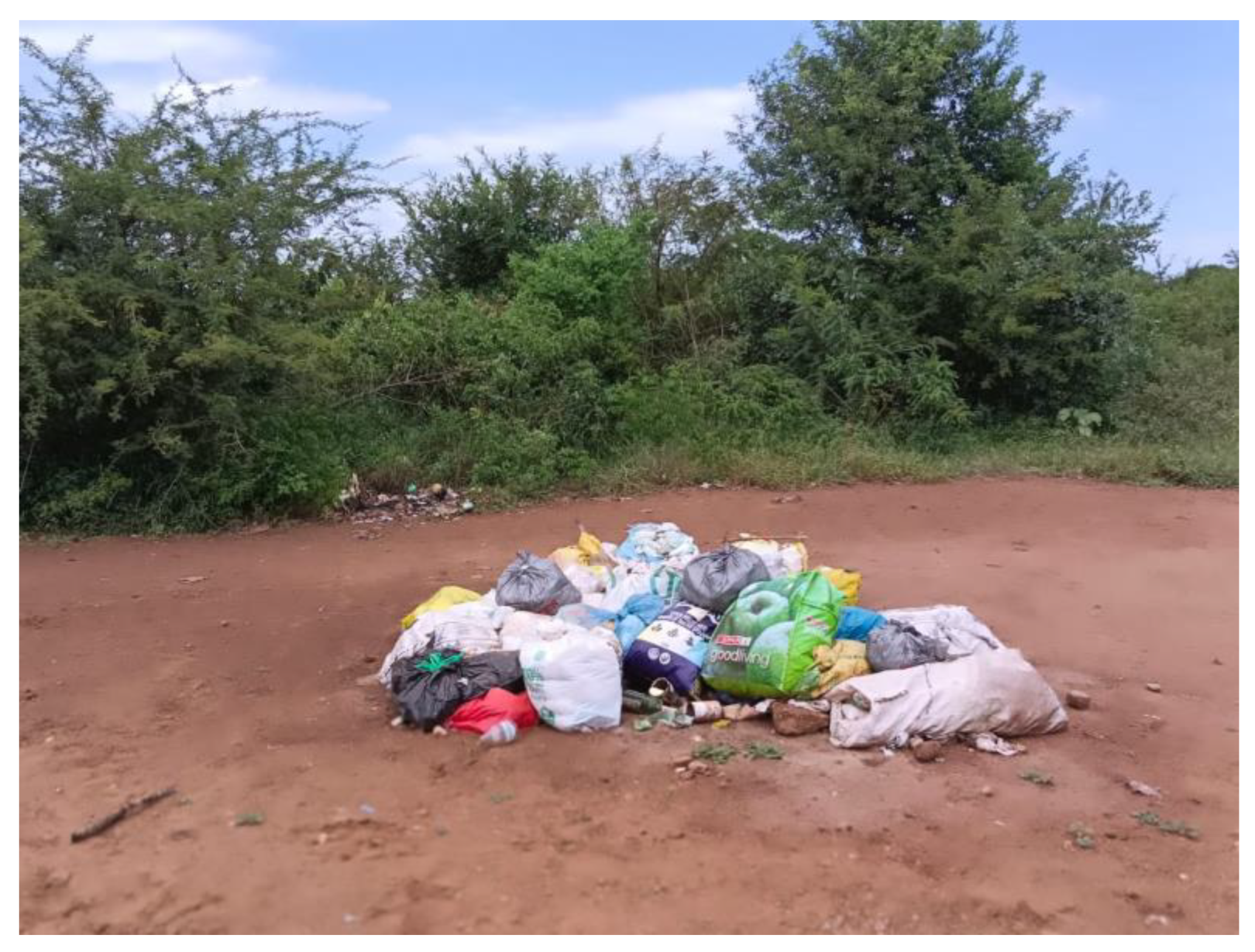
Stakeholders expressed concerns about the infrequent availability and accessibility of municipal refuse removal services. It was reported that waste removal vehicles only come once a month or every two months, leading to delays in waste collection. Due to a lack of municipal services, communities resorted to various methods of waste disposal, including digging holes within their households and transporting waste to available skip bins, which were accessible only to those in proximity or having vehicles. Additionally, participants indicated that some community members dump waste near water bodies, exacerbating pollution and health hazards. In contrast, others dump it in designated areas along the roadside, as shown in Figure 4, and domestic animals often scatter it around. Stakeholders had the following to say about the lack of refuse removal services:
"The government is wasting money because the appointed contractor for waste removal focuses solely on semi-urban areas (townships), neglecting their duties in rural communities. Consequently, within our community, people have designated specific areas for waste disposal, yet there are no waste collection vehicles. Some people dump trash, including used disposable nappies, in the bushes, posing severe hazards, especially during the rainy season when such debris is washed into the river, where livestock graze" (NG-A11).
"Waste dumping is also a problem near the dam, where some people discard their waste. This is particularly concerning as many of us fetch water from the dam for household use. The waste ends up polluting the water when it rains. While municipal vehicles are collecting refuse in other communities, we do not have any coming to collect refuse in our area. Despite promises of municipal waste collection, it never materialised. People continue to dump waste indiscriminately, including disposable nappies" (MK-E09).
"In our community, the level of service delivery regarding refuse removal is lacking, unlike what has been experienced in the township. Refuse removal vehicles only come once a month to collect waste, including disposable nappies, and there are often delays. I am unsure if the refuse collectors will wait for the designated refuse areas to fill up before collection. Along the roads, designated refuse areas were established when people started dumping trash anywhere. However, when the collection is delayed, these areas become full and emit unpleasant odours" (TS-L02).
One group of stakeholders expressed satisfaction with the refuse disposal service provided by the previous homeland government. However, participants criticised the current democratic government for its poor performance, stating that it has failed to fulfil its commitments. An elderly participant made this statement:
"During the Gazankulu government era, every family was instructed to dig a dumping hole in their households, and there was a dedicated monitoring unit overseeing compliance. However, this practice was discontinued when the current democratic government promised to collect waste from the designated areas" (SH-E01).
3.4. Stakeholders' Concerns About WASH Service Delivery
The stakeholders expressed different sentiments towards the government's service delivery, particularly concerning essential services like water supply, toilet facilities and refuse removal. Stakeholders indicated that the services are not up to standard, leaving them unhappy and unsatisfied. Stakeholders voiced the following concerns:
"Reflecting on the availability of water for the past two weeks, I feel content, hoping it remains consistent. However, the lack of support for waste management is disappointing. Our area is becoming increasingly dirty, and we urgently need assistance" (MK-E05).
"In terms of water service delivery, we are content because water is available whenever we need it. However, our concern lies with sanitation services of refuse removal, as the unpleasant smell emitted is not suitable for our health" (NT-Y04).
Stakeholders also expressed environmental and health concerns associated with poor WASH services on public health and well-being, highlighting hygiene-related issues and the potential for waterborne diseases. They indicated that relying on unimproved alternative water sources puts their health at risk, as these sources are contaminated due to improper waste disposal, including dumping in bushes and near water sources like dams and rivers, as well as the practice of open defecation. During rain, debris is washed into dams and rivers and contaminates the water. Pollution from waste, such as disposable nappies, further contaminates water sources, making them unsafe for consumption and agricultural products. Furthermore, water shortage leads to a lack of handwashing practices after using toilets, which contributes to the spread of diseases. Some of the stakeholders raised the following health concerns:
"We are deeply dissatisfied with the services we are getting because they are causing infections. The lack of access to clean, safe water leads to the spread of infectious diseases, and inhaling polluted air due to environmental contamination is not healthy either. The government needs to take action to protect our health as a community for a better quality of life" (XG-L05).
"The government needs to prioritise providing essential services to the people, considering that we are the ones directly affected. Lack of sanitation services, such as toilet facilities and refuse removal, pollute the environment and put our health at risk. We respectfully urge the government to fulfil its duty to the people by ensuring effective service delivery" (NG-A05).
Participants highlighted the importance of transparent and consistent government communication regarding service delivery. There's a perception among participants that the government neglects their needs, particularly outside of election periods. They feel that their concerns are ignored, and promises made by politicians are not fulfilled. Stakeholders raised these as concerns:
"We are not pleased with the service we are provided. It feels like this government is taking advantage of us, only showing interest during elections to secure our votes and positions in office. Once elections are over, they forget about us and focus on their own life" (XG-L11).
"The pace at which our government renders services is slow and is hindered by political conflicts. It is so irritating that during election periods, promises of improved service delivery are made, and some individuals even resort to bribery to secure votes. However, when the time comes for actual service delivery, progress is slow, and essential needs remain unmet" (NG-A01).
Furthermore, participants reported the existence of a non-profit organisation, Adopt River, which involved volunteers in door-to-door refuse collection. However, the organisation became non-functional due to a lack of support and incentives from the government sector. Moreover, the unavailability of essential supplies such as plastic refuse bags and disposable gloves led to inappropriate handling and disposal of waste. Participants highlighted that refuse removal services are regularly done in township areas, probably because residents contribute financially to the service, unlike in rural communities, where such payments are not required.
3.5. Proposed Acceptable, Appropriate and Feasible Intervention Strategies to Improve WASH Service Delivery
3.5.1. Acceptable WASH Intervention Strategies
Stakeholders were asked to indicate the intervention strategies that could be acceptable to the community for improving WASH service delivery. One of the community leaders voiced his views by saying:
"Coming up with intervention strategies is the responsibility of the municipality. As community members from the Tribal Authority office, our role is to communicate our concerns to the municipality. Despite submitting recommendations, we are still waiting for service delivery regarding water sources, distribution, and supply. In the meantime, we can only implement temporary intervention strategies. For instance, acquiring water tanks could help alleviate the situation, especially for boreholes lacking pumps. If we could obtain these pumps and connect them to the boreholes, we would have a more reliable water supply" (TS-L01).
Participants indicated that the government should prioritise repairing non-functional water pipes, addressing leaks in reservoirs, and clearing blockages in main pipes to ensure equitable water distribution to all communal taps. They emphasised the importance of maintaining existing water infrastructure, including pressure pumps and communal taps, to provide a consistent water supply. Participants expressed the following views:
"I believe that maintaining the old pipes could alleviate the water shortage crisis. Additionally, installing pressure pumps on the tanks could ensure that water reaches all parts of the community. It seems the government has overlooked the fact that the population is growing; the current pipes only serve the previous population size. Surveys should inform them of population growth and household expansion" (XG-L01).
"For the government to address the water problem, it is necessary to repair the reservoir, which has been leaking for quite some time, resulting in water loss. Additionally, addressing blockages in the main pipes is crucial to ensure equitable water distribution to all communal taps. Proper maintenance of pipes and taps is essential for everyone's access to water" (TS-A09).
"The government ought to halt the tender process and instead provide services through relevant departments. This action would be necessary due to the corruption in the tender system, leading to instances where poor-quality materials are used. For example, the Department of Public Works could be responsible for rendering most services" (NG-A02).
Stakeholders also suggested strategies to enhance sanitation facilities that would be acceptable to their communities. They emphasized the need for the government to provide RDP latrines for every household, as done in other areas. However, due to delays in government support, some community members have constructed their pit latrines. To improve waste management, they proposed placing more skip bins throughout the community to make them easily accessible, as the current placement is not convenient for all residents.
Moreover, participants highlighted that the provision of education and awareness campaigns on proper water conservation, waste management, and hygiene practices could empower community members to take ownership of their environment and contribute to improving service delivery. These are what stakeholders had to say:
"It would be beneficial to fix the boreholes in all sections and educate the community about conserving our resources to alleviate water struggles" (TS-L04).
"When skip bins are provided, it is necessary to inform the community members and educate them on proper refuse disposal practices. Additionally, people should refrain from littering along the way. Some individuals do not put much effort into cleaning their yards, resulting in mixed-up dirt. Therefore, receiving workshops on environmental care and personal hygiene is crucial" (MK-Y06).
3.5.2. Appropriate WASH Intervention Strategies
Participants have indicated that the appropriateness of intervention strategies depends on the precision and efficiency with which municipal employees execute their duties. Stakeholders had criticised government authorities, including the VDM, as the water service provider, for their failure to address the issue of water shortage. They had called for the government’s intervention to investigate and resolve water shortages and the malfunctioning of infrastructure. Community leaders indicated that:
“A temporary solution for ensuring water availability is to repair the boreholes and install pumps. Additionally, the municipality should provide water tanks for emergencies” (TS-L02). However, the installation of water tanks was objected to, “It would not be appropriate for the municipality to provide water tanks because there are already standpipes within our yards. According to government rules and procedures, water tank services are only offered to areas without standpipes” (TS-L03).
The stakeholders had expressed concern that some households that were supposed to benefit from RDP pit latrines have not received them and still lack adequate toilet facilities, while others have two within their households. They called for improved government support and service delivery to ensure universal access to proper toilet facilities, particularly in newly developed areas. Participants said:
"Regarding sanitation services, it would be better if the government could provide temporary mobile toilets for those without toilet facilities. This measure would contribute to maintaining a clean environment, ultimately promoting better health outcomes for us" (NG-A02).
"Some households are unable to build latrines due to poverty, and the government must assist in such cases. The government should offer support through the RDP, although the selection criteria are not clear at times. In other communities, there is no selection process, and toilets are built for everyone, regardless of whether they have existing toilet facilities. Access to such services would be beneficial for us, too" (MK-Y02).
Additionally, stakeholders emphasised the appropriateness of regular refuse removal to maintain a clean and hygienic living environment. They expressed frustration with the government's failure to provide adequate waste collection services in rural communities. Despite designated areas for waste disposal, the municipality has not been consistent in collecting trash, leading to overflow and unsanitary conditions.
3.5.3. Feasibility of Proposed WASH Intervention Strategies
Several factors influence the feasibility of the intervention strategies proposed by the stakeholders. These include the government's commitment and accountability to service delivery, budget allocation, stakeholders’ engagement and collaboration.
3.5.4. Government's Commitment and Accountability
Stakeholders expressed uncertainty regarding the government's commitment to service delivery, citing unfulfilled past promises. They reported that the proposed strategies could be highly feasible if the government genuinely dedicates itself to addressing community needs and prioritising service delivery over personal interests and electoral gains. Concerns raised by participants included the unequal distribution of water, allegations of mismanagement, and neglect by the government. Due to a loss of trust in the government, participants called for transparency and accountability from government authorities concerning service delivery plans and actions. They suggested that the government should be accountable for the contractors who failed to complete their jobs and should take punitive action to ensure task completion. Participants affirmed that achieving the proposed intervention strategies is possible, provided the government leaders dedicate themselves wholeheartedly to serving the communities. Other participants mentioned the following:
“I believe that all the intervention strategies we discussed could potentially work. However, given the current state of service delivery, I am uncertain. While anything is possible, there seems to be a lack of willingness from the municipality to provide services to the people. If you watch television or listen to the radio, you will see that poor service delivery is a problem across South Africa. Our government leaders seem to prioritise their interests. In this situation, we may or may not agree because many of the things we had been promised did not materialise" (XG-L02).
"The government is not failing; it is actively choosing not to act. If they were interested, they could have provided the services they did in other communities. There are refuse removal vehicles available through the municipality, so why are they not being deployed to collect refuse in our community?" (MK-E05).
"The feasibility of these strategies depends on whether the municipality acknowledges our concerns. Remember, we elected these municipal officials, and if they want our votes again, they must heed our concerns and deliver on their promises" (TS-A01).
3.5.5. Availability of Resources
Some participants believe that budget constraints play a huge role in hindering service delivery. However, others argue that the government actively chose not to deliver services despite the availability of resources. The feasibility of the proposed strategies may depend on whether adequate funds are allocated and effectively utilised for service delivery. Participants voiced different opinions:
MK-E01: "I would not definitely say "Yes" it would be feasible or "No" it would not be feasible because it depends on the budget at the time. There is a possibility they might provide the services years later when we urgently require such services. Budget allocation plays a crucial role in prioritising tasks based on available funds."
"Service delivery would be possible only when the government demonstrates a sincere commitment to it. During the budgeting process outlined in the Integrated Development Plan (IDP), funds are allocated annually for water, roads, and other essential services. However, at the end of every financial year, nothing has been done. This leaves us questioning the whereabouts of the allocated funds and what has been accomplished with them" (NG-A04).
"There are enough refuse removal vehicles from the municipality. If only they could schedule a day in a week to visit our community for refuse collection, it would be immensely beneficial" (NG-A03).
3.5.6. Stakeholders’ Engagement and Collaboration
Participants emphasised the importance of active engagement between the government and the communities. They believed that effective communication and collaboration could lead to the implementation of proposed interventions. However, concerns were raised about the responsiveness of municipal officials and the need for community leaders to convey concerns effectively. While community leaders like ward councillors serve as representatives to convey concerns to the municipality, participants felt it is still necessary for them to have a direct communication channel with municipal officials to eliminate misinformation or partial reporting. Furthermore, participants believed that empowering community members to act and collaborating with local authorities could enhance the feasibility of these intervention strategies.
"I believe all the proposed intervention strategies could be feasible. As a community, we need to prioritise our concerns and submit them to the municipality. Each year, during the IDP meetings, the municipality offers a platform to discuss our concerns and provide necessary services. As we are living in a democratic South Africa, we can engage with various stakeholders and voice our concerns. However, it is imperative that our concerns are conveyed to the municipal office for action rather than just discussing them without any follow-up" (TS-A05).
"It would be essential for us to be educated so we gain the knowledge and skills necessary to care for the environment in which we reside effectively"(MK-Y04).
"Creating a community project for refuse removal would be beneficial, especially if we receive support from the municipality for waste collection" (MK-Y05).
In the absence of adequate government intervention, stakeholders proposed the establishment of a dumping site and the appointment of individuals to be responsible for managing garbage. They also suggested forming community groups to monitor refuse disposal and coordinate with the municipality to provide skip bins.
"To achieve these intervention strategies, we should form a community group to monitor refuse disposal. This group will coordinate with the municipality to ensure the provision of skip bins. They would also report when the dumping site is full, prompting for collection" (NT-Y11).
"There was an Organisation called Adopt River, which was comprised of women. They used to collect refuse in our community. Unfortunately, the Organisation disbanded due to the government's failure to provide payment. If we could establish a similar Organisation, with the government supporting us, it would be immensely beneficial” (MK-E06).
4. Discussion
4.1. Availability and Accessibility of Water
Most of the stakeholder groups highlighted the issue of water scarcity, a challenge that was prevalent across all the communities involved. During the discussions, it was noted that the community faced water scarcity due to a variety of factors, such as ageing infrastructure, inadequate maintenance, illegal water pipe connections and poor service delivery. In Vhembe district, water supply challenges were mainly due to system breakdowns due to lack of maintenance, aged infrastructure, illegal connections, and vandalism of the infrastructure due to poor security [23]. Rural communities of Limpopo and Mpumalanga Provinces experienced a high level of water shortage, and members decided to make illegal connections from the main line to their households [24]. The practice of tempering with water pipes led to water leakage and uneven distribution [25], and the maintenance of the water supply systems was hardly done [23]. The Department of Water and Sanitation acknowledged that there had been a neglect of refurbishment and infrastructure maintenance in many municipalities, encouraging municipalities to pay sufficient attention to maintenance and proper water and sanitation infrastructure operation [16].
Participants in the current study expressed the need for rehabilitation of the dams, water reticulation, reservoir construction, standpipe installation, and borehole refurbishment. These community needs were consistent with those identified in the CCLM community needs assessment in 2021, involving various stakeholders like traditional leaders, community members, NGOs, parastatals, and government sectors, as reported in the municipality [26]. This reflects a broader recognition of ongoing water challenges in the municipality.
The irregular availability of municipal water, restricted to a few hours a day or night, posed serious challenges, forcing community members to develop coping strategies. They resorted to using rainwater, water from the wells and rivers, and purchasing water. It was also reported that other community members repaired dysfunctional boreholes and implemented a scheduling system for water distribution within their community. Similar results were observed at HaSanari, a rural village in the Vhembe district, where community members often went for two or more weeks without municipal water, or the tap typically ran for two to three hours, usually in the evening, leading them to establish a water committee for water and sanitation management [2]. Rural communities in Limpopo and Mpumalanga Provinces purchased untreated water from households with boreholes when municipal water supplies were unreliable [24]. In rural communities of the Vhembe district, when community boreholes were dysfunctional, community members bought water from water vendors or used water from the rivers and fountains [23]. Using unimproved water sources raised concerns about waterborne diseases, as these sources are not protected.
4.2. Availability and Accessibility of Sanitation (Toilet) Facilities
Sanitation in the municipality is another challenge for service delivery, which needs attention due to environmental and health hazards. Regarding toilet facilities, the study reported that communities relied on pit latrines as their primary source of sanitation, and very few had flush toilets as they had access to borehole water. The study conducted in the Vhembe district unveiled that the predominant sanitation facilities used were pit latrines and pits with a concrete slab, with 39.8% constructed by the municipality and 24.7% by the households [25]. Whether ventilated or not, pit latrines contribute to groundwater contamination, posing risks to human and ecological health associated with microbiological and chemical contamination [24]. Current participants expressed their desire for better sanitation and the need for government RDP VIP toilet facilities. However, they highlighted concerns about discrepancies regarding the allocation of these latrine facilities. The municipality is also aware of the need for RDP latrines, as was reported during municipality public participation sessions in 2022 [26]. The noted discrepancy might be due to a lack of appropriate policy on identifying beneficiaries for VIP toilets, which presented a challenge to the Vhembe district municipality, as indicated in the IDP 2023-2024 review.
This study found that open defecation persisted among individuals without access to toilet facilities due to financial constraints, unsatisfactory toilet conditions, or living in new residential areas due to population growth. Despite a fine imposed by the Tribal Authority, [25] noted that 3.6% of households in CCLM practised open defecation, while 1.1% resorted to using their neighbour's pit latrine. Similarly, the act of open defecation was observed in one-third of rural households in Ghana [27]. This practice not only poses environmental and health risks but also affects the dignity and safety of individuals. It is imperative for the municipality and Tribal Authority to promote and assist households in acquiring well-maintained toilet facilities to minimise open defecation practices.
4.3. Availability and Accessibility of Refuse Removal Facilities
The lack of municipal refuse removal services had led community members to engage in unsafe waste disposal practices, such as disposing of solid waste in non-designated places along the road and open spaces near rivers or dams. In contrast, participants in the rural Northern Cape expressed concerns regarding the municipality's failure to enforce regulations against individuals dumping waste in unauthorised areas.
The limited availability of skip bins, accessible only to those in proximity and with vehicles, has further worsened the inappropriate waste disposal practice, as people were not willing to travel long distances to drop off waste. The results are aligned with [28] and [29], indicating that the distance between residences and waste disposal sites significantly impacts waste management in rural areas of Northern Cape, South Africa and China, respectively.
Some households were reported to have resorted to digging trash holes within their yards. Study participants expressed the urgent need for adequate skip bins, refuse collection and cleaning of all dumping sites. The results of this study confirm the susceptibility of rural areas to inadequate waste management facilities, leading to littering and illegal dumping. During the 2021 public participation process, stakeholders across the entire municipality expressed concerns about refuse removal services [25]. In response, the local municipality is currently implementing an ongoing formalisation and outreach initiative to expand refuse removal services to underserved rural communities.
Participants expressed their dissatisfaction with refuse removal services provided by the current government compared to the old regime. They criticised the current government's waste management performance, indicating unfulfilled promises and poor service delivery. The availability of NGOs like Adopt River played a crucial role in improving waste management practices. However, their effectiveness was hindered by a lack of government support, resulting in operational sustainability challenges.
4.4. Stakeholders' Concerns About WASH Service Delivery
The dissatisfaction among stakeholders with government service delivery, particularly in water supply, toilet facilities, and refuse removal services, was revealed in the study. The VDM is the provider and water service authority responsible for water supply and sanitation facilities, and its goal is to ensure that every household gets adequate and reliable water. However, the local municipality still experiences a backlog in fulfilling this mandate due to the need to upgrade infrastructures, refurbishment and reticulations [25].
Participants emphasised the importance of transparent government communication regarding service delivery. They believed clear and consistent communication would assist in managing community expectations, enhancing trust, addressing grievances and ensuring that community needs and concerns are adequately addressed. Merei and colleagues identified a gap in communication between the VDM and the community in decision-making processes and other engagements and suggested that involving community members could improve water and sanitation service delivery [25]. Participants expressed the belief that improved communication from the Hantam Municipality in the Northern Cape would assist the community in maintaining cleanliness in their surroundings [28]. Transparent communication plays a critical role in fostering community engagement and improving service delivery outcomes.
The improper disposal of waste, which is not systematically collected in rural municipalities, open defecation practice due to inadequate toilet facilities and population growth in newly developed areas were highlighted as severe contributors to environmental pollution and public health concerns, leading to an increased spread of infectious diseases. A study in rural Northern Cape revealed participant concerns about health issues arising from the municipality's failure to remove refuse, particularly as children play in these dump areas [28]. Furthermore, the lack of handwashing practices due to water shortages exacerbates the transmission of infectious diseases. These poor practices could hinder the progress towards achieving the SGDs, especially those related to good health and well-being (SDG 3), quality education (SDG 4), and access to clean water and sanitation (SDG 6).
4.5. Potential Proposed Intervention Strategies
The WASH strategies are critical for improving health outcomes and ensuring sustainable development in rural communities. The study participants proposed potential intervention strategies that could be acceptable, appropriate and feasible to improve water and sanitation services in their communities.
Implementing educational programmes and awareness campaigns was identified as a viable strategy to empower community members. Equipping them with the skills to manage and maintain WASH facilities is crucial for ensuring their long-term sustainability and enhancing feasibility through empowering a sense of ownership, thereby improving service delivery. A study conducted in the rural Northern Cape suggested an increase in educational efforts focusing on environmental cleanup and recycling programmes and awareness campaigns, which could contribute to maintaining cleanliness and hygiene in the areas [28].
Participants in the study expressed mixed feelings about the government's behaviour regarding financial resources. Some participants believed that budget constraints limited adequate service delivery. On the other hand, other participants pointed to the government's perceived lack of commitment to deliver. These mixed feelings have implications for the feasibility of WASH interventions. The government should ensure adequate budgets are allocated, used and managed transparently and efficiently. Policies and monitoring mechanisms should be in place to strengthen government accountability and commitment to build trust and ensure the successful implementation of WASH strategies. Based on the current results, the feasibility of potential WASH intervention strategies lies in government commitment and accountability to service delivery, allocation of adequate financial resources, community engagement and stakeholder collaboration.
5. Limitations of the Study
The study relied on stakeholders' perspectives at the community level and excluded insights that could have been gained from the CCLM officials. Complete accuracy of verbatim translation cannot be entirely guaranteed due to the potential challenges translators face in handling ambiguous terms or phrases, which could result in misinterpretations when the context is not comprehensively understood. The use of thematic analysis involves subjective interpretation of data, which may have introduced bias depending on the researchers' perspectives and assumptions. However, necessary procedures were made to ease the researcher's bias. Despite these limitations, the study provided valuable qualitative data that could guide targeted intervention strategies aimed at improving WASH services in rural communities, offering a foundation for further research and development initiatives in similar contexts.
6. Conclusions
The outcomes of the study have contributed to the knowledge of the WASH situation in rural communities of CCLM. The results have helped in the identification of specific areas requiring intervention to support the achievement of SDG 6 by 2030, which aims to ensure universal access to improved WASH services. A prevalent issue reported across all communities in the study is water scarcity. Disparities were noted in the availability and condition of sanitation facilities within these communities. While some households had access to improved latrines or toilet facilities, others resorted to open defecation due to a lack of proper sanitation infrastructure and financial constraints. The inadequate provision of refuse removal services by the municipality emerged as another issue of concern.
The lack of access to improved water, inadequate toilet facilities, and refuse removal services are major challenges to effective service delivery. Urgent attention is needed to improve the health and well-being of the population. Addressing these inadequacies requires sustained investment in infrastructure, continuous maintenance of facilities, and more efficient implementation of policies to ensure equal access to improved water and sanitation services. Collaborative efforts among stakeholders are essential to implement evidence-based WASH intervention strategies that empower communities and lead to economic growth.
Therefore, the study provides some recommendations to alleviate the WASH challenges prevalent in rural communities of CCLM. In situations where municipal water is unavailable, alternative safe water supply options, such as water tanks, should be provided to ensure a consistent and adequate water supply to the communities, irrespective of the availability of communal standpipes. Continuous awareness of the importance of using clean and safe water and practising proper sanitation is crucial to support government interventions. The government must support community participation in all WASH-related activities to enhance sustainability. Furthermore, well-defined WASH regulations and policies should be developed and made accessible to ensure that all stakeholders involved, including government structures, tribal authorities, community members and the private sectors, fulfil their responsibilities diligently and accountably. This current study was confined to community members; thus, future studies should include local municipal officials to obtain their perspectives pertaining to the study focus.
Author Contributions
Conceptualisation, T.A.M.; methodology, T.A.M.; validation, L.v.d.B., C.N.N. and F.C.v.R.; formal analysis, F.C.v.R.; investigation, T.A.M.; resources, T.A.M.; data curation, T.A.M.; writing – original draft preparation, T.A.M.; writing – review and editing, T.A.M., L.v.d.B., C.N.N. and F.C.v.R.; supervision, L.v.d.B. and C.N.N.; project administration, T.A.M.; funding acquisition, T.A.M. All authors have read and agreed to the published version of the manuscript.
Funding
The University Capacity Development Programme funded the study.
Institutional Review Board Statement
The study was conducted according to the guidelines of the Declaration of Helsinki, and approved by the Faculty of Health Sciences Research Ethics Committee of the University of the Free State (UFS-HDS2020/1422/2710) on 14 October 2020 and the Research Ethics Committee of the Limpopo Department of Health (LP_2020_10_033) on 16 November 2020.
Informed Consent Statement
Informed consent was obtained from all stakeholders involved in the study.
Data Availability Statement
Data presented in this study are available upon request from the corresponding author due to privacy and ethical reasons.
Acknowledgments
The authors would like to thank the office of the Tribal Authority of the participating communities for allowing us to conduct the study. Also, we would like to acknowledge all stakeholders who participated in the study.
Conflicts of Interest
The authors declare no conflicts of interest. The funders had no role in the design, execution, interpretation, or writing of the study.
Abbreviations
The following abbreviations are used in this manuscript:
| CCLM | Collins Chabane Local Municipality |
| FDGs | Focus Group Discussions |
| IDP | Integrated Development Plan |
| NGOs | Non-governmental Organizations |
| PI | Principal Investigator |
| RDP | Reconstruction and Development Programme |
| SDGs | Sustainable Development Goals |
| VDM | Vhembe District Municipality |
| VIP | Ventilated Improved Pit |
| WASH | Water, Sanitation and Hygiene |
References
- WHO, UNICEF. 2021. Progress on household drinking water, sanitation and hygiene 2000-2020: five years into the SDGs. Geneva, Switzerland. World Health Organization (WHO) and the United Nations Children’s Fund (UNICEF). Licence: CC BY-NC-SA 3.0 IGO.
- Abrams, A.L.; Carden, K.; Teta, C.; Wagsaether, K. Water, sanitation, and hygiene vulnerability among rural areas and small towns in South Africa: Exploring the role of climate change, marginalization, and inequality. Water 2021, 13(20), 2810. [CrossRef]
- United Nations. The Sustainable Development Goals Report 2023: Special edition towards a rescue plan for people and planet. Rome, Italy, 2023, United Nations. https://unstats.un.org/sdgs/report/2023/.
- The Constitution of the Republic of South Africa, 1996. In Blair’s Britain, 1997-2007 (May). [CrossRef]
- Statistics South Africa. Census 2022: Provinces at a Glance. Pretoria, South Africa, 2023a, Statistics South Africa.
- https://census.statssa.gov.za/assets/documents/2022/Provinces_at_a_Glance.pdf.
- Cole, M.J.; Bailey, R.M.; Cullis, J.D.S.; New, M.G. Spatial inequality in water access and water use in South Africa. Water Policy 2018, 20(1), 37–52. [CrossRef]
- Odiyo, J.O.; Makungo, R. Water quality problems and management in rural areas of Limpopo Province, South Africa. WIT Trans. Ecol. Environ. 2012, 164, 135–146. [CrossRef]
- Makaya, E.; Rohse, M.; Day, R.; Vogel, C.; Mehta, L.; McEwen, L.; Rangecroft, S.; Van Loon, A.F. Water governance challenges in rural South Africa: exploring institutional coordination in drought management. Water Policy 2020, 22(4), 519–540. [CrossRef]
- UNICEF. Minimum quality standards and indicators for community engagement. New York, USA, 2020, United Nations Children’s Fund. https://www.unicef.org/mena/media/8401/file/19218_minimumquality-report_v07_rc_002.pdf.pdf.
- Statistics South Africa. General Household Survey 2021: Statistical release P0318. Pretoria, South Africa. 2022, Statistics South Africa. http://www.ncbi.nlm.nih.gov/pubmed/11469378.
- Rankoana, S.; Mothiba, T. Water scarcity and women’s health: A case of Sagole community in Mutale Local Municipality, Vhembe District of Limpopo Province, South Africa. Afr. J. Phys. Health Educ. Recreat. Dance 2015, 4, 738–744.
- Statistics South Africa. Limpopo community survey 2016. Statistical release 03-01-05. Pretoria, South Africa, 2018, Statistics South Africa.
- UNICEF. Action against hunger: WASH nutrition. A practical guidebook on increasing nutritional impact through integration of WASH and nutrition programmes. New York, USA, 2017. United Nations Children’s Fund. https://www.fsnnetwork.org/sites/default/files/acf_wash-nutrition-guidebook_2017-january.pdf.
- UNICEF; WHO. Progress on household drinking water, sanitation and hygiene 2000-2022: special focus on gender. New York, USA, 2023, United Nations Children’s Fund.
- Devgade, P.; Patil, M. Water, sanitation, and hygiene assessment at household level in the community: A narrative review. J. Datta Meghe Inst. Med. Sci. Univ. 2023, 18, 173–177. [CrossRef]
- Department of Water and Sanitation. Annual report: 2022/2023 financial year, vote 41. Pretoria, South Africa, 2023.
- Statistics South Africa. General household survey 2022: statistical release P0318. Pretoria, South Africa, 2023b, Statistics South Africa.
- Mardis, M.A.; Hoffman, E.S.; Rich, P.J. Trends and Issues in Qualitative Research Methods. In: J.M. Spector et al. (eds.), Handbook of Research on Educational Communications and Technology. Springer 2014. [CrossRef]
- Schwandt, T.A. Three epistemological stances for qualitative inquiry: Interpretivism, hermeneutics, and social constructionism. 2000. In: Denzin, N.K.; Lincoln, Y.S. (Eds). Handbook of Qualitative Research. 2nd edition. SAGE Publications, Thousand Oaks, California, USA; pp 189–213.
- Crotty, M. The Foundation of Social Research: meaning and perspective in the research process. 1st Edition. SAGE Publications: London, New Delhi, 1998.
- Lincoln, Y.S.; Guba, E.G. Naturalistic inquiry. SAGE Publications: Beverly Hills, Califonia, USA, 1985.
- Creswell, J.W.; Miller, D.L. Determining validity in qualitative inquiry. Theory Pract. 2000, 30(3), 124–130. [CrossRef]
- Malima, T.P.; Kilonzo, B.; Zuwarimwe, J. Challenges and coping strategies of potable water supply systems in rural communities of Vhembe District Municipality, South Africa. J. Water Land Dev. 2022, 53, 148–157. [CrossRef]
- Matlakala, M.E.; Von Kallon, D.V.; Ncube, E.J. Designing an Alternate Water Security Strategy for Rural Communities in South Africa - Case Study of Limpopo and Mpumalanga Provinces. Procedia CIRP 2023, 119, 487–494. [CrossRef]
- Murei, A.; Mogane, B.; Mothiba, D.P.; Mochware, O.T.W.; Sekgobela, J.M.; Mudau, M.; Musumuvhi, N.; Khabo-Mmekoa, C.M.; Moropeng, R.C.; Momba, M.N.B. Barriers to Water and Sanitation Safety Plans in Rural Areas of South Africa—A Case Study in the Vhembe District, Limpopo Province. Water 2022, 14(8), 1–16. [CrossRef]
- CCLM IDP. Collins Chabane Local Municipality: final integrated development plan 2022-26. Limpopo, South Africa, 2022; Collins Chabane Local Municipality.
- Osarfo, J.; Ampofo, G.D.; Arhin, Y.A.; Ekpor, E.E.; Azagba, C.K.; Tagbor, H.K. An assessment of the water, sanitation and hygiene (WASH) situation in rural Volta Region, Ghana. PLOS Water 2023, 2(5), e0000134. [CrossRef]
- Viljoen, J.M.M.; Schenck, C.J.; Volschenk, L.; Blaauw, P.F.; Grobler, L. Household Waste Management Practices and Challenges in a Rural Remote Town in the Hantam Municipality in the Northern Cape, South Africa. Sustainability 2021, 13, 5903. [CrossRef]
- Wang, F.; Cheng, Z.; Reisner, A.; Liu, Y. Compliance with household solid waste management in rural villages in developing countries. J. Clean. Prod. 2018, 202, 293–298. [CrossRef]
Figure 1.
Map of CCLM showing the location of the study communities (Source: constructed using ArchGIS 10.2).
Figure 1.
Map of CCLM showing the location of the study communities (Source: constructed using ArchGIS 10.2).
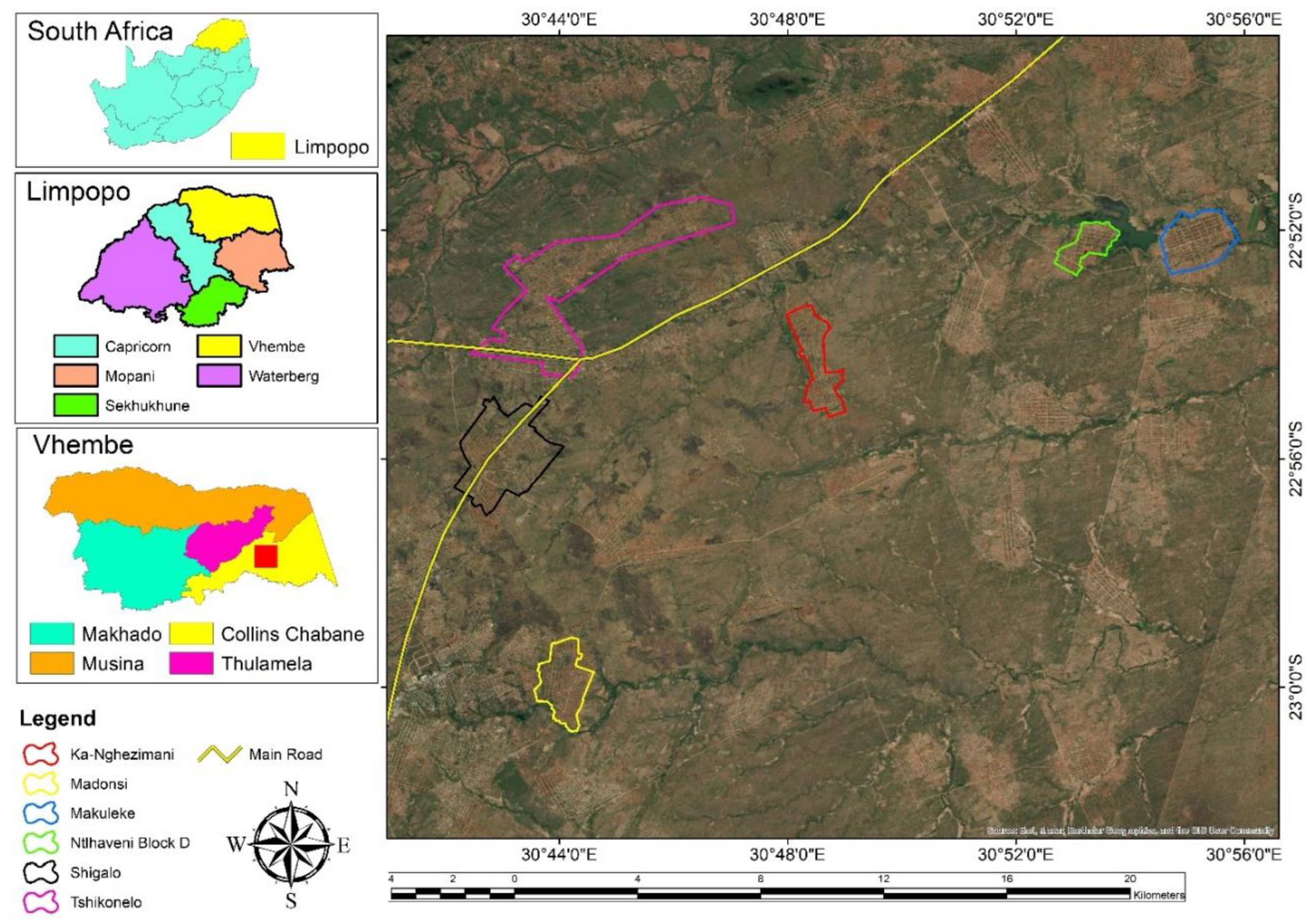
Figure 2.
Stakeholders participated in the focus group discussions per community.
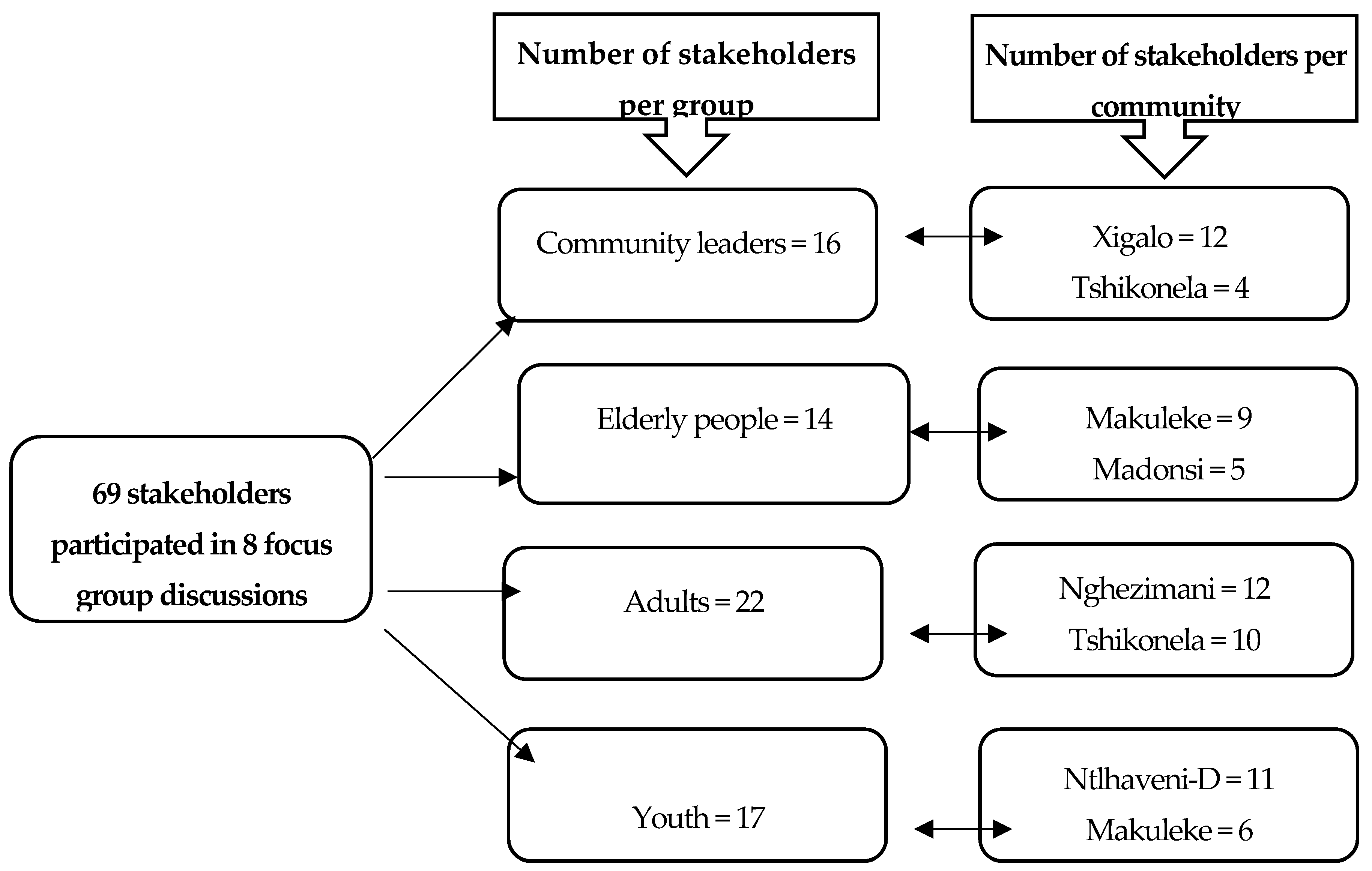
Figure 3.
A truck carrying plastic tanks filled with purchased water for community members (Source: picture taken by PI).
Figure 3.
A truck carrying plastic tanks filled with purchased water for community members (Source: picture taken by PI).
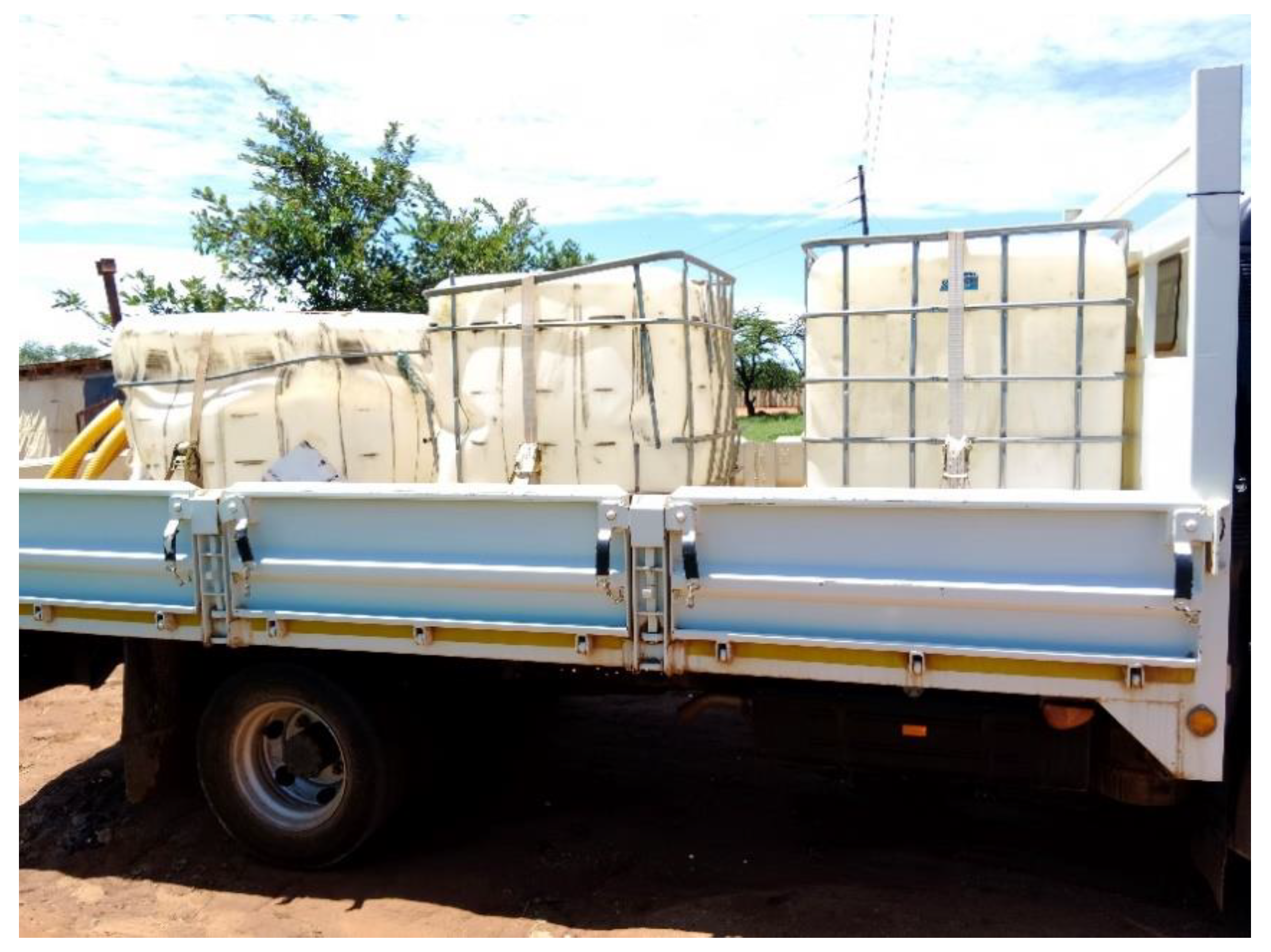
Figure 4.
Waste disposed along the roadside in one of the participating communities (Source: picture by the PI).
Figure 4.
Waste disposed along the roadside in one of the participating communities (Source: picture by the PI).
Disclaimer/Publisher’s Note: The statements, opinions and data contained in all publications are solely those of the individual author(s) and contributor(s) and not of MDPI and/or the editor(s). MDPI and/or the editor(s) disclaim responsibility for any injury to people or property resulting from any ideas, methods, instructions or products referred to in the content. |
© 2025 by the authors. Licensee MDPI, Basel, Switzerland. This article is an open access article distributed under the terms and conditions of the Creative Commons Attribution (CC BY) license (http://creativecommons.org/licenses/by/4.0/).
Copyright: This open access article is published under a Creative Commons CC BY 4.0 license, which permit the free download, distribution, and reuse, provided that the author and preprint are cited in any reuse.


