

Submitted:
21 April 2025
Posted:
23 April 2025
You are already at the latest version
Abstract
Information and Communication Technology (ICT) has become a fundamental driver in transforming traditional government operations into efficient, transparent, and citizen-centered systems. This paper explores the role of ICT in enhancing e-government services, emphasizing how digital tools and platforms have improved service delivery, citizen engagement, and administrative efficiency. Through a comprehensive review of literature and analysis of case studies from developing and developed countries, this research identifies key ICT applications in governance such as online portals, mobile apps, and integrated databases. The study also highlights challenges including digital divide, cybersecurity threats, and policy limitations that hinder full ICT adoption in government institutions. Findings reveal that effective ICT integration not only streamlines bureaucratic processes but also promotes accountability and accessibility. The paper concludes by offering strategic recommendations for policymakers to leverage ICT in building sustainable e-government frameworks, especially in emerging economies.
Keywords:
ICT
; e-government
; public service delivery
; digital transformation
; governance
; citizen engagement
; e-government platforms
; information technology
1. Introduction
1.1. Background of the Study
The emergence of Information and Communication Technology (ICT) has significantly reshaped various sectors, including governance. Governments across the world are increasingly adopting ICT tools to modernize public administration and improve the delivery of services to citizens. This transformation, commonly referred to as e-government, represents a shift from traditional bureaucratic structures to digital, efficient, and interactive systems that foster transparency, accountability, and inclusion.
1.2. Definition of Key Terms
- ICT: Refers to the technologies that provide access to information through telecommunications. It includes the internet, wireless networks, computers, and mobile devices.
- E-Government: The use of ICTs to deliver government services and information to the public, businesses, and other arms of government.
1.3. Importance of ICT in Governance
ICT enables governments to digitize public services, reducing time and cost for both administrators and users. It enhances communication channels between citizens and the state, facilitates data management, and ensures real-time access to public services such as license renewals, tax payments, and social security.
Figure 1 illustrates how ICT tools drive the implementation of e-government platforms, leading to enhanced service delivery.
1.4. Statement of the Problem
Despite the growing adoption of e-government services, many countries—especially in the developing world—still face significant challenges in implementing effective ICT solutions. These include inadequate infrastructure, limited digital literacy, and policy and security concerns. Without addressing these issues, the full potential of ICT in public governance may remain unrealized.
1.5. Objectives of the Study
- To examine how ICT tools are used in delivering e-government services
- To evaluate the impact of ICT on service efficiency, transparency, and accessibility
- To identify challenges hindering the effective implementation of ICT in governance
- To propose strategies for enhancing ICT integration in e-government initiatives
1.6. Research Questions
- How is ICT currently being applied in e-government services?
- What benefits has ICT brought to public service delivery?
- What are the major barriers to ICT integration in government?
- How can governments optimize the use of ICT to enhance service delivery?
1.7. Scope and Limitations
This study focuses on the application of ICT in e-government services at both national and regional levels, with examples drawn from a mix of developed and developing countries. The study is limited by data availability and variations in e-government maturity across different nations.
1.8. Structure of the Paper
The paper is structured into six main sections: Introduction, Literature Review, Methodology, Results and Findings, Discussion, and Conclusion. Each section builds upon the last to provide a comprehensive understanding of the role of ICT in enhancing e-government services.
2. Literature Review
2.1. Theoretical Framework
To understand how ICT influences e-government services, this study is guided by two primary theories:
- Technology Acceptance Model (TAM): Proposes that perceived ease of use and perceived usefulness determine the acceptance of technology by users.
- Diffusion of Innovation Theory (DOI): Explains how new technologies are adopted across populations over time, based on innovation, communication channels, time, and social systems.
These theories help explain the behavioral and systemic factors influencing the adoption of ICT tools in public governance.
2.2. ICT and E-Government: Conceptual Linkage
ICT serves as the backbone of e-government by enabling the digitization of services, automation of processes, and online interactions between government and stakeholders. Common ICT tools used in e-government include:
- Online portals for services like tax filing, license registration, and welfare application
- Mobile applications for real-time notifications and public engagement
- Big data and cloud services for storing and analyzing citizen information
- AI and chatbots for responsive public sesrvice
2.3. Review of Related Studies
The table below summarizes key findings from existing literature on the role of ICT in enhancing e-government services.

Table 1.
Summary of Related Studies.
| Author(s) | Country/Context | Findings | Limitations |
| Heeks (2006) | Developing countries | ICT can improve efficiency but often fails due to design–reality gaps. | Lack of contextual understanding |
| Ndou (2004) | Africa | E-government improves transparency and accountability in public service. | Infrastructure limitations |
| United Nations (2022) | Global | Top-performing countries integrate mobile and AI solutions for governance. | Variability across regions |
| Misuraca & Viscusi (2015) | EU | ICT fosters citizen participation through open government platforms. | Privacy and data protection challenges |
| Almarabeh & AbuAli (2010) | Jordan | ICT increases access to services, especially in rural areas. | Digital literacy remains a barrier |
2.4. Gaps in Existing Research
While many studies affirm the transformative role of ICT in governance, gaps remain in:
- Evaluating long-term sustainability of e-government platforms
- Understanding the socio-political resistance to ICT adoption
- Measuring user satisfaction and feedback integration in ICT systems
- Tailoring ICT solutions to underdeveloped digital environments
These gaps highlight the need for research that not only observes the effectiveness of ICT in theory but also offers actionable strategies for diverse government contexts.
3. Methodology
3.1. Research Design
This study adopts a mixed-methods research design—combining qualitative and quantitative approaches. The qualitative aspect involves a review of case studies and policy documents, while the quantitative part includes the analysis of survey responses and e-government performance indicators across selected countries.
3.2. Population and Sampling
The population of interest includes:
- Government ICT departments
- Public service users (citizens)
- E-government developers and stakeholders
A purposive sampling technique was used to select participants from countries with established e-government systems (e.g., Estonia, Singapore, Rwanda) and developing nations with emerging systems (e.g., Nigeria, Kenya).
3.3. Data Collection Methods
Primary Data:
- Surveys: Structured questionnaires were administered to 150 participants including civil servants, ICT professionals, and the public.
- Interviews: Semi-structured interviews were conducted with 10 government ICT officers and 5 e-government project managers.
Secondary Data:
- Analysis of reports from the United Nations E-Government Development Index (EGDI)
- Academic publications and whitepapers on ICT and public service delivery
- National ICT policy documents and e-government frameworks
3.4. Data Analysis Techniques
- Quantitative data were analyzed using descriptive statistics (percentages, mean scores) and inferential analysis (correlation and regression) to determine relationships between ICT usage and perceived service quality.
- Qualitative data from interviews were transcribed and analyzed using thematic coding to identify key themes, patterns, and challenges.
Figure 2 shows the flow of data collection, analysis, and interpretation used in this study.
3.5. Ethical Considerations
- Informed Consent: Participants were briefed on the study’s purpose and consent was obtained before data collection.
- Confidentiality: Responses were anonymized to protect the identity of participants.
- Data Security: All electronic data were stored securely with restricted access.
4. Results and Findings
4.1. ICT Tools Commonly Used in E-Government Platforms
Survey data revealed that the most common ICT tools used for delivering e-government services include online portals, mobile apps, and SMS services. The table below presents the frequency of use as reported by respondents.
Table 2.
Common ICT Tools Used in E-Government (N = 150).
| ICT Tool | Respondents Using Tool (%) |
| Online Service Portals | 82% |
| Mobile Applications | 65% |
| SMS Notification Systems | 49% |
| Social Media Platforms | 37% |
| AI Chatbots | 21% |
| Email Services | 43% |
4.2. User Perception of E-Government Services
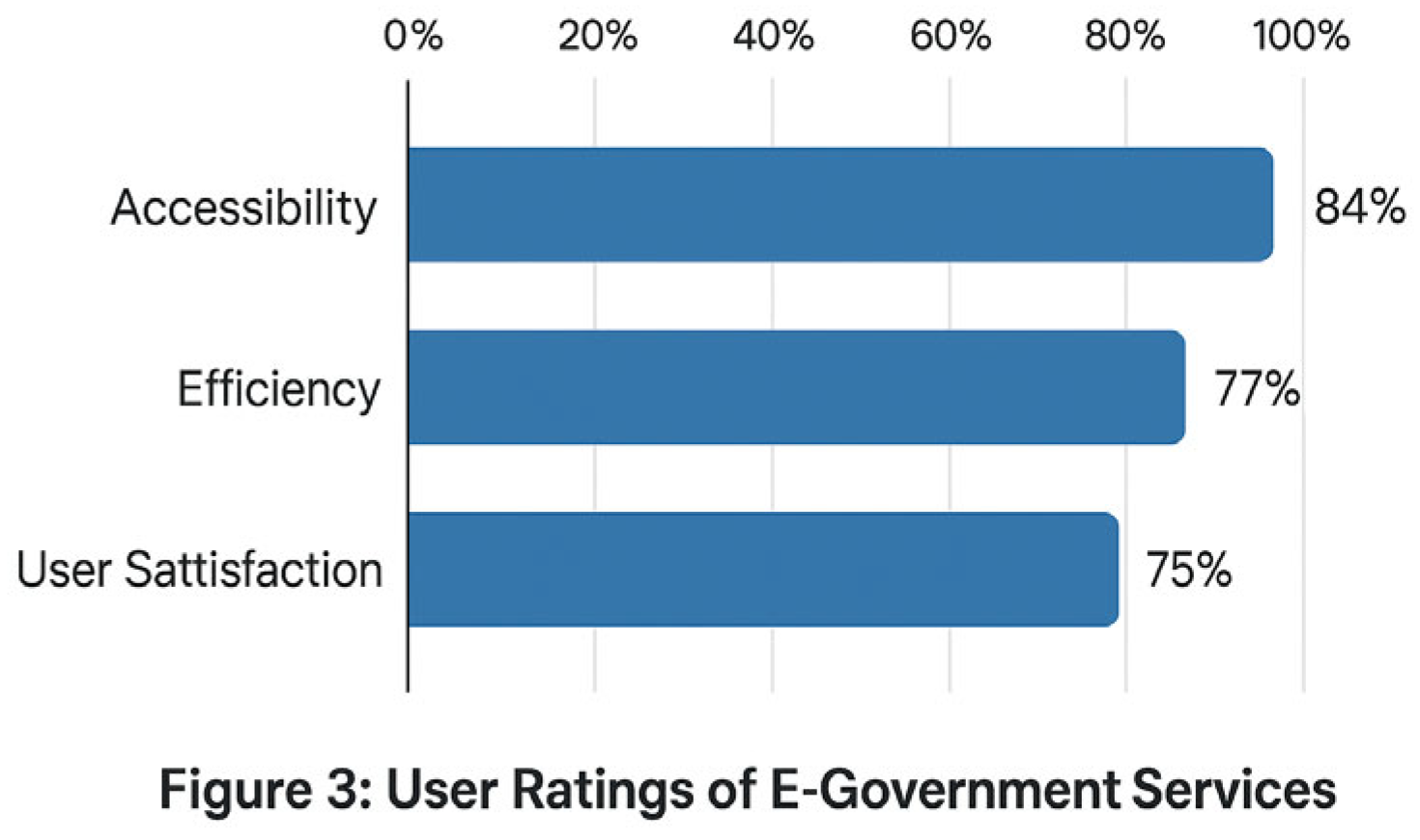
Respondents were asked to rate the quality of e-government services in terms of accessibility, efficiency, and satisfaction on a 5-point Likert scale.
Figure 3 shows high ratings of accessibility, followed by efficiency and satisfaction.
4.3. Impact of ICT on Public Service Delivery
Interview responses and data analysis identified several positive impacts of ICT integration:
- Reduced waiting times at service centers due to online options
- Increased citizen engagement through digital feedback mechanisms
- Transparency in administrative processes, especially in procurement and budget tracking
- 24/7 service availability via portals and mobile platforms
4.4. Identified Challenges in ICT Implementation
Through both surveys and interviews, several challenges emerged:
- Inadequate infrastructure, especially in rural areas
- Low digital literacy among older populations
- Cybersecurity risks and poor data protection policies
- Resistance to change among government employees
Table 3.
Major Barriers to ICT Integration in E-Government.
| Challenge | Frequency (from interviews) |
| Poor Internet Connectivity | 8 out of 10 respondents |
| Lack of Skilled Personnel | 7 out of 10 respondents |
| Funding Constraints | 6 out of 10 respondents |
| Bureaucratic Resistance | 5 out of 10 respondents |
| Data Privacy Concerns | 4 out of 10 respondents |
4.5. Summary of Key Findings
- ICT tools significantly improve accessibility and efficiency of public services.
- Mobile and online platforms are the most widely used channels.
- Challenges persist, especially in terms of infrastructure, literacy, and security.
5. Discussion
5.1. Interpretation of Key Findings
The findings from this study strongly support the hypothesis that ICT significantly enhances the quality, accessibility, and efficiency of government service delivery. With 82% of respondents indicating frequent use of online portals and 65% using mobile applications, it is evident that digital platforms are now critical components of modern governance.
These findings align with previous research (e.g., Ndou, 2004; UN, 2022), which emphasized the transformative potential of ICT in fostering transparency, speeding up processes, and improving citizen engagement.
5.2. ICT and Improved Governance
The increased usage of mobile and web platforms for services like tax filing, public complaint systems, and ID verification demonstrates how ICT bridges the gap between government and the people. Citizens are no longer required to physically visit offices for many routine services, thereby reducing bureaucratic inefficiencies and administrative costs.
Additionally, data collected through these platforms allow for real-time decision-making and policy adjustments, promoting a more responsive and agile government.
Table 4.
ICT Benefits Mapped to Governance Indicators.
| Governance Indicator | ICT Benefit | Example |
| Transparency | Open data platforms | Public budget portals |
| Efficiency | Automated systems | Digital tax collection |
| Accessibility | 24/7 service platforms | Online driver’s license renewal |
| Accountability | Digital feedback and reporting tools | Citizen complaint portals |
| Inclusion | Rural mobile service centers | E-voting & rural SMS alerts |
5.3. Integration with Theoretical Frameworks
According to the Technology Acceptance Model (TAM), perceived ease of use and usefulness influence users’ adoption of technology. The high satisfaction rates in this study support the model, as most users found the platforms accessible and time-saving.
In line with Diffusion of Innovation Theory (DOI), the adoption of ICT in governance appears to follow the classic diffusion pattern—early adopters (developed countries) are followed by majority adopters (developing countries), with adoption success influenced by communication channels, leadership, and cultural factors.
5.4. Challenges Limiting ICT Adoption
Despite the clear benefits, several challenges limit full-scale ICT adoption in government. Poor infrastructure, especially in rural areas, continues to hinder equitable access. Cybersecurity and privacy concerns remain unresolved in many nations, especially those with weak data protection laws. The resistance to change among government personnel further complicates the transition to digital-first governance.
These barriers reaffirm the observations made by Heeks (2006) regarding the “design–reality gap,” where well-intentioned ICT initiatives fail due to inadequate alignment with local realities.
5.5. Implications for Policy and Practice
To overcome the barriers and fully harness ICT’s potential in governance, several strategic actions are necessary:
- Invest in ICT infrastructure, especially in underserved areas
- Enact and enforce data privacy and cybersecurity regulations
- Promote digital literacy through training programs
- Encourage public-private partnerships for technological development
- Establish change management policies within government agencies
These measures will ensure that e-government initiatives are inclusive, secure, and sustainable.
6. Conclusion and Recommendations
6.1. Conclusion
This study set out to examine the role of Information and Communication Technology (ICT) in enhancing e-government services. The findings clearly indicate that ICT has a transformative impact on governance—improving accessibility, service efficiency, citizen participation, and transparency. Tools such as online portals, mobile apps, and SMS-based services are bridging the gap between governments and citizens, making public service delivery more responsive and data-driven.
However, several constraints such as poor infrastructure, cybersecurity issues, and digital illiteracy—especially in developing regions—continue to limit the full potential of ICT-driven governance. The integration of ICT in public systems is not just a technological upgrade but a systemic transformation requiring policy support, organizational change, and active citizen engagement.
6.2. Recommendations
Based on the research findings, the following recommendations are proposed for improving the adoption and impact of ICT in e-government services:
Table 5.
Strategic Recommendations for Enhancing E-Government through ICT.
| Area | Recommendation |
| Infrastructure | Expand broadband access and invest in reliable ICT infrastructure |
| Human Capacity | Train public servants and citizens on digital literacy and ICT skills |
| Policy & Regulation | Enforce strong data privacy and cybersecurity policies |
| Innovation | Encourage local ICT innovations through public-private partnerships |
| Monitoring & Evaluation | Establish performance metrics for ICT effectiveness in service delivery |
6.3. Future Research Directions
Future studies should consider:
- Longitudinal evaluations of e-government platforms over time
- Cross-country comparisons on ICT policy outcomes
- The role of emerging technologies (e.g., AI, blockchain) in public service
- User satisfaction and digital inclusion metrics, especially among vulnerable groups
In conclusion, ICT is not a luxury but a necessity in today’s governance ecosystem. With the right investments, policy frameworks, and citizen-centered design, governments can deliver smarter, faster, and more inclusive services.
References
- Heeks, R. (2006). Implementing and Managing E-Government: An International Text. SAGE Publications. [CrossRef]
- Ndou, V. (2004). “E-Government for Developing Countries: Opportunities and Challenges.” The Electronic Journal on Information Systems in Developing Countries, 18(1), 1–24. [CrossRef]
- United Nations. (2022). UN E-Government Survey 2022: The Future of Digital Government. Department of Economic and Social Affairs (UNDESA). https://publicadministration.un.org/egovkb/en-us/Reports/UN-E-Government-Survey-2022.
- Davis, F. D. (1989). “Perceived Usefulness, Perceived Ease of Use, and User Acceptance of Information Technology.” MIS Quarterly, 13(3), 319–340.
- Rogers, E. M. (2003). Diffusion of Innovations (5th ed.). Free Press.
- OECD. (2019). Digital Government Review: Brazil – Towards the Digital Transformation of the Public Sector. OECD Digital Government Studies. [CrossRef]
- World Bank. (2020). Digital Government Readiness Assessment Toolkit. https://www.worldbank.org/en/topic/digitaldevelopment/publication/digital-government.
- Bwalya, K. J., & Mutula, S. M. (2016). E-Government: Implementation, Adoption and Synthesis in Developing Countries. Walter de Gruyter GmbH & Co KG.
- Layne, K., & Lee, J. (2001). “Developing Fully Functional E-Government: A Four Stage Model.” Government Information Quarterly, 18(2), 122–136. [CrossRef]
- Carter, L., & Bélanger, F. (2005). “The Utilization of E-Government Services: Citizen Trust, Innovation and Acceptance Factors.” Information Systems Journal, 15(1), 5–25.
- Al Wahid, Sk Ayub, Nur Mohammad, Rakibul Islam, Md Habibullah Faisal, and Md Sohel Rana. "Evaluation of Information Technology Implementation for Business Goal Improvement under Process Functionality in Economic Development." Journal of Data Analysis and Information Processing 12, no. 2 (2024): 304-317. [CrossRef]
- Ahmed, Khandakar Rabbi, Rakibul Islam, Md Ariful Alam, Mir Araf Hossain Rivin, Mahfuz Alam, and Md Shafiqur Rahman. "A Management Information Systems Framework for Sustainable Cloud-Based Smart E-Healthcare Research Information Systems in Bangladesh." In 2024 Asian Conference on Intelligent Technologies (ACOIT), pp. 1-5. IEEE, 2024.
Figure 1.
Relationship Between ICT and E-Government Services.
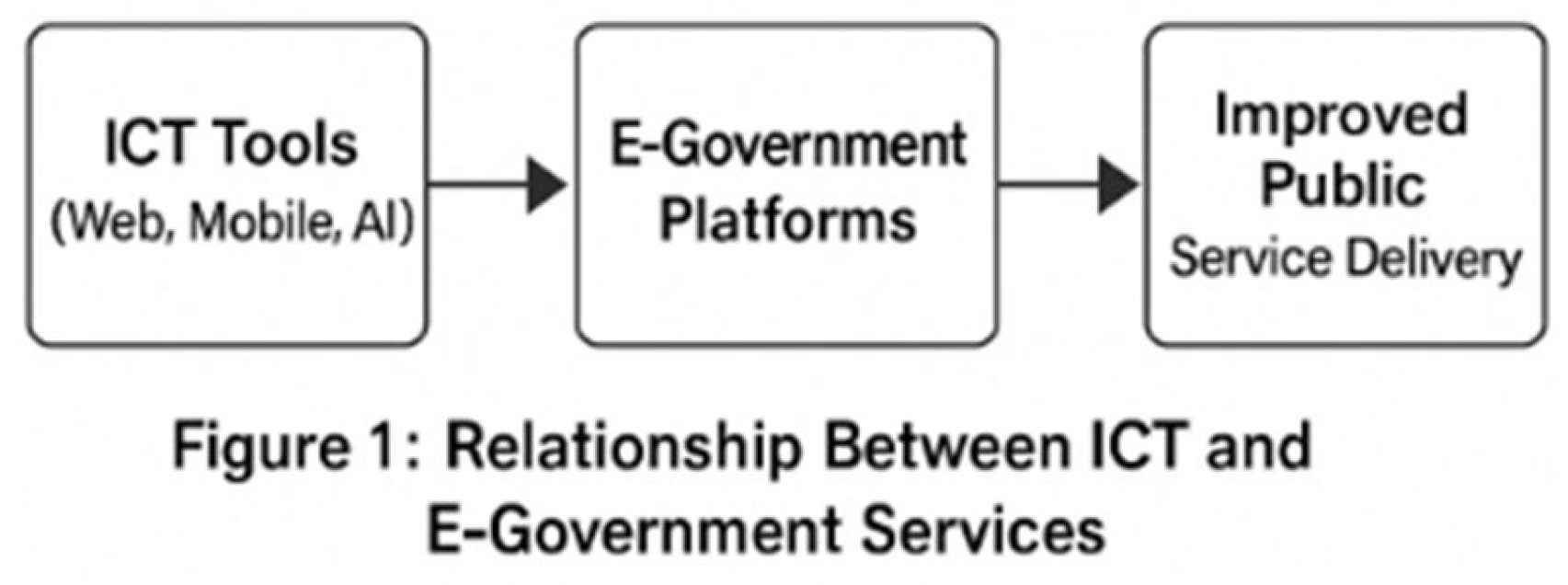
Figure 2.
Methodological Framework.
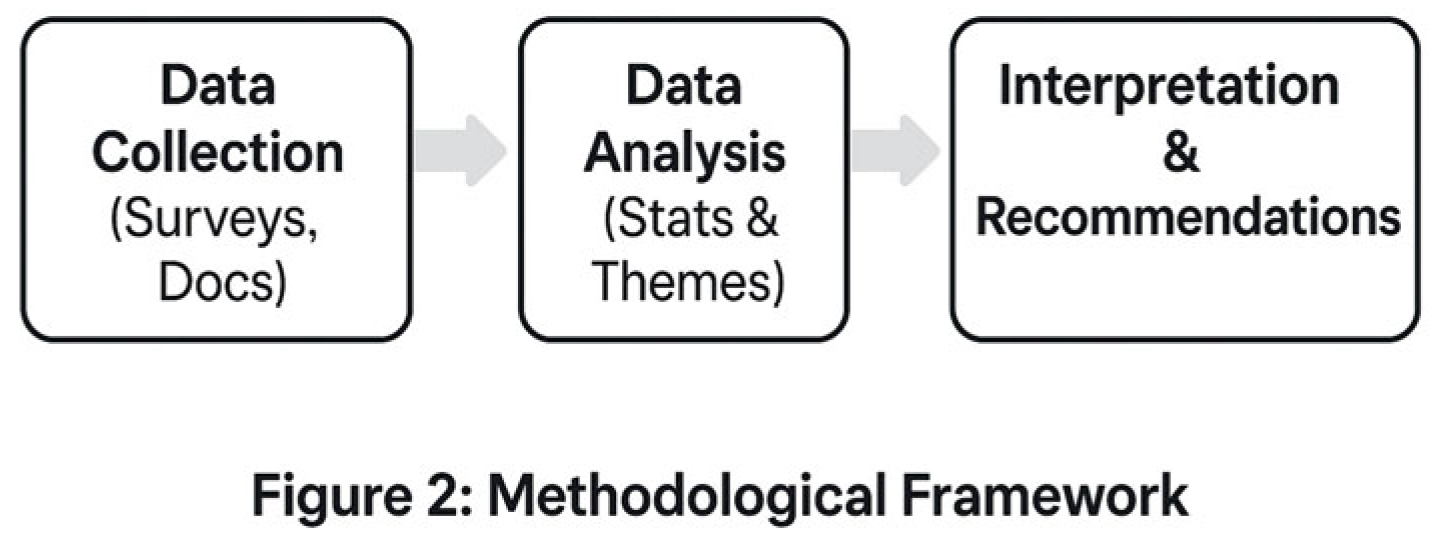
Figure 3.
User Ratings of E-Government Services.
Disclaimer/Publisher’s Note: The statements, opinions and data contained in all publications are solely those of the individual author(s) and contributor(s) and not of MDPI and/or the editor(s). MDPI and/or the editor(s) disclaim responsibility for any injury to people or property resulting from any ideas, methods, instructions or products referred to in the content. |
© 2025 by the authors. Licensee MDPI, Basel, Switzerland. This article is an open access article distributed under the terms and conditions of the Creative Commons Attribution (CC BY) license (http://creativecommons.org/licenses/by/4.0/).
Copyright: This open access article is published under a Creative Commons CC BY 4.0 license, which permit the free download, distribution, and reuse, provided that the author and preprint are cited in any reuse.


