

Submitted:
07 February 2025
Posted:
11 February 2025
You are already at the latest version
Abstract
The negative effects of drug are the focus of the attention of researchers and practitioners when called upon to provide effective responses based on drug use trend analysis and estimates of the costs and correlates of the illicit drug use. At individual level, drug use has serious damaging effects on personal health, social life, the educational and professional course, and turns the life of a drug user in an obstacle race, in which life is threatened with each new bad decision. Both practitioners and decision-makers at global and European level become more concern as the age of onset for drug use decreases and illicit drug use becomes one of the major causes of preventable losses in society. This purpose of the paper is to generalize the concept of social and economic correlates of drug use, with a special focus on family, and to place it in relation to the dynamic phenomenon of drug use, in the specific geographical area of Bucharest and Ilfov. Applications of the concept are included to emphasize the link between evidence and practice. The paper builds on the analysis of academic investigations conducted by various authors and publications of relevant institutions.
Keywords:
drug use
; addiction
; social and economic correlates
; key indicators
1. Introduction
Drug use seems to be increasingly affecting our society, day by day. It affects not only the mental and physical state of the user but also the positive influence of the family, the stability of small communities and the normative mechanisms of the society, as a whole. As addictive substances tend to affect all aspects of human life [1], awareness should be raised on how drugs are affecting the social coherence of the society and the nation. It is largely recognized that drug use and addiction come along with a series of damaging effects on both the body and the mind, and health issues can range from heart diseases, cancer to irrevocable brain damage and mental health conditions. While transitioning from drug use, either occasional or recreational, to drug abuse and addiction, several noticeable changes occur, that affect not only the behavior and the cognitive capacity of the drug user, but also the people around. Addictive substances alter the function of the human brain and the behavior. The family, close ones, friends, co-workers or colleagues get to share the burden of drug use together with the user and with a much higher feeling of uselessness as the drug user goes in the marry-go-round of recovery and relapse. The effects that the drugs have at interpersonal level reflect on the family and peer groups, as well as on work and education environment. The negative consequences of drug use on society can be significant and most of the times challenging when trying to translate them in financial terminology or clear numbers.
2. Correlates of Drug use at Individual and Societal Level
Drug use has significant health, social and economic consequences and is recognized as contributor to what is known as the burden of disease[2]. Drug use is a dimension of a harsh reality that cannot be restricted to only one person. On the contrary, drug use, in its progression to drug dependence, affects families, small communities, societal norms and hierarchies. The scope of the long-term effects is worth exploring as the number of drug users and drug addicted people continues to grow globally. The effects of drug use translate into infectious diseases, crime, neglect, education drop out, drug-driving, unemployment or death, which all add up to the list of costs that society should pay as a result of the burden posed by drugs on health, judicial, social care and education systems. The harms caused by drug, alcohol and prescribed medication abuse were estimated at 420 billion dollars annually and over 120 billion dollars in healthcare costs in the US [3], an illustration that confirms the belief that drug use is one of the most costly realities of our times.
One cannot talk about the effects of drugs without bearing in mind the effects of drug addiction, which is considered a chronic mental disorder under international disease classifications. These effects include the physiological changes induced by tolerance or withdrawal, aspects that mark the transition from becoming to staying addicted. While progressing towards addiction, people can experience injuries due to car accidents, physical disabilities, homicide, diseases, suicide or death by overdose or drug related infectious diseases. Depression, anxiety, apathy, and other psycho-social problems are frequently encountered in drug using people, mainly adolescents. These changes can have severe effects on the drug using persons as well as the people around them and can have significant long-term social effects such as legal problems or imprisonment. Other social effects can be declining grades, academic difficulties that can lead to absenteeism or school dropout, damaged social relations and unemployment [4]. In the context of drug use, an array of problems affects family members, the community, and the entire society. At the same time, some of these social implications seem to be part in an ambivalent relation between the use of drugs and a low level of education commitment, considering that absenteeism, for example, is one of the risk factors that contribute to drug use [5]. Because in the process, drug users tend to disconnect from school and community activities, become isolated from their peers and socialize only with those individuals that provide the next dose, communities are deprived of the contributions they might have made if drugs had not derailed their personal and professional trajectory.
There are several social and economic costs related to substance abuse, which result from the distress caused by drug-related crime, from the pressure on social systems that are supposed to take care of adolescents and youngster when they are unable to do so themselves, and the greater demands upon the legal, medical, justice and law enforcement services. Additionally, there is an economic impact of drug abuse when employees use drugs, are unable to hold a full-time job, cause losses in productivity and put other workers at risk when their abilities are impaired by drug use [6]. Additionally, damaged family relations and family abandonment can lead to an increase in social services costs.
2.1. The Link Between Drug Use and Family
When analysing drug use as a major social issue we should have in mind the ambivalent connection between drug use and family. On one hand, drug use is the source of instability and disharmony within the family and, on the other hand, family plays an important role in preventing drug use. Once the individual progresses towards addiction, family plays a supporting role, as the abuse of one affects all, within the family. Family life is disrupted along the cycles of addiction. At the same time, the presence of drug use within a family is known to be one of the risk factors that enable drug use among children and youngsters. Taking all these aspects into consideration, the use of drugs by family members creates a circle in which both the individual and the family are involved.
In time, the role of the family has been analysed by scholars [7] who identified at least four perspectives on the family, of which we mention the following:
the protective role of the family for both strong and weak members, and nurturing for the youngest,
the negatively influencing family, in which tensions and problems are conducive to harmful behaviours, such as drug use,
the socializing role of the family as gateway to broader community groups,
the family as an organization, in which values are transferred and a sense of belonging to community is built.
Dysfunctional internal family relations that affect all members, especially, children, translate into a lack of cohesion between parents, low socio-cultural level, low socio-professional level, limited or impaired education role of the family, all of which are indicative of a de-structured organization [8]. These factors may lead to family management issues and family abuse, which are included in theoretical approaches in the category of family risk factors. Irrespective of formal classifications, several factors that may enable drug use or enhance vulnerability of family members can be found within a family, such as parental absence, lack of communication and empathy, negative role models for children, household instability or unemployment. Dysfunctional families encounter serious organization problems, anxiety, instability, conflicts, tension that may be the cause of several deviant behaviours. Moreover, the presence of low socio-economic factors in the family impacts on children, who, while being less supervised or neglected, might engage in a drug-related behaviour. Additionally, in sole-parent families with a low socio-economic status, the impact on children might be higher.
The socializing and normative role of the family may be, however, influenced also by economic trends or technology that may impact on the stability of relationships, on the environment and expectations. As researchers found [9],[10], family can compete with the strong influence of peers, even when it comes to drug use, if parenting rules are consistent. Due to the complex effects of drug on the individual, the approaches that address all these aspects, through psychological, biological and psychosocial interventions, are considered to be the most effective [11]. In this manner, in the process of rehabilitation, all aspects related directly or indirectly to drug use can be addressed, such as personality vulnerabilities, reducing the impact of social negative aspects, dysfunctional family communication and other problems.
2.2. The Link Between Drug Use and Communities
Norms and values, social roles, economic dynamics, social cohesion or societal systems are among the social and cultural determinants of drug use. Norms and values that favour drug use are influenced by several factors such mass media, youth culture or the legal system but can also be influenced by settings, peer group and historical times. It is also important to see how drugs use impacts on social-economic status and demographic tendencies, but also on the intangible cultural variables, such as norms, values, human solidarity and quality of life.
As part of the contemporary reality, we all share, these determinants can be part of contradictory or ambivalent relationships as illicit drugs are sometimes construed as violations of social norms and a part of a culture that poses challenges to the traditional European values[12].
As a social phenomenon, drug use cannot be divided from the general societal changes nor the cultural changes. When analysing the target group of preventive interventions it is important to take into account social categories such as gender, financial situation or social status, that can influence the access of the individual to education or healthcare system resources, or their roles and expectations. What practice and literature reviews identify as the most frequent correlates between drug use and social status helps define target groups for prevention interventions and adjust support mechanisms. For example, associations have been made between people with ill health, who show an increased likelihood to use tobacco, abuse alcohol or use illicit drugs, and between drug-dependent people and unemployment or social exclusion. However, practitioners should keep in mind that what was historically known about the correlates between drug use and social status might be contradicted, in practice, by subtle cultural changes or more obvious economic changes. This is to show that attention should be always given to external factors that influence the onset of drug use and the progression towards drug addiction.
Drug use and drug addiction are not static stages in consumption, they are part of a dynamic course of stages in which individual and external factors intertwine. However, the link between drug use and socio-economic status should be regarded as an ambivalent relationship, in which poverty and a low quality of life and other indicators of social deprivation can be associated with an increased likelihood to engage in anti-social behaviours, such as drug use, especially when associated with extreme poverty or other family issues. At the same time, drug use can lower the social-economic status of the user and act as a moderating factor. Communities with a low socio-economic status that are often affected by unemployment and crime, fail to provide a positive pro-social role and support networks, a context in which drug use is likely to occur.
Continued drug use tends to minimize the access of the individual to the ordinary roles and positions in the society, and once aware of his/her vulnerability, there is a tendency towards self-exclusion. In the context of social stigma, which can be visible even in the public discourse, self-exclusion may lead to deviant behaviours. Being publicly included in a category of misfits, identified solely by the behaviour of drug use, is a factor that affects the individual`s sense of identity, self-esteem and enhances his frustration. Damaged family and peer relationships, a general sense of inferiority, inactivity or aggressiveness, lead to the exclusion of the drug user in a stage in which each of these components represents a risk factor for drug use.
Another effect of drug use upon society is reflected by stigma, with all its beliefs, attitudes and discriminatory practices against people who use drugs or are addicted to drugs. In general, society shows intolerance to former drug users because of the lack of confidence in one`s ability to fully recover from drug-addiction and the different approaches towards those with a criminal history.
Sometimes, former and current drug users are marginalized because of social discrimination and have limited access to social resources and opportunities. In gender terms, the social effects of drug use gain new dimensions as women, who represent almost a quarter of people with drug problems and one fifth of the people admitted to treatment in Europe, tend to be exposed to increased stigma and experience more serious social problems such as economic disadvantage and less support. In this context, it is important to understand stigma, its causes, and the factors that contribute to the marginalization and the consequences of stigma on the individual and the society in order to be able to prevent it.
3. Discussion on the Correlates of Drug use in Bucharest-Ilfov Region
There is significant progress made in examining the trends of the drug phenomenon. A phenomenon that was once measured solely by the number of people, who transgressed social rules, is now under scrutiny from different points of view that shed light on the complexity of this phenomenon. If in the past certain grey areas of the drug phenomenon remained unexplored and the hidden population of drug users was underrepresented in general population surveys, today, the trends of the phenomenon are measured by numerous indicators such as prevalence rates, epidemiological indicators, supply reduction indicators, estimation of social costs, estimation of burden of drug related diseases and others. Additionally, there is a general effort to reach those categories of drug users that are not included in official estimates.
Choosing a large city for the analysis of drug use is considered a good choice for research, as large cities represent centres that carry the main burden of the negative consequences of drug use and also the setting in which new trends can be easily noticed [13]. This choice substantiates the several rounds of multi-city studies conducted by the Pompidou Group of the Council of European or the EU Drug Agency that based on a common research methodology with a predefined research design, bring together capital cities of countries with different political and economic structures. However, the research on drugs and drug users is still considered to be a difficult process because of the hidden nature of the phenomenon and of the tendency of users to downsize their estimates of personal use and addiction.
Bucharest is the capital city of Romania and a large economic centre. It is part of one of the eight development regions of Romania and also includes the County of Ilfov. The region has a population of 2.633.690 people and spreads over 1.804 km². It is the most developed region of Romania accounting for a GDP of 49.200 euro, which is 177% of the European average (EU27) and an employment rate of 79.9% [14]. According to Ninth Report on Economic, Social and Territorial Cohesion of the Commission, issued in 2024, the regional growth of GDP per head in the region is above EU average and above Member state average. The speedy development rate of its economy made the region account for 25% of the total national economy. The region is at the crossroads of the national and international road, railway and air transport routes and is highly accessible. Because of the specificities of the area, as the largest urban, industrial and population agglomeration, the region is also at the core of all relevant surveys on drug issues in Romania. The following analysis is based on findings resulted from monitoring key indicators such as the demand for treatment among drug users, medical emergencies, drug related infectious diseases and drug related deaths. Variables such as age, housing, social status and the level of education of those who demanded treatment for drug issues were considered in order to complete the general picture of drug use in the region.
In the analysis, official statistics provided by the National Anti-drug Agency through routine monitoring and ad-hoc studies, were considered. Thus, according to the National Report on Drug Situation for 2023 [15], at the level of Bucharest-Ilfov region almost a quarter (23.7%) of the respondents admitted having experimented with drugs, which is more twice higher than the level of experimental drug use at national level (10.7%). If last year drug use is considered, data indicate a 16.6% prevalence rate of the recent use of any illicit drug, which is, again, twice as high as the national prevalence (6%), as shown in the figure below.
Figure 1.
A comparison of the experimental use of illicit drugs. Source: Adapted from the National Report on Drug Situation 2023 [16]].
Figure 1.
A comparison of the experimental use of illicit drugs. Source: Adapted from the National Report on Drug Situation 2023 [16]].
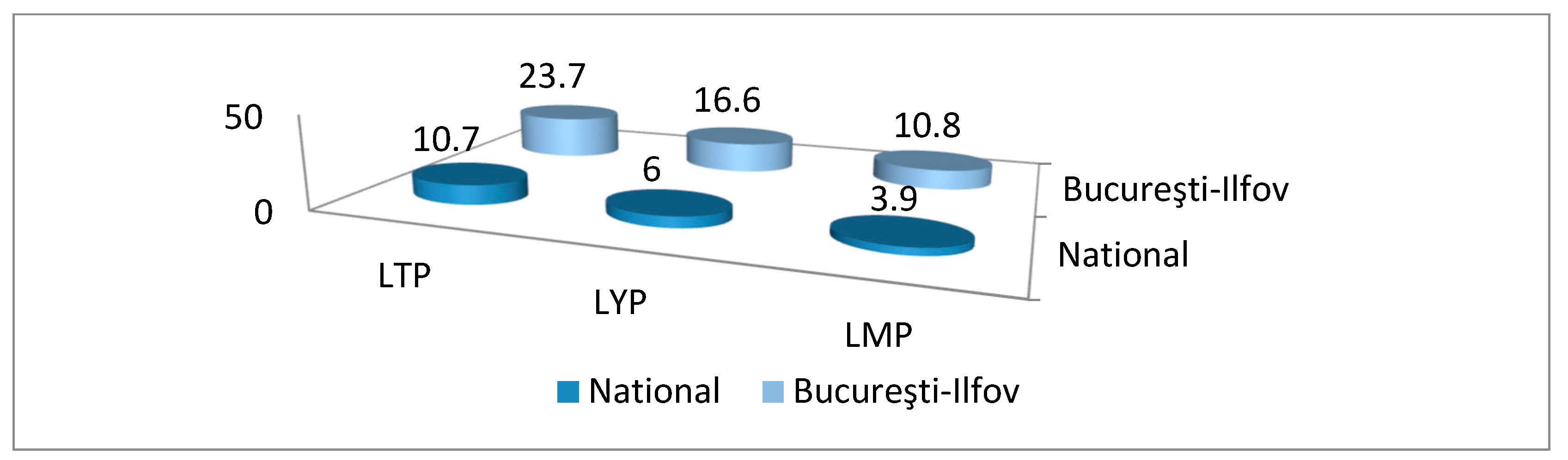
Depending on the time of reference, data show differences between recent use and current use of any illicit drug, including the new psychoactive substances. Thus, the last year prevalence is 16.6% while last month prevalence is 10.8%. Additionally, the last month prevalence is two times higher than the national prevalence (3.9%). In the region, the new psychoactive substances are responsible for the highest lifetime prevalence (15.5%), followed by cannabis, cocaine/crack and ecstasy as shown below.
Figure 2.
Experimental use of illicit drugs in Bucharest-Ilfov region, by drug. Source: Adapted from the National Report on Drug Situation 2023.
Figure 2.
Experimental use of illicit drugs in Bucharest-Ilfov region, by drug. Source: Adapted from the National Report on Drug Situation 2023.
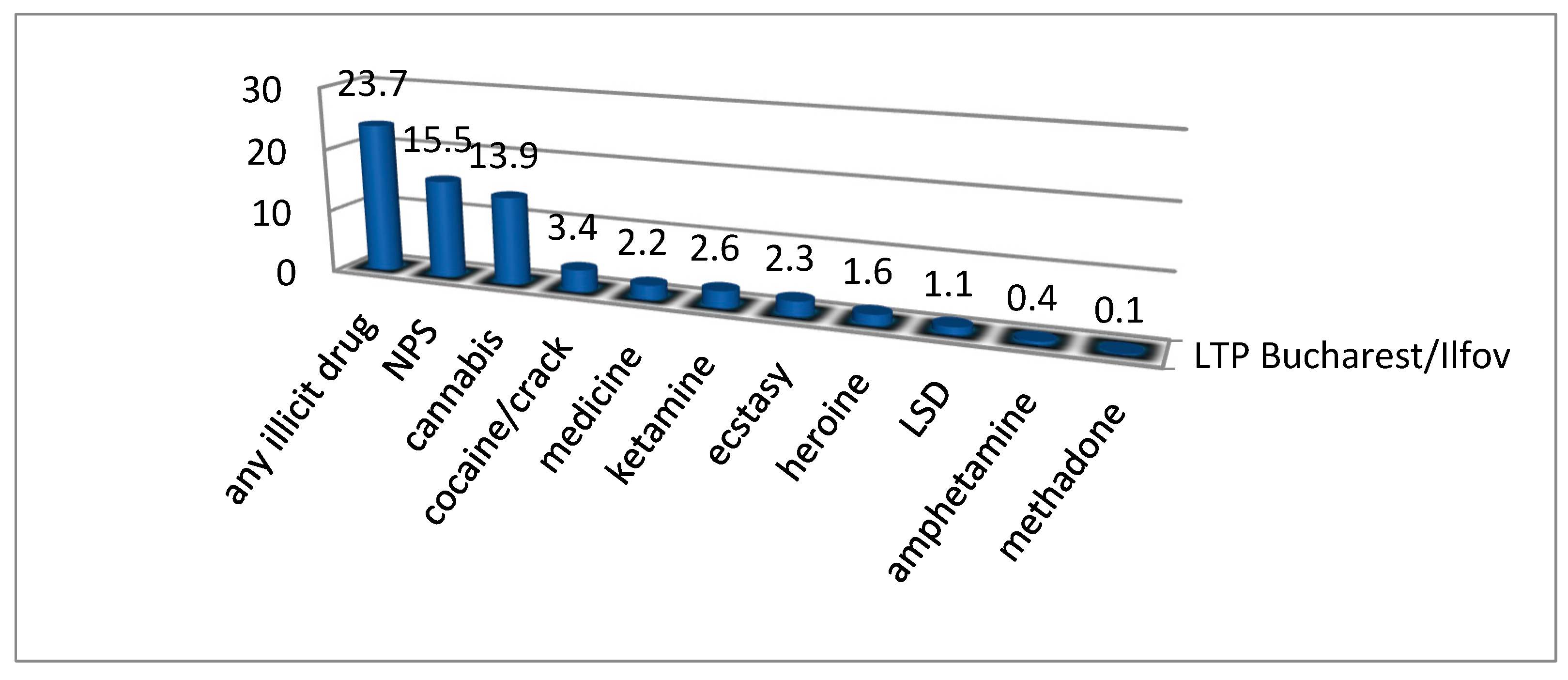

Table 1.
Population groups with the highest prevalence of any illicit drug use.
| Population groups | Prevalence of any illicit drug use (%) | ||
|---|---|---|---|
| experimental use | recent use | current use | |
| 15-19 years | 22.8 | 15.1 | 12.1 |
| 20-24 years | 32.9 | 25.9 | 16.4 |
| 25-29 years | 26.2 | 17.9 | 10.5 |
Source: Adapted from the National Report on Drug Situation 2023 [17]
According to the same source, the prevalence for any illicit drug in the region of Bucharest and Ilfov is 25.3%, if over-the-counter medication is included, while the prevalence decreases to 23.7% of the same category of medication is excluded. By comparison with the 2016 study, there is a three-fold increase in the lifetime prevalence of any illicit drug, from 14 % to 49.1%, which marks a significant dynamic. Increasing rates were noticed also for the last year prevalence of any illicit drug from 51.4% to 102%, but at a slower pace. Additionally, experimental use, recent use and current use of any illicit drug are on a steady increasing trend in the region.
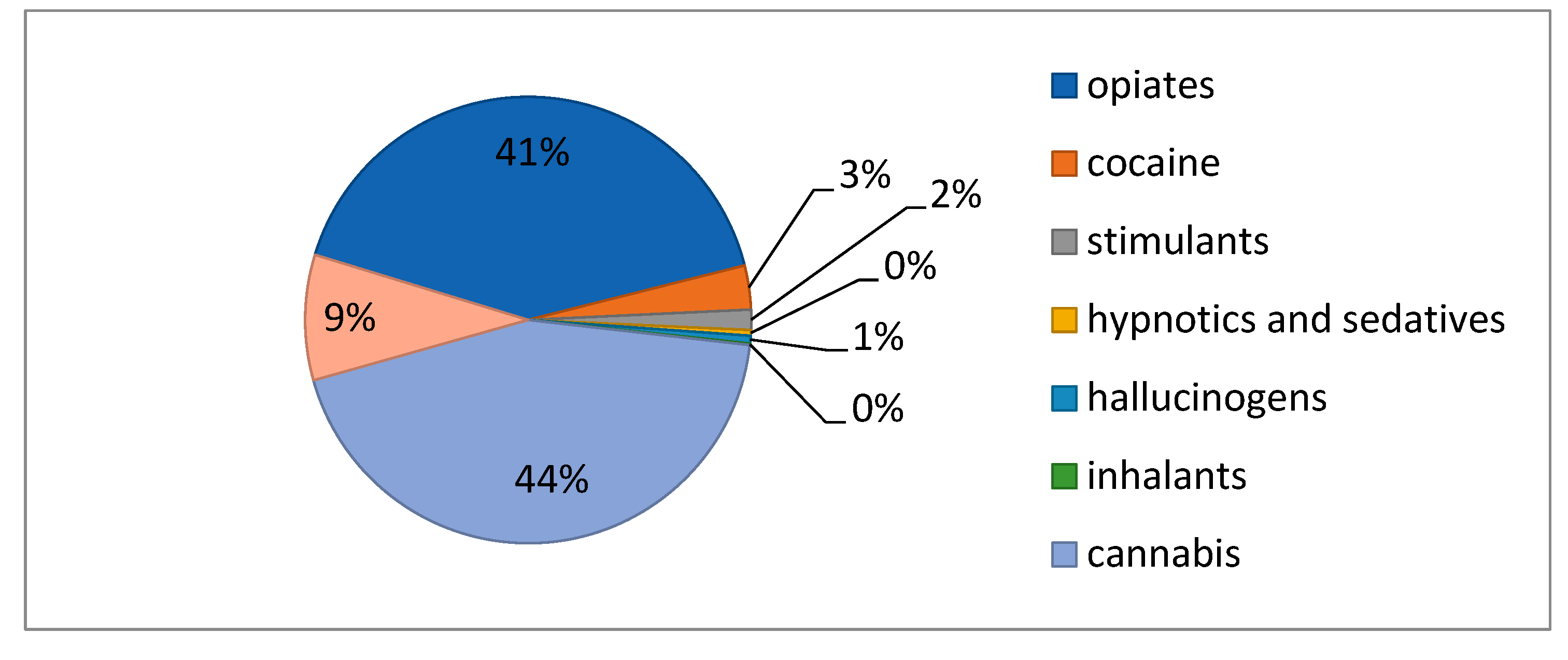
Figure 3.
People admitted to treatment in Bucharest-Ilfov region, by drug used. Source: National Report on Drug Situation 2023 [18].
Figure 3.
People admitted to treatment in Bucharest-Ilfov region, by drug used. Source: National Report on Drug Situation 2023 [18].
In terms of gender analysis, men engage more frequently in the use of any illicit drug as opposed to women, irrespective of the category considered for analysis (experimental use, recent use or current use). Based on age group, the highest prevalences of drug use are recorded in the 15-24 age group, which is considered to be the most vulnerable to drug use.
According to the treatment demand indicator, cannabis is responsible for the largest number of treatment demands, as from the 1761 people, who sought treatment, 43.8% demands were caused by cannabis-related problems. Opioid use accounts for similar percentages in treatment demands with 41.3%, the new psychoactive substances account for 160 demands for treatment, while much lower rates were recorded for other types of drugs.
It should be noticed that most of those who benefited from treatment for drug-related problems were mainly young men, with an average age of 31.7.
Different correlations can be made based on the data referring to the age of the users admitted to treatment and the type of drug reported upon admission. Thus, the average age of people admitted to treatment varies from 26 years in inhalant users to 37.6 years in opioid users. Additionally, the average age of drug use onset is 21.4 in Bucharest-Ilfov region. These findings present significant relevance for strategic planning of preventive and support interventions that should specifically address the vulnerable category of young people.
According to the route of administration of the main drug, most users declared having used drugs by inhaling or smoking (55.7%), while 33.6% of them injected drugs. This information is particularly important in considering the risk of infections and communicable diseases if we take into account that from all routes of administration, injecting drug use is most frequently associated with serious health consequences.
From the point of view of education, most people admitted to treatment in Bucharest-Ilfov region graduated secondary education (ISCED 2 and ISCED 3), while the percentage of those who did not finish primary education or did not pursue any education is very low (3.2%).
Another aspect that should be considered when analysing the social-economic effects of drug use is housing. In this respect, many of those who demanded treatment for drug addiction in the region, are living with their origin family, partner or children (51.7%), while those who are living alone account for a lower rate (15.7%). Additionally, most of those who were admitted to treatment were referred by the legal systems (53.5%), while a third came in on their own or on their family or peers` recommendation (33.6%).
The analysis of the medical emergencies caused by drug use contributes to the overall statistical picture of drug use in the Bucharest-Ilfov region. There were 290 drug related emergencies in 2022 in the region. Opioid use was responsible for 44% of the number of drug emergencies, while cannabis use continues to account for an important rate of drug emergencies (30.3%). Additionally, most of those who demanded treatment were young men, under the age of 35.
The drug related deaths indicator shows that of the 30 cases recorded in 2022, 25 were direct deaths and five were indirect, meaning they were associated with pathologies or caused by chronic drug use. Despite its limited size, the cases recorded in the region account for 90.9% of all national drug related deaths and reveals relevant findings on poly-drug use, which was encountered in 80% of the cases. Most of the people who died from drug-related issues were over 34 yrs. (73, 3%), which is another indicator of the negative consequences of drug use in the young population. Additionally, 83.3% were men (83, 3%) and injection signs were present in two thirds of the cases, which, again, is another indicator of the individual and social health risks posed by drug use. This conclusion is supported by the trend of the infectious disease indicator, which shows 591 (94.5%) of the injecting drug users admitted to treatment in 2022 sought care in Bucharest-Ilfov Region.
Because this concentration of injecting drug users is associated with a high level of HIV, HCV and HBV, the data show relevance for the adjustment of drug related responses. The HCV prevalence among injecting drug users was 67.4%, while HIV prevalence was 25%.
To conclude, the correlates between drug use and social and economic status tend to aggravate on the long term as long as the age interval in which drug use is likely to occur is 15 to 24, a life stage of development and educational growth. Additionally, the early onset of drug use is a behaviour that impacts society because it extends the time interval in which specialised services and interventions are needed for drug use and drug addiction. On the long term this generates additional cost for society in the analysed region. While statistically speaking, the income of the families in Bucharest-Ilfov region are higher than in other regions of the country, the drug use behaviour of a member may become a costly burden for the family and cause economic losses for the communities by supporting the illicit market.
Additionally, the housing status of drug users affects society when households are lost due to drugs and society needs to step in and take care of its members. In terms of risks, living in the same household with a drug user, as it is the case in the analysed region, might generate the risk of multiplication of the harmful behaviour of drug use.
Marital status and the responsibility of taking care of children are generally protective factors against drug use. However, given the low interest of the society towards marriage and the population decline, the action of these factors is limited.
Drug related deaths is another indicator that is relevant for what is considered society loss, which can be translated into the years that could have been lived in good health, productivity or as an active member of the community, provided drugs or drug addiction should not have diverted the existence of the individual from the ordinary, predictable social path.
4. Responses to the Effects of Drugs
The correlates between drug use and its effects become relevant when planning interventions, when and where they are needed, if we consider that the social and economic status of an individual often reflects upon one`s life priorities. Response policies, support interventions and preventive measures should be adjusted to the context in which drug use occurs, to the individual needs of the users, to their characteristics and the social context they are part of.
Additionally, policies should be directed at building social support networks, enabling social inclusion, favouring social activity and a feeling of belonging to a community, in which pro-social norms are shared. In this respect, keeping in mind the complex array of causes and factors that favour drug use as a social phenomenon, measures should be balanced and focus on achieving the highest level of social benefits and the least harm to society and the individual as well.
Specialized support should be given in a multidisciplinary manner, within a continuum of interventions and services, encouraging motivation and commitment and a swift transition from a stage to another. Taking into consideration the factors that lead to drug use and the effect of drug use on the individual and society, interventions should be planned and adjusted so as to create a continuum addressing all causes and factors along the causal chain. In this manner, education policies, preventive interventions, criminal justice measures should be enforced by social inclusion programs, alternative to sanction-measures and evidence-based targeted programs designed for disadvantaged groups and communities. At the same time, issues such as the improvement of healthcare and quality of life should be addressed nationally. In terms of preventive work, environmental prevention is most adequate in addressing both the society, as a whole, and the individuals engaged in drug-related risk behaviour, as it basically aims ”to change the cultural, social, physical and economic environments in which people make choices about drug use.” [19]
While preventive interventions and treatment work towards changing current or potential harmful behaviours and settings, another type of response given to the social effects of drugs is social reintegration. Unemployment, school dropout and absenteeism, housing instability, limited access to social services [20] that are frequently encountered among people engaging in drug related risk behaviours, are addressed by social and professional reintegration interventions. However, scholars stress that interventions focusing on the behaviour are more successful if they are associated with those that target ”the social and cultural environment, the economic environment and the physical environment” [21], which all represent determinants of drug use.
The complex effects of drugs on society lead to the formulation of an Action framework for developing and implementing health and social responses to drug problems by the EU Drug Agency – a guide that addresses both health issues and the social problems of the drug users. The European guide proposes a three-stage approach that includes (i) the identification of the drug problem, (ii) the selection and implementation of the selected intervention, and (iii) the monitoring and evaluation of the impact of the intervention. According to the guide, the social effects of drug use are visible in the form of drug-related harms experienced by communities or the social integration problems of drugs users, both of which should be addressed by evidence-based interventions.
Awareness should be raised at all levels to extend knowledge on the complexity of drug use, which is a prerequisite of planning efficient measures that address all aspects related to this behaviour. Drug use prevention should go hand in hand with crime prevention, bullying prevention, stigma prevention and social exclusion prevention. It should be understood that the more factors are addressed by the work of specialists, the more benefits there are at both the individual and the social level. In order to be efficient, interventions should be diverse, multi-sectoral, comprehensive and permanent, because isolated interventions are inefficient on the long term. Additionally, as young people are considered to be the engine in a nation`s progress towards future, this population category should be at the heart of all interventions and a constant subject of public interest.
5. Recommendations
The dimension of the problems caused by drug use depends on several factors that range from the individual to peers, family, community and the society, in general. The impact of drugs is visible in several areas of life such as family, school, workplace, economy. Besides personal and family suffering, healthcare, justice, law enforcement costs and loss of future productivity place additional burden on the community. The holistic approach of drug use determinants, risk and protective factors is essential in addressing the health, family, social, economic problems that drug users experience. Marginalization and stigma against drug users should also be addressed, in a broader human rights approach outlined by global [22][23], and European fora [24] and also in relation to mass media that has a prominent role in shaping societal norms and values. Preventive interventions and specialized support for the individual, the family and the community, should be focal in all interventions, irrespective of the nature of organization or administrative level, central or local. Relying on evidence from research based on sound methodologies and on the lessons learnt from practical work is essential in the provision of effective interventions.
Because drug use is the result of interplay between individual and external factors and is not limited to a single stage in life, prevention should not only focus on the onset of drug use but approach drug use as a behaviour that might appear in the course of life. The sole identification of risk and protective factors is not sufficient in planning interventions. Superior understanding of how these factors intertwine and determine each other should be reached prior to planning interventions. Awareness should also be reached at society level, in general, on the relation between drug use and social mechanisms and on the responsibility we all share in the onset of drug use and the transition from drug use to addiction.
Additionally, as it is up to researchers to explore and find a way to estimate the hidden costs related to suffering, disruption in social life, crimes, waste of productivity and human potential, practitioners should work together towards finding and implementing those comprehensive and effective measures to prevent the effects of drug use on the individual and the society. Because drugs tend to affect not only the persons who use drugs, their life and future prospects, but also non-users, family members and the entire society, it is essential that all stakeholders join efforts to provide the right amount of care and support for those in need, especially the young generation, in a gesture of profound understanding of the key social role it plays for the future of our societies.
| [1] | United Nations Development Programme: The social impact of drug abuse. Number 2, p.14, available at: https://www.unodc.org/pdf/technical_series_1995-03-01_1.pdf (accessed August 9, 2024). |
| [2] | Single, E., Collins, D., Easton, B., Hardwood, H., Lapsley, H., Kopp, P., Wilson, E., ”International guidelines for estimating the costs of substance abuse. Second edition”, Canada, World Health Organization, 2003, available at: https://iris.who.int/bitstream/handle/10665/42603/9241545828_eng.pdf (accessed August 12, 2024). |
| [3] | McLellan, Thomas, ”Substance Misuse and Substance use Disorders: Why do they Matter in Healthcare?”, in Trans Am Clin Climatol Assoc, 128 (2017), pp. 112-130, available at: https://www.ncbi.nlm.nih.gov/pmc/articles/PMC5525418/ (accessed at August 12, 2024). |
| [4] | Aspen Ridge Recovery: Social Effects of Drugs, available at: https://www.aspenridgerecoverycenters.com/social-effects-of-drugs/ (accessed July 30, 2024). |
| [5] | Hawkins, J. D., Catalano, R. F., & Miller, J. Y., ”Risk and protective factors for alcohol and other drug problems in adolescence and early adulthood: implications for substance abuse prevention”, Psychological bulletin, 112 (1992), 1, p. 64. |
| [6] | National Drug Intelligence Center, The impact of drugs on society. National Drug Threat Assessment 2006, Available at: https://www.justice.gov/archive/ndic/pubs11/18862/impact.htm, accessed July 2024. |
| [7] | United Nations Development Programme: The social impact of drug abuse. Number 2, op.cit, p.10. |
| [8] | Pârvan, Genoveva, ”Factori sociali în infracționalitatea juvenilă”, în ed. Mitulescu, S., coord., Studii în domeniul tineretului. Traiectorii și stiluri de viață, București, Editura Didactică și Pedagogică, R.A, 2013, p.298. |
| [9] | Kandel, Denise, "Adolescent marijuana use: Role of parents and peers", in Science (1973), 181, pp.1067-1081. available at: https://www.govinfo.gov/content/pkg/GOVPUB-HE20-PURL-gpo118158/pdf/GOVPUB-HE20-PURL-gpo118158.pdf (accessed at August 13, 2024). |
| [10] | Blum, Richard et al., ”The Role of the Family in the Origin and Prevention”, in Drug Risk Horatio Alger's Children, San Francisco, Jossey-Bass, (1972). |
| [11] | Mihălțan, Florin, et al., ”Developing prevention, care and rehabilitation for drug users in Romania: recommendations based on systematic literature reviews and search for good practices”, Sibiu, Editura Aramis, 2013, pp. 71-76. |
| [12] | Eisenbach-Stangl, Irmgard, Moskalewicz, Jacek, Thom, Betsy, (eds.), ”Two worlds of drug consumption in late modern society”, European Centre for Social Welfare Policy and Research, Vienna, Austria, 2009, p.21. |
| [13] | Hartnoll, R., (1995), cited in Eisenbach-Stangl, I., Moskalewicz, J., Thom, B., (eds.), op.cit., p.34. |
| [14] | Eurostat. Data Browser: Regional gross domestic product (PPS per inhabitant in % of the EU27 (from 2020) average) by NUTS 2 region, Available at: https://ec.europa.eu/eurostat/databrowser/view/tgs00006/default/table?lang=en (accessed August 20, 2024). |
| [15] | Agenția Națională Antidrog, Raport național privind situația drogurilor 2023. România. Evoluții și tendințe. 2023, available at: https://ana.gov.ro/wp-content/uploads/2024/06/RAPORT-NATIONAL-PRIVIND-SITUATIA-DROGURILOR_2023.pdf (accessed August 12, 2024). |
| [16] | Agenția Națională Antidrog, op.cit., p.28. |
| [17] | Agenția Națională Antidrog, op.cit., p.29. |
| [15] | Agenția Națională Antidrog, op.cit., p.30. |
| [19] | European Monitoring Centre for Drugs and Drug Addiction: Action framework for developing and implementing health and social responses to drug problems, Section 4, 2021, available at: https://www.euda.europa.eu/publications/mini-guides/action-framework-for-developing-and-implementing-health-and-social-responses-to-drug-problems_en (accessed at August 6, 2024). |
| [20] | Spooner, Catherine, Hetherington, Kate,”Social determinants of drug use. Technical Report Number 228”, in National Drug and Alcohol Research Centre, University of New South Wales, Sydney, 2004, available at: https://ndarc.med.unsw.edu.au/sites/default/files/ndarc/resources/TR.228.pdf (accessed August 4, 2024). |
| [21] | Spooner, Catherine, Hetherington, Kate, op.cit.
|
| [22] | United Nations Development Programme: International guidelines on human rights and drug policy, 2020, available at: https://www.undp.org/publications/international-guidelines-human-rights-and-drug-policy (online access July 17, 2024). |
| [23] | Schleifer, R., Barrett, D., Hannah, J., Lines, R., Murphy, S., “Commentary on the International Guidelines on Human Rights and Drug Policy (2023)”, available at: https://www.humanrights-drugpolicy.org/site/assets/files/3122/guidelines_with_commentary_and_references.pdf (online access July 17, 2024). |
| [24] | Pompidou Group of the Council of Europe: Human rights in drug policy: a self-assessment tool. 2021 Edition, Council of Europe, Strasbourg, 2022, available at: https://rm.coe.int/human-rights-in-drug-policy-final-web/1680a8148d (online access July 18, 2024). |
References
- BLUM, Richard et al., ”The Role of the Family in the Origin and Prevention”, in Drug Risk Horatio Alger's Children, San Francisco, Jossey-Bass, 1972.
- EISENBACH-STANGL, Irmgard, MOSKALEWICZ, Jacek, THOM, Betsy, (eds.), ”Two worlds of drug consumption in late modern society”, European Centre for Social Welfare Policy and Research, Vienna, Austria, 2009.
- HAWKINS, J. D., CATALANO, R. F., & MILLER, J. Y., ”Risk and protective factors for alcohol and other drug problems in adolescence and early adulthood: implications for substance abuse prevention”, Psychological bulletin, 112 (1992).
- KANDEL, Denise, "Adolescent marijuana use: Role of parents and peers", in Science (1973), 181: 1067-1081, available at: https://www.govinfo.gov/content/pkg/GOVPUB-HE20-PURL-gpo118158/pdf/GOVPUB-HE20-PURL-gpo118158.pdf (accessed at August 13, 2024).
- MCLELLAN, Thomas, ”Substance Misuse and Substance use Disorders: Why do they Matter in Healthcare?” in Trans Am Clin Climatol Assoc, 128 (2017), 112-130, available at: https://www.ncbi.nlm.nih.gov/pmc/articles/PMC5525418/ (accessed at August 12, 2024).
- MIHĂLȚAN, Florin, et al., ”Developing prevention, care and rehabilitation for drug users in Romania: recommendations based on systematic literature reviews and search for good practices”, Sibiu, Editura Aramis, 2013.
- PÂRVAN, Genoveva, ”Factori sociali în infracționalitatea juvenilă”, în ed. Mitulescu, S., coord., Studii în domeniul tineretului. Traiectorii și stiluri de viață, București, Editura Didactică și Pedagogică, R.A, 2013.
- SINGLE, E., COLLINS, D., EASTON, B., HARDWOOD, H., LAPSLEY, H., KOPP, P., WILSON, E., ”International guidelines for estimating the costs of substance abuse. Second edition”, Canada, World Health Organization, 2003, available at: https://iris.who.int/bitstream/handle/10665/42603/9241545828_eng.pdf (accessed August 12, 2024).
- SPOONER, Catherine, HETHERINGTON, Kate,”Social determinants of drug use. Technical Report Number 228” in National Drug and Alcohol Research Centre, University of New South Wales, Sydney, 2004, available at: https://ndarc.med.unsw.edu.au/sites/default/files/ndarc/resources/TR.228.pdf (accessed August 4, 2024).
- Agenția Națională Antidrog, Raport național privind situația drogurilor 2023. România. Evoluții și tendințe. 2023, available at: https://ana.gov.ro/wp-content/uploads/2024/06/RAPORT-NATIONAL-PRIVIND-SITUATIA-DROGURILOR_2023.pdf (accessed August 12, 2024).
- Aspen Ridge Recovery: Social Effects of Drugs, available at: https://www.aspenridgerecoverycenters.com/social-effects-of-drugs/ (accessed July 30, 2024).
- European Monitoring Centre for Drugs and Drug Addiction: Action framework for developing and implementing health and social responses to drug problems, Section 4, 2021, available at: https://www.euda.europa.eu/publications/mini-guides/action-framework-for-developing-and-implementing-health-and-social-responses-to-drug-problems_en (accessed at August 6, 2024).
- Eurostat. Data Browser: Regional gross domestic product (PPS per inhabitant in % of the EU27 (from 2020) average) by NUTS 2 region, Available at: https://ec.europa.eu/eurostat/databrowser/view/tgs00006/default/table?lang=en (accessed August 20, 2024).
- National Drug Intelligence Center, The impact of drugs on society. National Drug Threat Assessment 2006, available at: https://www.justice.gov/archive/ndic/pubs11/18862/impact.htm (accessed July 2024).
- Pompidou Group of the Council of Europe: Human rights in drug policy: a self-assessment tool. 2021 Edition, Council of Europe, Strasbourg, 2022, available at: https://rm.coe.int/human-rights-in-drug-policy-final-web/1680a8148d (online access July 18, 2024).
- Schleifer, R., Barrett, D., Hannah, J., Lines, R., Murphy, S., “Commentary on the International Guidelines on Human Rights and Drug Policy (2023)”, available at: https://www.humanrights-drugpolicy.org/site/assets/files/3122/guidelines_with_commentary_and_references.pdf (online access July 17, 2024).
- United Nations Development Programme: The social impact of drug abuse. Number 2, available at: https://www.unodc.org/pdf/technical_series_1995-03-01_1.pdf (accessed August 9, 2024).
- United Nations Development Programme: International guidelines on human rights and drug policy, 2020, available at: https://www.undp.org/publications/international-guidelines-human-rights-and-drug-policy (online access July 17, 2024).
Disclaimer/Publisher’s Note: The statements, opinions and data contained in all publications are solely those of the individual author(s) and contributor(s) and not of MDPI and/or the editor(s). MDPI and/or the editor(s) disclaim responsibility for any injury to people or property resulting from any ideas, methods, instructions or products referred to in the content. |
© 2025 by the authors. Licensee MDPI, Basel, Switzerland. This article is an open access article distributed under the terms and conditions of the Creative Commons Attribution (CC BY) license (http://creativecommons.org/licenses/by/4.0/).
Copyright: This open access article is published under a Creative Commons CC BY 4.0 license, which permit the free download, distribution, and reuse, provided that the author and preprint are cited in any reuse.


