

Submitted:
13 December 2024
Posted:
13 December 2024
You are already at the latest version
Abstract
A selective transfer is realized safely, if the materials pair and the lubricant are adequate, in the presence of a relative movement and energy favoring the transfer. The paper highlights the mechanism of achieving selective transfer phenomenon and analyze the physiochemical aspects which take place in a suitable lubricated friction pair (here bronze/steel lubricated with glycerin), that favoring friction by redicing friction force and implicitly wear, under the conditions of selective transfer. Also, the paper seeks to highlight the effect that the servowitte layer (film) has that appears on the friction pair surfaces following the selective dissolution of the superficial layer in the contact area on the factors that influence the friction and wear process, through the implications brought to the coefficient of friction and obviously of wear.
Keywords:
selective transfer
; superficial layer
; friction and wear
; glycerin
; tribodestruction
1. Introduction
The current trend is to use friction pairs lubricants that accelerate oxidation processes as they are heated, i.e. must be stabilized in a metastable state by separating them from the oxidation products, otherwise leading to their mechanical destruction, to the electrochemical and catalytic effect of the friction surfaces. In the initial friction stage is useful to quickly realize thermodynamically unstable processes in lubricant and on the friction pair’s surface. This presupposes that under operating conditions, physiochemical processes favoring friction should take place: the active substances formation, colloids, polymerization and other substances at the contact surface.
Thus, ref. [1,2,3] is defined that friction in such conditions is called selective transfer and is used where the use duration of friction pairs is not ensured or the mixed and adhesion layers friction is not safe enough.
The conditions for a selective transfer are complex caused by the physiochemical processes in the contact areas due to pressure, sliding speed, temperature, lubricant thermodynamic instability and the material, collisions of asperities, tribodestruction - i.e. the catalytic effect of the oxides layers and the material on the lubricant. In ref. [1,2], it is shown that the lubricant tribodestruction leads to the beginning of friction, under the selective transfer conditions, both to the solution of the oxidation problem and to a series of other processes:
- the production of electric charges, through which particles of different charges are attracted, forming an electric double layer and various structural defects in the superficial layer in the surface areas , which reduce the tensions and cause an apparent softening of them, which favors deformations [2,4].
- depolarization, as a result of the sliding by friction of one surface on the other, having the effect the destruction of oxide layers and an acceleration of corrosion pro-cesses, until reducing self-passivation;
- the electrons emission, especially during the oscillating movement, without oxides, of the friction pair elements;
- the formation of organometallic compounds, surfactants substances and colloids, which allow the transport metal particles in the contact area, until the establishing balance with the areas of the friction surfaces, which inevitably leads to the reduction of friction and wear.
It was therefore possible to find that the potential between the contact area and the friction surfaces area, where there is no contact; remains constant for the given operating conditions throughout the entire period and thereby certainly contributes to the reduction of friction and wear.
The tribodestruction products contribute to a natural selection of thermodynamically unstable compounds, and after oxidation lead to more stable substances because they have relatively high thermal stability. For example, the use of lubricants to achieve selective transfer, it was found that the periods between oil changes could be chosen three times longer than before, reducing in this way the time for changing the oil in the maintenance period and labor consumption [3]. The phenomena favorable of friction, which arise as a result of the tribodestruction of lubricants, are caused by the interaction between the substances formed during the tribodestruction and metal.
It is known that through dry and mixed friction there is a dissipation of thermal energy, which ultimately leads to fatigue failure and destruction as a result of structural changes. The thin layer of oxide and the layer of lubricant absorbed by it, as well as the mixture of moisture and oxygen, do not protect the surface layer from deformations, encrustation, and destruction. The cause of these deficiencies is the lack of regeneration after mechanical destruction in the friction surfaces areas, but also the lack of balance in the processes that lead to the destruction. These deficiencies, which appear in the friction of the adhesion layers and the dry friction, are not only a result of the thermodynamic instability of the lubricant but also a result of the instability of the materials (metals). I make an exception for some noble metals, both at rest, but especially during the friction process, as well as glass. At the selective transfer is used the metals tendency to reduce oxides to protect the friction surfaces against oxidation and to create a special layer on these, that takes the shear stress without destruction and thus, protects the base metal against wear. So, by selective transfer avoids both the lubricant oxidation and of metal, to reduce friction and wear.
Research on the physiochemical mechanism for reducing friction and wear in the selective transfer conditions [1, 2, and 4] and on factors that increase wear resistance led to the conclusion that the reduction of friction and wear is a result of the self-regulation process of balance phenomena disturbed in the friction process, as also of the frictional force. In practice, those lubricants should be used that can self-regulate, i.e., that do not only operate under selective transfer conditions but also in friction conditions between the adhesion and mixed layers, like the contact areas polymerization [5,6].
Therefore, at the selective transfer basis are the tribodestruction physiochemical processes of a lubricant and the electrochemical reactions, which occur in the friction pairs and lead to the self-regulation of the balance processes disturbed, when wear occurs, as well as to friction force reduction [7]. Thus, the selective transfer is a complex of processes, namely: reducing the real pressure in the contact area, deformation compensation, shear resistance reduction in the superficial areas, return of particles removed from the friction surfaces areas back to the contact area and formation of a polymerized protection layer, called servowitte [1,2,3].
2. Materials and Methods
2.1. Mechanism of the Formation of the Selective Layer (Servowitte)
The servowitte layer (the film) is the result of the energy flow that appears in the friction process of a suitable materials pair (here, the bronze/steel pair) and a suitable lubricant (here, the glycerin). Depending on the friction conditions and the materials pair in contact and with relative movement, the servowitte film formation mechanism on the friction surfaces can be diverse [1, 2, and 4]. Glycerin was used because, as was shown in [1,2,3,4,8], it is a model liquid, which achieves the selective transfer regime more easily than other liquids. Thus, in the first period of operation of the bronze/steel pair takes place dissolution of the bronze friction surface, where the glycerin acts as a weak acid. Then, the atoms of the component elements of the bronze (Sn, Al, Zn, Fe, etc.) are transferred into the lubricating liquid (glycerin), so that the friction surface of the bronze is enriched with copper atoms [9,10,11].
After this, the surface of the bronze, in the friction process, by deformation provokes a diffusion flow [12] of new atoms of the bronze component elements, towards the surface and thus, they reach the lubricating liquid (glycerin). Thus, the surface of the bronze becomes predominantly rich in copper, by releasing these elements. In this way, a large number of vacancies are created in the bronze layer from the surface; some of them join forming pores, what will be filled with glycerin molecules.
The friction surface of the copper layer is released from the oxide films because glycerin being very active restores the copper oxides and capable to adhere to the layer on the steel surface, which has free valences. Thus, the steel surface is gradually covered with a thin layer of copper. The copper layer, which formed at the surface of the bronze, thins out as a result of its transfer to the steel surface, so a bronze continuous dissolution is produced. The process of bronze continuous dissolution takes place until a copper layer is formed on the steel and bronze surfaces in contact, with an optimal thickness of 1-3 μm on average. After, the copper film touches the optimal thickness on the surfaces of bronze and steel, the bronze dissolution process stops. The glycerin molecules can no longer react with the bronze, but they attract the atoms of the bronze component elements and the selective transfer begins to take place [1,2].
In the case of a small amount of lubricating material, copper particles (micelles) can form in it, which are surrounded by a dense ring of lubricant molecules. The particles have an electric charge, which keeps them in the interstitial, and under the electric field action, they move into the cracks of the surfaces.
The formation of the copper layer occurs on the bronze surface, due to of the electro-chemical process of metal dissolution [7]. As a result of the servowitte film formation between the portions of anodes and cathodes on the bronze surface, the dissolution process can stop completely, and it follows that the friction regime begins to become stable. If for some reason the copper layer is destroyed, then the dissolution of the bronze will occur again accompanied by some catalytic transformations and the surface will be enriched in copper until it will no longer pass to the passive state.
The copper surface, in the absence of the oxide film, can cause dehydrogenation of the liquid. As a result, free hydrogen is eliminated, which plays an active role in the friction process - it reduces the oxide layers on the copper-steel mixture, supporting the non-oxidizing friction process. At temperatures higher than 65oC, the amount of removed hydrogen increases and the regime of selective transfer in the bronze/steel pair in the case of glycerin lubrication passes into hydrogen wear [1,2]. The surface of the steel, to a greater extent, is saturated with hydrogen, cracking, and, in the form of powder, is transferred to the surface of the bronze.
Thus, at the bronze/steel friction pairs lubricated with glycerin, the servowitte film is formed on the friction surfaces, by the copper melt decomposition [1,2,3] (solid solution) at low temperatures, easing in the diffusion process, the shear deformation (there were situations where tap water was used as lubricant for selective transfer, to clarify some observations and findings during experimental tests and to make some comparisons).
Physiochemical investigations of the structure of the servowitte film [1,3] allowed us to assume that the film material is in a melt-like state. The film is not able to adsorb, it is porous, it presents low sliding forces, and has the top layer without oxides and it can transfer from one friction surface to another, i.e. to adhere without damage, and an increase in the force friction.
Friction in bronze/steel friction pairs under conditions of selective transfer can be compared to the sliding of a body on ice, during which the low coefficient of friction is ensured by the copper film.
2.2. Physical Basis of the Selective Transfer Mechanism
a) Realization of the contact of the friction surfaces through a thin layer of deformable plastic copper.
During normal friction without lubricant, as well as the presence of the lubricant film at the limit of the contact surfaces, the contact occurs on a very small surface of the nominal contact surface. As a result, the areas of real contact are subjected to high stresses, which lead to interpenetrations, and plastic deformations, thus to the intensification of wear [3,13].
From what is shown in Figure 1, it can be observed that during boundary lubrication, the contact of the steel 1 and bronze 2 surfaces occurs only at certain points (Figure 1, a), and in the selective transfer conditions, the contact is made through the thin copper layer, malleable and deformable plastic (Figure 1, b).
Therefore, the real contact surface increases tens of times, and the material of the friction pair elements is only additionally subjected to elastic deformations. The thickness of the copper film is 1 - 5 μm and corresponds to the dimensions of the asperities or exceeds them. Through limited friction, the interaction of surface asperities leads to fatigue wear. Through selective transfer, the friction is uninterrupted and the real contact surfaces are increased.
b) Avoiding the oxidation process of the material on the friction surfaces
In the case of dry and limited friction, the surfaces of the elements of the friction pairs are always covered with films of oxides (Figure 2), which avoids the metal surfaces’ direct contact and their micro-welding. However, oxide films are fragile and cannot be deformed multiple times and, for this reason, in the friction process, they are the first to be destroyed.
As the temperature in the friction zone increases the oxide film increases (thickens), but the amount of destroyed film also increases. In the conditions of selective transfer, friction occurs without oxidation of the contact surfaces and is therefore not accompanied by the oxide films formation.
The surfaces are protected against oxidation by compact layers of positively charged substances, active and adsorbing on the surface, which are formed in the friction process and thus avoid the penetration of oxygen, O2, into the servowitte film. The lack of oxide film leads to the formation of chemisorption processes, which gives additional wear resistance. At normal or limited friction, the oxide films prevent dislocations from coming to the surface, which accelerates the surface roughening of the layer and its destruction. The servowitte film is not subject to encrustation and can be deformed multiple times without being destroyed, and in the absence of oxide films, dislocations pass through it easily.
c) Achieving the Rebinder effect
Almost all lubricating materials contain active substances on the surface, which determines the possibility of plasticization of the surface layers, of the materials of the friction pair elements, as a result of the Rebinder effect (the effect of plasticization by adsorption) and the decrease of the frictional forces between them (Figure 3).
In normal friction, the oxide films prevent the penetration of the medium to the metal, which causes the Rebinder effect to decrease. As a result, the plastic deformations of the contact areas include deeper layers (Figure 3, a).
In the case of selective transfer, the oxide layers are missing and the action of the Rebinder effect is fully realized, only the servowitte film is deformed; the layers below the metal surface do not deform (Figure 3, b).
Since the molecules of surface-active substances are in the pores of the servowitte layer, sliding inside the film is not excluded on the principle of the diffusion mechanism, but with low energy consumption, the result is a decrease in friction and wear.
d) Transfer of particles from one surface to another and their maintenance in the area of contact with the electric field
The wear products during limit friction are mainly oxides, which have no electrical charge, and which freely leave the friction zone, moving between the contact surfaces (Figure 4), having an abrasive action on these surfaces (Figure 4, a). It is necessary to take measures to remove worn products from the lubrication layer. Thus, the wear products are represented by the copper particles, due to the presence of the servowite film on the friction surfaces. Their surface is porous and very active because the copper particles cover themselves with an adsorption layer of active substances on the surface. These types of particles (micelles) are electrically charged, and, under the action of electric charges, they concentrate in the interstitial (Figure 4, b).
In addition, during selective transfer, the wear particles can transfer from one friction surface to the other and get caught between them, without causing defects in the respective surfaces.
e) Formation of the polymerization products of the lubricating material on the servowitte film surface
To increase the bearing capacity of the servowitte film, during the friction process, special substances are introduced into the lubricating material (e.g. a mixture of hetero-metallic acids with many bases and polyamides), which, during the friction process, polymerize and create a layer on the friction surfaces additional protection, which prevents their direct contact (Figure 5). But under the conditions of limit friction, such a film is hardly formed, because the oxide film being inactive, prevents the poly-condensation and polymerization reactions (Figure 5, a).
During the selective transfer, the servowitte film is a very strong polymerization catalyst because the oxide films are absent.
3. Results and Discussion
3.1. Reduction of the in Contact Area Real Pressure and the Physiochemical Implications
One of the possibilities for reducing wear is the reduction of the in contact area real pressure of the friction pairs in selective transfer conditions. It is known that the real contact surface is about 10 - 100 times smaller than the nominal friction surface [3,17,18], it changes very little during the working process if it is properly run, because it is related to the self-adjustment mechanism and obtaining optimal roughness during operation [17,19]. Along with the conditions that the lubricants must meet in real contact, the stress, the materials of the friction pairs and many other factors have an influence. In addition, during the operation of friction pairs, a large part of the friction surface is not used, which means that there is a reserve.
In the contact areas, high real pressures arise, which act on the surface even at low nominal loads, which can lead to elastic and plastic deformations of certain areas. For this reason, to decrease the value of the real contact pressure, the nominal contact surface must be increased in several cases [3,17,18,19], for example in the case of a bearing. This is in contradiction with the requirement and effort of the designers to reduce the mass of a construction, simultaneously increasing its resistance.
The friction process under the conditions of a transfer takes place through the electrochemical processes activation, with the dissolution of the anodic alloying elements at high tensions in the areas of the contact surfaces. By dissolving the anodic components of the metal, surfactants are formed, which are adsorbed by the areas that play the role of cathodes. As a result, the resistance is reduced, and the formation of colloidal particles is favored because surfactants and colloids are very good lubricants.
It is expected that when the real contact surface increases and when the stresses from the plastic deformation range pass to lower values, the process of increasing the surface will slow down. However, the joint influence of the selective solution of the structure components and the reduction of resistance by adsorption, together with the rest of the solution of the cathode alloying components, lead to the formation of a dense layer of these components. From the point of view of density, the layer is similar to a liquid, something proven by Rybaboka and Sevenko in ref. [4] and confirmed by Ilia in ref. [20]. The fact that this layer is in a special structural state also conditions its lubrication capacity. This makes it possible for the friction to take place under conditions of a much higher pressure than with the friction of mixed or adhesion layers.
Increasing the real contact surface and the corresponding reduction of the real contact stress are possibilities for reducing friction and wear and increasing the load-carrying capacity. This is necessary for the protection of the layer against breakage, a change in its deformation during the friction process.
Therefore, research has shown that a contact actual pressure reduction increases the safety of friction pairs, as well as their bearing capacity.
3.2 Reduction of Shear Resistance and Deformation of Superficial Layers
The reduction of the real contact pressure is the result of the formation of the servowitte film on the friction surfaces as a result of the selective dissolution of a thin superficial layer, in the friction process. This film (layer) ensures during deformation processes a dislocations agglomeration, similar to the malleable materials, and, by this, protects it against destruction. In the presence of organic compounds and surfactants, this layer allows obtaining a coefficient of friction (COF) comparable to fluid friction.
From the experimental research presented in the papers [4,13], it turned out that this layer has a high density of point defects (vacancies) of 1021 atoms/cm3, which exceeds the number of vacancies (1018 - 1019 atoms/cm3) that are determined in normal heating or deformation conditions.
The selective dissolution of the alloying components of a copper alloy causes a surplus of defects both in chemical compounds and in the crystalline network of this solid solution. Apart from this, defects arise also at the deformation of the superficial areas and, at the same time, the exit of dislocations on the surface. The layer thickness is about 1 - 3 μm (on average) and it is extremely porous, thereby reducing its thickness even more, and its dimensions are compared with the stresses field of dislocations.
The surfactant substances that are in the pores of this layer reduce the resistance of the pore walls, and the high mobility of dislocations in the layer is caused by the following factors: the high density of defects, the Rebinder effect, and the reduced thickness of the pore walls.
Increasing the real contact area to approximately the nominal contact area size and reducing the coefficient of friction led to the assumption that friction does not unfold between the solid areas of the surface but between limited areas with an interaction very reduced inside these areas. Researching this state of the layers is difficult because it exists only in the friction process and only under conditions of very high pressure, at a well-established temperature, and only during the development of special tribotechnical processes. When the rubbing process is finished, this layer ceases to exist.
Figure 6 shows the variation of COF with pressure, p, at different sliding speeds under the friction conditions between the adherent layers (upper curves) and selective transfer (lower curves). Average temperature values are shown on the curves, which resulted in the COF values corresponding to the given pressures (see Figure 6) and were determined experimentally on copper-based alloy specimens (CuSn12T equivalent to UNS-C90800) in contact with steel specimens (OLC 45 equivalent to AISI/SAE 1045) [2,21] of roller - shoe type, tested on the Amsler installation.
For comparison, Figure 7 presents the COF variation with the average pressure, p under conditions of selective transfer at different sliding speeds in the spindle-bearing installation (spindle made of OLC 45 (AISI/SAE 1045), bronze bearing CuSn12T (UNS-C90800) ), lubricated with glycerin, coefficient obtained experimentally.
It can be observed that the values of these coefficients are close, having approximately the same shape, with slightly higher values, at the same pressures, than in the case presented in Figure 6. At the same time, it is noted (in both situations) that the temperature rise due to the friction of the adherent layers causes the increase of the coefficient of friction with the increase of speed, while in the conditions of selective transfer, there is a reduction of the coefficient of friction with the increase of temperature.
The reactions that take place during the selective transfer determine an improvement in lubrication and a reduction in the viscosity of this layer, during the chemisorption processes. This is not possible with the usual friction between the adherent layers. Similar reactions take place in conditions where high demands suddenly appear during the selective transfer.
Figure 8 shows schematically the variation of COF as a function of time t, upon the sudden appearance of an additional stress under conditions of friction between adherent layers (Figure 8, a) and under conditions of selective transfer (Figure 8, b) [1,2,22].
After removing the additional load, the COF value gradually returns to the initial value under the friction conditions between the adherent layers and selective transfer conditions, the COF decreases greatly, to gradually return to the initial value.
The way COF varies over time for a pressure of 4.5 MPa and speed of 0.2 m/s is shown in Figure 9.
It is observed that the COF varies around the value of 0.08, after an almost repeatable cycle, the duration of the cycle being approximately 1 hour. The form of the typical relaxation of the oscillations is due to the unloading of dislocation clusters and the accumulation of vacancies [69]. The surface reactions are the same as when the temperature increases, namely the transition from adsorption to chemisorption, with additional dissolution and formation of surface-active lubricants.
The sevowitte layer depends (in terms of the protective effect against abrasive, corrosive wear, as well as in terms of the effect of reducing the friction force) on the particularities of the copper alloy, such as the properties and qualities of the alloying elements, the limit of solubility and the properties of surfactants that arise during friction.
If friction takes place only in a single medium composed of dissolved mineral salts and metal particles, then the layer that is formed provides protection against wear, but the protective effect is considerably reduced, and the COF value is, therefore, higher than with the servowitte layer which contains surface-active lubricants, called “dividal” (layer formed by the combination of the surface-active substances from the base lubricant and the metal ions that arise through electrochemical processes - ionic lubrication - in the friction zone) [1,2].
In the absence of organic hydrocarbon molecules in the lubricant, which carry out the selective transfer, there are no more processes of compensating the deformation of the surface layer or polarization. In addition, the absence of obstacles in the superficial layer prevents the penetration of oxygen, due to the surfactants, and thus an oxidation on the surface, where this layer is not in a state of contact. Wear is continuously reduced, as the friction surfaces are separated from this layer in the friction process.
3.3. Electrical Phenomena Under Conditions of Selective Transfer
Under conditions of selective transfer, electrical phenomena also occur in the contact area, which lead to the formation of a double layer with electrical charges. But, as a result of tribochemical processes and a metal dispersion in the friction process, inorganic layers, complex and metal-organic compounds, colloids, and simple electrically charged particles are formed, which are the cause of electro-kinetic phenomena.
The considerable potentials that are formed during frictional stress in the dispersion medium cause an electrophoretic movement and the precipitation of particles in the area of the frictional contacts (electrophoresis is the directed movement of particles in a solution, which arises from the effect of an electric field). The processes of electrophoresis were also confirmed experimentally [7,23] and realized practically, in the different forms of selective transfer.
Thus, the copper particles transfer to steel surface, but also the gradual reduction of the alloying components in the surface layer led to a decrease in the potential from the friction initial stage to a value approaching zero, because there is a difference of potential between the contact area and the one without contact. In the situation where one of the friction surfaces, or both, of a friction pair are dielectric, the electrically charged double layer can be a result of the so-called triboelectrification.
For this reason, in the lubrication slot, between the friction surfaces, both larger and smaller forces act as a shoulder of the electric field, which also causes electro-kinetic phenomena, and through the deposition of colloid particles or particles of the cathode metal, a reduction of frictional force and erosion. Such particles are in the lubricant and, therefore, also in the field of the electrically charged double layer. The exception is the lubricant, where its tribodestruction is lower and the friction occurs between the same metals, a case found in the friction of adherent layers.
Under operating conditions, the process in a friction pair also has a depolarizing effect on the polarized surface layers and thereby imposes a kind of "cleaning" of the surfaces, which leads to a transition of the servowitte layer into the metal. On this occasion, they are entrained together with the particles and molecules of the surfactant lubricant, which are then adsorbed on the surfaces of these particles. These molecules cause certain porosity of the layer, an additional lubrication effect, and, in particular, an adsorbing effect on the layer, creating the possibility that they prolong the existence of adsorption defects. A typical example of electro-kinetic deposition and precipitation of copper particles in the contact zone by friction could be observed in refrigeration units. This is where copper is removed, through the Freon solution with a slightly corrosive effect, from the copper pipes in the friction areas of the compressor.
This example is very interesting because there is no copper in the friction pairs contact area. Here, the frictional pair are steel/steel and, for this reason, the transfer of copper particles and the formation of a servowitte layer from these particles are of particular interest [28].
In practice, pairs of friction surfaces of different materials and different lubricants are used and therefore different conditions for a selective transfer. Table 1 shows some examples of the use of different materials, under appropriate conditions, where electro-kinetic phenomena have been proven, and the operation taking place with selective transfer [1].
It should be noted that the precipitation of particles in the lubrication slot is not a sufficient condition for the formation of a servowitte layer. The layer takes deformations, without being destroyed, because the lubricants contain organic compounds and surfactants. Otherwise, a dividing layer must be created because it also favors the electro-kinetic capture of particles.
3.4. Protection Against Metal Oxidation
In the friction pairs contact area, due to the friction, the temperature increases; this causes the acceleration of metal oxidation reactions. A separate share of the wear of metal surfaces through the friction of adherent layers and friction without lubricant is formed by the wear of oxide layers.
In the friction pairs that work at high pressures, an increase in wear is observed, as a result of the oxide layer destruction and the formation of some local welding bridges. When the temperature of the friction pair elements increases as a result of friction (through external heating or improper heat removal), an increase of the oxide layer thickness is observed, and implicitly, an increase in wear, an inevitable phenomenon in the friction mixed or of adhesion of layers.
Under conditions of selective transfer, the adsorbed layer, which also contains surface-active substances, assumes the function of protection against oxidation of the micro-weld [1,2,3]. Surfactant substances are formed in the initial stage of friction, during selective dissolution, through the destruction of the anodic components of an alloy [1,3]. Because the layer passes on the cathode surfaces, it blocks them against the deposition of oxygen molecules. At the same time, the resistance decreases, as a result of the adsorption effect, and facilitates the dispersion of the metal.
By dispersion, colloidal particles are formed, which, through the electrically charged double layer, are attracted to the contact area, where they discharge and combine with the metal, forming a layer. In this situation, the areas of friction surfaces have reducing properties; during the tribodestruction and oxidation of the lubricant, a series of substances with reducing action can be formed [1].
If the lubricant lacks organic compounds, the dividing layer in formation is in the friction process under reducing conditions and does not oxidize, and in the absence of a friction function, the oxidation takes place in the usual way.
3.5. Formation of the Polymer Protective Layer
It is known that when lubricating with mineral oils, the mixed or adhesion layer does not provide sufficient protection against wear; their properties are improved by adding anti-wear, anti-oxidation, and other special additives. This is economical in terms of lubricant consumption and increases the durability of the friction pairs. Under these conditions, certain analogies with selective transfer result. Such a layer has a resistance to deformation against the moving backlash, as usually occurs with a layer of liquid on ordinary friction surfaces.
These processes take place at high pressure on the copper layer, taking place adsorption, as well as a catalytic effect of the metal when the oxide layer is worn. It is assumed that, following the heating of the contact areas at higher stresses, welding of the forming layer with the basic metal material (polymer layer) takes place. Through the wear of the polymer layer, a new layer is formed, due to the magnitude of the frictional force and the increase in temperature.
In the specialized literature [32,33] it is indicated as a special additive soluble in lubricants, such as mixtures of metallic compounds of polybasic acids and polyamines, to form the polymer layer.
If we compare the friction of the adherent layers with the friction during the selective transfer, then in the initial stage those processes are mainly carried out, which create favorable conditions for the formation of a solid bond between the polymerization products and the metal. For this, low pressures of the surfaces, comparable to the resistance of the layer, are needed, as well as free chemical combinations, which are formed in the initial stage of friction, when the alloying elements of an alloy are selectively detached. These combinations are important for the interaction between the friction surfaces and the polymers that form on them; also the absence of oxide layers on the friction surfaces favors the interaction.
The chemical analysis and that by mass spectroscopy showed [8] that, following the mechanic-chemical processes on the friction surfaces between brass or bronze and steel lubricated with glycerin, a series of products derived from glycerin (aldehyde, glycerin acid, acrolein, formic acid aldehyde, etc.), but through a triboactivation they can also directly polymerize hydrocarbons.
The polymers that form help the other processes with friction and wear, creating new areas of sliding surfaces. Apart from this, the polymerized products have a so-called polyliquid consistency, as was also observed in practice [3].
The characteristic of adhesion-friction deformation is one of the bases for increasing the reliability of friction pairs. In the present case, the forces are taken over by the polymer layer and we speak of its so-called servo properties.
Under practice conditions, for achieving a selective transfer in the friction pairs, there are different possibilities. For example, a selective transfer can also be achieved in the friction pairs of the steel/steel type, cast iron/teflon with copper insert, steel/glass, etc. Among the possibilities, we can mention brass coating, and the use of bronze additions [2,3]. The advantage of using such methods and processes to reduce friction and wear is very great.
5. Conclusions
At the base of the selective transfer, the mechanism stays in complex physiochemical processes that ensure the lubricant thermodynamic instability and allow the transfer of some elements from the materials in contact. This transfer is carried out in the relative movement presence of and under the conditions of a certain local energy favoring the process and represents a useful application with an effect on the friction and wear processes.
The current research and especially the experimental ones proved that the intermolecular phenomena and the physiochemical processes from the separation interface of two solid materials are complex and take place in the real contact area, as long as the relative movement lasts, but also afterward.
The friction and wear reduction in selective transfer conditions is the result of the self-regulation phenomena action of the equilibrium processes disturbed in the friction process. The special properties of one or more of the chemical elements of the materials and the existence of local energetic conditions the self-regulation character of the protective layer formed by selective transfer.
These properties are specific to contact on roughness and have in mind, in particular, the transfer possibility in a very short time and the reduced resistance to sliding in a certain direction. During sliding secondary processes also take place, which favor the dynamics of the transfer, besides oxidation, as a determining phenomenon of the process:
- reduction of the real pressure in the contact area;
- double electric a layer formation on the real surface;
- superficial dislocations concentration and the tangential stresses reduction;
- depolarization and destruction of oxide layers with corrosion processes acceleration;
- electrons emission in the areas without oxides and with the variation of the sliding speed direction;
- metal-organic compounds, colloids, and other active substances formation, which transporting metal particles in the contact area.
Therefore, the complex physiochemical processes, that occur in the contact areas of the frictional pairs lead to growth of the their safety, and bearing capacity and it can be stated that operating under selective transfer conditions, the stresses on the components of a machine can be increased considerably, without to increase their mass and dimensions.
Author Contributions
Conceptualization, F.I.; methodology, F.I, C-D.C. and A.J.; software, C-D.C.; validation, F.I, C-D.C. and A.J.; formal analysis, C-D.C., A.J.; investigation, F.I., C-D.C. and A.J.; resources, C-D.C., A.J.; data curation, F.I, C-D.C. and A.J.; writing—original draft preparation, F.I.; writing—review and editing, F.I; visualization, C-D.C., A.J.; supervision, F.I, C-D.C. and A.J.; project administration, F.I.; funding acquisition, F.I. All authors have read and agreed to the published version of the manuscript.
Funding
This research received no external funding.
Data Availability Statement
Not applicable.
Acknowledgments
Not applicable.
Conflicts of Interest
The authors declare no conflicts of interest.
References
- Garkunov D.N., Erhöhung der Verschleissfestigkeit auf der Selektiven Übertragung, VEB Verlag Technik1981, Berlin, Germany.
- Ilie F., Tribological study of the thin superficial layers formed in the friction couples by selective transfer, Technical Publishing House 2002, Bucharest, Romania.
- Garkunov D.N., Triboengineering. Design, Production and Operation of Machines (in Russian), Izd. MSKhA 2002, Moskau, Russia.
- Kuksenova L., Savenko V., Structural Changes and Diffusion in the Zone of Contact Deformation of Copper Alloys Under Friction, Metal Science and Heat Treatment 2024, 65(1). [CrossRef]
- Popov V.L, Li Q., Lyashenko I.A., Pohrt R., Adhesion and friction in hard and soft contacts: theory and experiment, Friction 2021, 9(6), 1688–1706. [CrossRef]
- Parkatzidis K., Wang H.S., Truong N.P., Anastasaki A., Recent Developments and Future Challenges in Controlled Radical Polymerization: A 2020 Update, Chem 2020, 6(7), 1575-1588. [CrossRef]
- Sirés I., Brillas E., Oturan M.A.,Rodrigo M.A., Electrochemical advanced oxidation processes: today and tomorrow. A review, Environ Sci Pollut Res 2014, 21, 8336–8367. [CrossRef]
- Ilie F., Tribological behaviour of the steel/bronze friction pair (journal bearing type) functioning with selective mass transfer, International Journal of Heat and Mass Transfer 2018, 124 (9), 655-662. [CrossRef]
- Chen X., Han Z., Li X., Lu K., Lowering coefficient of friction in Cu alloys with stable gradient nanostructures, Sci. Adv. 2016, 2, e1601942. [CrossRef]
- Cao H. Zhou X. Li X. Lu K., Friction mechanism in the running-in stage of copper: From plastic deformation to delamination and oxidation, Tribol. Int. 2017, 115, 3–7. [CrossRef]
- Nunez E.E., Polycarpou A.A., The effect of surface roughness on the transfer of polymer films under unlubricated testing conditions, Wear 2015, 326–327, 74–83. [CrossRef]
- Ilie F., Diffusion and mass transfer mechanisms during frictional selective transfer, International Journal of Heat and Mass Transfer 2018, 116, 1260-1265. [CrossRef]
- Zayed E.M., Shazly M., El-Sabbagh A., Nahed A. El-Mahallawy N.A., Deformation behavior and properties of severe plastic deformation techniques for bulk materials: A review, Heliyon 2023, 9(6), e16700. [CrossRef]
- Zhe Chen Z., Khajeh A., Martini A., H. Kim S.H., Chemical and physical origins of friction on surfaces with atomic steps, Science Advances 2019, 5(8), eaaw0513. [CrossRef]
- Nikitina E.V., Karfidov E.A., Kazakovtseva N.А., Anodic selective dissolution of copper alloys in chloride and carbonate melts, Journal of Alloys and Compounds 2020, 845, 156238. [CrossRef]
- Radionenko O., Kindrachuk M., Tisov O., Kryzhanovskyi A., Features of transition modes of friction surfaces with partially regular microrelief, Aviation 2018, 22(3), 86-92. [CrossRef]
- Tudor A., Real contact of friction surfaces (in Romanian), Romanian Academy Publishing House 1990, Bucharest, Romania.
- Kraghelski I.V., Reibung und Versleiss, VEB Verlag Tehnik 1971, Berlin, Germany.
- Tudor A., Pavelescu D., Ilie F., Ranea C., Lazar C., Tanjala L., Tribology- Calculation Guide (in Romanian) 1985, Bucharest Polytechnic Institute, Bucharest, Romania.
- Ilie F., Study of Superficial Layers Obtained by Selective Transfer in the Friction Couples. European Journal of Engineering Research and Science 2017, 2(4), 54-54. [CrossRef]
- *** EN European Steel and Cast Iron Standards, EN 13835.
- Ilie F., Tribological aspects of reducing friction and wear under conditions of selective transfer, Construction of Machines 1990, 42(7), 294-297 (in Romanian).
- *** Selektive Übertragung bei der Reibung, unter Redaktion von Garkunov D.N., Simakov Jn.S., Nauka 1975, Moskau, Russia.
- Tison R.P., Synder D.D., A novel, two-phase medium for electrochemically induced conversion coatings, Journal of Applied Electrochemistry 1990, 20, 457-462. [CrossRef]
- Tung S.C, Wang S.S., Friction Reduction from Electrochemically Deposited Films, Trib. Trans. 2008, 34(1), 23-34. [CrossRef]
- Wang J., Zeng H., Recent advances in electrochemical techniques for characterizing surface properties of minerals, Advances in Colloid and Interface Science 2021, 288, 102346. [CrossRef]
- Jiang Z.Q., Fang J.H., Chen Y.C., Wu J., Liu P., Gu K.C., Zheng Z., Chen B.S. Wang X., Feng Y.H., A review of lubricating mechanisms from the perspective of tribo-electrophysics and tribo-electrochemistry, Science China Technological Sciences 2018, 61, 1-12. [CrossRef]
- Padgurskas J., Snitka V., Jankauskas V., Andriušis A., Selective transfer phenomenon in lubricated sliding surfaces with copper and its alloy coatings made by electro-pulse, Wear 2006, 260(6),652-661. [CrossRef]
- Rezaeian I., Zahedi P., Rezaeian A., Rubber Adhesion to Different Substrates and Its Importance in Industrial Applications: A Review, Journal of Adhesion Science and Technology 2012, 26(6), 721-744. [CrossRef]
- Ajayi O.B., Akanni M.S., Lambi J.N., Jeynes C., Watts J.F., Compositional studies of various metal oxide coatings on glass, Thin Solid Films 1990, 185(1), 123-136. [CrossRef]
- Elnashar E.A., Bearing Design Science in Technologically of Different Materials for Textiles Industry, Engineering Technology Open Access Journal 2023, 4(4): 555647. [CrossRef]
- Ye J., Burris D.L., Xie T., A Review of Transfer Films and Their Role in Ultra-Low-Wear Sliding of Polymers, Lubricants 2016, 4(1), 4; https://doi.org/10.3390/lubricants4010004.
- Eman A., Nabhan A., Nouby M., Abdel Jaber G., Influence of adding contaminants particles to lithium grease on the frictional coefficient, Journal of the Egyptian Society of Tribology 2017, 14(1), 1-8. [CrossRef]
Figure 1.
Surface contact scheme with boundary lubrication (a) and selective transfer (b): 1 - steel; 2 - bronze; 3 - copper film.
Figure 1.
Surface contact scheme with boundary lubrication (a) and selective transfer (b): 1 - steel; 2 - bronze; 3 - copper film.

Figure 2.
Contact scheme of oxidized surfaces with boundary lubrication (a) and selective transfer (b): 1 - steel; 2 - bronze; 3 - oxide film; 4 - servowitte film.
Figure 2.
Contact scheme of oxidized surfaces with boundary lubrication (a) and selective transfer (b): 1 - steel; 2 - bronze; 3 - oxide film; 4 - servowitte film.
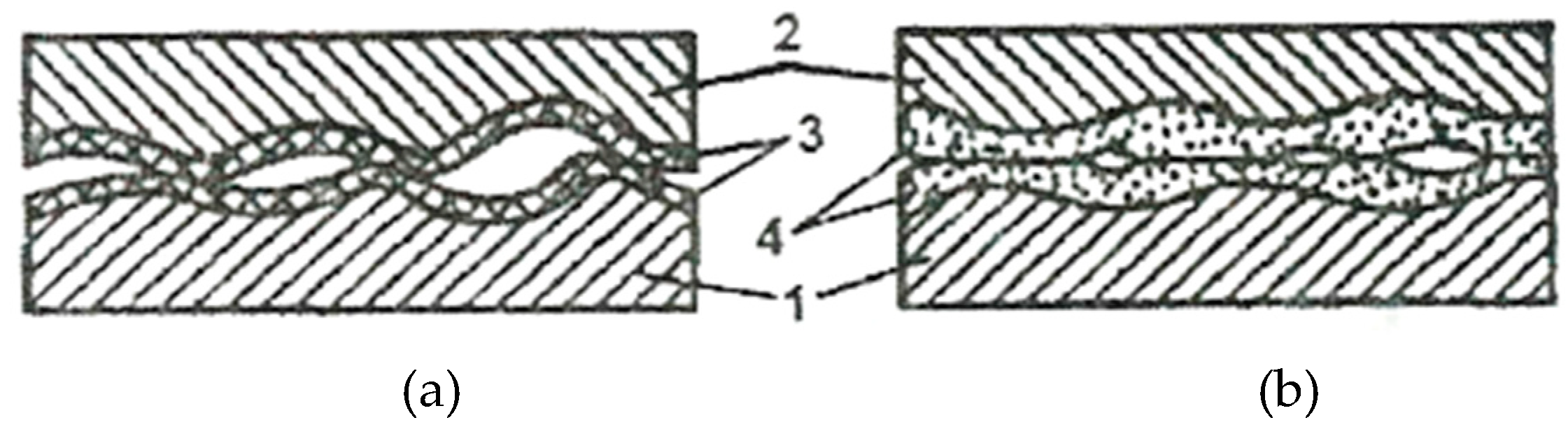
Figure 3.
Scheme of deformation on propagation in the contact points of surfaces with limit lubrication (a) and with selective transfer (b): 1 - steel; 2 - bronze; 3 - oxide film; 4 - servowitte film; 5- deformations.
Figure 3.
Scheme of deformation on propagation in the contact points of surfaces with limit lubrication (a) and with selective transfer (b): 1 - steel; 2 - bronze; 3 - oxide film; 4 - servowitte film; 5- deformations.
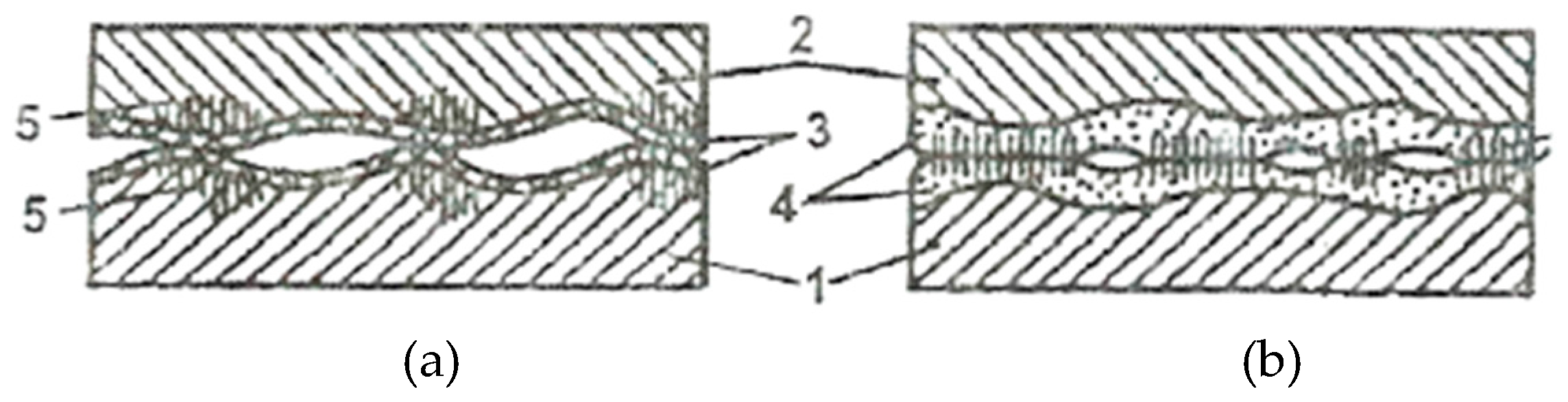
Figure 4.
Scheme of the movement of wear particles in the contact area of surfaces with limited lubrication (a) and with selective transfer (b): 1 - steel; 2 - bronze; 3 - oxide film; 4 - servowitte film; 5 - wear particles.
Figure 4.
Scheme of the movement of wear particles in the contact area of surfaces with limited lubrication (a) and with selective transfer (b): 1 - steel; 2 - bronze; 3 - oxide film; 4 - servowitte film; 5 - wear particles.
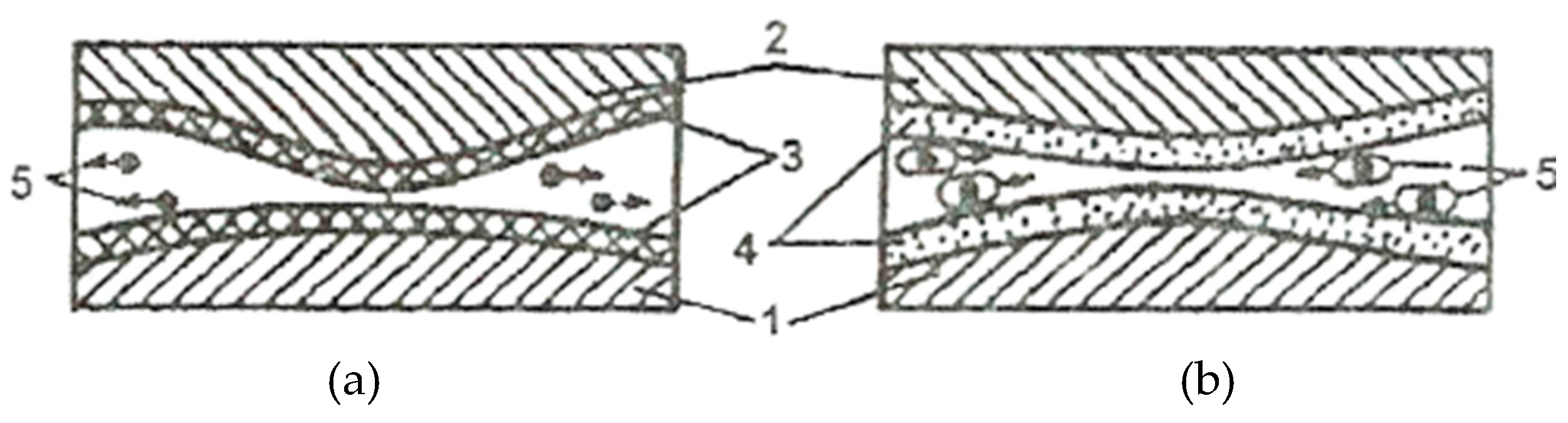
Figure 5.
Scheme of the contact of the surfaces between which there is a lubricant with special additives with lubrication at the limit (a) and with selective transfer (b): 1 - steel; 2 - bronze; 3 - oxide film; 4 - servowitte film; 5 - polymer film.
Figure 5.
Scheme of the contact of the surfaces between which there is a lubricant with special additives with lubrication at the limit (a) and with selective transfer (b): 1 - steel; 2 - bronze; 3 - oxide film; 4 - servowitte film; 5 - polymer film.
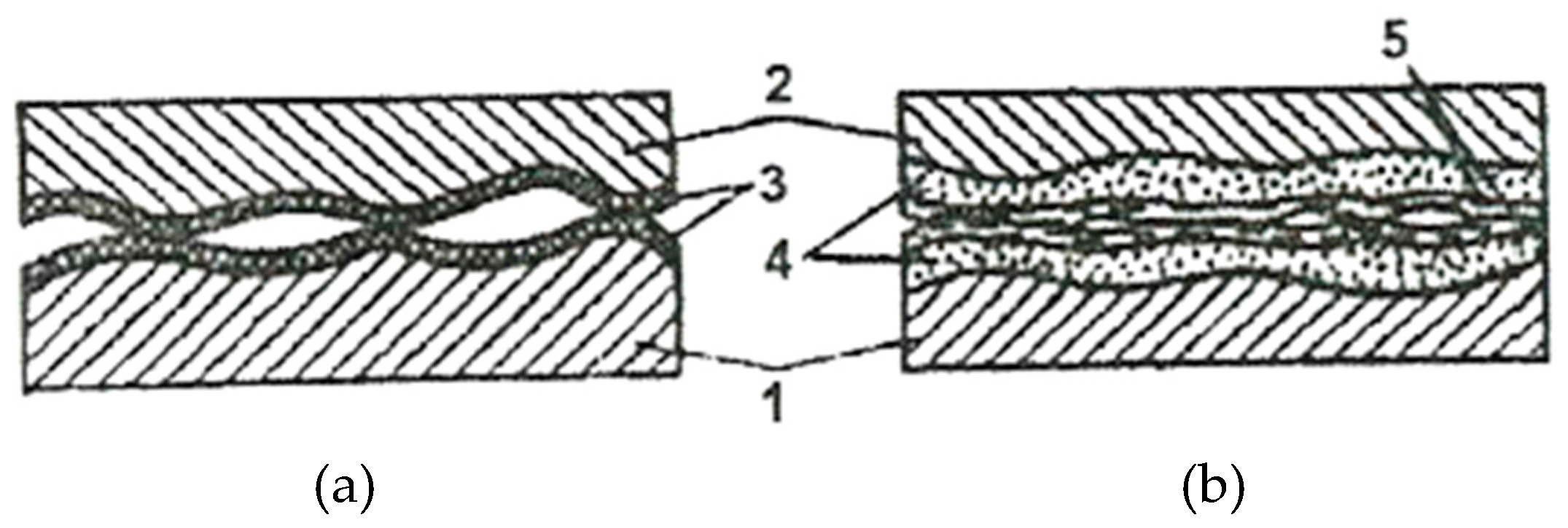
Figure 6.
Friction coefficient variation, f depending on the contact pressure, p, for three sliding speeds on the Amsler installation: curve 1 at 0.6 m/s; curve 2 at 1 m/s; curve 3 at 2 m/s.
Figure 6.
Friction coefficient variation, f depending on the contact pressure, p, for three sliding speeds on the Amsler installation: curve 1 at 0.6 m/s; curve 2 at 1 m/s; curve 3 at 2 m/s.
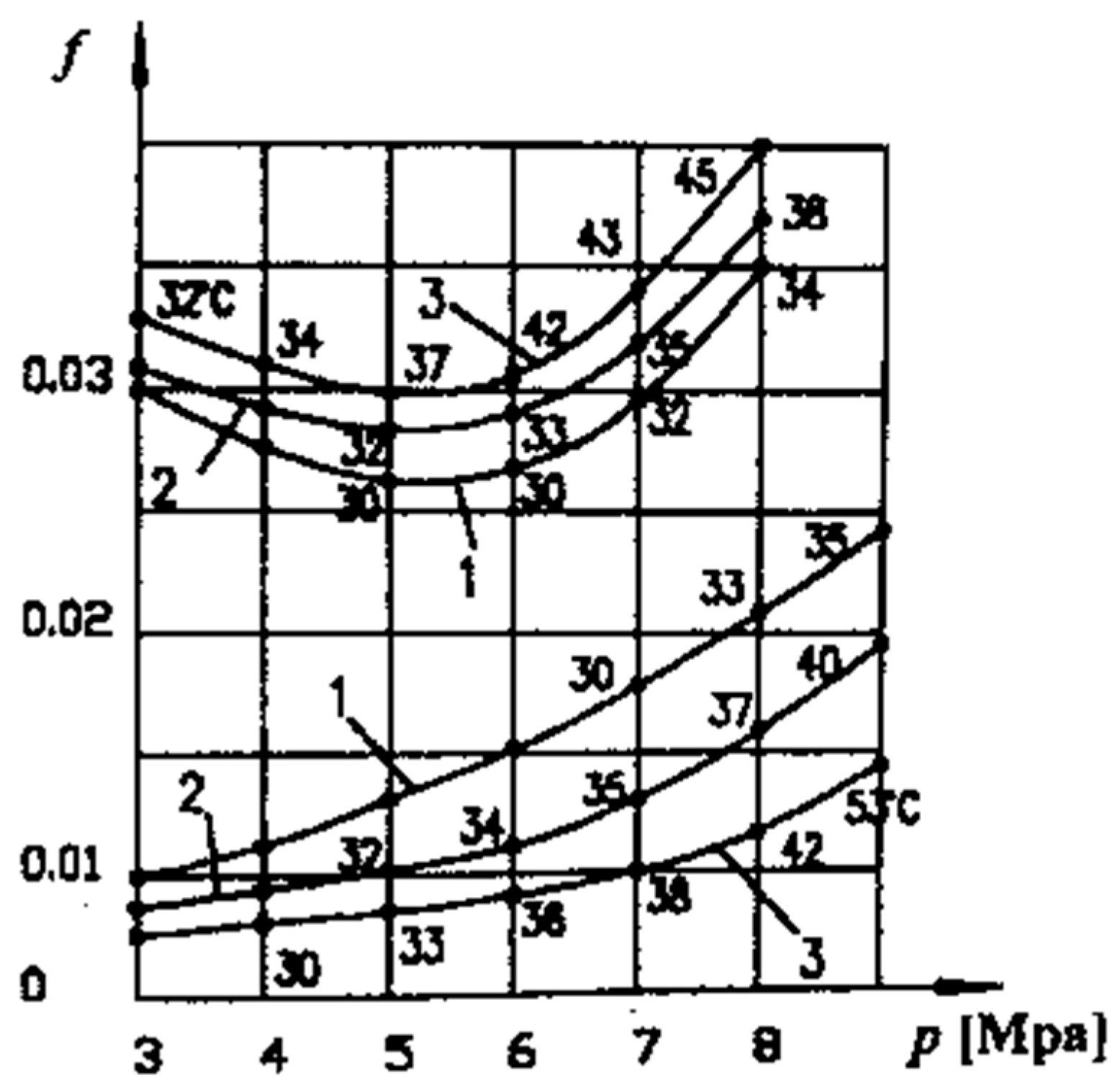
Figure 7.
Friction coefficient variation, f depending on the contact pressure, p, for three sliding speeds on the spindle-bearing installation: curve 1 at 0.65 m/s; curve 2 at 1.18 m/s; curve 3 at 2.28 m/s.
Figure 7.
Friction coefficient variation, f depending on the contact pressure, p, for three sliding speeds on the spindle-bearing installation: curve 1 at 0.65 m/s; curve 2 at 1.18 m/s; curve 3 at 2.28 m/s.
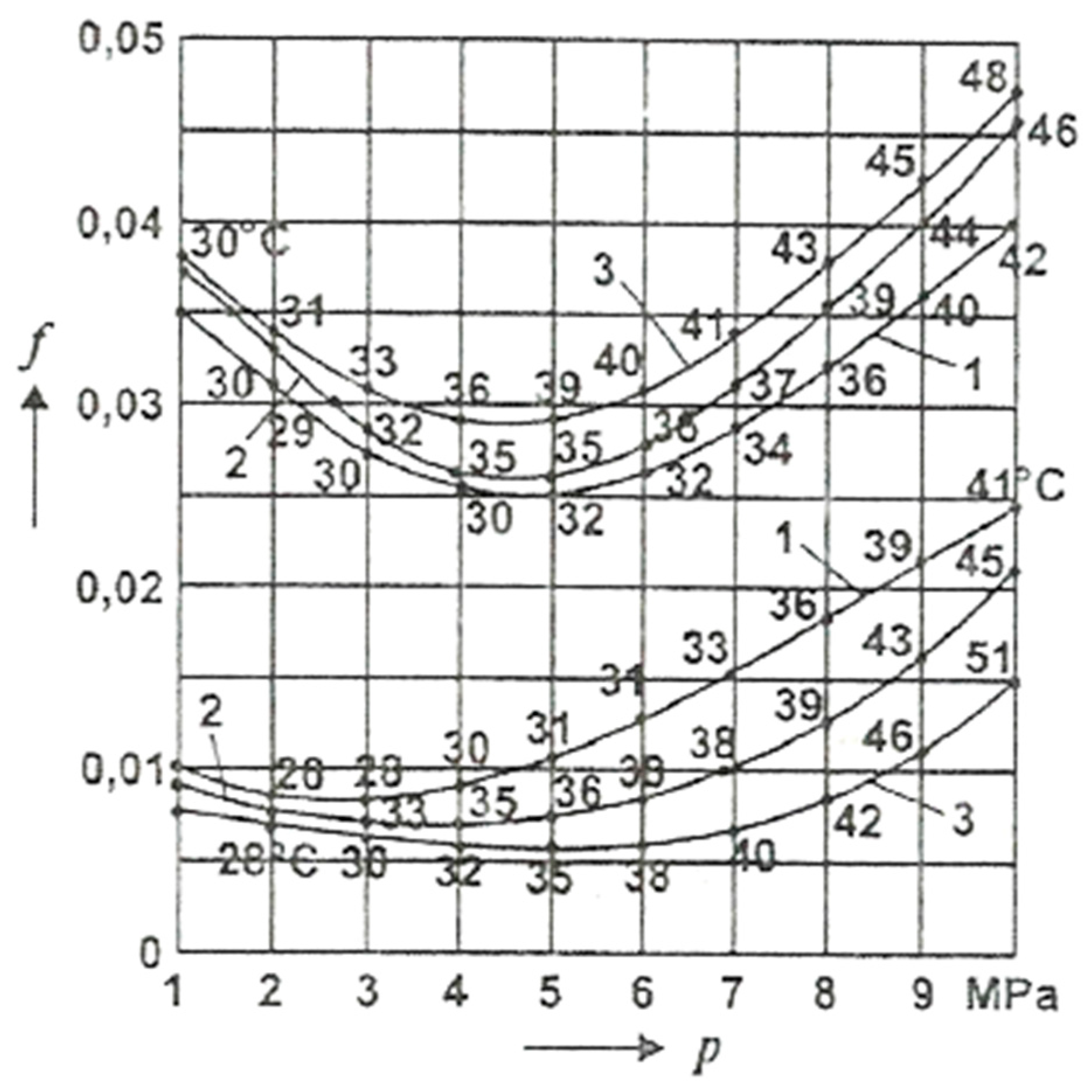
Figure 8.
COF variation as a function of time, t, and an additional load is suddenly applied.
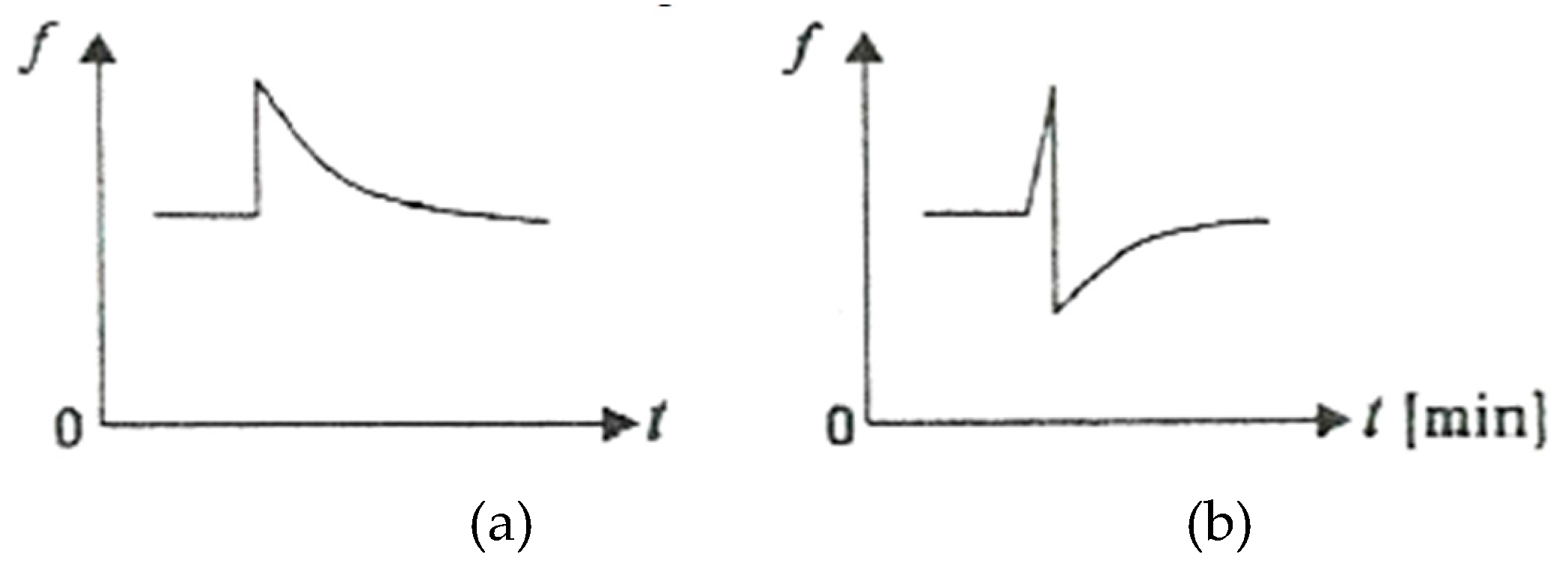
Figure 9.
COF variation over time, when the load is 4.5 MPa and the sliding speed of 0.2 m/s.
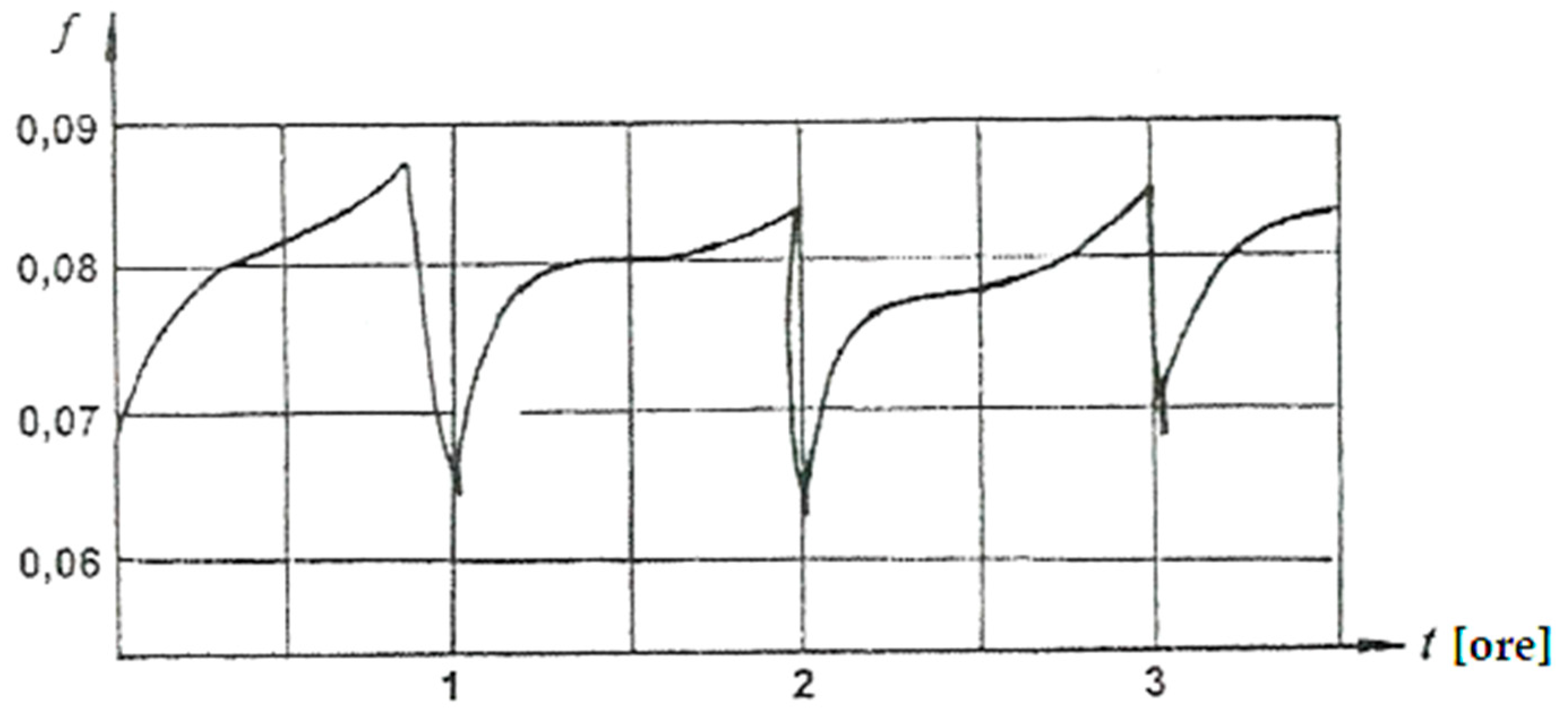

Table 1.
Examples of different materials, where electrokinetic phenomena occur, under selective transfer conditions.
Table 1.
Examples of different materials, where electrokinetic phenomena occur, under selective transfer conditions.
| Materials Pair | Type Lubricant | Source for Particles | Use | Remarks |
|---|---|---|---|---|
| Glass/Rubber | Brine or lye | Brine or lye | Experience | Friction reduction [29] |
| Glass+copper oxide/steel | Water+oil | Copper oxide | Drill | Reducing friction by 50 times [30] |
| Impregnated wood with a complex combination/steel | Glycerin + complex combination | Complex combination | Bearings in the textile industry | [31] |
| Steel/Steel | Aqueous sulfuric acid | Copper alloy | Chemical industry installations | [1,3] |
| Steel/Steel | Refrigerant, a mixture of oils with copper salts | Salt | Metal cutting | [1,3] |
| Steel/Steel | Freon - grease | Copper | Refrigerating units | [1,2,3] |
Disclaimer/Publisher’s Note: The statements, opinions and data contained in all publications are solely those of the individual author(s) and contributor(s) and not of MDPI and/or the editor(s). MDPI and/or the editor(s) disclaim responsibility for any injury to people or property resulting from any ideas, methods, instructions or products referred to in the content. |
© 2024 by the authors. Licensee MDPI, Basel, Switzerland. This article is an open access article distributed under the terms and conditions of the Creative Commons Attribution (CC BY) license (http://creativecommons.org/licenses/by/4.0/).
Copyright: This open access article is published under a Creative Commons CC BY 4.0 license, which permit the free download, distribution, and reuse, provided that the author and preprint are cited in any reuse.


