

Submitted:
10 December 2024
Posted:
11 December 2024
You are already at the latest version
Abstract
This study reports on the catalytic enhancement of hydrogen production from aluminum-water reactions facilitated by carbon-modified aluminum hydroxide (Al(OH)3) synthesized using various carbon materials, including graphite, carbon black, and activated carbon black. Comparative analysis revealed that graphite and activated carbon black, in synergy with Al(OH)3, significantly boost hydrogen production rates. The study underscores the pivotal role of carbon material structure and surface properties in reaction efficiency. The results suggest that graphite and activated carbon black assist in the formation of a more active Al(OH)3 catalyst. Long aging time or high concentration of starting precursor result in an inferior catalytic power of Al(OH)3. Notably, a reduced activation energy of the Al/water reaction was obtained when graphite is incorporated with the Al(OH)3 catalyst.
Keywords:
aluminum hydroxide
; hydrogen generation
1. Introduction
Hydrogen, as a clean and renewable energy carrier, has received significant attention due to its potential in addressing global energy and environmental challenges. The request for sustainable hydrogen production methods has led to the exploration of various chemical reactions, among which the reaction of aluminum with water to produce hydrogen has shown promising prospects due to the abundance and recyclability of aluminum. However, the efficiency of this reaction is often hindered by the formation of a passive oxide layer on aluminum surfaces, which impedes the direct interaction between aluminum and water.
Recent advancements in materials science have paved the way for the use of catalysts to enhance the aluminum-water reaction. Among various catalysts, aluminum hydroxide (Al(OH)3) has been identified as a particularly effective one, promoting the hydrogen generation process [1,2,3,4,5,6,7,8,9,10,11,12,13,14,15,16]. The catalytic action of aluminum hydroxide alters the reaction kinetics, enabling the rapid production of hydrogen at room temperature. Nevertheless, the efficiency and rate of hydrogen production can still be improved.
In 2009, Tae Sun Chang et al. [17] utilized sodium aluminate dissolved in water and added ethanol, discovering that aluminum hydroxide of different shapes could be prepared under various ratios and reaction time conditions. The reaction equation for sodium aluminate and ethanol is as follows:
NaAlO2 + C2H5OH + H2O Al(OH)3 + C2H5ONa
In 2020, we [12] have demonstrated that using graphite as an additive resulted in aluminum hydroxide powder with better catalytic effects. Based on these studies, this research attempts to synthesize more suitable aluminum hydroxide by varying the ratios of added sodium aluminate, graphite, and carbon black.
In this context, carbon materials have emerged as promising candidates to assist the catalytic power of aluminum hydroxide due to their unique physical and chemical properties. Graphite, carbon black, and activated carbon black are studied for their potential in enhancing the catalyst to aluminum-water reaction. These materials are not only abundant and cost-effective but also possess properties such as high surface area, electrical conductivity, and chemical stability, which could potentially improve the catalytic performance of aluminum hydroxide. By comparing graphite, carbon black, and modified activated carbon black, this research seeks to identify the most cost effective carbon material in assisting the catalytic activity of aluminum hydroxide and thus enhancing the rate and efficiency of hydrogen production.
2. Experimental Procedure
Aluminum powder (Al, Alfa Aesar,7~15um, 99.5%) and synthesized aluminum hydroxide (Al(OH)3, <100 nm) were used as the base materials for hydrogen production. Carbon materials such as graphite, carbon black, and activated carbon black were used as an additive of Al(OH)3 during synthesis process. The activated carbon black was made by mixing 1g of carbon black, 5g of KOH, and 50 ml ethanol, stirring at 80oC water bath for 3 h, and dried at 80oC for 1 day. Pulverized and calcined at 850oC in a ramping rate of 30oC/min and a nitrogen gas flowing rate of 100 ml/min. Distilled water was used throughout the experiments.
The synthesized Al(OH)3 were made by preparing a solution of sodium aluminate (NaAlO2) by dissolving 3.5g or 5.0g or 7.5g of the compound in 50 ml distilled water. Ensure the solution is well-mixed and completely dissolved. 0.1~0.8g of carbon materials (graphite, carbon black, or activated carbon black) were added into the NaAlO2 clear solution. Then, dropwise 150 ml ethanol (C2H5OH) to the mixture of NaAlO2 solution, which is under constantly stirring. The addition of ethanol is essential as it helps in the formation of the precipitates, aluminum hydroxide. Place the reaction beaker in an ice bath to control the reaction rate. The ice bath is used for maintaining a low temperature. After that, maintain the reaction beaker at room temperature 1or 24h to allow the reaction to proceed “aging” under controlled condition. All conditions were listed in Table 1.
Take 1 g of carbon material (graphite, carbon black, activated carbon black) and place it into a pellet die of a pellet press. Apply a pressure of 4000 psi (pounds per square inch) for two minutes to form a cylindrical pellet with a diameter of 17.4 mm and a thickness of approximately 4.07 mm. Subsequently, insert two electrodes separated by 10.0 mm into the pellet and measure its electrical resistance using an impedance analyzer. This is a simple way to estimate the bulk conductivity of the carbon materials.
Two main setup methods were utilized to test the catalytic power of catalysts for hydrogen production from Al/water reaction. Setup A (constant temperature method) and Setup B (non-constant temperature, rapid hydrogen production method). In Setup A, 1g Al was added into a mixture of 1g Al(OH)3 and 200g water for reaction. The reaction was maintained at a constant temperature of 25°C using a water bath, and the hydrogen production rate was monitored over time. In Setup B, a more reactive route was used with 1g Al, 1g Al(OH)3, and only 20g water, leading to a rapid reaction that completed within five minutes at temperatures exceeding 60°C. Hydrogen generation was measured using a water displacement method where the generated hydrogen displaced water from a graduated cylinder. These setup conditions are similar with those of previous studies [6,7,8,9,10,11,12,13,14,15,16]. Comparative analyses were performed to assess the performance of different carbon materials in assisting the catalytic effect of aluminum hydroxide.
The morphology and structure of the synthesized catalysts were analyzed using Field Emission Scanning Electron Microscopy (FESEM) and Powder X-ray Diffraction (XRD). The effectiveness of the catalysts and the impact of carbon materials on the hydrogen production process were evaluated based on the amount of hydrogen produced in each experiment.
3. Results and Discussion
3.1. Effect of Aging Time 24 h
As shown in Figure 1, for those ID of No. 1 to No. 6, 100% yield of hydrogen from 1 g of Al powders takes longer than 90 mins in the Setup A, regardless of the addition or weight of carbon materials. This is obviously different from those of aging time 1 h, as shown in Figure 2. In Figure 2, we take graphite as an example, the aging time 1 h shows the production of 100% yield of hydrogen in a period less than 90 mins, implying a good production rate. It is known that excessive aging duration allows the aluminum hydroxide crystals to grow larger. While larger crystals can improve stability, they often have less activity due to smaller overall surface area. This reduced surface area translates to fewer active sites available for reactions, hindering the overall activity of the aluminum hydroxide [12]. 24 h is concluded to be an over aging duration for these catalysts. We don’t particularly interest in optimized the best aging time in this report, but just demonstrate that even a very short aging time in 1 h can exhibit good catalytic effect on the reaction of aluminum and water.
3.2. Effect of carbon materials
As shown in Figure 2, when addition of 0.4 g carbon materials into the synthesized aluminum hydroxides, graphite materials exhibit the best performance. Without the synergistic effect of carbon materials, plain Al(OH)3 catalyst may take 90 mins to complete the 100% yield of hydrogen in the Setup A method. It is also clear that activated carbon black has the effectiveness close to those of graphite.
Activated carbon black has a significant effect on the catalytic activity of aluminum hydroxide, close to that of graphite, as shown in Figure 2. The reasons for its good synergistic effect will be discussed after all related data are presented.
3.3. Amount of carbon materials
As shown in Figure 3, addition of 0.1g to 0.8g carbon black during the synthesis of aluminum hydroxide seem slightly enhance the catalytic effect. 0.2~0.4g carbon black shows an optimum effect in this case. At lower concentrations, 0.1g, there may not be enough carbon black to significantly enhance the dispersion of aluminum hydroxide particles. The surface area provided by the carbon black might be insufficient to create a noticeable improvement in catalytic activity. In the range of 0.2~0.4g, carbon black provides an optimal balance between dispersion and overcrowding. The amount of carbon black is enough to enhance the dispersion of aluminum hydroxide particles effectively, increasing the number of active sites available for the aluminum-water reaction. This leads to a noticeable enhancement in catalytic activity, reducing the duration of 100% yield of hydrogen from 90 mins to 60 mins. At higher concentrations, 0.8g, the carbon black could cause agglomeration or overcrowding of aluminum hydroxide particles. This reduces the overall effective surface area and hinders the accessibility of active sites. Additionally, excessive carbon black might block some of the active sites on aluminum hydroxide, counteracting the benefits and leading to only a slight enhancement in catalytic activity.
Graphite shows a clearly synergistic effect on aluminum hydroxide and is demonstrated in Figure 4. Again, 0.2~0.4 g addition exhibits an optimal effect. Lower or higher amount of graphite did not show better results. It is observed that graphite is a better supporting material for Al(OH)3 catalyst and 0.4g graphite results in an optimal effect which in turn helps the completion of 100% yield of hydrogen in 35 mins using Setup A method.
The use of 5.0g NaAlO2 did not show improvement on the catalytic power of Al(OH)3 but inferior to those of 3.5g. Higher amount of sodium aluminate such as 7.5g also results in an inferior Al(OH)3 catalyst. For 5.0g-N-1h, it takes more than 100 mins to complete 100% yield of hydrogen. The use of 7.5g or 5g NaAlO2 instead of 3.5g to form Al(OH)3 precipitates likely results in larger particle sizes, reduced surface area, and possible changes in crystallinity and purity, all of which contribute to the observed decrease in catalytic power. The optimal catalytic activity is achieved when the conditions for precipitation are carefully controlled to produce small, uniform, and highly active Al(OH)3 particles, which is more likely with the lower concentration of NaAlO2. Indeed, we have synthesized Al(OH)3 powders using 3.5g, 5.0g, 7.5g NaAlO2 precursor and those morphologies will be shown in FESEM later.
3.4. Rapid generation of hydrogen
To compare the effectiveness of various synthesized catalysts, Setup B method was carried out. The ratio of reactants are 1g: 1g: 20 mL for Al: Al(OH)3: H2O. As Figure 6 shown, the 3.5-G4-1h takes only 55 seconds to complete 100% yield of hydrogen, and 3.5-A4-1h, 3.5-C4-1h, and 3.5-G4-24h are 75 sec, 90 sec, and 145 sec, respectively. It shows that the activated carbon black is still better than that of carbon black.
3.5. The Morphology
As shown in Figure 7, carbon black before and after the activation treatment. It shows that the carbon black with numerous pores ~100 nm in their bulk structure, while before the activation, their did not have these pores. These differences may result in a better distribution of Al(OH)3 catalyst, and contacts with the reactant Al powders.
The bulk electrical conductivity of graphite, carbon black, and activated carbon black has been measured and were obtained as 2.02 Ω/cm, 199.81 Ω/cm, and 197.32 Ω/cm, respectively. The graphite has good conductivity and the activated carbon black has slightly better conductivity than that of carbon black. As shown in the results of previous paragraphs, graphite has the best synergistic effect with Al(OH)3, while activated carbon black ranks the second. The reasons that activated carbon black may exhibit a better effect than those of plain carbon black may come from following causes. 1. Activated carbon black has a porous structure where would provide more active sites for the reaction to occur. This facilitates better dispersion of aluminum hydroxide, enhancing its catalytic efficiency. 2. The structure of activated carbon black helps in dispersing the aluminum hydroxide particles more uniformly. This uniform dispersion improves the contact between aluminum and water, leading to more efficient hydrogen production. 3. Activated carbon black possesses unique chemical and physical properties such as higher electrical conductivity and surface area. These properties contribute to the enhanced catalytic performance by facilitating electron transfer processes and maintaining structural integrity during the reaction. 4. The surface of activated carbon black can contain various functional groups that interact with aluminum hydroxide. These interactions can modify the surface properties of aluminum hydroxide, making it more reactive towards water.
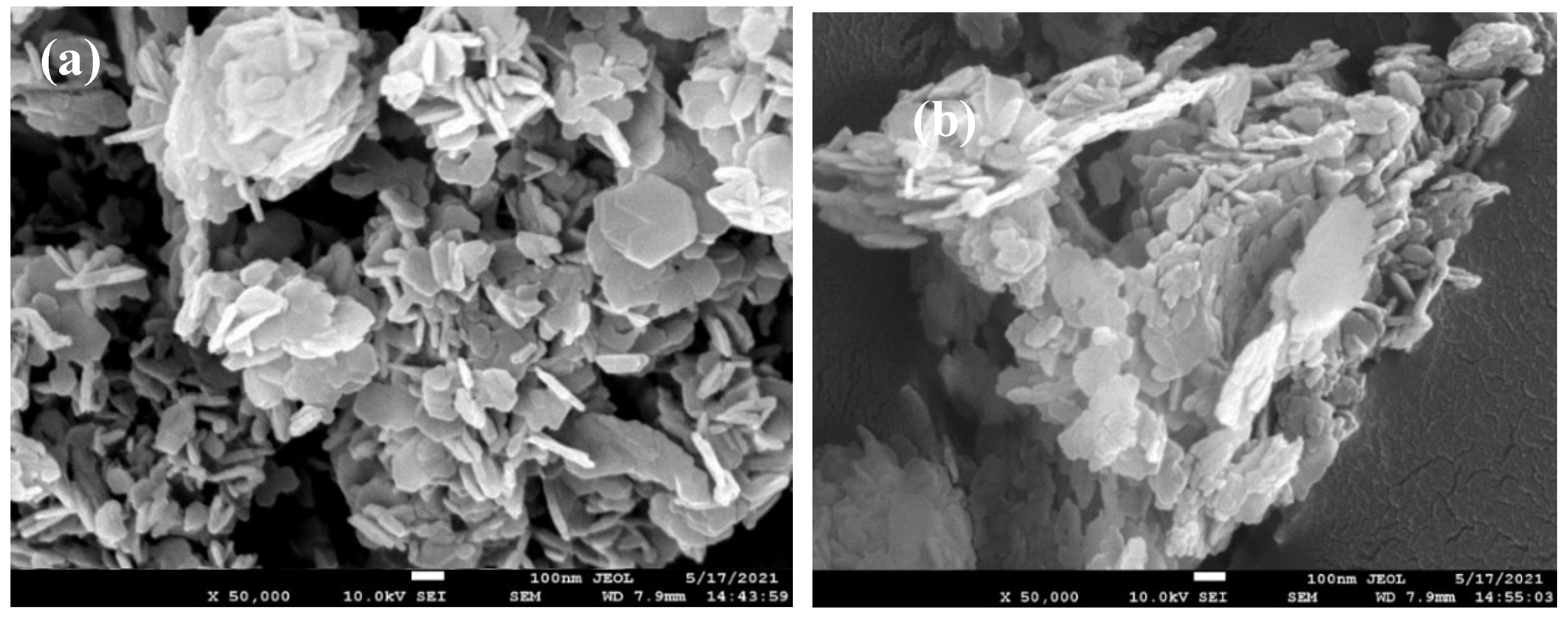
Figure 8 (a) to (j) present a detailed comparison of the morphological features of aluminum hydroxide catalysts, both with and without the addition of various carbon materials (G for graphite, C for carbon black, and A for activated carbon black). Across all images, a commonality is the presence of aluminum hydroxide plate-like structures, but significant differences emerge in terms of particle size, dispersion, and surface texture. Figure 8 (a) and (b) display aluminum hydroxide powders synthesized without any carbon additives; however, the aging time is different. We noticed that the plate-like structure of Al(OH)3 in both images are similar in size but long aging time (24h, Figure 8 (b)) resulted in an agglomerated block. This clearly be the reason why this aluminum hydroxide big block did not show good catalytic power. Since large aggregates would have lower surface area and fewer active sites for the aluminum-water reaction.
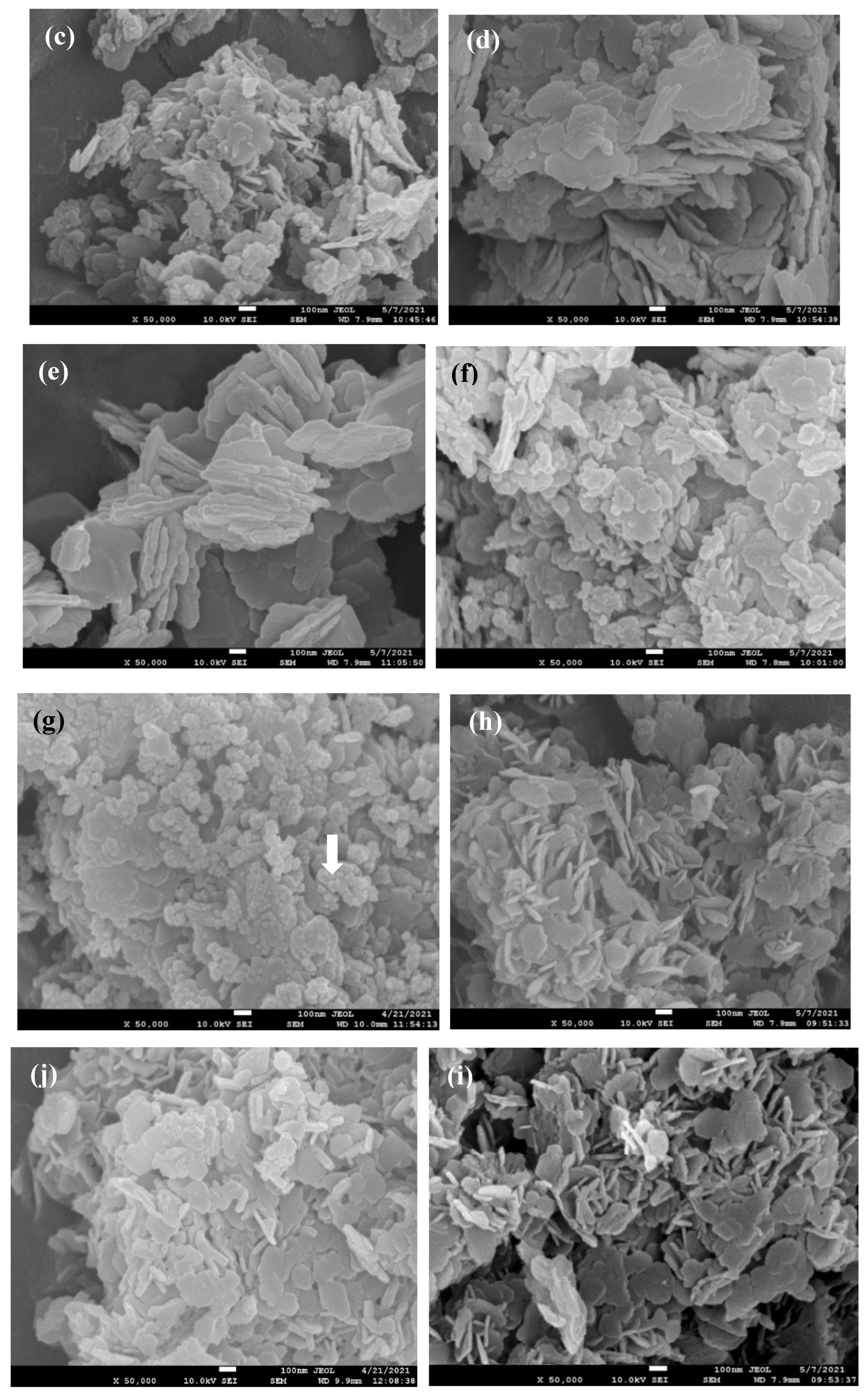
Figure 8 (c) to (e) show aluminum hydroxide synthesized using 0.4 g carbon black and increasing concentrations of sodium aluminate precursor and aging for 24 h. The plate-like structure of Al(OH)3 increased in size with increasing amounts of sodium aluminate, as compared from (c) to (e). It is understood that using a higher concentration of NaAlO2 (0.5~0.75 g compared to 0.3g) can result in the formation of larger Al(OH)3 plates due to increased supersaturation during the precipitation process. Larger particles have a smaller specific surface area and fewer active sites per unit weight for the catalytic reaction. Figure 8 (c) to (e) demonstrate these understanding. However, by the presence of support materials such as carbon black, small plates of Al(OH)3 seem not easily agglomerate into a big block even the aging time is 24 h, as compare the image of Figure 8(b) and (c).
Figure 8 (f)(g) are for Al(OH)3 with carbon black, and Figure 8 (h)(i) with graphite and aging 1 h. We noticed that (f)(g) images exhibit obvious carbon black particles, while (h)(i) have distinct plate-like structures. As shown by the white arrow in Figure 8 (g), the small spherical particles are confirmed to be carbon black, where 61% of carbon is detected by EDS (not shown). The graphite seems an excellent supporting material for the precipitation of small plates of Al(OH)3, where very thin plates are distributed uniformly. And these small plate-like structure of Al(OH)3 again was observed in the case of activated carbon black, as shown in Figure 8(j), though not as distinct as those of graphite.
It is considered that graphite is composed of layers of carbon atoms arranged in a hexagonal lattice. This layered structure provides a template that can influence the growth of aluminum hydroxide crystals. When aluminum hydroxide forms in the presence of graphite, the layered nature of graphite can guide the crystallization process, promoting the formation of plate-like structures of Al(OH)₃. The smooth, flat surfaces of graphite layers provide an ideal substrate for the two-dimensional growth of aluminum hydroxide crystals. This can lead to the anisotropic (directionally dependent) growth of Al(OH)₃, resulting in plate-like morphologies. In contrast, carbon black consists of fine, spherical particles that aggregate into a fluffy, three-dimensional network. This structure lacks the directional guidance for the growth of the Al(OH)3 plates. The spherical, aggregated nature of carbon black particles leads to a more isotropic distribution of Al(OH)3. This distinction highlights how the choice of carbon material can significantly influence the morphology and, consequently, the catalytic performance of aluminum hydroxide in hydrogen production reactions.
Activated carbon black, despite being a porous structure, seems also result in a plate-like structure of Al(OH)₃ due to several reasons. The activation treatment on carbon black results in a very porous structure, as shown in Figure 7(b). With these porous structures, it can be location for numerous nucleation sites for the formation of aluminum hydroxide crystals. These numerous nucleation sites can promote the growth of Al(OH)₃ in various orientations, including plate-like structures.
The porous nature of activated carbon black allows for enhanced diffusion of reactants and products throughout the material. This facilitates a more uniform and controlled growth environment, which can lead to the formation of well-defined crystal structures, such as plates. In addition, functional groups such as carboxyl and hydroxyl on its surface due to the activation process can interact with aluminum hydroxide precursors, influencing the nucleation and growth process in a manner that promotes the formation of plate-like structures. The presence of functional groups can also act as a template, guiding the crystallization of Al(OH)₃ into specific morphologies, including plate-like forms. This templating effect influences Al(OH)₃ morphology but occurs through chemical interactions rather than physical layering.
The porous structure of activated carbon black ensures a better dispersion of aluminum hydroxide throughout the material. This dispersion can prevent aggregation and allow individual Al(OH)₃ crystals to grow freely into plate-like structures. The pores provide a microenvironment that can control the growth kinetics of Al(OH)₃ crystals. This controlled environment can lead to anisotropic (directionally dependent) growth, favoring the formation of plate-like structures.
While graphite’s layered structure directly influences the planar growth of Al(OH)₃, activated carbon black achieves similar results through its high surface area, functional groups, and controlled dispersion within its porous network. Both materials enhance the catalytic activity of aluminum hydroxide but through different mechanisms: graphite by providing a physical template and activated carbon black by offering a chemically interactive and highly dispersed growth medium.
Figure 8.
FESEM of specimen, (a) 3.5g-N-1h, (b) 3.5g-N-24h, (c) 3.5g-C4-24h, (d) 5.0g-C4-24h, (e) 7.5g-C4-24h, (f) 3.5g-C2-1h, (g) 3.5g-C4-1h, (h) 3.5g-G2-1h, (i) 3.5g-G4-1h, (j) 3.5g-A2-1h. The white arrow in (g) is actually carbon black, confirmed by EDS, Al(OH)3 is usually plate-like structure.
Figure 8.
FESEM of specimen, (a) 3.5g-N-1h, (b) 3.5g-N-24h, (c) 3.5g-C4-24h, (d) 5.0g-C4-24h, (e) 7.5g-C4-24h, (f) 3.5g-C2-1h, (g) 3.5g-C4-1h, (h) 3.5g-G2-1h, (i) 3.5g-G4-1h, (j) 3.5g-A2-1h. The white arrow in (g) is actually carbon black, confirmed by EDS, Al(OH)3 is usually plate-like structure.
3.6. The Crystalline Structure
The crystalline phase of aluminum hydroxide has two major polymorphs, gibbsite and bayerite. Bayerite is less stable than gibbsite and can transform to the more stable gibbsite structure over time, especially in acidic environments [18]. We can distinguish them from the XRD characteristic peaks’ heigh and position, listed in Table 2, however, very tricky.
Gibbsite has first strong peak at 2θ = 18.29o, and five other smaller peaks at 2θ = 20.32o to 36.68o, while bayerite has first two strong peaks at 2θ = 18.84o and 20.42o, and another strong peak at 2θ =40.64o. Based on these distinct differences, we determined the crystal structure of 24 h series to be more bayerite phase-oriented mixed phases, as shown in Figure 9(a)(b), regardless of the carbon materials. Since in this 24 h series, the intensity of the second peak counted from left to right are stronger than that of the first one, and the peak at 2θ=40.64o is clear.
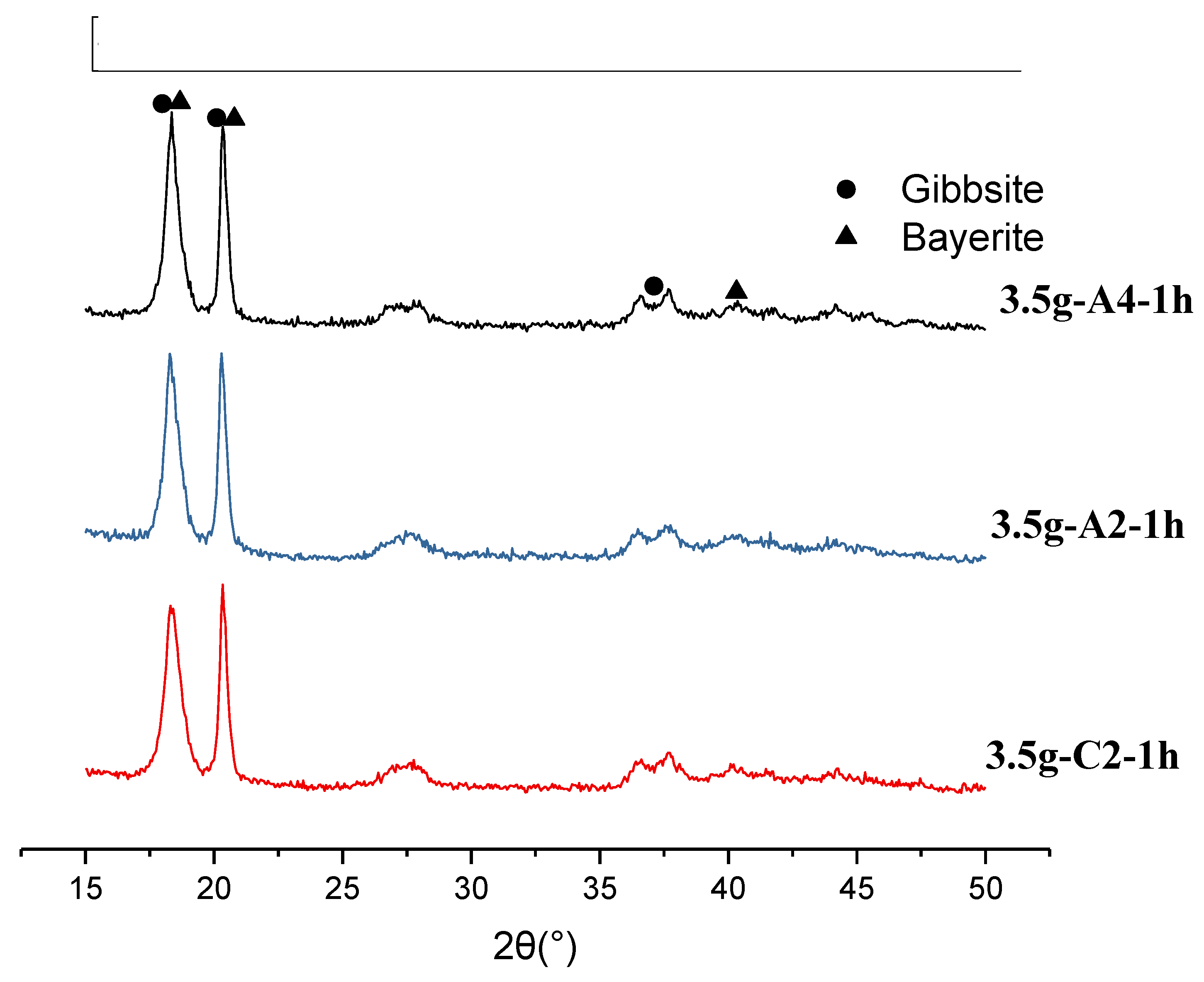
For the series of 1h, Figures 10~12 show the XRD results for 3.5g series aged in 1h with graphite, carbon black, and activated carbon black. All data show a mixed-phases of gibbsite and bayerite. However, the bayerite phase now is much less and it is more gibbsite-oriented phases. At the conditions of 0.4 g graphite, carbon black, and activated carbon black, the first peak of XRD is higher than the second one and the peak at 40.64o is weak, lower than those of 26.94~36.68o.
Figure 11.
XRD result for 3.5g-G-1h series, where graphite was 0.2g~0.8g. Mixed gibbsite and bayerite phases were observed.
Figure 11.
XRD result for 3.5g-G-1h series, where graphite was 0.2g~0.8g. Mixed gibbsite and bayerite phases were observed.
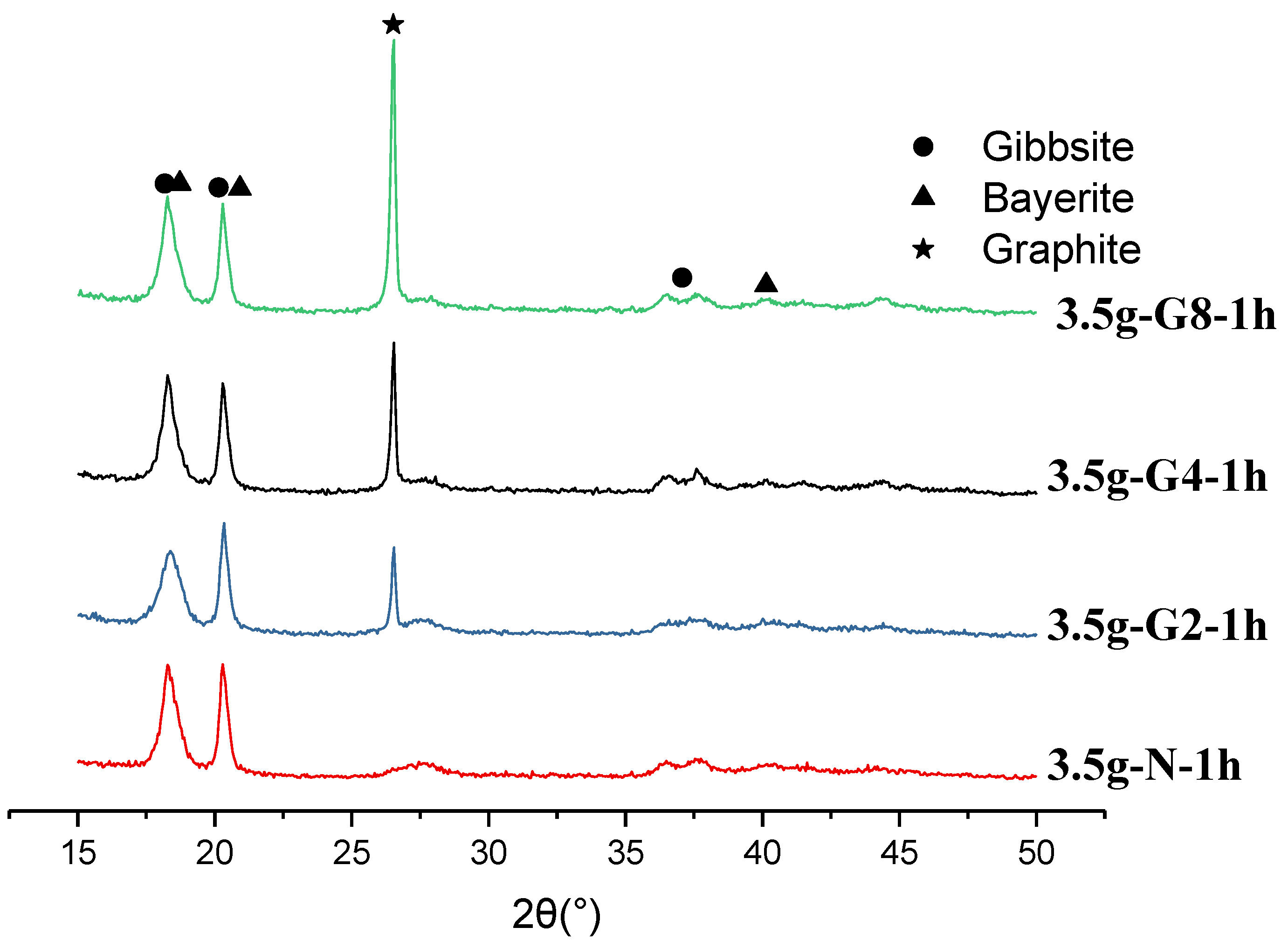
Figure 12.
XRD result for 3.5g-A-1h series, compared with 3.5g-C2-1h, where the activated carbon black was 0.2g and 0.4g. Mixed gibbsite and bayerite phases were observed.
Figure 12.
XRD result for 3.5g-A-1h series, compared with 3.5g-C2-1h, where the activated carbon black was 0.2g and 0.4g. Mixed gibbsite and bayerite phases were observed.
3.7. IR Spectroscopy Analysis
The catalytic performance of carbon-supported aluminum hydroxides can be correlated with their IR analysis. As shown in Figure 13, The x-axis represents the wavenumber (cm⁻¹), which is inversely proportional to the wavelength. It ranges from 0 to 4500 cm⁻¹. The y-axis represents the transmittance percentage, ranging from 91% to 101%. Graphite (black line) shows relatively stable transmittance across the spectrum with minor fluctuations except a shifting to higher wavenumber OH functional group. Activated Carbon (blue line) displays pronounced dips, especially the C-O bond around 1000 cm⁻¹, and C-OH bond near 1500 cm⁻¹. Carbon Black (orange line) exhibits more significant dips, particularly the C-O bond around 1000 cm⁻¹.
Activated carbon shows a higher reactivity than carbon black due to the presence of hydroxyl groups and C-OH functionalities. These functional groups can interact with the aluminum hydroxide and the reaction intermediates, potentially altering the catalytic activity. The shift of the OH functional group to a higher wavenumber of graphite materials can provide valuable insights into the chemical environment and interactions within the material. The OH groups might be less involved in hydrogen bonding compared to other materials like Activated Carbon or Carbon Black. This can suggest that the OH groups in graphite are more isolated or less interacting with neighboring groups, which can affect the material’s reactivity and catalytic properties.
In a view of conducitivity and structure integrity, Graphite has excellent electrical conductivity, which can enhance electron transfer during the catalytic reaction. This property can facilitate the reduction of water and the oxidation of aluminum, leading to better hydrogen gas release. Activated Carbon and Carbon Black have lower electrical conductivity compared to Graphite, which can limit their catalytic effectiveness. Graphit has a layered structure that is more resistant to degradation under reaction conditions. This structural integrity can maintain the catalytic activity over time. Activated Carbon and Carbon Black may undergo structural changes or degradation during the reaction, which can reduce their catalytic effectivenes
In summary, the better catalytic effect of Graphite compared to Activated Carbon and Carbon Black can be attributed to its ordered structure, excellent electrical conductivity, and the shifted reactive functional groups. These properties facilitate a better electron transfer and interaction with the aluminum hydroxide, leading to more efficient hydrogen gas release. Activated Carbon has its catalytic activity improved by the adsorption of reaction intermediates and the presence of reactive functional groups, C-OH, compared to those of Carbon Black.
3.8. The calculation of activation energy Ea
Aluminum hydroxide, as an effective catalyst, plays a crucial role in reducing the activation energy for the hydrogen production from aluminum water reaction. In this study, four isothermal conditions (25 °C, 35 °C, 45 °C, and 55 °C) were also established to conduct hydrogen production experiments from the aluminum/water reaction using the catalyst 3.5g-G2-1h, as shown in Figure 14. It was observed that the reaction rate increased with increasing temperature, and at 55 °C, the reaction was completed (100% yield) within 9 minutes. Assuming the hydrogen production from the aluminum/water reaction follows first-order kinetics, and the rate constant (k) is calculated based on the time required to achieve 50% hydrogen yield (680 mL H2), which will be ln(2)/t0.5. Plotting ln k against 1000*1/T, the slope was obtained. Subsequently, using the Arrhenius equation: k = A·exp(-Ea/RT), where the slope = -Ea/R (Ea = slope* R), the activation energy for the 3.5g-G2-1h catalyst was determined to be 33.9 kJ/mole, as shown in Figure 15.
4. Conclusions
The study demonstrated that the addition of carbon materials, specifically graphite and activated carbon black, significantly enhances the catalytic performance of aluminum hydroxide (Al(OH)3) in the aluminum-water reaction for hydrogen generation. The aging time of the synthesized aluminum hydroxide catalysts played a crucial role in their performance. A shorter aging time of 1 h was found to be effective in a high catalytic activity, whereas an extended aging time of 24 h led to larger agglomerates, which reduced the surface area and consequently the number of active sites available for the reaction. The morphological analysis revealed that activated carbon black possessed a porous structure that facilitated better dispersion of aluminum hydroxide and improved contact with aluminum powders. This structural advantage contributed to its superior performance compared to non-activated carbon black. The study showed that the use of graphite mixed with Al(OH)3 could achieve complete hydrogen yield in as little as 55 seconds under the experimental conditions, highlighting the rapid catalytic effect of this combination. The synergistic use of graphite and activated carbon black with aluminum hydroxide shows promise for efficient and rapid hydrogen production from the aluminum-water reaction. Further optimization of the synthesis conditions and material ratios could lead to even better performance, making this approach viable for practical applications in hydrogen generation.
Acknowledgements
The authors are grateful for the support from the Ministry of Science and Technology, Taiwan, R.O.C. (NSTC 113-2622-M-033 -001).
References
- Deng, Z.Y.; Liu, Y.F.; Tanaka, Y.; Ye, J.H.; Sakka, Y. Modification of Al particle surfaces by γ-Al2O3 and Its effect on the corrosion behavior of Al. J Am Ceram Soc 2005, 88, 977–979. [Google Scholar] [CrossRef]
- Deng, Z.Y.; Liu, Y.F.; Tanaka, Y.; Zhang, H.W.; Ye, J.H.; Kagwa, Y. Temperature effect on hydrogen generation by the reaction of α-Al2O3-modified Al powder with distilled water. J Am Ceram Soc 2005, 88, 2975–2977. [Google Scholar] [CrossRef]
- Deng, Z.Y.; Ferreira JMF, Tanaka, Y. ; Ye, J.H. Physicochemical mechanism for the continuous reaction of α-Al2O3 modified aluminum powder with water. J Am Ceram Soc 2007, 90, 1521–1526. [Google Scholar] [CrossRef]
- Yang, Y.; Gai, W.Z.; Deng, Z.Y.; Zhou, J.G. Hydrogen generation by the reaction of Al with water promoted by an ultrasonically prepared Al(OH)3 suspension. Int J Hydrogen Energy 2014, 39, 18734–18742. [Google Scholar] [CrossRef]
- Gai, W.Z.; Zhang, S.H.; Yang, Y.; Deng, Z.Y. High activity AlOOH catalyzed Al hydrolysis for hydrogen generation. Sustain Energy Technol 2020, 38, 100676. [Google Scholar] [CrossRef]
- Wang, H.W.; Chung, H.W.; Teng, H.T.; Cao, G. Generation of hydrogen from aluminum and water - Effect of metal oxide nanocrystals and water quality. Inter J Hydrogen Energy 2011, 36, 15136–15144. [Google Scholar] [CrossRef]
- Teng, H.T.; Lee, T.Y.; Chen, Y.K.; Wang, H.W.; Cao, G. Effect of Al(OH)3 on the Generation of Hydrogen from the Aluminum-Water System. J Power Sources 2012, 219, 16–21. [Google Scholar] [CrossRef]
- Chen, Y.K.; Teng, H.T.; Lee, T.Y.; Wang, H.W. Rapid hydrogen generation from aluminum-water system by adjusting water ratio to various aluminum/aluminum hydroxide. Inter J Energy Environ Eng 2014, 87, 1–6. [Google Scholar] [CrossRef]
- Wang, H.W.; Chin, M.S. Rapid Hydrogen Generation from Aluminum-Water System Using Synthesized Aluminum Hydroxide Catalyst. Inter J Chem Eng Appl 2015, 6, 146–151. [Google Scholar] [CrossRef]
- Wen, Y.C.; Huang, W.M.; Wang, H.W. Kinetics study on the generation of hydrogen from an aluminum/water system using synthesized Al(OH)3. Inter J Energy Research 2018, 42, 1615–1624. [Google Scholar] [CrossRef]
- Prabu, S.; Hsu, S.C.; Lin, J.S.; Wang, H.W. Rapid hydrogen generation from the reaction of aluminum powders and water using synthesized aluminum hydroxide catalysts. Topics in Catalysis 2018, 61, 1633–1640. [Google Scholar] [CrossRef]
- Prabu, S.; Wang, H.W. Enhanced hydrogen generation from graphite-mixed aluminum hydroxides catalyzed Al/water reaction. Inter J Hydrogen Energy 2020, 45, 33419–33429. [Google Scholar] [CrossRef]
- Prabu, S.; Wang, H.W. Hydrogen generation from the reaction of Al and H2O using a synthesized Al(OH)3 nanoparticle catalyst: the role of urea. Catalyst Sci. Technol 2021, 11, 4636–4649. [Google Scholar] [CrossRef]
- Prabu, S.; Wang, H.W. Improved hydrogen generation from Al/water reaction using different synthesized Al(OH)3 catalyst crystalline phases. Inter J Ener Res 2021, 45, 9518–9529. [Google Scholar] [CrossRef]
- Prabu, S.; Wang, H.W. Transition metal nanoparticles composite Al(OH)3 catalysts for hydrogen generation of Al/H2O system. J Taiwan Institute Chem Eng 2023, 145, 104771. [Google Scholar] [CrossRef]
- Wang, H.W. Continuous Hydrogen Production Device And Method There of. US patent (2014) 8865118 B2.
- Chang, T.S.; Na, J.H.; Jung, C.Y.; Koo, S.M. An easy one-pot synthesis of structurally controlled aluminum hydroxide particles from an aqueous sodium aluminate solution. J Ceram Proc Res 2009, 10, 832–839. [Google Scholar]
- Elderfield, H.; Hem, J.D. The development of crystalline structure in aluminum hydroxide polymorphs on ageing. Mineralogical Magazine 1973, 39, 89–96. [Google Scholar] [CrossRef]
Figure 1.
For all conditions at 24 h, No. 1 to No. 6, 100% yield of hydrogen takes longer than 90 mins.
Figure 1.
For all conditions at 24 h, No. 1 to No. 6, 100% yield of hydrogen takes longer than 90 mins.
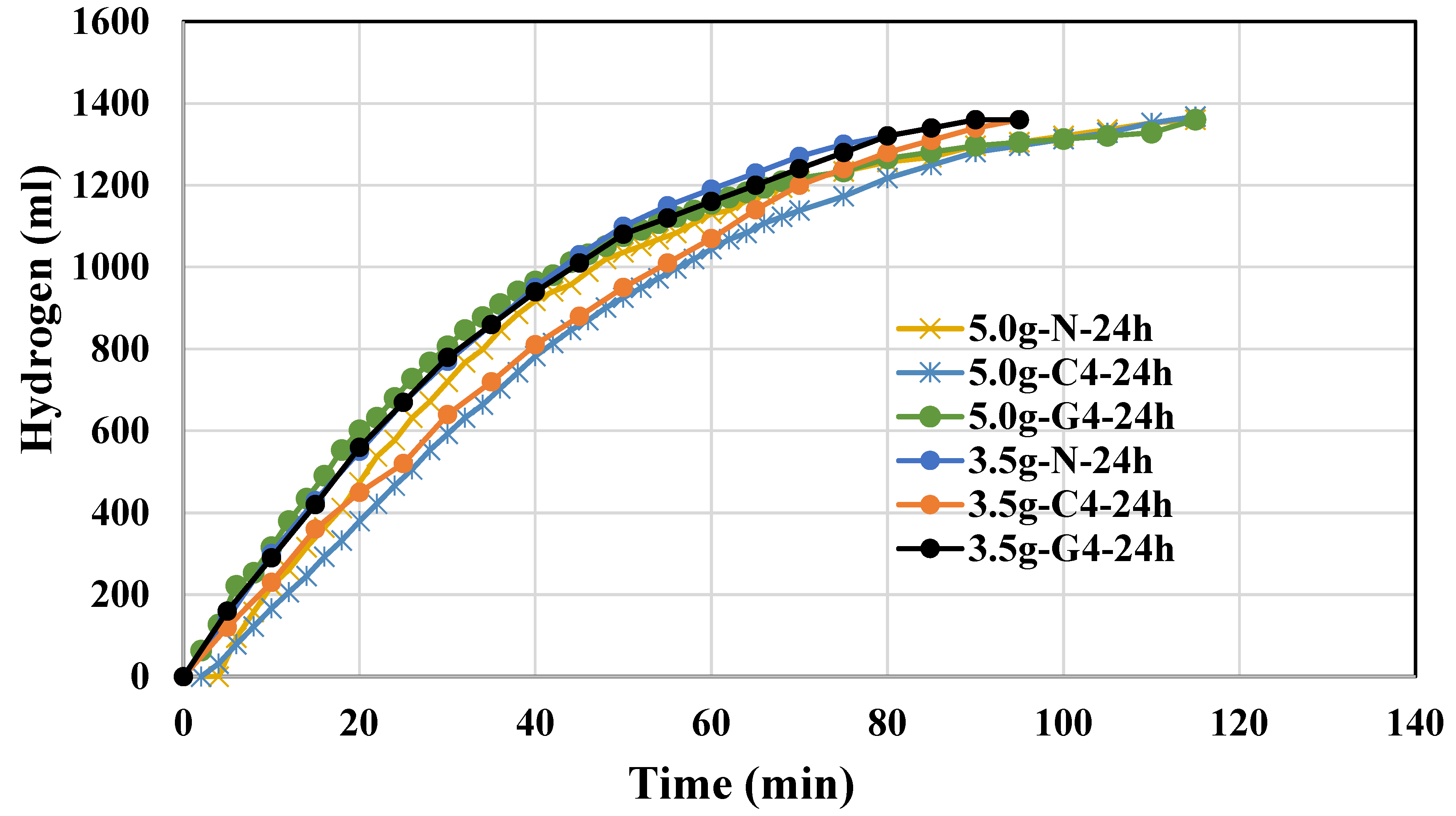
Figure 2.
For conditions at 1 h, 100% yield of hydrogen takes shorter than 90 mins, the synergistic effect of graphite is better than that of carbon black. Especially, the activated carbon black is close to the effect of graphite.
Figure 2.
For conditions at 1 h, 100% yield of hydrogen takes shorter than 90 mins, the synergistic effect of graphite is better than that of carbon black. Especially, the activated carbon black is close to the effect of graphite.
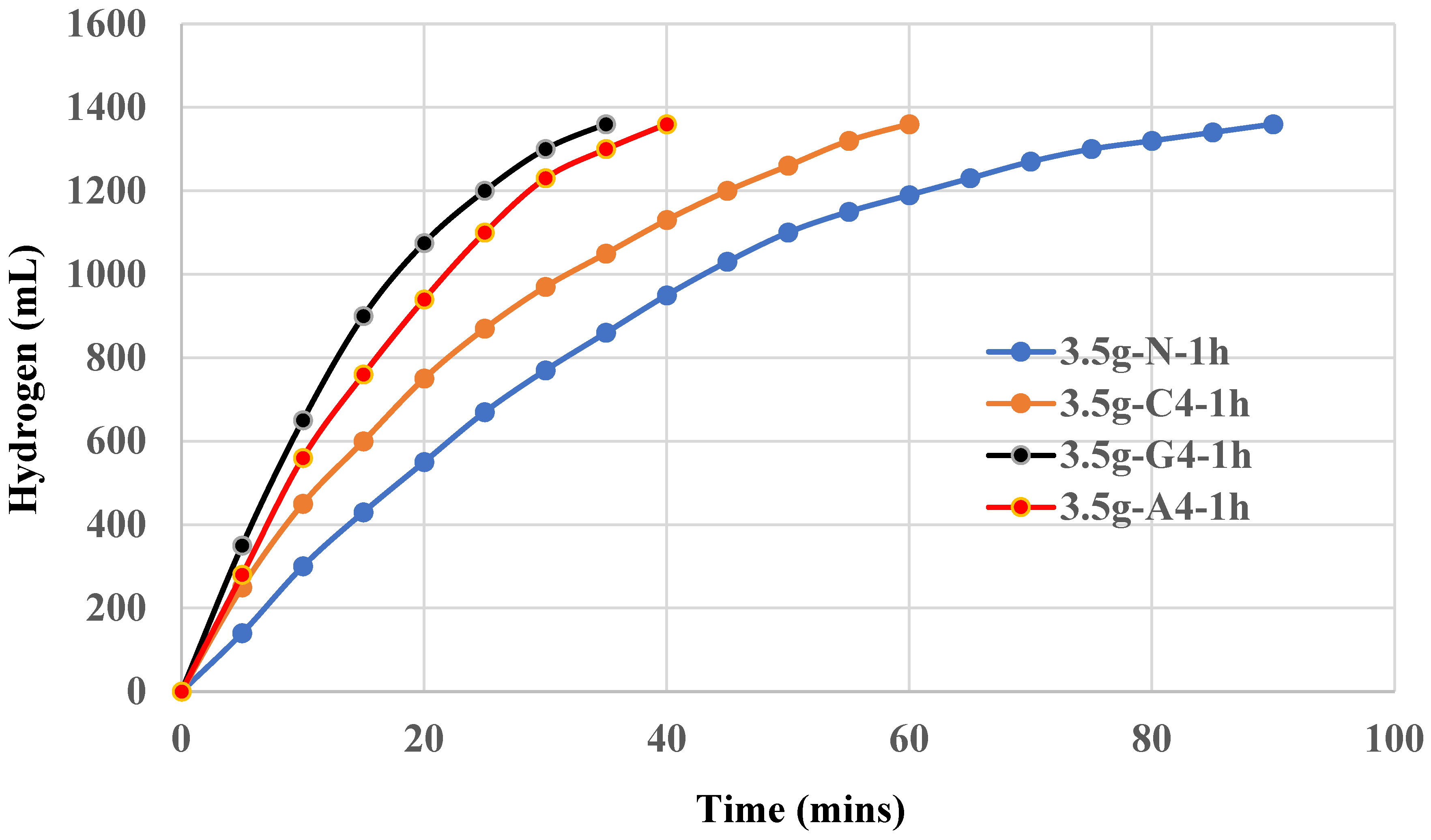
Figure 3.
For carbon black, they show slightly synergistic effect on aluminum hydroxide catalyst, 0.2-0.4 g amount seems the optimal condition.
Figure 3.
For carbon black, they show slightly synergistic effect on aluminum hydroxide catalyst, 0.2-0.4 g amount seems the optimal condition.
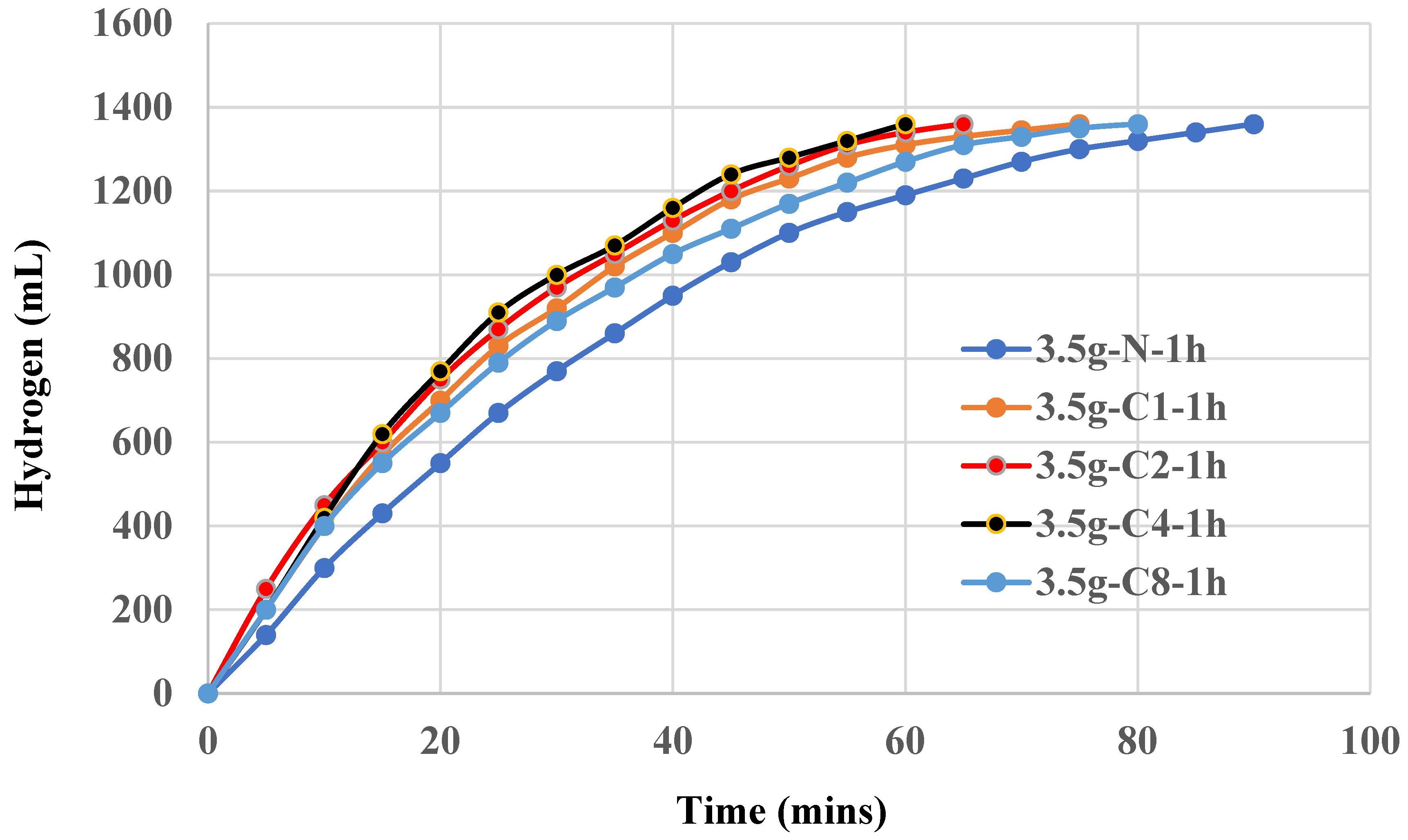
Figure 4.
For graphite, they show clearly synergistic effect on aluminum hydroxide catalyst. Again, 0.2-0.4 g amount seems the optimal condition.
Figure 4.
For graphite, they show clearly synergistic effect on aluminum hydroxide catalyst. Again, 0.2-0.4 g amount seems the optimal condition.
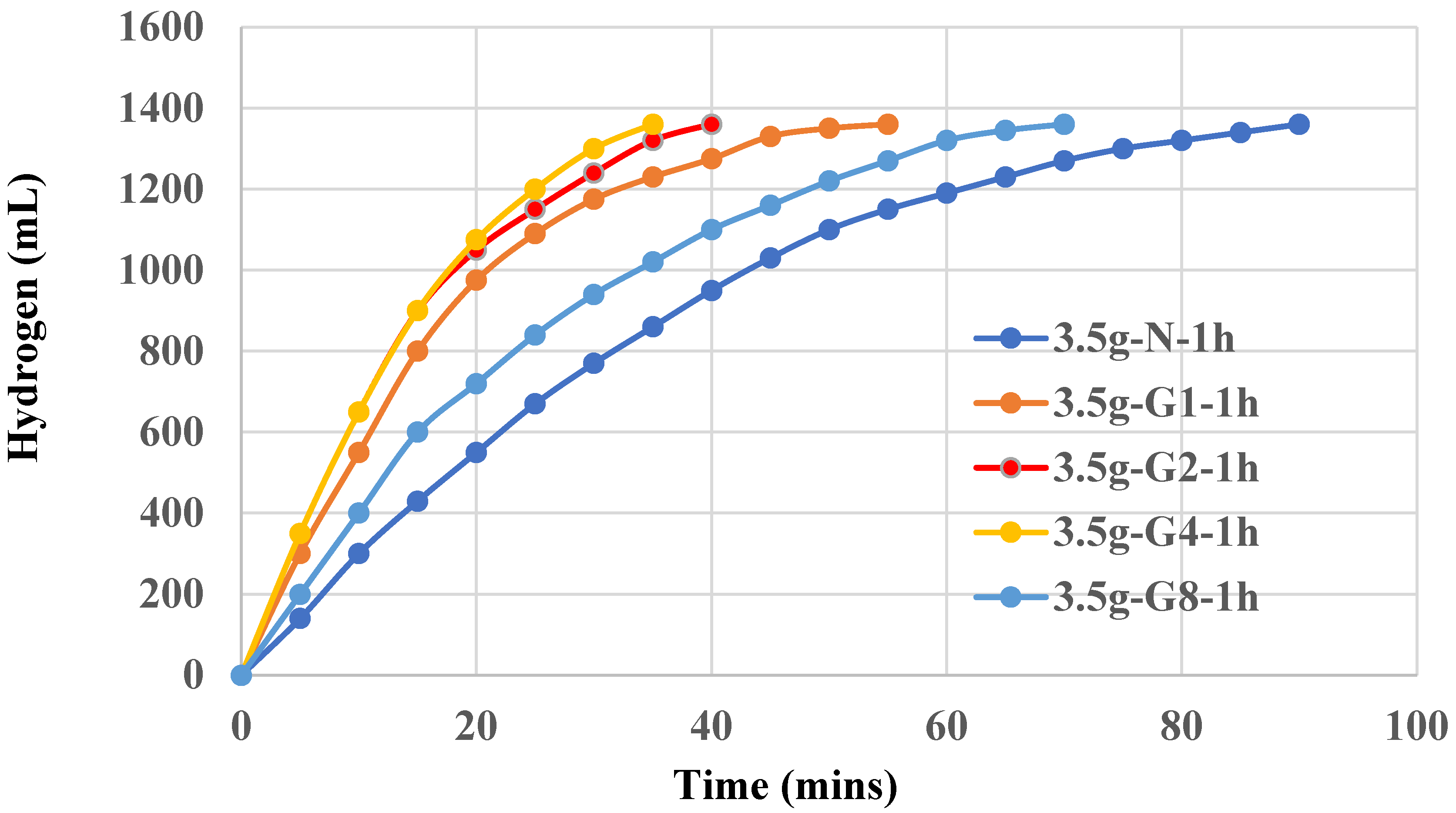
Figure 5.
The use of 5.0 g NaAlO2 in synthesized step did not show better result than those of 3.5 g (Figure 4).
Figure 5.
The use of 5.0 g NaAlO2 in synthesized step did not show better result than those of 3.5 g (Figure 4).
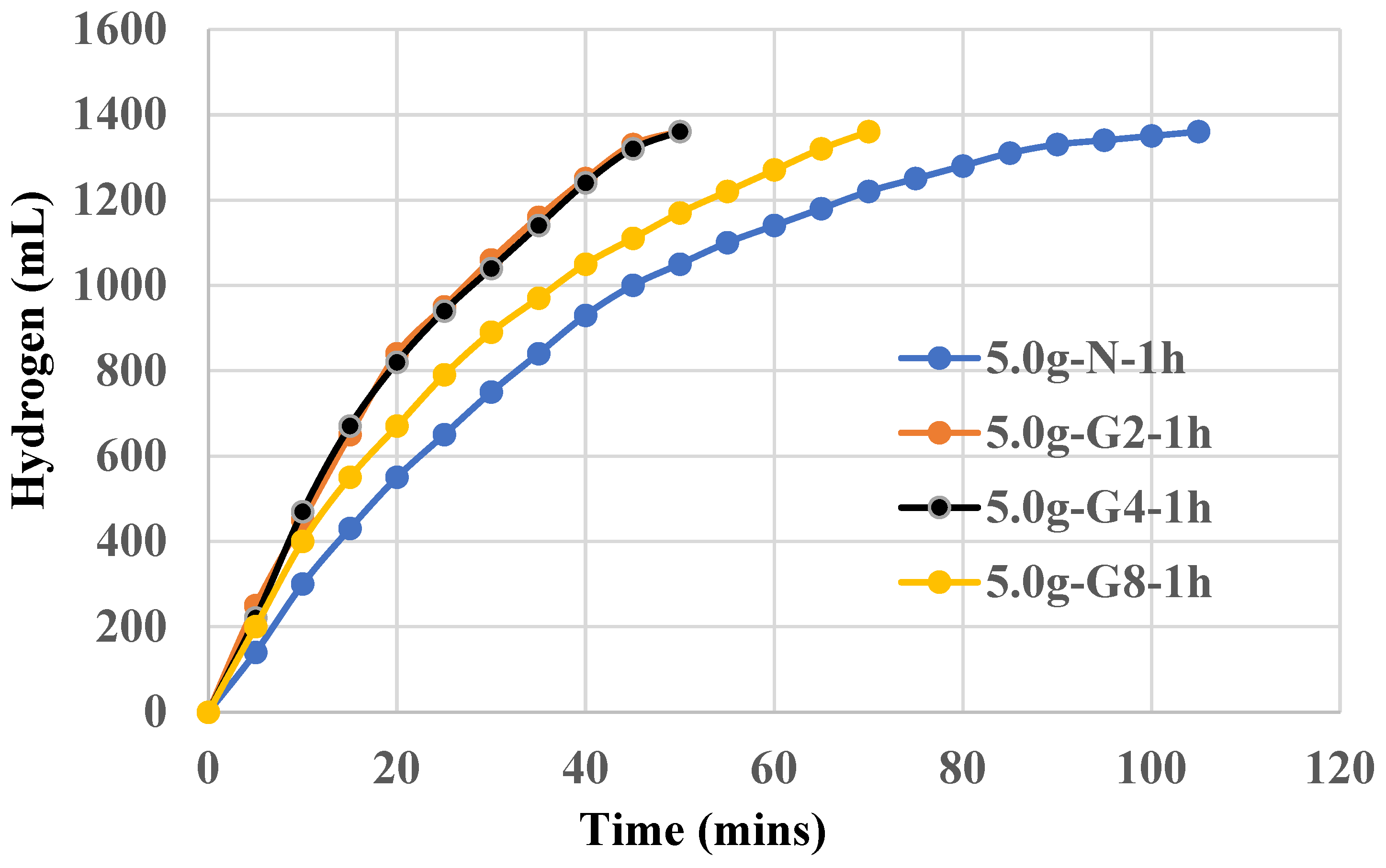
Figure 6.
Setup B method demonstrates the rapid generation of hydrogen using 0.4g graphite, carbon black and activated carbon black, respectively. Graphite-modified Al(OH)3 catalyst could assist 100% hydrogen yield from the Al/water reaction within 60 sec.
Figure 6.
Setup B method demonstrates the rapid generation of hydrogen using 0.4g graphite, carbon black and activated carbon black, respectively. Graphite-modified Al(OH)3 catalyst could assist 100% hydrogen yield from the Al/water reaction within 60 sec.
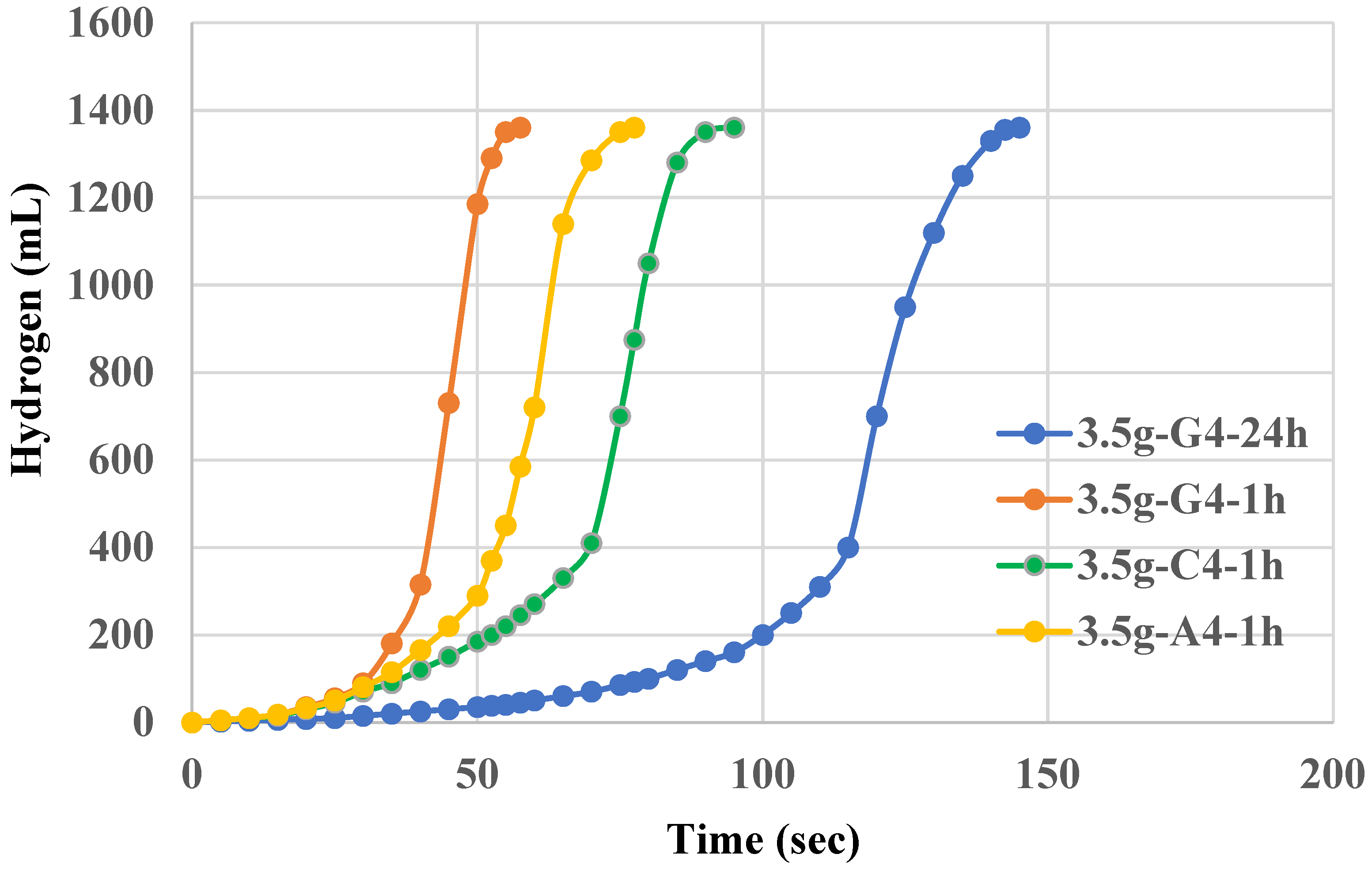
Figure 7.
FESEM of (a) carbon black, (b) activated carbon black.
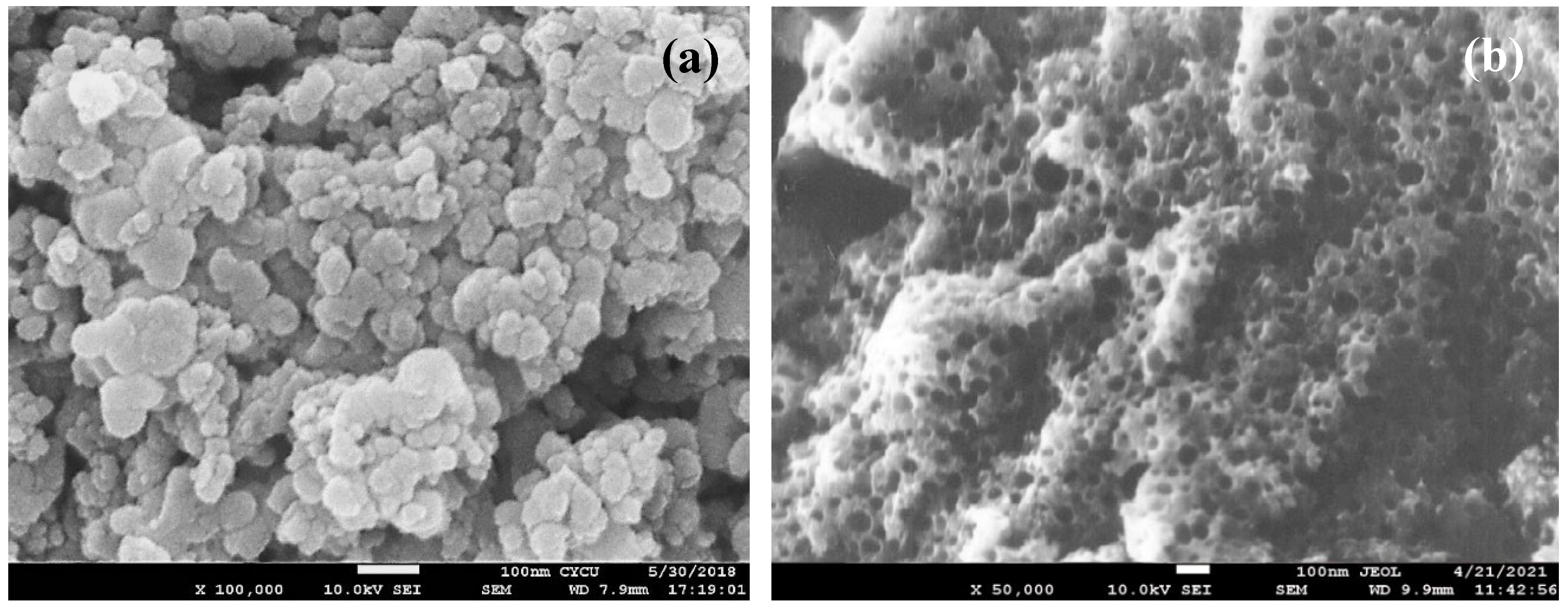
Figure 9.
a)(b) For the series are 24 h aging, crystal structure are more bayerite-oriented.
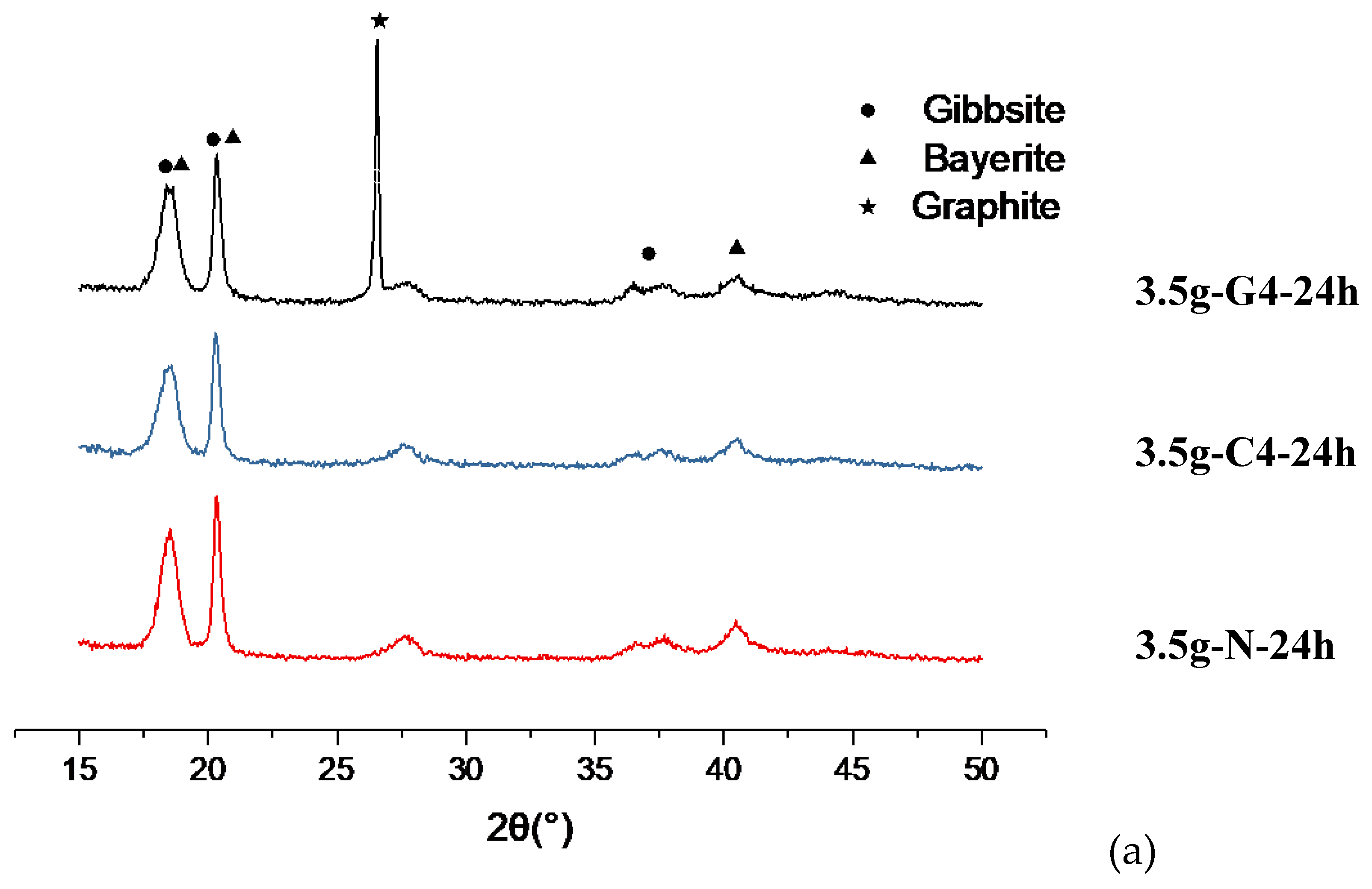
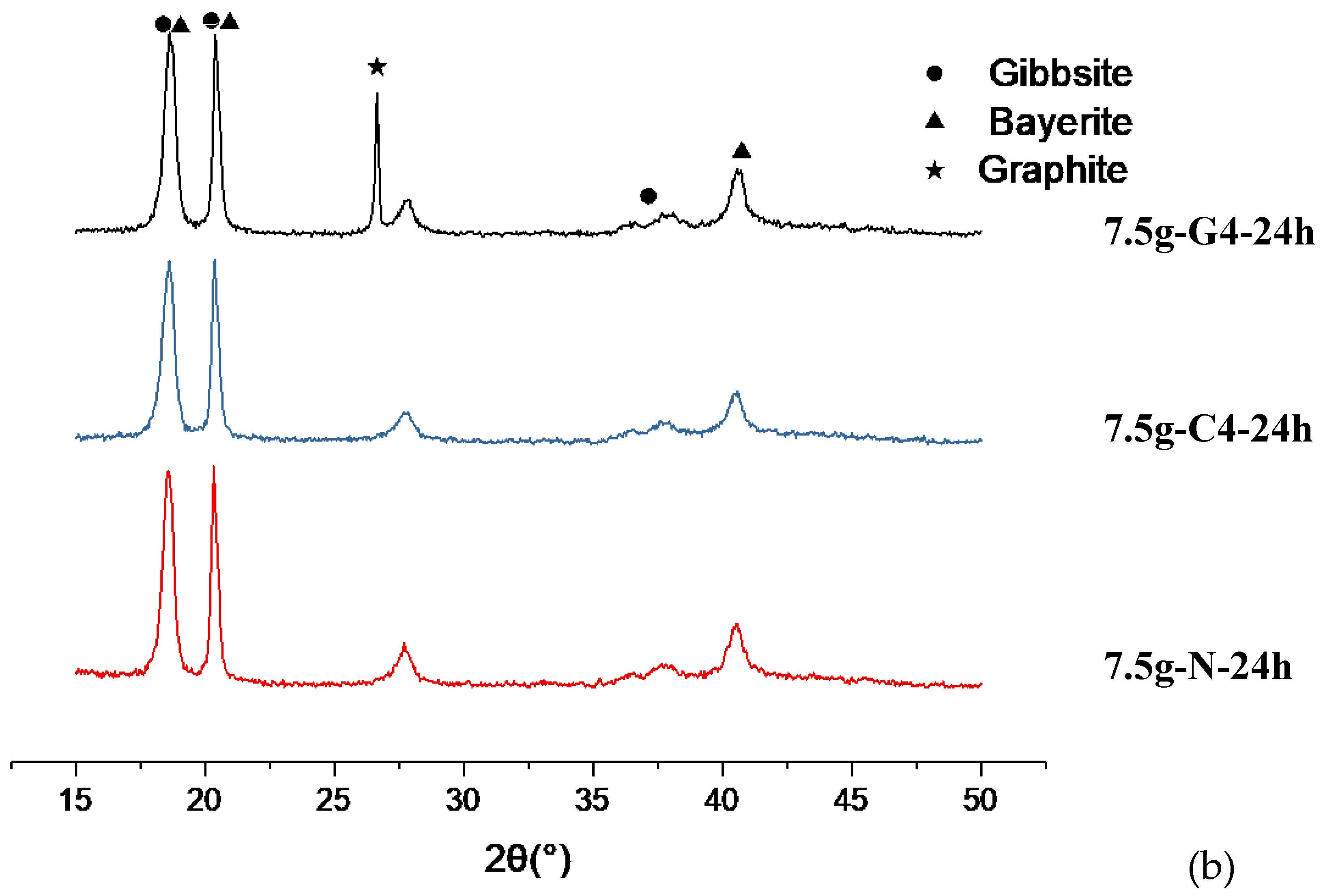
Figure 10.
XRD result for 3.5-C-1h series, where carbon black was 0.2g~0.8g. Mixed gibbsite and bayerite phases were observed.
Figure 10.
XRD result for 3.5-C-1h series, where carbon black was 0.2g~0.8g. Mixed gibbsite and bayerite phases were observed.
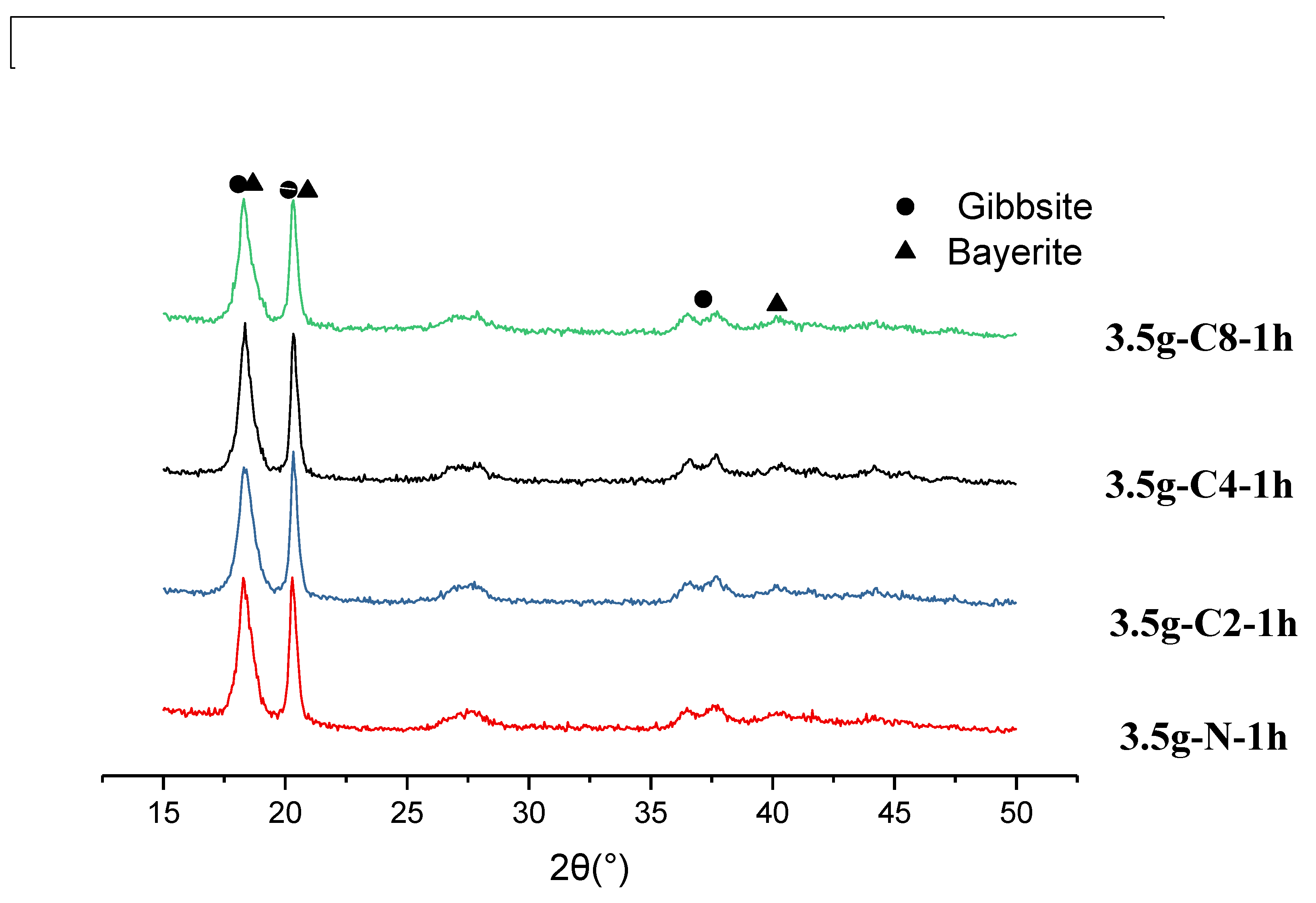
Figure 13.
The IR data for three carbon materials.
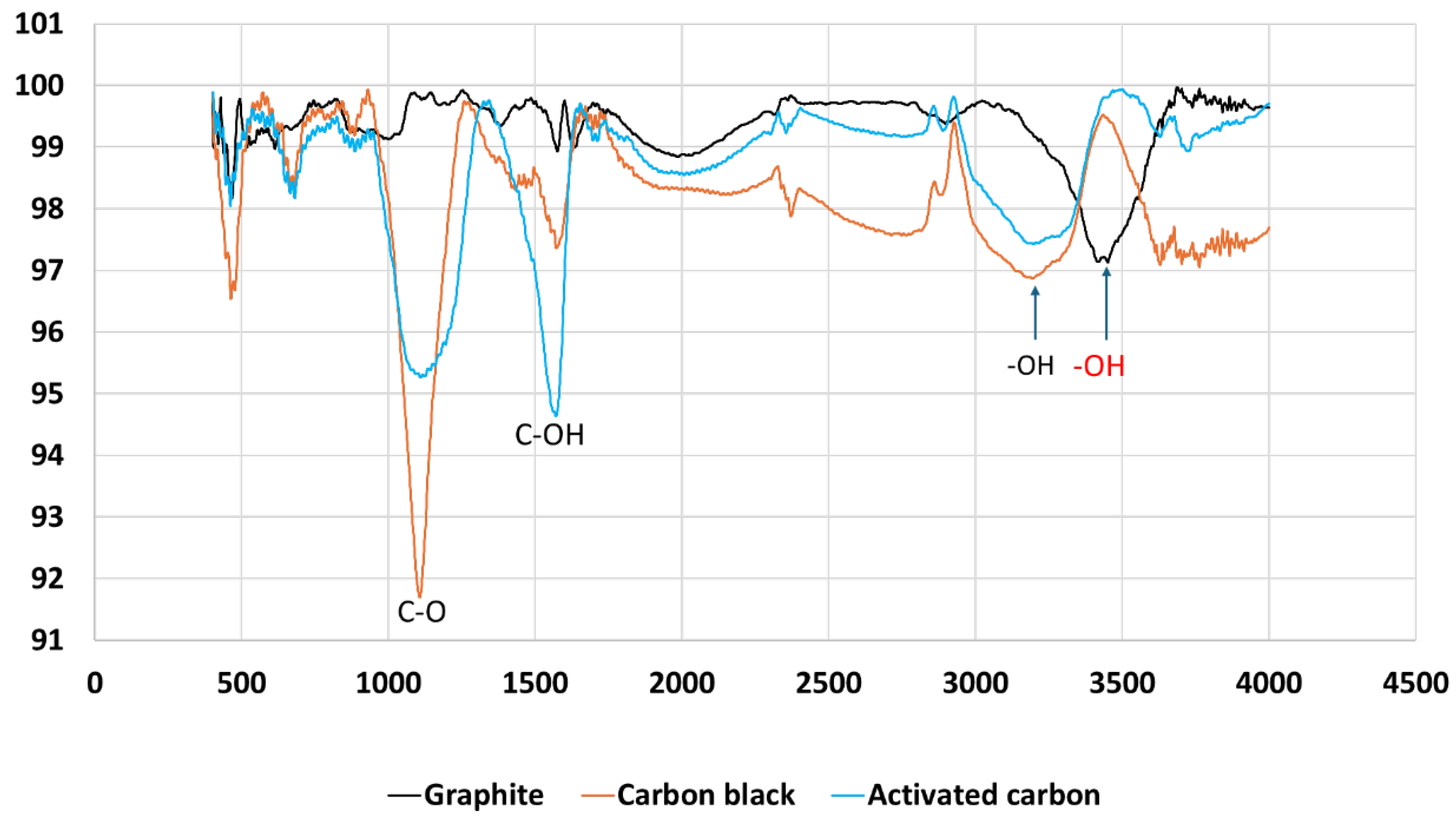
Figure 14.
four isothermal conditions (25 °C, 35 °C, 45 °C, and 55 °C) were also established to conduct hydrogen production experiments from the aluminum/water reaction using the catalyst 3.5g-G2-1h.
Figure 14.
four isothermal conditions (25 °C, 35 °C, 45 °C, and 55 °C) were also established to conduct hydrogen production experiments from the aluminum/water reaction using the catalyst 3.5g-G2-1h.
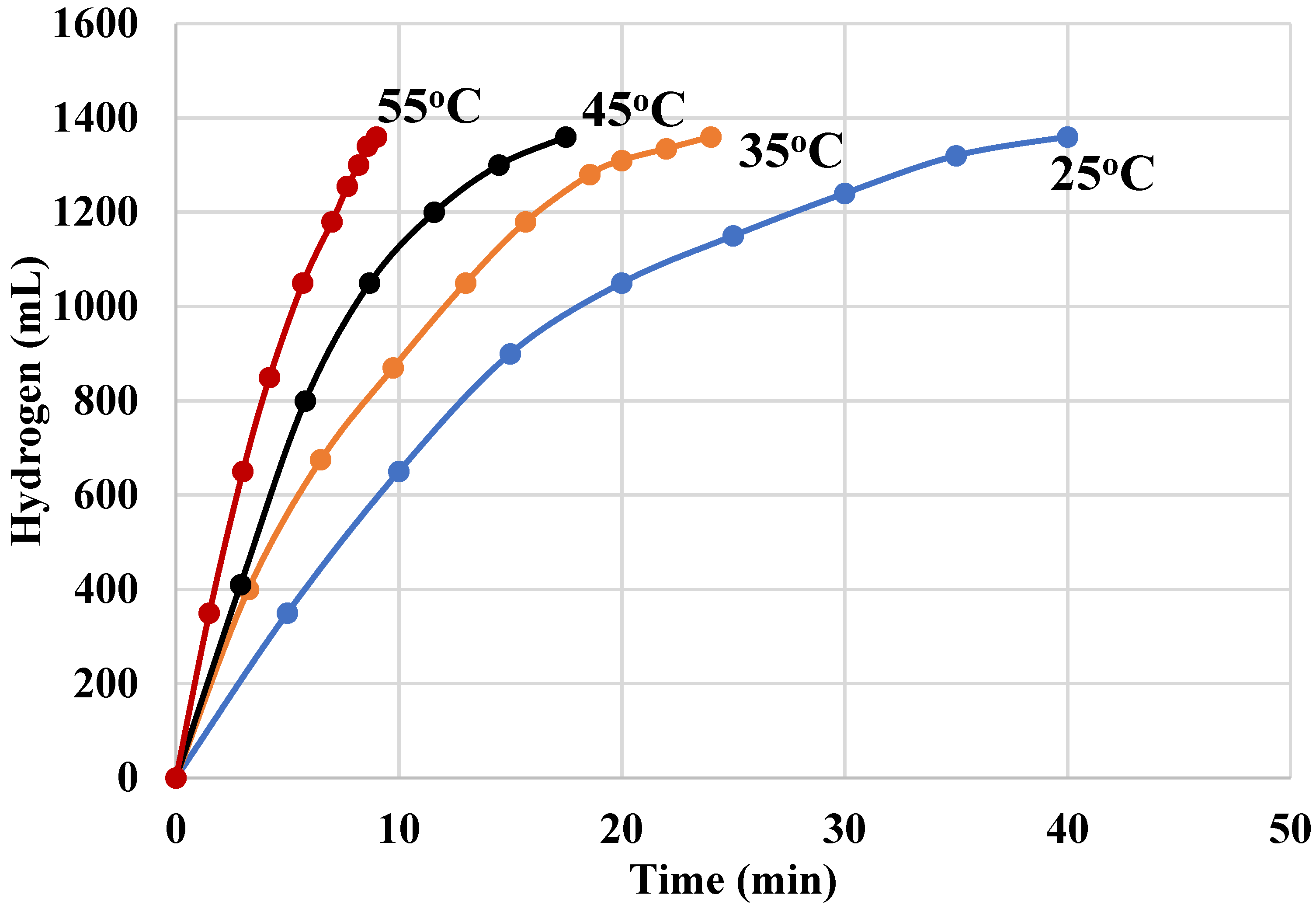
Figure 15.
Calculation of Ea using Arrhenius equation.
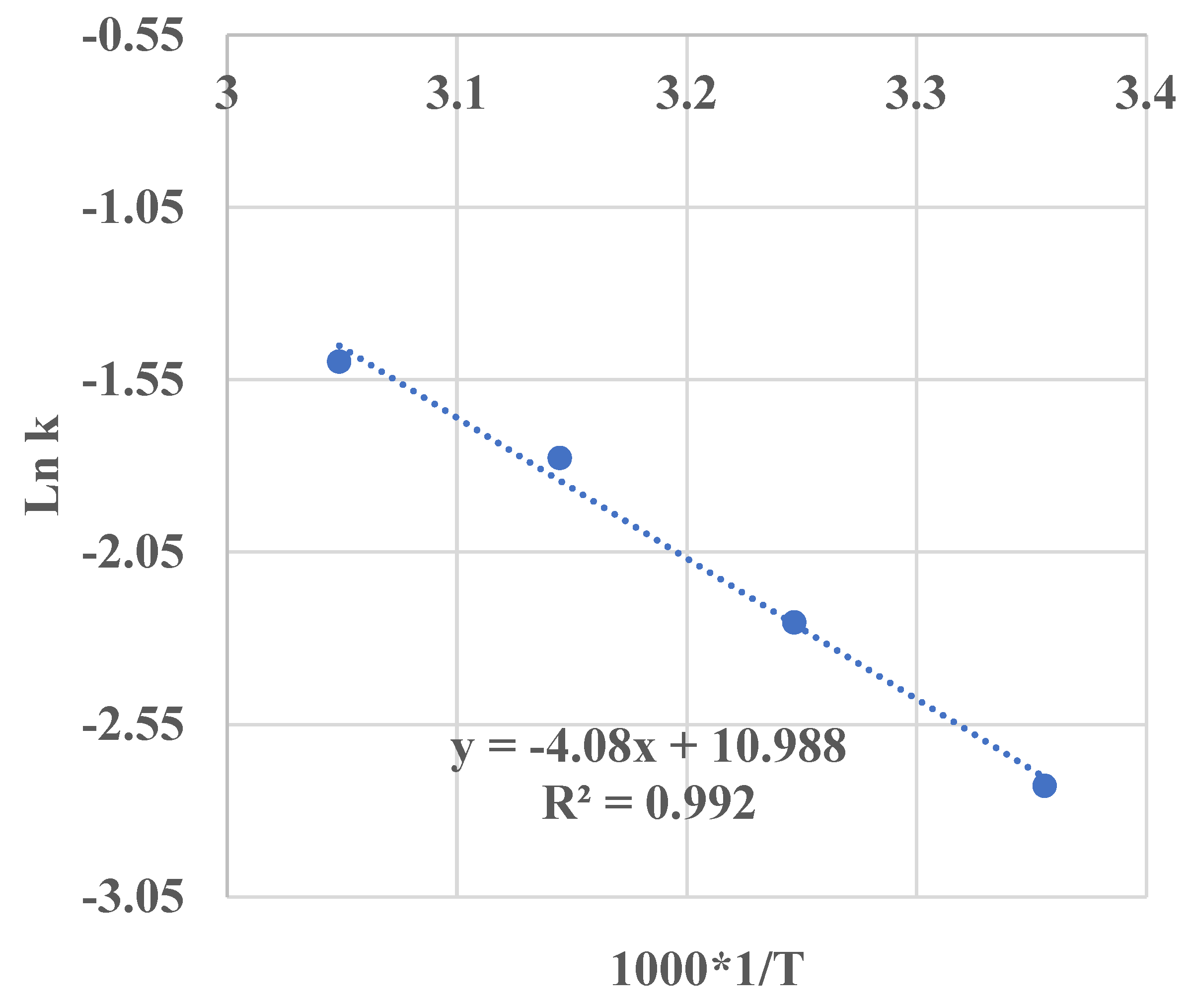

Table 1.
All synthesized conditions, the ID is denoted by its conditions.
| ID | NaAlO2 (g) | Carbon materials | Aging time (h) | |
| 1 | 3.5g-N-24h | 3.5 | None | 24 |
| 2 | 3.5g-C4-24h | 3.5 | Carbon Black 0.4g | 24 |
| 3 | 3.5g-G4-24h | 3.5 | Graphite 0.4g | 24 |
| 4 | 5.0g-N-24h | 5.0 | None | 24 |
| 5 | 5.0g-C4-24h | 5.0 | Carbon Black 0.4g | 24 |
| 6 | 5.0g-G4-24h | 5.0 | Graphite 0.4g | 24 |
| 7 | 3.5g-N-1h | 3.5 | None | 1 |
| 8 | 3.5g-C1/C2/C4/C8-1h | 3.5 | Carbon Black,0.1/0.2/0.4/0.8g | 1 |
| 9 | 3.5g-G1/G2/G4/G8-1h | 3.5 | Graphite, 0.1/0.2/0.4/0.8g | 1 |
| 10 | 5.0g-C2/C4/C8-1h | 5.0 | Carbon Black, 0.2/0.4/0.8g | 1 |
| 11 | 5.0g-G2/G4/G8-1h | 5.0 | Graphite, 0.2/0.4/0.8g | 1 |
| 12 | 3.5g-A2/A4-1h | 3.5 | Activated Carbon Black 0.2/0.4g | 1 |
Table 2.
Reported XRD data of gibbsite and bayerite from Ref [18]. 2θ values were calculated based on the XRD wavelength 1.5418 Å.
Table 2.
Reported XRD data of gibbsite and bayerite from Ref [18]. 2θ values were calculated based on the XRD wavelength 1.5418 Å.
| Bayerite | Gibbsite | ||||
| d(Å) | 2θ | I | d(Å) | 2θ | I |
| 4.71 | 18.84 | 100 | 4.85 | 18.29 | 100 |
| 4.35 | 20.42 | 55 | 4.37 | 20.32 | 40 |
| 3.2 | 27.88 | 20 | 4.31 | 20.61 | 20 |
| 2.22 | 40.64 | 60 | 3.31 | 26.94 | 10 |
| 3.18 | 28.06 | 7 | |||
| 2.45 | 36.68 | 15 | |||
Disclaimer/Publisher’s Note: The statements, opinions and data contained in all publications are solely those of the individual author(s) and contributor(s) and not of MDPI and/or the editor(s). MDPI and/or the editor(s) disclaim responsibility for any injury to people or property resulting from any ideas, methods, instructions or products referred to in the content. |
© 2024 by the authors. Licensee MDPI, Basel, Switzerland. This article is an open access article distributed under the terms and conditions of the Creative Commons Attribution (CC BY) license (http://creativecommons.org/licenses/by/4.0/).
Copyright: This open access article is published under a Creative Commons CC BY 4.0 license, which permit the free download, distribution, and reuse, provided that the author and preprint are cited in any reuse.


