

Submitted:
10 January 2025
Posted:
13 January 2025
You are already at the latest version
Abstract
The coffee industry and landfill leachate treatment generate residual waste streams, known as spent coffee grounds (SCG) and landfill leachate membrane concentrate (LLMC). Current practices for managing these residues, including open burning, incineration, and landfilling as a final disposal method, represent a waste of resources and pose a challenge to sustainability. Due to the high pollution potential of solid waste SCG and LLMC, cost-effective management solutions are urgently needed. The present research investigates the slow pyrolysis of SCG using potassium hydroxide (KOH) (weight ratio of 1:1) and LLMC residue (weight ratio of 1:1) as activating agents. The high content of alkali and alkaline earth metals in LLMC could promote the activation of the resulting char and improve the quality of the carbon-based material produced in pyrolysis. The use of LLMC as an activating agent could be a sustainable alternative for valorizing SCG and landfill wastes, potentially replacing ingredients such as steam, CO2, and chemical additives used on an industrial scale. The SCG had a low specific surface area (4.5 m2 g-1), contrasting with the notable surface areas observed in both activated chars. In particular, the KOH-activated char exhibited a higher surface area than the LLMC-activated char, measuring 1,960 m2 g-1 compared to 1,138 m2 g-1 – a difference of about 72%. On the other hand, the combustion enthalpy of the LLMC-activated material was estimated at 22.04 MJ kg-1. The combustion enthalpy of LLMC-activated char was about 21.7% and 19.8% higher than that of SCG and KOH-activated chars, which had values of 18.11 and 18.40 MJ kg-1, respectively. Our findings confirm that pyrolysis of SCG with KOH produces a microporous material with a high specific surface area. In contrast, the resulting LLMC-activated char demonstrates a higher value of combustion enthalpy. This work showed that both activated chars had superior energetic and morphological properties compared to the non-activated char made from SCG biomass. Among the activating agents, KOH led to better performance in terms of char yield and morphological properties. Meanwhile, utilizing LLMC residue as an activating agent highlights its potential for converting landfill waste into high-value material.
Keywords:
landfill leachate
; membrane concentrate
; spent coffee grounds
; thermogravimetric analysis
; waste-derived char
1. Introduction
Landfill leachate treatment plants have employed nanofiltration and reverse osmosis to remove contaminants, complementing or replacing conventional methods. However, managing the landfill leachate membrane concentrate (LLMC) challenges operators [1,2]. LLMC is a high-salinity residual stream containing recalcitrant organic contaminants like lignin-like substances, unsaturated hydrocarbons, and humic substances (conductivity of 16,130–98,000 μS cm-1; 890 – 15,400 mg L-1 sodium; 210 – 9,600 mg L-1 potassium; 719 – 4,500 mg L-1 total organic carbon; 1,393 – 1,501 mg L-1 humic substances), making it highly polluted and complex [3]. When used to handle LLMC, thermal processes like evaporation generate a mother liquor that requires further management [4]. Likewise, evaporation pounds, used in warm regions to reduce the LLMC volume, produce secondary pollutants such as air pollution and sludge [5]. These residues, which consist of inorganic salts like K, Na, Mg, and Ca, pose environmental risks and contribute to equipment deterioration. At the same time, the disposal of secondary pollutants, such as sludge, into landfills exacerbates contamination, highlighting the need for better treatment and disposal methods [6].
Likewise, one of the emerging waste challenges is handling spent coffee ground (SCG) residues. SCG is a solid waste by-product from the coffee processing industry – the second-largest traded commodity after petroleum. Individuals, coffee shops, and food services also generate it. It is estimated that only about 30% of the mass of coffee beans is extracted into the brewed coffee, meaning that a large portion of the beans remains as solid waste in the form of SCG. Approximately six million tons of SCG annually are generated globally [7,8]. If disposed of in the environment, SCG causes contamination since it contains caffeine, tannins, and polyphenols, making it a toxic residue [9]. The SCG waste is typically landfilled, incinerated, burned with other coffee residues, or mixed into animal feed [10]. Open burning is an unsustainable destination, while landfilling and incineration release greenhouse gases [11]. Current SCG management practices contribute to a significant carbon footprint and raise sustainability concerns. Therefore, cost-effective and green management solutions are urgently needed.
Pyrolysis has emerged as a management solution for valorizing different waste streams, such as sewage sludge, crop and agro-industrial residues, and industrial and municipal solid wastes [12,13,14]. Pyrolysis is the thermochemical decomposition of carbon-based biomass under deficient concentration or absence of oxygen at a temperature higher than 400ºC and atmospheric pressure. This process yields a solid carbon-rich substance known as biochar, volatile organic compounds that can be condensed into a liquid form (bio-oil), and various non-condensable gases (such as CO, CO2, CH4, and H2) collectively referred to as syngas [15]. Pyrolysis technology is classified into fast, intermediate, and slow types based on heating rate, peak temperature, and residence time. Slow pyrolysis, also known as carbonization, is the most widely used method for producing char due to its ability to achieve the highest recovery of carbon-based material [16,17].
The char properties are affected by the biomass characteristics and the activating method. The latter changes the char porosity, surface area, and thermal stability [18]. Conventionally, activated chars are produced using chemical and physical activation methods. An external activation agent such as ZnCl2, H3PO4, KOH, HNO3, and NaOH is employed in chemical methods. In contrast, continuous CO2 or H2O gas incorporation into the pyrolysis reactor is performed in physical processes. As a disadvantage of these techniques, washing and neutralizing steps generate wastewater with toxic chemicals from the activation step, increasing costs for pollution control and equipment maintenance [19]. Thus, finding novel approaches to activate the carbon-based material produced in pyrolysis is imperative.
It is acknowledged that inorganic compounds, such as alkali and alkaline earth metals (mainly Na, Mg, and Ca), can activate carbon oxidation, enhancing the morphological properties of the resulting solid material produced in the pyrolysis [20,21,22,23,24]. However, the potential use of residual streams for this purpose has not been fully explored. Due to the high Na and K content of LLMC residue, this landfill wastewater is a potential candidate for activating biomass conversion in pyrolysis. This approach is an innovative strategy to promote the valorization of LLMC and different kinds of biomass, including solid waste SCG.
In recent scientific investigations, research has concentrated on utilizing char derived from commercial or specially prepared biochar sourced from organic feedstocks to purify landfill wastewater [25,26,27,28,29]. Besides, the landfill leachate co-pyrolysis has been assessed in lab-scale experiments. Ben Hassen-Trabelsi et al. [30] tested the co-pyrolysis of LLMC and sewage sludge for bio-oil and syngas recovery. The authors explored the possibility of recycling organics in biofuels, which could be exported or used as an energy source for the pyrolysis treatment. The results showed that adding LLMC into sewage sludge increased the bio-oil yield (from 25 wt% of sludge pyrolysis to 31 wt% for LLMC: sludge at 30:70 ratio by weight). In addition, the syngas had a sound hydrogen concentration and high light hydrocarbon content (methane and CnHm). The heating value increased from 8.48 MJ kg-1 for sludge pyrolysis to 12.29 MJ kg-1 for LLMC: sludge-30:70 co-pyrolysis [30]. In a recent study, landfill leachate sludge was pyrolyzed to produce an adsorbent for chromium removal [31].
Using leachate waste streams in pyrolytic processes is promising, but literature on this topic is scarce. Therefore, our study contributes to this area of research by exploring the utilization of the LLMC residue in the pyrolysis of SCG. The concentrated leachate residue could be used as an activating agent to improve the char quality produced in the pyrolytic conversion due to the parallel biomass carbonization and oxidation of the resulting carbon structure. In that direction, this research comparatively analyzes the slow pyrolysis of SCG using KOH and LLMC residue as activating agents. KOH is one of the most effective activating agents for preparing activated carbon with a high specific surface area [32]. Therefore, KOH was used as the reference activating agent for comparative analysis. Morphological and thermal characterization were performed to discuss environmental benefits and potential applications. The experimental study showcased here represents the pioneering investigations into using LLMC as an activating agent in pyrolysis. This research extends and complements our previous findings [33], shedding light on possible alternatives and ranging the spectrum for solid waste valorization.
2. Materials and Methods
2.1. Biomass and Activating Agents
The LLMC was prepared following the procedure proposed by [34]. The sample was subsequently oven-dried at 105ºC for 24 h. The dried residue had a water content of 2 wt% and a volatile solids/total solids (VS/TS) ratio of 51%. The LLMC solid was then powdered and used in pyrolysis tests. The proximate and ultimate analyses of the LLMC residue are detailed in Table 1.
A local Italian company supplied the SCG (100% Arabica blend). The sample was sieved to remove impurities, stirred to obtain a homogenous sample, oven-dried overnight at 110ºC, and stored in glass bottles for pyrolysis tests. The KOH powder (≥85%) was sourced from Sigma-Aldrich (Stainheim, Germany). KOH is commonly used as an activating agent to develop porosity during thermal processes [21]. This work employed KOH as the reference activating agent for comparative analysis. After pyrolysis, the obtained chars were filtered through a Gooch 4 filter and washed with deionized water until the pH reached neutral. It was then oven-dried at 110°C for 24 hours.
2.2. Pyrolysis Experimental Set-Up
Slow pyrolysis experiments were conducted using a lab-scale pyrolyzer at a heating rate of 4.5ºC min-1. The pyrolyzer is an automated tubular alumina reactor (Carbolite) connected to a nitrogen cylinder. The bench-scale reactor was positioned within an exhaust system operating at atmospheric pressure and ambient temperature (±20ºC) [21]. Pyrolysis conditions included an isothermal temperature of 600ºC, an inert gas flow of 100 cm3 N2 min-1, and a residence time of 1 h. The experimental conditions were established based on preliminary pyrolysis tests and a thorough review of the relevant literature [16,17,35]. The peak temperature is a critical factor in the slow pyrolysis, significantly influencing the characteristics of the char product. Elevating the peak temperature appears to result in carbon materials with increased aromaticity, fixed carbon content, and porosity [16]. At the same time, at temperatures higher than 800ºC, the quantity of carbon left on char is minimal, as observed in our preliminary findings [35]. Below 500ºC, biomass pyrolysis may produce biochar with low structural stability [17].
The SCG and activating agents (i.e., KOH and LLMC residue) were pyrolyzed in a 1:1 ratio by weight. The mass ratio of the activating agent to the carbon precursor is critical in the activation process. An equal mass ratio was adopted because our previous study confirmed that the chemical activation of SCG with KOH produced a carbon material with a high surface area (up to 1199 m² g⁻¹) [21]. The present study uses KOH as the reference activating agent for comparative analysis; therefore, the SCG and LLMC mass ratio follows the same proportion.
The chars were washed with deionized water on a paper filter at a neutral pH and left to dry at ambient temperature (±20ºC). The activated-carbon yield was determined as a mass fraction of the initial biomass (Equation 1). The activated-carbon materials were stored for morphological and thermal characterization.
Where m0 (in mass unit) is the initial mass of SCG and mi (in mass unit) is the mass of activated carbon produced in slow pyrolysis.
2.3. Characterization of Biomass and the Activated Materials
Moisture content (MC), volatile matter (VM), ash content, and fixed carbon (FC) were analyzed. MC was measured by heating a 1,000 mg sample at 105±5ºC for one hour in an oven. VM was determined by heating the remaining residue at 950ºC for 6 minutes. Ash content was obtained by placing the samples in a furnace at 750ºC for 6 hours. FC was calculated by difference according to ASTM method D1762 – 84/2021[36].
Scanning electron microscopy with energy-dispersive X-ray spectroscopy (SEM/EDS) of biomass and prepared activated-carbon materials was performed with a FEI-QUANTA200 instrument (Milan, Italy). The Brunauer-Emmett-Teller (BET) surface area of SCG and prepared chars was calculated based on the N2 adsorption-desorption isotherms measured using a gas sorption analyzer (AutoChem II Modelo 2920, Micromeritics Instrument Ltd.). The pore size distribution was derived from BET isotherms using the Density Functional Theory (DFT) method [37].
Thermogravimetric (TG) analysis and decomposition profile were performed using TA Instruments equipment, model SDTQ600. The samples were weighed to around 5 mg. After that, they were heated from 20 to 1000ºC (in an alumina pan) at 20 °C min-1 under an air gas flow rate of 100 mL min-1. Figure 1 illustrates a schematic diagram of the research steps.
3. Results and Discussion
3.1. Char Yield, Proximate Analysis, and Elemental Composition
Table 2 shows char yield and proximate content (wt%) for SCG, biochar, and the produced activated chars.
The biochar yields produced from SCG and activated chars were 23.9, 21.2, and 18.6%, respectively. A low mass yield of activated chars is obtained because of the high release of volatile matter catalyzed by oxidizing agents in slow pyrolysis (i.e., KOH and concentrated leachate residue). Alkali and/or alkaline earth metals shift the decomposition of biomass to lower temperatures while increasing the char and gas yields at the expense of bio-oil. As far as potassium additives in particular, they have been shown to promote the yields of low molecular compounds and gaseous species, which could justify the lower yield of KOH-activated char than SCG char in this study [24]. For example, Wang et al. [20] showed that potassium and sodium compounds promoted the reduction of char formation and made pyrolysis more exothermic.
Besides, the LLMC-activated char had a relatively lower mass yield than that obtained from KOH activation (18.6 vs. 21.2%). Alkali metals have been shown to induce a so-called synergistic effect that decreases the apparent activation energy of the pyrolysis reaction, promotes the yield of volatiles, and reduces the temperature of the maximum weight loss rate [24]. The lower yield when concentrated leachate residue was employed could be due to the synergistic interactions between different LLMC metals (mainly Na and K) and the SCG [38]. Optimizing the mass ratio of SCG and LLMC could be a promising strategy to enhance char yields, as the interaction between these materials influences the activation process. Adjusting this ratio may make it possible to maximize char yield while minimizing the loss of volatiles during the activation reaction.
Briefly, KOH catalyzes the decomposition of the volatile components of SCG, driving the reaction toward char formation. Meanwhile, the mixture of metals from LLMC enhances the carbonization of SCG by interacting with the biomass, increasing the thermal decomposition rate. These metals are supposed to facilitate oxidation reactions, which could lead to a faster loss of volatiles than KOH activation. They promote faster carbonization but also result in a lower char yield because the reaction shifts more toward volatile product formation. Studies have explored the kinetics of pyrolysis reactions in the presence of various activating agents [39,40,41]. Modeling the pyrolysis kinetics and activation process using computational methods could further explain the underlying interaction mechanisms between SCG and KOH or LLMC.
The proximate content of the SCG biomass is primarily dominated by volatile matter (94.91 wt%), moisture (3.78 wt%), ashes (1.26 wt%), and fixed carbon (1.25 wt%). The volatile matter was significantly reduced to 44 – 47 wt% for both activated chars, producing materials with a high fixed carbon content (20 – 33 wt%). High fixed carbon, closely related to stable carbon content, represents a beneficial feature that shows higher stability against environmental oxidation and thermal degradation [28]. On the other hand, the high ash content of LLMC-activated char indicates that it may not be appropriated for cofiring or use as boiler fuel, as that may lead to fouling and corrosion in combustors [42].
SEM/EDS was employed to observe the morphology of SCG, concentrated leachate residue, and prepared materials. EDS spectra were used to determine biomass and char composition (Table 3).
The biochar obtained from SCG presented 46% wt% of carbon, and both activated chars were highly C-rich. The results showed similar carbon content in activated chars (>60 wt%). The final elemental composition of the LLMC-activated sample was the following (wt%): carbon (C) content of 63.97%, oxygen (O) content of 20.16%, sulfur (S) content of 1.43%, chloride (Cl) content of 0.47%, sodium content of 4.32%, potassium (K) content of 4.14%, calcium (Ca) content of 2.87%, and magnesium (Mg) content of 1%. Foreign elements were observed in the three prepared materials (i.e., Na, K, or S, <5% wt%). Despite the samples being washed with deionized water under neutral conditions, the residual salts from the LLMC activator may have persisted in the activated carbon's structure. Due to the high salt content of the LLMC residue, primarily Na and K, the washing process may not have been thorough enough to remove all the residual salts. The remaining chemical constituents in the carbon network can affect the material's surface area, chemical reactivity, electrochemical properties, and adsorption capabilities, thus limiting its effectiveness in various applications. Therefore, purification steps (e.g., acid or alkaline washing) may be necessary to remove these residues and enhance the material's functionality, especially when purity and specific surface properties are critical [32,43]. In addition, sulfur content in the LLMC-activated char (1.43 wt%) raises concerns about potential sulfur dioxide (SO₂) emissions during combustion. Likewise, addressing sulfur removal through additional purification steps may be crucial for ensuring the material's environmental sustainability when used as a fuel or in combustion processes.
3.2. SEM Images and Porosity
Scanning electron microscopy (SEM) was used to analyze the biomass and LLMC residue structure and surface topography (Figure 2). The surface of the SCG is slightly porous and has a high surface roughness. The LLMC residue was brown and had an amorphous structure and irregular shape. From SEM images, many fractured particles with flaky substances are attached to them.
Following slow pyrolysis, biomass undergoes a notable transformation, manifesting a darker hue. SEM images of SCG, KOH-activated, and concentrated leachate-activated chars are illustrated in Figure 3. The SCG char was denser than the precursor. Larger porous structures are observed in the SEM images. In the LLMC-activated char, larger dispersed pores were also observed, and discontinuous structures impregned with inorganic elements were portrayed. This portrayal suggests a unique structural arrangement compared to the other char samples.
Table 4 shows the BET surface area and average pore diameter of SCG and prepared chars at isothermal pyrolysis (600ºC) of 1 h.
The N2 physisorption isotherms revealed that the SCG had a low BET surface area (4.5 m2 g-1). On the other hand, both activated chars exhibited high surface areas. In particular, the KOH-activated char displayed a higher specific surface area than the LLMC-activated char (1960 vs. 1138 m2 g-1). KOH is one of the most effective activating agents for preparing activated carbon with a high specific surface area. The BET surface areas for SCG and KOH-activated chars in this study were consistent with values reported in the literature (4.3 to 2230 m2 g-1) [44,45].
The mechanism of KOH activation involves the conversion of KOH into potassium oxide (K2O) at 400ºC and then complete conversion into potassium carbonate (K2CO3) at 600ºC (Equations 1 – 2) [32]. The K2CO3 is also produced during the activation process (Equation 3). Afterward, metallic potassium may be generated by K2CO3 or K2O reduction (Equations 4 – 5).
The interaction between SCG and KOH occurs due to the strong ionic and electrostatic forces, which influence the carbon surface structure [43]. As a result of intermolecular force compensation, the energy of molecules inside is lower than that of surface molecules [46,47]. Potassium ions from KOH can break the π-bonds in the aromatic layers of SCG, further activating the carbon surface and increasing the available reaction sites. It penetrates the internal structure of the carbon lattice to create new pores and expand the char surface area [48]. Additionally, the enhanced wettability and reduced surface tension facilitate better penetration of KOH into the carbon matrix, thereby promoting the overall reactivity of the system [32].
2 KOH → K2O + H2O
K2O + CO2 → K2CO3
4 KOH + C → K2CO3 + K2O + 2 H2
K2O + C → 2 K + CO
K2CO3 + C → 2 K + 3 CO
On the other hand, the higher ash content of LLMC-char might justify why the surface area was smaller than KOH-activated char (7.0 vs. 1.3 %wt). The inorganic formed by the ash component occupies the material's pore structure, reducing the surface area [49]. Therefore, the subsequent washing step is essential to remove remaining chemical constituents from the carbon network, improving the porous structure and material surface area [32].
Regarding pore structure, KOH- and LLMC-activated materials have presented average pore diameters of 1.8 and 5.9 nm, respectively. According to the International Union of Pure and Applied Chemistry (IUPAC), KOH-activated char is classified as microporous. In contrast, LLMC-activated char is a mesoporous material [50].
3.3. Thermal Analysis
Figure 4 presents the TG, derivative thermogravimetry (DTG), and differential scanning calorimetry (DSC) profiles for SCG and the resulting biochar. The thermal analysis of SCG indicates an initial loss of free water between 20 and 150 °C, followed by the combustion of organic matter around 580 °C. The first DTG peak and its corresponding endothermic DSC response at 150 °C are associated with the evaporation of free water. Subsequent DTG peaks and exothermic DSC signals observed from 150 to 580 °C correspond to the combustion of organic compounds in SCG.
The most significant peaks in the DTG thermal decomposition of SCG include cellulose, lignin, and hemicellulose degradation [23]. Wachter et al.[8] also described three thermogravimetric peaks of the SCG in airflow. The first DTG peak was assigned to the degradation of hemicellulose, the second (lower) peak to cellulose, and the third peak to lignin decomposition. DTG peaks were observed at 337ºC, 451°C, and 505°C [8]. These values are very similar to those shown in Fig.5(A) (300°C and 425°C, 520ºC).
This study utilized the SCG biomass derived from Arabica coffee, and three distinct phases were observed during combustion. The first two peaks have almost the same heat flow, about 12.5 W g-1, and the last peak has a higher heat flow of about 40 W g-1. This finding corroborates the findings of Bejenari et al. [51], who investigated the combustion of SCG from Arabica and Robusta coffee varieties. The combustion of Arabica coffee occurs in three stages. In addition, similar heat flows were recorded in their study [51].
Similar behavior was observed for the produced char from that biomass. However, DTG and DSC peaks from 150 to 390 °C are absent for SCG char, which the hemicellulose loss during the SCG pyrolysis can explain. Hemicellulose has a temperature decomposition of around 220ºC [7]. Thus, the pyrolysis to which the SCG was submitted (600ºC) provided the total decomposition of hemicellulose and modified it thermally. In the char, it can be assumed that the first peak is linked to the thermo-oxidation of cellulose and lignin. The last stage was probably the thermal decomposition of carbonaceous residues, that is, stable components with high molecular weight and refractory carbon [52]. Both the width of the curves and the width of the peaks are higher in the SCG char. It should be highlighted that the fixed-carbon content of char was more than 25-fold higher than that in the SCG (Table 2). High-fixed carbon content materials often exhibit a heterogeneous structure with different types of bonds and functional groups. Thus, the decomposition process may break various chemical constituents over various temperatures, contributing to broader peaks in the DTG curve, as observed in the work of [53].
The amount of free water in SCG char was 9.18%. In the raw SCG, it is 3.87%, indicating that the SCG char can absorb more water on its external and internal surfaces due to its higher porosity. By DSC peak areas, the combustion enthalpy of SCG char is 18.11 MJ kg-1. For SCG, it is 11.55 MJ kg-1, showing that biochar will release more energy upon combustion. The enhanced SCG char stability and higher surface area than the raw biomass can explain this. Char formation is frequently promoted by intramolecular and intermolecular rearrangement processes, culminating in a material characterized by enhanced thermal stability [54]. The high stability results in more complete combustion and higher energy release during combustion. Besides, the augmented surface area of char (463 vs. 4.5 m2 g-1) enhances combustion kinetics, enabling more effective utilization of its carbon content and releasing more energy [55].
TG, DTG, and DSC curves of SCG + LLMC residue (1:1) and LLMC-activated char are illustrated in Figure 5. For the LLMC-activated char, water loss occurred from 20 to 160 °C. Organics were combusted from 160 to 650°C. The curves showed that the hemicellulose degradation shifts toward lower temperatures (c.a. 280ºC), which indicates that the presence of the LLMC residue influences the thermal oxidation of the SCG. Inorganic salts, mainly in the LLMC residue, melt and vaporize above 650 °C. For example, magnesium chloride, potassium chloride, and sodium chloride have melting points of around 700, 770, and 800ºC, respectively [56].
The LLMC-activated char exhibited loss of free water from room temperature up to 150 °C, identified by the DTG peak and endothermic DSC peak, followed by the combustion of pyrolyzed organic products between 150°C and 580°C, determined by the two DTG peaks and two exothermic DSC peaks. It was observed that the SCG char underwent combustion in a single DTG peak with two overlapping stages, peaking at around 500 °C (Fig. 5B). In contrast, the LLMC-activated char exhibited combustion in two stages, identified by two DTG peaks, peaking at temperatures of 360°C and 445°C (Fig. 6B). It has been underlined that alkali metals, such as Na and K, alter the char reactivity and shift the thermal oxidation of carbon materials to lower temperatures [20]. These elements on the carbon surface could act as the active sites for oxygen chemisorption, weakening C=C surface bonds and promoting the desorption of monoxide and carbon dioxide [23]. We assumed that the content of alkali and alkaline metals in the LLMC residue contributed to the results obtained in this work. From thermal analysis, the water content and the combustion enthalpy in the LLMC-activated char were estimated at 23.25 wt% and 22.04 MJ kg-1.
Comparing both activated chars, the DSC peaks of the LLMC-activated char were more substantial, meaning that the thermal oxidation of the LLMC-activated char is more exothermic than the KOH-activated char (Figure 6). Besides, it was registered that the energy of the char activated using KOH was similar to the SCG char (18.40 MJ kg-1). These results are consistent with the literature [51,57]. In sum, combustion enthalpies of SCG (raw biomass), SCG char, KOH-, and LLMC-activated chars were 11.55, 18.11, 18.40, and 22.04 MJ kg-1, respectively.
Activated carbons with a well-developed microstructure (i.e., balanced porosity and graphitic domains) exhibit high thermal stability and a favorable energy enthalpy. However, a well-developed microstructure may also reduce the energy enthalpy by increasing the proportion of oxygenated functional groups and decreasing carbonization efficiency [58,59]. El-Hendawy et al. [59] confirmed the presence of an open-pore structure and various functionalities on the carbon surfaces of cotton stalk chars prepared with KOH, H₃PO₄ and steam as activating agents. KOH produced a carbon with higher microporosity and the highest specific surface area among the prepared chars (1307 m2 g-1). In contrast, despite the lower surface area of the H₃PO₄-activated char (841 m2 g-1), it exhibited higher thermal stability. FTIR analysis confirmed a high amount of oxygen-functional groups on the surface of the KOH-activated carbon, which could contribute to its lower energy enthalpy.
Moreover, the material may become less dense as microporosity increases, and the carbon content per unit mass can decrease. Microporous carbons may also release more volatile organic compounds during combustion. These volatiles can reduce the combustion enthalpy of the carbon, as they might not contribute as much energy as the solid carbon structure itself [58,59,60]. Even though, all prepared chars had combustion enthalpy values higher than the lowest limit of 16.50 MJ kg-1 stated in ISO 17225-1:2021, making it possible to direct them for usage as solid biofuels [61].
4. Conclusions
This research focused on the slow pyrolysis of SCG using KOH and LMMC residue as activating agents. The conclusions from this work are: #1) The char yields in slow pyrolysis ranged from 18 to 24%. The mass yield of LLMC-activated char was 18.6%, while KOH-activated char produced a higher yield of 21.2%. Alkali metals, such as K, Na, and Li, have been shown to induce a so-called synergistic effect that promotes the yields of volatiles at the expense of char and oil recovery. The lower yield observed when LLMC residue was employed in pyrolysis could be due to the synergistic interactions between different LLMC metals (mainly Na and K) and the SCG, which intensifies carbon oxidation during the activation process compared to using KOH alone; #2) The KOH-activated char exhibited a higher surface area than the LLMC-activated char, with a surface area of 1138 m2 g-1, approximately 72% greater than the 1960 m2 g-1 surface area of the LLMC-activated char.
In addition, the elemental composition of the KOH-activated sample identified the material as C-rich (85.30 wt%). These features could render it invaluable for applications such as the adsorption of pollutants, catalyst support, and energy storage devices; and #3) the LLMC inorganic components catalyzed the carbonization of SCG, making thermal decomposition faster. By DSC peak areas, the combustion enthalpy of the activated char was estimated at 22.04 MJ kg-1, making it possible for usage as a biofuel. The results showed that both activated chars had better energetic and morphological properties than the non-activated char prepared from SCG biomass. Comparing the KOH and LLMC as activating agents, the slow pyrolysis performed better in the presence of KOH. It provided a higher char yield and a material with higher carbon content and surface area.
Meanwhile, using LLMC residue as an activating agent depicts the possibility of valorization of landfill waste by producing a potential biofuel. Future studies for this research are crucial, including optimizing the pyrolysis and, most importantly, exploring analytical techniques to understand the char surface chemistry and functional groups. Studies on practical applications for the prepared activated chars are also on the horizon.
Funding
This research was funded by FAPERJ – Fundação de Amparo à Pesquisa do Estado do Rio de Janeiro (Grant numbers E-26/200.065/2020; E-26/205.842/2022; E-26/205.843/2022; E-26/204.425/2024) and IILA – Organização Italo Latino Americana (Grant number 40/1621).
Data Availability Statement
The data supporting this study's findings are available from the corresponding author upon reasonable request.
Conflicts of Interest
The authors declare no conflict of interest.
References
- Chen, W.; Gu, Z.; Ran, G.; Li, Q. Application of membrane separation technology in the treatment of leachate in China: A review. Waste Manag. 2021, 121, 127–140. [CrossRef]
- Li, Q.; Cui, H.; Li, Y.; Song, X.; Liu, W.; Wang, Y.; Hou, H.; Zhang, H.; Li, Y.; Wang, F.; et al. Challenges and engineering application of landfill leachate concentrate treatment. Environ. Res. 2023, 231, 116028. [CrossRef]
- de Almeida, R.; Porto, R.F.; Quintaes, B.R.; Bila, D.M.; Lavagnolo, M.C.; Campos, J.C. A review on membrane concentrate management from landfill leachate treatment plants: The relevance of resource recovery to close the leachate treatment loop. Waste Manag. Res. J. a Sustain. Circ. Econ. 2023, 41, 264–284. [CrossRef]
- Fang, D.; Wang, J.; Cui, D.; Dong, X.; Tang, C.; Zhang, L.; Yue, D. Recent Advances of Landfill Leachate Treatment. J. Indian Inst. Sci. 2021, 101, 685–724. [CrossRef]
- Keyikoglu, R.; Karatas, O.; Rezania, H.; Kobya, M.; Vatanpour, V.; Khataee, A. A review on treatment of membrane concentrates generated from landfill leachate treatment processes. Sep. Purif. Technol. 2021, 259, 118182. [CrossRef]
- Wang, H.; Zhang, L.; Wang, J.; Li, M.; Dong, X.; Yue, D. Fabricating functionalized carbon nitride using leachate evaporation residue and its adsorptive application. Sep. Purif. Technol. 2024, 341, 126961. [CrossRef]
- Johnson, K.; Liu, Y.; Lu, M. A Review of Recent Advances in Spent Coffee Grounds Upcycle Technologies and Practices. Front. Chem. Eng. 2022, 4, 1–15. [CrossRef]
- Wachter, I.; Rantuch, P.; Drienovský, M.; Martinka, J.; Ház, A.; Štefko, T. Determining the Activation Energy of Spent Coffee Grounds By the Thermogravimetric Analysis. J. Chem. Technol. Metall. 2022, 57, 1006–1018.
- Mata, T.M.; Martins, A.A.; Caetano, N.S. Bio-refinery approach for spent coffee grounds valorization. Bioresour. Technol. 2018, 247, 1077–1084. [CrossRef]
- Mussatto, S.I.; Machado, E.M.S.; Martins, S.; Teixeira, J.A. Production, Composition, and Application of Coffee and Its Industrial Residues. Food Bioprocess Technol. 2011, 4, 661–672. [CrossRef]
- Saxena, R.; Laddha, H.; Bhoi, R.G. Sustainable management of spent coffee grounds: applications, decompositions techniques and structural analysis. J. Mater. Cycles Waste Manag. 2024. [CrossRef]
- Manyà, J.J.; Azuara, M.; Manso, J.A. Biochar production through slow pyrolysis of different biomass materials: Seeking the best operating conditions. Biomass and Bioenergy 2018, 117, 115–123. [CrossRef]
- Manikandan, S.; Vickram, S.; Subbaiya, R.; Karmegam, N.; Woong Chang, S.; Ravindran, B.; Kumar Awasthi, M. Comprehensive review on recent production trends and applications of biochar for greener environment. Bioresour. Technol. 2023, 388, 129725. [CrossRef]
- Li, Y.; Gupta, R.; Zhang, Q.; You, S. Review of biochar production via crop residue pyrolysis: Development and perspectives. Bioresour. Technol. 2023, 369, 128423. [CrossRef]
- Conte, P.; Bertani, R.; Sgarbossa, P.; Bambina, P.; Schmidt, H.-P.; Raga, R.; Lo Papa, G.; Chillura Martino, D.F.; Lo Meo, P. Recent Developments in Understanding Biochar’s Physical–Chemistry. Agronomy 2021, 11, 615. [CrossRef]
- Manyà, J.J. Pyrolysis for Biochar Purposes: A Review to Establish Current Knowledge Gaps and Research Needs. Environ. Sci. Technol. 2012, 46, 7939–7954. [CrossRef]
- Bertero, M.; Sedran, U. Coprocessing of Bio-oil in Fluid Catalytic Cracking. In Recent Advances in Thermo-Chemical Conversion of Biomass; Elsevier, 2015; pp. 355–381 ISBN 9780444632906.
- Qian, K.; Tian, W.; Li, W.; Wu, S.; Chen, D.; Feng, Y. Catalytic Pyrolysis of Waste Plastics over Industrial Organic Solid-Waste-Derived Activated Carbon: Impacts of Activation Agents. Processes 2022, 10, 2668. [CrossRef]
- Gurav, R.; Mandal, S.; Smith, L.M.; Shi, S.Q.; Hwang, S. The potential of self-activated carbon for adsorptive removal of toxic phenoxyacetic acid herbicide from water. Chemosphere 2023, 339, 139715. [CrossRef]
- Wang, J.; Zhang, M.; Chen, M.; Min, F.; Zhang, S.; Ren, Z.; Yan, Y. Catalytic effects of six inorganic compounds on pyrolysis of three kinds of biomass. Thermochim. Acta 2006, 444, 110–114. [CrossRef]
- Rosson, E.; Garbo, F.; Marangoni, G.; Bertani, R.; Lavagnolo, M.C.; Moretti, E.; Talon, A.; Mozzon, M.; Sgarbossa, P. Activated Carbon from Spent Coffee Grounds: A Good Competitor of Commercial Carbons for Water Decontamination. Appl. Sci. 2020, 10, 5598. [CrossRef]
- Wongmat, Y.; Wagner, D.R. Effect of Potassium Salts on Biochar Pyrolysis. Energies 2022, 15, 5779. [CrossRef]
- Safar, M.; Lin, B.-J.; Chen, W.-H.; Langauer, D.; Chang, J.-S.; Raclavska, H.; Pétrissans, A.; Rousset, P.; Pétrissans, M. Catalytic effects of potassium on biomass pyrolysis, combustion and torrefaction. Appl. Energy 2019, 235, 346–355. [CrossRef]
- Wang, W.; Lemaire, R.; Bensakhria, A.; Luart, D. Review on the catalytic effects of alkali and alkaline earth metals (AAEMs) including sodium, potassium, calcium and magnesium on the pyrolysis of lignocellulosic biomass and on the co-pyrolysis of coal with biomass. J. Anal. Appl. Pyrolysis 2022, 163, 105479. [CrossRef]
- Prado, L.L.; Melo, V.F.; Braga, M.C.; Motta, A.C. V.; Araújo, E.M. Pyrolyzed sewage sludge used in the decontamination of landfill leachate: ammonium adsorption. Int. J. Environ. Sci. Technol. 2023, 20, 9129–9142. [CrossRef]
- Celso Monteiro Zanona, V.R.; Rodrigues Barquilha, C.E.; Borba Braga, M.C. Removal of recalcitrant organic matter of landfill leachate by adsorption onto biochar from sewage sludge: A quali-quantitative analysis. J. Environ. Manage. 2023, 344, 118387. [CrossRef]
- Nav, T.Z.; Pümpel, T.; Bosch, D.; Bockreis, A. Insight into the application of biochars produced from wood residues for removing different fractions of dissolved organic material (DOM) from bio-treated wastewater. Environ. Technol. Innov. 2023, 32, 103271. [CrossRef]
- Yek, P.N.Y.; Li, C.; Peng, W.; Wong, C.S.; Liew, R.K.; Wan Mahari, W.A.; Sonne, C.; Lam, S.S. Production of modified biochar to treat landfill leachate using integrated microwave pyrolytic CO2 activation. Chem. Eng. J. 2021, 425, 131886. [CrossRef]
- Igwegbe, C.A.; Kozłowski, M.; Wąsowicz, J.; Pęczek, E.; Białowiec, A. Nitrogen Removal from Landfill Leachate Using Biochar Derived from Wheat Straw. Materials (Basel). 2024, 17, 928. [CrossRef]
- Ben Hassen-Trabelsi, A.; Kallel, A.; Ben Amor, E.; Cherbib, A.; Naoui, S.; Trabelsi, I. Up-Grading Biofuel Production by Co-pyrolysis of Landfill Leachate Concentrate and Sewage Sludge Mixture. Waste and Biomass Valorization 2020, 11, 291–301. [CrossRef]
- Li, Y.; Chen, X.; Liu, L.; Liu, P.; Zhou, Z.; Huhetaoli; Wu, Y.; Lei, T. Characteristics and adsorption of Cr(VI) of biochar pyrolyzed from landfill leachate sludge. J. Anal. Appl. Pyrolysis 2022, 162, 105449. [CrossRef]
- Gao, Y.; Yue, Q.; Gao, B.; Li, A. Insight into activated carbon from different kinds of chemical activating agents: A review. Sci. Total Environ. 2020, 746, 141094. [CrossRef]
- de Almeida, R.; Lanero, F.; Lavagnolo, M.C.; Sgarbossa, P.; Bertani, R.; Vianna, M.M.; Campos, J.C. Thermal Characterization of Biochars Produced in Slow Co-Pyrolysis of Spent Coffee Ground and Concentrated Landfill Leachate Residue. In Proceedings of the ECP 2023; MDPI: Basel Switzerland, 2023; p. 12. [CrossRef]
- Grossule, V.; Fang, D.; Yue, D.; Lavagnolo, M.C.; Raga, R. Preparation of artificial MSW leachate for treatment studies: Testing on black soldier fly larvae process. Waste Manag. Res. J. a Sustain. Circ. Econ. 2022, 0734242X2110667. [CrossRef]
- Almeida, R. De Landfill Leachate Treatment by Membrane-based Technologies: Cost-benefit Analysis, Membrane Concentrate Management, and Perspectives, Universidade Federal do Rio de Janeiro, 2022.
- ASTM Standard Test Method for Chemical Analysis of Wood Charcoal 2021, 2. [CrossRef]
- Bardestani, R.; Patience, G.S. Experimental methods in chemical engineering : specific surface area and pore size distribution measurements — BET ,. 2019, 2781–2791. [CrossRef]
- Rijo, B.; Soares Dias, A.P.; de Jesus, N.; Pereira, M.F. Home Trash Biomass Valorization by Catalytic Pyrolysis. Environments 2023, 10, 186. [CrossRef]
- Montane, D.; Torné-Fernández, V.; Fierro, V. Activated carbons from lignin: kinetic modeling of the pyrolysis of Kraft lignin activated with phosphoric acid. Chem. Eng. J. 2005, 106, 1–12. [CrossRef]
- Illingworth, J.M.; Rand, B.; Williams, P.T. Understanding the mechanism of two-step, pyrolysis-alkali chemical activation of fibrous biomass for the production of activated carbon fibre matting. Fuel Process. Technol. 2022, 235, 107348. [CrossRef]
- Tibola, F.; de Oliveira, T.; Cerqueira, D.; Ataíde, C.; Cardoso, C. Kinetic parameters study for the slow pyrolysis of coffee residues based on thermogravimetric analysis. Quim. Nova 2020, 43, 426–434. [CrossRef]
- Huang, C.-W.; Li, Y.-H.; Xiao, K.-L.; Lasek, J. Cofiring characteristics of coal blended with torrefied Miscanthus biochar optimized with three Taguchi indexes. Energy 2019, 172, 566–579. [CrossRef]
- Heidarinejad, Z.; Dehghani, M.H.; Heidari, M.; Javedan, G.; Ali, I.; Sillanpää, M. Methods for preparation and activation of activated carbon: a review. Environ. Chem. Lett. 2020, 18, 393–415. [CrossRef]
- Ballesteros, L.F.; Teixeira, J.A.; Mussatto, S.I. Chemical, Functional, and Structural Properties of Spent Coffee Grounds and Coffee Silverskin. Food Bioprocess Technol. 2014, 7, 3493–3503. [CrossRef]
- Alcaraz, L.; Escudero, M.E.; Alguacil, F.J.; Llorente, I.; Urbieta, A.; Fernández, P.; López, F.A. Dysprosium Removal from Water Using Active Carbons Obtained from Spent Coffee Ground. Nanomaterials 2019, 9, 1372. [CrossRef]
- Huang, H.; Zhu, Y.; Fu, X.; Zou, Y.; Li, Q.; Luo, Z. Integrated natural deep eutectic solvent and pulse-ultrasonication for efficient extraction of crocins from gardenia fruits (Gardenia jasminoides Ellis) and its bioactivities. Food Chem. 2022, 380, 132216. [CrossRef]
- Huang, H.; Guo, S.; Xu, Y.; Ettoumi, F.; Fang, J.; Yan, X.; Xie, Z.; Luo, Z.; Cheng, K. Valorization and protection of anthocyanins from strawberries (Fragaria×ananassa Duch.) by acidified natural deep eutectic solvent based on intermolecular interaction. Food Chem. 2024, 447, 138971. [CrossRef]
- Bhat, S.; Uthappa, U.T.; Sadhasivam, T.; Altalhi, T.; Soo Han, S.; Kurkuri, M.D. Abundant cilantro derived high surface area activated carbon (AC) for superior adsorption performances of cationic/anionic dyes and supercapacitor application. Chem. Eng. J. 2023, 459, 141577. [CrossRef]
- Thue, P.S.; Ramos, D.; Lima, E.C.; Teixeira, R.A.; Glaydson, S.; Dias, S.L.P.; Machado, F.M. Comparative studies of physicochemical and adsorptive properties of biochar materials from biomass using different zinc salts as activating agents. J. Environ. Chem. Eng. 2022, 10, 107632. [CrossRef]
- Rouquerol, J.; Avnir, D.; Fairbridge, C.W.; Everett, D.H.; Haynes, J.H.; Pernicone, N.; Ramsay, J.D.F.; Sing, K.S.W.; Unger, K.K. Recommendations for the characterization of porous solids (Technical Report); 1994; Vol. 66;.
- Bejenari, V.; Marcu, A.; Ipate, A.-M.; Rusu, D.; Tudorachi, N.; Anghel, I.; Şofran, I.-E.; Lisa, G. Physicochemical characterization and energy recovery of spent coffee grounds. J. Mater. Res. Technol. 2021, 15, 4437–4451. [CrossRef]
- Cárdenas-Aguiar, E.; Gascó, G.; Paz-Ferreiro, J.; Méndez, A. Thermogravimetric analysis and carbon stability of chars produced from slow pyrolysis and hydrothermal carbonization of manure waste. J. Anal. Appl. Pyrolysis 2019, 140, 434–443. [CrossRef]
- Protásio, T. de P.; Melo, I.C.N.A. de; Guimarães Junior, M.; Mendes, R.F.; Trugilho, P.F. Thermal decomposition of torrefied and carbonized briquettes of residues from coffee grain processing. Ciência e Agrotecnologia 2013, 37, 221–228. [CrossRef]
- Amalina, F.; Razak, A.S.A.; Krishnan, S.; Sulaiman, H.; Zularisam, A.W.; Nasrullah, M. Biochar production techniques utilizing biomass waste-derived materials and environmental applications – A review. J. Hazard. Mater. Adv. 2022, 7, 100134. [CrossRef]
- Leng, L.; Huang, H. An overview of the effect of pyrolysis process parameters on biochar stability. Bioresour. Technol. 2018, 270, 627–642. [CrossRef]
- Haynes, W.M. CRC Handbook of Chemistry and Physics; Haynes, W.M., Ed.; CRC Press, 2014; ISBN 9780429170195.
- Ben Abdallah, A.; Ben Hassen Trabelsi, A.; Navarro, M.V.; Veses, A.; García, T.; Mihoubi, D. Pyrolysis of tea and coffee wastes: effect of physicochemical properties on kinetic and thermodynamic characteristics. J. Therm. Anal. Calorim. 2023, 148, 2501–2515. [CrossRef]
- Li, L.; Yao, X.; Li, H.; Liu, Z.; Ma, W.; Liang, X. Thermal Stability of Oxygen-Containing Functional Groups on Activated Carbon Surfaces in a Thermal Oxidative Environment. J. Chem. Eng. JAPAN 2014, 47, 21–27. [CrossRef]
- El-Hendawy, A.N.A.; Alexander, A.J.; Andrews, R.J.; Forrest, G. Effects of activation schemes on porous, surface and thermal properties of activated carbons prepared from cotton stalks. J. Anal. Appl. Pyrolysis 2008, 82, 272–278. [CrossRef]
- Plavniece, A.; Dobele, G.; Volperts, A.; Zhurinsh, A. Hydrothermal Carbonization vs. Pyrolysis: Effect on the Porosity of the Activated Carbon Materials. Sustain. 2022, 14. [CrossRef]
- ISO 17225-1 International Standard for Solid biofuels — Fuel specifications and classes. 2021, 2021.
Figure 1.
Schematic diagram of the research steps conducted in this study. BET = Brunauer-Emmett-Teller surface area. FC = fixed carbon. SCG = spent coffee grounds. SEM/EDS = Scanning electron microscopy with energy-dispersive X-ray spectroscopy. TG = Thermogravimetric. VM = volatile matter.
Figure 1.
Schematic diagram of the research steps conducted in this study. BET = Brunauer-Emmett-Teller surface area. FC = fixed carbon. SCG = spent coffee grounds. SEM/EDS = Scanning electron microscopy with energy-dispersive X-ray spectroscopy. TG = Thermogravimetric. VM = volatile matter.
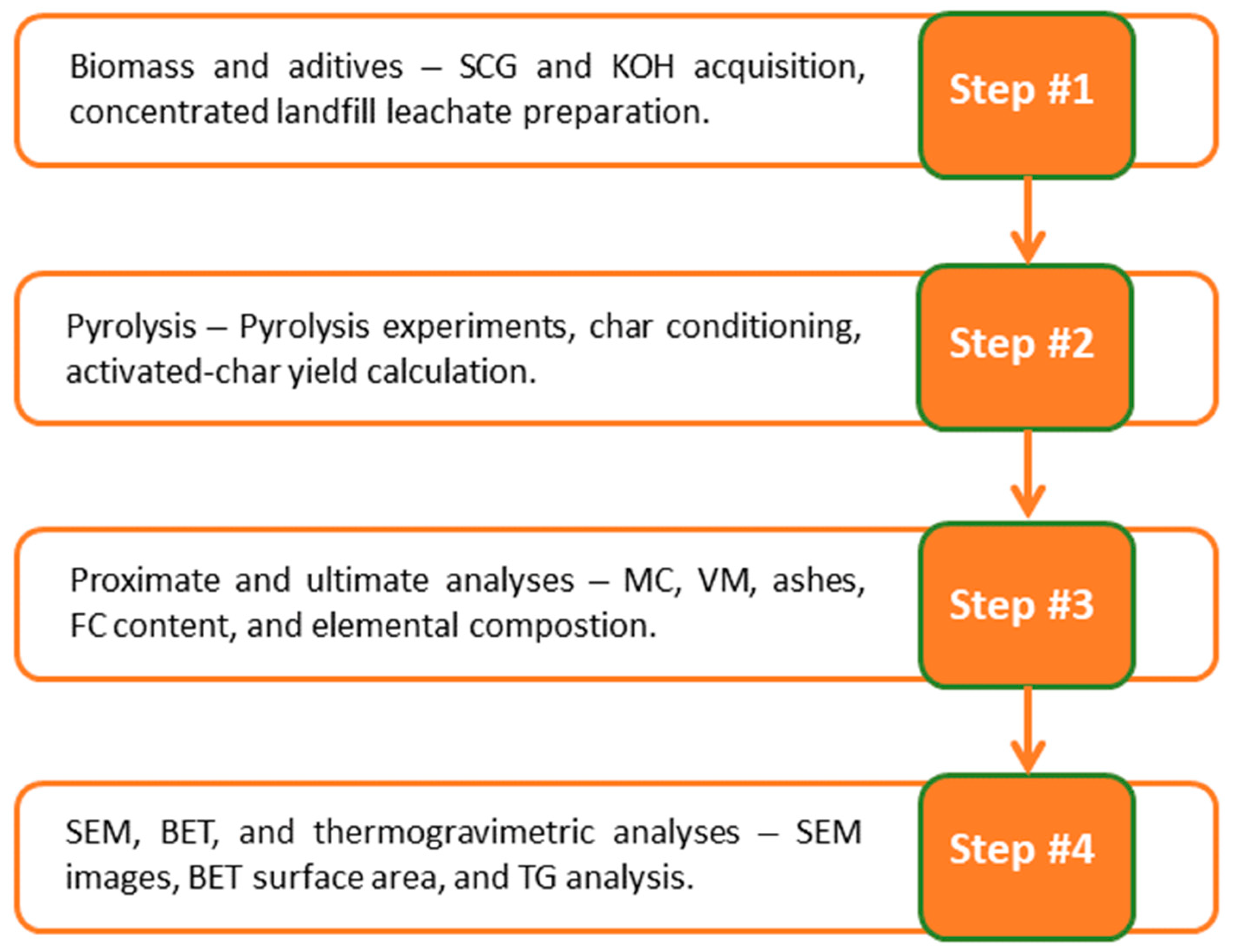
Figure 2.
SEM images of starting materials. LLMC = landfill leachate membrane concentrate. SCG = spent coffee grounds.
Figure 2.
SEM images of starting materials. LLMC = landfill leachate membrane concentrate. SCG = spent coffee grounds.
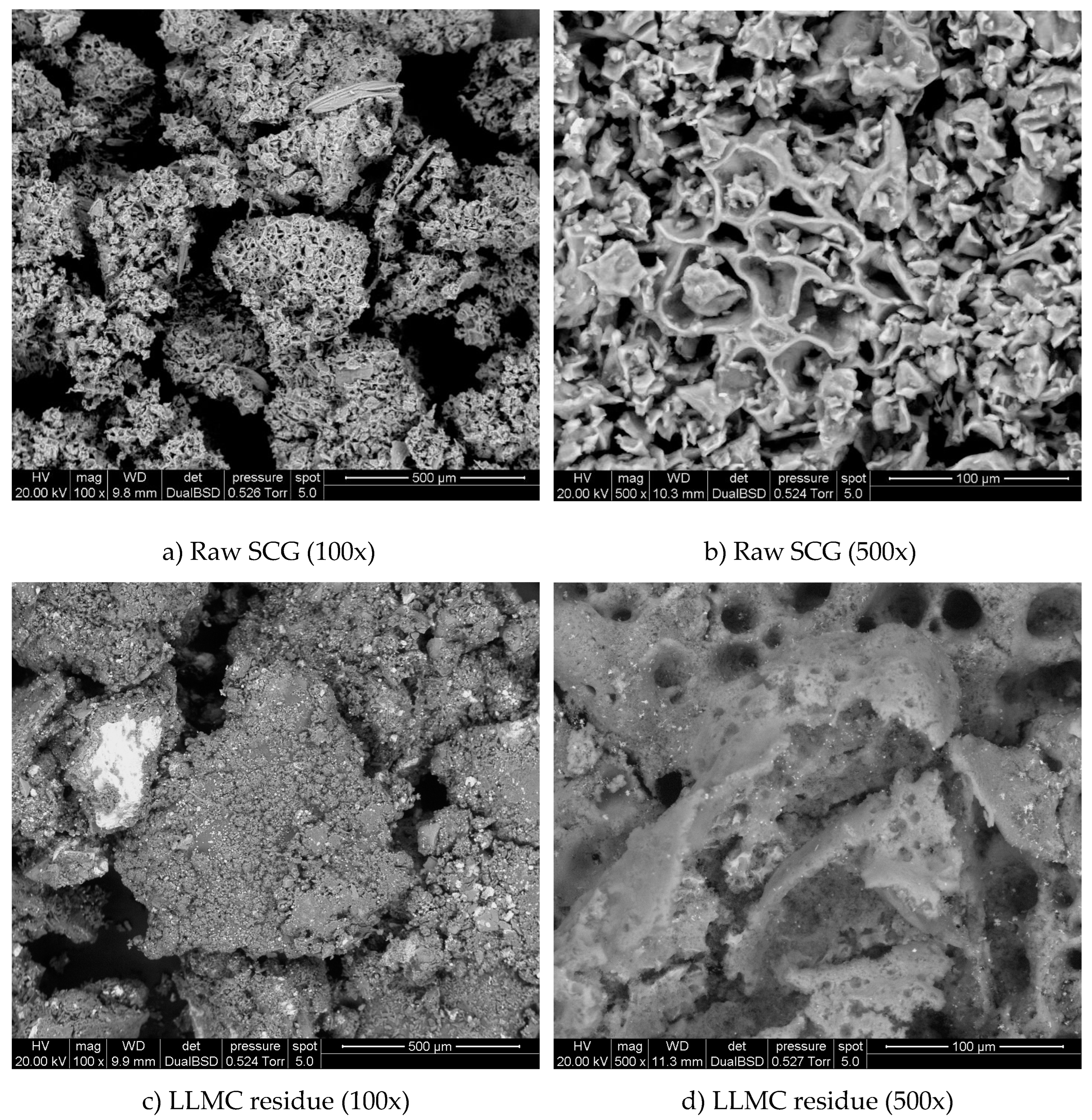
Figure 3.
SEM images of SCG char and activated chars. LLMC = landfill leachate membrane concentrate. SCG = spent coffee grounds.
Figure 3.
SEM images of SCG char and activated chars. LLMC = landfill leachate membrane concentrate. SCG = spent coffee grounds.
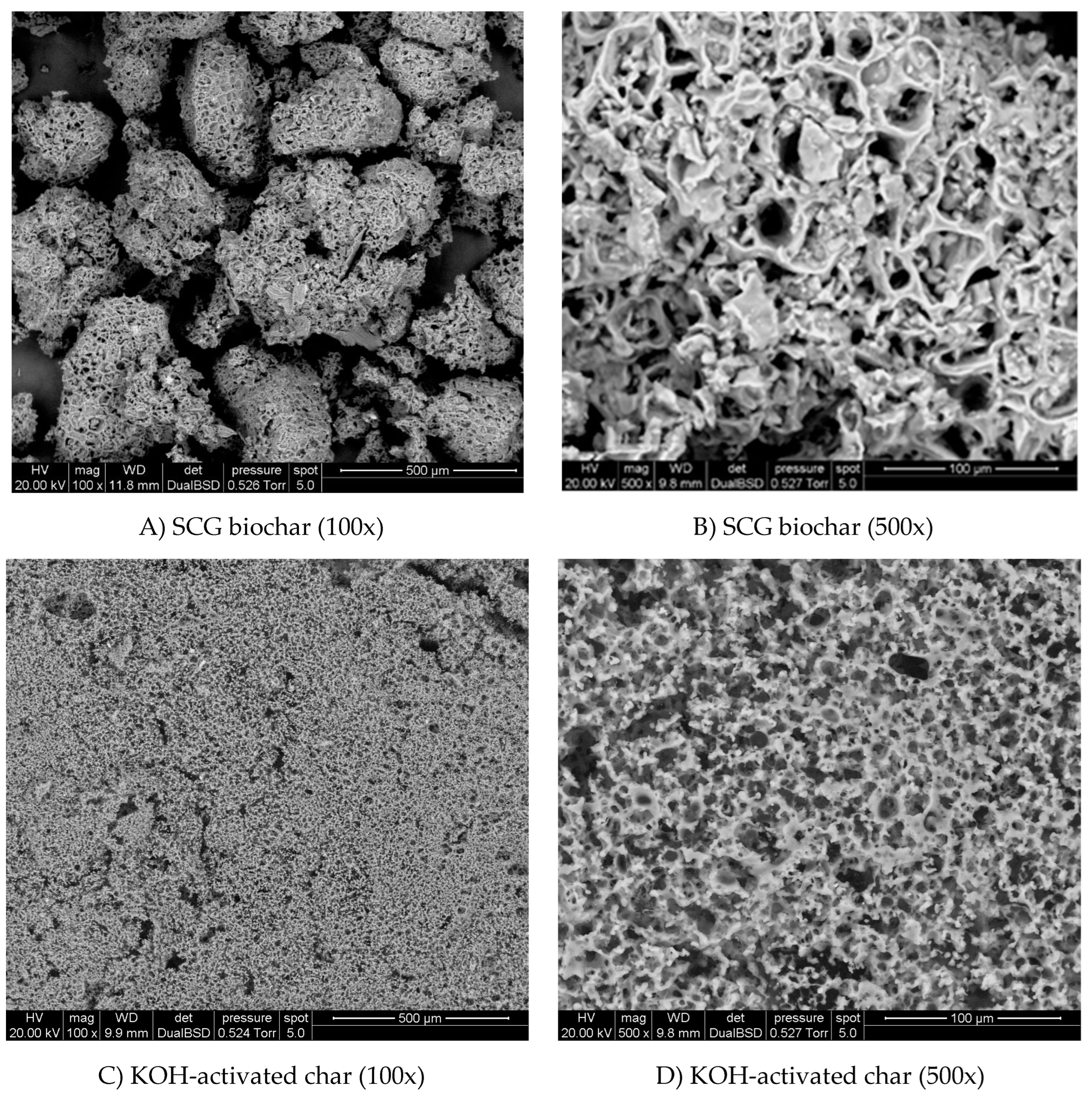
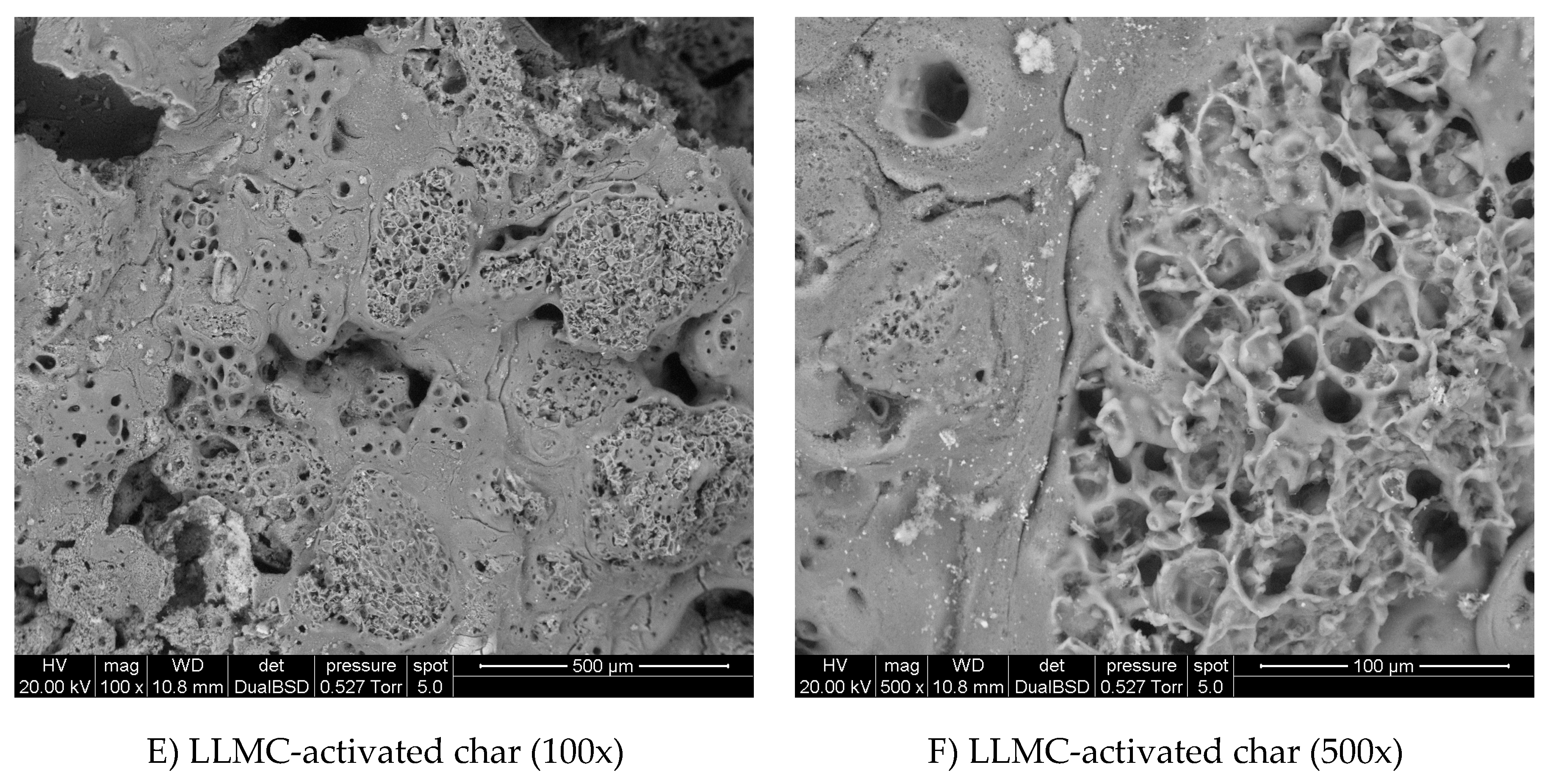
Figure 4.
TG, DTG, and DSC curves for SCG (A) and the produced char (B). DSC = differential scanning calorimetry. DTG = derivative thermogravimetry. SCG = spent coffee grounds. TG = thermogravimetry.
Figure 4.
TG, DTG, and DSC curves for SCG (A) and the produced char (B). DSC = differential scanning calorimetry. DTG = derivative thermogravimetry. SCG = spent coffee grounds. TG = thermogravimetry.
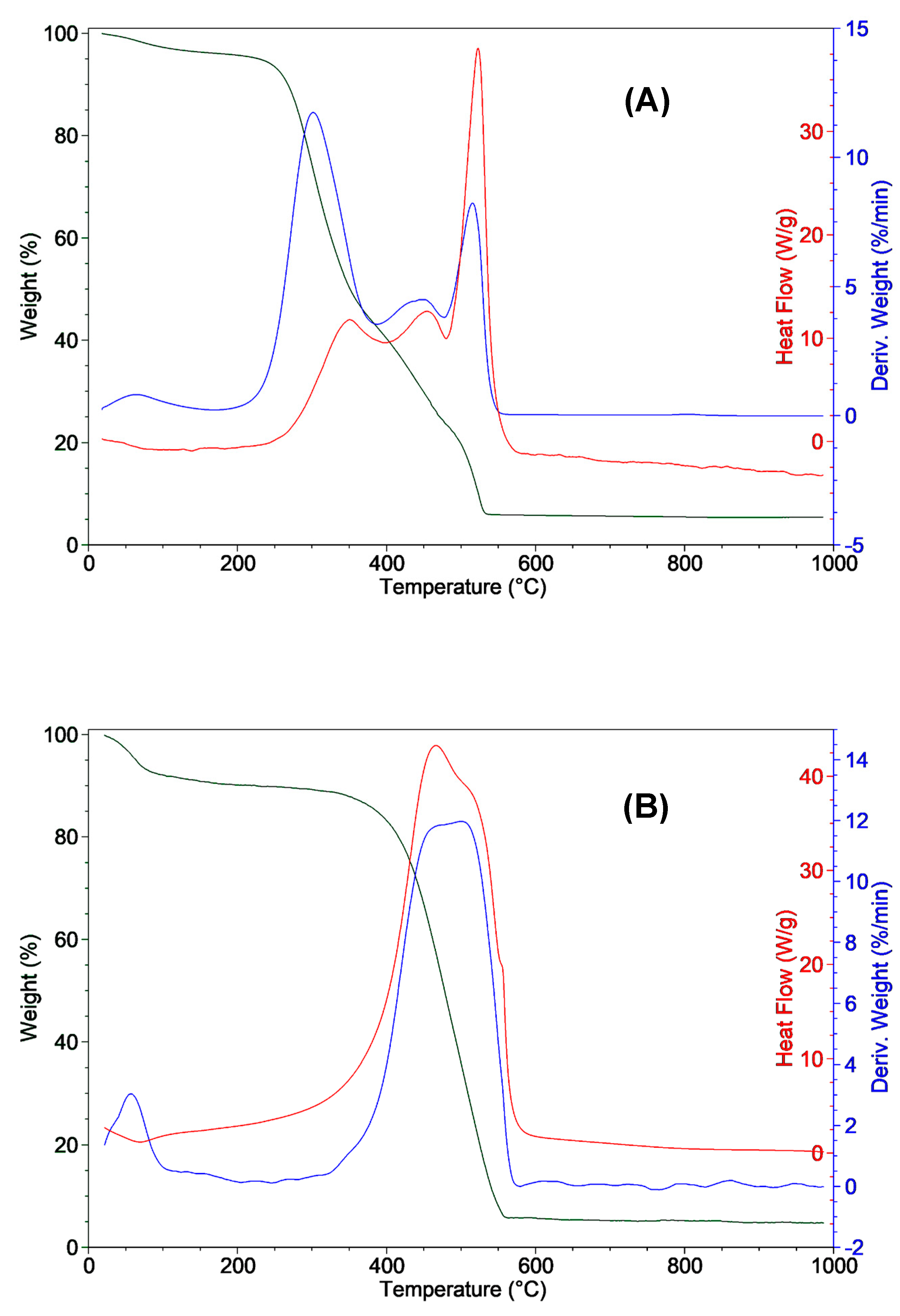
Figure 5.
TG, DTG, and DSC curves for SCG+LLMC residue (1:1) (A) and the LLMC-activated char (B). DSC = differential scanning calorimetry. DTG = derivative thermogravimetry. LLMC = landfill leachate membrane concentrate. SCG = spent coffee grounds. TG = thermogravimetry.
Figure 5.
TG, DTG, and DSC curves for SCG+LLMC residue (1:1) (A) and the LLMC-activated char (B). DSC = differential scanning calorimetry. DTG = derivative thermogravimetry. LLMC = landfill leachate membrane concentrate. SCG = spent coffee grounds. TG = thermogravimetry.
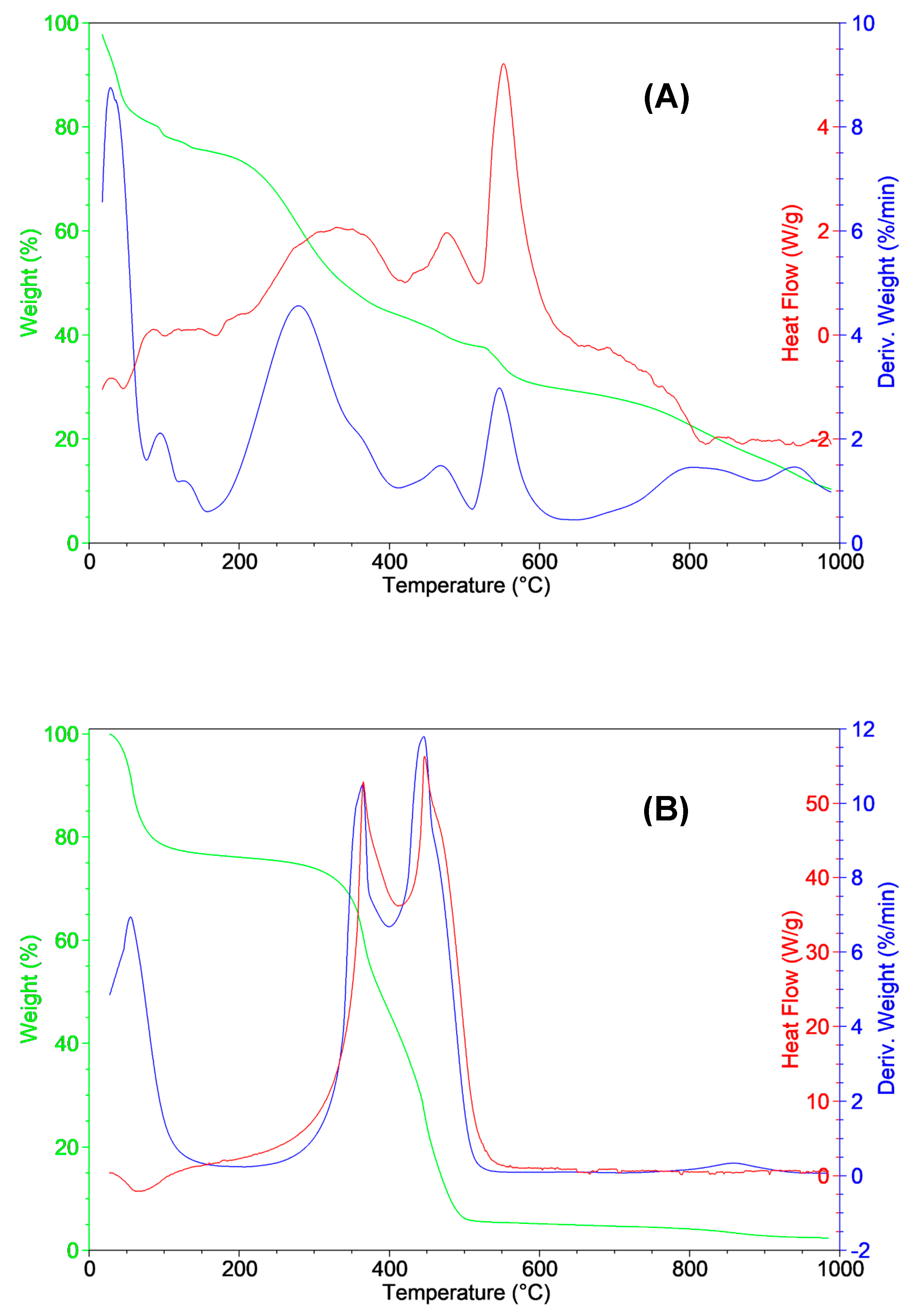
Figure 6.
TG, DTG, and DSC curves for KOH-activated char and LLMC-activated char. DSC = differential scanning calorimetry. DTG = derivative thermogravimetry. LLMC = landfill leachate membrane concentrate. TG = thermogravimetry.
Figure 6.
TG, DTG, and DSC curves for KOH-activated char and LLMC-activated char. DSC = differential scanning calorimetry. DTG = derivative thermogravimetry. LLMC = landfill leachate membrane concentrate. TG = thermogravimetry.
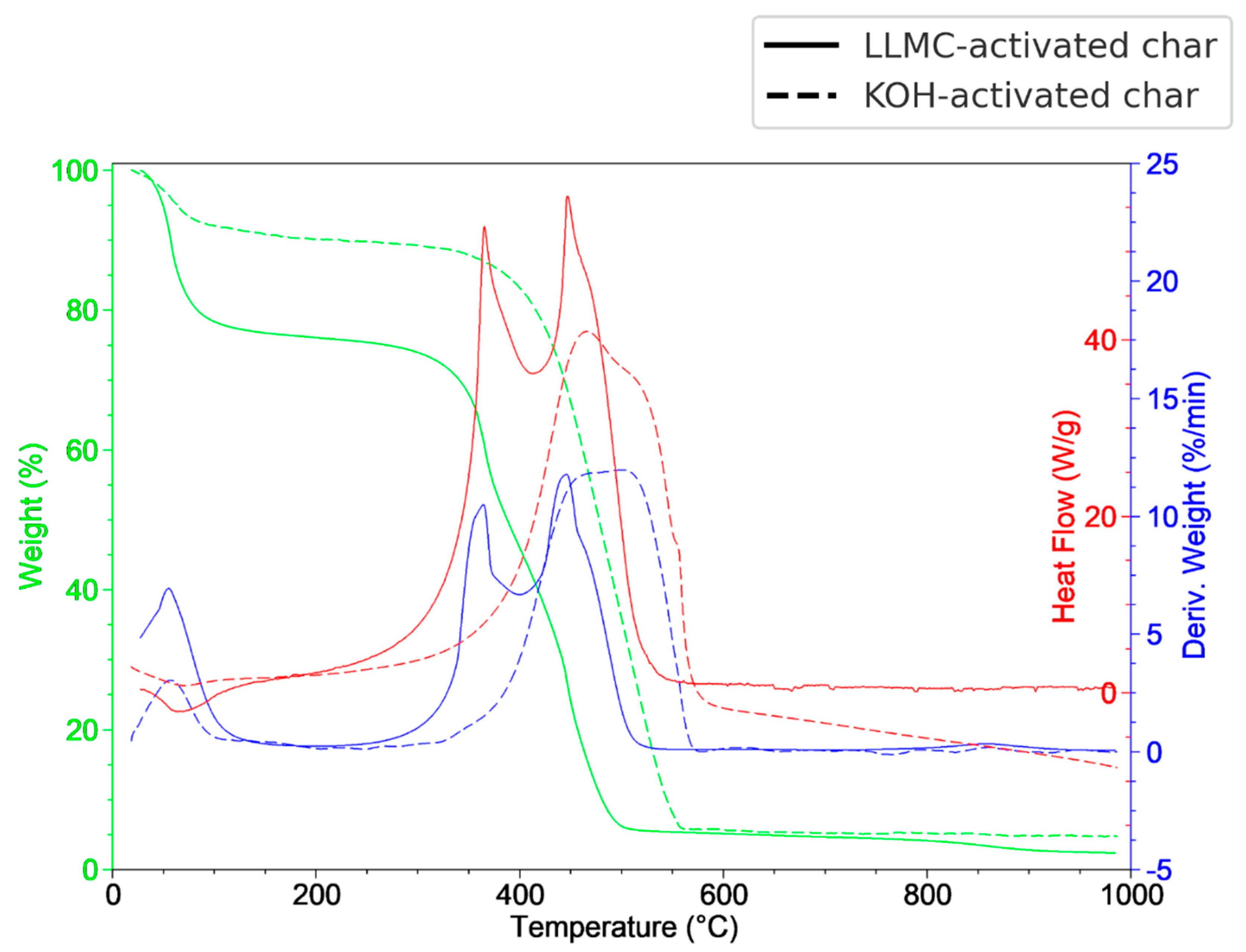

Table 1.
Proximate and ultimate analyses of the LLMC residue.
| Proximate analysis (wt%) | *Ultimate analysis (dry basis, wt%) | ||||||||||
|---|---|---|---|---|---|---|---|---|---|---|---|
| MC | VM | Ashes | FC | C | O | Na | K | Mg | Cl | S | |
| LLMC residue | 2.46 | 23.55 | 51.23 | 22.76 | 13.32±2.23 | 33.99±4.33 | 39.28±1.99 | 8.085±0.78 | 0.256±0.08 | 3.83±0.66 | 0.745±0.435 |
FC = fixed carbon. LLMC = landfill leachate membrane concentrate. MC = moisture content. VM = volatile matter. *Mean ± standard deviation of three determinations.
Table 2.
Yield and proximate analysis.
| SCG | Biochar | KOH-activated char | LLMC-activated char | |
|---|---|---|---|---|
| Mass yield (wt%) | ─ | 23.9 | 21.2 | 18.6 |
| MC (wt%) | 3.78 | 9.2 | 5.8 | 23.3 |
| VM (wt%) | 94.91 | 58.4 | 47.9 | 44.4 |
| Ashes (wt%) | 1.26 | 5.8 | 1.3 | 7.0 |
| FC (wt%) | 1.25 | 33.0 | 25.6 | 20.4 |
FC = fixed carbon. LLMC = landfill leachate membrane concentrate. MC = moisture content. SCG = spent coffee ground. VM = volatile matter.
Table 3.
Ultimate analysis of biomass and chars from EDS spectra.
| Material | Elemental composition (dry basis, wt%) | ||||||||
|---|---|---|---|---|---|---|---|---|---|
| C | O | Na | K | Mg | Ca | Al | Cl | S | |
| SCG | 47.73 | 47.49 | n.d | 3.19 | n.d | 0.91 | n.d | n.d | 0.68 |
| LLMC residue | 14.55 | 37.04 | 40.86 | 2.26 | n.d | n.d | 0.78 | 2.63 | 1.55 |
| SCG char | 46.06 | 45.26 | n.d | 3.87 | 0.40 | n.d | n.d | n.d | 0.52 |
| KOH-activated char | 85.30 | 13.70 | n.d | 0.87 | 0.02 | n.d | n.d | n.d | 0.10 |
| LLMC-activated char | 63.97 | 20.16 | 4.32 | 4.14 | 1.00 | 2.87 | n.d | 0.47 | 1.43 |
n.d = not detected. KOH = potassium hydroxide. LLMC = landfill leachate membrane concentrate. SCG = spent coffee ground.
Table 4.
BET surface area and average pore diameter of SCG and prepared chars.
| Sample | BET surface area (m² g-1) | Average pore size (nm) |
|---|---|---|
| SCG | 4.5 | 10.7 |
| SCG char | 463 | 4.8 |
| KOH-activated char | 1960 | 1.8 |
| LLMC-activated char | 1138 | 5.9 |
LLMC = landfill leachate membrane concentrate. SCG = spent coffee grounds.
Disclaimer/Publisher’s Note: The statements, opinions and data contained in all publications are solely those of the individual author(s) and contributor(s) and not of MDPI and/or the editor(s). MDPI and/or the editor(s) disclaim responsibility for any injury to people or property resulting from any ideas, methods, instructions or products referred to in the content. |
© 2025 by the authors. Licensee MDPI, Basel, Switzerland. This article is an open access article distributed under the terms and conditions of the Creative Commons Attribution (CC BY) license (http://creativecommons.org/licenses/by/4.0/).
Copyright: This open access article is published under a Creative Commons CC BY 4.0 license, which permit the free download, distribution, and reuse, provided that the author and preprint are cited in any reuse.


