

Submitted:
17 July 2023
Posted:
19 July 2023
You are already at the latest version
Abstract
Background and purpose: Dynamic 18F-FDG PET-CT scanning can accurately quantify 18F-FDG uptake and has been successfully applied in diagnosing and evaluating therapeutic effects in various malignant tumors. There is no conclusion as to whether it can accurately distinguish benign and malignant lymph nodes in nasopharyngeal cancer. The main purpose of this study is to reveal the diagnostic value of dynamic PET-CT in cervical lymph node metastasis of nasopharyngeal cancer through analysis.
Method: We first searched for cervical lymph nodes interested in static PET-CT, measured their SUV-Max values, and found the corresponding lymph nodes in magnetic resonance images before and after treatment. The valid or invalid groups were included according to the changes in lymph node size before and after treatment. Their Ki values were measured on dynamic PET-CT and compared under different conditions. Then, we conducted a correlation analysis between different factors and Ki values. Finally, diagnostic tests were conducted to compare the sensitivity and specificity of Ki and SUV-Max.
Result: We included 67 cervical lymph nodes from different regions of 51 nasopharyngeal cancer patients and divided them into valid and invalid groups based on changes before treatment. The valid group includes 50 lymph nodes, while the invalid group includes 17. Significant differences (P<0.001) between the two groups in SUV-Max, Ki-Mean, and Ki-Max values. When the SUV-Max≤4.5, there was no significant difference in the Ki-Mean and Ki-Max between the two groups (P>0.05). When SUV-Max≤4.5 and pre-treatment lymph nodes<1.0cm, the valid group had significantly higher Ki-Mean (0.00910) and Ki-Maximum (0.01004) values than the invalid group (Ki-Mean=0.00716, Ki -Max=0.00767) (P<0.05). When SUV-Max≤4.5, pre-treatment lymph nodes<1.0cm, and EBV DNA replication was normal, Ki-Mean (0.01060) and Ki-Max (0.01149) in the valid group were still significantly higher than the invalid group (Ki-Mean=0.00670, Ki-Max=0.00719) (P<0.05). The correlation analysis between different factors (SUV-Max, T-stage, normal EB virus DNA replication, age, pre-treatment lymph node<1.0cm) and Ki value showed that SUV-Max and pre-treatment lymph node<1.0cm were related to Ki-Mean and Ki-Max. Diagnostic testing was conducted, the AUC value of the SUV-Max value was 0.8259 (95% confidence interval: 0.7296-0.9222), the AUC value of the Ki-Mean was 0.8759 (95% confidence interval: 0.7950-0.9567), and the AUC value of the Ki-Max was 0.8859 (95% confidence interval: 0.8089-0.9629). It was found that the sensitivity of SUV-Max was 88%, the specificity was 76%, the sensitivity of Ki-Mean was 88%, the specificity was 80%, the sensitivity of Ki-Max was 94%, the specificity was 76%, the specificity of Ki-Mean was better than SUV-Max, the sensitivity of Ki-Max was better than SUV-Max.
Conclusion: Dynamic PET-CT has shown significant diagnostic value in diagnosing cervical lymph node metastasis of nasopharyngeal cancer, especially for the small SUV value, and lymph nodes do not meet the metastasis criteria before treatment, and EBV DNA replication is normal. Moreover, its sensitivity and accuracy are superior to static PET-CT.
Keywords:
Dynamic PET-CT
; SUV-Max
; Ki-Mean
; Ki-Max
; Nasopharyngeal cancer
; Cervical lymph nodes
Introduction
Nasopharyngeal cancer is a malignant tumor originating from nasopharyngeal mucosal epithelial cells. It is prevalent in southern China and Southeast Asia, and its incidence rate is 20-30/10000/year[1]. Nasopharyngeal cancer has a hidden onset, and the early symptoms are not obvious. When apparent symptoms appear, it is already in the middle and late stages, and most patients seek medical attention for the first time by touching a neck lump[2]. It is essential to determine whether cervical lymph nodes are metastatic for nasopharyngeal cancer patients to clarify clinical staging, formulate treatment plans, and evaluate prognosis. Unlike other head and neck malignant tumors, nasopharyngeal cancer mainly adopts a comprehensive treatment plan based on radiation therapy, with local recurrence being the leading cause of treatment failure. Among them, 14-18% are cervical lymph node recurrence[3], mainly because the missed false negative lymph nodes were classified as low-dose areas during the planning process.
Previous studies have reported that 18F-fluorodeoxyglucose positron emission tomography-computed tomography (18F-FDG PET-CT) has shown significant functionality in detecting distant metastasis of nasopharyngeal cancer[4,5]. 18F-FDG PET-CT scanning is the most commonly used imaging method in clinical practice, which can reflect prognostic factors directly related to clinical outcomes, including maximum standardized uptake value (SUV-Max), metabolic tumor volume, and total lesion glycolysis[6]. Dynamic PET/CT scanning refers to starting data collection immediately after injection of a tracer, generating a time-activity-curve (TAC) based on the framing during the scanning process, and extracting parameters such as K1-K4, Ki, and glucose metabolism rate through dynamic modeling. It can avoid the influence of factors such as uptake kinetics, injection imaging time, BMI, and has better accuracy than SUVs, and can achieve a quantitative evaluation of tumor metabolism. In addition, dynamic studies have found that Ki can more sensitively identify early metastatic lymph nodes than SUVs[7]. For suspected metastases that SUVs cannot accurately identify, dynamic PET/CT scans can provide more information.
Therefore, the primary purpose of this study is to clarify whether the Ki value in dynamic PET-CT can replace the SUV value in distinguishing cervical lymph node metastasis of nasopharyngeal cancer, which can be used as a reference for radiation oncologists when delineating the target area, and can improve tumor control rate, reduce recurrence rate, and obtain better efficacy and prognosis in clinical treatment.
Material and Method
Patients
A retrospective analysis was conducted on 51 newly diagnosed nasopharyngeal cancer patients who visited our department from 2020 to 2022. After the precise diagnosis, all patients received systematic treatment (radiotherapy, chemotherapy, or other anti-tumor treatments). All patients met the following criteria: (1) The pathological diagnosis was confirmed as nasopharyngeal cancer after the nasal endoscopic biopsy or multiple nasal endoscopic examinations could not diagnose nasopharyngeal cancer, but cervical lymph node biopsy was confirmed as metastatic squamous cell carcinoma and considered as the nasopharyngeal source, and there is evidence of nasopharyngeal malignancy on imaging. (2) No anti-tumor treatment was initiated before the PET-CT examination. (3) Before and after treatment, magnetic resonance imaging of the head and neck was performed, and there were measurable target lesions. (4) No other malignant tumors were present. (5) There was no severe cardio-cerebrovascular disease or diabetes, or mental disease.
Data acquisition and image reconstruction
The patient fasted for at least 6 hours before the examination, and their blood sugar was controlled at the normal level before the examination. Then, a uMI780 PET/CT scanner (Shanghai United Imaging Company, China) was used for scanning. Each patient underwent the low-dose transmission CT scan of the whole body, with a tube voltage of 120KV and a tube current of 180mA. The focus was on observing primary nasopharyngeal tumors and cervical lymph nodes. Then, immediately after injection of 18F-FDG (3.7 MBq/kg), a 60min single bed dynamic PET image was collected, and 18 × 5s,6 × 10s,5 × 30s,5 × 60s,8 × 150s,6 × 300s frame protocol was divided into 48 image data[8]. Then we used four beds (2 minutes each) for routine static whole-body PET scans and used the Ordered Subset Expectation Maximization (OSEM) iterative algorithm (parameter: 2 subsets, 20 iterations, 150 × 150 matrices) and reconstructed all dynamic PET data. Similarly, conventional static SUV images were reconstructed using the OSEM method (parameters: 2 subsets, 20 iterations, 128 × 128 matrices). All data were corrected according to isotope decay, scattering events and random coincidence, and semi-maximum smoothing was performed using a standard Gaussian filter with a total width of 3mm.
Our research used internally developed computer code for indirect parameter reconstruction processing[9,10]. Assuming irreversible uptake of 18F-FDG, the physiological parameters of voxel levels were estimated using the ordinary least squares (OLS) Patlak reconstruction regression method for 48 dynamic PET series based on a dual tissue compartment dynamics model[11]. Estimate the tracer concentration Cp(t) in the bleeding plasma and the tracer concentration C(t) in the tissue from these PET-CT images. In this study, we defined the input function Cp(t) derived non-invasive from dynamic PET data as the active concentration of the tracer in plasma. Specifically, VOI was drawn on the aortic arch of each patient, and then input functions derived from arterial images were extracted from all dynamic PET sequences. Then, by applying the OLS linear regression method to the following Patlak equation, the tracer uptake rate Ki at the voxel level could be calculated[11,12,13,14].
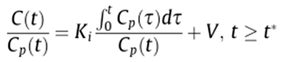
Where t was the time when the vascular space and reversible tissue compartment reached relative equilibrium, and Ki and V were the slopes and intercepts of linear regression, respectively.
Delineation of VOIs
The delineation of VOIs mainly included cervical lymph nodes. Two experienced radiology doctors (Yang and Jiang) initially determined whether it was metastasis or reactive hyperplasia based on different lymph nodes' size, shape, and SUV values in static PET-CT images and then measured the maximum SUV value (SUV-Max) of these suspicious lymph nodes and incorporated them into the following dynamic PET-CT image reconstruction software for analysis. Subsequently, the specific size changes of these lymph nodes before and after treatment were analyzed through comparison in magnetic resonance images, and data were recorded. A reduction of>50% before and after treatment was considered meaningful. The delineation of VOIs was performed by two radiation oncologists (Li and Xu). The Ki values of these lymph nodes were measured using Carisma software (version 2.0), which was used for comprehensive analysis with SUV values and changes in size before and after treatment.
Efficacy evaluation
Due to the inability to perform needle biopsy on all cervical lymph nodes of all patients, only when patients had obvious cervical masses, suspected metastatic lymph nodes on imaging, or multiple biopsies from the nasopharynx could not determine the diagnosis, we conducted cervical lymph nodes needle biopsies to determine their nature and sources. For most patients, we mainly identified the possibility of malignancy through changes in size on MRI before and after treatment. According to the World Health Organization (WHO) efficacy evaluation criteria, clinical efficacy was evaluated[15]. Suppose the product value of lymph nodes' maximum and minimum diameters changed more than or equal to 50% before and after treatment. In that case, treatment was considered valid, indicating a tendency towards malignancy. Treatment was considered invalid if it was less than 50%, indicating a greater likelihood of benign.
Data analysis
Two radiation oncologists (Li and Xu) accurately recorded all data, performed the normality distribution test on all data, and used Pearson or Spearman tests to analyze the correlation between different factors and Ki values based on the normal distribution. For sensitivity and specificity detection of diagnosis, we drew ROC curves and calculated the area under the curve, and found the optimal cutoff point. If the data followed the normal distribution, the t-test was used to analyze the Ki values under different conditions (SUV-Max value, lymph node size before and after treatment, and EB virus DNA expression). Conversely, the Mann-Whitney U test was used, and all tests were bilateral tests, with the P value<0.05 indicating meaningful results. All statistical analyses were plotted and analyzed using GraphPad PRISM version 9.0.
Result
Patients
Ultimately, we screened 51 patients with confirmed pathological diagnoses of nasopharyngeal cancer, including 36 male and 15 female patients. All patients received comprehensive treatment, such as radiotherapy and chemotherapy. All patients underwent MRI examinations before and after treatment, and some patients underwent cervical lymph node biopsy before treatment, and their benign or malignant nature was consistent with the degree of change before and after treatment. The clinical characteristics of these 51 patients were shown in Table 1. The median age of all patients were 48 years (range: 26-63). In TNM staging, there were 7 patients with T1, 9 with T2, 28 with T3, and 7 with T4. There were 21 patients with stage N1, 27 with stage N2, and 3 with stage N3. There were 3 patients with stage M0, 44 with stage M0, and 4 with stage M1. Among all clinical stages, there were no patients belonging to stage I, while there were 8 patients in stage II, 27 patients in stage III, and 42 patients in stage IV. One patient had the TNM stage of T3N1Mx, and it was impossible to determine whether the clinical stage was stage III or IV. Therefore, the patient was included in the unclear staging group. After grouping based on the expression of EBV-DNA, it was found that 23 patients had higher than normal expression levels, while 28 patients had normal expression levels.
Comparison of SUVmax, Ki-Mean and Ki-Max values between the valid and invalid groups
We identified 67 cervical lymph nodes from different regions from the PET CT images of the 51 patients, measured their static SUV-Max values, dynamic Ki-Mean and Ki-Max values, and combined them with magnetic resonance images before and after treatment to determine their size changes. Finally, they were included in the valid and invalid groups based on the degree of change. After the normal distribution test, it was found that the data did not conform to the normal distribution, so the Mann-Whitney U test was used for all comparative analyses.
From Table 2 and Figure 1, it could be seen that the average SUV-Max value of the valid group was 7.2, the average Ki-Mean was 0.01323, and the average Ki-Max was 0.01510, which were significantly higher than the invalid group (SUV-Max=4.3, Ki-Mean=0.00978, Ki-Max value=0.01077, P<0.001) (Table 2, Figure 1).
Comparison of Ki-Mean and Ki-Max values between valid and invalid groups when SUV-Max≤4.5
Matsubara[16] found in their study that when the SUV-Max of cervical lymph nodes was greater than 4.5, it was confirmed by biopsy pathology as metastatic lymph nodes. However, for lymph nodes with SUV-Max less than or equal to 4.5, it was difficult to distinguish whether they were malignant or benign. Based on the results of this study, we set the case where the SUV-Max was less than or equal to 4.5 in this study. The results showed that there was no significant difference between the Ki-Mean (P=0.151>0.05) and Ki-Max (P=0.075>0.05) between the two groups (Table 3, Figure 2).
Comparison of Ki-Mean and Ki-Max between the valid and invalid groups with SUV-Max≤4.5 and lymph nodes<1.0cm before treatment
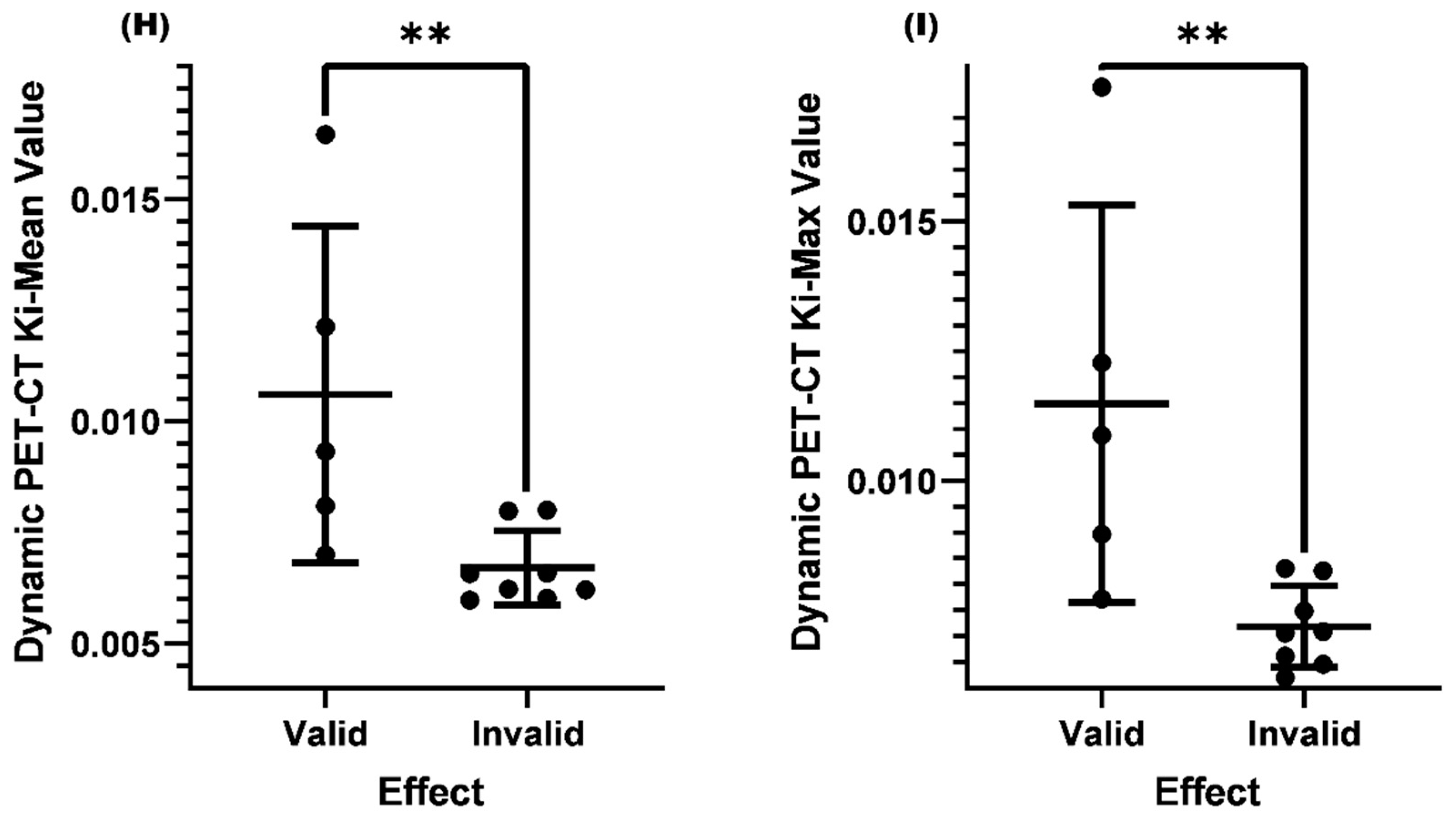
The current guidelines and consensus often use cervical lymph node short longitude≥1.0cm as a standard for lymph node metastasis, and it is necessary to combine the shape, density, number, and other factors of lymph nodes to assist in diagnosis and treatment[17]. The role of dynamic PET-CT in distinguishing benign and malignant cervical lymph nodes is not yet clear when the cervical lymph node<1.0cm. In this study, two conditions were set: (1) SUV-Max was less than or equal to 4.5, (2) cervical lymph node size<1.0cm. After analysis, it was found that the Ki -Mean (0.00910) and Ki-Max (0.01004) of the valid group were both higher than those of the invalid group (Ki-Mean=0.00716, Ki-Max=0.00767, P<0.05) (Table 4 and Figure 3).
We selected two patients who underwent dynamic and static PET/CT scans and cervical lymph node biopsies before treatment and completed MRI examinations before and after treatment. The relevant results were shown in Figure 4. The cervical lymph nodes of these two patients were both<1.0cm in size before treatment, and both showed low metabolism(SUV-Max=1.6) on static PET-CT. If no biopsies were performed, their benign and malignant status could not be determined. From the results in Figure 4, one of the individuals had a positive cervical lymph node biopsy result. From the MRI images before and after treatment, there was a significant change in the size of the cervical lymph node(>50%). The Ki-Mean was 0.01065, and the Ki-Max was 0.01156 and the metabolism was elevated in dynamic PET CT images. On the contrary, the biopsy result of another patient was negative, and there was almost no change in the cervical lymph node before and after treatment. The Ki-Mean was 0.00658, and the Ki-Max was 0.00749 and the metabolism was not obvious in dynamic PET-CT images. The Ki values of the malignant lymph node were significantly greater than that of the benign lymph node. This result indirectly indicated that dynamic PET-CT could be the best choice for low SUV values and sizes<1.0cm which could not determine the nature of cervical lymph nodes.
Comparison of Ki-Mean and Ki-Max between the valid and invalid groups with SUV-Max≤4.5 and lymph node<1.0cm and normal EBV-DNA replication before treatment
Epstein-Barr virus DNA (EBV-DNA) is often used as an important indicator for efficacy monitoring[18,19], tumor recurrence[20], and lymph node metastasis[21] in clinical diagnosis and treatment. If the EBV-DNA level continues to rise, it often indicates a poor prognosis and the possibility of cervical lymph node metastasis. We continued to add EBV-DNA condition based on SUV-Max less than or equal to 4.5 and cervical lymph node less than 1.0cm before treatment. When EBV-DNA replication was at the normal level, the Ki-Mean (0.01060) and Ki -Max (0.01149) of the valid group were both more significant than those of the invalid group (Ki-Mean=0.00670, Ki- Max=0.00719, P<0.05) (Table 5 and Figure 5).
The correlation between different factors and Ki-Mean and Ki-Max
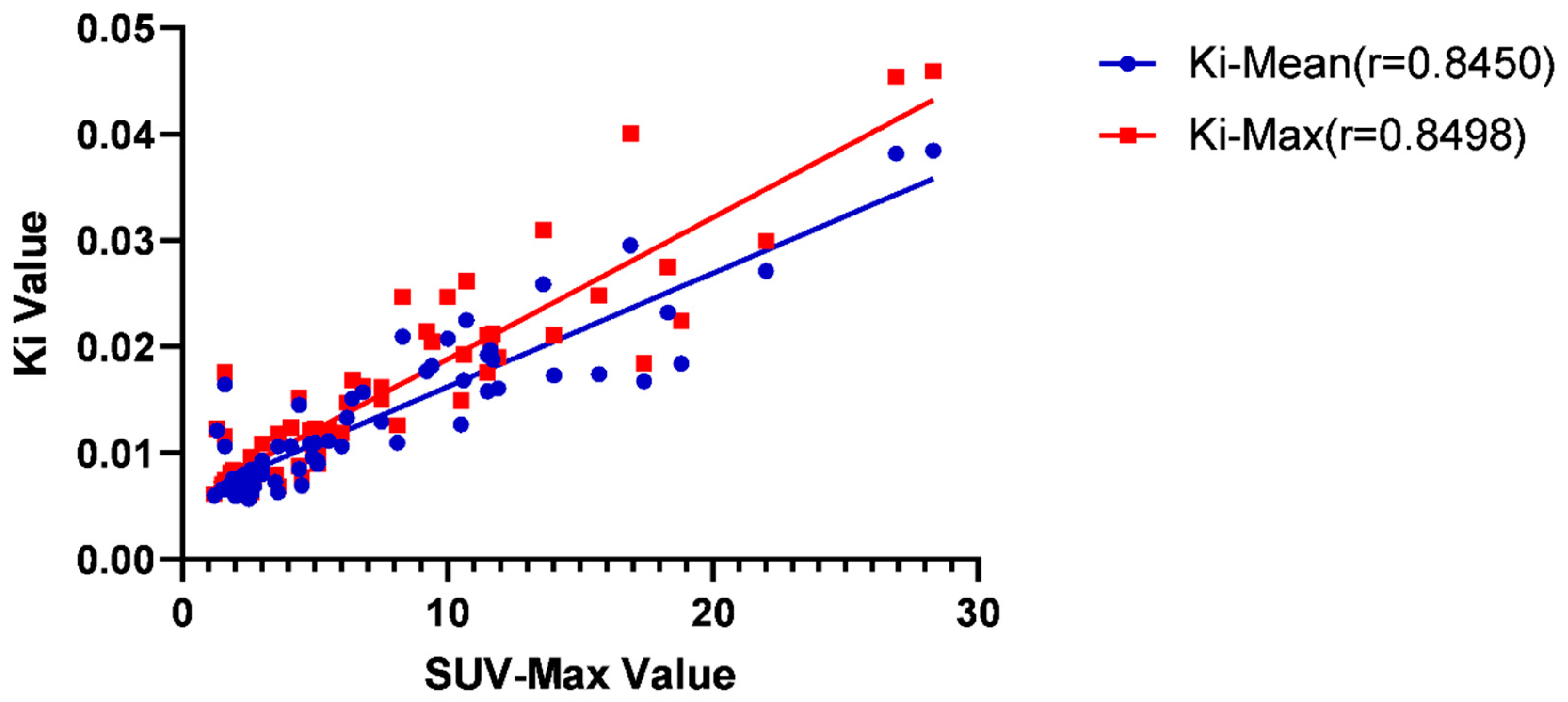
To explore the correlation between different factors (SUV-Max, T-stage, normal EBV-DNA replication, age, cervical lymph node<1.0cm) and Ki-Mean and Ki-Max, we conducted a correlation study. Because the data did not conform to the normal distribution, we used the Spearman test to determine its correlations. The results showed the correlation between SUV-Max and cervical lymph node<1.0cm and Ki-Mean and Ki-Max (P<0.0001). The r coefficient of the SUV Max and Ki-Mean was 0.8450, and the r coefficient of the Ki-Max was 0.8498. There were significant positive correlations (Table 6 and Figure 6).
Diagnostic accuracy of SUV-Max and Ki for cervical lymph node metastasis in nasopharyngeal cancer
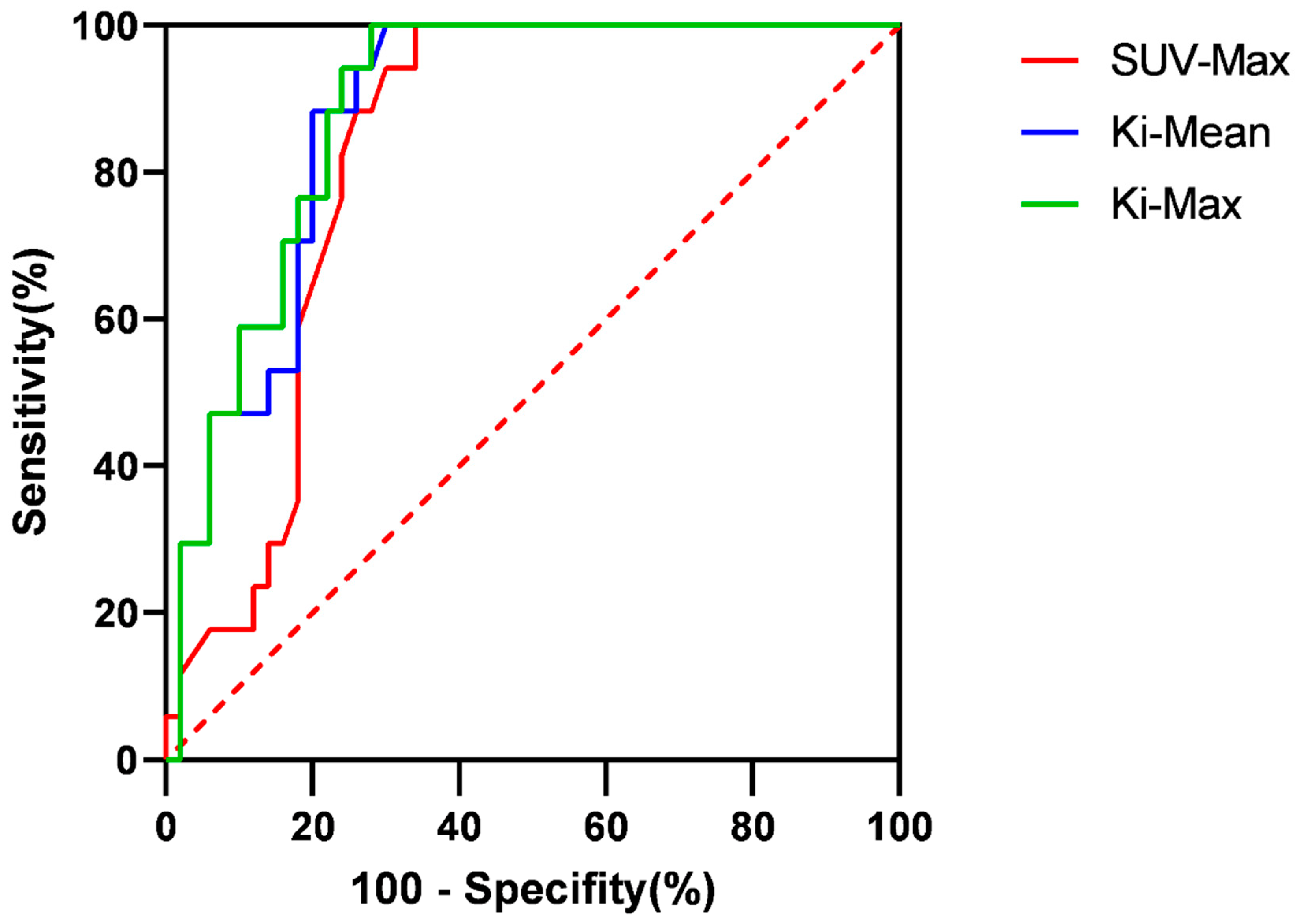
We plotted ROC curves to evaluate the diagnostic accuracy of SUV-Max and Ki for cervical lymph node metastasis. The AUC value of the SUV-Max value was 0.8259 (95% confidence interval: 0.7296-0.9222), the AUC value of the Ki-Mean was 0.8759 (95% confidence interval: 0.7950-0.9567), and the AUC value of the Ki-Max was 0.8859 (95% confidence interval: 0.8089-0.9629). The sensitivity of SUV-Max was 88%, and the specificity was 76%. The sensitivity of the Ki-Mean was 88%, the specificity was 80%, the sensitivity of the Ki-Max was 94%, and the specificity was 76%. The results showed that the specificity of the Ki-Mean was superior to the SUV-Max, and the sensitivity of the Ki-Max was superior to the SUV-Max (Figure 7).
Discussion
70%~80% of nasopharyngeal cancer patients have enlarged cervical lymph nodes in the first diagnosis[22]. The location of metastatic lymph nodes is related to the lymphatic drainage area of the primary tumor. The cervical lymph node metastasis of nasopharyngeal cancer mainly occurs bilaterally, which is common around the jugular vein chain. Currently, the treatment of nasopharyngeal cancer mainly relies on radiation therapy as a comprehensive treatment. With the development of radiation therapy technology, although intensity-modulated radiation therapy (IMRT) can provide excellent dose coverage for tumors, better protect surrounding normal tissues, improve local control, and long-term survival[23,24], 7% to 18% of patients still have residual or recurrent cervical lymph nodes after the first round of radiation therapy[25,26]. Therefore, determining whether neck lymph nodes are metastatic is crucial for accurate staging, selection of treatment plans, delineation of radiotherapy targets, and evaluation of the prognosis of nasopharyngeal cancer.
PET imaging for cancer metabolic assessment has been widely used in clinical medicine. The commonly used method is to evaluate the energy consumption of tumors by injecting 18F-fluorodeoxyglucose and detecting the maximum glucose metabolism (SUV-Max)[27]. However, many factors, such as uptake kinetics, body mass index, or post-injection time, can affect the results of SUV values[28]. As a new imaging technology in nuclear medicine, dynamic PET-CT images collect continuous frames through long-term scanning compared with static PET-CT images. Therefore, the degree of drug metabolism and histopathological activity is dynamically reflected[27]. The diagnostic value of dynamic PET-CT has been supported by data in non-small cell lung cancer and primary tumors of nasopharyngeal cancer[8,29], but there is no research report on whether it can differentiate cervical lymph node metastasis in nasopharyngeal cancer.
In our study, we first searched for cervical lymph nodes of interest on PET-CT images and then found the corresponding lymph nodes on magnetic resonance images. Then, according to the latest version of WHO solid tumor evaluation standards, we measured the maximum and shortest diameters of lymph nodes before and after treatment and calculated the product size of the two. If the change before and after treatment exceeded 50%, it was included in the valid group; if it was less than 50%, it was included in the invalid group. Due to the inability to perform a needle biopsy on each cervical lymph node to determine its nature, we could only speculate on its potential for malignancy based on changes before and after treatment. It would likely be malignant if the change was greater than 50%. If the change was less than 50%, it was considered more likely to be benign. We found through analysis that the SUV-Max, Ki-Mean, and Ki-Max of the valid group were significantly higher than those of the invalid group (P<0.001). This result might indicate that glucose metabolism's degree and metabolic rate in general metastatic lymph nodes are significantly higher than in benign lymph nodes.
Previous studies have shown that when the SUV value of the lymph node is greater than 4.5, pathological biopsy confirms it as metastasis. However, for SUV values≤4.5, it is difficult to distinguish between benign and malignant[16]. Given this result, we also set the same conditions in this study and found no significant difference in the Ki-Mean and Ki-Max between the two groups (P>0.05). However, it could be seen from the results that the P-value of the Ki-Max was very close to 0.05. Due to the small sample size of this study, no positive results were obtained. Increasing the sample size further might result in more good research results. According to the current results, when the SUV-Max≤4.5, Ki-Mean and Ki-Max can not effectively distinguish between metastatic or benign lymph nodes.
The lymph node size is often an important indicator for diagnosing metastasis. In clinical practice, cervical lymph node size≥1.0cm is an important criterion for cervical lymph node metastasis. For lymph node<1.0cm, it is often necessary to consider specific situations, such as whether there is central necrosis, cluster distribution, obvious enhancement, and so on. In our study, it was found that when the SUV-Max≤4.5, and the cervical lymph node<1.0cm before treatment, it could be found that the Ki-Mean and Ki-Max of the valid group were greater than those of the invalid group (P<0.05). We also analyzed the dynamic and static PET-CT, pre-and post-treatment MRI, and cervical lymph node biopsies of two patients, and found that Ki-Mean and Ki-Max of the malignant lymph node were greater than the benign lymph node. The average Ki-Mean and Ki-Max values of the valid group were 0.00910 and 0.01004, and both were close to 0.01. This result indicates that dynamic PET-CT can often distinguish between benign and malignant lymph nodes when the SUV-Max is small, and the cervical lymph node size does not meet the standards.
Epstein-Barr (EB) is the γ Herpesvirus[30] and is closely related to the occurrence and development of nasopharyngeal cancer. In recent years, research has found that EB virus DNA (EBV-DNA) plays an important role in the efficacy monitoring and prognosis evaluation of nasopharyngeal cancer patients, especially in the clinical significance of changes in EBV-DNA concentration before and after treatment for distant metastasis and local recurrence in nasopharyngeal cancer patients[31]. Current research shows a positive correlation between EBV-DNA content in the blood of nasopharyngeal cancer patients and the volume of cervical lymph node metastasis[32], and EBV is closely associated with lymph node metastasis in nasopharyngeal cancer[33]. In order to further explore whether dynamic PET-CT can identify cervical lymph node metastasis when the level of EBV-DNA replication was normal, we analyzed it. The results showed that when the SUV-Max≤4.5, the pre-treatment lymph node<1.0cm, and EBV-DNA replication was normal, the Ki-Mean and Ki-Max in the valid group were significantly higher than those in the invalid group (P<0.05). Moreover, the Ki-Mean and Ki-Max of the valid group were both greater than 0.01. Dynamic PET-CT can identify metastatic cervical lymph nodes when the EBV-DNA replication is normal, meanwhile, the SUV-Max is small and the lymph nodes do not meet the standards.
Many factors, such as age, T-stage, SUV-Max, are related to parameters in dynamic PET-CT. Through analysis, it was found that SUV-Max and pre-treatment lymph node<1.0cm were associated with Ki-Mean and Ki-Max. A strong linear correlation existed between SUV-Max and Ki-Mean and Ki-Max. After further diagnostic testing, it was found that the AUC value of both the Ki-Mean and Ki-Max were greater than those of the SUV-Max. Generally speaking, the larger the AUC value, the higher its diagnostic or exclusion value[34]. In terms of specificity, the Ki-Mean was superior to the SUV-Max, while in terms of sensitivity, the Ki-Max was superior to the SUV-Max. This result indicates that the Ki is superior to the SUV in diagnosing nasopharyngeal cervical lymph node metastasis.
Some issues need to be addressed in our research. (1) Only a few patients underwent cervical lymph node biopsies and ultimately confirmed their malignancies. For most patients, we could only speculate on the possibility of cervical lymph node metastasis based on the changes in MRI before and after treatment, without pathological results to support it. There might be misdiagnoses and errors in the conclusions. (2) Some studies yielded nearly positive results, but a positive conclusion could not be reached due to insufficient sample size and could only be treated as negative. (3) In our study, some nasopharyngeal cancer patients only received partial treatment, and the follow-up time after treatment was insufficient. Some cervical lymph nodes might not have shown significant changes and had been included in the invalid group. (4) The sample difference between the valid and invalid groups was large, and the data did not conform to the normal distribution, affecting the results' authenticity.
In conclusion, some of our research results support the superiority and accuracy of dynamic PET-CT in the diagnosis of cervical lymph node metastasis of nasopharyngeal cancer, especially when we encounter low SUV-Max, substandard lymph node size, and normal EBV-DNA replication, dynamic PET-CT becomes a better diagnostic tool. As for whether it can replace the current static PET-CT as the mainstream examination method in the future, we need to combine pathology further and increase the sample size to verify everything based on this study.
Author Contributions
All authors contributed equally to the work. All authors have read and agreed to the published version of the manuscript.
Funding
This study did not receive external funding.
Institutional Review Board Statement
Not applicable.
Informed Consent Statement
Not applicable.
Data Availability Statement
All date have been included in this article.
Conflicts of Interest
The authors declare no conflict of interest.
References
- Chen YP, Chan ATC, Le QT, et al. Nasopharyngeal carcinoma. Lancet. 2019, 394, 64–80.
- Ho FC, Tham IW, Earnest A, et al. Patterns of regional lymph node metastasis of nasopharyngeal carcinoma: A meta-analysis of clinical evidence. BMC Cancer, 2012, 12, 1–13.
- Wei WI, Chan JY, Ng RW, et al. Surgical salvage of persistent or recurrent nasopharyngeal carcinoma with maxillary swing approach - Critical appraisal after 2 decades. Head Neck 2011, 33, 969–975. [CrossRef]
- Liu FY, Lin CY, Chang JT, et al. 18F-FDG PET Can Replace Conventional Work-up in Primary M Staging of Nonkeratinizing Nasopharyngeal Carcinoma. Journal of Nuclear Medicine Official Publication Society of Nuclear Medicine 2007, 48, 1614.
- Tang LQ, Chen QY, Fan W, et al. Prospective study of tailoring whole-body dual-modality [18F]fluorodeoxyglucose positron emission tomography/computed tomography with plasma Epstein-Barr virus DNA for detecting distant metastasis in endemic nasopharyngeal carcinoma at initial staging. Journal of Clinical Oncology Official Journal of the American Society of Clinical Oncology, 2013, 31, 2861.
- De Jaeghere EA, Laloo F, Lippens L, et al. Splenic 18F-FDG uptake on baseline PET/CT is associated with oncological outcomes and tumor immune state in uterine cervical cancer. Gynecologic Oncology 159, 335–343. [CrossRef] [PubMed]
- Yang M, Lin Z, Xu ZQ, et al. Influx rate constant of 18F-FDG increases in metastatic lymph nodes of non-small cell lung cancer patients. Eur J Nucl Med Mol Imaging, 2020, 47, 1198–1208. [CrossRef]
- Yang M, Lin Z, Xu ZQ, et al. Influx rate constant of 18F-FDG increases in metastatic lymph nodes of non-small cell lung cancer patients. Eur J Nucl Med Mol Imaging. 2020, 47, 1198–1208. [CrossRef]
- Zhuang M, Karakatsanis NA, Dierckx R, et al. Impact of Tissue Classification in MRI-Guided Attenuation Correction on Whole-Body Patlak PET/MRI. Mol Imaging Biol. 2019, 21, 1147–1156. [CrossRef]
- Zhuang M, Karakatsanis NA, Dierckx R, et al. Quantitative analysis of heterogeneous [(18)F]FDG static (SUV) vs. Patlak (Ki) whole-body PET imaging using different segmentation methods: a simulation study. Mol Imaging Biol. 2019, 21, 317–327. [CrossRef]
- Patlak CS, Blasberg RG, Fenstermacher JD. Graphical evaluation of blood-to-brain transfer constants from multiple-time uptake data. J Cereb Blood Flow Metab. 1983, 3, 1–7. [CrossRef] [PubMed]
- Karakatsanis NA, Lodge MA, Zhou Y, et al. Dynamic whole-body PET parametric imaging: II. task-oriented statistical estimation. Phys Med Biol. 2013, 58, 7419–7445. [CrossRef] [PubMed]
- Karakatsanis NA, Lodge MA, Tahari AK, et al. Dynamic whole-body PET parametric imaging: I. Concept, acquisition protocol optimization and clinical application. Phys Med Biol. 2013, 58, 7391–7418. [CrossRef] [PubMed]
- Patlak CS, Blasberg RG. Graphical evaluation of blood-to-brain transfer constants from multiple-time uptake data. Generalizations. J Cereb Blood Flow Metab. 1985, 5, 584–90. [CrossRef]
- Minocha J, Lewandowski RJ. Assessing Imaging Response to Therapy. Radiol Clin North Am. 2015, 53, 1077–1088. [CrossRef]
- Matsubara R, Kawano S, Chikui T, et al. Clinical significance of combined assessment of the maximum standardized uptake value of F-18 FDG PET with nodal size in the diagnosis of cervical lymph node metastasis of oral squamous cell carcinoma. Acad Radiol. 2012, 19, 708–717. [CrossRef]
- van den Brekel, MW. Lymph node metastases: CT and MRI. Eur J Radiol. 2000, 33, 230–8. [Google Scholar] [CrossRef]
- Tsao SW, Tsang CM, Lo KW. Epstein-Barr virus infection and nasopharyngeal carcinoma. Philos Trans R Soc Lond B Biol Sci. 2017, 372, 20160270. [CrossRef]
- Li Z, Tsai MH, Shumilov A, et al. Epstein-Barr virus ncRNA from a nasopharyngeal carcinoma induces an inflammatory response that promotes virus production. Nat Microbiol. 2019, 4, 2475–2486. [CrossRef]
- Lo Y, Chan A, Chan L, et al. Molecular prognostication of nasopharyngeal carcinoma by quantitative analysis of circulating Epstein-Barr virus DNA. Cancer Res. 2000, 60, 6878–81.
- Yuan H, Yang BB, Xu ZF, et al. The clinical value of quantitative analysis of plasma Epstein - Barr virus DNA in patients with nasopharyngeal carcinoma. Zhonghua Er Bi Yan Hou Ke Za Zhi. 2004, 39, 162–5.
- Fleming I, Copper J, Henson D, et a1. American joint committee on cancer: AJCC cancer staging manual. 5th ed. Philadelphia: Lippincott-Raven, 1997.
- Fang FM, Tsai WL, Chen HC, et al. Intensity-modulated or conformal radiotherapy improves the quality of life of patients with nasopharyngeal carcinoma: comparisons of four radiotherapy techniques. Cancer 2007, 109, 313–321. [CrossRef] [PubMed]
- Lu H, Peng L, Yuan X, et al. Concurrent chemoradiotherapy in locally advanced nasopharyngeal carcinoma: a treatment paradigm also applicable to patients in Southeast Asia. Cancer Treat Rev. 2009, 35, 345–353. [CrossRef] [PubMed]
- Bedwinek JM, Perez CA, Keys DJ. Analysis of failures after definitive irradiation for epidermoid carcinoma of the nasopharynx. Cancer. 1980, 45, 2725–2729. [CrossRef]
- Hsu MM, Tu SM. Nasopharyngeal carcinoma in Taiwan clinical manifestations and results of therapy. Cancer 1983, 52, 362–368. [CrossRef]
- Muzi M, O"Sullivan F, Mankoff DA, et al.Quantitative Assessment of Dynamic PET Imaging Data in Cancer Imaging. Magn Reson Imaging. 2012, 30, 1203–1215. [CrossRef]
- Laffon E, de Clermont H, Begueret H, et al. Assessment of dual-time-point 18F-FDG-PET imaging for pulmonary lesions. Nucl Med Commun. 2009, 30, 455–461. [CrossRef]
- Huang XT, Zhuang MZ, Yang S, et al. The valuable role of dynamic 18F FDG PET/CT-derived kinetic parameter Ki in patients with nasopharyngeal carcinoma prior to radiotherapy: A prospective study. Radiother Oncol. 2023, 179, 109440. [CrossRef]
- Luzuriaga K, Sullivan JL. Infectious mononucleosis. N Engl J Med. 2010, 362, 1993–2000. [CrossRef]
- Kim KY, LE QT, Yom SS, et al. Clinical utility of epstein-barr virus DNA testing in the treatment of nasopharyngeal carcinoma patients. Int J Radiat Oncol Biol Phys. 2017, 98, 996–1001. [CrossRef]
- Hsu CL, Chang KP, Lin CY, et al. Plasma Epstein-Barr virus DNA concentration and clearance rate as novel prognostic factors for metastatic nasopharyngeal carcinoma. Head Neck. 2012, 34, 1064–70. [CrossRef] [PubMed]
- Zhao CX, Zhu W, Ba ZQ, et al. The regulatory network of nasopharyngeal carcinoma metastasis with a focus on EBV,lncRNAs and miRNAs. Am J Cancer Res. 2018, 8, 2185–2209.
- Duffy MJ, Sturgeon C, Lamerz R, et al. Tumor markers in pancreatic cancer: a European Group on Tumor Markers (EGTM) status report. Ann Oncol. 2010, 21, 441–447. [CrossRef] [PubMed]
Figure 1.
Comparison of SUV-Max, Ki-Mean and Ki-Max between the valid and invalid groups. (A) Comparison of SUV-Max between the valid and invalid groups (P<0.001). (B) Comparison of the Ki-Mean between the valid and invalid groups (P<0.001). (C) Comparison of the valid Ki- Max between the valid and invalid groups (P<0.001).
Figure 1.
Comparison of SUV-Max, Ki-Mean and Ki-Max between the valid and invalid groups. (A) Comparison of SUV-Max between the valid and invalid groups (P<0.001). (B) Comparison of the Ki-Mean between the valid and invalid groups (P<0.001). (C) Comparison of the valid Ki- Max between the valid and invalid groups (P<0.001).
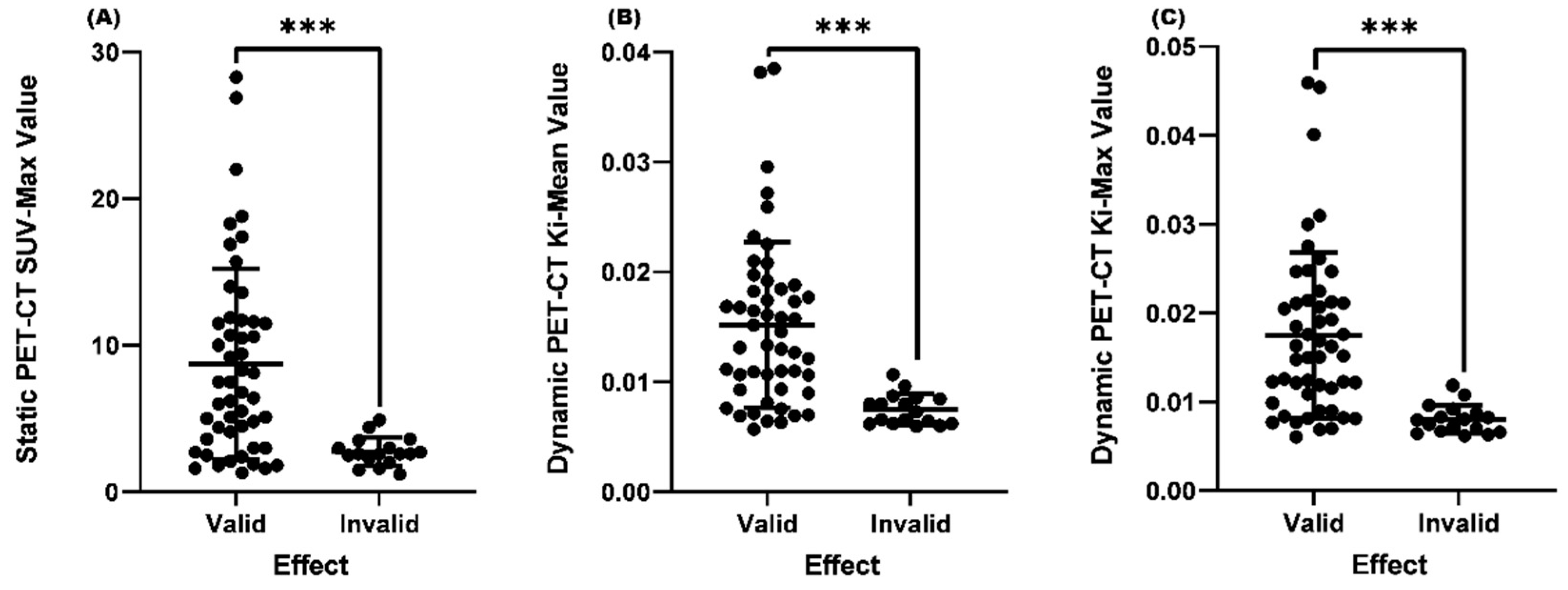
Figure 2.
Comparison of Ki-Mean and Ki-Max values between valid and invalid groups when SUV-Max≤4.5. (D) Comparison of the Ki-Mean between the valid and invalid groups when SUV-Max≤4.5 (P=0.151>0.05). (E) Comparison of the Ki-Max between the valid and invalid groups when SUV-Max≤4.5 (P=0.075>0.05).
Figure 2.
Comparison of Ki-Mean and Ki-Max values between valid and invalid groups when SUV-Max≤4.5. (D) Comparison of the Ki-Mean between the valid and invalid groups when SUV-Max≤4.5 (P=0.151>0.05). (E) Comparison of the Ki-Max between the valid and invalid groups when SUV-Max≤4.5 (P=0.075>0.05).
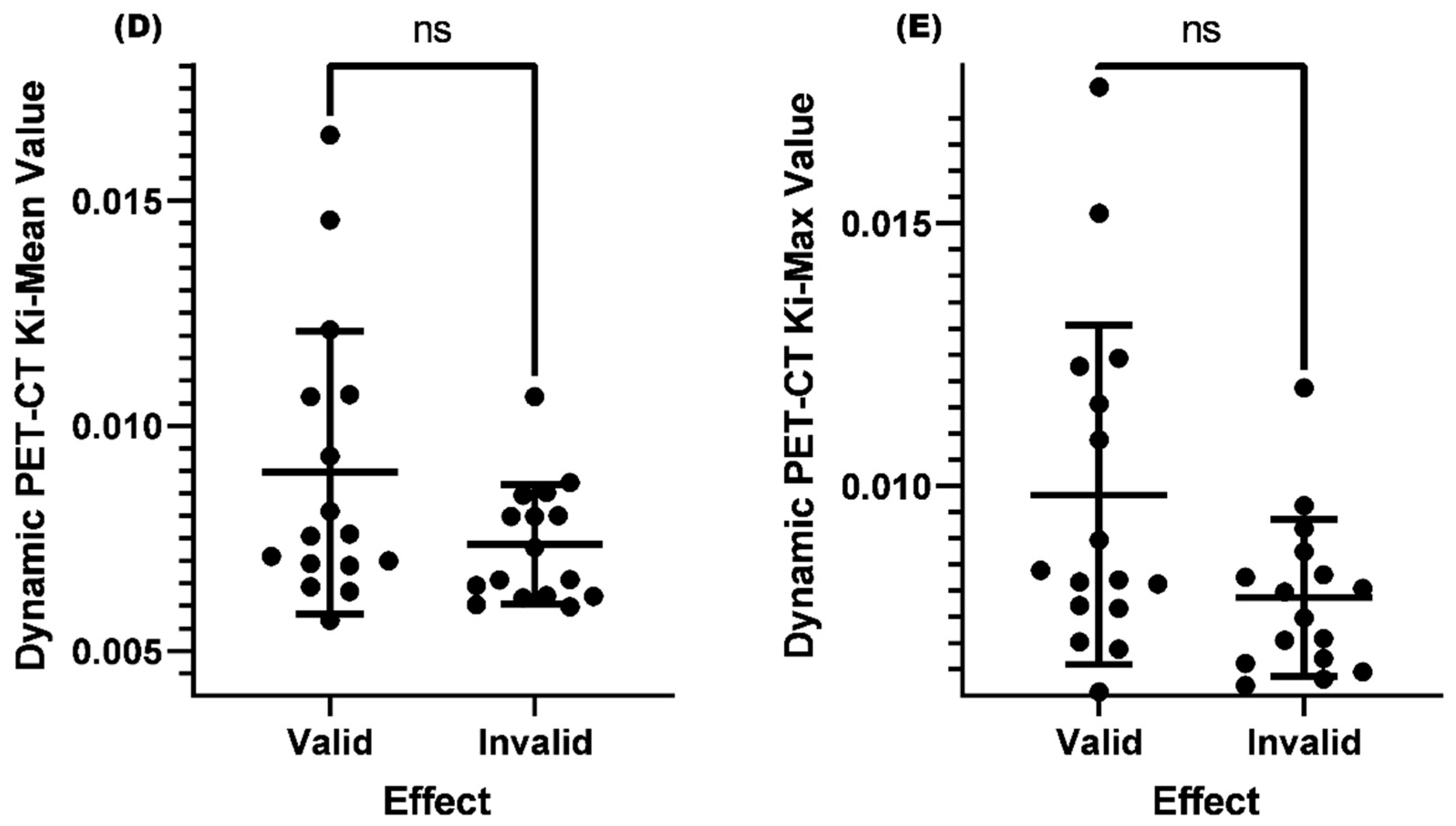
Figure 3.
Comparison of Ki-Mean and Ki-Max values between the valid and invalid groups with SUV-Max≤4.5 and lymph node1.0cm before treatment. (F) Comparison of Ki-Mean between the valid and invalid groups when SUV-Max≤4.5 and cervical lymph node<1.0cm before treatment (P=0.0457<0.05). (G) Comparison of Ki-Max between the valid and invalid groups when SUV≤4.5 and cervical lymph node<1.0cm before treatment (P=0.0298<0.05).
Figure 3.
Comparison of Ki-Mean and Ki-Max values between the valid and invalid groups with SUV-Max≤4.5 and lymph node1.0cm before treatment. (F) Comparison of Ki-Mean between the valid and invalid groups when SUV-Max≤4.5 and cervical lymph node<1.0cm before treatment (P=0.0457<0.05). (G) Comparison of Ki-Max between the valid and invalid groups when SUV≤4.5 and cervical lymph node<1.0cm before treatment (P=0.0298<0.05).
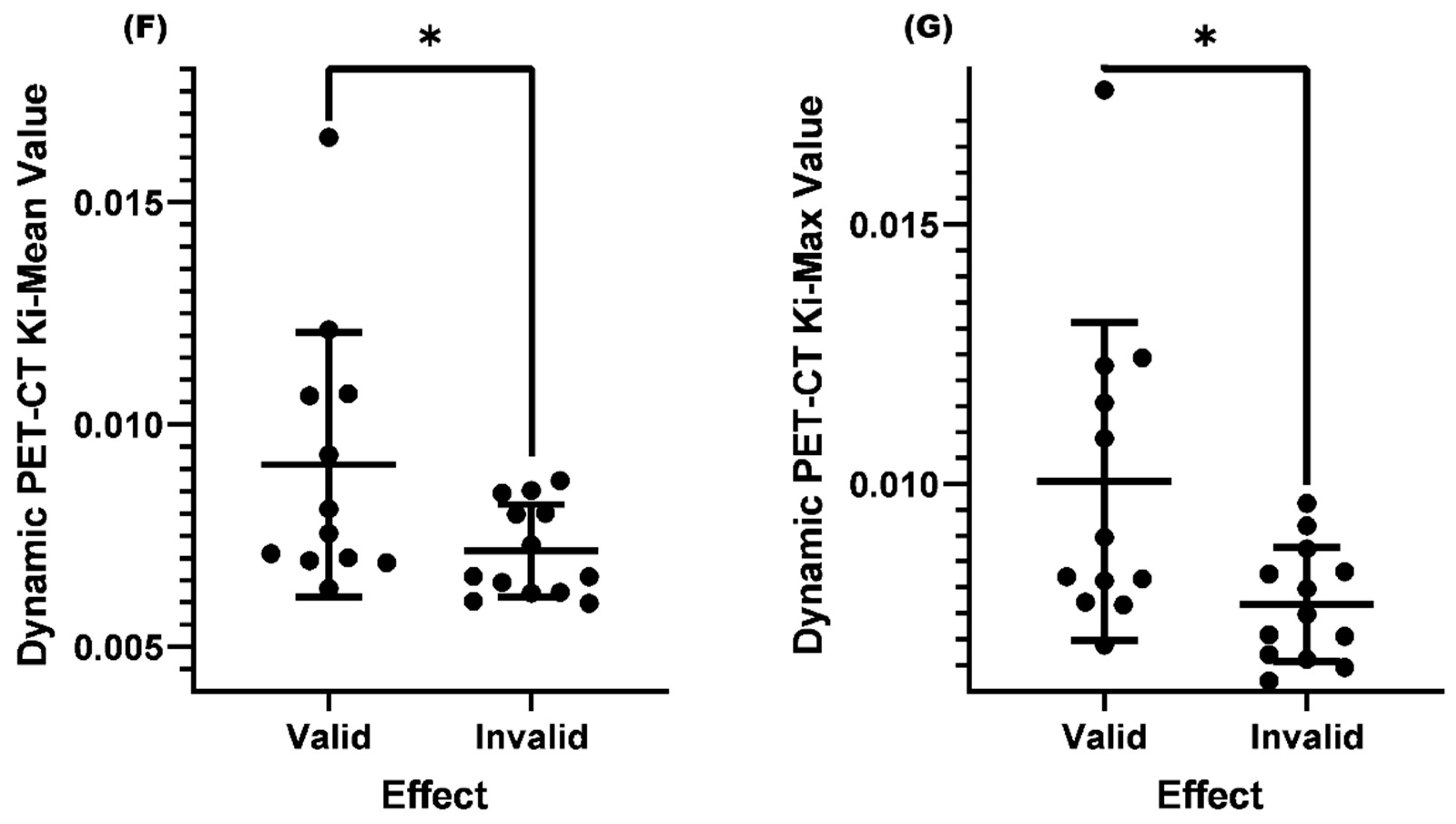
Figure 4.
The relevant examination results of two patients with different cervical lymph nodes. (1) Dynamic PET-CT image of the patient with the malignant cervical lymph node. (2) CT image of the patient with the malignant cervical lymph node. (3, 4) MRI images of the patient with the malignant cervical lymph node before and after treatment. (5) Pathological image of the lymph node of the patient with the malignant cervical lymph node. (6) Dynamic PET-CT image of the patient with the benign cervical lymph node. (7) CT image of the patient with the benign cervical lymph node. (8, 9) MRI images of the patient with the benign cervical lymph node before and after treatment. (10) Pathological image of the lymph node of the patient with the benign cervical lymph node.
Figure 4.
The relevant examination results of two patients with different cervical lymph nodes. (1) Dynamic PET-CT image of the patient with the malignant cervical lymph node. (2) CT image of the patient with the malignant cervical lymph node. (3, 4) MRI images of the patient with the malignant cervical lymph node before and after treatment. (5) Pathological image of the lymph node of the patient with the malignant cervical lymph node. (6) Dynamic PET-CT image of the patient with the benign cervical lymph node. (7) CT image of the patient with the benign cervical lymph node. (8, 9) MRI images of the patient with the benign cervical lymph node before and after treatment. (10) Pathological image of the lymph node of the patient with the benign cervical lymph node.
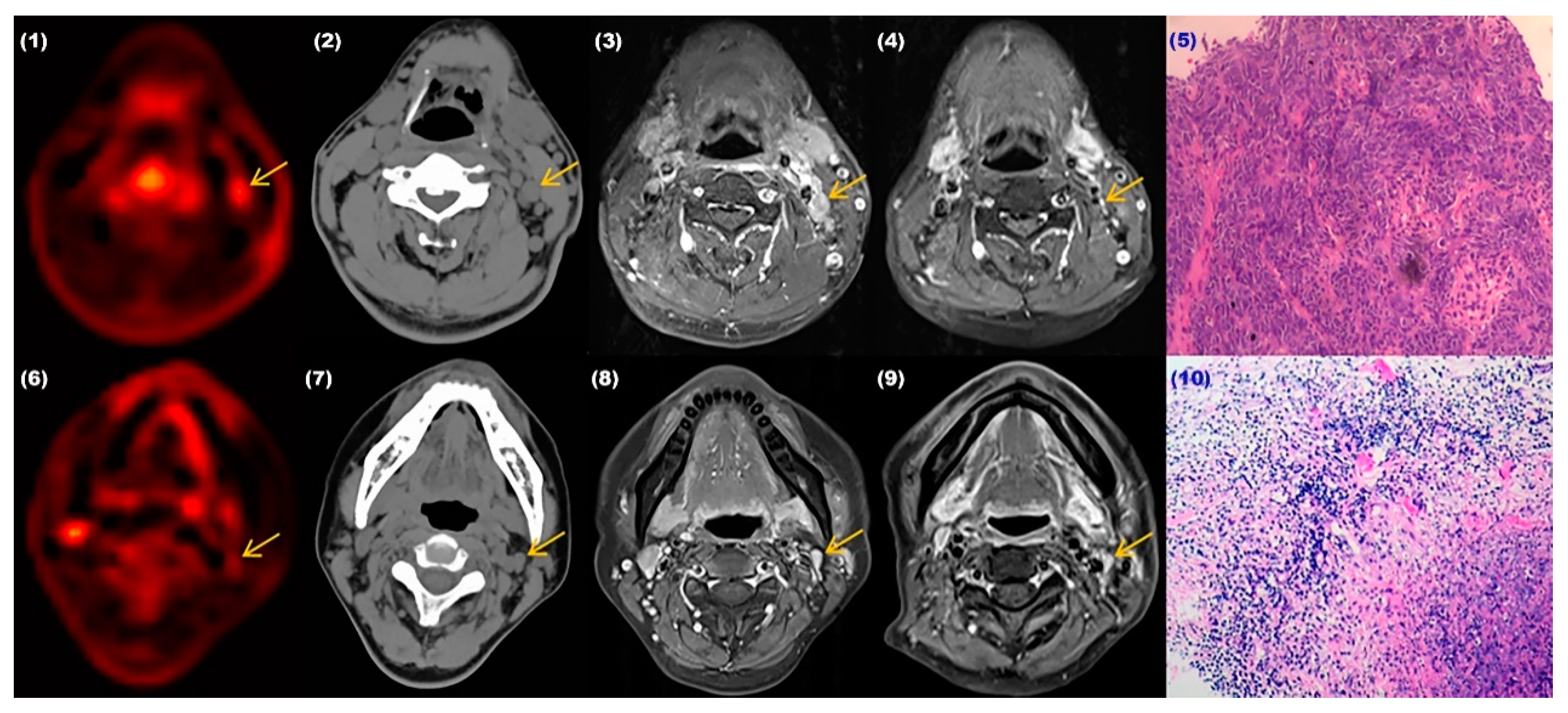

Table 1.
The characteristics of NPC patients.
| Variable | Number(%) |
| Median Age(years) | 48 |
| Sex | |
| Male | 36(71) |
| Female | 15(29) |
| T Stage | |
| T1 | 7(14) |
| T2 | 9(17) |
| T3 | 28(55) |
| T4 | 7(14) |
| N Stage | |
| N1 | 21(41) |
| N2 | 27(53) |
| N3 | 3(6) |
| M Stgae | |
| Mx | 3(6) |
| M0 | 43(86) |
| M1 | 3(8) |
| Clinical Stage | |
| I | 0(0) |
| II | 8(16) |
| III | 27(53) |
| IV | 15(29) |
| Not Identified | 1(2) |
| EBV-DNA Status | |
| High Level | 23(45) |
| Normal Level | 28(55) |
Table 2.
Comparison of SUV-Max, Ki-Mean and Ki-Max between the valid and invalid groups.
| Clinical Efficacy | Number(%) | Mean SUV-Max | P Value | Mean Ki-Mean | P Value | Mean Ki-Max | P Value |
| Valid | 50(75) | 7.2 | <0.001 | 0.01323 | <0.001 | 0.01510 | <0.001 |
| Invalid | 17(25) | 4.3 | 0.00978 | 0.01077 |
Table 3.
Comparison of Ki-Mean and Ki-Max values between valid and invalid groups when SUV-Max≤4.5.
| Clinical Efficacy | Mean Ki-Mean | P Value | Mean Ki-Max | P Value |
| Valid | 0.00897 | >0.05 | 0.00982 | >0.05 |
| Invalid | 0.00737 | 0.00787 |
Table 4.
Comparison of Ki-Mean and Ki-Max values between the valid and invalid groups with SUV-Max≤4.5 and lymph node<1.0cm before treatment.
Table 4.
Comparison of Ki-Mean and Ki-Max values between the valid and invalid groups with SUV-Max≤4.5 and lymph node<1.0cm before treatment.
| Clinical Efficacy | Mean Ki-Mean Value | P Value | Mean Ki-Max Value | P Value |
| Valid | 0.00910 | 0.0457 | 0.01004 | 0.0298 |
| Invalid | 0.00716 | 0.00767 |
Table 5.
Comparison of Ki-Mean and Ki-Max values between the valid and invalid groups with SUV-Max≤4.5 and lymph node<1.0cm and normal EBV-DNA replication before treatment.
Table 5.
Comparison of Ki-Mean and Ki-Max values between the valid and invalid groups with SUV-Max≤4.5 and lymph node<1.0cm and normal EBV-DNA replication before treatment.
| Clinical Efficacy | Mean Ki-Mean Value | P Value | Mean Ki-Max Value | P Value |
| Valid | 0.01060 | 0.0062 | 0.01149 | 0.0062 |
| Invalid | 0.00670 | 0.00719 |
Table 6.
Correlation between different factors and Ki-Mean values and Ki-Max.
| Factors | Ki-Mean | Ki-Max | ||
| r | P value | r | P value | |
| SUV-Max | 0.8450 | <0.0001 | 0.8498 | <0.0001 |
| T-Stage | 0.0659 | 0.5965 | 0.0517 | 0.6780 |
| Normal EBV-DNA level | 0.2171 | 0.0776 | 0.2318 | 0.0591 |
| Age | 0.0558 | 0.6539 | 0.0739 | 0.5523 |
| Lymph node <1.0cm | 0.6369 | <0.0001 | 0.6416 | <0.0001 |
Disclaimer/Publisher’s Note: The statements, opinions and data contained in all publications are solely those of the individual author(s) and contributor(s) and not of MDPI and/or the editor(s). MDPI and/or the editor(s) disclaim responsibility for any injury to people or property resulting from any ideas, methods, instructions or products referred to in the content. |
© 2023 by the authors. Licensee MDPI, Basel, Switzerland. This article is an open access article distributed under the terms and conditions of the Creative Commons Attribution (CC BY) license (http://creativecommons.org/licenses/by/4.0/).
Copyright: This open access article is published under a Creative Commons CC BY 4.0 license, which permit the free download, distribution, and reuse, provided that the author and preprint are cited in any reuse.


