

Submitted:
11 December 2025
Posted:
12 December 2025
You are already at the latest version
Abstract
In this study, the dyeing kinetics of polyamide fabrics with acid dyes, Telon Blue M2R, under both conventional and microwave-assisted heating conditions were comprehensively investigated. While the conventional dyeing reaction was completed in 30 minutes, microwave-assisted dyeing was performed in the microwave device for 10 minutes. Dyeing kinetics were investigated as a function of reaction time, reaction concentration and dyeing temperatures. The K/S values (color depth) of the dyed fabrics were correlated with the concentration. A significant reduction in the dyeing process time for polyamide fabric was observed with microwave heating compared to the conventional method. Kinetic analysis revealed that the PSO kinetic model provides a better fit to the experimental data on the diffusion process of acid dye in polyamide fabrics, as evidenced by higher correlation coefficients (R²) compared to the PFO model. The activation energy of the reaction in dyeing was found to be 63.27 kJ/mol, and the Arrhenius constant was determined as 7,20 x 10¹⁰ L/g.min in conventional media and 18,70 x 10¹⁰ L/g.min in microwave media. The Arrhenius factor in the microwave medium was more than two times higher than in the conventional one.

Keywords:
polyamide
; microwave
; acid dyes
; kinetic parameters
; Arrhenius constant
; activation energy
1. Introduction
Polyamide fibers, particularly nylon 6 and nylon 6.6, are among the most important synthetic fibers in the textile industry due to their excellent mechanical properties, including high tensile strength, elasticity, and abrasion resistance. These characteristics make polyamide fabrics suitable for various applications ranging from apparel to technical textiles [1].
The conventional dyeing process of polyamide fabrics typically involves prolonged heating at elevated temperatures (50- 95 °C) for extended periods, resulting in high energy consumption and long processing times [2]. Microwave-assisted dyeing has emerged as a promising alternative technology that addresses many of the limitations associated with conventional dyeing methods. [2,3,4,5].
The principle of dielectric heating operates, where electromagnetic radiation at 2450 MHz frequency causes rapid molecular vibration of polar molecules, particularly water, resulting in uniform and rapid heating throughout the dyeing bath. Microwave energy can penetrate molecules and heat them instantly, reducing heat transfer problems. Conventional dyeing methods are inherently limited by slow, non-uniform heat transfer, often leading to thermal gradients within the dye bath. This phenomenon can cause uneven dye uptake, resulting in defective dyeing known as “barre” or abruption [6,7,8,9]. Microwaves are one of the most effective non-contact heating techniques because high-dielectric materials are energetically heated by vibration and rotation of fixed dipoles in the microwave field [10,11,12,13] Microwave irradiation offers a transformative heating mechanism characterized by rapid, volumetric, and selective energy deposition [14,15,16,17]. Microwaves interact with polar molecules, such as water and the ionic dye molecules themselves, through dipole rotation and ionic conduction, achieving the target temperature within seconds and ensuring exceptional thermal uniformity [18,19,20]. Microwaves eliminate thermal imbalances in the dyeing bath and lead to an increase in the rate of dye diffusion into the fiber. Furthermore, the rate constants of the kinetic dyeing reaction increase [21,22,23].
The Arrhenius constant values in the Arrhenius rate equation vary depending on the microwave power and control the rate of dyeing. The ionic structure and polarity of the dye are observed to be affected by microwaves. Therefore, it is necessary to obtain quantitative and qualitative data on the relationship between the microwave environment and polarity or ionicity [24,25,26,27].
Acid dyes represent the most commonly used class of dyes for polyamide fiber dyeing due to their excellent affinity and color fastness properties. The dyeing mechanism involves ionic interactions between the sulfonic acid groups of the dye molecules and the amino groups present in the polyamide fiber structure. The dyeing process is typically conducted under acidic conditions (pH 4-6) to protonate the amino groups in the fiber, thereby enhancing the electrostatic attraction between the dye and fiber [28].
Recent studies have demonstrated the potential of microwave technology in textile dyeing applications. Rahman et al. [7] reported significant reductions in dyeing time and improved color yield when applying microwave energy to cotton dyeing with reactive dyes. Similarly, Zhang et al. [8] observed enhanced dye penetration and reduced energy consumption in wool dyeing processes using microwave assistance. However, limited research has been conducted specifically on the kinetics of polyamide dyeing with acid dyes. In addition, we could not find any studies that investigated the kinetics of dyeing reactions in a microwave environment and determined the kinetic parameters.
Understanding the kinetics of dyeing processes is crucial for optimizing dyeing conditions and predicting dyeing behavior under various operational parameters [29,30,31]. Kinetic studies provide valuable insights into the rate-controlling mechanisms, equilibrium conditions, and the effects of process variables on dyeing performance [32,33,34,35]. Several kinetic models have been proposed to describe dyeing processes, including PFO, PSO, and intraparticle diffusion models [36,37,38,39]
In this study, conventional heating and microwave heating were investigated for the dyeing process of polyamide fabric with acid dyestuff (Telon Blue M2R). A pivotal and novel aspect of this research is the investigation into the interaction between microwave fields and the ionic structure/polarity of the dye molecules a subject for which, as noted in the literature, quantitative data is currently lacking. This study seeks to generate foundational data on this relationship.
2. Materials and Methods
Commercial 100% polyamide 6 fabric (e.g., plain weave, 150 g/m², supplied from Nurel Group) was used in this study. Telon Blue M2R (Figure 1) (supplied from DyStar) was selected as the model acid dye. Acetic acid was used for pH adjustment. Detergent - Bianco HS New F.T.R Chemicals and Levelling Agent Seragal N-FS Eco Dystar was supplied from Nurel Group.
2.1. Microwave-Assisted Dyeing Setup
Dyeing experiments were conducted using a modified microwave oven (START D Microwave Digestion System). Dyeing baths were prepared in microwave-transparent 100 ml capacity tubes to ensure uniform microwave energy absorption.
2.2. Dyeing Procedure
Polyamide fabric samples (e.g., 1 g each) were cut into uniform sizes. Dyeing baths were prepared with specific concentrations of Telon Blue M2R (e.g., 2% on weight of fabric), acetic acid for pH adjustment 6.0. The liquor ratio (fabric weight to bath volume) was maintained at 1:50 throughout all experiments.
For microwave-assisted dyeing, the prepared dyeing bath containing the fabric sample was placed inside the modified microwave system. Experiments were performed at microwave power level of 160 W, dyeing times (1, 2, 3, 4, 5, 6, 7, 8, 9, 10 minutes), target temperatures (50 °C, 60 °C, 70 °C, 80 °C, 95 °C), and pH value 6.0. Temperature was measured immediately after the experiment ended.
After the specified dyeing time, the fabric samples were removed, thoroughly rinsed with cold distilled water to remove unfixed dye, and air-dried at room temperature.
For comparison, conventional dyeing experiments were carried out in a heating system under similar conditions (Temperature, pH, Liquor Ratio, Dye Concentration). Conventional dyeing were studied in 5, 10, 15, 20, 25, 30 minutes.
In experimental studies, poliamide fabric was used for dyeing. Acid Donor, Levelling agent and Bianco HS New were used as auxiliary materials for dyeing. START D Microwave Digestion System is used. The reflectance values of all dyed fabrics were measured using a Data Color SF 600 spectrophotometer.
2.3. Dyeing Kinetics Analysis
Dye uptake was determined by measuring the color strengt in the fabric at predetermined time intervals using a Data Color SF 600 spectrophotometer at the maximum absorption wavelength of Telon Blue M2R (λmax = 630 nm). A calibration curve was established using known concentrations of the dye. The percentage dye exhaustion (K/S) was calculated using the following equation:
where C₀ is the initial dye concentration and Cₜ is the dye concentration in the bath at time t.
Color strength (K/S value) of the dyed fabric samples was measured using a reflectance spectrophotometer (Data Color 1000 spectrophotometer.) according to the Kubelka-Munk equation:
where R is the reflectance value at the maximum absorption wavelength.
To analyze the dyeing kinetics, the experimental data were fitted to pseudo-first-order (PFO) and pseudo-second-order (PSO) kinetic models.
The PFO rate equation is given by:
The PSO rate equation is given by:
where C0 (g/L) and Ct (g/L) are the amount of dye adsorbed per unit mass of fiber at equilibrium and at time t, respectively; k1 (min⁻¹) is the PFO rate constant; and k2 (g/lt.min) is the PSO rate constant
Using the k rate constants, A and EA values were calculated from the Arrhenius Equation:
3. Results and Discussion
3.1. Effect of Conventional Heating on Dyeing Kinetics
The influence of conventional heating on the dyeing kinetics of polyamide fabric with Telon Blue M2R was investigated at a different temperatures (50, 60, 70, 80 and 95 °C), different times (5, 10, 15, 20, 25, 30 minutes) within pH value 6, and constant dye concentration (0,1%).
PFO and PSO figures (Figure 2 and Figure 3) were drawn from the concentration data in our study as seen below. In order to further explore the dyeing kinetics of acid dye in the polyamide fabrics, the PFO and PSO models were applied to analyze the experimental data in conventional heating system. The correlation coefficient (R2) of the PSO kinetic model of polyamide fabrics adsorption was greater than that of the PFO kinetic model. Analysis of the obtained data revealed that the reaction was second-order [5]. As shown in Table 1, increasing the temperature from 50 °C to 95 °C significantly accelerated reaction rate.
Figure 4 and Figure 5 illustrates the evolution of Color Strength (K/S) and dye cencentrtion over time (min) for a polyamide substrate, dyed at different temperatures. The K/S value, derived from the Kubelka-Munk theory, is a fundamental metric in color science that quantifies the depth of color; a higher K/S value indicates a darker or more intense color. For all temperatures, the K/S value increases with time, which is the expected behavior for a dyeing process. Initially, the rate of dye uptake is high, leading to a rapid increase in color strength. Over time, as the system approaches equilibrium (saturation of the fiber with dye), the rate of increase in K/S slows down, and the curves begin to plateau. Temperature is a critical factor significantly influencing the dyeing kinetics and the final color depth. The curve representing the highest temperature consistently yields the greatest K/S value at any given time and reaches the highest final color strength. In addition, the curves for progressively lower temperatures lie beneath the higher-temperature curves, resulting in lower final K/S values. The data conclusively shows that both the rate of dyeing and the final color depth (K/S) on polyamide are strongly dependent on the process temperature. Operating at a higher temperature dramatically shortens the time required to achieve a deep shade and results in superior color yield. This figure provides crucial optimization guidelines, indicating that for maximum efficiency and color strength, the dyeing process should be conducted at the highest temperature compatible with the stability of the fiber and dye.
Figure 5 presents the conventional concentration curves, illustrating the change in dye concentration in the bath over a 30-minute period at five different temperatures: 50 °C, 60 °C, 70 °C, 80 °C, and 95 °C. The initial concentration for all experiments was consistently set at 0.01000 gr/100 ml.
A clear trend of decreasing dye concentration in the solution is observed across all temperatures, which is characteristic of the dye exhaustion process onto the substrate. The kinetics of the process appear to be two-phased: a rapid initial uptake phase within the first 5 minutes, followed by a significantly slower approach to equilibrium from 5 to 30 minutes. This suggests that the initial stage is likely governed by rapid surface adsorption, while the later stage is controlled by the slower diffusion of the dye into the internal structure of the material.
The influence of temperature is highly significant, affecting both the rate and the extent of the dyeing process:
Effect on Rate of Uptake: As the temperature increases, the rate of dye uptake is markedly enhanced. This is evidenced by the steeper initial slope of the curves at higher temperatures. For instance, the concentration drop is most dramatic at 95 °C, where the near-equilibrium state is achieved much faster compared to the lower temperatures (e.g., 50 °C). This acceleration is consistent with the general principle that increasing thermal energy provides the necessary activation energy for the dye molecules to overcome energy barriers and diffuse more rapidly.
2.Effect on Extent of Exhaustion: The final concentration values at the end of the 30-minute period demonstrate that higher temperatures lead to a greater extent of dye exhaustion.
At the lowest temperature (50 °C), the final concentration remains highest (approximately 0.00420). Conversely, at the highest temperature (95 °C), the final concentration is lowest (approaching 0.00010), indicating maximum dye exhaustion from the bath. This relationship confirms the endothermic nature of the dyeing process, where higher temperatures shift the equilibrium towards the adsorbed state, resulting in a higher equilibrium dye uptake.
The data unequivocally demonstrates that temperature is a critical control parameter for the conventional dyeing process. The enhanced rate of uptake and the greater extent of dye exhaustion observed at elevated temperatures (up to 95 °C) are indicative of a process that is both kinetically accelerated and thermodynamically favored by heat. These findings underscore the necessity of operating at or near the maximum permissible temperature for the substrate to achieve optimal dye utilization and reduced processing time. The rapid initial uptake followed by a diffusion-controlled tail suggests that future kinetic modeling should consider a pseudo-second-order or similar model that accounts for both surface and internal diffusion mechanisms.
Figure 6 shows the kinetic analysis of dyeing of polyamide with acid dye at conventional heating. The Arrhenius plot as seen Figure 6 obtained for the conventional heating process shows a strong linear relationship between ln(k) and 1/T, with an R² value of 0.998, indicating excellent conformity to the Arrhenius model. The slope of the fitted line (–7610) corresponds to –EA/R, from which the activation energy (EA) can be calculated. This relatively steep negative slope suggests a moderately high activation energy, implying that the reaction rate is strongly dependent on temperature.
The intercept of the line (24.999) represents ln(A), which reflects the pre-exponential factor (A). A high ln(A) value indicates a high frequency of successful molecular collisions leading to product formation. Overall, the linearity of the plot confirms that the reaction kinetics under conventional heating follow Arrhenius behaviour, and the calculated kinetic parameters (EA and A) provide reliable insight into the temperature sensitivity and mechanistic characteristics of the reaction system.
The activation energy of the dyeing reaction was determined to be 63.27 kJ/mol for both conventional and microwave dyeing processes. Arrhenius constant was determined to be (A) 7.20x10¹⁰ for conventional dyeing processes.
3.2. Effect of Microwave Power on Dyeing Kinetics
The influence of microwave power on the dyeing kinetics of polyamide fabric with Telon Blue M2R was studied at a different temperatures (50 °C, 60 °C, 70 °C, 80 °C, 95 °C), different times (1, 2, 3, 4, 5, 6, 7, 8, 9, 10 minutes) within a certain pH value 6 and constant dye concentration (0,1%).
PFO and PSO figures (Figure 7 and Figure 8) were drawn from the concentration data in our study as seen below figures. In order to further explore the dyeing kinetics of acid dye in the polyamide fabrics in microwave media, the PFO and PSO models were applied to analyze the experimental data. The correlation coefficient (R2) of the PSO kinetic model of polyamide fabrics adsorption was greater than that of the PFO kinetic model. Analysis of the obtained data revealed that the reaction was second-order [5].
As shown in Table 2, increasing the temperature from 50 0C to 95 0C significantly accelerated reaction rate. This enhanced performance is attributed to the more rapid and uniform heating provided by higher microwave power, which facilitates faster diffusion of dye molecules into the fiber structure. The volumetric heating mechanism of microwaves ensures that the entire dyeing bath is heated simultaneously, minimizing temperature gradients and promoting efficient dye transfer.
Figure 9 titled “Color Strength (K/S) Curve of Polyamide (at Different Temperatures in Microwave Media)” illustrates the relationship between the dyeing time and the resulting color strength (K/S) of a polyamide (nylon) fabric, under the influence of microwave irradiation at different temperatures. For all temperatures, the Color Strength (K/S) increases with time, which is a classic behavior in dyeing processes. This indicates that more dye molecules are diffusing into the polymer and being fixed as time progresses. Temperature is the dominant factor influencing the rate and final depth of dyeing. The graph clearly demonstrates a direct correlation: higher dyeing temperatures lead to significantly higher K/S values in a shorter time. A higher temperature dramatically improves the dye uptake rate and the final color depth.
As shown in Figure 10, the microwave concentration profiles clearly demonstrate that both temperature and processing time exert a pronounced influence on the depletion of the target compound. At all temperatures, the concentration decreases rapidly during the initial stage of treatment, reflecting the high reaction rate promoted by microwave-induced energy absorption. This initial sharp decline is especially evident at 80 °C and 95 °C, where the concentration drops almost immediately to less than half of its initial value, indicating strong thermal and non-thermal microwave effects.
As the process continues, the rate of concentration loss becomes progressively slower, suggesting that the easily degradable or reactive fraction is consumed early in the treatment while the remaining fraction degrades more gradually. Higher temperatures consistently result in lower residual concentrations at any given time, confirming the strong positive correlation between reaction rate and temperature. Notably, at 95 °C the concentration approaches a minimal asymptotic level within only a few minutes, while at lower temperatures such as 50 °C and 60 °C the decline is more gradual and extended over the entire 10-minute period.
Overall, the results indicate that microwave heating significantly accelerates the reaction or degradation mechanism, and the temperature-dependent trends observed are consistent with typical kinetic behaviour in thermally activated processes. These findings highlight the effectiveness of microwave energy in enhancing reaction kinetics, particularly at elevated temperatures, and provide a strong basis for subsequent kinetic modelling and Arrhenius analysis.
Figure 8 Dyeing rate (K/S) curve of polyamide according to time at different temperatures in Microwave Media.
Figure 11.
Kinetic Analysis of Dyeing of Polyamide with Acid Dye in Microwave Media (Arrhenius Plot).
Figure 11.
Kinetic Analysis of Dyeing of Polyamide with Acid Dye in Microwave Media (Arrhenius Plot).
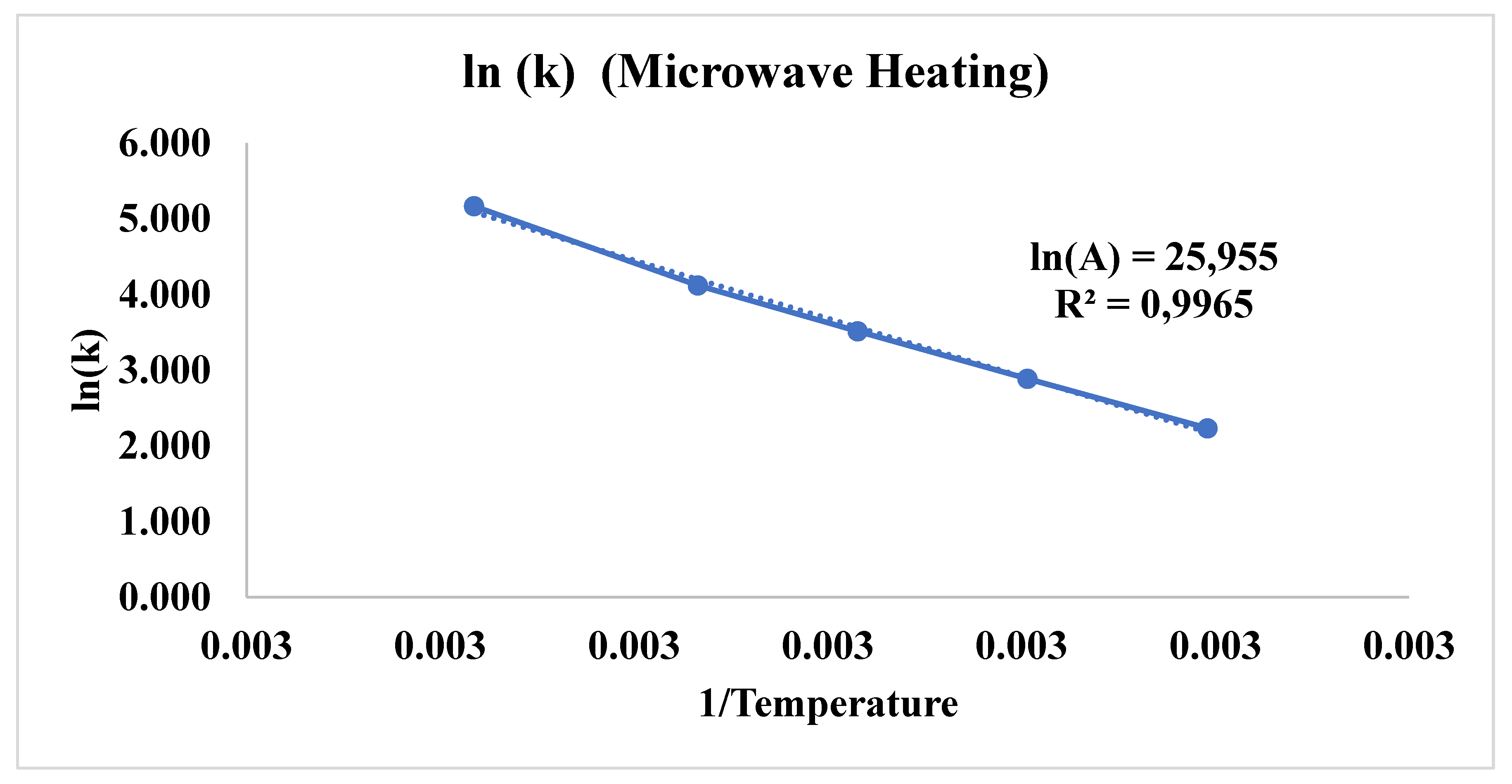
Figure 9 shows the kinetic analysis of dyeing of polyamide with acid dye at microwave heating. Activation energy of the dyeing reaction was determined to be 63.27 kJ/mol, and the Arrhenius constant A was determined to be 18,70x10¹⁰ lt/gr.min at microwave media.
The Arrhenius plot obtained for the microwave-assisted dyeing process shows a clear linear relationship between ln(k) and 1/T, indicating that the reaction kinetics follow Arrhenius behavior under microwave conditions. The high coefficient of determination (R² = 0.9965) demonstrates excellent linearity, confirming that temperature has a strong and predictable influence on the reaction rate.
The extrapolated intercept provides the pre-exponential factor, ln(A) = 25.955, suggesting a relatively high frequency of effective molecular collisions during the dyeing process. This is consistent with the enhanced energy transfer characteristic of microwave heating, which can promote rapid dipole rotation and localized superheating within the system. As a result, dye–fiber interactions may occur more efficiently compared to conventional heating.
The negative slope of the line indicates the expected decrease in reaction rate with increasing 1/T, corresponding to higher rates at higher temperatures. The magnitude of this slope (though not numerically provided here) would be directly related to the activation energy (EA), and its linearity implies that microwaves do not introduce anomalous or non-thermal effects that disrupt classical Arrhenius behavior. Instead, the data suggest that microwave heating accelerates the dyeing process primarily by increasing the effective temperature and improving energy distribution within the medium.
Overall, the Arrhenius analysis confirms that microwave-assisted dyeing is thermally activated and exhibits strong kinetic consistency. The high ln(A) value and excellent model fit support the conclusion that microwaves enhance reaction kinetics, potentially offering advantages such as faster dye uptake, reduced processing times, and improved energy efficiency.
3.3. Comparison of Microwave and Conventional Heating on Dyeing Kinetics
Figure 12, Figure 13 and Figure 14 present a direct comparison of the Reaction Rate Constant (k) as a function of Temperature (°C) for the same chemical reaction conducted under Microwave Heating and Conventional Heating. In addition, it provides compelling and direct evidence that microwave irradiation is not merely a faster method to heat a reaction mixture, but it actively enhances the reaction kinetics. The consistently higher rate constants demonstrate a clear advantage over conventional heating, leading to more efficient and rapid chemical synthesis.
From the slopes in Figure 14, it is understood that the activation energy is the same, and the Arrhenius constants are different for Microwave and Conventional Heating. The fact that the Arrhenius constant is approximately more than two times higher in the microwave environment provides strong evidence that microwaves act not only as a simple heat source but also as a “specific” or “non-thermal” effect. Microwaves accelerate the dyeing process by potentially inducing more frequent and/or more effective molecular interactions in the reaction zone. This allows molecules to collide at a higher frequency and more effectively.
4. Conclusions
This study investigated the dyeing kinetics of acid dyes on polyamide fabric in a microwave-assisted environment. The microwave-assisted dyeing process demonstrated significant advantages over conventional methods, particularly in terms of reduced processing time and enhanced dye uptake. While conventional dyeing required 30 minutes, the microwave-assisted technique achieved comparable results in only 10 minutes.
This notable reduction in processing time is attributed to the microwave heating mechanism, which provides rapid, volumetric, and homogeneous heating throughout the dye bath. This minimizes thermal gradients and promotes efficient dye transfer. A key finding was the more than two times increase in the pre-exponential factor (A) in the Arrhenius equation for the microwave medium (18.70 × 10¹⁰ L/g·min) compared to the conventional one (7.20× 10¹⁰ L/g·min). Since factor A is related to the frequency of molecular collisions, this increase suggests a specific, potentially non-thermal microwave effect that induces more frequent and/or effective molecular interactions at the reaction site, beyond mere bulk heating.
Miklavc observed a decrease in activation energy during the microwave-assisted decomposition of sodium bicarbonate. Exposing substrates (dielectric materials) to microwaves causes molecules to rotate rapidly. This generates heat due to friction and also increases the contact probability between reactive molecules, thus reducing the activation energy and increasing the reaction rate [43].
Subsequently, Cross found an increase in molecular mobility in the presence of microwaves. The increase in the reaction rate was attributed to a rise in the Arrhenius (A) factor.
𝐴 = ɣ 𝜆2 Γ
- ɣ: The number of adjacent jump sites (The number of possible neighboring positions to which an atom or molecule can migrate)
- λ: The jump distance (The average distance an atom or molecule travels in a single diffusion jump)
- Γ: The jump frequency (The rate at which an atom or molecule makes successful jumps from one site to another) [42].
In our study, the Arrhenius factor in the microwave medium was more than two times higher than in the conventional one, which supports the view expressed by Cross. In accordance with the increase in the Arrhenius (A) factor, the pre-exponential factor is dependent on the vibrational frequency of atoms at the reaction interface and is therefore influenced by microwave irradiation. Kappe and colleagues conducted a thorough investigation of this microwave effect for ring-closing metathesis and the Biginelli reactions, where no significant difference was observed between conventional and microwave heating. It is crucial to note that this finding is specific to those particular reactions and cannot be generalized. In addition to the debated “thermal” and “non-thermal” microwave effects, employing microwave irradiation in aqueous processes offers several distinct practical advantages [45,46,47].
This demonstrates that higher energy input and longer exposure to the dye solution lead to accelerated dye absorption by polyamide fibers. Kinetic analysis revealed that the PSO kinetic model provides a better fit to the experimental data on the diffusion process of acid dye in polyamide fabrics, as evidenced by higher correlation coefficients (R²) compared to the PFO model [5].
As a result, microwave technology offers a viable and promising alternative for the sustainable and efficient dyeing of polyamide fabrics. Future research could focus on exploring the applicability of the microwave-assisted dyeing method to other fiber types and dye classes, and on conducting comprehensive economic and environmental life cycle assessments to validate its industrial feasibility and sustainability benefits on a larger scale. The significant reduction in dyeing time, improved process efficiency, and elucidation of kinetic parameters underscore that microwave technology should be implemented in the textile industry as a sustainable alternative to conventional dyeing methods.
Supplementary Materials
The following supporting information can be downloaded at the website of this paper posted on Preprints.org, File S1: Kinetic Calculation Data: It contains raw experimental data and detailed calculations used to calculate the Pseudo-First Order (PFO) and Pseudo-Second Order (PSO) kinetic models and Arrhenius parameters for the dyeing of polyamide fabrics with acid dyes using conventional and microwave-assisted methods.
Funding
This research was partially supported by Sakarya University. The authors are grateful to Nurel Tekstil, Bursa, Turkey, for providing in-kind support by supplying the polyamide fabrics used in this study and for their assistance in our analysis. The publication of this article in Open Access format is supported by the Sakarya University Institute of Science, which will cover 80% of the Article Processing Charge (APC).
Acknowledgments
The authors would like to thank Nurel Tekstil, Bursa, Turkey, for kindly supplying the polyamide fabrics and allowing the supports.
References
- Böcek, Nevin (2001), Investigation of Fiber and Temperature Interaction in Dyeing of Synthetic Fibers, [Master’s thesis;Sakarya University]. YÖK National Thesis Center. Available online: https://tez.yok.gov.tr/UlusalTezMerkezi/.
- Haggag, K.; El-Molla, M. M.; Ahmed, K. A. Dyeing of Nylon 66 Fabrics Using Disperse Dyes by Microwave Irradiation Technology. International Research Journal of Pure & Applied Chemistry 2015, 8(2), 103–111. [Google Scholar] [CrossRef]
- Usluoğlu, A.; Teker, M. Investigation of Dyeing Kinetics of Cotton Fiber with C.I. Reactive Yellow 138:1 Dyestuff in Microwave Environment. Journal of the Institute of Science of Yüzüncü Yıl University 2024, Vol.29, 119. [Google Scholar] [CrossRef]
- Yiğit, E.A.; Teker, M. Disperse Dyeability of Polypropylene Fibers via Microwave and Ultrasonic Energy - Polymer and Polymer Composites. 2011, Vol.19, 711. [Google Scholar] [CrossRef]
- Zhai, X.; Ma, J.; Wu, Y.; Niu, T.; Sun, D.; Fang, L.; Zhang, X. Investigation on dyeing mechanism of modified cotton fiber. RSC Adv. 2022, vol. 12(no. 49), 31596–31607. [Google Scholar] [CrossRef]
- Haggag, K.; El-Molla, M. M.; Mahmoued, Z. M. Dyeing of Cotton Fabric using Reactive Dyes by Microwave Irradiation Technique. Indian J. Fibre Text. Res. 2014, vol. 39(no. 4), 406–410. [Google Scholar] [CrossRef]
- Rahman, M. M.; Ahmed, M.; Jalil, M. A.; Mondal, M. I. H. The effect of microwave preheating on the dyeing of wool fabric with a reactive dye. Journal of Applied Polymer Science 2008, 108(1), 314–318. [Google Scholar] [CrossRef]
- Zhang, R.; Liu, J.; Wang, J.; Wang, J.; Meng, J. A novel process of dyeing wool with acid dyes under microwave irradiation. Journal of Applied Polymer Science 2009, 113(5), 2798–2803. [Google Scholar] [CrossRef]
- Kim, S. S.; Leem, S. G.; Ghim, H. D.; Kim, J. H.; Lyoo, W. S. Microwave Heat Dyeing of Polyester Fabric. Fibers and Polymers 2003, 4(4), 204–209. [Google Scholar] [CrossRef]
- Ghazal, H. A. Microwave Irradiation as A New Novel Dyeing of Polyamide 6 Fabrics by Reactive Dyes. Egyptian Journal of Chemistry 2020, 63(6), 2125–2132. [Google Scholar] [CrossRef]
- Kocak, D.; Akalin, M.; Merdan, N.; Sahinbaskan, B.Y. Effect of Microwave Energy on Disperse Dyeability of Polypropylene Fibres. Marmara Journal of Pure and Applied Sciences 2015, Vol. 27, Special(Issue-1), 27–31. [Google Scholar] [CrossRef]
- Haggag, K.; Hanna, H.L.; Youssef, B.M.; El-Shimy, N.S. Dyeing Polyester With Microwave Heating Using Disperse Dyestuffs. American Dyestuff Reporter 1995, 84, 22–36. [Google Scholar]
- Büyükakıncı, Y. B.; Karada, R.; Guzel, E.T. Organic cotton fabric dyed with dyer’s oak and barberry dye by microwave irradiation and conventional methods. Industria Textila 2021, Vol No, 72, 30–38. [Google Scholar] [CrossRef]
- Gouda, M.; Haggag, K. M.; Boraie, W. E; Aljaafari, A.; Al-Faiyz, Y. Synthesis and Characterization of Inorganic Pigment Nanoparticles for Textile Coloration Using Microwave Techniques. AATCC Journal of ResearchVolume 2016, 3(Issue 3), Pages 1–8. [Google Scholar] [CrossRef]
- Kale, M.J.; Bhat, N.V. Effect of microwave pretreatment on the dyeing behaviour of polyester fabric. Society of Dyers and Colourists, Color. Technol. 127, 365–371. [CrossRef]
- Popescu, V.; Astanei, D.G.; Burlica, R.; Popescu, A.; Munteanu, C.; Ciolacu, F.; Ursache, M.; Ciobanu, L.; Cocean, A. Sustainable and cleaner microwave-assisted dyeing process for obtaining eco-friendly and fluorescent acrylic knitted fabrics. Journal of Cleaner Production Volume 2019, 232, Pages 451–461. [Google Scholar] [CrossRef]
- Keglevich, G. The Application of Microwaves in the Esterification of P-Acids. Current Microwave Chemistry 2022, *9*(2), 62–64. [Google Scholar] [CrossRef]
- Ghaffar, A.; Adeel, S.; Habib, N.; Jalal, F.; Ul-Haq, A.; Munir, B.; Ahmad, A.; Jahangeer, M.; Jamil, Q. Effects of Microwave Radiation on Cotton Dyeing with Reactive Blue 21 Dye, Pol. J. Environ. Stud. 2019, Vol. 28(No. 3), 1687–1691. [Google Scholar] [CrossRef]
- Al-Etaibi, A.M.; El-Apasery, M.A. Microwave-Assisted Synthesis of Azo Disperse Dyes for Dyeing Polyester Fabrics: Our Contributions over the Past Decade. Polymers 2022, 14, 1703. [Google Scholar] [CrossRef]
- Elshemy, N.S.; Haggag, K. New Trend in Textile Coloration Using Microwave Irradiation. J. Text. Color. Polym. Sci. 2019, Vol. 16(No.1), pp 33–48. [Google Scholar] [CrossRef]
- Öner, E.; Büyükakıncı, Y.; Sökmen, N. Microwave-assisted dyeing of poly(butylene terephthalate) fabrics with disperse dyes. Coloration Technology 2013, 129(2), 125–130. [Google Scholar] [CrossRef]
- Büyükakıncı, Y.; Sökmen, N.; Öner, E. Microwave assisted exhaust dyeing of polypropylene. Paper presented at the 4th Centrel European Conference, Liberec, Czech Republic, 7-9 September 2005; 2005. [Google Scholar]
- Haggag, K. Fixation of Pad-Dyeing on Cotton Using Microwave Heating. American Dyestuff Reporter 1990, vol. 79, 26–30. [Google Scholar]
- Lill, J. R. Microwave-Assisted Proteomics 2009.
- Hayes, B. L. Microwave Synthesis 2002.
- Can, M. C. Microwave Heating as a Tool for Sustainable Chemistry; 2010. [Google Scholar]
- Trotman, E.R. Dyeing and Chemical Technology of Textile Fibres; 1970. [Google Scholar]
- Özcan, Y. Textile Fiber and Dyeing Technique; 1978. [Google Scholar]
- Mortimer, M.; Taylor, P. Chemical Kinetics and Mechanism; 2002. [Google Scholar]
- House, J. E. Principles of Chemical Kinetics; 2007. [Google Scholar]
- Vassileva, V.; Zheleva, Z.; Valcheva, E. The Kinetic Model of Dye Fixation on Cotton Fibers. Journal of University of Chemical Technology and Metallurgy 2008, 43(3), 323–326. [Google Scholar]
- Teker, M; Imamoglu, M; Bocek, N. - Adsorption of Some Textile Dyes on Activated Carbon Prepared From Rice Hulls - Fresenıus Environmental Bulletin - Vol.18 - pp.709 - ISSN: 1018-4619 - English - Article - 2009 - WOS:000266898500009. 2009. [Google Scholar] [CrossRef]
- Ujhelyiova, A.; Bolhova, E.; Oravkinova, J.; Tin, R.; Marcin, A. Kinetics of dyeing process of blend polypropylene/polyester fibres with disperse dye. Dyes and Pigments 2007, 72, 212–216. [Google Scholar] [CrossRef]
- Roy, MN; Hossain, MT; Hasan, MZ; Islam, K; Rokonuzzaman, M; Islam, MA; Khandaker, S; Bashar, MM. Adsorption, Kinetics and Thermodynamics of Reactive Dyes on Chitosan Treated Cotton Fabric. Textile & Leather Review 2023, 6, 211–232. [Google Scholar] [CrossRef]
- Lis, M. J.; Bezerra, F. M.; Meng, X.; Qian, H.; Immich, A. P. S. Kinetics of Dyeing in Continuous Circulation with Direct Dyes: Tencel Case. World Journal of Textile Engineering and Technology 2019, 5, 97–104. [Google Scholar] [CrossRef]
- Elshemy, N. S.; Elshakankery, M. H.; Shahien, S. M.; Haggag, K.; El-Sayed, H. Kinetic Investigations on Dyeing of Different Polyester Fabrics Using Microwave Irradiation. Egyptian Journal of Chemistry 2017, 60(Conference Issue), 79–88. [Google Scholar] [CrossRef]
- Ujhelyiova, A.; Bolhova, E.; Oravkinova, J.; Tiňo, R.; Marcinčin, A. Kinetics of dyeing process of blend polypropylene/polyester fibres with disperse dye. Dyes and Pigments 2007, 72(2), 212–216. [Google Scholar] [CrossRef]
- Alşan, H. G. Investigation of Dyeing Kinetics of Cotton Fiber with Disperse Dyestuff in Microwave Environment. Master’s thesis;Sakarya University, YÖK National Thesis Center, 2019. Available online: https://tez.yok.gov.tr/UlusalTezMerkezi/.
- Hu, Q.; Siting, Ma; He, Z.; Liu; Pei, X. A revisit on intraparticle diffusion models with analytical solutions: Underlying assumption, application scope and solving method. Journal of Water Process Engineering 2024, Vol. 60, 10524. [Google Scholar] [CrossRef]
- Yiğit Atabek, E. Investigation of Dyeability of Polypropylene Fiber. Doctoral thesis;Sakarya University, YÖK National Thesis Center, 2009. Available online: https://tez.yok.gov.tr/UlusalTezMerkezi/.
- Huang, J.; Liu, F.; Zhang, J. Insights into adsorption rate constants and rate laws of preset and arbitrary orders. Separation and Purification Technology 2021, Vol.255, 117713. [Google Scholar] [CrossRef]
- Doyuran, A. Dyeing of Synthetic Fibers in Microwave Environment. Master’s thesis;Sakarya University, YÖK National Thesis Center, 2010. Available online: https://tez.yok.gov.tr/UlusalTezMerkezi/.
- Miklavc, a. Chem. Phys.Chem 2001, 552.
- Binner, J.G.P.; Hassine, N. A.; Cross, T. E. J. Mater. Sci. 1995, 30, 5389.56. [CrossRef]
- Garbacia, S.; Desai, B.; Lavaster, O.; Kappe, C. O. J. Org. Chem. 2003, 68, 9136. [CrossRef] [PubMed]
- Stadler, a.; Kappe, C. O. J. Chem. Soc., Perkin Trans. 2000, 2, 1363. [CrossRef]
- Hoz; Diaz-Ortiz, A.; Moreno, A. Chem. Soc. Rev. 2005, 34, 164. [CrossRef]
Figure 1.
Telon Blue M2R.
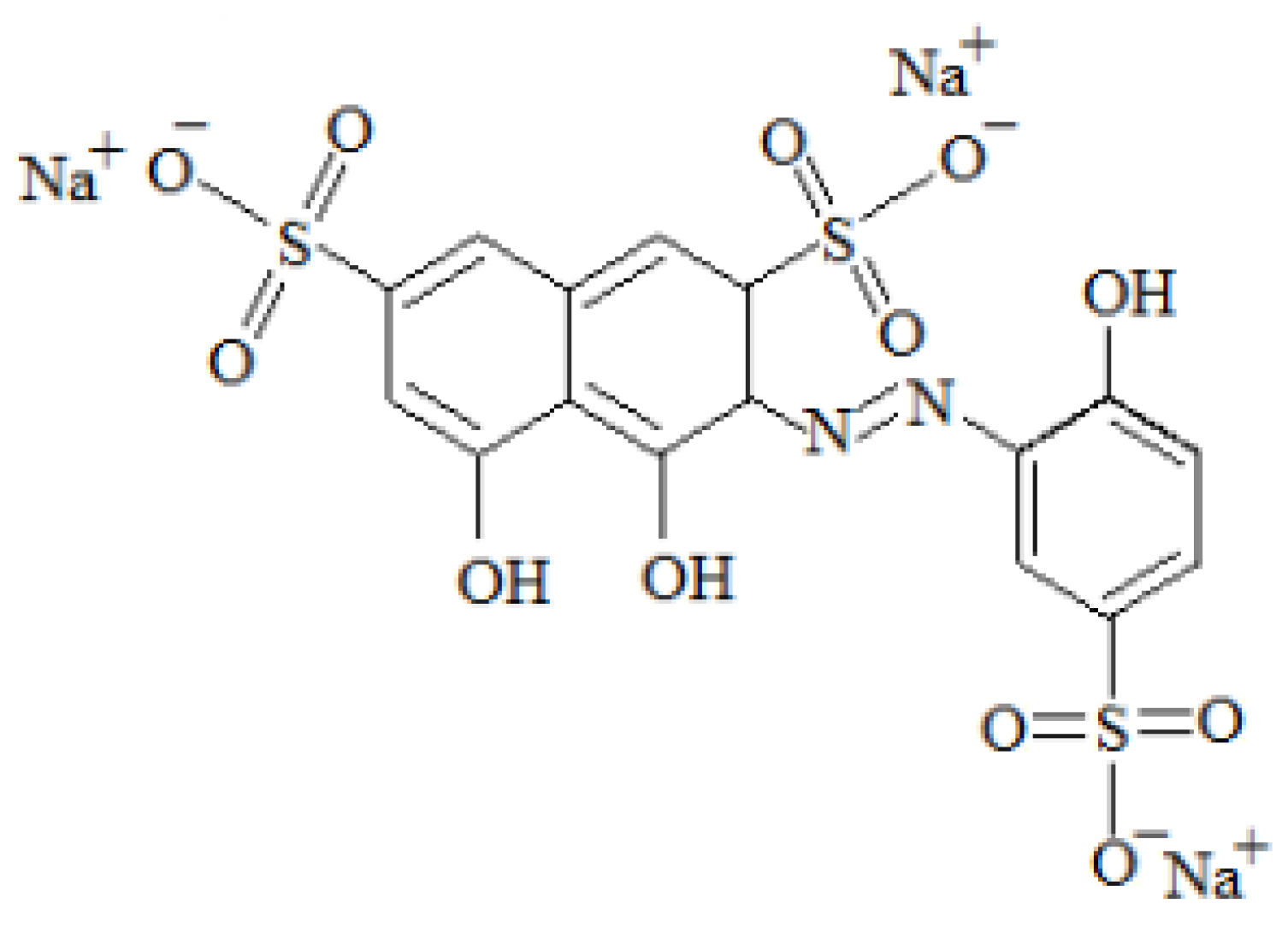
Figure 2.
PFO Kinetic Model (LN (Concentration) – Time) at Conventional Heating.
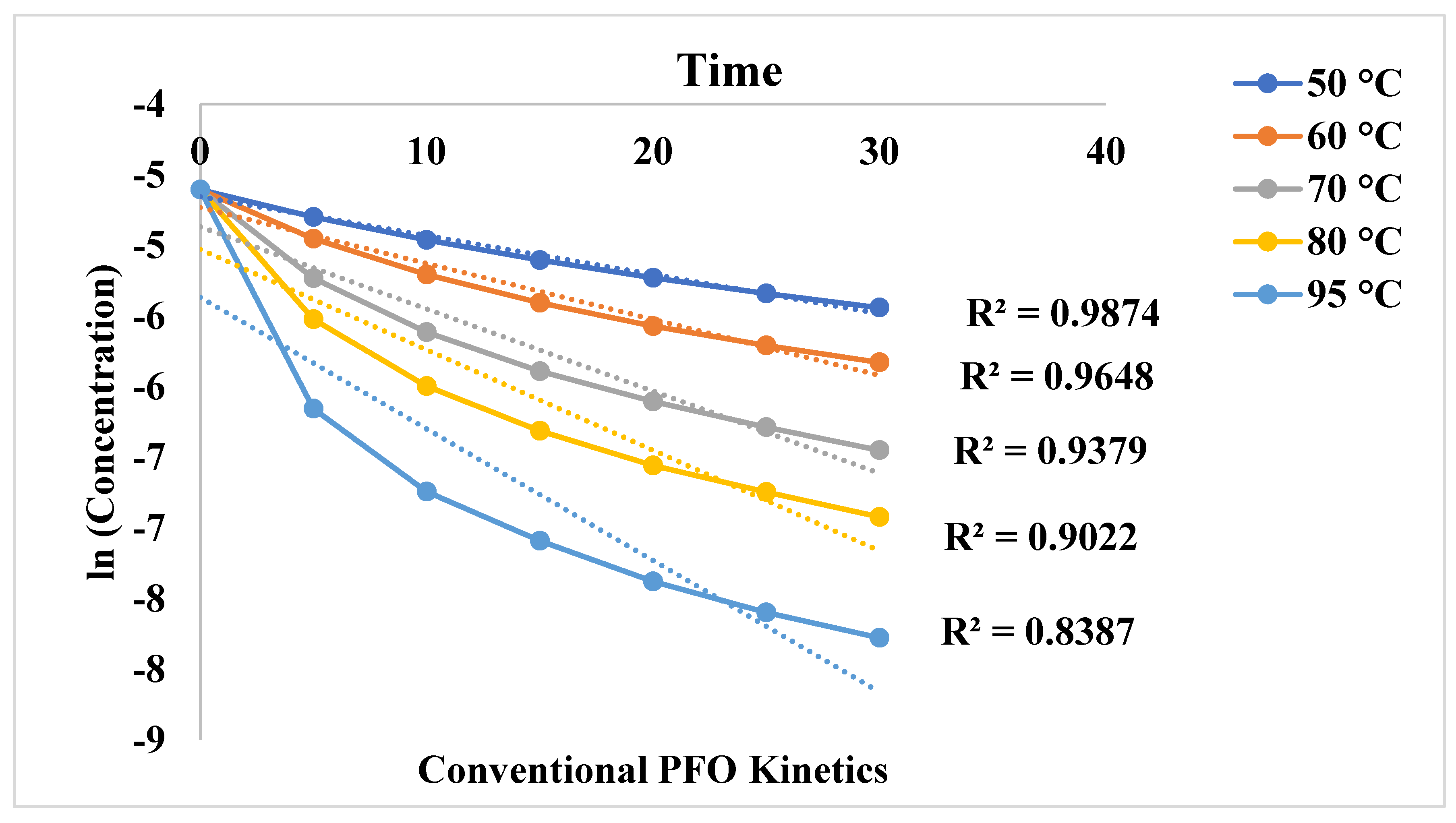
Figure 3.
PSO Kinetic Model (1/Concentration) – Time) at Conventional Heating.
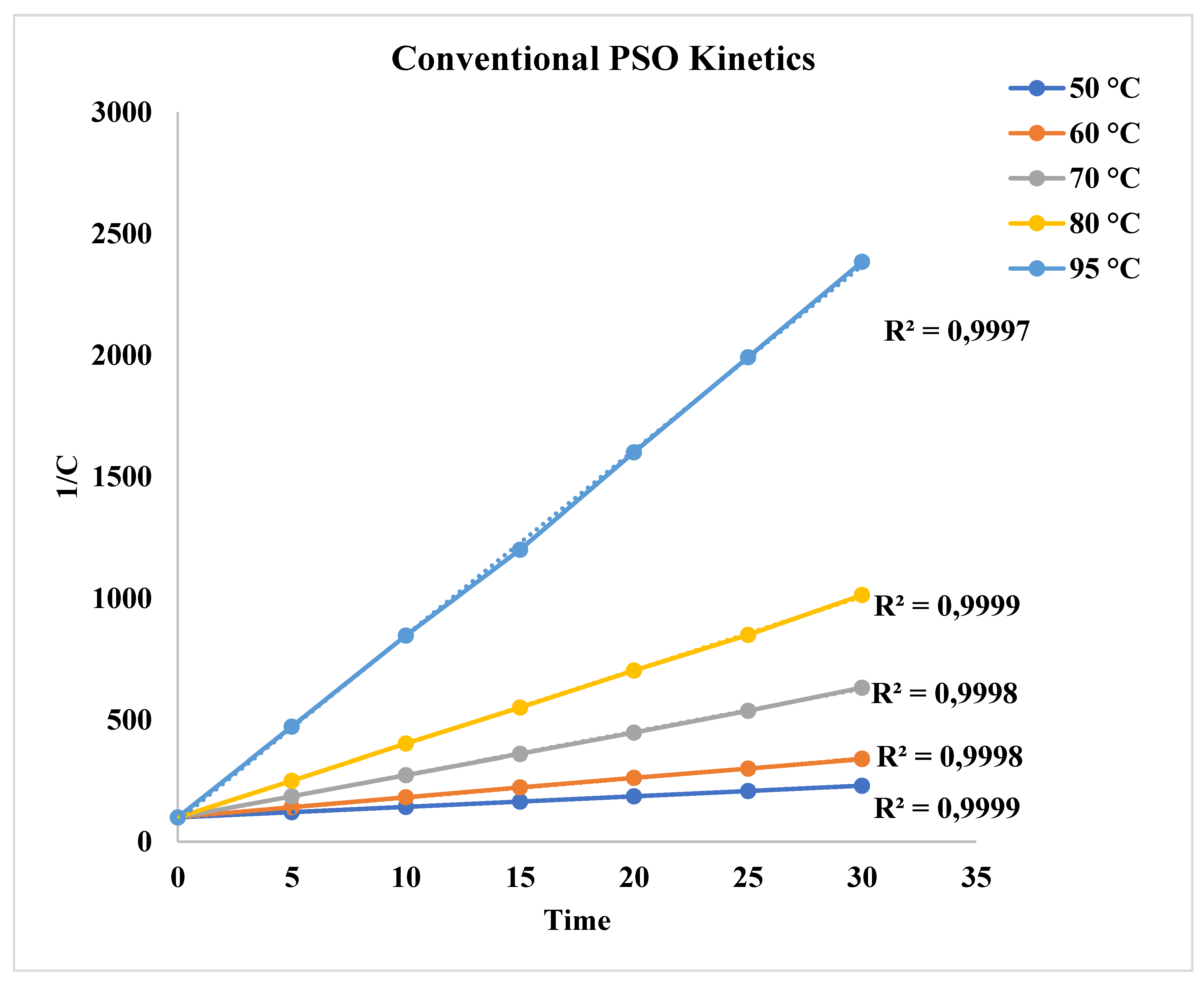
Figure 4.
Dyeing curve at different temperatures for conventional heating.
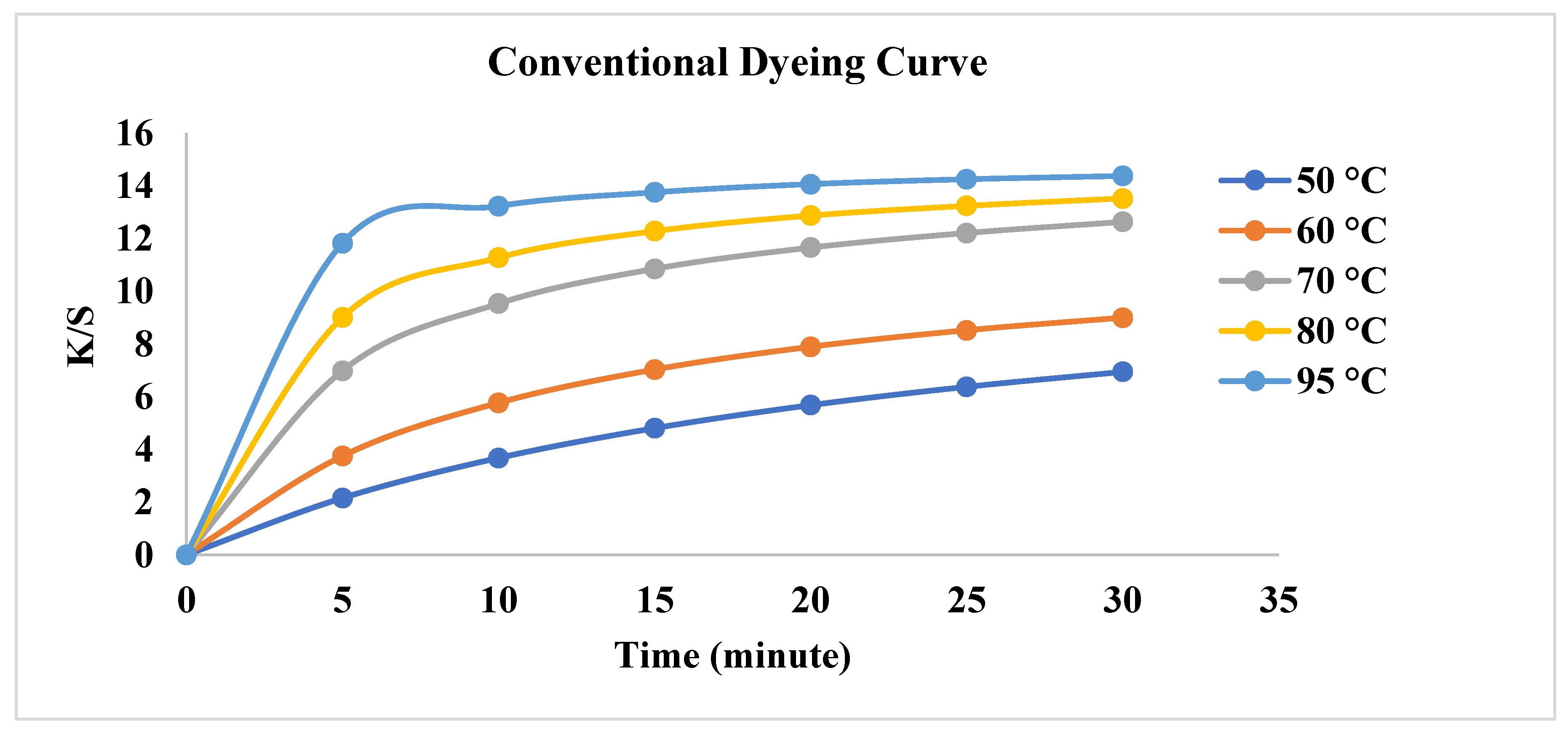
Figure 5.
Conventional Concentration Curve for the Dyeing Process at Various Temperatures.
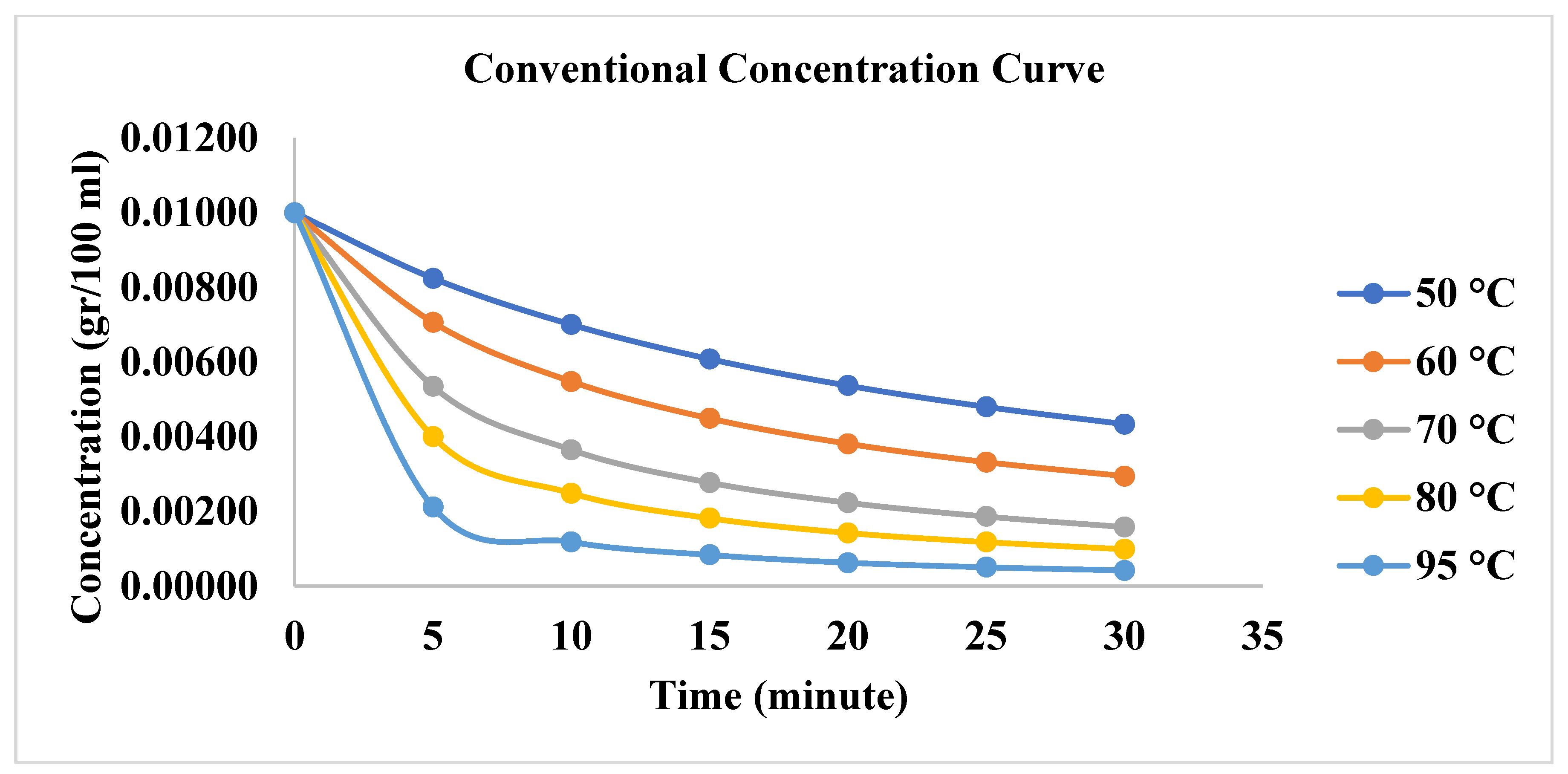
Figure 6.
Kinetic Analysis of Dyeing of Polyamide with Acid Dye at Conventional Heating (Arrhenius Plot).
Figure 6.
Kinetic Analysis of Dyeing of Polyamide with Acid Dye at Conventional Heating (Arrhenius Plot).
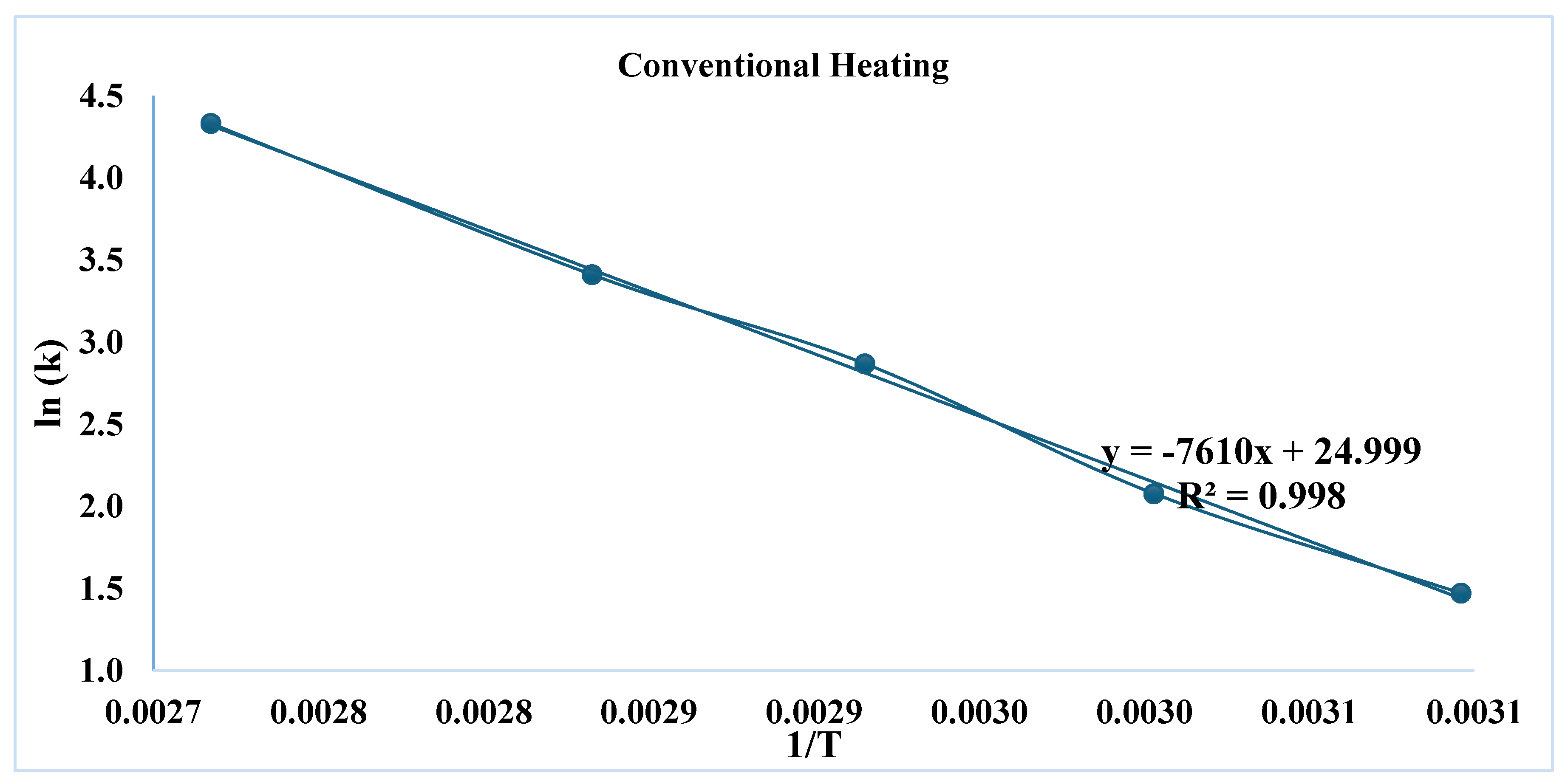
Figure 7.
Microwave PFO Kinetics in Microwave Media.
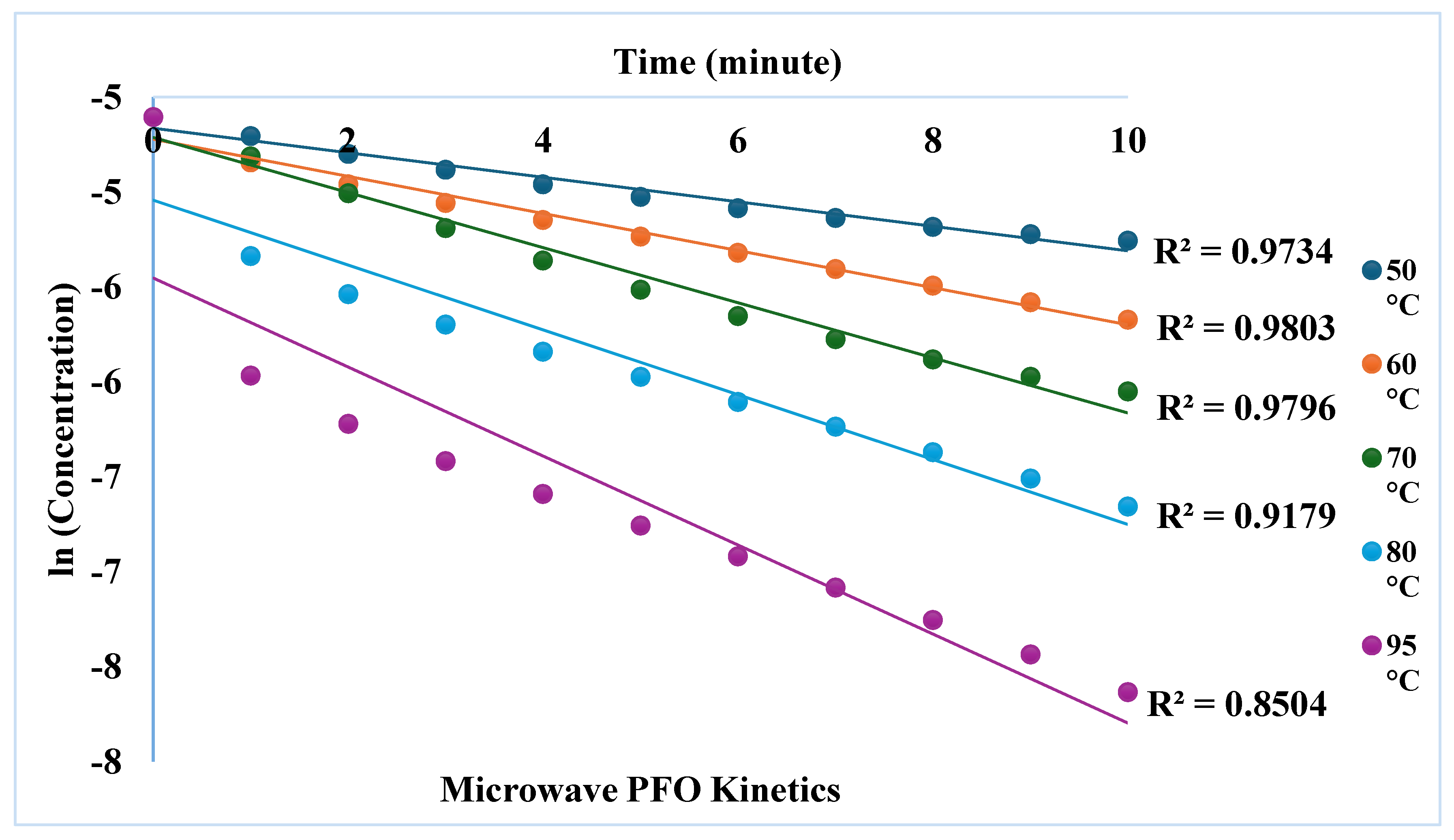
Figure 8.
PSO Kinetic Model (1/C-Time) in Microwave Media.
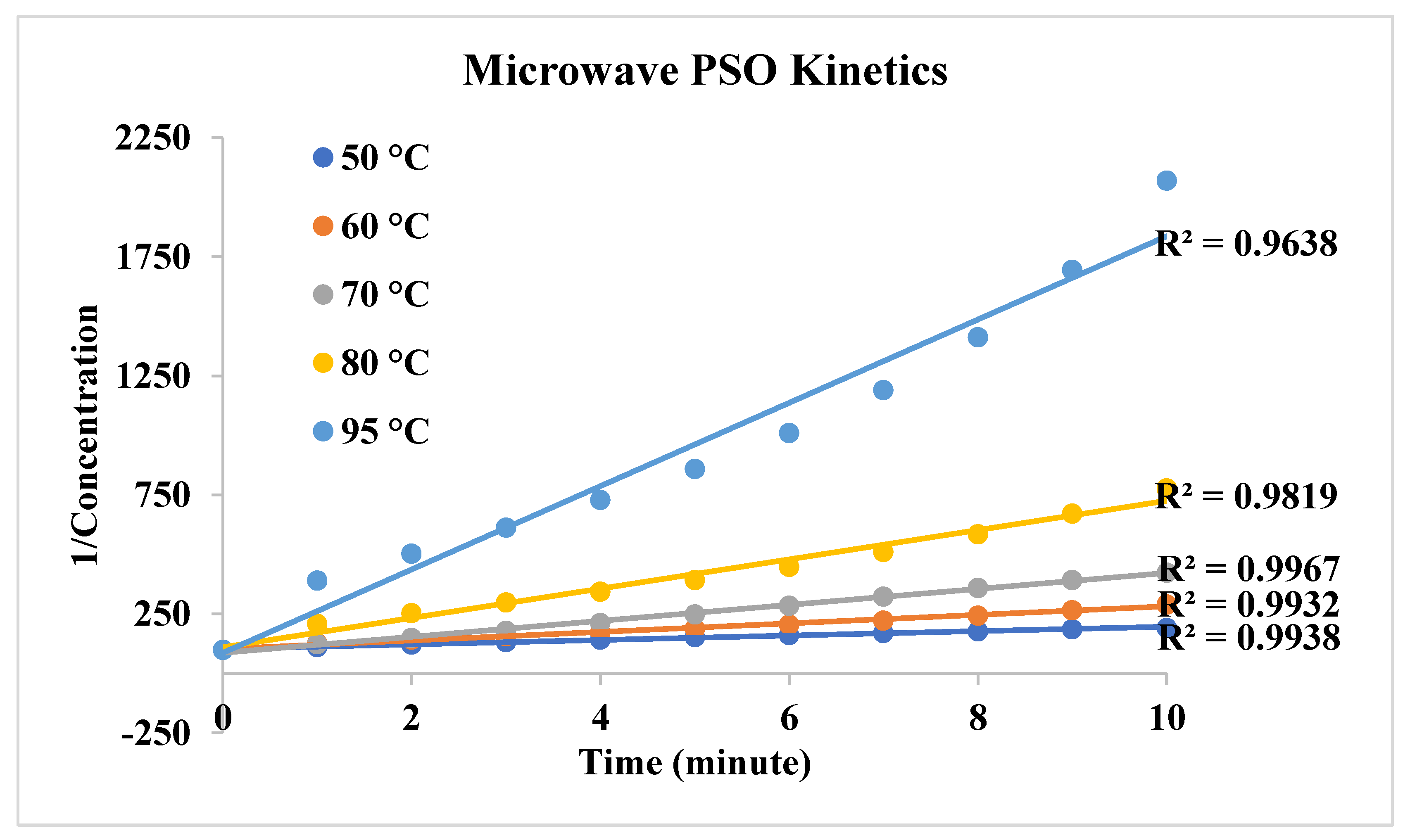
Figure 9.
Dyeing rate (K/S) curve of polyamide according to time at different temperatures in Microwave Media.
Figure 9.
Dyeing rate (K/S) curve of polyamide according to time at different temperatures in Microwave Media.
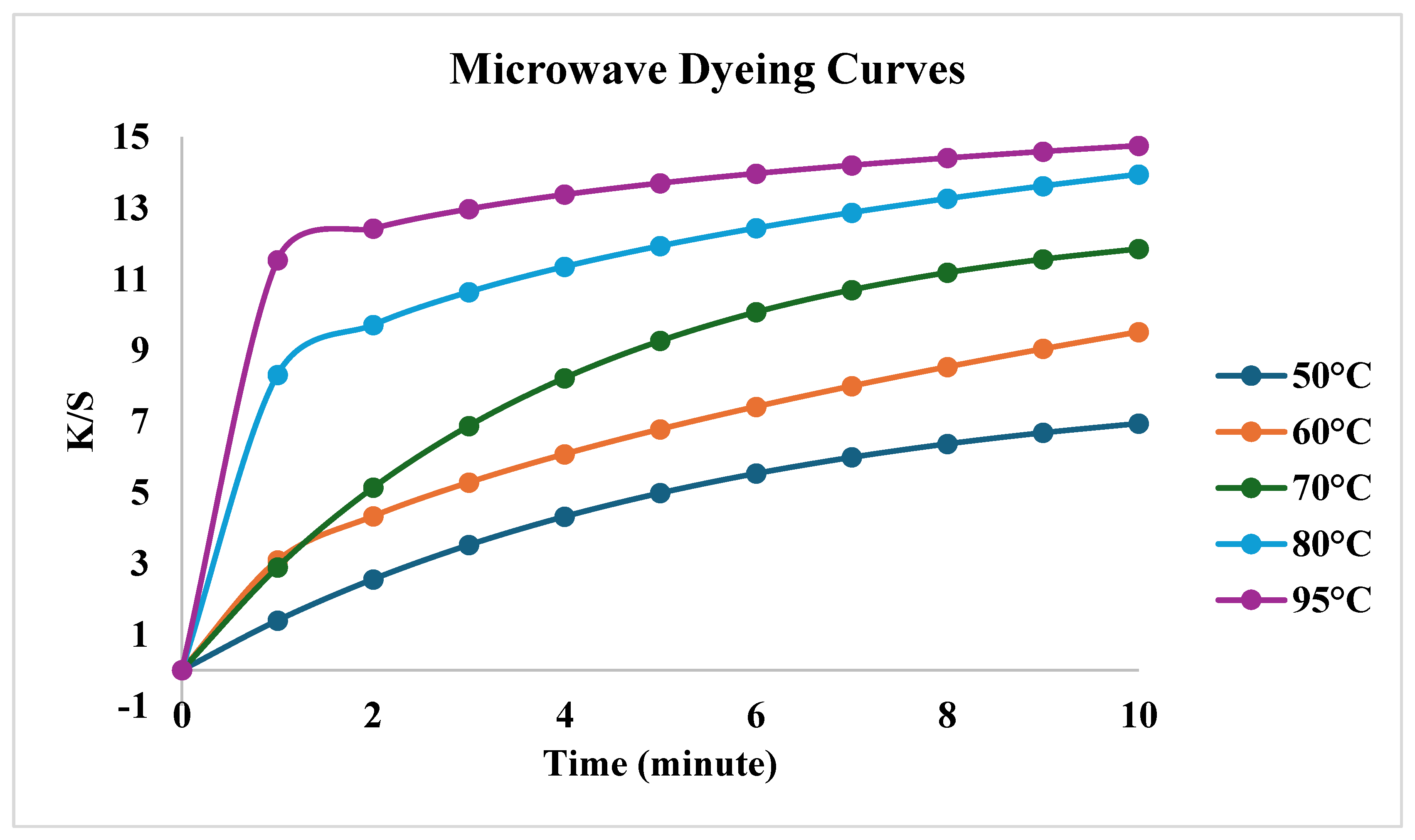
Figure 10.
Conventional Concentration Curve for the Dyeing Process at Various Temperatures.
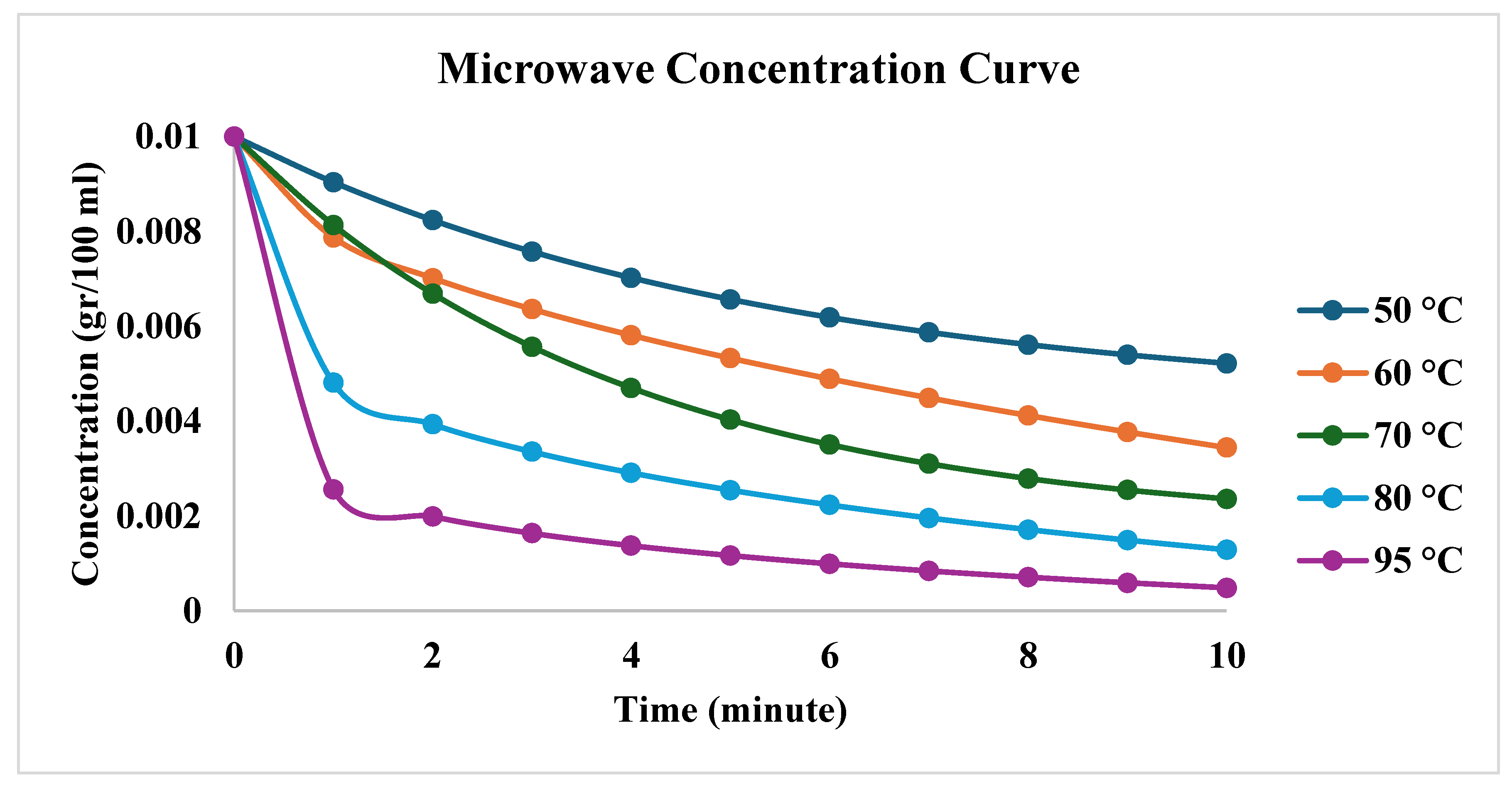
Figure 12.
Effects of Temperature on Reaction Rate Constant (k) on Both of Microwave and Conventional Heating.
Figure 12.
Effects of Temperature on Reaction Rate Constant (k) on Both of Microwave and Conventional Heating.
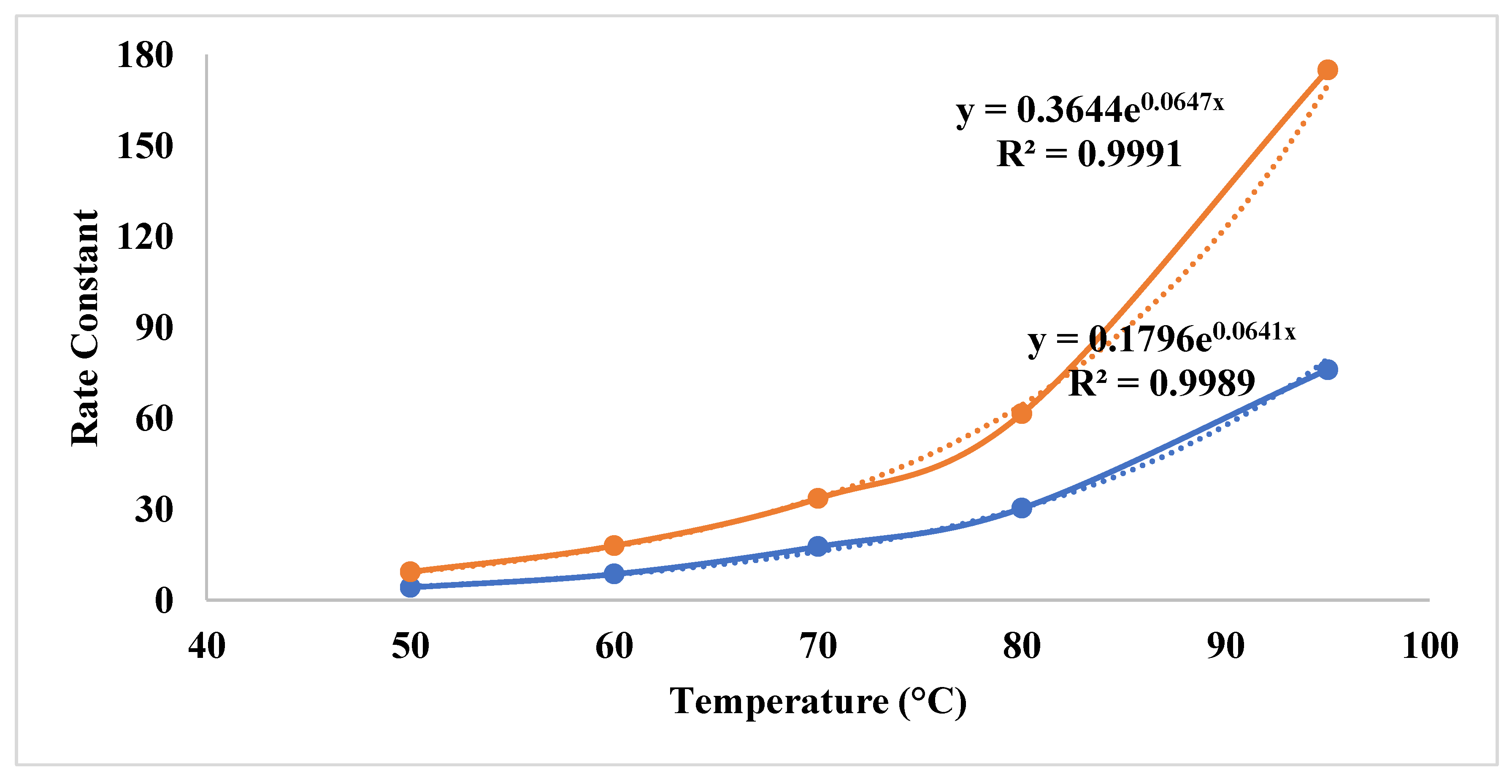
Figure 13.
Effects of Temperature on Reaction Rate Constant (k) on Both of Microwave and Conventional Heating.
Figure 13.
Effects of Temperature on Reaction Rate Constant (k) on Both of Microwave and Conventional Heating.
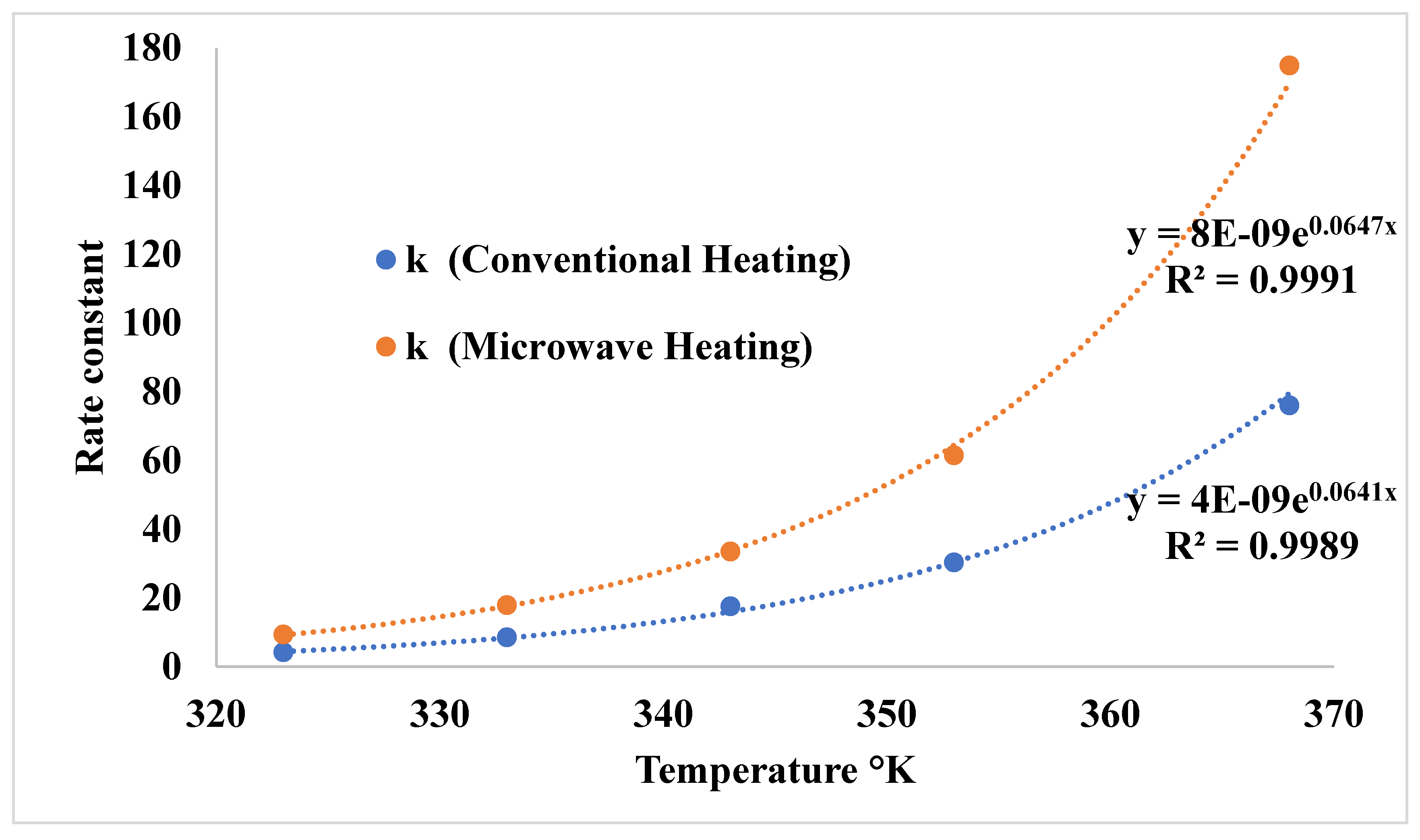
Figure 14.
Comparison of Arrhenius Plot for Microwave and Conventional Heating.
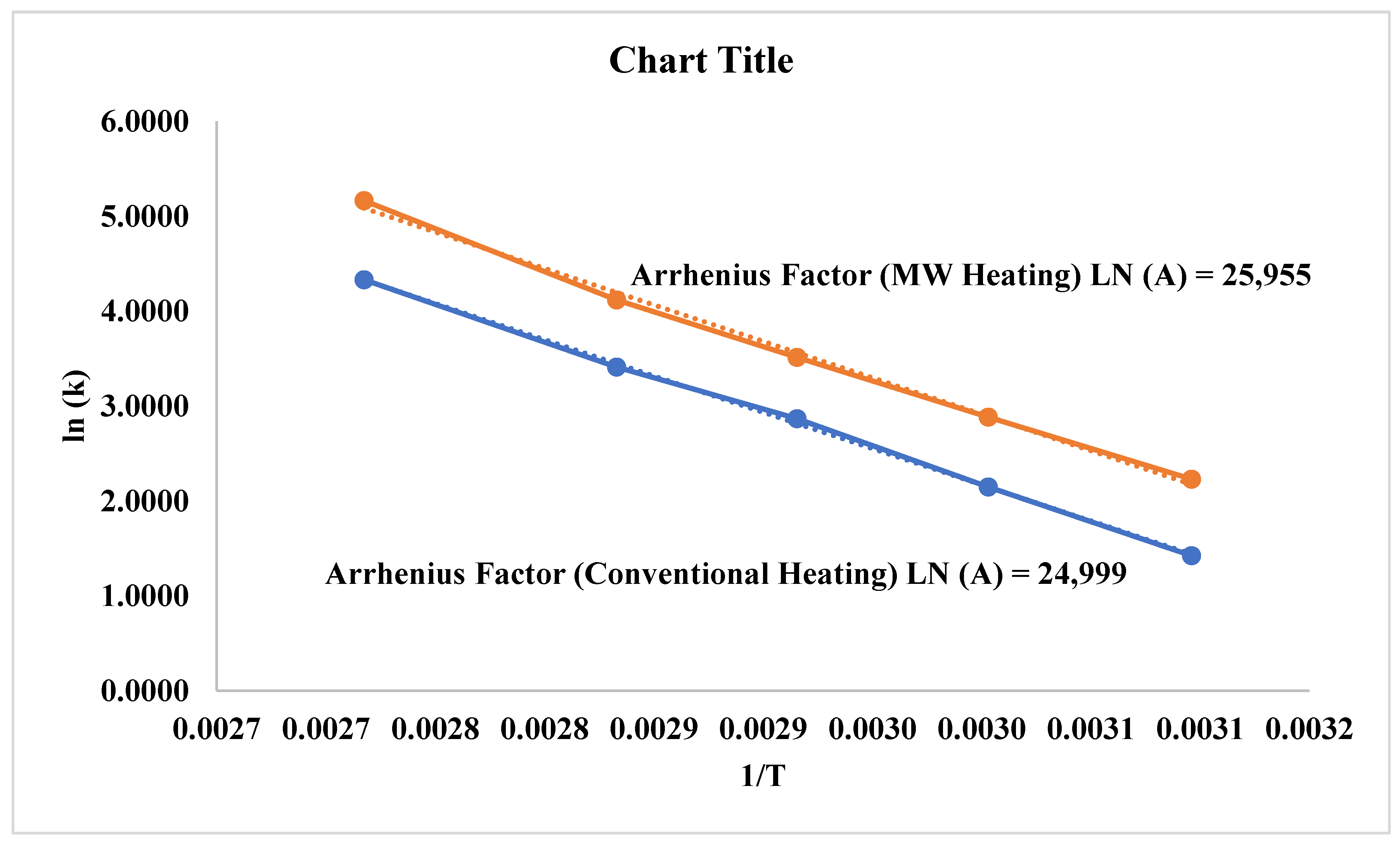

Table 1.
Reaction Rate Constant Data according to Conventional Heating.
| First order | Second Order | |||
| Temperature | k1 (1/min) | R2 | k2(L/g.min) | R2 |
| 50 0C | 0,0275 | 0,9874 | 4,1579 | 0.9999 |
| 60 0C | 0,0396 | 0,9648 | 8,556 | 0.9998 |
| 70 0C | 0,0581 | 0,9379 | 17,660 | 0.9998 |
| 80 0C | 0,0711 | 0,9022 | 30,298 | 0.9999 |
| 95 0C | 0,0931 | 0,8387 | 76,063 | 0.9997 |
Table 2.
Reaction Rate Constant Data according to Microwave Power Level.
| First order | Second Order | |||
| Temperature | k1(1/min) | R2 | k2(lt/g.min) | R2 |
| 50 0C | 0,0646 | 0,9734 | 9,3013 | 0,9938 |
| 60 0C | 0,0977 | 0,9803 | 17,925 | 0,9932 |
| 70 0C | 0,1451 | 0,9796 | 33,52 | 0,9967 |
| 80 0C | 0,1708 | 0,9179 | 61,509 | 0,9819 |
| 95 0C | 0,2344 | 0,8504 | 174,94 | 0,9638 |
Disclaimer/Publisher’s Note: The statements, opinions and data contained in all publications are solely those of the individual author(s) and contributor(s) and not of MDPI and/or the editor(s). MDPI and/or the editor(s) disclaim responsibility for any injury to people or property resulting from any ideas, methods, instructions or products referred to in the content. |
© 2025 by the authors. Licensee MDPI, Basel, Switzerland. This article is an open access article distributed under the terms and conditions of the Creative Commons Attribution (CC BY) license (http://creativecommons.org/licenses/by/4.0/).
Copyright: This open access article is published under a Creative Commons CC BY 4.0 license, which permit the free download, distribution, and reuse, provided that the author and preprint are cited in any reuse.


