
Submitted:
11 December 2025
Posted:
12 December 2025
You are already at the latest version
Abstract
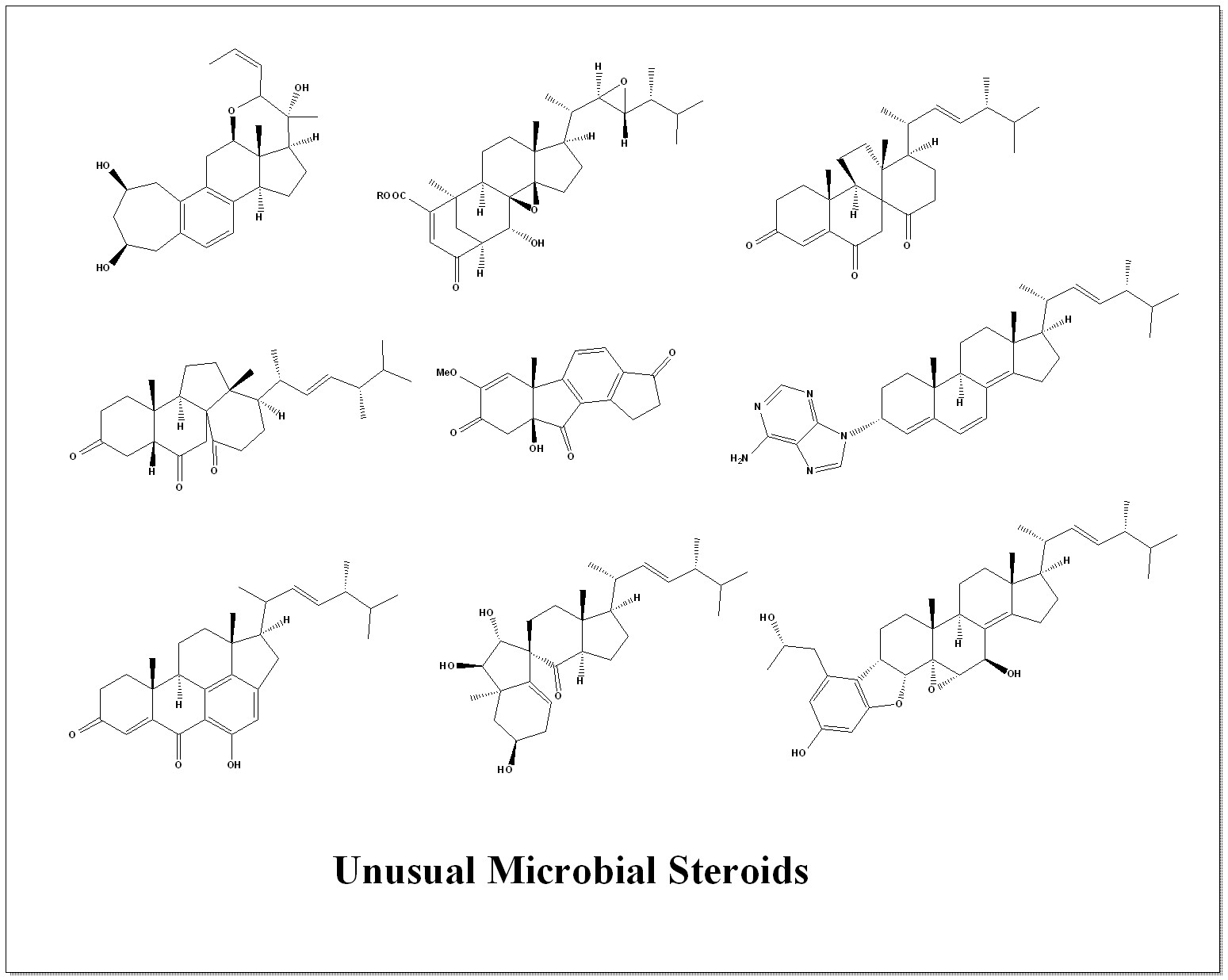
Endophytic and marine-derived fungi represent prolific and structurally innovative sources of steroidal natural products. In recent years, extensive chemical investigations of diverse fungal taxa—including Aspergillus, Penicillium, and numerous other genera—have revealed an extraordinary variety of steroids and steroid-like metabolites featuring unprecedented carbon skeletons, unusual ring rearrangements, heterocyclic fusions, and hybrid architectures. These metabolites encompass ergostane-, lanostane-, pregnane-, and abeo-type derivatives; secosteroids; polyoxygenated and polycyclic frameworks; meroterpenoid–steroid hybrids; and rare Diels–Alder adducts. Many of these compounds exhibit significant biological activities, including cytotoxic, anti-inflammatory, antimicrobial, antiviral, immunosuppressive, antioxidant, enzyme-inhibitory, larvicidal, neuroprotective, and herbicidal effects. Several metabolites, such as cordycepsterols, citristerones, rubensteroid A, anicequol, and various hybrid steroidal structures, demonstrate potent inhibition of key molecular targets (e.g., COX-2, NF-κB, PTP1B, AChE, NO production) and show promise as leads for anticancer, anti-infective, anti-neuroinflammatory, and metabolic disease therapeutics. Collectively, the rapidly expanding diversity of fungal steroids underscores the remarkable biosynthetic capabilities of fungi and highlights their continued potential as reservoirs of structurally novel and biologically valuable natural products. This review summarizes recent discoveries and structural classes of fungal-derived steroids, emphasizing their chemical diversity, biosynthetic features, and bioactivity profiles.
Keywords:
microorganisms
; bacteria
; fungal endophytes
; steroids
; activity
Copyright: This open access article is published under a Creative Commons CC BY 4.0 license, which permit the free download, distribution, and reuse, provided that the author and preprint are cited in any reuse.


