
Submitted:
08 December 2025
Posted:
09 December 2025
You are already at the latest version
Abstract
Construction project failures in the UK are frequently attributed to human error factors and increasing technical complexity, highlighting the need for competencies beyond technical skills. Emotional intelligence (EI) has been identified as a critical yet underexplored factor influencing decision-making and productivity among Construction Professionals (CPs). This study investigates the association between EI and CP decision-making processes throughout the project life cycle phases to enhance productivity and project success. A mixed-methods approach was adopted, comprising a quantitative survey (n=40) and qualitative semi-structured interviews (n=22). Data were analyzed using Braun and Clarke’s six-phase reflexive thematic analysis and SPSS. Results indicate that perceived EI competence significantly influences decision-making in complex contexts, surpassing the impact of technical skills. Correlations were observed between EI and situational decision-making rather than overall EI scores, highlighting the importance of contextual application. The findings reveal that EI is a notable deficiency in the UK construction sector and a key determinant of CP performance and productivity. This research contributes to industry knowledge and professional practice by emphasizing the integration of EI development into training frameworks to improve decision-making, safeguard and protect teams, and ensure successful outcomes in large-scale projects.
Keywords:
emotional intelligence
; decision-making
; productivity
; project success
; construction professionals
; built environment
; construction industry
1. Introduction
Emotional Intelligence (EI), defined as the ability to recognise, understand, and manage one’s own emotions and those of others, has become increasingly relevant in organisational and project management contexts since its formal introduction in the 1990s [1]. In contrast, its origins lie in earlier psychological theories emphasising the role of emotions in cognition and behaviour [2]. EI is now widely applied in education, business, and leadership. In the construction industry, where project failures are often linked to human error and complex decision-making (3,4). EI offers potential benefits for improving performance and productivity [5]. However, despite growing interest, research on EI in construction remains limited and fragmented, with ongoing debates over its measurement and practical integration [6]. This study addresses these gaps by examining the relationship between EI and decision-making among Construction Professionals (CPs) across project life-cycle phases. Using a mixed-method approach, the research explores how perceived EI competence influences decision-making in complex contexts. Findings reveal EI as a critical determinant of CP performance, surpassing technical skills in specific scenarios. These insights underscore the need to integrate EI development into professional training frameworks to enhance productivity and project success.
2. Background and Methods
Emotional Intelligence (EI) emerged in the early 1800s as a concept addressing human behavioural patterns, though its formal recognition occurred much later [7]. Despite debates regarding its validity in workplace settings (8,9). Recent studies have linked EI to project success and organisational performance [10]. Hosani et al., [11] Identify EI as a critical success factor for project management, while Afshari and Ghamkhar [12] They argue that EI significantly influences project delivery outcomes. In today’s dynamic construction environment, project failures often stem from human error and increasing technical complexity [13,14].
Navigating these challenges requires more than technical proficiency; it demands strong interpersonal capabilities. EI facilitates collaboration, teamwork, and communication key drivers of project success [15,16,17]. However, other EI scholars have emphasised that EI’s role is in enhancing performance and productivity. While technical skills remain essential throughout the project life cycle, soft skills, particularly EI, are increasingly recognised as determinants of success and safety.
Current research positions EI as the most influential soft skill since its inception, defined as the ability to perceive, understand, manage, and positively influence emotions within oneself and others [18]. Goleman asserts that EI predicts success and distinguishes exceptional leaders, noting that IQ and technical skills serve only as threshold capabilities [1]. Without EI, even individuals with superior analytical skills and innovative ideas cannot achieve effective leadership. Consequently, EI competence is indispensable for construction professionals tasked with managing complex projects and diverse teams, underscoring its critical role in achieving productivity and project success. Figure 1 below demonstrates the methodology design framework employed for this study and the research analysis. Figure 2 below illustrates the demographic information of participants.
2.1. Aim
This study investigated the association between EI and decision-making among construction professionals, focusing on project success, team safety, and productivity.
2.2. Objectives
- Explore the relationship between decision-making and awareness of EI competence among the construction professionals
- Assess where construction professionals' perception of EI influences decision-making in critical situations for mega-sized projects.
- Evaluate the links between EI and decision-making to identify strategies for improving productivity.
2.3. Hypothesis
It is that CP with higher EI, particularly in self-awareness, self-management, and social awareness, will make more precise, safer, and more effective decisions in critical project settings.
3. Emotional Intelligence Impact on Decision-Making
Ensuring safety in the construction environment depends largely on individuals working within it, and this is closely linked to their decision-making processes, particularly those related to health and safety and to achieving project objectives. Between these priorities lies the human factor, which combines decisions about worker safety with stakeholder satisfaction [19,20,21]. These decisions often reflect the emotional state of those leading the project. Therefore, the ability to understand, regulate, and perceive emotions is critical. Distinguishing, identifying, and observing feelings, both in oneself and in others, helps achieve better performance without biases and pressures, enhancing one’s ability to make better decisions.
EI influences the ability to make effective decisions in critical situations [22]. For example, a construction professional with high emotional self-awareness might make poor choices due to traits linked to self-awareness, such as integrity, accountability, and motivation, which drive achievement beyond expectations [18,23]. Moreover, those who control their emotions are often seen as symbols of charisma and power. Construction professionals are expected to work with diverse teams, and those displaying extreme negative emotions may find it challenging to make sound decisions, thereby reducing credibility and adherence to plans [24]. Since the construction industry is highly stressful [25] stress hampers functioning [26] Contend that high stress and pressure negatively influence both work and personal life. Failing to address these issues can result in incorrect decisions, project failures, and accidents that threaten overall operations.
3.1. Emotional Intelligence Impact on Productivity and Decision-Making in Construction
This section provides an in-depth understanding of EI’s practical implications for construction professionals. The emphasis on the construction industry stems from significant revenue losses resulting from project failures driven by human error. Studies demonstrate a strong correlation between decision-making processes and performance outcomes in this sector. Decision-making styles influence organisational performance through competitive strategies, with analytical and directive styles being the most common [22,27,28]. Abuezhayeh [29] asserts that integrating knowledge management with business process management enhances decision-making and organisational performance [30]. Khahro et al. [30] identified delays in client decision-making as a significant barrier in construction projects and proposed a decision-support model to address these challenges. Factors such as insufficient technical competence and ineffective communication contribute to delays in early decision-making. Gora [31] conducted a bibliometric analysis of decision-making and performance, revealing an increasing trend in research. Collectively, these studies emphasise the importance of effective decision-making strategies for improving outcomes and organisational performance in construction.
3.2. Emotional Intelligence and the Construction Professional
The role of a construction professional is critical, demanding, and complex for successful project delivery [32,33,34]. Timofeeva et al. [35] and the Egan Report highlight the need to align development and learning with role complexity. From a soft skills perspective, competence in project management is essential. Ives recognised the need to prioritise people management over tools and techniques [36] and Winter et al. [37]. Internal and external environments influence complex projects, and unpredictability increases decision-making complexity, especially when multiple unexpected variables arise during execution. This unpredictability demands adaptability beyond conventional project lifecycles.
From a cultural sensitivity perspective, EI competence plays a pivotal role, particularly in self-awareness and social awareness, requiring both interpersonal and intrapersonal skills. Despite EI’s proven impact, uptake and application in construction remain low. Across other sectors, EI has yielded positive outcomes in high-risk situations [1,28,38]. Thus, while leading and motivating teams through challenges, appreciating EI’s impact is crucial [39]. In multicultural settings, emotionally intelligent professionals can navigate cultural diversity, ensuring harmony and inclusiveness. This raises the question: Should EI be integrated into construction industry standards to promote uptake and application across all levels? Goleman’s definition of EI highlights its importance, encompassing the capacity to recognise and manage emotions to foster productive, success-driven environments. This study proposes developing a conceptual framework for EI training.
3.3. Methodology
3.3.1. Research Design
This study adopted a mixed-method design. Combining quantitative and qualitative techniques to examine the relationship between EI and decision-making among construction professionals. An online questionnaire was administered to collect the necessary data for this study, and semi-structured interviews were conducted with construction professionals. As such, the literature review findings and reports from professional bodies also informed the study. These methods were chosen because they were deemed appropriate, and the mixed-methods design allowed the researcher to listen to and understand the construction professional’s perception of EI. The quantitative method was used to assess participants' capacity to understand the EI competencies based on Goleman’s model of EI, covering variables such as relationship management (7 questions), social awareness (5 questions), self-management (6 questions), and self-awareness (5 questions). Furthermore, the participant's skills in project success (15 questions), collaboration (4 questions), communication (5 questions), teamwork (7 questions), and conflict management (8 questions) were assessed via a link.
The interview survey comprised 64 items grouped into six categories: EI components, conflict management, teamwork, communication, collaboration and participant demographics. All responses were recorded using a 5-point Likert scale (1 = lowest, 5 = highest). The semi-structured interview included 14 main open-ended questions and four sub-questions, designed to explore participants' understanding and perceptions of EI and its influence on decision-making. Table 1 shows how the data were coded, and themes were identified from participants' excerpts.
Design considerations
- The following factors guided the research design:
- Assess EI levels and awareness among construction professionals
- Link EI competence to decision-making and project success using numerical scales
- Highlight associations between EI variables and performance indicators.
- Employing statistical tools such as SPSS for quantitative analysis,
- Ensure practical and efficient data collection methods
Sampling and participants' primary data were collected from 22 construction professionals representing diverse roles and responsibilities. A probability sampling approach was applied based on the criteria such as relevance to the objectives, time feasibility, accessibility and sample quality.
3.1.1. Data Collection Procedure
- The following steps were undertaken
- Participant selection and obtaining written/verbal consent
- Compliance with ethical considerations
- Development and piloting of the questionnaire
- Determination of delivery mode
- Administration of survey and interviews
- Monitoring response rates
The text continues here.
3.2. Figures, Tables and Schemes
4. Discussion
Limited EI Competence Awareness
The findings of this study indicate a significant lack of awareness and formal understanding of EI among construction professionals, despite its acknowledged benefits for stress management, stakeholder engagement, and decision-making. This finding supports the initial hypothesis that higher EI levels enhance decision-making clarity and safety in critical project settings. Participants who demonstrated greater EI competence reported improved adaptability, empathy-driven reasoning, and situational awareness, aligning with previous studies by [40,41,42], which emphasise EI as a predictor of leadership effectiveness and project success. For example,
P20 said, “I am not sure if I am familiar with it.” P16 said - Umm. I would not say very. Yeah, I am not super. Familiar with it,” P18 said – “True, not very. Yet. So, I need a brief explanation.
This implies that construction participants were unfamiliar with the concept; some were aware, while others required further explanation of EI or EI competence. Additionally, those with some knowledge lacked the theoretical underpinnings. The findings of this study align with those of several studies that have acknowledged the growth of the body of knowledge and the increasing awareness of the concept, including [43,44]. Most studies, like this study's findings, acknowledge the growing importance and benefits of EI intelligence competence in, for example, stress management, self-awareness, people management, self-management, stakeholder management, client care, and health and safety. However, the author of this study is concerned about the lag in uptake, the lack of formal understanding, inadequate information, insufficient awareness, and the lack of training in EI competence within the industry.
This study also argues that government, industry leaders, professional bodies, government agencies, and educational institutions play a significant role in promoting EI competence among construction professionals. The Construction Industry Training Board (CITB), which primarily provides training and establishes programmes to help workers meet industry demands, has conducted a systematic review and a study on enhancing the performance of 600 employees, stakeholders, and behavioural change experts. The study examines industry solutions to drive behavioural change and improve performance. Although the study recommends a focus on cultivating culture, trust, quality, and collaboration by prioritising behavioural and interpersonal skills training and boosting uptake, so far, there is no structured initiative, program, or partnership to promote EI competence in the industry. This study suggests that the uptake of behavioural and interpersonal soft skills, such as EI competence, will remain low unless industry agencies, such as the CITB, establish training programmes and incorporate EI competence into the curricula of universities and colleges in the built environment.
Moreover, professional bodies also play a significant role in increasing awareness of EI among industry professionals. Bodies such as the RICS, APM, CIAT, and CIOB would need to first recognise EI as an essential competency, alongside others such as communication and client care. For improved uptake of EI, the need needs to be recognised as a professional standard in occupational competency standards of the professional bodies. To increase students' awareness of the built environment, universities need to understand the conceptual framework and teach EI as part of the key competencies in their programmes. This will help build awareness, formal understanding, and knowledge, as well as the application of the concept in professional environments.
Culturally Sensitive and Body Language:
Emotional intelligence is critical for bridging cultural gaps in the construction industry. Research indicates that EI has a significant impact on expatriates’ cross-cultural adjustment, accounting for 60% of the variance in adaptability to the foreign work environment [45]. For example, in the Thai construction industry, emotionally intelligent project managers and engineers effectively navigate conflicts by combining local cultural norms with collaborative problem-solving approaches [46]. Additionally, [47] and [5,17] states that it is valuable in healthcare settings where increasing cultural diversity demands high levels of emotional and cultural sensitivity from clinicians. Despite the importance, the construction industry has been slow to adopt the EI concept [48]. Moreover, [49] posit that construction students develop EI more slowly than students in other professions, emphasising the importance of integrating EI into construction curricula. Therefore, this study argues that enhancing EI competence among construction professionals can help them manage cross-cultural interactions, resolve conflicts, and adapt to diverse and complex construction environments, thereby increasing project success in the global construction industry.
The construction industry is a multifaceted global sector, and in recent years, construction professionals have been able to work from anywhere. This has become very prevalent since the COVID-19 pandemic lockdown [50,51]. Technologies that foster collaborative work have increased. In line with this global norm, project teams are composed of people from diverse cultural backgrounds. This competence enables these construction professionals to navigate cultural differences and understand body language with sensitivity, ensuring that project team members feel valued, appreciated, and included. The participant said,
“I am not familiar with it, but I believe the concept is all about understanding human behaviour, reading your body language and responding to it accordingly.”
The participant statement above acknowledges that the concept of EI involves understanding human behaviour, interpreting body language, and responding accordingly. This aligns with Goleman and with the work of [7], whose work borders on the ability to perceive. A construction professional with a high level of EI competence would be able to bridge the cultural gap by fostering a cultural awareness campaign, an inclusive team culture, and a work environment where diverse perspectives are respected, celebrated, and leveraged, thereby leading to more innovative solutions and a more harmonious work environment. The participant said,
“I would say that you must be able to be broad in your EI to deal with anybody, not just trying to keep these guys happy because they have got the chequebook. You want to make sure that everybody is happy so that it runs in harmony.”
All these quotes emphasise the importance of cultural sensitivity and of creating a more conducive, harmonious work environment where projects and project teams can thrive.
Regarding body language, EI is essential for interpreters to understand non-verbal cues in their work. This aligns with the work of [52]. A study on language perception claims that the listener retrieves the articulatory gesture and attributes the speaker's intentions [53]. This study argues that, due to individual differences, construction professionals' emotional displays can influence project teams' attitudes and behaviours. In contrast, these mechanisms can be likened to the ability to influence others positively; observing others' emotional displays can help read and understand team members' emotional cues, especially when a team is under pressure. Hence, emotionally intelligent construction professionals would be sensitive to the variation in non-verbal cues. P22 said,
“There is an acknowledgement in their body language and their physical behaviour that they know they have done something wrong.
P5 added,
“You must learn to read body language properly when working in a project environment. You must also learn to understand tones.”
The findings of this study suggest that some construction professionals may struggle to understand certain words and may respond with body language. The participants above expressed concern about the need to understand emotional body language as a tool for effective communication, especially for those with limited English or their tribal language. This study argues that the connection between emotional intelligence and body language should not be underestimated. It is integral to effective communication and emotional regulation, both of which are vital components of EI competence. In a construction environment, the ability of construction professionals to read, interpret, and understand, as well as respond to body language, is critical. Particularly subtle signs of disengagement, such as avoiding eye contact or fidgeting during project briefing meetings, are also important. On the contrary, the use of positive body language by construction professionals, such as humour, smiles, laughs, maintaining open gestures, and nodding, encourages trust and collaboration and creates a supportive work environment. This is because non-verbal cues, such as gestures, postures, facial expressions, eye contact, and body movements, provide crucial insights into emotions, intentions, behaviours, and attitudes, often more accurately than verbal expressions. Moreover, it aligns with Goleman's definition of the ability to recognise, understand, manage, and interpret one's own emotions and those of others. Therefore, his definition relies on non-verbal communication to interpret the meaning conveyed.
The theme of perception of EI competence suggests that while EI may not be explicitly acknowledged as a formal construct, it is viewed as an inherent part of daily practice [54,55].
The participants expressed that EI is significant in their decision-making, as it enables them to consider the impact of their decisions before acting.
Stakeholder Sensitivity in Decision-Making
P10"Each person requires a different kind of… they have their own different needs and wants… so your emotional intelligence needs to be able to balance on who it is, what they need, and how you are going to resolve issues."
This response highlights the need for project managers to tailor their decision-making to the unique needs of different stakeholders. EI enables managers to assess the expectations of various groups, ensuring that decisions are inclusive and considerate.
P10 stated, “Emotional intelligence serves as a foundation that filters through all your decision-making.” P10 also mentioned that if I were to decide on the stakeholder group, they must understand the stakeholders' backgrounds. How significant is the impact of the decision when it is made, and what effect does it have on others? This aligns with that of P12, who stated that “EI is essential in any decision I make because it applies to people. This implies that construction professionals with higher levels of EI and competence consider it significant in their decision-making. Research highlights that construction project managers operate in complex, multi-stakeholder environments where understanding and responding to individual stakeholder needs is critical. Effective stakeholder management relies on EI competencies, such as empathy and active listening [42]. According to [56], project managers with high EI build stronger relationships with stakeholders, leading to increased cooperation and project success.
Empathy-Driven Decision-Making
P12 "Any decision I make, if I do not capture (EI) properly, will affect the delivery of my project."
This statement reinforces the importance of empathy in decision-making. A failure to integrate EI considerations may lead to misunderstandings, disengaged stakeholders, or project inefficiencies. Empathy ensures the human element is not overlooked, resulting in smoother project execution.
P12 further noted that “in the delivery of my project, I have to make sure that my reasoning is emotionally intelligent and the influence of my decision has to be emotionally intelligent”
Empathy, a core component of EI, is vital for understanding team members' and stakeholders’ perspectives. This study suggests that emotionally intelligent project managers are more effective in resolving conflicts, fostering collaboration, and ensuring stakeholder satisfaction. This aligns with the works of [42], which posit that poor EI in decision-making can lead to disengagement, resistance to change, and project delays.
Emotionally Informed Decision-Making
P12 "I have to make sure that my reasoning is emotionally intelligent… The influences for my decisions have to be emotionally intelligent."
This highlights the integration of EI principles into cognitive decision-making processes. Rather than making purely technical or logistical choices, emotionally intelligent project managers factor in relational dynamics, ensuring that decisions are both logical and considerate. Decision-making in construction projects is not purely technical; it involves human factors such as morale, motivation, and conflict resolution [57]. This implies that EI helps project managers consider both logical and emotional aspects of decision-making. Studies show that emotionally intelligent managers make better decisions because they assess the impact of their choices on both project outcomes and people [56].
Similar to [43,44], this study confirms that EI remains underutilised in the construction industry, primarily due to insufficient training and a lack of integration into professional standards. While other sectors have successfully embedded EI into leadership development, the construction industry lags, reflecting systemic gaps in behavioural skills training.
4. Findings
Of the twenty-two interviewed professionals, only four had prior emotional intelligence (EI) training and associated it with project success. While most participants acknowledged EI as important, awareness of its role in stress management, communication, and interpersonal relationships was limited. Significant gaps were observed in self-awareness and relationship management, indicating the need for structured EI development within the construction industry.
The study also revealed a sector-wide lack of understanding of EI. A conceptual model integrating EI principles with management tools is proposed to enhance productivity and performance, offering practical value for academia, training providers, and professional bodies. Despite the small, homogeneous sample, the findings suggest that EI training improves stakeholder engagement, supporting the literature that identifies EI as critical for relationship building, conflict resolution, and effective communication in construction projects.
5. Conclusions
Current understanding of EI remains incomplete, particularly due to cultural influences on emotion perception, understanding, and regulation. This study reinforces the need to integrate EI into leadership development and organisational practices. Practical strategies, such as reflective exercises, mindfulness, cultural sensitivity training, and conflict resolution workshops, can strengthen Goleman’s four EI dimensions: self-awareness, self-management, social awareness, and relationship management. Beyond training, embedding EI into leadership evaluations, succession planning, and mentorship programs will foster emotionally intelligent workplaces. Recognising EI as a measurable competency and challenging the stigma around “soft skills” is essential for improving decision-making, collaboration, and organisational success. Future research should explore cultural contexts and develop sector-specific EI frameworks to address these gaps.
Author Contributions
“Conceptualisation, Peace Echeonwu and Nimi Dan-Jumbo.; Methodology, Peace Echeonwu.; formal analysis, Peace Echeonwu.; investigation, Peace Echeonwu.; resources, Peace Echeonwu.; data curation, Peace Echeonwu.; writing—original draft preparation, Peace Echeonwu.; writing—review and editing, Nimi Dan-Jumbo, Robert Hairstans, Lina Khaddour.; visualisation, Peace Echeonwu.; supervision, Nimi Dan-Jumbo.
Funding
This research received no external funding.
Data Availability Statement
A copy can be obtained at this link (https://survey.napier.ac.uk/n/zz81d.aspx), and a link to the qualitative interview consent form can be accessed from this link (https://survey.napier.ac.uk/n/zz8iu.aspx).
Acknowledgments
This paper and the research behind it would not have been possible without the exceptional support of Dr Lina Khaddour, Prof Sarah Hitt, Dr Nim Dan-Jumbo, and Prof Robert Hairstans. GenAI is used for spelling corrections, such as Grammarly. The authors have reviewed and edited the output and take full responsibility for the content of this publication.”.
Conflicts of Interest
The authors declare no conflicts of interest.
Abbreviations
The following abbreviations are used in this manuscript:
| CP | Construction Professional |
| DOAJ | Directory of open access journals |
| EI | Emotional Intelligence |
| LD | Linear dichroism |
| MDPI | Multidisciplinary Digital Publishing Institute |
| TLA | Three-letter acronym |
References
- Goleman, D. Emotional Intelligence: Why It Can Matter More Than IQ. 1995, Available from: https://www.semanticscholar.org/paper/6c5558aadf68f5e5460fcebc5d55db3325b12e1d.
- Ferguson, R.; Rivera, L. Self-Management in Organisational Behaviour Management. J Organ Behav Manag. 2021, 42, 210–29. [Google Scholar]
- Rafieyan, A.; Sarvari, H.; Beer, M.; Chan, D.W.M. Determining the effective factors leading to the incidence of human error accidents in industrial park construction projects: results of a fuzzy Delphi survey. Int J Constr Manag. 2024, 24, 748–60. [Google Scholar] [CrossRef]
- Chan, D.W.M.; Baghbaderani, A.B.; Sarvari, H. An Empirical Study of the Human Error-Related Factors Leading to Site Accidents in the Iranian Urban Construction Industry. Buildings 2022, 12(11). [Google Scholar] [CrossRef]
- Won, D.; Hwang, B.G.; Chng, S.J. Assessing the effects of workforce diversity on project productivity performance for a sustainable workplace in the construction industry. Sustain Dev. 2020, 29, 398–418. [Google Scholar] [CrossRef]
- Barchard, K.; Barchard, K. The Nature and Measurement of Emotional Intelligence Abilities: Basic Dimensions and Their Relationships with Other Cognitive Ability and Personality Variables. Educ Psychol Meas. 2004, 64, 437–62. [Google Scholar] [CrossRef]
- Mayer, J.; Roberts, R.; Barsade, S.G. Human abilities: emotional intelligence. Annu Rev Psychol. 2008, 59, 507–36. [Google Scholar] [CrossRef]
- Miners, C.T.H.; Côté, S.; Lievens, F. Assessing the Validity of Emotional Intelligence Measures. Emot Rev. 2018, 10, 87–95. [Google Scholar] [CrossRef]
- Roberts, R.D.; Schulze, R.; O’Brien, K.; MacCann, C.; Reid, J.; Maul, A. Exploring the validity of the Mayer-Salovey-Caruso Emotional Intelligence Test (MSCEIT) with established emotions measures. Emotion 2006, 6, 663–9. [Google Scholar] [CrossRef]
- Ahmad, T.; Rasheed, S.; Khan, N. Emotional Intelligence and Project Success in Construction Projects. Sukkur IBA J Manag Bus. 2022, 9, 18–35. [Google Scholar] [CrossRef]
- Hosani, A.A.; Mheiri, H.A.; Khatib, M.M.E. Emotional Intelligence as a Success Factor for Project and Project Manager. Int J Bus Anal Secur IJBAS 2023, 3, 42–55. [Google Scholar] [CrossRef]
- Afshari, A.R.; Ghamkhar, N. EMOTIONAL INTELLIGENCE TRAINING IN CONSTRUCTION PROJECTS. NWSA Acad J. 2023, 18, 1–10. [Google Scholar] [CrossRef]
- Bilgin, G.; Erol, H.; Atasoy, G.; Dikmen, I.; Birgonul, M.T. Exploring pattern of complexity in mega construction projects. Int J Manag Proj Bus. 2022, 15, 1064–90. [Google Scholar] [CrossRef]
- Emuze, F.; Mollo, L. Technical enablers of human errors and violations in construction. MATEC Web Conf. 2020, 312, 02017. [Google Scholar] [CrossRef]
- Chua, R.Y.J.; Morris, M.W.; Mor, S. Collaborating across cultures: Cultural metacognition and affect-based trust in creative collaboration. 2012 [cited 2025 Jan 2]. [CrossRef]
- Farh, C.I.C.C.; Seo, M.G.; Tesluk, P.E. Emotional intelligence, teamwork effectiveness, and job performance: The moderating role of job context. J Appl Psychol. 2012, 97, 890–900. [Google Scholar] [CrossRef] [PubMed]
- Aasen, A.F.; Klakegg, O.J. Human resilience and cultural change in the construction industry: communication and relationships in a time of enforced adaptation. Front Built Environ. 2023, 9. [Google Scholar] [CrossRef]
- Goleman Daniel, Boyatzis RE, McKee A. Primal leadership : realizing the power of emotional intelligence [Internet]. Harvard Business School Press; 2002 [cited 2019 Sept 26]. 306 p. Available from: https://books.google.co.uk/books?hl=en&lr=&id=ibQTAAAAQBAJ&oi=fnd&pg=PR7&dq=Goleman,+D.,+Boyatzis,+R.+E.,+%26+McKee,+A.+(2002).+Primal+leadership:+Realizing+the+power+of+emotional+intelligence+.+Boston,+MA:+Harvard+Business+School+Press.&ots=Rt7QxwLMoU&sig=7eUqyCU2zHh6AVklh90Tb6BDNAY&redir_esc=y#v=onepage&q&f=false.
- Heravi, A.; Coffey, V.; Trigunarsyah, B. Evaluating the level of stakeholder involvement during the project planning processes of building projects. Int J Proj Manag. 2015, 33, 985–97. [Google Scholar] [CrossRef]
- Rajablu, M.; Marthandan, G.; Fadzilah, W.; Yusoff, W. Managing for Stakeholders: The Role of Stakeholder-Based Management in Project Success. Asian Soc Sci. 2015, 11(3). [Google Scholar] [CrossRef]
- Scheepers, H.; McLoughlin, S.; Wijesinghe, R. Aligning stakeholders perceptions of project performance: The contribution of Business Realisation Management. Int J Proj Manag. 2022, 40, 471–80. [Google Scholar] [CrossRef]
- Sumathy, L.; Felix, A. Influence of Emotional Intelligence on Decision Making by Leaders. In 2015 [cited 2025 Dec 1]. Available from: https://www.semanticscholar.org/paper/Influence-of-Emotional-Intelligence-on-Decision-by-Sumathy-Felix/d7d7958186f17b0d5c7c772a04f4e849a986f71e.
- Bratton, V.K.; Dodd, N.G.; Brown, F.W. The impact of emotional intelligence on accuracy of self-awareness and leadership performance. Leadersh Organ Dev J. 2011, 32, 127–49. [Google Scholar] [CrossRef]
- Beling, C.; Wild, G. The association between emotional intelligence and decision making for pilots. J Air Transp Manag. 2024, 114, 102506. [Google Scholar] [CrossRef]
- Hulls, P.M.; de Vocht, F.; Martin, R.M.; Langford, R.M. “We are our own worst enemy”: a qualitative exploration of work-related stress in the construction industry. Int J Workplace Health Manag. 2022, 15, 609–22. [Google Scholar] [CrossRef]
- Alsulami, H.; Serbaya, S.; Rizwan, A.; Serbaya, S.H.; Saleem, M.; Maleh, Y.; et al. Impact of emotional intelligence on the stress and safety of construction workers’ in Saudi Arabia CFC: Computational Intelligence for Medical Internet of Things (MIoT) Application Systems By Elsevier View project Springer Book: Machine Intelligence and Big Data Analytics For Cybersecurity applications View project Impact of emotional intelligence on the stress and safety of construction workers’ in Saudi Arabia Zobia Alamgir. Impact Emot Intell Stress Saf Constr Work Saudi Arab CFC [Internet]. 2021 [cited 2023 July 20]; Available from: https://www.researchgate.net/publication/357351368.
- Alkozei, A.; Schwab, Z.J.; Killgore, W.D.S. The Role of Emotional Intelligence During an Emotionally Difficult Decision-Making Task. J Nonverbal Behav. 2016, 40, 39–54. [Google Scholar] [CrossRef]
- Felix, A.J.W. . Influence of Emotional Intelligence on Decision Making by Leaders [Internet]. American International Journal of Social Science 2015, 4. Available from: www.aijssnet.com. [Google Scholar]
- Abuezhayeh, S.W.; Ruddock, L.; Shehabat, I. Integration between knowledge management and business process management and its impact on the decision making process in the construction sector: a case study of Jordan. Constr Innov Lond 2022, 22, 987–1010. [Google Scholar] [CrossRef]
- Khahro, S.H.; Shaikh, H.H.; Zainun, N.Y.; Sultan, B.; Khahro, Q.H. Delay in Decision-Making Affecting Construction Projects: A Sustainable Decision-Making Model for Mega Projects. Sustain Switz. 2023, 15(7). [Google Scholar] [CrossRef]
- Anand, N.; Gorantla, V.R.; Ranjan, R.; Morcos, H. Emotional intelligence: An important skill to learn now more than ever. F1000Research 2023, 12, 1146. [Google Scholar] [CrossRef]
- Abdalla, A.; Li, X.; Yang, F. Expatriate Construction Professionals’ Performance in International Construction Projects: The Role of Cross-Cultural Adjustment and Job Burnout. J Constr Eng Manag [Internet]. 2024 Mar [cited 2024 Sept 25];150(3). Available from: https://www.researchgate.net/publication/377387553_Expatriate_Construction_Professionals'_Performance_in_International_Construction_Projects_The_Role_of_Cross-Cultural_Adjustment_and_Job_Burnout.
- Abdul Aziz, H.; Abdelnaser, O. The role of professionals in the construction industry. 2009,.
- Zuo, J.; Zhao, X.; Nguyen, Q.B.M.; Ma, T.; Gao, S. Soft skills of construction project management professionals and project success factors: A structural equation model. Eng Constr Archit Manag. 2018, 25, 425–42. [Google Scholar] [CrossRef]
- Timofeeva, S.S.; Ulrikh, D.V.; Tsvetkun, N.V. ScienceDirect ScienceDirect Professional Risks in Construction Industry. Procedia Eng. 2017, 206, 911–7. [Google Scholar] [CrossRef]
- Ives, M. Identifying the Contextual Elements of Project Management within Organizations and their Impact on Project Success. Proj Manag J. 2005, 36, 37–50. [Google Scholar] [CrossRef]
- Winter, M.; Smith, C.; Morris, P.; Cicmil, S. Directions for future research in project management: The main findings of a UK government-funded research network. Int J Proj Manag. 2006, 24, 638–49. [Google Scholar] [CrossRef]
- Sharafadeen, O.; Owolabi, B.; Olatunji, A.S. The Roles of Construction Professionals in the Nigeria’s Construction Industry [Internet]. Vol. 19, IOSR Journal Of Humanities And Social Science (IOSR-JHSS. Ver. VIII; 2014 p. 5–10. Available from: www.iosrjournals.org.
- Ghoddousi, P.; Zamani, A. The effect of emotional intelligence, motivation and job burnout on safety behaviors of construction workers: a case study. Eng Constr Archit Manag 2023. [Google Scholar] [CrossRef]
- Goleman, D. Emotional Intelligence- Working with Emotional Intelligence [Internet]. Bantam Books. BANTAM BOOKS; 1998 [cited 2022 June 9]. 384 p. Available from: http://www.eiconsortium.org/.
- Rezvani, A.; Chang, A.; Wiewiora, A.; Ashkanasy, N.M.; Jordan, P.J.; Zolin, R. Manager emotional intelligence and project success: The mediating role of job satisfaction and trust. Int J Proj Manag. 2016, 34, 1112–22. [Google Scholar] [CrossRef]
- Mersino, A. Emotional intelligence for project managers: The people skills you need to acheive outstanding results [Internet]. 2013 [cited 2024 Aug 29]. Available from: https://books.google.com/books?hl=en&lr=&id=0Hhzn-dfXmoC&oi=fnd&pg=PP2&dq=Emotional+Intelligence+for+Project+Managers:+The+People+Skills+You+Need+to+...+-+Anthony+Mersino+-+Google+Books,+n.d.%3B+Skills+for+Competitiveness+A+Synthesis+Report,+n.d&ots=3Rd_XEGL8Z&sig=1_9YHG4c5v4oy9NP_SuRHFj2Mhw.
- Saini, A.; Soni, N. Role of Emotional Intelligence in Construction industry: A review. Int J Civ Eng Technol. 2016, 7, 339–44. [Google Scholar]
- Kukah, A.S.; Akomea-Frimpong, I.; Jin, X.; Osei-Kyei, R. Emotional intelligence (EI) research in the construction industry: a review and future directions. Eng Constr Archit Manag. 2022, 29, 4267–86. [Google Scholar]
- Konanahalli, A.; Oyedele, L.O. Emotional intelligence and British expatriates’ cross-cultural adjustment in international construction projects. Constr Manag Econ 2016. [Google Scholar] [CrossRef]
- Sunindijo, R.Y.; Hadikusumo, B.H.; Ogunlana, S. Emotional Intelligence and Leadership Styles in Construction Project Management. J Manag Eng. 2007. [Google Scholar] [CrossRef]
- Gardenswartz, L.; Cherbosque, J.; Rowe, A. Emotional intelligence and diversity: A model for differences in the workplace. J Psychol Issues Organ Cult. 2010, 1, 74–84. [Google Scholar] [CrossRef]
- Lawani, A. An Overview of Emotional Intelligence Research in Construction Project Management: Methodological Concerns. Constr Manag. 2016, 2(October), 639–48. [Google Scholar]
- Mo, Y.; Dainty, A., … APA of R in C, 2007 undefined. An assessment of the emotional intelligence of construction students: An empirical investigation. arcom.ac.uk. 2007, 325–34.
- Biswas, A.; Ghosh, A.; Kar, A.; Mondal, T.; Ghosh, B.; Bardhan, P.K. The impact of COVID-19 on the construction sector and its remedial measures. J Phys Conf Ser. 2021, 1797(1). [Google Scholar] [CrossRef]
- Fateh, M.A.M.; Supian, A.N.; Goh, C.S. Managing Emotional Intelligence of Construction Players During COVID-19 in Malaysia. J Constr Dev Ctries. 2024, 29, 191–210. [Google Scholar]
- Besson, C.; Graf, D.; Hartung, I.; Kropfhäusser, B.; Voisard, S. The Importance of Non-verbal Communication in Professional Interpretation. 2005. [Google Scholar]
- de Gelder, B. Toward a Biological Theory of Emotional Body Language. Biol Theory 2006, 1, 130–2. [Google Scholar] [CrossRef]
- Boyatzis, R.E. Handbook of emotional intelligence. Intelligence 2004, 30, 343–62. [Google Scholar]
- Boyatzis, R.; McKee, A. Resonant Leadership: Renewing Yourself and Connecting with Others Through Mindfulness, Hope and CompassionCompassion. 2005 [cited 2024 Aug 28];8. Available from: https://books.google.com/books/about/Resonant_Leadership.html?id=QWRaHu6ovv8C.
- Turner, J.R. Emotion regulation during decision making on projects. Proj Leadersh Soc. 2021, 2. [Google Scholar] [CrossRef]
- Mousa, S.K.; Othman, M. The impact of green human resource management practices on sustainable performance in healthcare organisations: A conceptual framework. J Clean Prod. 2020, 243, 118595. [Google Scholar] [CrossRef]
Figure 1.
shows the Six-phase reflexive thematic analysis (Braun & Clarke, 2022), which illustrates the steps employed in the data analysis phase. Figure 2 (right) illustrates the coding pattern and how themes were discovered as the phases progressed.
Figure 1.
shows the Six-phase reflexive thematic analysis (Braun & Clarke, 2022), which illustrates the steps employed in the data analysis phase. Figure 2 (right) illustrates the coding pattern and how themes were discovered as the phases progressed.
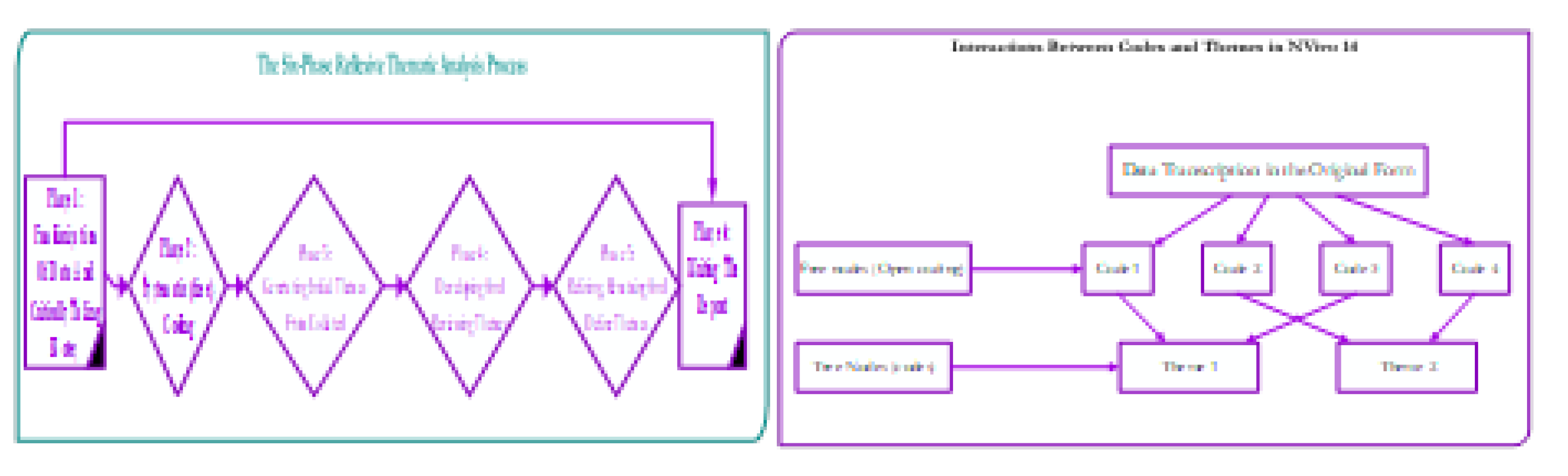
Figure 2.
This is a figure. Schemes follow another format. If there are multiple panels, they should be listed as follows: (a) demonstrates the methodological design of the study; (b) highlights the demographic configuration of the participants. The Y-axis represents the years of working experience, while the X-axis indicates the work designation.
Figure 2.
This is a figure. Schemes follow another format. If there are multiple panels, they should be listed as follows: (a) demonstrates the methodological design of the study; (b) highlights the demographic configuration of the participants. The Y-axis represents the years of working experience, while the X-axis indicates the work designation.
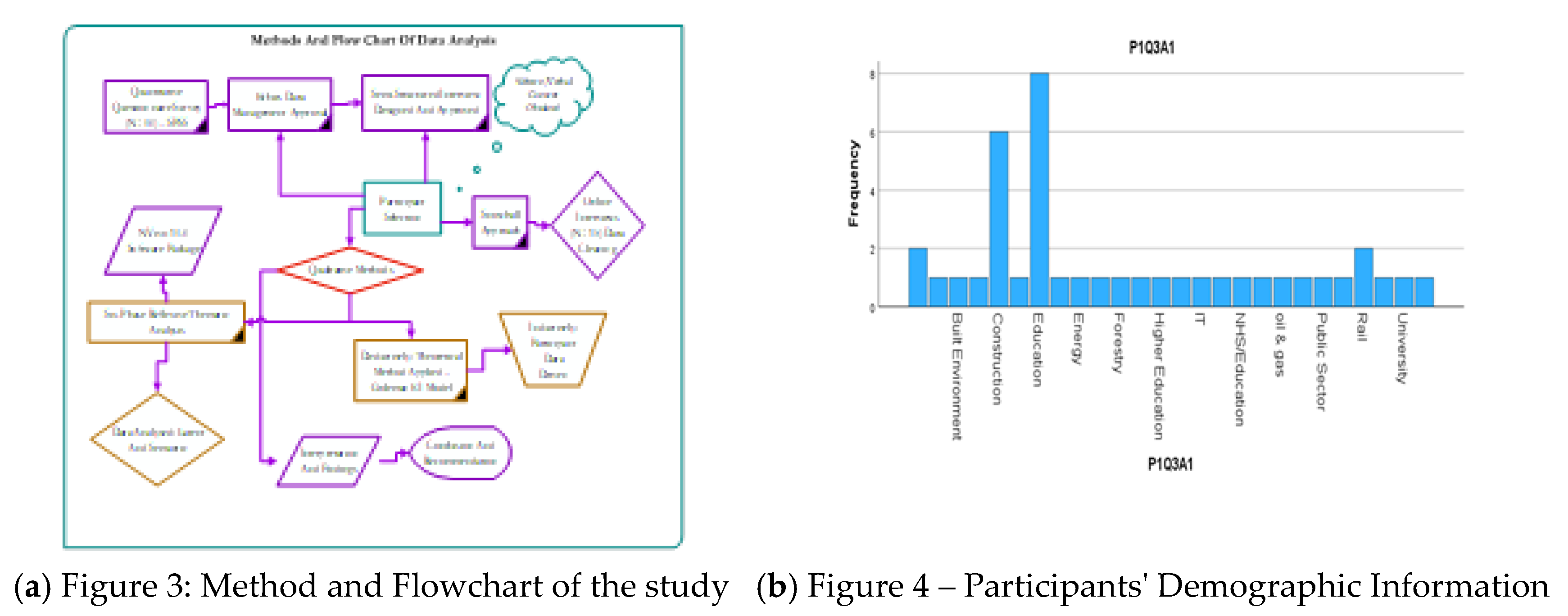

Table 1.
Display some fraction examples of the quotes from participants and how the themes were discovered from the participants' perspective.
Table 1.
Display some fraction examples of the quotes from participants and how the themes were discovered from the participants' perspective.
| Key Themes | Participants Excerpt | Interpretation |
|---|---|---|
| EI Awareness or EI familiarity | P9: Let me say I am not familiar | Participants' excerpts reveal varied familiarity and awareness of emotional intelligence. In contrast, some showed a solid understanding of EI, most displayed little or no awareness. This highlights a gap that requires EI training, both for theoretical understanding and practical application in the workplace. |
| P5: I am somewhat aware. | ||
| P7: I am relatively familiar | ||
| P20: I am not familiar with it | ||
| Productivity | P17: You must be broad in your EI to understand and be sensitive, and must ensure everybody is happy to be productive | Participants in this bubble found that EI is connected to harmony and happiness. This, in turn, influences decisions, which contribute to the project's success. When people feel happy, their motivation increases. This sense of feeling valued and appreciated ultimately helps project tasks run smoothly and achieve high productivity. |
| When they are happy, they are more productive. | ||
| Decision making | P6: I incorporate EI in my decision-making when assigning tasks | A question was asked about how they incorporate EI into the decision-making process. Many participants report integrating EI into their decision-making, and a significant number apply it in various ways, as shown in the participants' quotes. The implication extends to several aspects of their work, including daily project management tasks related to their roles, motivating team members, communicating with others, understanding stakeholders' requirements, and assessing their work capacity. |
| P10: Emotional intelligence serves as a foundation that filters through all your decision-making. | ||
| P12: Any decision I make, if I do not integrate emotional intelligence properly, will impact the delivery of my project. | ||
| P14: Your emotional intelligence enables you to balance others' needs. | ||
| P18: I am always conscious of checking in with people to ensure they are comfortable with the tasks assigned to them. | ||
| Body language | P2: You must learn to read body language properly when working on a project, and emotional intelligence helps you to understand that. | Participants recognise that EI aids their understanding of body language and tone, as they believe body language requires specific responses. The participants compared body language and tone to a communication medium, implying they can elicit a response. |
| P21: Body language is all part of the concept of understanding human behaviours. |
* Tables show some of the excerpts from the participants and the interpretations.
Disclaimer/Publisher’s Note: The statements, opinions and data contained in all publications are solely those of the individual author(s) and contributor(s) and not of MDPI and/or the editor(s). MDPI and/or the editor(s) disclaim responsibility for any injury to people or property resulting from any ideas, methods, instructions or products referred to in the content. |
© 2025 by the authors. Licensee MDPI, Basel, Switzerland. This article is an open access article distributed under the terms and conditions of the Creative Commons Attribution (CC BY) license (http://creativecommons.org/licenses/by/4.0/).
Copyright: This open access article is published under a Creative Commons CC BY 4.0 license, which permit the free download, distribution, and reuse, provided that the author and preprint are cited in any reuse.


