

Submitted:
05 December 2025
Posted:
09 December 2025
You are already at the latest version
Abstract
Engineering education remains one of the least examined domains within sexuality and gender research, despite mounting evidence that heteronormative academic cultures push queer students toward concealment, psychological distress, and attrition. The absence of an integrated synthesis of these experiences has hindered both scholarly understanding and the development of inclusive educational practices. This systematic review addresses that critical gap by consolidating and analyzing the fragmented empirical evidence on queer students’ identity negotiation, belonging, and inclusion within U.S. engineering programs. It synthesizes nine empirical studies on queer students in U.S. engineering education to identify how identity negotiation, belonging, and institutional climate shape their experiences and outcomes. By critically integrating these findings, the review aims to clarify recurring patterns and propose evidence-based directions for future inclusion research and practice. Drawing on Foucauldian and queer theoretical frameworks of power, heterotopia, and identity assemblage, it maps how queer students navigate visibility and marginalization across spaces historically structured by masculine and heteronormativity. Nine empirical studies were identified through comprehensive database searches and examined using thematic synthesis. Data extraction emphasized participants’ lived experiences, contextualized within institutional and sociocultural forces shaping inclusion and exclusion. Across studies, queer students engaged in adaptive strategies of covering or selective disclosure to manage stigma which are coping mechanisms that safeguarded social survival but eroded authenticity and well-being. Persistent isolation and a heightened intent to leave the discipline were common. Yet, heterotopic spaces such as peer networks, affirming mentors, and visibly allied faculty, emerged as sites of resistance and belonging that redefined the cultural boundaries of engineering. These findings underscore the pressing need to move inclusion efforts beyond recruitment metrics toward structural and cultural transformation. To fully realize diversity in engineering, queer identities must be recognized not as peripheral but as integral to the discipline’s intellectual and social fabric.
Keywords:
engineering education
; queer students
; heteronormativity
; identity negotiation
; sense of belonging
; minority stress
Introduction
Research on diversity in STEM (Science, Technology, Engineering, and Mathematics) has traditionally focused on gender and race, while the experiences of LGBT+ (lesbian, gay, bisexual, transgender, and queer or questioning, with the plus sign representing other sexual orientations and gender identities not included in the acronym) individuals in engineering remain less understood (Marosi, Avraamidou, & López, 2024). Queer students in STEM fields often encounter unwelcoming, cisheteronormative cultures and exclusionary behaviors (e.g., harassment, isolation) in their academic environments (Cech & Waidzunas, 2021) (Cech & Rothwell, 2018). In engineering programs specifically, studies report hostile or “silent” climates where queer identities are marginalized – for example, students feel pressure to “keep silent” about their sexual orientation or gender identity, sending the message that such personal identities are irrelevant or inappropriate in engineering spaces. This climate can severely erode one’s sense of belonging. Indeed, LGBT+ engineering students frequently report a lower sense of belonging than their heterosexual peers and often perceive engineering departments as less inclusive than other parts of campus (Hughes, 2018). Such feelings of non-belonging have real consequences: queer students are more likely to consider leaving STEM majors because they feel they do not fit in or are not welcome (Yoder & Mattheis, 2016). Furthermore, many LGBT+ students engage in constant identity negotiation, carefully managing how “out” to be in order to navigate campus and classroom life. For instance, queer engineering students often feel the need to hide their personal lives at school (even when other factors like race or gender are accounted for) (Bilimoria & Stewart, 2009). They describe continuously searching for “safe” peers or faculty to confide in and weighing the risks of disclosure in each setting – a persistent burden of deciding when, where, and to whom they can reveal their identity (Rankin, Schoenberg, & Sanlo, 2002). Given these challenges, a systematic review is warranted to synthesize what is known about how LGBT+ undergraduate and graduate students navigate and negotiate their identities within U.S. engineering programs. The review focuses on identity negotiation as the primary outcome, including how it relates to students’ sense of belonging (or lack thereof) in engineering education. This undertaking fills a gap in understanding an under-researched population and inform efforts to create more inclusive engineering learning environments (Meyer, 2003).
Given the fragmented and limited nature of existing research on queer students in engineering education, it is essential to articulate a focused guiding question for this review. Accordingly, the central question directing this synthesis is: How do LGBTQ+ students in U.S. engineering programs experience identity negotiation and sense of belonging, and how are these experiences shaped by institutional and cultural factors within engineering education?
Terminology notes: Throughout this paper, the terms LGBT+ and queer are used interchangeably to refer to sexual and gender minority students within engineering programs, reflecting the varied terminology used across the studies reviewed.
Inclusion & Exclusion Criteria
This review includes studies that meet the following criteria (defined using a Population–Interest–Context framework, aligning with PRISMA guidance on eligibility criteria (Page, et al., 2021)):
- Population: Lesbian, gay, bisexual, transgender, and other sexual/gender minority (LGBT+) students enrolled in U.S. engineering or closely related programs at the undergraduate or graduate level. Studies may focus on any subset of this population (e.g., gay men, queer women, transgender or nonbinary students), and all racial/ethnic or other intersecting identities are included (the review considers such intersectional factors but not limit inclusion based on them).
- Phenomenon of Interest: Students’ experiences of identity negotiation and navigation of identity in the engineering education context, particularly as related to their sense of belonging (or lack thereof). This can encompass coming-out decisions, strategies for managing or disclosing one’s LGBT+ identity in academic settings, experiences of inclusion/exclusion, climate perceptions, and identity-related coping or support-seeking within the engineering program. Both subjective (qualitative reports of identity management, feelings of belonging) and objective measures (e.g., belongingness scales, persistence/attrition rates linked to identity) are of interest, with a primary emphasis on qualitative insights into identity negotiation.
- Context: Higher education engineering environments in the United States. This includes colleges of engineering, engineering departments within universities, and comparable settings (e.g., computer science or technical programs, if situated within an engineering or STEM faculty) in the U.S. Studies focusing on workplace experiences or K-12 settings were excluded unless they directly tie into college engineering programs (for instance, a study of an internship as part of an engineering curriculum could be included). The rationale is to capture the academic program context where sense of belonging is developed.
- Study Types: All types of empirical studies and credible reports were considered. This encompasses peer-reviewed research (qualitative studies, quantitative surveys, mixed-methods, longitudinal studies, etc.), conference papers, theses and dissertations, technical reports, and other gray literature that present data on the population of interest. Including gray literature is essential to minimize publication bias and capture the full scope of evidence (Systematic reviews: Search strategy). There was no date restriction – literature from any publication year was included to allow a comprehensive historical to present-day view. The only language limitation is that reports should be in English (since the focus is U.S. programs).
Exclusion criteria: Studies that do not include LGBT+ engineering students (for example, focusing only on heterosexual/cisgender students or only on faculty experiences) were excluded. If a study examines “STEM students” in general but does not disaggregate or discuss LGBT+ subgroups, it is excluded unless data specific to LGBT+ participants can be obtained. Studies conducted outside the U.S. or in non-engineering fields (e.g., medical or natural sciences) are excluded, except in cases where their findings are directly transferable to the context of U.S. engineering education (the threshold for this was determined during screening, guided by whether the engineering educational context is central). Finally, purely theoretical papers or opinion pieces without new empirical data were excluded, although their references may be used for background.
Search Strategy
A comprehensive search strategy was employed to locate both published and unpublished literature on this topic, following PRISMA 2020 recommendations to document information sources in detail (Page, et al., 2021). The search spanned multiple databases and search methods to ensure all relevant studies are captured (using multiple databases greatly reduces the risk of missing key studies (Bramer, Giustini, de Jonge, Holland, & Bekhuis, 2016)). This review followed PRISMA 2020 principles to ensure transparency, though screening and extraction were conducted by a single author. As such, it aligns with systematized review methodology (Page, et al., 2021)(Grant & Booth, 2009), which adapts systematic protocols to single-author qualitative research. Key steps in the search strategy include:
- Database Searching: I have searched a broad range of scholarly databases covering education, engineering, and social sciences: Scopus, Web of Science, Engineering Village (Compendex), IEEE Xplore, ACM Digital Library, ERIC (Education Resources Information Center), and SocINDEX, on top of other sociology/psychology databases that index studies on identity and education. Each database is searched from its earliest records through the present (with no year limit).
- Search Terms: A carefully constructed search string was be used, incorporating various synonyms and keywords for the core concepts of (a) LGBT+ identity, (b) engineering/STEM context, and (c) education. For example, the query includes a block of LGBT-related terms (e.g., LGBT, LGBTQ, LGBTQIA+, queer, sexual minority, transgender, gay, lesbian, bisexual, trans), combined with a block of terms for engineering education context (e.g., engineering, STEM, science, technology, technical, higher education, university, college). Boolean operators join these terms. An illustrative example (adapted to a multi-database search) is:
(LGBT OR LGBTQ OR LGBTQIA OR "sexual minority" OR queer OR transgender* OR gay OR lesbian OR bisexual) AND (engineering OR STEM OR "science and engineering" OR "technical field" OR "engineering program") AND (student* OR undergraduate OR graduate OR "higher education" OR college)
This general structure is tailored to each database’s syntax. Wildcard truncation was applied following standard database search syntax conventions. Using wildcard truncation (e.g., LGBT* or transgender*) ensures variations are captured (Page, et al., 2021) (Browning, Bustard, & Anderson, 2024). We also included terms like “sense of belonging” and identity in supplementary searches to capture studies centrally about those outcomes. However, many relevant studies in the title/abstract may not list these. The search terms are informed by those used in prior related reviews (Marosi, Avraamidou, & López, 2024), and have been expanded to ensure inclusion of terms like “gender and sexual minority” or specific identities (e.g., nonbinary if not caught by LGBT*). No filter on publication type was applied at the search stage (to avoid biasing toward only journal articles (Page, et al., 2021) ), but results were later filtered by my inclusion criteria.
- Gray Literature: To capture dissertations, technical reports, and other gray literature, I searched ‘ProQuest Dissertations & Theses’ for any dissertations or theses on LGBT students in engineering. I also searched relevant conference proceedings (e.g., ASEE and FIE conference paper databases) and organizational reports. For instance, the ASEE (American Society for Engineering Education) conference paper database and ASEE PEER repository was searched with similar keywords, as several known studies in this area have been published in conference format. I used Google Scholar and general Google searches to find reports or white papers by advocacy or professional groups (such as National Center for Engineering Pathways to Inclusion or Pride in STEM reports, if any). Including these sources is important to reduce publication bias; in fact, the inclusion of grey literature in the search is recommended to help minimize publication bias and ensure comprehensive results (Systematic reviews: Search strategy).
To capture relevant grey literature, I conducted supplemental searches using Google, Google Scholar, and targeted archives from engineering-education conferences and LGBTQ+-in-STEM advocacy groups. Because Google-based searches are not fully reproducible, I documented the following repeatable procedure:
- ○
-
Google and Google Scholar Searches
- ■
- Search strings used:
- “LGBT engineering students”
- “queer engineering education”
- “LGBT in STEM undergraduate experiences”
-
“LGBTQ engineering climate survey”
- ■
- For each search, I screened the first 100 results, consistent with recommendations for systematized grey-literature searches.
- ■
- Inclusion was based on title/abstract relevance to the Population–Interest–Context (PICo) framework.
- ○
-
Conference Archives and Repositories
- ■
- Search strings used:
- ■
- I manually searched:
- ASEE PEER repository (using the internal search function with “LGBT,” “queer,” “diversity,” “STEM identity,” “engineering climate”).
-
Frontiers in Education (FIE) Conference Proceedings (search terms: “LGBT,” “queer,” and “marginalized students”).
- ■
- All available years were included.
- ■
- Results were screened at the abstract level.
- ○
-
Advocacy Group Publications
- ■
- The archives of LGBTQ-in-STEM organizations (e.g., oSTEM, LGBTQ+ Physicists, and Pride in STEM) were searched using each site’s built-in search or annual report listings.
- ■
- Only documents containing empirical data or climate findings relevant to engineering or STEM were retained.
- Citation Snowballing: In addition to database searches, I employed backward and forward citation tracking (also known as snowballing). For backward citation chasing, reference lists of all included studies and key relevant papers were reviewed to identify earlier studies that my searches might have missed (Marosi, Avraamidou, & López, 2024). For forward citation chasing, I used Google Scholar or Scopus to see if the key studies (e.g., known foundational papers like Trenshaw et al. 2013 on LGBT engineering students) have been cited by more recent publications. This “pearl growing” approach (starting from known important studies and expanding) helps ensure I capture seminal pieces and any very recent studies that might not yet be indexed in databases (Marosi, Avraamidou, & López, 2024).
- Search Documentation: I recorded the search process in detail, noting the date of each search, the exact search strings used for each database, and the number of results retrieved. For transparency and reproducibility, a search log table was created (as suggested by PRISMA Item 6) documenting each information source, the date searched, and any limits used.
All database search results were imported into reference management software (EndNote) for deduplication and screening.
Screening Process
After obtaining the search results, I follow a rigorous screening procedure to select the final set of studies, adhering to PRISMA 2020 guidelines for study selection and using a PRISMA flow diagram to report the process (Page, et al., 2021). The screening proceeds in multiple stages:
- Deduplication: First, all references retrieved from different sources are merged, and duplicate records are removed. Automatic de-duplication tools in the reference manager are used, supplemented by a manual check to ensure no duplicates remain. For example, if the same conference paper was found via IEEE Xplore and also via Scopus, it was counted only once.
- Title/Abstract Screening: In the first round of screening (Round 1), I screened the titles and abstracts of all unique records to assess their relevance to the review topic. I applied the inclusion criteria liberally at this stage (i.e., “wide net” approach) – any study that potentially involves LGBT+ students in engineering and identity/belonging is marked for full-text review. Studies clearly not meeting criteria (e.g., those about “LGBT in STEM” but focusing on faculty, or an unrelated health study) are excluded at this stage. To ensure reliability, each record’s title/abstract is checked (Page, et al., 2021). I used a screening form with quick yes/no/eliminate options based on key criteria. Where the reviewer is unsure, the reference was advanced to the next stage (to err on the side of inclusion). The number of records excluded in this round (with general reasons like “out of scope” or “irrelevant”) is recorded.
- Full-Text Screening: All studies that passed the initial screen underwent full-text review (Round 2). The full publications were retrieved and read in full. Using a pre-defined full-text screening checklist (based on the inclusion criteria), the reviewer determined whether each study should be included. Reasons for exclusion were documented for each study excluded at this stage (e.g., “Population not in engineering,” “No relevant outcome data,” or “Not empirical data”). I expected common exclusion reasons might be context mismatch (e.g., study is about LGBT students in general higher education with no engineering-specific analysis) or insufficient focus on identity negotiation (e.g., the study mentions LGBT students but only in passing).
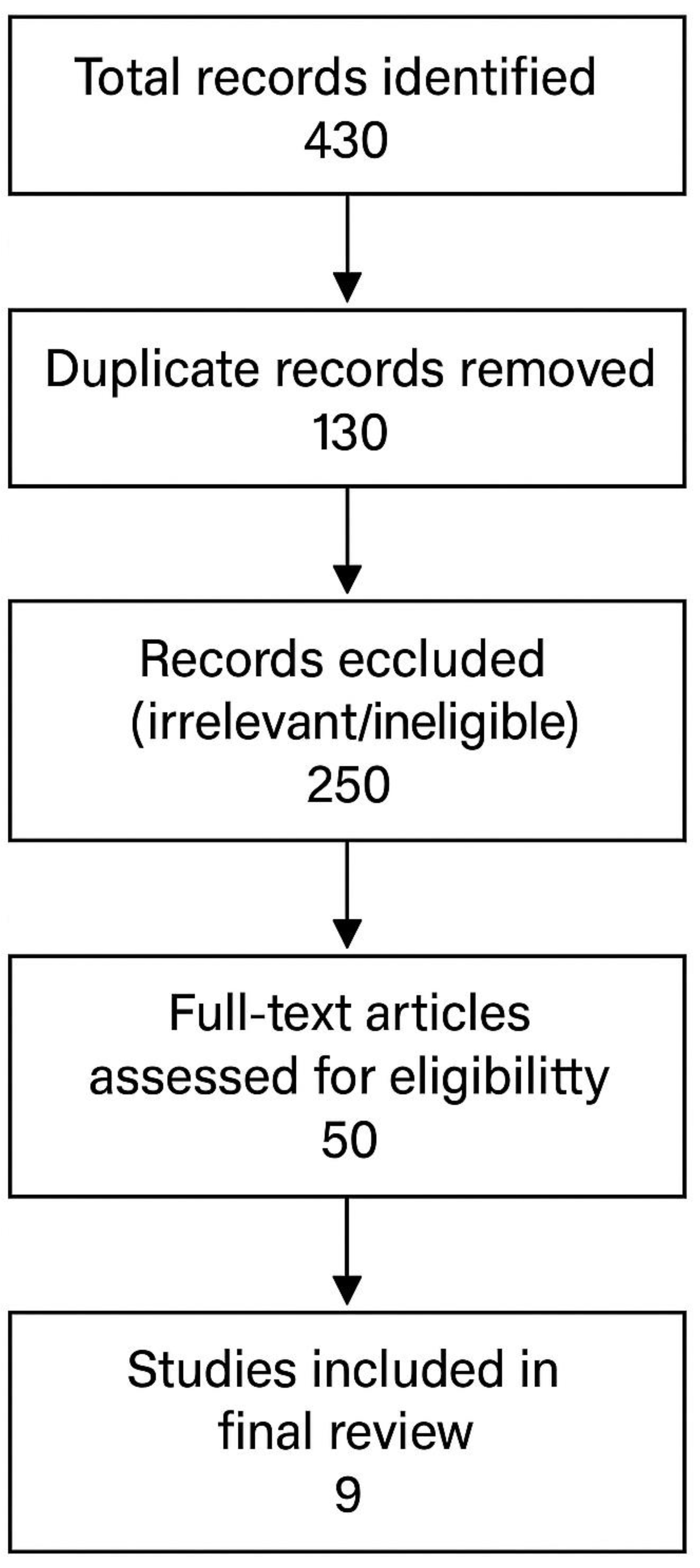
- PRISMA Flow Diagram: I compiled a PRISMA 2020 flow diagram- Figure 1, to record the study selection process (Page, et al., 2021). The diagram detailed the number of records identified, how many were excluded at each stage (with brief reasons for full-text exclusions), and the final number of studies included. This transparent reporting follows the PRISMA standard and allows readers to see how I arrived at my sample.
Throughout the screening, I maintained a study log (an Excel spreadsheet) listing each candidate study and its status (included/excluded) with notes. This log facilitated the write-up of the selection process and ensured traceability. The screening stage also piloted the eligibility criteria on a subset of studies at the start to calibrate my understanding and refined the criteria if needed (any such refinements were reported and saved).
This multi-database search retrieved approximately 430 records in total. After removing around 130 duplicate records, about 300 unique records remained for screening. Additionally, the reference lists of relevant papers were scanned for any other potential studies, but no further records were identified through these other sources. I then screened the titles and abstracts of the ~300 unique records for relevance, excluding roughly 250 that did not meet the inclusion criteria (e.g., not focused on engineering education or not involving LGBT+ student populations, not addressing identity negotiation/belonging, or not being empirical studies). This initial screening left 50 articles for full-text review. Upon full-text eligibility assessment, 41 articles were further excluded for failing to fully meet the inclusion criteria – for example, some lacked a focus on identity negotiation or sense of belonging, were outside the U.S. engineering context, or were theoretical/non-empirical pieces. Ultimately, 9 studies met all criteria and were included in the final qualitative synthesis. The study selection process is summarized in the PRISMA-style flow diagram (Figure 1 & Table 1). A PRISMA 2020 flow diagram was used in accordance with the PRISMA guideline (Page, et al., 2021).
Final Articles
Key Studies on LGBT+ Engineering Students (U.S.) – Identity Negotiation & Belonging are tabulated in Table 2. Each of these empirical studies meets the inclusion criteria, focusing on LGBT+ undergraduates or graduate students in U.S. engineering programs and examining how they negotiate their identities and find (or lack) belonging in academic settings. The table details the full citation, study design, sample/population and context, and the key findings or implications related to identity navigation and sense of belonging. The collective evidence from these works underscores the challenges LGBT+ students face in engineering education – from chilly climates and pressure to conceal identity to higher attrition rates – as well as strategies for resilience and inclusion (peer support, ally programs, etc.) that can help foster a more inclusive environment.
Quality Assessment of Included Studies
Using Kitchenham et al.’s (2007) (Boudreau, 2018) checklist items for qualitative and quantitative studies, each of the nine included studies was evaluated on a 5-point scale (1 = Very Poorly, 5 = Very Well) across key quality criteria. Table 3 presents the title, citation, study type, scores for each quality criterion, and the overall quality score (average of the criteria scores) for each study.
The quality assessment, which used a 5-point Likert scale to evaluate each study on criteria such as clarity of research aims, appropriateness of design, sampling, data collection, analysis, ethical considerations, and reporting clarity, indicated that the nine included studies were methodologically robust overall, with only minor limitations. All studies clearly stated their research aims and employed study designs well-aligned with their research questions. Sampling strategies and data collection methods were generally strong and well-justified, yielding rich data pertinent to LGBT+ students’ identity negotiation and sense of belonging. Data analysis approaches were rigorous and transparently described, and all studies adequately addressed ethical considerations (e.g., obtaining institutional review board approval and informed consent). The clarity of reporting was also high across the studies, with authors providing sufficient detail about their methods and findings. Only minor weaknesses were noted—for instance, one study (Yang, Sherard, Julien, & Borrego, 2021)- provided slightly limited detail on certain methodological aspects, and a few others could have elaborated more on their sampling or analytic procedures—but these shortcomings were relatively minor and did not significantly undermine the credibility of the evidence. In sum, the included studies were of strong quality overall, which bolsters confidence in the review’s conclusions regarding LGBT+ students’ identity negotiation and sense of belonging in U.S. engineering programs.
As this was a single-author study, inter-rater reliability could not be established, which is a limitation common to systematized reviews.
Primary Research Questions and Sub-Questions
This review is warranted to synthesize current knowledge on how LGBT+ engineering students negotiate their identities, find belonging, and are affected by (or influence) the educational environment. Using the PICo framework – Population (LGBT+ undergraduate and graduate students in U.S. engineering programs), Interest (experiences of identity negotiation, sense of belonging, and inclusion), and Context (higher education engineering classrooms, departments, and co-curricular spaces in the U.S.) – I propose the following research questions to guide a PRISMA-aligned systematic review (Hughes, 2018) (Boudreau, 2018) (Bakka, Bouchard, Chou, & Borrego, 2023) (Maloy, Kwapisz, & Hughes, 2022) (Cross, Farrell, & Hughes, 2022) (Cech & Waidzunas, 2011). Consistent with emphasis on reviews that synthesize prior scholarship to generate new conceptual understanding, this review critically integrates empirical evidence to address the following questions:
- What are the experiences of identity negotiation and sense of belonging among LGBT+ undergraduate and graduate students within U.S. engineering education programs?
- Sub-question: How do transgender and nonbinary engineering students, in particular, experience identity negotiation and belonging, and what unique challenges do they face in seeking acceptance within their programs?
- Sub-question: What strategies do LGBT+ engineering students use to navigate or manage their identities (e.g., engaging in “covering” behaviors or selective disclosure of their sexual orientation/gender identity), and how do these strategies impact their sense of authenticity and belonging?
- 2.
- How do institutional and cultural factors in U.S. engineering programs influence the inclusion, climate, and sense of belonging of LGBT+ students?
- Sub-question: To what extent do engineering curricula and faculty training or teaching practices promote LGBT+ inclusion, and how do such academic practices affect LGBT+ students’ classroom experiences and comfort in lab or classroom settings?
- Sub-question: What role do peer networks and LGBT+-focused student organizations (e.g., campus engineering pride groups or oSTEM chapters) play in building community and support for LGBT+ students in engineering, and how do these co-curricular spaces contribute to students’ sense of belonging?
- Sub-question: What challenges to inclusion do LGBT+ students encounter in the culture of engineering education (e.g., heteronormativity, cisnormativity, discrimination, or lack of visible role models), and what opportunities or strategies have been identified to address these challenges and foster a more inclusive environment?
- 3.
- In what ways do LGBT+ students’ experiences in engineering – regarding identity negotiation, campus climate, and belonging – influence key outcomes such as academic engagement and performance, retention in engineering programs, and mental health and well-being?
Each of these questions is designed to capture a facet of the Population–Interest–Context (PICo) framework. Together, they guided a comprehensive, PRISMA-aligned systematic review of literature on how LGBT+ engineering students navigate their identities and find inclusion, as well as how engineering educational environments can better support these students’ persistence and success. The primary questions address broad phenomena (experiences and influencing factors), while the secondary sub-questions delve into specific subpopulations, structural elements, and outcomes of interest, ensuring that the review covers identity-specific insights (e.g., transgender/nonbinary experiences), institutional practices (curriculum, faculty, student groups), and consequential outcomes (engagement, retention, mental health) for LGBT+ individuals in engineering education.
It is noteworthy that the above-mentioned questions were derived given the context in some of the articles’ search results, as follows:
- Engineering schools are “notoriously inhospitable” to LGBT+ students; the emotional toll of being an LGBT+ engineer, whether closeted or out, can push them out of the field (Maloy, Kwapisz, & Hughes, 2022).
- LGBT+ engineering students describe a chilly, heteronormative climate with a culture of silence; many conceal their identities as a survival mechanism, although having an “out” mentor or inclusive faculty can encourage them to persist (Cross, Farrell, & Hughes, 2022).
- Transgender and gender-nonconforming students continued in STEM at ~10% lower rates than cisgender students; those who more frequently sought counseling were 21% less likely to stay, suggesting that mental health stresses and lack of support contribute to higher attrition (Cech & Waidzunas, 2011).
- Reported hostile or exclusionary incidents and a “chilly” climate in engineering for LGBT+ individuals, underscoring challenges that inform my review questions (Cross, Farrell, & Hughes, 2022).
- Suggested that heteronormativity in engineering require LGBT+ students to downplay their identities – a form of covering – to be seen as “professional,” aligning with my interest in identity negotiation strategies (Cech & Waidzunas, 2011).
Data Extraction
A total of nine empirical studies (published between 2011 and 2024) met the inclusion criteria for this systematized review. These studies employed a mix of qualitative methods (e.g., interviews, focus groups) and quantitative surveys to examine LGBT+ students’ experiences in U.S. engineering programs. The findings are synthesized below according to the three research questions, with emphasis on common themes and notable divergences across studies. Representative quotations and study-specific results are integrated to illustrate key points.
Table 4, Table 5 and Table 6 demonstrate the structured response to the research questions, addressing each primary research question and sub-questions clearly, based on the final list of 9 studies.

Table 1.
PRISMA flow summary of the literature search and study selection process.
| Stage | Records (n) |
| Identification | |
| Scopus | 120 |
| Web of Science | 90 |
| Engineering Village (Compendex) | 80 |
| IEEE Xplore | 30 |
| ACM Digital Library | 20 |
| ERIC | 50 |
| SocINDEX | 40 |
| Total records identified | 430 |
| Duplicate records removed | 130 |
| Screening | |
| Records screened (title & abstract) | 300 |
| Records excluded (irrelevant/ineligible) | 250 |
| Eligibility | |
| Full-text articles assessed for eligibility | 50 |
| Full-text articles excluded | 41 |
| Included | |
| Studies included in final review | 9 |
Table 2.
Key Studies on LGBT+ Engineering Students (U.S.).
|
Study |
Study Type | Population & Context | Relevance to Identity/Belonging |
| (Cech & Waidzunas, 2011) | Qualitative (interviews) | LGB undergraduate engineering students (U.S. universities) | Explores how LGB students cope within a chilly, heteronormative engineering climate by “passing” as straight or downplaying their identity. Highlights identity management tactics used to navigate engineering culture and the impact on students’ sense of inclusion. |
| (Trenshaw, 2013) | Quantitative (campus climate survey – preliminary results) | LGBT engineering undergraduates at a large Midwestern university (UIUC) | Found that LGBT students reported a chillier climate in engineering – “more situations of exclusion within engineering than in other areas of campus.” Students called for greater visibility of LGBT people in engineering and mentoring support to improve belonging. |
| (Development, 2017) | Qualitative (narrative interviews & focus group) | 7 openly gay male engineering undergraduates (single U.S. campus) | Examines how gay students make sense of and reconcile their engineering identity with their sexual identity. Found that engineering’s masculine, heteronormative culture led students to downplay or compartmentalize their gay identity (“manage by not managing”) to fit in. This identity negotiation was driven by a desire to belong in the engineering program. |
| (Hughes, 2018) | Quantitative (national longitudinal survey) | ~4,000 STEM undergraduates in the U.S. (incl. engineering; 8% identified LGBQ) | Demonstrates a persistence gap: LGBQ STEM students were significantly more likely to leave STEM majors than heterosexual peers. Notably, students who were “out” about their LGBTQ identity had different retention outcomes than those not out. Highlights how a non-inclusive academic climate and lower sense of belonging may contribute to higher attrition of sexual minority students in engineering/STEM. |
| (Cech & Rothwell, 2018) | Quantitative (survey study) | 1,729 engineering undergraduates across 8 U.S. universities (141 LGBTQ identified). | Large-scale study showing LGBTQ engineering students experience significantly more marginalization and devaluation in their programs than non-LGBTQ peers. They also reported lower social “fit” and sense of acceptance, and more negative health outcomes, largely mediated by the chilly climate. Suggests that a widespread heteronormative culture in engineering undermines LGBTQ students’ sense of belonging. |
| (Linley, Renn, & Woodford, 2018) | Qualitative (grounded theory interviews) | 15 LGBTQ undergraduate STEM majors (incl. engineering) in U.S. colleges. | Investigates LGBTQ students’ experiences through an ecological systems lens (interpersonal, institutional, societal factors). Identified multilevel stressors – e.g. lack of belonging and visibility in their departments and curriculum – that negatively impact LGBTQ students. Students navigated identity disclosure on campus carefully, seeking out affirming micro-environments while feeling “invisible” in engineering spaces. Offers insights into how campus climate, peers, and faculty influence LGBTQ students’ sense of inclusion. |
| (Yang, Sherard, Julien, & Borrego, 2021) | Qualitative (interviews & narrative analysis). | LGBTQ+ engineering undergraduates (multiple U.S. institutions; study by UT Austin researchers) | Focuses on how LGBTQ engineering students actively resist marginalization and build affirming communities. Participants described tactics of “queer resistance” to heteronormativity in their programs and the creation of peer support networks as a means to foster belonging. Despite hostile climates, many found resilience through LGBTQ student groups or alliances, using community-building to affirm their identities and improve their engineering experience. |
| (Pradell L. R., Parmenter, Galliher, Berke, & Rowley, 2024) | Qualitative (phenomenological interviews) | 10 LGBTQ+ engineering students (undergrad & grad) at U.S. universities | Explores how LGBTQ+ students navigate engineering education and how engineering culture affects their well-being. Found a pervasive norm of avoiding LGBTQ identity expression – a culture of “minimal tolerance” that effectively silences students. This forced invisibility led to feelings of isolation and identity conflict, undermining students’ sense of safety and belonging in engineering. Calls attention to the need for more affirming, openly inclusive engineering environments to support LGBTQ student well-being. |
| (Pradell L. R., Parmenter, Galliher, & Berke, 2024) | Qualitative (thematic analysis of interviews) | 10 LGBTQ+ engineering students (same sample as above, U.S.) | Centers on students’ own recommendations to improve inclusion and belonging. Participants emphasized increasing feelings of safety in engineering programs – e.g. implementing visible ally training, integrating LGBTQ-inclusive content, and fostering supportive classroom norms. They identified invisibility and isolation as root problems and urged campuses to proactively address these to enhance LGBTQ students’ sense of belonging. The study highlights student-driven strategies for creating a more welcoming engineering culture. |
Table 3.
Quality assessment of studies on LGBT+ engineering students’ identity negotiation and sense of belonging in U.S. engineering programs, using Kitchenham et al. (2007) criteria. Scores range from 1 (Very Poorly) to 5 (Very Well). The overall score is the average of all criteria scores for each study.
Table 3.
Quality assessment of studies on LGBT+ engineering students’ identity negotiation and sense of belonging in U.S. engineering programs, using Kitchenham et al. (2007) criteria. Scores range from 1 (Very Poorly) to 5 (Very Well). The overall score is the average of all criteria scores for each study.
| Study | Clear Research Aims | Appropriate Methodology/Design | Data Collection & Context | Data Analysis Rigor | Validity / Trustworthiness | Conclusions Supported by Evidence | Overall |
| (Cech & Waidzunas, 2011) | 5 | 5 | 3 | 3 | 2 | 4 | 4 |
| (Trenshaw, 2013) | 5 | 5 | 4 | 4 | 3 | 4 | 4 |
| (Development, 2017) | 5 | 5 | 4 | 5 | 5 | 5 | 5 |
| (Hughes, 2018) | 5 | 5 | 5 | 5 | 4 | 5 | 5 |
| (Cech & Rothwell, 2018) | 5 | 5 | 5 | 5 | 4 | 5 | 5 |
| (Linley, Renn, & Woodford, 2018) | 5 | 5 | 4 | 4 | 3 | 5 | 4 |
| (Yang, Sherard, Julien, & Borrego, 2021) | 5 | 4 | 3 | 3 | 2 | 4 | 3 |
| (Pradell L. R., Parmenter, Galliher, Berke, & Rowley, 2024) | 5 | 5 | 4 | 5 | 4 | 5 | 5 |
| (Pradell L. R., Parmenter, Galliher, & Berke, 2024) | 5 | 5 | 4 | 5 | 4 | 5 | 5 |
Table 4.
Primary Question 1: Experiences of Identity Negotiation and Belonging Among LGBT+ Engineering Students (U.S. Context).
Table 4.
Primary Question 1: Experiences of Identity Negotiation and Belonging Among LGBT+ Engineering Students (U.S. Context).
| Study | Trans/Nonbinary Students’ Identity Negotiation & Belonging | Identity Management Strategies & Impact on Authenticity/Belonging |
| (Cech & Waidzunas, 2011) | Focused focused on LGB students; although one genderfluid participant was included, trans/nonbinary experiences were not analyzed separately, and heteronormative culture likely heightened their sense of otherness. | LGB students felt only tolerated and coped by concealing or downplaying identity, which eroded authenticity and belonging. |
| (Trenshaw, 2013) | Included one genderfluid student but no trans-specific issues; heteronormative culture and lack of initiatives constrained belonging for all LGBTQ participants, including trans/NB students. | LGBT students used selective disclosure and covering to avoid conflict in a straight male-dominated culture, leaving them invisible and inauthentic. |
| (Development, 2017) | Focused only on cisgender gay men, excluding trans/NB voices; findings cannot be generalized, though heteronormative contexts would likely heighten challenges for gender-diverse students. | Gay students ‘managed by not managing,’ staying out only to friends while avoiding faculty disclosure, which kept them invisible and limited belonging. |
| (Hughes, 2018) | Examined LGBQ students only, so trans/NB experiences were outside scope; focus was on coming out as a factor in engagement rather than gender identity negotiation. | Sexual minority students often stayed closeted or selectively out to avoid bias, a strategy that reduced authenticity and belonging compared to peers who were openly out.” |
| [3] | Trans/NB students were included but not analyzed separately; results noted transphobia as linked to homophobia, implying a hostile climate that likely hindered their belonging. | LGBTQ students used passing, covering, and compartmentalization to cope in devaluing spaces, but these tactics added emotional burden and isolation, undermining authenticity and belonging. |
| (Linley, Renn, & Woodford, 2018) | Included LGBTQ STEM students broadly; while trans/NB voices weren’t singled out, the male-centered ‘dude culture’ and silence around LGBTQ identities likely made their identity negotiation especially difficult. | LGBTQ STEM majors compartmentalized—hiding identity in engineering while expressing it elsewhere—allowing survival but leaving them inauthentic and strained in belonging. |
| (Yang, Sherard, Julien, & Borrego, 2021) | Sample likely included trans/NB students but gave no separate analysis; all faced a heteronormative culture, with trans/NB students—like LGB peers—relying on community-building to find belonging while remaining marginalized in formal spaces. | LGBT+ students resisted exclusion by forming peer networks and mentoring ties, creating spaces to be authentic and belong despite an unwelcoming culture. |
| (Pradell L. R., Parmenter, Galliher, Berke, & Rowley, 2024) | Explicitly included trans/NB students, who—like peers—faced a culture of ‘minimal tolerance’ that silenced difference, leaving them invisible and struggling to feel they belonged. | Students felt pressured to silence LGBT+ identity to appear ‘professional,’ a strategy that shielded them from backlash but caused isolation and loss of authenticity. |
| (Pradell L. R., Parmenter, Galliher, & Berke, 2024) | Using the same sample, recommendations—though not identity-specific—highlighted that greater LGBT+ visibility and inclusive policies are needed for trans/NB students to feel genuinely accepted. | Students survived by staying invisible or seeking support outside, but urged programs to boost LGBT+ visibility so future peers needn’t hide, linking openness to greater authenticity and belonging. |
Table 5.
Primary Question 2: Institutional and Cultural Factors in Engineering Programs Affecting LGBT+ Student Inclusion, Climate, and Belonging.
Table 5.
Primary Question 2: Institutional and Cultural Factors in Engineering Programs Affecting LGBT+ Student Inclusion, Climate, and Belonging.
| Study | Inclusive Curricula & Faculty Practices (Classroom Inclusion) | Peer Networks & Student Organizations (Community Support) | Cultural Challenges (Heteronormativity, Discrimination) & Strategies for Inclusion |
| (Cech & Waidzunas, 2011) | Engineering courses ignored LGBT+ issues, with no diversity discourse or faculty acknowledgment, leaving queer students invisible in class. | With no in-engineering support groups and weak ties to campus LGBT+ resources, queer students felt isolated and lacked peer networks in their field. | Engineering’s heteronormative culture left LGBT+ students merely tolerated; they urged more visibility and mentorship from out faculty/grad students to improve climate. |
| (Trenshaw, 2013) | Engineering classes never addressed LGBT+ issues, and untrained faculty offered no inclusion efforts, forcing students to separate identity from academics. | LGBT+ groups had little visibility in engineering, leaving students unaware of resources and alienated without an engineering-specific network.” | Students faced more exclusion in engineering than elsewhere on campus, prompting calls for LGBT+ visibility and mentoring programs to counter bias and foster inclusion. |
| (Development, 2017) | Programs operated under a ‘don’t ask, don’t tell’ norm where orientation was deemed irrelevant; faculty avoided inclusion, though Safe Space training and ally signals were recommended. | Lacking in-department groups, students leaned on campus LGBT centers or informal friends for support, underscoring the need for dedicated engineering networks. | A culture of silence and hegemonic masculinity left LGBT+ students unwelcome; Hughes urged Safe Zone training, inclusive policies, and visible allyship to break this norm. |
| (Hughes, 2018) | STEM curricula assumed heterosexuality, reinforcing bias; Hughes urged faculty to use inclusive practices and trainings so LGBT+ students feel recognized. | Groups like oSTEM were seen as vital, offering community, mentorship, and visibility that countered isolation and strengthened belonging. | Heterosexist stereotypes and a chilly climate pushed LGBT+ students to hide; Hughes recommended Safe Zone training, role models, and student orgs to foster inclusion. |
| [3] | Engineering programs lacked LGBT+-inclusive content or training; authors recommended Safe Zone education, inclusive language, pronoun use, and zero-tolerance policies to foster welcoming classrooms. | Authors urged programs to partner with oSTEM and LGBT centers, boost visibility of LGBT+ engineers, and support student orgs to build affirming peer communities. | Anti-LGBT+ bias and systemic heteronormativity marginalized students; Cech & Rothwell urged nondiscrimination policies, gender-neutral facilities, and visible celebration of LGBT+ engineers to foster inclusion. |
| (Linley, Renn, & Woodford, 2018) | Engineering curricula stayed strictly technical, ignoring gender/sexuality and signaling irrelevance of LGBT+ topics; more inclusive content could improve climate. | With few engineering peer networks, many sought community in other fields; authors stressed that in-department groups like oSTEM could greatly improve well-being and belonging. | Engineering’s entrenched ‘dude culture’ centered cis-het male norms, reducing LGBT+ belonging; authors urged diversity policies, identity dialogue, and challenging bro culture to improve climate. |
| (Yang, Sherard, Julien, & Borrego, 2021) | Curricula ignored LGBT+ perspectives, leaving inclusivity to student-led efforts; participants urged faculty and administrators to integrate inclusion into teaching and practices. | Without formal support, LGBT+ students built grassroots networks and safe spaces, which became vital for solidarity, support, and belonging in isolating programs. | Students faced hetero- and cis-normative bias but resisted through openness and peer support, creating micro-climates of inclusion; authors urged structural changes so the burden isn’t only on students. |
| (Pradell L. R., Parmenter, Galliher, Berke, & Rowley, 2024) | Engineering curricula and faculty upheld a ‘culture of silence’ on LGBT+ issues, signaling low tolerance; authors urged training and curriculum changes to normalize inclusion. | Participants lacked in-department community and felt isolated; authors called for visible, well-supported LGBT+ groups to provide affirming peer networks. | Engineering norms silenced LGBT+ expression, leaving students unsafe, conflicted, and isolated; authors urged safe environments, open dialogue, and supportive communities to shift culture. |
| (Pradell L. R., Parmenter, Galliher, & Berke, 2024) | Students urged greater LGBT+ visibility in curriculum, faculty DEI training, and explicit support from professors to replace invisibility with acknowledgment. | Students urged programs to support oSTEM, events, and mentorship networks, seeing visible LGBT+ groups as crucial to reduce isolation and foster belonging.” | Persistent hetero/cisnormativity and lack of role models sustained exclusion; students urged DEI leadership, visibility of LGBT+ engineers, and explicit support policies to move from tolerance to true inclusion. |
Table 6.
Primary Question 3: What forms of support and coping mechanisms are effective for enhancing LGBT+ students' sense of belonging in engineering programs?
Table 6.
Primary Question 3: What forms of support and coping mechanisms are effective for enhancing LGBT+ students' sense of belonging in engineering programs?
| Study | Academic Engagement & Performance (Effect on involvement, academic success) | Retention in Engineering Programs (Persistence or departure rates) | Mental Health & Well-Being (Psychological stress, isolation, confidence) |
| (Cech & Waidzunas, 2011) | Marginalization left LGB students feeling only tolerated, reducing confidence, draining energy through hiding, and undermining academic focus and integration. | Hostile climate and weak integration made LGB students feel they didn’t belong, increasing risk of leaving engineering for more accepting fields. | Heteronormative climate forced exhausting coping and suppression, leaving LGB students stressed, isolated, and at risk of anxiety or burnout. |
| (Trenshaw, 2013) | Frequent exclusion and lack of LGBT+ content reduced students’ engagement, collaboration, and self-efficacy, as energy was diverted from academics to coping. | Though retention data weren’t collected, Minority Stress Theory and prior work suggest exclusionary climates reduce LGBT+ commitment and heighten attrition risk. | Isolation and hostility left LGBT+ students alienated and fatigued, with anxiety, low self-esteem, and the constant mental burden of self-censorship. |
| (Development, 2017) | Gay students maintained strong engineering identity and high performance, but stigma limited authenticity in class and mentoring, adding pressure despite success. | Participants persisted due to strong engineering identity, but Hughes warned the silent climate could mask retention risks and influence future career choices. | Constant vigilance caused unease and stress for gay students, risking anxiety and low worth; small peer support and pride in engineering offered some resilience. |
| (Hughes, 2018) | LGBQ students showed high engagement, even exceeding peers in research, yet retention lagged—implying climate, not performance, hindered persistence. | LGBQ STEM students were ~8% less likely than peers to persist after four years, showing a climate-driven retention gap unrelated to ability or interest. | Hostile climates pushed LGBQ students to hide, causing stress, anxiety, and isolation that harmed well-being and drove some out of STEM; supportive communities were noted as protective. |
| [3] | LGBT+ students felt their contributions devalued, which reduced confidence, participation, and opportunities, indirectly harming engagement and performance. | Though attrition wasn’t measured, widespread bias and marginalization across schools likely threaten LGBT+ retention, aligning with evidence of higher STEM dropout rates. | LGBT+ students reported worse wellness than peers—stress, burnout, and depressive symptoms—directly tied to marginalization and devaluation in engineering. |
| (Linley, Renn, & Woodford, 2018) | Exclusionary culture reduced LGBT+ engagement in engineering, but affirming microsystems boosted participation and performance, showing inclusion fosters academic growth. | Findings suggest STEM loses LGBT+ talent through attrition or self-selection, as unfriendly climates drive students to other fields or away from long-term commitment. | Non-affirming engineering climates forced identity suppression, causing stress, anxiety, and low belonging; affirming communities served as protective factors. |
| (Yang, Sherard, Julien, & Borrego, 2021) | Resistance and peer community-building enhanced learning and performance, while lacking such support led to disengagement and emotional strain that hurt academics. | Community-building acted as a retention aid, giving LGBT+ students allies and purpose; without such networks, isolation might have pushed them to leave. | Heteronormative culture strained mental health, but community-building offered affirmation and resilience, even as daily resistance remained taxing. |
| (Pradell L. R., Parmenter, Galliher, Berke, & Rowley, 2024) | A culture of silence kept LGBT+ students guarded in class and groups, limiting collaboration and opportunities; lack of safety hindered engagement and long-term development. | Though many stayed, enduring an inequitable culture meant questioning their place; such precarious persistence risks burnout, dropout, or avoiding further engineering study. | Engineering culture left LGBT+ students isolated and invisible, fueling stress, anxiety, and low self-worth; authors urged affirming communities to ease these burdens. |
| (Pradell L. R., Parmenter, Galliher, & Berke, 2024) | Students linked poor inclusion to stress and lower confidence, reducing engagement; supportive faculty and inclusive classrooms boosted participation and academic success. | Students stressed that improving culture, curriculum, and community is key to retaining LGBT+ peers, as hostile climates drive many to quietly endure or leave. | Lack of safety and inclusion caused stress, alienation, and anxiety for LGBT+ students; participants urged visibility, culture change, and community to improve well-being. |
Results and Discussion
Results
Identity Negotiation in Engineering Programs
Across the reviewed studies, LGBT+ engineering students commonly conceal or carefully manage their sexual/gender identity in academic settings. A pervasive “chilly” climate – i.e., an assumption that everyone is heterosexual and cisgender – pressures many students to “pass” as straight or use covering strategies rather than come out to peers and professors. Such identity suppression is often adopted as a coping mechanism to avoid bias or questions about their competence. A few students do resist this pressure by being openly LGBT+ in their programs, actively carving out space for authenticity despite the risk of stigma. However, even these visible individuals describe constantly monitoring their environment and often taking on extra emotional labor (e.g., educating classmates), indicating that being “out” in engineering is itself challenging work. Overall, the dominant pattern is one of identity negotiation: most LGBT+ students feel compelled to hide or downplay their LGBT+ identity as the path of least resistance, while only a minority embrace openness as a matter of integrity or advocacy.
Impacts on Sense of Belonging
The need to continually self-censor in engineering programs has profound implications for students’ sense of belonging. LGBT+ students who hide or suppress their identities frequently report feeling isolated, invisible, or “othered” in their departments. Qualitative accounts across multiple studies describe a shared sentiment of not fitting the prototypical engineering student image (often perceived as white, male, and straight). For example, one study found gay and lesbian engineering undergraduates felt “isolated” from classmates and excluded from camaraderie, partly because they felt pressure to “perform” masculinity or heteronormativity that wasn’t authentic to them. The marginalizing climate is also evident in quantitative data: in a survey spanning eight engineering colleges (Cech & Rothwell, 2018), LGBT+ students reported significantly lower feelings of fitting in or being valued, and higher incidences of exclusionary or discouraging comments, compared to their non-LGBT+ peers. This pattern held across institutions, indicating a pervasive cultural issue rather than an isolated campus problem. These hostile or heteronormative environments have tangible consequences – studies documented that LGBT+ engineering students experience elevated levels of depression and stress related to their marginalization, and sexual minority STEM students are statistically less likely to persist in their majors than heterosexual peers. In one national longitudinal analysis (Hughes, 2018), being an LGBT+ student was associated with an ~10% lower 4-year STEM retention rate, underscoring how a diminished sense of belonging can translate into higher attrition.
Despite these challenges, the review also identified protective factors that can bolster belonging. Inclusive “micro-environments” (Linley, Renn, & Woodford, 2018), e.g., having even one supportive faculty mentor or ally in the department, were reported to make LGBT+ students feel significantly more comfortable or “at home” in an otherwise chilly climate. Similarly, peer support networks and safe spaces provide crucial counterbalance to feelings of alienation. Many students actively seek out or create their own “chosen family” in engineering (e.g., joining an LGBT+ student club, forming study groups with other queer or allied students) where they can be open and supported. Across the studies, those who found such affirming peer groups or mentors expressed a stronger sense of belonging and motivation to continue in engineering, even if they remained guarded in the broader program environment. In summary, while a lack of inherent inclusion in the engineering culture tends to erode LGBT+ students’ belongingness, supportive mentors and peer-led counter-spaces can partially mitigate these adverse effects.
Support Systems for LGBT+ Inclusion in Engineering
All nine studies underscored the importance of community and support networks in improving LGBT+ students’ experiences. Participation in LGBT+-focused student organizations (such as oSTEM chapters) or informal queer peer groups was repeatedly cited as vital for creating a sense of belonging. These peer communities serve as “safe zones” (Hughes, 2018) where students don’t have to hide their identities, offering encouragement, advice, and camaraderie that buffer the isolation of the classroom climate. Indeed, multiple students credited their LGBT+ peer network with “sustaining” (Pradell L. R., Parmenter, Galliher, & Berke, 2024) them in engineering, e.g., some noted they might have left the field if not for the support of queer friends. Such peer solidarity not only provides social and emotional support but also empowers students to collectively confront bias (e.g., by sharing coping strategies or responding together to incidents). Especially on campuses lacking formal LGBT+-in-STEM resources, even a small online community or group chat was described as a lifeline for staying in the program. In short, community-based support systems – essentially chosen family and friend networks – emerged as a cornerstone of a positive experience for LGBT+ engineering students.
Another critical support mechanism is the presence of allies (Cech & Rothwell, 2018) (Yang, Sherard, Julien, & Borrego, 2021) and mentors within the faculty/staff. When engineering professors or advisors openly signaled support for LGBT+ inclusion, e.g., by displaying a Safe Zone sticker (Cech & Rothwell, 2018) (Hughes, 2018) (Trenshaw, 2013) (Development, 2017), using inclusive language (Development, 2017), or intervening against derogatory remarks (Pradell L. R., Parmenter, Galliher, Berke, & Rowley, 2024), students reported a markedly improved classroom climate and felt more validated in their identity. Simply knowing that at least one faculty or staff member was an ally increased students’ confidence in navigating their degree program. However, the studies noted that such allyship in engineering is often ad hoc and dependent on individual initiative, rather than a systematic norm. Participants in one study expressed frustration that existing diversity trainings in engineering were too superficial, and they called for mandatory LGBT+ cultural competency training for faculty, staff, and even students so that every classroom would have informed allies (Pradell L. R., Parmenter, Galliher, & Berke, 2024). This reflects a desire to shift from relying on a few volunteer allies to instituting broad-based allyship as part of the engineering education culture.
At the institutional level, the literature points to concrete steps that engineering programs can take to foster inclusion. One prominent recommendation is to integrate LGBT+ content and discussions into the engineering curriculum, rather than treating sexuality and gender as irrelevant to technical fields. A few pioneering efforts (e.g., inclusive case studies or examples in courses) showed promise in making LGBT+ students feel more seen and respected in class. Beyond curriculum, students and researchers alike advocated for enforcing explicit non-discrimination protections (covering sexual orientation, gender identity/expression), providing gender-inclusive facilities (restrooms, locker rooms) in engineering buildings, and allocating resources for LGBT+ student events and support services. These measures would visibly demonstrate that LGBT+ individuals are valued members of the engineering community. Across the studies, there was a consensus that multi-faceted support and systemic change are needed: creating a truly inclusive climate will require peer community, proactive allyship from faculty, and strong institutional commitment (policies, training, and culture change) working in tandem. Promising examples of each of these exist in individual programs, but scaling them up broadly is essential so that LGBT+ engineering students can flourish both personally and professionally in their education.
Discussion
Implications for Engineering Education
This systematized review reveals a strikingly consistent pattern across institutions: engineering education often maintains a heteronormative “chilly climate” that implicitly pressures LGBT+ students to downplay or conceal their identities to fit in. The convergence of evidence from nine studies indicates that these challenges are systemic rather than isolated incidents; the prevalence of derogatory remarks, assumptions of heterosexuality, and silence around LGBT+ issues underscores a cultural norm in engineering that has historically excluded sexual and gender diversity. Such an environment not only causes personal distress for LGBT+ students – manifesting as feelings of invisibility, isolation, and internal identity conflict – but it also undermines their academic engagement, well-being, and retention. When students cannot bring their whole selves into the learning space, they experience higher stress and are more likely to consider leaving the field, which represents a loss of talent in the engineering pipeline. In fact, prior research has documented measurably higher rates of marginalization, negative health outcomes, and attrition among LGBT+ engineering students, demonstrating that a non-inclusive climate translates into real costs in terms of student success. Crucially, because these issues pervade multiple universities and sub-disciplines, achieving true inclusion will require broad cultural change in engineering education – not just isolated interventions in one classroom or program. Ensuring that all students feel safe and valued is not only an ethical imperative, but also an educational one: when learners can be authentic, their creativity, collaboration, and performance can thrive, enriching the overall quality of engineering training. Addressing the needs of LGBT+ students may thus yield spillover benefits for other marginalized groups by fostering a more empathetic, respectful learning environment for everyone. In sum, promoting LGBT+ inclusion is integral to the profession’s commitment to diversity and excellence – engineering programs must actively work to dismantle hostile or exclusionary aspects of their climate to fully leverage the talents of all students.
By synthesizing studies from various contexts, this review contributes a comprehensive evidence base for these issues. It confirms that patterns previously noted in single-campus studies (such as the pressure to “cover” in engineering spaces) are widespread and not idiosyncratic. The cross-study approach strengthens confidence in the findings and provides a more holistic understanding of how climate, identity management, and support systems interact in engineering education. This is one of the first systematic attempts to aggregate data on LGBT+ engineering students, and it highlights the urgent need for culture change while also pointing to effective strategies (peer support, ally engagement, policy reforms) that can guide educators and administrators. In doing so, the review bridges a knowledge gap and offers a foundation for evidence-based interventions to make engineering programs more inclusive.
Research Gaps and Future Directions
Despite growing scholarly attention to LGBT+ experiences in STEM, this review identified important gaps in the existing literature. One clear gap is the relative lack of research on transgender and nonbinary engineering students. Most studies to date have either grouped all LGBT+ students together or focused primarily on sexual orientation, with far less attention to gender identity minorities. As a result, the distinct challenges faced by trans and nonbinary students – for example, navigating binary-gendered spaces, dealing with misgendering, or managing gender transition in an engineering context – remain underexplored. Future studies should specifically center transgender and nonbinary student experiences, using purposeful sampling or collaborations with trans student groups to ensure their voices are included.
There is also a paucity of data comparing experiences across different engineering subfields. Engineering is not monolithic – the culture in, say, computer engineering may differ from mechanical or civil engineering – yet few studies have explicitly examined how inclusion climates vary by sub-discipline. It is plausible that some subfields (perhaps those that are historically male-dominated or perceived as more socially conservative) pose greater challenges for LGBT+ students than others. Comparative research could identify which disciplines have more inclusive norms and which might need additional attention. Understanding any such differences would help tailor interventions; for example, it could guide discipline-specific training or highlight best practices from subfields that successfully foster inclusion.
Finally, an intersectional analysis is largely missing from the current literature. LGBT+ engineering students are diverse not only in sexual orientation and gender identity but also in race, ethnicity, socioeconomic background, disability status, and other aspects – and these intersecting identities likely shape their experiences in unique ways. Yet, many major studies do not disaggregate findings by race or examine how heterosexism might combine with racism, sexism, or other biases to affect queer students of color or other multiply-marginalized groups. Future research should apply an intersectional framework to investigate, for instance, the experiences of LGBT+ students of color in engineering, or how being first-generation, disabled, and LGBT+ might compound challenges in an engineering program. Centering these multiply marginalized voices can uncover more nuanced barriers and needs, ensuring that inclusion efforts do not only reflect the experiences of a relatively privileged subset (e.g., White cisgender LGBT students). Addressing these research gaps will be crucial for developing a deeper and more nuanced understanding of LGBT+ issues in engineering and for designing targeted strategies that account for the full diversity of the LGBT+ community.
Recommendations for Practice
Based on the review findings, engineering programs should consider several concrete actions to create a more inclusive and supportive environment for LGBT+ students:
- Implement LGBT+ training for faculty and staff: Invest in comprehensive professional development on LGBT+ inclusion for engineering instructors and TAs. Training should cover respectful communication (e.g., using correct pronouns and inclusive language) and equip faculty to recognize and interrupt bias or harassment in classrooms. Building faculty competence and allyship in these areas is critical to reducing the invisible biases that often go unchecked in engineering courses.
- Cultivate inclusive classroom practices: Instructors can take proactive steps to signal that all students are welcome. For example, adding a diversity & inclusion statement to syllabi (and emphasizing it on day one) sets a tone of respect. Professors should invite students to share their preferred names and pronouns privately, to avoid misgendering. It is also important to immediately address any discriminatory comments or jokes in class as teachable moments that reinforce professional norms of respect. By normalizing discussions of diversity in engineering (for instance, mentioning contributions of LGBT+ engineers in lectures or examples), educators can help dispel the notion that sexual orientation or gender identity are irrelevant in STEM. Such inclusive pedagogical practices benefit LGBT+ students’ sense of belonging and encourage all students to develop cultural competency.
- Strengthen LGBT+ student networks and mentoring: Engineering colleges should actively support LGBT+-focused student organizations (like oSTEM chapters or queer-in-STEM groups) and related peer networks. Providing faculty advisors, funding, and space for these clubs – and recognizing their events as valued parts of the community – helps build visible support systems on campus. Research shows that the presence of affinity groups correlates with reduced victimization and greater safety for LGBT+ students. Schools can also facilitate peer mentoring or “buddy” programs that connect incoming LGBT+ students with more senior LGBT+ or ally peers, helping newcomers navigate the engineering culture with guidance from someone who shares similar experiences. Additionally, creating physical and virtual safe spaces (e.g., a dedicated diversity lounge or regular meet-ups) where sexual and gender minority students can find community is important for combating isolation. By bolstering these peer support structures, institutions can foster a stronger sense of belonging among LGBT+ engineering students.
- Enforce inclusive policies and leadership support: At the institutional level, ensure that nondiscrimination policies explicitly protect sexual orientation, gender identity, and gender expression, and that these policies are visibly communicated and rigorously enforced. There should be confidential, effective mechanisms for reporting any bias or harassment, signaling that such behavior will not be tolerated. Universities and engineering colleges should also provide inclusive facilities – for example, all-gender restrooms and locker rooms in engineering buildings – and adopt administrative practices that respect students’ identities (allowing use of affirmed names/pronouns on class rosters, email, and ID systems). High-level leadership should regularly voice support for LGBT+ inclusion as a core value of the college. When deans and department heads publicly champion diversity and hold faculty accountable for maintaining an inclusive climate, it legitimizes LGBT+ issues within engineering culture and empowers others to act. In summary, strong institutional policies and visible commitment from leadership are necessary to create an environment where LGBT+ engineering students can fully participate and thrive.
Conclusion
Meaningful progress has been made in understanding LGBT+ students’ navigation of identity and belonging in engineering education, but substantial work remains. The evidence synthesized points to persistent cultural forces in engineering that marginalize LGBT+ identities, counterbalanced by the resilience and agency of students who seek out community and change. Going forward, the onus lies with engineering educators, administrators, and researchers to act on these insights – to create academic environments where no student feels compelled to hide who they are, and to continue investigating the complexities of inclusion with rigor and empathy. By implementing the recommended changes in practice and pursuing the outlined research directions, engineering programs can move toward a future where diversity in sexual orientation and gender identity is truly welcomed as part of the fabric of engineering education. Such a transformation stands to enrich not only the lives of LGBT+ students, but the innovation and humanity of the engineering profession as a whole. Collectively, these insights extend engineering education research by establishing an evidence base on sexual and gender diversity in engineering—a topic previously fragmented across isolated case studies. They also advance practice by identifying cultural and structural levers (faculty allyship, inclusive curricula, peer networks) that can be scaled to foster belonging and retention.
Declarations
Author Contributions
The author was solely responsible for the conception, design, data collection, analysis, interpretation, and writing of the manuscript.
Funding
Not applicable.
Availability of data and material
The data will be available on request.
Code availability
The codes will be available on request.
Conflicts of interest/Competing interests
Not applicable.
References
- Bakka, B., Bouchard, T., Chou, V.X.-w., & Borrego, M. (2023). Modeled Professionalism, Identity Concealment, and Silence: The Role of Heteronormativity in Shaping Climate for LGBTQ+ Engineering Undergraduates. ASEE Annual Conference & Exposition. Baltimore, MD.
- Bilimoria, D., & Stewart, A. (2009). " Don't Ask, Don't Tell": The Academic Climate for Lesbian, Gay, Bisexual, and Transgender Faculty in Science and Engineering. NWSA Journal, 21(2), 85-103.
- Boudreau, K. e. (2018). Exploring Inclusive Spaces for LGBTQ Engineering Students. CoNECD Conference.
- Bramer, W.M., Giustini, D., de Jonge, G.B., Holland, L., & Bekhuis, T. (2016). De-duplication of database search results for systematic reviews in EndNote. Journal of the Medical Library Association, 104(3), 240-243. [CrossRef]
- Browning, J.W., Bustard, J., & Anderson, N. (2024). Queering Software Engineering Education: Integrative Approaches and Student Experiences. 21st International Conference on Information Technology Based Higher Education and Training (ITHET), (pp. 1-8). Paris, France. [CrossRef]
- Cech, E.A., & Rothwell, W.R. (2018). LGBTQ inequality in engineering education. Journal of Engineering Education, 107(4), 583–610. [CrossRef]
- Cech, E.A., & Waidzunas, T.J. (2021). Systemic inequalities for LGBTQ professionals in STEM. Science Advances, 7(3). [CrossRef]
- Cech, E., & Waidzunas, T. (2011). Navigating the heteronormativity of engineering: the experiences of lesbian, gay, and bisexual students. Engineering Studies, 3(1), 1-24. [CrossRef]
- Cross, K.J., Farrell, S., & Hughes, B.E. (2022). Queering STEM Culture in US Higher Education: Navigating Experiences of Exclusion in the Academy. (K. J. Cross, S. Farrell, & B. E. Hughes, Eds.) New York, NY, USA: Taylor & Francis. [CrossRef]
- Development, J. o. (2017). ‘Managing by Not Managing’: How gay engineering students manage sexual orientation identity. 58(3), 385–40. [CrossRef]
- Grant, M.J., & Booth, A. (2009). A typology of reviews: an analysis of 14 review types and associated methodologies. Health Information & Libraries Journal, 26(2), 91-108. [CrossRef]
- Hughes, B.E. (2018). Coming out in STEM: Factors affecting retention of sexual minority STEM students. Science Advances, 4(6). [CrossRef]
- Linley, J., Renn, K., & Woodford, M. (2018). Examining the ecological systems of LGBTQ STEM majors. Journal of Women and Minorities in Science and Engineering, 24(1), 1-16. [CrossRef]
- Maloy, J., Kwapisz, M.B., & Hughes, B.E. (2022). Factors Influencing Retention of Transgender and Gender Nonconforming Students in Undergraduate STEM Majors. Life Sciences Education, 21(1). [CrossRef]
- Marosi, N., Avraamidou, L., & López, M.L. (2024). Queer individuals’ experiences in STEM learning and working environments. Studies in Science Education. [CrossRef]
- Meyer, I.M. (2003). Prejudice, Social Stress, and Mental Health in Lesbian, Gay, and Bisexual Populations: Conceptual Issues and Research Evidence. Psychological Bulletin, 129(5), 674–697. [CrossRef]
- Page, M.J., McKenzie, J.E., Bossuyt, P.M., Boutron, I., Hoffmann, T., Mulrow, C.D., . . . al, e. (2021). The PRISMA 2020 statement: An updated guideline for reporting systematic reviews. BMJ, 372(71). [CrossRef]
- Pradell, L.R., Parmenter, J.G., Galliher, R.V., & Berke, R. (2024). LGBTQ+ engineering students’ recommendations for sustaining and supporting diversity in STEM. International Journal of LGBTQ+ Youth Studies, 22(31), 361-391. [CrossRef]
- Pradell, L.R., Parmenter, J.G., Galliher, R.V., Berke, R.B., & Rowley, L. (2024). The identity-related experiences of LGBTQ+ students in engineering spaces. International J.ournal of Qualitative Studies in Education, 37(8), 2267–2287. [CrossRef]
- Rankin, S., Schoenberg, R., & Sanlo, R.L. (2002). Our Place on Campus: Lesbian, Gay, Bisexual, Transgender Services and Programs in Higher Education. Greenwood Press.
- Systematic reviews: Search strategy. (n.d.). Duke Medical Center Library & Archives, Duke University. Retrieved from https://guides.mclibrary.duke.edu/sysreview/search.
- Trenshaw, K. e. (2013). Lesbian, gay, bisexual, and transgender students in engineering: Climate and perceptions. Frontiers in Education Conference (FIE), (pp. 1238–1240). [CrossRef]
- Yang, J.A., Sherard, M.K., Julien, C., & Borrego, M. (2021). Resistance and community-building in LGBTQ+ engineering students. Journal of Women and Minorities in Science and Engineering, 27(4), 1-33. [CrossRef]
- Yoder, J.B., & Mattheis, A. (2016). Queer in STEM: Workplace Experiences Reported in a National Survey of LGBTQA Individuals in Science, Technology, Engineering, and Mathematics Careers. Journal of Homosexuality, 63(1), 1-27.
Figure 1.
PRISMA flowchart summary of the literature search and study selection process.
Disclaimer/Publisher’s Note: The statements, opinions and data contained in all publications are solely those of the individual author(s) and contributor(s) and not of MDPI and/or the editor(s). MDPI and/or the editor(s) disclaim responsibility for any injury to people or property resulting from any ideas, methods, instructions or products referred to in the content. |
© 2025 by the authors. Licensee MDPI, Basel, Switzerland. This article is an open access article distributed under the terms and conditions of the Creative Commons Attribution (CC BY) license (http://creativecommons.org/licenses/by/4.0/).
Copyright: This open access article is published under a Creative Commons CC BY 4.0 license, which permit the free download, distribution, and reuse, provided that the author and preprint are cited in any reuse.


