1. Introduction
In the context studied, understanding the ideal profile of digital consumers had become an international challenge. With technological advancements, the characteristics of market segments changed, making it difficult to define an ideal profile. In 2023, in the USA and Europe, companies that had not implemented adequate segmentation experienced a 41% customer churn rate. Among the reasons for this were that 45% opted for better offers, while 65% stopped buying due to high prices, 43% due to a poor purchase experience, and 40% due to inconsistent products (Goldman, 2024). According to a study by Curtis et al. (2024), companies with personalized strategies through segmentation can increase their revenue by 10% to 30%. However, companies faced challenges in correctly identifying market segmentation, understanding the evolving needs of consumers, determining appropriate pricing, and managing the cost of segmentation and marketing strategies (Henry, 2024). By establishing the profile of the digital consumer, opticians in Chimbote were able to establish effective sales strategies to reach their customers, benefiting the organization and its employees in an inclusive and sustainable way; in accordance with SDG8 which seeks to promote sustainable and inclusive economic growth, in order to protect workers’ rights (United Nations, 2023).
The Peruvian digital consumer faced several challenges related to geographic access, cultural heterogeneity, and limited technology. Consumers aged 45 to 65 make fewer online purchases and are more interested in health and political topics, while shoppers aged 35 to 44 look for deals and focus on household consumption. Consumers aged 25 to 34 prefer lifestyle and financial topics, and finally, consumers aged 18 to 24 prefer online shopping (Business Empresarial, 2025). However, information on Peruvian consumer behavior is limited by a lack of statistics and data variability, which restricts the ability to accurately establish consumer profiles (Faster Capital, 2024).
At the local level, of the optical shops located in Chimbote, only 30% implement marketing strategies to promote their products, using outdated technology such as paid radio and television advertising. This negatively impacts the quality of diagnoses and results, and generates negative feedback from customers (Ministry of Health of Peru, 2025). The behavior of digital consumers has undergone significant changes due to digital transformation, the rise of e-commerce, and the increased use of smart devices. This shift has compelled optical businesses in Chimbote to re-evaluate their strategic approaches to migrate sales to the digital environment as well.
Opticians in Chimbote failed to grasp the evolving needs of digital consumers, including their purchasing criteria, levels of brand interaction, search habits, and trust in online shopping. Therefore, understanding the digital consumer profile and properly segmenting the market to offer products tailored to their needs was crucial. The lack of product segmentation hindered the development of strategies to improve communication, customer loyalty, and the overall experience of using digital channels for purchases. The absence of marketing strategies hampered expansion and the acquisition of new clients, revealing a lack of market focus on the part of the opticians. Furthermore, the limited technological investment by business owners resulted in flawed product and service presentations that did not align with the profiles of the various segments within the Chimbote optical market.
Consequently, the problem was defined in general terms as: What are the characteristics of the digital consumer profile and to which segments do the customers of optical stores in Chimbote belong in 2025? Specifically, the following questions were proposed: a) What are the geographic characteristics of the digital consumer in optical stores in Chimbote in 2025? b) What are the demographic characteristics of the digital consumer in optical stores in Chimbote in 2025? c) What are the psychographic characteristics of the digital consumer in optical stores in Chimbote in 2025? d) What are the behavioral characteristics of the digital consumer in optical stores in Chimbote in 2025? e) What are the segments of digital consumers in optical stores in Chimbote in 2025?
The justification for this study was presented from a theoretical perspective, utilizing and analyzing various existing theories compiled from other authors, which would enhance the understanding of the research. From a practical standpoint, it was justified by identifying the problem and its causes, enabling opticians to develop solutions that benefit their customers. From a social perspective, the study of the optical sector and consumer profiles is relevant due to its impact on visual health and quality of life. Finally, from a methodological perspective, the justification focused on the application of surveys that would allow for the analysis of relevant and reliable information for understanding the problem and for use by future students.
Regarding the study objectives, the following were defined in general terms: To determine the characteristics of the digital consumer profile and to identify the segments to which digital customers of optical stores in Chimbote belong, 2025; and specifically, the following objectives were proposed: a) To analyze the geographical characteristics of the digital consumer in optical stores in Chimbote, 2025; b) To analyze the demographic characteristics of the digital consumer in optical stores in Chimbote, 2025; c) To analyze the psychographic characteristics of the digital consumer in optical stores in Chimbote, 2025; d) To analyze the behavioral characteristics of the digital consumer in optical stores in Chimbote, 2025; e) To analyze the segments of digital consumers of optical stores in Chimbote, 2025.
2. Theoretical Framework
The digital consumer profile is conceptualized as the individual who, through the use of digital tools, searches for, acquires, and interacts with products, services, or brands. This has given customers greater decision-making power and market participation (Musavi, 2021). Furthermore, this profile refers to someone who, through digitalization, is more informed and demanding, requiring personalized and meaningful experiences from sellers (Delgado, 2022). The digital consumer profile is defined by identifying the following factors: cultural, associated with customs, attitudes, and traditions; social, related to relationships with social groups that influence behavior; personal, related to lifestyle and daily routines; and psychological, related to beliefs and motivations (Sare et al., 2023).
Among the theories related to the digital consumer profile, we have the theory of digital consumer behavior; this seeks to adapt traditional consumer principles to the digital environment through behavior, perception, and attitude toward technological advancements. This theory aims to understand consumer preferences to improve the service offering (Efendioglu , 2024). The Prosumer theory (producer-consumer) establishes that the user not only consumes but also becomes an important part of the process through their influence, generating greater impact (Lopez and Asión , 2023). The Zero Moment theory of the Zero Moment of Truth (ZMOT) describes the moment consumers begin searching for products before physically seeing them, and their profile is defined by comparisons, influences, and research on digital networks (Riquelme, 2020). Digital Engagement theory proposes the search for a connection between the digital consumer and the brand through personalized and interactive experiences to achieve satisfaction and loyalty (Solomon, 2020). Regarding the theory of big data and personalization, organizations seek to understand digital consumers by analyzing digitally obtained data; this allows brands to offer services and products tailored to the profile obtained from digital information (Chaffey and Ellis, 2019).
Market segmentation is conceptualized as the interactive and continuous process of grouping and analyzing customers with similar needs within a set; in this way, organizations can differentiate their groups and personalize their offerings in a more targeted manner (Mora et al., 2021). Furthermore, it is conceptualized as the interactive and continuous process of grouping and analyzing customers with similar needs within a set, enabling organizations to differentiate groups and personalize their offerings (Mora et al., 2021). Segmentation has become a strategy that influences marketing activities by better allocating resources, allowing for a more competitive environment for companies that implement it (Clarke et al., 2024). Segmentation in the digital age is more complex to understand and analyze because the information is highly variable, considering demographic factors and, even more so, those related to behavior, needs, and relationships (Sánchez, 2022). The dimensions for market segmentation were detailed below: geographic segmentation, demographic segmentation, psychographic segmentation, behavioral segmentation.
Finally, the following hypotheses are proposed for this thesis: Whether there are characteristics of the digital consumer profile according to the segments to which the digital customer of optical stores in Chimbote belongs, 2025. Specifically: H1.1. There are relevant geographical characteristics of the digital consumer in optical stores in Chimbote, 2025; H1.2. There are relevant demographic characteristics of the digital consumer in optical stores in Chimbote, 2025; H1.3. There are relevant psychographic characteristics of the digital consumer in optical stores in Chimbote, 2025; H1.4. There are relevant behavioral characteristics of the digital consumer in optical stores in Chimbote, 2025; H1.5. There are relevant segments of the digital consumer in optical stores in Chimbote, 2025.
3. Materials and Methods
This applied research analyzed theories related to the variables of digital consumer profile and market segmentation, which allowed for the definition of the digital consumer profile of opticians in Chimbote. The approach was quantitative, as the results were presented numerically, with percentage analysis and the generation of descriptive and inferential statistics. The design was non-experimental, limited to observing the behavior and characteristics of the profile for digital users in each segment studied. The information was collected over a period considered appropriate by the researchers, using a cross-sectional approach; the variables were analyzed without any manipulation. The study was considered descriptive because it obtained the characteristics that identify customers in order to establish the digital customer profile of the optician under study.
In the case of the population, this is defined as the group of individuals with characteristics related to the purpose of the study (Vásquez et al., 2023). For this research, the number of customers of the optical shop during 2024 was used as a reference, which in this case was 1,800 customers. Customers of legal age who made purchases during 2024 were included; customers under 18 years of age or who made purchases in a year other than 2024 were excluded. The sample size was determined by calculating a finite population, resulting in 317 customers. Simple random sampling was applied, taking each customer of the optical shops registered in the city of Chimbote as the unit of analysis.
Data collection techniques are a mechanism for gathering important information for a study; their selection depends on the study’s purpose and research question (Hadi et al., 2023). The technique used in this research was a survey, and a questionnaire was structured as part of the instrument based on specific questions related to the segmentation variable. Reliability refers to the consistency and stability of the results obtained through measurement instruments, ensuring that the data are reproducible and free of unsystematic errors (Haro et al., 2024). A pilot test was conducted with 20 clients, randomly selected from the company’s database. The survey was provided online, and participants were informed of the procedure and purpose of the questionnaire. The results were entered into Microsoft Excel 2021 and then into IBM SPSS v27 to calculate Cronbach’s alpha, which yielded an acceptable index for the instrument. In this validation case, the questionnaires were approved by a judgment of three experts in the field who confirmed the acceptability of the instruments, with respect to the degree of sufficiency, clarity, coherence and relevance.
Data analysis involves organizing, processing, and interpreting the collected information to ensure the accuracy of the results (Vásquez et al. 2023). For this research, the following analysis method was applied: First, a sample was selected from the optical shop’s customer records, to whom a digital form created using Google Forms was sent . Once the entire sample was completed, the results were downloaded and organized into spreadsheets as a database. Then, the data were transcribed into IBM SPSS software, version 27, to generate descriptive statistics for each specific objective and inferential tests to determine the acceptability of the proposed hypotheses.
In conducting the research, the relevant ethical guidelines defined by the university were ensured. Variables were not altered or manipulated during data collection. The authorship of each source used was acknowledged and properly cited throughout the project. The application of the questionnaires ensured the confidentiality and anonymity of the clients of the optical stores in Chimbote, who provided their consent and participated voluntarily. The data obtained were handled privately by the research team, respecting the principles of beneficence, justice, autonomy, and non-maleficence. The information obtained through the instruments was used exclusively for this project.
4. Results
4.1. Determining the Characteristics of the Digital Consumer Profile
Table 1.
The digital consumer profile in optical stores in Chimbote.
Table 1.
The digital consumer profile in optical stores in Chimbote.
| Attribute |
|
F |
% |
| Level of education |
Completed secondary education |
150 |
47.3 |
| Higher or technical |
167 |
52.7 |
| Income level |
Low Medium |
61 |
19.1 |
| Average |
166 |
52.0 |
| Employment situation |
Employee |
159 |
50.2 |
| Student |
10 |
31.9 |
| Visit the opticians’ website |
Biannual |
57 |
18.0 |
| Annual |
81 |
25.6 |
| More than a year |
138 |
43.5 |
| Purchase selection criteria |
Be economical |
73 |
23.0 |
| Be modern |
90 |
28.4 |
| Preliminary information |
Social networks |
73 |
23.0 |
| On the internet |
71 |
22.4 |
| Personal style |
Modern and fashionable |
95 |
29.9 |
| Practical and simple |
113 |
35.4 |
| Importance of self-care |
Very important |
128 |
40.1 |
| Important |
109 |
34.2 |
| Influence of the shopping experience |
Neither in agreement nor in disagreement |
90 |
28.4 |
| Somewhat agree |
85 |
26.8 |
| I completely agree |
115 |
36.3 |
| Use of lenses |
To read |
103 |
32.5 |
| To see from afar |
122 |
38.5 |
| Purchase value |
Price |
122 |
38.5 |
| Quality |
101 |
31.9 |
| Sensitivity to promotions |
Very sensitive |
126 |
39.7 |
| Sensitive |
125 |
39.4 |
4.1.1. Determination of the Hypothesis
Table 2 shows that the ordinal logistic regression test determined a significance level of 0.018, which is lower than the established significance level (0.05). This demonstrates that segmentation influences the characteristics of the digital consumer profile. Furthermore, the chi-square value of 11.931 with 4 degrees of freedom indicates that the analyzed model is significant. Therefore, the alternative hypothesis is accepted, confirming the existence of digital consumer profile characteristics based on the segments to which the digital customers of optical stores in Chimbote belong in 2025.
4.2. Analysis of the Geographical Characteristics of the Digital Consumer
As shown in
Table 3, the majority of digital customers of opticians in Chimbote are located in Nuevo Chimbote (42.3%), followed by Chimbote (41.6%), with the remaining 16.1% residing in outlying areas or annexes. This demonstrates that the majority of demand is concentrated in urban centers with larger populations and greater access to digital services. However, when analyzing where these customers make their purchases, the majority (70.3%) use websites based in Chimbote, compared to only 29.7% in Nuevo Chimbote. This suggests that Chimbote is positioned as the primary purchasing hub due to its stronger commercial reputation.
4.3. Analysis of the Demographic Characteristics of the Digital Consumer
Table 4 shows the psychographic characteristics of the digital consumer, which are detailed as follows: the frequency of visits to optical shops, which is mostly less than once a year (43.5%), annual (25.6%), semi-annually (18%), and finally quarterly and monthly (6%). This indicates that frequent visits have not yet become a habitual behavior. Regarding their purchasing preferences, digital consumers prioritize modern lenses (28.4%), affordability (23%), comfort (17%), good service (16.7%), and good quality (14.8%), indicating a preference for price and design. However, the overall experience is also important to these consumers. Regarding prior information gathering, most (23%) is based on social media, while 22.4% use the internet. 20.5% make purchases directly on optician websites, 17.4% based on recommendations, and 16.7% do not seek prior information, indicating that digital behavior is reinforced by the use of digital media, generating trust and experience. Regarding personal lifestyle, most (35.4%) are practical, followed by modern (29.9%), while creative and traditional lifestyles reached 14.4%, and professional lifestyles 6%; reaffirming the adoption of technology in line with the preference for current and accessible products. Regarding the importance of personal care, 40.1% consider it very important, 34.2% consider it important, 16.3% moderately important, 5.3% somewhat important, and 4.1% not at all important. This presents an opportunity for opticians to implement educational campaigns to promote visual health. Finally, regarding the influence of the shopping experience, 36.3% strongly agree that the experience influences the purchase, while 28.4% neither agree nor disagree, 26.8% somewhat agree, 6.3% disagree, and 2.2% strongly disagree; thus determining that the experience plays an important role in ensuring customer satisfaction and loyalty.
4.4. Analysis of the Psychographic Characteristics of the Digital Consumer
As evidenced in summary
Table 5, regarding the psychographic factor of digital consumers in optical stores, 138 consumers visited the optical store’s website, representing 43.5% of the total. As a purchase choice criterion, 90 consumers indicated a preference for modern products; 73 consumers indicated that they sought prior information on social networks; 113 sought a practical and simple personal style; 128 consumers stated that personal care is very important, and finally, 115 consumers strongly agreed with the influence generated by the purchase experience.
4.5. Analysis of the behavioral characteristics of the digital consumer
Table 6 shows that consumers have the following behavioral characteristics: regarding the use of eyeglasses, they are mostly used for distance vision (38.5%), for reading (32.5%), for rest (12.9%), for bifocals or progressive lenses (8.2%), and finally for sunglasses (7.9%), indicating that customers primarily focus on vision correction. Regarding the value of the purchase, price is the most important factor (38.5%), followed by quality (31.9%), customer service (14.8%), delivery time (7.6%), and finally the variety of frames (7.3%). This demonstrates that digital consumers prioritize the relationship between quality and price, but also value the overall experience, which allows optical stores to continue improving their digital services. Regarding the sensitivity to promotions and offers, 39.7% consider themselves very sensitive, 39.4% consider themselves sensitive, 13.2% are moderately sensitive, and finally 3.8% are not very or not at all sensitive; thus, it can be indicated that promotions and offers are a decisive factor for the majority of digital consumers.
4.6. Analysis of Digital Consumer Segments
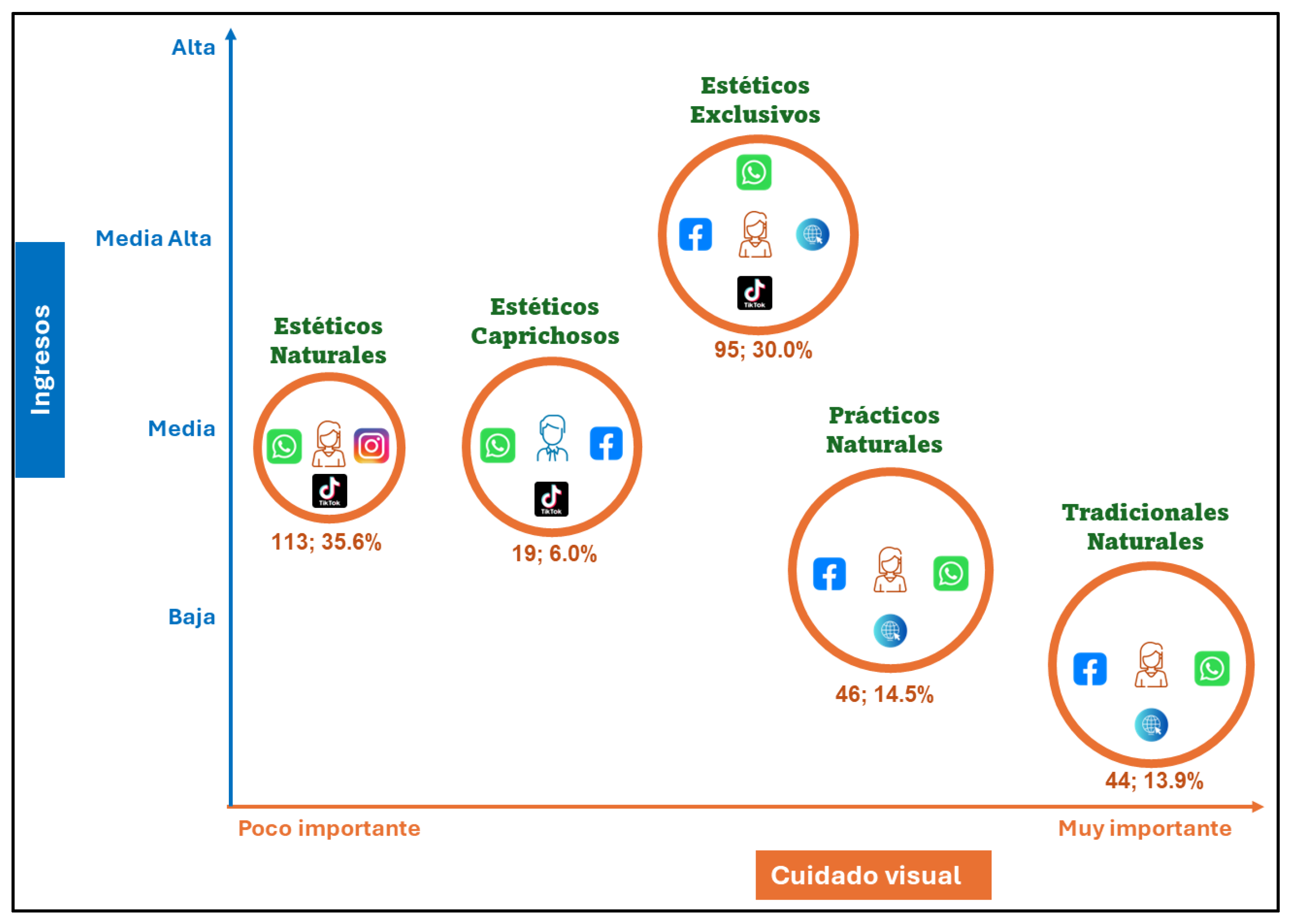
As shown in
Figure 1, the profile of the “natural aesthetic” consumer, who seeks to be fashionable and look good in their glasses, is mostly comprised of women with a middle income level and little interest in eye care. The “whimsical aesthetic” consumer prioritizes comfort, functionality, and fast service; they have a middle income level and consider eye care important. The “exclusive aesthetic” consumer seeks a high level of information about opticians and their products and has confidence in technology; they have a middle-to-high income level and consider eye care important. The “natural practical” consumer is just starting out in the digital world and has greater distrust of online purchases; they have a low income level and consider eye care very important.
5. Discussion
Among the characteristics that make up the consumer profile, age stands out, with the majority being young adults, adults, and seniors, demonstrating that the demand for lenses spans different life stages. Therefore, applications must be user-friendly for varying levels of technological familiarity, as consumers’ visual needs are linked to overexposure to screens and aging. Regarding gender, female consumers outnumber male consumers, a relevant detail that aligns with research on the trend of women taking a more active role in product selection, which directly influences the digital offering. In terms of education, the majority of consumers have a higher or technical education, seeking more precise information and transparency regarding technical specifications and product warranties. They also compare online reviews to build confidence before making a purchase. Income levels are medium to upper-middle class, indicating that purchasing decisions are not driven by price alone, but rather by the search for a balance between quality and value.
The geographic characteristics of the digital consumer profile show that most customers are concentrated in the central areas of Chimbote and Nuevo Chimbote, where there is greater interaction with digital media and online sales. However, rural areas also register a lower participation rate, reflecting a progressive growth in access to and use of the digital environment. These results align with research demonstrating that buyer habits have shifted toward purchasing products via websites or applications, showing that demographic location is no longer a barrier to product acquisition (Escalante et al., 2023). This indicates that, for product acquisition, there is no longer any impediment to purchases being made from urban or rural areas due to the prevailing digital conditions (Flores et al., 2024). Therefore, digital consumers prefer to make purchases from home, taking advantage of the configurations that digital media offer for choosing their products and even requesting delivery to their home (Salcedo et al., 2024).
The demographic profile of the digital consumer reveals that the majority are adults and female, demonstrating a greater predisposition to purchase products through web applications. Regarding education level, this segment comprises individuals with secondary or higher education and middle-income earners. Employees and homemakers stand out as representative groups due to their willingness to conduct detailed and comparative research before making a purchase. Consequently, there is a demographic increase in interaction with digital environments among millennials , who express a need for improved online purchasing options (Pastrana et al., 2023). Similarly, the market for digital consumers related to health and goods products is comprised of women (Andrade et al., 2024). Furthermore, age and knowledge of navigating virtual environments have facilitated the migration from physical to online stores to improve sales levels in organizations (Ceja et al., 2023).
The psychographic profile of digital consumers in the optical sector reflects their tendency to visit digital media semi-annually or annually to make purchases or seek information related to their needs. Key criteria include modernity, affordability, and convenience, and they interact with web search engines and social media to view campaigns, offers, and promotions. Regarding style, this is characterized by practicality and simplicity in the search and purchase process. Furthermore, modern, fashion-conscious consumers seek to associate optical products with their image, highlighting the importance of personal care and the influence of the shopping experience. Therefore, the relationship between social groups, lifestyles, and consumer routines contributes to interaction and influences purchasing decisions (Chaffey & Ellis, 2019). Additionally, digital consumers’ preferences focus on finding products that combine fashion with functionality, while maintaining health as a priority (Sánchez et al., 2020). However, many challenges and barriers still exist that generate consumer distrust regarding the quality and guarantee of purchases (Quizhpe et al., 2023). Therefore, psychographic characteristics show that purchasing decisions are linked to factors such as modernity, comfort, affordability for a practical lifestyle, and personal care. Nevertheless, challenges arise in building trust during the purchase process, as it is necessary to increase the security and transparency of the shopping experience to foster consumer loyalty to e-commerce.
Behavioral characterization has allowed us to understand how customers interact and make decisions in the digital environment, analyzing purchasing patterns related to lens use, purchase value, and sensitivity to promotions and offers. The use of lenses establishes the need to maintain good visual health, which directly influences the purchase of a particular product. For digital consumers, the purchase value creates a relationship between quality and fair price, a determining factor in the purchase decision. Behavioral analysis helps to understand messages, promotions, and content according to the profile of the digital consumer in optical stores, fostering a more personalized experience and optimizing resources. Therefore, analyzing consumer behavior in online purchases allows for segmentation based on interests, purchase frequency, and levels of brand loyalty, facilitating the adoption of commercial strategies geared toward different types of consumers (Papanicolau et al., 2022). Similarly, purchasing decisions made through digital platforms are not always rational; trust, design, and experience become key factors in the purchase (Tasayco et al., 2024). Furthermore, digital consumers are not limited to making purchases through a single channel; today’s customers research, compare, and make purchases based on the option that best suits their needs (Salcedo et al., 2024).
Within the characterization of market segments, five types of consumers have been defined, each with particular characteristics that influence the purchasing decisions of online optical consumers in Chimbote. The “natural aesthetics” segment is characterized by being young adults, mostly women, with a middle income level, who prioritize aesthetics over functionality. They seek products that allow them to stay fashionable and enhance their personal image through the adoption of optical products.
In contrast, we have the naturally practical consumers, distinguished by their emphasis on comfort, efficient service, and product functionality. These consumers are represented by those who are beginning to engage with the digital environment. They exhibit greater resistance or distrust when making purchases online, limiting their interaction on digital platforms. They tend to have low incomes and a high level of visual appeal, although their access to products may be conditioned by economic and technological factors. Similarly, we have the aesthetically discerning consumers, who search based on their personal tastes, criteria that must be fully met before making a purchase. Their search is conducted both digitally and in person. This group includes adult women with upper-middle incomes and higher technical education. Finally, we have the aesthetically exclusive consumers, who seek a balance between the aesthetics, durability, and resistance of products, in addition to their price. These are people who don’t skimp on price as long as the quality is the best. This group includes adults, both men and women, with higher education and active employment. In contrast to traditional consumers, who consider visual care a priority when choosing a product, they have limited incomes, leading them to prioritize product functionality. According to David et al. (2021), the digital consumer profile is distinguished by the diversity evident in their behavior, driven by the increasing integration of technology into daily life, which makes them increasingly dynamic and diverse in their search for comfort and innovation that reflect their style and needs.
Understanding the profiles of digital consumers of opticians in Chimbote allows for more effective marketing strategies and enables the adaptation of communication channels, promotional campaign content, and the development of value-added actions tailored to the specific needs of each segment. In today’s competitive and digital environment, these profiles represent a tool for organizations to personalize their services and experiences, thereby generating greater value for consumers.
6. Conclusions
The characteristics of the digital consumer profile and the segments to which the digital customers of opticians in Chimbote belonged were determined, 2025. Through the data obtained, the main characteristics that define the profiles of digital consumers in the optical sector of Chimbote were determined.
The geographical characteristics of the digital consumer in optical stores in Chimbote, 2025, were analyzed. The results obtained were that 42.3% belonged to Nuevo Chimbote, 41.6% to Chimbote, and peripheral areas or annexes represented 16.1%.
The demographic characteristics of the digital consumer in optics stores in Chimbote, 2025 were analyzed. 53.9% were young adults between 18 and 30 years old, 61.8% were women, 52.7% had higher or technical studies and 50.2% maintained a stable job.
The psychographic characteristics of digital consumers in optical stores in Chimbote were analyzed in 2025. 43.5% visited stores more than once a year, 25.6% annually, and 18% semi-annually. When choosing glasses, 28.4% preferred modern styles, 23% affordability, 17% comfort, 16.7% good service, and 14.8% good quality. 23% searched on social media, 35.4% prioritized the practicality of the glasses, and 40.1% considered personal care important. Based on experience, 36.3% agreed that social media plays a significant role in customer satisfaction.
The behavioral characteristics of the digital consumer in opticians in Chimbote, 2025, were analyzed. 38.5% use lenses for optical health reasons, 38.5% value the price of the product, and 39.7% are sensitive to promotions.
Based on the fifth objective specifically, the segments of digital consumers of opticians in Chimbote, 2025 were analyzed; where the following segments were determined: exclusive aesthetics, natural aesthetics, whimsical aesthetics, natural practicals and natural traditionals.
Funding
This research did not receive external funding.
Informed Consent Statement
Informed consent was obtained from all participants in the study to publish this article.
References
- (Andrade et al., 2024) Andrade, K., Martinez, L., & Lopez, O. (2024). Perfil y comportamiento del consumidor digital sordo en Cali, Colombia: Barreras en la compra en línea. [CrossRef]
- (Business Empresarial, 2025). Business Empresarial. (2025). Tendencias del consumidor en Perú: ¿Qué, ¿cómo y cuándo compran los peruanos? – Business Empresarial. Business Empresarial. Disponible en línea: https://www.businessempresarial.com.pe/tendencias-del-consumidor-en-peru-que-como-y-cuando-compran-los-peruanos/ (consultado el 10 de octubre de 2025).
- (Ceja et al., 2023) Ceja, S., Céspedes, S., Vázquez, L., Pacheco, E., & Figueroa, R. (2023). Análisis del comportamiento del consumidor de la generación Z en un contexto educativo post COVID-19. [CrossRef]
- (Chaffey y Ellis, 2019). Chaffey, D., & Ellis, F. (2019). Digital Marketing ePub eBook (5.a ed.). Pearson. Disponible en línea: https://books.google.com.mx/books?id=-1yGDwAAQBAJ&printsec=frontcover#v=onepage&q&f=false (consultado el 10 de octubre de 2025).
- (Clarke, 2024) Clarke, A., Freytag, P., & Mora, R. (2024). Revisiting the strategic role of market segmentation: Five themes for future research. Industrial Marketing Management. [CrossRef]
- (Cyrtis, 2024) Curtis, M., Quiring, K., Theofilou, B., & Bjornsjo, A. (2024). Life Reimagined Mapping the motivations that matter for today’s consumers. Disponible en línea: https://www.accenture.com/content/dam/accenture/final/a-com-migration/custom/_acnmedia/thought-leadership-assets/pdf-4/Accenture-Life-Reimagined-Full-Report.pdf (consultado el 10 de octubre de 2025).
- (David et al., 2021). David, L., Cruz, N., & Rojas, A. (2021). Profiles of involvement of consumers of sports equipment in the city of Santiago de Cali. línea. [CrossRef]
- (Delgado, 2022). Delgado, J.(2022). El poder de decision del cosnumidor digital y su comportamiento en las redes sociales. Real Academia Europea de Doctores. Disponible en línea: https://raed.academy/wp-content/uploads/2022/11/libro-ingreso-RAED-Juan-Jose-Delgado-Soriano_cmpr.pdf (consultado el 10 de octubre de 2025).
- (Efendioglu, 2024) Efendioglu, I.H. (2024). Digital Consumer behavior: a systematic literatura review. [CrossRef]
- (Escalante, 2023). Escalante, T., Mackay, C., & Mackay, R. (2023). El perfil del consumidor en época postpandemia. Revista Científica Arbitrada De Investigación En Comunicación, Marketing Y Empresa Reicomunicar. Disponible en línea: https://reicomunicar.org/index.php/reicomunicar/article/view/110 (consultado el 10 de octubre de 2025).
- (Faster Capital, 2024). Faster Capital. (2024). Challenges and Limitations of Market Segmentation - FasterCapital. Disponible en línea: https://fastercapital.com/startup-topic/Challenges-and-Limitations-of-Market-Segmentation.html (consultado el 10 de octubre de 2025).
- (Flores et al., 2024). Flores, I., Sánchez, A., Espinosa, J., & Martínez, M. (2024). Perfiles de consumidores de supermercados con respecto a atributos de mercadotecnia responsable. [CrossRef]
- (Faster Capital, 2024) Goldman, P. (2024). A Letter from Salesforce’s Chief Ethical & Humane Use Officer EVP, Chief Ethical & Humane Use Officer, Salesforce. Disponible en línea: https://www.salesforce.com/en-us/wp-content/uploads/sites/4/documents/research/State-of-the-Connected-Customer.pdf (consultado el 10 de octubre de 2025).
- (Hadi, 2023)Hadi, M., Martel, C., Huayta, F., Rojas, R., & Arias, J. (2023). Metodología de la investigación: Guía para el proyecto de tesis. Instituto Universitario de Innovación Ciencia y Tecnología Inudi Perú. [CrossRef]
- (Haro, 2024) Haro, A., Chisag, E., Ruiz, J., & Caicedo, J. (2024). Types and classification of investigations. [CrossRef]
- (Henry, 2024) Henry, I. (2024). 20 ejemplos de segmentación de marketing para inspirarte. Disponible en línea: https://www.actito.com/es-ES/blog/segmentacion-marketing-ejemplos/ (consultado el 10 de octubre de 2025).
- (Lopez y Asión, 2023) Lopez, I. & Asión, Laura (2023). El concepto prosumer: situacion actual y posible evolucion a futuro. Disponible en línea: https://zaguan.unizar.es/record/129778/files/texto_completo.pdf (consultado el 10 de octubre de 2025).
- (MINSA, 2025) Ministerio de Salud. (2025). Minsa entrega equipos de última tecnología a establecimientos de salud de Lima este para reforzar la lucha contra la tuberculosis. Disponible en línea: https://www.gob.pe/institucion/minsa/noticias/1128914-minsa-entrega-equipos-de-ultima-tecnologia-a-establecimientos-de-salud-de-lima-este-para-reforzar-la-lucha-contra-la-tuberculosis (consultado el 10 de octubre de 2025).
- (Mora et al., 2021) Mora, R., Højbjerg, A., & Freytag, P. (2021). B2B market segmentation: A systematic review and research agenda. [CrossRef]
- (Musavi, 2021) Musavi, Shafag (2021). The digital consumer profile in 5.0 societs in strategic marketing managment. [CrossRef]
- (Papanicolau, 2022) Papanicolau, J., Jordan, S., Ross, A., & La Torre, C. (2022). Consumer Preferences and its Importance in the Acquisition of Products in the 2021 Pandemic Period in Metropolitan Lima. [CrossRef]
- (Pastrana, 2023) Pastrana, P., Bojórquez, L., & Robles, F. (2023). Generational differences in online consumer behavior in the city of Aguascalientes. [CrossRef]
- (Quizhpe, 2023) Quizhpe, C., Bustamante, K., & Pacheco, A. (2023). Comportamiento del Consumidor antes y durante la Pandemia del Covid-19 en la Provincia El Oro Consumer Behavior Before and During the Covid-19 Pandemic in El Oro Province. [CrossRef]
- (Riquelme, 2020) Riquelme, C (2020). El Momento Cero de la verdad: ¿Qué es y cómo identificarlo? [CrossRef]
- (Salcedo et al., 2024) Salcedo, D., Salcedo, M., Calero, N., Nuñez, M., & Gonzales, C. (2024). Digital consumer buying behavior in Latin America 2020 - 2023. A systematic review. [CrossRef]
- (Sánchez, 2022) Sánchez, J. (2022). Ecuación de mercado y segmentación por derivación matemática: un modelo gerencial de toma de decisiones empresariales. [CrossRef]
- (Sánchez, 2020) Sánchez, M., Lascano, K., & Ballesteros, L. (2020). Construction of consumer profiles with database and programmatic advertising. [CrossRef]
- (Sare, 2023) Sare, A., Paz, A., Wong, H., Alfaro, M., Matute, J., & Calvanapón, F. (2023). Digital Consumer Behavior in Retail Stores. [CrossRef]
- (Salomon, 2020) Solomon, M. (2020). Consumer Behavior Buying, Having, and Being Thirteenth Edition (1.a ed.). Disponible en línea: www.pearson.com/mylab/marketing.
- (Tasayco, 2024) Tasayco, A., Pachas, L., Magallanes, E., & Ralli, L. (2024). User experience and purchase decision in a retail store in Cañete. [CrossRef]
- (United Nations, 2023) United Nations. (2023). The Sustainable Development Goals Report. Disponible en línea: https://unstats.un.org/sdgs/report/2023/The-Sustainable-Development-Goals-Report-2023.pdf (consultado el 10 de octubre de 2025).
- (Vázquez, 2023) Vázquez, A., Guanuchi, M., Cahuana, R., Vera, R., & Holgado, J. (2023). Métodos de investigación científica. Instituto Universitario de Innovación Ciencia y Tecnología Inudi Perú. [CrossRef]
- (Lippincott and Poindexter , 2019) Lippincott, T. and Poindexter, EK (2019) . Title of unpublished manuscript [Unpublished manuscript/Manuscript in preparation/Manuscript submitted for publication]. Name of department, name of institution.
- (Harwood 2008) Harwood, John. 2008. Title of cited article. Available online: URL (accessed day, month and year).
|
Disclaimer/Publisher’s Note: The statements, opinions and data contained in all publications are solely those of the individual author(s) and contributor(s) and not of MDPI and/or the editor(s). MDPI and/or the editor(s) disclaim responsibility for any injury to people or property resulting from any ideas, methods, instructions or products referred to in the content. |
© 2025 by the authors. Licensee MDPI, Basel, Switzerland. This article is an open access article distributed under the terms and conditions of the Creative Commons Attribution (CC BY) license (http://creativecommons.org/licenses/by/4.0/).